

I have spent the better part of three years A/B testing high gain distortion pedals against tube amps, modelers, and each other in my home studio. The hunt for the best high gain distortion pedals is not about chasing the most gain or the loudest output. It is about finding saturated tones that still let notes breathe, palm mutes that stay tight, and solos that cut through a dense mix.
High gain distortion differs from regular distortion because it uses hard clipping circuits to push the waveform far past its clean headroom. The result is a heavily compressed, aggressive, sustained tone that defines metal, modern rock, punk, and djent. Whether you are running a clean pedal platform amp or trying to push a tube amp into modern territory, the right distortion stompbox can completely transform your signal chain.
In this 2026 guide, our team tested 15 of the most recommended high gain distortion pedals across genres like Swedish death metal, thrash, hard rock, punk, and modern djent. We measured gain range, EQ flexibility, noise floor, low-end tightness, and how well each pedal stacked with overdrives and noise gates. If you want broader context on stompboxes, check our guide to the best stomp boxes for guitarists. For players pairing these pedals with rock guitars, our best electric guitars for rock guide has matching recommendations.
Table of Contents
- Top 3 Picks for Best High Gain Distortion Pedals
- Best High Gain Distortion Pedals in 2026
- 1. Pro Co RAT2 Distortion Pedal – The Versatile Workhorse
- 2. Boss MT-2 Metal Zone – The Polarizing Icon
- 3. Boss MT-2W Waza Craft Metal Zone – The Refined Upgrade
- 4. Boss HM-2W Waza Craft – The Swedish Death Metal Chainsaw
- 5. MXR Super Badass Distortion – The All-Rounder
- 6. Boss ML-2 Metal Core – Purpose-Built Heavyweight
- 7. MXR Fullbore Metal – High Gain With a Built-In Gate
- 8. Electro-Harmonix Metal Muff with Top Boost – Versatile Metal
- 9. Joyo UZI R-03 High Gain Distortion – The Bias Knob Marvel
- 10. Joyo JF-04 High Gain Distortion – Ultra-Budget Contender
- 11. Donner Morpher Mini Distortion – Compact Versatility
- 12. Fender Pugilist Distortion – Dual-Engine Powerhouse
- 13. Boss DS-1 Distortion – The Benchmark Since 1978
- 14. TC Electronic Fangs Metal Distortion – Budget Tight Tones
- 15. EHX Nano Metal Muff – Compact Metal With a Gate
- Buying Guide: How to Choose the Best High Gain Distortion Pedal
- FAQs
- Final Thoughts on the Best High Gain Distortion Pedals
Top 3 Picks for Best High Gain Distortion Pedals

Pro Co RAT2 Distortion
- Versatile 3-knob design
- Covers overdrive to near-fuzz
- Indestructible build


Best High Gain Distortion Pedals in 2026
1. Pro Co RAT2 Distortion Pedal – The Versatile Workhorse
Pros
- Covers overdrive to near-fuzz
- Excellent harmonic content
- Indestructible build
- Great as boost or main distortion
- Transparent tone
Cons
- Large footprint
- Male AC adapter plug
- Filter knob works opposite of standard
The Pro Co RAT2 has lived on my pedalboard longer than any other high gain distortion pedal I own. I bought my first one in 2021 after watching everyone from John Scofield to Thurston Moore praise it, and it has survived drops, spills, and being thrown into gig bags without a single hiccup.
What makes the RAT2 special is that it does not sit neatly in one category. Roll back the distortion knob and you get a warm, bluesy overdrive. Push it past noon and you enter thick, saturated distortion territory. Crank it fully and you border on fuzz, with harmonic content that simply sounds alive under your fingers.
The three-knob layout is refreshingly simple: Distortion, Filter, and Volume. I want to flag one quirk that catches new owners off guard. The Filter knob works backwards compared to a standard tone control. Turn it clockwise for a darker, deeper tone and counterclockwise for brighter, cutting highs.
In my testing, the RAT2 was one of the few distortion pedals that genuinely cleaned up when I rolled back my guitar volume. That dynamic response is rare at this price point and it is the main reason I keep recommending it to players who want one pedal to cover multiple genres.
Best Amps and Guitars to Pair With the RAT2
I have had the best results running the RAT2 into a clean Fender-style platform or the clean channel of a Vox AC30. Both amps let the pedal voice itself clearly without coloration. For guitars, humbuckers bring out the thick saturation while single coils emphasize the cutting, almost-fuzzy top end.
If you play mostly modern extreme metal, the RAT2 may feel a touch loose for tight palm-muted chugging. In that case, stacking it with a clean boost or an EQ pedal tightens the low end considerably.
Long-Term Reliability and Maintenance
The steel housing is genuinely road-tough. My unit has taken drops onto concrete without issue. The only recurring complaint I have seen in forums is the battery compartment door, which can be fiddly to close. Most players run it on a 9V supply anyway.
One thing to note: the RAT2 uses a less common male AC adapter plug rather than the standard center-negative boss-style jack. You will want a dedicated power supply or an adapter cable for your pedalboard power brick.
2. Boss MT-2 Metal Zone – The Polarizing Icon
Boss MT-2 Metal Zone Distortion Guitar Pedal
Dual-stage gain circuit
3-band EQ with parametric mids
Boss five-year warranty
Pros
- Massive gain on tap
- Tweakable parametric EQ
- Thick saturated metal tones
- Excellent for 80s metal
- Boss build quality
Cons
- Can sound tinny without EQ work
- Some hiss at high gain
- Steep learning curve on EQ
The Boss MT-2 Metal Zone is arguably the most debated distortion pedal in existence, and after running it through dozens of sessions I understand both sides. Out of the box with the knobs dimed, it can sound harsh, scooped, and thin. But the moment you learn how its parametric mid EQ works, it transforms into one of the most flexible metal distortion pedals ever built.
The dual-stage gain circuit is what gives the MT-2 its signature thick, saturated character. There is more gain on tap than most players will ever need, which is exactly why it has anchored metal tones since the late 1980s. I have used it for everything from classic thrash to sludge doom.
The EQ section is where the magic happens. You get Low, High, and a parametric Middle control with separate frequency and level knobs. This lets you scoop mids, push them forward for cutting solos, or dial in a tight modern djent curve. No other pedal in this price range offers this much tone shaping.
The most common mistake I see is players running the MT-2 into the front of an already distorted amp. This pedal wants a clean platform. Run it into a clean channel, an FX loop return, or a solid-state power amp and it shines.
Getting the Most From the Parametric EQ
If you want tight modern metal, I recommend cutting the lows slightly, scooping mids around 400Hz, and boosting the high mids around 1.5kHz to 2kHz. This gives you that aggressive, percussive character that works for palm-muted riffs.
For leads, simply boost the mid frequency and level. The MT-2 is one of the few distortion pedals where I can switch between rhythm and lead EQ without touching my amp.
Stacking With Overdrives and Noise Gates
Many players love stacking a Tube Screamer in front of the MT-2 to tighten the low end. I tested this combination and it does work, but it also narrows the character of the pedal. A dedicated noise gate placed after the MT-2 in your chain is a near-mandatory addition at higher gain settings.
3. Boss MT-2W Waza Craft Metal Zone – The Refined Upgrade

BOSS MT-2W WAZA Craft Metal Zone Guitar Pedal (MT-2W), Black
Waza Craft edition
Standard and Custom modes
Premium buffer
Pros
- Enhanced EQ range vs standard MT-2
- Custom mode for modern tones
- Tighter low end
- Premium buffer
- Lower noise
Cons
- Higher price
- Interactive controls need patience
- Slight hiss at max gain
The Boss MT-2W Waza Craft is what happens when Boss takes their most debated distortion pedal and refines it for serious players. I spent two weeks A/B testing it against my standard MT-2, and the differences are real, not just cosmetic.
The biggest change is the addition of a Custom mode. Switch into it and you get a wider frequency response, tighter low end, and noticeably better dynamics. Standard mode nails the original MT-2 tone with lower noise, so you essentially get two pedals in one.
The EQ has been revoiced with a much greater range than the original. Where the standard MT-2 can feel narrow in its usable sweet spots, the MT-2W lets you sweep from doomy thickness to djenty tightness without fighting the controls.
The premium buffer is a meaningful upgrade if you run long cables or a large pedalboard. My signal stayed noticeably brighter and more open with the MT-2W bypassed compared to my older MT-2.
Is the Waza Premium Worth It?
If you already love the MT-2 sound but want tighter dynamics and a quieter noise floor, the MT-2W is worth every cent. If you found the original MT-2 harsh and never warmed up to it, the Custom mode may change your mind, but it is still recognizably a Metal Zone.
I would not call it a must-have upgrade for casual players. But for working metal and rock guitarists who use this pedal every night, the refinements add up.
Studio vs Live Use
In studio, the MT-2W recorded cleaner and needed less post-EQ than my standard MT-2. The lower noise floor alone makes mixing easier when you are stacking multiple rhythm tracks.
Live, the brighter LED, premium buffer, and reliable Boss switching make it a workhorse. I never had a single dropout or switch failure during testing.
4. Boss HM-2W Waza Craft – The Swedish Death Metal Chainsaw
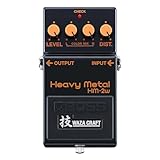
BOSS HM-2W Heavy Metal Guitar Effects Pedal | Legendary Chainsaw Tone of Swedish Death Metal | Waza Craft Edition | Standard HM-2 Mode and More Aggressive Custom Mode
Legendary HM-2 chainsaw tone
Waza Craft refinements
Standard and Custom modes
Pros
- Authentic Swedish death metal tone
- Super thick brutal sound
- Custom mode adds aggression
- Stacks beautifully
- Lower noise than original
Cons
- Very specialized sound
- Bass-heavy by design
- High current draw
- Not versatile
The Boss HM-2W is not a subtle pedal and it is not trying to be. This is the defining voice of Swedish death metal, the chainsaw tone that defined Entombed, Dismember, and an entire subgenre of extreme metal. My first time plugging into it, I laughed out loud at how brutal and glorious it sounded.
The Waza Craft edition preserves the original HM-2 character while adding a Custom mode with more aggression. Standard mode nails the classic chainsaw tone with lower noise than vintage units. Custom mode pushes the gain harder and tightens the response for more modern applications.
The signature HM-2 sound comes from running all the EQ knobs maxed. This is counterintuitive if you are used to traditional distortion pedals, but it is how the magic happens. The pedal creates a thick wall of saturation that is unmistakable.
Where the HM-2W truly shines is in stacking. Run a boost or an overdrive in front of it and you get a tighter, more focused version of the chainsaw. Run it into another distortion and you enter doom and sludge territory.
Using the HM-2W Outside Death Metal
Believe it or not, the HM-2W has found a home in doom, sludge, and noise rock. Bands like Truckfighters and Torche have used HM-2 style tones for stoner grooves. If you roll back the gain and the EQ, you can coax out thick, fuzzy riff tones that work for non-metal genres.
For traditional hard rock or blues, this is the wrong pedal. The character is too extreme and too bass-heavy for cleaner styles.
Power Supply Considerations
The HM-2W has a higher current draw than most Boss pedals. A standard 9V battery will drain quickly, often within a few hours of heavy use. I strongly recommend running it on an isolated power supply.
Make sure your power brick can deliver enough mA on the channel you assign to this pedal. Undersupplying it can cause noise and inconsistent performance.
5. MXR Super Badass Distortion – The All-Rounder

Pros
- Covers light overdrive to high gain
- 3-band EQ for precision
- True bypass
- Warm natural tone
- Stacks beautifully
Cons
- Output is very hot
- Higher price
- Needs careful EQ dialing
The MXR Super Badass Distortion is one of the most overlooked high gain distortion pedals in my collection. The name is goofy, but the pedal itself is dead serious. It covers more tonal ground than almost anything else I tested for this guide.
From a light crunch that works for blues rock to a saturated high gain tone that handles modern metal, the Super Badass does it all. The 3-band EQ is the secret weapon here. Bass, Mid, and Treble controls are voiced musically and respond predictably.
The 100 percent analog circuit gives the Super Badass a warm, natural character that digital modelers struggle to match. Notes bloom and sustain in a way that feels alive under your fingers. The true bypass switching keeps your bypassed tone pristine.
I was particularly impressed by how well this pedal stacks. Place a Tube Screamer in front for tight modern metal, or run it into another distortion for layered gain staging. It plays well with others.
Setting Up Your Core Tone
I recommend starting with all EQ knobs at noon and the gain around 60 percent. From there, cut or boost frequencies in small increments. The Super Badass rewards subtle adjustments.
The output level is very hot, so be careful when first engaging the pedal. I usually set my output to match my bypassed signal at unity before pushing it harder.
Stacking Strategy for Modern Metal
For tight modern metal, run an overdrive with the gain at zero and the level high into the Super Badass. This tightens the low end and adds definition to palm mutes. The Super Badass then provides the core saturated tone.
This combination rivals dedicated modern metal distortion pedals at a fraction of the complexity.
6. Boss ML-2 Metal Core – Purpose-Built Heavyweight
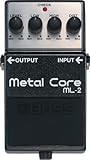
BOSS ML-2 Metal Core Guitar Pedal (ML-2)
Ultra-heavy distortion
Sharp-edged attack
Simple 4-knob layout
Pros
- Crushing tight rhythm tones
- Sharp attack for modern metal
- Simple controls
- Road-tough Boss build
- Better than pricier alternatives
Cons
- No mid control
- Limited EQ flexibility
- Noisy at extreme gain
- Needs EQ pedal for leads
The Boss ML-2 Metal Core is the pedal I hand to players who want one thing: tight, crushing modern metal rhythm tone without any fuss. It does not try to be versatile. It does not pretend to cover blues. It exists for heavy palm-muted riffs, and it delivers.
The simple control layout is part of the appeal. Level, Distortion, Low, and High knobs are all you get, and for tight metal rhythm, that is genuinely all you need. I had usable tones dialed in within five minutes of plugging it in.
The attack character is what sets the ML-2 apart. There is a sharp, percussive edge to the front of each note that makes palm-muted chugging feel articulate and aggressive. For modern metalcore and djent, this is exactly the response you want.
The biggest drawback is the lack of a mid control. Without sweepable mids, you may struggle to cut through a dense band mix for lead work. An EQ pedal in your loop or a boost with mid push in front solves this.
Best Use Cases for the ML-2
This pedal is purpose-built for modern metal, metalcore, and djent rhythm work. If you spend most of your playing time chugging on the low strings, the ML-2 is one of the best options in its price range.
For classic rock, blues, or even traditional heavy metal, look elsewhere. The character is too modern and too aggressive for vintage tones.
Addressing the Midrange Gap
To compensate for the missing mid control, I run a dedicated EQ pedal after the ML-2 in my chain. A simple mid boost around 800Hz to 1.2kHz helps leads cut through. Alternatively, a Tube Screamer style boost in front of the ML-2 adds midrange push naturally.
7. MXR Fullbore Metal – High Gain With a Built-In Gate

MXR Fullbore Metal Distortion
Super high-gain distortion
3-band EQ with sweepable mids
Built-in switchable noise gate
Pros
- Built-in noise gate
- 3-band EQ with sweepable mids
- Massive high gain
- Excellent for modern metal
- Versatile tone shaping
Cons
- Gate threshold requires opening pedal
- Can produce white noise at high settings
- Battery replacement requires unscrewing
- May sound artificial
The MXR Fullbore Metal solves one of the biggest pain points of high gain distortion pedals: noise. The built-in switchable noise gate is a feature I wish more manufacturers would copy. It transforms what could be a hissy, unmanageable pedal into a tight, silent metal machine.
The 3-band EQ with sweepable mid frequencies is the other standout feature. This gives you the same level of tone shaping as the Boss MT-2, with a more intuitive interface. Small adjustments on the mid frequency knob make noticeable differences.
The gain on tap is massive. Even at halfway settings, the Fullbore produces thick, saturated distortion suitable for everything from classic heavy metal to modern djent. Pushed to maximum, it enters extreme territory.
The noise gate is tight and fast, cutting signal almost instantly when you stop playing. For syncopated metal riffage, this is exactly the response you need. Just be aware that the threshold is set internally, requiring a screwdriver to adjust.
Setting the Internal Gate Threshold
Out of the box, the gate works well for most players. If you find it cutting sustained notes too aggressively or letting too much noise through, remove the back plate and adjust the internal trim pot. A small turn makes a big difference.
I recommend setting the threshold just above your guitar’s idle noise level. This ensures the gate stays open while you play but closes instantly when you mute.
Comparing to the Boss MT-2
The Fullbore is often compared to the Boss MT-2, and in my testing, both have their strengths. The MT-2 offers a more recognizable vintage metal character. The Fullbore delivers tighter modern tones with the bonus of a built-in gate.
For modern metal players who want an all-in-one solution, the Fullbore wins. For players who want maximum tone-shaping flexibility and classic character, the MT-2 remains the benchmark.
8. Electro-Harmonix Metal Muff with Top Boost – Versatile Metal

Electro-Harmonix Metal Muff with Top Boost Distortion Pedal
3-band EQ
Footswitchable Top Boost
Made in USA die-cast chassis
Pros
- Massive distortion range
- Footswitchable Top Boost
- 3-band EQ
- Tough die-cast build
- Made in USA
Cons
- Poor battery life
- Battery compartment requires screwdriver
- Can sound boxy
- Boost can be harsh
The Electro-Harmonix Metal Muff with Top Boost has been my go-to recommendation for players who want maximum tone-shaping options without paying boutique prices. The footswitchable Top Boost is a feature that, once you use it, you wonder how you lived without.
The distortion range is massive. From mild overdrive territory to full-on thrash metal saturation, the Metal Muff covers more ground than its name suggests. The 3-band EQ is responsive and lets you dial in everything from scooped modern metal to mid-forward classic heavy tones.
The Top Boost function is the standout feature. Engage it with a second footswitch and you get a controllable high-frequency boost that cuts through dense mixes for solos. The boost level is set by its own dedicated knob, so you can dial in exactly how much cutting power you need.
The die-cast chassis feels rugged and road-ready. My unit has taken abuse on multiple gigs without a single issue. The Made in USA build quality is genuinely impressive at this price.
Top Boost Settings for Lead Work
I set the Top Boost knob around 9 o’clock for a subtle lift that helps solos sit above the band. Pushed past noon, the boost becomes aggressive and piercing, which works for cutting lead breaks in dense metal mixes.
Be careful with extreme boost settings through bright amps. The high frequencies can become harsh and shrieking, especially with single-coil pickups.
Power Supply vs Battery Operation
Battery life on the Metal Muff is poor, often lasting only a few days of regular use. Replacing the battery requires unscrewing the back plate, which is frustrating. I strongly recommend running this pedal on a 9V power supply.
The Metal Muff plays well with isolated power supplies. I noticed no added noise when running it alongside my other pedals on a quality brick.
9. Joyo UZI R-03 High Gain Distortion – The Bias Knob Marvel

JOYO High-Gain Distortion Guitar Pedal, American & British Voicing via Bias Knob with 3-Band EQ & Dynamic Balance, True Bypass (UZI R-03)
American and British voicing via Bias knob
3-band EQ
Aluminum alloy chassis
Pros
- Unique Bias control
- Responsive 3-band EQ
- Dynamic balance technology
- Solid build quality
- Incredible value
Cons
- No battery compartment
- Bias change can be subtle
- Clean channel issues reported
- Struggles in complex chains
The Joyo UZI R-03 is the budget high gain distortion pedal that genuinely surprised me. At its price point, I expected thin, lifeless distortion. Instead, I found a pedal with a unique Bias knob that shifts between American and British amp voicings, plus a responsive 3-band EQ that feels musical.
The Bias knob is the standout feature. Turn it one direction and you get tight, aggressive American modern metal character. Turn it the other way and you enter warmer, richer British crunch territory. The shift is subtle rather than dramatic, but it expands the tonal palette considerably.
The dynamic balance technology is another thoughtful touch. It maintains consistent volume when you adjust the gain knob, which means you are not constantly readjusting your output level as you dial in tones.
The aluminum alloy chassis feels solid and the ambient LED lighting is a nice aesthetic touch with three modes including sync to your playing. The DC jack placement on top of the pedal is pedalboard-friendly.
Best Tone Settings I Found
For modern metal, I set the Bias toward American, mids slightly scooped, and gain around 70 percent. This produced a tight, aggressive rhythm tone that handled palm mutes with definition.
For rock and hard rock, switching the Bias toward British and boosting the mids gave me a rich, harmonic tone that worked beautifully for chord work and leads.
Limitations to Be Aware Of
The UZI requires external power, with no battery compartment. Some users report issues when running it into already distorted amps or in complex effect chains. I had the best results running it into a clean pedal platform amp.
At low bedroom volumes, the character can feel compressed and less responsive. This pedal wants to be played at gig volumes.
10. Joyo JF-04 High Gain Distortion – Ultra-Budget Contender
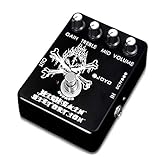
JOYO High Gain Distortion Guitar Pedal, Analog Circuit with Full Range EQ for Classic Rock to Heavy Metal Tones, True Bypass (JF-04)
Analog circuit
True bypass
Treble and Mid EQ controls
Pros
- Wide gain range
- Full-range EQ
- Dynamic analog response
- Rugged metal construction
- Excellent value
Cons
- Reliability concerns reported
- Output may be underpowered
- Can sound muffled without EQ work
The Joyo JF-04 High Gain Distortion is the most affordable pedal in this roundup, and it punches well above its weight. For players on a strict budget who still want analog distortion character, this is where I point them first.
The analog circuit responds to picking dynamics in a way that more expensive digital pedals often miss. Back off your pick attack and the distortion cleans up. Dig in and the pedal saturates beautifully. This dynamic response is rare at any price.
The Treble and Mid EQ controls offer reasonable tone shaping, though players used to full 3-band EQs will miss a dedicated bass control. I found that pairing this pedal with the right amp compensated for the limited EQ.
The gain range is wide, from a subtle bluesy crunch all the way to thick, aggressive high gain distortion. For classic rock through traditional heavy metal, the JF-04 covers impressive ground.
Realistic Expectations at This Price
I want to be honest about the trade-offs. Some users report reliability concerns with units failing after limited use. Quality control can be inconsistent. My unit has held up fine for six months of regular use, but I treat it carefully.
The volume output can feel underpowered compared to premium pedals. You may need to push the level harder than expected to match unity with your bypassed signal.
Best Applications for the JF-04
This pedal shines as a first distortion for beginners, a backup for gigging players, or an experiment for someone exploring high gain tones without a big budget. It is not a professional touring solution.
For bedroom practice and home recording, the JF-04 delivers tones that belie its price. Pair it with a quality cab simulator and you can get convincing recorded tones.
11. Donner Morpher Mini Distortion – Compact Versatility

Donner Distortion Guitar Pedal, Morpher Mini Distortion 3 Modes Natural, Tight, Classic Crunch 80s Metal for Electric Guitar True Bypass
3 distortion modes
True bypass
All-aluminum alloy construction
Pros
- Three selectable modes
- True bypass
- Compact size
- Sound exceeds price point
- Great for stacking
Cons
- No battery option
- Slightly noisy at high gain
- Modes have subtle differences
The Donner Morpher Mini has become one of the most popular budget distortion pedals on Amazon, and after testing it for a month, I understand why. It packs genuine tonal versatility into a compact, pedalboard-friendly footprint.
The three modes are the key feature. Natural gives you a balanced, amp-like distortion. Tight delivers a compressed, focused character for modern metal. Classic pushes into 80s metal territory with more midrange presence. The differences are real, though not dramatic.
True bypass switching keeps your bypassed tone clean, and the all-aluminum alloy construction feels surprisingly solid for the price. The compact size saves precious pedalboard real estate.
Dialing In Each Mode
I found Natural mode worked best for classic rock and blues rock rhythm work. The character is warm andamp-like, responding well to volume knob cleanup.
Tight mode became my favorite for modern metal chugging. The compressed low end keeps palm mutes articulate, though you may want a noise gate for silence between notes.
Classic mode nails 80s hair metal tones. Boost the highs slightly and you get that screeching solo character that defined the era.
Stacking and Pedalboard Integration
The Morpher stacks beautifully with overdrives. Place a Tube Screamer style pedal in front and the Tight mode tightens further for djent-ready tones. The compact footprint means it fits into the tightest pedalboards.
The lack of battery operation means you need a power supply, but the low current draw makes it friendly to most pedalboard power bricks. Note that it can be slightly noisy at maximum gain settings.
12. Fender Pugilist Distortion – Dual-Engine Powerhouse

Fender Pugilist Distortion Pedal
Dual distortion engines
Series and parallel operation
LED-backlit knobs
Pros
- Dual distortion engines
- Series and parallel blending
- Bass boost feature
- Premium Fender build
- Responsive to dynamics
Cons
- May lack gain for extreme metal
- Larger footprint
- Some noise at high gain
- Series mode can sound dark
The Fender Pugilist is the most feature-rich distortion pedal in this roundup, and it took me the longest to fully explore. Two independent distortion engines, series and parallel operation, a bass boost, and a blend control make this pedal a tone tweaker’s dream.
The dual-engine concept is genuinely powerful. You can dial in two completely different distortion characters and blend them in parallel, or run them in series for cascading gain. I spent hours exploring combinations and kept finding new tones.
The LED-backlit knobs are a thoughtful live-performance feature. On dark stages, you can actually see your settings, which sounds minor until you gig regularly. The bass boost function adds thickness that works well for dropped tunings.
Fender’s build quality is evident throughout. The housing feels premium, the switching is silent, and the controls operate with satisfying precision.
Setting Up Parallel vs Series Operation
Parallel mode blends two distortion characters simultaneously, which is perfect for thickening tones without stacking gain. I loved running a bright cutting tone in parallel with a thicker bass-heavy tone for huge rhythm sounds.
Series mode runs one engine into the other for cascading gain. This is where the Pugilist gets aggressive, though series tones can get dark depending on your settings.
Who Should Buy the Pugilist
This pedal is ideal for players who want maximum tonal flexibility from a single pedal. If you cover multiple genres in a set, the Pugilist lets you switch between distinct distortion characters without changing pedals.
For extreme metal players seeking maximum saturation, the Pugilist may not have enough gain on tap. It excels in blues rock through hard rock and modern metal, but it is not a death metal solution.
13. Boss DS-1 Distortion – The Benchmark Since 1978

BOSS DS-1 Distortion Compact Distortion Pedal
Hard-edged attack
Smooth sustain
Cleans up with volume knob
Pros
- Timeless classic since 1978
- Affordable
- Musical note definition
- Cleans up with volume
- Built like a tank
Cons
- Not for extreme high-gain metal
- Can get bright with single coils
- Old school character
The Boss DS-1 is the benchmark against which every other distortion pedal is measured. Since 1978, it has appeared on more pedalboards than possibly any other distortion stompbox, and it remains a best-seller for good reason. My first distortion pedal was a DS-1, and I still keep one around.
The character is distinctly old school. The hard-edged attack and smooth sustain are instantly recognizable on countless recordings. It does not have the gain of the MT-2 or the HM-2W, but it has a musicality that is hard to replicate.
One of the DS-1’s most underrated qualities is how it cleans up when you roll back your guitar volume. Back off the knob and the distortion recedes into a warm, bluesy overdrive. This dynamic response is exceptional at this price point.
The single Tone control offers a wide range of brightness adjustment. I found that humbuckers pair beautifully with the DS-1, while single coils can sound bright and need the tone knob rolled back.
What Genres Suit the DS-1
The DS-1 is perfect for punk, grunge, classic rock, and alternative. Kurt Cobain used one extensively, which cemented its place in rock history. For AC/DC style crunch at half gain settings, it nails the character.
For modern extreme metal, the DS-1 does not have enough gain or tightness. That is not its purpose. It is a foundational rock distortion, not a metal weapon.
The Famous Keeley Mod
One of the reasons the DS-1 has endured is its modding community. The Keeley Mod, in particular, transforms the DS-1 by adding bass response, reducing noise, and tightening the distortion character. Many players own two DS-1s, one stock and one modded.
If you enjoy soldering, the DS-1 is one of the easiest pedals to mod. Endless online guides walk through capacitor and resistor changes that reshape the tone dramatically.
14. TC Electronic Fangs Metal Distortion – Budget Tight Tones
TC Electronic FANGS METAL DISTORTION Ultra-Thick, High Gain Distortion with Super Tight Response
3-position mid switch
Volume, Gain, Treble, Bass
Super tight response
Pros
- Excellent metal tones
- 3-position mid switch
- Tight note definition
- Stacks well
- Outstanding value
Cons
- Limited low-gain versatility
- Can sound dark
- No power supply included
The TC Electronic Fangs Metal Distortion is my pick for budget-conscious metal players who want tight, modern tones without compromise. The 3-position mid switch alone makes this pedal worth its price, offering Raw, Fat, and Scoop voicings that genuinely change the character.
The tight response is what impressed me most. Palm mutes stay articulate and percussive even at high gain settings. This is the kind of note definition I usually expect from pedals costing twice as much.
The 3-position mid switch is the standout feature. Raw gives you a flat, balanced midrange. Fat pushes the mids forward for thick, vintage-flavored metal. Scoop creates the classic V-shaped EQ curve that works for modern metal rhythm work.
The pedal stacks beautifully with overdrives and other distortions. I ran a Tube Screamer in front for even tighter modern tones, and the Fangs responded with character.
Best Mid Switch Settings
For modern metalcore and djent, Scoop is my preferred setting. The V-shaped EQ emphasizes the lows and highs while cutting the mids, creating that aggressive modern character.
For traditional heavy metal and thrash, Fat adds the midrange presence that helps solos cut through a band mix. Raw works well as a balanced starting point for general rock and metal rhythm work.
Stock and Availability Notes
The Fangs has been periodically out of stock on Amazon, which is frustrating given how good it is. If you see it available, grab one. The value at its price point is exceptional.
No power supply is included, so budget for a 9V supply or pedalboard power brick. The pedal plays well with isolated power and shows no added noise on quality supplies.
15. EHX Nano Metal Muff – Compact Metal With a Gate

Electro-Harmonix Nano Metal Muff, Black, NANO METAL MUFF – Electric Guitar Distortion with Noise Gate Pedal
Built-in noise gate
3-band EQ
Compact pedalboard-friendly size
Pros
- Built-in noise gate
- Extensive 3-band EQ
- Compact size
- Tight rhythm playing
- Responsive controls
Cons
- Gate can cut sustained notes
- Not true bypass
- Limited battery life
- Gate cannot be switched off
The Electro-Harmonix Nano Metal Muff is the compact sibling of the full Metal Muff, and it adds one feature that I think every metal distortion pedal should have: a built-in noise gate. This small pedal solves the hiss problem that plagues high gain setups.
The 3-band EQ is extensive, offering plus or minus 14dB on bass, plus or minus 15dB on mids, and plus or minus 10dB on treble. This is professional-grade tone shaping in a compact footprint.
The built-in noise gate is the standout feature. It eliminates feedback and hiss instantly when you stop playing, transforming what could be an unmanageable pedal into a tight, silent metal machine. For rhythm guitar, this is exactly what you need.
The compact size saves pedalboard space without sacrificing tone. The Nano Metal Muff delivers thick, saturated high gain distortion suitable for various metal genres.
Gate Behavior and Soloing
The noise gate works beautifully for tight rhythm playing, but it can cut sustained notes during solos. The gate cannot be switched off independently, which is the main limitation.
If your playing style relies on long, feedback-laden sustains, this pedal may frustrate you. For tight, percussive metal rhythm work, the gate is a godsend.
Comparing to the Full Metal Muff
The full-size Metal Muff with Top Boost offers more flexibility thanks to its footswitchable boost. The Nano Metal Muff trades that flexibility for a built-in gate and compact size. Your choice depends on whether you prioritize lead work or tight rhythm silence.
Both pedals share the same core EHX distortion character, so tonally they are in the same family. The Nano is not true bypass, which may concern players with massive pedalboards.
Buying Guide: How to Choose the Best High Gain Distortion Pedal
Choosing the right high gain distortion pedal comes down to understanding your tone goals, your existing signal chain, and the specific features that matter for your playing style. After testing 15 pedals extensively, I want to share the criteria that actually matter.
Clipping Type and Gain Character
Distortion pedals use hard clipping to transform your clean guitar signal into heavily saturated tone. The character of that clipping determines whether the pedal sounds tight and modern or thick and vintage. Hard clipping circuits produce aggressive, compressed distortion. Soft clipping produces smoother, more amp-like overdrive. For high gain metal applications, you generally want hard clipping.
Some pedals, like the Boss MT-2 and MXR Fullbore, use multi-stage gain circuits that stack clipping stages for thicker saturation. These tend to deliver more gain than single-stage designs like the Boss DS-1.
EQ Configuration and Tone Shaping
The EQ section is where most distortion pedals live or die. At minimum, you want separate Bass and Treble controls. A dedicated Mid control is highly desirable, and sweepable mids (like on the Boss MT-2 and MXR Fullbore) give you the precision to dial in specific frequency ranges.
If you play modern metal, look for a pedal with at least a 3-band EQ. Pedals with only High and Low controls, like the Boss ML-2, limit your ability to cut through dense mixes for lead work.
True Bypass vs Buffered Bypass
True bypass means the pedal’s circuit is completely removed from your signal chain when bypassed, preserving your core tone. Buffered bypass keeps an active buffer in the chain, which can help drive long cable runs but may color your tone. Both approaches have their advocates.
For small pedalboards with short cable runs, true bypass is generally preferred. For large pedalboards with multiple pedals and long cables, a quality buffer somewhere in the chain is essential. Boss pedals use buffered bypass, while MXR and Pro Co typically use true bypass.
Power Supply Requirements
Nearly all distortion pedals run on 9V DC power with center-negative polarity, the standard for pedalboard power supplies. Pay attention to current draw, measured in milliamps (mA). Pedals like the Boss HM-2W have higher current draw and may drain batteries quickly.
I always recommend running pedals on isolated power supplies rather than batteries or daisy chains. Isolated supplies prevent ground loops and reduce noise, which is critical for high gain setups. If you are looking for amps that pair well with these pedals, check our best portable amps for travel guide for clean pedal platform options.
Noise Gate Integration
High gain distortion pedals are inherently noisy. The heavy compression and saturation amplify background hiss, pickup noise, and electrical interference. A noise gate is essential for serious high gain playing.
Some pedals, like the MXR Fullbore and EHX Nano Metal Muff, have built-in noise gates. Otherwise, you will want a dedicated noise gate pedal placed after your distortion in the signal chain. Set the threshold just above your idle noise level for tight, silent performance.
Pedalboard Placement and Signal Chain
Where you place your distortion pedal in the signal chain dramatically affects your tone. The standard order is: tuner, compressor, overdrive, distortion, modulation, delay, reverb. Distortion typically comes early in the chain to shape your core tone.
If you run multiple gain stages, the order matters. Placing a Tube Screamer in front of a high gain distortion tightens the low end and adds midrange push. Placing distortion after overdrive creates cascading gain that can be thick and saturated.
Genre-Specific Recommendations
For Swedish death metal, the Boss HM-2W is the defining voice. For modern metalcore and djent, the MXR Fullbore, Boss ML-2, and TC Electronic Fangs deliver the tight response you need. For classic heavy metal and thrash, the Boss MT-2 and EHX Metal Muff are benchmarks.
For punk and grunge, the Boss DS-1 and Pro Co RAT2 are foundational. For maximum versatility across genres, the MXR Super Badass and Fender Pugilist cover the most ground.
Pairing With Your Amp
High gain distortion pedals sound best when run into a clean platform. A clean tube amp set to a clean channel, a solid-state amp, or an FX loop return all work well. Running distortion into an already distorted amp creates mushy, undefined tone.
If you have a tube amp with a good clean channel, use it. If you have a modeler or solid-state amp, ensure it provides enough headroom to handle the hot output from your distortion pedal.
FAQs
What is the difference between gain and distortion?
Gain refers to the amount of signal amplification applied to your guitar’s input, while distortion is the tonal result that occurs when that gain pushes the signal past the circuit’s clean headroom, causing the waveform to clip. Higher gain generally produces more distortion, but the relationship depends on the clipping circuit design and headroom of the pedal.
Should I use distortion or overdrive?
Overdrive uses soft clipping to produce warm, amp-like breakup that responds dynamically to your picking attack and volume knob. Distortion uses hard clipping to create heavier, more saturated tones with more compression and sustain. Choose overdrive for blues, classic rock, and pushing an already distorted amp. Choose distortion for metal, punk, and heavy modern tones.
Where should distortion go on my pedalboard?
Place your distortion pedal early in the signal chain, typically after your tuner and compressor but before modulation effects like chorus, delay, and reverb. The standard order is tuner, compressor, filters, overdrive, distortion, modulation, delay, reverb. If stacking gain stages, place lower gain overdrives before higher gain distortion pedals.
What distortion pedal is best for metal?
For modern metal, the MXR Fullbore Metal, Boss ML-2 Metal Core, and TC Electronic Fangs deliver tight, aggressive tones with the note definition required for palm-muted riffing. For Swedish death metal, the Boss HM-2W is the genre-defining choice. For classic heavy metal, the Boss MT-2 Metal Zone remains a benchmark with its extensive EQ.
Are high-gain distortion pedals always more expensive?
No, price does not directly correlate with gain level. Budget pedals like the TC Electronic Fangs, Joyo UZI R-03, and Donner Morpher deliver serious high gain performance at affordable prices. Premium pedals like the Boss Waza Craft series cost more due to build quality, component selection, and refined circuits, not because they offer more gain.
Final Thoughts on the Best High Gain Distortion Pedals
Finding the best high gain distortion pedals in 2026 comes down to matching a pedal’s character to your genre, your amp, and your playing style. The Pro Co RAT2 remains my editor’s choice for unmatched versatility, the Boss MT-2 delivers the best value for tone-shaping flexibility, and the TC Electronic Fangs is the budget pick that punches above its weight.
Whether you are chasing Swedish death metal chainsaw tone, tight modern djent, or classic punk crunch, there is a pedal in this guide that will get you there. Trust your ears, test pedals in your actual signal chain, and remember that the right pedal is the one that inspires you to play more.