
I spent the better part of two years trying to teach myself how to mix and master my own music. Honestly, it felt like throwing spaghetti at the wall. My mixes sounded muddy, my masters were either crushed to death or too quiet for streaming, and I had no idea what I was doing wrong. Sound familiar?
That is exactly why I put together this guide to the best mixing and mastering courses you can grab right now in 2026. After going through stacks of books, online programs, and tutorial bundles, I narrowed the field down to eight resources that actually teach you how to get professional-sounding results without wasting your time or money.
Some of these are full-length books with workflow systems you can follow step by step. Others are short, focused reference guides you can keep next to your desk while you work. I made sure to cover a range of options for different budgets, skill levels, and genres, so whether you are a complete beginner or an intermediate producer stuck in a rut, there is something here for you. And if you want to make sure your room is giving you accurate feedback while you learn, check out our guide to the best studio monitors for beginners before you dive in.
Table of Contents
- Top 3 Picks for Best Mixing and Mastering Courses
- Best Mixing and Mastering Courses in 2026
- 1. 4 Horsemen of Mixing and Music Production – Industry-Quality Sound With What You Already Have
- 2. The Mixing Engineer’s Handbook – The Industry Classic With Pro Interviews
- 3. Mixing and Mastering Simplified – Beginner-Friendly With QR Video Examples
- 4. Step By Step Mixing – Create Great Mixes With Only 5 Plugins
- 5. The Mixing Mindset – The Formula for Professional Rock Mixes From Home
- 6. Audio Mastering Essential Practices – The Berklee Guide to Pro Mastering
- 7. Mixing and Mastering in the Box – The Complete Computer-Based Guide
- 8. 44 Reasons Your Mixes Suck – A Quick Reference Troubleshooting Guide
- How to Choose the Best Mixing and Mastering Course
- Frequently Asked Questions About Mixing and Mastering Courses
- Final Thoughts on the Best Mixing and Mastering Courses
Top 3 Picks for Best Mixing and Mastering Courses

4 Horsemen of Mixing and Music Production
- Gain staging
- EQ
- compression
- mastering techniques
- stereo imaging

The Mixing Engineer’s Handbook
- Industry pro interviews
- EQ and effects
- 6 elements of a great mix
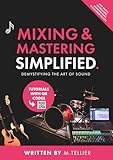
Mixing and Mastering Simplified
- QR video examples
- EQ frequency ranges
- beginner-friendly layout
Best Mixing and Mastering Courses in 2026
| Product | Specifications | Action |
|---|---|---|
| 4 Horsemen of Mixing and Music Production |
|
Check Latest Price |
| The Mixing Engineer’s Handbook |
|
Check Latest Price |
| Mixing and Mastering Simplified |
|
Check Latest Price |
 Step By Step Mixing Step By Step Mixing |
|
Check Latest Price |
 The Mixing Mindset The Mixing Mindset |
|
Check Latest Price |
 Audio Mastering Essential Practices Audio Mastering Essential Practices |
|
Check Latest Price |
 Mixing and Mastering in the Box Mixing and Mastering in the Box |
|
Check Latest Price |
 44 Reasons Your Mixes Suck 44 Reasons Your Mixes Suck |
|
Check Latest Price |
1. 4 Horsemen of Mixing and Music Production – Industry-Quality Sound With What You Already Have
4 Horsemen of Mixing & Music Production: How To Get An Industry Quality Sound, Using What You Already Have
56 pages
Covers gain staging, EQ, compression
Stereo imaging and mastering
Focus on using existing tools
Pros
- Straight to the point with no fluff
- Distills complex concepts into simple language
- Emphasizes using tools you already own
- Covers gain staging through mastering chain
Cons
- Only 56 pages so quite short
- Some may want deeper explanations
I picked this one as my top recommendation because it does something most mixing resources fail at. It gets you results fast without drowning you in theory. Gabriel Costa Gomes packed 56 pages with the core concepts that actually matter, and reviewers have responded with an impressive 4.8-star average across 19 ratings, with 89 percent giving it five stars.
When I worked through this guide, what jumped out immediately was the focus on gain staging, EQ, compression, limiting, stereo imaging, and panning. These are the fundamentals that separate a demo from a finished record. The author keeps everything grounded in the idea that you do not need expensive plugins to get there. You use what you already have.
The structure is built like a reference manual you can flip back to during a session. Each section covers one tool, explains why it matters, and shows you how to apply it. That makes it perfect for the producer who wants quick answers instead of a semester-long lecture series.
Where this book really shines is the mastering section. A lot of short guides skip mastering entirely or treat it as an afterthought. Here it gets its own focused treatment with practical techniques you can apply the same day you read them. That alone makes it worth grabbing for anyone who has been sending mixes out unmastered.
Who This Course Is Best For
This guide is built for bedroom producers and small studio owners who want a fast, no-nonsense path to better mixes. If you already have a DAW and a basic understanding of what mixing involves but your results still feel amateur, this bridges that gap quickly.
It is also a great fit for experienced producers who want a reference checklist they can run through before calling a mix finished. The compact 56-page format means you can revisit it in an afternoon without recommitting to a full study program.
What to Know Before You Buy
The biggest complaint from reviewers is the length. At 56 pages, some readers felt they were not getting enough material for the money. One reviewer called it a rip-off, though that stands out as a rare dissenting voice against overwhelming positive feedback.
If you are looking for a deep, exhaustive textbook, this is not it. But if you want a focused, practical system you can actually apply tonight, this delivers exactly what it promises. Pair it with a longer reference book and you have a complete learning kit.
2. The Mixing Engineer’s Handbook – The Industry Classic With Pro Interviews
The Mixing Engineer’s Handbook, Second Edition
290 pages
2nd edition
Pro engineer interviews
6 elements of mixing framework
Pros
- Interviews with industry heavy hitters
- Comprehensive EQ and effects coverage
- Covers 6 elements of successful mixes
- Time-aligning reverb and delay techniques
Cons
- Some gear references are dated
- Assumes some prior knowledge
- Not for complete beginners
Bobby Owsinski’s Mixing Engineer’s Handbook has been a staple on audio engineers’ desks for years, and for good reason. At 290 pages, it is one of the most comprehensive mixing resources you can buy, and the 4.7-star rating from 143 reviewers confirms its staying power.
What makes this book special is the interviews. Owsinski sat down with some of the biggest names in mixing and got them to share their actual techniques. You are not just reading theory. You are learning how working professionals approach EQ, compression, effects, and layering on real sessions.
The framework Owsinski teaches revolves around the six most important elements of a successful mix. That structure alone changed how I think about balancing a track. Instead of randomly tweaking knobs, I now have a checklist I can run through to make sure nothing gets neglected.
The chapter on effects and time-aligning reverbs and delays is worth the price of admission on its own. These are techniques that separate amateur-sounding mixes from polished, professional work, and Owsinski explains them clearly without dumbing anything down.
Who This Course Is Best For
This book targets beginner-to-intermediate engineers who already understand the basics of a DAW. If you know what a compressor does but you are not sure when or how much to use it, this fills in the gaps with practical, real-world guidance.
It is also a fantastic resource for self-taught producers who want to understand how the pros actually think. The interview format means you get multiple perspectives, which helps you develop your own approach instead of copying one person’s workflow.
What to Know Before You Buy
The publication date is 2006, so some gear references are dated. You will read about specific console models and outboard gear that are less common now. The techniques themselves remain timeless, but do not expect modern plugin recommendations.
Owsinski also uses equipment shorthand without always spelling out full brand and model names. If you are completely new to audio engineering, some of this terminology will fly over your head. Pair it with a beginner-friendly resource if you are just starting out.
3. Mixing and Mastering Simplified – Beginner-Friendly With QR Video Examples
Mixing & Mastering Simplified: Demystifying The Art Of Sound
156 pages
Published September 2025
QR codes for video examples
Covers EQ settings and frequency ranges
Pros
- Breaks down basic concepts clearly
- QR codes link to video examples
- Covers both mixing and mastering
- Very well organized layout
Cons
- Some QR codes still being developed
- Video content is a work in progress
- Physical format only
This is one of the newest resources on this list, published in September 2025, and it brings something fresh to the table. Melvin Tellier built Mixing and Mastering Simplified around the idea that beginners need both written explanations and audio-visual examples to actually internalize the concepts.
The QR code integration is what sold me on this book. Instead of just reading about how a frequency boost at 3 kHz affects a vocal, you scan a code and hear it. That kind of immediate, audible feedback is exactly what self-taught learners need to train their ears.
The book covers EQ settings, frequency ranges, and the complete workflow from raw tracks to finished master. Reviewers consistently praise the organization. Each chapter builds on the last, so you never feel lost or overwhelmed by information.
With a 4.7-star rating and 77 percent of reviewers giving it five stars, this is clearly hitting the mark for its target audience. It is the kind of book you can hand to a friend who just bought their first audio interface and say, start here.
Who This Course Is Best For
This book is built specifically for complete beginners who want a clear, structured introduction to mixing and mastering. If you have never opened a compressor plugin and terms like gain staging make your eyes glaze over, this is your starting point.
It also works well for experienced producers who want a clean, modern reference they can recommend to clients or collaborators. The QR code video integration makes it easy to demonstrate concepts without having to produce your own tutorials.
What to Know Before You Buy
The main concern from reviewers is that some QR codes do not work properly yet, and the video content is still being developed. The publisher has acknowledged this and is actively addressing it, but you may encounter dead links or placeholder videos in the early chapters.
Also, this is currently a physical paperback only. If you prefer reading on a Kindle or tablet, you will need to wait for a digital edition. The 156-page length makes it a manageable physical read, but some learners prefer the searchability of digital formats.
4. Step By Step Mixing – Create Great Mixes With Only 5 Plugins
Step By Step Mixing: How to Create Great Mixes Using Only 5 Plug-ins
Kindle and paperback
5 plugin mixing system
Genre-agnostic workflow
Home studio focus
Pros
- Easy to understand explanations
- Focus on 5 essential plugins
- Genre-agnostic techniques
- Workflow-oriented examples
Cons
- Author uses aggressive email marketing
- Light coverage of panning
- Assumes basic DAW knowledge
Bjorgvin Benediktsson’s Step By Step Mixing takes a refreshingly focused approach. Instead of throwing every possible technique at you, it teaches you to build great mixes using just five core plugins. That simplicity is exactly what overwhelmed beginners need.
I found the workflow-oriented structure especially helpful. Each chapter walks you through a specific part of the mixing process, from EQ to compression to reverb, delay, and saturation. By the time you finish, you have a repeatable system you can apply to any genre.
The book is DAW-agnostic and plugin-agnostic, which means the concepts transfer no matter what software or hardware you use. That makes it a long-term reference rather than something that becomes outdated when a new plugin version drops.
With 1,324 reviews and a 4.6-star average, this is one of the most widely tested resources on this list. Readers consistently praise how it strips away the confusion and gets you working on your mixes immediately instead of studying theory for weeks.
The chapters on EQ and compression are where this book really earns its keep. Benediktsson has a talent for explaining when and why to use each tool, not just how to twist the knobs. That kind of decision-making framework is what separates people who can mix from people who just own plugins.
Who This Course Is Best For
This book targets beginners who already know the basics of their DAW but are unhappy with their mix results. If you can record and edit audio but your mixes sound flat, muddy, or lifeless, the five-plugin system gives you a clear path forward.
It is also great for intermediate producers who want to simplify their workflow. If you have accumulated dozens of plugins and feel paralyzed by choice, this book helps you strip back to the essentials and actually finish mixes faster.
What to Know Before You Buy
The author promotes his paid website with fairly aggressive email marketing. Several reviewers mentioned this as a downside. If you are bothered by upsell emails, you may want to use a secondary address when registering any companion materials.
The book also does not cover panning in much depth, which some readers felt was a gap. Panning is arguably one of the most powerful mixing tools, so you may want to supplement this resource with additional material on stereo field placement.
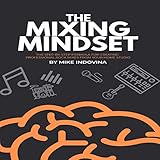
5. The Mixing Mindset – The Formula for Professional Rock Mixes From Home
The Mixing Mindset: The Step-By-Step Formula for Creating Professional Rock Mixes From Your Home Studio
Kindle and paperback
Step-by-step rock mixing formula
Home studio focus
Instrument-specific guides
Pros
- No fluff and gets right to the point
- Clear workflow with EQ examples
- Covers creative decision-making
- Applies to any genre not just rock
Cons
- No chapter on keys or piano
- Examples are ProTools-centric
- Better if you already mix a little
Mike Indovina’s The Mixing Mindset is built around a specific promise. It teaches you the step-by-step formula for creating professional rock mixes from a home studio. That genre focus is both its biggest strength and its main limitation.
What I appreciate about this book is the emphasis on creative decision-making. Most mixing resources focus on technical settings. Indovina goes deeper and helps you understand why you are making each move. That mindset shift is what helps you develop your own voice as a mixer.
The instrument-specific processing guides are genuinely useful. You get dedicated chapters on drums, bass, guitars, and vocals, each with specific EQ and compression settings you can use as starting points. That alone saves hours of trial and error.
Despite the rock focus, reviewers noted that the concepts apply to almost any genre. The workflow principles, gain staging approach, and creative problem-solving framework work whether you are mixing metal, pop, or acoustic singer-songwriter material.
Who This Course Is Best For
This book is ideal for home studio owners who mix rock, metal, or similar guitar-driven genres. If you are tired of your drum tones sounding weak and your guitars lacking punch, the instrument-specific guides will give you immediate, actionable improvements.
It also works for intermediate mixers who want to develop a more systematic approach. If your current process involves randomly soloing tracks and tweaking until something sounds okay, this book helps you build a repeatable workflow instead.
What to Know Before You Buy
There is no chapter covering keyboards or piano, which is a real gap if you mix music that features those instruments. You will need to find supplemental material for synth and keys processing.
The examples also reference ProTools and specific plugins throughout. If you use a different DAW like Logic, Reaper, or Ableton, you will need to translate the concepts to your own setup. The techniques still apply, but the screenshots and specific plugin names may not match your workflow.
6. Audio Mastering Essential Practices – The Berklee Guide to Pro Mastering
Audio Mastering – Essential Practices
152 pages
Berklee Press publication
Do no harm philosophy
Audio examples included
Pros
- Excellent for beginners and experienced engineers
- Do no harm mastering philosophy
- Case studies with real sessions
- Includes audio examples for each step
Cons
- Audio only available on iOS and Kindle Fire
- Theory-heavy with fewer hands-on examples
- May be too basic for advanced engineers
Jonathan Wyner’s Audio Mastering Essential Practices comes from Berklee Press, and that academic pedigree shows. Wyner is a mastering engineer with decades of experience, and he brings a thoughtful, measured approach to teaching the craft.
The core philosophy is do no harm. That resonated with me because so many self-taught producers destroy their mixes by over-processing during mastering. Wyner teaches you to serve the music first and only intervene when it genuinely improves the final product.
The case studies are where this book shines. Wyner walks through real mastering sessions and explains every decision he makes. You see the before and after, hear the differences, and understand why each move was necessary. That practical demonstration is invaluable for ear training.
Who This Course Is Best For
This book is perfect for producers who understand mixing but feel lost when it comes time to master. If you have been sending your mixes to an online mastering service because you do not trust your own skills, this gives you the confidence and framework to do it yourself.
It also works well as a reference for experienced engineers who want to check their techniques against a Berklee-level standard. Even pros can benefit from revisiting fundamentals and comparing their workflow to a master’s approach.
What to Know Before You Buy
The audio examples are only available on iOS and Kindle Fire devices. If you use Android, a desktop computer, or a different e-reader, you may not be able to access the companion audio. That is a significant limitation for a book that relies heavily on audible demonstrations.
Some advanced engineers found the material too basic. If you already master professionally and are looking for advanced techniques like mid-side processing or multiband compression strategies, you may want a more specialized resource.
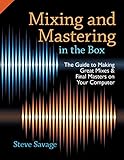
7. Mixing and Mastering in the Box – The Complete Computer-Based Guide
Mixing and Mastering in the Box: The Guide to Making Great Mixes and Final Masters on Your Computer
Kindle and paperback
Oxford University Press
Computer-based workflow
Bridges mixing and mastering
Pros
- Extensive coverage of mixing and mastering
- Bridges the gap between the two phases
- Creates a road map for specialized learning
- Practical examples included
Cons
- Challenging for complete beginners
- Better for intermediate to advanced
- Some content is common knowledge for pros
Steve Savage’s Mixing and Mastering in the Box, published by Oxford University Press, is one of the most academically rigorous resources on this list. It treats computer-based production as a complete discipline and covers both mixing and mastering in depth.
What sets this book apart is how it bridges the gap between mixing and mastering. Most resources treat them as separate topics. Savage shows you how decisions made during mixing affect the mastering stage, and how to set up your mixes so they master cleanly without needing heavy correction.
I found the workflow guidance especially valuable for home studio producers working entirely in the box. If you do not have access to analog outboard gear or a dedicated mastering room, Savage shows you how to get professional results using only software tools.
The 4.6-star rating from 121 reviewers reflects its solid reputation. Readers particularly praise the structure, which creates a road map you can follow from raw tracks all the way to a finished, release-ready master.
Who This Course Is Best For
This book is aimed at intermediate producers who want a comprehensive understanding of the entire mixing and mastering pipeline. If you already know the basics and want to deepen your knowledge of how the two stages connect, this is an excellent choice.
It is also great for self-taught engineers who feel like they have gaps in their understanding. Savage’s academic approach fills in the theoretical foundations that YouTube tutorials often skip, giving you a more complete mental model of the process.
What to Know Before You Buy
Self-taught beginners may find some sections challenging. The book assumes a baseline understanding of audio concepts and does not spend much time on beginner-level explanations. If you are brand new to mixing, start with a more beginner-friendly resource first.
Some experienced engineers noted that sections of the book cover material they already knew. If you have been mixing professionally for years, you may find parts of this repetitive. It is best suited for producers who are still building their foundational knowledge.
8. 44 Reasons Your Mixes Suck – A Quick Reference Troubleshooting Guide
44 Reasons Your Mixes Suck: A Mixing Engineer’s Guide (For The Small Recording Studio)
Kindle edition
44 practical mixing tips
Compact pocket reference
Small studio focus
Pros
- Practical tips with easy examples
- Compact and easy to read
- Perfect for quick reference
- Funny and engaging writing style
Cons
- Quite short overall
- May be basic for experienced engineers
- Some content feels self-evident
Amos Clarke’s 44 Reasons Your Mixes Suck takes a completely different approach from every other resource on this list. Instead of teaching a complete mixing system, it identifies 44 specific problems that make mixes sound bad and tells you how to fix each one.
I love this format because it is exactly how most of us actually work. You finish a mix, something sounds off, and you need to figure out what. This book gives you a troubleshooting checklist you can run through to diagnose and fix common issues fast.
The writing style is funny and engaging, which makes it an easy read. Clarke does not take himself too seriously, and that keeps the material accessible even when he is explaining technical concepts like frequency masking or phase issues.
At a 4.0-star rating with 88 reviews, it has a slightly lower average than others on this list, but 54 percent of reviewers still gave it five stars. The compact format and practical focus make it a useful addition to any mixer’s library.
Who This Course Is Best For
This book is perfect for beginners who are starting to notice problems in their mixes but cannot identify the cause. If your mixes sound muddy, harsh, or weak and you do not know why, this troubleshooting guide helps you pinpoint the issue quickly.
It is also great as a quick reference for more experienced producers. Even if you know the concepts, having a checklist of 44 common issues helps you catch problems you might otherwise miss during late-night mixing sessions when your ears are tired.
What to Know Before You Buy
Some reviewers found the book too short and felt it lacked depth. If you are looking for detailed explanations of each problem and solution, you may be disappointed. The format prioritizes quick, actionable tips over thorough exploration.
Advanced engineers may find some of the content self-evident. If you have been mixing professionally for years, you probably already know most of these 44 issues. This book is best suited for producers still in the early-to-intermediate stages of their learning journey.
How to Choose the Best Mixing and Mastering Course
Picking the right mixing and mastering course comes down to matching the resource to your current skill level, your genre focus, and your learning style. After going through all eight of these resources, I can offer some clear guidance on how to make the right choice.
Match the Resource to Your Skill Level
If you are a complete beginner, start with Mixing and Mastering Simplified or Step By Step Mixing. Both are designed to take you from zero to functional without overwhelming you. The QR video examples in Tellier’s book are especially helpful if you learn better by hearing than reading.
Intermediate producers should look at The Mixing Engineer’s Handbook or Mixing and Mastering in the Box. These go deeper into the why behind the techniques and help you build a more complete mental model of the mixing process.
Advanced engineers will get the most from Audio Mastering Essential Practices, especially if mastering is your weak spot. The do no harm philosophy and Berklee-level instruction help you refine your approach and catch bad habits.
Consider Genre Specialization
Genre matters more than most people realize. A mixing approach that works for hip hop will sound wrong on an acoustic folk track, and vice versa. If you work primarily in one genre, look for resources that speak directly to your style.
The Mixing Mindset is my top pick for rock and metal producers. The instrument-specific guides for drums, bass, guitars, and vocals are tailored to the challenges those genres present. Step By Step Mixing is genre-agnostic, which makes it a better fit if you work across multiple styles.
If you produce electronic music, EDM, or hip hop, you will want resources that cover low-end management, sub bass, and 808 processing specifically. While none of the books on this list are exclusively focused on those genres, the fundamentals in 4 Horsemen of Mixing and Music Production apply cleanly to electronic production.
Choose Your Learning Format
Some people learn best from books. Others need video. Still others want interactive exercises with feedback. Knowing your preferred format helps you pick a resource you will actually finish.
All eight resources on this list are book-based, but several include companion materials. Mixing and Mastering Simplified uses QR codes to link to video examples. Audio Mastering Essential Practices includes audio examples you can listen to alongside the text. Step By Step Mixing has a companion website with additional resources.
If you want pure video courses rather than books, platforms like Waves, Mastering.com, and Berklee Online offer structured video curricula. The books on this list make excellent companions to those courses, giving you reference material you can consult while watching video lessons.
Evaluate Instructor Credibility
The instructor’s real-world experience matters more than the brand name on the cover. Bobby Owsinski has worked with major-label artists and written multiple industry-standard books. Jonathan Wyner is a Berklee professor with decades of mastering credits. Bjorgvin Benediktsson has built a following through practical, accessible teaching.
Before committing to any course or book, look up the author’s discography, client list, or teaching history. Instructors with real industry credits tend to teach techniques that actually work in professional environments, not just theoretical concepts that sound good on paper.
Set Up Your Room for Accurate Monitoring
No course or book will help if your room is lying to you. Acoustic treatment is non-negotiable for anyone serious about mixing and mastering. Without it, you cannot trust what you hear, which means every decision you make is a guess.
Start with our guide to the best acoustic panels for home studios to control reflections and standing waves. Then check out our recommendations for the best diffusers for home studios to create a more natural, open sound field.
Comfort also matters during long mixing sessions. A good studio chair reduces fatigue and helps you stay focused when you are deep into a critical listening session.
Factor In Budget and Value
You do not need to spend a fortune to learn mixing and mastering. Three of the resources on this list are available as free Kindle downloads, which means you can start learning today without spending anything. The paid options range from affordable paperbacks to more comprehensive textbooks.
Think about value rather than just price. A 56-page book that fixes your mixes immediately is worth more than a 500-page textbook you never finish. Start with something short and practical, then invest in deeper resources as your skills grow and your needs become clearer.
Frequently Asked Questions About Mixing and Mastering Courses
How can I learn mixing and mastering?
You can learn mixing and mastering through a combination of structured books, video courses, and hands-on practice with multi-track sessions. The most effective approach is to start with a beginner-friendly resource like Step By Step Mixing or Mixing and Mastering Simplified, then practice on real songs while referencing more advanced materials like The Mixing Engineer’s Handbook as you grow.
What is the best mixing and mastering software?
The best DAW for mixing and mastering depends on your workflow. Pro Tools remains the industry standard for studio mixing, while Logic Pro, Reaper, Ableton Live, and Cubase are all capable alternatives. For mastering specifically, specialized tools like iZotope Ozone, FabFilter Pro bundles, and Waves plugins are widely used by professionals.
How much should I pay for mixing and mastering?
If you are learning, you can start with free Kindle books and invest 15 to 40 dollars in a solid paperback reference. For professional mixing and mastering services, expect to pay 50 to 200 dollars per song for indie engineers and 500 to several thousand dollars for top-tier professionals. Online courses typically range from 50 to 500 dollars depending on depth and instructor credentials.
What’s harder, mixing or mastering?
Mastering is generally considered harder because it requires a highly trained ear, an acoustically treated room, and the ability to make subtle adjustments that translate across all playback systems. Mixing involves more visible creative decisions, while mastering demands precision and restraint. Most engineers recommend learning mixing thoroughly before attempting to master your own material.
Final Thoughts on the Best Mixing and Mastering Courses
After working through all eight of these resources, my top pick is 4 Horsemen of Mixing and Music Production for its no-nonsense, immediately applicable approach. If you want comprehensive depth, The Mixing Engineer’s Handbook remains the gold standard. And beginners should start with Mixing and Mastering Simplified for its clear structure and QR video examples.
The best mixing and mastering courses are the ones you actually finish and apply. Pick the resource that matches your skill level and genre, set up your monitoring environment properly, and commit to practicing on real projects. That combination is what turns knowledge into results.
If you are still building out your studio, our guide to the best gifts for music producers has plenty of ideas to round out your setup in 2026.