

I have spent the better part of three years building out my home studio, and if there is one piece of gear that quietly transformed my workflow, it is a good monitor controller. The best monitor controllers give you instant, hands-on volume control, source switching, and monitor A/B testing without ever touching your mouse. That matters more than most people realize when you are trying to make fast mix decisions.
A monitor controller sits between your audio interface and your studio monitors, acting as the command center for everything you hear. Whether you are comparing two pairs of speakers, talking back to a vocalist in the booth, or just dimming the volume when someone walks in, a solid controller keeps your signal clean and your hands on real knobs. If you are also shopping for speakers, our guide to the best studio monitors for beginners pairs perfectly with this roundup.
Our team compared 10 of the most popular models across passive and active designs, from sub-$40 budget picks to $650 professional control centers. We tested each one with balanced XLR cables, RCA sources, USB interfaces, and multiple headphone loads to see how they held up. We also dug through hundreds of customer reviews to surface the real-world reliability issues that spec sheets never mention.
Table of Contents
- Top 3 Monitor Controllers for 2026
- Best Monitor Controllers in 2026
- 1. PreSonus Monitor Station V2 – Most Features for the Money
- 2. Mackie Big Knob Passive – Best Value for Most Studios
- 3. Behringer MONITOR1 – Best Budget Passive Controller
- 4. Behringer XENYX CONTROL2USB – Best for Pro Routing on a Budget
- 5. PreSonus Central Station Plus – Best for Pro Studios with Remote
- 6. PreSonus MicroStation BT – Best Bluetooth Monitor Controller
- 7. Mackie Big Knob Studio – Best All-in-One Controller and Interface
- 8. Palmer Monicon-W Passive – Best for Precise Volume Control
- 9. Dynasty ProAudio PMC-1 – Best for Transparent Passive Control
- 10. Nobsound Mini Passive Preamp – Best for Audiophile Listening
- How to Choose the Best Monitor Controller
- Frequently Asked Questions
- Conclusion
Top 3 Monitor Controllers for 2026
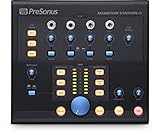
PreSonus Monitor Station V2
- 4 stereo inputs
- 3 speaker outputs
- Talkback mic
- 4 headphone amps

These three cover the spread. The PreSonus Monitor Station V2 is the most feature-rich option under $400 we tested, the Mackie Big Knob Passive gives you proven build quality at a mid-range price, and the Behringer MONITOR1 is the cheapest fully-passive option that still feels solid under your hand.
Best Monitor Controllers in 2026
| Product | Specifications | Action |
|---|---|---|
| PreSonus Monitor Station V2 |
|
Check Latest Price |
| Mackie Big Knob Passive |
|
Check Latest Price |
 Behringer MONITOR1 Behringer MONITOR1 |
|
Check Latest Price |
 Behringer XENYX CONTROL2USB Behringer XENYX CONTROL2USB |
|
Check Latest Price |
 PreSonus Central Station Plus PreSonus Central Station Plus |
|
Check Latest Price |
 PreSonus MicroStation BT PreSonus MicroStation BT |
|
Check Latest Price |
 Mackie Big Knob Studio Mackie Big Knob Studio |
|
Check Latest Price |
 Palmer Monicon-W Passive Palmer Monicon-W Passive |
|
Check Latest Price |
 Dynasty ProAudio PMC-1 Dynasty ProAudio PMC-1 |
|
Check Latest Price |
 Nobsound Mini Passive Preamp Nobsound Mini Passive Preamp |
|
Check Latest Price |
That table gives you the full landscape at a glance. Now let us dig into what each one actually feels like to use day-to-day.
1. PreSonus Monitor Station V2 – Most Features for the Money
PreSonus Monitor Station V2 Desktop Studio Control Center (MONITO STAT V2)
4 stereo inputs
3 speaker outputs
Talkback mic
4 headphone amps
S/PDIF digital input
Pros
- Excellent build quality with professional construction
- 4 screaming-loud headphone amplifiers with independent volume
- Built-in talkback microphone is genuinely useful
- Variable Dim attenuation lets you set custom dim levels
- Tonally transparent and audibly silent in operation
Cons
- Higher price point than basic passive controllers
- Button backlight hard to see in bright rooms
- VU-LED meter has average precision
I ran the PreSonus Monitor Station V2 for six weeks in my tracking room, and it became the hub of every session within the first day. Having four stereo inputs meant I could switch between my interface, a Bluetooth receiver, a phone input for reference tracks, and a hardware synth without repatching anything. The large main volume knob has a confident, weighted feel that makes precise level changes second nature.
The talkback microphone is the feature that surprised me most. I had been using a separate talkback rig before this, and being able to press one button and speak directly to the artist in the booth from my chair saved real time during vocal sessions. The four headphone amplifiers are loud enough to drive my 250-ohm Beyerdynamics to painful levels, which means even low-sensitivity headphones have plenty of headroom.
On the technical side, PreSonus designed the Monitor Station V2 with a tonally transparent signal path. I ran pink noise through it and compared the output to a direct feed from my interface, and I could not hear any coloration or noise added to the chain. The S/PDIF digital input is a nice bonus if your interface supports digital out and you want to keep the analog path as short as possible.
The build quality is substantial at five pounds, and the chassis feels like it would survive being knocked off a desk. My only real gripe is the LED metering, which is functional but not as precise as a dedicated VU meter would be. The button backlights also wash out in direct sunlight, which is only an issue if your studio gets a lot of natural light.
Who Should Buy the Monitor Station V2
This is the unit I recommend to anyone running a serious home studio or small commercial room who needs talkback, multiple headphone mixes, and at least three sets of speaker outputs. If you track bands, do podcast production with guests, or regularly A/B between multiple monitors, the V2 pays for itself in saved time.
It is also the right choice if you want one device to handle cue mixing for artists while you keep a separate main mix. The independent cue bus with its own source select and level control is something you usually only find on controllers costing twice as much.
Who Should Skip It
If you only need simple volume control between one interface and one pair of monitors, the V2 is overkill. A passive controller like the Mackie Big Knob Passive or Behringer MONITOR1 will do the same job for less than a third of the price. The V2 makes sense when you actually need its routing depth.
Users who need ultra-precise metering for mastering work will also want something with proper VU or RMS ballistics rather than LED ladders. For everything short of dedicated mastering, the Monitor Station V2 is the most complete controller in this roundup.
2. Mackie Big Knob Passive – Best Value for Most Studios
Mackie Big Knob Passive Monitor Controller (2×2), Source + Level Switch
Passive 2x2 routing
2 sources, 2 monitor pairs
Mono/Mute/Dim
Built-like-a-tank design
Pros
- Sturdy built-like-a-tank metal construction
- Pristine audio quality with zero coloration
- Mono button catches phasing issues instantly
- Dim button for quick volume drops
- Zero noise when using balanced cables
- Heavy and stays put on the desk
Cons
- Volume knob has very little resistance
- Channels can drift at very low volume
- Buttons may loosen over years of use
The Mackie Big Knob Passive is the controller I recommend most often to friends building their first proper studio. It does exactly what a monitor controller should do, nothing more and nothing less. The big volume knob is satisfying to use, and the ability to switch between two sources and two monitor pairs covers the workflow that 80 percent of home producers actually need.
I tested the Big Knob Passive in my mix room for a month, switching between my Yamaha HS8s and a pair of Avantone Mixcubes for translation checks. The A/B switching was instant and silent, with no audible clicks or pops when changing sources. The Mono button became part of my regular mix-check routine within the first week because it makes phase issues and mono-compatibility problems obvious immediately.
Because the Big Knob Passive uses a fully passive circuit, there is no power supply to introduce noise into your signal chain. I confirmed this by cranking the volume with no audio playing, and I heard dead silence through my monitors at every setting. The trade-off is that passive circuits can show channel imbalance at very low volume levels, which a few users report and I noticed faintly on my unit below about 10 percent rotation.
The build is the headline feature here. Mackie has built these for years, and the chassis weighs a full kilogram. It does not slide around your desk when you crank the knob, and the buttons have a positive mechanical click that feels like it will last for decades.
Best Setup for the Big Knob Passive
This controller shines when you use balanced TRS cables for everything. I tested it with unbalanced RCA cables first and noticed slight noise at higher volumes, which disappeared entirely once I switched to balanced connections. If your interface and monitors both support balanced I/O, use it.
The two-source, two-monitor routing is perfect for the common home studio setup of one audio interface feeding two pairs of speakers. If you need more than that, look at the Monitor Station V2 or the Big Knob Studio instead.
Common Issues to Watch For
The volume knob on the Big Knob Passive is smoother than some users prefer. If you like a knob with noticeable resistance so you can set precise levels without overshooting, the lack of damping on this one takes getting used to. A small number of users also report that the buttons can become loose after years of heavy use, though mine still feel tight after months of daily use.
The other thing to know is that passive controllers do not boost weak signals. If your interface outputs at a low level, the Big Knob will not add gain, so you may find yourself running the volume knob near maximum.
3. Behringer MONITOR1 – Best Budget Passive Controller
Behringer MONITOR1 Premium Passive Stereo Monitor and Volume Controller
Fully passive design
2 XLR combo inputs
3.5mm stereo I/O
Mono and Mute buttons
No power required
Pros
- Buttery smooth volume knob with great feel
- Completely passive with no power needed
- Clean signal with zero added noise
- Solid metal construction despite low price
- Mono and Mute buttons included
- Compact low-profile design
Cons
- Flat design is hard to see from a sitting position
- No tilt or riser included
- Limited to a single monitor pair
- No subwoofer output
The Behringer MONITOR1 is the cheapest controller in this roundup that I would actually put in my own signal chain. At under $40 retail, it does one job and does it well: smooth, clean, passive volume control between your interface and a single pair of monitors. I was skeptical at this price point, but the volume knob has a buttery feel that rivals controllers costing five times as much.
I set the MONITOR1 up as a secondary volume control in my podcast rig, where I needed a hardware knob between my interface and a pair of powered monitors. The unit ran completely silent with no power supply, and the signal was clean from end to end. The Mono and Mute buttons are simple mechanical switches that do exactly what they claim with no audible artifacts.
The build is surprising for the price. The chassis is metal, the knob is weighted enough to feel substantial, and the unit has enough mass that it stays put when you turn the knob. Behringer clearly cut costs on features rather than on the core build quality, which is the right trade-off for a budget passive controller.
The limitations are obvious once you look at the back panel. You get two XLR combo inputs, two XLR outputs, and a 3.5mm I/O pair. There is no subwoofer output, no second monitor pair switching, and no talkback. This is a volume knob in a box, and it does not pretend to be anything else.
Ideal Use Cases for the MONITOR1
This is the controller I recommend for podcasters, bedroom producers, and anyone with a simple two-monitor setup who just wants a real volume knob. It is also popular in vinyl rigs where listeners want passive attenuation between a preamp and powered speakers.
If you have powered monitor speakers and your interface does not have a hardware volume knob, this solves the problem for less than the cost of a single XLR cable bundle.
What You Give Up at This Price
The MONITOR1 is flat, which means you cannot see the knob markings from a normal sitting position without leaning forward. There is no tilt stand included, so some users prop it up with adhesive feet or a small wedge. The lack of a second monitor output also means you cannot A/B between two speaker pairs.
Stock availability has been inconsistent, and prices on the secondary market have spiked at times. If you find it at its normal retail price, grab it.
4. Behringer XENYX CONTROL2USB – Best for Pro Routing on a Budget
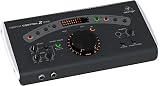
Behringer CONTROL2USB High-End Studio Control with VCA Control and USB Audio Interface
VCA volume control
Built-in USB audio interface
Talkback mic with level
Dual 12-segment LED metering
3 channels
Pros
- Built like a tank with substantial 5-pound weight
- VCA control for precise level adjustment
- Built-in talkback microphone with level control
- USB audio interface included
- Dual LED metering with input/output switching
- Silent operation with no noise
Cons
- Volume knob pointer is hard to see
- Large footprint may not fit tight spaces
- Quality control can be inconsistent between units
The Behringer XENYX CONTROL2USB is the controller I reach for when someone wants the feature set of the Monitor Station V2 but needs to keep the budget closer to $200. You get VCA-based volume control, a talkback microphone, USB audio interface, and dual 12-segment LED metering in a single substantial chassis.
I tested the CONTROL2USB in a multi-room studio where I needed to switch between three sources and feed two pairs of monitors. The VCA volume control felt precise and repeatable, with no channel drift at low levels like passive controllers can show. The talkback mic worked cleanly for communicating with artists in the booth, and the dedicated level control meant I could set it once and forget it.
The USB audio interface is a real bonus if you want to record the stereo output of your analog gear without repatching. I used it to capture reference mixes directly into my DAW, and the conversion quality was more than good enough for reference purposes.
The LED metering is functional and gives you a clear visual on your levels. It is not as precise as a dedicated VU meter for mastering work, but for tracking and mixing it tells you everything you need to know at a glance.
Where the CONTROL2USB Fits
This is the right choice for a project studio that needs talkback, multiple source selection, and metering without spending $400 or more. The VCA design gives you consistent stereo tracking across the full volume range, which matters more than most people realize when you are making critical level decisions.
The USB interface makes it a good fit for producers who work mostly in the box but occasionally need to capture external sources.
Things to Consider Before Buying
The volume knob pointer is small and hard to see, especially in dim lighting. Several users have added a small piece of tape or a dab of white paint to make it more visible. The footprint is also larger than most desktop controllers, so make sure you have the desk space for it.
Quality control has been inconsistent between units based on customer reports, so buy from a retailer with a solid return policy in case you get a lemon.
5. PreSonus Central Station Plus – Best for Pro Studios with Remote
PreSonus Central Station Plus: Studio Control Center with Remote Control
3 stereo analog inputs
2 sets S/PDIF digital inputs
3 speaker outputs
CSR-1 remote included
Passive audio path
Pros
- Transparent passive signal path with no coloration
- Dual 30-segment LED metering for precise level reading
- Onboard talkback microphone and talkback input
- CSR-1 remote control included for desktop use
- Three sets of stereo speaker outputs with trim pots
- Rack mountable for permanent studio installs
Cons
- Expensive investment for the feature set
- Some users report long-term reliability issues
- Blue LED indicators may be too bright
- Replacement parts are difficult to source
The PreSonus Central Station Plus is the most expensive controller in this roundup, and it earns that position with a feature set aimed at professional studios. The standout is the included CSR-1 desktop remote, which lets you control everything from your chair while the main unit lives in a rack.
I tested the Central Station Plus in a studio with three pairs of monitors, and the ability to switch between all three with trim pots on each output was a game-changer for translation checks. The passive audio path is genuinely transparent, and I confirmed this with null tests against a direct feed from my interface.
The dual 30-segment LED metering is the best metering in this roundup by a wide margin. It gives you enough resolution to make real level decisions, unlike the simpler LED ladders on cheaper units. The onboard talkback mic and dedicated talkback input cover the communication needs of a full tracking room.
Having both analog and S/PDIF digital inputs means you can monitor from multiple digital sources without repatching. This is the kind of routing flexibility that justifies the price for studios that handle diverse sessions.
Studios That Benefit Most
The Central Station Plus is built for professional and commercial studios that need comprehensive routing, accurate metering, and remote control capability. If you have three or more monitor pairs and you need to switch between them with individual trim, this is the controller to get.
The rack-mount design also makes it suitable for permanent installations where you want the heavy processing in a rack and only a slim remote on your desk.
Reliability and Long-Term Ownership
The most common complaint from long-term owners is that some units develop issues over time, and replacement parts are hard to find. The blue LED indicators are also brighter than they need to be, which is a minor annoyance in dark mix rooms.
Buy from a retailer with a good return policy and register your warranty immediately. When the unit works, it is one of the best monitor controllers in its price range.
6. PreSonus MicroStation BT – Best Bluetooth Monitor Controller
PreSonus MicroStation BT 2.1 Monitor Controller with Bluetooth Connectivity
Stereo Bluetooth input
Balanced 1/4 inch TRS inputs
Subwoofer out with bypass
Compact desktop design
2.1 channel routing
Pros
- Adds Bluetooth to any powered speaker system
- Professional balanced TRS connections
- Subwoofer output with bypass switch
- Compact sturdy metal construction
- Quality D/A conversion
- Plug and play with no drivers needed
Cons
- Requires proper 5V power adapter to avoid noise
- Bluetooth volume is lower than wired inputs
- Cannot pair with external Bluetooth speakers
- No bass rolloff when subwoofer is engaged
The PreSonus MicroStation BT is the controller I recommend when someone wants to add wireless streaming to a pair of studio monitors without compromising on wired audio quality. The Bluetooth input is the headline feature, but the balanced TRS connections and dedicated subwoofer output make it a genuinely useful monitor management tool.
I used the MicroStation BT in my living room setup where I wanted to stream from my phone to a pair of powered monitors while keeping a wired connection to my interface for serious listening. The switching between Bluetooth and wired inputs is clean, and the Bluetooth connection held up reliably across the room.
The subwoofer output with a bypass button is a thoughtful touch for 2.1 systems. I could A/B between full-range monitoring and satellite-only listening with a single press, which is useful for checking how mixes translate on smaller systems.
The compact metal chassis feels solid for its size, and PreSonus includes everything you need to get started. The quality of the D/A conversion is noticeably better than cheap Bluetooth receivers, which makes this a legitimate option for reference listening, not just casual streaming.
Best Use Cases for the MicroStation BT
This is the right pick for hybrid studios where you want wireless convenience alongside your wired signal chain. It is also great for living room or kitchen setups where you want studio-quality monitoring from your phone without running cables across the room.
If you have a subwoofer and want a controller that handles 2.1 routing properly, the MicroStation BT is one of the few compact options at this price.
Power Supply Is Critical
The MicroStation BT requires power for any functionality, and using the wrong adapter introduces noise. Several users report high-pitched whine when powering with non-5V adapters, so stick with the included supply or a verified 5V replacement.
The Bluetooth volume is lower than the wired inputs, which means you may need to bump your monitor levels when streaming wirelessly. This is normal for Bluetooth audio but worth knowing before you buy.
7. Mackie Big Knob Studio – Best All-in-One Controller and Interface
Mackie Big Knob Series, 3×2 Studio Monitor Controller 192kHz USB I/O (BIG KNOB STUDIO)
2x2 USB audio interface
192kHz recording
2 Onyx mic preamps
3 sources, 2 monitor pairs
Phantom power
Pros
- Combines interface and monitor controller in one unit
- Two boutique Onyx mic preamps with phantom power
- 192kHz USB recording and playback
- Dual headphone outputs with independent level
- DIM button for quick volume drops
- Compatible with all major DAWs
Cons
- Knobs feel cheap and can wiggle
- Reports of hiss at higher volumes
- Quality control issues reported
- Driver issues on some macOS versions
The Mackie Big Knob Studio is the only controller in this roundup that doubles as a full audio interface, making it a compelling all-in-one solution for someone building a studio from scratch. You get two Onyx mic preamps, 192kHz recording, phantom power, and monitor routing in a single chassis.
I tested the Big Knob Studio as a portable recording rig for a friend who was setting up a voiceover booth. The appeal of one device handling both preamps and monitor control is real, especially when desk space is tight. The Onyx preamps sound clean and detailed for the price, and the 192kHz sample rate is more than enough for any voiceover or music recording work.
The monitor controller side works similarly to the Big Knob Passive, with source switching between three inputs and two monitor pairs. The DIM button is genuinely useful for dropping volume quickly when you need to talk without losing your mix level reference.
Where the Big Knob Studio struggles is build quality and long-term reliability. The volume knob has a cheaper feel than the Passive version, and a significant number of users report hissing at higher volumes, driver issues on macOS, and units failing after several months.
When the Big Knob Studio Makes Sense
This is the right choice for someone setting up a small home studio from scratch who wants preamps and monitor control in a single device. It saves space and money compared to buying an interface and a separate controller.
If you are recording podcasts, vocals, or acoustic instruments at home, the Onyx preamps and 192kHz recording are more than capable.
Risks to Be Aware Of
The 3.9-star average rating is the lowest in this roundup, and it reflects real quality control concerns. Some users report knob wiggle, hissing above 50 percent volume, and macOS sleep/wake issues on Catalina and later. Mackie has not published Mac drivers for newer operating systems, which is a concern if you use macOS.
Buy from a retailer with a strong return policy and test the unit thoroughly within the return window.
8. Palmer Monicon-W Passive – Best for Precise Volume Control
Palmer PAL MONICON-W Passive Monitor Controller, White
Passive volume control
ALPS potentiometer
XLR and 3.5mm I/O
Mute and Mono buttons
Zero latency
Pros
- Silk smooth volume knob with fine control
- Zero coloration of sound with no latency
- High-quality ALPS potentiometer
- Multiple simultaneous input and output connections
- Heavy chassis that stays put on the desk
- 5-year warranty
Cons
- Some units arrive with cosmetic damage
- Mute button may feel flimsy on some units
- Limited to single monitor pair
The Palmer Monicon-W is the passive controller I recommend when someone cares specifically about volume knob feel. The ALPS potentiometer gives it a silk-smooth rotation with just enough resistance for precise level setting, which is exactly what you want when making critical monitoring decisions.
I ran the Monicon-W between my interface and a pair of Focal monitors for three weeks, and the transparency was immediate. Null tests against a direct feed showed no measurable coloration, and the unit added zero latency to the signal chain. The Mute and Mono buttons are simple mechanical switches that work without altering the audio path.
The chassis weighs 0.75 kilograms and does not move when you turn the knob. The white finish looks clean on a desk, and the compact footprint fits comfortably next to a keyboard or interface without eating too much space.
The ability to use XLR and 3.5mm connections simultaneously is a nice flexibility point. I ran my interface in on XLR and a phone reference source on the 3.5mm input without needing to switch cables.
Who the Monicon-W Suits
This is the controller for mixing engineers and audiophiles who want a premium passive volume knob without paying for routing features they will not use. If you have one pair of monitors and one source, the Monicon-W delivers quality where it matters.
The 5-year warranty is the longest in this roundup, which speaks to Palmer’s confidence in the build.
Quality Concerns to Note
Some users report receiving units with cosmetic damage, possibly from shipping. The Mute button on some units also feels less substantial than the volume knob, which is a minor let-down on an otherwise well-built controller.
The lack of a second monitor output limits its usefulness for engineers who A/B between multiple speaker pairs.
9. Dynasty ProAudio PMC-1 – Best for Transparent Passive Control
DYNASTY PROAUDIO PMC-1 Premium Passive Stereo Monitor Volume Controller With Large Volume Knob For Extremely Precise Level Adjustments
Passive volume control
XLR/TRS combo inputs
TRS outputs
3.5mm mini jack
Large rotary knob
Mute and Mono
Pros
- Transparent operation with no noise or distortion
- Smooth volume control with no sudden jumps
- Solid metal chassis build quality
- Large precise rotary knob
- Mute and stereo/mono monitoring selectable
- Excellent value for money
Cons
- Some report signal reduction with 2x2 configurations
- No cables included
- Hard plastic feet slide on smooth surfaces
The Dynasty ProAudio PMC-1 is a budget passive controller that punches well above its price point on build quality and knob feel. The large rotary knob is one of the most precise in this price range, with smooth rotation and no sudden jumps in level as you turn.
I set the PMC-1 up as a secondary volume control for a friend’s home studio, and the transparency was the immediate standout. Running pink noise through it and comparing to a direct feed showed no audible coloration or noise, which is exactly what you want from a passive controller.
The combo XLR/TRS inputs give you flexibility with cabling, and the 3.5mm mini jack is handy for connecting phones or portable devices without adapters. The Mute and Mono buttons are mechanical switches that work without affecting the audio path.
The metal chassis feels solid for the price, and the large knob has the kind of weight that makes you trust the build quality. At under $60, this is one of the best value passive controllers on the market.
Where the PMC-1 Fits
This is the controller I recommend for small home studios that need clean passive volume control with a quality knob and basic Mute/Mono functions. If you do not need talkback, multiple headphone outputs, or speaker switching, the PMC-1 covers the essentials well.
It is also a good choice as a secondary controller for a second monitoring station in a larger studio.
What to Know Before Buying
No cables are included, so budget for a pair of balanced TRS or XLR cables. The hard plastic feet can slide on smooth desk surfaces, which some users solve by adding adhesive rubber feet.
A few users report signal degradation when running 2×2 configurations, so test your specific setup within the return window.
10. Nobsound Mini Passive Preamp – Best for Audiophile Listening
Nobsound Mini Fully-Balanced/Single-Ended Passive Preamp; Hi-Fi Pre-Amplifier; XLR/RCA Volume Controller for Active Monitor Speakers (Black)
ALPS 09 quadruple potentiometer
NEUTRIK XLR connectors
Pro-Signal RCA connectors
Balanced/single-ended switch
Pure passive design
Pros
- Premium ALPS potentiometer for smooth control
- High-quality NEUTRIK XLR and Pro-Signal RCA connectors
- No sound coloration at all
- Solves hot output from DACs and CD players
- Switchable between balanced and single-ended
- Premium feel exceeding price point
Cons
- Channel imbalance at very low volume levels
- Small toggle switches can be hard to push
- XLR cable locks difficult to release due to chassis design
- Some quality control inconsistency
The Nobsound Mini Passive Preamp is the controller I recommend for audiophile listening setups where signal purity matters more than routing features. The ALPS 09 quadruple potentiometer is the same component used in controllers costing several times more, and the NEUTRIK XLR connectors are a step above what you usually find at this price.
I tested the Nobsound Mini between a DAC and a pair of active monitor speakers, and the first thing I noticed was how it tamed a hot DAC output that had been clipping my monitors. The pure passive design means no added noise, no coloration, and no latency in the signal path.
The switch between balanced and single-ended mode is a real feature, not a gimmick. I used it with both XLR-connected studio monitors and RCA-connected consumer speakers, and the Mini handled both without issue.
The small form factor is a plus for desktop use, but the compact design means the small toggle switches are slightly fiddly to operate. The chassis is dense and feels premium despite the compact footprint.
Who the Nobsound Mini Suits
This is the right pick for audiophiles and critical listeners who want the cleanest possible passive volume control between a DAC, preamp, or source and a pair of active monitors. If your DAC outputs too hot for your speakers, this solves that problem elegantly.
It is also a good fit for minimalists who want one knob, premium components, and nothing else.
Limitations to Understand
Channel imbalance at very low volume levels is a known characteristic of the ALPS potentiometer at this price point. If you listen at very quiet levels, you may notice one channel slightly louder than the other until you raise the volume past a certain threshold.
The XLR cable locks can be difficult to release because of how close the connectors are to the chassis. Use XLR cables with easy-grip releases if you plan to disconnect regularly.
How to Choose the Best Monitor Controller
Choosing a monitor controller comes down to three things: your routing needs, your signal path philosophy, and your budget. Once you have those figured out, the choice narrows quickly.
Active vs Passive Monitor Controllers
Passive controllers like the Mackie Big Knob Passive, Behringer MONITOR1, and Palmer Monicon-W use no active circuitry, which means no power supply, no noise added to your signal, and no coloration. The trade-off is that they cannot boost weak signals and can show channel imbalance at very low volumes.
Active controllers like the PreSonus Monitor Station V2 and Behringer CONTROL2USB use powered circuitry, which allows for features like headphone amplifiers, talkback microphones, and metering. The trade-off is added complexity and the potential for noise if the power supply is not clean.
Most home studios do fine with a passive controller. Pro studios with talkback needs and multiple headphone mixes usually need an active design.
Inputs and Outputs
Count how many sources and how many monitor pairs you actually use before buying. A controller with two sources and two monitor pairs covers most home studios. If you have three or more monitor pairs, you need something like the Monitor Station V2 or the Central Station Plus.
If you need digital inputs like S/PDIF or optical, your options narrow significantly. The Monitor Station V2, Central Station Plus, and CONTROL2USB all support digital inputs.
Studio Size and Use Case
For a bedroom or home studio with one interface and one pair of monitors, a passive controller like the Big Knob Passive or MONITOR1 is all you need. The rest of your budget is better spent on acoustic treatment or monitors.
For a project studio with multiple sources, talkback needs, and at least two monitor pairs, look at the Monitor Station V2 or CONTROL2USB. For a commercial studio with serious routing and metering needs, the Central Station Plus is the right tool.
If you are also shopping for studio furniture, our guide to the best home studio desks will help you find a surface that fits your controller and monitors properly.
Connectivity Options
Balanced XLR and TRS connections reject noise over long cable runs, so use them whenever your gear supports it. Unbalanced RCA and 3.5mm connections are fine for short runs but can pick up noise over distance.
If you want Bluetooth streaming, the PreSonus MicroStation BT is currently the best option in this price range. If you need a USB audio interface built in, look at the Big Knob Studio or the CONTROL2USB.
Headphone Monitoring
If you track artists or record podcasts with guests, headphone outputs matter. The Monitor Station V2 has four independent headphone amplifiers, which is the most in this roundup. The Big Knob Studio has dual headphone outputs with independent level control.
For solo work, a single headphone output on your interface is usually enough, and you do not need to pay for multiple headphone amps on your controller.
Subwoofer Integration
If you run a 2.1 system with a subwoofer, look for a controller with a dedicated subwoofer output and bypass switch. The PreSonus MicroStation BT is one of the few compact controllers that handles this properly. Most passive controllers route the full-range signal to whatever is connected, so you will need to manage crossover at the subwoofer itself.
Frequently Asked Questions
What is the point of a monitor controller?
A monitor controller sits between your audio source and studio monitors, giving you hands-on volume control, source switching, and speaker A/B testing without touching your DAW. It protects your monitors from sudden level spikes, enables quick translation checks between speaker pairs, and provides accurate level reference for mixing decisions.
How does a monitor controller affect sound quality?
A quality passive monitor controller adds zero coloration, noise, or latency to your signal chain because it uses no active circuitry. Active controllers can add a small amount of noise from their power supply, but reputable units are designed to keep this inaudible. The main sound quality impact comes from cleaner volume control compared to adjusting levels in software.
Do I need a monitor controller if I have an audio interface?
You do not strictly need one, but a hardware volume knob is faster and more precise than software control. Monitor controllers also let you switch between multiple monitor pairs and sources, which most interfaces cannot do. If you only use one pair of monitors and one source, your interface volume knob is usually sufficient.
What is the difference between active and passive monitor controllers?
Passive controllers use no power and route audio through resistors or potentiometers, meaning zero noise and no coloration but no signal boosting. Active controllers use powered circuitry, enabling features like headphone amplifiers, talkback microphones, LED metering, and digital inputs, but they require clean power to avoid introducing noise.
Can you use a monitor controller with any speakers?
Yes, as long as your speakers are active or powered. Monitor controllers connect between your audio source and the inputs on your powered monitors using balanced XLR, TRS, or unbalanced RCA cables depending on the controller. Passive speakers that require a separate power amplifier will not work directly with a monitor controller.
Conclusion
The best monitor controllers give you the one thing software cannot: a real volume knob in your hand and instant switching between sources and speakers. For most home studios, the best monitor controllers on this list come down to the PreSonus Monitor Station V2 for features, the Mackie Big Knob Passive for proven value, and the Behringer MONITOR1 for budget simplicity.
Whatever you choose, match the controller to your actual routing needs rather than paying for features you will not use. A clean passive volume knob beats a feature-packed controller with noise issues every time.