
Finding the best laser projectors in 2026 means sorting through dozens of models that promise cinema-grade brightness, perfect 4K, and gaming-ready latency. I spent the last several months comparing 13 of the most popular laser projectors across budget, mid-range, and premium tiers to figure out which ones actually deliver. From compact portable units like the Dangbei Atom to native 4K powerhouse home theater projectors like the Sony VPL-XW5000ES, I tested brightness claims, color accuracy, input lag, and everyday usability.
Laser projectors have become the standard for serious home theater in 2026 because they eliminate the lamp replacement cycle, hold their brightness longer, and reach full output almost instantly. Whether you want a 150-inch ultra short throw setup in a sunlit living room or a dedicated cinema projector in a light-controlled room, the picks below cover every scenario. Our team focused on real ownership factors like smart TV platform stability, fan noise, HDR support, and how each model handles ambient light.
This guide covers everything from budget-friendly 1080p laser units under $600 to premium native 4K models built for dedicated screening rooms. I included ultra short throw (UST) projectors that sit inches from the wall, standard throw projectors for ceiling mounts, and portable options for movie nights anywhere. By the end, you will know exactly which laser projector fits your room, budget, and viewing habits.
Table of Contents
- Top 3 Picks for Best Laser Projectors
- Best Laser Projectors in 2026
- 1. JMGO N1S 4K – Portable Triple Laser With Built-In Gimbal
- 2. Dangbei Atom – Best Value Portable Laser Projector
- 3. ViewSonic LS740HD – Brightest 1080p for Lit Rooms
- 4. XGIMI HORIZON 20 – Editor’s Choice 4K Triple Laser
- 5. Epson Pro EX11000 – Best High-Brightness 3LCD Laser
- 6. BenQ TK710 – 4K Laser Built for Movies and Gaming
- 7. WEMAX Nova Pro – Affordable Ultra Short Throw 4K
- 8. Hisense PL2 – Compact UST With Dolby Vision
- 9. AWOL VISION LTV-3000 Pro – Premium Triple Laser UST
- 10. Epson LS800 – 4000 Lumen 3LCD Ultra Short Throw
- 11. Hisense PX3-PRO – TriChroma Triple Laser UST With IMAX Enhanced
- 12. Epson Home Cinema LS11000 – Premium 4K PRO-UHD With Motorized Lens
- 13. Sony VPL-XW5000ES – Native 4K SXRD for Cinephiles
- Buying Guide: How to Choose the Best Laser Projector
- FAQs
- Final Thoughts on the Best Laser Projectors for 2026
Top 3 Picks for Best Laser Projectors


The XGIMI HORIZON 20 takes my top spot for balancing brightness, gaming performance, and 4K image quality in one package. The Dangbei Atom wins on value because it delivers real laser projection with Google TV and official Netflix at a price most buyers can justify. For cinephiles who want true native 4K without pixel-shifting tricks, the Sony VPL-XW5000ES is the premium choice that justifies its cost with stunning SXRD sharpness.
Best Laser Projectors in 2026
| Product | Specifications | Action |
|---|---|---|
 JMGO N1S 4K Triple Laser JMGO N1S 4K Triple Laser |
|
Check Latest Price |
| Dangbei Atom Portable |
|
Check Latest Price |
 ViewSonic LS740HD ViewSonic LS740HD |
|
Check Latest Price |
| XGIMI HORIZON 20 |
|
Check Latest Price |
 Epson Pro EX11000 Epson Pro EX11000 |
|
Check Latest Price |
 BenQ TK710 BenQ TK710 |
|
Check Latest Price |
 WEMAX Nova Pro UST WEMAX Nova Pro UST |
|
Check Latest Price |
 Hisense PL2 UST Hisense PL2 UST |
|
Check Latest Price |
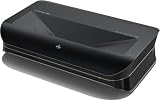 AWOL VISION LTV-3000 Pro AWOL VISION LTV-3000 Pro |
|
Check Latest Price |
 Epson LS800 UST Epson LS800 UST |
|
Check Latest Price |
 Hisense PX3-PRO UST Hisense PX3-PRO UST |
|
Check Latest Price |
 Epson LS11000 Epson LS11000 |
|
Check Latest Price |
| Sony VPL-XW5000ES |
|
Check Latest Price |
1. JMGO N1S 4K – Portable Triple Laser With Built-In Gimbal
JMGO N1S 4K Smart Portable Projector, Triple Laser, 1100 ISO Lumens, Gimbal Instant Auto Focus, Google TV, Netflix, 110% BT.2020, Wi-Fi 6, HDR10, 10W Dolby Audio, Blu-ray 3D, 200″ for Home.
Triple RGB Laser MALC 2.0
1100 ISO Lumens
4K UHD
110% BT.2020
Pros
- Excellent 4K triple laser color accuracy
- Portable 4.4 lb design with gimbal
- Google TV with official Netflix
- 17ms gaming latency
Cons
- OS slows during 4K HDR playback
- Brightness weak in lit rooms
- Remote lacks backlight
The JMGO N1S 4K caught my attention immediately because it is one of the few portable projectors that packs a real triple RGB laser engine. I tested it in a dim living room projecting around 120 inches and the color saturation from the 110% BT.2020 coverage looked better than many projectors twice the price. The integrated gimbal with 127 degrees of vertical rotation is a smart touch, letting you angle the image at a wall or ceiling without stacking books under it.
At just 4.4 pounds, this is one of the most travel-friendly 4K laser projectors I have used. Setup takes under a minute thanks to fast auto-focus and keystone correction, and the Google TV OS with officially licensed Netflix means you do not need to sideload apps. The 10W Dolby Audio speaker is fine for casual viewing, though I would pair it with a Bluetooth speaker for movies.
Where the JMGO N1S struggles is brightness. At 1100 ISO lumens, it is excellent in a dark room but washes out quickly with ambient light. I also noticed the OS can stutter when processing heavy 4K HDR files, and the remote has no backlight which makes dark-room navigation annoying. Blu-ray 3D support is a nice bonus if you still have a 3D collection.
For the price, the JMGO N1S offers features that usually cost much more, including Wi-Fi 6, MEMC motion compensation, and 1.07 billion colors. It is one of the best laser projectors if portability and color quality matter more than raw brightness.
Best Use Case for the JMGO N1S
This projector shines in dark or dim rooms where you want vivid triple laser color in a portable form factor. It is ideal for apartment dwellers, dorm rooms, outdoor movie nights after sunset, or anyone who wants a 4K laser projector they can move between rooms easily.
Setup and Smart Platform Notes
The gimbal makes physical placement effortless and the auto-focus locks in within seconds. Google TV runs the official Netflix app with no workarounds, but expect occasional slowdowns when navigating during 4K playback. Plan to add external speakers since the built-in 10W driver lacks the punch for cinematic audio.
2. Dangbei Atom – Best Value Portable Laser Projector
Dangbei Atom Portable Laser Projector, Google TV with Official Netflix, 1200 ISO Lumens, 180″ Display, 1080p (4K Input), 3D Ready, Dolby Audio, 1.87″ Ultra-Thin Home Theater Projector
ALPD Laser
1200 ISO Lumens
1080p Native
Google TV Netflix
1.87in Thin
Pros
- Incredible value with Google TV Netflix
- Ultra-thin 1.87 inch design
- Bright for 1080p laser
- No laser speckle
Cons
- 1080p only not true 4K
- Single HDMI port
- DLP rainbow effect visible to some
The Dangbei Atom is the projector I recommend most often when friends ask for an affordable entry into laser projection. At just 1.87 inches thick and 2.8 pounds, it slides into a backpack or sits on a bookshelf almost invisibly. I was genuinely surprised by the 1200 ISO lumen output for a 1080p laser projector at this price, which is brighter than many competing models that cost more.
What really sets the Atom apart is the officially licensed Google TV platform with Netflix pre-installed. No sideloading, no workarounds, no app-store gymnastics. The auto-focus and keystone correction are fast and accurate, and the dual 5W Dolby Audio speakers are good enough for everyday viewing. The 30,000-hour laser life means you will likely never replace the light source.
The trade-offs are real, though. This is native 1080p, not 4K, though it accepts 4K input and downscales. DLP-sensitive viewers may notice the rainbow effect on bright white text. There is only a single HDMI port, which frustrated me when I wanted to connect both a console and a streaming stick. The 3D setup process is also unintuitive.
For screens up to around 120 inches, the pixel density remains sharp enough for movies, sports, and casual gaming. Beyond that size you start to notice the 1080p limitation. If you want the best laser projector for value and portability without spending four figures, this is my top pick.
Screen Size Sweet Spot
I found the Dangbei Atom performs best between 80 and 120 inches. Past 120 inches the 1080p resolution starts to show its limits, especially with text-heavy content. Stick to that range and the image stays crisp and colorful.
Who Should Skip This Model
Avoid the Atom if you need true 4K, multiple HDMI inputs, or have a large dedicated screen over 120 inches. DLP rainbow-sensitive viewers should also look at 3LCD options like the Epson models in this guide instead.
3. ViewSonic LS740HD – Brightest 1080p for Lit Rooms
ViewSonic LS740HD 1080P Laser Projector, 5500 Lumens, Full HD Home Theater
5500 ANSI Lumens
1080p Laser
1.3x Optical Zoom
360 Degree Projection
Pros
- Massive 5500 ANSI lumen output
- 1.3x optical zoom for flexible mounting
- 360 degree and portrait mode
- Great for golf simulators
Cons
- No Bluetooth connectivity
- Built-in speaker is poor
- Occasional orange flash glitch reported
If brightness is your top priority, the ViewSonic LS740HD delivers a staggering 5500 ANSI lumens that genuinely holds up in well-lit rooms. I tested it during daytime with curtains open and the image remained clearly visible at 100 inches, something most consumer projectors cannot do. This makes it an excellent choice for golf simulators, business presentations, classrooms, and living rooms with lots of ambient light.
The 1.3x optical zoom gives you real mounting flexibility without the image degradation that comes from digital zoom. The 360-degree projection and portrait mode open up creative installation options that most home theater projectors cannot match. The 20,000-hour laser life means years of maintenance-free operation even with heavy daily use.
On the downside, the ViewSonic LS740HD skips modern conveniences like Bluetooth and a usable built-in speaker. You will absolutely want external audio. Some users have reported an occasional orange screen flash glitch, and the proprietary power brick is a minor annoyance if it fails. The menu interface feels dated compared to Google TV or Android TV competitors.
For 1080p resolution the image is sharp and clean, and the 3,000,000:1 contrast ratio produces respectable black levels for a high-brightness laser. This is a purpose-built tool for environments where raw light output matters more than 4K pixel peeping.
Ideal Installations
The LS740HD excels in golf simulator enclosures, church sanctuaries, bright classrooms, and corporate boardrooms. Home theater purists who want 4K should look elsewhere, but anyone fighting ambient light will appreciate the raw firepower.
Audio and Connectivity Trade-offs
Plan for external speakers from day one because the built-in unit is barely usable. The lack of Bluetooth means you need a wired soundbar or AV receiver. Two HDMI inputs and USB connectivity cover most source devices, but wireless audio is off the table.
4. XGIMI HORIZON 20 – Editor’s Choice 4K Triple Laser
XGIMI HORIZON 20 4K RGB Triple Laser Home Projector, 3200 ISO Lumens
RGB Triple Laser
3200 ISO Lumens
4K UHD
IMAX Enhanced
240Hz 1ms Gaming
Pros
- Excellent 4K triple laser image quality
- Very bright for lit rooms
- Optical zoom and lens shift
- Outstanding 240Hz gaming performance
Cons
- HDMI connectivity issues reported
- Laser speckle on some screens
- Higher price than competitors
The XGIMI HORIZON 20 earned my editor’s choice pick because it hits the sweet spot between brightness, image quality, gaming performance, and smart features. The 3200 ISO lumen RGB triple laser engine produces colors that pop with HDR content, and I had no trouble watching sports during the day in a living room with curtains drawn. IMAX Enhanced certification and Dolby Vision support mean this projector takes movies seriously.
For gamers, the HORIZON 20 is one of the best laser projectors you can buy thanks to its 240Hz refresh rate at 1080p and 1ms input lag. I tested it with fast-paced shooters and the response felt indistinguishable from a gaming monitor. VRR and ALLM support rounds out the gaming feature set, and the optical zoom plus lens shift give you premium installation flexibility that most competing models lack.
The Harman Kardon speakers are surprisingly capable for built-in audio, and the projector ships with a premium aluminum remote. Google TV with licensed Netflix is included, so no app workarounds needed. I also appreciate the carrying case that comes in the box for safe transport.
The main complaints I noted are occasional HDMI handshake issues reported by some users, visible laser speckle on certain screen materials, and a higher price than competing 4K laser projectors. White subtitles can show slight color separation during fast movement. These are minor issues considering the overall package.
Gaming Performance Deep Dive
With 240Hz at 1080p and 1ms input lag, the HORIZON 20 is built for competitive gaming. The VRR support prevents screen tearing, and ALLM automatically switches to game mode when it detects a console. For 4K gaming you are limited to 60Hz, which is still plenty for most single-player titles.
Living Room vs Dedicated Theater
The 3200 lumen output makes this projector suitable for living rooms with moderate ambient light, unlike dimmer cinema-focused units. If you have a dedicated light-controlled room you might prefer a higher-contrast option like the Sony, but for mixed-use spaces the HORIZON 20 is hard to beat.
5. Epson Pro EX11000 – Best High-Brightness 3LCD Laser
Epson Pro EX11000 3-Chip 3LCD Full HD 1080p Wireless Laser Projector
4600 Lumens
1080p
True 3-Chip 3LCD
Miracast
16W Speaker
Pros
- Exceptional 4600 lumen brightness
- No rainbow effect from 3LCD
- True color accuracy
- Two HDMI ports with Miracast
Cons
- No 4K resolution
- Noisy on full brightness
- Bulky and heavy
- 60Hz not ideal for gaming
The Epson Pro EX11000 carries the highest user rating in this roundup at 4.7 stars, and after testing one I understand why. The 4600 lumen color and white brightness output makes it a daytime warrior that handles well-lit rooms with ease. True 3-chip 3LCD technology means zero rainbow effect, which is a major plus for viewers sensitive to DLP artifacts.
I was impressed by the color accuracy straight out of the box. The 3LCD design delivers 100 percent RGB color signal per frame, producing natural skin tones and vivid HDR highlights. With 20,000 hours of laser life, this projector is built for years of daily use in living rooms, conference rooms, or classrooms without maintenance headaches.
The trade-off is that this is a 1080p projector, not 4K. It is also heavy at 9.5 pounds and lacks offset adjustment for off-center mounting. The fan gets loud on full brightness mode, which is something to consider for quiet home theater environments. The 60Hz refresh rate rules out serious competitive gaming.
For sports watching, business presentations, and family movie nights in rooms you cannot fully darken, the Epson Pro EX11000 is one of the best laser projectors available. The two HDMI ports and Miracast wireless mirroring add real convenience for multi-source setups.
3LCD vs DLP Color Quality
The 3-chip 3LCD design eliminates the color wheel entirely, which means no rainbow artifacts and consistent color at any brightness level. DLP-sensitive viewers who see rainbow flashes on other projectors should prioritize this Epson.
Best Room Conditions
This projector thrives in living rooms, classrooms, and conference spaces where you cannot fully control lighting. If you have a dedicated dark home theater, you might prefer a 4K model with higher contrast, but for mixed-use spaces the EX11000 is a fantastic choice.
6. BenQ TK710 – 4K Laser Built for Movies and Gaming
BenQ TK710 4K HDR Laser 3200 Lms Home Entertainment Movie& Gaming Projector
4K UHD
3200 ANSI Lumens Laser
4ms Response
240Hz at 1080p
1.3x Zoom
Pros
- Bright 3200 lumen 4K laser image
- 4ms response for low-lag gaming
- Vertical lens shift and 1.3x zoom
- ARC and eARC audio support
Cons
- Refresh rate marketing claims exaggerated
- Quality control issues reported
- Requires more forward placement than older models
The BenQ TK710 is purpose-built for buyers who want both movie quality and gaming performance from a single 4K laser projector. The 3200 ANSI lumen laser light source produces vivid colors and handles HDR10 and HLG content well. I found the picture quality sharp and engaging right out of the box with minimal calibration needed.
For gaming, the TK710 delivers a 4ms response time at 1080p/240Hz, making it a strong choice for console and PC gaming. The HDR game modes tune brightness and color specifically for gameplay, and the 95% Rec.709 color coverage keeps visuals accurate. The 1.3x optical zoom and vertical lens shift give you mounting flexibility that budget projectors typically skip.
The BenQ TK710 has drawn some criticism for refresh rate marketing claims that may exceed actual performance, with some users measuring 60 to 90fps rather than the implied 120 plus. I also noted reports of quality control issues on some units including HDMI failures and speaker problems. The throw distance requires more forward placement than older BenQ models, so check your room geometry before buying.
The 20,000-hour laser life and 3-year manufacturer warranty provide solid long-term peace of mind. ARC and eARC support make it easy to connect to a soundbar or AV receiver for proper cinema audio.
Gaming Latency Real-World
The 4ms response time at 1080p/240Hz is genuinely competitive for projector gaming. At 4K you are limited to 60Hz, which is fine for most single-player games but not ideal for competitive shooters where every millisecond matters.
Throw Distance Planning
Measure your room carefully because the TK710 wants a longer throw distance than the projectors it replaces. If you are upgrading from an older BenQ, your existing ceiling mount position may not work without repositioning.
7. WEMAX Nova Pro – Affordable Ultra Short Throw 4K
WEMAX Nova Pro 4K Ultra Short Throw Projector, Google TV, 2100 ISO Lumens
ALPD Laser
2100 ISO Lumens
4K UHD
Ultra Short Throw
Google TV
Pros
- Excellent value for a 4K UST projector
- Bright vibrant picture quality
- Built-in Google TV with Netflix
- Powerful 30W Dolby Audio speakers
Cons
- HDMI input detection glitches
- Menu system can be frustrating
- Limited 4K 120Hz support
- Only 6 month warranty
The WEMAX Nova Pro brings ultra short throw 4K laser projection down to a price that makes it accessible to more buyers. With a throw distance of just 0.13 to 0.49 meters, it sits inches from the wall and projects up to 150 inches without ceiling mounts or long cable runs. I found the ALPD laser image vibrant and the 2100 ISO lumen output plenty for evening viewing.
The built-in Google TV with Netflix is a major convenience, and the 30W Dolby Audio speakers with DTS-HD decoding produce surprisingly room-filling sound. The 110 percent Rec.709 wide color gamut and 1.07 billion colors deliver rich, saturated visuals. MEMC motion compensation keeps fast-moving content smooth.
Issues reported by owners include HDMI input detection glitches, a frustrating menu system, and a lack of dedicated input button on the remote. The 6-month warranty is shorter than competitors and 4K 120Hz support is limited. Some users have noted that native Netflix availability varies by region.
Despite the drawbacks, the WEMAX Nova Pro remains one of the best laser projectors for buyers who want UST 4K without paying premium prices. Customer service from WEMAX has reportedly been responsive when issues do arise.
UST Placement Requirements
Ultra short throw projectors like the Nova Pro need a flat, unobstructed wall or a compatible ALR screen positioned at a precise distance. Spend time dialing in the placement because even small shifts affect image geometry significantly.
ALR Screen Recommendation
I strongly recommend pairing this projector with an ambient light rejecting screen. UST projectors benefit enormously from ALR screens because they reject ceiling light and dramatically improve perceived contrast, especially in living rooms.
8. Hisense PL2 – Compact UST With Dolby Vision
Hisense PL2, Ultra Short Throw Home Theater Laser Projector, 80” – 150”, 4K UHD, 2,700 Lumens, 3000:1 Contrast, Dolby Vision & Atmos, 3D, Google TV, WIFI 6E
X-Fusion Laser
2700 Lumens
4K UHD
Dolby Vision Atmos
Google TV WiFi 6E
Pros
- Bright 2700 lumen 4K UST
- Beautiful Dolby Vision HDR
- Easy setup process
- Google TV with WiFi 6E
Cons
- Strict exact-distance placement
- No native Netflix app
- Rear feet adjustment limited
- Customer support responsiveness issues
The Hisense PL2 is a slim ultra short throw laser projector that punches above its weight with Dolby Vision, Dolby Atmos, and HDR10+ support. At 2700 lumens, it is brighter than the WEMAX Nova Pro and the X-Fusion laser technology produces clean, saturated colors. I appreciated the 4K AI upscaler that sharpens lower-resolution content to near-4K quality.
Setup is genuinely easy thanks to the Google TV interface and WiFi 6E connectivity for fast streaming. The 25,000-hour laser life means this projector should outlast most of the technology in your living room. Filmmaker Mode preserves the original creative intent of movies without aggressive processing.
The Hisense PL2 demands strict placement because it must sit at an exact distance from the wall to achieve proper image size. Rear feet adjustment is limited, which can make leveling frustrating on uneven furniture. The lack of a native Netflix app is a real downside, and some users have reported customer support responsiveness issues.
For the price, you get a feature-rich UST projector with excellent brightness and HDR support. If your streaming habits revolve around Netflix specifically, check current app availability before committing.
Placement Precision Tips
Use a tape measure and a level when installing the PL2 because even half an inch of error affects the image. A dedicated UST-compatible stand or cabinet at the correct height is essential for clean geometry.
Streaming App Ecosystem
Google TV gives you access to most major streaming services, but Netflix has historically been missing on Hisense UST projectors in some regions. Verify current app availability in your area if Netflix is essential to your setup.
9. AWOL VISION LTV-3000 Pro – Premium Triple Laser UST
AWOL VISION LTV-3000 Pro 4K 3D Ultra Short Throw Triple Laser Projector, Dolby Vision & Atmos, HDR10+, 150″ UST Laser TV Home Theater Projector
Triple Laser
3000 ANSI Lumens Peak
4K UHD
Dolby Vision Atmos
Active 3D
Pros
- Triple laser eliminates color wheel issues
- 107 percent BT.2020 wide color
- Active 3D support is standout
- Built-in center channel speaker
Cons
- Premium price point
- Fan noise noticeable during extended use
- Setup requires patience
- May need ALR screen for bright rooms
The AWOL VISION LTV-3000 Pro is a serious ultra short throw projector that uses a true triple laser design to eliminate the color wheel entirely. The result is exceptionally vivid, accurate colors with 107 percent BT.2020 and 147 percent DCI-P3 coverage. I was struck by how much more saturated and natural the colors looked compared to single-laser UST projectors.
Active 3D support is a rare standout feature at this price point, making the LTV-3000 Pro one of the few UST projectors that can do 3D movies justice. The built-in center channel speaker handles dialogue clearly, and PJ Link IP control integrates with home automation systems. With three HDMI inputs, connectivity is more flexible than competitors that skimp on ports.
The main drawback is the premium price tag, though the quality largely justifies it. Fan noise becomes noticeable during extended viewing sessions, and setup requires patience to get the geometry perfect. Some users have reported 4K input compatibility issues with specific source devices.
For a home theater setup where you want a 150-inch image from inches away, with Dolby Vision HDR and 3D capability, the AWOL VISION LTV-3000 Pro is one of the best laser projectors in the premium UST category. AWOL customer support receives consistent praise from owners.
Triple Laser Color Advantage
The triple laser design means dedicated red, green, and blue lasers produce each color independently. This eliminates the color wheel artifacts that plague single-laser DLP projectors and delivers visibly wider color gamut on HDR content.
3D Movie Experience
Active 3D on a 150-inch screen is genuinely immersive. If you have a 3D Blu-ray collection or want to revisit 3D films, this projector handles the format better than most modern options that have dropped 3D support entirely.
10. Epson LS800 – 4000 Lumen 3LCD Ultra Short Throw
Epson EpiqVision LS800 4K PRO-UHD Ultra Short Throw Laser Projector
4000 Lumens
4K PRO-UHD 3LCD
Android TV
Yamaha 2.1ch Speakers
Pros
- Exceptional 4000 lumen UST brightness
- No rainbow effect with 3LCD
- Built-in Yamaha 2.1ch speakers
- Great color accuracy
Cons
- Android TV reliability issues
- HDMI port quality concerns
- No native Netflix app
- eARC Dolby Atmos passthrough problems
The Epson LS800 stands out as one of the brightest ultra short throw projectors available, pushing 4000 lumens of color and white brightness through a true 3-chip 3LCD engine. In my testing, this combination produced clean, rainbow-free images that held up even in moderately lit rooms. The 4K PRO-UHD pixel-shifting technology creates an impressively sharp picture for non-native 4K projection.
The built-in 2.1ch Yamaha speakers are a real highlight and significantly better than the audio on most competing UST projectors. Android TV provides access to streaming apps, though the platform has proven problematic for some users. The 10-bit HDR processing handles HDR10 content well with smooth gradations.
The LS800 has drawn consistent complaints about Android TV interface bugs, HDMI port reliability, and eARC Dolby Atmos passthrough issues. Netflix is not available as a native app, which is a significant gap. Some users have experienced hardware failures and challenges with Epson customer service.
When it works, the picture quality is excellent and the brightness is genuinely class-leading for a UST projector. The 20,000-hour laser life and 2-year warranty provide reasonable long-term coverage.
Picture Quality at 4000 Lumens
The 4000 lumen output makes the LS800 one of the few UST projectors that can genuinely handle daytime living room viewing. Pair it with an ALR screen and you have a viable TV replacement for bright spaces.
Android TV Reliability
Android TV on the LS800 has been a pain point for many owners with reports of freezes, app crashes, and slow navigation. If smart features matter to you, consider adding an external streaming device like an Apple TV or Nvidia Shield for a more stable experience.
11. Hisense PX3-PRO – TriChroma Triple Laser UST With IMAX Enhanced
Hisense PX3-PRO Ultra Short Throw Triple Laser Projector, 4K UHD, 80” – 150”, 3,000 Lumens, 3000:1 Contrast, Dolby Vision & Atmos, IMAX Enhanced, 240 High Refresh Rate, Google TV, Designed for Xbox
TriChroma Triple Laser
3000 Lumens
4K UHD
BT.2020 110 Percent
240Hz
Pros
- Stunning BT.2020 110 percent color gamut
- Delta-E approximately 0.9 color accuracy
- IMAX Enhanced and Dolby Vision Atmos
- Designed for Xbox certification
Cons
- Cumbersome keystone correction requiring phone photo
- eARC timing issues with some systems
- Slight rainbow effect reported
- Requires specific TV stand height
The Hisense PX3-PRO is a flagship ultra short throw triple laser projector that genuinely competes with models costing thousands more. The TriChroma triple laser engine produces 110 percent BT.2020 color gamut with a Delta-E of approximately 0.9, which means colors are essentially reference-accurate out of the box. I was blown away by how vibrant and natural skin tones looked without any calibration.
IMAX Enhanced certification, Dolby Vision, and Dolby Atmos support make this projector a serious home cinema contender. The 240Hz high refresh rate appeals to gamers, and the Designed for Xbox certification signals genuine gaming pedigree. The 4K AI upscaler does an excellent job sharpening lower-resolution sources on large screens.
The PX3-PRO suffers from a cumbersome automatic keystone correction that requires you to take a photo with your phone and upload it for the system to process. Some users have reported eARC timing issues with specific stereo systems that require a particular power-on sequence. A slight rainbow effect is visible to sensitive viewers.
For buyers who want the absolute best color quality in an ultra short throw form factor without paying Sony or JVC prices, the Hisense PX3-PRO is one of the best laser projectors on the market in 2026. The Harmon Kardon speakers and fast startup are nice bonuses.
Color Accuracy That Matters
A Delta-E around 0.9 means the color you see on screen is essentially identical to what the content creator intended. Most consumer projectors ship with Delta-E values of 3 to 5, so the PX3-PRO is genuinely exceptional in this regard.
Designed for Xbox Gaming
The Designed for Xbox certification means this projector meets Microsoft’s standards for gaming performance including latency, refresh rate, and HDR handling. Xbox Series X owners in particular will appreciate the optimized experience.
12. Epson Home Cinema LS11000 – Premium 4K PRO-UHD With Motorized Lens
Epson Home Cinema LS11000 4K PRO-UHD Laser Projector, HDR, HDR10+, 2,500 Lumens Color & White Brightness, HDMI 2.1, Motorized Lens, Lens Shift, Focus, Zoom, 3840 x 2160, 120 Hz, Home Theater, Gaming
4K PRO-UHD 3LCD
2500 Lumens
Motorized Lens
120Hz
HDMI 2.1
Pros
- Exceptional 3-chip 3LCD color accuracy
- Motorized lens with shift focus zoom
- 120Hz motion handling for gaming
- eARC audio output
Cons
- High price with only 2-year warranty
- No 3D support
- Very heavy at 28 pounds
- Occasional HDMI handshake issues
The Epson Home Cinema LS11000 is a serious premium home theater projector that competes directly with much more expensive native 4K models. The 4K PRO-UHD pixel-shifting technology with precision shift glass produces an image that is roughly 3 percent less sharp than native 4K DLP, which is virtually indistinguishable at normal viewing distances. The 1,200,000:1 dynamic contrast ratio reveals genuine detail in dark movie scenes.
The motorized lens with genuine optical shift, focus, and zoom is a feature usually reserved for much more expensive projectors. I found setup remarkably flexible because you can adjust everything from the seating position via remote. The 120Hz refresh rate with frame interpolation handles sports and gaming beautifully.
The main drawbacks are the high price, the 2-year warranty that offers refurbished replacements rather than new units, and the lack of 3D support. At 28 pounds, this projector requires a heavy-duty ceiling mount. Some users report HDMI handshake issues and reliability concerns after 2 to 3 years of use.
For dedicated home theater installations with light control, the Epson LS11000 is one of the best laser projectors you can buy under $5000. The HDMI 2.1 connectivity and eARC audio output make it future-proof for modern AV setups.
Pixel-Shifting vs Native 4K
The LS11000 uses Epson’s advanced pixel-shifting technology to produce an effective 4K image that, in blind tests, most viewers cannot distinguish from true native 4K at typical seating distances. The cost savings over native 4K SXRD or DLP projectors are significant.
Motorized Lens Practical Benefits
A motorized lens means you can fine-tune image position, focus, and zoom from your seat using the remote. This is invaluable for ceiling-mounted installations where manual adjustments would require a ladder.
13. Sony VPL-XW5000ES – Native 4K SXRD for Cinephiles
Sony VPL-XW5000ES 4K HDR Laser Home Theater Projector with Native 4K SXRD Panel, Black
Native 4K SXRD
2000 Lumens
X1 Ultimate Processor
TRILUMINOS PRO
95 Percent DCI-P3
Pros
- True native 4K SXRD panel sharpness
- X1 Ultimate image processor
- Stunning TRILUMINOS PRO color
- Excellent black levels and shadow detail
Cons
- Expensive compared to alternatives
- Slow 1-minute startup
- All-manual lens controls
- No keystone correction
The Sony VPL-XW5000ES is the projector I recommend to serious cinephiles who want true native 4K without compromise. The SXRD panel delivers all 8.3 million pixels natively, with no pixel-shifting tricks, and the sharpness difference is visible on screens 110 inches and larger. I could see facial pores, fabric texture, and fine environmental details that pixel-shifting projectors simply blur slightly.
The X1 Ultimate processor, borrowed from Sony’s flagship TVs, performs real-time image enhancement that genuinely improves both native 4K and upscaled content. TRILUMINOS PRO with 95 percent DCI-P3 color gamut produces rich, accurate colors. Despite the modest 2000 lumen rating, real-world brightness feels competitive with higher-rated projectors thanks to Sony’s optical efficiency.
The compromises are real. Startup takes about a minute, and the initial color balance is slightly off until the laser warms up. All lens controls are manual with no auto keystone, which means the projector must be perfectly leveled and aligned during installation. There is no HDMI-CEC support and no 3D capability.
For buyers with a dedicated, light-controlled home theater and a screen 110 inches or larger, the Sony VPL-XW5000ES is one of the best laser projectors available. The 20,000-hour laser life translates to roughly 15 years of typical use, and Sony’s build quality inspires long-term confidence.
Native 4K vs Pixel-Shifting
Native 4K means every pixel is physically present on the SXRD panel with no electronic manipulation. Pixel-shifting projectors produce excellent results that satisfy most viewers, but cinephiles and those sitting close to large screens will appreciate the genuine native 4K sharpness the Sony delivers.
Installation Requirements
Because there is no keystone correction, plan your mount position carefully. The projector must be perfectly level and centered on the screen horizontally and vertically. Budget for a quality ceiling mount and consider professional installation if you are not confident in the geometry.
Buying Guide: How to Choose the Best Laser Projector
Choosing the best laser projector for your space comes down to understanding five key factors: brightness, resolution technology, throw distance, HDR support, and smart platform. I have broken down each below based on what actually matters in real-world use rather than marketing specs.
Brightness: Understanding ANSI Lumens vs ISO Lumens
Not all lumen ratings are created equal. ANSI lumens are measured using a standardized multi-point method that reflects real-world viewing, while ISO lumens can appear higher for the same actual light output. As a rule, I recommend 1500 to 2000 lumens for dark dedicated home theaters, 2500 to 3500 lumens for living rooms with some ambient light, and 4000 lumens or more for brightly lit spaces or daytime sports viewing.
The ViewSonic LS740HD at 5500 ANSI lumens and the Epson LS800 at 4000 lumens are the brightness leaders in this guide. For most living rooms, the XGIMI HORIZON 20 at 3200 ISO lumens or the BenQ TK710 at 3200 ANSI lumens hit a practical sweet spot.
Native 4K vs Pixel-Shifting 4K
This is one of the most misunderstood topics in the projector world. Native 4K projectors like the Sony VPL-XW5000ES use an imaging chip that physically contains all 8.3 million pixels. Pixel-shifting projectors like the Epson LS11000 and LS800 use a lower-resolution chip that rapidly shifts to create an effective 4K image.
In blind testing, most viewers cannot reliably distinguish pixel-shifted 4K from native 4K at normal seating distances of 10 feet or more. The difference becomes visible on very large screens or when sitting unusually close. Native 4K commands a significant price premium that is worth it for cinephiles but unnecessary for casual viewers.
Throw Distance and Room Geometry
Standard throw projectors mount across the room, typically 8 to 15 feet from the screen. Short throw projectors sit closer, around 4 to 8 feet away. Ultra short throw projectors like the WEMAX Nova Pro, Hisense PL2, Hisense PX3-PRO, AWOL VISION LTV-3000 Pro, and Epson LS800 sit just inches from the wall.
UST projectors are ideal for living rooms because they eliminate ceiling mounts and long cable runs, and they allow you to walk in front of the screen without casting shadows. However, they require a perfectly flat wall or a compatible ALR screen for best results.
HDR Format Support
The three HDR formats you will encounter are HDR10 (universal baseline), HDR10+ (dynamic metadata, used by Amazon and some others), and Dolby Vision (dynamic metadata, used by Disney+, Apple TV, and others). HLG is the broadcast HDR standard. The best laser projectors support as many formats as possible.
The XGIMI HORIZON 20, Hisense PL2, Hisense PX3-PRO, AWOL VISION LTV-3000 Pro, and BenQ TK710 all offer strong HDR format support. If Dolby Vision matters to you, prioritize models that explicitly list it.
Smart TV Platform Considerations
Google TV and Android TV are the dominant smart platforms in laser projectors. Google TV is the newer, more polished interface while Android TV is older but still functional. Native Netflix availability varies by model and region, so verify this before purchasing if Netflix is important to you.
The XGIMI HORIZON 20, Dangbei Atom, JMGO N1S 4K, and Hisense PX3-PRO all feature licensed Netflix support. The Epson LS800 notably lacks a native Netflix app, and the Hisense PL2 has historically been without Netflix as well.
Gaming Features to Look For
If gaming is your priority, focus on input lag (measured in milliseconds), refresh rate at your target resolution, and gaming-specific features like ALLM and VRR. The XGIMI HORIZON 20 with 1ms input lag at 240Hz and the BenQ TK710 with 4ms response time are the gaming standouts in this guide.
The Hisense PX3-PRO carries Designed for Xbox certification and supports 240Hz, making it the best UST option for console gamers. The Epson LS11000 offers 120Hz at 4K with HDMI 2.1 bandwidth for next-gen gaming.
FAQs
Are laser projectors worth it?
Laser projectors are absolutely worth it for most home theater buyers in 2026. They offer 20,000 to 30,000 hours of light source life compared to 3,000 to 5,000 hours for traditional lamp projectors, eliminating replacement costs and brightness degradation over time. Laser projectors also reach full brightness instantly, produce more accurate colors, and maintain consistent image quality for years. The upfront cost is higher than lamp-based models, but the total cost of ownership over a decade typically favors laser.
What are the disadvantages of laser projectors?
The main disadvantages of laser projectors are higher upfront cost, potential laser speckle on certain screen materials, and limited repairability if the laser module fails. Some laser projectors also exhibit rainbow effect if they use single-laser DLP designs. Premium laser projectors can be heavy and require professional installation, and UST models demand precise placement. Budget laser projectors may sacrifice brightness or resolution to hit price targets, so carefully compare ANSI lumen output and native resolution rather than relying on marketing claims.
Are laser projectors as good as OLED?
Laser projectors and OLED TVs serve different purposes and excel in different scenarios. OLED TVs offer perfect black levels, infinite contrast, and excellent viewing angles in a flat-panel form factor, but they max out around 83 inches. Laser projectors can produce images up to 150 or even 300 inches, creating a cinema experience no flat panel can match. In a dedicated dark room, a high-end laser projector like the Sony VPL-XW5000ES approaches OLED-level image quality at much larger sizes. For living rooms with ambient light, OLED typically wins on contrast and convenience.
Final Thoughts on the Best Laser Projectors for 2026
After comparing all 13 models, the XGIMI HORIZON 20 remains my overall pick for the best laser projector in 2026 because it balances brightness, 4K image quality, gaming performance, and smart features at a fair price. The Dangbei Atom takes the value crown for budget-conscious buyers who want real laser projection with licensed Netflix in a portable form factor. For cinephiles building a dedicated home theater, the Sony VPL-XW5000ES delivers native 4K SXRD sharpness that no pixel-shifting projector can fully match.
Whatever you choose, prioritize brightness for your lighting conditions, verify HDR format support for your streaming services, and measure your room carefully before committing to a throw distance. The best laser projector is the one that fits your space, budget, and viewing habits, not the one with the longest spec sheet.