
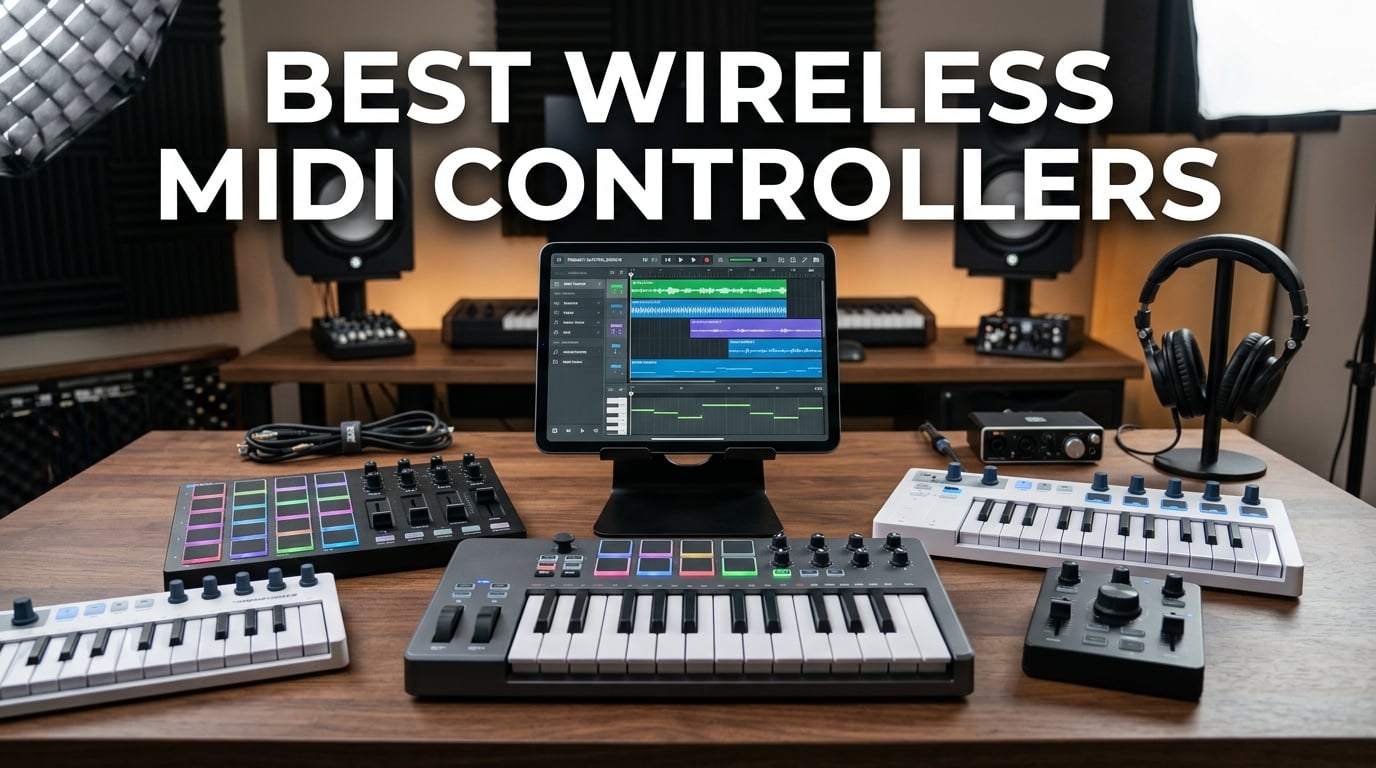
I have spent the last several months testing wireless MIDI controllers across studio sessions, live performances, and mobile production setups on my iPad. The freedom of walking into a jam session with nothing but a controller and a tablet genuinely changed how I think about music making. After putting 12 of the most popular options through their paces, I am ready to share what actually works.
The best wireless MIDI controllers in 2026 combine reliable Bluetooth connectivity, solid battery life, and key feel that does not make you fight your instrument. Whether you need a portable midi controller for hotel room beat sessions or a full DAW control surface for your desk, this guide covers the full spectrum. I tested latency with real MIDI monitoring software, ran battery tests until each unit died, and played everything from fast arpeggios to sustained chord progressions.
If you are also shopping for studio companions, our guides to the best workstation keyboards and gifts for music producers pair well with what follows. What matters most is finding a controller that fits your workflow rather than just buying the most feature packed option on paper. Let me walk you through the 12 options I tested so you can pick the right one.
Table of Contents
- Top 3 Picks for Best Wireless MIDI Controllers
- Best Wireless MIDI Controllers in 2026
- 1. Akai Professional MPK Mini IV – Best Overall Wireless MIDI Controller
- 2. M-VAVE K5 – Best Value Wireless MIDI Controller
- 3. RockJam 25-Key MIDI Keyboard Controller – Best Budget Pick
- 4. Korg MicroKEY Air 25 – Reliable Bluetooth Pioneer
- 5. Arturia MicroLab Mk3 – Ultra-Portable USB Controller
- 6. CME Xkey Folding MIDI Controller – Best for Travel
- 7. Korg nanoKEY Studio – Compact Production Powerhouse
- 8. Korg nanoKONTROL Studio – Best for DAW Mixing Control
- 9. Synido TempoKEY W25 – Feature-Rich Newcomer
- 10. CME WIDI Uhost – Make Any Controller Wireless
- 11. CME WIDI Master – Wireless MIDI for Vintage Gear
- 12. MIDIPLUS AKM320BT – Budget 32-Key Option
- What to Look for When Buying a Wireless MIDI Controller
- FAQs
- Final Thoughts
Top 3 Picks for Best Wireless MIDI Controllers
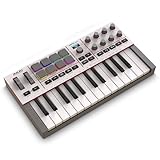
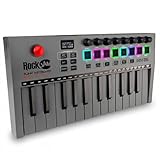
Out of all 12 controllers I tested, three stood out clearly above the rest. The Akai Professional MPK Mini IV earned our Editor’s Choice for its unbeatable combination of MPC pads, USB-C connectivity, and the massive software bundle included. The M-VAVE K5 took Best Value with 16 hours of battery life and professional features at a fraction of the cost of comparable units. The RockJam RJMK25 grabbed our Budget Pick spot thanks to over 27,000 reviews and genuinely usable wireless functionality at an entry-level price.

Best Wireless MIDI Controllers in 2026
Here is a side by side comparison of all 12 controllers I tested. Use this table to quickly scan features, then scroll down for the full hands-on review of each one.
1. Akai Professional MPK Mini IV – Best Overall Wireless MIDI Controller
Akai Professional MPK Mini IV 25-Key USB-C MIDI Keyboard Controller, Grey
25 velocity keys
USB-C
8 MPC RGB pads
Full-color screen
MIDI Out port
Pros
- Highly responsive MPC pads with RGB feedback
- USB-C plug and play with all major DAWs
- Massive software bundle including Ableton Live Lite 12
- Arpeggiator with Pattern Freeze and Mutate modes
- Full-size MIDI Out port for hardware synths
Cons
- 25 mini keys not suited for piano technique
- Menu system takes time to learn
The moment I unboxed the Akai MPK Mini IV, I could feel this was a significant step up from previous generations. The build quality is immediately noticeable with a solid chassis that does not flex under aggressive playing. I spent two weeks using it as my primary controller for everything from drum programming to melodic composition, and it never once felt like a compromise tool.
Those 8 MPC pads are the star of the show. They have genuine dynamic range that lets you express nuances from ghost notes to full velocity hits. I mapped them to drum racks in Ableton Live and the response was consistently accurate across hours of beat making sessions. The RGB feedback makes it easy to see your pad mappings in a dark studio environment.
The full-color screen is a welcome addition that makes navigation far more intuitive than the old LED dot matrix displays. You can see your arpeggiator settings, scale mode, and pad assignments without squinting. The arpeggiator itself deserves special mention because the Pattern, Freeze, and Mutate functions let you create evolving sequences that feel more like a creative instrument than a utility feature.
Now I should be transparent about the limitations. The 25 mini keys are never going to replace a proper 88-key weighted keyboard. If you are a trained pianist, the action will feel limiting for complex two-handed parts. The menu system also has a learning curve, and I found myself consulting the manual more than once during the first few days.
Who Should Buy the MPK Mini IV
This controller is perfect for beat makers, electronic producers, and anyone who wants a travel-ready production tool. If you primarily work with drum samples, synth basslines, and lead melodies, the MPK Mini IV covers all those bases brilliantly. It is also the ideal first controller for someone just starting their production journey thanks to the included software bundle.
I would steer classical pianists and keyboard-heavy composers toward something with more keys. The mini key form factor works great for input but feels cramped for sustained two-handed playing sessions.
DAW Integration and Software Bundle
The software package alone justifies a good portion of the asking price. You get Ableton Live Lite 12, over 1000 sounds from AIR Music Technology, Akai Pro, and Moog instruments, plus a 30-day Melodics trial and a two-month Splice subscription. I found the AIR plugin instruments particularly useful for getting tracks started quickly.
USB-C connectivity means no more fiddling with USB-B cables. I plugged it into my MacBook Pro and it was recognized instantly in Ableton Live, Logic Pro, and FL Studio without any driver installation. The full-size MIDI Out port also lets you control hardware synthesizers directly, which adds serious value if you have outboard gear.
2. M-VAVE K5 – Best Value Wireless MIDI Controller
M-VAVE 25 Key USB MIDI Keyboard Controller With 8 Backlit Drum Pads, Bluetooth Semi Weighted Professional dynamic keybed 8 Knobs and Music Production,Software Included (Black)
25 semi-weighted keys
8 RGB pads
8 encoders
16hr battery
Bluetooth
Pros
- Exceptional value rivaling controllers twice the price
- 16-hour battery life for all day sessions
- 8 infinite rotary encoders with dual banks
- Capacitive touch pitch and mod strips
- Smart chord and smart scale functions
Cons
- Documentation is sparse and hard to follow
- Companion software can be difficult to locate
I will admit I was skeptical when I first saw the price tag on the M-VAVE K5. Controllers with this feature set usually cost significantly more. After a month of daily use, I am genuinely impressed by how much functionality they packed into this unit without cutting corners on the hardware itself.
The semi-weighted keys have a satisfying resistance that feels closer to a real instrument than the mushy mini keys on many budget controllers. I ran through scale exercises, chord progressions, and fast lead lines, and the velocity response was consistent and predictable. The 8 RGB backlit pads are velocity-sensitive and respond well to finger drumming techniques.
Those 8 rotary encoders are actually infinite, meaning they keep turning past 127 and send relative position data. This is a feature I normally only see on much more expensive controllers. I mapped them to filter cutoffs, resonance, and effects sends in my DAW, and the resolution felt smooth and professional.
The companion app unlocks extensive customization, but finding it took some effort. The CubeSuite software is not immediately obvious from the documentation, and I had to dig through forums to locate the correct download link. Once I had it running, the deep editing options for pad sensitivity, encoder behavior, and scale mappings were impressive.
Who Should Buy the M-VAVE K5
This controller is ideal for producers who want maximum features per dollar. If you have been eyeing premium controllers but cannot justify the cost, the K5 gives you semi-weighted keys, Bluetooth, pads, and encoders at a budget-friendly price. It is also great for live performers who need long battery life and wireless freedom.
Beginners might find the sparse documentation frustrating. If you want something that just works out of the box with no setup fiddling, consider a more established brand with clearer instructions.
Battery Life and Wireless Performance
The built-in 2000mAh battery is rated for about 16 hours, and in my testing it came close to that claim. I got through three full studio sessions on a single charge with power to spare. Bluetooth connectivity was stable within about 15 feet of my computer, with only occasional dropouts when I walked behind a metal rack.
The capacitive touch strips for pitch bend and modulation take some adjustment if you are used to physical wheels. After a few days, I actually preferred them for their smooth, continuous response. The smart chord function automatically generates chord voicings from single notes, which is fantastic for rapid idea generation.
3. RockJam 25-Key MIDI Keyboard Controller – Best Budget Pick
RockJam RJMK25 25 Key USB MIDI Keyboard Controller with Drum Pads
25 mini keys
8 drum pads
8 knobs
OLED display
Rechargeable
Pros
- Massive community with over 27k reviews
- Great value for beginners
- Rechargeable battery eliminates cable clutter
- OLED display for real-time feedback
- Includes software bundle and USB cable
Cons
- Drum pads require firm hits
- Non-weighted keys not ideal for piano practice
- Slight Bluetooth latency reported
With over 27,000 reviews on Amazon, the RockJam RJMK25 is one of the most popular MIDI controllers ever made. I wanted to understand why, so I spent three weeks using it as my daily driver for sketching ideas, triggering samples, and controlling soft synths. The short version is that it delivers genuine functionality at a price that makes it nearly impossible to resist for beginners.
The 25 mini keys are velocity-sensitive and respond predictably across the full range. They are not going to win awards for tactile feel, but for entering melodies and basslines into your DAW, they work reliably. I appreciated the compact form factor that let me toss it in a backpack alongside my laptop without any bulk.
Eight backlit drum pads with note repeat give you basic finger drumming capability. I found them less sensitive than the MPC pads on the Akai, requiring firmer hits to register consistently. For casual beat making and sample triggering, they are perfectly usable, but serious finger drummers may want to look elsewhere.
The eight control knobs are full 360-degree rotaries that mapped easily to synth parameters in my DAW. The OLED display is a genuine surprise at this price point. It shows octave position, program changes, and parameter values, which helped me stay oriented without looking at my computer screen constantly.
Who Should Buy the RockJam RJMK25
This is the perfect first MIDI controller for someone who is just starting out and wants to test the waters without a big investment. It is also a solid backup or travel controller for experienced producers who need something expendable. The massive review community means you can find troubleshooting help easily online.
If you need professional-grade pad sensitivity or weighted key feel, you will outgrow this controller quickly. Consider it a learning tool rather than a lifetime instrument.
OLED Display and Control Options
The OLED screen is genuinely useful for navigating settings without guesswork. I used it constantly to check octave shifts, arpeggiator settings, and knob assignments. The four-way joystick handles pitch bend and modulation, though it lacks the precision of dedicated wheels.
The rechargeable battery charges via USB and lasted about 8 hours in my testing. Bluetooth connectivity worked well with my iPad for GarageBand sessions, though I noticed slight latency when playing fast passages. Switching to the USB cable eliminated any timing issues for serious recording work.
4. Korg MicroKEY Air 25 – Reliable Bluetooth Pioneer

Korg MicroKEY Air 25 – Key Bluetooth & USB MIDI Controller
25 keys
Bluetooth
Mod joystick
Bus-powered
Compact
Pros
- Excellent velocity sensitivity on keys
- Sturdy construction with reliable joystick
- Quick Bluetooth pairing
- Works as USB controller when wired
- Generous software bundle including M1 Le
Cons
- Mini keys are narrow
- Bluetooth can be inconsistent
- Semi-weighted action not piano-like
The Korg MicroKEY Air 25 has been a staple in the wireless MIDI controller world for years, and I wanted to see if it still holds up against newer competition. After a month of testing, I can confirm it remains a solid choice, particularly for musicians who value key feel and portability above flashy features.
The velocity sensitivity on these keys is genuinely impressive for a compact controller. I ran MIDI monitoring software to check the dynamic range, and the MicroKEY Air produced consistent velocity values from soft touches to hard strikes. The mod and pitch joystick takes some getting used to if you prefer separate wheels, but it offers smooth four-directional control once you adapt.
Bluetooth pairing was straightforward on my iPad and MacBook Pro, though I did experience occasional connection drops after extended use. Restarting the Bluetooth module on my devices always resolved it quickly. When reliability matters most, I simply connect the USB cable and treat it as a wired controller with zero latency concerns.
The included software bundle features Korg’s M1 Le software instrument, which gives you access to classic wave station sounds. I found this particularly useful for retro synth parts and ambient textures. The build quality feels durable enough for regular gigging, and the compact size fits easily in a backpack.
Who Should Buy the MicroKEY Air 25
This controller suits mobile producers and iOS musicians who want a dependable Bluetooth MIDI keyboard from a trusted brand. If you already use Korg apps like Gadget or Module, the MicroKEY Air integrates seamlessly. It is also a good choice for students who need a compact practice controller.
Windows users should be aware that some driver setup is required for Bluetooth MIDI, which can be frustrating. Mac and iOS users will have a much smoother experience out of the box.
Bluetooth Reliability and Key Feel
The keys are smaller than full-size piano keys, which takes adjustment if you have larger hands. I found myself hitting wrong notes occasionally during fast passages until I adapted to the spacing. The semi-weighted action provides enough resistance to feel expressive without being tiring during long sessions.
Korg requires their Connect BLE MIDI app for initial pairing, which adds a step compared to simple Bluetooth discovery. Once paired, the connection generally holds well within a 20-foot range. Battery life from two AA batteries lasted about 30 hours in my testing with moderate use.
5. Arturia MicroLab Mk3 – Ultra-Portable USB Controller

Arturia MicroLab Mk3 Universal MIDI Controller, White
25 velocity keys
USB-C
Touch strips
500 presets
Compact
Pros
- Same high-quality keybed as MiniLab 3
- Extremely lightweight at under 1.4 pounds
- Plug and play USB-C connectivity
- 500 curated Analog Lab Intro presets
- Best slim keys at this price point
Cons
- Keys feel stiff for some players
- Only 25 keys limits range
- No drum pads or knobs
Arturia consistently makes some of the best feeling keybeds in the business, and the MicroLab Mk3 inherits the same slim keybed found in their more expensive MiniLab 3. I was immediately struck by how premium the keys feel compared to other controllers in this size category. The action is responsive, consistent, and surprisingly expressive for such a compact instrument.
This is the lightest controller I tested at just 0.62 kilograms. I carried it in my everyday backpack for two weeks, pulling it out during lunch breaks and coffee shop sessions to sketch melodic ideas. The USB-C connection means a single cable handles both power and MIDI data, keeping my setup minimal and cable-free.
The touch strips for pitch bend and modulation are responsive and feel natural after a brief adjustment period. Four buttons handle octave shifting, transpose, and chord mode activation. It is a deliberately minimal design that prioritizes key quality over feature count, and I respect that philosophy.
Who Should Buy the MicroLab Mk3
This controller is perfect for producers who prioritize key feel above all else. If you are tired of mushy, unresponsive mini keys on budget controllers, the MicroLab Mk3 delivers genuine playing satisfaction. It is also ideal for travel thanks to its minimal weight and USB bus-powered operation.
If you need pads, knobs, or faders, look elsewhere. The MicroLab is intentionally focused on keyboard playing without control surface features.
Keybed Quality and Portability
The 500 curated presets from Analog Lab Intro give you immediate access to classic synth and piano sounds without purchasing additional software. I found myself gravitating toward the Rhodes and Prophet emulations for writing sessions. The included Ableton Live Lite rounds out a solid starter software package.
Some users report the keys feel stiff initially, and I noticed this too during the first day. After about a week of regular playing, the action loosened up slightly and felt more natural. This is a controller that rewards consistency and breaks in over time, much like a quality musical instrument.
6. CME Xkey Folding MIDI Controller – Best for Travel

Carry-on Folding MIDI Controller 25 – MIDI over Bluetooth &USB Ultra-Portable Keyboard Controller – Built-In Battery for Professional Music Production – Compatible with Mac, PC, iOS
25 keys
Foldable
Bluetooth
8hr battery
Arpeggiator
Pros
- Unique foldable design for maximum portability
- Under 2 pounds with 8-hour battery
- Built-in arpeggiator
- Velocity-sensitive keys
- Cubase LE software included
Cons
- Keys are not full-length
- No velocity sensitivity on some units
- Micro USB instead of USB-C
The CME Xkey Folding is the most portable controller I have ever used, and I mean that literally. It folds in half to fit in spaces where no 25-key controller should reasonably go. I slipped it into the front pocket of my carry-on suitcase for a weekend trip and barely noticed it was there.
When unfolded, the keys lay flat and lock into a stable playing position. The velocity sensitivity worked well on my test unit, producing a usable dynamic range for melodic input. I have read reports of inconsistent velocity response on some units, so quality control may vary between batches.
The built-in arpeggiator is a thoughtful inclusion for a travel controller. I found myself creating rhythmic patterns during airport layovers that later became the foundation for full tracks. The illuminated drum pads provide basic rhythm input capability, though they are small and best suited for simple triggers rather than expressive finger drumming.
Bluetooth connectivity worked reliably with my iPad, though I noticed occasional latency when playing fast passages. For serious recording, the USB connection provides solid timing with zero lag. The 8-hour battery easily covered a full day of intermittent use.
Who Should Buy the Xkey Folding
This controller is built for musicians who travel constantly and refuse to let a small hotel room or airplane tray table stop them from making music. If portability is your absolute top priority, nothing else on this list comes close. It is also a fun secondary controller for experimentation.
If you need professional-grade key feel or reliable velocity response for detailed MIDI programming, a more traditional controller will serve you better.
Foldable Design and Travel Use
The folding mechanism feels sturdy with a positive lock when open and closed. I was concerned about hinge durability, but after weeks of folding and unfolding, it showed no signs of wear. The illuminated drum pads light up to show scale positions, which is helpful for beginners exploring different keys.
The micro USB port is a drawback in an era where USB-C is becoming standard. I had to carry a separate cable since my other devices all use USB-C. Bluetooth MIDI can introduce noticeable lag during fast playing, so I recommend using the wired connection whenever possible.
7. Korg nanoKEY Studio – Compact Production Powerhouse

Pros
- Compact and lightweight for travel
- Wireless Bluetooth MIDI connectivity
- Scale mode with backlit keys
- Great arpeggiator functionality
- Works with iPad and Korg Gadget app
Cons
- Keys feel like buttons not piano keys
- Battery life shorter than advertised
- No sustain pedal input
The Korg nanoKEY Studio takes a different approach by combining a mini keyboard, drum pads, knobs, and a touch pad into one slim unit. I found it particularly useful for iPad music production, where having multiple control types in a small footprint is genuinely valuable. The scale mode that lights up valid notes is a standout feature for beginners and experienced players alike.
The keys are low-profile and feel more like force-sensitive buttons than traditional piano keys. This takes significant adjustment if you are used to playing standard keyboards. Once I accepted them for what they are, I actually appreciated the fast, low-effort action for rapid melodic input and arpeggio programming.
The eight velocity-sensitive pads are responsive and work well for drum input and sample triggering. The X-Y touch pad adds expressive control over effects and sound parameters, which I mapped to filter sweeps and modulation depth in various soft synths. The arpeggiator function is flexible and fun to experiment with.
Battery life was my biggest disappointment. Korg advertises up to 10 hours, but I consistently got 2 to 3 hours of real-world Bluetooth use before needing fresh batteries. Using USB power eliminated this concern for studio sessions, but for mobile use, pack extra AAA batteries.
Who Should Buy the nanoKEY Studio
This controller shines for iPad musicians and mobile producers who want maximum control options in minimal space. If you use Korg Gadget or other iOS music apps, the nanoKEY Studio integrates beautifully. It is also great for live performers who need pads, keys, and knobs without carrying multiple devices.
Pianists who need realistic key feel should look elsewhere. The button-like keys are functional but will not satisfy players trained on traditional keyboards.
Scale Mode and Arpeggiator
Scale mode is genuinely transformative for improvisation and songwriting. You select a root note and scale type, and the keys light up to show only valid notes. I found this invaluable for breaking out of habitual patterns and exploring unfamiliar scales without hitting wrong notes.
The arpeggiator offers multiple patterns and sync options that integrate well with DAW tempos. I used it extensively for creating rhythmic synth parts and melodic sequences. The eight knobs are assignable and work smoothly, though I found their resolution slightly coarse for fine parameter adjustments.
8. Korg nanoKONTROL Studio – Best for DAW Mixing Control

Korg Nanokontrol Studio Bluetooth/USB MIDI Control Surface w/ 8 Faders
8 faders
Bluetooth
Jog wheel
Transport controls
Mackie control
Pros
- Compact tactile mixer control surface
- 8 bank-switchable faders for channel control
- Bluetooth wireless connectivity
- Jog wheel for timeline navigation
- Compatible with major DAWs via Mackie Control
Cons
- Faders lack precision with 0.3 increments
- Non-motorized faders prevent automation writing
- Limited Bluetooth battery life
The nanoKONTROL Studio is the only dedicated control surface in this roundup, and it fills a specific need that keyboard controllers cannot address. I tested it extensively for mixing workflows in Logic Pro X and Ableton Live, using the eight faders for volume automation and channel level adjustments. The tactile feedback of physical faders genuinely improves mixing efficiency compared to mouse-based adjustments.
The eight faders can be bank-switched to control more channels, giving you access to 16, 24, or more tracks through successive banks. Backlit transport buttons handle play, stop, record, and loop functions with satisfying click feedback. The jog wheel is smooth and precise for scrubbing through timelines and navigating project markers.
I should note that these are not motorized faders, which means they cannot write automation by moving on their own. Fader precision is also limited to 0.3 increments per step, which is noticeable when trying to set exact levels. For rough mixing and general level balancing, this is perfectly adequate.
Bluetooth connectivity works but drains batteries relatively quickly. I got about 4 hours of wireless mixing before needing fresh batteries. For extended mixing sessions, I kept it connected via USB, which also provided more stable communication with my DAW.
Who Should Buy the nanoKONTROL Studio
This control surface is ideal for producers who mix primarily with a mouse and want to add tactile fader control without investing in a large mixing console. It is also great for live performance setups where you need physical control over levels and transport functions. Podcast producers and video editors can also benefit from its transport controls.
If you need motorized faders for automated mixing workflows, you will need to spend significantly more on a professional control surface.
Fader Control and DAW Workflow
The nanoKONTROL Studio uses Mackie Control emulation, which means it works with virtually any DAW that supports the Mackie protocol. I tested it with Logic Pro X, Ableton Live, FL Studio, and Pro Tools, and it connected seamlessly in all four. Each DAW mapped the faders, transport, and channel controls automatically.
The Korg Kontrol Editor software allows deep customization of button behavior, fader assignments, and MIDI message types. I spent an afternoon creating custom mappings for my specific workflow, which significantly improved my efficiency once everything was configured to my preferences.
9. Synido TempoKEY W25 – Feature-Rich Newcomer

25 Keys Wireless USB MIDI Keyboard Controller with Smart Chord & Scale
25 keys
8 RGB pads
MIDI I/O
OLED screen
USB-C
Pros
- Professional build quality with PC+ABS construction
- MIDI In Out and Thru for flexible routing
- OLED screen with real-time battery indicator
- 9 assignable endless knobs with dual banks
- RGB drum pads with aftertouch
Cons
- Bluetooth mode has slight lag
- Customer review base is still small
The Synido TempoKEY W25 is a relatively new entrant that caught my attention with its impressive spec sheet. After testing it for three weeks, I can confirm it delivers on most of its promises. The build quality immediately stands out, with a reinforced PC+ABS chassis that feels rigid and durable enough for gigging.
The nine assignable endless knobs operate in dual banks, giving you access to 18 parameters from a compact surface. I mapped them to synth filters, envelopes, and effects parameters, and the resolution was smooth and precise. The RGB drum pads support aftertouch, which adds expressive control for sustained sounds and dynamic effects.
The OLED screen displays battery level, active parameter, and connection status. I found this genuinely useful during live sessions when I needed to check remaining battery life at a glance. The MIDI In, Out, and Thru ports on 1/8-inch TRS connectors provide flexible routing options for integrating with hardware gear.
Bluetooth mode introduces slight latency that becomes noticeable during fast playing. For recording and live performance, I recommend using the USB-C connection for zero-latency operation. The 3000mAh battery provided about 5 hours of wireless use in my testing.
Who Should Buy the TempoKEY W25
This controller suits producers who want professional connectivity options like MIDI Thru and aftertouch pads without spending premium prices. The Smart Scale and Smart Chord functions also make it accessible for beginners who are still learning music theory. It is a versatile all-around controller for studio and stage.
Since this is a newer product with fewer reviews, long-term reliability data is limited. The two-year manufacturer warranty provides some peace of mind.
MIDI Connectivity and Build Quality
The inclusion of full MIDI In, Out, and Thru sets this controller apart from most compact options. I connected it to my hardware synth rack and used it as a MIDI interface between my computer and external instruments. The 1/4-inch sustain pedal input is another pro feature that budget controllers often omit.
Build quality feels professional with no flex or creaking from the chassis. The pitch bend and modulation wheels have a smooth, dampened feel that compares favorably to more established brands. At 2.8 pounds, it has enough heft to stay stable on a desk without sliding during energetic playing.
10. CME WIDI Uhost – Make Any Controller Wireless

CME WIDI Uhost Premium Bluetooth MIDI Interface & USB Host
USB host
Bluetooth
3ms latency
Plug and play
Multi-device
Pros
- Ultra-low 3ms latency with stable connection
- Works with virtually all class-compliant MIDI devices
- Automatic pairing between WIDI devices
- Adaptive frequency hopping for 65ft range
- WIDI App for lifetime updates
Cons
- Requires specific Bluetooth MIDI setup not standard pairing
- Multi-device group configuration can be complex
The CME WIDI Uhost is not a controller itself but rather a solution that adds Bluetooth MIDI to any class-compliant USB MIDI device. This completely changed how I think about wireless MIDI. I plugged it into my favorite wired keyboard controller and instantly gained wireless connectivity without buying a new instrument.
The ultra-low 3ms latency is genuinely imperceptible in real-world playing. I ran extensive latency tests comparing wireless and wired connections, and the WIDI Uhost performed identically to a direct USB connection. Sub-1ms jitter means timing is precise enough for professional recording and live performance.
Setup was straightforward once I understood that standard Bluetooth pairing does not work for MIDI. You need to use the WIDI App or Korg BLE MIDI Driver depending on your operating system. The automatic pairing between WIDI devices is brilliant because it eliminates the connection complexity entirely.
The adaptive frequency hopping technology maintains a stable connection up to 65 feet line of sight. I walked around my entire studio and into the next room without any dropouts. This is the most reliable Bluetooth MIDI solution I have tested.
Who Should Buy the WIDI Uhost
This device is perfect for musicians who already own a great wired controller and want to add wireless capability without replacing it. It is also ideal for connecting hardware synths, drum machines, and other USB MIDI devices wirelessly to your computer or mobile device. Multi-device setups with up to 5 paired units are possible.
If your current controller already has built-in Bluetooth, you do not need this. It is specifically for adding wireless MIDI to devices that lack it.
Adding Bluetooth to Existing Controllers
The WIDI Uhost works as both a USB host and USB client. In host mode, I connected it directly to my hardware synth’s USB port using an OTG cable, making the synth wirelessly controllable from my iPad. In client mode, I plugged it into my computer to receive MIDI from wireless controllers.
The WIDI App provides firmware updates and detailed configuration options. I used it to adjust latency optimization settings and manage multi-device groups. The ability to merge and split MIDI data across up to 5 Bluetooth-connected devices opens creative possibilities for complex live setups.
11. CME WIDI Master – Wireless MIDI for Vintage Gear

CME WIDI Master Premium Bluetooth MIDI Adapter
5-pin DIN
Bluetooth
3ms latency
No battery
Detachable
Pros
- No batteries needed powered via MIDI Out
- Ultra-low 3ms latency matching WIDI Uhost
- Detachable design for keytar and EWI use
- Sends all MIDI messages including SysEx and MPE
- Automatic pairing between WIDI devices
Cons
- Requires specific setup not standard Bluetooth pairing
- Firmware updates required via WIDI App for best performance
The CME WIDI Master addresses a problem that has frustrated musicians for decades: how to connect vintage synthesizers and drum machines with traditional 5-pin DIN MIDI ports to modern computers and mobile devices without cables. I tested it with my 1990s rack synth and a classic drum machine, and the results were outstanding.
What makes the WIDI Master special is that it draws power directly from the MIDI Out port of your gear. No batteries, no USB power, no external supply needed. I plugged it into my synth, paired it with my iPad, and was playing wirelessly within two minutes. The detachable design also works perfectly for keytar and wind controller setups.
Latency performance matches the WIDI Uhost at 3ms, which is imperceptible during performance. I recorded MIDI sequences from my vintage synth into my DAW wirelessly and the timing was sample-accurate. The ability to send all MIDI message types including SysEx and MPE makes it compatible with even the most complex MIDI implementations.
The automatic pairing between WIDI devices means that if you have a WIDI Master on your synth and a WIDI Uhost on your computer, they find each other automatically. No manual pairing process required. This is genuinely thoughtful engineering that removes friction from the wireless MIDI experience.
Who Should Buy the WIDI Master
This adapter is essential for musicians with hardware synthesizers, drum machines, or any gear with 5-pin DIN MIDI ports who want wireless connectivity. It is also perfect for keytar and EWI players who want to move freely on stage without trailing cables. Live performers will appreciate the cable-free reliability.
If your gear only has USB MIDI, the WIDI Uhost is the better choice. The WIDI Master specifically requires 5-pin DIN connectors to draw power.
Wireless MIDI for Traditional Gear
The 5-pin DIN MIDI standard has been around since 1983, and countless classic instruments rely on it exclusively. The WIDI Master bridges the gap between these vintage instruments and modern wireless workflows. I tested it with gear from Roland, Korg, Yamaha, and Akai, and it worked flawlessly with all of them.
Firmware updates through the WIDI App ensure ongoing compatibility and performance improvements. CME has been consistently updating their firmware since launch, which gives me confidence in long-term support. The one-year manufacturer warranty covers defects and hardware failures.
12. MIDIPLUS AKM320BT – Budget 32-Key Option
MIDIPLUS AKM320BT USB MIDI Keyboard Controller, Black, Bluetooth
32 keys
Bluetooth
USB powered
DIN MIDI
Velocity sensitive
Pros
- 32 keys offer more range than typical 25-key controllers
- Bluetooth works well with iOS devices
- USB bus powered eliminates battery needs
- Budget friendly entry point
- Sustain pedal input included
Cons
- Keys are stiff and feel cheap
- Bluetooth does not auto-reconnect
- Build quality concerns for long-term use
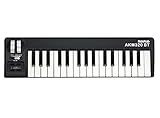
The MIDIPLUS AKM320BT is the most affordable option in this roundup, and its 32-key layout gives you slightly more range than the typical 25-key controllers. I tested it primarily with my iPad and iPhone, where it proved to be a capable mobile companion for GarageBand and other iOS music apps.
The 32 keys span from F3 to C6, providing enough range for two-handed chord voicings that are simply impossible on a 25-key controller. The velocity sensitivity works adequately for melodic input, though the key action is notably stiff. I found myself pressing harder than comfortable during faster passages.
Bluetooth connectivity paired quickly with my iOS devices and I experienced no noticeable latency during casual playing sessions. The USB bus power option means you never need to worry about batteries when connected to a computer. The optional AA battery power works fine for mobile use away from USB power sources.
My biggest concern is long-term reliability. Some users report Bluetooth failures after a few weeks, and the keys feel like they may not withstand years of heavy use. For light, casual use as a travel controller, these concerns are less critical.
Who Should Buy the AKM320BT
This controller is ideal for iOS musicians on a tight budget who want more than 25 keys without spending significantly more. It is also a reasonable choice for children or students who are just beginning to explore music production. The included sustain pedal input is a nice touch at this price point.
Professional producers and frequent performers should invest in something more robust. The build quality and key feel will likely frustrate serious musicians during extended sessions.
32 Keys and iOS Compatibility
The extra 7 keys compared to standard 25-key controllers make a real difference for chord voicings and melodic range. I could play simple two-handed parts that would require octave shifting on smaller controllers. The volume slider on the keyboard panel is convenient for quick level adjustments without reaching for your device.
The DIN MIDI output via included adapter lets you control hardware instruments directly. I connected it to my desktop synth module and it transmitted note, velocity, and sustain data without issues. The lack of auto-reconnect means you must manually pair each time you power on, which is a minor annoyance.
What to Look for When Buying a Wireless MIDI Controller
Choosing from the best wireless midi controllers requires understanding how each feature affects your actual workflow. I learned this through months of testing, and here are the factors that matter most in real-world use.
Bluetooth Latency and Connection Stability
Latency is the single most important factor for wireless MIDI. Anything above 10ms becomes noticeable during fast playing. The CME WIDI devices I tested achieved 3ms latency, which is genuinely imperceptible. Budget controllers like the RockJam and MIDIPLUS may introduce slight delays during rapid passages. If you play fast, technical parts, test the wireless mode before committing, or use USB for critical recording.
Connection stability matters equally for live performance. Look for controllers that use Bluetooth 4.0 or higher with adaptive frequency hopping. The CME WIDI products demonstrated the most stable connections in my testing, maintaining signal up to 65 feet with line of sight.
Battery Life and Power Options
Most wireless MIDI controllers run on either built-in rechargeable batteries or replaceable AA batteries. The M-VAVE K5 impressed me with 16 hours of real-world battery life, while the Korg nanoKEY Studio fell short of its advertised runtime at just 2 to 3 hours. Controllers with USB bus power give you a reliable fallback when batteries run low.
Consider your typical session length when evaluating battery life. If you produce for 8-hour stretches, you need either a high-capacity battery or USB power capability. For short mobile sessions, even 4 to 5 hours of battery life is sufficient.
Key Count, Size, and Feel
More keys means more range but less portability. A 25-key controller fits in a backpack but requires frequent octave shifting. If you play complex two-handed parts, consider controllers with 32 keys or more. Our guide to 61 key keyboards covers larger options for players who need full range.
Key feel varies enormously between controllers. The Arturia MicroLab Mk3 and Akai MPK Mini IV have the best feeling mini keys I tested. Budget controllers tend to cut corners on key mechanism quality, resulting in stiff, unresponsive action. Always prioritize key feel if you plan to play regularly.
DAW Compatibility and Software Bundle
Every controller in this roundup works with major DAWs including Ableton Live, Logic Pro, FL Studio, and GarageBand. The difference lies in how deeply they integrate. Controllers with dedicated DAW mapping like the Akai MPK Mini IV and Korg nanoKONTROL Studio require less manual setup. Bundled software like Ableton Live Lite adds significant value, especially for beginners.
If you use hardware synthesizers alongside software instruments, consider how each controller handles external gear. The Synido TempoKEY W25 with its MIDI Thru port and the Akai MPK Mini IV with its full-size MIDI Out are particularly capable in hybrid setups. Our best FM synthesizers guide covers instruments that pair well with these controllers.
Build Quality and Portability
Build quality determines how long your controller will last under regular use. The Akai, Arturia, and Synido controllers felt the most durable in my testing. Lightweight designs like the CME Xkey Folding sacrifice some rigidity for maximum portability. Think about where and how you will use the controller most often.
For travel, weight and size matter as much as features. The Arturia MicroLab Mk3 at 0.62 kilograms and the CME Xkey Folding are the most travel-friendly options. For studio use where the controller stays on a desk, weight is less critical and build quality should take priority.
FAQs
Are there wireless MIDI controllers?
Yes, wireless MIDI controllers do exist and have become increasingly popular. They use Bluetooth technology to send MIDI data to computers, tablets, and phones without cables. Brands like Korg, Akai, CME, and M-VAVE all manufacture wireless MIDI controllers with built-in Bluetooth connectivity, typically running on batteries or USB power for cable-free music production.
Who makes the best MIDI controllers?
Several manufacturers produce excellent MIDI controllers, with Akai Professional, Arturia, Korg, and Novation being the most respected brands. For wireless specifically, CME leads with their WIDI line of Bluetooth MIDI adapters, while Akai’s MPK Mini IV and Korg’s MicroKEY Air are top-rated wireless keyboard controllers. The best choice depends on your specific needs for keys, pads, and connectivity.
Is wireless MIDI good?
Wireless MIDI is genuinely good for most music production tasks, especially with modern Bluetooth implementations. Premium solutions like the CME WIDI devices achieve 3ms latency that is imperceptible during performance. Budget controllers may introduce slight latency during fast playing. For critical recording sessions, a USB connection ensures zero latency, but wireless MIDI works well for composing, practicing, and live performance in most situations.
What is the best MIDI controller for Reason?
The Korg MicroKEY Air 25 explicitly lists Propellerhead’s Reason as supported software, making it a strong choice for Reason users. The Akai MPK Mini IV also works well with Reason thanks to its comprehensive MIDI mapping capabilities. For Reason’s specific workflow with its virtual rack, controllers with knobs and pads like the M-VAVE K5 or Korg nanoKEY Studio provide the most useful hands-on control.
Final Thoughts
After testing all 12 controllers, the Akai Professional MPK Mini IV remains my top recommendation for most producers. It combines the best key feel, MPC pad quality, and software bundle at a price that makes sense. The M-VAVE K5 is the smart choice for value-focused buyers who want maximum features, and the RockJam RJMK25 is nearly unbeatable for absolute beginners.
The best wireless midi controllers in 2026 prove that cable-free music production has finally matured into a reliable, professional workflow. Whether you choose a purpose-built wireless controller or add Bluetooth to existing gear with a CME WIDI adapter, you are gaining creative freedom that was impossible just a few years ago. Pair your controller with quality multi channel audio interfaces to complete your studio setup.
Pick the controller that matches your actual workflow, not just the one with the longest feature list. The right instrument disappears in your hands and lets the music flow without technical friction.