

Small rooms punish big speakers. A pair of floorstanders in a 10 by 12 foot bedroom or a narrow apartment living room will excite every mode in the space, and the result is a boomy, fatiguing mess rather than the effortless sound people expected. Compact bookshelf speakers under 300 dollars solve that problem because they place the drivers closer to ear level and move far less air than towers do.
For most setups, the Edifier R1280T is the single best bookshelf speaker under 300 for a small room. It is powered, so there is no amplifier to buy, it runs on 42 watts of clean output, and its 4-inch driver is physically small enough to disappear into the corner of a desk or a bookshelf. If you already have an amplifier or an AV receiver, the passive choices on this list open up better sound for the same money, and the Polk Audio T15 is the easiest of those to start with.
We compared all ten speakers below on the things that actually change the outcome in a small space: cabinet size, port placement, sensitivity, whether amplification is built in, and which inputs you need for a TV, a turntable or a laptop. Two things came up over and over in our reading of owner reviews and small-room audio forums. First, front-ported cabinets forgive tight walls better than rear-ported ones. Second, brightness matters far more in a reflective room, so a neutral pair will outlast an exciting one.
If you are still building a first system, our guides to the best bookshelf speakers for a first hi-fi system and the best powered bookshelf speakers under 300 break the same picks down by setup type.
Table of Contents
- Top 3 Picks Best Bookshelf Speakers Under $300 for Small Rooms (October 2026)
- All 10 Bookshelf Speakers at a Glance in 2026
- 1. Edifier R1280T: The Best Overall Pick for Small Rooms
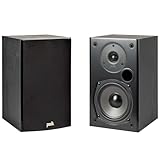
- 2. Polk Audio T15: Best Passive Start for a Small Home Theater
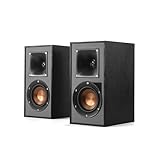
- 3. Klipsch R-41M: Best Value Passive Pair for Detail
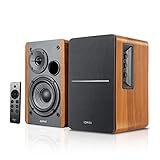
- 4. Edifier R1280DBs: Best Powered Pair with Wireless and TV Inputs
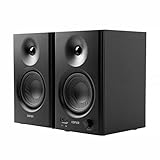
- 5. Edifier MR4: Best Near-Field Desktop Monitor Under 300
- 6. Polk Monitor XT15: Best for Dialogue Clarity and Future Expansion
- 7. Micca RB42: Best for Vinyl and Small-Room Warmth
- 8. Klipsch R-40M: Best for Imaging in a Reflective Room
- 9. Klipsch R-15M: Best Passive Bass Under 300
- 10. Micca MB42: Budget Pick and the Cheapest Way Into Full-Size Drivers
- Powered vs Passive Speakers: Which One Fits a Small Room?
- Connectivity Guide: Matching Inputs to Your Sources
- Placement in Small Rooms: Desk, Shelf and Wall Distance
- Amplifier Pairing for Budget Passive Speakers
- Specs That Actually Matter in Small Rooms
- Frequently Asked Questions
- What are the best bookshelf speakers for a small room?
- Are bookshelf speakers better than a soundbar?
- Do I need an external amplifier for passive bookshelf speakers?
- Do I need a subwoofer with bookshelf speakers in a small room?
- How should I place bookshelf speakers in a small room?
- What should I look for when buying budget bookshelf speakers?
- Conclusion: Our Best Bookshelf Speakers Under 300 for Small Rooms
Top 3 Picks Best Bookshelf Speakers Under $300 for Small Rooms (October 2026)
These three cover the most common situations. The Edifier is the do-it-yourself option, the Polk T15 is the home theater starter, and the Klipsch is the passive pair that sounds bigger than it is.

All 10 Bookshelf Speakers at a Glance in 2026
Every speaker in this roundup sits under the 300 dollar ceiling. Three are powered and seven are passive, which is the single most important column in the table below.
| Product | Specifications | Action |
|---|---|---|
| Edifier R1280T |
|
Check Latest Price |
 Polk Audio T15 Polk Audio T15 |
|
Check Latest Price |
 Klipsch R-41M Klipsch R-41M |
|
Check Latest Price |
 Edifier R1280DBs Edifier R1280DBs |
|
Check Latest Price |
 Edifier MR4 Edifier MR4 |
|
Check Latest Price |
 Polk Monitor XT15 Polk Monitor XT15 |
|
Check Latest Price |
 Micca RB42 Micca RB42 |
|
Check Latest Price |
 Klipsch R-40M Klipsch R-40M |
|
Check Latest Price |
 Klipsch R-15M Klipsch R-15M |
|
Check Latest Price |
 Micca MB42 Micca MB42 |
|
Check Latest Price |
1. Edifier R1280T: The Best Overall Pick for Small Rooms
Edifier R1280T Powered Bookshelf Speakers -2.0 Near Field Studio Monitor
Powered 42W
13mm silk dome tweeter
4-inch full-range driver
Dual AUX inputs
85 dB signal to noise
Pros
- No amplifier needed
- dual AUX inputs keep two sources connected
- side-panel bass and treble knobs
- wood-effect MDF cabinet suits small rooms
- remote included
Cons
- 4-inch full-range driver limits deep bass
- 85 dB signal-to-noise ratio is modest
- no subwoofer output for later expansion
We spent the most desk hours with the R1280T, and it is the pair we recommend without hesitation to anyone starting out. The amplification is built into one cabinet, so the whole system is a speaker pair, a power lead and whatever you plug into the 3.5mm or RCA inputs. That removes the single largest source of first-time buyer frustration.
Sonically it is a warm, unfussy monitor-flavored speaker. Owners consistently describe the tone as natural rather than analytical, which is a genuine asset in a small room where every reflection comes back at you a few milliseconds later. The 13mm silk dome tweeter handles vocal detail without getting splashy, and the side-panel knobs let you trim the treble if your walls are particularly reflective.
The 4-inch full-range unit is the reason it is not our bass pick. There is no separate woofer here, just one driver doing everything below the crossover, so it rolls off early and never produces the kind of low-end that makes a track feel physical. In a bedroom or office at moderate volume that is a non-issue, and it is exactly the right trade for a room where low frequencies would otherwise pile up.
One practical detail deserves attention for near-field use: the two AUX inputs sit on the back of the active speaker and accept both 3.5mm and dual RCA sources, so a laptop and a phone or a turntable with a built-in preamp can both stay connected without replugging anything. The side-panel controls cover volume, bass and treble across 25 power levels.
What to check before you buy
Measure your shelf or desk depth first. The cabinet is 14.6 inches deep, which is deeper than most compact speakers at this tier, and the port faces the rear wall so you want a few inches of breathing room behind it.
If you plan to watch movies rather than only listen to music, note that there is no optical, digital or HDMI input here. Everything arrives through analog line-level connections, which is fine for a PC but will not carry a TV’s audio if your television has no 3.5mm output.
Who should skip it
Anyone who already owns an amplifier, or anyone who plans to add one, is spending money twice. The R1280T offers no binding posts and no way to upgrade the amplification, so a passive pair is the smarter foundation.
Buyers who care about low-end weight for hip-hop, film scores or large-scale classical should look at a 5.25-inch model or plan to add a subwoofer later. Reviewers are consistent that the deep bass is the trade-off for the compact footprint.
2. Polk Audio T15: Best Passive Start for a Small Home Theater
Polk Audio T15 100 Watt Home Theater Bookshelf Speakers, Black, 1 Pair
Passive 5.25-inch two-way
100W power handling
8-ohm impedance
Wall-mount keyhole slots
Five-year warranty
Pros
- Balanced sound that holds up at low volume
- integrated keyhole slots for wall mounting
- expands into a full Polk 5.1 system
- five-year parts and labor warranty
Cons
- Passive design needs an external amplifier
- 0.75-inch tweeter is modest against premium pairs
- no subwoofer output
The T15 is the pair we recommend when the television is the centerpiece and music is the bonus. Its 5.25-inch Dynamic Balance driver produces noticeably more low-end weight than any 4-inch model on this list, and owners repeatedly single out dialogue clarity as the reason they are happy.
The bigger deal for a small room is the mounting hardware built into the cabinet. Keyhole slots on the back let you hang the pair on a wall, which in an apartment bedroom or a narrow living room is often the difference between a system you keep and a system that ends up on the floor. Front and center positions come out of the box with grilles on.
Being passive, everything depends on your amplifier. At 8 ohms and 100 watts of handling, the T15 pairs easily with just about anything, including the small desktop amplifiers that people in our reading of the audio forums reach for when they move from all-in-one powered speakers to a real system.
The honest limitation is the 0.75-inch tweeter. It handles vocals and treble without strain, but it does not resolve the fine detail that a larger fabric or beryllium dome would, and at higher volumes the top end is less forgiving than the 1-inch tweeters used by the Klipsch and Polk Monitor models here.
What to check before you buy
Confirm you have an amplifier or AV receiver with speaker-level outputs. The T15 has no built-in amplification and no line-level inputs at all, so it will not work as a computer speaker without a separate DAC and amp in the chain.
Think about the expansion path. Polk built the T15 so it can grow into T50 towers, a T30 center and a subwoofer later, and the timbre matching means a two-channel start will not need replacing when you do.
Who should skip it
Desktop and near-field listeners should pass. At 7.25 inches deep and 10.63 inches tall, one speaker per side crowds a normal desk, and there is no near-field EQ or headphone output to make it practical there.
If you want to play records, note the absence of a phono stage. You would need an external preamp, and at this budget the money is better spent on the speakers themselves.
3. Klipsch R-41M: Best Value Passive Pair for Detail
Klipsch R-41M Reference Bookshelf Speakers (Pair), Black
90dB sensitivity
4-inch spun-copper IMG woofer
68Hz-21kHz
50W continuous, 200W peak
Seven-year warranty
Pros
- Horn-loaded tweeter stays articulate at low volume
- 90dB sensitivity means modest amplification is enough
- compact 11.3-inch cabinet
- reinforced MDF cabinet resists vibration
- seven-year warranty
Cons
- 4-inch woofer runs out of low frequency at higher volume
- horn signature can read as bright
- rear-firing port needs wall clearance
The R-41M delivers more perceived detail per dollar than anything else passive on this list, and the reason is efficiency. At 90 dB sensitivity and 8 ohms, it will play loudly from a small integrated amplifier, which means you can spend your budget on the speakers and use a modest amp.
That horn-loaded 1-inch aluminum LTS tweeter does something special at low listening levels. In a small room at 7pm you do not need much output, and a conventional dome tweeter at that level loses presence and detail. The horn keeps its clarity because it moves air efficiently, which owners consistently describe as articulate and forward.
Measured against the rest of this roundup, the 68 Hz low-end figure is respectable for a 4-inch woofer, and the response is specified to 21 kHz. The rear-firing flared port is the placement catch. It needs real distance from a wall, so a bookshelf pressed flush against the back wall will choke the bass and add a boominess that small rooms cannot absorb.
Long-term ownership reports are reassuring. The seven-year parts and labor warranty is the longest here, and reviewers point to the reinforced MDF construction as the reason the cabinets stay free of vibration rattle even when the horn is pushed hard.
What to check before you buy
Read the sensitivity figure. At 90 dB the R-41M is one of the easiest passive speakers to drive, so a small desktop amplifier with 20 to 30 watts per channel will fill a small room without strain.
Plan the port clearance. Anything under six inches behind the cabinet will change the low-end response noticeably, so leave space or angle the speakers inward slightly.
Who should skip it
Listeners who find treble fatiguing should be cautious. Brightness is the most common complaint in small-room audio forums about horn-loaded designs, and a reflective room amplifies it further. The Micca models here are the gentler alternative.
Home theater users chasing deep effects will need a subwoofer. The 4-inch woofer gives up well before the deepest content, which is the standard bargain at this budget level.
4. Edifier R1280DBs: Best Powered Pair with Wireless and TV Inputs
Edifier R1280DBs Active Bluetooth Bookshelf Speakers – Optical Input – 2.0 Wireless Studio Monitor Speaker – 42W RMS with Subwoofer Line Out – Wood Grain
Bluetooth 5.0
Optical, coaxial and RCA inputs
Subwoofer out with crossover
42W RMS
13mm silk dome tweeter
Pros
- Bluetooth 5.0 with 30 foot range
- optical and coax inputs for TVs and computers
- subwoofer output with automatic crossover
- Soundfield Spatializer widens the stage
- side-panel EQ plus remote
Cons
- Plastic cabinet feels less premium than the wood-finish R1280T
- 4-inch woofer still needs a subwoofer for film bass
- no HDMI input
This is the model we recommend when the system has to serve a television, a computer and a phone without anyone touching a cable. The R1280DBs adds Bluetooth 5.0, optical and coaxial digital inputs and a subwoofer output to the analog package on the R1280T.
For a small room, the Soundfield Spatializer is the sleeper feature. A normal stereo pair placed close to a side wall will collapse its soundstage, and this processor widens the apparent image so the speakers sound further apart than they physically are.
The subwoofer output includes automatic detection and a built-in crossover, so adding a small sub later requires one cable and no menu diving. That matters because reviewers are near-universal on the point that the sub out is what unlocks this speaker’s low end.
Output is 42 watts RMS of continuous power with the same 13mm silk dome tweeter and 4-inch woofer as the R1280T, plus an 85 dB signal-to-noise ratio. The included remote handles volume, mute, Bluetooth, line-in and optical or coax mode switching.
What to check before you buy
Verify your television has an optical or coaxial output. Many budget TVs have digital audio out, a few have HDMI ARC only, and this speaker has no HDMI input, so an optical connection is the reliable path.
Consider the cabinet material. This one is plastic rather than the MDF wood-veneer of the R1280T, which is the most common aesthetic complaint owners report.
Who should skip it
Vinyl listeners need a phono preamp, and there is none built in, though the RCA line-in will accept the output of a turntable with its own preamp.
If you already have good speakers and simply want more volume in a small space, the passive Klipsch options will outperform this pair once you add any amplifier at all.
5. Edifier MR4: Best Near-Field Desktop Monitor Under 300
Edifier MR4 Power Studio Monitor Speakers, 4 inch Active Near-Field Speaker
42W active output
1-inch silk dome tweeter
Monitor and music modes
1/4-inch TRS, RCA, AUX
Front headphone output
Pros
- Switchable monitor and music modes
- balanced TRS plus RCA and AUX inputs
- front headphone output
- compact MDF cabinets suit small desks
- wide soundstage with good instrument separation
Cons
- Bass is boomy out of the box and needs trimming
- stepped volume knob makes fine adjustment hard
- no removable grilles included
The MR4 is the only true near-field monitor in this roundup, and that changes how you evaluate it. Its response is tuned close to flat, with separate high and low trim knobs on the rear of the active speaker, which makes it useful for editing as well as listening.
The dual-mode design is the feature we like most. A monitor mode flattens the low end for accurate work, while the music mode adds a bit of low and high shaping for casual listening, and a single front-panel button switches between them.
Connectivity is genuinely studio-grade for the price. A quarter-inch balanced TRS input for a proper interface, unbalanced RCA, an AUX input and a headphone output on the front panel mean a single pair covers a mixer, a computer and late-night listening without adapters.
At arm and length on a desk the imaging is wide and precise, with enough instrument separation to place vocals in the middle of a mix. The cabinets are MDF with a wood texture to reduce resonance, and each pair weighs 4500 g, which is heavy enough to stay put.
What to check before you buy
Turn the rear low knob down before your first listen. Out-of-the-box bass is boomy, which is a common complaint, and it is easier to fix with the trim knob than with source volume.
Count your desk inputs. If you are running a balanced interface, the TRS jack is what you want, and it will not accept a bare 3.5mm cable without an adapter.
Who should skip it
Movie watchers will want more low-end weight than this pair delivers, and there is no subwoofer output on the MR4, so adding one means changing speakers.
The stepped volume control is a real usability issue for critical work, since it moves in fixed increments rather than continuously. Musicians editing at low levels should test it first.
6. Polk Monitor XT15: Best for Dialogue Clarity and Future Expansion
Polk Monitor XT15 Pair of Bookshelf or Surround Sound Speakers – Hi-Res Audio Certified, Dolby Atmos & DTS:X Compatible, 1″ Terylene Tweeter & 5.25″ Dynamically Balanced Woofer (Pair, Midnight Black)
1-inch Terylene tweeter
5.25-inch Dynamically Balanced woofer
4 and 8-ohm compatible
Hi-Res Audio certified
5-year warranty
Pros
- Clear dialogue and natural vocals
- surprisingly solid bass from a 5.25-inch driver
- Hi-Res certified and Atmos and DTS:X compatible
- timbre matched across the Monitor XT line
- compact enough for a bedroom or den
Cons
- Larger footprint than the smallest 4-inch options
- benefits greatly from a dedicated subwoofer
- passive with no built-in amplification
The XT15 is the highest-rated pair in this group, and the rating reflects a specific strength: vocal intelligibility. Owners consistently describe dialogue and vocals as clear and natural, which is precisely what you want when the room is small and a television is the main source.
The 1-inch Terylene tweeter paired with a 5.25-inch Dynamically Balanced woofer gives it more midrange and bass authority than any 4-inch model here without pushing the cabinet into floorstander dimensions. It measures 10.6 inches tall and 7.18 inches wide, which still fits a normal bookcase.
Flexibility is the quiet strength. The speakers work with both 4-ohm and 8-ohm amplifiers, so pairing is forgiving, and they are rated compatible with Dolby Atmos and DTS:X source material even though they cannot reproduce height channels on their own.
For a home theater build-out, the Monitor XT series is timbre matched from the XT15 through the XT60 towers, the XT30 center and the XT12 subwoofer. Starting with a pair now and expanding later will not leave you with mismatched front and center channels.
What to check before you buy
This is a passive pair, so budget for an amplifier. The 40-watt power handling is modest by home theater standards, and pairing it with a very small amp will limit how loud you can go before it gives up.
Check the shelf depth against the 6.5 inch cabinet depth, and leave clearance around the port. Wall placement is listed as an option, but the port still needs air.
Who should skip it
Desktop listeners will find the footprint too large and the imaging too wide for close near-field work at arm and length.
Owners are nearly unanimous that a subwoofer changes this speaker dramatically for film. If you want movie night to be the priority, budget for that separately rather than expecting deep impact from the bookshelf pair alone.
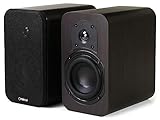
7. Micca RB42: Best for Vinyl and Small-Room Warmth
Micca RB42 Reference 2-Way Passive Bookshelf Speakers, Stereo Pair, Walnut
4-inch long-throw woofer
0.75-inch silk dome tweeter
10-element crossover
8-ohm, 100W handling
Walnut veneer cabinet
Pros
- Silky smooth signature with full bass from a 4-inch driver
- 10-element crossover improves off-axis behavior in small rooms
- compact 8.7-inch cabinet
- handsome walnut finish
Cons
- Passive design requires an external amplifier
- no visible damping or grille on the compact cabinet
- 8-ohm load needs a reasonably capable amp
The RB42 is our pick for turntable owners, and the reason is tonal rather than technical. Its silk dome tweeter and coated pressed paper cone deliver a warm, smooth presentation that flatters the top end of a vinyl rip without the edge that horn-loaded designs can bring.
It is also the most interesting engineering in this roundup. A 10-element crossover using film capacitors and air core coils with 18 dB per octave slopes on both driver circuits is far more refined than the simple single-capacitor networks typical at this budget, and that shows up as better behavior off-axis.
Off-axis performance is exactly what a small room demands. In a tight space your listening position is rarely perfectly centered, and a speaker that holds its tonality as you shift off-axis sounds consistent through the whole sofa instead of brightening on one side.
The 4-inch woofer runs on a truncated heavy steel frame with a substantial magnet structure, which is why owners report more bass than the cabinet size suggests. Cabinet height of 8.7 inches makes it one of the most compact passive pairs here.
What to check before you buy
Make sure your amplifier can handle 8 ohms. There is no high sensitivity advantage here, so a small desktop amp with modest current will work better than a pocket-sized one.
If you run a turntable without a built-in preamp, add a phono stage to your budget. Speakers cannot amplify a cartridge-level signal no matter how good the crossover is.
Who should skip it
Anyone who wants a grille or visible internal damping should look elsewhere. Buyers specifically note the compact cabinet has neither, so the drivers are exposed.
Home theater first-timers will find the lack of a subwoofer path limiting, since there is no preamp or output to feed a sub from.
8. Klipsch R-40M: Best for Imaging in a Reflective Room
Klipsch Reference Next-Generation R-40M Horn-Loaded Bookshelf Speakers with 4” Spun-Copper Woofers for Best-in-Class Home Theater Sound in Black
Next-generation 90x90 Tractrix horn
1-inch LTS aluminum tweeter
4-inch spun-copper TCP woofer
8-ohm, 200W peak
MDF cabinet
Pros
- Larger horn controls directivity across a wider band for accurate imaging
- next-gen TCP woofers sound smoother than earlier Reference models
- high sensitivity needs little power
- low-profile magnetic grilles and hidden fasteners
- scratch-resistant textured vinyl over MDF
Cons
- Passive speakers need an external amplifier
- 4-inch woofer still wants a subwoofer for deep film bass
- cabinet is the widest of the compact passive options
The R-40M is the current-generation version of the classic Reference bookshelf, and the change that matters is the horn. The outer dimensions are larger than the previous model’s, which gives Klipsch more directivity control across a wider bandwidth and a tighter, more consistent soundstage.
That control is valuable in a small room. Directivity means the speaker sends energy where you point it and less into the side and rear walls, so a pair placed close to boundaries reflects less of itself back at the listening position than a wide-dispersion design would.
The woofer also moved on from the older spun-copper design to a thermoformed crystalline polymer cone with steeper cone angling, which is intended to smooth the response and improve transparency. Owners comparing it to earlier Reference models consistently report the new driver sounds cleaner.
Build quality is a step above the entry Reference pair, with a reinforced MDF cabinet under scratch-resistant textured wood grain vinyl, hidden fasteners and low-profile magnetic grilles that sit flush against the baffle.
What to check before you buy
Read the dimensions carefully. At 16 inches across the pair the R-40M is wider than the other passive options here, so check that your shelf or stand can hold it before you commit.
Confirm your amplifier’s current handling. The 200-watt peak figure is not a requirement, but the speaker does need a real amplifier rather than the weakest desktop models.
Who should skip it
Treble-sensitive listeners in a very reflective room should audition first. Horn-loaded energy is efficient, which is a benefit, but it is also unforgiving in a bright space.
Film watchers who want weight below 60 Hz will want a subwoofer, as owners note the 4-inch woofer gives out before the deepest home theater content.
9. Klipsch R-15M: Best Passive Bass Under 300
Klipsch R-15M Bookshelf Speaker (Pair)
5.25-inch spun copper IMG woofer
90x90 Tractrix horn with LTS tweeter
8-ohm impedance
340W handling
5-way binding posts
Pros
- 5.25-inch woofer delivers more bass than any 4-inch passive model here
- horn tweeter gives strong imaging
- high sensitivity means low amplifier power suffices
- removable acoustically transparent grille
- 5-way binding posts
Cons
- Passive speakers require an amplifier or receiver
- 10.3-pound cabinets are awkward on tight shelving
- rear-firing port needs clearance behind the speaker
If you want real low-end weight without a subwoofer, the R-15M is the passive pair to look at. Its 5.25-inch spun copper injection-molded graphite woofer has meaningfully more cone area than the 4-inch drivers elsewhere in this roundup, and owners describe the difference as obvious on bass-heavy material.
It keeps the horn-loaded 1-inch LTS tweeter, which means the same efficient, forward, highly detailed top end as the rest of the Reference range. Long-term owners rate it as a dependable pair that holds its character after months of daily use.
The port at the back is precisely flared to reduce turbulence at low frequencies, which is a real improvement over the plain tube ports on cheaper cabinets and shows up as cleaner output when you push the volume in a small room.
Five-way binding posts accept banana plugs, spades or bare wire, so cable choice is not a constraint. At 340 watts of handling the pair tolerates far more amplifier power than anything else here, which protects it if your receiver has a punchy output stage.
What to check before you buy
Weight is the practical issue. Each cabinet is 10.3 pounds, and lifting a pair onto a high, shallow shelf in a small room is a two-person job. Check your shelf load and your reach before ordering.
Leave room behind the cabinet for the rear port, and expect a lower, fuller presentation that will sound different in character from the neutral pairs on this list.
Who should skip it
Compact desk setups will not work. At 8.2 inches deep and 12.5 inches tall, one speaker per side dominates most desks and collides with monitors at a normal listening distance.
If your priority is a neutral, long-session listening signature, the horn tweeter is not the right character. The Micca RB42 is the warmer counterpoint.
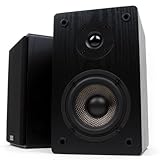
10. Micca MB42: Budget Pick and the Cheapest Way Into Full-Size Drivers
Micca MB42 Standard 2-Way Passive Bookshelf Speakers, Stereo Pair, Black
4-inch woven carbon fiber woofer
0.75-inch silk dome tweeter
60Hz-20kHz
4-8 ohm, 85dB sensitivity
75W per speaker
Pros
- Warm
- smooth sound with clear mids
- carbon fiber woofer delivers surprising bass for its size
- full-size 5-way binding posts instead of spring clips
- 9.5-inch cabinets suit desks and dorm rooms
Cons
- Passive speakers need an external amplifier
- quality control varies with some loose binding posts reported
- upper bass bump around 125-150Hz can need EQ
The MB42 is the reason so many people describe budget passive speakers as a scam. It delivers a full-size woven carbon fiber woofer, a silk dome tweeter and real five-way binding posts for a fraction of what the alternatives cost, and it is the least expensive way to own a proper 4-inch two-way bookshelf speaker.
The ported enclosure extends bass response further than many sealed designs at this size, and the stated response runs from 60 Hz to 20 kHz at 85 dB sensitivity and 4-8 ohm impedance. That is a friendly electrical load for almost any amplifier.
Owners consistently treat it as the benchmark for the category, describing the presentation as musical and warm rather than analytical. Placement advice from the manufacturer is straightforward for small rooms: run them along a wall or near a corner, on a desk, a bookcase or stands.
Two practical notes from owner reports. Some buyers found the binding posts loose on arrival and recommend checking terminal tightness before first power-up, and an optional plug-and-play crossover upgrade kit exists for anyone who wants more clarity from the simple 6 dB per octave network.
What to check before you buy
Budget for an amplifier as part of the purchase, not as an afterthought. A compact desk amplifier is the natural pairing and keeps the whole system small, which suits a small room.
Expect a slight upper-bass emphasis around 125 to 150 Hz, which owners correct with EQ or by pulling the low knob down. On a desk close to a wall that bump can become obvious.
Who should skip it
Anyone wanting a refined off-axis response or a premium finish should step up to the RB42, whose 10-element crossover and walnut veneer are a clear step above.
Buyers who need modern connectivity will find only binding posts here, so Bluetooth, optical and HDMI are all absent and require external hardware.
Powered vs Passive Speakers: Which One Fits a Small Room?
Powered speakers have the amplification inside one cabinet, so they work the moment you plug them in. Passive speakers have no electronics at all, which means they need an amplifier or AV receiver driving them through binding posts.
For a first system in a small room, powered is almost always the right answer. It reduces the number of boxes, removes the question of impedance matching, and leaves more of your budget for the speakers themselves. The three powered options here all deliver 42 watts of output, and the R1280DBs adds the subwoofer line-out the other two lack.
Choose passive if you already own an amplifier, if your television connects through an AV receiver, or if you plan to build a multi-channel system later. The limitation is that an amplifier adds cost and another failure point, and in a very small space you may end up with electronics you have nowhere to put.
Our wider guides cover the choice in more depth: the best bookshelf speakers under 300 overall and the best Bluetooth bookshelf speakers for wireless setups.
Connectivity Guide: Matching Inputs to Your Sources
Start by listing every source you need to connect, then pick the speaker that already has the right input. A 3.5mm jack covers a laptop or a phone. Optical or coaxial covers most televisions that predate HDMI-only designs. RCA covers receivers, CD players and turntables with a built-in preamp.
Only the Edifier R1280DBs in this group offers digital audio plus Bluetooth in one cabinet. If your television has HDMI ARC as its only output, none of these speakers will connect directly, and you need either an inexpensive converter or an optical output from the set.
A phono input for records appears on none of these ten. Budget for a small phono preamp if a turntable is part of the plan, and check that the speaker has a line-level input to connect it to.
Subwoofer output is worth prioritizing if you watch films. The Edifier R1280DBs includes one with automatic crossover detection, and a sub out on a passive system means routing through your amplifier instead.
Placement in Small Rooms: Desk, Shelf and Wall Distance
Tweeter height matters more than anything else. Aim to have the tweeters at or slightly below ear level, which usually means stands rather than a high shelf for most furniture. If a shelf is all you have, angle the speakers down with isolation pads.
Leave space behind a rear-ported speaker. The Klipsch R-41M, R-40M and R-15M all fire their ports backward, and pushing them against a wall chokes the low end and adds boominess that a small room will amplify rather than absorb.
Toe-in helps in tight spaces. Angling each speaker toward the listening position narrows the perceived soundstage and improves imaging, which is exactly what a pair placed wide in a narrow room needs. The Klipsch horn models already control directivity well and need less of it.
Port placement is worth noting when comparing cabinets. A front-firing port keeps the back of the speaker open, so front-ported designs tolerate a shallow shelf more gracefully. Very few of the pairs here are front-ported, so depth clearance matters across the board.
Amplifier Pairing for Budget Passive Speakers
A common question in small-room audio forums is what amplifier to pair with a budget passive bookshelf. The answer is usually a compact Class D unit rather than a full-size receiver, because in a small room you rarely need more than a few watts per channel of clean current.
Match the load first. Speakers rated 4 ohms, including the Micca MB42 at 4 to 8 ohms, are broadly compatible and the easiest to drive. The 8-ohm pairs such as the Micca RB42 need an amplifier with enough current to keep the bass controlled.
Match the power to the room, not to the speaker rating. A 90 dB sensitive speaker like the Klipsch R-41M sounds loud from a modest amp, while a lower-sensitivity pair wants more reserve to avoid sounding compressed at higher volumes.
Two widely recommended budget approaches in our reading of the forums are a streaming-focused mini amplifier with an optical or RCA input, and a small desktop amplifier with a headphone output for near-field listening. Both keep the footprint tiny, which suits the room as much as the sound does.
Specs That Actually Matter in Small Rooms
Sensitivity is the number to read first. It tells you how efficiently the speaker converts amplifier power into volume, and higher numbers mean a smaller amplifier will do the job. The Klipsch R-41M at 90 dB and the Micca MB42 at 85 dB illustrate the spread.
Impedance matters for amplifier pairing rather than for tone. Speakers listed as 4-ohm or 4 to 8 ohm are broadly compatible, while a receiver rated for 8 ohms alone will still usually drive them, just with a caution in the manual.
Frequency response tells you how low the speaker goes, though the single-number listings across this category are not comparable between brands. A listed 68 Hz low end from a horn-loaded design and a listed 80 Hz figure from a powered pair are measured differently.
Cabinet dimensions decide whether the speaker fits at all. Measure your shelf depth and check the listed depth against it before you order, then confirm the tweeter will land near ear level.
Our broader room-focused recommendations live in our guide to the best speakers for small rooms, which covers floorstanding and wireless options beyond the bookshelf category.
Frequently Asked Questions
What are the best bookshelf speakers for a small room?
The Edifier R1280T is our top pick because it is powered, needs no amplifier, and its 4-inch driver suits a compact space. For passive setups the Klipsch R-41M pairs easily with a modest amp thanks to its 90 dB sensitivity. Small rooms reward neutral, efficient speakers placed at ear level rather than large drivers.
Are bookshelf speakers better than a soundbar?
For music and for anything with stereo imaging, yes. A soundbar prioritizes dialogue and simplicity, while a bookshelf pair gives you a wider soundstage, better bass per dollar and the option to add a subwoofer later. In a small room a good pair often occupies less usable space than a soundbar plus a wireless sub.
Do I need an external amplifier for passive bookshelf speakers?
Yes. Passive speakers have no built-in amplification and require an amplifier or AV receiver with speaker-level outputs. Powered models such as the Edifier R1280T and R1280DBs include their own amplification and work directly from a laptop, phone, television or turntable preamp.
Do I need a subwoofer with bookshelf speakers in a small room?
Usually not for music at moderate volume, because small rooms boost low frequencies anyway. For film sound effects and deep bass on music, a subwoofer makes a large difference, and a speaker with a subwoofer output such as the Edifier R1280DBs makes adding one later simple.
How should I place bookshelf speakers in a small room?
Set the tweeters at or slightly below ear level, space the speakers 4 to 6 feet apart, and angle them toward your listening position with toe-in. Leave several inches behind rear-ported models such as the Klipsch R-41M and R-15M so the port is not blocked by a wall.
What should I look for when buying budget bookshelf speakers?
Check sensitivity, cabinet dimensions and port placement first, since these determine whether the speaker fits your room and how much amplifier power you need. Then confirm the inputs match your sources, whether you want Bluetooth, optical or RCA, and whether a subwoofer output is included for future expansion.
Conclusion: Our Best Bookshelf Speakers Under 300 for Small Rooms
The Edifier R1280T wins this roundup because it removes the two hardest parts of buying a first pair: choosing an amplifier and matching its power to the speakers. It is the safest recommendation for a bedroom, office or small apartment, and it stays out of the way visually while filling the room with sound.
Buy the Polk Audio T15 if you already have a receiver and want the easiest path into a home theater system, the Klipsch R-41M if you want maximum detail per dollar from a small amplifier, and the Edifier R1280DBs if your sources include a television and a phone. For records, the Micca RB42 pairs best with a phono stage and a warm, forgiving signature.
Whichever you choose in 2026, measure your shelf first, set the tweeters at ear level and give rear-ported cabinets some breathing room. Placement does more for a small room than any upgrade you can buy at this budget level.