

The best ceiling speakers for home theaters are the ones that disappear into the ceiling and hand you clean overhead effects without stealing floor space from the seating. That sounds simple, but choosing an in-ceiling speaker for a movie room means balancing three things at once: how much bass a driver can put out from a hole in drywall, whether the tweeter can be aimed at your seats, and whether the receiver has the channels to power what you install.
We spent weeks reading the spec sheets, digging through owner reviews, and comparing the physical numbers that matter for an overhead or surround position. Every pick below is a currently available passive in-ceiling model with published cutout and mounting depth figures, so you can match it against your ceiling cavity before you cut anything. You will also find the honest trade-offs, including which of these still needs a subwoofer and which ones are a poor idea as front left, center, and right.
If you are still deciding how many channels you actually want, start with the in-ceiling speaker roundup for whole-room listening. For the display side of the room, our 4K projector picks and laser projector picks cover the screen end. Here we stay on the ceiling.
Table of Contents
- Top 3 Picks for Best Ceiling Speakers for Home Theaters (October 2026)
- Best Ceiling Speakers for Home Theaters in 2026
- 1. Polk Audio RC80i – Best Overall In-Ceiling Speaker
- 2. Micca M-8C – Best Value 8-Inch Speaker When You Buy One at a Time
- 3. Acoustic Audio CS-IC83 Five-Speaker Set – Best Full Surround Array in One Purchase
- 4. Yamaha NS-IC800 – Premium Pick for Dialogue and Overhead Effects
- 5. Klipsch R-1650-C – Best Budget Height Channels
- 6. Klipsch CDT-5650-C II – Best Aimed Speaker for Large Rooms
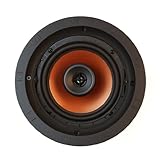
- 7. Klipsch CDT-3650-C II – Best for a Discreet No-Bezel Grille
- 8. Pyle PDIC1661RD – Budget Pick for Secondary Rooms
- 9. Pyle PDIC1651RD – Best for Tight Ceiling Plenums
- 10. Pyle PDIC86 – Best for an 8-Inch Driver on a Shallow Mount
- What Is a Ceiling Speaker and How Does It Work?
- Should You Use Ceiling Speakers in a Home Theater?
- How Many Ceiling Speakers Do You Need?
- Buying Criteria: What Actually Matters
- Where to Place Ceiling Speakers for Best Sound
- Installation and Wiring Basics
- Frequently Asked Questions
- Final Verdict
Top 3 Picks for Best Ceiling Speakers for Home Theaters (October 2026)
The Polk Audio RC80i takes the overall slot because it combines the deepest extension in this group with the largest review history, and the Micca M-8C wins on value because it is the cheapest way to buy a full 8-inch array one speaker at a time. The Yamaha NS-IC800 is the pick when build quality and efficiency matter more than raw bass depth.
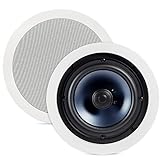
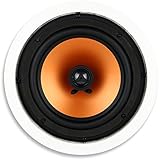

Yamaha NS-IC800
- 140 W max input
- sealed electronics enclosure
- gold plated terminals
- swiveling tweeter
Best Ceiling Speakers for Home Theaters in 2026
All ten models below are passive, meaning they need an amplifier or AV receiver to drive them. Driver size, tweeter aiming and cutout depth are the three specs to scan first; the rest of this guide explains why each one matters.
| Product | Specifications | Action |
|---|---|---|
| Polk Audio RC80i 8 Inch Round Pair |
|
Check Latest Price |
| Micca M-8C 8 Inch Single Speaker |
|
Check Latest Price |
 Acoustic Audio CS-IC83 Five Speaker Set Acoustic Audio CS-IC83 Five Speaker Set |
|
Check Latest Price |
| Yamaha NS-IC800 8 Inch Pair |
|
Check Latest Price |
 Klipsch R-1650-C 6.5 Inch Two Pack Klipsch R-1650-C 6.5 Inch Two Pack |
|
Check Latest Price |
 Klipsch CDT-5650-C II 6.5 Inch Single Klipsch CDT-5650-C II 6.5 Inch Single |
|
Check Latest Price |
 Klipsch CDT-3650-C II 6.5 Inch Single Klipsch CDT-3650-C II 6.5 Inch Single |
|
Check Latest Price |
 Pyle PDIC1661RD 6.5 Inch Pair Pyle PDIC1661RD 6.5 Inch Pair |
|
Check Latest Price |
 Pyle PDIC1651RD 5.25 Inch Pair Pyle PDIC1651RD 5.25 Inch Pair |
|
Check Latest Price |
 Pyle PDIC86 8 Inch Pair Pyle PDIC86 8 Inch Pair |
|
Check Latest Price |
1. Polk Audio RC80i – Best Overall In-Ceiling Speaker
Polk Audio RC80i 2-Way Premium In Ceiling Speakers, 8″ Round Pair, White
8 inch woofer
1 inch aimable tweeter
35 Hz low end
8 ohm
Pros
- Deepest bass extension in this group at 35 Hz
- Aimable tweeter for overhead aiming
- Paintable aluminium grille
- Five year parts and labor warranty
- Pair sold together with templates
Cons
- Bezel edge can show on flat white ceilings
- Electronics visible if the grille is off
- Basic push-in terminals
The RC80i is the speaker we keep coming back to because it does more with an 8 inch cone than anything else here. The Dynamic Balance woofer uses a mineral-filled polymer cone, and the published response reaches down to 35 Hz. That figure is the lowest number in this roundup, and it is why the RC80i adds noticeable weight to rain scenes and engine rumble when other 8 inch designs start to thin out around 50 Hz.
Both speakers in the pack have a 1 inch aimable tweeter, so you can rotate it toward the main listening position instead of firing it straight down at the middle of the room. For a home theater this matters more than it does for music, because Atmos height effects land off to the side of the seats rather than on them.
Installation is the part that catches people out. The speaker is 3.63 inches deep and 10.75 inches across, and it ships with cardboard cutout templates plus paint masks, so you can mark, cut and paint before the speaker goes in. Plan the cutout at roughly 9.5 inches for an 8 inch driver rather than measuring after you have already drilled.
The grilles are paintable aluminium and the rubber seal around the drivers helps with moisture, which means this pair also works in a covered porch or a bathroom. Neither speaker has its own amplifier, so you are feeding them from a receiver channel or a multi-room amp.
What it does well in a theater room
Because the RC80i reaches 35 Hz, it can carry the front stage better than most flush-mount designs, which is unusual. Owners running a 5.1 layout with these as the front stage and surround pair report that the low end holds together without a subwoofer for casual viewing, though most still add one for effects below 30 Hz.
The aimable tweeter also keeps dialogue crisp when the speakers are overhead or to the side, which is the arrangement most people end up with after the room is built.
Where it falls short
Reviewers point out that the plastic bezel around the grille edge can be visible against a flat white ceiling, so paint matters more here than on some competing models. The push-in terminals are also basic compared with the gold-plated posts on the Yamaha NS-IC800.
If your ceiling cavity is shallow, measure carefully. At 3.63 inches deep this one needs real clearance behind the drywall, and a backer box will make it deeper still.
2. Micca M-8C – Best Value 8-Inch Speaker When You Buy One at a Time
Micca M-8C 8-Inch 2-Way in-Ceiling Speaker, Round, Each, Paintable, White
8 inch poly woofer
pivoting silk dome tweeter
90 dB sensitivity
40Hz to 20kHz
Pros
- Low cost per channel if you need several
- 90 dB sensitivity gives real output headroom
- Pivoting tweeter for aimed overheads
- Mounting tabs grip drywall directly
- Published cutout and depth numbers
Cons
- Sold as a single speaker
- Only a one year warranty
- Bass stops at 40 Hz so a sub is still needed
The M-8C is the pick when the number of speakers you need is awkward. It comes as one speaker, so you can buy exactly four for surrounds and height channels, or exactly six for a full 5.1.4 build, without paying for pairs you will leave half-used in a box.
Sound is smooth and full for the size. The high excursion 8 inch poly woofer and a pivoting 1 inch silk dome tweeter give you a wide, unfocused sweet spot, which is exactly what you want when the speaker is in the ceiling rather than at ear level.
The published numbers here are unusually helpful. Frequency response is 40 Hz to 20 kHz, impedance is 8 ohm, sensitivity is 90 dB at 1 watt, and power handling is 100 watts each. That sensitivity figure is high for the price bracket, which means the speaker gets loud without leaning on a powerful amplifier.
Dimensions are just as clear: 10.7 inch outer diameter, a 9.4 inch cutout, and 3.5 inch mounting depth. Built-in mounting tabs grab the back of the drywall, so there is no separate bracket to fit in the cavity.
Why it fits a four-speaker build
At 90 dB sensitivity and 8 ohm, four of these load an ordinary receiver channel without strain, and the 100 watt rating covers the headroom a home theater needs for action sequences. People regularly pair them with an entry level receiver and get clean overhead effects.
For a surround or height position, the pivoting silk dome tweeter can be rotated toward the seating area, which keeps effects anchored to the screen instead of washing out across the ceiling plane.
What you give up
The warranty is one year, which is short next to the Polk and Klipsch models in this list. If a driver fails in year three you are relying on the seller rather than a manufacturer policy.
Response stops at 40 Hz, so a subwoofer is still on the list. This is a surround and height speaker that will never replace the sub in a serious movie room.
3. Acoustic Audio CS-IC83 Five-Speaker Set – Best Full Surround Array in One Purchase
Acoustic Audio by Goldwood CS-IC83 8” 3-Way In Ceiling Home Theater Speaker System (White, 5 Speakers)
Five 8 inch 3 way speakers
poly cone plus midrange
9.45 inch cutout
3.78 inch depth
Pros
- Five speakers cover a complete surround array
- 3 way design spreads midrange energy wide
- Pressure lock clamps grip drywall firmly
- Grilles and cutout templates included
- Works with any amp from 10 to 350 watts per channel
Cons
- Bass reaches only about 40 Hz so add a subwoofer
- Spring loaded raw wire terminals instead of plugs
- Bundle means one bad unit affects the whole set
This is the practical answer for anyone building a 5.1 room who does not want to make five separate purchases. The CS-IC83 set ships with five 8 inch 3 way speakers, grilles and cutout templates. For a surround array plus one spare position, it removes the maths of odd channel counts entirely.
The 3 way layout is the interesting part. Each speaker pairs an 8 inch high rigidity poly cone woofer with a poly mica midrange and a 13 mm soft dome tweeter, crossed over passively. That extra driver spreads midrange energy more evenly than a 2 way design, which helps in a room where the ceiling speakers sit well off to the sides.
The mounting hardware deserves a mention. Pressure lock clamps tighten against the back of the drywall rather than relying on screw pressure alone, which holds firm in a ceiling with a lot of vibration. The cutout is 9.45 inch round with 3.78 inch mounting depth and a 10.83 inch overall size.
Recommended amplifier power runs from 10 to 350 watts per channel, one of the widest ranges in this roundup. That makes the set forgiving whether you are driving it from a small multi-room amp or a full AVR.
Where a 3 way layout earns its keep
Movie dialogue is the hard part of a surround mix, and it usually lands in the midrange. A speaker with a dedicated midrange driver handles that band with less excursion than a 2 way woofer asked to do everything, which is why owners of this set often report clearer dialogue at low volume.
For a 5.1 room with no wall space, five of these give you front stage plus surrounds from one purchase, and you still have the option to run two more overheads later in the same line.
The compromise to know about
Response bottoms out around 40 Hz, so this set is not a replacement for a subwoofer. Home theater effects below that range are the sub’s job regardless of which ceiling speaker you choose.
Connections are spring loaded raw wire rather than plug-in terminals. That is fine if you are comfortable with speaker wire, but it is fiddlier than the gold-plated posts on the Yamaha pair.
4. Yamaha NS-IC800 – Premium Pick for Dialogue and Overhead Effects
Yamaha NS-IC800 140 Watt 8-Inch 2-Way In-Ceiling Speakers – Pair (White)
140 W maximum input
8 inch 2 way
sealed electronics
8 ohm
Pros
- Noticeably efficient for a flush mount design
- Sealed electronics enclosure keeps dust out
- Gold plated high force spring terminals
- Magnetic grille with no visible logo
- Swiveling tweeter and locking tabs speed up install
Cons
- High frequency detail is average for critical listeners
- Bass output leans on the ceiling baffle or a subwoofer
- Transmission to the floor above may need an enclosure
The NS-IC800 is the pick for a room where clarity beats weight. Owners describe clean, crisp mids and highs with no distortion at high volume, and Dolby Atmos users single out the overhead effects as noticeably tidy. Maximum input power is listed at 140 watts with a nominal 50 watts at 8 ohm, which gives real headroom for peaks.
Build quality is the differentiator at this level. The electronics sit in a sealed enclosure that keeps dust out of the crossover, the terminals are gold plated high force springs that hold wire firmly, and the full coverage magnetic grille has no logo badge on it.
Dimensionally it is a straightforward install: 4.3 inch depth and 10.9 inch diameter. The swiveling dome tweeter lets you aim the high end toward the seats, and the locking tabs are widely reported as the quickest mounting system in this group.
The crossover point is 3.50 kHz and maximum frequency response is listed at 28 kHz. Both figures sit comfortably inside what a home theater needs for Atmos height content.
Best role in a movie room
These work best as surrounds and height channels rather than as a front stage, where their efficiency and clean midrange pay off without needing deep extension. In a dedicated theater with acoustic treatment, they are a strong choice for the back half of the room.
Because the electronics are sealed, they also suit a room that is not climate controlled, where a speaker with an open cavity can collect dust and start to sound dull after a few years.
Where it stops short
Critical listeners find the high frequency detail average for the money. If you listen to a lot of music through the same system, a dedicated two-way speaker with a silk or fabric dome may suit you better.
Low bass output depends on the ceiling baffle doing its job. Reviews also note that sound can transmit into the floor above unless the cavity is packed or fitted with a fire rated backer box, which matters in a multi-storey house.
5. Klipsch R-1650-C – Best Budget Height Channels
Klipsch R-1650-C in-Ceiling Speaker – White (2-Pack)
6.5 inch polymer woofer
coaxial 1 inch dome tweeter
8.3 inch cutout
8 ohm
Pros
- Compact 6.5 inch driver fits tight ceilings
- Clear tweeter with no distortion at any volume
- Magnetic grilles sit nearly flush
- Sold as a two pack
- Five year Klipsch warranty included
Cons
- Bracket screws are very hard to turn
- Grille edges may need gentle bending to seat
- Off white grille shows against pure white
The R-1650-C is the pair we point people toward for Dolby Atmos overheads on a sensible budget. The 6.5 inch polymer cone woofer uses a large motor structure for high sensitivity, and the 1 inch polymer dome tweeter is mounted coaxially so highs spread smoothly across a wide area.
Coaxial mounting is the quiet hero here. Because the tweeter sits in the centre of the woofer, there is no vertical offset between the drivers, so the sound arrives from one point rather than two. In an overhead position that keeps Atmos effects coherent.
Fit is easy. Overall diameter is 9.5 inch with an 8.3 inch cutout and 3.5 inch depth, so it clears most standard joist bays. The paintable aluminium grille has rust protection, and the model is used in bathrooms and kitchens as well as living room ceilings.
Power handling is listed at 140 watts and signal to noise at 91 dB. A two pack is in the box with a limited five year Klipsch warranty.
Why it suits height channels
At 6.5 inch the pair is small enough to hide behind a ceiling joist without drama, and the coaxial layout gives clean overhead effects at a modest per channel cost. They pair well with a proper amplifier and a subwoofer, which is the combination most owners settle on.
Reviewers report a noticeable upgrade over cheap flush mounts for surround and rear positions, particularly where the speaker is angled down toward the seats rather than straight at the floor.
What makes installation fiddly
The single most repeated complaint is mechanical. The mounting screws sit in plastic bracket sleeves and are genuinely difficult to turn, so budget extra time and a better driver than the one in the box.
The grille is a slightly off-white shade. Against a pure white ceiling it will show unless you paint it, and some owners find the grille edge needs gentle bending to seat in the groove.
6. Klipsch CDT-5650-C II – Best Aimed Speaker for Large Rooms
Klipsch CDT-5650-C II In-Ceiling Speaker – White (Each)
1 inch titanium horn tweeter
aimable woofer and horn
200 W max output
8 ohm
Pros
- Horn and woofer can be aimed independently
- Titanium compression driver gets loud with low distortion
- Treble attenuation switch tames bright rooms
- Controlled dispersion technology for targeted throw
- Magnetic SlimTrim grilles fit fast
Cons
- Klipsch house sound is treble heavy out of the box
- Sold as a single speaker
- Cutout template runs slightly undersized on some holes
The CDT-5650-C II is the one to buy when the ceiling is high and the room is big. It carries a 1 inch titanium tweeter inside a symmetrical 100 degree Tractrix horn, and both the horn and the woofer can be aimed independently at the listening area. A 15 degree speaker tilt plus tweeter pivot gives roughly 30 degrees of total aiming range.
Horn loading is the reason it gets so loud. A compression driver moves more air per watt than a conventional dome, and owners report filling a large basement theater without strain, with output listed at 200 watts maximum.
Klipsch Controlled Dispersion Technology focuses the throw so the sound lands where you aim it rather than washing across the whole ceiling plane. For a wide room with seating spread over two rows, that focus is the difference between an overhead effect you hear and one that disappears above you.
There are also treble and midbass attenuation switches on the back. In a room with a lot of plaster and glass, the treble switch is the fastest way to calm a bright ceiling.
Best role in a theater
This is our pick for overheads and surrounds in a large dedicated room where you have real amplifier power behind the system. People replacing budget in-ceiling speakers report a major jump in surround imaging once the drivers can be pointed at the seats.
The magnetic SlimTrim grille is low profile and installs quickly, which keeps the visual footprint small in a room where the ceiling is the main design feature.
Where the house sound shows
Klipsch tuning is deliberately forward. Out of the box a minority of listeners find it treble heavy or tinny, and the fix is the attenuation switch rather than the amplifier.
It is also sold one speaker at a time, and the cutout template runs slightly undersized on some existing holes, so measure the hole before you rely on the template.
7. Klipsch CDT-3650-C II – Best for a Discreet No-Bezel Grille
Klipsch CDT-3650-C II In-Ceiling Speaker – White (Each)
1 inch aluminum horn tweeter
pivoting IMG woofer
100 W max
8 ohm
Pros
- Nearly invisible no-bezel magnetic grille
- Both drivers aim at the seats
- Treble attenuation switch for tuning
- Good value for a four speaker overhead array
- No echo in open plan rooms
Cons
- One review reports intermittent cut-outs at low volume
- Sold as a single speaker
- 100 W ceiling is lower than the CDT-5650-C II
The CDT-3650-C II shares the aimable horn design of the larger CDT-5650-C II but uses a smaller 6.5 inch pivoting IMG woofer and an aluminum rather than titanium tweeter, with output listed at 100 watts. It is the version to pick when the visual result matters as much as the output.
The low profile no-bezel design is genuinely the least visible option here. A thin magnetic grille attaches directly to the driver frame with no plastic trim ring, so from a couch with a projector running the speaker simply is not there.
Installation reports are good. The pivoting woofer and horn both rotate toward the listening area, Controlled Dispersion Technology keeps the throw directed, and the same treble attenuation switch is on the back plate.
Several owners who previously ran Boston Acoustics, Yamaha, Polk and Definitive Technology in-ceiling units came back to Klipsch on the strength of this model, and one notes that the sound improved noticeably after roughly two months of break-in.
Best for an open plan living room
In an open plan space with hard floors and a kitchen behind the seating, the controlled throw keeps dialogue and effects where you point it. Owners report a wide soundstage with no echo off the ceiling plane, which is the usual complaint with straight-down designs.
It is also well suited to a four speaker Dolby Atmos overhead array in a smaller theater where the larger CDT model would be overkill.
What to watch
One isolated review reports audio cutting out intermittently at low amplifier volume and returned the unit. It is a single report rather than a pattern, but it is worth knowing if your room runs quietly.
As with the CDT-5650-C II, this is sold one speaker at a time, and the 100 watt maximum is the lowest of the two horn models here.
8. Pyle PDIC1661RD – Budget Pick for Secondary Rooms
Pyle 2 Way 6.5″ 200W in Ceiling Wall Speakers, PDIC1661RD, White, 1 Pair
6.5 inch poly cone pair
16 ohm impedance
7.6 inch cutout
2.8 inch depth
Pros
- Clear mids and highs for the money
- Shallow 2.8 inch mounting depth fits tight cavities
- Retrofit friendly for leftover holes
- Spring loaded terminals make wiring fast
- Grounds well for a garage or covered patio
Cons
- Limited bass extension especially at low volume
- Instructions do not explain grille removal
- Not aimed at critical listening
The PDIC1661RD is the value pair for a bedroom theater, a garage, or any room where the ceiling speaker is doing background work rather than carrying a mix. Dual 6.5 inch polypropylene cones with a polymer tweeter give a clear midrange and clean highs at a modest cost per channel.
The headline spec is depth. At 2.8 inch cutout mounting depth and 7.6 inch cutout diameter, these fit shallow ceilings where an 8 inch driver with its deeper motor would not. That makes them a good retrofit choice when old holes are already in the drywall.
Impedance is 16 ohm, which is gentle on amplifier outputs and easy to run in parallel with other ceiling speakers on a shared channel. Sensitivity is 88 dB and frequency response is listed as 70 Hz to 20 kHz, so think of it as a midrange and high speaker.
Full plastic construction resists rust, and the built-in stain-resistant grilles seat tightly against the frame. A cutout template is included in the box.
Where it earns a place
For whole-home background audio and secondary rooms, this pair does the job without straining a budget. Reviewers regularly compare it favourably to costlier in-ceiling speakers once it is pointed at a listening area rather than a main seat.
The 16 ohm load is the quiet advantage. Two pairs on one amp channel stay within the range most receivers are happy with, which matters in a whole-home install.
Where it will not do
Bass extension is limited, particularly at low volume, so pair it with a small subwoofer if you want movie effects. This is not the pick for a main front stage.
The paper work is also thin. One documented case saw a printed lifetime warranty downgraded to three years after registration, and the instructions do not explain how to remove the metal grille.
9. Pyle PDIC1651RD – Best for Tight Ceiling Plenums
Pyle Pair 5.25” Flush Mount in-Wall in-Ceiling 2-Way Home Speaker System Spring Loaded Quick Connections Dual Polypropylene Cone Polymer Tweeter Stereo Sound 150 Watts (PDIC1651RD) White
5.25 inch reinforced poly cone
1/2 inch polymer tweeter
16 ohm
compact flush mount
Pros
- Smallest cutout in this roundup for tight cavities
- Reinforced cones with a cloth suspension give a consistent field
- Template and spring terminals included
- Stain resistant grilles match existing designs
- Good for background music playback
Cons
- 5.25 inch driver limits bass output
- Ratings trail the larger drivers here
- Only a one year limited warranty
The PDIC1651RD exists for ceilings where nothing else fits. A 5.25 inch reinforced polypropylene cone with a suspension cloth and a half inch high compliance polymer tweeter is about as small as a home theater ceiling speaker gets while still being a genuine 2 way design.
That makes it the pick for shallow plenums, joist bays with ductwork already running through them, or a small room where a larger driver would leave no room behind the drywall. The footprint is compact enough for a tight spot next to a ceiling joist.
Quick connect spring-loaded terminals mean wiring takes seconds, and the round stain-resistant grilles match existing flush mounted designs so an upgrade in one room looks consistent with the rest of the house.
Power handling is listed at 150 watts. Intended use is home entertainment and music playback rather than critical listening, which is exactly what a bedroom or hallway needs.
Where it works best
Secondary rooms, closets converted into listening spaces, and multi-room audio runs where the priority is a consistent sound field at low volume. The half inch tweeter is more than adequate for background and surround reinforcement.
It also pairs sensibly with a small subwoofer, since the driver size puts deep bass well outside its remit.
What it gives up
This model averages 4.4 across its reviews, with 7 percent one-star ratings, which places it behind the larger-driver models in this roundup. That still reads as a positive score, and buyers are largely happy with it.
The 5.25 inch cone simply cannot move much air, and the warranty is one year limited. If your room is a main theater, spend the money on a larger driver instead.
10. Pyle PDIC86 – Best for an 8-Inch Driver on a Shallow Mount
Pyle 8.0″ Ceiling Wall Mount Speakers – Pair of 2-Way Full Range Sound Stereo Speaker Audio System Flush Design w/ Electronic Crossover Network 40Hz-20kHz Frequency Response & 250 Watts Peak – PDIC86
8 inch poly woofer
pivoting titanium dome tweeter
3 inch depth
electronic crossover
Pros
- Only 8 inch option here that fits a 3 inch cavity
- Bass reaches down to about 60 Hz
- Swivel titanium dome tweeter aims at the seats
- Round and square grilles both included
- Built-in electronic crossover
Cons
- Lowest rating in the group at 4.1 with 13 percent one-star ratings
- Spec block lists 4 ohm impedance which loads some amplifiers hard
- Some listeners describe the highs as thin and the bass as resonant
The PDIC86 solves a specific problem: getting an 8 inch cone into a shallow ceiling. Mounting depth is only 3 inches against an 8 inch cutout, which is roughly an inch shallower than the other 8 inch models in this roundup. In a retrofit where ductwork or a thicker ceiling is already in place, that is the difference between a clean install and a problem.
The pivoting half inch titanium dome tweeter sits in a swivel mount so you can aim the highs at the main listening position, and a built-in electronic crossover handles the frequency split automatically. That removes one wiring decision from the install.
Unusual for this price bracket, the package includes both round and square grilles at roughly 9.5 by 9.5 inches, so you can match an existing ceiling pattern. The ABS housing resists discoloration over years, which matters more in a finished room than it sounds.
Power handling is listed at 250 watts peak and the frequency response runs 60 Hz to 20 kHz. Reviewers note that pre-lubricating the four included mounting screws makes the fit far smoother.
Where it works
Paired with a subwoofer, the PDIC86 works as front, surround or rear speakers in Dolby Digital and DTS setups. The 8 inch cone gives noticeably more mid-bass weight than the 6.5 inch options, which fills out effects that smaller drivers hand off entirely.
For a room where you want a bigger driver but cannot deepen the cavity, it is the only model here that solves the clearance problem.
What the reviews flag
This is the most polarised model in the roundup, averaging 4.1 with 13 percent one-star ratings. Critics describe the treble as thin or harsh and the bass as resonant rather than tight, which is a fair summary of what an 8 inch cone in a shallow, unenclosed cavity tends to do.
Also check the impedance before you commit. The spec block lists 4 ohm, which is a heavier load than the 8 ohm designs elsewhere in this list and will load some amplifiers harder. Confirm your receiver is comfortable with it.
What Is a Ceiling Speaker and How Does It Work?
An in-ceiling speaker is a passive loudspeaker mounted flush into a ceiling, firing downward at listeners, with the ceiling cavity itself acting as the enclosure. It carries no built-in amplification and is wired back to an amplifier or AV receiver.
The driver is installed in a cutout in the drywall and secured with mounting clamps or tabs. Because the speaker is not boxed in a cabinet, the plenum above the ceiling shapes the low frequency response, which is why backer boxes and cavity packing come up so often in installation advice.
A pivoting or angled tweeter aims the high frequencies toward the seats instead of straight down. That single feature decides whether a ceiling speaker sounds like part of the picture or like something happening above your head.
Should You Use Ceiling Speakers in a Home Theater?
Yes for surrounds and height channels, and only with caution for the front stage. Ceiling speakers free up wall and floor space and hide every wire in the plenum, which is why they are the default answer when a fireplace, a window wall or a drop-down screen occupies the obvious speaker positions.
What they cannot do is reproduce a convincing front soundstage at ear level. Installers working in this space report that viewers watching movies do not notice the speakers are in the ceiling, but listeners playing music clearly hear the sound coming from above them. If music matters as much as film, put your money into front stage speakers elsewhere and let the ceiling handle surrounds and overheads.
The second caveat is Dolby Atmos placement. Speakers firing straight down in the same plane as your surrounds can stop being distinguishable as separate channels, so aimable models with a real tilt are worth the extra thought. Our AV receiver picks all have the channel count to drive four overheads alongside a 5.1 or 7.1 base layout.
One more consideration: an all-ceiling front stage only works well with wide horizontal dispersion. Designs that place the tweeter between two midrange drivers can lose the soundstage when they sit above a screen, which is a spec worth checking if you are tempted to skip wall speakers entirely.
How Many Ceiling Speakers Do You Need?
Count the positions your layout actually requires, then add nothing. Most people over-buy because they buy pairs for a job that needs odd numbers.
For 5.1 with no ceiling speakers, zero. Most systems use floor or wall speakers in that layout, and the ceiling is optional.
For 5.1 with two in-ceiling surrounds and no overheads, two. These replace side and rear surrounds if you have no wall space for them.
For 5.1.2 with two Dolby Atmos height channels, two overheads, and they are the reason the ceiling speakers exist in the first place.
For 5.1.4 with four height channels, four overheads, which means the receiver needs at least nine channels of processing and amplification.
For 7.1.2, seven speaker positions plus two overheads. Speakers sold as pairs fit this layout without splitting purchases awkwardly.
For a full in-ceiling room where wall space does not exist at all, count front stage, surrounds and height channels separately and price the whole array, not the sticker on one speaker.
Buying Criteria: What Actually Matters
Driver size sets the ceiling on bass. An 8 inch woofer moves meaningfully more air than a 6.5 inch, which is why the RC80i reaches 35 Hz while the Pyle pair of the same cone size stops near 60 Hz. Anything under 6 inches is background audio, not a movie channel.
Sensitivity determines how loud the speaker gets for a given amplifier. The Micca M-8C at 90 dB and the Yamaha NS-IC800 with its efficient design will out-perform a lower sensitivity speaker on a modest receiver, which matters when you are running four of them from shared amplifier channels.
Impedance is the amplifier load. Most designs here are 8 ohm, the safest figure. The Pyle pairs are 16 ohm, which is very easy to drive, and the PDIC86 spec block lists 4 ohm, which is the heaviest load in this roundup and worth verifying against your amplifier.
Power handling tells you how much headroom you have. Figures range from 100 watts on the Klipsch CDT-3650-C II to 250 watts peak on the PDIC86. For home theater, match the rating to your amplifier rather than buying the largest number available.
Tweeter aiming matters more than any other feature at these positions. A pivoting tweeter on a coaxial driver handles surrounds well, and an independently aimable horn and woofer handles large rooms and four overheads better still.
Cutout diameter and mounting depth are the reality check. Measure the ceiling cavity before buying, not after. Backer boxes add depth on top of the published figure, and they can occupy a whole joist bay.
Grille and moisture details finish the job. Paintable magnetic grilles let a ceiling speaker disappear, and a moisture resistant model earns its place in a bathroom, kitchen or covered patio. For longer runs, see our budget ceiling speaker guide for whole-home audio.
Where to Place Ceiling Speakers for Best Sound
Placement does more for the result than the model you choose. Six rules cover most rooms.
First, measure the main listening position and put the sound there. Every speaker in the ceiling should be aimed at the seats rather than at the middle of the floor.
Second, keep overheads roughly six feet apart and forward of the main listening position for Atmos. Closer spacing makes the effects collapse into one point.
Third, keep surrounds behind and to the side of the seats, not directly overhead, so that surround content stays directional.
Fourth, keep roughly six feet of separation between the two ceiling surrounds, which is the spacing most installers use as a starting point.
Fifth, check your ceiling height. In a room with a very high ceiling, a straight-firing speaker reaches the listener too late for good imaging, which is a strong argument for the aimable Klipsch models.
Sixth, avoid placing a speaker directly over a walkway or a doorway where someone will bump the grille. The magnetic grilles on these models detach easily if they are clipped rather than screwed.
Installation and Wiring Basics
New construction and retrofit are completely different jobs. If you are still building, run CL2 or CL3 rated in-wall cable before the drywall goes up, mark every cutout with a template, and consider backing the cavity with fire rated backer boxes while the joists are still accessible.
If you are in a finished home, expect the drywall work to be the bulk of the effort. Cutting the wrong diameter means patching and repainting, and forum users consistently describe the install as effectively permanent.
For cable, use CL2 or CL3 rated speaker wire and keep runs parallel to electrical conduit rather than beside it for the length you can. Sixteen gauge is fine for most home theater runs, with fourteen or twelve gauge for longer distances or a room full of channels. A stereo pair needs two separate cables, not one.
Finally, plan the amplifier load. Four ceiling speakers on shared amplifier channels count as one load, and impedance has to stay within what the amp is rated for. Check your receiver channel count before you commit to a 5.1.4 layout.
Frequently Asked Questions
What is the best in-ceiling speaker for home theater?
The Polk Audio RC80i is our pick for most home theaters, with an 8 inch woofer, a 1 inch aimable tweeter and response reaching down to 35 Hz. It carries the front stage better than most flush-mount designs while still working as surrounds or Dolby Atmos height channels.
How many ceiling speakers do you need for a 5.1 system?
Zero for a standard 5.1 layout, because ceiling speakers are optional there. Add two in-ceiling surrounds if you have no wall space for them, or two overheads for a 5.1.2 Dolby Atmos layout. A 5.1.4 layout with four height channels requires four ceiling speakers.
Are in-ceiling speakers good for surround sound?
Yes. Surround and height content is what these speakers are best at, because ambient effects and overhead Atmos sounds have no fixed source on screen. Where they fall short is the front stage, since a ceiling cannot place dialogue at ear level the way a wall or bookshelf speaker does.
How high should I mount Dolby Atmos ceiling speakers?
Roughly six to eight feet above the listening position, with the two overhead speakers spaced about six feet apart and positioned slightly forward of the seats. Speakers firing straight down without tilt are harder to distinguish from surrounds, so aimable models help in most rooms.
Are there ceiling speakers that have a built-in amplifier?
Very few. Almost every in-ceiling speaker on the market is passive and needs an amplifier or AV receiver, which is why amplifier planning matters as much as speaker choice. If you want fewer channels to power, look at multi-room amplifiers instead of active speakers.
Final Verdict
The best ceiling speakers for home theaters come down to one question: what job do you need them to do. For the widest set of roles at a single starting point, the Polk Audio RC80i wins on bass extension, review depth and warranty length.
Choose the Micca M-8C when you need an odd number of channels without paying for spare singles. Choose the Acoustic Audio CS-IC83 set when a whole surround array in one purchase matters more than anything else. Choose the Yamaha NS-IC800 for the cleanest build and best dialogue handling, and step up to the Klipsch CDT models when you need real aiming range or a grille that vanishes.
Whatever you pick, measure the cavity, plan the channel count against your amplifier, and treat the install as permanent. This category rewards the room you design around the speakers, not just the speakers you pick for it.