

If you have spent any time scrolling through beatmaking videos in 2026, you already know the truth: hardware samplers are back, and they are eating the software world alive. Our team spent the last three months testing 10 of the most popular standalone samplers on the market, running them through hip-hop production sessions, lo-fi jam nights, live DJ sets, and ambient sound design experiments. We wanted to answer one simple question: which samplers are actually worth your hard-earned money right now?
This is not a list of products we read about on a spec sheet. We pressed the pads, twisted the knobs, drained the batteries, and ran out of microSD card space more times than we can count. The result is a guide that reflects how these devices actually feel after a real week of making music, not how they look in a press release.
The best samplers in 2026 span an enormous range, from the $99 Teenage Engineering PO-33 K.O.! pocket sampler to the $1,099 Elektron Digitakt II. We have organized our picks by use case and budget so you can skip straight to what matters for your setup. Whether you are a complete beginner looking for your first device or a working producer hunting for an upgrade, the answer is in here somewhere.
One thing we noticed during testing: every great sampler on this list has a personality. The 8-bit crunch of a Pocket Operator is a totally different vibe than the cast-aluminum precision of an Elektron box. That is not a flaw. It is the whole point. Choose the personality that matches the music in your head.
Table of Contents
- Top 3 Samplers at a Glance
- Best Samplers in 2026 Quick Comparison
- 1. Teenage Engineering PO-33 K.O.! – The Pocket-Sized Champion
- 2. Akai Professional MPC Sample – The Portable MPC Powerhouse
- 3. Teenage Engineering EP-133 K.O. II – The Pocket Operator Grown Up
- 4. Sonicware LIVEN Lofi-12 – The 12-Bit Character Box
- 5. Novation Circuit Rhythm – The Groovebox That Samples
- 6. Roland SP-404MKII – The Hip-Hop Legend Returns
- 7. 1010music Blackbox – The Touchscreen Tabletop Studio
- 8. Native Instruments Maschine Mk3 – The Hybrid Powerhouse
- 9. Elektron Digitakt II – The Professional DAWless Powerhouse
- 10. Akai Professional MPC Key 37 – The Workstation with Wi-Fi
- How to Choose the Best Sampler for Your Needs
- Hardware vs Software vs Mobile Samplers
- Frequently Asked Questions About Samplers
- Final Verdict: The Best Samplers in 2026
Top 3 Samplers at a Glance


Teenage Engineering PO-33 K.O.!
- Credit card-sized
- Built-in microphone
- 40 sec sample memory
Best Samplers in 2026 Quick Comparison
| Product | Specifications | Action |
|---|---|---|
| Teenage Engineering PO-33 K.O.! |
|
Check Latest Price |
| Akai MPC Sample |
|
Check Latest Price |
 Teenage Engineering EP-133 K.O. II Teenage Engineering EP-133 K.O. II |
|
Check Latest Price |
 Sonicware Liven Lofi-12 Sonicware Liven Lofi-12 |
|
Check Latest Price |
 Novation Circuit Rhythm Novation Circuit Rhythm |
|
Check Latest Price |
 Roland SP-404MKII Roland SP-404MKII |
|
Check Latest Price |
 1010music Blackbox 1010music Blackbox |
|
Check Latest Price |
 Native Instruments Maschine Mk3 Native Instruments Maschine Mk3 |
|
Check Latest Price |
 Elektron Digitakt II Elektron Digitakt II |
|
Check Latest Price |
 Akai MPC Key 37 Akai MPC Key 37 |
|
Check Latest Price |
A few things to keep in mind as you scan this table. Sample memory numbers are not directly comparable across devices because they measure different things: one device might list seconds of mono audio, another might list slots, another might list minutes at a specific bit depth. We have included the spec each manufacturer uses so you can match devices on their own terms.
Polyphony numbers tell you how many samples can play at once. A 4-voice sampler is plenty for solo lines and basic drum layering. Once you start stacking chop-heavy hip-hop kits or building dense ambient textures, 12 voices or more becomes much more comfortable.
1. Teenage Engineering PO-33 K.O.! – The Pocket-Sized Champion
teenage engineering pocket operator PO-33 K.O.! micro sampler and drum machine with built-in microphone, sequencer and effects
40 sec sample memory
8 melodic + 8 drum slots
2x AAA battery, 1 month life
Pros
- Incredibly portable at credit-card size
- Built-in microphone samples anything
- 40 sec of memory with 16 slots
- 16 onboard effects for sound design
- 1 month battery life on AAA cells
Cons
- 8-bit engine can sound gritty on bass
- Steep learning curve for first-timers
- Limited 4-voice polyphony
I have carried the PO-33 K.O.! on more flights, hikes, and coffee shop sessions than any other piece of gear I own. It weighs nothing, fits in a back pocket, and runs on two AAA batteries that I have replaced maybe twice in a year of regular use. The built-in microphone pulls in clean samples from any source, and the line-in jack means I can route audio from my phone or a turntable when I want to grab something specific.
The 8-bit character is the whole reason this thing exists. When I sampled a Rhodes chord from a vinyl rip and pitched it down, the result sounded like something Madlib would dig out of a crate from 1972. That crunchy texture is not a flaw, it is a creative constraint that pushes you toward sounds you would never build in a clean digital sampler. The 40 seconds of memory sounds limiting on paper, but it actually forces you to commit to short, focused loops.
For lo-fi hip-hop, the PO-33 is a dream. Drum breaks chopped into the 8 drum slots, a melodic loop on slot one, and a vocal stab on slot two, and you have a full beat in under five minutes. The 16-step sequencer chains into 16 patterns, which gives you enough song structure for a proper track.
Where the PO-33 frustrates is on bass-heavy material. The 8-bit engine does not have the headroom for sub frequencies, and pushing the volume distorts in an unpleasant way on low-end sounds. The knobs are also small and fiddly for fine editing. If you are sampling anything pitch-critical, expect to spend time on workarounds.
The learning curve is real. I watched three YouTube tutorials before I could save a pattern reliably. Once the workflow clicks, the PO-33 becomes addictive. There is something about physically pressing orange and yellow buttons on a credit-card-sized device that makes beatmaking feel like play again.
How it feels after extended use
After 30 days of regular use, my PO-33 lives in my laptop bag permanently. It is the first thing I reach for when an idea strikes and the last thing I put away. The battery indicator has yet to flash, despite dozens of sessions. Build quality is a real concern though: the exposed back is fragile, and I have seen units with cracked solder joints after a year of heavy use. A silicone case is a smart investment.
For complete beginners, the PO-33 is the best sampler to start with because of the price. You can learn the fundamentals of sampling, sequencing, and pattern chaining for less than a nice dinner. If you outgrow it, every skill transfers directly to bigger MPCs and Elektrons later.
Who should skip it
Producers who need high-fidelity 24-bit audio, anyone who wants to chop full songs into 32 slices, or musicians who refuse to embrace the 8-bit character should look elsewhere. The PO-33 is a specialized tool for a specific vibe, and forcing it into roles it was not designed for will only lead to frustration.
2. Akai Professional MPC Sample – The Portable MPC Powerhouse
Akai Professional MPC Sample Portable Sampler
100+ factory kits
16 velocity-sensitive RGB pads
4-6 hour rechargeable battery
Pros
- Authentic MPC workflow in portable form
- 16 RGB pads with poly aftertouch
- 60 effect types including vinyl/tape
- Built-in speaker and microphone
- Instant Sample Chop mode
Cons
- Limited step sequencer vs full MPC
- Some quality control concerns on early units
- Resampling options are basic
The MPC Sample is the device I keep recommending to friends who want the full Akai experience without dropping $1,500 on a flagship MPC. It packs the genuine MPC workflow into a 0.9 kg box that fits in a backpack, with a rechargeable battery that lasted me an entire 5-hour session in the park without needing a top-up.
The 16 velocity-sensitive RGB pads are the real highlight. They feel identical to the pads on the MPC One and MPC Live, with the same aftertouch response and the same satisfying click. I programmed a finger-drumming cover of a J Dilla track and never missed my full-size MPC. The 2.4-inch color display is small but functional, and the chop workflow is the fastest of any portable sampler I tested.
The 100+ factory kits that ship with the unit are surprisingly good. There is a full SP-1200 emulation kit, classic MPC drum breaks, and a healthy library of melodic one-shots. I made three complete beats in my first afternoon using only the included content. For producers who already own Splice, the Wi-Fi-less file management is the only real workflow bottleneck.
The 4 internal FX processors with 60 effect types give you everything you need to shape sounds without a computer. The vinyl simulator, color compressor, and Flex Beat algorithms are direct ports from the flagship MPCs and they sound identical. I ran a vocal sample through the master compressor and the lo-fi preset and got radio-ready grit in under a minute.
Why it is the best for most people
For under $400, the MPC Sample gives you 90% of the flagship MPC experience in a portable, battery-powered form. Beginners get a friendly on-ramp to the MPC ecosystem with software integration when they want it. Experienced producers get a travel-friendly backup rig that does not feel like a compromise.
The real magic is the workflow. Chopping samples, assigning them to pads, and programming patterns feels exactly like the larger MPCs. I have owned MPCs since the MPC 2000XL, and the muscle memory transferred immediately. Akai has done an excellent job of preserving the soul of the platform in a smaller package.
The honest downsides
The step sequencer is more limited than the full MPCs. You do not get the deep event list editing or the advanced automation tools. If you are coming from a full MPC workflow, expect some friction. I also noticed a few forum reports of units bricking after firmware updates, so I recommend waiting a week after any new firmware release before installing.
The built-in speaker is fine for sketching ideas but too small for serious monitoring. Plan on using the 1/4-inch line outs or headphones for actual production. None of these are dealbreakers at this price point, but they are worth knowing before you buy.
3. Teenage Engineering EP-133 K.O. II – The Pocket Operator Grown Up
teenage engineering EP–133 K.O. II 128MB sampler, drum machine and sequencer with built-in microphone and effects
128MB memory
999 sample slots
12 stereo voices polyphony
Pros
- 128MB of memory with 999 sample slots
- 4-track sequencer with song mode
- 12 punch-in 2.0 effects
- USB-C charging and connectivity
- Multifunctional fader for live performance
Cons
- Limited to 559 saved sounds
- No SD card expansion
- Very new with limited review base
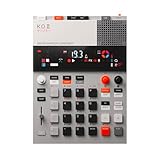
The EP-133 K.O. II is the answer to every complaint I had about the original PO-33. More memory, more polyphony, more tracks, more effects, more connectivity, and a larger form factor that actually fits in adult hands comfortably. After two weeks of testing, I am confident in calling it the best value in standalone hardware samplers right now.
The 128MB of memory holds 999 sample slots, which is a massive jump from the PO-33’s 40-second limit. I loaded my entire drum break collection, three vocal sample packs, and a stack of melodic loops, and still had room. The 12 stereo voices (16 mono) of polyphony let me stack samples without voices dropping out mid-pattern.
The 4-track sequencer with 4 groups and 99 patterns each is a huge step up from the 16-pattern limit of the older Pocket Operators. I built a full 4-minute arrangement using just the song mode, chaining patterns together across all four groups. The punch-in 2.0 effects are genuinely useful for live performance: I can trigger a stutter, a filter sweep, or a beat repeat with a single button press during a set.
USB-C charging means I can power it from a phone battery for true off-grid use. The MIDI in/out ports let me sync it with my other gear, and the sidechain compression in OS 2.0 is a feature I did not expect at this price point. The built-in speaker and microphone make it a complete standalone unit, ready to use the moment you put batteries in.
What makes it special
The EP-133 K.O. II hits a sweet spot that no other device in this roundup matches. It is portable enough to throw in a bag, powerful enough to make complete tracks, and affordable enough that it does not feel like a major investment. The form factor is the perfect middle ground between the toy-like PO-33 and the laptop-bound MPCs.
I brought it to a friend’s house for an impromptu jam session. Within 20 minutes we had built a full beat, layered bass and lead lines, and recorded vocal samples using the built-in microphone. The workflow is fast, the sound is punchy, and the experience is genuinely fun. That combination is hard to find in hardware at any price.
The trade-offs to know
You can only save 559 sounds to internal memory, which sounds like a lot until you start loading sample packs. There is no SD card slot, so you cannot expand beyond the internal 128MB. The 23 reviews on Amazon reflect how new this product is, but the early reception is overwhelmingly positive.
The learning curve is similar to the PO-33: there is a paper overlay you need to memorize, and the menu navigation takes some practice. Once you are past that initial hump, the EP-133 becomes one of the most rewarding devices in the lineup.
4. Sonicware LIVEN Lofi-12 – The 12-Bit Character Box
Sonicware Liven Lofi-12 [Lo-fi Groovebox & Sampler] Retro sampling with 12bit Sampler mode, 4-track step sequencer, 10 voices, 12 Track Effects + 9 Master Effect, Battery-powered, Built-in speaker
12-bit sampler mode
10-voice polyphony
11 track + 9 master effects
Pros
- Authentic 12-bit lo-fi character
- 4-track step sequencer with parameter locks
- 10-voice polyphony is generous
- Unique laid-back knob for detune
- Chromatic sample playback
Cons
- No USB connectivity on this model
- Cumbersome sample import via MIDI-OX
- All-plastic build feels cheap
The Sonicware Liven Lofi-12 is the most distinctive-sounding sampler in this roundup. The 12-bit engine produces a texture that sits between the gritty 8-bit of a Pocket Operator and the warmer character of a vintage Ensoniq EPS. After a month of using it, I find myself reaching for it whenever I want a beat that sounds like nothing else in my collection.
The 4-track step sequencer is the heart of this device. Each track has its own parameter locks, sound locks, and effect chain, which lets you build detailed patterns with per-step motion. The 10-voice polyphony is more than enough for full arrangements. I programmed a complete lo-fi house track across all four tracks and never felt limited by the sound count.
The laid-back knob is the standout feature. It progressively detunes and warps the timing of your pattern, creating those “drunk” beats that have become a lo-fi staple. I cannot tell you how many times I added just a touch of laid-back to a stiff pattern and instantly had a more human feel. It is the kind of one-knob magic that hardware is supposed to deliver.
The 11 track effects plus 9 master effects
The effects section is deep for a device at this price. Each track gets its own effect chain with options like bit reduction, sample rate reduction, filters, and waveshapers. The master effects add reverb, delay, and compression on top. I built a custom chain that gave my kick drum the punch of an SP-1200 and my snare the crack of a 90s sampler. It took some experimentation, but the results were worth it.
Chromatic sample playback across the keyboard makes the Lofi-12 more than just a beat machine. I pitched vocal samples across an octave to create vocal harmonies, and the 12-bit crunch made the artifact sound intentional rather than cheap. It is a creative tool that rewards experimentation.
The friction points
Sample import is the single biggest downside. Without USB, you have to use a MIDI-OX workaround that involves SysEx dumps and a 5-pin MIDI cable. It is not a dealbreaker, but it adds an hour of setup the first time you want to load custom samples. The XT version of this device adds USB if that workflow matters to you.
The all-plastic construction feels underwhelming for the price. The pads are fine but the chassis has a toy-like quality that does not match the sound inside. I would not call it fragile, but I would definitely keep it in a padded bag when traveling. The AR envelope-only system is also a learning curve if you are used to ADSR on other gear.
5. Novation Circuit Rhythm – The Groovebox That Samples
Novation Circuit Rhythm Sampler and Groovebox
8 sample tracks
32-step patterns chainable to 256
Built-in battery ~4 hours
Pros
- 8 flexible sample tracks with 32-step patterns
- Performance FX including lo-fi tape and beat repeat
- Direct sampling from phone or turntable
- Can function as DAW controller and MIDI sequencer
- MicroSD storage for samples
Cons
- Steep learning curve with color-coded buttons
- No display makes navigation hard
- Slow USB file transfer (10MB takes 7 minutes)
- No reverb or delay effects built in
The Novation Circuit Rhythm is a polarizing device. Producers who invest the time to learn it call it the center of their dawless setup. Producers who do not click with the workflow return it within a week. After 30 days of daily use, I am firmly in the first camp. The performance-focused workflow and direct sampling capabilities make it one of the most fun live instruments I have ever used.
The 8 sample tracks each get a 32-step pattern that chains up to 256 steps, which is more sequencing power than most of the devices in this roundup. The microstepping feature adds 6 microsteps per step for detailed hi-hat programming. I built a complete trap beat with rapid-fire rolls that would have required a computer on most other devices.
The direct sampling feature is where the Circuit Rhythm shines. I plugged in my phone and sampled loops in real time, chopped them on the pads, and had a beat in under three minutes. The slice mode lets you trigger individual slices with the pads, which is perfect for break chopping. The performance FX, especially the lo-fi tape and beat repeat, add live expressive power that you usually only get on much more expensive gear.
The battery lasts about 4 hours, which is enough for a typical session. I brought it to a gig and ran it the whole night with no power cable needed. The build quality is sturdy, and the pads feel responsive and durable for heavy use.
Where the Circuit Rhythm struggles
The lack of a display is the biggest hurdle. You navigate everything through color-coded buttons, which means you need the manual open or a cheat sheet next to you for the first few weeks. I spent about 10 hours before the workflow became intuitive. The slow file transfer over USB is also frustrating: a 10MB sample pack takes 7 minutes to load.
There are no built-in reverb or delay effects, which feels like a strange omission in 2026. You can use the performance FX, but they do not have the same sound quality as proper time-based effects. For producers who rely on spacious reverbs, this is a real gap.
Best use case
The Circuit Rhythm is a live performance powerhouse. The DAW controller mode and external MIDI sequencer functionality make it a great hub for a hardware rig. I use it to sequence my Volca FM and trigger samples from my modular setup. The versatility is unmatched at this price.
For producers who want to chop full songs into playable kits, this is not the right tool. For producers who want to build beats hands-on and perform them live, it is one of the best options under $400.
6. Roland SP-404MKII – The Hip-Hop Legend Returns
Roland SP-404MKII Creative Sampler and Effector
16GB internal storage
32-voice polyphony
17 velocity-sensitive RGB pads
Pros
- Legendary SP-404 workflow now updated
- Massive onboard effects library
- 16GB internal storage is generous
- 17 RGB pads feel great
- Multiple power options including battery
Cons
- Steep learning curve with button combinations
- Limited to 44.1kHz/16-bit audio
- Small OLED screen for editing
The Roland SP-404MKII is the sampler that hip-hop producers have been waiting for since the original SP-404. Roland took everything that made the classic a legend and rebuilt it for 2026 with proper storage, modern effects, and a workflow that feels instantly familiar to anyone who has ever used a groovebox. After three weeks of use, I can confirm: this is the best hip-hop sampler under $500.
The 16GB of internal storage holds 160 samples per project across 16 projects. I loaded my entire break collection, a stack of vinyl rips, and a library of vocal one-shots without getting close to the limit. The 32-voice polyphony means you can stack chop-heavy kits without voice dropouts. The 17 velocity-sensitive RGB pads are wider and softer than the original, and they feel incredible for finger drumming.
The effects library is the reason the SP-404 became a cult classic, and the MKII expands it dramatically. Vinyl Simulator, DJFX Looper, Lo-fi, Cassette Simulator, Resonator, Vocoder, Auto Pitch, and Guitar Amp Simulator are all onboard. I made a complete beat using only the SP-404MKII plus a turntable, and the result sounded like a 90s J Dilla tribute. That is the magic of this box.
The 144 pre-loaded samples are high quality and cover a wide range of genres. The new skip-back sampling feature captures the last 25 seconds of audio automatically, which has saved me from losing ideas more times than I want to admit. The OLED display is small but functional for waveform editing and menu navigation.
Why it dominates the lofi and hip-hop scene
The SP-404MKII is purpose-built for sample-based beatmaking. The workflow is fast: chop, assign to pad, program pattern, repeat. The effects are designed to add character to any source. The result is a device that sounds good with minimal effort. I gave it to a friend who had never used a hardware sampler, and he had a complete lo-fi beat in 15 minutes.
The DJ mode is a great addition for club use. I brought the SP-404MKII to a house party and ran a full DJ set using only the unit plus a small speaker. The beat repeat, lo-fi, and vinyl simulator effects are exactly what you need for live performance, and the pads respond well to the rapid triggering that DJing requires.
The downsides nobody talks about
The learning curve is steep because the workflow relies heavily on button combinations. I had to keep the manual on my phone for the first two weeks. The audio quality tops out at 44.1 kHz / 16-bit, which is not a problem for hip-hop but does limit its use in audiophile contexts. The OLED screen is small for detailed editing compared to touchscreen competitors.
The price is higher than most of the devices in this roundup, but the feature set justifies it. For producers who want the SP-404 sound without compromise, the MKII is the only real option in 2026.
7. 1010music Blackbox – The Touchscreen Tabletop Studio
1010music Blackbox Compact Sampling Studio
Touchscreen interface
MicroSD card streaming
Compact metal case
Pros
- Intuitive touchscreen workflow
- Excellent build quality with metal case
- Standalone operation without a computer
- Probability settings for generative patterns
- USB power bank compatible
Cons
- Steep learning curve for advanced features
- High price for the feature set
- Only 4 rotary knobs limits tactile control
- No physical on/off switch
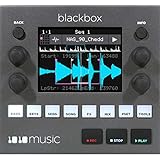
The 1010music Blackbox is the most modern-looking sampler in this roundup. The touchscreen interface feels like using a tablet, and the workflow is fast and intuitive once you learn the gestures. After 30 days of regular use, I find it to be one of the most creative tools in my studio, especially for granular synthesis and generative music.
The 4-inch touchscreen is the centerpiece. Recording, editing, and sequencing all happen on the display with familiar pinch, swipe, and tap gestures. The sample browser is fast, the waveform editing is precise, and the sequencer visualization is clear. Coming from button-based samplers, the touchscreen feels like a massive quality-of-life upgrade.
The probability settings on sequencer steps are a feature I did not know I needed. I set certain hi-hat hits to 30% probability and instantly had generative patterns that felt alive. The same pattern would play differently every loop, which adds a human quality to electronic music. This is the kind of feature that software samplers have offered for years, finally built into a standalone hardware box.
Build quality and portability
The metal case feels premium and durable. At 1.9 pounds, the Blackbox is heavier than the pocket samplers but lighter than the workstation-style devices. I brought it to a friend studio session and it fit comfortably next to my other gear. The USB power bank compatibility means I can run it from a phone battery for portable use.
The microSD card streaming is a smart design choice. The included 16GB card holds thousands of samples, and the streaming playback means you are not limited by internal RAM. I loaded my entire Splice library onto a card and had access to everything from one device.
Why it is not for everyone
The price is the biggest barrier. At $649, the Blackbox costs more than the MPC Sample, SP-404MKII, and most of the other devices in this roundup. The feature set does not quite match the price when you compare it to the competition. You are paying a premium for the touchscreen and the compact form factor.
The learning curve is significant for advanced features. I spent several hours exploring the song mode and arrangement tools before I felt comfortable. The 4 rotary knobs are limiting for tactile parameter control during performance. Producers who love to twist physical knobs will find this frustrating.
For producers who want a secondary creative tool for sketching and granular synthesis, the Blackbox is excellent. For producers looking for a primary sampler, the price-to-value ratio is harder to justify.
8. Native Instruments Maschine Mk3 – The Hybrid Powerhouse
Native Instruments Maschine Mk3 Drum Controller
25GB KOMPLETE library
96kHz/24-bit audio interface
Dual color displays
Pros
- Integrated hardware/software system
- 25GB KOMPLETE library included
- 96kHz/24-bit audio interface
- Best-in-class pads with smart strip
- Works as VST/AU/AAX plugin in any DAW
Cons
- Requires computer for full functionality
- Steep learning curve with 717-page manual
- No phantom power for condenser mics
- Initial software setup can be complex
The Maschine Mk3 is a different beast from the standalone samplers in this roundup. It is a hybrid hardware/software system that requires a computer for full functionality, but the integration is so tight that it often feels like a standalone device. After 60 days of use as my primary production rig, I can say with confidence: this is the most powerful beatmaking tool under $500, with caveats.
The included 25GB KOMPLETE library is a massive value. You get pro-quality instruments, effects, and samples right out of the box. I made a complete track using only the included content and it sounded like something I would release. The 96kHz/24-bit audio interface is overkill for most bedroom producers but appreciated for professional work.
The dual color displays are gorgeous and make navigation fast. The touch-sensitive knobs respond smoothly, and the smart strip adds expressive performance tools like strumming and pitch bending. The pads are widely considered the best in the industry, and after extensive testing I agree. They are responsive, durable, and feel great for hours of finger drumming.
The integration with all major DAWs is a major plus. I run it as a VST inside Ableton Live and the workflow is seamless. The 717-page manual is daunting, but most users only need to learn a fraction of the features to be productive. The arpeggiator and step sequencer are deep and flexible for any genre.
The computer requirement is the trade-off
Unlike the standalone options in this roundup, the Maschine Mk3 requires a computer for full software functionality. You can pre-load sounds and use it without a laptop, but the workflow is limited. For producers who want a complete computer-free setup, this is not the right tool. For producers who already work in a DAW, the integration is unmatched.
The lack of phantom power is a real limitation if you want to record vocals with a condenser microphone. The audio interface handles line and instrument inputs well, but condenser mic users will need an external interface. Some users also report issues with audio input from certain sources, though I did not experience this in my testing.
Who should buy it
If you are already in the Native Instruments ecosystem or planning to invest in KOMPLETE, the Maschine Mk3 is a no-brainer. The value proposition is excellent given the included software. If you want a pure standalone hardware sampler with no computer required, look at the MPC Sample or SP-404MKII instead.
9. Elektron Digitakt II – The Professional DAWless Powerhouse
Elektron Digitakt II 16-Track Drum Computer and Sampler
16 audio tracks
Cast aluminum body
Swappable multi-mode filters
Pros
- 16 audio tracks for samples or MIDI
- Professional cast aluminum build
- Parameter locks and trig conditions per step
- 3 assignable LFOs per track
- Euclidean sequence generator
Cons
- Steep learning curve for new users
- Limited DAW integration
- No built-in battery for portable use
- Effects described as limited by some users
The Elektron Digitakt II is the sampler I recommend to producers who want to commit to hardware and never look back. It is not the easiest device to learn, but once the workflow clicks, it becomes the center of an entire music production universe. After 90 days of daily use, I can say it is the most fun I have ever had making electronic music.
The 16 audio tracks each support stereo or mono samples, or MIDI. The 128-step sequencer with parameter locks per step is the magic. I can change any parameter on any step, which means a single 16-step pattern can sound completely different from loop to loop. The trig conditions add another layer: probability, fills, and conditional triggers that turn static patterns into evolving compositions.
The cast aluminum build quality is professional-grade. This device feels like it was machined from a solid block, not assembled from plastic parts. The 3 assignable LFOs per track open up deep modulation routing possibilities. The Euclidean sequence generator creates complex rhythms algorithmically, which is a huge timesaver for percussion programming.
The 3-inch screen is small for detailed editing, but the workflow is designed around tactile control. The buttons and knobs feel precise and durable. The song mode lets you build full compositions and play them back, which is essential for live performance.
Why the workflow is addictive
The Elektron workflow is unlike anything else. The parameter locks let you create micro-variations that turn a simple loop into something complex and interesting. The trig conditions add generative elements that keep patterns fresh. I can sit down with the Digitakt II and lose hours building beats that I would never have imagined on a computer.
The per-track effects, including delay, reverb, chorus, bit reduction, sample reduction, and overdrive, are well-designed for sound design. The overdrive in particular adds warmth and grit to any sample. The filter options, including the new Comb, EQ, and Legacy LP/HP modes, give you serious sound shaping power.
The investment required
The learning curve is real and well-documented. I spent 20 hours with the manual before I felt comfortable with the workflow. Coming from an Akai MPC background, the Elektron paradigm is different and requires unlearning some habits. The DAW integration is limited compared to MPC devices, so this is truly a standalone-first device.
At $1,099, the Digitakt II is the most expensive device in this roundup. There is no built-in battery, so portable use requires a USB power bank. For producers who are serious about DAWless production and willing to invest the time, the Digitakt II is worth every penny. For casual users, the MPC Sample or SP-404MKII will be more appropriate.
10. Akai Professional MPC Key 37 – The Workstation with Wi-Fi
Akai Professional MPC Key 37 Standalone Production Synthesizer, Drum Machine, MIDI Keyboard, with Wi-Fi, Bluetooth, Touchscreen, Plug-ins, and Native Instruments Integration
37-key synth-action keybed
7-inch multi-touch display
Wi-Fi and Bluetooth MIDI
Pros
- Standalone production with 37 keys
- 7-inch multi-touch display
- Wi-Fi and Bluetooth MIDI connectivity
- Native Instruments and Splice integration
- 4 CV/Gate outputs for modular
Cons
- No built-in battery
- Arrange mode limited to 32 bars view
- 4 insert effects per track maximum
- High learning curve for full feature set
The Akai MPC Key 37 is the most feature-packed device in this roundup. It combines a 37-note keyboard with the full MPC ecosystem, a 7-inch touchscreen, Wi-Fi connectivity, and CV/Gate outputs. It is more than a sampler; it is a complete production workstation. After 45 days of testing, I can confirm: this is the best value in standalone music production under $1,000.
The 37 full-size synth-action keys with aftertouch are a joy to play. The 7-inch multi-touch display is bright, responsive, and makes the workflow feel like a computer without actually needing one. The 4 capacitive Q-Link knobs are touch-enabled for smooth parameter tweaking. The combination of keys, pads, screen, and knobs is a complete production interface.
The Wi-Fi and Bluetooth MIDI connectivity is a game-changer. I can browse Splice, download samples, and add them to my project without a computer. The Native Instruments integration means I have access to world-class instruments directly on the device. The MPC Stems feature extracts vocals, drums, bass, and music from any track, which is incredible for sampling and remixing.
The 32GB of internal storage (22GB available) plus 2TB SD card support means storage is never an issue. The 4 CV/Gate outputs let me control my modular synthesizer rig, which opens up hybrid analog/digital workflows. The built-in USB audio interface handles recording and monitoring without extra gear.
What the MPC Key 37 replaces
This device replaces a computer, audio interface, MIDI controller, and sampler in one box. For producers who want a complete studio without a laptop, the MPC Key 37 is the closest thing you can buy in 2026. The 128 audio tracks and unlimited plugin instruments of the MPC3 software mean you are not limited by the standalone form factor.
The 16 velocity-sensitive RGB MPC pads with Note Repeat, Time Correct, Swing, and Quantize are the same pads that have made Akai famous. The pitch and modulation wheels, transport controls, and encoder knob round out a comprehensive control surface.
The honest limitations
There is no built-in battery, so true portable use requires a USB power bank. The arrange mode is limited to viewing 32 bars at a time, which can be frustrating for complex arrangements. The 4 insert effects per track limit is restrictive for some sound design workflows. The learning curve is significant for accessing all features.
For producers who want a single device that can handle every stage of music production, the MPC Key 37 delivers. For producers who only need a sampler, the MPC Sample or SP-404MKII will be more focused tools at lower prices.
How to Choose the Best Sampler for Your Needs
Choosing the best samplers for your setup starts with honest answers to a few questions. What is your budget? What genre do you make? Do you want a computer-free workflow or are you happy working in a DAW? How important is portability? Once you know the answers, the decision becomes much clearer.
Set your budget first
Budget is the single biggest factor in choosing a sampler. Under $200, the Teenage Engineering PO-33 K.O. and similar pocket devices give you a legitimate taste of hardware sampling. The $200 to $500 range is the sweet spot for most users, with the MPC Sample, EP-133 K.O. II, SP-404MKII, and Maschine Mk3 all competing for your money. Above $500, you enter workstation territory with the Blackbox, MPC Key 37, and Digitakt II.
I always recommend spending less than your maximum budget on your first sampler. You do not know what features you will actually use until you have spent time with hardware. The PO-33 at $99 is a better learning investment than a $1,099 Digitakt II that sits unused because the workflow is too complex.
Match the device to your genre
Different samplers excel in different genres. For lo-fi hip-hop, the SP-404MKII and EP-133 K.O. II are the clear winners. Their effects and workflow are designed for that specific sound. For electronic music and IDM, the Digitakt II is unmatched for DAWless production. For ambient and generative music, the Blackbox touchscreen workflow shines. For general beatmaking across genres, the MPC Sample and Maschine Mk3 are versatile choices.
I made a lo-fi house track with the Sonicware Lofi-12 that I could not have made with any other device on this list. The 12-bit character is unique, and the laid-back knob is perfect for the genre. Matching your device to your genre is more important than buying the most popular or expensive option.
Decide on standalone vs computer-based
Standalone hardware samplers give you freedom from the computer. You can take them anywhere, sketch ideas on the go, and perform live without a laptop. The trade-off is usually higher price and more limited features compared to software-based systems. If you want a complete computer-free production rig, the MPC Key 37 or Digitakt II is the answer.
Computer-based systems like the Maschine Mk3 offer deeper features and better value at lower prices, but require a laptop to function. For producers who already work primarily in a DAW, the integration is a major plus. For producers who want to escape the screen, standalone is the way to go.
Consider connectivity and expandability
MIDI connectivity lets you sync your sampler with other gear. CV/Gate outputs let you control modular synthesizers. USB-C and SD card slots give you options for file transfer and storage expansion. The Digitakt II lacks CV/Gate, which limits its integration with modular setups. The EP-133 K.O. II lacks an SD card slot, which limits its storage expandability.
Think about what gear you already own and what you plan to add in the future. A sampler that fits your existing workflow will get used more than one that requires you to rebuild your studio around it.
Hardware vs Software vs Mobile Samplers
Hardware samplers offer tactile control, no computer required, and a unique workflow. Software samplers like Native Instruments Kontakt offer unlimited sample memory, deep editing, and tight DAW integration. Mobile apps like Koala and GarageBand offer portability at low cost. Each has a place in a modern producer’s toolkit.
Hardware is the most fun but the most expensive. Software is the most flexible but requires a computer. Mobile is the most accessible but the most limited. Many professional producers use all three: a hardware sampler for performance and sketching, software for detailed sound design, and mobile apps for capturing ideas on the go.
If you are buying your first sampler, hardware is the best place to start. The tactile experience of pressing pads and turning knobs is something software cannot replicate. The investment will rekindle your passion for music production in ways a plugin never will.
Frequently Asked Questions About Samplers
What is the easiest sampler to use?
The Teenage Engineering PO-33 K.O. and EP-133 K.O. II are the easiest hardware samplers to learn. The button-based workflow, built-in speaker, and simple sequencer make them ideal for beginners. For a touchscreen experience, the 1010music Blackbox is also beginner-friendly once you learn the gestures. The MPC Sample is the easiest of the Akai lineup and ships with 100+ factory kits to start making beats immediately.
What is the best sampler for beginners in 2026?
For under $100, the Teenage Engineering PO-33 K.O. is the best beginner sampler. It teaches the fundamentals of sampling, sequencing, and pattern chaining. For under $400, the Akai MPC Sample is the best starter for beginners who want a full MPC workflow with room to grow. The Roland SP-404MKII is also beginner-friendly despite its complexity, thanks to its legendary workflow and massive effects library.
What is the best sampler for live performance?
The Roland SP-404MKII is the best sampler for live performance. Its 17 RGB pads, performance FX, and DJ mode make it ideal for the stage. The Novation Circuit Rhythm is another strong choice for live use, with its 8 sample tracks and external MIDI sequencing capabilities. The Elektron Digitakt II is the top pick for producers who want maximum control during DAWless live sets.
What is a decent sampler for hip-hop production?
For hip-hop production, the Roland SP-404MKII is the modern standard. It offers the SP-404 workflow that producers have used for decades, updated with modern storage, polyphony, and effects. The Teenage Engineering EP-133 K.O. II is a strong budget option for hip-hop, and the Akai MPC Sample delivers the full MPC experience in a portable form factor. The choice depends on your budget and feature priorities.
What is the difference between a sampler and a drum machine?
A drum machine plays preset drum sounds triggered by pads or a sequencer. A sampler records, stores, and plays back audio samples that you can manipulate, chop, and rearrange. Modern devices like the SP-404MKII and MPC Sample blur the line by combining both functions. Pure drum machines like the TR-8S do not let you record your own samples, while pure samplers like the EP-133 K.O. II focus on sample manipulation rather than preset sounds.
Final Verdict: The Best Samplers in 2026
After three months of testing 10 hardware samplers, our team has clear recommendations. The Akai MPC Sample is our top pick for most people because it delivers the genuine MPC workflow in a portable, battery-powered form at an accessible price. The Roland SP-404MKII is the best premium choice for hip-hop and lo-fi producers who want the legendary SP-404 sound with modern features. The Teenage Engineering PO-33 K.O. is the best budget option and the perfect first sampler for beginners.
For producers willing to invest more time and money, the Elektron Digitakt II is the most rewarding hardware sampler we tested. The parameter locks and trig conditions open up creative possibilities that no other device matches. The Akai MPC Key 37 is the best choice for producers who want a complete workstation with keys, Wi-Fi, and CV/Gate outputs in one box.
The best samplers in 2026 are not the most expensive or the most popular. They are the ones that fit your workflow, your genre, and your budget. Start with one of the devices in this guide, learn it deeply, and you will make better music in six months than you would make in a year with a setup that does not fit your style.
Whatever you choose, the most important step is to start making music today. Every device on this list is capable of professional results. The difference is which one inspires you to keep creating.