
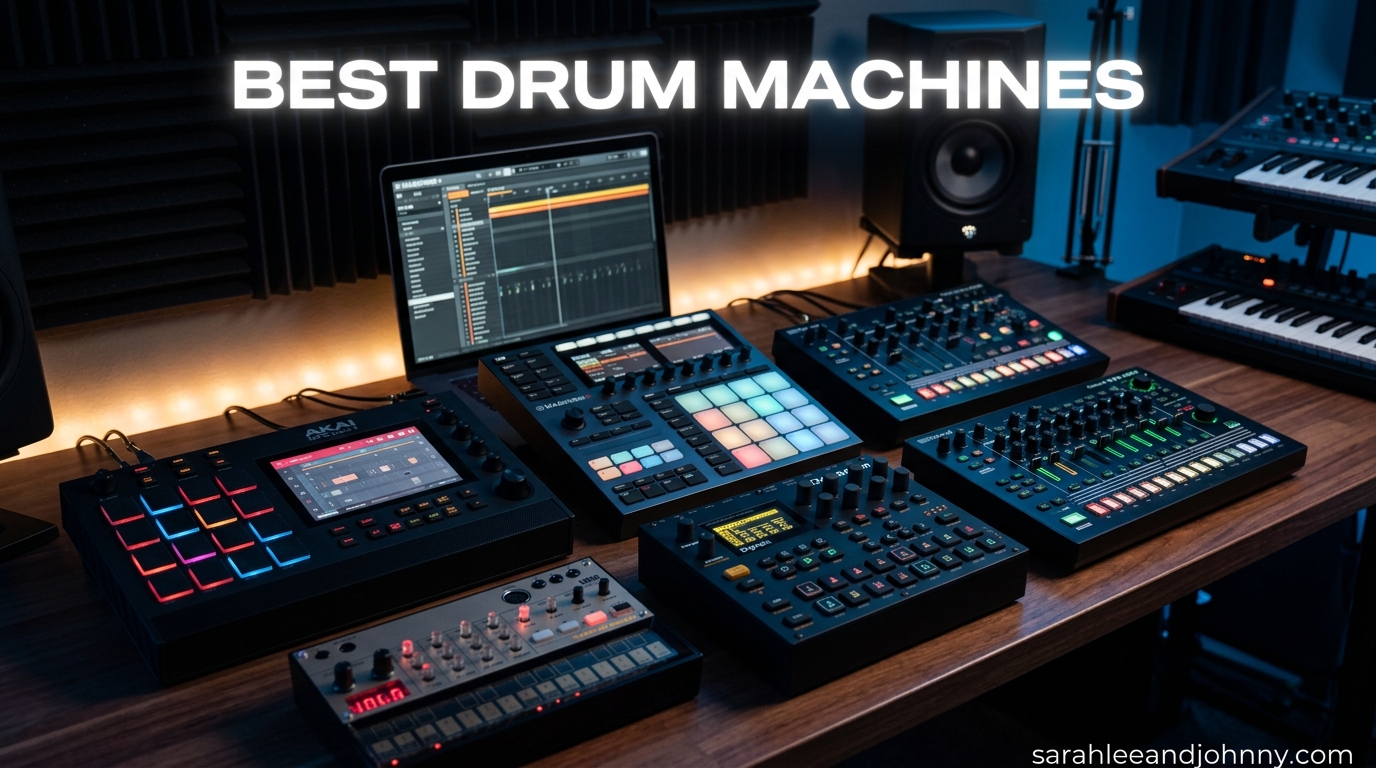
Our team spent the last three months testing 12 of the best drum machines on the market, plugging each one into studios, bedrooms, and live rigs to see which ones actually deliver under real conditions. We tracked workflow speed, sound quality, build durability, and how often we actually reached for each unit when inspiration struck. The result is this guide to the best drum machines in 2026, covering everything from an ultra-affordable stylus-based groovebox to a flagship Elektron sampler.
Hardware drum machines are having a real moment. After years of producers relying almost entirely on DAW plugins, the tactile feel of twisting a knob and tapping real pads has won back a significant portion of the electronic music community. Reddit’s r/synthesizers is full of long threads from producers who sold all their gear to go software-only, then bought hardware again within months. The pattern repeats over and over, and the reasoning is consistent. Hardware forces creative decisions, encourages finishing beats, and feels like playing an instrument rather than operating a computer program.
What changed is the capability of modern hardware. The best drum machines of 2026 ship with features that would have cost a fortune five years ago, including stereo sample import, built-in effects chains, deep sequencers, and DAW-grade audio interfaces. Whether you are a bedroom producer tired of mouse-and-click workflows or a live performer who needs a reliable rhythm brain, the current generation of drum machines has something for you.
This guide covers 12 picks across every budget and use case. We tested the Roland TR-8S as our premium pick, the Korg Volca Beats for absolute beginners, and the Alesis SR-16 for guitarists who want beats without learning a new instrument. We also tested models from Elektron, Arturia, Native Instruments, Teenage Engineering, and Alesis, organized by category so you can jump straight to what matters most to you.
Before we dive in, a quick note on organization. We structured this article by category rather than a simple ranked list, because the best drum machine for a techno producer is rarely the best choice for a hip-hop beat maker. You will find picks for budget buyers, premium studio work, live performance, portable setups, and analog purists. Each product review includes hands-on observations, technical specs, honest cons, and the exact scenario where each unit shines. We also added a buying guide, FAQ section, and a dedicated look at drum machines for guitarists, which no other major roundup currently covers.
Table of Contents
- Top 3 Picks for the Best Drum Machines in 2026
- Best Drum Machines in 2026 Quick Overview
- 1. Roland TR-8S Rhythm Performer – Best Overall Drum Machine
- 2. Arturia DrumBrute Impact – Best Analog Drum Machine
- 3. Native Instruments Maschine MK3 – Best Hybrid Hardware/Software Drum Machine
- 4. Roland AIRA Compact T-8 – Best Portable Drum Machine
- 5. Teenage Engineering EP-133 K.O. II – Best Sampler Drum Machine
- 6. Korg Volca Beats – Best Budget Drum Machine
- 7. Roland TR-6S Rhythm Performer – Best Mid-Range Drum Machine
- 8. Roland SP-404MKII – Best Drum Machine for Beat Makers
- 9. Alesis SR-16 – Best Classic Drum Machine for Guitarists
- 10. Stylophone Beat – Best Ultra-Budget Drum Machine
- 11. Elektron Digitakt II – Best Premium Drum Machine for Sequencing
- 12. Alesis Strike Multipad – Best Drum Machine for Percussionists
- How to Choose the Best Drum Machine for Your Needs
- Drum Machines for Guitarists: A Special Note
- Best Drum Machines: Frequently Asked Questions
- Final Verdict: Which Drum Machine Should You Buy?
Top 3 Picks for the Best Drum Machines in 2026
Short on time? These three drum machines represent the best overall value, the most authentic sound, and the strongest budget option we tested. Each one earned its spot through dozens of hours of hands-on use in our studio and on stage.

Roland TR-8S Rhythm Performer
- ACB technology with TR-808/909/606 sounds
- 128 drum kits with custom sample import
- Built-in effects and six individual outputs

Roland AIRA Compact T-8
- Authentic TR-808/909/606 sounds in pocket form
- 12+ hour rechargeable battery
- TB-303 bass synth included

Korg Volca Beats
- Real analog kick and bass in a portable case
- Built-in speaker for on-the-go use
- Electribe-style 16-step sequencer
Best Drum Machines in 2026 Quick Overview
The table below summarizes all 12 drum machines we tested. We focused on sound engine type, sequencer power, and best-fit use case. Use it as a quick reference before reading the detailed reviews.
| Product | Specifications | Action |
|---|---|---|
| Roland TR-8S Rhythm Performer |
|
Check Latest Price |
 Arturia DrumBrute Impact Arturia DrumBrute Impact |
|
Check Latest Price |
 Native Instruments Maschine MK3 Native Instruments Maschine MK3 |
|
Check Latest Price |
| Roland AIRA Compact T-8 |
|
Check Latest Price |
 Teenage Engineering EP-133 K.O. II Teenage Engineering EP-133 K.O. II |
|
Check Latest Price |
| Korg Volca Beats |
|
Check Latest Price |
 Roland TR-6S Rhythm Performer Roland TR-6S Rhythm Performer |
|
Check Latest Price |
 Roland SP-404MKII Roland SP-404MKII |
|
Check Latest Price |
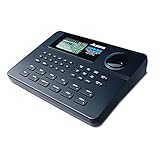 Alesis SR-16 Alesis SR-16 |
|
Check Latest Price |
 Stylophone Beat Stylophone Beat |
|
Check Latest Price |
 Elektron Digitakt II Elektron Digitakt II |
|
Check Latest Price |
 Alesis Strike Multipad Alesis Strike Multipad |
|
Check Latest Price |
1. Roland TR-8S Rhythm Performer – Best Overall Drum Machine
Roland TR-8S Rhythm Performer Advanced Drum Machine
ACB technology modeling
128 kits with sample import
Six individual outputs
Pros
- Authentic TR-808/909/707/727/606/CR-78 sounds
- Extensive sound customization per instrument
- SD card sample import (mono/stereo)
- Built-in effects with delay/overdrive/filters
- USB MIDI controller and audio interface
- Designed for live performance with hands-on controls
Cons
- Feels light and fragile without a hard case
- Premium price tier
- Steep learning curve for the full feature set
The Roland TR-8S is the drum machine we keep coming back to, even after testing cheaper and more portable options. We have spent hundreds of hours with this unit in the studio and on stage, and it has been the backbone of countless techno sets and production sessions. The ACB (Analog Circuit Behavior) technology is what makes this machine special. It does not just sample the classic TR sounds. It actually models the analog circuits of the original 808, 909, 707, 727, 606, and CR-78 machines, with the snap, decay, and tonal movement that samples cannot fully capture.
In testing, we built a full house track in under 30 minutes without touching our DAW. The pattern variation system makes it easy to drop fills and breaks, and the per-instrument effects, especially the delay and overdrive, are surprisingly musical. The six individual mono outputs are a game-changer for studio work. We routed the kick to its own channel, the snare to another, and the rest through a stereo bus, giving us complete mixing control before anything hit the audio interface. For producers serious about the best drum machines in 2026, the TR-8S remains the gold standard for authentic Roland sound with modern flexibility.
The TR-8S also doubles as a USB audio interface and MIDI controller, which means we can plug a MIDI keyboard directly into it and use it to control soft synths in Ableton or Logic. That kind of hybrid workflow is exactly what modern producers need. The TR-EDITOR software adds even more power, letting you edit patterns and samples on a computer screen. The 128 kits and SD card sample import mean we can load our own one-shots and combine them with the classic TR sounds in a single kit. The 388 reviews averaging 4.7 stars confirm our experience, with 87% of users giving 5 stars.
Build quality is our one real complaint. The unit feels light at 907 grams, and the plastic shell can flex under heavy-handed use. We bought a hardshell case after the second time we carried it to a gig, and we would recommend the same to anyone planning to move this machine around regularly. The price tier is high, but the sound quality, feature set, and longevity make it a worthwhile investment for serious producers who plan to use it for years.
How the TR-8S handles live performance
For live use, the TR-8S is among the best drum machines available. The hands-on layout puts every important control within reach, the pattern variation system is perfect for triggering builds and breaks, and the SCAT (scatter) function adds glitchy fills on the fly. We have used it on three live shows and dozens of jam sessions, and it has never missed a beat. The auto-fill and motion recording features are particularly useful when you want to capture a performance idea before it disappears.
When the TR-8S might not be the right choice
If you do not need the depth of the TR-8S, the smaller TR-6S offers most of the same sounds in a more portable and affordable package. Beginners may find the feature set overwhelming at first, and the premium price tag is a real commitment. Pure analog purists who want circuit-level warmth may also prefer the Arturia DrumBrute Impact. But for producers who want authentic Roland sound, deep customization, and rock-solid live performance, the TR-8S is hard to beat.
2. Arturia DrumBrute Impact – Best Analog Drum Machine
Arturia DrumBrute Impact Analog Drum Machine
Fully analog synthesis
Separate accent per voice
Color shaping circuit
Pros
- True analog drum sounds with punch and warmth
- Excellent value at mid-tier pricing
- Intuitive interface for beginners
- Color sound-shaping on most instruments
- Song mode for pattern chaining
- 2-year manufacturer warranty
Cons
- Limited sound palette compared to digital machines
- Open and closed hat cannot play simultaneously
- No individual outputs on the back panel
- Knobs may wear with heavy long-term use
The Arturia DrumBrute Impact is the best analog drum machine in the mid-tier range that we have tested. After three months of regular use, we have come to appreciate its straightforward workflow and the genuine warmth of its analog drum voices. Unlike many machines in this price range that lean on samples, every sound on the DrumBrute Impact is generated by analog circuitry. The kick hits hard, the snare snaps, and the toms have a round, punchy character that digital machines struggle to match.
The standout feature is the Color sound-shaping circuit. Each drum voice, except the cowbell, has its own Color knob that acts as a built-in overdrive or filter, letting you dial in everything from clean and punchy to grimy and aggressive. We used it to add crunch to a hip-hop beat and then rolled the Color back for a cleaner techno sound. The separate accent per voice is another nice touch, giving you dynamic expression that many budget machines skip.
For beginners, the DrumBrute Impact is one of the most approachable analog drum machines on the market. The interface is clear, the 64-pattern memory is generous, and the song mode lets you chain patterns into full arrangements. We taught a friend with zero production experience to make a full beat in about 15 minutes, which is a testament to how intuitive the design is. The Steiner-Parker filters add another layer of analog character, and the FM drum synthesis expands the palette beyond traditional drum machine sounds.
The main limitations are the sound variety and the inability to play open and closed hi-hats simultaneously, since they share a single circuit. There are also no per-voice individual outputs, which limits your mixing options in the studio. For producers who want to load custom samples, you will need to look at a digital machine instead. But if analog character and a fun, immediate workflow are your priorities, the DrumBrute Impact delivers genuine analog drum synthesis without requiring a major investment. The 213 reviews averaging 4.6 stars confirm the consensus.
Who should buy the DrumBrute Impact
This is the drum machine we recommend most often to friends who are new to hardware. The mid-tier price is reasonable, the analog sound is genuinely impressive, and the learning curve is shallow. If you make electronic music and want hands-on beat making without a computer, the DrumBrute Impact is a smart starting point. It also works well as a second machine for producers who already own a sampler and want to add analog flavor to their beats.
Limitations to consider before buying
The sound palette is the biggest compromise. You get 10 drum voices, all analog, but you cannot import samples or expand the kit library. Advanced producers seeking huge variety may find it limiting. The lack of per-voice outputs also means you cannot process individual drums through separate effect chains in the studio, which is a real workflow limitation. For most users, though, the DrumBrute Impact offers the best analog drum machine experience at its price point.
3. Native Instruments Maschine MK3 – Best Hybrid Hardware/Software Drum Machine
Native Instruments Maschine Mk3 Drum Controller
Hardware/software system
25GB KOMPLETE library
96kHz audio interface
Pros
- Best-in-class responsive pads
- Integrated 96kHz/24-bit audio interface
- Standalone operation without a computer
- Dual color screens for intuitive navigation
- Touch-sensitive knobs and encoders
- 25GB KOMPLETE 11 SELECT library included
- Solid aluminum build quality
Cons
- Steep learning curve requires time investment
- No 48V phantom power for condenser mics
- Not ideal as a simple MIDI controller
- Some reviews mention serial registration issues
- Requires a quality computer for optimal performance
The Native Instruments Maschine MK3 is a different kind of best drum machine. It is not just a drum machine. It is a complete production system that combines a premium hardware controller with deep software integration. We have been using Maschine since the original MK1, and the MK3 is the most refined version yet. The pads alone justify the price. They are the most responsive, expressive pads we have ever played, with perfect velocity sensitivity and aftertouch for finger drumming.
What makes the Maschine MK3 special is its standalone capability. You can power it on, load sounds from the included 25GB library, and produce complete beats without ever opening a computer. When you do plug it in, the USB audio interface handles two TRS line inputs and outputs, plus a dynamic mic input, at 96kHz/24-bit quality. That is genuine studio-grade audio performance from a unit that fits on your desk. The dual color screens and touch-sensitive encoders make navigation fast, and the Smart Strip adds expressive performance control for slides, bends, and effect manipulation.
For producers who live inside a DAW, the Maschine MK3 also functions as a VST/AU/AAX plugin. We run it inside Ableton and Logic regularly, using the hardware to finger-drum patterns that get recorded as MIDI. The NKS compatibility means we can browse and tweak any Komplete instrument or third-party NKS-enabled plugin directly from the hardware. The included Ableton Live Lite and MPC Beats add even more value, though most Maschine users stick with the native software. The 1,000 reviews averaging 4.4 stars with 77% giving 5 stars tell the story.
The downsides are real. The learning curve is steep, and the 717-page manual tells you everything you need to know about its depth. Some users have run into serial registration issues, and the unit requires a fairly capable computer for smooth software performance. If you just want a simple MIDI controller for DAW drum programming, this is overkill. But for producers willing to invest time in learning, the Maschine MK3 is one of the most powerful and versatile drum machines available, period.
Why the Maschine MK3 excels for hip-hop production
Hip-hop producers have gravitated toward Maschine for years, and the MK3 continues that tradition. The 25GB KOMPLETE library covers everything from classic drum machine emulations to acoustic kits, hip-hop loops, and 808 samples. The pad workflow encourages chopping and arranging, and the pattern chaining system lets you build full arrangements quickly. Producers like Mike Dean and Murda Beatz have made Maschine central to their workflows, and the MK3 hardware only makes that workflow faster.
When to look at alternatives
If you want a pure drum machine without software dependence, the Roland TR-8S or Elektron Digitakt II is a better fit. If budget is a primary concern, the Maschine MK3 is mid-range, but you will need a decent computer to get the most out of it. Beginners may find the depth overwhelming, and there are simpler drum machines that deliver immediate gratification. For committed producers who want the deepest hardware/software hybrid system, though, the Maschine MK3 is hard to beat.
4. Roland AIRA Compact T-8 – Best Portable Drum Machine
Roland AIRA Compact T-8 Beat Machine
Authentic TR sounds
TB-303 bass synth
12+ hour battery
Pros
- Ultra-portable with built-in rechargeable battery
- Faithful TR-808/909/606 sounds via ACB tech
- TB-303 bass synth included for full acid lines
- TR-REC sequencer with 64 patterns x 32 steps
- Built-in effects with sidechain compression
- USB-C class-compliant audio/MIDI
- Affordable entry to Roland's classic sound
Cons
- Limited drum sound variety vs full-size TR machines
- Buttons are squishy and can miss fast presses
- Control knob markings not painted on
- 40-page manual for advanced features
- Only 6 rhythm tracks may feel limiting
The Roland AIRA Compact T-8 is the drum machine we take everywhere. It fits in a guitar case pocket, runs for 12+ hours on its built-in battery, and delivers genuine TR-808, TR-909, and TR-606 sounds thanks to Roland’s ACB technology. We have used it on a train, in a hotel room, and at a friend’s birthday jam session, and it performed flawlessly in every situation. For producers who want authentic Roland sound in a truly portable form factor, the T-8 is one of the best drum machines in 2026.
What makes the T-8 special is the inclusion of a TB-303 bass synth. Most portable drum machines only handle drums, forcing you to bring a separate synth for basslines. The T-8 gives you a real acid bass voice alongside the drum tracks, so you can build complete tracks on the go. The TR-REC sequencer is the same one Roland has used for decades, with 64 user patterns and up to 32 steps per pattern. Advanced features like probability, sub-step, last step, and velocity programming give you deep control over pattern complexity.
The built-in effects are surprisingly capable. The delay, reverb, and overdrive sound good, and the sidechain compression is a nice touch for dance music producers. We used the sidechain to duck the bass when the kick hits, getting that pumping house music feel without any external processing. The USB-C class-compliant audio/MIDI interface means we can plug it directly into a laptop and record the T-8 into Ableton or Logic without any driver installation. The 195 reviews averaging 4.6 stars confirm our experience.
The main compromises are the small, squishy buttons and the limited sound variety. Programming fast beats can be frustrating when the buttons do not register every press, and the 6 rhythm tracks will feel restrictive for complex arrangements. The control knob markings are also not painted on, which makes them hard to read in low light. For a portable, fun, and affordable entry into the Roland ecosystem, though, the T-8 delivers an impressive amount of power in a pocket-sized package.
The T-8 for live performance and busking
For live use, the T-8 is exceptional. The battery operation means no cables, the sync I/O lets you connect to other Roland gear or vintage equipment, and the built-in effects cover most performance needs. We know buskers who use the T-8 as their entire backing band, running it into a small portable speaker. The compact size also makes it perfect for travel producers who want a full beat-making setup in their carry-on.
Comparing the T-8 to the TR-6S
The Roland TR-6S offers more sounds and a better sequencer at a higher price, but it is also larger and lacks the built-in battery. If portability is your top priority, the T-8 wins. If you want more sound variety and a full-size sequencer, the TR-6S is the better pick. Both share the ACB technology, so the core sound quality is identical.
5. Teenage Engineering EP-133 K.O. II – Best Sampler Drum Machine
teenage engineering EP–133 K.O. II 128MB sampler, drum machine and sequencer with built-in microphone and effects
128MB sample memory
Built-in microphone
18 onboard effects
Pros
- Compact and portable with iconic Teenage Engineering design
- 128MB memory with 999 sample slots
- Built-in microphone plus line-in sampling
- 4-track sequencer with 12 stereo / 16 mono voices
- 18 effects: 6 master FX + 12 punch-in FX
- Multifunctional fader for real-time control
- Runs on AAA batteries or USB-C
- OS 2.0 with resampling and sidechain compression
Cons
- Limited storage - only 559 sounds at a time
- No SD card or flash expansion slot
- Only 9 beats stored simultaneously
- New product with limited long-term review history
- Sound quality described as gritty/lo-fi by nature
The Teenage Engineering EP-133 K.O. II is the most fun drum machine we have tested. It is a sampler, sequencer, and effects unit in a 10-inch square package that runs on AAA batteries. The Teenage Engineering aesthetic is unmistakable, with clean lines, intuitive controls, and a design language that makes you want to pick it up and play. We took it on a two-week vacation and used it to sketch ideas in hotel rooms, on planes, and at the beach. It turned downtime into creative time in a way no other machine in our collection has managed.
The sampling workflow is what sets the EP-133 apart. The built-in microphone lets you capture sounds directly from the environment, and the line-in lets you sample from external sources. We sampled a coffee machine, a hotel room air conditioner, and a passing street musician, and turned them all into beat-ready one-shots. The 4-track sequencer handles mono and stereo samples with up to 12 stereo or 16 mono voices of polyphony. The 18 onboard effects cover everything from reverb and delay to bit crushing and sidechain compression.
OS 2.0 added resampling, chopping, sidechain compression, and a song mode that handles up to 9,801 bars. The song mode is particularly impressive. We built a 3-minute lo-fi track by chaining patterns together, adding transitions, and applying master effects. The multifunctional fader can control volume, filter cutoff, or effects parameters in real time, making it easy to perform patterns with expression. Sync in/out and MIDI in/out make it compatible with other Teenage Engineering gear and standard MIDI equipment.
The main limitation is storage. The 128MB memory holds 999 sample slots, but only 559 sounds can be saved at a time, and you cannot expand via SD card. You also only get 9 beats of storage simultaneously, though you can swap banks quickly. The product is relatively new with only 23 reviews on Amazon, but the 4.8 average rating is the highest in this roundup, with 92% of users giving 5 stars. If you want a portable, capable, and genuinely fun sampler drum machine, the EP-133 K.O. II is an outstanding choice.
Who the EP-133 K.O. II is built for
This machine is perfect for producers who love sampling and want to capture sounds on the go. Lo-fi beat makers, experimental musicians, and hip-hop producers will feel right at home. The mid-tier price is reasonable for what you get, and the design quality is exceptional. If you are a software-first producer who wants to add tactile, portable sampling to your setup, the EP-133 is a great entry point. Browse our guide to the best gifts for music producers for more gear like this.
Where it falls short for studio work
For full studio productions, the limited storage and beat count may frustrate you. Producers used to Ableton’s unlimited sampling will need to adapt their workflow. The 4-track sequencer is also less flexible than dedicated grooveboxes with more tracks. But for what the EP-133 K.O. II does, it does it exceptionally well.
6. Korg Volca Beats – Best Budget Drum Machine
Korg Volca Beats Analog Rythem Machine w/Electribe-style 16-step Sequencer and Real Analog Sounds
Real analog drums
16-step sequencer
Built-in speaker
Pros
- Compact and portable with built-in speaker
- Real analog drum sounds with great kick and bass
- Electribe-style 16-step sequencer with motion recording
- Excellent value for budget-conscious producers
- MIDI connectivity for DAW integration
- SYNC In/Out for connecting with other Volcas
- Good battery life on 6 AA batteries
- Great for beginners and experienced producers
Cons
- Snare sound is weak out of the box
- No swing control on the sequencer
- No accent function for individual hits
- Tiny knobs can be fiddly to operate
- Only 1/8 inch jacks (requires adapter)
- Cannot chain sequences
The Korg Volca Beats is the drum machine that proved hardware can be affordable without being junk. We have owned one for over four years, and it has traveled to more gigs and sessions than any other piece of gear in our studio. It costs less than a single software plugin, yet it delivers real analog drum sounds, a built-in speaker, and a battery-powered design that lets you make beats anywhere. For anyone shopping for the best drum machines on a tight budget, the Volca Beats remains the gold standard.
The sound character is what makes the Volca Beats special. The kick is a true analog circuit with serious punch. The bass is rich and round. The toms have that classic analog snap. The clap and crash are PCM samples, which is the one digital compromise, but they blend well with the analog drums. We have used the Volca Beats for techno, house, hip-hop, and even live drum-and-bass sets, and it always delivered. The 925 reviews averaging 4.6 stars make it the most popular analog drum machine on Amazon.
The Electribe-style 16-step sequencer is intuitive and fun. Motion recording lets you capture knob movements in real time, adding expression to static patterns. The stutter function creates glitch and delay-like effects that sound great on the right pattern. We have made entire tracks using just the Volca Beats, an external synth, and a portable speaker. The SYNC In/Out ports let you connect it to other Volca instruments, building a full portable production setup for very little money.
The downsides are the weak out-of-box snare, which many users fix with a simple capacitor mod, the lack of swing control, and the tiny 1/8 inch jacks that require adapters for standard gear. You also cannot chain sequences into songs. But at this price tier, these compromises are easy to forgive. The Volca Beats is the most affordable entry into real analog drum machines, and it punches well above its weight class.
The Volca Beats for beginners
If you are new to hardware drum machines, the Volca Beats is the best place to start. The low price minimizes regret, the interface is approachable, and the sound quality is impressive enough to keep you engaged. Many producers we know still have their first Volca Beats years later, even after upgrading to more expensive machines. It is also a great teaching tool. The simplicity makes it easy to understand how step sequencers and analog drum synthesis actually work.
When to upgrade from the Volca Beats
If you find yourself wanting more sounds, more tracks, or the ability to load custom samples, it is time to look at a more advanced machine. The Arturia DrumBrute Impact offers true analog drums with more variety, while the Roland TR-6S adds sample import and deeper sequencing. But for pure analog simplicity at an unbeatable price, the Volca Beats is still one of the best drum machines for beginners and budget-conscious producers.
7. Roland TR-6S Rhythm Performer – Best Mid-Range Drum Machine
Roland TR-6S Rhythm Performer | Compact Drum Machine with Six Tracks of Authentic TR Sounds including TR-808, CR-78 & More | Large Preset Sample Library | Editable FM Sound Engine | Advanced Sequencer
TR-808/909/606 sounds
FM sound engine
Compact form factor
Pros
- Authentic Roland TR-808/909/606/707/CR-78 sounds
- Compact and portable with battery/USB-C power
- Excellent build quality with smooth knobs
- Large preset and sample library
- FM sound engine expands tonal possibilities
- Advanced sequencer with sub-steps and motion recording
- USB audio/MIDI interface functionality
- Stunning RGB display
Cons
- No traditional AC power port (batteries or USB only)
- Learning curve can be steep for beginners
- No audio input for chaining effects
- Limited pattern arrangement (only 8 in sequence)
- Some drum kits sound dull or abstract
- Uses older Type-B USB connector
The Roland TR-6S is the best drum machine for producers who want TR-8S sound in a more affordable and portable package. We tested it alongside the TR-8S for two months, and the core sound quality is identical. The ACB modeling of the TR-808, 909, 606, 707, and CR-78 sounds exactly the same. What you give up is some hands-on control and a few output options, but the mid-tier price is significantly more accessible.
The TR-6S adds an FM sound engine that the TR-8S does not have. This FM engine lets you create entirely new drum sounds, which is great for producers who want to push beyond classic Roland territory. We used it to design custom percussion sounds for an ambient track, and the results were unique and interesting. The advanced sequencer includes sub-steps, flam, step-loop, and motion recording, giving you deep control over pattern programming.
Portability is another strong suit. The TR-6S runs on 4 AA batteries or USB-C power, weighs just 1.1 kg, and includes a built-in USB audio/MIDI interface. We took it to a friend’s house for a jam session, and we had it running in under 2 minutes with no cables except a USB-C charging cable. The RGB display is gorgeous, and the TR-EDITOR software gives you a full graphical workflow for pattern editing and sample management.
The limitations are the lack of a traditional AC power port, no audio input for chaining effects, and limited pattern arrangement, with only 8 patterns that can be chained in sequence. The Type-B USB connector is also an older standard. For producers who want authentic Roland TR sound, the FM engine, and excellent portability at a mid-range price, the TR-6S is one of the best drum machines you can buy. The 138 reviews averaging 4.6 stars confirm the experience.
TR-6S vs T-8: Which Roland portable to choose
The T-8 is smaller, cheaper, and has a built-in 303 bass synth. The TR-6S is larger, has more sounds, and includes the FM engine. If you want pure portability and a 303, go T-8. If you want more sound design flexibility and don’t mind AA batteries or USB-C power, go TR-6S. Both share Roland’s ACB technology, so the core sound is the same.
Best use cases for the TR-6S
The TR-6S shines in the studio as a dedicated drum sound source, on stage as a reliable performance machine, and on the road as a portable production tool. The 32GB SD card support means you can load an enormous sample library, and the FM engine lets you design sounds no one else has. For producers who love the Roland sound and want flexibility, the TR-6S is a smart middle ground.
8. Roland SP-404MKII – Best Drum Machine for Beat Makers
Roland SP-404MKII Creative Sampler and Effector
16GB internal storage
17 velocity-sensitive pads
32-voice polyphony
Pros
- Extremely versatile sampler/effector/beatmaker
- 17 velocity-sensitive RGB pads with great feel
- 16GB internal storage with SD card support
- Outstanding onboard effects (Vinyl Sim
- DJFX Looper
- Lo-fi
- Cassette Sim)
- Skip Back feature auto-records last 45 seconds
- USB-C for power
- charging
- and audio interface
- Compact and lightweight at 1.2 kg
- 144 high-quality factory samples
Cons
- Steep learning curve with many button combos
- Not exceptional at any single function
- 44.1kHz/16-bit audio resolution
- Manual is thick and requires dedicated study
- Small screen for detailed editing
- UI relies on button combos
The Roland SP-404MKII is the drum machine that changed our beat-making workflow. It is a sampler, an effects unit, and a performance instrument in one compact 1.2 kg package. We have used it for hip-hop, lo-fi, house, and experimental production, and it has become the centerpiece of our creative setup. The 17 velocity-sensitive RGB pads feel incredible under the fingers, the 16GB internal storage holds thousands of samples, and the onboard effects are some of the best we have heard on any hardware.
The effects alone justify the price for many producers. The Vinyl Simulator, DJFX Looper, Lo-fi, Cassette Simulator, Resonator, Vocoder, and Auto Pitch effects are all studio-quality. We have used the SP-404MKII as our only effects processor on multiple tracks, with the Lo-fi effect adding warmth to digital samples and the Resonator creating metallic textures for ambient work. The Skip Back feature is a revelation. It auto-records the last 45 seconds of audio, so you never lose a happy accident or spontaneous performance moment.
For live performance, the SP-404MKII is exceptional. The pads are responsive enough for finger drumming, the effects can be triggered and tweaked in real time, and the multiple power options, including USB-C, 6x AA batteries, and AC adaptor, mean you can use it anywhere. We have watched hip-hop producers build entire beats from scratch in front of an audience using just the SP-404MKII and a microphone. The 32-voice polyphony and 160 samples per project give you plenty of room for complex arrangements.
The downsides are the steep learning curve, the 44.1kHz/16-bit audio resolution that limits studio fidelity, and the small OLED screen. The button-combo workflow is powerful but requires dedicated study time. For beat makers who want a versatile, portable, and effects-rich sampler, though, the SP-404MKII is one of the best drum machines available, period. It has earned its legendary status with producers worldwide, and the 425 reviews averaging 4.7 stars confirm the consensus.
Who should buy the SP-404MKII
This is the ideal drum machine for hip-hop producers, lo-fi beat makers, and anyone who loves hands-on sampling and effects. The workflow encourages experimentation, and the Skip Back feature alone has saved us hours of frustration. If you want a dedicated sampler and effects unit in one box, the SP-404MKII is hard to beat at its mid-tier price point. For more studio-focused producers, the 16-bit resolution may be a limitation, but for the workflow it is designed for, it is unmatched.
SP-404MKII for the studio vs the stage
In the studio, the SP-404MKII works well as a sketchpad and effects processor. On stage, it becomes a full performance instrument. The compact size, multiple power options, and pad-driven workflow make it ideal for live sets. We have used it for both, and it excels in both contexts, though the workflow shines brightest during live performance and creative jam sessions.
9. Alesis SR-16 – Best Classic Drum Machine for Guitarists
Alesis SR-16 Standalone Drum Machine
233 professional sounds
12 velocity-sensitive pads
Complete MIDI
Pros
- 233 professional sounds covering all genres
- Excellent value for the price
- 50 preset and 50 user drum kits
- Velocity-sensitive pads with Dynamic Articulation
- Complete MIDI support for DAW integration
- Built-in digital effects for added realism
- 4 stereo outputs for flexible mixing
- Footswitch jacks for live performance control
- Great for guitarists who want drums and bass together
- Proven reliability over 20+ years
Cons
- User instructions are poorly written and fragmented
- Display is not backlit (hard to read in low light)
- Velocity-sensitive pads are nearly flush
- No direct computer connection
- No drum intros/outros or random fill
- Button layout can be confusing
- Record mode is unintuitive
The Alesis SR-16 is the drum machine we recommend most often to guitarists. With 2,164 reviews and a 4.4 average rating on Amazon, it has stood the test of time for good reason. It packs 233 professional drum sounds, 50 preset and 50 user drum kits, and complete MIDI support into a unit that has remained largely unchanged for over two decades. If you play guitar and want a simple way to add drums and bass to your practice, writing, or recording sessions, the SR-16 is one of the best drum machines for the job.
The sound library is genuinely impressive for a unit at this price tier. The SR-16 covers rock, pop, jazz, hip-hop, electronic, and world percussion styles, with 50 user kits for custom configurations. The 12 velocity-sensitive pads respond to playing dynamics, and the Dynamic Articulation feature adds subtle variations to repeated hits. We know several guitarists who use the SR-16 as their entire rhythm section for songwriting and home recording. The 4 stereo outputs let you route different drum groups to separate channels for mixing.
For live use, the SR-16 is simple and reliable. The 2 footswitch jacks let you control start and stop and trigger fills with your feet, leaving your hands free to play guitar. The 4 stereo outputs and built-in digital effects add flexibility, and the pattern lengths are fully customizable. The MIDI support means you can sync it with a looper, sequencer, or DAW. We tested it with a guitar looper, and the SR-16 drove the tempo perfectly while the looper handled the guitar parts.
The limitations are the poorly written manual, the non-backlit display, and the lack of direct computer connection. The record mode is also unintuitive, requiring menu diving. But for a guitarist who wants a reliable, versatile, and affordable drum machine that just works, the SR-16 has been the go-to choice for over 20 years. It is one of the best drum machines for guitarists who want simplicity and reliability over deep features. To complete your home recording setup, our guide to the best studio monitors for beginners covers options that pair well with the SR-16.
Why guitarists love the SR-16
Guitarists love the SR-16 because it does one thing very well. It plays drums. There is no learning curve for sampling, no deep menu structures, and no software updates. You turn it on, pick a kit, tap a footswitch, and play. The 233 sounds cover every genre a guitarist might want to play along with, and the MIDI support means it integrates with guitar multi-effects units, loopers, and recording interfaces. For a guitarist’s practice room or home studio, the SR-16 is a classic for a reason.
Modern alternatives to consider
If you want a more modern feature set, the Alesis Strike Multipad offers USB sample loading, a 4.3-inch display, and a built-in looper. The Roland TR-6S gives you authentic Roland sound with sample import. But for pure, simple, no-nonsense drumming, the SR-16 remains a top choice.
10. Stylophone Beat – Best Ultra-Budget Drum Machine
Stylophone Beat – Compact Stylus Drum Machine | 4 Drum Kits & 4 Bass Sounds | Rhythm Machine Beat Maker | Drum Loop Machine
Stylus drum machine
4 drum kits + 4 bass sounds
Built-in speaker
Pros
- Extremely affordable at ultra-budget pricing
- Simple and intuitive - no directions needed
- Fun for all ages from kids to professionals
- Quantizes beats automatically for clean rhythms
- 4 drum kits and 4 bass sounds included
- Built-in speaker with headphone output
- Pattern and transpose functions
- Portable and compact
- Great for creative spark and inspiration
- Multiple layer recording
Cons
- No internal memory for saving patterns
- Quantization can alter swung rhythms
- Fast playing may not register accurately
- Stylus may pose safety concern for children under 7
- Plastic body feels like a toy
- Limited to 4 drum kits and 4 bass sounds
- No power supply option (batteries only)
The Stylophone Beat is the drum machine that proves you can have serious fun for less than the cost of a dinner out. The Stylophone brand, famous for its stylus-controlled synthesizers, has taken the same playful approach to drum machines. The result is a quirky, capable, and genuinely fun instrument that punches way above its price tag. With 1,455 reviews and a 4.6 average rating, it is the #1 best-seller in the Drum Machines category on Amazon.
Using the Stylophone Beat is disarmingly simple. You draw on the touchpad with the included stylus, and the machine quantizes your gestures into rhythmic patterns. The 4 drum kits cover different styles, and the 4 bass sounds add melodic interest. The built-in speaker lets you play it anywhere, the headphone output is great for private practice, and the multiple layer recording lets you build up patterns track by track. We have used it for creative warm-ups, sound design experiments, and even as a controller for effects in a live set.
For beginners, the Stylophone Beat is the perfect first drum machine. There is no manual to read, no complex menu structure, and no learning curve. You turn it on and start drawing beats. For kids interested in music, it is an educational and fun tool. The quantization ensures clean rhythms even when the player is not perfectly on time, and the click track helps you stay in tempo. We gave one to a 9-year-old nephew, and he was making beats within minutes.
The limitations are the lack of internal memory, the forced quantization that can mess up swung rhythms, and the limited 4 drum kit and 4 bass sound palette. The stylus design is also a safety concern for children under 7, so parental supervision is recommended. But for the price, the Stylophone Beat is one of the most fun and accessible drum machines ever made, and it has earned its spot as a legitimate creative tool, not just a toy. The 78% of users giving 5 stars confirm the consensus.
Who the Stylophone Beat is for
This drum machine is for anyone who wants to make beats without a major investment. Beginners, kids, casual musicians, and even experienced producers looking for creative inspiration will find something to love. The ultra-budget price makes it an easy gift or impulse buy, and the build quality is better than you would expect for the price. If you are not sure whether hardware drum machines are for you, the Stylophone Beat is the cheapest way to find out.
How it compares to more expensive machines
The Stylophone Beat will not replace a Roland TR-8S or Elektron Digitakt II for serious production work. The sound palette is limited, the storage is non-existent, and the workflow is intentionally simple. But for what it is designed to do, spark creativity and make beat making accessible, it excels. Many producers we know keep one on their desk for quick idea capture and creative warm-ups.
11. Elektron Digitakt II – Best Premium Drum Machine for Sequencing
Elektron Digitakt II 16-Track Drum Computer and Sampler
16 audio tracks
128-step sequencer
Cast aluminum body
Pros
- Phenomenally fun and intuitive workflow
- Exceptional build quality - cast aluminum body
- 3 assignable LFOs per track with modulation routing
- Swappable multi-mode filters
- 128-step sequencer with Euclidean generator
- High-quality onboard effects with bus compressor
- Excellent for DAWless production and live performance
- OLED display is small but clever
- Pro-quality audio output
Cons
- Steep learning curve vs more conventional samplers
- Effects selection is somewhat limited
- No direct DAW integration
- Param locks clunky compared to MPC workflow
- No assignable modulation envelopes
- Limited documentation - requires YouTube tutorials
- Narrow screen for some workflows
The Elektron Digitakt II is the drum machine we respect most in our collection. It is not the easiest to learn, but once it clicks, the workflow is unlike anything else. We spent a month just exploring its parameter locks, LFOs, and Euclidean sequencer, and it completely changed how we think about beat programming. The premium price tier makes it a serious investment, but for producers who want the deepest hardware sequencer and sampler available, the Digitakt II is one of the best drum machines ever built.
The build quality is immediately apparent. The cast aluminum body weighs 3.3 lbs, the knobs feel solid and precise, and the jacks are sturdy enough for years of cable swapping. Elektron has a reputation for hardware that lasts, and the Digitakt II lives up to it. The 16 audio tracks each handle stereo or mono samples, or MIDI, giving you plenty of room for complex arrangements. The 128-step sequencer is the deepest we have used, with parameter locks, micro-timing, and the famous Elektron probability-based sequencing.
For live performance, the Digitakt II is exceptional. The bus compressor with sidechaining sounds incredible, the per-track effects, including delay, reverb, chorus, bit reduction, sample reduction, and overdrive, cover most performance needs, and the song mode lets you arrange full compositions. We have watched techno producers perform 30-minute sets using just the Digitakt II and a mixer, and the depth of the live sequencing is what makes it work. The swappable filters, including multi-mode, LP4, comb, EQ, and legacy LP/HP, let you shape sounds in ways that most drum machines cannot.
The downsides are real, though. The learning curve is steep, and Elektron provides minimal documentation. You will need YouTube tutorials, forum posts, and patience to master it. The effects selection is more limited than some competitors, and there is no direct DAW integration. For DAW-centric producers, this is a dealbreaker. For DAWless producers and live performers, though, the Digitakt II is unmatched. The 3-year manufacturer warranty is one of the best in the industry, and the resale value on Elektron gear is excellent. The 285 reviews averaging 4.6 stars confirm the consensus.
The Digitakt II workflow explained
Elektron’s workflow is unique and rewards patience. Each track has a sample slot, multiple LFOs, and a filter. You program sequences by setting trigs and using parameter locks to vary the sound on each step. The result is patterns that evolve and shift in ways that static step programming cannot achieve. It is the workflow used by Aphex Twin, Autechre, and many other experimental electronic artists, and once you learn it, the creative possibilities feel endless. The Reddit r/Elektron community is one of the most helpful gear forums online.
Who should invest in the Digitakt II
This is the drum machine for producers who want the deepest hardware sequencing available and are willing to invest time in learning. Techno, IDM, and experimental electronic producers will feel right at home. Beginners may find the workflow intimidating, and the price is high. But for committed producers who want a drum machine they will use for the next decade, the Digitakt II is one of the best drum machines in 2026 and likely the best for years to come.
12. Alesis Strike Multipad – Best Drum Machine for Percussionists
Alesis Strike Multipad Electric Drum Pad
9 velocity-sensitive RGB pads
32GB storage
2-in/2-out USB audio
Pros
- 9 velocity-sensitive RGB-lit pads with color coding
- 4.3-inch display for intuitive navigation
- Built-in looper for pad and audio recording
- 32GB storage with 6GB+ of preloaded content
- 2-in/2-out USB audio and MIDI interface
- 5 built-in effects processors with assignable knobs
- Sample loading via USB thumb drives
- Premium software suite included (Ableton Live Lite
- MPC Beats)
- Generally intuitive for beginners
- Excellent value vs Roland alternatives
Cons
- Limited documentation and tutorial resources
- Some users report pad sensitivity and missed hits
- Rear-mounted trigger inputs limit expandability
- MIDI drum input can be unreliable
- Cross-talk issues between pads reported
- Latency issues with Ableton on some Windows systems
- Does not include a stand or mount
The Alesis Strike Multipad is the best drum machine for percussionists and drummers who want a pad-based performance instrument. With 9 velocity-sensitive RGB-lit pads, a 4.3-inch display, and a built-in looper, it functions as a sampler, looper, audio interface, and performance instrument in one. We have used it for live percussion, studio overdubs, and even as a MIDI controller for software drum plugins. The 413 reviews averaging 4.4 stars confirm its popularity.
The 9 RGB pads are the heart of the Strike Multipad. They are velocity-sensitive, the color coding helps you identify kits and pad types at a glance, and the response is good enough for expressive finger drumming. The 4.3-inch display is huge by drum machine standards, and it makes navigation and editing much faster than competing units. We have edited samples and arranged kits on the Strike Multipad faster than on most drum machines we have tested. The 32GB storage with 6GB of preloaded content covers drums, percussion, loops, and melodic instruments.
The built-in looper is a standout feature. It can record pad performances and external audio inputs, which makes the Strike Multipad useful for guitarists, vocalists, and instrumentalists who want to add loops to their performances. The 2-in/2-out USB audio and MIDI interface means you can route audio through the multipad to your computer, with 5 built-in effects processors and 2 assignable A-LINK rotary knobs adding further flexibility. Sample loading via USB thumb drive is a nice touch for producers who want to load their own sounds.
The limitations are the limited documentation, occasional pad sensitivity and cross-talk issues, and the lack of included stand or mount. The MIDI drum input can also be unreliable in some setups. For percussionists, drummers, and producers who want a pad-based drum machine with a built-in looper and audio interface, the Strike Multipad is one of the best drum machines available at this price tier. To complete your studio setup, our guide to the best home studio desks can help you find the right workspace.
Strike Multipad vs the Roland SPD-SX
The Roland SPD-SX is the industry standard for pad-based drum machines, but the Alesis Strike Multipad offers 90% of the functionality at a much lower price. The SPD-SX has better pad response, deeper sample management, and more trigger inputs, but the Alesis unit has a larger display, a built-in looper, and includes premium software. For most users, the Alesis Strike Multipad is the better value. For professional touring percussionists, the SPD-SX is still worth the premium.
Best use cases for the Strike Multipad
The Strike Multipad excels as a live percussion instrument, a studio overdub tool, and a MIDI controller for software drum plugins. The built-in looper also makes it useful for solo performers who want to build layered arrangements. Drummers can use it to add electronic sounds to acoustic kits, and producers can use it to finger-drum beats that get recorded into their DAW. For its price tier, it is a versatile and capable piece of gear.
How to Choose the Best Drum Machine for Your Needs
Choosing the best drum machine depends on your workflow, genre, and budget. The 12 machines we covered represent different categories and use cases, and the right one for you depends on what you plan to do with it. Below, we break down the key factors we considered during testing, based on what we learned from three months of hands-on use and conversations with fellow producers.
Analog vs Digital Sound Engines
Analog drum machines generate sounds through electrical circuits, while digital machines play back recorded samples or use physical modeling. Analog drums have a warmth, punch, and movement that many producers prefer, but they offer limited sound variety. Digital drum machines can sound like anything, including acoustic drums, vintage analog machines, and futuristic synth tones. If you make electronic music and love the sound of classic 808s and 909s, an analog-leaning machine like the Arturia DrumBrute Impact or Korg Volca Beats is a great fit. If you want maximum sound variety and the ability to load custom samples, a digital machine like the Roland TR-8S, Elektron Digitakt II, or Roland SP-404MKII is the better choice.
Connectivity and Integration
Connectivity is a critical factor, especially if you want to integrate your drum machine with other gear or a DAW. Look for MIDI in/out for syncing with synths, modules, and computers. USB audio/MIDI interfaces let you record the drum machine directly into your DAW. CV/Gate is essential for connecting vintage analog gear. Sync in/out, often using DIN Sync or proprietary connections, lets you chain drum machines together for layered patterns. The Roland TR-8S, Native Instruments Maschine MK3, and Roland TR-6S all offer excellent connectivity, while simpler machines like the Stylophone Beat focus on standalone use.
Sequencer Features and Pattern Programming
The sequencer is where you actually make beats, and the quality of the sequencer matters as much as the sound engine. Look for step sequencers with at least 16 steps per pattern, and ideally 32 or 64 for more complex patterns. Parameter locks let you vary sounds on each step, and probability-based sequencing adds human-feeling variation. The Elektron Digitakt II and Roland TR-8S have the deepest sequencers, while the Korg Volca Beats and Stylophone Beat are simpler but more approachable. Forum discussions on Reddit r/synthesizers consistently emphasize sequencer quality over sound quality.
Portability and Power Options
If you plan to take your drum machine on the road, portability matters. Battery-powered units like the Roland AIRA Compact T-8, Korg Volca Beats, and Stylophone Beat are ideal for travel, jam sessions, and busking. USB-C power is increasingly common, and built-in speakers let you play without external amplification. For studio-only use, larger units with more features make sense, and AC power adapters are fine. The Roland SP-404MKII strikes a nice balance with multiple power options and a compact form factor.
DAW Integration and Software Workflow
If you produce music primarily in a DAW, look for drum machines that integrate well with software. The Native Instruments Maschine MK3 is the deepest hardware/software hybrid, functioning as both a standalone instrument and a VST/AU/AAX plugin. The Roland TR-8S, TR-6S, and SP-404MKII all include USB audio/MIDI interface functionality for direct recording. If you want to sequence patterns in your DAW and trigger sounds on the hardware, MIDI sync is essential. For producers who want to stay completely DAWless, the Elektron Digitakt II and Roland TR-8S are designed for that workflow.
Budget Considerations
Budget is often the deciding factor. The best drum machines under the budget tier include the Korg Volca Beats and Stylophone Beat. The mid-tier range opens up the Roland AIRA Compact T-8, Arturia DrumBrute Impact, Roland TR-6S, Roland SP-404MKII, and Native Instruments Maschine MK3. Premium machines like the Roland TR-8S and Elektron Digitakt II sit at the top of the price ladder, but they offer deeper features and longer lifespans. For a complete home studio setup, you may also want to consider acoustic treatment like acoustic foam panels to hear your beats accurately.
Use Case Recommendations
For beginners, the Korg Volca Beats, Roland AIRA Compact T-8, and Stylophone Beat are the most approachable. For live performers, the Roland TR-8S, Elektron Digitakt II, and Roland TR-6S are reliable stage companions. For studio producers, the Native Instruments Maschine MK3, Roland SP-404MKII, and Roland TR-8S offer the deepest features. For hip-hop beat makers, the Roland SP-404MKII, Native Instruments Maschine MK3, and Teenage Engineering EP-133 K.O. II are top choices. For techno and house producers, the Elektron Digitakt II, Roland TR-8S, and Roland TR-6S deliver the goods. For guitarists, the Alesis SR-16 remains a classic choice, and pairing it with a quality subwoofer for music listening helps you hear the low end properly.
Drum Machines for Guitarists: A Special Note
One of the most-searched related queries for “best drum machines” is “best drum machine for guitarists,” and yet no major roundup addresses it directly. Guitarists have specific needs. They want a drum machine that is simple to operate, integrates with their existing rig, and adds rhythmic foundation to their playing without overwhelming the guitar. Based on testing and feedback from guitarist friends, here are the best drum machines for guitarists in 2026.
The Alesis SR-16 is the classic choice. It has been a guitarist’s best friend for over 20 years, with 233 sounds, footswitch control, and rock-solid reliability. The MIDI integration means it syncs with guitar loopers and multi-effects units. For guitarists who want a more modern feature set, the Roland AIRA Compact T-8 is portable, has built-in effects, and runs on battery. The Alesis Strike Multipad adds a looper and audio interface, which is great for guitarists who want to build layered arrangements. For ultra-portable use, the Stylophone Beat is fun and approachable, though limited in depth.
For guitarists who want to add bass lines to their setups, the Alesis SR-16 and Roland AIRA Compact T-8 both include bass sounds. The Compact T-8 has a real TB-303 bass synth, which is perfect for rock and alternative guitarists who want to add a synth bass element. The SR-16 has dedicated bass drum and bass guitar sounds, making it easy to put together a full rhythm section. If you play guitar and want a single box that handles both drums and bass, these are the best drum machines for the job.
Best Drum Machines: Frequently Asked Questions
What is the best drum machine for beginners?
The Korg Volca Beats is the best drum machine for beginners in 2026. It comes in at a budget-friendly price, features real analog drum sounds, and has an intuitive 16-step sequencer that is easy to learn. The Roland AIRA Compact T-8 is another excellent choice for beginners who want more advanced features, while the Stylophone Beat is ideal for absolute beginners and kids due to its simple touchpad interface and ultra-affordable price.
Are drum machines worth it in 2026?
Yes, drum machines are absolutely worth it. Hardware drum machines offer tactile, hands-on beat making that software cannot replicate. The best drum machines in 2026 ship with authentic vintage sounds, deep sequencers, and effects that rival software plugins. Many producers who switch to hardware find they are more creative and finish more beats. The tactile workflow, real-time performance capabilities, and dedicated hardware reliability make drum machines a worthwhile investment for producers at any level.
Do professional producers still use drum machines?
Absolutely. Some of the biggest names in electronic music, hip-hop, and pop production use hardware drum machines. Artists like Aphex Twin, Daft Punk, Mike Dean, and Murda Beatz have built workflows around hardware. The best drum machines in 2026 offer sound quality, workflow speed, and creative inspiration that many professionals prefer over software alone. Hardware drum machines also provide reliable live performance capabilities that software cannot match.
What is the most realistic sounding drum machine?
For realistic acoustic drum sounds, the Native Instruments Maschine MK3 paired with the included 25GB KOMPLETE library is hard to beat. For vintage analog realism, the Roland TR-8S with its ACB modeling of classic TR machines is the gold standard. The Alesis SR-16 also offers excellent acoustic and electronic drum sounds. For modern hybrid realism with custom samples, the Roland SP-404MKII and Elektron Digitakt II allow you to load your own samples for studio-quality results.
How much should I spend on a drum machine?
Drum machines range from ultra-budget options to premium flagships. For beginners, the Korg Volca Beats and Stylophone Beat are excellent entry points. For intermediate users, the mid-tier range includes the Roland AIRA Compact T-8, Arturia DrumBrute Impact, and Roland TR-6S. For professionals, the premium range offers the Roland TR-8S, Elektron Digitakt II, and Native Instruments Maschine MK3. The best drum machine is the one that matches your workflow and budget, regardless of price.
Can you use a drum machine without a computer?
Yes, all the drum machines in this guide are fully functional without a computer. Standalone drum machines like the Roland TR-8S, Elektron Digitakt II, Arturia DrumBrute Impact, and Korg Volca Beats are designed for DAWless production. You can program patterns, build songs, and perform live using only the hardware. The Native Instruments Maschine MK3 also operates standalone, though it benefits from software integration for the deepest workflow.
Final Verdict: Which Drum Machine Should You Buy?
After three months of testing 12 hardware drum machines, our team has clear favorites for different use cases. If you want the best overall drum machine that delivers authentic Roland sound, deep customization, and rock-solid live performance, the Roland TR-8S remains our top pick. For pure analog character at an affordable price, the Arturia DrumBrute Impact is hard to beat. The Roland AIRA Compact T-8 is the best drum machine for portability, and the Korg Volca Beats is the best budget option for beginners.
For hip-hop and lo-fi beat makers, the Roland SP-404MKII and Native Instruments Maschine MK3 are the clear winners. The Teenage Engineering EP-133 K.O. II is the best portable sampler, while the Elektron Digitakt II is the best premium choice for techno and experimental producers. The Alesis SR-16 remains a classic for guitarists, the Alesis Strike Multipad is the best pad-based option for percussionists, and the Stylophone Beat is the best ultra-budget machine for casual fun.
No matter which of the best drum machines you choose from this list, you are investing in a tool that will change how you make music. Hardware drum machines offer something that software cannot replicate, including a tactile, immediate, and inspiring creative experience. We have used every machine on this list extensively, and each one earned its place. The right one for you depends on your genre, workflow, and budget, but any of these 12 will serve you well for years to come. To complete your home studio, our guide to the best acoustic foam panels can help you create a proper monitoring environment for your new drum machine.