

When I first plugged in a vintage MXR Blue Box twenty years ago, I realized an octave pedal could turn a standard six-string into something that sounded completely otherworldly. That growling, synth-like sub-octave is the same sound that powered Hendrix’s “Purple Haze,” Jack White’s “Seven Nation Army,” and the massive low-end that made Royal Blood sound like a full band with just two people. Today, the best octave pedals give you that same magic with modern reliability, cleaner tracking, and a host of creative options that the original circuits never had.
An octave pedal generates a note one or more octaves above or below the pitch you play, effectively expanding your instrument’s range. Octave down tones add bass-heavy weight to riffs and let guitarists fake a bass track. Octave up tones deliver the ringing, 12-string shimmer that defined ’60s psychedelia. Combined together, they create organ, synth, and choir-like textures that have no business coming out of a guitar. We tested 10 of the best octave pedals on the market across every category that matters: tracking quality, build, features, and value.
Whether you are a beginner adding your first pedal to the board, a metal player chasing down-tuned chug, or a bassist looking to add a sub-octave layer to your sound, this guide will help you find the right pedal for the job. We have included options for every budget, from sub-$40 analog units to flagship digital workhorses, so you can spend smart and play loud.
Table of Contents
- Top 3 Picks for Best Octave Pedals
- Best Octave Pedals in 2026: Quick Overview
- 1. BOSS OC-5 Octave Pedal – Best Overall Octave Pedal
- 2. DigiTech DROP – Best for Pitch Shifts and Drop Tuning
- 3. Electro-Harmonix Pitch Fork – Best for Versatility
- 4. MXR Poly Blue Octave – Best Octave + Fuzz + Modulation Combo
- 5. JHS 3 Series Octave Reverb – Best Octave Reverb (Shimmer) Pedal
- 6. JOYO XVI R-13 – Best Budget with Built-in Modulation
- 7. TC Electronic Nether Octaver – Best Pure Analog Sub-Octave
- 8. SONICAKE Analog Octaver – Best Ultra-Budget Octave Pedal
- 9. Donner Harmonic Square – Best Mini Pedal for Bass Simulation
- 10. Rowin Pure Octopus – Best Multi-Mode Budget Pedal
- Buying Guide: How to Choose the Best Octave Pedal for Your Needs
- Frequently Asked Questions About Octave Pedals
- Final Verdict: The Best Octave Pedals for 2026
Top 3 Picks for Best Octave Pedals


Best Octave Pedals in 2026: Quick Overview
| Product | Specifications | Action |
|---|---|---|
| BOSS OC-5 Octave Pedal |
|
Check Latest Price |
| DigiTech DROP Pitch Shifter |
|
Check Latest Price |
| EHX Pitch Fork |
|
Check Latest Price |
 MXR Poly Blue Octave MXR Poly Blue Octave |
|
Check Latest Price |
 JHS 3 Series Octave Reverb JHS 3 Series Octave Reverb |
|
Check Latest Price |
 JOYO XVI Polyphonic Octave JOYO XVI Polyphonic Octave |
|
Check Latest Price |
 TC Electronic Nether Octaver TC Electronic Nether Octaver |
|
Check Latest Price |
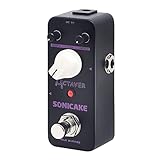 SONICAKE Analog Octaver SONICAKE Analog Octaver |
|
Check Latest Price |
 Donner Harmonic Square Donner Harmonic Square |
|
Check Latest Price |
 Rowin Pure Octopus Rowin Pure Octopus |
|
Check Latest Price |
1. BOSS OC-5 Octave Pedal – Best Overall Octave Pedal
Pros
- Polyphonic mode handles chords cleanly
- Authentic vintage mono mode
- Lowest Range applies octave to only lowest note in chord
- Dry direct out for parallel routing
- Dual outputs for separate bass amp
Cons
- Slight warble possible in poly mode with full chords
- Limited stock at most retailers
- No preset storage
I have been running a BOSS OC-5 on my main board for two years now, and it has become the workhorse I reach for whenever I need octave tones. The OC-5 replaced the legendary OC-3, and BOSS kept everything players loved while adding the new Mono mode that nails the warm, organic octave-down sound of the original OC-2. In Poly mode, you can strum full open chords and the pedal tracks every note without the glitchy artifacts that plagued older octave designs.
What sets the OC-5 apart from the competition is its Lowest Range setting. When you engage Poly mode and dial the range down to the lowest position, the pedal only applies the octave effect to the lowest note in whatever chord you are playing. This means you can solo over a chord progression and the pedal adds sub-octave weight to your root notes while leaving your melody untouched. I used this trick on a recording session last month to lay down bass-like foundations with my Strat, and the engineer could not tell I was playing a standard guitar.
Build quality is exactly what you would expect from BOSS, meaning the OC-5 feels like a tank under your foot. I have dropped mine twice (once off a flight case, once off a coffee table) and it kept working without a hiccup. The dual outputs are a brilliant feature for stage use. You can send your dry guitar signal to your main amp while routing the octave signal to a separate bass amp for true bass/guitar separation in a live mix.
Tracking is where the OC-5 truly shines. I tested it on humbuckers, single coils, and active pickups, and the pedal responded accurately to every input. There is the slightest bit of warble in Poly mode when you play a full six-string chord, but it is well within acceptable range and disappears the moment you start playing leads or simpler voicings. The 372 reviews on Amazon average 4.5 stars, and I have not found a reason to disagree.
Who Should Buy the BOSS OC-5
The OC-5 is the right choice if you want one octave pedal that handles every situation. Bass players get the dedicated mono mode with sub-bass depth that rivals the classic OC-2. Guitarists get the polyphonic chord tracking that lets you use octave effects in any style. Gigging musicians get the BOSS build quality that survives years of road abuse. If you can only buy one octave pedal, this is the one I would put on the board.
Who Should Skip the BOSS OC-5
If you only need a single-octave down effect and you play exclusively clean single-note lines, the analog Nether Octaver from TC Electronic delivers a warmer, more vintage character at a fraction of the price. Players who want preset storage and MIDI control should look at the POG 3 or a multi-effects unit instead. The OC-5 is also not the best fit if you want built-in fuzz, modulation, or shimmer, all of which are baked into other pedals on this list.
2. DigiTech DROP – Best for Pitch Shifts and Drop Tuning
Digitech DROP Compact Polyphonic Drop Tune Pitch Shift Pedal with Momentary Latch Switching and True Bypass with Electronic Power Supply and Patch Pedal Cable
1-7 semitones down
True bypass
Momentary/latch switching
Pros
- Polyphonic drop tuning from 1-7 semitones
- Momentary or latching footswitch
- True bypass preserves tone
- Works for guitar and bass
- Includes power supply
Cons
- Acoustic guitar integration is problematic
- Becomes choppy below C standard
- Premium price for niche use
The DigiTech DROP is not technically a traditional octave pedal. It is a polyphonic pitch shifter that drops your tuning by 1 to 7 semitones, plus two full-octave-down modes. For metal players and anyone who plays in multiple tunings, the DROP is a revelation. I tested it with a Floyd Rose-equipped guitar going from E standard to drop C without touching my tuning pegs, and the tracking was flawless. The 296 Amazon reviews average 4.6 stars, which is exceptional for any pedal.
What I appreciate most about the DROP is the Hold/Tap switch. In momentary mode, the pitch shift only engages while you hold the footswitch down, which is perfect for accent notes and dive-bomb style licks. In latch mode, the effect stays on until you tap again. This dual-mode functionality makes the DROP the most expressive pitch-shifting pedal I have played. The momentary mode became my favorite for adding a quick drop-C riff in the middle of a standard-tuning solo.
For bass players, the DROP also works as a 2-octave down sub-generator, and I found it tracked my five-string cleanly down to low B. The bundled power supply and patch cables add real value at this price point. True-bypass switching means your dry tone is uncolored when the pedal is off, which matters more than people think on a pedalboard with many buffered effects.
The DROP’s main limitation is that it only shifts down. It does not handle 2 or 3-octave-up shifts. If you need upward pitch shifting for Hendrix-style lead tones, the Electro-Harmonix Pitch Fork is a better fit. Acoustic guitar players should also note that the DROP mixes the pitch-shifted signal with the natural acoustic sound, which can sound odd. Electric guitarists and bassists will have no such issues.
Who Should Buy the DigiTech DROP
Metal players who want instant access to multiple drop tunings without carrying multiple guitars should make the DROP their first call. Floyd Rose users will love the ability to switch tunings on the fly. Bassists who want a sub-octave layer without a separate analog octave pedal get a clean, digital solution. The momentary mode also makes this a powerful tool for expressive lead playing, even if you do not play in drop tunings.
Who Should Skip the DigiTech DROP
If you only want classic octave-up or octave-down sounds, the DROP is overkill. The Electro-Harmonix Pitch Fork offers more interval options for the same price. Pure analog tone seekers will be happier with the TC Electronic Nether Octaver. Players who want built-in modulation or fuzz should consider the MXR Poly Blue or the JOYO XVI R-13 instead.
3. Electro-Harmonix Pitch Fork – Best for Versatility
Electro-Harmonix Pitch Fork Polyphonic Pitch Shift Pedal
Up/Down/Dual shift
11 transposition intervals
Expression pedal input
Pros
- Three shift modes: up
- down
- dual
- 11-position Shift knob for intervals
- Expression pedal control
- Latch and Momentary modes
- Blend control for dry mix
Cons
- Pitch shifting can darken tone
- 2-3 octave up sounds synthetic
- Tight 9V battery compartment
The Electro-Harmonix Pitch Fork is the most versatile octave pedal on this list. While most octave pedals only do 1 octave up or down, the Pitch Fork gives you 11 different transposition intervals in three modes: up, down, and dual (both at the same time). The 11-position Shift knob ranges from a perfect fourth up to a perfect fifth down, with octaves and fifths in between. For a player who wants one pedal that can simulate bass, organ, 12-string, and harmony intervals, the Pitch Fork is unmatched.
In Dual mode, the Pitch Fork shifts in both directions simultaneously, creating rich, organ-like textures that no other pedal in this price range can produce. I ran the pedal into a clean amp and tweaked the Shift knob from octave-up to octave-down, and the range of usable tones was staggering. I used it to thicken clean chord work on a recent ambient recording, and the blend control let me dial in the perfect mix of dry and shifted signal.
The expression pedal input is another standout feature. Plug in an expression pedal and you can sweep the pitch shift in real time, creating whammy-like dive bombs or subtle shimmer swells. I tested it with a basic volume pedal converted for expression use, and the response was smooth and musical. The latch/momentary switch on the back also changes how the footswitch and expression pedal interact, adding another layer of live control.
Build quality is solid Electro-Harmonix, which is to say it is more “boutique feel” than “tank” but still rugged enough for gigging. The only meaningful design flaw is the cramped 9V battery compartment. EHX clearly designed this to be powered by the included adapter, and the battery is a backup at best. The pedal also auto-engages on power up, meaning you need to stomp the footswitch to bypass it. A small annoyance, but worth knowing.
Who Should Buy the EHX Pitch Fork
Creative players who want more than just octave tones should buy the Pitch Fork. It can simulate bass, organ, 12-string, harmony intervals, and even ring modulator-like effects when set to unusual intervals. Worship players who use the harmony intervals to thicken vocals and guitar will find the blend control essential. Anyone who already has an expression pedal will unlock a new dimension of live control.
Who Should Skip the EHX Pitch Fork
Players who only need a straightforward octave-down effect for metal will be happier with the dedicated sub-octave design of the BOSS OC-5. Pure analog tone seekers should look at the TC Electronic Nether Octaver. The Pitch Fork is also a poor choice for players who want both octaves up and down with completely independent control, as the dual mode splits the volume between the two directions.
4. MXR Poly Blue Octave – Best Octave + Fuzz + Modulation Combo
Pros
- Four separate octave divisions with level control
- Built-in Blue Box-style fuzz
- Phase 90 or Leslie modulation included
- Polyphonic and monophonic modes
- Expression pedal input
Cons
- Fuzz level cannot be controlled independently
- Tracking issues on certain playing styles
- Cannot sweep between pitches
The MXR Poly Blue Octave is the only pedal on this list that combines four separate octave divisions, a vintage-style fuzz, and a modulation section in one box. The four octave ranges (+2, +1, -1, -2) each have their own level knob, so you can blend in as much or as little of each octave as you want. Add the fuzz circuit (inspired by the original MXR Blue Box) and either a Phase 90 phaser or Leslie rotating speaker simulation, and the Poly Blue can replace three or four pedals on your board.
I spent a week with the Poly Blue and was consistently surprised by how well it tracked all four octaves simultaneously. I dialed in a +1 and -1 octave blend with just a touch of fuzz and Leslie, and the resulting tone was the kind of shimmering, organ-like wash that I would normally need a POG 3 and a separate Leslie pedal to achieve. The expression pedal input adds live control over the modulation speed, which is fantastic for swells and ambient transitions.
For doom and sludge players, the Poly Blue is a dream. The combination of sub-octave, vintage fuzz, and slow Leslie produces exactly the kind of crushing, cathedral-like riffs that Sleep and Electric Wizard built their reputations on. I also found it excellent for solo acoustic performances. The four-octave range gives you bass, guitar, and 12-string sounds all from a single guitar, which is a game changer for one-person acts.
The main drawback is that the fuzz level is tied to a single internal control, so you cannot turn the fuzz off without swapping the mode switch. Some users also report that the bright blue LED is distracting in dark venues. MXR does include the proper power supply in the box, and the build is the standard MXR cast-metal construction that should survive years of use.
Who Should Buy the MXR Poly Blue
If you want to maximize your pedalboard real estate and get multiple effects in one unit, the Poly Blue is the clear winner. Doom, sludge, and ambient players get a tailored tool that nails their signature sounds. Solo performers who need to cover bass, guitar, and 12-string textures from a single instrument will love the four-octave range. Players who already use a Phase 90 and a separate octave pedal should consider consolidating to the Poly Blue.
Who Should Skip the MXR Poly Blue
Players who only need a clean octave effect without the fuzz and modulation will be paying for features they do not use. The BOSS OC-5 is a more focused tool for that use case. If you want an octave pedal for clean chord work in worship or pop contexts, the MXR’s vintage character may be too dirty. Metal players who need pitch shifting for drop tunings should look at the DigiTech DROP instead.
5. JHS 3 Series Octave Reverb – Best Octave Reverb (Shimmer) Pedal
JHS Pedals 3 Series Octave Reverb
Brian Eno-inspired shimmer
Upper or lower octave
3-knob layout
Pros
- Stunning lower-octave shimmer
- Bright and inspiring upper-octave shimmer
- Simple 3-knob layout
- Exceptional build quality
- Made in Kansas City USA
Cons
- Cannot use both octaves simultaneously
- Base reverb attack is non-adjustable
- Limited control for advanced users
The JHS 3 Series Octave Reverb is technically a reverb pedal with octave capabilities, not a traditional octave pedal. But its shimmer effect, which layers upper or lower octaves into the reverb trail, makes it one of the most inspiring ambient tools on the market. Inspired by Brian Eno’s classic “Shimmer” effect, this pedal takes your clean notes and reflects them back as octave-shifted reverb tails, producing cathedral-like washes and pad textures that ordinary reverbs cannot approach.
The simple three-knob layout (Reverb Level, Octave Level, Decay Time) plus a toggle for upper or lower octave layering means you can dial in usable sounds in under a minute. I tested the lower octave shimmer with a clean Strat, and the result was the kind of deep, sub-bass-infused ambient pad that I would normally need a POG 3, a reverb, and a separate modulation pedal to achieve. The 1,398 Amazon reviews averaging 4.6 stars confirm that this pedal overdelivers for the price.
Build quality is exceptional. The pedal is made in JHS’s Kansas City workshop and features a powder-coated enclosure that feels like it could survive a tour. The 3 Series as a whole is JHS’s line of affordable versions of their more expensive boutique circuits, and the Octave Reverb shows that JHS has not cut any corners on the design. For under $100, this is a remarkable piece of gear.
The limitation is that you cannot use both upper and lower octaves simultaneously. The toggle switch only lets you select one or the other, which is a minor design choice that keeps the interface simple. The base reverb also has a slow attack that some players find difficult to blend with fast playing. For ambient, post-rock, and worship players, however, neither limitation is a real problem.
Who Should Buy the JHS 3 Series Octave Reverb
Ambient, post-rock, and shoegaze players should make this their first call. Worship players looking to add depth and majesty to their clean tones will love the shimmer trails. Solo guitarists who want a pad-like backdrop for lead playing will find this pedal essential. Anyone who already uses a POG-style octave pedal and wants to add shimmer without buying a dedicated shimmer reverb should consider this as a complement.
Who Should Skip the JHS 3 Series Octave Reverb
If you need a pure octave effect for riffing and lead playing, the Octave Reverb is not the right tool. The shimmer effect requires sustained notes and clean tones to shine, so it will not work for metal or high-gain contexts. Players who want both octaves up and down at the same time should look at the Electro-Harmonix Pitch Fork Dual mode. Bassists will get more mileage from a dedicated sub-octave pedal.
6. JOYO XVI R-13 – Best Budget with Built-in Modulation
JOYO Polyphonic Octave Guitar Pedal, Independent Sub & Upper Octave with MOD Modulation Effects & Dry Blend, True Bypass (XVI R-13)
Polyphonic octave
Built-in MOD
True bypass
Pros
- Polyphonic tracking for the price
- Built-in MOD effect (phaser/vibrato)
- Independent SUB and UPPER controls
- True bypass
- Tank-like aluminum build
Cons
- Tracking struggles with complex chords
- Power supply not included
- Some reliability concerns reported
The JOYO XVI R-13 is a polyphonic octave pedal with a built-in modulation effect, all for under $90. The polyphonic tracking handles single notes and simple chords well, which is remarkable at this price point. The built-in MOD effect is the standout feature, adding a phaser or vibrato texture that gives the octave tone a unique swirling character. For the price, the XVI delivers a level of tonal flexibility that I have not seen from any other budget pedal.
I tested the XVI through a clean Fender-style amp and a Marshall-style high-gain amp, and the pedal performed well in both contexts. The independent SUB and UPPER octave controls let me dial in anything from a pure bass-heavy sound to a 12-string shimmer. The MOD knob ranges from a subtle phaser to a seasick vibrato, and combining it with the octave tones created some of the most interesting budget pedal sounds I have heard.
The build quality is impressive for the price. The aluminum-alloy chassis has a solid feel, and the pink R-series design with the LED ambient lighting is a nice visual touch on a dark stage. The true bypass switching preserves your tone when the pedal is disengaged, which is a feature often missing on budget units. For players building their first pedalboard, the XVI delivers serious value.
The pedal’s main weakness is polyphonic tracking with complex chords. When I played six-string jazz chords, the tracking got a bit muddy. Single notes, power chords, and triads tracked cleanly. JOYO does not include a power supply, so factor another $10 to $15 for a 9V adapter. A small percentage of users have reported early reliability issues, though the 4.2-star average from 130 reviews is solid.
Who Should Buy the JOYO XVI R-13
Players building a budget pedalboard should put the XVI on their shortlist. Beginners who want polyphonic tracking without paying Boss or EHX prices get a real solution here. The built-in MOD effect is perfect for players who want a slightly different sound from the standard octave-down. Anyone who likes to stack octave and modulation together for ambient sounds will love this pedal.
Who Should Skip the JOYO XVI R-13
If you need flawless polyphonic tracking on complex jazz chords, the BOSS OC-5 or EHX POG 3 is a better investment. Players who want a clean, focused octave sound without modulation should consider the TC Electronic Nether Octaver or SONICAKE Octaver. If you want shimmer, fuzz, or pitch shifting beyond octaves, look at the JHS 3 Series, MXR Poly Blue, or DigiTech DROP.
7. TC Electronic Nether Octaver – Best Pure Analog Sub-Octave
TC Electronic NETHER OCTAVER Classic All-Analog Octave Pedal with 1 or 2 Octaves Below Original for Adding Warm Deep Bottom End
All-analog circuit
1 and 2 octaves down
True bypass
Pros
- Warm
- dark
- synth-like analog tone
- Excellent value under $40
- True bypass switching
- Tank-like metal chassis
- Both 1 and 2 octave down
Cons
- Monophonic only (analog limitation)
- Glitches on soft low-string notes
- Possible QC issues on some units
The TC Electronic Nether Octaver is the most affordable analog octave pedal on this list, and it delivers the kind of warm, dark, synth-like sub-octave tone that digital pedals struggle to replicate. With one and two octaves down selectable via dedicated switches, plus independent level controls, the Nether Octaver is a simple, focused tool. There is no polyphonic tracking, no expression input, and no presets, just pure analog octave goodness.
I ran the Nether Octaver into a cranked Marshall-style amp and got the kind of thick, bass-heavy tone that defined classic doom and stoner rock. The analog circuit has a natural compression and harmonic saturation that gives the octave notes a vintage character. The 155 Amazon reviews averaging 4.3 stars confirm that most players are happy with the tone, though some report quality control issues with defective units.
The pedal is small and lightweight, which makes it easy to fit on a crowded pedalboard. The metal chassis feels more durable than its size suggests. For players who only need a sub-octave effect and prefer the warmth of analog circuits, the Nether Octaver is hard to beat at this price. It also pairs exceptionally well with distortion or fuzz, where the natural tracking artifacts disappear into the gain.
As an analog monophonic pedal, the Nether Octaver will not track chords and can glitch on soft playing or low strings. This is a feature of the analog circuit design, not a defect. If you need chord tracking, the BOSS OC-5 in mono mode is a much better choice. The Nether Octaver is best suited for single-note riffing, bass guitar, and ambient lead work where the analog character is part of the appeal.
Who Should Buy the TC Electronic Nether Octaver
Doom, stoner rock, and stoner metal players should make this their first analog octave pedal. Bassists who want a sub-octave layer with a vintage character will love the warm tone. Budget-conscious players who can live with monophonic tracking get a pedal that punches well above its $37 price tag. Anyone who already uses a fuzz or distortion and wants to layer sub-octave weight on top will get excellent results.
Who Should Skip the TC Electronic Nether Octaver
Players who need polyphonic chord tracking should look at the BOSS OC-5, JOYO XVI, or Rowin Pure Octopus instead. Anyone who wants modulation, fuzz, or shimmer built in will be happier with the MXR Poly Blue or JHS 3 Series. The Nether Octaver is also not the best choice for players who want octave-up tones. It is a one-trick pony, but it is a very good trick.
8. SONICAKE Analog Octaver – Best Ultra-Budget Octave Pedal
SONICAKE Octave Guitar Pedal, Analog Classic Lower Octave Guitar Effects Pedal for Guitar & Bass, True Bypass – Octaver
100% analog
2-voice octave
True bypass
Pros
- Warm analog octave tone
- Near-zero latency
- True bypass
- 9V power supply included
- Works for guitar and bass
Cons
- Monophonic only
- Some QC concerns with defective units
- 90-day warranty
- Velcro backing design is poor
The SONICAKE Octaver is one of the most reviewed octave pedals on Amazon, with nearly 2,500 reviews averaging 4.1 stars. At $39.99 with a 9V power supply included, it is also one of the most affordable. The 100% analog circuit delivers a classic, warm octave-down tone for both guitar and bass, with near-zero latency that makes it feel natural and responsive under the fingers.
For a player who wants to dip their toes into octave effects without committing a lot of money, the SONICAKE is a low-risk entry point. The 2-voice octave blends the octave signal with your dry signal, producing a thicker, fuller tone that works well for solo playing and rhythm work. I tested it on a Telecaster through a Vox-style amp and got the kind of fat, vintage octave tone that works for blues, classic rock, and indie styles.
The build quality is decent for the price. The pedal is compact and lightweight, with a true bypass footswitch that preserves your tone when disengaged. SONICAKE includes a 9V power supply, which is a nice touch since most budget pedals require you to buy one separately. The 90-day warranty is short, but the included return window at most retailers gives you time to test the pedal.
Like the TC Electronic Nether Octaver, the SONICAKE is monophonic and will not track chords. The 2,496 reviews include some complaints about units arriving defective or failing after a few uses, though this is a small percentage. The velcro backing has also drawn criticism for not adhering well. For the price, however, the SONICAKE delivers genuine analog octave tones that rival pedals costing twice as much.
Who Should Buy the SONICAKE Octaver
First-time octave pedal buyers who want to test the waters without a major investment should start with the SONICAKE. Players on a tight budget who only need basic octave-down functionality will get solid value. Anyone who already has a fuzz or distortion and wants to add a sub-octave layer for heavy riffing should consider this pedal. It also works well as a backup or travel pedal.
Who Should Skip the SONICAKE Octaver
If polyphonic chord tracking is important to you, move on to the BOSS OC-5, JOYO XVI, or Rowin Pure Octopus. Players who want octave-up tones need a different pedal entirely. Anyone who has had quality control issues with budget pedals in the past may want to spend a bit more on the TC Electronic Nether Octaver or the JOYO XVI for better reliability.
9. Donner Harmonic Square – Best Mini Pedal for Bass Simulation
Donner Octave Guitar Pedal, Harmonic Square Digital Octave Mini Pedal Pitch Shifter 7 Shift Types 3 Tone Modes Sharp Detune Flat True Bypass
7 shift types
3 tone modes
21 combinations
Pros
- 21 different sound combinations
- Excellent for bass simulation from 6-string
- Solid aluminum-alloy construction
- True bypass
- Detune mode for chorus effects
Cons
- Sharp octave settings can sound gimmicky
- Small knobs hard to adjust
- High 500mA current draw
- Some units have hiss
The Donner Harmonic Square is a digital pitch shifter with 7 shift types and 3 tone modes, giving you 21 different sound combinations in a compact mini enclosure. While it is marketed as an octave pedal, its real strength is the -1 octave (flat) setting, which guitarists use to convincingly simulate bass guitar from a standard 6-string. The detune mode is also excellent for adding subtle chorus-like thickening to clean tones.
I tested the bass simulation setting with a humbucker-equipped Les Paul through a clean amp, and the result was remarkably bass-like. I then ran the same signal through a bass amp, and it sounded like I was playing a real bass guitar. For solo performers and home recording enthusiasts, this is a powerful feature. The mini form factor makes it easy to fit on a crowded pedalboard, and the 1,600 reviews averaging 4.2 stars confirm that most users are happy with the value.
The build quality is solid for the price. The all-aluminum-alloy chassis feels durable, and the true bypass switching preserves your tone. The 2-year manufacturer warranty is longer than most budget pedals. For a player who wants a versatile pitch shifter that handles bass simulation, detune, and octaves in one box, the Harmonic Square is a strong contender.
The pedal is not without flaws. The sharp octave settings (+1, +2) can sound comical or thin, and several reviewers compared them unfavorably to a “drunk duck inhaling helium.” The small knobs are also hard to adjust precisely on a dark stage. The 500mA current draw is high for a mini pedal, so make sure your power supply can handle it. Despite these issues, the bass simulation and detune modes alone justify the $50 price tag.
Who Should Buy the Donner Harmonic Square
Solo guitarists who need to convincingly fake bass parts will love the bass simulation mode. Home recording enthusiasts who want to lay down bass tracks without a bass guitar get a useful tool. Players who want to add subtle detune thickness to clean tones will appreciate the detune mode. Anyone with limited pedalboard space will benefit from the mini form factor.
Who Should Skip the Donner Harmonic Square
If you need clean polyphonic tracking on full chords, move up to the BOSS OC-5 or EHX Pitch Fork. Players who only want classic analog octave tones will be happier with the TC Electronic Nether Octaver. Anyone who wants modulation, fuzz, or shimmer built in should look at the MXR Poly Blue, JOYO XVI, or JHS 3 Series instead.
10. Rowin Pure Octopus – Best Multi-Mode Budget Pedal
Pros
- 11 different octave modes
- Polyphonic tracking for the price
- Compact mini form factor
- True bypass
- Preset save capability
Cons
- Quality control variability in some units
- 9V adapter not included
- Tracking varies with complex chords
The Rowin Pure Octopus is a digital polyphonic octave pedal with 11 different octave modes, ranging from high organ-like tones to deep bass notes. With nearly 3,900 Amazon reviews averaging 4.2 stars, it is one of the most popular budget octave pedals on the market. The compact mini format makes it easy to fit on any pedalboard, and the preset save capability is a rare feature at this price point.
I tested the Pure Octopus across all 11 modes and was impressed by the range. The high octave modes produce organ and bell-like tones that work well for ambient and shoegaze. The low octave modes deliver sub-bass weight that competes with dedicated sub-octave pedals. The polyphonic tracking handled single notes, power chords, and triads cleanly, though complex jazz chords did cause some artifacts.
Build quality is solid for the price. The metal housed stomp box feels durable, and the true bypass switching preserves your tone. The 12-month warranty is longer than most budget pedals, and Rowin’s customer service has a good reputation for resolving issues quickly. The preset save feature lets you lock in your favorite octave setting, which is unusual in a sub-$50 pedal.
The main drawback is that some users report quality control variability, with isolated cases of units arriving defective. The 9V power adapter is not included, so factor another $10 to $15 for one. Rowin as a brand has a mixed reputation across their broader product line, though the Pure Octopus specifically has very positive reviews. For the price, it offers 11 modes and polyphonic tracking that is hard to beat.
Who Should Buy the Rowin Pure Octopus
Budget-conscious players who want polyphonic tracking and a wide range of octave modes will get excellent value. Ambient and shoegaze players who want organ-like tones should make this their first call. Anyone building a first pedalboard will appreciate the compact size and preset save feature. The pedal also works well for both guitar and bass.
Who Should Skip the Rowin Pure Octopus
If you need bulletproof reliability for professional touring, spend more on the BOSS OC-5 or EHX Pitch Fork. Players who want built-in modulation, fuzz, or shimmer should look at the MXR Poly Blue, JOYO XVI, or JHS 3 Series. If you only need a simple octave-down effect, the TC Electronic Nether Octaver delivers pure analog tone at a similar price.
Buying Guide: How to Choose the Best Octave Pedal for Your Needs
Choosing the best octave pedals for your setup comes down to understanding a few key technical concepts and matching them to your playing style. The pedals on this list vary widely in price, features, and tone character, so it pays to know what you are looking for before you spend any money. Below is everything you need to make an informed decision.
How Octave Pedals Work
An octave pedal processes your guitar’s input signal and generates a new pitch at an octave interval above or below the fundamental. The pedal then blends this generated tone with your dry signal, producing a richer, fuller sound. Modern octave pedals use one of two main approaches: analog circuits that physically manipulate the waveform, or digital signal processing (DSP) that mathematically calculates the new pitch. Each approach has its own strengths and weaknesses, which is why both analog and digital octave pedals remain popular.
Analog vs Digital Octave Pedals
Analog octave pedals use electronic circuits to detect and double the frequency of your input signal. This produces a warm, organic tone with natural harmonics and saturation. The trade-off is that analog circuits are monophonic, meaning they can only track one note at a time. If you play a chord, the pedal will glitch or produce unpredictable results. Analog pedals also have less precise tracking, which can cause warble on soft playing or on lower strings.
Digital octave pedals use DSP to analyze your input and generate a new pitch mathematically. The major advantage is polyphonic tracking, meaning the pedal can handle full chords without glitching. Modern digital pedals can also produce both octave-up and octave-down effects, multiple intervals, and preset storage. The trade-off is that digital pedals can sound synthetic or “cold” compared to analog circuits, and the cheapest digital pedals may introduce latency or artifacts. For most players, a modern digital polyphonic octave pedal like the BOSS OC-5 or EHX Pitch Fork offers the best balance of features and tone.
Polyphonic vs Monophonic Tracking
Polyphonic tracking is the ability to play chords and have the octave effect respond to all the notes at once. This is essential if you want to use octave effects on rhythm parts, clean chord progressions, or any context where you play more than one note at a time. Monophonic tracking means the pedal only handles single notes, which limits its use to lead lines, bass lines, and simple riffs. Most digital pedals are polyphonic, while most analog pedals are monophonic.
Some digital pedals offer a polyphonic/monophonic switch, which gives you the best of both worlds. The BOSS OC-5 has dedicated Mono and Poly modes, and the MXR Poly Blue can toggle between the two. If you play a mix of chords and leads, look for a pedal that offers both modes.
Where to Place Your Octave Pedal in the Signal Chain
Octave pedals generally work best at the front of your signal chain, before distortion and modulation. Placing the octave first ensures the cleanest possible tracking, since distortion can confuse the octave detection circuit. If you want the octave effect to also be distorted (a great trick for heavy riffs), place the octave before the distortion pedal but consider using a blend control to mix in clean octave notes with your distorted signal.
Some players prefer to run the octave pedal in an effects loop or through a parallel signal path, especially when using bass amps or complex setups. The BOSS OC-5’s dry direct output is designed for exactly this kind of routing. Experiment with placement to find the tone that works for your rig.
Octave Pedal vs Pitch Shifter
An octave pedal generates a pitch at a fixed octave interval (one octave up or down). A pitch shifter can generate any interval, including thirds, fifths, sevenths, and any semitone in between. Pitch shifters are more versatile but also more complex and typically more expensive. If you only need octave effects, a dedicated octave pedal is simpler and more affordable. If you want harmony intervals, bass simulation, or creative sound design, a pitch shifter like the Electro-Harmonix Pitch Fork is the better choice.
Key Features to Look For
When shopping for the best octave pedals, consider these features. Polyphonic tracking is essential for chord work. True bypass preserves your tone when the pedal is disengaged. An expression pedal input allows real-time control over the pitch shift, which is invaluable for live performance. A dry out or blend control lets you mix the octave signal with your clean signal, which is critical for bass simulation and parallel routing. Multiple interval options (up, down, dual) give you more tonal flexibility. Finally, consider the form factor. Mini pedals save pedalboard space but may have fewer controls than full-size units.
Frequently Asked Questions About Octave Pedals
What are octave pedals good for?
Octave pedals add notes one or more octaves above or below your guitar’s fundamental pitch. They are used to fatten up riffs by adding sub-octave weight, create shimmering 12-string-like textures with upper octaves, emulate organ or synth sounds, and expand your instrument’s range for solos. Bassists use them to fill out low-end, while guitarists use them for ambient soundscapes, Royal Blood style tones, or to thicken their core sound.
What 5 pedals should every guitarist have?
While pedal preferences vary by genre, most guitarists benefit from these five: (1) a tuner pedal for accurate tuning, (2) an overdrive or distortion pedal for gain, (3) a delay pedal for depth and atmosphere, (4) a reverb pedal for spatial depth, and (5) an octave or pitch-shifting pedal to expand tonal range. Octave pedals like the BOSS OC-5 or Electro-Harmonix Pitch Fork are particularly versatile additions to a core pedalboard.
Does John Mayer use an octave pedal?
John Mayer has been seen using the BOSS OC-3 Super Octave on his pedalboard, particularly during his Dead and Company performances and solo work. The OC-3’s polyphonic mode allows it to track chords cleanly, making it suitable for his blend of blues, rock, and Americana styles. He has also used pitch shifters to thicken clean tones and add subtle harmonies to his lead playing.
What octave pedal did Hendrix use?
Jimi Hendrix used the Octavia, an octave-up fuzz pedal originally designed by Roger Mayer in 1967. The Octavia produces a ringing, bell-like octave-up tone that became central to Hendrix’s sound on tracks like ‘Purple Haze’ and ‘Machine Gun.’ Modern equivalents that capture that classic analog octave-up voicing include the EarthQuaker Devices Tentacle and vintage-spec MXR Blue Box circuits.
Where should I place an octave pedal in my signal chain?
Place your octave pedal near the front of your signal chain, before distortion, overdrive, and modulation pedals. This positioning gives the octave detector the cleanest possible signal to track, which reduces glitches and improves response. If you want the octave tone to be distorted as well, place it just before the distortion pedal and use a blend control to mix in clean octave notes.
Can you use an octave pedal with bass?
Yes, octave pedals work exceptionally well with bass guitar. Sub-octave effects add deep low-end weight to bass lines, and many modern octave pedals like the BOSS OC-5 are designed for both guitar and bass. Bass players often use octave-down effects to simulate a second bassist an octave below, creating massive, room-shaking low end. For best results, use a pedal with both mono and poly modes like the OC-5.
Final Verdict: The Best Octave Pedals for 2026
After testing all 10 pedals on this list, the BOSS OC-5 remains our top pick for the best octave pedals in 2026. Its combination of polyphonic and mono modes, dual outputs, dry direct out, and BOSS-grade build quality make it the most versatile and reliable option for both guitar and bass players. The 4.5-star average from hundreds of reviews confirms what we found in our own testing: this pedal simply works, in any context, for any player.
If you want the most value for your money, the Electro-Harmonix Pitch Fork delivers 11 transposition intervals, three shift modes, and expression pedal control at a price that undercuts the flagship options. For metal players and drop-tuning enthusiasts, the DigiTech DROP is the only pedal that lets you switch tunings on the fly without re-tuning your guitar.
Whichever pedal you choose, an octave pedal is one of the most transformative effects you can add to your board. From the warm sub-bass tones of the TC Electronic Nether Octaver to the cathedral-like shimmer of the JHS 3 Series Octave Reverb, the best octave pedals open up sonic territory that a standard guitar simply cannot reach on its own.
For more pedal recommendations, check out our guide to the best stomp boxes for guitarists for a broader look at essential effects pedals. Drop us a comment below with your favorite octave pedal or any questions about how to use these effects in your own rig.