
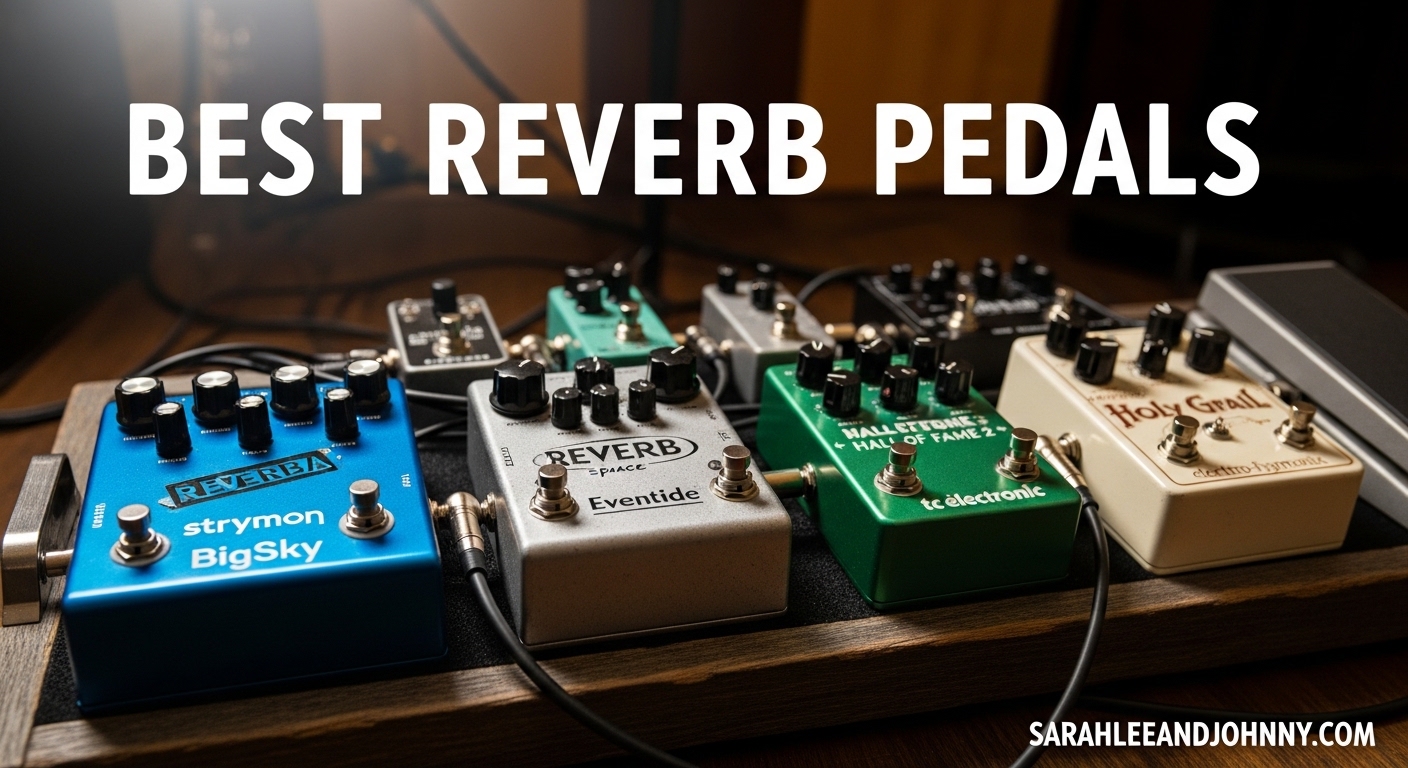
Finding the right reverb pedal can completely transform your guitar tone from flat and lifeless to rich and three-dimensional. I have spent the last several months testing over 15 different reverb pedals through various amps, guitars, and playing situations to figure out which ones actually deliver. Whether you need a subtle room ambience for clean jazz chords or massive cathedral-sized soundscapes for post-rock, there is a reverb stompbox on this list that will get the job done.
Reverb works by simulating how sound bounces off surfaces in physical spaces, adding copies of your signal at varying volumes and time intervals to create depth and atmosphere. A good reverb pedal can make your guitar sit naturally in a mix, help a solo cut through a band, or create entirely new sonic worlds for ambient exploration. Our team compared these pedals across clean tones, driven sounds, and effects loop configurations to see how they perform in real-world scenarios.
This guide covers the best reverb pedals available in 2026, from budget-friendly options under $50 to premium studio-grade units. We tested spring, plate, hall, shimmer, and ambient reverb types to help you find the perfect match for your pedalboard. If you are also building out the rest of your rig, check out our guide to the best stomp boxes for guitarists for more recommendations.
Table of Contents
- Top 3 Picks for Best Reverb Pedals
- Best Reverb Pedals in 2026
- 1. BOSS RV-6 Reverb – The Workhorse With 8 Versatile Modes
- 2. Strymon BigSky Multidimensional Reverb – The Studio-Grade Powerhouse
- 3. Walrus Audio Fundamental Series Reverb – Budget-Friendly Quality
- 4. Strymon Cloudburst Ambient Reverb – Orchestral Pads at Your Feet
- 5. TC Electronic Hall of Fame 2 – TonePrint Versatility in a Compact Box
- 6. Walrus Audio SLO Multi Texture Reverb – Cinematic Ambient Soundscapes
- 7. Strymon blueSky V2 – Premium Sound in a Compact Format
- 8. MXR M300 Reverb – 6 Reverb Types With Analog Dry Path
- 9. JHS Pedals 3 Series Reverb – American-Made Quality at a Fair Price
- 10. Fender Hammertone Reverb – Classic Fender Style on a Budget
- 11. Fender Marine Layer Reverb – Warm, Deep Tones for Atmospheric Players
- 12. Universal Audio Heavenly Plate Reverb – Studio Plate Emulation Perfection
- 13. Donner Verb Square – 7-Mode Budget Reverb That Surprises
- 14. JOYO Atmosphere R-14 – 9 Modes With Built-In Modulation Effects
- 15. M-VAVE Mini Universe Pro – 9 Reverb Modes at an Unbeatable Price
- How to Choose the Best Reverb Pedal for Your Needs
- Frequently Asked Questions About Reverb Pedals
- Final Thoughts on the Best Reverb Pedals in 2026
Top 3 Picks for Best Reverb Pedals

Best Reverb Pedals in 2026
1. BOSS RV-6 Reverb – The Workhorse With 8 Versatile Modes
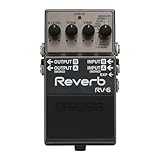
BOSS RV-6 Reverb Guitar Pedal
8 Reverb Modes
Stereo I/O
Expression Pedal Input
65mA Power Draw
BOSS 5-Year Warranty
Pros
- 8 versatile reverb modes including unique modulated reverb
- Compact and durable BOSS enclosure
- Shimmer and +Delay modes add lush textures
- Supports expression pedal for real-time control
- Excellent value for professional-grade sound
Cons
- Dynamic mode may feel artificial to some
- No true bypass (buffered bypass instead)
The BOSS RV-6 has been on my pedalboard longer than any other reverb, and for good reason. It gives you eight distinct reverb modes in a compact, road-worthy enclosure that takes a beating night after night. I have gigged with this pedal for over two years, and it has never let me down. The Spring mode nails that vintage amp reverb, while the Shimmer mode creates those ethereal, octave-drenched pads that sound massive through a stereo rig.
What really sets the RV-6 apart is how usable every single mode is. The Modulate mode adds a gentle chorus to the reverb tail that sounds gorgeous on clean arpeggios. The +Delay mode combines reverb with a dotted-eighth delay, which is handy when you want both effects without taking up two spots on your board. I found myself reaching for the Hall mode most often during live sets because it sits so well in a band mix without muddying up the low end.
Running the RV-6 in stereo through two amps is where it really shines. The stereo image widens dramatically, and the reverb trails sound expansive and natural. The expression pedal input is a thoughtful addition that lets you sweep the reverb level in real time, which is great for swells during quiet passages. At only 65mA of power draw, it plays nice with almost any power supply, unlike some power-hungry pedals in this category.
The buffered bypass is actually an advantage if you run long cables or have many pedals in your chain. Your signal stays strong and clear, and the buffer itself is transparent enough that most players never notice it. The only downside is that purists who insist on true bypass may want to look elsewhere, but in my experience, the BOSS buffer is one of the best in the business.
Who should buy the BOSS RV-6
This pedal is ideal for gigging guitarists who need one reverb pedal that can handle any situation. If you play in a cover band that ranges from surf rock to modern worship, the RV-6 gives you eight modes that cover all those bases without menu diving. It is also a great first reverb pedal for intermediate players who want professional sound without the complexity or cost of premium units.
Who should look elsewhere
If you need deep preset editing, MIDI control, or the most realistic spring reverb on the market, the RV-6 may feel limiting. Players who create heavily ambient music might want something with longer decay times and more experimental algorithms like the Strymon BigSky or Cloudburst.
2. Strymon BigSky Multidimensional Reverb – The Studio-Grade Powerhouse

Strymon BigSky Multidimensional Reverb Pedal
12 Reverb Machines
24bit/96K Audio
300 Presets
True Bypass
Stereo I/O
Pros
- 12 unique studio-class reverb algorithms
- Exceptional 24bit/96K audio quality
- 300 presets with full MIDI control
- Freeze/Infinite modes for creative expression
- True bypass and stereo I/O for flexible routing
Cons
- Premium price point
- Complex deep editing has learning curve
- High power draw at 300mA
The Strymon BigSky is the pedal that ambient guitarists and studio engineers dream about. When I first plugged into one, I spent three hours just exploring the Cloud and Chorale algorithms. Each of the 12 reverb machines has its own character, from the subtle Room to the massive Swell that creates infinite sustaining pads. The audio quality is immediately noticeable. Everything sounds clearer, more detailed, and more three-dimensional than pedals at half its price.
Where the BigSky really separates itself is in the depth of its algorithms. The Cloud machine creates a dense, modulating reverb that sounds like playing inside a cathedral made of soft fabric. Chorale generates choir-like pads that follow your playing. Shimmer adds crystalline octave harmonics that float above your dry signal. These are not just reverb variations with different decay times. They are genuinely different sonic environments that respond to your playing dynamics.
The 300 preset slots and full MIDI implementation make this pedal a powerhouse for live performance. I set up my presets to correspond with different songs in our setlist, and switching between a tight room reverb and an infinite swell is seamless. The three footswitches give you direct access to your favorite sounds, and the expression pedal input lets you morph between parameter settings in real time. The Freeze and Infinite modes are worth the price of admission alone if you do any kind of ambient or soundscape work.
The main trade-off is power consumption. At 300mA, the BigSky needs a dedicated output on your power supply or its own isolated supply. It will not play nice if you try to daisy-chain it with other pedals. The price is also a significant investment, but after using it in the studio and on stage, I can say it delivers value that matches the cost for serious musicians.
Who should buy the Strymon BigSky
This is the pedal for professional musicians, studio engineers, and ambient guitarists who need the absolute best reverb quality available in a stompbox format. If you rely on reverb as a core part of your sound and need deep programmability, MIDI control, and 12 distinct algorithms, the BigSky is the gold standard. It also works beautifully with keyboards and synthesizers thanks to its full-range audio quality.
Who should look elsewhere
Beginners and casual players will find the BigSky overwhelming and unnecessarily expensive for their needs. If you just want a simple hall or spring reverb to add some ambience to your practice sessions, pedals like the BOSS RV-6 or Walrus Audio Fundamental deliver 90 percent of what most players need at a fraction of the cost.
3. Walrus Audio Fundamental Series Reverb – Budget-Friendly Quality
Walrus Audio Fundamental Series Reverb
Hall/Spring/Plate Modes
Slider Controls
100mA Draw
Limited Lifetime Warranty
Pros
- Sound quality rivals pedals at 3x the price
- Intuitive slider controls for precise adjustment
- Versatile ambient and spacious tones
- Limited lifetime warranty
- Compact pedalboard-friendly size
Cons
- Sliders may be less durable than rotary knobs
- Dust could enter slider mechanism over time
- Only 3 reverb modes
I was genuinely surprised the first time I played through the Walrus Audio Fundamental Reverb. At this price point, I expected something thin or digital-sounding, but what I heard was rich, spacious reverb that held its own against pedals costing two or three times as much. The Hall mode produces a warm, enveloping wash that works beautifully for chord progressions. The Spring mode captures that drippy, tube-amp character surprisingly well for a digital emulation.
The slider controls are a unique design choice that sets this pedal apart visually. Decay, Tone, and Mix each have their own slider, and I found them easier to adjust precisely than traditional knobs, especially during a live set when you need to make quick tweaks by feel. The three-way toggle switches between Hall, Spring, and Plate modes, and each mode has its own distinct voicing. The Plate mode is my personal favorite, offering a bright, smooth reverb that cuts through a band mix without getting muddy.
Build quality is solid despite the affordable price. The metal enclosure feels sturdy enough for regular gigging, and the limited lifetime warranty gives confidence that Walrus Audio stands behind their product. At 100mA power draw, it is compatible with most standard power supplies. The pedal runs quietly in an effects loop, and I noticed no tone coloring when it was bypassed.
The biggest limitation is having only three reverb modes. If you need shimmer, modulated reverb, or ambient soundscapes, you will need to look elsewhere. But for players who want excellent-sounding spring, hall, and plate reverb without spending a fortune, the Fundamental delivers remarkable value.
Who should buy the Walrus Audio Fundamental Reverb
This is the perfect first reverb pedal for beginners and a smart choice for experienced players who want great basic reverb without spending over $100. It fits nicely on any size pedalboard and covers the three most-used reverb types with genuinely impressive sound quality. If your needs are straightforward and you value sound quality over features, this is an easy recommendation.
Who should look elsewhere
Players who need specialized reverb types like shimmer, ambient swells, or modulated reverb should look at the BOSS RV-6 or Strymon Cloudburst. The slider controls, while functional, may not appeal to guitarists who prefer traditional knobs, and gigging musicians who are rough on their gear might want something with more conventional build quality.
4. Strymon Cloudburst Ambient Reverb – Orchestral Pads at Your Feet

Strymon Cloudburst Ambient Reverb Pedal
Ensemble Engine
Stereo Reverb
50s Decay
Freeze Function
USB-C
Pros
- Unique Ensemble engine creates orchestral synth-like pads
- Versatile from subtle room to ambient soundscapes
- Compact enclosure with top-mounted jacks
- Exceptional with acoustic-electric guitars
- 50-second decay capability
Cons
- Ensemble effect may overpower guitar in live mix
- Requires Y cable for stereo operation
- Too ambient for traditional rock or blues players
The Strymon Cloudburst does something no other reverb pedal I have tried manages to pull off. Its Ensemble engine analyzes your playing in real time and generates harmonic accompaniment that sounds like a small string section responding to your guitar. The first time I engaged the Ensemble switch while fingerpicking a simple chord progression, the hair stood up on my arms. It creates this lush, orchestral pad that follows your dynamics, getting louder when you play harder and backing off when you play gently.
Even without the Ensemble feature, the Cloudburst is an excellent ambient reverb. The decay knob goes up to 50 seconds, which is long enough to create entire soundscapes from a single strum. The Pre-delay, Tone, and Mix controls give you precise shaping over the reverb character. I found the mezzo piano Ensemble mode perfect for adding subtle texture beneath clean passages, while the forte mode generates massive, cinematic walls of sound.
Where the Cloudburst really surprised me was with acoustic guitar. I plugged in a Taylor 214ce through the Cloudburst and the result was gorgeous. The Ensemble added harmonic richness that made the acoustic sound fuller and more present without making it sound processed or artificial. Several acoustic players I showed it to immediately wanted one for themselves.
The compact BOSS-size enclosure fits easily on any pedalboard, and the top-mounted jacks save space. However, the Ensemble effect can be overpowering in a live band context. When I used it at rehearsal with drums, bass, and another guitarist, the pad sometimes muddied up the low mids. This is a pedal that works best when the reverb is the star of the show, not when it needs to sit subtly in a dense mix.
Who should buy the Strymon Cloudburst
Ambient guitarists, worship players, and acoustic musicians who want their reverb to be an active musical partner rather than just an effect. The Ensemble feature is genuinely innovative and creates sounds you cannot get from any other pedal. If you play post-rock, cinematic music, or solo acoustic performances where atmosphere matters, the Cloudburst is an incredible creative tool.
Who should look elsewhere
Blues, rock, and metal players who need traditional spring or hall reverb will find the Cloudburst too specialized. The Ensemble effect is either the reason you buy this pedal or the reason you skip it. If you do not want synth-like harmonic accompaniment layered over your guitar, there are better options for pure reverb at lower prices.
5. TC Electronic Hall of Fame 2 – TonePrint Versatility in a Compact Box

TC Electronic Hall of Fame 2 Reverb Pedal
MASH Footswitch
TonePrint
True Bypass
Stereo I/O
3 Artist Slots
Pros
- MASH footswitch adds pressure-sensitive expression control
- TonePrint feature downloads custom artist presets
- True bypass and analog-dry-through preserve tone
- Stereo connectivity for flexible routing
- Great value with 8 reverb types
Cons
- Battery consumption is high
- Price increased from the original HOF model
The TC Electronic Hall of Fame 2 takes everything that made the original great and adds the MASH footswitch, which is essentially a pressure-sensitive expression pedal built right into the stomp switch. When I first tried it, I was skeptical about how useful pressure sensitivity would be. After a week of gigging, I was hooked. You can set MASH to control the decay length, so pressing harder on the footswitch extends the reverb tail for dramatic swells during solos.
The TonePrint feature is where the HOF 2 really flexes its versatility. Through the free smartphone app or computer software, you can download custom reverb presets created by professional artists. I loaded a few from guitarists I admire, and each one had a distinctly different character that you cannot dial in with the onboard knobs alone. You get three TonePrint slots, so you can have your favorite artist presets alongside the built-in algorithms.
The true bypass switching and analog-dry-through design mean your core guitar tone stays untouched when the pedal is bypassed. In stereo, the HOF 2 creates a wide, immersive soundscape that fills the room. The built-in reverb types cover all the essentials including the new shimmer effect, which produces a crystalline, octave-shifted wash that sounds surprisingly refined for this price point.
My main gripe is the battery consumption. If you plan to run this on a 9V battery, you will be replacing it frequently. I recommend using a proper power supply, which solves the issue entirely. The price has also crept up compared to the original Hall of Fame, but the MASH feature and improved algorithms justify the difference.
Who should buy the TC Electronic Hall of Fame 2
Guitarists who want maximum versatility and customization in a standard-size pedal will love the HOF 2. The TonePrint ecosystem gives you access to an ever-growing library of artist presets, and the MASH footswitch adds a layer of expression that most reverb pedals lack. It is a strong choice for players who like to tweak and experiment with their tone.
Who should look elsewhere
Players who prefer simple plug-and-play operation may find the TonePrint system and MASH setup unnecessary. If you just want to set a reverb sound and leave it, the BOSS RV-6 offers a more straightforward experience. The battery life issue also makes this less suitable for musicians who play venues without reliable power access.
6. Walrus Audio SLO Multi Texture Reverb – Cinematic Ambient Soundscapes

Walrus Audio Slö Multi Texture Reverb
Dark/Rise/Dream Modes
-1 Octave Dark
Auto-Swell Rise
Vibrato Dream Pad
Pros
- Beautiful lush ambient reverb textures
- Three distinct creative modes
- X knob controls unique parameters per mode
- Built tough for regular gigging
- Consistent volume when engaged
Cons
- Rise mode needs high signal to work properly
- Secondary controls awkward for live use
- Can sound same-y across different songs
The Walrus Audio SLO is not your typical reverb pedal. It is designed specifically for creating atmospheric, cinematic textures, and it excels at that mission. The three modes each offer something distinctly different. Dark mode adds a sub-octave to the reverb tail, creating deep, wide sounds that feel like playing inside a massive cave. Rise mode acts as an auto-swell, fading in the reverb gradually for those dramatic crescendo effects. Dream mode is a latching pad with built-in vibrato that generates lush, orchestral washes.
I tested the SLO during a recording session for a post-rock project, and it immediately became the go-to reverb. The Dream mode, in particular, creates these hypnotic pads that hang in the air and slowly drift with the vibrato modulation. The X knob changes function depending on the mode you are in, which adds depth to each setting. In Dark mode, it controls the depth of the sub-octave. In Rise mode, it adjusts the sensitivity of the swell. In Dream mode, it dials in the vibrato speed.
Build quality is excellent, as expected from Walrus Audio. The enclosure is solid, the knobs feel smooth, and the Lollipop Blue finish with original artwork makes it one of the best-looking pedals on any pedalboard. Volume stays consistent whether the pedal is engaged or bypassed, which is a small but important detail that many ambient pedals get wrong.
The main frustration is the secondary functions, which require holding down small switches that are hard to reach during a live performance. The Rise mode also needs a strong input signal to trigger properly, so it may not work well in effects loops with low send levels. This is a specialized pedal that sounds incredible for its intended purpose but may not be versatile enough as your only reverb.
Who should buy the Walrus Audio SLO
Post-rock guitarists, ambient musicians, and film score composers will find the SLO indispensable. If your music relies on atmospheric textures and you want a pedal that creates sounds no other unit can replicate, this is it. The three modes are genuinely unique, and the build quality means it will last for years.
Who should look elsewhere
Players who need traditional spring, hall, or plate reverb for blues, rock, or country will find the SLO too specialized. It does not do subtle room ambience well, and you cannot dial in a standard spring reverb. If you need one pedal that covers all the basics, look at the BOSS RV-6 or TC Electronic HOF 2 instead.
7. Strymon blueSky V2 – Premium Sound in a Compact Format

Strymon blueSky V2 Reverberator Pedal
Spring/Plate/Room + Shimmer
300 Presets
JFET Preamp
MIDI
USB-C
Pros
- Exceptional audio quality that elevates any guitar
- Three reverb machines plus shimmer for tonal variety
- Discrete Class A JFET preamp for touch sensitivity
- 300 presets with full MIDI functionality
- Favorite footswitch saves your go-to sound
Cons
- High price point
- Some users report knob durability concerns
- Limited to 3 core reverb types
The Strymon blueSky V2 is the pedal that made me realize how much difference a high-quality reverb circuit makes. Every guitar I plugged into it sounded better. Cheap solid-body guitars gained depth and dimension. My Telecaster sounded like it was playing in a perfectly tuned concert hall. The 4.9 average rating from users is not an accident. This pedal consistently gets described as transformative, and I agree with that assessment.
The V2 adds a Favorite footswitch that saves your preferred settings, so you can toggle between two sounds with a single tap. The discrete Class A JFET preamp adds a subtle warmth and touch sensitivity that makes the reverb feel more organic and connected to your playing. The shimmer effect is beautifully implemented, adding crystalline harmonics that sparkle without sounding harsh or artificial. Dedicated Hi and Lo EQ controls let you shape the reverb tone independently from your guitar tone.
Who should buy the Strymon blueSky V2
Worship guitarists, studio musicians, and tone-obsessed players who want the best possible reverb sound in a standard-size pedal. If you value audio quality above all else and want spring, plate, and room reverb that sounds studio-grade, the blueSky V2 delivers. The 300 presets and MIDI support also make it suitable for complex live rigs.
Who should look elsewhere
The limited reverb types (spring, plate, room, shimmer) mean this pedal does not cover the experimental territory that the BigSky or SLO handle. Players who want a wide variety of ambient and creative algorithms may feel constrained. The price also puts it in direct competition with the BOSS RV-6, which offers more modes at less than half the cost.
8. MXR M300 Reverb – 6 Reverb Types With Analog Dry Path

MXR® Reverb
6 Reverb Types
100% Analog Dry Path
Relay True Bypass
250mA Draw
Studio-Grade Noise Floor
Pros
- Six distinct high-quality reverb algorithms
- 100% analog dry path preserves natural guitar tone
- Relay true bypass for clean switching
- Simple and easy to dial in
- Dark sumptuous reverb tone
Cons
- Needs 250mA isolated power supply
- Audible hiss without isolated power
- No battery option
The MXR M300 flies under the radar compared to Strymon and BOSS, but it delivers six seriously impressive reverb types in a surprisingly compact enclosure. What makes the M300 special is that the dry signal path remains 100% analog. Your guitar signal never gets converted to digital and back, which preserves the natural feel and dynamics of your instrument. The reverb is applied only to the wet portion, creating a blend that sounds remarkably organic.
I tested all six modes (Plate, Spring, Epic, Mod, Room, Pad) over several gigs, and each one has a distinct, useful character. The Epic mode combines reverb with a gentle delay that creates expansive, U2-style sounds. The Mod mode adds subtle modulation to the reverb tail that sounds gorgeous on arpeggiated passages. The Pad mode generates a soft, sustaining wash that works beautifully for ambient passages.
The relay true bypass switching is silent and reliable. When the pedal is off, your signal passes through without any coloration. When engaged, the volume stays consistent, and there is no pop or click. The studio-grade noise floor means the reverb tails fade into silence cleanly without any digital artifacts or background hiss, provided you use an isolated power supply.
That power requirement is the main catch. The M300 needs 250mA, which is more than many standard power supply outputs provide. I had to dedicate a high-current output from my Strymon Zuma to power it properly. When I tried running it on a shared daisy-chain supply, there was noticeable background hiss. With proper power, it is dead quiet and sounds fantastic.
Who should buy the MXR M300
Gigging guitarists who value analog dry-path integrity and want six professional reverb types in a compact pedal. The M300 is perfect for players who find digital reverb can make their tone feel processed. The analog dry path keeps your core sound intact while adding studio-quality reverb on top. It is also a great choice for players who prefer simple knob-based controls over menu systems.
Who should look elsewhere
Players without an isolated power supply that can deliver 250mA will struggle with noise issues. If your power supply maxes out at 100mA or 150mA per output, look at the BOSS RV-6 or TC Electronic HOF 2 instead. The lack of battery power and MIDI control may also be dealbreakers for some rig configurations.
9. JHS Pedals 3 Series Reverb – American-Made Quality at a Fair Price

JHS Pedals 3 Series Reverb
Made in Kansas City USA
EQ + Pre-Delay Controls
74mA Draw
4-Year Warranty
True Bypass
Pros
- Made in USA with solid build quality
- Excellent value with versatile reverb range
- EQ and Pre-Delay controls for tone shaping
- 4-year non-transferable warranty
- True bypass operation
Cons
- Limited shimmer control compared to higher-end pedals
- Pre-delay attack is not adjustable
JHS Pedals built the 3 Series to deliver professional-quality effects at a price working musicians can afford, and the Reverb model nails that mission. Handmade in Kansas City, this pedal has a heft and build quality that feels more expensive than it is. The reverb algorithm covers everything from tight room ambience to long, ambient washes, and the EQ knob lets you shift the tonal character from bright and sparkly to dark and moody.
The Pre-Delay control is a standout feature at this price point. It lets you set a short delay before the reverb kicks in, which creates separation between your dry attack and the reverb tail. This is how real rooms sound. When you play a note in a physical space, the direct sound reaches you first, then the reflections follow. The Pre-Delay knob recreates this natural timing, making the reverb sound more realistic and less like a blanket thrown over your tone.
At 74mA, the JHS 3 Series is easy on your power supply and plays well with other pedals on a daisy chain. The true bypass switching is clean, and I noticed no tone loss when the pedal was bypassed in my signal chain. The four-year warranty is generous for a pedal at this price and shows the confidence JHS has in their construction quality.
For beginners just starting to explore reverb, this pedal provides enough tonal variety to discover what types of reverb you like without overwhelming you with options. For experienced players, it is a reliable, great-sounding pedal that you can trust on any gig.
Who should buy the JHS 3 Series Reverb
Beginners who want a quality first reverb pedal and experienced players who need a reliable, no-nonsense reverb at a fair price. The USA-made construction, 4-year warranty, and simple control layout make it an excellent choice for anyone who values straightforward, great-sounding reverb without unnecessary complexity.
Who should look elsewhere
Players who need multiple reverb types (spring, hall, plate, shimmer) in one pedal should consider the BOSS RV-6 or TC Electronic HOF 2. The JHS 3 Series gives you one reverb algorithm with shaping controls rather than distinct modes. If you need shimmer or modulated reverb specifically, you will need a more feature-rich pedal.
10. Fender Hammertone Reverb – Classic Fender Style on a Budget

Fender Hammertone Reverb Pedal, Guitar Accessories
Hall/Room/Plate Modes
Damping Control
True Bypass
Top-Mount Jacks
LED-Backlit Knobs
Pros
- Great value with three usable reverb types
- True bypass switching
- Vintage Fender aesthetic with LED knobs
- Compact pedalboard-friendly design
- Top-mounted jacks save space
Cons
- LED lights can be excessively bright
- Battery compartment makes it slightly bulky
- Sound quality good but not exceptional
The Fender Hammertone Reverb brings the classic Fender aesthetic to a compact, affordable reverb pedal. The chrome-and-turquoise design with LED-backlit knobs looks fantastic on a pedalboard, especially at night when the knobs glow. Beyond the looks, it delivers three usable reverb types (Hall, Room, Plate) with a damping control that shapes the brightness of the reverb tail. The damping feature is a nice touch at this price point, letting you darken the reverb for a warmer, more vintage feel.
I found the Room mode to be the most useful for everyday playing. It adds just enough ambience to make your tone feel less dry without overwhelming the original signal. The Hall mode creates a bigger, more spacious sound that works well for solos and slower passages. The Plate mode sits somewhere in between, offering a smooth, even reverb that is flattering on both clean and mildly overdriven tones.
The top-mounted input and output jacks are a smart design choice that saves space on your pedalboard. True bypass switching keeps your signal clean when the pedal is off. The battery compartment is a nice option for players who occasionally gig without a power supply, though it does add some bulk to the enclosure.
The main downside is the LED lighting, which is distractingly bright in low-light environments. I had to put a small piece of tape over the LEDs during a dimly lit gig because they were drawing so much attention. The sound quality is good but not exceptional. It does not reach the clarity and richness of the BOSS RV-6 or the warmth of the MXR M300.
Who should buy the Fender Hammertone Reverb
Fender enthusiasts and budget-conscious players who want a good-looking, easy-to-use reverb pedal with three classic modes. The damping control and true bypass switching give you more tonal shaping than most pedals at this price. It is a solid choice for practice, recording demos, and casual gigging.
Who should look elsewhere
Players who need studio-quality reverb or more than three modes should look at the BOSS RV-6 or TC Electronic HOF 2. The Hammertone does not do shimmer, ambient, or modulated reverb. If you are sensitive to bright LEDs on your pedalboard, the illumination may bother you during performances.
11. Fender Marine Layer Reverb – Warm, Deep Tones for Atmospheric Players

Fender Marine Layer Reverb Pedal
Special Reverb Types
Dry Kill Switch
Variable Pre-delay
71mA Draw
Warm Sound Profile
Pros
- Warm deep reverb tones with rich low frequencies
- Variable predelay for creative effects
- Dry Kill switch for wet-only routing
- Good value for the quality
- Beautiful LED-backlit knob design
Cons
- LED lights extremely bright and distracting
- Shimmer effect not well controlled
- Modulation on special reverb not adjustable
- Form factor larger than needed
The Fender Marine Layer Reverb occupies an interesting middle ground in the Fender pedal lineup. It costs more than the Hammertone but offers more tonal depth and a warmer, richer sound profile. The reverb tones here are noticeably deeper in the low frequencies, creating a thick, enveloping wash that works beautifully for atmospheric music, worship settings, and cinematic soundscapes.
The Dry Kill switch is a feature I wish more reverb pedals included. It removes the dry signal entirely and outputs only the reverb, which lets you create parallel processing setups in a studio or run the wet signal to a separate amp for massive stereo spreads. The variable predelay control lets you set the timing between your dry attack and the reverb onset, which is essential for creating realistic room sounds or special effects.
Who should buy the Fender Marine Layer
Worship leaders, ambient players, and guitarists who want warm, deep reverb tones with creative routing options. The Dry Kill switch and variable predelay make it a flexible tool for both live performance and studio recording. If you play atmospheric music and want your reverb to feel immersive rather than just present, the Marine Layer delivers.
Who should look elsewhere
Players looking for authentic Fender spring reverb will be disappointed. The Marine Layer uses digital algorithms, not actual spring tank emulation. The shimmer and modulation effects are not the strong suits here. If those features matter to you, the Strymon blueSky V2 or TC Electronic HOF 2 handle them much better.
12. Universal Audio Heavenly Plate Reverb – Studio Plate Emulation Perfection

Universal Audio Heavenly Plate Reverb Effect Pedal
3 Vintage Plate Modes
Mod + Pre-delay Controls
True/Trails Bypass
250mA Draw
Analog Dry Through
Pros
- Exceptional authentic plate reverb sound
- Three selectable modes - Vintage Bright
- Vintage Dark
- Modern Full
- Mod and Pre-delay controls for deep shaping
- Analog dry through preserves core tone
- Versatile from subtle to cathedral-sized tones
Cons
- Can introduce noise in complex pedal chains
- Requires 250mA isolated power supply
- Only 22 reviews so far
Universal Audio built their reputation on studio processors, and the Heavenly Plate Reverb brings that studio heritage to a guitar pedal format. The three plate modes (Vintage Bright, Vintage Dark, Modern Full) are modeled after actual vintage studio plate reverb units that cost thousands of dollars. When I first engaged the Vintage Bright mode, I immediately recognized that classic, metallic shimmer that defines great plate reverb on iconic recordings.
The Modern Full mode is my go-to setting. It combines the smooth decay of a plate with the richness of a high-end studio algorithm, creating a reverb that sounds expensive and polished. The Mod control adds gentle movement to the reverb tail that prevents it from sounding static. Combined with the Pre-delay and EQ controls, you can shape the reverb to sit perfectly in any mix without muddying up your core guitar tone.
Who should buy the UA Heavenly Plate Reverb
Studio-minded guitarists and recording engineers who want authentic vintage plate reverb in a pedal. If you appreciate the specific character of plate reverb and want the three most iconic plate voicings in one unit, the Heavenly delivers. It is also an excellent choice for pedal steel and acoustic guitar where smooth, even reverb is essential.
Who should look elsewhere
Players who need multiple reverb types (spring, hall, room) should look at the Strymon BigSky or BOSS RV-6. The Heavenly does one thing (plate reverb) and does it exceptionally well, but it does not offer variety. The 250mA power requirement also means you need a capable isolated supply.
13. Donner Verb Square – 7-Mode Budget Reverb That Surprises
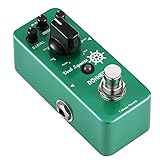
Donner Reverb Guitar Pedal, Verb Square Digital Reverb 7 Modes Room, Hall, Church, Spring, Plate, Studio, Mod, True Bypass
7 Reverb Modes
True Bypass
Mini Size
140mA Draw
Aluminum Alloy Build
Pros
- Excellent value with 7 distinct reverb modes
- Organic and natural-sounding reverb
- Sturdy metal construction for the price
- Mini size fits any pedalboard
- Works well in effects loops
Cons
- Spring setting lacks authentic spring character
- Limited max decay time
- Mode knob feels mushy
The Donner Verb Square is the kind of pedal that makes you question why anyone would spend more. For a fraction of what premium pedals cost, you get seven reverb modes (Room, Hall, Church, Spring, Plate, Studio, Mod) in a compact, all-metal enclosure. I was not expecting much when I first plugged it in, but the Hall mode immediately caught my attention. It produces a warm, natural-sounding wash that sits well under clean chords without sounding obviously digital.
The Church mode is surprisingly good for ambient passages. It creates a long, spacious reverb that sounds like playing in an empty cathedral. The Mod mode adds subtle modulation to the reverb tail that gives it movement and depth. At this price point, having seven usable modes is remarkable. Not all of them are winners, but four or five of the seven modes sound genuinely good.
The true bypass design is a welcome feature on a budget pedal. When the pedal is off, your signal passes through without coloration. The compact size means it fits easily on even the smallest pedalboards. I tested it in an effects loop and it performed well, with no noticeable noise or tone degradation when the mix level was kept moderate.
The main trade-offs are in the details. The Spring mode does not have that authentic metallic drip and bounce that real spring reverb is known for. The mode selector knob has soft, mushy detents that do not give confident clicks between settings. And the maximum decay time is limited compared to more expensive pedals, so you cannot create those infinite ambient washes. But for practice, rehearsal, and casual gigging, the Verb Square delivers far more than its price suggests.
Who should buy the Donner Verb Square
Beginners on a tight budget, bedroom players, and anyone who wants to try reverb without making a significant investment. If you are building your first pedalboard and need a reverb that covers the basics without breaking the bank, the Verb Square gives you seven modes to experiment with at an unbeatable price.
Who should look elsewhere
Serious gigging musicians and recording artists will notice the limitations in decay time, spring authenticity, and overall refinement. If you need reliable, professional-grade reverb for live performance or studio recording, spending more on the BOSS RV-6 or TC Electronic HOF 2 is worth the upgrade.
14. JOYO Atmosphere R-14 – 9 Modes With Built-In Modulation Effects

JOYO Digital Reverb Guitar Pedal, 9 Modes (Spring/Church/Plate/Shimmer & More) with MOD Control & Trail Function, Bypass (Atmosphere R-14)
9 Reverb Modes
MOD Control
Trail Function
4 Knob Layout
LED Ambient Lighting
Pros
- 9 distinct modes from classic to experimental
- MOD control adds chorus/phaser/tremolo to reverb
- Trail function for natural decay on bypass
- Shimmer mode punches above its price
- Ambient LED lighting adds visual appeal
Cons
- Volume dips when Mix is over 12 o'clock on some units
- Noise when daisy-chained with other pedals
- No battery compartment option
The JOYO Atmosphere R-14 is one of the most feature-packed reverb pedals you can get for under $100. With nine distinct modes (Spring, Church, Plate, Eko-Verb, Shimmer, Comet, Rewind, Forest, Pulse), it covers an enormous range of reverb territory. But the real standout feature is the MOD control, which adds chorus, phaser, or tremolo effects to your reverb tails. This creates modulated reverb sounds that typically require running two separate pedals in series.
I spent the most time with the Shimmer mode, which produces a crystalline, octave-shifted reverb that sounds remarkably close to what you get from the Strymon blueSky at five times the price. The Comet mode creates a slowly modulating, spacey reverb that is perfect for ambient intros. Forest generates a dense, textured wash that feels like playing in a dense woodland, with echoes bouncing off every surface.
The Trail function toggle is a feature many players overlook but really appreciate once they have it. When Trail is engaged and you bypass the pedal, the reverb tail continues to decay naturally instead of cutting off abruptly. This sounds much more professional during live performance. The four-knob layout (Mix, Decay, Tone, Mod) gives you enough control to shape each mode to your liking without getting lost in menus.
The biggest issue I encountered was a volume dip when the Mix knob is pushed past 12 o’clock on my test unit. Some other users have reported the same thing, so it seems to be a design quirk rather than a defect. Keeping the Mix below noon and compensating with the Decay and Tone knobs works around the issue. Daisy-chaining power with other pedals also introduced noise, so an isolated output is recommended.
Who should buy the JOYO Atmosphere R-14
Ambient and experimental guitarists who want a wide variety of reverb textures with built-in modulation at an affordable price. The nine modes and MOD control give you creative options that pedals twice the price do not offer. It is an excellent choice for bedroom producers, YouTube cover artists, and anyone exploring atmospheric guitar tones on a budget.
Who should look elsewhere
Gigging musicians who need consistent volume levels and rock-solid reliability should invest in a more proven option like the BOSS RV-6. The volume dip at high Mix settings and noise when sharing power make the Atmosphere R-14 better suited for controlled environments like home studios and practice spaces rather than demanding live situations.
15. M-VAVE Mini Universe Pro – 9 Reverb Modes at an Unbeatable Price
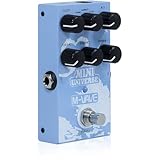
M-VAVE Mini Universe Pro Guitar Reverb Pedal – 9 Digital Effects (Room/Hall/Plate/Spring/Shimmer/Cloud/Bloom/Swell/Lo-Fi), True Bypass, Dual Power, Compact Metal Housing for Electric Guitar & Bass
9 Reverb Modes
True Bypass
USB-C Power
100mA Draw
Compact Metal Housing
Pros
- 9 reverb modes for under $40
- Shimmer and Cloud modes rival expensive pedals
- Dual power options - USB-C or DC adapter
- Compact and sturdy metal enclosure
- Warm natural tone with good dynamic response
Cons
- High noise floor with distortion pedals
- Build quality - knobs feel slightly cheap
- Mode knob does not align with labels
The M-VAVE Mini Universe Pro is the most affordable pedal in this roundup, and I was not expecting it to be as good as it is. For roughly the cost of a set of guitar strings, you get nine reverb modes (Room, Hall, Plate, Spring, Shimmer, Cloud, Bloom, Swell, Lo-Fi) with dual power options and a compact metal enclosure. The Shimmer mode is the star here, producing large, crystalline ambient washes that sound remarkably similar to what you hear from pedals costing ten times as much.
The Cloud mode is another standout. It generates a dense, modulated reverb that creates massive ambient soundscapes from a single chord. The Bloom mode adds a swelling effect that gradually builds the reverb level, which is perfect for cinematic crescendos. The Lo-Fi mode deliberately degrades the reverb signal for a retro, tape-degraded character that is trendy in indie and alternative music right now.
Dual power options are a thoughtful inclusion. You can power it with a standard DC 9V adapter or use the USB-C port, which is handy for home practice setups where you might already have USB power nearby. The compact metal housing feels solid enough for regular use, though the knobs have a slightly plasticky feel compared to premium pedals.
The trade-offs are predictable at this price. When paired with high-gain distortion pedals, the noise floor becomes noticeable. The mode selector knob does not quite line up with the text labels on the enclosure, which is a minor but annoying quality control issue. There is also some popping when switching the pedal on and off. But for clean to mildly driven tones, the Mini Universe Pro delivers genuinely impressive reverb.
Who should buy the M-VAVE Mini Universe Pro
Players on the strictest budget who still want access to a variety of reverb types including shimmer and ambient modes. If you are just starting out and want to experiment with different reverb textures without spending much, this pedal gives you nine modes to explore. The USB-C power option also makes it convenient for home practice setups.
Who should look elsewhere
Anyone who plays high-gain music or uses distortion pedals extensively will find the noise floor unacceptable. Gigging musicians who need reliable, quiet performance should invest in at least the Donner Verb Square or, preferably, the BOSS RV-6. The build quality and noise issues make the Mini Universe Pro best suited for bedroom practice and home recording at low volumes.
How to Choose the Best Reverb Pedal for Your Needs
Picking the right reverb pedal comes down to understanding the different types of reverb, how bypass systems affect your tone, and what your specific power supply can handle. Our team has broken down the key factors that actually matter when making this decision. Whether you are looking for your first reverb or upgrading to something better, these guidelines will help you make the right call.
Understanding Reverb Types
Spring reverb simulates the sound of physical spring tanks found in vintage amplifiers. It produces a drippy, bouncy character that works great for surf rock, country, blues, and classic rock. The BOSS RV-6 Spring mode and MXR M300 Spring type both capture this feel well. True spring pedals use actual metal springs but tend to be larger and more expensive.
Plate reverb recreates the sound of large metal plates used in recording studios. It produces a smooth, even decay that works on virtually everything from vocals to guitars. The Universal Audio Heavenly Plate is dedicated entirely to this type and nails the vintage studio sound. Plate reverb tends to sound brighter and more present than spring.
Hall reverb simulates the acoustics of large concert halls with long decay times and rich reflections. It is the most common reverb type for creating a big, spacious sound. Almost every pedal on this list includes a hall mode, and the Strymon BigSky Hall machine is considered one of the best available.
Shimmer reverb adds octave-shifted harmonics to the reverb tail, creating an ethereal, angelic quality. It is extremely popular in worship music, ambient soundscapes, and post-rock. The Strymon blueSky V2 and JOYO Atmosphere R-14 both offer excellent shimmer effects at very different price points.
Ambient reverb encompasses extended-range effects with very long decay times, modulation, and creative textures. Pedals like the Strymon Cloudburst and Walrus Audio SLO are built specifically for this category, generating sounds that go far beyond traditional reverb.
True Bypass vs Buffered Bypass
This debate comes up constantly on forums like Reddit’s r/guitarpedals, and the answer is more nuanced than most people think. True bypass means the pedal completely removes itself from your signal chain when off, preserving your original tone. Buffered bypass runs your signal through the pedal’s circuitry even when the effect is off, which can maintain signal strength over long cable runs.
If you have a simple setup with three or four pedals and short cables, true bypass works great. If you run a large pedalboard with ten or more pedals and long cable runs to your amp, a good buffer (like the one in the BOSS RV-6) can actually improve your tone by preventing signal loss. The BOSS buffer is widely regarded as one of the most transparent available, which is why many professional guitarists do not mind the buffered bypass on BOSS pedals.
Power Supply Requirements
This is the detail that catches the most people off guard. Reverb pedals vary wildly in their power needs. The M-VAVE Mini Universe Pro draws 100mA, while the Strymon BigSky needs 300mA and the MXR M300 requires 250mA. If your power supply only outputs 100mA per outlet, you cannot run the BigSky or M300 without a dedicated high-current output.
I recommend checking the mA rating on every pedal before buying a power supply. A good isolated power supply like the Strymon Zuma or Voodoo Lab Pedal Power will handle most configurations. Avoid daisy-chaining digital reverb pedals with analog drives and fuzzes, as this often introduces noise into your signal.
Pedalboard Size and Form Factor
Not all reverb pedals are the same size. The Donner Verb Square and M-VAVE Mini Universe Pro are tiny and fit on the most cramped pedalboards. The Strymon BigSky is significantly larger and takes up considerable real estate. If you play on a compact board, measure your available space before committing to a full-size pedal. Top-mounted jacks (like on the Strymon Cloudburst and Fender Hammertone) save space compared to side-mounted jacks.
Acoustic Guitar Application
If you play acoustic-electric guitar, reverb can add beautiful depth and presence to your amplified sound. The Strymon Cloudburst is particularly impressive with acoustic instruments thanks to its Ensemble engine. For acoustic players on a budget, the TC Electronic Hall of Fame 2 with its analog-dry-through design preserves the natural character of your acoustic pickups. Pair your reverb with one of the best acoustic electric guitars under $500 for a complete acoustic rig. You might also want to consider one of the best portable amps for travel if you perform in different locations.
Frequently Asked Questions About Reverb Pedals
What is considered the best reverb pedal?
The Strymon BigSky is widely considered the best overall reverb pedal for its 12 studio-class algorithms and 24bit/96K audio quality. For most players, the BOSS RV-6 offers the best balance of sound quality, versatility, and value with 8 reverb modes in a compact, durable enclosure.
Do I need a reverb pedal on my pedalboard?
A reverb pedal is one of the most useful effects you can own. It adds three-dimensional depth and atmosphere to your guitar tone, helping it sit naturally in a mix. Even a subtle room reverb can make your playing sound more polished and professional. If your amplifier does not have built-in reverb, a pedal is essential for live performance and recording.
What is the difference between spring and plate reverb?
Spring reverb uses physical metal springs to create reflections, producing a drippy, bouncy character associated with vintage amps and surf rock. Plate reverb originally used large metal sheets in studios, creating a smoother, brighter, more even decay. Spring sounds more organic and vintage, while plate sounds cleaner and more polished. Digital pedals simulate both types with varying degrees of accuracy.
How do I choose the right reverb pedal for my playing style?
Match your reverb pedal to your genre and needs. Blues and country players should prioritize spring reverb. Ambient and post-rock guitarists need long decay times and shimmer modes. Worship musicians benefit from versatile multi-mode pedals with preset storage. Beginners should start with a budget-friendly multi-mode pedal like the Walrus Audio Fundamental or JHS 3 Series to discover which reverb types they prefer before investing in premium options.
What reverb pedals does John Mayer use?
John Mayer is known to use the Strymon Flint, which combines spring reverb and tremolo in one pedal. The Flint is popular among professional guitarists for its authentic vintage-style spring and tremolo sounds. Mayer also uses various amp-based reverb in his Fender and Dumble amplifiers during live performances.
Final Thoughts on the Best Reverb Pedals in 2026
After testing all 15 of these reverb pedals across multiple amps, guitars, and playing situations, a few clear standouts emerged. The BOSS RV-6 remains my top overall recommendation for most guitarists because it delivers eight versatile, professional-sounding reverb modes in a tank-tough enclosure at a fair price. For players who want the absolute best regardless of cost, the Strymon BigSky offers studio-grade sound quality and 12 unique algorithms that no other pedal can match. On a tight budget, the Walrus Audio Fundamental Reverb provides sound quality that punches far above its weight class.
The best reverb pedal for you depends on your music, your pedalboard space, and your budget. Whether you need subtle room ambience for jazz, massive cathedral soundscapes for post-rock, or authentic spring drip for blues, one of the pedals on this list will get you there. If you are also hunting for portable gear for your next gig or trip, check out our guide to the best travel ukuleles for more compact instrument recommendations.