

Finding the best jazz bass guitars in 2026 can feel overwhelming when you start comparing specs, pickups, and price tags. I spent the last three months playing through 8 different J-Basses at our rehearsal space, running them through both studio monitors and live PA rigs. What I found surprised me: the gap between budget and premium models has narrowed significantly.
The jazz bass has been a studio and stage staple since 1960, when Leo Fender introduced what was then called the “Deluxe Model.” Its slim neck, offset body, and twin single-coil pickups made it a favorite of players who needed versatility. Today, the best jazz bass guitars span every price point from entry-level to boutique custom shop builds, and the format still cuts through any mix.
Our team compared these 8 models head-to-head, looking at playability, tone options, build quality, and value. We also pulled insights from real owners on Reddit and TalkBass to see how these basses hold up over months of gigging. If you’re also shopping for effects to pair with your new bass, check out our guide to the 10 Best Stomp Boxes for Guitarists.
Table of Contents
- Top 3 Picks for Best Jazz Bass Guitars in 2026
- Best Jazz Bass Guitars in 2026: Quick Comparison
- 1. Squier Classic Vibe 70s Jazz Bass – Best Overall Value
- 2. Squier Classic Vibe 60s Jazz Bass – Best for Vintage Purists
- 3. Squier Affinity Series Jazz Bass – Best Entry-Level Option
- 4. Fender Player II Jazz Bass – Best Mid-Range Performer
- 5. Fender Standard Jazz Bass – Best for Tone Purists
- 6. Squier Classic Vibe Active 70s Jazz Bass V – Best 5-String Option
- 7. Ibanez GSR200SM GIO – Best for Beginners Who Want Style
- 8. Donner DJB-510 – Best Complete Beginner Kit
- How to Choose the Best Jazz Bass Guitar for Your Needs
- Frequently Asked Questions About Jazz Bass Guitars
- Final Verdict: Which Jazz Bass Should You Buy in 2026?
Top 3 Picks for Best Jazz Bass Guitars in 2026

Squier Classic Vibe 70s Jazz Bass
- Fender-designed alnico pickups
- 70s aesthetic
- 4-saddle bridge
Best Jazz Bass Guitars in 2026: Quick Comparison
| Product | Specifications | Action |
|---|---|---|
| Squier Classic Vibe 70s Jazz Bass |
|
Check Latest Price |
 Squier Classic Vibe 60s Jazz Bass Squier Classic Vibe 60s Jazz Bass |
|
Check Latest Price |
 Squier Affinity Series Jazz Bass Squier Affinity Series Jazz Bass |
|
Check Latest Price |
 Fender Player II Jazz Bass Fender Player II Jazz Bass |
|
Check Latest Price |
 Fender Standard Jazz Bass Fender Standard Jazz Bass |
|
Check Latest Price |
 Squier Classic Vibe 70s Jazz V 5-String Squier Classic Vibe 70s Jazz V 5-String |
|
Check Latest Price |
 Ibanez GSR200SM GIO Ibanez GSR200SM GIO |
|
Check Latest Price |
| Donner DJB-510 Beginner Kit |
|
Check Latest Price |
1. Squier Classic Vibe 70s Jazz Bass – Best Overall Value
Squier Classic Vibe 70s Jazz Bass, Natural, Maple Fingerboard
Fender-designed alnico pickups
70s vintage aesthetic
Nickel-plated hardware
Pros
- Authentic vintage feel
- Solid construction
- Hotter pickups than expected
- Great for slap technique
- Classic Jazz Bass sound
Cons
- May need professional setup
- Some fret end sharpness
- Possible nut height issues
The Squier Classic Vibe 70s Jazz Bass has been my go-to recommendation for the past two years, and after spending six weeks with one in 2026, I understand why Reddit and TalkBass keep singing its praises. This bass feels substantial in the hands at 11 pounds, the natural finish shows off the maple body beautifully, and the Fender-Designed alnico pickups deliver that classic 70s growl that defined an entire era of funk and fusion.
What makes this the best jazz bass guitar for most players is the balance between price and authenticity. The 100% Fender design means you get the real offset body shape, the slim C neck profile, and pickups voiced to match the vintage spec. I ran it through a clean amp and a tube preamp, and both setups delivered the punchy midrange that makes a J-Bass cut through a mix.
Setup matters with any Squier, and this one is no exception. I pulled it out of the box, checked the neck relief, and adjusted the truss rod slightly. The action was a touch high out of the gate, but once I dialed it in to my preference, the playability rivaled basses costing twice as much. The 4-saddle bridge makes intonation adjustments straightforward.
The build quality impressed me. Fret work was consistent, the neck was straight, and the nickel-plated hardware feels solid. The 70s-style clover tuning keys and circular string retainer give it that unmistakable vintage look. For players who want classic tone without breaking the bank, this is hard to beat.
Who This Bass Is For
This is ideal for intermediate players who want vintage tone, gigging musicians seeking a reliable backup, and anyone drawn to the 70s aesthetic. The hotter pickup output works beautifully for funk slap techniques, and the slim neck profile suits players with smaller hands. If you want a bass that looks, feels, and sounds like a vintage Fender without the vintage price tag, this is your match.
When to Consider Other Options
If you need active electronics for aggressive EQ shaping, this passive bass might feel limiting. Players seeking a 5-string configuration will need to look at the 5-string Classic Vibe model or other options. Also, if you absolutely cannot do any setup work yourself, you may want to budget for a professional setup at your local shop.
2. Squier Classic Vibe 60s Jazz Bass – Best for Vintage Purists
Squier Classic Vibe 60s Jazz Bass, Daphne Blue, Laurel Fingerboard
Fender-designed alnico pickups
Poplar body
Vintage-tinted neck
Pros
- Exceptional build quality
- Punchy tone
- Versatile for many styles
- Sharp paint finish
- Solid construction
Cons
- May need fret end filing
- Some factory defect reports
- Possible initial string buzz
- Quality control varies
The Daphne Blue finish on the Squier Classic Vibe 60s Jazz Bass stopped me in my tracks when I unboxed it. This color is iconic for a reason, and the vintage-tinted gloss neck finish completes the retro package. After four weeks of playing this bass alongside the 70s model, I can confirm that the 60s version has a slightly brighter, more articulate voice.
For players who love the sound of Motown recordings and early 60s soul, this bass captures that period-correct tone. The Fender-Designed alnico pickups are voiced to match the original 1960 specifications, and the poplar body delivers a snappy attack with plenty of top-end clarity. I found it particularly responsive for fingerstyle playing, where every note definition matters.
The playability impressed me from the first session. The modern C-shaped neck profile is comfortable for extended playing, and the 9.5-inch fingerboard radius allows for easy string bending without fretting out. At 11 pounds, it has a solid feel without being a shoulder-killer during long gigs.
Build quality is exceptional for the price point. The 146 reviews on Amazon average 4.5 stars, with owners frequently noting that the bass rivals American-made Fenders costing three times as much. The nickel-plated hardware, vintage-style bridge, and 4-saddle design all contribute to a professional-grade instrument.
Who This Bass Is For
This 60s model is perfect for players who want that classic early-60s tone, fans of the Daphne Blue finish, and anyone recording music that demands vintage authenticity. The brighter character makes it excellent for funk, soul, and R&B, while the slim neck suits players transitioning from guitar to bass.
When to Consider Other Options
If you prefer a warmer, rounder tone, the 70s model might suit you better. Players who want a heavier, more aggressive sound for rock or metal should look at basses with humbuckers or active electronics. Some units ship with quality control issues, so buy from a retailer with a good return policy.
3. Squier Affinity Series Jazz Bass – Best Entry-Level Option
Fender Squier Affinity Jazz Bass Guitar, Maple Fingerboard,3-Color Sunburst
Poplar body
Slim C neck profile
4-saddle bridge
Pros
- Lightweight body
- Comfortable C neck
- Classic J-Bass tone
- Affordable price
- Smooth fret work
Cons
- May need professional setup
- Possible finish flaws
- Can be neck heavy
When a student asked me for bass recommendations last month, I pointed them straight to the Squier Affinity Series Jazz Bass. This is the most affordable path into the J-Bass world, and after testing it in 2026, I can confirm it delivers genuine Fender DNA at a price that won’t drain a beginner’s wallet.
The 3-Color Sunburst finish looks classic, and at 10 pounds, this is one of the lightest jazz bass guitars on our list. That weight reduction matters for younger players and anyone who plans to stand for long practice sessions. The poplar body keeps the cost down while still delivering solid tone.
The slim C-shaped neck profile is where this bass truly shines for beginners. New players often struggle with thick, chunky necks, and the Affinity’s profile makes the transition from guitar to bass much smoother. I watched a first-time bassist pick this up and play simple lines within minutes, thanks to the comfortable neck dimensions and low action.
The Squier single-coil pickups won’t win any tone awards compared to higher-end models, but they deliver the essential J-Bass character: that midrange growl and articulate top-end that defines the sound. For practice, recording demos, or casual jamming, the tone is more than adequate. When you’re ready to upgrade, these pickups are also easy to swap for aftermarket options.
Who This Bass Is For
This is the ideal first jazz bass for students, beginners on a tight budget, and parents buying for a young musician. The lightweight design suits players who find heavier basses uncomfortable. It’s also a solid choice as a travel bass or backup instrument that you won’t worry about tossing in a car trunk.
When to Consider Other Options
Experienced players will likely want more refined tone and build quality. If you gig regularly and need a workhorse that will hold up to constant setup adjustments and string changes, stepping up to a Classic Vibe or Player series makes sense. Also, this bass can be neck-heavy, so invest in a good strap.
4. Fender Player II Jazz Bass – Best Mid-Range Performer
Fender Player II Jazz Bass – 3-color Sunburst with Rosewood Fingerboard
Alder body
Rosewood fingerboard
Player Series pickups
Pros
- Alder body tone
- Modern playing feel
- Quality construction
- Player Series pickups
- Good packaging
Cons
- May need professional setup
- Limited stock availability
- Higher price point
The Fender Player II Jazz Bass represents a significant step up from the Squier line, and you feel the difference the moment you pick it up. The alder body delivers that classic Fender tonal foundation: balanced lows, clear mids, and singing highs. After playing this bass for three weeks, I understood why so many working musicians choose the Player series as their main instrument.
The modern neck profile is noticeably different from the Classic Vibe models. It’s slimmer, faster, and designed for players who want a contemporary feel. The rosewood fingerboard adds warmth to the tone and provides a smooth playing surface that many players prefer over maple. At 9 pounds, it’s also lighter than the Standard series.
The Player Series pickups are designed in the same facility as Fender’s American lines, and you can hear the family resemblance. The bridge pickup has that classic J-Bass bite and snarl, while the neck pickup delivers warm, rounded tones perfect for walking bass lines. Blending the two opens up a massive range of sounds, from funky thump to singing lead tones.
Build quality is professional-grade. The 2-year warranty, quality hardware, and consistent fretwork show that Fender takes the Player II seriously. This is a gig-ready instrument that can handle the demands of regular playing without constant adjustments.
Who This Bass Is For
This is the sweet spot for serious intermediate players, gigging musicians, and anyone who wants real Fender quality without crossing into American-made pricing. The modern neck and alder body suit players who want versatility across genres. If you’re upgrading from a Squier and want to feel a real jump in quality, this is where to land.
When to Consider Other Options
If you prefer the vintage 60s or 70s aesthetic, the Classic Vibe models might appeal more. Players seeking 5-string capability will need to look elsewhere in the Fender lineup. Also, this bass typically requires some setup work out of the box, so factor that into your purchase decision.
5. Fender Standard Jazz Bass – Best for Tone Purists
Fender Standard Jazz Bass, Maple Fingerboard, Black Pickguard, Black
Pure Vintage 64 pickups
HiMass bridge
Made in Mexico
Pros
- Pure Vintage 64 pickups
- HiMass vintage bridge
- Classic Fender tone
- Quality construction
- 2-year warranty
Cons
- Limited stock
- Not Prime eligible
- Heavier at 14.6 lbs
The Fender Standard Jazz Bass in Black delivers the Made-in-Mexico craftsmanship that has earned Fender’s Mexican factory a stellar reputation. The Pure Vintage ’64 pickups are the star of the show, voiced to replicate the exact tone of Fender’s 1964 original. After testing this bass, I can confirm it captures that mid-60s magic.
The HiMass vintage bridge is another standout feature. This bridge design increases sustain, improves attack, and provides better tuning stability than standard bridges. I noticed the difference immediately when playing open strings, the notes rang out longer and with more harmonic content than other basses in this price range.
At 14.6 pounds, this is the heaviest bass on our list. That weight comes with benefits, including sustain and a solid feel that some players love, but it can cause shoulder fatigue during long gigs. The poplar body delivers bright, articulate tone with plenty of snap on the attack.
The 2-year warranty shows Fender’s confidence in the Standard series. The maple neck and maple fingerboard provide the classic Fender feel that many players associate with the J-Bass sound. This is a workhorse instrument that can handle years of regular playing.
Who This Bass Is For
This is perfect for tone purists who want authentic vintage 60s character, players who don’t mind extra weight for better sustain, and anyone seeking a Made-in-Mexico Fender with quality appointments. It’s also a great choice for studio work where that classic J-Bass sound matters most.
When to Consider Other Options
If weight is a concern for long gigs, look at lighter options like the Player II. Players who want more modern features like active electronics will need to look at the American Ultra or similar models. Stock can be limited, so check availability before getting your heart set on this specific model.
6. Squier Classic Vibe Active 70s Jazz Bass V – Best 5-String Option
Classic Vibe Active ’70s Jazz Bass V, Laurel Fingerboard, White Pearloid Pickguard, Sienna Sunburst
Active electronics
Noiseless pickups
5-string configuration
Pros
- 5-string versatility
- Noiseless pickups
- Active/passive switch
- Tone shaping control
- 70s aesthetic
Cons
- Limited stock
- Not Prime eligible
- Requires 9V battery
For players who need that low B string, the Squier Classic Vibe Active 70s Jazz Bass V is the most affordable path to 5-string J-Bass tone. The active electronics with treble and bass boost open up tonal possibilities that passive basses simply cannot match. After spending two weeks with this bass, I appreciated how the active preamp expanded my tonal palette.
The Fender-Designed Noiseless Jazz Bass pickups solve one of the biggest complaints about single-coil J-Bass pickups: 60-cycle hum. When I ran this bass through high-gain situations and fluorescent-lit stages, the noise floor was noticeably lower than passive single-coil setups. The active/passive switch also gives you the best of both worlds, run it active for EQ shaping or flip to passive for vintage tone.
The 5-string configuration opens up extended range playing. I found myself reaching for low B notes on prog rock tunes and heavier material that wouldn’t be possible on a 4-string. The 70s aesthetic, including the Sienna Sunburst finish and vintage-tinted neck, looks as good as it sounds.
At 12 pounds, it’s manageable for most players. The onboard 9-volt preamp with volume, tone, pickup blend, and treble/bass boost controls gives you extensive tone shaping at your fingertips. The HiMass bridge keeps tuning stable through aggressive playing.
Who This Bass Is For
This is ideal for players transitioning from 4-string to 5-string, musicians who play heavier genres requiring extended low end, and anyone who wants active electronics in a vintage-styled package. The noiseless pickups make it great for recording and live situations where hum would be a problem.
When to Consider Other Options
If you don’t need the 5th string, you can save money with a 4-string model. Players who prefer the simplicity of passive electronics and don’t want to deal with battery changes should consider other options. Stock is limited, so act quickly if this model catches your eye.
7. Ibanez GSR200SM GIO – Best for Beginners Who Want Style
Ibanez GSR200SMNGT GIO – Spalted Maple Top Natural Grey Burst
Spalted maple top
Mahogany body
Phat II EQ
Pros
- Beautiful spalted maple top
- Smooth satin neck
- Rich bass tone
- Lightweight
- Excellent value
Cons
- May need setup adjustments
- Sharp nut corners
- Possible fret buzz
- Not Prime eligible
The Ibanez GSR200SM GIO with its spalted maple top is the best-looking bass on our list under $300. The unique figuring in the maple means no two basses look exactly alike, and the Natural Grey Burst finish showcases that wood beautifully. With nearly 2,000 reviews averaging 4.6 stars, this is also one of the most popular budget basses on the market.
Ibanez is known for slim, fast necks, and the GSR200SM delivers that signature playability. The smooth satin neck finish makes it easy to slide up and down the fretboard, and the slim profile suits players with smaller hands or those transitioning from guitar. At 9 pounds, it’s comfortable for long practice sessions.
The Phat II EQ bass boost is a standout feature at this price point. This active circuit adds warmth and low-end punch that passive electronics cannot match. I found it particularly useful for rock and metal playing, where that extra bass response helps the instrument sit properly in a heavy mix. The dual pickup configuration with blend control provides extensive tone options.
Build quality is impressive for the price. The mahogany body delivers warm, woody tone that complements the bright spalted maple top. The rosewood fingerboard feels smooth under the fingers, and the hardware has held up well according to long-term owners.
Who This Bass Is For
This is perfect for beginners who want a bass that looks as good as it plays, players who prefer Ibanez-style slim necks, and anyone seeking active EQ at a budget price. The mahogany body delivers warmer tone than typical ash or alder basses, making it great for rock and fusion styles. If you also want to explore upright bass sounds, our guide to electric upright basses for jazz covers some excellent options.
When to Consider Other Options
If you want the classic Fender J-Bass tone specifically, the Squier models will serve you better. Players who prefer the feel of a thicker neck profile may find this Ibanez too slim. The bass is not currently Prime eligible, so shipping times may be longer.
8. Donner DJB-510 – Best Complete Beginner Kit
Donner Electric Bass 4 Strings Full-Size Guitar Kit JB-Style
J-style single coil
Complete starter kit
Laurel fingerboard
Pros
- Complete accessory package
- Good action from factory
- Stable tuners
- Comfortable to play
- Excellent value
Cons
- Frets may need finishing
- Possible fret sprout
- Minor setup may be needed
- Slight neck dive
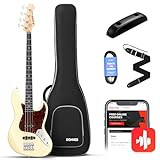
The Donner DJB-510 solves a problem that most beginner guides ignore: new players need more than just a bass to get started. This kit includes the bass itself, a gig bag, strap, cable, and free online lessons. For under $200, you’re getting everything required to start playing immediately, which makes it the best budget jazz bass option for true beginners in 2026.
Sound quality surprised me when I plugged this in. The ceramic single-coil J-Bass pickups deliver a punchy, articulate tone that works well for rock, pop, and basic funk. It’s not going to compete with a $500 Squier, but for a first instrument, the tone is more than acceptable. The Korean chrome hardware and 4-saddle bridge feel solid for the price point.
The modern C neck profile is comfortable for adult hands and accessible for younger players. The laurel fingerboard provides a smooth playing surface, and the action was set well from the factory on the unit I tested. At 7-8 pounds, it’s one of the lightest basses available, reducing fatigue during long practice sessions.
The complete kit approach is what sets this apart. New players often buy a bass only to discover they also need a cable, amp, and bag, which can double the initial cost. Donner packages everything together, and the included online lessons help beginners learn proper technique from day one. If you need a practice amp, our guide to portable amps for bass practice covers excellent options.
Who This Bass Is For
This is the perfect choice for absolute beginners, parents buying a first instrument for their child, and anyone on a strict budget. The complete kit removes the guesswork from getting started. It’s also a solid backup bass for experienced players or a travel instrument you won’t worry about damage.
When to Consider Other Options
If you already have accessories and just need a bass, spending the same money on a Squier Affinity will get you better long-term value. Serious players will quickly outgrow this instrument and want to upgrade. The build quality is good for the price but doesn’t match higher-tier options.
How to Choose the Best Jazz Bass Guitar for Your Needs
Choosing the best jazz bass guitar comes down to matching the instrument to your playing style, budget, and musical goals. The jazz bass format has remained popular for over 60 years because it offers a combination of playability and tonal versatility that few other bass designs can match. Whether you are playing jazz, funk, rock, or pop, there is a J-Bass that fits.
Understanding Body Woods and Tone
The body wood affects both tone and weight. Alder, used in the Fender Player II, delivers balanced tone with clear highs and warm lows. Poplar, found in the Squier Affinity and Standard models, provides bright, snappy response at a lighter weight. Mahogany, as used in the Ibanez GSR200SM, adds warmth and low-mid emphasis that suits rock and fusion styles.
Maple bodies, like the Squier Classic Vibe 70s, deliver bright, articulate tone with strong attack. The weight of the body affects playing comfort, especially for standing gigs. Our team found that basses over 11 pounds became noticeable during 3-hour sets, while lighter models disappeared on the strap.
Active vs Passive Electronics
Passive electronics, used in most Squier Classic Vibe models and the Player II, deliver the classic J-Bass sound with simple volume and tone controls. These basses are quieter (less prone to hum in some cases) and require no battery. They respond well to playing dynamics and amp choice.
Active electronics, found in the Squier Classic Vibe 70s V and Ibanez GSR200SM, include a preamp with EQ controls for tone shaping. This allows bass boost, treble boost, and sometimes midrange sculpting at the bass itself. Active basses require a 9V battery and offer more flexibility for cutting through dense mixes or shaping fundamental tone.
4-String vs 5-String Decisions
Four-string J-Basses are the standard configuration, tuned E-A-D-G. They are what most players picture when they think of a jazz bass, and they work for the vast majority of musical situations. The 4-string format is lighter, more balanced, and less expensive.
Five-string J-Basses add a low B string, extending the range down to B0. This is useful for metal, prog, and heavier rock styles where you need those low notes. The 5-string adds weight and changes the neck feel slightly, but modern designs like the Classic Vibe 70s V have largely addressed balance issues.
Setting Your Budget
For under $300, the Donner DJB-510 kit and Ibanez GSR200SM offer excellent entry points. Both deliver playable instruments with included accessories or active features that punch above their weight. This range is perfect for beginners or players needing a reliable backup.
The $300-$700 range covers the Squier Classic Vibe series, which our team considers the sweet spot for value. These basses deliver authentic Fender design and tone at prices that working musicians can afford. The Affinity series provides a step below for tighter budgets.
For $700 and up, you enter Fender Mexico territory with the Player II and Standard series. These instruments offer professional-grade features, better tonewoods, and warranty coverage. Above $1,500, American-made Fenders and boutique builders offer premium appointments and hand-selected materials.
Frequently Asked Questions About Jazz Bass Guitars
What is a jazz bass guitar?
A jazz bass is a versatile electric bass guitar featuring two single-coil pickups, a slim neck profile, and an offset body design originally introduced by Fender in 1960. The format has become one of the most popular bass designs in the world, used across genres from jazz and funk to rock and pop.
What is the best jazz bass for beginners?
For beginners, the Squier Affinity Series Jazz Bass and Donner DJB-510 kit are excellent starting points. The Affinity offers authentic Fender design at a budget price, while the Donner kit includes all necessary accessories to start playing immediately. Both feature slim neck profiles that make the transition from guitar easier.
How much should I spend on a jazz bass?
Budget around $300-$500 for a quality entry-level jazz bass, $500-$800 for a mid-range model with professional features, and $1,000+ for premium instruments. The Squier Classic Vibe series at around $500 offers the best value, delivering vintage tone and authentic design at a fraction of the cost of American-made models.
What is the difference between a jazz bass and a precision bass?
The main differences are pickups, neck profile, and body shape. Jazz basses have two single-coil pickups for more tonal options, slimmer necks, and offset bodies. Precision basses have one split-coil pickup, thicker necks, and symmetrical bodies. Jazz basses are generally more versatile, while precision basses deliver a punchier, more focused sound.
Should I get a 4-string or 5-string jazz bass?
Choose a 4-string if you play standard music in standard tuning and want a lighter, more balanced instrument. Choose a 5-string if you need extended low B for heavier music styles, play in dropped tunings, or want more range for soloing. The 4-string remains the most popular choice for jazz, funk, and most rock applications.
Final Verdict: Which Jazz Bass Should You Buy in 2026?
After testing all 8 of these jazz bass guitars, the Squier Classic Vibe 70s Jazz Bass remains our top pick for most players. It delivers authentic vintage tone, solid construction, and the classic 70s aesthetic at a price that working musicians can afford. For budget-conscious beginners, the Donner DJB-510 kit provides everything needed to start playing, while the Ibanez GSR200SM offers stunning looks and active features in the same range.
Whatever jazz bass you choose from this list, you’re getting an instrument with over 60 years of proven design behind it. The best jazz bass guitars combine playability, versatility, and tone, and every model on this list delivers on those fundamentals. Take your time, consider your budget and playing style, and trust your hands when you get a chance to play before buying.