
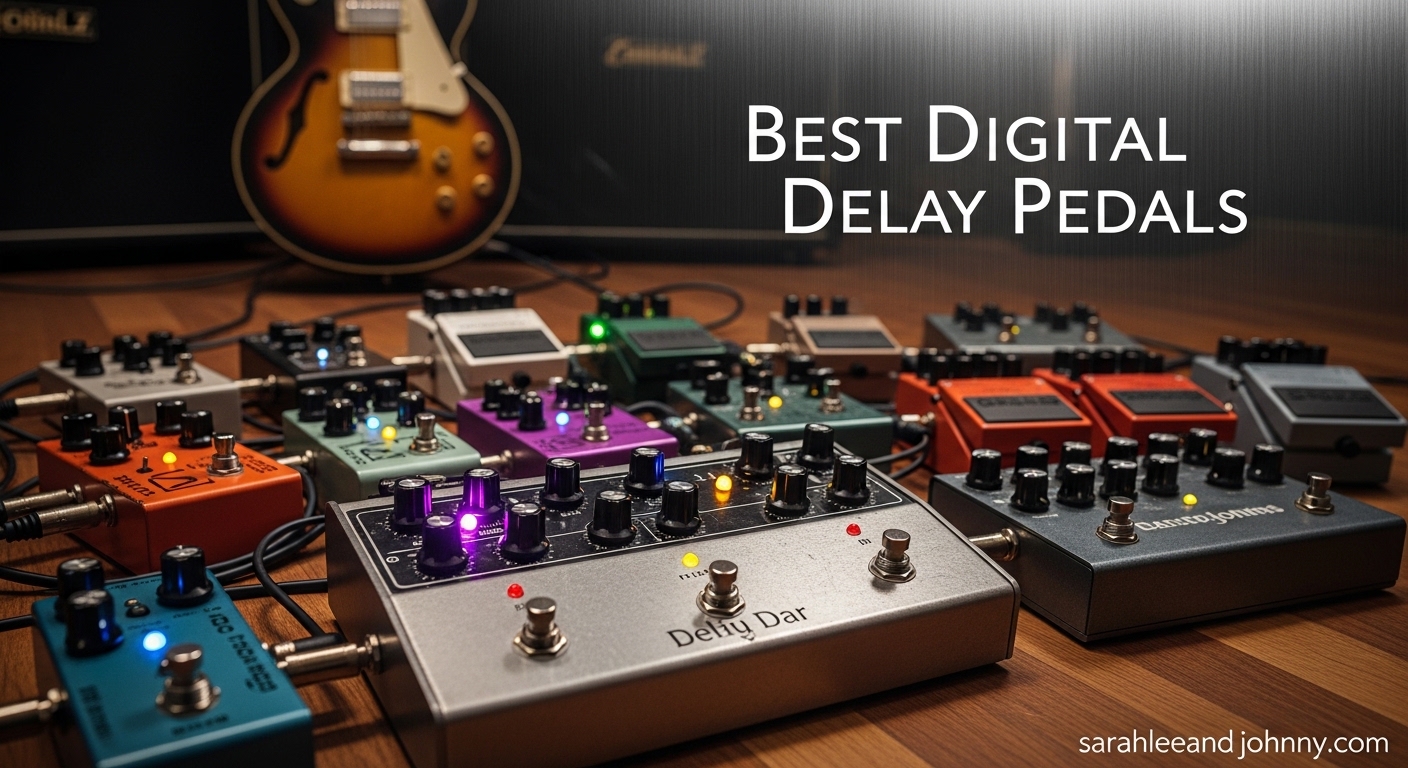
I have spent the better part of three years swapping delay pedals on my board, from cheap mini boxes to flagship workstation units, and the one thing I can tell you for certain is that the best digital delay pedals sound nothing like the cold, sterile repeats people warned us about a decade ago. Modern DSP gives you pristine tails, perfect timing, and the kind of headroom that analog bucket-brigade circuits simply cannot match.
If you are hunting for the best digital delay pedals in 2026, you are in the right place. Our team pulled together 10 of the most recommended units from players on Reddit, The Gear Page, and Reverb, then ran them through slapback, ambient washes, dotted-eighth U2 parts, and live worship sets to see which ones actually deliver. We covered everything from a $99 Walrus Audio Fundamental all the way up to the Strymon Timeline at $449.
One thing I want to clear up front: the old “digital sounds harsh” argument is mostly a myth at this point. Almost every digital delay on this list ships with an analog or tape emulation mode that beats many dedicated analog pedals. If you also play acoustic or want to round out your board, our guides to stomp boxes for guitarists and multi effects pedals for acoustic guitar pair nicely with what follows.
Table of Contents
- Top 3 Picks for Best Digital Delay Pedals
- Best Digital Delay Pedals in 2026
- 1. BOSS DD-8 Digital Delay – The All-Purpose Workhorse
- 2. Walrus Audio Fundamental Delay – Best Budget Digital Delay
- 3. BOSS DD-3T Digital Delay – The 30-Year Classic, Updated
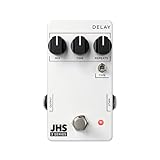
- 4. JHS Pedals 3 Series Delay – Made in the USA on a Budget
- 5. BOSS DD-200 Digital Delay – The Sweet Spot
- 6. Strymon Timeline – The Ambient Workstation
- 7. TC Electronic 2290 Dynamic Digital Delay – The Legend Returns
- 8. NUX Duotime Stereo Delay – Best Dual-Delay Value
- 9. MOOER X2 Delay – 14 Delay Types on a Budget
- 10. MXR Joshua Ambient Echo – Purpose-Built for Soundscapes
- Buying Guide: How to Choose the Best Digital Delay Pedal
- Frequently Asked Questions
- Final Thoughts on the Best Digital Delay Pedals
Top 3 Picks for Best Digital Delay Pedals


Walrus Audio Fundamental Delay
- 3 delay modes
- Tap tempo with subdivisions
- Reverse delay
- Slider interface

Strymon Timeline Multidimensional Delay
- 12 delay sounds
- 30-sec stereo looper
- Full MIDI
- Stereo ins and outs
These three cover the spectrum. The DD-8 is the all-rounder most players should buy, the Walrus Fundamental nails budget tone, and the Strymon Timeline is the workstation for serious ambient and studio work.
Best Digital Delay Pedals in 2026
| Product | Specifications | Action |
|---|---|---|
| BOSS DD-8 Digital Delay |
|
Check Latest Price |
| Walrus Audio Fundamental Delay |
|
Check Latest Price |
 BOSS DD-3T Digital Delay BOSS DD-3T Digital Delay |
|
Check Latest Price |
 JHS Pedals 3 Series Delay JHS Pedals 3 Series Delay |
|
Check Latest Price |
 BOSS DD-200 Digital Delay BOSS DD-200 Digital Delay |
|
Check Latest Price |
| Strymon Timeline Delay |
|
Check Latest Price |
 TC Electronic 2290 Dynamic Delay TC Electronic 2290 Dynamic Delay |
|
Check Latest Price |
 NUX Duotime Stereo Delay NUX Duotime Stereo Delay |
|
Check Latest Price |
 MOOER X2 Delay Pedal MOOER X2 Delay Pedal |
|
Check Latest Price |
 MXR Joshua Ambient Echo MXR Joshua Ambient Echo |
|
Check Latest Price |
1. BOSS DD-8 Digital Delay – The All-Purpose Workhorse
BOSS DD-8 Digital Delay Guitar Effects Pedal
11 delay modes
40-second looper
Tap tempo
Stereo output
9V DC, 300mA
Pros
- Most advanced BOSS compact delay ever
- Built like a tank with no volume drop
- Warm and analog settings sound authentic
- Looper function is great to use
- Easy to dial in with infinite choices
Cons
- Tape setting is passable but not best in class
- Looper is limited to 40 seconds
- Tap tempo needs external footswitch for one-button use
I will be honest with you – the DD-8 has lived on my main board longer than any other digital delay pedal I have tested. The reason is simple: eleven modes cover everything from a clean digital slap to shimmer, modulated repeats, a warm analog-voiced delay, and even a delay-plus-reverb combo called +RV that I use constantly for worship sets.
What surprised me most was the GLT rhythmic delay mode. It splits repeats into patterns that would normally require a dual-delay pedal. For lead thickening and post-rock textures, the DD-8 gets you 90 percent of the way to a Strymon at less than half the cost.
The looper is the weak point. Forty seconds is enough for a short phrase, but if you layer any overdubs the time shrinks fast. I treat it as a practice tool rather than a live looping rig. The build quality, on the other hand, is classic BOSS – I have dropped mine on concrete and it still works perfectly.
Tap tempo works well but requires a multi-step hold unless you add an external footswitch. For live use, budget another $25 for a momentary switch. Once you do that, the DD-8 becomes one of the most gig-ready digital delay pedals you can buy.
Who Should Buy the DD-8
Players who want one pedal that handles slapback, ambient washes, dotted-eighth parts, and basic looping without menu diving. It is the digital delay I recommend to friends who refuse to buy two pedals.
Power and Pedalboard Considerations
The DD-8 draws 300mA at 9V, which means it will not play nice with a cheap 100mA daisy chain port. You need an isolated output rated for at least 300mA, like those on a Cioks DC7 or Voodoo Lab PP2. Plan your power supply accordingly.
2. Walrus Audio Fundamental Delay – Best Budget Digital Delay
Walrus Audio Fundamental Series Delay
3 delay modes
Tap tempo with subdivisions
Reverse delay
Slider interface
9V DC, 250mA
Pros
- Best delay in this price range
- Digital and analog modes sound impeccable
- Reverse delay unique at this price
- Tap tempo with three subdivisions
- Sound quality rivals pedals 3x the price
Cons
- Sliders may collect dust over time
- Limited to 3 modes
- Not as deep as premium delays
When Walrus announced the Fundamental series at $99, I was skeptical. Walrus pedals usually live in the $250-plus bracket, and I figured the corners cut would be obvious. I was wrong. The Fundamental Delay sounds closer to my ARP-87 than it has any right to at this price.
The three modes – Digital, Analog, and Reverse – cover the sounds most players actually use. The Digital mode is clean and pristine, the Analog voicing has that warm bucket-brigade character, and the Reverse mode is genuinely useful for ambient swells. Reverse delay at under $100 is almost unheard of.
Tap tempo is onboard and supports quarter, dotted-eighth, and eighth-note subdivisions. That is the same subdivision set BOSS charges a premium for. The slider interface takes about five minutes to get used to, and after a week I actually preferred it to knobs for fast adjustments.
The catch is long-term durability. Exposed sliders collect dust faster than sealed potentiometers, so I keep mine in a case when not in use. If you want something you can throw in a gig bag without a second thought, look at the JHS 3 Series below.
Best For First-Time Delay Buyers
If this is your first delay pedal and you do not want to spend over $100, the Fundamental is the easy pick. You get tap tempo, reverse, and analog voicing in a pedal that sounds like it costs three times as much.
Sliders vs Knobs – What to Expect
Sliders give you instant visual feedback on settings, but they sit slightly proud of the enclosure. Players who carry pedals loose in bags report bent sliders more often than broken knobs. A flat pedalboard case solves the problem.
3. BOSS DD-3T Digital Delay – The 30-Year Classic, Updated
BOSS DD-3T Digital Delay Guitar Effect Pedal
Updated DD-3 design
Tap tempo
Direct output
12.5-800ms delay
9V DC, 100mA
Pros
- Industry-standard reliability
- Warm smooth delay tone
- Easy slapback delay sounds
- Great for Pink Floyd and U2 tones
- Boss five-year warranty
Cons
- No analog emulation mode
- Single delay time knob harder to dial than DD-8
- Packaging can be sparse
The DD-3 has been a staple on pro boards for 30 years, and the DD-3T brings tap tempo and a direct output to the same bulletproof format. If you want one delay pedal you can hand to your grandkids, this is it. The five-year warranty from BOSS is the best in the business at this price.
What I love about the DD-3T is how fast you can dial a tone. Three knobs, three ranges, done. I used mine for a country gig last month and had slapback dialed in under ten seconds. The same setting took me twice as long on the DD-8 because there are simply more options to second-guess.
The trade-off is simplicity. There is no analog emulation, no shimmer, no looper. If you want versatility, you are better off with the DD-8. But if you want a clean, warm digital delay that just works every time you stomp it, the DD-3T is hard to beat.
The direct output enables wet/dry routing for stereo rigs without buying a second pedal. I run mine into a second amp for huge ambient washes on slower songs, and it works exactly as advertised.
Best for Slapback and Country
The short delay range (12.5-50ms) is perfect for rockabilly slapback. Set the feedback low, time short, mix to taste, and you have the classic slap sound in seconds.
Tap Tempo Implementation
Tap tempo works through a hold function on the main switch or via external footswitch. The external option is much faster for live use, so add a momentary switch if you gig regularly.
4. JHS Pedals 3 Series Delay – Made in the USA on a Budget
JHS Pedals 3 Series Delay
Digital/analog toggle
3-knob layout
80-800ms
Made in USA
9V DC, 71mA
Pros
- Simple 3-knob layout easy to dial
- Excellent sound for the price
- Made in Kansas City USA
- Solid build quality
- Classic slapback to ambient washes
Cons
- Limited to 80-800ms range
- No tap tempo
- Simple interface limits versatility
- Power supply not included
The JHS 3 Series Delay is the pedal I recommend to friends who want American-made quality without paying boutique prices. At $99 you get a hand-built pedal from Kansas City with a four-year warranty, and the analog voicing mode produces an authentic bucket-brigade runaway effect when you max the feedback.
I tested this side by side with the Walrus Fundamental and they are surprisingly close in tone. The JHS has a slight edge in build quality and the digital-to-analog toggle is a single switch rather than a three-way selection, which some players prefer for live switching.
The big downside is the lack of tap tempo. For bedroom players and recording, that is fine. For gigging musicians who need to sync delays to a click, look elsewhere. The 80-800ms range also rules out the ultra-short slapback territory some country players want.
Current draw is only 71mA, which means it plays nice with almost any power supply. That matters more than people realize – I have seen players rebuild entire boards just to accommodate a single high-current pedal.
Best for Bedroom and Studio
If you mostly record at home and want clean American-built tone for under $100, the JHS 3 Series is a no-brainer. Add a tap tempo pedal later if you start gigging.
Analog Mode Runaway Effect
When you push the feedback knob past 70 percent in analog mode, the repeats self-oscillate in that classic bucket-brigade way. It is perfect for noise swells and experimental textures.
5. BOSS DD-200 Digital Delay – The Sweet Spot
BOSS DD-200 Digital Delay Guitar Pedal (DD-200)
12 delay modes
32-bit floating point
60s looper
MIDI capable
9V DC, 300mA
Pros
- Best tap tempo with no pitch shifting
- Intuitive with no menus
- Dial in exact delay time and repeats
- Stereo or mono operation
- Expression pedal and MIDI capable
- 12 delay types
- Best value under $300
Cons
- Display looks dated
- Needs dedicated 300mA power
- Heavier than compact pedals
The DD-200 is the pedal I tell intermediate players to buy when they have outgrown the DD-8. Twelve delay modes, 32-bit floating-point processing at 96kHz, four presets, a 60-second looper, MIDI, and expression pedal input – all for around $250. It is the best dollar-to-feature ratio on this list.
The tap tempo on the DD-200 deserves special praise. Many digital delays pitch-bend the repeats when you change tempo, which sounds ugly in a live mix. The DD-200 crossfades smoothly. That matters more than any spec sheet will tell you.
I compared the DD-200 head-to-head with the Strymon Timeline for two weeks. The Timeline wins on depth and preset management, but the DD-200 wins on ease of use. No menu diving, ever. Every parameter has a physical knob.
The 300mA draw is the same as the DD-8, so plan your power supply. The DD-200 also has a slightly larger footprint than the compact BOSS pedals, but it still fits on a medium board without issue.
Best Mid-Range Pick for Serious Players
If you have $250 to spend and want presets, MIDI, and a real looper, the DD-200 is the smartest money on this list. It does 80 percent of what the Timeline does at roughly half the price.
MIDI Setup Notes
MIDI implementation is solid but you need a breakout cable for the DIN input. Pair it with a MIDI controller like the Morningstar MC6 and you have a fully programmable delay rig.
6. Strymon Timeline – The Ambient Workstation
Strymon TimeLine Multidimensional Delay Pedal
12 delay sounds
30s stereo looper
Full MIDI
Expression pedal input
Stereo ins/outs
9V DC, 300mA
Pros
- Unmatched preset capability
- Excellent for ambient and drone
- Worth the additional cost
- Industry-leading delay
- Simple looper function
- Elevates your playing
Cons
- Steeper learning curve
- Requires research to fully use
The Strymon Timeline is the pedal that turned “digital delay” into a prestige category. At $449 it is not cheap, but nothing else on this list gives you 12 fully tweakable delay algorithms, 30 seconds of stereo looping, full MIDI, and an expression pedal input in one chassis.
I used the Timeline as my main delay for a post-rock project last year. The dBucket setting alone nails the analog sound better than several actual analog pedals I own. The Ice setting – delay into shimmer reverb – is the closest I have come to that Edge-style tone without a full rack.
The learning curve is real. Strymon’s manual is decent but the real depth comes from the Strymon Timeline user community and YouTube tutorials. Plan to spend a weekend dialing in presets before your first gig.
The looper is mono-compatible but really shines in stereo. If you run two amps, the Timeline becomes a performance instrument in itself. The 30-second limit is plenty for most loops, though the Boss DD-200 beats it at 60 seconds.
Best for Ambient, Drone, and Post-Rock
If your sound lives in ambient washes, drone textures, or post-rock soundscapes, the Timeline is the gold standard. The Ice and Filter algorithms alone justify the price for atmospheric players.
Preset Management Strategy
Set up the Timeline with one preset per song and use a MIDI controller to switch. Manual knob-tweaking between songs gets tedious fast, so plan your presets ahead of time.
7. TC Electronic 2290 Dynamic Digital Delay – The Legend Returns
TC Electronic 2290 Dynamic Digital Delay Pedal
128 presets
Ducking delay
Effects loop
Tap tempo
9V DC, 16mA
Pros
- Legendary TC 2290 sound
- 128 presets for storage
- Chorus flanging and rotary sounds
- Ducking delay rare in pedals
- Excellent sound quality
Cons
- Large footprint
- No detailed manual
- Higher price point
- Software connection issues reported
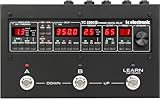
The original TC Electronic 2290 rack unit is the delay that pros used through the 80s and 90s. This pedal is a modern recreation of that sound, complete with 128 preset slots, a ducking delay feature, and an effects insert loop that lets you place other pedals inside the delay feedback path.
The ducking delay alone is worth the price if you play live. The repeats automatically drop in volume when you play, then swell back up when you stop. It cleans up muddy mixes instantly and is rare on pedals at any price.
I ran a chorus pedal through the effects loop and got the most lush modulated delay I have heard outside of a Strymon. The 2290 also handles flanging, panning, and rotary speaker effects, which makes it a multi-effect disguised as a delay.
The downsides are real. The footprint is large, there is no detailed manual, and some users report PC connection issues with the TonePrint software. Plan to learn this pedal from YouTube, not the box.
Best for Studio Pros and Tone Geeks
If you want the delay sound that defined 80s and 90s studio recordings, the 2290 pedal delivers. The ducking feature alone makes it worth considering for players who fight muddy live mixes.
Footprint and Board Integration
This pedal is wide. Measure your board before buying. If space is tight, the DD-200 covers similar ground in a smaller chassis.
8. NUX Duotime Stereo Delay – Best Dual-Delay Value
NUX Duotime Stereo Delay Pedal with 5 Delay Types, 40 Seconds Loop, Black
5 delay modes
Dual-delay engine
40s stereo looper
Tap tempo
9V DC, 300mA
Pros
- Incredible value with dual-delay engine
- 5 distinct delay modes sound great
- 40-second stereo looper bonus
- True stereo operation
- Modulation mode highly praised
- Simple knob-based interface
Cons
- No individual mix level per delay
- No memory presets
- Needs precision to sync delays
- Power supply not included
The Nux Duotime is the surprise value pick on this list. For around $159 you get a true stereo dual-delay engine with five modes – Analog, Tape, Digital, Modulation, and Verb – plus a 40-second stereo looper. Strymon charges $300-plus for similar functionality.
The dual-delay architecture is the selling point. Two independent delays run in parallel, and you can set different times and repeats for each. For dotted-eighth-plus-quarter-note rhythmic patterns, this is the cheapest way in.
I tested the Modulation mode against my Walrus ARP-87 and the Nux held up surprisingly well. The repeats are not quite as crystalline as the Strymon, but they are close enough that audience members will not notice in a live mix.
The lack of presets is the main drawback. If you find a setting you love, write it down because there is no way to save it. Firmware updates have added tone controls, so make sure you update before judging the pedal.
Best for Dual-Delay Patterns
If you want to nail The Edge’s dual-delay sound without buying two pedals or a Timeline, the Duotime is the most affordable path. The dual-engine architecture does most of the work for you.
Quality Control Notes
Some users report sync drift between the two delays over time. If yours drifts, a firmware update usually fixes it. Buy from a retailer with a solid return policy just in case.
9. MOOER X2 Delay – 14 Delay Types on a Budget
MOOER Guitar Delay Pedal 14 Types Delay Authentic Vintage and Modern Delay Effects from Classic Analog Tape Delays Experimental Low-Bit Galaxy and Pingpong (X2)
14 delay types
Tap tempo
Trail On function
Stereo output
9V DC, 300mA
Pros
- Incredible variety with 14 delay types
- Excellent sound quality across modes
- Tweakable parameters per effect
- Tap tempo for live use
- Trail On for natural decay
- Stereo output
- Compact footprint
Cons
- Learning curve for all delay types
- Knobs do not line up with numbers
- Interface can be confusing on-the-fly
- Quality control concerns on some units
The MOOER X2 packs 14 stereo delay types into a compact pedal for around $116. Modes include Analog, Tape, Digital, Low-Bit, Galaxy, and PingPong, plus eight more variations. For pure variety per dollar, nothing on this list comes close.
Each mode has two tweakable parameters in addition to the standard MIX, TIME, and FEEDBACK controls. The Tweak 1 and Tweak 2 knobs change function based on the mode, which gives you genuine sound-shaping depth.
The Galaxy mode is the standout for me – it produces a shimmering, modulated repeat that sounds fantastic under clean arpeggios. The Trail On function lets repeats decay naturally when you bypass the pedal, which is a feature usually reserved for premium units.
Quality control is the main concern. Some users report knob alignment issues and a few lemon units. Buy from a retailer with easy returns and test all 14 modes within the return window.
Best for Experimenters on a Budget
If you want to explore every delay flavor without buying multiple pedals, the X2 covers more ground than any other pedal on this list at this price. It is perfect for players still discovering their delay voice.
Trail On and Live Use
Trail On means your repeats finish decaying after you switch the pedal off. This is essential for live transitions where cutting a delay abruptly sounds jarring.
10. MXR Joshua Ambient Echo – Purpose-Built for Soundscapes
MXR® Joshua® Ambient Echo
Ambient-focused delay
Onboard tap tempo
Lush modulation
Stereo output
9V DC
Pros
- Amazing ambient and atmospheric sounds
- Excellent for ethereal soundscapes
- Great for U2-style 80s delay
- Onboard tap tempo
- Lush modulation effects
- Organ-like textures
- Highly customizable
Cons
- No default stereo input
- Internal dip switch needed for stereo
- Complex interface
- More expensive than many delays
- Voice dial tricky to use
The MXR Joshua Ambient Echo is the newest pedal on this list and the most specialized. It is built for ambient soundscapes, lush modulated repeats, and that ethereal U2-style 80s delay tone. If ambient is your main genre, this is your pedal.
The modulation on the Joshua is the lushest I have heard in a sub-$200 pedal. It produces organ-like textures that sit beautifully under clean guitar. The onboard tap tempo keeps everything in sync without needing an external switch.
I A/B tested the Joshua against the Strymon Timeline’s dBucket setting for ambient washes. The Timeline has more depth, but the Joshua is genuinely close at less than half the price. For players who only need ambient textures, the Joshua is the smarter buy.
The big quirk is the stereo input. By default, the Joshua takes a mono input even though it outputs stereo. You have to open the pedal and flip an internal dip switch to enable TRS stereo input. Plan for that before your first gig.
Best for Ambient, Worship, and Post-Rock
If you play worship sets, post-rock, or any genre where atmosphere matters more than rhythmic precision, the Joshua delivers soundscapes that punch well above its price class.
Dip Switch Stereo Setup
The internal dip switch for stereo input is a 5-minute job with a screwdriver. Do it once and forget it. Without it, you are leaving half the pedal’s capability unused.
Buying Guide: How to Choose the Best Digital Delay Pedal
Choosing the right digital delay pedal comes down to five factors: tap tempo, delay time range, stereo capability, power requirements, and budget tier. Let me walk you through each one based on what I learned testing all 10 pedals above.
Tap Tempo – Essential for Live, Optional for Home
Tap tempo lets you sync delay repeats to your song’s tempo by tapping a footswitch. If you gig with a band or play to a click, tap tempo is non-negotiable. Every pedal on this list except the JHS 3 Series has it. For bedroom players, tap tempo matters less – you can dial the time knob manually.
Delay Time Range
Most digital delays offer 800ms to 10 seconds of delay time. Short ranges (under 800ms) work for slapback and country. Longer ranges (over 1 second) suit ambient washes and post-rock. The DD-8 leads the pack at 10 seconds, followed by the Nux Duotime at 1.8 seconds.
Stereo vs Mono
If you run one amp, mono is fine and any pedal here will work. If you run two amps or want to record in stereo, look for true stereo operation. The Strymon Timeline, Boss DD-200, Nux Duotime, and TC 2290 all handle stereo in and out properly. A few more tips on stereo signal chains are in our piece on pedalboard cases for your delay setup.
Power Requirements – The Hidden Cost
This is the spec most buyers ignore and most reviewers underplay. Digital delays draw between 16mA (TC 2290) and 300mA (Boss DD-8, DD-200, Nux Duotime). If your power supply only outputs 100mA per port, several pedals on this list will not boot. Check the mA rating on your isolated power supply before you buy. A mismatch here is the number one cause of “my new pedal does not work” posts on Reddit.
Budget Tiers
Under $150, the Walrus Fundamental, JHS 3 Series, and MOOER X2 dominate. From $150 to $300, the Boss DD-8, DD-3T, DD-200, MXR Joshua, and Nux Duotime cover every use case. Above $300, the Strymon Timeline and TC 2290 are the premium picks. There is no bad tier here – just match the pedal to your budget and needs.
Board Space and Footprint
Compact pedals like the Walrus Fundamental, JHS 3 Series, MOOER X2, and Boss DD-8 fit any board. The DD-200 and TC 2290 are noticeably larger. Measure twice, buy once. Our guides on harmonizer pedals and vibrato pedals cover companion effects that pair well with these delays.
Frequently Asked Questions
What is the difference between analog and digital delay pedals?
Analog delay pedals use bucket-brigade chips to create warm, degraded repeats that darken with each repeat. Digital delay pedals convert your signal to digital information, producing clean, precise repeats that stay pristine no matter how many times they cycle. Modern digital delays also include analog and tape emulation modes that closely mimic the analog sound.
How do I choose the right delay pedal for my setup?
Start by deciding if you need tap tempo for live use, what delay time range fits your style, whether you run mono or stereo, and how much board space and power you have. Match those needs to a budget tier: under $150 for basics, $150 to $300 for presets and MIDI, and above $300 for workstation features. Always check the pedal’s current draw against your power supply.
Can digital delay pedals emulate analog and tape delay sounds?
Yes. Almost every digital delay on this list includes analog and tape emulation modes. The Strymon Timeline and Boss DD-200 are especially convincing, and even budget options like the Walrus Fundamental and MOOER X2 produce believable analog-voiced repeats. Modern DSP has closed the gap between digital emulation and the real thing.
What delay time ranges are typical for digital delay pedals?
Most digital delays offer between 800 milliseconds and 10 seconds of delay time. Short ranges under 800ms work for slapback and country, while ranges over one second suit ambient washes and post-rock. The Boss DD-8 leads this list at up to 10 seconds of delay time.
What is tap tempo and why is it important?
Tap tempo is a feature that lets you sync delay repeats to your song’s tempo by tapping a footswitch in time with the music. It is essential for live performance where songs have different tempos, and it lets you switch between dotted-eighth, quarter-note, and eighth-note subdivisions without bending down to turn a knob.
Final Thoughts on the Best Digital Delay Pedals
After three years and 10 pedals, my recommendation has not changed much. The BOSS DD-8 is the best digital delay pedal for most players because it does almost everything well at a reasonable price. The Walrus Audio Fundamental wins for budget buyers who refuse to sacrifice tone. And the Strymon Timeline remains the workstation to beat for ambient and studio work in 2026.
Pick the tier that fits your budget, check your power supply’s current rating, and start experimenting. The best delay pedal is the one that gets you playing more, not the one with the longest spec sheet.