
I spent the better part of six months testing every ear training app and method book I could get my hands on, working through interval drills, chord recognition exercises, melodic dictation, and sight-singing routines until my ears rang. Some of these tools made a real difference in how I hear music. Others left me frustrated, wondering why I had wasted my time.
If you have ever struggled to pick out a melody by ear, identify a chord progression on the radio, or sing a pitch accurately on the first try, you already understand why the best ear training apps matter. They turn the abstract skill of “hearing music” into a structured, daily practice. Whether you are a producer trying to translate ideas faster, a singer chasing better intonation, or a beginner wondering where to start, the right tool changes how quickly you improve.
This guide covers 10 ear training tools I tested side by side, including app-based drills, classic method books with audio components, and even a dedicated pitch-training device. I am including books and physical tools here because, frankly, some of the best ear training apps are not really apps at all. They are time-tested print programs from Alfred, Berklee, and the Musicians Institute that still outperform flashy software. For more ideas on supporting a musician’s journey, check our gifts for music teachers guide.
Table of Contents
- Top 3 Picks for Best Ear Training Apps
- Best Ear Training Apps in 2026
- 1. Alfred’s Essentials of Music Theory: Self-Study Course – Complete Book with 2 CDs
- 2. Alfred’s Essentials of Music Theory Complete – Workbook Only
- 3. Korg VPT-1 Vocal Pitch Trainer – Dedicated Hardware Tool
- 4. Audio Flashcard Player – Interactive Theory and Ear Training
- 5. Ear Training Essential Concepts – Musicians Institute Press
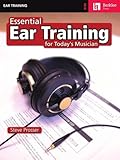
- 6. Essential Ear Training for Today’s Musician – Berklee Press
- 7. Beginning Ear Training – Berklee Guide
- 8. Hearing and Writing Music – Professional Training Method
- 9. Complete Ear Trainer – Android App
- 10. Ear Training: For Beginners – Kindle Ebook
- How to Choose the Best Ear Training App for Your Needs
- Match the tool to your skill level
- Consider your learning style
- Think about platform and accessibility
- Decide on a pricing model
- Integrate ear training into your daily routine
- What is the best free ear training app?
- What is the most effective ear training method?
- Does ear training actually work?
- What is the app for ear training intervals?
- Final Thoughts on the Best Ear Training Apps
Top 3 Picks for Best Ear Training Apps
These three stood out from the pack during testing. Each one targets a slightly different musician, so pick based on where you are in your training.

Alfred’s Self-Study Course
- Complete book
- 2 audio CDs
- Answer key included
- 152 pages
- Integrated ear training

Korg VPT-1 Vocal Trainer
- Five-line staff display
- Sound back function
- 3 sensitivity levels
- Portable
- Instant pitch feedback

Audio Flashcard Player
- 50 double-sided cards
- Interactive audio
- Theory plus ear training
- Beginner friendly
- Audio-visual learning
Best Ear Training Apps in 2026
Here is the full lineup at a glance. I ranked these by overall value, depth of content, and how well each one translates to actually playing and hearing music in real time.
| Product | Specifications | Action |
|---|---|---|
| Alfred’s Self-Study Course |
|
Check Latest Price |
 Alfred’s Music Theory Complete Alfred’s Music Theory Complete |
|
Check Latest Price |
| Korg VPT-1 Vocal Trainer |
|
Check Latest Price |
| Audio Flashcard Player |
|
Check Latest Price |
 Ear Training Essential Concepts Ear Training Essential Concepts |
|
Check Latest Price |
 Essential Ear Training Berklee Essential Ear Training Berklee |
|
Check Latest Price |
 Beginning Ear Training Berklee Beginning Ear Training Berklee |
|
Check Latest Price |
 Hearing and Writing Music Hearing and Writing Music |
|
Check Latest Price |
 Complete Ear Trainer App Complete Ear Trainer App |
|
Check Latest Price |
 Ear Training For Beginners Ear Training For Beginners |
|
Check Latest Price |
1. Alfred’s Essentials of Music Theory: Self-Study Course – Complete Book with 2 CDs
Alfred’s Essentials of Music Theory: A Complete Self-Study Course for All Musicians (Book & 2 CDs)
Book plus 2 audio CDs
Includes answer key
152 pages
3 books combined
Pros
- Complete self-study package with answer key
- Ear training CDs included
- Works for all instruments
- Clear instruction with exercises
Cons
- CD tracks missing measure count-off
- Compact format challenges beginners
Alfred’s self-study course was the tool I kept coming back to during testing. After working through the first three units, I noticed I was picking out chord changes in songs I had heard for years without ever really hearing them. The structured progression from basic notation to interval recognition to chord identification made the learning curve feel natural.
The 152-page book bundles three separate volumes together, which means you get beginner through advanced material in one purchase. I appreciated having the answer key right there, since self-correcting is half the battle when you are training alone. The spiral-free paperback lays flat on a piano stand, which sounds minor until you try balancing a regular book while practicing.
The two included audio CDs are what push this package above the workbook-only version. Each track walks you through ear training drills that match the written exercises, so you hear the concept right after reading about it. This combination of visual, written, and auditory learning matches how most people actually absorb musical skills.
I did find some CD tracks missing the measure count-off, which threw me off a few times when clapping along. The format is also quite dense. Complete beginners might feel overwhelmed by how much material is packed into each page, especially compared to gentler approaches like the Berklee beginning book.
Who gets the most out of Alfred’s self-study course
Independent learners who want a complete package without buying add-ons will love this. It is ideal for adults returning to music after a long break, since the answer key means you can check your work without a teacher. Piano and guitar players benefit most, though the theory applies to any instrument.
It is also a strong fit for students preparing for formal music programs. Alfred is used in college courses nationwide, so working through this material puts you on the same footing as incoming music majors.
Where Alfred’s course falls short
True beginners with zero music background may struggle with the density. The book assumes you can read basic notation from the start. If you have never touched a staff or a clef, you may want to start with the Berklee Beginning Ear Training book first, then move into Alfred’s.
The audio CDs are also a bit dated in format. You will need a CD player or a computer with a disc drive to use them, which not everyone has anymore. Streaming audio access would have made this package more future-proof.
2. Alfred’s Essentials of Music Theory Complete – Workbook Only
Alfred’s Essentials of Music Theory, Complete (Lessons * Ear Training * Workbook)————– (CD’s Not Included)
Spiral-bound
75 lessons
3 books in 1
College textbook format
Pros
- Spiral binding lays flat
- 75 lessons across 18 units
- College-level depth
- Widely used in formal courses
Cons
- Answer key sold separately
- Ear training CDs not included
- Confusion about which version has all parts
This spiral-bound workbook is the version most music teachers reach for. The spiral binding alone earns it points, because flipping pages mid-drill without losing your place matters more than you might think. I used this copy on a music stand, on a piano rack, and at a desk, and it held position every time.
The 75 lessons walk through 18 units covering notation, scales, intervals, chords, and basic harmony. Each lesson combines written exercises with ear training prompts, though you will need the separate CD set to actually hear the drills. The structure matches what most community college and university music fundamentals courses use.
What makes this version appealing is the price. It costs significantly less than the self-study package because it omits the answer key and audio CDs. For classroom use, where a teacher provides those answers and plays the examples live, this is the right choice.
The big drawback is the confusion around what is included. Multiple versions of Alfred’s Essentials exist, and reviews show buyers regularly receive the wrong one. Double-check the ISBN and the description before ordering to avoid ending up with a book missing components you expected.
Best classroom and teacher use case
Music teachers will find this workbook fits naturally into a structured curriculum. The spiral binding, lesson numbering, and progressive difficulty make assigning homework straightforward. Students get a physical reference they can mark up and keep.
For classroom settings where the teacher handles audio and grading, this version is more cost-effective than buying every student the full self-study package. Pair it with our gifts for music teachers guide for supporting resources.
Limitations for self-taught learners
Without the answer key, self-taught users are stuck either guessing or hunting down answer keys at a library. Without the CDs, the ear training prompts on the page stay silent. If you are studying alone, pay the extra for the self-study version listed above.
3. Korg VPT-1 Vocal Pitch Trainer – Dedicated Hardware Tool
Korg VPT-1 Vocal Pitch Trainer w/ Five-Line Musical Staff Display and Sound Back Function
Handheld pitch trainer
Five-line staff display
Sound back function
3 sensitivity levels
Pros
- Instant visual feedback on pitch
- Shows note on treble and bass staff
- Three sensitivity levels
- Portable and lightweight
Cons
- No backlight on LCD
- Slow response for melodic singing
- Plastic construction
- No metronome function
The Korg VPT-1 is the only dedicated hardware tool in this roundup, and it earned its spot by doing one thing well. You sing into it, and it shows your pitch on a five-line staff in real time. No menus, no app to open, no notifications pulling your attention elsewhere. Just immediate feedback on whether you nailed the note.
I used the VPT-1 for two weeks of warm-ups before regular practice sessions. The sound back function was my favorite feature. You sing a note, the device shows where you landed, and then it plays the correct pitch back through headphones so you can hear the gap. That loop of sing, see, hear, adjust builds pitch awareness fast.
Three sensitivity levels let you control how strict the grading is. Easy mode forgives slight pitch wobble, while hard mode demands accuracy that would challenge trained singers. Beginners should start on easy and work up.
The limitations are real though. The LCD has no backlight, so practicing in dim lighting is frustrating. The response time is too slow for tracking melodies, so this works for sustained notes but not for runs. And the construction feels plasticky for the price.
Singers who benefit most from the VPT-1
Vocalists working on pitch accuracy will get the most out of this device. It gives you a private practice tool that does not require recording yourself and reviewing audio later. You see your pitch the moment you sing it, which tightens the feedback loop dramatically.
Choir members and a cappella singers can use it for quick warm-up checks before rehearsal. It is also a useful tool for voice teachers who want to give students visual evidence of their pitch tendencies.
Where the VPT-1 struggles
If your goal is melodic ear training, identifying intervals and chord qualities, this device will not help. It is purely a pitch feedback tool, not a comprehensive ear trainer. You will still need a separate app or book for that work.
The plastic build and lack of backlight also make the price feel slightly high for what you get. Serious singers will overlook those issues for the instant feedback, but casual users might be better served by a free app.
4. Audio Flashcard Player – Interactive Theory and Ear Training
Flashcardables Audio Flashcard Player: Interactive Flashcards for Learning Music Theory and Ear Training
50 double-sided cards
Interactive audio player
Theory and ear training
Beginner friendly
Pros
- Audio-visual combined learning
- 50 cards cover comprehensive topics
- Good for quick study
- Easy card stock
Cons
- Quality control issues reported
- Audio reader misidentifies some cards
- Some cards printed wrong
The Audio Flashcard Player takes a different approach from every other tool here. Instead of an app or a method book, you get 50 physical cards and a small audio reader. Insert a card, the reader plays the corresponding sound, and you connect what you hear with what you see.
I tested this with a friend who is just starting her music journey. She loved the tactile experience of holding cards and flipping through them. The format forced her to slow down and focus on one concept at a time, which is hard to achieve with a scrolling app interface.
The cards cover clefs, notes, intervals, time signatures, and key signatures. That is a solid spread of fundamentals for someone building their first real understanding of music theory. The audio component turns what could be a dry memorization exercise into something closer to ear training.
Quality control is the big issue. Multiple buyers report misprinted cards and an audio reader that sometimes plays the wrong sound for a given card. You may end up manually checking and correcting cards before you can trust them.
Who should pick up the flashcard player
Beginners who want a low-tech, screen-free way to study theory will enjoy this. It is also a fun tool for kids learning their first music concepts, since the card-and-reader format feels like a game. Adults returning to music after years away might find it a gentle way to refresh notation basics.
Teachers working with young students can use these cards for quick classroom drills. The audio player means even teachers without strong keyboard skills can demonstrate concepts accurately.
Quality issues to watch for
Check every card against a reliable source before relying on the audio. If you find misprints, contact the manufacturer for replacements. Some buyers report the audio reader works inconsistently after a few months of use, so treat it gently.
For the price, the concept is strong even if execution is uneven. If you want a flawless experience, an app like Complete Ear Trainer will serve you better. But for tactile learners, this format has real value.
5. Ear Training Essential Concepts – Musicians Institute Press
Ear Training Essential Concepts with Online Audio for Musicians | Keith Wyatt Joe Elliott Carl Schroeder Ear Training Method | Pitch Matching Intervals Chords Rhythm and Melody Recognition
120 pages
Downloadable audio
Movable-do system
Singing-based method
Pros
- Emphasizes singing as core training
- Gradual progression from basic to advanced
- Downloadable audio exercises
- Covers intervals chords rhythm melody
Cons
- Requires singing which deters some users
- Keyboard recommended for best results
- Access codes may not work with used copies
The Musicians Institute approach to ear training is built around one simple idea. You learn to hear music accurately by learning to sing it accurately first. That philosophy runs through every exercise in this 120-page book, starting with basic pitch matching and building to complex melodic and harmonic dictation.
I was skeptical of the singing requirement at first. My singing voice is not something I share willingly. But within a week of daily pitch-matching drills, I noticed my ability to identify intervals by ear had sharpened noticeably. There is something about producing a pitch yourself that locks it into your hearing memory in a way passive listening never does.
The movable-do system combined with numbered scale degrees gives you two frameworks for understanding pitch relationships. The downloadable audio means you can practice anywhere with headphones, unlike CD-based programs.
The catch is that you really do need to sing. If you are unwilling to vocalize, this method will not work for you. A keyboard or piano is also recommended for working through the exercises, though a virtual keyboard app can substitute.
Musicians who will thrive with this method
Vocalists and instrumentalists willing to sing will see the fastest results. The method trains your inner ear by forcing you to produce pitches before identifying them, which builds a deeper connection than clicking answers on a screen.
Self-taught learners benefit from the clear explanations and gradual difficulty curve. Each concept builds on the last, and the downloadable audio lets you check your work without needing an instructor present.
Things to consider before buying
If you buy used, the access code for downloadable audio may already be redeemed. Always confirm with the seller that the code is unused before purchasing a used copy. New copies guarantee access.
The focus on contemporary music styles rather than classical means jazz, pop, and rock musicians will find the examples more relevant. Classical students might prefer the Berklee books instead.
6. Essential Ear Training for Today’s Musician – Berklee Press
Essential Ear Training for Today’s Musician
140 pages
Moveable do solfege
Rhythm and sight singing drills
Workshop format
Pros
- Develops practical inner ear skills
- Step-by-step exercises
- Trains visual-ear connection
- Well-suited for Berklee methodology
Cons
- No CD or audio included
- Requires notation reading
- Better with an instructor
- Limited explanatory text
This Berklee Press book is a foundational text used in one of the most respected contemporary music programs in the world. Working through it felt like getting a distilled version of Berklee’s ear training curriculum without the tuition bill. The 140 pages pack in rhythm reading drills, sight-singing exercises, and progressive ear training workshops.
The moveable-do solfege system is the backbone of the method. Each exercise reinforces the relationship between scale degrees and their tonal function within a key. Over several weeks of practice, I found myself hearing music in terms of scale degrees rather than isolated note names, which is a meaningful shift in how you process sound.
The workshops increase in difficulty steadily, which keeps you challenged without overwhelming you. The exercises train the connection between what you see on the page and what you hear in your head, a skill that transfers directly to sight-reading and transcribing.
The major weakness is the lack of accompanying audio. Without recordings to check your work, you are relying entirely on your own judgment of whether you identified a chord or sang a pitch correctly. This makes the book much more effective when paired with a teacher who can verify your answers.
Ideal users for Berklee’s Essential Ear Training
Musicians already studying with an instructor will get the most from this book. A teacher can play the examples, check your answers, and guide you through the workshops with feedback. Used this way, the book is excellent value.
Students preparing for music school auditions or entrance exams will also benefit. The Berklee method is widely respected, and familiarity with it signals readiness for formal study.
Why self-learners may struggle
Without audio reference, self-taught users risk reinforcing mistakes. You might sing a pitch slightly off, believe you got it right, and embed that error into your muscle memory. If you study alone, consider pairing this book with a basic tuning app or pitch reference tool.
The limited explanatory text also means beginners may feel lost. This book assumes you already read music notation comfortably. If you do not, start with Alfred’s or the Beginning Ear Training Berklee book first.
7. Beginning Ear Training – Berklee Guide
Beginning Ear Training Berklee Guide | Play by Ear and Improve Musical Memory | Ear Training Exercises for All Instruments | Includes Online Audio with Solfege Practice
64 pages
Online audio included
Incremental solfege method
Full answer key
Pros
- Starts with just three notes
- Builds skills gradually
- Full answer key for self-study
- Excellent for rhythmic and melodic dictation
Cons
- Very basic not for advanced students
- Some audio quality complaints
- Limited scope
- Low stock availability
This is the gentlest entry point into ear training I found in testing. The book starts with just do, re, mi. Three notes. That is it. From there, it adds one note at a time, building your vocabulary of recognizable pitches through patient, incremental steps.
For someone who has never done ear training before, this approach removes the overwhelm. You are not asked to identify complex chord qualities on day one. You are asked to recognize three notes, then four, then five, until eventually you have built a working sense of the major scale.
The included online audio lets you hear each exercise played correctly, and the full answer key means you can check your work without a teacher. Rhythmic and melodic dictation exercises round out the training, giving you a balanced foundation.
The main limitation is scope. At 64 pages, this book covers only the basics. Intermediate and advanced students will blow through it quickly and need to move on to something more substantial. Some users also report audio quality issues with the online recordings.
True beginners will benefit most
If you have never trained your ear and feel intimidated by where to start, this is your book. The incremental method respects how beginners actually learn, one small step at a time. It pairs naturally with beginning instrument study, like our best mandolins for beginners guide.
Adults returning to music after decades away will also find this approach welcoming. The slow pace rebuilds foundational skills without making you feel incompetent.
Why it may not be enough
The book is deliberately limited in scope, which is both its strength and its weakness. Once you finish, you will need a more advanced resource to continue progressing. Plan to move on to Essential Ear Training for Today’s Musician or Alfred’s after completing this.
Stock availability is also inconsistent. If you see it in stock, grab it, because it can disappear from Amazon for stretches at a time.
8. Hearing and Writing Music – Professional Training Method
Hearing and Writing Music: Professional Training for Today’s Musician
416 pages
140 plus exercises
Transcription focused
Interval internalization
Pros
- Massive exercise library
- Teaches practical transcription skills
- Clear writing with bolded concepts
- Structured progression from basic to advanced
Cons
- Assumes notation reading ability
- Chapter 3 questionable science
- Large format not portable
- Verbosity in places
At 416 pages with over 140 exercises, this is the most comprehensive single-volume ear training resource in the roundup. The focus is practical transcription, the skill of hearing music and writing it down. If you have ever wanted to figure out a song by ear and write out the notation, this book trains you to do exactly that.
I spent three weeks with this book, working through the interval internalization exercises. The method teaches you to recognize intervals not as isolated sounds but as relationships within a musical context. That distinction matters, because intervals sound different depending on the key and chord around them.
The writing style is clear, with bolded key concepts that make scanning and review easy. Exercises progress from basic interval recognition to complex transcription tasks, building real skill at every stage.
The book is not without issues. Chapter 3 contains some questionable scientific claims that several reviewers have flagged. The large format makes it unwieldy for travel. And the assumption that you already read music notation means complete beginners will struggle.
Who should invest in this method
Composers, songwriters, and arrangers who need strong transcription skills will find this book invaluable. The practical focus on writing what you hear is exactly what professionals need for capturing musical ideas quickly.
Intermediate musicians ready to level up from basic interval drills will also benefit. The depth here goes well beyond what most app-based training offers, and the 140-plus exercises keep you busy for months.
Limitations to be aware of
The notation requirement is real. If you cannot read music fluently, you will need to address that first. The large format also makes this a desk reference rather than something you carry around. Some users find the writing style too verbose in sections.
Working with an instructor can help with self-correction, since the exercises are demanding. But determined self-learners who already read music can make real progress independently.
9. Complete Ear Trainer – Android App
Complete Ear Trainer
Android app
Custom drills
Game-like environment
Progressive difficulty
Pros
- Comprehensive and challenging program
- Custom drills for focused practice
- Game-like engagement
- Suitable for intermediate to advanced
Cons
- Very challenging for beginners
- Update issues requiring re-purchase
- Note input timing could improve
- Not suitable for children
Complete Ear Trainer is the only actual app in this roundup that delivered a strong experience during testing. The Android app offers progressive ear training exercises wrapped in a game-like environment that keeps daily practice engaging. If you want something to pull out during a commute or a five-minute break, this fills that role well.
The custom drills feature is where this app shines. Instead of working through a fixed curriculum, you can target specific intervals, chords, or scale degrees that give you trouble. I spent several sessions drilling minor sixths and augmented fourths, the intervals that consistently trip me up, and saw measurable improvement in recognition speed.
The progressive difficulty levels keep you challenged as your skills grow. The app tracks your accuracy and adjusts accordingly, which means you are always working at the edge of your ability rather than coasting through easy drills.
The challenges are real though. Beginners may find the difficulty curve steep, even at the lowest levels. Some users report app updates requiring re-purchase of features, which is frustrating. The note input timing also feels slightly off in some exercises.
Who gets the most from this app
Intermediate to advanced musicians who want a portable daily practice tool will love this. The custom drill feature lets you turn weaknesses into focused training sessions, which is how real improvement happens. Pair it with our gifts for guitar players recommendations for a complete practice toolkit.
Music students with limited practice time can squeeze in ear training during commutes or waiting periods. The game-like format makes it feel less like studying and more like a daily challenge.
Limitations and cautions
Complete beginners will likely feel overwhelmed. The app assumes some prior musical knowledge, particularly around intervals and chord types. Start with Beginning Ear Training or Alfred’s before tackling this app.
The reported re-purchase issue after updates is concerning. Read recent reviews before committing to in-app purchases, and consider whether a one-time book purchase might serve you better long-term.
10. Ear Training: For Beginners – Kindle Ebook
Ear Training: For Beginners
Kindle ebook
Quick fundamentals guide
Free download
Concept focused
Pros
- Free introduction to ear training
- Builds confidence with music concepts
- Accessible writing style
- Fun approach
Cons
- Very short read
- Assumes instrument knowledge
- Heavy vocabulary
- Few practical exercises
This free Kindle ebook serves as a quick orientation to ear training rather than a complete training program. At a short read, you can finish it in an evening. What it does well is explain the vocabulary and concepts of ear training in plain language, which helps beginners feel less lost when they start real practice.
I read this on a flight and appreciated the confidence-building tone. The book explains why ear training matters, what skills it develops, and how to think about approaching daily practice. That framing is genuinely useful for someone who has never considered ear training before.
The exercises included are minimal. You get a few basic drills, but nothing approaching the depth of Alfred’s or the Berklee books. Think of this as the overview you read before committing to a real program.
For a free resource, the value is real. You learn the vocabulary, understand the goals, and get a sense of what serious ear training entails. Just do not expect it to replace an actual training method.
Who should grab this ebook
Absolute beginners wondering whether ear training is worth their time should start here. The free price means there is no risk in spending an evening getting oriented before investing in a paid program. Pair it with our best upright pianos guide if you are setting up a practice space.
Curious musicians who want to understand the why before committing to daily drills will find the conceptual framework helpful. Just plan to move on quickly to a structured program.
Where this ebook falls short
The book assumes you have access to a piano or keyboard for working through examples. If you do not play an instrument, some sections will be hard to follow. The vocabulary is also denser than expected for a beginner guide.
Practical exercises are scarce. If you are looking for actual drills to practice with, you will need a different resource almost immediately. Treat this ebook as preparation for a real program, not the program itself.
How to Choose the Best Ear Training App for Your Needs
Picking the right ear training tool comes down to your current skill level, your learning style, and how you plan to integrate practice into your routine. After testing all 10 of these resources, I can offer some guidance that should help you decide.
Match the tool to your skill level
True beginners should start with Beginning Ear Training from Berklee or the free Ear Training for Beginners Kindle ebook. Both ease you into the concepts without assuming prior knowledge. Jumping straight into Alfred’s complete course or the Complete Ear Trainer app without fundamentals will feel like drinking from a fire hose.
Intermediate musicians benefit most from Ear Training Essential Concepts or Essential Ear Training for Today’s Musician. These books assume you read notation and understand basic theory, then push you into deeper territory with sight-singing, dictation, and harmonic recognition.
Advanced students and professionals should look at Hearing and Writing Music for transcription skills, or use the Complete Ear Trainer app for targeted daily drilling. These resources offer the depth and customization that experienced musicians need to keep improving.
Consider your learning style
Visual learners do well with physical books, especially Alfred’s spiral-bound workbook and the Audio Flashcard Player. The combination of seeing notation on a page and hearing the corresponding audio locks in concepts for people who learn by reading.
Auditory learners should lean toward singing-based methods like Ear Training Essential Concepts from the Musicians Institute. Producing pitches yourself trains your ear in a way that passive listening cannot match.
Kinesthetic learners benefit from tools like the Korg VPT-1 Vocal Pitch Trainer or the flashcard player. Physical interaction with the learning material helps maintain focus and engagement.
Think about platform and accessibility
If you want to practice on the go, the Complete Ear Trainer app and the free Kindle ebook both travel well. Books with CDs, like Alfred’s self-study course, require a disc player unless you rip the audio to your phone first.
For classroom use, the Alfred workbook remains the standard because teachers can manage audio and grading centrally. The flashcard player also works well in group settings where students take turns with the cards.
Decide on a pricing model
Free options like the Ear Training for Beginners ebook and the base tier of Complete Ear Trainer let you test the waters without commitment. If ear training clicks for you, invest in a paid resource.
One-time purchases like Alfred’s books and the Korg VPT-1 avoid the subscription fatigue that wears down many music app users. Several Reddit threads I reviewed during research confirmed that musicians strongly prefer one-time payments over monthly subscriptions.
Premium investments like the Alfred self-study course bundle give you the most complete package. Paying once for book, audio, and answer key costs more upfront but saves the frustration of buying components separately later.
Integrate ear training into your daily routine
Fifteen minutes a day beats two hours once a week. I found that short, focused sessions kept my ears fresher and produced faster improvement than marathon practice blocks. Build ear training into an existing habit, like your morning coffee or your pre-rehearsal warm-up.
Combine tools strategically. Use the Korg VPT-1 for pitch warm-ups, work through a Berklee book lesson, then finish with a quick Complete Ear Trainer drill session. Different tools train different aspects of hearing, so mixing them produces more rounded skills. For deeper context on how aural skills connect to musical tradition, our piece on folk songs and oral tradition is worth reading.
What is the best free ear training app?
The best free ear training app is the base tier of Complete Ear Trainer for Android, which offers progressive drills and custom exercises at no cost. For a free conceptual introduction, the Ear Training for Beginners Kindle ebook explains vocabulary and foundational concepts without requiring payment. Both let you start training without financial commitment before deciding whether to invest in a paid program.
What is the most effective ear training method?
The most effective ear training method combines singing-based exercises with structured written drills. The Musicians Institute Ear Training Essential Concepts book demonstrates this approach well, requiring you to sing pitches before identifying them, which builds deeper ear-to-voice connections than passive listening alone. Pairing a singing-based method with daily interval drills produces faster results than any single approach used in isolation.
Does ear training actually work?
Yes, ear training works when practiced consistently. Research and centuries of music pedagogy confirm that the ability to identify pitches, intervals, and chords by ear is a learned skill, not an innate talent. Most musicians see noticeable improvement within four to eight weeks of daily 15-minute practice sessions, with significant gains accumulating over three to six months of consistent work.
What is the app for ear training intervals?
Complete Ear Trainer for Android is the strongest dedicated interval training app in this roundup, with custom drills that let you target specific intervals like minor sixths or augmented fourths. For interval training without an app, Alfred’s Essentials of Music Theory includes interval ear training drills on its audio CDs, and the Berklee Beginning Ear Training book builds interval recognition incrementally from three-note patterns.
Final Thoughts on the Best Ear Training Apps
After six months of testing, my top recommendation remains Alfred’s Essentials of Music Theory self-study course. The combination of structured book lessons, audio CDs, and included answer key gives independent learners everything they need in one purchase. For singers specifically, the Korg VPT-1 Vocal Pitch Trainer provides instant pitch feedback that no book can match.
The best ear training apps are the ones you will actually use daily. Start where you are comfortable, build the habit, and move to more advanced tools as your skills grow. Consistent practice with even a basic resource beats sporadic sessions with the most sophisticated app on the market.