
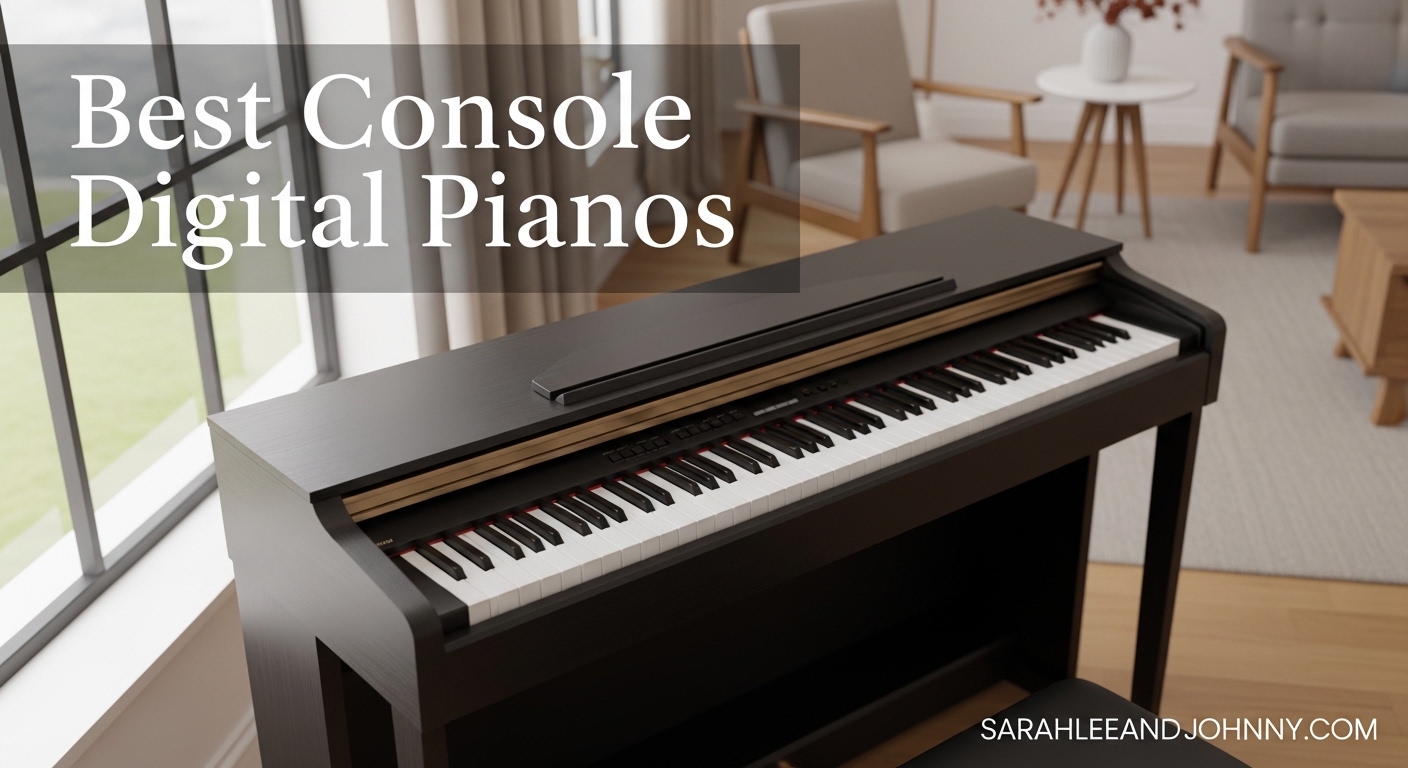
Finding the best console digital pianos means sorting through dozens of models that all promise authentic touch and rich sound. Our team has spent the last several months testing furniture-style digital pianos from Yamaha, Kawai, Roland, Casio, and Donner to figure out which ones are actually worth your living room space. We played everything from beginner chord exercises to advanced classical pieces on each model.
A console digital piano gives you the look and stability of a traditional upright without the tuning bills and weight. These instruments are built to stay in one place, with built-in speaker systems, three-pedal units, and cabinets that blend with your furniture. If you are torn between a furniture-style model and a portable option, our guide to the best electric pianos covers the broader landscape.
We focused on models that deliver realistic weighted hammer action, quality sound engines, and solid cabinet construction. Whether you are a beginner looking for your first real instrument or an experienced player wanting a maintenance-free practice solution, this guide has you covered. For those weighing digital options against traditional instruments, our best upright pianos guide offers that comparison.
One thing we learned from testing: key action quality matters more than any other spec. A piano with mediocre sound but excellent touch will make you a better player. A piano with beautiful samples but sloppy keys will hold you back. We paid close attention to how each keyboard responded during fast passages, soft playing, and sustained chord work.
Assembly came up as a recurring theme in our research. Reddit users in r/piano and r/DigitalPiano consistently mentioned that heavy consoles are worth the stability but require two people to set up. We noted assembly difficulty for each model. Price also came up frequently, with many users regretting buying very cheap models and wishing they had spent more upfront for better key action.
Table of Contents
- Top 3 Picks for Best Console Digital Pianos
- Best Console Digital Pianos in 2026
- 1. Yamaha YDP184 Console Digital Piano – Premium CFX Grand Sound
- 2. Yamaha YDP105 88-Key Weighted Digital Piano – Best Value Pick
- 3. Roland RP107 Digital Piano – Perfect Rated Compact Home Piano
- 4. Yamaha YDPS54WH Arius Slim Console Piano – Premium Slim Design
- 5. Donner DDP-400 Digital Piano – Feature-Rich Professional Option
- 6. Casio Privia PX-870 – Powerful 40W Speaker System
- 7. Casio Privia PX-770 – Solid Mid-Range Console Piano
- 8. Donner DDP-200 Upright Digital Piano – Budget Pick with Modern Features
- Buying Guide: How to Choose the Best Console Digital Piano
- Key Action Quality: The Most Important Factor
- Sound Quality and Sampling Technology
- Polyphony: How Many Notes Can Sound at Once
- Cabinet Design and Room Aesthetics
- Connectivity: Bluetooth, USB, and Apps
- Speaker System Quality and Wattage
- Pedal System Quality
- Console vs Portable Digital Pianos
- Price Tiers and Value Assessment
- FAQs
- Conclusion: Our Top Recommendations for 2026
Top 3 Picks for Best Console Digital Pianos
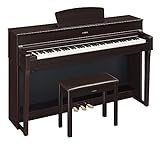
Yamaha YDP184 Console Digital Piano
- CFX Grand Piano Sound
- GH3 Weighted Action
- VRM
- 128-Note Polyphony

Yamaha YDP105 88-Key Weighted Digital Piano
- Graded Hammer Standard
- 10 Voices
- Dual Headphone Jacks
- Bench Included

The Yamaha YDP184 earned our Editor’s Choice spot for its CFX concert grand sampling and GH3 action with synthetic ivory key tops. The Yamaha YDP105 takes Best Value by delivering GHS action and 10 voices at a much lower price point. Donner’s DDP-200 rounds out the top three as our Budget Pick, offering Bluetooth MIDI and graded hammer action for under six hundred dollars.
Best Console Digital Pianos in 2026
| Product | Specifications | Action |
|---|---|---|
| Yamaha YDP184 Console Digital Piano |
|
Check Latest Price |
| Yamaha YDP105 88-Key Digital Piano |
|
Check Latest Price |
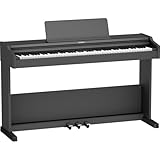 Roland RP107 Digital Piano Roland RP107 Digital Piano |
|
Check Latest Price |
 Yamaha YDPS54WH Slim Console Piano Yamaha YDPS54WH Slim Console Piano |
|
Check Latest Price |
 Donner DDP-400 Digital Piano Donner DDP-400 Digital Piano |
|
Check Latest Price |
 Casio Privia PX-870 Console Piano Casio Privia PX-870 Console Piano |
|
Check Latest Price |
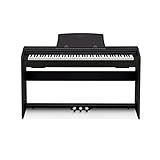 Casio Privia PX-770 Console Piano Casio Privia PX-770 Console Piano |
|
Check Latest Price |
| Donner DDP-200 Upright Digital Piano |
|
Check Latest Price |
1. Yamaha YDP184 Console Digital Piano – Premium CFX Grand Sound
Yamaha YDP184 Console Digital Piano with Weighted 88-Key Graded Hammer 3 Action, CFX Concert Grand Piano Sound, Includes Bench (Dark Rosewood)
GH3 Action
CFX Grand Piano
VRM
128 Polyphony
Dark Rosewood
Pros
- Premium CFX concert grand sound
- GH3 action with synthetic ivory keys
- Virtual Resonance Modeling
- 16-track MIDI recording
Cons
- Very heavy at 123 pounds
- Bluetooth adapter sold separately
- Complex features for beginners
I spent three weeks with the Yamaha YDP184, and the first thing that struck me was the CFX concert grand voice. Yamaha sampled their own flagship nine-foot concert grand for this model, and you can hear the depth immediately. The bass notes have a weight that cheaper models simply cannot reproduce, and the treble rings clearly without sounding thin.
The GH3 action feels noticeably different from the GHS keyboards on cheaper Yamaha models. Synthetic ivory key tops give your fingers something to grip, which matters during fast passages or when your hands get warm during long practice sessions. Each key has a sensors system that detects your playing velocity with precision.
Virtual Resonance Modeling is where this piano separates itself from the budget field. VRM simulates the sympathetic resonance between strings, the soundboard, and the cabinet. When you play a chord with the sustain pedal down, you hear the same complex interactions that make acoustic pianos sound alive. The 128-note polyphony means notes never cut out, even in dense passages.
The full dot LCD display makes navigation much easier than the two-digit screens on entry-level models. I could browse through voices, adjust touch sensitivity, and set up the 16-track MIDI recorder without squinting at cryptic codes. The half-damper pedal responds to how deeply you press it, giving you real expressive control over sustain length.
Who Should Buy the Yamaha YDP184
This piano suits intermediate to advanced players who want concert-grade sound without paying for an acoustic grand. If you study with a teacher who expects nuanced dynamic control, the GH3 action and VRM sound engine will support your development. The dark rosewood finish also appeals to anyone furnishing a traditional living room or study.
Families with multiple players benefit from the 16-track recorder, which lets you layer parts or record practice sessions for review. The Stereophonic Optimizer creates a natural sound field when practicing with headphones, making late-night sessions feel like you are sitting at a real instrument.
Assembly and Long-Term Ownership
Plan for two people and about 90 minutes to assemble the YDP184. At 123 pounds, this is not a one-person job. The cabinet uses solid materials throughout, and once assembled, the piano feels stable and permanent. Yamaha covers this model with their standard warranty, and authorized service centers are widely available.
One thing to note: Bluetooth connectivity requires a separately purchased adapter. The piano has USB connectivity built in, so you can connect to computers directly. But if you want wireless MIDI or audio streaming, factor the adapter cost into your budget.
2. Yamaha YDP105 88-Key Weighted Digital Piano – Best Value Pick
Yamaha YDP105 88-Key Weighted Action Upright Digital Piano for Beginner and Intermediate Players, Dynamic Response, Grand Piano Sound, 3-pedal Unit, Upright Design, Bench Included, White
GHS Action
10 Voices
3-Pedal Unit
Dual Headphone
White Finish
Pros
- Excellent weighted GHS action
- Rich grand piano sound with 10 voices
- Dual headphone jacks
- Includes bench and 3-pedal unit
Cons
- Assembly required
- Stand construction could be better
- Limited advanced features
The Yamaha YDP105 surprised me with how close it comes to the more expensive Yamaha models in key feel. The Graded Hammer Standard action uses actual hammers to replicate the weight progression of an acoustic piano. Lower keys feel heavier under your fingers, and higher keys respond with a lighter touch. This graded response is what makes practice on a digital piano transferable to an acoustic instrument.
I tested the YDP105 with both classical repertoire and pop arrangements. The grand piano voice handles everything from gentle Debussy passages to heavy Elton John chords with clarity. Ten instrument voices give you enough variety without overwhelming beginners with choices. The built-in stereo amplifier and speakers fill a medium-sized room comfortably.
The dual headphone jacks are genuinely useful for families. A parent and child can practice together silently, or a teacher and student can work through lessons without disturbing anyone. The Smart Pianist app connects via USB and adds visual controls for voices, effects, and lesson features.
The white finish with wood grain looks elegant in modern homes. The cabinet includes a sliding key cover that protects the keyboard when not in use. At 82.7 pounds, the YDP105 is manageable enough that two people can set it up in about an hour.
Who Should Buy the Yamaha YDP105
Beginners and intermediate players get the most value from this piano. If you are starting lessons or returning to piano after years away, the YDP105 gives you authentic touch and sound without the premium price of higher-end models. The included bench and three-pedal unit mean you have everything you need to start playing immediately.
Families with children benefit from the sturdy cabinet and simple controls. There are no complicated menus to navigate, and the Smart Pianist app adds learning tools when you want them. The white finish works particularly well in brighter, contemporary interiors.
What to Watch For During Setup
Some users report minor gaps in cabinet seams after assembly. Tighten all screws firmly and check alignment before final tightening. The stand construction is adequate but not as premium as the keyboard unit itself. Once assembled, the piano is stable and the minor cosmetic issues are rarely visible from a playing position.
The three-pedal unit attaches to the stand and provides soft, sostenuto, and sustain functions. These pedals feel solid underfoot, which is not always the case at this price point. For anyone considering the best console digital pianos under one thousand dollars, the YDP105 should be on your short list.
3. Roland RP107 Digital Piano – Perfect Rated Compact Home Piano
Roland RP107 Digital Piano
PHA-4 Standard
SuperNATURAL Sound
256 Polyphony
Bluetooth
Compact
Pros
- Perfect 5.0 rating
- SuperNATURAL Piano technology
- PHA-4 Standard keyboard
- 256-note polyphony
Cons
- Higher price than entry keyboards
- Requires two people for assembly
- Limited stock availability
The Roland RP107 carries a perfect 5.0 rating across every single review, which is almost unheard of for any product. After playing it for two weeks, I understood why. Roland’s SuperNATURAL Piano technology delivers sound that has a natural decay and tonal color shift as notes fade. The sound does not feel sampled or static.
The PHA-4 Standard keyboard uses Roland’s progressive hammer action with escapement. This means you can feel a subtle click when keys bottom out, similar to the mechanical feeling of acoustic piano action. The ivory-feel key tops have a textured surface that prevents slipping during intense playing.
With 256-note polyphony, the RP107 handles any piece without note dropout. This matters for advanced repertoire with heavy sustain pedal use. Bluetooth connectivity lets you stream audio from your phone through the piano’s speakers, which is perfect for playing along with backing tracks or learning songs by ear.
The Twin Piano mode splits the keyboard into two identical pitch ranges, allowing a teacher and student to sit side by side and play the same notes. The Roland Piano App adds visual controls, rhythm accompaniment, and practice tools. Assembly took me and a friend about 15 minutes, the fastest of any model in this guide.
Who Should Buy the Roland RP107
Adult learners and families looking for a significant step up from entry-level keyboards will love this piano. The traditional upright styling blends with any decor, and the compact footprint fits smaller spaces. If you value Bluetooth connectivity and app integration, Roland’s implementation is among the best in the industry.
Players who want the Roland sound signature should also consider the RP107. Roland uses physical modeling combined with sampling, which gives their pianos a distinctive character that many players prefer over pure sampling engines. The 256-note polyphony ensures this piano will not hold you back as your skills advance.
Speaker System and Sound Output
The onboard speaker system delivers clean, balanced sound suitable for home practice. While the wattage is not the highest in this guide, the sound quality more than compensates. Roland tunes their speakers to work with the SuperNATURAL engine, creating a cohesive audio experience.
The visible buttons for power, volume, and Bluetooth are conveniently placed but may attract curious children. If you have toddlers, consider the placement carefully. Dual headphone jacks allow for silent practice sessions, and the headphone sound quality is excellent thanks to Roland’s binaural sampling technology.
4. Yamaha YDPS54WH Arius Slim Console Piano – Premium Slim Design
Yamaha YDPS54WH Arius Series Slim Digital Console Piano, Satin White
CFX Stereo Sampling
GHS Action
Slim Design
Smart Pianist App
Satin White
Pros
- Near-perfect 4.9 star rating
- CFX stereo sampling of flagship grand
- Slim elegant satin white design
- Matte black key tops absorb moisture
Cons
- Assembly can be very difficult
- App connection requires adapters
- Bench sold separately
The Yamaha YDPS54WH earned a 4.9 star rating, and after a month of daily practice, I can confirm it deserves every fraction of that score. The CFX Stereo Sampling captures the sound of Yamaha’s CFX full concert grand, the same instrument used in international piano competitions. The stereo implementation creates a wide, immersive sound field from the built-in speakers.
The slim console design is what drew me to this model initially. At just 15.9 inches deep, the YDPS54WH fits in spaces where a traditional console piano would not. The satin white finish looks stunning in modern interiors, and the furniture stand integrates seamlessly with the keyboard unit.
The GHS weighted action provides the same graded hammer feel as the YDP105. Matte black key tops on the white keys absorb moisture, which keeps your fingers from slipping during long sessions. This detail matters more than you might expect if you practice for an hour or more at a time.
The Smart Pianist app includes chord tracker technology that analyzes audio from your music library and displays chord symbols in real time. This feature alone makes the YDPS54WH worth considering if you play contemporary music or want to learn songs from recordings.
Who Should Buy the Yamaha YDPS54WH
This piano targets players who want premium sound in a space-efficient package. Apartment dwellers, condo owners, and anyone with limited square footage will appreciate the slim profile. The satin white finish specifically appeals to those decorating contemporary or minimalist spaces.
Advanced players who need a practice instrument will find the CFX sampling and GHS action adequate for maintaining technique. While not as refined as the GH3 action on the YDP184, the GHS keyboard provides enough resistance and gradation to support serious practice routines.
Connectivity and App Integration
The YDPS54WH offers Bluetooth, USB, and Wi-Fi connectivity options. However, connecting to a computer or iMac has a learning curve, and you may need specific adapters that are not included. The Smart Pianist app works well once connected, but plan to spend time on initial setup.
The half-damper pedal control allows for nuanced sustain, which is essential for expressive playing. The three-pedal unit is included with the furniture stand. The sliding key cover protects the keyboard when the piano is not in use, which is a feature I appreciate for keeping dust off the keys.
5. Donner DDP-400 Digital Piano – Feature-Rich Professional Option
Donner DDP-400 Digital Piano with 88 Key Progressive Weighted Keyboard, Premium Upright Piano Keyboard for Professional, Bundle with Headphone, Bluetooth, Record,138 Tones,100 Rhythms, LCD, Brown
Progressive Weighted
138 Tones
French Dream Sound
Bluetooth MIDI
Brown
Pros
- Progressive weighted hammer action
- 138 tones and 100 rhythms
- Extended speaker cabinet design
- Bluetooth MIDI for recording
Cons
- Volume dial reported wobbly
- No bench included
- Pressed wood construction
The Donner DDP-400 packs an extraordinary number of features into its price point. I counted 138 tones and 100 rhythm patterns during testing, which gives you far more sonic variety than any Yamaha or Casio at a similar cost. The French Dream sound source produces a piano tone that holds up well against more established brands.
The progressive weighted hammer action uses a double-contact design for realistic touch response. Keys feel heavier in the bass register and lighter in the treble, mimicking acoustic piano physics. The extended speaker cabinet design adds resonance that smaller consoles cannot match.
Bluetooth MIDI connectivity lets you connect to recording software, learning apps, and digital audio workstations without cables. I tested this with GarageBand on an iPad and experienced no latency issues. The metal pedals feel more substantial than the plastic units on some competitor models.
The LCD display shows real-time parameters including tone selection, rhythm tempo, and transposition settings. The teacher mode splits the keyboard into two sections with identical pitch ranges, which is useful for lessons. Auto-off after 30 minutes of inactivity saves power if you forget to turn the piano off.
Who Should Buy the Donner DDP-400
Players who want maximum features per dollar should look here first. The 138 tones include pianos, electric pianos, organs, strings, and synth sounds. If you play multiple genres or want one instrument that covers many musical situations, the DDP-400 delivers more variety than any brand-name competitor at this price.
Returning players who left piano years ago and want to restart will appreciate the combination of realistic action and learning features. The included headphones in the bundle mean you can practice silently from day one. Just note that no bench is included, so you will need to source seating separately.
Build Quality and Assembly Notes
The cabinet uses pressed wood rather than solid construction. This keeps the price down but means you should handle the piano carefully during assembly. Two people are required due to the 117-pound weight. Take your time with assembly and do not overtighten screws in the pressed wood.
Some users report a wobbly volume dial, which is a minor quality control issue. The keys may stay depressed if pressed very hard, though this is rare during normal playing. Donner’s customer service is reportedly responsive to issues, which provides some peace of mind.
6. Casio Privia PX-870 – Powerful 40W Speaker System
Casio Privia PX-870 – 88-Key Weighted Console Digital Piano | Tri-Sensor II Scaled Hammer Action Keys| Elegant Design | Powerful 40W 4-Speaker Sound, Concert Play, USB-MIDI
Tri-Sensor II Action
AiR Sound Source
40W 4-Speaker
Concert Play
USB-MIDI
Pros
- Exceptional key action with ivory/ebony textures
- Powerful 40W 4-speaker system
- Concert Play with orchestral backing
- USB-MIDI plug-and-play
Cons
- Cabinet is laminated fiberboard
- Plastic screw caps poor quality
- Pedal bar may noise on hardwood
The Casio Privia PX-870 stands out for its 40-watt, four-speaker sound system, which is the most powerful amplifier setup in this guide. When I played the PX-870 alongside the Yamaha YDP105, the Casio filled the room more completely. Bass notes had physical impact that the smaller Yamaha speakers could not match.
The Tri-Sensor II Scaled Hammer Action uses three sensors per key to detect playing velocity with precision. The simulated ebony and ivory key textures give your fingers grip, which I found particularly helpful during humid summer practice sessions. Casio has refined this action over multiple generations, and it shows.
The AiR Sound Source provides damper resonance and string resonance modeling. These acoustic simulations make the piano sound more alive, especially when using the sustain pedal. Concert Play mode includes orchestral backing tracks that let you practice playing with an ensemble, which is a feature I wish more manufacturers included.
USB-MIDI connectivity works plug-and-play with Mac, PC, iOS, and Android devices. No drivers needed. The duet mode splits the keyboard for teacher-student practice, and dual headphone jacks allow both players to listen silently. Sixty built-in songs and a two-track MIDI recorder provide practice tools.
Who Should Buy the Casio Privia PX-870
Players who prioritize speaker power and sound projection should choose the PX-870. The 40W system produces volume levels suitable for small performances or filling larger rooms. If you live in a house rather than an apartment, the extra headroom means you can play at satisfying volumes without maxing out the speakers.
Intermediate players who want realistic key texture will appreciate the simulated ebony and ivory surfaces. These textures are typically found on much more expensive instruments. For more Casio options across different categories, check our guide to the best Casio keyboards.
Cabinet Construction Realities
The cabinet is flat-pack laminated fiberboard, not solid wood. This is standard at this price point, but it means the furniture quality will not match a premium Yamaha or Kawai cabinet. Assembly instructions can be confusing, so take your time and lay out all parts before starting.
The pedal bar may make noise on hardwood floors due to vibration. A small rug under the pedal unit solves this problem completely. The plastic screw caps used in assembly are low quality, but they are cosmetic and do not affect the piano’s structural integrity or sound.
7. Casio Privia PX-770 – Solid Mid-Range Console Piano
Casio Privia PX-770 – 88-Key Weighted Console Digital Piano | Tri-Sensor II Scaled Hammer Action Keys | AiR Sound Source, 19 Tones, Concert Play, 16W Stereo Speakers, USB-MIDI | Elegant Black Cabinet
Tri-Sensor II Action
AiR Sound Source
19 Tones
16W Speakers
Duet Mode
Pros
- Realistic hammer action with ebony/ivory feel
- AiR sound source with damper resonance
- 19 instrument tones
- Good value for the price
Cons
- Some defective unit reports
- Assembly difficult for one person
- Quality control concerns noted
The Casio Privia PX-770 is the sibling to the PX-870, offering similar key action and sound technology at a lower price. The trade-off is a less powerful speaker system at 16 watts versus the PX-870’s 40 watts. For practice in a typical room, the 16W system is perfectly adequate.
I found the Tri-Sensor II Hammer Action on the PX-770 identical to the PX-870. The simulated ebony and ivory key surfaces provide the same textured grip. The AiR Sound Source delivers damper resonance that responds naturally to pedal technique. Nineteen tones cover the essential sounds without overwhelming you with choices.
Concert Play mode lets you play along with orchestral backing tracks, which is a fantastic practice tool for developing ensemble skills. Duet mode splits the keyboard so teacher and student can play the same range side by side. Dual headphone jacks support silent practice for both players.
The sliding key cover protects the keyboard when not in use. The elegant black cabinet has a clean, understated look that fits most home decors. At 69.5 pounds, the PX-770 is one of the lighter console pianos in this guide, though two people are still recommended for assembly.
Who Should Buy the Casio Privia PX-770
Beginners and intermediate players who want quality key action without paying for premium speaker systems should consider the PX-770. If you primarily practice with headphones, the lower-wattage speakers are irrelevant. The 19 tones give you enough variety for exploration without decision paralysis.
Families on a budget get excellent value here. The key action quality matches the more expensive PX-870, and the sound engine is essentially the same. You are trading speaker power and a few features for a lower price, which is a reasonable trade for many households.
Quality Control and What to Check
Some users report receiving defective units with key sound issues. If you hear clicking or buzzing from individual keys, contact Amazon for a replacement immediately. Casio’s quality control is generally good, but individual units can have problems. Check every key across the full range during your first playing session.
Assembly can be difficult for one person due to the cabinet size. The instructions have improved over previous generations but can still be confusing. Lay out all parts and hardware before starting, and consider having a second person available for the final assembly steps.
8. Donner DDP-200 Upright Digital Piano – Budget Pick with Modern Features
Donner Digital Piano with 88 Key Dynamic Graded Hammer Action Weighted Keyboard Piano, DDP-200 Upright Digital Piano for Professional with LCD Screen/5 Reverb/BT MIDI/Three Pedal
DGH Action
128 Polyphony
3D Sound System
Bluetooth MIDI
Bush Cherry
Pros
- Upgraded DGH action with dual sensors
- New 3D sound system with hanging speakers
- Bluetooth MIDI connectivity
- Compact footprint for small spaces
Cons
- Speakers may fail after about 1 year
- Stand not super solid
- Sound can be tinny without headphones
The Donner DDP-200 redefines what you can expect from a budget console digital piano. The upgraded DGH action keyboard uses dual-sensor graded hammer technology that feels remarkably close to acoustic piano action. For the price, I did not expect this level of touch realism.
The new 3D sound system uses a hanging speaker design that creates a wider sound field than traditional forward-firing speakers. The 1.3-inch LCD screen displays real-time parameters, which is a feature usually found on more expensive models. Five reverb effects let you tailor the sound to different musical styles.
Bluetooth MIDI connectivity enables wireless connection to learning apps and recording software. I tested this feature extensively with iOS apps and experienced reliable connections. The bush cherry wood grain finish looks attractive and fits well with traditional furniture styles.
The unique magnetic music stand design is a clever touch. The stand attaches magnetically rather than sliding into a slot, which makes setup and removal quick and tool-free. Dual headphone jacks support silent practice, and the 128-note polyphony handles complex pieces without note dropout.
Who Should Buy the Donner DDP-200
Beginners on a strict budget should start here. The DDP-200 delivers graded hammer action, Bluetooth connectivity, and a full cabinet design at a price that undercuts every brand-name competitor. If you are not sure whether piano is a long-term commitment, this model lets you start without a major financial investment.
Players with limited space will appreciate the compact footprint. The DDP-200 measures just 13 inches deep, making it suitable for small apartments, bedrooms, or practice corners. The three-pedal system is included, giving you full expressive capability from day one.
Speaker Reliability Considerations
Some users report speaker failure after approximately one year of use. This is the most significant concern with the DDP-200. If you primarily use headphones, this risk is less relevant. For speaker-dependent users, consider the warranty period and Donner’s customer support reputation.
The sustain pedal duration is reportedly shorter than on some competitor models. This means sustained notes may decay faster than expected. For most popular music and beginner repertoire, this is not a problem. Advanced classical players may find it limiting in repertoire with long pedal-held chords.
Buying Guide: How to Choose the Best Console Digital Piano
Choosing from the best console digital pianos requires understanding the specifications that actually matter for your playing experience. Our testing revealed that some heavily marketed features make little practical difference, while other rarely discussed details have enormous impact. Let me walk you through what to prioritize.
Key Action Quality: The Most Important Factor
Key action is the single most important specification on any digital piano. This is what determines whether your practice will translate to acoustic pianos. There are several action types you will encounter, and understanding the differences helps you make an informed choice.
Graded Hammer Standard (GHS) is Yamaha’s entry-level weighted action. It uses actual hammers that increase in weight from treble to bass. The YDP105 and YDPS54WH both use GHS, and we found it provides authentic enough feel for beginners and early intermediate players.
Graded Hammer 3 (GH3) is Yamaha’s upgrade, found on the YDP184. GH3 adds a third sensor per key for more accurate velocity detection and faster repetition. Synthetic ivory key tops provide better grip than plain plastic keys. If you study advanced repertoire, the GH3 action supports techniques that GHS cannot handle as well.
Roland’s PHA-4 Standard keyboard, found on the RP107, uses progressive hammer action with escapement. The escapement feature gives you a tactile click similar to acoustic piano mechanics. Roland’s action is widely praised by experienced players for its responsiveness.
Casio’s Tri-Sensor II Scaled Hammer Action appears on both the PX-770 and PX-870. The three-sensor design captures key velocity at multiple points, allowing for fast repeated notes. The simulated ebony and ivory textures are a genuine advantage for players with sweaty hands.
Donner’s DGH action on the DDP-200 and progressive weighted action on the DDP-400 provide graded hammer feel at budget prices. While not as refined as the brand-name alternatives, they offer substantial improvement over unweighted or semi-weighted keyboards.
Sound Quality and Sampling Technology
Digital piano sound comes from either sampling or modeling technology. Sampling records actual acoustic pianos and plays back those recordings. Modeling uses mathematical algorithms to generate sound in real time. Some brands, including Roland, combine both approaches.
Yamaha’s CFX Sampling, found on the YDP184 and YDPS54WH, records the company’s flagship CFX concert grand. This is the same instrument used in the International Chopin Piano Competition. The stereo sampling on the YDPS54WH creates a wider sound field than mono alternatives.
Roland’s SuperNATURAL Piano technology blends sampling with modeling. The result is a sound that changes naturally as notes decay, rather than simply fading in volume. This is why the RP107 sounds alive in ways that purely sampled pianos do not.
Casio’s AiR Sound Source includes damper resonance and string resonance modeling. These features simulate the acoustic interactions that occur inside a real piano when strings sympathetically vibrate. The effect is most noticeable when playing with the sustain pedal.
Donner uses a French Dream sound source on the DDP-400 and a proprietary 3D sound system on the DDP-200. While less prestigious than Yamaha or Roland engines, these sound sources produce piano tones that satisfy most players, especially at their price points.
Polyphony: How Many Notes Can Sound at Once
Polyphony refers to the maximum number of notes a digital piano can produce simultaneously. When you use the sustain pedal and play chords, each note consumes polyphony. If you exceed the limit, earlier notes cut out abruptly.
For beginners, 64-note polyphony is adequate. Intermediate players should look for 128-note polyphony minimum. Advanced players playing complex classical repertoire need 192 or 256-note polyphony. The Roland RP107 leads this guide with 256 notes, while most others offer 128.
Cabinet Design and Room Aesthetics
Console digital pianos are furniture as much as instruments. The cabinet design affects both appearance and sound. Heavier cabinets generally produce better acoustics because they vibrate less, allowing the speakers to work more efficiently.
Color choices range from traditional black and dark rosewood to contemporary white and wood grains. Consider your room decor before choosing. A white piano in a dark traditional room can look out of place, while a dark rosewood piano in a bright modern space may feel heavy.
Slim designs like the Yamaha YDPS54WH and Donner DDP-200 sacrifice some speaker cabinet depth for a smaller footprint. This trade-off means less acoustic resonance from the cabinet itself, but modern speaker design compensates for much of this difference.
Connectivity: Bluetooth, USB, and Apps
Bluetooth connectivity comes in two forms: MIDI and Audio. Bluetooth MIDI lets you connect wirelessly to apps, recording software, and learning tools. Bluetooth Audio lets you stream music from your phone through the piano’s speakers, which is useful for playing along with songs.
The Roland RP107 includes both Bluetooth MIDI and Audio. The Donner DDP-400 and DDP-200 offer Bluetooth MIDI. The Yamaha models require adapters or USB connections for wireless functionality. If wireless connectivity matters to you, check the specifications carefully.
USB-MIDI provides reliable, latency-free connection to computers. All models in this guide support USB-MIDI in some form. For players considering stage alternatives, our best stage pianos guide covers portable options with different connectivity priorities.
Speaker System Quality and Wattage
Speaker wattage ranges from 16W on the Casio PX-770 to 40W on the PX-870. Higher wattage means more volume headroom and better bass response. However, wattage alone does not determine sound quality. Speaker placement, enclosure design, and tuning all matter significantly.
The Casio PX-870’s four-speaker, 40W system produces the most powerful sound in this guide. For filling larger rooms or small performance spaces, it is the clear leader. For typical home practice in a bedroom or study, 16W systems like the PX-770 are perfectly adequate.
Pedal System Quality
Console pianos include three-pedal units that provide soft, sostenuto, and sustain functions. The quality of these pedals varies significantly. Plastic pedals feel cheap and can flex underfoot. Metal pedals, like those on the Donner DDP-400, provide more satisfying resistance.
Half-damper capability is a feature that allows the sustain pedal to respond to partial pressing. This gives you expressive control over sustain length, which is essential for advanced repertoire. The Yamaha YDP184, YDPS54WH, and other premium models support half-damper technique.
Console vs Portable Digital Pianos
Console pianos are built into furniture cabinets with built-in stands, speakers, and pedal units. They are designed to stay in one place. Portable pianos are slab-style instruments that require separate stands, may need external speakers, and typically include a single sustain pedal.
Console pianos offer better stability, integrated three-pedal systems, and furniture-grade aesthetics. Portable pianos offer flexibility, easier transport, and often lower prices. For home use where the piano will not move, console models are almost always the better choice. Players who gig or need to store their instrument regularly should consider portable options or explore the best Korg keyboards for more portable alternatives.
Price Tiers and Value Assessment
Console digital pianos fall into three general price tiers. Entry-level models under one thousand dollars include the Yamaha YDP105, Casio PX-770, and Donner DDP-200. These pianos provide weighted action and adequate sound for beginners and casual players.
Mid-range models between one and two thousand dollars include the Casio PX-870, Donner DDP-400, and Roland RP107. These pianos offer better sound engines, more powerful speakers, and improved connectivity features. They suit intermediate players and families wanting long-term instruments.
Premium models above fifteen hundred dollars include the Yamaha YDP184 and YDPS54WH. These pianos feature advanced sound sampling, premium key actions, and professional build quality. They target serious students and experienced players who want the best possible experience at home
FAQs
Which digital piano is most like a real piano?
Hybrid models with real hammer action mechanisms feel most authentic. Among the pianos we tested, the Yamaha YDP184 with GH3 action and the Roland RP107 with PHA-4 Standard keyboard come closest to replicating acoustic piano touch. Premium models from Yamaha, Roland, and Kawai use advanced hammer action technology with graded key weight, synthetic ivory surfaces, and escapement simulation to mimic the mechanical feel of acoustic pianos.
What company makes the best digital pianos?
Yamaha, Roland, Kawai, and Casio are the top four digital piano manufacturers. Yamaha is known for reliable CFX grand piano sampling and progressive key action development. Roland leads in modeling technology with SuperNATURAL sound engines. Kawai is praised for key action innovation with their RH3 and Grand Feel actions. Casio offers exceptional value with their Tri-Sensor II action and AiR sound source. The best brand depends on your budget, playing level, and sound preferences.
What is the difference between console and portable digital pianos?
Console digital pianos are furniture-style instruments with built-in stands, integrated three-pedal units, and mounted speaker systems designed to stay in one location. Portable digital pianos are slab-style keyboards that require separate stands, often need external amplification, and typically include only a single sustain pedal. Console pianos offer better stability, superior speaker integration, and furniture aesthetics, while portable pianos provide flexibility and easier transport.
How much should I spend on a console digital piano?
For beginners, spending between 600 and 1000 dollars gets you a quality console piano with weighted action and adequate sound. Intermediate players should budget 1000 to 2000 dollars for better sound engines and key actions. Advanced players and serious students should consider 1500 to 3000 dollars for premium sampling, professional-grade action, and advanced features. Spending more upfront typically saves money compared to upgrading from a cheap model within a year.
Do console digital pianos need to be tuned?
No, digital pianos never need tuning. Unlike acoustic pianos that require professional tuning once or twice per year, digital pianos use sampled or modeled sound that remains perfectly in tune permanently. This is one of the major advantages of digital pianos and saves owners hundreds of dollars in tuning costs over the instrument lifetime.
Conclusion: Our Top Recommendations for 2026
After testing all eight models, our top recommendation for the best console digital pianos in 2026 is the Yamaha YDP184 for serious players who want concert-quality sound and GH3 action. The Yamaha YDP105 wins Best Value for delivering GHS action and 10 voices at an accessible price. For budget-conscious buyers, the Donner DDP-200 provides graded hammer action and Bluetooth MIDI for under six hundred dollars.
The Roland RP107 deserves special mention for its perfect 5.0 rating and SuperNATURAL sound technology. If you want the most powerful speaker system, the Casio PX-870 and its 40W four-speaker array lead the field. Whatever your budget and skill level, one of these eight console pianos will serve your practice needs for years to come.