

Finding the best pad controllers in 2026 means cutting through dozens of nearly identical-looking boxes of rubber pads, RGB lights, and USB cables. I have spent the last several months testing 12 of the most popular MIDI pad controllers on the market, running them through Ableton Live, FL Studio, Logic Pro, and Studio One to see which ones actually hold up under real production work.
A pad controller is a music production device with pressure-sensitive pads that send MIDI signals to trigger drum sounds, launch clips, play virtual instruments, and control your DAW. Unlike a traditional MIDI keyboard with piano keys, pad controllers give you a tactile grid designed for beatmaking, finger drumming, and live performance.
Whether you are a bedroom producer building your first setup or a performing musician who needs reliable hardware for the stage, this guide covers the best pad controllers across every budget and use case. I tested each one for pad sensitivity, DAW integration, build quality, and overall value so you can make a confident decision without trial and error.
Table of Contents
- Top 3 Picks for Best Pad Controllers
- Best Pad Controllers in 2026
- 1. Akai Professional MPK Mini MK3 – Best Overall Hybrid Controller
- 2. Akai Professional APC Mini MK2 – Best Value Grid Controller
- 3. Arturia MiniLab 3 – Best Build Quality and Software Bundle
- 4. Novation Launchpad Mini MK3 – Best Budget Grid Controller
- 5. Novation Launchpad X – Best for Expressive Grid Performance
- 6. Akai Professional MPD218 – Best 16-Pad MPC-Style Controller
- 7. PreSonus ATOM – Best for Studio One Users
- 8. Native Instruments Maschine Mikro Mk3 – Best for NI Ecosystem Users
- 9. Arturia BeatStep Pro – Best for Modular Synth and Hardware Sequencing
- 10. Akai Professional LPD8 MK2 – Best Ultra-Portable Pad Controller
- 11. Korg nanoPAD2 – Best Slim-Line Budget Option
- 12. Donner STARRYPAD – Best Budget Beat Maker with Extra Controls
- How to Choose the Best Pad Controller for Your Needs
- FAQs
- Final Thoughts on the Best Pad Controllers in 2026
Top 3 Picks for Best Pad Controllers
After testing 12 models, three stood out clearly from the pack. These are the best pad controllers I would recommend to most producers without hesitation.
Best Pad Controllers in 2026
Here is a quick comparison of all 12 controllers I tested. Each one earned its place on this list for different reasons, so scan the features column to find the right fit for your workflow.
| Product | Specifications | Action |
|---|---|---|
 Akai MPK Mini MK3 Akai MPK Mini MK3 |
|
Check Latest Price |
 Akai APC Mini MK2 Akai APC Mini MK2 |
|
Check Latest Price |
 Arturia MiniLab 3 Arturia MiniLab 3 |
|
Check Latest Price |
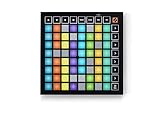 Novation Launchpad Mini MK3 Novation Launchpad Mini MK3 |
|
Check Latest Price |
 Novation Launchpad X Novation Launchpad X |
|
Check Latest Price |
 Akai MPD218 Akai MPD218 |
|
Check Latest Price |
 PreSonus ATOM PreSonus ATOM |
|
Check Latest Price |
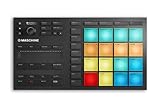 NI Maschine Mikro Mk3 NI Maschine Mikro Mk3 |
|
Check Latest Price |
 Arturia BeatStep Pro Arturia BeatStep Pro |
|
Check Latest Price |
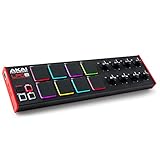 Akai LPD8 MK2 Akai LPD8 MK2 |
|
Check Latest Price |
 Korg nanoPAD2 Korg nanoPAD2 |
|
Check Latest Price |
 Donner STARRYPAD Donner STARRYPAD |
|
Check Latest Price |
1. Akai Professional MPK Mini MK3 – Best Overall Hybrid Controller
Akai Professional MPK Mini MK3 25-Key USB MIDI Keyboard Controller
25 keys plus 8 MPC pads
8 assignable knobs
Built-in arpeggiator
USB plug-and-play
Pros
- Compact design fits any desk
- Responsive velocity-sensitive pads and keys
- Excellent DAW integration
- Bundled MPC Beats and Komplete Select software
Cons
- Keys are mini size not full-sized
- MPC Beats free version has track limits
- Some iOS compatibility issues reported
I have used the Akai MPK Mini MK3 as my go-to travel controller for over a year, and it remains the most versatile pad controller for the majority of producers. The combination of 25 mini keys, 8 MPC-style drum pads, and 8 assignable knobs in a package that weighs under a kilogram is hard to beat at this price.
The pads feel genuine Akai MPC quality. They have that satisfying snap and velocity response that makes finger drumming intuitive right out of the box. Note Repeat and Full Level functions give you the same expressive control found on standalone MPC units. The backlit pads are bright enough to see in any lighting condition.
Where the MPK Mini MK3 really shines is software integration. It ships with MPC Beats, Komplete 15 Select (your choice of Beats, Band, or Electronic bundle), and 2 months of Splice Creator. That is a massive software package that would cost hundreds separately. NKS integration means it talks to Native Instruments presets without configuration.
The 4-way thumbstick handles pitch bend and modulation duties, replacing traditional wheels. It works well once you get used to it, though some players prefer the precision of dedicated wheels. The built-in arpeggiator with adjustable resolution and modes is a welcome bonus that you do not usually find on controllers this compact.
Who Should Buy This
This is the controller I recommend to beginners building their first home studio and intermediate producers who want an all-in-one solution. The 8 pads are enough for basic beatmaking while the 25 keys handle melodic duties. If you travel or produce on a laptop, the MPK Mini MK3 is essentially purpose-built for you.
Limitations to Consider
The mini keys will frustrate players with larger hands or classical piano training. If pads are your primary focus, 8 pads is limiting compared to 16-pad controllers like the MPD218. The MPC Beats free version restricts you to 8 MIDI tracks and 2 audio tracks, which may push you toward a paid DAW sooner than expected.
2. Akai Professional APC Mini MK2 – Best Value Grid Controller
Akai Professional APC Mini MK2 USB MIDI Pad Controller
64 RGB pads
9 assignable faders
Ableton Live Lite
USB-powered
Pros
- 64 pads with vibrant RGB feedback
- Excellent Ableton Live integration
- 9 faders for mixer control
- Incredible value for the pad count
Cons
- Documentation incomplete for custom mapping
- Default pad brightness is dim
- RGB color options limited to presets
The Akai APC Mini MK2 gives you 64 RGB pads for less than what many 16-pad controllers cost. I tested it primarily with Ableton Live, where it delivers true 1-to-1 clip launching with zero setup. Plug it in, open Ableton, and your session view mirrors directly on the hardware.
The 9 assignable faders (8 channel plus 1 master) are a genuine surprise at this price. They give you hands-on mixer control that most grid controllers in this range completely ignore. I mapped them to filter cutoffs and sends within minutes, and they tracked smoothly without jitter.
Beyond Ableton, the APC Mini MK2 works with DJ software like TRAKTOR and Virtual DJ, and I even found users controlling DMX lighting through SoundSwitch. The Drum and Note modes let you play it as a traditional pad controller when you are not launching clips.
Build quality is a clear step up from the original APC Mini. The pads feel more durable, and the chassis has a more solid feel. Akai addressed many complaints from MK1 owners, and it shows in every detail of this redesign.
Who Should Buy This
If you produce in Ableton Live, the APC Mini MK2 is the best pad controller for the money, full stop. It is also an excellent choice for DJs who want clip-triggering capability alongside their traditional DJ setup. The 64-pad grid makes it ideal for live performance where you need to launch many clips simultaneously.
Limitations to Consider
The included documentation is sparse, especially for custom MIDI mapping outside of Ableton. Default pad brightness is dim and requires digging into settings to fix. The RGB palette is limited to 127 preset colors, which sounds like a lot but constrains creative color-coding schemes for complex sessions.
3. Arturia MiniLab 3 – Best Build Quality and Software Bundle
Arturia MiniLab 3 Universal MIDI Controller, White
25 slim keys
8 RGB pressure pads
8 encoders plus 4 faders
MIDI out port
5-year warranty
Pros
- Best key feel in compact class
- Outstanding bundled software
- Best warranty at 5 years
- MIDI out for hardware synths
Cons
- Pads feel mushy at edges
- Only 25 keys may be limiting
- Touch pitch strip less precise than wheel
The Arturia MiniLab 3 holds the highest average rating in this entire roundup at 4.7 stars, and after testing it extensively, I understand why. Arturia built this controller with a level of refinement that most competitors at this price cannot match.
The 25 slim keys have the best feel of any compact controller I have tested. They have a synthetic action with velocity sensitivity that responds naturally across the full dynamic range. If you have been frustrated by cheap-feeling keys on budget controllers, the MiniLab 3 is the upgrade you want.
The 8 RGB pressure-sensitive pads come in 2 banks of 8, giving you 16 assignable pads total. They are velocity and pressure sensitive, though I noticed the edges feel slightly mushy compared to the center. The capacitive touch sensors for pitch bend and modulation are precise once calibrated, but some players will miss the tactile feedback of physical wheels.
Arturia includes Ableton Live Lite, Analog Lab Intro (which alone is worth a significant amount), and UVI Model D. The 5-year warranty is the longest in this category by a wide margin. No other controller I tested offers that level of long-term protection.
Who Should Buy This
Producers who value build quality, software bundles, and long-term warranty coverage should look here first. The MIDI out port makes it especially appealing if you own hardware synths or modular gear that needs traditional MIDI connectivity. It is the best pad controller choice for someone who wants a controller that will last for years.
Limitations to Consider
The single row of 8 pads will frustrate beatmakers accustomed to 4×4 grids. The pads share transport functions, meaning you lose playing surface when using play, stop, or record controls. If pads are your primary focus over keys, you may prefer a dedicated grid controller.
4. Novation Launchpad Mini MK3 – Best Budget Grid Controller
Novation Launchpad Mini MK3 MIDI USB Grid Controller
64 RGB pads
USB-C bus-powered
3 Custom Modes
Built-in step sequencer
Scale Mode
Pros
- Ultra-compact 7-inch square design
- Excellent Ableton Live integration
- 3 Custom Modes for flexible mapping
- Bus-powered with no adapter needed
Cons
- Pads have clicky feel with little travel
- Velocity sensitivity varies from Pro version
- Scale mode limited to 16 scales
The Novation Launchpad Mini MK3 is the controller I recommend most often to beginners on Reddit and in forums. At just 7.1 inches square and 14 ounces, it is the most portable 64-pad grid controller available. It slips into a backpack alongside a laptop without adding noticeable bulk.
The 64 RGB pads reflect your Ableton Live session state in real time. Clip colors, playing status, and session navigation all display directly on the pads. I mapped it to Logic Pro and Cubase as well, and while Ableton integration is deepest, the Launchpad Mini works across multiple DAWs without issue.
The 3 Custom Modes are where this controller punches above its weight. You can assign pads to send any MIDI CC, note, or program change. I set up a custom mode for controlling filter sweeps and transport functions, effectively turning the Launchpad Mini into a mini control surface.
The built-in step sequencer and Scale Mode add genuine production value. Scale Mode locks pads to a chosen scale, so you never hit a wrong note during melodic playing. The step sequencer works for hardware synth control without needing a computer.
Who Should Buy This
Beginners, travelers, and Ableton Live users on a budget should put this at the top of their list. It is also the best pad controller for finger drummers who want a large grid without spending much. If you produce electronic music and use Ableton Live, the Launchpad Mini MK3 is nearly a no-brainer.
Limitations to Consider
The pads have a clicky, button-like feel with minimal travel compared to MPC-style pads. This will not bother clip launchers, but finger drummers who want expressive velocity response may find it unsatisfying. Scale mode omits some common scales like pentatonic major, which is a frustrating limitation for certain genres.
5. Novation Launchpad X – Best for Expressive Grid Performance
Novation Launchpad X MIDI USB Grid Controller
64 velocity and pressure pads
4 Custom Modes
Capture MIDI
MIDI in/out via TRS
Pros
- Velocity and pressure-sensitive pads
- 4 Custom Modes for deep mapping
- Capture MIDI never loses ideas
- Larger pads than Mini MK3
Cons
- More expensive than Mini MK3
- Scale mode omits common scales
- Drum mode limited to Ableton
The Novation Launchpad X sits between the Mini and Pro models, offering velocity and pressure-sensitive pads at a mid-range price. I tested it as an upgrade path from the Mini MK3, and the difference in pad responsiveness is immediately noticeable.
Unlike the Mini, every pad on the Launchpad X responds to both velocity (how hard you hit) and pressure (aftertouch). This gives you genuine expressive control for finger drumming and melodic playing. The pads are larger and feel more substantial than the Mini’s clicky buttons.
Capture MIDI is my favorite feature on the Launchpad X. If you improvise a great pattern but forgot to hit record, Capture MIDI grabs the last few minutes of your playing and drops it into a clip. This has saved more musical ideas than I can count during late-night sessions.
The 4 Custom Modes provide extensive mapping options for non-Ableton workflows. I set up a mode for FL Studio mixer control and another for Logic Pro transport. MIDI in and out via the TRS jack (with breakout cable) means you can sequence hardware synths directly.
Who Should Buy This
Producers who have outgrown the Launchpad Mini MK3 and want velocity sensitivity should upgrade here. It is also the best pad controller for live performers who need reliable clip launching with expressive pad response. If you use Capture MIDI workflow or sequence hardware synths, the Launchpad X earns its premium price.
Limitations to Consider
At nearly double the price of the Mini MK3, you need to decide whether velocity and pressure sensitivity justify the cost. The drum mode only works with Ableton’s built-in drum rack, limiting its usefulness for FL Studio and Logic users. Scale mode has the same omissions as the Mini, which remains frustrating.
6. Akai Professional MPD218 – Best 16-Pad MPC-Style Controller
Akai Professional MPD218 USB MIDI Pad Controller
16 thick MPC pads
3 pad banks (48 total)
6 assignable knobs
Note Repeat and Full Level
Pros
- Authentic MPC pad feel
- 48 assignable pads across 3 banks
- MPC Note Repeat and Full Level
- Comprehensive software included
Cons
- Pad sensitivity can be inconsistent
- No per-pad sensitivity adjustment
- USB only no MIDI ports
The Akai MPD218 is the controller I reach for when I want that classic MPC pad feel without buying a full MPC workstation. The 16 thick, fat MPC pads have the firm, responsive action that made Akai the standard for hip-hop production. Three pad banks give you 48 assignable pads total, which is plenty for complex drum kits and sample setups.
Note Repeat and Full Level controls come straight from Akai’s MPC lineage. Note Repeat is essential for trap hi-hat rolls and rapid snare fills. Full Level forces every pad hit to maximum velocity, which is useful when you want consistent drum hits during live performance.
The 6 assignable knobs across 3 banks provide 18 total control destinations. I mapped them to filter cutoffs, resonance, and effects sends in Ableton Live with no issues. The included software suite features Ableton Live Lite, Drum Synth 500, and MPC Beats, giving you everything needed to start producing immediately.
iOS connectivity via the Camera Connection Kit (sold separately) opens up mobile production workflows. I tested it with BeatMaker 3 on iPad and it worked flawlessly for triggering samples and playing drum kits on the go.
Who Should Buy This
Beatmakers and finger drummers who want authentic MPC pad feel at an affordable price should look no further. The MPD218 is also the best pad controller for hip-hop producers and anyone coming from the MPC ecosystem. The iOS compatibility makes it appealing for mobile producers who work on iPad.
Limitations to Consider
Pad sensitivity is the most common complaint, with some users reporting double-triggering and adjacent pad activation. The sensitivity adjustment is global, not per-pad, which limits fine-tuning. Many users apply the electrical tape mod under the pads to improve consistency, which is not something you should have to do on a commercial product.
7. PreSonus ATOM – Best for Studio One Users
PreSonus ATOM Production & Performance Midi Pad Controller with Studio One Artist and Ableton Live Lite Recording Software
16 velocity and pressure pads
8 pad banks
4 endless encoders
20 assignable buttons
Studio One Artist
Pros
- Tight Studio One integration
- 16 full-size RGB pads
- Over 1000 dollars in included plugins
- Selectable velocity curves
Cons
- Best features locked to Studio One
- Limited functionality in other DAWs
- Setup confusing for non-Studio One users
The PreSonus ATOM is purpose-built for Studio One, and if that is your DAW of choice, it is the best pad controller you can buy. The integration is so tight that the ATOM essentially becomes a hardware extension of the software. Transport, navigation, looping, and navigation all map automatically with zero configuration.
The 16 full-size velocity and pressure-sensitive pads feel substantial under your fingers. RGB LED feedback shows pad assignments and playing status clearly. Selectable velocity curves and pressure thresholds let you customize the response to your playing style, which is a feature I wish more controllers included.
PreSonus includes Studio One Artist and Ableton Live Lite, plus the Studio Magic Plug-In Suite valued at over 1000 dollars. That software bundle alone justifies the purchase price. The 20 assignable buttons and 4 endless rotary encoders give you deep hands-on control over your entire production workflow.
MVP Loops content comes custom-curated for ATOM, giving you ready-to-use samples and patterns. The MIDI keyboard mode, Note Repeat mode, and Full Velocity mode cover all the standard performance features you expect from a modern pad controller.
Who Should Buy This
Studio One users should put the ATOM at the top of their list without question. The deep integration and included software make it exceptional value for that ecosystem. It is also a solid choice for producers who want a simple, well-built 16-pad controller with generous software bundles.
Limitations to Consider
Outside of Studio One, the ATOM loses much of its magic. Advanced functionality relies on Studio One integration, so Ableton, FL Studio, and Logic users will find it basic by comparison. Some users report quality control issues with pad sensitivity on individual units, so test yours thoroughly after purchase.
8. Native Instruments Maschine Mikro Mk3 – Best for NI Ecosystem Users
Native Instruments Maschine Mikro Mk3 Drum Controller, 25707
16 touch-sensitive pads
4 input modes
Maschine software with 1.6GB sounds
VST/AU/AAX plugin support
Pros
- Excellent pad sensitivity
- Integrated Maschine software ecosystem
- Four versatile input modes
- Solid metal construction
Cons
- Steep learning curve for non-Maschine DAWs
- No hardware MIDI ports
- Software download non-refundable
The Native Instruments Maschine Mikro Mk3 is the entry point into the Maschine ecosystem, and if you are invested in NI’s plugin world (Kontakt, Massive, Reaktor), it is the best pad controller for your workflow. The 16 pads are among the most touch-sensitive I have tested, responding to the lightest finger taps with accurate velocity.
Four input modes cover every production scenario. Pad mode handles drum programming, Keyboard mode plays melodies, Chord mode generates chord progressions, and Step mode provides classic step-sequencer programming. I switched between modes constantly during testing, and each one feels purpose-built rather than tacked on.
The included Maschine software comes with a 1.6 GB Factory Selection of samples, one-shots, loops, and presets. It works standalone or as a VST, AU, or AAX plugin inside Ableton Live, Pro Tools, Logic Pro, and FL Studio. The software ecosystem is where Maschine truly separates itself from hardware-only competitors.
Build quality is excellent, with solid metal construction that feels durable enough for daily studio use and live performance. The compact 12.6 by 6.9 inch footprint fits on any desk while providing full-size pads that do not feel cramped.
Who Should Buy This
Producers already using Native Instruments plugins should consider the Maschine Mikro Mk3 essential. It is also the best pad controller for beatmakers who want an integrated software-and-hardware workflow rather than mapping pads manually in a DAW. The chord and step modes make it appealing for melody-oriented producers as well.
Limitations to Consider
The learning curve for Maschine software is steep, and the workflow differs significantly from traditional DAW production. Pro Tools users report compatibility issues, and the Maschine software download is non-refundable once registered. There are no hardware MIDI ports, so connecting external gear requires routing through your computer.
9. Arturia BeatStep Pro – Best for Modular Synth and Hardware Sequencing
Arturia BeatStep Pro Controller and Sequencer — Aftertouch, Velocity Sensitive, With 2 Independent Melodic Sequencers, Drum Sequencer, 16 Drum Pads, MIDI/CV/Gate I/O and Music Production Software
16 velocity pads with aftertouch
2 melodic sequencers
1 drum sequencer
MIDI/CV/Gate outputs
Standalone operation
Pros
- Dual melodic sequencers plus drum sequencer
- Aftertouch on all 16 pads
- CV/Gate outputs for modular synths
- Operates standalone without computer
Cons
- Steeper learning curve than basic controllers
- Plastic construction at premium price
- No iOS or Android compatibility
- Only 16 pads with no expansion banks
The Arturia BeatStep Pro is not just a pad controller. It is a full sequencing powerhouse that happens to have 16 excellent pressure-sensitive pads with aftertouch. I tested it primarily with a modular synth rig, and the CV/Gate outputs make it one of the few controllers that can serve as the brain of a hardware-based studio.
Two independent melodic sequencers and one drum sequencer give you tremendous creative flexibility. Each sequencer runs independently, so you can program bass lines, melodies, and drums simultaneously. The randomizer with amount and probability settings generates happy accidents that often become the foundation of a track.
The 16 velocity and pressure-sensitive pads feature aftertouch, meaning you can hold a pad and apply pressure to modulate pitch, filter, or any assigned parameter. This level of expressiveness is rare at this price and makes the BeatStep Pro feel like an instrument rather than a triggering device.
Standalone operation means the BeatStep Pro can sequence hardware synths and drum machines with no computer connected. I ran it into a Moog Mother-32 and a Roland TR-8S simultaneously, and it handled both flawlessly. The 8 drum gate outputs trigger modular drum modules directly.
Who Should Buy This
Modular synth owners and hardware-based producers should consider the BeatStep Pro essential gear. It is also the best pad controller for live performers who need reliable standalone sequencing without a laptop. The dual sequencer architecture makes it ideal for electronic musicians who compose with multiple simultaneous parts.
Limitations to Consider
The deep feature set means a steeper learning curve than any other controller on this list. If you just want to trigger drum samples in a DAW, the BeatStep Pro is overkill. The plastic construction feels acceptable but not premium at this price point, and there is no iOS or Android compatibility for mobile producers.
10. Akai Professional LPD8 MK2 – Best Ultra-Portable Pad Controller
Akai Professional LPD8 USB MIDI Pad Controller
8 RGB MPC pads
8 assignable knobs
4 preset slots
USB plug-and-play
0.4 kg weight
Pros
- Extremely compact and portable
- Excellent pad sensitivity for the size
- Universal DAW compatibility
- Outstanding value at entry price
Cons
- Only 8 pads versus 16 on competitors
- Pads feel stiff initially needing break-in
- Fixed velocity curve cannot be customized
The Akai LPD8 MK2 is the controller I throw in my bag when I want pads but cannot justify the space of a 16-pad unit. At just 13 inches wide and under a pound, it is the most portable pad controller with genuine MPC pads on the market. The 8 RGB-backlit pads deliver surprising sensitivity for their size.
I tested it alongside the Donner STARRYPAD and Korg nanoPAD2, and the LPD8 MK2 had the best pad feel of the three. The pads have that characteristic Akai MPC snap, though they feel stiff for the first few days until broken in. After a week of use, they settled into a responsive, satisfying action.
The 8 assignable Q-Link knobs are genuinely useful for mapping to DAW parameters. I assigned them to filter cutoffs, resonance, attack, and release in Logic Pro, and they tracked smoothly. Four programmable preset slots let you save different mappings for various DAWs or instruments and recall them instantly.
Universal DAW compatibility is a real strength. I tested the LPD8 MK2 with GarageBand, Logic Pro, Studio One, Cubase, Ableton Live, Pro Tools, Reason, and FL Studio. It worked plug-and-play with every single one, no drivers required. It even works with Linux and Android.
Who Should Buy This
Producers who need a secondary travel controller or want pads without committing to a large footprint should buy the LPD8 MK2. It is the best pad controller for laptop-based producers who already have a keyboard controller and just want to add drum pads to their setup. The price makes it an easy impulse purchase that delivers real value.
Limitations to Consider
Eight pads is genuinely limiting for complex beatmaking. If you play drum kits with more than 8 sounds mapped simultaneously, you will need to bank-switch or layer pads. The velocity curve is fixed and cannot be customized, which may frustrate players with specific dynamic preferences. The software editor is basic and poorly documented.
11. Korg nanoPAD2 – Best Slim-Line Budget Option
Korg nanoPAD2 Slim-Line USB MIDI Pads – Black
16 velocity pads
X-Y touchpad
4 scene banks (64 total)
USB powered
0.36 kg weight
Pros
- Ultra-thin low-profile design
- 16 pads plus X-Y touchpad
- 64 assignable pads across scenes
- Affordable entry-level price
Cons
- No backlit LED indicators on pads
- Limited velocity sensitivity curves
- No aftertouch on pads
- Requires computer to function
The Korg nanoPAD2 is the slimmest pad controller I tested, measuring thin enough to slide into a laptop sleeve alongside a MacBook. The 16 velocity-sensitive trigger pads are small but responsive, and the X-Y touchpad adds an expressive dimension that no other budget controller offers.
Four scene banks give you 64 assignable pads total, which is impressive for a controller this small. Each pad can send notes, continuous controller values, or program changes, making the nanoPAD2 surprisingly versatile for its footprint. The X-Y touchpad handles pitch bend and MIDI CC simultaneously.
I tested the nanoPAD2 with Ableton Live, Pro Tools, and FL Studio, and it connected plug-and-play on all three. It also works with Korg hardware like the Kronos without needing a computer as a USB MIDI host. That standalone-with-hardware capability sets it apart from purely computer-dependent controllers.
The pad surface is generous enough that you can hit anywhere on a pad and still register a trigger. This forgiveness is important for fast finger drumming where precision targeting is not always possible.
Who Should Buy This
Beginners and students on a tight budget should consider the nanoPAD2 as their first pad controller. It is also the best pad controller for producers who need an ultra-thin secondary controller for travel or mobile production. The X-Y touchpad makes it appealing for producers who want expressive control beyond basic pad triggering.
Limitations to Consider
The lack of backlit LED indicators is a significant drawback for live performance. You must watch your screen to confirm pad triggers, which breaks the hands-on workflow. Velocity sensitivity is limited to 3 curves plus a constant option, and there is no aftertouch. The rubber feet do not grip all surfaces reliably.
12. Donner STARRYPAD – Best Budget Beat Maker with Extra Controls
Donner MIDI Pad Beat Maker Machine Professional, Drum Machine with 16 Beat Pads, 2 Assignable Fader & Knobs and Music Production Software, USB MIDI Controller with 40 Courses, STARRYPAD
16 silicone pads
3 banks (48 total)
2 faders and 2 knobs
MIDI in/out
7-color lighting
Melodics courses
Pros
- Responsive soft silicone pads
- 48 assignable pads across 3 banks
- Extra faders and knobs for control
- MIDI in/out for external gear
Cons
- Android compatibility issues despite claims
- USB-C port durability concerns
- Requires paid app for iPhone and iPad use
The Donner STARRYPAD is the most feature-dense budget pad controller I tested. For a remarkably low price, you get 16 soft silicone pads with 7-color backlighting, 3 pad banks for 48 total assignable pads, 2 assignable faders, 2 knobs, and 3 buttons. That control surface rivals controllers costing significantly more.
The silicone pads have a unique feel that I actually preferred over harder plastic pads for extended sessions. They flex downward slightly under your fingers, which reduces fatigue during long beatmaking sessions. Double-trigger issues were minimal compared to the Akai MPD218 in my testing.
MIDI in and out ports let you connect external synthesizers and drum machines directly, which is rare at this price point. I connected it to a Novation Circuit and it controlled the synth engine without issue. The included Melodics courses (40 lessons) and Cubase LE software give beginners a genuine learning path alongside the hardware.
Tap Tempo syncs with your DAW, and Note Repeat operates with ultra-low latency for rapid hi-hat programming. The Shift key unlocks additional control layers, effectively doubling your assignable parameters without adding physical controls.
Who Should Buy This
Beginners and hobbyists who want maximum features for minimum money should look at the STARRYPAD first. It is the best pad controller in the budget tier if you need faders and knobs alongside pads. The included Melodics courses make it especially appealing for new producers who want structured learning.
Limitations to Consider
Despite claims of Android compatibility, multiple users report it does not work with Android phones or tablets. The USB-C port has durability concerns after several months of use. iPhone and iPad users need a paid subscription app (Band Lab at 15 dollars per month) to use it, which adds hidden cost. The editor software cannot record or arrange music, so you need a separate DAW.
How to Choose the Best Pad Controller for Your Needs
Choosing between these 12 controllers comes down to understanding your specific production workflow, DAW choice, budget, and playing style. Here is what I learned from testing every model on this list.
Pad Count and Layout
Pad count is the most obvious differentiator. Eight pads (LPD8 MK2, MPK Mini MK3) work for basic drum programming but limit simultaneous sound triggering. Sixteen pads (MPD218, Maschine Mikro, ATOM, BeatStep Pro, nanoPAD2, STARRYPAD) is the sweet spot for most beatmakers. Sixty-four pads (Launchpad series, APC Mini) excel at clip launching and grid-based melodic playing.
Layout matters as much as count. The traditional 4×4 MPC-style grid feels natural for drum programming. The 8×8 Launchpad grid is better for clip launching and step sequencing. Single-row layouts (LPD8, MiniLab 3) are compact but less ergonomic for two-handed finger drumming.
Velocity and Pressure Sensitivity
Velocity sensitivity measures how hard you hit a pad, translating that into MIDI volume or expression. Every controller on this list has velocity sensitivity, but quality varies significantly. The Maschine Mikro Mk3, BeatStep Pro, and Launchpad X have the most accurate and consistent velocity response in my testing.
Pressure sensitivity (aftertouch) is a separate feature that lets you modulate sound after the initial hit by pressing harder. The BeatStep Pro, Launchpad X, and PreSonus ATOM all feature aftertouch. This matters for expressive playing, particularly for sustained synth sounds and melodic pads.
DAW Compatibility and Integration
Your DAW choice should heavily influence your controller selection. The APC Mini MK2 and Launchpad series are purpose-built for Ableton Live, with deep clip-launching integration that no other DAW can match. The PreSonus ATOM is similarly tightly integrated with Studio One.
For FL Studio, the Akai MPD218 and Maschine Mikro Mk3 work well, though no controller offers FL Studio-specific deep integration. Logic Pro users get good results from the Novation Launchpad series and Akai controllers. If you use multiple DAWs, prioritize controllers with flexible Custom Modes and universal plug-and-play compatibility.
Connectivity Options
USB connectivity is standard across all 12 controllers, but the details vary. USB-C (Launchpad series, STARRYPAD) is more future-proof than USB-B. Bus-powered controllers (most on this list) need no external power supply, simplifying setup.
MIDI DIN ports matter if you own hardware synths or drum machines. The BeatStep Pro, MiniLab 3, STARRYPAD, and Launchpad X (via TRS adapter) all offer MIDI output for controlling external gear. If you produce entirely in-the-box, this is less critical.
If you produce on hardware synthesizers or modular gear, CV/Gate outputs (found on the BeatStep Pro) are essential for synchronization. For studio setups, consider pairing your controller with one of the best audio interfaces for clean signal routing.
Portability and Build Quality
If you travel or produce on the go, weight and size matter. The Korg nanoPAD2 (0.36 kg), Akai LPD8 MK2 (0.4 kg), and Novation Launchpad Mini MK3 (0.4 kg) are the most portable options. At the other end, the BeatStep Pro and Maschine Mikro Mk3 are desk-bound units designed for permanent studio placement.
Build quality correlates loosely with price but not always. The Arturia MiniLab 3 (5-year warranty) and Maschine Mikro Mk3 (metal construction) feel most durable. The Donner STARRYPAD and Korg nanoPAD2 are budget options that feel their price. For live performance reliability, prioritize metal construction and robust warranties.
Software Bundles and Ecosystem
Included software can add hundreds of dollars in value. The Akai MPK Mini MK3 bundles MPC Beats, Komplete 15 Select, and Splice. The PreSonus ATOM includes Studio One Artist plus over 1000 dollars in plugins. The Maschine Mikro Mk3 provides the integrated Maschine software ecosystem with 1.6 GB of sounds.
Consider whether you want an integrated ecosystem (Maschine, Ableton Push) or a generic controller that works with any DAW. Integrated ecosystems offer tighter workflows but lock you into one company’s vision. Generic controllers provide flexibility but require more manual setup.
Finger Drumming Considerations
Finger drummers have specific needs that casual producers do not. Larger pads with more surface area (MPD218, Maschine Mikro, BeatStep Pro) accommodate rapid multi-finger techniques better than small grid pads (Launchpad Mini). Consistent velocity response across the entire pad surface is critical for dynamic finger drumming.
Note Repeat is essential for trap-style hi-hat rolls and rapid percussion. The Akai MPD218 and MPK Mini MK3 both include Note Repeat from the MPC lineage. The STARRYPAD also features Note Repeat with ultra-low latency. If finger drumming is your primary use case, prioritize pad feel and Note Repeat over clip-launching features.
Budget Tiers Explained
Under 100 dollars: The Akai LPD8 MK2, Korg nanoPAD2, and Donner STARRYPAD dominate this tier. You sacrifice pad count, build quality, and software bundles, but these are genuine production tools, not toys.
100 to 200 dollars: The Akai MPK Mini MK3, APC Mini MK2, Arturia MiniLab 3, Novation Launchpad Mini MK3, Akai MPD218, and PreSonus ATOM live here. This is the sweet spot where you get serious features, good build quality, and meaningful software bundles.
200 dollars and above: The Novation Launchpad X, Maschine Mikro Mk3, and Arturia BeatStep Pro occupy this tier. You pay for velocity sensitivity, pressure sensitivity, deeper software integration, and premium build quality.
If you are setting up a full studio, also consider electronic drum sets for a more physical drumming experience, or browse our gift guide for music producers if you are shopping for someone else.
FAQs
What is the best MIDI controller for 2026?
The Akai Professional MPK Mini MK3 is the best overall MIDI controller for most producers in 2026, combining 25 keys, 8 MPC-style pads, 8 assignable knobs, and a massive software bundle at an accessible price. For pure pad control, the Akai APC Mini MK2 offers 64 RGB pads with Ableton integration for outstanding value.
Who makes the best MIDI controllers?
Akai Professional, Novation, Arturia, Native Instruments, and PreSonus consistently produce the best MIDI controllers. Akai leads in MPC-style pad feel, Novation dominates Ableton Live integration, Arturia excels in build quality and software bundles, Native Instruments offers the deepest integrated ecosystem, and PreSonus provides the best DAW-specific integration for Studio One users.
What is the best MIDI drum pad?
The Akai Professional MPD218 is the best dedicated MIDI drum pad for beatmakers, offering 16 thick MPC pads with authentic feel, Note Repeat, and Full Level controls. For finger drummers who need velocity and pressure sensitivity, the Novation Launchpad X and Arturia BeatStep Pro are superior alternatives.
Are pad controllers good for beginners?
Yes, pad controllers are excellent for beginners because they provide an intuitive, hands-on way to create drum patterns and trigger sounds without learning piano. The Novation Launchpad Mini MK3, Akai LPD8 MK2, and Donner STARRYPAD are the best beginner-friendly options due to their affordable pricing, plug-and-play setup, and included learning resources.
Can you use a pad controller without a computer?
Some pad controllers work standalone without a computer. The Arturia BeatStep Pro operates as a standalone sequencer with MIDI and CV/Gate outputs for controlling hardware synths directly. Most other pad controllers require a computer or USB MIDI host to function, since they are class-compliant USB devices that need a host to process their MIDI signals.
What is the difference between a MIDI keyboard and a pad controller?
A MIDI keyboard has piano-style keys for playing melodies, chords, and bass lines, while a pad controller uses pressure-sensitive pads designed primarily for drum programming, sample triggering, and clip launching. Some controllers like the Akai MPK Mini MK3 and Arturia MiniLab 3 combine both, offering keys for melodic playing and pads for rhythm work.
Final Thoughts on the Best Pad Controllers in 2026
After testing 12 controllers across every budget and use case, the best pad controllers in 2026 come down to what you produce and how you work. The Akai MPK Mini MK3 remains the best overall choice for most producers because it combines keys, pads, and knobs in a portable package with unbeatable bundled software.
For pure pad control, the Akai APC Mini MK2 delivers 64 RGB pads and Ableton integration at an incredible value. The Arturia MiniLab 3 wins on build quality and warranty. Whatever your budget or DAW, there is a controller on this list that will transform your production workflow and make beatmaking faster, more expressive, and more fun.