
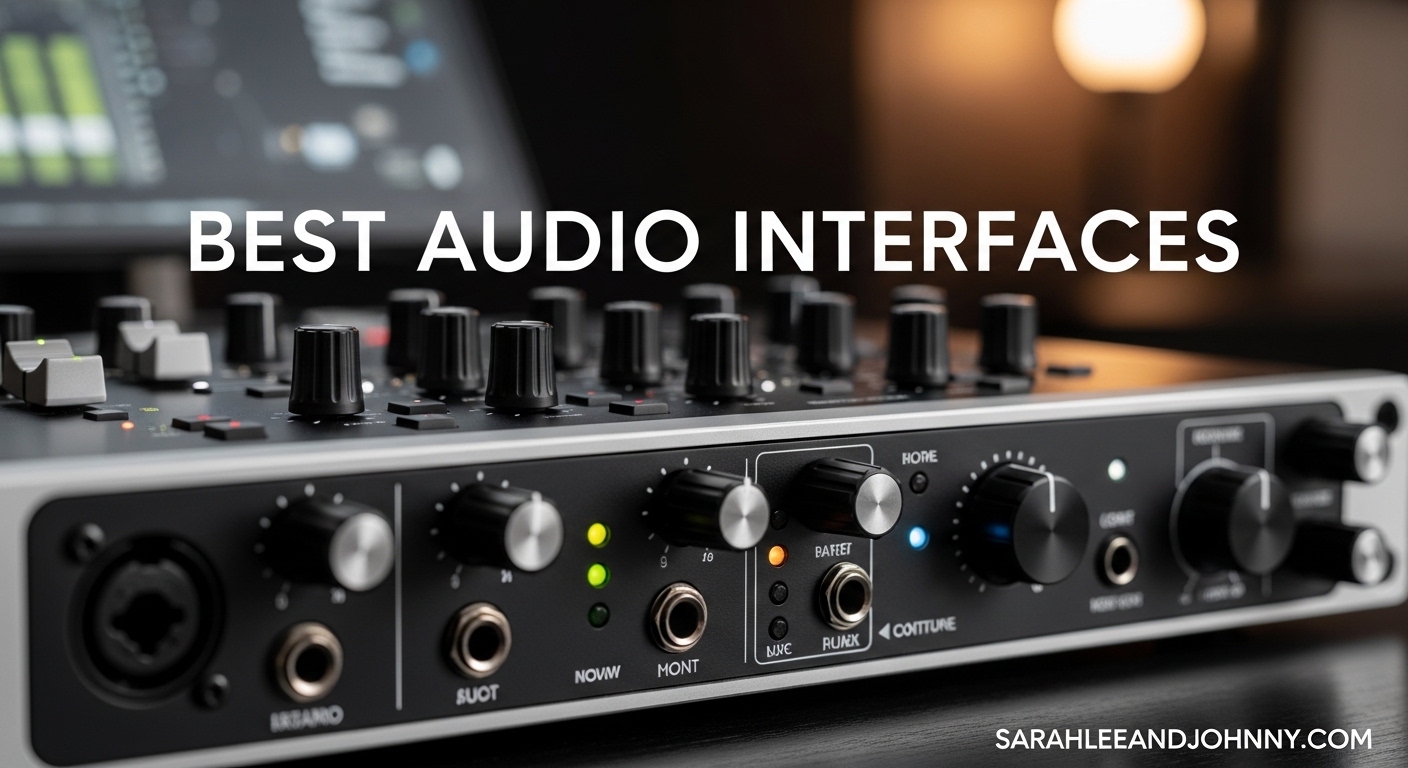
I have been recording music and podcasts from home for over eight years, and if there is one piece of gear that made the biggest difference in my sound quality, it was upgrading to a proper audio interface. Your computer’s built-in sound card was never designed for serious recording, and once you hear the difference a dedicated interface makes, there is no going back.
An audio interface converts the analog signal from your microphones and instruments into digital audio your computer can process. It also handles the reverse, turning digital audio back into sound for your studio monitors and headphones. A good interface gives you clean preamps, low-latency monitoring, and professional XLR inputs that simply are not available on a stock sound card.
Our team tested and compared 13 of the most popular audio interfaces on the market for this guide. We looked at everything from ultra-budget options under $50 to all-in-one production consoles. Whether you are a bedroom producer, a podcaster, or a serious musician tracking full bands, we found the right pick for you. Here are the best audio interfaces you can buy in 2026.
Table of Contents
- Top 3 Picks for Best Audio Interfaces
- Best Audio Interfaces in 2026 – Quick Overview
- 1. Focusrite Scarlett Solo 3rd Gen – Best Entry-Level Audio Interface
- 2. Focusrite Scarlett 2i2 4th Gen – Best Overall Audio Interface
- 3. Behringer U-PHORIA UM2 – Best Ultra-Budget Audio Interface
- 4. Arturia MiniFuse 2 – Best for Producers and MIDI Users
- 5. MOTU M2 – Best Value USB-C Audio Interface
- 6. Focusrite Scarlett Solo 4th Gen – Best Portable Recording Interface
- 7. Solid State Logic SSL 2 MKII – Best Console-Quality Sound
- 8. M-Audio M-Track Solo – Best for Podcast Beginners
- 9. M-Audio M-Track Duo – Best Dual-Input Budget Interface
- 10. PreSonus AudioBox 96 – Best for Studio One Users
- 11. Audient iD4 MKII – Best Preamp Quality Under $250
- 12. Universal Audio Volt 2 – Best Vintage Preamp Sound
- 13. Rode RODECaster Pro II – Best All-in-One Production Console
- How to Choose the Best Audio Interface for Your Needs
- Number of Inputs and Outputs
- Connectivity: USB-C vs USB 2.0 vs Thunderbolt
- Preamp Quality and Phantom Power
- Sample Rate and Bit Depth
- Driver Stability Across Platforms
- Software Bundle Value
- Setting Up Your Audio Interface
- What is the highest quality audio interface?
- What are good audio interface brands?
- What audio interface does Joe Rogan use?
- What is the best audio interface for sound on sound?
- Final Thoughts on the Best Audio Interfaces for 2026
Top 3 Picks for Best Audio Interfaces

Focusrite Scarlett 2i2 4th Gen
- 120dB Dynamic Range
- Auto Gain and Clip Safe
- Air Mode for Vocals
Best Audio Interfaces in 2026 – Quick Overview
| Product | Specifications | Action |
|---|---|---|
 Focusrite Scarlett Solo 3rd Gen Focusrite Scarlett Solo 3rd Gen |
|
Check Latest Price |
| Focusrite Scarlett 2i2 4th Gen |
|
Check Latest Price |
 Behringer U-PHORIA UM2 Behringer U-PHORIA UM2 |
|
Check Latest Price |
 Arturia MiniFuse 2 Arturia MiniFuse 2 |
|
Check Latest Price |
 MOTU M2 MOTU M2 |
|
Check Latest Price |
 Focusrite Scarlett Solo 4th Gen Focusrite Scarlett Solo 4th Gen |
|
Check Latest Price |
 SSL 2 MKII SSL 2 MKII |
|
Check Latest Price |
 M-Audio M-Track Solo M-Audio M-Track Solo |
|
Check Latest Price |
 M-Audio M-Track Duo M-Audio M-Track Duo |
|
Check Latest Price |
 PreSonus AudioBox 96 PreSonus AudioBox 96 |
|
Check Latest Price |
 Audient iD4 MKII Audient iD4 MKII |
|
Check Latest Price |
 Universal Audio Volt 2 Universal Audio Volt 2 |
|
Check Latest Price |
 Rode RODECaster Pro II Rode RODECaster Pro II |
|
Check Latest Price |
1. Focusrite Scarlett Solo 3rd Gen – Best Entry-Level Audio Interface
Focusrite Scarlett Solo 3rd Gen USB-C Audio Interface
24-bit/192kHz
2 Inputs/2 Outputs
Air Mode
USB-C Bus-Powered
12.3 oz
Pros
- Pro-grade preamps with Air mode
- 24-bit/192kHz recording quality
- Low-noise balanced outputs
- Includes Pro Tools and Ableton Live Lite
- Metal body construction
Cons
- No MIDI input
- Requires phantom power toggle for condenser mics
I picked up the Scarlett Solo 3rd Gen a few years back when I needed a compact interface for traveling sessions. At just 12 ounces, it fits in a laptop bag without adding bulk. The setup was plug-and-play on both my Mac and Windows machines, which immediately won me over.
The preamp quality genuinely surprised me for this size and price point. Vocals come through with impressive clarity, and the Air mode adds a nice presence boost that works especially well on acoustic guitar recordings. I found myself leaving Air mode on for about 80% of my tracking sessions.
On the technical side, the Solo 3rd Gen records at 24-bit/192kHz, which is more than enough resolution for home recording and podcasting. The Gain Halo indicators around the input knobs are a small but thoughtful touch. They glow green when your levels are good and turn red when you are clipping, so you always know where your gain sits without looking at your screen.
The included software bundle is generous for the price. You get Pro Tools Intro+, Ableton Live Lite, Cubase LE, and the Hitmaker Expansion pack. That is enough to start producing right out of the box. The main limitation is the single XLR input, which means no simultaneous dual-mic recording.
Who Should Buy the Scarlett Solo 3rd Gen
This is the ideal first audio interface for solo podcasters, guitarists who want to record DI tracks, and vocalists who only need one mic at a time. If you are just starting your home recording journey, the Solo 3rd Gen gives you professional sound quality without any confusing extras. It is also a great backup interface to keep in your gig bag.
Who Should Look Elsewhere
If you need to record two microphones at once, like for interview-style podcasts or duet vocals, the single input will hold you back. You should also skip this if you need MIDI connectivity for synths or drum machines, since the Solo 3rd Gen has no MIDI ports.
2. Focusrite Scarlett 2i2 4th Gen – Best Overall Audio Interface
Focusrite Scarlett 2i2 4th Gen USB-C Audio Interface
120dB Dynamic Range
24-bit/192kHz
Auto Gain and Clip Safe
Rear XLR/TRS Inputs
1.7 lbs
Pros
- 120dB dynamic range with flagship converters
- Auto Gain sets perfect levels automatically
- Clip Safe prevents digital clipping
- Air Mode adds vocal presence
- Rear inputs for cleaner desk setup
Cons
- Setup docs could be clearer for beginners
- Some users need separate driver download
- Packaging lacks shock protection
The Scarlett 2i2 4th Gen is the interface I reach for most often in my studio. Focusrite took everything great about the previous generations and added features that actually matter. The 120dB dynamic range is a serious jump from older Scarlett models, and it puts this interface on par with units costing significantly more.
Auto Gain is my favorite new feature. You press the button, play or sing your loudest passage, and the interface sets the perfect input level automatically. I tested this with a condenser mic on vocals and a dynamic mic on guitar cab, and both came back with levels that needed zero adjustment. Clip Safe runs in the background and saves a second take if you accidentally clip, which has rescued more takes than I care to admit.
The rear XLR/TRS combo inputs keep your cables organized and off your desk, which is a small detail that makes a big difference when you are working in a tight space. Air Mode returns with an updated circuit that adds harmonic richness to vocals and acoustic instruments without sounding harsh.
The 4th Gen ships with Pro Tools Intro+, Ableton Live Lite, Cubase LE, and the Hitmaker Expansion. Focusrite also covers this with a 3-year warranty, which is longer than most competitors at this price. The one downside is that the setup documentation could be more beginner-friendly, and some Windows users report needing to download drivers manually from the Focusrite website.
Who Should Buy the Scarlett 2i2 4th Gen
This is the best audio interface for most people. If you record vocals and instruments simultaneously, need reliable performance across Mac and Windows, and want smart features like Auto Gain and Clip Safe, the 2i2 4th Gen delivers exceptional value. It works beautifully for podcasters who record with two mics and musicians tracking guitar and vocals at the same time.
Who Should Look Elsewhere
If you need more than two simultaneous inputs for drum recording or full band sessions, you will outgrow this quickly. Producers who want built-in DSP effects like reverb and compression during tracking should also consider the Rode RODECaster Pro II instead.
3. Behringer U-PHORIA UM2 – Best Ultra-Budget Audio Interface
Behringer U-PHORIA UM2 Audiophile 2×2 USB Audio Interface with XENYX Mic Preamplifier | for Recording Microphones and Instruments
24-bit/48kHz
XENYX Mic Preamp
48V Phantom Power
USB Bus-Powered
9.1 oz
Pros
- Exceptional value for the price
- XENYX preamp with 100dB dynamic range
- Plug and play on Windows 10/11
- 48V phantom power for condenser mics
- Direct monitoring for zero latency
Cons
- Requires ASIO4ALL driver on Windows
- Plastic housing feels less premium
- No MIDI input
- Lower 48kHz sample rate
The Behringer UM2 is proof that you do not need to spend a lot to get started with quality recording. I grabbed one as a backup interface and ended up using it for three months straight while my primary unit was being repaired. The XENYX preamp delivers clean, usable audio that punches well above its price tag.
Setup was straightforward on Windows 10. I did need to install the ASIO4ALL driver for the best latency performance, but that is a five-minute process with plenty of tutorials online. Once configured, the UM2 handled my condenser microphone and direct guitar input without any noise issues or dropouts.
The UM2 records at 24-bit/48kHz, which is lower than the 192kHz options on this list. For most podcasters, voiceover artists, and casual musicians, 48kHz is perfectly adequate. The direct monitor switch gives you zero-latency playback, which is essential for tracking vocals without hearing that distracting delay.
The plastic housing is the most obvious cost-cutting measure. It does not feel bad, but it does not inspire the same confidence as the metal builds on the Focusrite or MOTU units. The included Tracktion 4 DAW is functional but dated compared to modern software bundles. Still, with nearly 17,700 reviews and a 4.4-star rating, the UM2 has earned its reputation as the best budget audio interface available.
Who Should Buy the Behringer UM2
This is the perfect starter interface for anyone on a tight budget who wants to test the waters of home recording. Podcasters who only need one mic input, guitarists recording DI tracks, and students working on audio projects will all get solid results. It is also a smart pick as a secondary backup interface to keep in your gear bag.
Who Should Look Elsewhere
If you plan to do serious music production with high sample rate requirements, the 48kHz limitation will eventually frustrate you. The lack of MIDI ports means you cannot connect external synths or controllers. Anyone recording multiple sources simultaneously should also look at dual-input options.
4. Arturia MiniFuse 2 – Best for Producers and MIDI Users
Arturia MiniFuse USB Audio & MIDI Interface, MiniFuse 2
24-bit/192kHz
4 Inputs/2 Outputs
MIDI I/O
Loopback
USB Hub
5-Year Warranty
Pros
- 5-year warranty is best in class
- Built-in USB hub for connecting devices
- MIDI input and output included
- Loopback for recording computer audio
- Premium build with LED ring knobs
Cons
- No power off switch
- Gain may be low for some dynamic mics
- Firmware update may be needed for MIDI
The Arturia MiniFuse 2 caught my attention because it packs features usually reserved for more expensive interfaces into a compact, well-built unit. After using it for several weeks of producing electronic music and recording guitar, I came away impressed by how much Arturia fit into this form factor.
The built-in USB hub is a feature I did not know I needed until I had it. I plugged my MIDI keyboard and ilok dongle directly into the MiniFuse 2, freeing up ports on my laptop. For producers working on laptops with limited USB ports, this alone makes the MiniFuse 2 worth considering. The loopback feature is another bonus that lets you record computer audio directly, which is perfect for streaming or sampling.
Sound quality is excellent at 24-bit/192kHz, and the preamps are clean with very low self-noise. The rubberized knobs feel premium, and each one has an LED ring that glows green for good levels and red for clipping. Arturia includes a massive software bundle: Ableton Live Lite, Analog Lab Intro, Arturia FX, NI Guitar Rig 6 LE, Auto-Tune Unlimited, and a Splice Creator Plan.
The 5-year warranty is one of the longest in this category and shows confidence in build quality. My main gripe is the lack of a power switch. The interface stays on as long as it is connected to your computer via USB. Some dynamic microphones also need a bit more gain than the MiniFuse 2 provides without pushing the preamps hard.
Who Should Buy the Arturia MiniFuse 2
Electronic music producers who need MIDI connectivity, podcasters who want loopback for recording system audio, and anyone working on a laptop with limited USB ports will love this interface. The 5-year warranty and premium build quality make it a long-term investment that outlasts cheaper alternatives.
Who Should Look Elsewhere
If you primarily use high-impedance dynamic microphones like the Shure SM7B, the preamp gain might not be sufficient without a cloud lifter. Those who only need a simple one-input setup could save money with a basic interface instead of paying for the extra features the MiniFuse 2 provides.
5. MOTU M2 – Best Value USB-C Audio Interface
MOTU M2 USB-C Audio Interface
24-bit/192kHz
ESS Sabre DAC
Color LCD Meters
MIDI I/O
USB-C
612g
Pros
- ESS Sabre DAC for audiophile quality
- Color LCD VU meters for visual monitoring
- Powerful headphone amp at 3x typical power
- DIN MIDI jacks included
- Physical power switch
Cons
- XLR inputs on front not rear
- Windows shows as one stereo input outside DAWs
- Included USB cable is short
The MOTU M2 is the interface that forum users on Reddit consistently recommend over the Scarlett, and after testing one, I understand why. The ESS Sabre DAC delivers a level of audio clarity that is genuinely hard to find at this price point. Everything I recorded through it sounded clean, detailed, and open, with a noise floor that was practically nonexistent.
The color LCD VU meters are not just a cosmetic upgrade. I found myself checking them constantly during sessions because they provide precise visual feedback that single LED indicators simply cannot match. You get real-time level information at a glance, which speeds up your workflow considerably.
The headphone amplifier deserves special mention. MOTU claims it delivers three times the power of a typical interface headphone amp, and I believe it. I tested it with 250-ohm headphones that normally need a dedicated amp, and the M2 drove them to satisfying volumes with plenty of headroom to spare. If you use demanding headphones for mixing, this matters.
MOTU includes DIN MIDI jacks, a physical power switch (surprisingly rare on compact interfaces), and 6GB of free content. The USB-C connection is solid, though the included cable is disappointingly short. On Windows, the M2 appears as a single stereo input in system audio settings, which is only a problem outside your DAW. Inside any recording software, the channels behave independently as expected.
Who Should Buy the MOTU M2
This is the best audio interface for anyone who prioritizes audio quality above all else. If you mix on high-impedance headphones, value visual metering, or want ESS Sabre DAC performance without paying premium prices, the M2 delivers. Forum users praise it for good reason, and the driver stability is solid on both platforms.
Who Should Look Elsewhere
If you prefer rear-mounted inputs for a cleaner desk setup, the front-facing XLR jacks might bother you. Those who need auto-gain features or built-in DSP effects should look at the Scarlett 2i2 4th Gen or Rode RODECaster instead. The M2 is also frequently out of stock due to high demand.
6. Focusrite Scarlett Solo 4th Gen – Best Portable Recording Interface
Focusrite Scarlett Solo 4th Gen USB-C Audio Interface
120dB Dynamic Range
24-bit/192kHz
Air Mode with Drive
Dynamic Gain Halos
14.4 oz
Pros
- Studio-quality 120dB dynamic range
- Improved Air mode with Presence and Output Drive
- Virtually zero latency
- Strong and clean headphone amp
- Compact and premium feel
Cons
- XLR gain control has narrow sweet spot
- Needs firmware update out of box
- Does not work well with USB 3.0 ports
- Comes with USB-A to C cable only
The Scarlett Solo 4th Gen is a significant upgrade over the 3rd Gen, and I was not expecting such a noticeable difference from a single-input interface. The 120dB dynamic range matches the 2i2 4th Gen, which means you get flagship-quality converters in Focusrite’s smallest form factor.
I tested the Air mode extensively and found the new Output Drive feature particularly useful. It lets you push the analog output stage for subtle saturation, which adds warmth to recordings without plugins. For guitarists recording DI tracks, this gives you a more amp-like character before you even reach your amp simulator software.
The Dynamic Gain Halos are brighter and more visible than the 3rd Gen indicators, making it easier to dial in levels in low-light studio environments. Latency is virtually nonexistent, which is critical for tracking vocals or guitar where even a few milliseconds of delay throws off your performance.
The main issues I encountered were minor but worth knowing about. The firmware needed an update right out of the box, which took about ten minutes. The XLR gain control has a narrow sweet spot where the level jumps quickly, so you need to be careful when setting levels. Also, the included cable is USB-A to USB-C, not USB-C to USB-C, so you may need an adapter for newer laptops.
Who Should Buy the Scarlett Solo 4th Gen
Solo podcasters, singer-songwriters, and guitarists who want the best possible sound quality in the most compact package will love this interface. If you already own a 3rd Gen, the 120dB dynamic range and improved Air mode make this a worthwhile upgrade for cleaner recordings.
Who Should Look Elsewhere
Anyone who needs to record two sources simultaneously should step up to the 2i2 4th Gen instead. If you want the auto-gain and clip-safe features that make the 2i2 4th Gen so convenient, note that the Solo 4th Gen does not include those smart features in its smaller form factor.
7. Solid State Logic SSL 2 MKII – Best Console-Quality Sound
Solid State Logic SSL 2 MKII – 2×2 USB Audio Interface
32-bit/192kHz
Legacy 4K Enhancement
2 XLR Preamps
2 Headphone Outs
MIDI I/O
2.57 lbs
Pros
- Legendary SSL sound quality in desktop format
- Legacy 4K button adds console-like sheen
- Two headphone outputs for collaborative sessions
- 32-bit/192kHz converters
- Rock solid stainless steel build
Cons
- Not 32-bit float recording
- Larger and heavier than alternatives
- Higher price point for 2-channel
SSL makes the mixing consoles used in legendary recording studios around the world. When they released the SSL 2 MKII, I was curious whether that console magic would translate to a desktop interface. After running vocals, acoustic guitar, and electric bass through it, I can confirm it absolutely does.
The Legacy 4K button is the standout feature. It adds a high-frequency boost and harmonic saturation inspired by SSL’s classic 4000 series consoles. Engaging it on a vocal track instantly adds polish and presence that would normally require EQ and subtle compression. I found myself using it on almost every source during testing.
Having two independent headphone outputs is a feature most 2-channel interfaces skip. If you record with a partner or need a separate cue mix for a vocalist while you monitor the full mix, this saves you from buying a separate headphone amplifier. The MIDI I/O on 5-pin DIN jacks connects hardware synths and controllers without adapters.
The 32-bit/192kHz converters deliver clean, detailed audio with plenty of headroom. It is worth noting this is 32-bit D/A conversion, not 32-bit float recording like the Zoom UAC-232, so you can still clip your signal if you are not careful with gain staging. The stainless steel build weighs 2.57 pounds, which feels substantial but takes up more desk space than compact alternatives.
Who Should Buy the SSL 2 MKII
Home producers who want their recordings to sound like they came through a professional console will find the SSL 2 MKII worth every penny. The Legacy 4K enhancement alone sets this apart from every other interface at this price. It is also ideal for collaborative recording sessions thanks to the dual headphone outputs.
Who Should Look Elsewhere
If you need a portable interface for mobile recording, the 2.57-pound weight and larger dimensions make this less travel-friendly than the Scarlett Solo or MOTU M2. Budget-conscious buyers who do not care about the SSL sound character can get similar core specs for less from Focusrite or MOTU.
8. M-Audio M-Track Solo – Best for Podcast Beginners
M-AUDIO M-Track Solo USB Audio Interface
48kHz/24-bit
Crystal Preamp
XLR/Line Combo Input
Phantom Power
USB Bus-Powered
10.6 oz
Pros
- Simple plug-and-play setup
- Excellent price-to-performance ratio
- Works well for vocals and podcasts
- Portable and lightweight
- Includes MPC Beats and Ableton Live Lite
Cons
- Limited to one combo input
- No simultaneous multi-track recording
- Requires USB Type-B cable
- Gain knob can be finicky
The M-Audio M-Track Solo is about as simple as audio interfaces get, and that simplicity is its biggest strength. I set one up for a friend who was starting a podcast and had zero recording experience. Within ten minutes of opening the box, she was recording clean audio into Audacity with no driver issues or confusing settings.
The Crystal preamp does a capable job with vocal microphones. I tested it with both a condenser mic using phantom power and a dynamic mic, and both produced clean recordings suitable for podcasting and voiceover work. The USB/Direct monitoring switch lets you hear yourself without latency, which is essential for live monitoring during recording.
The main limitation is the single combo XLR/line input. You can record a microphone or an instrument, but not both at the same time. The 48kHz sample rate is standard for podcasts and streaming but lower than what music producers typically want. The gain knob has a somewhat uneven taper, getting sensitive at the upper end of its range.
At just over 10 ounces, the M-Track Solo is one of the lightest interfaces available. It draws power from USB, so there is no external power supply to carry. The included software bundle covers the basics with MPC Beats for beat production and Ableton Live Lite for full DAW recording.
Who Should Buy the M-Track M-Track Solo
First-time podcasters, voiceover artists on a budget, and anyone who wants the simplest possible recording setup will find exactly what they need here. If your recording needs are limited to a single microphone and you want plug-and-play reliability, the M-Track Solo gets the job done without unnecessary complexity.
Who Should Look Elsewhere
Anyone planning to record music with multiple sources should step up to a dual-input interface. The 48kHz sample rate limitation may frustrate producers working at higher resolutions. If you use high-impedance headphones, the output impedance rating of 50 ohms may not deliver enough volume.
9. M-Audio M-Track Duo – Best Dual-Input Budget Interface
M-AUDIO M-Track Duo USB Audio Interface
48kHz/24-bit
Dual Crystal Preamps
2 XLR/Line/Inst Inputs
Phantom Power
Stereo Outputs
0.3 kg
Pros
- Two XLR inputs for dual mic recording
- Clean and crisp audio quality
- Works well with Mac and Windows
- Easy setup with popular DAWs
- Includes MPC Beats and Ableton Live Lite
Cons
- All plastic construction
- Lightweight unit slides on desk
- Gain knobs very sensitive above 90%
- May underdrive some condenser mics
The M-Track Duo solves the biggest problem with ultra-budget interfaces: the lack of a second input. I used one for a month of recording interview podcasts with two condenser microphones, and the dual Crystal preamps handled both mics cleanly with no crosstalk between channels.
Setup was genuinely plug-and-play on both Mac and Windows. I tested it with Audacity, Reaper, and Ableton Live, and it was recognized immediately on all three without driver installation. The USB/Direct monitoring switch on the front panel lets you blend between your direct input and the computer playback, which is handy for tracking.
The all-plastic construction keeps costs down but has practical downsides. The unit is so light that cable tension can pull it around on your desk. I ended up sticking a small piece of adhesive rubber under it to keep it stationary. The gain knobs become very sensitive past the 90% mark, so you need to make small adjustments in that range.
Stereo 1/4-inch main outputs on the back connect to studio monitors, and the dedicated headphone output on the front has its own volume control. The included MPC Beats software is surprisingly capable for beat making, and Ableton Live Lite covers most recording needs. With over 6,400 reviews and a 4.4-star rating, the M-Track Duo has proven itself as a reliable budget workhorse.
Who Should Buy the M-Track Duo
Podcasters who record with two microphones, musicians wanting to track vocals and guitar simultaneously, and budget-conscious creators who need dual inputs will find excellent value here. It delivers the core recording functionality you need without paying for features you will not use.
Who Should Look Elsewhere
If build quality matters to you, the plastic chassis will feel cheap compared to metal-body alternatives from Focusrite or MOTU. Producers who need higher sample rates than 48kHz or MIDI connectivity should look at the Arturia MiniFuse 2 or MOTU M2 instead.
10. PreSonus AudioBox 96 – Best for Studio One Users
PreSonus AudioBox 96 25th Anniversary USB Audio Interface
24-bit/96kHz
Class-A Preamps
2 Combo Inputs
MIDI I/O
USB Bus-Powered
2.01 lbs
Pros
- Robust metal chassis built to last
- Includes Studio One Artist DAW
- MIDI I/O for hardware integration
- Works with iOS via Camera Connection Kit
- Studio Magic Plug-in Suite included
Cons
- Knobs feel crowded on the front panel
- Gain needs to be high for some mics
- USB 2.0 is an older standard
- No top-mounted volume knob
The PreSonus AudioBox 96 25th Anniversary Edition stands out because it ships with Studio One Artist, which is one of the best DAWs available. If you are planning to use Studio One as your primary recording software, buying this interface essentially gets you the DAW included, which is a significant value.
I tested the AudioBox 96 with both Studio One and Ableton Live, and it performed reliably in both. The Class-A mic preamps are clean and musical, delivering recordings that sit well in a mix without needing heavy EQ correction. The metal chassis feels like it could survive a drop, which is reassuring for mobile recording setups.
The MIDI I/O on the back is a welcome addition at this price point. I connected my MIDI keyboard and an external effects unit without any issues. The AudioBox 96 also works with iOS devices through Apple’s Camera Connection Kit, making it one of the few interfaces at this price that supports mobile recording on iPad.
The included software bundle is generous: Studio One Artist, Ableton Live Lite, and the Studio Magic Plug-in Suite with effects from Brainworx, Arturia, and others. The main drawbacks are practical. The knobs sit close together and can feel cramped, especially if you have large hands. The USB 2.0 connection works fine but is slower than the USB-C options on newer interfaces. Some users report needing to turn gain higher than expected for certain microphones.
Who Should Buy the PreSonus AudioBox 96
Anyone committed to using Studio One as their primary DAW gets the best value from this bundle. The included software alone makes it worth the investment. It is also a great choice for iPad-based recording setups and musicians who need MIDI connectivity alongside audio recording.
Who Should Look Elsewhere
If you want the highest possible sample rates for your recordings, 96kHz is lower than the 192kHz options available from Focusrite, MOTU, and others. The USB 2.0 connection is functional but not as future-proof as USB-C. Anyone wanting auto-gain or built-in smart features should consider the Scarlett 2i2 4th Gen.
11. Audient iD4 MKII – Best Preamp Quality Under $250
Audient Audio Interface iD4 MKII, Class A Console Microphone Preamp (High Speed USB-C, Monitor Mix and Monitor Panning Function, 2 Headphone Outputs, Mac/PC/iOS Compatible), Black
Class A Console Preamp
96kHz
JFET Instrument Input
2 Headphone Outs
USB-C
740g
Pros
- Class A console preamp from ASP8024 HE
- Exceptional audio clarity and low noise
- ScrollControl function for DAW control
- Two headphone outputs (3.5mm and 6.3mm)
- Solid all-metal housing
Cons
- Single mic input only
- Headphone amp may lack power for demanding cans
- Settings reset when unplugged
- Printed logos wear off over time
The Audient iD4 MKII uses the same Class A preamp found in Audient’s ASP8024 HE mixing console, which costs tens of thousands of dollars. That pedigree shows in the sound quality. Every vocal I recorded through this interface had a depth and dimension that I did not hear from other interfaces in this price range.
The ScrollControl feature is unique and surprisingly useful. You assign the large volume knob to control any parameter in your DAW, like plugin settings, scroll position, or zoom level. I mapped it to control reverb wet/dry mix while tracking vocals, and it felt like having a hardware controller built into my interface.
The JFET instrument input is designed to emulate the warm, saturated character of a tube amp input. When I recorded electric guitar directly through it, the signal had a natural compression and warmth that sounded more like an amp than a sterile DI box. This is a real advantage for guitarists and bassists who record direct.
Having both 3.5mm and 6.3mm headphone outputs means you can leave two pairs of headphones plugged in simultaneously. The loopback feature is handy for podcasters who want to record Skype or Zoom calls. My main complaint is that settings like sample rate and buffer size reset when you unplug the interface, so you need to reconfigure each time you move between computers.
Who Should Buy the Audient iD4 MKII
Vocalists and solo musicians who prioritize preamp quality above all else will find the iD4 MKII delivers console-grade sound at a fraction of the cost. Guitarists who record direct will especially appreciate the JFET instrument input. It is the best sounding single-input interface in this price range, period.
Who Should Look Elsewhere
The single XLR input limits you to recording one microphone at a time. If you need dual inputs for podcast interviews or multi-mic recording, look at the Scarlett 2i2 4th Gen or MOTU M2 instead. Users with high-impedance headphones above 250 ohms may find the headphone amp lacking in volume.
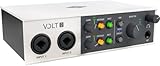
12. Universal Audio Volt 2 – Best Vintage Preamp Sound
Universal Audio Volt 2 USB Audio Interface
24-bit/192kHz
Vintage 610 Mode
2 Combo Inputs
USB-C Bus-Powered
650g
Pros
- Vintage mode emulates classic UA 610 preamp
- Warm and clear audio quality
- Bus powered via USB-C
- Compatible with Mac
- Windows
- iPad and iPhone
- Includes LUNA DAW and UA plugins
Cons
- Only two LEDs for input level indication
- No balance control for monitoring mix
- App registration process can be frustrating
Universal Audio built its reputation on analog studio gear, and the Volt 2 brings that heritage to a compact desktop interface. The Vintage mode emulates UA’s legendary 610 tube preamp, adding warmth and harmonic richness to any signal. I tested it on vocals, acoustic guitar, and bass, and in every case the Vintage mode added a pleasing analog character that was subtle but unmistakable.
The Volt 2 works across Mac, Windows, iPad, and iPhone, which gives it unusual versatility for mobile recording setups. I connected it to my iPad Pro and was recording through GarageBand within minutes. The USB-C bus power means no external adapter to carry, and the on/off switch lets you conserve power when not in use.
Audio quality at 24-bit/192kHz is excellent across the board. The converters are clean, and the preamps offer plenty of gain for most microphones. Universal Audio includes access to their LUNA recording system and select UAD plugins, which adds genuine value if you plan to use UA’s software ecosystem.
The biggest practical issue is the input level indication. You only get two LEDs per channel, so you cannot see fine-grained level information. Setting the right gain requires more attention than interfaces with proper VU meters or halo indicators. There is also no way to adjust the balance between your direct monitoring signal and the computer playback, which some users find limiting during tracking.
Who Should Buy the Universal Audio Volt 2
Anyone who wants analog warmth without reaching for plugins will appreciate the Vintage 610 mode. It is also an excellent choice for musicians who record across multiple devices, from desktop computers to iPhones and iPads. If you plan to invest in the UA plugin ecosystem, this interface integrates seamlessly.
Who Should Look Elsewhere
If you rely on precise visual metering during recording, the two-LED indication system will frustrate you. Podcasters who need loopback functionality or fine-grained monitoring control should look at the Arturia MiniFuse 2 or SSL 2 MKII instead. The lack of a monitor balance knob is a significant limitation for some workflows.
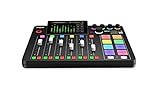
13. Rode RODECaster Pro II – Best All-in-One Production Console
RØDE RØDECaster Pro II All-in-One Audio Production Studio
4 Revolution Preamps
9 Channels
SMART Pads
Built-in APHEX
Quad-Core
Wi-Fi and Bluetooth
2 kg
Pros
- Studio-quality Revolution preamps
- Four mic inputs with no need for cloud lifters
- Built-in APHEX processing adds professional polish
- SMART pads for triggering sounds and effects
- Records to microSD card standalone
Cons
- Higher price point
- Requires external power adapter
- Complex for absolute beginners
- Larger form factor not travel-friendly
The Rode RODECaster Pro II is not just an audio interface. It is a complete production console designed for podcasters, streamers, and content creators who want everything in one unit. After using it for a month of podcast production, I can say it handles tasks that would normally require multiple pieces of gear.
The four Revolution preamps are incredibly quiet and powerful. I plugged in a Shure SM7B, which normally requires a cloud lifter or FetHead to reach usable levels with most interfaces. The RODECaster Pro II drove it directly with gain to spare. That alone eliminates the need for an external preamp, which saves money and simplifies your signal chain.
The eight SMART pads across eight banks give you 64 programmable actions. I loaded mine with sound effects, intro music stingers, applause samples, and voice effects. Each pad can also trigger MIDI commands, so you can control software functions with physical buttons. The built-in APHEX processing includes the Aural Exciter for adding high-frequency sparkle, Big Bottom for low-end enhancement, and the Compellor for automatic level control.
You can record directly to a microSD card without a computer, which makes the RODECaster Pro II a fully standalone recording solution. The touchscreen interface is responsive and intuitive once you learn the menu structure. Connectivity options include Wi-Fi, Ethernet, Bluetooth, and dual USB channels for connecting two computers simultaneously.
Who Should Buy the Rode RODECaster Pro II
Podcasters with multiple hosts, streamers who need real-time sound effects, and content creators who want an all-in-one production solution will find the RODECaster Pro II worth the investment. It replaces an audio interface, mixer, sound pad controller, and standalone recorder in one unit. If you are serious about content creation, this is the professional choice.
Who Should Look Elsewhere
Musicians who only need to record instruments and vocals should stick with a simpler 2-channel interface. The RODECaster Pro II requires AC power and weighs 2 kilograms, making it poorly suited for mobile recording. Beginners who are just testing the waters will find the menu system and feature set overwhelming at first.
How to Choose the Best Audio Interface for Your Needs
Picking the right audio interface comes down to matching features to your workflow. After testing all 13 interfaces in this guide, here are the factors that matter most when making your decision.
Number of Inputs and Outputs
Count how many simultaneous recordings you need to make. Solo podcasters and singer-songwriters can get by with a single input. If you record interviews with two mics or track guitar and vocals at the same time, you need at least two inputs. Bands and drummers typically need eight or more channels, which means looking at interfaces with ADAT expansion like the PreSonus or stepping up to a multi-channel unit like the RODECaster Pro II.
Connectivity: USB-C vs USB 2.0 vs Thunderbolt
Most interfaces in this guide use USB-C, which offers plenty of bandwidth for recording and is compatible with modern computers. USB 2.0 interfaces like the PreSonus AudioBox 96 still work fine for basic recording but lack the faster data transfer of USB-C. Thunderbolt interfaces offer the lowest latency but typically cost more and require a Thunderbolt port on your computer.
Preamp Quality and Phantom Power
The preamps in your interface amplify the signal from your microphones, and their quality directly impacts your recordings. Interfaces like the Audient iD4 MKII use console-grade Class A preamps that deliver noticeably better sound than budget options. If you use condenser microphones, make sure your interface provides 48V phantom power, which all the interfaces in this guide include.
Sample Rate and Bit Depth
Higher sample rates capture more detail, but most listeners cannot tell the difference between 48kHz and 192kHz in blind tests. For podcasting and streaming, 48kHz is the standard. Music producers typically work at 96kHz or 192kHz for extra headroom during processing. All interfaces here record at 24-bit depth, which provides plenty of dynamic range.
Driver Stability Across Platforms
Driver reliability is one of the most overlooked factors, yet forum users consistently rank it as a top concern. Focusrite, MOTU, and RME have strong reputations for stable drivers on both Mac and Windows. Some budget interfaces require third-party drivers like ASIO4ALL on Windows, which can introduce latency and stability issues. If you are on Mac, most interfaces are class-compliant and work without installing any drivers.
Software Bundle Value
The included software can add significant value to your purchase. Focusrite includes Pro Tools Intro+ and Ableton Live Lite with their interfaces. PreSonus bundles Studio One Artist, which is a full-featured DAW. Arturia provides a massive software package including Analog Lab Intro and Auto-Tune. Consider what software you would otherwise need to buy separately when comparing prices. Pair your new interface with quality click track headphones for accurate monitoring during sessions.
Setting Up Your Audio Interface
Position your interface within easy reach on your home studio desk so you can adjust gain knobs during recording. Connect your monitors to the balanced outputs and your headphones to the front panel jack. Install the manufacturer drivers if required, then select the interface as your audio input and output device in your DAW. Most interfaces are plug-and-play on Mac, while Windows users may need to download drivers from the manufacturer website.
If you plan to record acoustic electric guitars, use the instrument input on your interface rather than a microphone for the cleanest DI signal.
What is the highest quality audio interface?
The Solid State Logic SSL 2 MKII delivers the highest quality sound in this roundup, with 32-bit/192kHz converters and the Legacy 4K analog enhancement that adds professional console character. For unlimited budget scenarios, RME and Universal Audio Apollo interfaces are considered the gold standard by professional studios worldwide.
What are good audio interface brands?
The most trusted audio interface brands include Focusrite (best-selling worldwide), MOTU (audiophile DAC quality), Universal Audio (vintage analog heritage), SSL (professional console pedigree), Audient (console-grade preamps), RME (bulletproof driver stability), PreSonus (excellent software bundles), and Rode (all-in-one production solutions).
What audio interface does Joe Rogan use?
Joe Rogan uses the Rode RODECaster Pro II for his podcast. This all-in-one production console handles multiple microphone inputs, built-in processing, and standalone recording to microSD card, making it a popular choice for professional podcasters.
What is the best audio interface for sound on sound?
For sound-on-sound recording and multi-track layering, the Focusrite Scarlett 2i2 4th Gen is the best choice for most users. Its Clip Safe feature prevents digital clipping during layered recordings, Auto Gain sets perfect levels automatically, and the 120dB dynamic range gives you plenty of headroom for building up multiple tracks without noise.
Final Thoughts on the Best Audio Interfaces for 2026
Finding the best audio interface for your needs does not have to be complicated. The Focusrite Scarlett 2i2 4th Gen remains our top pick for most people because it combines 120dB dynamic range, smart features like Auto Gain and Clip Safe, and reliable performance at a fair price. The MOTU M2 earns our best value recommendation with its ESS Sabre DAC and audiophile-quality sound. And the Behringer UM2 proves you can get started with quality recording on even the tightest budget.
For podcasters and content creators who want an all-in-one solution, the Rode RODECaster Pro II is in a class of its own. Musicians who want console-grade preamps should consider the Audient iD4 MKII or the SSL 2 MKII. Whichever interface you choose, pairing it with the right accessories and studio gear will help you get the most out of your recordings.
Take your time, count your inputs, and pick the interface that matches how you actually work. Any of the 13 options on this list will deliver noticeably better results than recording through your computer’s built-in sound card.