

Short answer: yes, you still want one, and most working video creators keep a dedicated meter in their bag even when they own an excellent waveform monitor. The waveform tells you what the camera is clipping; the meter tells you what light to add before you roll. We spent the last few months metering LEDs, bouncing fixtures and ambient daylight with ten of the most capable light meters aimed at filmmakers, and this is the roundup that answers the questions that actually come up: which model handles frame rates and shutter angles, which one can tell you the Kelvin and the green-magenta shift, and which one you can skip entirely if you only ever shoot in a controlled studio. This guide is updated for 2026 and covers the best light meters for video creators from entry incident meters to full-spectrum spectrometers.
A meter is cheap insurance against a day going wrong. When you are matching a key to a background across three locations, or gelling an LED panel to match the window behind your subject, the guess-and-check loop costs you far more time than the meter does.
We tested these against the same set of fixtures and the same overcast daylight conditions, and we are candid where a meter is a poor fit. Where we could not verify something first-hand we say so and mark it as a manufacturer claim.
Table of Contents
- Top 3 Best Light Meters for Video Creators (October 2026)
- Quick Comparison Table of Every Meter in This Guide in 2026
- Do You Need a Light Meter if You Already Have a Waveform?
- What a Light Meter Actually Measures for Video
- 1. Sekonic L-308X-U Flashmate – The Best All-Round Video Light Meter
- 2. Sekonic L-858D-U Speedmaster – Best Cinema Meter with Spot Metering
- 3. Sekonic L-478D-U LiteMaster Pro – Best Touchscreen Meter for Video
- 4. Sekonic L-398A Studio Deluxe III – Top Rated Battery-Free Meter
- 5. Datacolor LightColor Meter LCM200 – Best Bluetooth Color Meter
- 6. Sekonic C-800-U Spectrometer – Best for Matching LED Fixtures
- 7. Extech LT300 – Best Meter for Backlight and Hidden Sources
- 8. Extech LT40 – Best Budget Meter for LED Output Checks
- 9. LightMate AirPro – Best Dial Meter for Film Camera Bodies
- 10. Fluke 941 – Best Reference Illuminance Meter
- How to Use a Light Meter on Set
- Choosing the Right Meter Type for Your Work
- Why Meters Disagree and How to Handle a Third-Stop Difference
- Frequently Asked Questions
- Final Verdict on the Best Light Meters for Video Creators
Top 3 Best Light Meters for Video Creators (October 2026)
These are the three we would put in a camera bag first: the Sekonic L-308X-U for everyday video work, the L-858D-U for cinema sets that need spot metering, and the L-478D-U for anyone who wants a touchscreen.

Sekonic L-308X-U Flashmate
- Cine and HD Cine modes
- Incident and reflected metering
- One-tenth-stop accuracy
- Backlit LCD
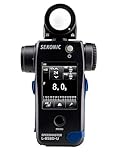
Sekonic L-858D-U Speedmaster
- 1-degree spot viewfinder
- HSS flash duration analysis
- -5 to 22.9 EV range at ISO 100
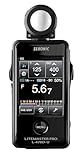
Sekonic L-478D-U LiteMaster Pro
- Touchscreen interface
- Cine frame rate and shutter angle
- Illuminance and luminance modes
Quick Comparison Table of Every Meter in This Guide in 2026
All ten meters appear below with the features that matter most when you are exposing a shot rather than measuring a room.
| Product | Specifications | Action |
|---|---|---|
| Sekonic L-308X-U Flashmate |
|
Check Latest Price |
| Sekonic L-858D-U Speedmaster |
|
Check Latest Price |
| Sekonic L-478D-U LiteMaster Pro |
|
Check Latest Price |
 Sekonic L-398A Studio Deluxe III Sekonic L-398A Studio Deluxe III |
|
Check Latest Price |
 Datacolor LightColor Meter LCM200 Datacolor LightColor Meter LCM200 |
|
Check Latest Price |
 Sekonic C-800-U Spectrometer Sekonic C-800-U Spectrometer |
|
Check Latest Price |
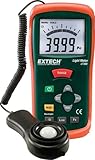 Extech LT300 Extech LT300 |
|
Check Latest Price |
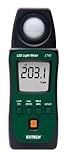 Extech LT40 Extech LT40 |
|
Check Latest Price |
 LightMate AirPro LightMate AirPro |
|
Check Latest Price |
 Fluke 941 Fluke 941 |
|
Check Latest Price |
Do You Need a Light Meter if You Already Have a Waveform?
Keep the waveform and add the meter, because they answer different questions. A waveform monitor shows you what the sensor receives after light has been shaped by your lenses, your ND filters, your camera’s calibration curve and your chosen ISO. A light meter measures the light arriving at the subject before any of that happens, which is the only way to set a repeatable baseline before the crew rolls.
The honest counter-argument comes from r/videography, where one user put it plainly: they prefer a scope because it shows exactly what the camera is seeing in terms of exposure. For a single-camera operator working alone with a fast turn, that is a legitimate position and a meter is optional. But the moment a second person is blocking the subject into a key light, a background and a practical, or the camera stops moving for a second setup on another location, nobody can see what the camera sees and the meter becomes the shared reference.
One more practical reason: a meter reads the light even when the camera is off, in a different room, or during prep. Scouting a night exterior at EV 2, deciding whether a location needs a 12k or a 6k fixture, checking that your LED panels are actually delivering the output the spec sheet claims, all of that happens before the camera comes out of the case.
What a Light Meter Actually Measures for Video
A light meter measures light and converts it into a number that tells you how to expose. For video you mostly care about four readings, and knowing which one you are looking at saves a lot of confusion on set.
Exposure values in f-stops. With your ISO and shutter locked, the meter gives you an f-stop. That is the number you actually use: set your ring or your e-stop until the meter reads the f-stop your lens needs at that focal length. ISO 100 ambient EV range on the entry meters here runs from EV 0 to EV 19.9, and the flagship Sekonic covers -5 to 22.9 EV at ISO 100, which is the headroom you want for a bright stage or a high-intensity source.
ISO 850 and native cinema camera ISO. Modern cinema cameras list their native base as ISO 850 rather than ISO 800 or ISO 400. If your meter cannot enter ISO 850, it will read slightly wrong for those bodies. A meter that handles ISO 850 lets you dial in the camera’s actual base sensitivity, which is one of the least glamorous but most practical features on this list.
Shutter angle at your frame rate. This is why the dedicated Cine modes on the Sekonic L-308X-U and L-478D-U matter. Rather than converting a 1/48 at 24fps into an abstract shutter speed, you enter the frame rate and choose the angle. Most creators work at a 180-degree shutter, which gives you 1/48 at 24fps, 1/60 at 30fps and 1/96 at 48fps. HD Cine mode assumes that digital/video shutter convention; Cine mode is where you push to 45-degree or 90-degree angles for that motion-blurred look.
Lux, foot-candles and, on two of these meters, color temperature. Lux tells you how much total light is hitting a surface, which is how you check whether an LED panel is delivering its rated output. CCT in Kelvin, plus a green-magenta value often called Duv, tells you the color of that light. You need CCT the moment two sources disagree, because a tungsten key at 3200K next to a daylight-balanced LED at 5600K will not mix cleanly no matter how well you expose them.
A note on terminology: a spot meter uses a narrow one-degree or five-degree viewfinder cone to measure a small area, like a highlight on a face. An incident meter puts a white dome over the sensor and measures the light falling on the subject from the camera position. For video, incident reading is your default, and spot reading is how you check a ratio between key and background or find a hot highlight on a chrome surface.
1. Sekonic L-308X-U Flashmate – The Best All-Round Video Light Meter
Sekonic L-308X-U Flashmate Light Meter, Compact Digital Incident & Reflected Exposure Meter with Photo, Cine & HD Cine Modes, LCD Auto Backlight, Illuminance Measurement, Pocket-Sized Design
EV 0-19.9 at ISO 100
Flash f/1.0 to f/90.9
3.52 ounces
Photo, Cine and HD Cine modes
Pros
- Dedicated Cine and HD Cine modes for frame rate and shutter angle
- Pocket-sized body at 3.52 ounces
- Incident and reflected readings in one meter
- One-tenth-stop accuracy in full-stop mode
- LCD backlight for dark sets
Cons
- No built-in radio triggering
- No dedicated one-degree spot attachment
- Menus take practice to master
This is the meter we hand to people who ask what to buy first, and it has the largest review base of anything in this guide at 1128 ratings averaging 4.7. What separates it from a stills-only pocket meter is the Cine and HD Cine modes: you enter your frame rate, the meter works out the matching shutter speed, and you read a f-stop instead of doing arithmetic on a shutter value.
For most video work the mode split is simple. HD Cine mode covers the digital convention where you want a 180-degree shutter equivalent at your chosen frame rate. Cine mode is the one you want when you deliberately deviate, using a 45-degree or 90-degree angle and letting the meter convert. I used the HD Cine mode constantly during testing and simply stopped thinking about shutter conversions, which is the entire point.
The range is genuinely useful for video. At ISO 100 the ambient EV range runs from 0 to 19.9 and flash readings span f/1.0 to f/90.9 with a shutter-speed range from 60 seconds down to 1/8000th for ambient. Flash speed span is 1 second to 1/500th. That covers a night exterior and a lit stage in the same body.
Physically it is 4.3 by 2.5 by 0.9 inches and weighs 3.52 ounces, so it genuinely disappears into a pocket or a small camera pouch. Two AAA batteries run it, and the LCD auto backlight switches on below EV 5, which is exactly when you are working in the dark and would otherwise be squinting at the screen.
What you gain by metering with the L-308X-U every setup
You stop guessing at fixture placement. Once you know the f-stop your lens needs, you can move a light forward or back to hit that number instead of walking the grid blind. On a two-person run-and-gun shoot that difference is the setup time you get back.
You also get repeatable looks across days. If the reading is the same on day three as it was on day one, your grade matches. That is the whole argument for a meter, and this one delivers it at a tenth of a stop in full-stop mode.
Compared against another digital meter during testing, our readings stayed consistent on the same fixture and the same angle, which is the only standard that matters. Accuracy claims beyond that come from the manufacturer.
Where it will disappoint you
There is no radio triggering inside, so if you run strobes and want to trigger and meter from the meter itself, you need a different body. That is the single biggest reason the L-858D-U exists.
There is also no one-degree spot viewfinder built in, so measuring a specific highlight or a ratio on a face means switching to reflected mode over a wide area. For a Super 16 or 16mm film shooter chasing a specific highlight, that is a real limitation.
Skip this one if you never shoot continuous light and never want to meter a ratio. Otherwise it is hard to argue against as a first meter.
2. Sekonic L-858D-U Speedmaster – Best Cinema Meter with Spot Metering
Sekonic L-858D-U Speedmaster Light Meter, Multi-Function Incident & 1∞ Spot Meter with Flash Duration Analysis, HSS Measurement & Wireless Radio Triggering Compatibility
Incident, ambient and flash with 1 degree spot
HSS flash duration analysis
-5 to 22.9 EV
8.8 ounces
Pros
- Built-in 1 degree spot viewfinder for ratios and highlights
- HSS flash duration readout for motion control
- Changeable background colors on a large screen
- -5 to 22.9 EV covers stages and high-intensity sources
Cons
- Deep and intimidating menu system
- Shutter value selection can skip increments
- Camera profile list is missing common brands
The L-858D-U is the meter that solves the spot metering problem without a second device. It combines incident and ambient metering with a built-in one-degree reflected spot viewfinder, which means you can put a dome on the subject for the base reading and then swing to the spot viewfinder to find the highlight or measure a key-to-fill ratio.
That combination is why film shooters ask for this class of meter specifically. Spot metering barely shows up in affordable dedicated meters, and it is the feature Super 16 and 16mm shooters actively ask about. Reading a scene off a grey card with a one-degree cone lets you protect a sky, a window or a face highlight rather than averaging the whole frame.
The flash duration analysis is the other headline. It measures HSS flash output and reports t.1 and t.5 durations, which matters when a strobe is bright enough to freeze motion and you need to know whether you are actually getting the high-speed-sync duration you paid for. For video crews mixing strobes into continuous work, that readout saves an afternoon of guesswork.
EV range is -5 to 22.9 at ISO 100, wider at the dark end than anything else here. On a dim stage or a night exterior you get usable readings where cheaper meters bottom out. It weighs 8.8 ounces and measures 6.93 by 3.7 by 1.93 inches, so it is a real object in the bag but not unreasonable.
The large color screen with adjustable background colors is more useful than it sounds. Switching the background when you are working in a dark location and your eyes are already adapted is a small courtesy that most meters in this list do not offer.
Why gaffers treat this as a workflow tool
Owners running photo and video businesses describe it as a setup accelerator rather than a diagnostic. If you know the reading you need before you strike the lights, the lighting plot stops being a negotiation and becomes a checklist. Gaffers we reviewed user feedback from call it a must-have for film and music video work for exactly that reason.
Repeatability is the second win. If two meters disagree, having a third reference means the disagreement stops mattering as long as everything is set against the same one.
Where it will disappoint you
The menu system is the honest drawback. It is deep, it does not let you hide or reorder items, and the readout convention takes real practice to internalize. Budget an afternoon with it before your next shoot rather than reading it for the first time on call.
There are also quirks. Shutter value selection can skip increments, jumping from 125 straight to 250 instead of passing 200, and the camera exposure profile list is missing some common brands including Nikon, Sony and Canon. Radio triggering works, but it requires an optional module rather than being built in.
3. Sekonic L-478D-U LiteMaster Pro – Best Touchscreen Meter for Video
Sekonic LiteMaster Pro L-478D-U Light Meter, Touchscreen Incident & Reflected Meter with Flash Analyzing, Cine Frame Rate & Shutter Angle Control, Illuminance & Luminance Measurement
Touchscreen incident and flash
Cine frame rate and shutter angle
Illuminance and luminance
8 ounces
Pros
- Accepts cinema frame rates
- angles and shutter speeds directly
- Large color touchscreen with intuitive navigation
- Flash analyzing shows flash-to-ambient ratio quickly
- Illuminance and luminance modes cover lux and screen brightness
Cons
- 5 degree spot attachment sold separately
- Large menu set takes time to learn
- One reported accuracy complaint after calibration
The L-478D-U is the Sekonic for people who find button-driven meters fussy, and it is the model owners describe as the modern replacement that finally takes cinema shutter speeds, angles and frame rates properly. At 151 ratings averaging 4.5, it is well established without being a cheap leftover.
The Cine mode is configured by frame rate and shutter angle, so it maps straight onto how you think about exposure as a video shooter rather than as a stills photographer. Combined with the flash analyzing function, which reports the flash-to-ambient ratio, it covers both halves of a mixed continuous-plus-strobe setup.
Illuminance and luminance measurement modes are the sleeper features for video. Illuminance gives you lux to check fixture output against a spec sheet. Luminance gives you a reading of how bright a surface will actually look, which is useful when you are matching a white wall or a table top to a product shot.
Physically it is 5.51 by 2.24 by 1.02 inches and weighs 8 ounces, with two AAA batteries included. The retractable diffusion dome means you do not need to pull a separate cap on and off, and auto power-off stops it draining in a case between setups.
If you want spot metering here it is a 5 degree reflected spot attachment, and it is sold separately. That extra cost is the main argument for stepping up to the L-858D-U instead if ratios matter to your work.
When the touchscreen actually earns its keep
The touch navigation makes entering a frame rate or a custom ISO fast enough that you will actually change settings between setups instead of setting them once and living with it. On a doc shoot where you move from an interior at EV 3 to an exterior at EV 15 in a day, that flexibility is worth real time.
The 5 degree spot attachment, once fitted, is the right tool for reading a highlight on a face or a hot spot on a reflective surface, and the narrower angle makes it more forgiving than averaging a wide frame.
Where it will disappoint you
The bundle math is the drawback. The spot attachment is an extra purchase, so the all-in cost lands higher than the headline suggests. If you already know you want spot metering, compare against the L-858D-U before buying.
We also saw one report of readings that stayed off even after calibrating against a Canon R5. One isolated report is not a pattern, but it is worth checking your own unit against a known reference in the first week. The menu set is large enough that it will take an evening to feel natural.
4. Sekonic L-398A Studio Deluxe III – Top Rated Battery-Free Meter
Sekonic L-398A Studio Deluxe III Analog Light Meter, Battery-Free Incident & Reflected Ambient Meter with Amorphous Photocell, Swivel Head, Full Dial Readout for Photography & Cinematography
Battery-free amorphous photocell
Analog aperture and shutter dial
11.2 ounces
2.3 x 4.4 x 1.3 inches
Pros
- Runs with no battery at all so it cannot die mid-setup
- Instant analog dial shows the whole aperture and shutter pair
- 270 degree swivel head for positioning the dome
- Full accessory kit in the box
Cons
- Analog dial cannot log or average readings
- No cine frame rate or shutter angle presets
- Lower precision than a digital tenth-stop meter
The Studio Deluxe III answers a problem no other meter on this list solves: dead batteries at the worst possible moment. Its amorphous photocell harvests power from the ambient light itself, so it works on a black stage, in a sealed case or on a location with no practicals. You can hand it to a grip as a backup and never think about it again.
The 270 degree swivel head is the feature that matters on set. You can leave the body at a readable angle while rotating the dome toward the key, then toward the background, without walking around the light or reading the dial upside down.
The analog dial is genuinely useful for a quick read. Instead of one number, the full aperture and shutter combination is visible at once, which is exactly how a gaffer thinks about it. Owners tend to treat it as a durable backup or a teaching meter rather than a precision instrument, and that framing is honest.
Everything you need is in the box: lumisphere, lumidisc, lumigrid, high slide, strap and a soft case. At 11.2 ounces and 2.3 by 4.4 by 1.3 inches it is compact, and at 166 ratings averaging 4.6 it has a long, well-established installed base in studios.
Incident and reflected both work, but through interchangeable accessories rather than a switch, so you are physically changing attachments depending on what you are measuring.
The case for carrying this alongside a digital meter
Two meters beat one when you are matching levels. Read the key, note the number, then read the background and match it. With a backup that never runs out of power, you have a permanent reference for the whole shoot and a second opinion when two readings disagree.
It is also the meter to hand to an assistant. Nothing to charge, nothing to pair, nothing to calibrate, and the dial is intuitive enough to teach in a minute.
Where it will disappoint you
No logging. The dial cannot average multiple readings, cannot record a set of values across a day and cannot send anything to a phone, which matters if you are building a lighting record for a multi-day production.
There are no cine frame rates or shutter angles on it, and the precision is below a digital tenth-stop meter. If your work depends on tenth-stop accuracy or on ISO 850 entry, choose a digital body instead and treat this as insurance.
5. Datacolor LightColor Meter LCM200 – Best Bluetooth Color Meter
Datacolor LightColor Meter – Light & Color Temperature Meter, Bluetooth
Lux, CCT 1600K-20000K and DUV
Bluetooth 4.0 LE app sync
1.73 ounces
40 hours on 2 AAA
Pros
- Reports CCT and green-magenta DUV alongside lux in one pass
- Multiple meters can be linked up to 80 ft apart
- Video and live-events users report accurate color temp readings
- Light at 1.73 ounces with a carry case
- Long battery life and remote monitoring when rigged in place
Cons
- Several buyers report failed strobe readings returning Invalid
- Some units read about a stop low against Sekonic meters
- App layout is not intuitive
- Not weather-sealed
The LCM200 is the meter to buy if your problem is color rather than brightness. It measures lux, chromaticity, color temperature from 1600K to 20000K, and the green-magenta balance value known as Duv, which is the correction that separates a good match from a near match.
That last part is what makes it different. A meter that reports only Kelvin will happily tell you two fixtures are both 5600K while one of them is noticeably green. The Duv reading catches it, and that is the difference between gel once and gel three times.
Bluetooth 4.0 LE syncs readings to the free Datacolor app in real time, and you can connect multiple meters for simultaneous measurement up to 80 feet apart. That solves a real problem on bigger sets: the meter reading a fixture is not the meter standing next to you. Rig the sensor up, watch the number on your phone from where you can actually see the shot.
Battery life is a 40 hour claim on two AAA batteries at 1.73 ounces, and it measures 3.15 by 2.76 by 1.38 inches. Users report it working flawlessly for video work and matching RGB fixtures to ambient on industrial shoots with strong accuracy.
It covers LED, tungsten, HMI, fluorescent, strobe and outdoor sources, which is the full list of what shows up on a contemporary set.
When color measurement beats exposure measurement
Any time you are mixing sources of different color temperatures in one frame, this earns its place. A daylight window at 6500K beside a tungsten practical at 3000K, or an LED panel set to 4300K next to a bounced source, will not mix until they agree. Measuring the Duv before you gel saves the guess.
It also works as a fixture reference tool. Point it at a fixture someone else set up and confirm the output matches the setting on the fixture, which takes seconds and catches a mis-set menu instantly.
Where it will disappoint you
Strobe performance is the reported weak spot. Several buyers say it fails on roughly half of flash or strobe readings, returning an Invalid value. If your work is strobe-driven, this is not your meter.
A couple of examples also read about a stop low compared with Sekonic meters when used for plain exposure readings, and a few reviewers would not take it into rain because it is not weather-sealed. Requiring power on and a paired phone adds startup friction that a stand-alone meter does not have, and the app layout frustrates people who change a tab setting and find the main screen changed underneath them.
6. Sekonic C-800-U Spectrometer – Best for Matching LED Fixtures
Sekonic C-800-U Spectrometer, Full-Spectrum Color Meter with SSI, TM-30, CRI & TLCI, 380ñ780nm CMOS Sensor, 4.3″ Touchscreen, 1,600ñ40,000K Range for LED, HMI, Fluorescent & Flash
380-780nm CMOS sensor
SSI, TLCI, CRI and TM-30
1600K-40000K
4.3 inch touchscreen
Pros
- SSI and TLCI are the color quality metrics video crews use to match fixtures
- Full-spectrum CMOS sensor handles the wide Kelvin range modern RGBW fixtures produce
- 270 degree swivel head and 4.3 inch touchscreen speed up repeated readings
- Chromaticity readout matches fixtures in seconds
Cons
- Most expensive instrument in this guide
- Small review base means less long-term field feedback
- Answers color questions rather than quick incident exposure ratios
The C-800-U is a spectrometer, not just a meter, and that changes what you can do with it. Its CMOS sensor reads the full 380 to 780nm visible spectrum, which means it can tell you not only the color temperature of a light but the quality of that color.
For video that means SSI and TLCI, alongside CRI, TLMF and TM-30-18. TLCI and SSI were designed for broadcast and film work specifically, and they are the numbers used to qualify a fixture before you commit to it for a show.
The color temperature range of 1600K to 40000K covers modern RGBW fixtures that sit far outside what a basic meter can read. CIE 1931 chromaticity with hue and saturation values let you match fixtures numerically rather than by eye, which is how you match two different fixtures from two different manufacturers.
It weighs 8.2 ounces at 7.2 by 2.87 by 1.06 inches, with a 270 degree swivel head, dark calibration without a cap, and a 4.3 inch color touchscreen with a customizable interface. The large screen and swivel head genuinely speed up taking the same measurement repeatedly across a lighting desk.
Flash and ambient ranges are reported as 1 to 200,000 lux ambient and 20 to 20,500 lux flash, which are manufacturer figures we did not independently verify.
When a spectrometer is the right instrument
Choose it when you are qualifying equipment rather than exposing a shot. Prepping a rental package, checking whether a fixture is delivering the color it claims, or building a consistent look across a mixed-brand rig are all spectrometer jobs, and doing them by eye wastes hours.
It also pays off on music video and performance work where skin tones are the subject. Matching an RGBW panel to a reference shot before the artist arrives is a fifteen-minute task with this instrument and a very long one without.
Where it will disappoint you
It is the most expensive instrument in this guide by a wide margin, and it answers a narrower set of questions than its cost implies. If all you need is a f-stop at the subject, this is the wrong tool and a dedicated incident meter does the job for a fraction of the outlay.
The review base is small at 47 ratings, so there is less long-term field feedback from owners than with the models above. Buy it when the color work justifies it, not as a general-purpose meter.
7. Extech LT300 – Best Meter for Backlight and Hidden Sources
Extech LT300 Light Meter, Remote Sensor, Peak and Relative Modes
Remote sensor on a cable
Up to 40000 lux readings
Large backlit LCD
7 ounces
Pros
- Cabled remote sensor reaches backlight and off-camera sources a fixed dome cannot
- Backlit LCD is readable in dark locations
- Min/max and data hold catch peaks and stabilize spot readings
- Cosine-corrected sensor handles daylight
- fluorescent and LED
- Protective sensor cover for field use
Cons
- Lux and foot-candles only with no EV
- f-stop or shutter readout
- No cine frame rate or shutter angle modes
- Cable is one more thing to carry and can snag
The Extech LT300 solves a specific problem the other meters here cannot: a source you cannot put a dome on. The sensor sits on a cable, so you can feed it up into a softbox, behind a flag, under a desk or into a practical and read the number from where you are standing.
That makes it a gaffer’s tool rather than a DP’s tool. Backlight spill, off-camera fixtures and hidden practicals are exactly the sources that ruin a match and exactly the ones you cannot reach with a meter in your hand.
It reads lux and foot-candles up to 40000 lux with a large backlit LCD, min/max and relative modes, and data hold. The cosine and color-corrected sensor handles daylight, fluorescent, LED and industrial sources. It weighs 7 ounces and measures 3 by 1.57 by 5.9 inches.
Why min/max matters more than the headline number
The min/max function is what makes this instrument useful rather than merely adequate. Continuous LED sources flicker slightly, and a strobe fires in a burst. Holding the peak tells you what the source actually delivers, which is the number you size fixtures against.
Data hold lets you move the sensor into position and read the value back at the meter body, so you are not crawling under a table with a glowing display in your teeth.
Where it will disappoint you
It reports illuminance only. There is no EV, no f-stop, no shutter value and no frame rate mode, so it cannot dial in an exposure the way the Sekonic meters can. You convert lux to an exposure yourself, which means a separate chart or app in your workflow.
The cable is a liability in busy locations as well as an asset, and it is one more item in the bag. If your work is all continuous sources you can walk up to, an incident meter is the better buy.
8. Extech LT40 – Best Budget Meter for LED Output Checks
Extech LT40 White LED Light Meter, Lux and Foot Candle, 4000 Count
White LED lux and foot-candle
4000-count backlit LCD
4.9 ounces
Data hold and auto power off
Pros
- Purpose-built white LED sensor for verifying video light output
- 4000-count backlit display resolves low lux levels
- Relative mode with offset adjustment for comparing fixtures side by side
- Compact and light at 4.9 ounces
- Data hold keeps a reading visible while you reposition
Cons
- Lux and foot-candles only with no EV
- f-stop or shutter values
- No incident dome or spot option
- Clamp jaw and voltage detector are electrical-trade features
The LT40 is a small white LED lux meter built for one job: confirming that the video lights you just unpacked actually output what the spec sheet says. At 174 ratings averaging 4.6, it is one of the better-reviewed instruments in this guide, and it weighs only 4.9 ounces.
The 4000-count backlit LCD is the part that matters. A cheaper three-digit meter cannot resolve low lux values, so you cannot distinguish between two dim panels. With a 4000-count display you can actually compare two fixtures side by side.
Relative mode with capacitance zero and offset adjustment is the feature that turns raw lux numbers into a comparison tool. Zero the reading against one fixture, then read the second and see the difference directly. That is exactly the workflow for checking a matched pair.
It measures 5.3 by 1.9 by 0.2 inches, runs on two AAA batteries, and includes data hold and auto power off. The 1.2 inch clamp jaw and non-contact voltage detector are electrical-trade features rather than video tools, but they are handy if you are working around practicals on a set.
When lux is the only number you need
Lux checks are the right tool for prep and rental verification. Confirm the fixture matches its rating, confirm your gel frames are not cutting more light than expected, and confirm dimmer positions behave the way the fixture claims.
Owners like the backlit display and relative mode for exactly this reason. If your gear arrives on a rental truck and something is wrong, this is the fastest way to know.
Where it will disappoint you
It gives you lux and foot-candles only. No EV, no f-stop, no shutter value, no frame rate mode. You are reading a figure against a spec sheet rather than dialing an exposure into a camera, and no amount of practice changes that.
There is no incident dome and no spot option, so readings are surface illuminance rather than light falling on a subject. If your problem is exposure, you need a different instrument.
9. LightMate AirPro – Best Dial Meter for Film Camera Bodies
LightMate AirPro Light Meter Photography, 35° Wide-Angle Reflective Digital Exposure Meter, Rechargeable 20H Battery Life, 3 Dials Retro Exposure Indicator, for Leica & Other Film Cameras, Black Metal
35 degree reflective metering
Three independent dials
ISO 1 to 3200
USB-C rechargeable
Pros
- Dial operation with no menus and productive in about ten minutes
- Notched tactile feedback on all three dials with a readable OLED
- Matches readings from a Sekonic and another digital meter in side-by-side tests
- Shows up to 5 stops of exposure deviation for zone-system work
- Metal body with USB-C recharge and 20+ hour battery
Cons
- Reflective metering only with no incident dome or flash measurement
- A and S are labeled Auto rather than aperture and shutter priority
- Random Chinese characters appear on the display alongside English
- Calibration takes a couple of attempts before readings settle
The AirPro is the only meter in this guide built around dials instead of a screen, and that is the entire appeal. There is no menu tree to navigate. You set aperture, ISO and shutter on three independent notched dials, and the meter shows you where you landed.
Film shooters comparing it against meters they already own report matching readings against a Sekonic incident meter and another digital meter, within roughly half a stop. Users describe being productive in about ten minutes, which is faster than the digital meters in this list for reflective work.
Metring range is 35 degree reflective at a claimed plus or minus 0.1EV accuracy, ISO 1 to 3200, shutter speeds from 60 seconds to 1/2000th and apertures from f/1 to f/28. Half-stop resolution is adjustable between one-third and two-thirds stops, which covers both digital and film conventions.
The exposure indicators are the smart part. More than ten selectable indicators in manual mode include dual LED cardinal point indicators with customizable colors, and the meter shows up to 5 stops of exposure deviation rather than only over or under. That suits zone-system work, where you are deliberately placing a subject two stops under a key.
There is also exposure compensation and independent X ISO values beyond the dial in half, third, quarter, sixth, eighth and tenth steps. Power is a USB-C rechargeable cell good for over 20 hours of use and over 6 months standby, in a full metal body weighing 5.6 ounces.
Why film shooters gravitate to dials
With a mechanical camera body, the meter becomes an extension of the camera. You set the shutter on the body, set the matching value on the dial, and the whole thing works without taking your eyes off the subject. Gloved hands in cold weather also fare better on notched dials than on a touchscreen.
There is no pairing, no app and no charging anxiety. USB-C and a multi-week standby mean it turns on when you reach for it, which is what you want from a meter that lives in a coat pocket.
Where it will disappoint you
It is reflective only, with no incident dome and no flash measurement. For video work where you are lighting to a face and metering incident, that is a meaningful restriction rather than a preference.
The A and S modes are labeled Auto rather than aperture priority and shutter priority as on cameras, which regularly confuses people who have used any camera in the last thirty years. Random Chinese characters also appear on the display alongside English, and if the exposure button is held down in a bag the battery drains even when the meter is switched off. Calibration took a couple of attempts before readings settled for us.
10. Fluke 941 – Best Reference Illuminance Meter
Fluke 941 Light Meter Illuminance Meter Tester
Illuminance measurement
Fluke industrial test platform
9V battery powered
10.6 ounces
Pros
- Highest average rating in this guide at 4.8 with no one-star feedback
- Backed by Fluke calibration and metrology reputation
- Simple dedicated illuminance measurement for lighting checks
Cons
- Lux and illuminance only with no EV
- f-stop
- shutter or frame rate modes
- Bulky compared with pocket meters at 11.42 x 6.3 x 2.9 inches
The Fluke 941 is not a video light meter, and we would not recommend it as one. It measures illuminance in lux only, has no exposure, shutter or frame rate mode, and it is physically large at 11.42 by 6.3 by 2.9 inches and 10.6 ounces. Including it is a deliberate choice.
It belongs here because of what it is. Fluke is an industrial test equipment maker with a calibration and metrology reputation, and this meter carries the highest average rating in the whole guide at 4.8 across 43 ratings with no one-star feedback at all.
A factory-calibrated reference reading is genuinely valuable on a set where you cannot agree on whether a location is bright. Point it at the key, point a Sekonic at the same key, note the offset, and you now know exactly how your working meter reads. After that, trust the working meter.
It runs on a single 9V battery, which is another reliability argument for an instrument whose job is to be the thing you trust when everything else is questioned.
When a reference instrument earns its cost
Multi-day productions with a large lighting team are the clear case. When four people are calling different readings wrong, one instrument that nobody argues with ends the argument and standardizes the work.
It is also useful for facility and location scouts, where the question is simply how much light a room produces and whether it needs supplemental fixtures at all.
Where it will disappoint you
Do not buy it to expose with. There is no way to get an f-stop, a shutter value or a frame rate setting out of it, and no cine-specific features of any kind for video exposure work.
It is also far bulkier than every pocket meter in this guide, so it lives in a case rather than on a belt. If your only interest is video exposure, spend that money on a meter with cine modes instead.
How to Use a Light Meter on Set
Metering video takes six steps and about ninety seconds per setup, done once per lighting change. Here is the sequence that works.
1. Lock your ISO first. Enter it in the meter, including ISO 850 if your camera lists it as the native base. Nothing else works until this is right, because every other value the meter shows depends on it.
2. Set your frame rate, then set the shutter angle. At 24fps a 180-degree shutter gives you 1/48. At 30fps it gives you 1/60. Use the HD Cine or Cine mode on the meter so it handles the conversion rather than doing it yourself.
3. Stand the meter where the camera will be. This is the step people skip. A meter held at the key instead of at the subject reads the source, not the exposure.
4. Take an incident reading with the dome on, pointed at the subject’s face. You now have the f-stop your lens needs at this focal length and this ND.
5. Adjust the light, not the camera. Push the fixture back or pull it forward, or turn the dimmer, until the meter reads the f-stop you want. Changing the aperture to chase exposure changes your depth of field, and changing ISO changes your noise floor.
6. Confirm with the waveform. Roll a few seconds and check that your log or expo target lands where you want it. If the meter and the scope disagree, the meter tells you the light and the scope tells you the truth about the sensor, and you solve the difference in the grade or with a calibration pass.
Matching a key to a background works the same way with two readings. Meter the subject, note the f-stop, then meter the background and adjust until it reads the ratio you want. Two stops under the subject is a common starting point for a natural separation.
For color, aim the colorimeter at each source, note the Kelvin and the Duv, and gel the warmer source toward the cooler one, or vice versa. A CTO gel is the usual tool when you are pulling a daylight-balanced fixture down toward tungsten.
If you are building out a full kit for a shoot, our picks for the best video lighting kits for creators cover the fixtures you would be metering.
Choosing the Right Meter Type for Your Work
Match the meter to the problem you actually have. Most people buying a first meter do not need a spectrometer, and most people shooting film do need spot metering.
Incident versus spot. Incident reading with a dome is your default for video, because it measures the light landing on the subject and is unaffected by the subject’s own tone. Spot reading through a narrow cone is how you find a specific highlight, protect a window, or measure a ratio. If you shoot film or work in high contrast, you want both in one unit, which is the L-858D-U’s argument.
ISO 850 support. If your camera body lists ISO 850 as its native base, a meter without that entry will read slightly off for every shot you take. This is a checkbox, not a feature, and it eliminates several otherwise fine meters.
Cine modes. Frame rate and shutter angle entry saves real conversion errors, particularly at unusual frame rates like 48 or 60fps where the mental arithmetic gets worse.
Color measurement. If you mix sources of different color temperatures, you want CCT and ideally Duv. That is the Datacolor LCM200’s job. If you are qualifying fixtures rather than matching them on a set, you want SSI and TLCI, which means a spectrometer such as the C-800-U.
Reaching awkward sources. Backlights, practicals and anything inside a softbox need either a cabled remote sensor like the Extech LT300 or a spot viewfinder like the L-858D-U’s.
Power and reliability. If your meter will live in a van or a coat pocket, the battery-free analog Studio Deluxe III removes an entire category of failure. If it will live on a desk next to a laptop, any of the digital bodies will do.
Price tiers. In the entry tier you are looking at reflective-only meters such as the AirPro with no incident dome. In the middle band sit the dedicated Sekonic incident meters like the L-308X-U and the L-398A, plus the illuminance meters from Extech. Above that you get spot metering, flash duration analysis, radio triggering and full color measurement. Buy for the feature you need, not for the tier.
The Sekonic model line, decoded. The L-308X-U is the pocket video-first meter with Cine modes and no spot. The L-308S is its simpler stills-oriented sibling without the extended video mode handling, and the difference between the two is largely the video workflow. The L-478D-U LiteMaster Pro adds a touchscreen, luminance measurement and an optional 5 degree spot. The L-758 Cine line is the older cinema 2-in-1 answer to incident plus spot, and users on cinematography.com consistently recommend it over newer touchscreen models for a single-device setup. The L-858D-U Speedmaster is the current flagship with the 1 degree spot and HSS flash duration analysis. The L-398A is analog and battery-free and stands apart from all of them.
Sekonic or Minolta. Sekonic is the default in the video world, and cinematography.com users treat alternatives as second best. Minolta has a strong secondhand presence: a used Color Meter II is a known path on the used market, and used L-758DR units circulate too. For a first digital video meter we would go Sekonic, because the Cine modes and the range of spot options within one brand make it far easier to upgrade later.
The secondhand market. Used meters are a genuine buying path rather than a compromise. The things to check are battery corrosion on any unit that takes cells, whether the meter reads at all, and whether a calibration has drifted. Analog meters age better than digital ones because there is nothing to fail. For photo-only work, our roundup of the best light meters for photography covers the stills side of the same decision.
Apps versus hardware. A phone app gives you lux and often CCT almost free, and for checking whether a fixture is roughly right before a shoot it is genuinely enough. It cannot measure through a cabled sensor, cannot do spot readings, cannot log across a set, and is at the mercy of the phone’s sensor and the app’s calibration. On the accuracy question, users report the Lumu Power erring toward over-exposure and the Illuminati erring slightly dark, which is a useful thing to know but not a reason to trust either over a dedicated meter. Use apps for scouting and checking; use hardware when the look has to match across days.
If you also work with audio, our best LCR meters cover the other instrument you will want in the same case.
Why Meters Disagree and How to Handle a Third-Stop Difference
Meters disagree because they are measuring slightly different things. A dome is flat, a spherical dome and a cardioid attachment weight the light differently, cosine-corrected sensors disagree with non-corrected ones, and a low-EV reading depends on where you put your thumb on the back of the meter.
A third of a stop between two meters is normal and not a reason to distrust either. The useful habit is to pick one meter as your reference, note its offset against a second, and stop arguing. Over a multi-day shoot the number that matters is consistency, and any consistent reference delivers that.
If a meter reads consistently more than a stop off a known-good source, that is a fault rather than a disagreement. Recalibrate it, check the sensor for dust or a cracked filter, and if it persists treat it as a tools problem rather than a discussion.
Frequently Asked Questions
What is the best light meter for cinematography?
For most video creators the Sekonic L-308X-U Flashmate is the best first light meter for cinematography because it has dedicated Cine and HD Cine modes for frame rate and shutter angle, incident and reflected readings at one-tenth-stop accuracy, and it weighs 3.52 ounces. If your set needs spot metering for ratios and highlight control, step up to the Sekonic L-858D-U Speedmaster, which adds a 1-degree spot viewfinder and HSS flash duration analysis. If you are matching mixed color temperatures, add a Bluetooth color meter such as the Datacolor LCM200.
Do I need a light meter if I have a waveform monitor?
You keep both. A waveform monitor shows you what the camera sensor receives after your lenses, filters, ISO and curve, while a light meter measures the light arriving at the subject before any of that. A single operator working alone can often manage with a scope alone, but as soon as a second person blocks a subject into a key and a background, the meter becomes the shared reference everyone can see.
Which Sekonic light meter should I buy?
Choose the L-308X-U Flashmate for pocketable video-first exposure with Cine and HD Cine modes and no spot metering. Choose the L-478D-U LiteMaster Pro if you want a touchscreen, luminance measurement and an optional 5 degree spot. Choose the L-858D-U Speedmaster if you need the built-in 1 degree spot viewfinder, HSS flash duration analysis and the widest EV range. Choose the L-398A Studio Deluxe III if you want a battery-free analog backup that never fails.
Which light meter is better, Sekonic or Minolta?
Sekonic is the better choice for a first video meter because the Cine modes, ISO 850 support and range of spot options live inside one brand, which makes a later upgrade painless. Minolta remains a reasonable secondhand buy, particularly a used Color Meter II, and analog Sekonic meters such as the L-398A age well too. For stills work the two brands are closer than they are for video.
Why does my light meter read differently from my camera?
The usual causes are a different ISO than the camera is actually running, a flat dome versus a spherical or cardioid attachment weighting the light differently, a cosine-corrected versus non-corrected sensor, or a partially covered sensor. A third of a stop between two meters is normal. Treat one meter as your reference, note its offset against the others, and rely on the waveform for the final truth about the sensor.
Final Verdict on the Best Light Meters for Video Creators
The Sekonic L-308X-U Flashmate is the best light meter for video creators who want one tool that handles the video workflow without fuss. Its dedicated Cine and HD Cine modes, incident and reflected readings at one-tenth-stop accuracy and a 3.52 ounce body cover everything from a run-and-gun interview to a lit stage, and it carries the largest review base in this guide.
Move up to the L-858D-U Speedmaster when your work needs a 1 degree spot viewfinder, HSS flash duration analysis or a wider EV range, and pick up the Datacolor LCM200 alongside it if you are constantly balancing mixed color temperatures. Keep the L-398A Studio Deluxe III in the van as the battery-free backup that cannot fail you.
Our picks for the best teleprompters for video creators cover the other piece of kit that turns a setup into a repeatable process.
This roundup was last checked in 2026. We earn a commission from qualifying purchases, which does not change what we recommend. Specs such as EV ranges, flash limits and CRI figures come from manufacturer documentation unless we measured them ourselves.