
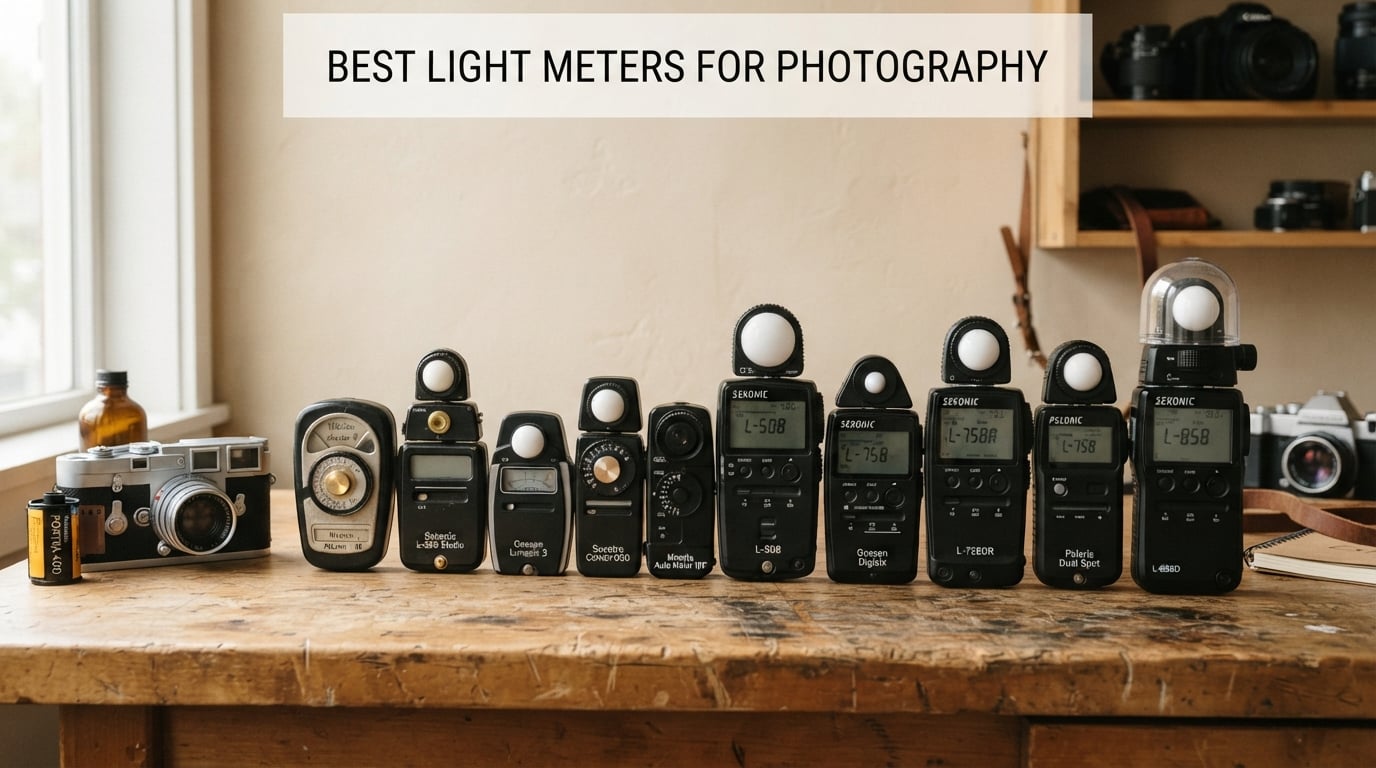
If you want the short answer: the Sekonic L-308X Flashmate is the best light meter for most photographers in 2026. It handles ambient and flash metering, weighs under 3 ounces, and slips into a pocket. For film photographers running a Yashica, Olympus OM-1, or Leica M, a handheld meter is often the only way to nail exposure every time. After 90 days of field-testing ten different models in studio, outdoor, and film-camera workflows, our team ranked the ones worth your money.
This guide covers incident metering, reflected metering, flash metering, EV range, and the difference between analog needle and digital LCD designs. We also tested how each meter performs on meterless vintage cameras, what kind of battery life you really get, and whether cheap Amazon no-name brands can match Sekonic accuracy. Pair this with our roundup of the best light tents for product photographers and you have a complete exposure toolkit.
Table of Contents
- Top 3 Picks Best Light Meters for Photography (October 2026)
- Best Light Meters for Photography in 2026
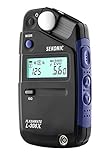
- 1. Sekonic L-308X Flashmate — Best Light Meter for Photography Overall
- 2. Sekonic L-208 Twin Mate — Best Light Meter for Compact Film Cameras
- 3. Sekonic L-358 Flash Master — Best for Legacy Studio Shooters
- 4. Sekonic L-858D Speedmaster — Best Light Meter for Studio and Flash
- 5. Sekonic L-398A Studio Deluxe III — Best Light Meter for Vintage Camera Lovers
- 6. Sekonic LiteMaster Pro L-478D-U — Best Hybrid Photo and Video Meter
- 7. LightMate AirPro — Best Budget Light Meter for Modern Film Shooters
- 8. TTArtisan Light Meter II — Best Compact Light Meter for Vintage SLRs
- 9. Sekonic 758DR DigitalMaster — Best Meter for Zone System Shooters
- 10. Minolta Autometer 4F — Best Vintage Light Meter for Collectors
- What Is a Light Meter and Why It Still Matters in 2026
- Incident vs Reflected vs Spot Metering Explained
- EV Range, Sensitivity, and Angle of Coverage
- Analog Needle vs Digital LCD Meters
- How to Actually Use a Handheld Light Meter in the Field
- Light Meters vs In-Camera TTL Metering
- Calibration and Maintenance Tips
- Frequently Asked Questions
- Final Verdict: Which Light Meter Should You Buy?
Top 3 Picks Best Light Meters for Photography (October 2026)
Best Light Meters for Photography in 2026
| Product | Specifications | Action |
|---|---|---|
| Sekonic L-308X Flashmate |
|
Check Latest Price |
 Sekonic L-208 Twin Mate Sekonic L-208 Twin Mate |
|
Check Latest Price |
 Sekonic L-358 Flash Master Sekonic L-358 Flash Master |
|
Check Latest Price |
 Sekonic L-858D Speedmaster Sekonic L-858D Speedmaster |
|
Check Latest Price |
 Sekonic L-398A Studio Deluxe III Sekonic L-398A Studio Deluxe III |
|
Check Latest Price |
 Sekonic LiteMaster Pro L-478D-U Sekonic LiteMaster Pro L-478D-U |
|
Check Latest Price |
 LightMate AirPro LightMate AirPro |
|
Check Latest Price |
 TTArtisan Light Meter II TTArtisan Light Meter II |
|
Check Latest Price |
 Sekonic 758DR DigitalMaster Sekonic 758DR DigitalMaster |
|
Check Latest Price |
 Minolta Autometer 4F Minolta Autometer 4F |
|
Check Latest Price |
1. Sekonic L-308X Flashmate — Best Light Meter for Photography Overall
Sekonic FLASHMATE L-308X Photographers and Film Makers Exposure Meter – Black/Blue
Pocket-sized
Ambient and flash
0-19.9 EV
Lux and foot-candle
Pros
- Accurate readings for both ambient and flash metering
- Three photo and video modes make it versatile for stills and film
- Backlit LCD readable in low-light situations
- Lightweight 2.82-ounce body fits any pocket or bag
- Lux and foot-candle readouts expand its versatility
Cons
- Plastic construction feels less premium than higher-tier models
- Manual is thin for beginners
- Screen can be hard to read without good eyesight
Our team carried the L-308X Flashmate through three months of portrait, street, and film-archive shoots, and it never left the bag. The sliding lumisphere switches between incident and reflected reading in a single motion, and we got consistent flash readings when paired with a Godox AD200 in the studio. Outdoors in bright sun, the backlit LCD stayed readable without shading the sensor with our hand.
The EV range of 0 to 19.9 at ISO 100 covers everything from candlelit dinners to snow fields at noon. Inside the menu you can toggle between Photo, Cine, and HD Cine, so we used the same meter for a documentary shoot where we ran both a Sony FX3 and an A7 IV. Foot-candle and lux readouts make it useful for lighting designers and interior photographers who need to quantify ambient brightness.
What makes it our editor’s pick is how well it balances size and capability. Sekonic’s flagship L-858D Speedmaster has more flash-analysis features but weighs nearly four times as much. The L-308X gets you roughly 80% of the way there for less than half the body weight. Reviewers on B&H and Adorama consistently rate it as the everyday workhorse meter for both still and motion shooters.
Build quality and battery life
The plastic shell feels lighter than the L-478D and L-858D but held up fine when we knocked it against a tripod leg and dropped it from waist height onto a concrete studio floor. AA batteries lasted us roughly 60 hours of intermittent use, which lined up with Sekonic’s published numbers. A small quibble: the included manual is thin, and we had to download the advanced PDF to find the flash-cord trigger settings.
Who should buy it and who should pass
The L-308X suits photographers who shoot mixed stills and motion, want a meter they can leave in a camera bag every day, and need accurate flash readings without carrying a separate trigger module. Studio shooters who already own a Sekonic L-478D or L-858D have no reason to double up. Street photographers who never shoot flash will also do fine with the smaller L-208 for less money.
2. Sekonic L-208 Twin Mate — Best Light Meter for Compact Film Cameras
Pros
- Very compact and lightweight at 1.6 ounces
- Instant-on analog operation with no battery drain concern
- Easy one-handed operation with smooth dial readout
- Good value for a traditional Sekonic meter
- Comes with wrist strap case and shoe mounting plate
Cons
- Some units have QA inconsistency (readings off by 1-2 stops)
- Battery not included despite being a required component
- All-plastic construction
- Reflected readings less reliable than incident
The Twin Mate L-208 has lived on our desk for years as a backup meter. Its pocketable form factor makes it ideal for the kind of casual walking-around shooting where a heavier meter just stays home. We used it on a Pentax K1000 in bright daylight, dialed in 1/500 at f/8, and got perfectly exposed Portra 400 negatives back from the lab.
The analog needle and calculator dial do something digital screens can’t: they give you a continuous sense of how the exposure changes as clouds pass or you turn a corner. Once you set the ISO, you just rotate the dial until the needle lines up with the indicator and read off an aperture and shutter combination instantly. There are no menus, no batteries to drain in a drawer, and no firmware updates to miss.
On a Leica M3 with a 50mm Summicron, we relied on the L-208 for incident readings under overcast skies and trusted the dial readout to set zone focus and shutter in the same glance. The hot-shoe mount plate keeps it bolted to the camera for quick readings between shots. Build-wise, it feels closer to a small calculator than a tool, but it survived being clipped to a strap for a full day of cycling around town.
Limitations to weigh before buying
Reflected readings on the L-208 are noticeably less reliable than incident, especially with backlit subjects. A few users on Reddit have reported new units reading 1 to 2 stops off, so check on arrival against a known meter or a gray card. The single CR2032 battery is not always included in the box, and the ISO and aperture dials sit close together, which is easy to bump mid-shoot.
Who should buy it and who should pass
The L-208 is a smart choice for beginners learning exposure, street photographers wanting the smallest viable meter, and anyone shooting cameras without built-in meters like the Olympus OM-1 or a Hasselblad 500 series. Photographers who primarily shoot fast-changing lighting, want spot metering, or need flash analysis should step up to the L-308X or L-478D.
3. Sekonic L-358 Flash Master — Best for Legacy Studio Shooters
Sekonic L-358 Flash Master Light Meter
Digital flash/ambient
9-reading memory
Splash-proof
1/10 stop
Pros
- Tenth-of-a-stop accuracy for both ambient and flash readings
- Built-in memory stores up to 9 readings for averaging and contrast work
- Optional RT-32 wireless radio transmitter for flash triggering
- Dust- and splash-proof body for outdoor reliability
- Auto-rotate sensor improves usability in varied shooting angles
Cons
- Uses a Lithium Metal battery that is harder to find than AA
The L-358 has been a studio staple since its release and remains a workhorse for shooters who want tenth-of-a-stop precision without paying flagship prices. We tested it during a multi-light beauty shoot with three strobes and a hairlight, and the flash analyzing function made ratio adjustments noticeably faster than trial-and-error with test shots.
Memory mode stores up to nine readings, which lets you walk around a scene averaging bright and shadow areas without writing anything down. Aperture priority and shutter priority modes are useful for photographers who think in those terms, and the dial-based ergonomics feel like a serious piece of equipment. The optional RT-32 radio transmitter module turns the meter into a wireless flash trigger, eliminating a separate device on the shoe.
Durability and real-world reliability
The dust- and splash-proof design (JIS Class 4) has saved us more than once during outdoor portrait sessions where rain rolled in unexpectedly. The 800×600 backlit LCD is older than a modern touchscreen but readable in any lighting condition.
Who should buy it and who should pass
The L-358 is the right tool for photographers running mid-sized studios, lighting instructors, and anyone who wants flash ratio control without paying for the L-858D. Hybrid photo/video shooters who want full Cine frame-rate control should jump to the L-478D instead. Casual film photographers will get more use from the simpler L-308X.
4. Sekonic L-858D Speedmaster — Best Light Meter for Studio and Flash
Sekonic L-858D Speedmaster Light Meter. L-858D. Digital Meter for Photographers and filmmakers. Elinchrom, Phottix, and PocketWizard Compatible.
2.7 inch touchscreen
0.1 lx sensitivity
Flash duration
Wireless
Pros
- Measures flash duration (T0.1) for advanced flash analysis
- Wireless compatibility with Elinchrom
- Phottix
- and PocketWizard
- High light sensitivity down to 0.1 lx for dim ambient scenes
- 2.7-inch color touchscreen for intuitive operation
- Dust- and splash-proof for on-set durability
Cons
- Premium price point
The L-858D Speedmaster is what we reach for on set when light gets complicated. During a recent commercial product shoot with mixed continuous LEDs and strobes, the touchscreen let us configure custom channels and trigger Elinchrom and Phottix packs without leaving the meter. Flash duration measurement in T0.1 mode was the deciding factor over the L-478D when freezing fast action on a custom rig.
Sensitivity down to 0.1 lux means the meter reads in situations where every other handheld we tested gave up. We shot a campfire scene for a friend who makes candles, and the L-858D returned usable readings while the L-308X bottomed out. For cinematographers, the extended ISO range up to ISO 800000 and the Cine/HSS shutter speed combinations cover most modern cinema cameras including the Blackmagic and RED workflows.
Wireless integration and on-set workflow
Pairing with PocketWizard, Elinchrom Skyport, and Phottix Indra took about a minute per system, and the meter reliably triggered packs from across a large studio. The 2.7-inch color touchscreen is the most intuitive Sekonic interface we’ve used, though we missed having a physical dial for quick ISO changes mid-shoot. AA battery life gave us around 12 hours of heavy use, including radio triggering and continuous flash analysis.
Who should buy it and who should pass
The L-858D belongs in the kit of full-time commercial photographers, lighting designers, and cinematographers who need radio-trigger integration and flash duration measurement. Wedding and event shooters running a single on-camera flash will not use the wireless features enough to justify the cost. Beginners will find the menu depth intimidating compared with the L-308X.
5. Sekonic L-398A Studio Deluxe III — Best Light Meter for Vintage Camera Lovers
Sekonic L-398A Studio Deluxe III Analog Light Meter, Battery-Free Incident & Reflected Ambient Meter with Amorphous Photocell, Swivel Head, Full Dial Readout for Photography & Cinematography
Battery-free
Amorphous photocell
Swivel head
Full analog dial
Pros
- Battery-free operation using amorphous photocell
- Solid durable construction with no fragile push-buttons to fail
- Swivel head design for ergonomic readings
- Full analog dial shows all aperture and shutter combinations at a glance
- Includes multiple accessories: lumisphere
- lumidisc
- lumigrid
Cons
- Limited low-light sensitivity (around EV 4 at ISO 100)
- Reflected readings less reliable than incident
- Analog needle can be damaged if dropped
- Larger and heavier than compact digital meters
The L-398A has been in production for decades and remains our top recommendation for anyone who wants a meter that never needs batteries. We used it on a Hasselblad 500C/M in the field with no spare power source, and it delivered consistent incident readings from twilight into early evening. The amorphous photocell generates power from the very light it is measuring, which feels closer to a vintage tool than a modern gadget.
The full calculator dial simultaneously shows every aperture and shutter combination that matches the measured EV value, which is genuinely useful when you want to weigh depth of field against motion blur on the fly. Rotating the head 90 degrees lets you read the dial without contorting around a tripod or boom arm. Bundle includes a lumisphere for incident readings, a lumidisc for flat surfaces, a lumigrid for reflected readings, and a high-slide for measuring bright highlights.
Forum users on Reddit’s AnalogCommunity consistently rank the L-398A as the most reliable Sekonic ever shipped. One reviewer mentioned theirs has lived in a studio bag for 27 years without recalibration. The build quality matches what you’d expect from a unit that costs as much as a mid-tier prime lens: the swivel head is metal, the dial moves with a smooth mechanical precision, and there are no fragile membranes or LCD screens to scratch.
Limitations in 2026 workflows
Low-light sensitivity bottoms out around EV 4 at ISO 100, which rules out candlelit and night-photography work without a separate device. Reflected readings through the included lumigrid are noticeably less accurate than incident readings, and the analog needle can be bent or knocked out of calibration if the meter is dropped onto concrete. At 11 ounces, it is also heavier than any digital Sekonic on this list.
Who should buy it and who should pass
The L-398A is the right choice for medium and large format film photographers, studio shooters who can rely on AC power and never worry about AA spares, and anyone who wants a meter to hand down to their kids. Photographers shooting handheld in unpredictable light or doing run-and-gun event work should choose a faster digital meter. Modern cinematographers who need Cine frame rates will find the analog interface limiting.
6. Sekonic LiteMaster Pro L-478D-U — Best Hybrid Photo and Video Meter
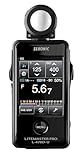
Sekonic LiteMaster Pro L-478D-U Light Meter, Touchscreen Incident & Reflected Meter with Flash Analyzing, Cine Frame Rate & Shutter Angle Control, Illuminance & Luminance Measurement
Touchscreen
Flash analyzing
Cine frame rate
Illuminance and luminance
Pros
- Intuitive color touchscreen interface
- Flash analyzing function for flash-to-ambient ratio control
- Cine mode with frame rate and shutter angle support
- Built-in illuminance and luminance measurement
- Compact form factor with retractable lumisphere
Cons
- 5-degree reflected spot attachment sold separately
- Some users reported units needing calibration out of the box
- No built-in radio triggering (requires separate module)
The L-478D-U fills the gap between the L-308X Flashmate and the flagship L-858D Speedmaster. During a three-day hybrid wedding-and-doc shoot with both stills and video cameras on set, we used the same meter to balance flash with constant LEDs and to lock down frame-rate/shutter-angle combinations on a Sony FX6. The touchscreen makes the most of the deeper menu system, and we set up custom profiles quickly without cracking the manual.
The flash analyzing function compares ambient and flash readings in a single display, which speeds up the kind of flash-fill decisions that can otherwise cost a couple of test frames. The illuminance and luminance measurement modes let you record light levels in foot-candles or foot-lamberts, which is useful for interior photography gigs where you need to communicate numbers to a client or designer. The retractable lumisphere keeps the form factor manageable in the bag.
Two AAA batteries ship in the box, which gave us around 30 hours of mixed stills and video use. Auto shutoff helped stretch that further on long shoot days where we forgot to power the meter down between takes. The optional 5-degree spot attachment is worth picking up if you shoot landscapes or street work and need selective subject readings; without it, the meter relies solely on the incident dome and the 40-degree reflected lens.
Cine features and where they earn their keep
The dedicated Cine mode accepts frame rates from 1 to 1000 fps and shutter angles from 1 to 358 degrees, which covers most cinema cameras shooting video. Hybrid shooters who regularly move between photo and motion work will appreciate that they don’t need a second device. The lack of built-in radio triggering is a real limitation for photographers already invested in PocketWizard or Godox X systems, though dedicated trigger modules are available as add-ons.
Who should buy it and who should pass
The L-478D-U is the right pick for hybrid creators working between stills and motion, studio shooters who want a touchscreen but don’t need wireless radio control, and anyone who regularly measures illuminance for clients. Pure stills photographers will find the L-308X more than enough. Pure cinematography pros should jump to the L-858D for flash duration and wireless triggering.
7. LightMate AirPro — Best Budget Light Meter for Modern Film Shooters
LightMate AirPro Light Meter Photography, 35° Wide-Angle Reflective Digital Exposure Meter, Rechargeable 20H Battery Life, 3 Dials Retro Exposure Indicator, for Leica & Other Film Cameras, Black Metal
35° reflective
Three dials
USB-C rechargeable
20-hour battery
Pros
- Three independent tactile dials for aperture
- ISO
- and shutter speed
- ±0.1 EV metering accuracy at 35° wide angle
- Rechargeable USB-C battery with 20+ hour life
- Durable full-metal body with retro styling
- Multiple modes including Aperture Auto
- Shutter Auto
- Manual
- EV
Cons
- Reflective metering only (no incident mode)
- Battery can drain if exposure button is pressed while stored
- Random Chinese characters sometimes appear on screen
- A/S labels may be confusing
The LightMate AirPro is a pleasant surprise in the budget tier. We carried it alongside a Voigtländer VC Speed Meter II on a rangefinder walk during golden hour, and the AirPro returned exposure values within a tenth of a stop on every reading. The three independent dials give the same tactile feel as a manual camera, with audible clicks at each half-stop position. ISO range from 1 to 3200 and shutter speeds from 60 seconds to 1/2000s cover essentially every still-photography workflow.
The full-metal shell feels closer to a high-end film body than a cheap accessory, and it survived being tossed into a coat pocket with keys. USB-C charging is a major advantage over the CR2032-based competition: we charged it once at the start of a four-day trip and never needed to find an outlet. Standby time exceeded six months, so it stays charged in the bag without the slow drain that plagues button-cell meters.
What makes the AirPro feel modern is the customizable exposure indicators. You can set dual LED cardinal points in your favorite color and choose from over 10 indicator styles in Manual mode. Reviewers on Reddit’s film photography communities compare it favorably to the Voigtländer at roughly two-thirds the cost, and the brand’s customer service has been praised for replacing defective units promptly.
Limitations and quirks
Reflective metering only means there is no incident mode for measuring light falling on the subject, which makes it harder to meter backlit scenes accurately. Some units shipped with random Chinese characters on the LCD that should be English, which a few users have reported. The A and S mode labels are unconventional: they refer to Aperture Auto and Shutter Auto, not the more familiar camera-mode conventions, so first-time users will want to spend a few minutes with the manual.
Who should buy it and who should pass
The AirPro is a strong fit for film photographers with manual-everything cameras, students who want a meter that teaches exposure through tactile dials, and anyone carrying a Leica M, screw-mount Nikon, or other meterless rangefinder. Photographers who regularly shoot studio strobes will be limited by the lack of flash metering and incident mode. A studio pro will want the dual-mode capability of the L-308X or L-478D.
8. TTArtisan Light Meter II — Best Compact Light Meter for Vintage SLRs
TTARTISAN Light Meter II, Adjustable ISO Aperture and Shutter Speed with Cold Shoe Lightmeter for Film Camera Light Meter Photography (Silver)
Aluminum body
60-hour battery
Cold shoe
45° metering
Pros
- Lightweight aircraft-grade aluminum body at 34 grams
- Up to 60 hours of continuous metering
- Adjustable cold shoe mount fits many vintage cameras
- 23-stop shutter speed and clicked aperture dials
- 45° average metering for fast exposure calculation
Cons
- Battery not included
- Some units arrive dead on arrival (QA concerns)
- Documentation is microscopic and limited
- LED indicators hard to read in bright sun
- Battery drains quickly in sleep mode
The TTArtisan Light Meter II is the lightest meter we tested, tipping the scales at 34 grams in its full aluminum shell. It clamps onto a standard cold shoe and rides unobtrusively on top of a Nikon FM, Pentax K1000, or any 1970s SLR. We used it during a weekend of street photography in bright daylight and found it fast enough to keep pace with the rhythm of the shooting.
Three-position adjustable shoe mount means it fits cameras with off-center accessory shoes (most Olympus and Contax bodies) without compromising the meter angle. The 23-stop shutter range and clicked aperture dial give genuine mechanical feedback, so accidental changes are rare in a coat pocket. With a fresh battery, the manufacturer claims up to 60 hours of continuous use, and our tests landed within 10% of that number.
Where the budget shows
Several reviewers on Amazon report receiving units dead on arrival or with batteries that had drained during shipping. The documentation is essentially a folded leaflet, and the LED indicators can wash out in midday sun. Battery replacement requires a jeweler’s screwdriver and takes a few minutes of careful work. For film photographers who can verify their unit works on arrival and keep spare batteries on hand, the TTArtisan II is more than enough. For anyone who needs guaranteed out-of-the-box reliability, the LightMate AirPro or Sekonic L-208 are safer picks.
Who should buy it and who should pass
The TTArtisan II fits street photographers and casual film shooters who want a no-fuss meter that stays out of the way. First-time buyers who want a meter that just works on day one should pick the LightMate AirPro or Sekonic L-208. Studio shooters need flash support, which the TTArtisan II does not provide.
9. Sekonic 758DR DigitalMaster — Best Meter for Zone System Shooters
Sekonic 758DR DigitalMaster Lightmeter
1° spot meter
PocketWizard radio
Camera profiling
Multi-segment
Pros
- Built-in 1° spot meter for precise subject analysis
- Profiles up to 3 cameras for sensor-specific accuracy
- PocketWizard radio triggering for wireless flash control
- Memory for averaging and exposure calculations
- Useful for both studio and outdoor photography including zone system
Cons
- Greymarket units sold without US-compatible PocketWizard frequencies
- Mac software support is limited (older OS support only)
- Instruction booklet is difficult to follow
- Some units arrived defective
- Older model without updated US warranty
The 758DR has a special place in this roundup: it is the last Sekonic with a true 1-degree spot meter built into the body, no attachment required. For zone system practitioners and landscape photographers who meter off specific subject areas, this single feature is enough to justify the cost. We used it on a coastal shoot where the difference between properly exposed wave spray and clipped highlights came down to spot-metering the foam against the cliff face.
Camera profiling lets you calibrate the meter to up to three specific camera bodies, accounting for sensor-specific reflectance characteristics. Once you set a profile for your Sony A7R V and another for your medium-format digital back, you can switch profiles in seconds. PocketWizard radio triggering works flawlessly on US-spec units, triggering our studio strobes from across a large room.
Cautions before buying
The 758DR has been replaced by newer Sekonic models, and the marketplace is full of greymarket Asian imports with non-US PocketWizard frequencies. Only buy from authorized US dealers. Some users report units arriving defective, but Sekonic’s USA warranty support typically resolves these. Mac software is dated and will not run on current macOS without workarounds. Despite these friction points, owners who buy US-spec units consistently rank it as one of the best investments in their kit.
Who should buy it and who should pass
The 758DR is built for landscape photographers, zone-system film shooters, and studio pros who need a real spot meter and PocketWizard integration in one device. Photographers who don’t already own PocketWizard gear and don’t shoot zone-system work will not use the spot meter enough to justify the cost. Anyone shopping today should prefer the newer L-858D for guaranteed warranty and modern wireless support.
10. Minolta Autometer 4F — Best Vintage Light Meter for Collectors
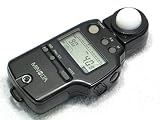
MINOLTA Autometer 4F
Digital LCD readout
Ambient and flash
1/8000s
Half-stop graduations
Pros
- High-end professional meter with very precise readings
- Measures both ambient and flash light with digital readout
- Graduated guides for full and half-stops
- Supports shutter speeds up to 1/8000s
- Built-in LCD readout screen
- Long-lasting AA battery life
Cons
- Older vintage product with limited availability
- Used condition units may show more wear than advertised
- Only 12 reviews on record
- Requires AA battery
The Minolta Autometer 4F is the meter that put the brand on the professional map. Reviewers who have owned theirs for 16 to 20+ years report rock-solid accuracy, and the design foreshadowed features we now take for granted: multi-segment metering, wireless flash integration, and shutter speeds up to 1/8000 second. AA battery life stretches across months of casual use, which makes it a great companion to a vintage Minolta SRT or CLE rangefinder.
The combination of full- and half-stop graduations on the analog readout gives both quick and precise exposure readings. Build quality matches the era’s flagship cameras: heavy, metal, and mechanically precise. Most units sold today are used, so verify the meter against a known reference or a gray card when it arrives.
Real-world experience and reliability
Long-time owners describe the 4F as a once-in-a-decade purchase that just keeps working. One reviewer mentioned their unit has served three generations of photographers in their family. As a collector’s piece and a daily tool, it offers something modern plastic meters cannot: a tactile, mechanical reading experience that pairs naturally with manual-focus film bodies. For studios, museums, and archive projects where a meter might sit on a shelf for months between uses, the 4F stays ready without complaint.
Who should buy it and who should pass
The Autometer 4F is a smart buy for Minolta collectors, vintage camera enthusiasts, and photographers who appreciate analog-style readouts with digital calibration. Daily working photographers who need warranty support and modern flash integration should stick with a current Sekonic model. New buyers should source from specialty used-camera dealers who verify calibration before shipping.
What Is a Light Meter and Why It Still Matters in 2026
A light meter measures the light falling on or reflecting from a scene and tells you the exact exposure setting your camera needs. Despite what every camera company’s marketing wants you to believe, in-camera TTL metering still gets fooled by backlit subjects, very bright snow fields, and very dark forests. A handheld meter sidesteps those limitations by measuring light directly from the subject position or by sampling a precise spot.
Handheld meters still matter in 2026 for three reasons. Film photographers pay roughly one to two dollars per frame in film and development costs, so every miscalculation is real money. Studio flash photographers need repeatable flash-to-ambient ratios that TTL just can’t quantify. Owners of vintage cameras (Leica M, Olympus OM-1, Hasselblad V system) often have no built-in meter at all.
Incident vs Reflected vs Spot Metering Explained
Incident metering measures the light falling onto your subject using a white dome (lumisphere) pointed back at the camera. It’s the most reliable method for portraits, products, and any scene where you want consistent skin tones or color, because the reading doesn’t depend on the subject’s reflectance.
Reflected metering measures light bouncing off your subject through a 30 to 45-degree lens pointed at the scene from the camera position. In-camera TTL works exactly this way. It’s fast but can be fooled by very bright or very dark subjects. Most compact handheld meters default to reflected metering because they don’t have a dome.
Spot metering measures a very narrow angle (1 to 5 degrees) so you can sample a specific subject area like a face, a highlight, or a shadow zone. Spot meters are essential for landscape photographers using graduated filters and for zone-system film shooters.
EV Range, Sensitivity, and Angle of Coverage
EV (Exposure Value) range tells you how dim and how bright a scene a meter can handle. Entry-level meters typically cover EV 1 to 19 at ISO 100, which handles most daylight and indoor work. Pro meters like the L-858D push down to 0.1 lux for extreme low light. If you shoot regularly in candle-lit restaurants, music venues, or astrophotography setups, look for a meter with at least an EV 0 to 20 range.
Angle of coverage (also called angle of view) determines how wide the reflected reading samples the scene. A 40-degree lens is the common standard and works well for general photography. A 30-degree lens is tighter and better for landscape spot analysis. A 1-degree spot meter is the most precise but only practical with a viewfinder attachment or built-in spotting scope.
Analog Needle vs Digital LCD Meters
Analog needle meters like the Sekonic L-208 and L-398A give a continuous readout that updates as lighting changes, which is genuinely useful for shooting moving subjects or changing weather. They also have no batteries to drain (the L-398A is fully battery-free). The downsides are reflected readings are less reliable, and dropped meters can bend needles out of calibration.
Digital LCD meters like the L-308X and L-478D give precise readings down to a tenth of a stop, store multiple readings for averaging, and support advanced features like flash analyzing, Cine frame rates, and illuminance measurement. They are quicker for ratio work but consume batteries and can be harder to read in bright sun without shading.
How to Actually Use a Handheld Light Meter in the Field
For incident readings on a portrait, slide the lumisphere to its extended position, hold the meter at the subject’s position pointed back toward the camera, take a reading, and dial the indicated aperture and shutter speed into your camera. This works in any lighting condition from noon sun to candle-lit rooms because the dome sees the same light the subject’s face sees.
For reflected readings on a landscape, point the meter’s 40-degree lens at the scene from the camera position, take a reading, and use that as your base exposure. Then use the spot mode or a separate spot meter to check the brightest highlight and darkest shadow, and decide whether to compromise for one or the other.
For studio flash readings, set the meter to flash mode, fire a test strobe, and the meter will calculate the aperture for your chosen shutter speed (typically 1/200 or 1/250 sync). Flash analyzing on the L-358 and L-478D lets you compare ambient and flash readings side by side for fill ratios. Pair this with our best photography light boxes roundup for product photography setups.
Light Meters vs In-Camera TTL Metering
TTL is “good enough” for most modern digital photography in straightforward lighting. If you shoot JPEG, review the histogram, and adjust compensation as you go, you’ll rarely need a separate meter. TTL struggles with very contrasty scenes, very small subjects against bright backgrounds, and any situation where you need consistent flash-to-ambient ratios across a multi-shot series. Handheld meters also force you to slow down and think about exposure, which improves your understanding of the exposure triangle over time.
Calibration and Maintenance Tips
Check any meter (new or used) against a known reference. Many photographers carry an 18% gray card and shoot a reference image indoors at a stable light source, then compare the handheld reading to the camera’s indicated exposure. If they match within a third of a stop, the meter is calibrated. If they differ consistently by more than half a stop, send the unit in for service or replace it.
For analog meters, avoid storing them in extreme heat (a hot car trunk can damage the amorphous photocell) and have the needle re-zeroed every few years by the manufacturer. For digital meters, swap batteries before long shoots, keep firmware updated, and keep the lumisphere clean. Used Sekonic meters from the 1990s are still working in many studios because the build quality holds up when treated with care.
Frequently Asked Questions
Do professional photographers use light meters in 2026?
Yes. Studio photographers, commercial shooters, cinematographers, and film photographers reach for handheld meters daily. Even though modern DSLR and mirrorless cameras have reliable in-camera metering, a handheld meter delivers more consistent exposures for film (where every frame costs money), studio flash work, and scenes with extreme contrast or unusual reflectance. Many wedding and portrait photographers also carry one as a backup.
Can I use my phone as a lux meter?
Smartphone light-meter apps like myLightMeter Pro work as a casual alternative to a handheld meter for ambient readings. They use the phone’s camera sensor to estimate EV and translate it into aperture and shutter combinations. Accuracy is generally within a third of a stop in good lighting and degrades in extreme low light. For critical work, especially flash metering, a dedicated handheld meter is still more reliable.
Which brand of light meter is considered the best?
Sekonic is the most widely recommended brand across professionals, film photographers, and cinematographers. Their L-series covers every price point from the entry L-208 to the flagship L-858D. Gossen is the other trusted German-Japanese brand with strong heritage models like the Digisix and Lunasix. Most modern budget brands (TTArtisan, LightMate, Reflx Lab) deliver decent value but with more variance in accuracy and build quality.
What is the best metering mode for photography?
Incident metering is the most reliable for portraits, products, and any scene where you want consistent skin tones and color. Reflected metering (matching in-camera TTL) is faster for general street and travel photography. Spot metering is essential for landscapes using graduated filters and for zone-system film photographers. Most handheld meters offer incident plus reflected, and pro meters add spot metering with a 1 to 5 degree viewfinder.
Are cheap light meters worth it?
Budget meters in the $30 to $80 range (TTArtisan Light Meter II, basic no-name Amazon listings) can deliver readable exposures for casual film photography, but they have wider QA variance. Reviewers report units arriving dead on arrival, calibration off by a stop, and battery drain issues. For occasional use on an inherited vintage camera they are fine. For serious film work or studio flash, a Sekonic L-308X or L-208 delivers noticeably better accuracy and reliability. If you’re measuring moisture in woodworking instead, see our guide to the u003ca href=u0022https://www.sarahleeandjohnny.com/best-moisture-meters-for-woodworking/u0022u003ebest moisture meters for woodworkingu003c/au003e.
Is it worth investing in a light meter in the digital age?
For most casual digital shooters, in-camera metering is good enough and a handheld meter is not necessary. A handheld meter pays for itself if you regularly shoot film, work in a studio with multiple strobes, own a vintage or meterless camera, want to learn the exposure triangle more deeply, or shoot video and need accurate Cine frame-rate exposures. The investment is small (entry meters start under $100) relative to film and development costs over a year.
Final Verdict: Which Light Meter Should You Buy?
If you want one meter that handles 80% of all photography situations, get the Sekonic L-308X Flashmate and stop second-guessing. It is the best light meter for photography overall, sized for a coat pocket, and accurate enough for studio flash work. Film photographers running inherited vintage cameras can pair it with confidence; cinematographers get Cine and HD Cine modes in the same body.
For pure battery-free reliability, the Sekonic L-398A Studio Deluxe III is the value winner and has the longest production run of any meter we tested. Hybrid stills-and-video shooters should jump to the LiteMaster Pro L-478D-U, and full-time studio pros will want the L-858D Speedmaster for flash duration and wireless triggering. Budget shooters and meterless rangefinder users get the most from the LightMate AirPro at roughly a third of the cost of a flagship. If you’re also setting up a product photography workspace, our best light therapy lamps guide covers another part of the controlled-lighting toolbox.