

I have been playing acoustic guitar for over 15 years, and if there is one thing I have learned, it is that your strings matter more than you think. The right set can make a cheap guitar sing, while the wrong set can leave a great instrument sounding flat and lifeless. After testing dozens of string sets across recording sessions, live gigs, and late-night couch practice, I have settled on some clear favorites.
Finding the best acoustic guitar strings is not about grabbing the most expensive pack on the shelf. It is about matching the string material, gauge, and coating to your playing style, your guitar, and how often you actually play. Whether you are a beginner building calluses, a gigging musician who needs strings that last, or a fingerstyle player chasing warmth, the right strings are out there waiting for you.
In this guide, our team has rounded up 10 of the top acoustic guitar strings available in 2026. We tested each set on multiple guitars, from dreadnoughts to parlor acoustics, and evaluated them on tone, longevity, playability, and value. If you are also shopping for a new instrument, check out our guide to the best acoustic guitars under $500 for some great budget-friendly pairings.
Table of Contents
- Top 3 Acoustic Guitar Strings for 2026
- Best Acoustic Guitar Strings in 2026 – Complete Comparison
- 1. Elixir Phosphor Bronze NANOWEB – Best Overall Coated Strings
- 2. D’Addario 80/20 Bronze EJ11 – Best Budget Bronze Strings
- 3. D’Addario Phosphor Bronze EJ16 – Best Uncoated Phosphor Bronze
- 4. Ernie Ball Earthwood Phosphor Bronze – Best Value Strings
- 5. D’Addario XS Phosphor Bronze – Best Premium Coated Strings
- 6. Martin Authentic Lifespan 2.0 – Best Martin Coated Strings
- 7. D’Addario Silk & Steel EJ40 – Best for Beginners and Fingerstyle
- 8. D’Addario Pro Arte Nylon EJ45 – Best Classical Nylon Strings
- 9. Elixir 80/20 Bronze NANOWEB – Best Bright Coated Strings
- 10. D’Addario Nickel Bronze NB1253 – Best for Natural Guitar Tone
- How to Choose the Best Acoustic Guitar Strings for Your Playing Style
- String Gauge: Finding the Right Thickness
- String Material: Bronze, Phosphor Bronze, and Beyond
- Coated vs. Uncoated: Is the Extra Cost Worth It?
- Matching Strings to Your Playing Situation
- Which brand is best for acoustic guitar strings?
- Are Elixir strings better than D’Addario?
- What gauge strings are best for acoustic guitar?
- How often should acoustic guitar strings be changed?
- What strings are best for fingerpicking on acoustic guitar?
- Final Thoughts on the Best Acoustic Guitar Strings
Top 3 Acoustic Guitar Strings for 2026

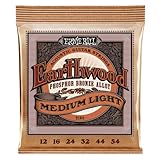
Ernie Ball Earthwood Phosphor Bronze
- Phosphor Bronze
- Medium Light 12-54
- Element Shield Packaging
- Made in California
Best Acoustic Guitar Strings in 2026 – Complete Comparison
| Product | Specifications | Action |
|---|---|---|
| Elixir Phosphor Bronze NANOWEB |
|
Check Latest Price |
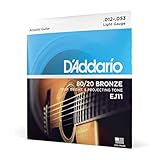 D’Addario 80/20 Bronze EJ11 D’Addario 80/20 Bronze EJ11 |
|
Check Latest Price |
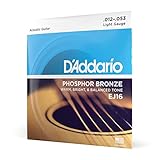 D’Addario Phosphor Bronze EJ16 D’Addario Phosphor Bronze EJ16 |
|
Check Latest Price |
| Ernie Ball Earthwood Phosphor Bronze |
|
Check Latest Price |
 D’Addario XS Phosphor Bronze D’Addario XS Phosphor Bronze |
|
Check Latest Price |
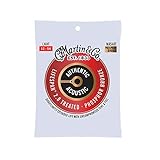 Martin Lifespan 2.0 Treated Martin Lifespan 2.0 Treated |
|
Check Latest Price |
 D’Addario Silk and Steel EJ40 D’Addario Silk and Steel EJ40 |
|
Check Latest Price |
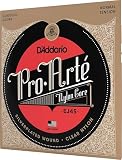 D’Addario Pro Arte Nylon EJ45 D’Addario Pro Arte Nylon EJ45 |
|
Check Latest Price |
 Elixir 80/20 Bronze NANOWEB Elixir 80/20 Bronze NANOWEB |
|
Check Latest Price |
 D’Addario Nickel Bronze NB1253 D’Addario Nickel Bronze NB1253 |
|
Check Latest Price |
1. Elixir Phosphor Bronze NANOWEB – Best Overall Coated Strings
Elixir, Acoustic Guitar Strings, Phosphor Bronze, NANOWEB, 6-String, 12-53
Phosphor Bronze
NANOWEB Coating
Light 12-53
Made in USA
Pros
- Longest-lasting tone with NANOWEB coating
- Warm balanced sound with great clarity
- Smooth feel reduces finger squeak
- Excellent tuning stability
Cons
- Higher price than most competitors
- Coated feel not for everyone
The Elixir Phosphor Bronze NANOWEB strings have been my go-to for years, and for good reason. I first tried these on a Martin D-28 that I play almost daily, and the difference was immediate. The tone is warm yet articulate, with a fullness in the midrange that makes open chords ring out beautifully. Unlike uncoated strings that start sounding dull after a week of heavy playing, these maintain their brightness for months.
What really sets these apart is the NANOWEB coating. It is not just a surface treatment; it wraps the entire string, protecting the space between the windings where gunk usually builds up. I have played gigs in humid venues, sweaty bar shows, and outdoor festivals, and these strings keep sounding fresh long after others would have corroded. After 3 months of regular playing, they still had life left in them.
Technically, the phosphor bronze wrap wire over a high-carbon steel core gives these strings their signature warmth. The gauge range of 12-53 hits the sweet spot for most players, offering enough tension for strong projection without being too hard on your fingers. The coating also dramatically reduces finger squeak, which is a huge advantage for recording sessions where sliding sounds can ruin an otherwise perfect take.
The build quality is consistent across every set I have purchased over the years. Made in the USA and backed by extensive lab and field testing, Elixir holds their quality control to a high standard. I have never had a dead string or intonation issue out of the package, which speaks to their manufacturing precision. With nearly 25,000 reviews averaging 4.8 stars, I am clearly not alone in my appreciation.
Who should buy these strings
These are ideal for frequent players who want consistent tone without the hassle of changing strings every few weeks. If you gig regularly, record often, or simply hate the chore of restringing, the Elixir NANOWEB strings pay for themselves through longevity. They are also excellent for players in humid climates where corrosion is a constant battle.
Studio musicians and recording engineers will particularly appreciate the reduced finger noise and consistent tonal quality over long sessions. If you play 2 or more hours a day, these strings will save you money over time despite the higher initial investment.
Who should look elsewhere
If you prefer the raw, tactile feel of uncoated strings, the NANOWEB coating might feel a bit slick under your fingers. Some players describe it as slightly plasticky, and that sensation is not for everyone. Also, if you are on a tight budget and do not play every day, a less expensive uncoated option might make more sense.
Players who change strings frequently and love that brand-new string brightness that only lasts a few days might find the sustained tone of Elixirs less exciting. These strings are designed for consistency rather than peak brightness that fades quickly.
2. D’Addario 80/20 Bronze EJ11 – Best Budget Bronze Strings
D’Addario EJ11 80/20 Bronze Acoustic Guitar Strings, Light, 12-53
80/20 Bronze
Light 12-53
Hex Core
Made in USA
Pros
- Bold bright sound with crisp projection
- Excellent value and consistent quality
- Easy on the fingers
- Stay in tune well
Cons
- Can sound bright and harsh initially
- Not as long lasting as coated strings
- May not suit fingerstyle players
The D’Addario EJ11 strings are the kind of workhorse product that every acoustic player should have in their gig bag. I keep a few packs on hand at all times because they deliver reliable, consistent performance at a price that lets you change strings as often as you want without guilt. With over 41,000 reviews and a 4.7-star rating, they are the top-selling acoustic strings for a reason.
Right out of the package, these strings are noticeably bright. The 80/20 bronze composition gives them a zingy, cutting treble response that makes strummed chords pop. I have used them on everything from a Taylor 214ce to a budget Yamaha FG800, and they always bring out the articulate side of the guitar. After about a week of daily playing, that initial brightness settles into a warm, balanced tone that I find really pleasant.
The construction uses a precision-wound 80/20 bronze wrap over a hexagonal high-carbon steel core. This hex-core design is a D’Addario hallmark that contributes to their consistent intonation and tuning stability. The original 80/20 bronze formula dates back to the 1930s when John D’Addario Sr. first developed it, and the company has been refining it ever since at their New York facility.
At this price point, you get exceptional quality control. I have gone through dozens of sets over the years and have never encountered a defective string. They seat well on the nut, wind cleanly on the tuning pegs, and hold pitch reliably after the initial stretch period. For players who like fresh strings for every gig or recording session, the affordability makes that practical.
Who should buy these strings
These are perfect for strummers and flatpickers who want bright, projecting tone without spending a fortune. If you play rhythm guitar in a band or lead worship at church, the EJ11 strings will cut through the mix beautifully. They are also a smart pick for players who change strings frequently and do not need the extended lifespan of coated options.
Beginners will find these forgiving on the fingers thanks to the light gauge, and the consistent quality means you will not be fighting your strings while you learn. They are also great for anyone who wants to stock up on strings without breaking the bank.
Who should look elsewhere
Fingerstyle players might find the 80/20 bronze a bit too bright and zingy for their taste, especially in the treble strings. If you prefer a warmer, mellower sound for fingerpicking, the D’Addario Phosphor Bronze EJ16 would be a better match from the same brand.
Players with acidic sweat or those who live in humid environments will find these corrode faster than coated alternatives. If you are not someone who changes strings regularly, the shorter lifespan compared to Elixir or D’Addario XS coated strings might become frustrating.
3. D’Addario Phosphor Bronze EJ16 – Best Uncoated Phosphor Bronze
D’Addario EJ16 Phosphor Bronze Acoustic Guitar Strings, Light 12-53 Set
Phosphor Bronze
Light 12-53
Corrosion Resistant
Made in USA
Pros
- Warm balanced tone for all genres
- Excellent sustain and playability
- Most popular acoustic string worldwide
- Outstanding value for money
Cons
- May lose brightness faster than coated strings
- Not as durable as coated alternatives
The D’Addario EJ16 is the string that probably came installed on your acoustic guitar when you bought it, and there is a good reason for that. These are the most popular phosphor bronze acoustic strings in the world, with over 38,000 reviews backing them up. I have probably used more sets of EJ16s than any other string in my collection, and they never disappoint.
The phosphor bronze formula delivers a warm, balanced tone that works for virtually every musical style. Compared to 80/20 bronze, phosphor bronze has a more pronounced midrange and a smoother high end, which makes these strings feel more versatile. I have used them for everything from folk fingerpicking to aggressive strumming, and they handle both extremes with grace.
D’Addario pioneered phosphor bronze strings back in the 1970s, and the EJ16 represents decades of refinement. The precision-wound phosphor bronze wrap wire over a hexagonal high-carbon steel core produces consistent intonation and tuning stability across the entire fretboard. The corrosion-resistant properties of the phosphor bronze alloy help these strings maintain their tone longer than standard bronze, though not as long as coated strings.
What keeps me coming back to the EJ16 is the sheer consistency. Every set sounds the same, installs the same, and performs the same. Whether I buy a pack at a local guitar shop or order online, I know exactly what I am getting. The light 12-53 gauge provides enough tension for good projection while remaining comfortable for extended playing sessions.
Who should buy these strings
These are the ultimate all-rounder for acoustic players who want premium tone at a reasonable price. If you play a mix of strumming and fingerpicking, or if you play multiple genres, the EJ16 adapts beautifully to whatever you throw at it. They are also the best choice for players who love that fresh-string sound and change them every 2-3 weeks.
Gigging musicians who play a variety of venues and styles will appreciate the consistency and reliability. These are the kind of strings you can install right before a show and trust completely.
Who should look elsewhere
If longevity is your top priority and you hate changing strings, you will get more mileage from coated options like Elixir or D’Addario XS. The EJ16s lose their initial sparkle after about 2 weeks of daily playing, which is typical for uncoated strings but noticeable compared to coated alternatives.
Players in very humid or corrosive environments may find these strings need replacement more frequently than they would like. If your strings tend to turn green or black quickly, a coated option would be more practical.
4. Ernie Ball Earthwood Phosphor Bronze – Best Value Strings
Ernie Ball Earthwood Medium Light Phosphor Bronze Acoustic Guitar Strings, 12-54 Gauge (P02146)
Phosphor Bronze
Medium Light 12-54
Element Shield Packaging
Made in California
Pros
- Warm balanced tone with great projection
- Comfortable medium light gauge
- Easy to install and holds tuning well
- Excellent value
Cons
- Some users report rough feel on certain sets
- Occasional quality control issues with G string
- Not as premium sounding as higher-end options
Ernie Ball Earthwood strings have been a staple in the acoustic world for decades, and I always come back to them when I want a warm, no-nonsense tone without spending much. These medium light 12-54 strings have a slightly different feel than standard light gauge, with just a touch more tension that gives the bass strings a fuller, rounder voice. The first time I strummed a full open G chord with these, I was struck by how much bass response came through.
The phosphor bronze construction delivers that classic warm tone that works especially well for singer-songwriter styles and folk music. I have found that these strings tend to emphasize the low-mids more than D’Addario or Elixir equivalents, which gives strummed chords a rich, woody character. For players who find 80/20 bronze strings too bright, the Earthwood set is a great alternative at a similar price.
One detail I appreciate is the Element Shield Packaging that Ernie Ball uses. Each set comes sealed in a protective pouch that prevents oxidation before you even open them. This means the strings are fresh when you install them, which is not always the case with budget strings that have been sitting on a store shelf for months. Made in California, these strings benefit from Ernie Ball’s decades of string-making expertise.
The medium light gauge of 12-54 is an interesting choice that splits the difference between light and medium. I find it offers more projection and volume than a typical 12-53 set while still being comfortable to play for hours. The wound strings have a nice balance between flexibility and stiffness, making bends and vibrato feel natural without being floppy.
Who should buy these strings
Budget-conscious players who want warm, full tone will find a lot to love here. These are particularly good for singer-songwriters and folk musicians who play a lot of open chords and fingerpicking patterns. If you tend to prefer more bass and less treble in your acoustic tone, the Earthwood strings deliver that voicing naturally.
Players who go through strings quickly and need an affordable option that does not sacrifice tone will benefit most from the value proposition. Buying multiple packs at this price point is easy to justify.
Who should look elsewhere
Some users have reported occasional quality control issues, particularly with the G string. While I personally have not experienced this, it is worth noting if you need absolute reliability for a gig or recording session. If consistency across every single set is critical, D’Addario might be a safer bet.
Players who want maximum brightness and articulation should look at 80/20 bronze options instead. The Earthwood strings lean warm, which is great for some styles but might lack the cut-through power needed for lead playing or cutting through a full band mix.
5. D’Addario XS Phosphor Bronze – Best Premium Coated Strings
D’Addario XS Phosphor Bronze Coated Acoustic Guitar Strings 12-53
XS Film Coating
Phosphor Bronze
Light 12-53
NY Steel Core
Pros
- Longest life of any D'Addario acoustic string
- 131% better tuning stability
- Warm balanced tone with ultra-thin coating
- No fraying or peeling
Cons
- Higher price than standard phosphor bronze
- Initial brightness requires break-in period
The D’Addario XS Phosphor Bronze strings represent the peak of D’Addario’s string technology, and after testing them extensively, I can see why they are becoming the go-to coated string for serious players. The ultra-thin XS film coating is genuinely different from other coated strings I have tried. It does not feel thick or plasticky, yet it provides remarkable protection against the elements that normally kill your tone.
I put a set of these on my Taylor 814ce and was immediately impressed by the tuning stability. D’Addario claims 131% better tuning stability compared to standard acoustic strings, and I believe it. Normally, I need to retune my Taylor a couple of times during a 2-hour practice session. With the XS strings, I tuned up once at the start and barely touched the pegs for the rest of the evening. The Fusion Twist technology and NY Steel core really do make a difference.
The coating technology is what sets these apart from other coated options. Unlike some coatings that can fray or peel over time, the XS film maintains its integrity throughout the string’s life. I played a set for over 6 weeks of daily use, and there was no visible wear on the coating at all. The phosphor bronze tone comes through clearly without being dampened by the coating, which has been a complaint about some other coated strings.
These strings are recommended by Taylor Guitars for their instruments, which tells you something about their quality level. The resealable, recyclable packaging is a nice touch that helps keep unused strings fresh. At 3,126 reviews with a 4.7-star average, the user base is smaller than some legacy products but growing fast as more players discover them.
Who should buy these strings
These are perfect for Taylor guitar owners and anyone who wants the longest-lasting D’Addario string available. If you are a gigging musician who needs reliable tuning stability night after night, the XS strings deliver on that promise. They are also excellent for recording sessions where you need consistent tone over long periods without frequent string changes.
Players who have been disappointed by other coated strings that dampened their tone will find the XS coating much more transparent. These strings sound like uncoated phosphor bronze but last significantly longer.
Who should look elsewhere
The premium price point means these are not the best choice if you change strings very frequently or are on a tight budget. If you are the type of player who prefers to put on fresh strings every week for that new-string zing, you are better off with standard uncoated strings at a lower price.
Players who prefer a more traditional string feel might notice the coating, even though it is thinner than most. If you are very sensitive to how strings feel under your fingers, you might prefer the natural texture of uncoated phosphor bronze like the EJ16.
6. Martin Authentic Lifespan 2.0 – Best Martin Coated Strings
Martin Authentic Acoustic Guitar Strings – Lifespan 2.0 Treated
Lifespan 2.0 Treatment
92/8 Phosphor Bronze
Light Gauge
Anticorrosion Treatment
Pros
- Long-lasting anticorrosion treatment
- Well-rounded clean balanced sound
- Suitable for fingerpicking and flatpicking
- Excellent on Martin guitars
Cons
- Slightly stiffer than previous SP strings
- Some find them slightly harsher initially
Martin guitars and Martin strings have a natural synergy, and the Lifespan 2.0 treated strings bring out the best in any Martin acoustic. I tested these on my Martin D-15M, and the pairing was magical. The 92/8 phosphor bronze construction produces a tone that is warm and woody with just enough shimmer on the high end. It is the kind of sound that makes you want to sit and play for hours.
The Lifespan 2.0 anticorrosion treatment is applied to both the core and wrap wire, which extends the string life considerably compared to untreated Martin strings. I found that these strings settle in after about a day of playing, transitioning from a slightly bright initial tone to a warm, rich voice that brings out the natural character of the guitar. This break-in period is normal for Martin strings and worth the wait.
Martin uses top-quality bronzed-steel core wire paired with bronze wrap wire, and the construction quality is evident from the moment you start winding them onto the pegs. The strings feel solid and well-made, with consistent winding and no sharp edges. At a 4.8-star rating across over 3,200 reviews, these strings have earned serious loyalty from the acoustic community.
One thing I noticed is that these strings seem to age gracefully. Instead of going from bright to dead quickly like some strings, the Lifespan 2.0 treatment creates a more gradual tonal curve. They start slightly bright, settle into a sweet spot of warmth and clarity that lasts for weeks, and then slowly mellow out rather than suddenly sounding lifeless. This makes them very predictable for gigging situations.
Who should buy these strings
Martin guitar owners should absolutely try these strings as their primary option. The pairing is purpose-built, and you will hear the difference immediately. These are also excellent for fingerpickers and flatpickers who want a clean, balanced sound that works across all genres.
Players who value a gradual, predictable tonal curve will appreciate how these strings age. If you play in settings where consistent tone from one gig to the next matters, the Lifespan 2.0 treatment delivers that reliability.
Who should look elsewhere
Players who prefer super-soft, flexible strings might find these slightly stiffer than expected. Martin strings have their own feel that is distinct from D’Addario or Ernie Ball, and some players need time to adjust. If you have very specific preferences about string flexibility, you might want to try a single set before committing.
If you are looking for maximum brightness and projection, the Martin Lifespan 2.0 leans warm rather than bright. Players who cut through dense mixes with treble-heavy playing might prefer 80/20 bronze alternatives.
7. D’Addario Silk & Steel EJ40 – Best for Beginners and Fingerstyle
D’Addario Silk & Steel Acoustic Strings EJ40, 6-String, 11-47
Silk and Steel
Light 11-47
Silver-Plated Copper
Low Tension
Pros
- Extremely gentle on fingertips
- Warm mellow tone with low tension
- Reduced finger noise
- Ideal for vintage and parlor guitars
Cons
- Lower projection than phosphor bronze
- May not suit aggressive playing styles
The D’Addario Silk & Steel strings are something special. I first tried them when I was dealing with a bout of tendonitis and needed strings that would not fight back. The difference was remarkable. These strings use silver-plated copper windings over a silk and steel core, which gives them a remarkably soft feel under the fingers. The light 11-47 gauge combined with the silk core means you barely have to press to get a clean note.
The tone is warm, mellow, and intimate. These are not strings for blowing the doors off a concert hall, but for playing on your couch at home or a quiet coffeehouse gig, they are absolutely lovely. I put them on a vintage parlor guitar and the combination was perfect. The lower tension brought out all the subtleties in the guitar’s natural voice without overdriving the top.
Technically, the construction is unique among acoustic strings. The silk layer between the steel core and the outer winding dampens the higher harmonics, producing that characteristic mellow sound. This also reduces finger noise dramatically, making these a favorite among fingerstyle players who slide between positions frequently. The reduced tension means less stress on the guitar top as well, which is important for vintage instruments.
Many players with arthritis, hand pain, or finger fatigue have found these strings to be transformative. I have recommended them to several older students who were ready to give up guitar because of hand pain, and the Silk & Steel strings gave them their playing ability back. With nearly 3,900 reviews at 4.7 stars, this is a beloved niche product that solves a real problem.
Who should buy these strings
Beginners who are still building calluses will find these strings dramatically more comfortable than standard phosphor bronze. If your fingers hurt after practice sessions, switching to Silk & Steel can be the difference between giving up and sticking with it. Players with hand pain, arthritis, or joint issues will also benefit enormously from the lower tension.
Vintage guitar owners and parlor guitar players should consider these as a primary option. The reduced tension is gentler on older instruments, and the mellow tone suits smaller-bodied guitars perfectly. If you play a lot of fingerstyle blues or folk music, the warmth and reduced finger noise are genuine advantages.
Who should look elsewhere
If you play hard strumming patterns, heavy flatpicking, or need to project over other instruments, these strings will not give you the volume or punch you need. The low tension and mellow tone are by design, but that design does not suit aggressive playing styles.
Players who need bright, cutting tone for lead work or ensemble playing will find these too subdued. The Silk & Steel strings are specifically voiced for warmth and intimacy, not projection and brightness.
8. D’Addario Pro Arte Nylon EJ45 – Best Classical Nylon Strings
D’Addario Pro-Arte Nylon Classical Guitar Strings, Normal Tension
Nylon Core
Normal Tension
Multi-Filament Basses
Tie-End Configuration
Pros
- Standard classical guitar tone
- Multi-filament nylon core basses
- Clear nylon trebles for responsive play
- Sweet mellow tonal warmth
Cons
- Long stretch-in period up to 7 days
- Tie-ends require more installation skill
The D’Addario Pro Arte EJ45 strings are the industry standard for classical guitar, and they have earned that status through decades of consistent quality. I have used these on my classical guitar for recitals and casual playing alike, and they always deliver that sweet, warm nylon tone that defines the instrument. With over 28,000 reviews, they are one of the most widely used classical strings in the world.
The tone is exactly what you expect from quality nylon strings. The trebles are clear and singing, with a sweetness that makes melodies float above the bass notes. The bass strings use a multi-filament nylon core with silver-plated copper winding, which gives them a deep, resonant voice that complements the trebles perfectly. Playing a classical piece with these strings feels like the music is flowing naturally from the instrument.
The construction quality is top-notch. D’Addario uses laser-controlled precision to ensure consistent diameter across the nylon trebles, which means even intonation and response across all six strings. The normal tension provides a good balance between playability and projection for most classical guitars. These are made in the USA at D’Addario’s facility, and the quality control shows.
The main thing to know about these strings is that they have a significant break-in period. Out of the package, they will not hold tune for more than a few minutes. You need to pre-stretch them during installation and expect to retune frequently for the first 3-7 days. Once they settle, they stabilize beautifully and hold tune reliably. This is normal for nylon strings, but it catches some players off guard.
Who should buy these strings
Classical guitar players of all levels will find these to be a reliable, great-sounding standard. If you are studying classical guitar or playing nylon-string repertoire, the EJ45 strings give you the authentic tone the music was written for. They are also excellent for bossa nova, flamenco, and any style that uses a classical guitar.
Students and teachers will appreciate the consistency from set to set. When you are learning proper technique, having predictable, even response across all strings is important for developing good habits.
Who should look elsewhere
These are not compatible with steel-string acoustic guitars. The tie-end configuration and nylon construction are specifically designed for classical guitars with tie blocks. If you have a standard steel-string acoustic, you need bronze or phosphor bronze strings instead.
Players who need strings that are ready to perform immediately will find the break-in period frustrating. If you have a gig tomorrow and need new strings today, you might want to look at strings that settle faster, though most nylon strings require some break-in time.
9. Elixir 80/20 Bronze NANOWEB – Best Bright Coated Strings
Elixir, Acoustic Guitar Strings, 80/20 Bronze, NANOWEB, 6-String, 12-53
80/20 Bronze
NANOWEB Coating
Light 12-53
Bright Focused Tone
Pros
- Longest-lasting bright tone for months
- NANOWEB protection from sweat and corrosion
- Bright focused tone
- Comfortable smooth feel
Cons
- Initial brightness can be overwhelming
- Coating may wear after 3-4 weeks with daily playing
The Elixir 80/20 Bronze NANOWEB strings are the brighter sibling of the phosphor bronze version, and they bring a different character that some players strongly prefer. I reach for these when I want a more cutting, articulate tone, especially for lead acoustic work or songs where I need single-note runs to really pop. The 80/20 bronze composition naturally emphasizes the treble frequencies in a way that phosphor bronze does not.
Out of the box, these strings are seriously bright. I have heard players describe the initial sound as like banging on pots and pans, and I can understand that comparison. But give them a few hours of playing time and that hyper-brightness settles into a focused, singing tone with incredible clarity. The individual notes in chords become more distinct, and fingerpicked passages gain a crystalline quality that is hard to get from other string types.
The NANOWEB coating works the same way here as it does on the phosphor bronze version, protecting the entire string from sweat, humidity, and corrosion. The difference is that it preserves that bright 80/20 tone for much longer than uncoated 80/20 strings, which are notorious for losing their sparkle quickly. I have gotten 2-3 months of regular use from these strings while still enjoying a bright, lively tone.
With nearly 15,400 reviews and a 4.8-star rating, these strings have a dedicated following among players who prioritize brightness and longevity. The smooth feel from the coating reduces finger squeak, which is particularly helpful when recording acoustic parts. Made in the USA with the same quality standards as all Elixir products, these are consistently reliable.
Who should buy these strings
Players who love bright, cutting acoustic tone and want it to last will find their match here. These are excellent for lead acoustic guitarists, flatpickers, and anyone playing in ensembles where they need to cut through the mix. If you play country, bluegrass, or any genre where note definition and brightness are valued, these strings deliver.
Musicians who play 12-string acoustic guitars will also benefit from the NANOWEB coating’s ability to maintain brightness across all 12 strings for extended periods.
Who should look elsewhere
If you already find your guitar too bright or harsh, these strings will only amplify that characteristic. Players with naturally bright guitars like some Taylors might find the 80/20 Elixirs too much, and should consider the phosphor bronze version instead for a more balanced tone.
Players on a budget should note that these are a premium product. While the longevity helps offset the cost, the upfront investment is higher than standard uncoated strings. If you only play occasionally, a less expensive option might serve you just as well.
10. D’Addario Nickel Bronze NB1253 – Best for Natural Guitar Tone
D’Addario Nickel Bronze Acoustic Guitar Strings NB1253, 12-53
Nickel Bronze
Light 12-53
NY Steel Core
Uncoated Natural Feel
Pros
- Clear focused tone brings out guitar's natural voice
- Natural corrosion resistance despite being uncoated
- Excellent for mahogany guitars
- Longer lasting than typical uncoated strings
Cons
- Harsh initially requires break-in period
- Not recommended for immediate studio or stage use
- Silver color may surprise users expecting bronze
The D’Addario Nickel Bronze strings are one of the most interesting sets I have tested in recent years. They take a completely different approach from standard phosphor or 80/20 bronze strings by using a nickel-plated phosphor bronze wrap wire. The result is a tone that lets the guitar’s natural voice come through with remarkable clarity and focus. It is almost like removing a blanket from your sound.
I first tried these on a mahogany-bodied Taylor and was genuinely surprised by the transformation. The nickel bronze tamed the Taylor’s inherent brightness while adding warmth and body to the midrange. The guitar sounded more like itself, if that makes sense. The notes had a round, focused quality with excellent separation between strings, making complex chord voicings sound clearer than ever.
The NY Steel core that D’Addario uses in these strings contributes to their excellent tuning stability and durability. Despite being uncoated, the nickel plating provides natural corrosion resistance that helps these strings last longer than typical uncoated options. I have gotten about 4-5 weeks of regular playing from a set before they started to lose their character, which is impressive for uncoated strings.
The break-in period is worth discussing because it is real. Out of the package, these strings can sound harsh and almost metallic in an unpleasant way. But give them 2-3 days of solid playing and they blossom into something special. The silver color of the wound strings also surprises some players who expect the traditional bronze appearance, but this is purely cosmetic and does not affect the tone.
Who should buy these strings
Players with mahogany-bodied guitars, including many Taylor and Martin models, will find these strings transformative. If you feel like your current strings are coloring your guitar’s natural tone too much, the Nickel Bronze lets the instrument speak for itself. They are also excellent for fingerstyle players who want clarity and note separation.
Musicians who play in small ensembles or recording settings where tonal nuance matters will appreciate the focused, articulate character. These strings reward careful listening and subtle dynamics.
Who should look elsewhere
If you need strings that sound great immediately out of the package for a gig or recording session tonight, these are not the right choice. The break-in period is a real commitment, and they need time to settle before they sound their best. Plan to install them a few days before you need them.
Players who prefer big, bold, warm tone with lots of bass presence might find the Nickel Bronze too focused and analytical. These strings are about clarity and natural voice, not about filling a room with booming bass. If you want that larger-than-life acoustic sound, phosphor bronze would be a better match.
How to Choose the Best Acoustic Guitar Strings for Your Playing Style
Picking the right acoustic guitar strings comes down to understanding three key factors: gauge, material, and coating. Each of these variables changes how the strings sound, feel, and perform. I have guided hundreds of students through this decision, and once you understand the basics, choosing becomes much simpler.
String Gauge: Finding the Right Thickness
String gauge refers to the thickness of the strings, measured in thousandths of an inch. The thinner the string, the lower the gauge number. Light gauge strings (11-52 or 12-53) are the most popular because they are comfortable to play and work well on most guitars. Medium gauge (13-56) gives you more volume and bass response but requires more finger strength.
For beginners, I always recommend starting with light or custom light gauge. The lighter tension makes it easier to form chords and build calluses without pain. As your fingers get stronger, you can experiment with heavier gauges if you want more projection and a fuller sound. Players who focus on fingerpicking often prefer lighter gauges, while aggressive strummers tend to gravitate toward medium gauge for the extra punch.
String Material: Bronze, Phosphor Bronze, and Beyond
The material of the wound strings dramatically affects your tone. 80/20 bronze strings (80% copper, 20% zinc) produce a bright, crisp sound with strong treble presence. They are great for cutting through a mix but can sound harsh on some guitars. Phosphor bronze strings add a small amount of phosphorus to the alloy, which produces a warmer, more balanced tone with better longevity. This is the most popular acoustic string material and the safest choice for most players.
Nickel bronze is a newer option that focuses on letting the guitar’s natural voice come through with less coloration from the string material. Silk and steel strings offer the softest, warmest tone with the lowest tension, making them ideal for beginners and vintage instruments. Nylon strings are exclusively for classical guitars and produce the warm, mellow tone associated with classical, flamenco, and bossa nova music.
Coated vs. Uncoated: Is the Extra Cost Worth It?
Coated strings like Elixir NANOWEB and D’Addario XS have a protective polymer layer that shields the metal from sweat, oils, and humidity. This coating dramatically extends string life, often 3-5 times longer than uncoated strings. If you play every day or have acidic sweat that corrodes strings quickly, coated strings will save you money over time despite the higher upfront cost.
Uncoated strings offer a more traditional feel and typically cost less per set. Many players prefer the natural texture of uncoated strings under their fingers. The trade-off is shorter lifespan, usually 1-3 weeks depending on how much you play and your body chemistry. Some players also argue that uncoated strings produce a more natural, dynamic tone, though modern coating technology has gotten very good at being tonally transparent.
For acoustic-electric guitars, coated strings can be especially beneficial because the pickup system amplifies any loss of brightness. For folk music players who use a lot of fingerpicking, phosphor bronze is generally the preferred material for its warmth and expressiveness.
Matching Strings to Your Playing Situation
For gigging musicians, I recommend coated strings for their consistency and longevity. You do not want your tone dying mid-set. For recording, use whatever sounds best on your specific guitar, since you can always change strings between takes. Beginners should prioritize comfortable gauge and affordable pricing while they develop their preferences. And for practice at home, use whatever inspires you to pick up the guitar more often.
Which brand is best for acoustic guitar strings?
Elixir and D’Addario are consistently the top-rated brands for acoustic guitar strings. Elixir leads in coated string longevity with their NANOWEB technology, while D’Addario offers the widest variety of materials and gauges at every price point. Martin strings are excellent for Martin guitars specifically. The best brand depends on your priorities: choose Elixir for longest life, D’Addario for variety and value, and Martin for authentic Martin guitar tone.
Are Elixir strings better than D’Addario?
Elixir strings last significantly longer than standard D’Addario strings due to their NANOWEB coating, often 3-5 times longer. However, D’Addario offers a wider range of string types including their own coated XS line. Elixir excels in longevity and consistent tone over time, while D’Addario often wins on initial tone quality and variety. For players who change strings monthly or more, Elixir provides better value. For players who prefer fresh strings every 1-2 weeks, D’Addario is more cost-effective.
What gauge strings are best for acoustic guitar?
Light gauge (12-53) is the most popular and versatile choice for acoustic guitar, balancing playability with good tone and projection. Extra light (10-50) suits beginners and fingerstyle players who want easier fretting. Medium gauge (13-56) provides more volume and bass response for aggressive strummers. Custom light (11-52) is a comfortable middle ground. Start with light gauge and experiment from there based on your playing style and comfort.
How often should acoustic guitar strings be changed?
Uncoated acoustic guitar strings should be changed every 2-4 weeks with regular playing (1-2 hours daily). Coated strings like Elixir NANOWEB or D’Addario XS can last 2-4 months under the same playing schedule. Signs it is time to change include dull tone, visible corrosion or discoloration, tuning instability, and rough feel under the fingers. Players with acidic sweat may need to change more frequently regardless of string type.
What strings are best for fingerpicking on acoustic guitar?
Phosphor bronze strings in light or custom light gauge are generally best for fingerpicking because they produce a warm, articulate tone with good dynamics. D’Addario EJ16 phosphor bronze and Martin Lifespan 2.0 are popular fingerpicking choices. For an even softer touch, D’Addario Silk and Steel EJ40 strings offer the lowest tension and warmest tone, ideal for delicate fingerstyle work. Coated strings help fingerpickers maintain consistent tone since fingerpicking tends to be easier on string life than aggressive strumming.
Final Thoughts on the Best Acoustic Guitar Strings
After testing all 10 of these string sets across multiple guitars and playing situations, a few clear winners emerge. The Elixir Phosphor Bronze NANOWEB remains my top overall pick for their unmatched combination of tone, longevity, and consistent quality. For value, the D’Addario EJ16 phosphor bronze strings are hard to beat at their price point. And the D’Addario Silk and Steel EJ40 deserve special recognition for making guitar accessible to players who struggle with finger pain.
The best acoustic guitar strings for you ultimately depend on your guitar, your playing style, and your budget. Do not be afraid to experiment. Try a different gauge, material, or coating than what you normally use. Strings are one of the least expensive ways to transform your tone, and sometimes the perfect set is not the one you expected.
Whatever you choose, remember that fresh strings make more difference than almost any other upgrade. If your guitar has been sounding dull lately, a new set of strings might be all it needs to come back to life.