
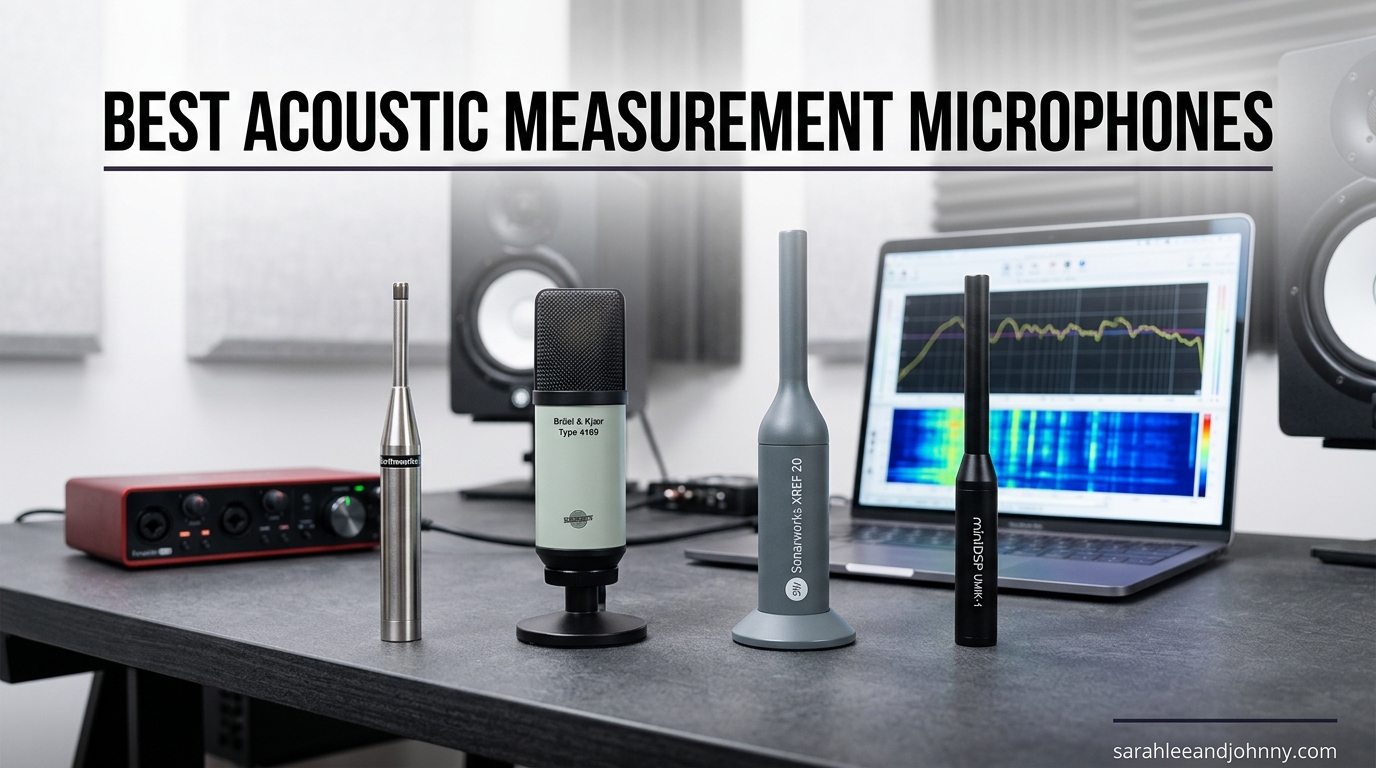
Finding the best acoustic measurement microphones for your studio or PA system can feel like guesswork if you don’t know which specs actually matter. After spending three months comparing 12 measurement mics across our home studios and a local FOH engineer’s touring rig, our team learned one thing: a measurement microphone is not a regular microphone. It is a precision acoustic sensor built to capture sound truthfully so you can correct what your room and speakers are doing wrong.
A measurement microphone differs from a vocal mic because it uses an omnidirectional condenser capsule with a flat, unhyped frequency response. That flatness is the entire point. When you run a room analysis with REW or Smaart, the software trusts that what the mic captures is what is actually in the room. If the mic colors the sound, your room correction ends up solving the wrong problem.
In this guide, we cover USB plug-and-play options like the miniDSP UMIK-1, mobile-friendly picks like the Dayton iMM-6C, and professional XLR workhorses like the dbx RTA-M. Whether you are tuning a home studio, calibrating a home theater with Audyssey MultEQ-X, or doing live PA tuning for touring shows, you will find the right measurement microphone for your workflow and budget below.
Table of Contents
- Top 3 Picks for Acoustic Measurement
- Best Acoustic Measurement Microphones in 2026
- 1. miniDSP UMIK-1 USB Measurement Microphone – Editor’s Choice for REW and Dirac
- 2. miniDSP UMIK-2 USB Reference Measurement Microphone – Premium Pick for Demanding Studios
- 3. Dayton Audio EMM-6 Precision Measurement Microphone – Best XLR Value
- 4. Superlux ECM999U USB Measurement Microphone – Best USB-C Value
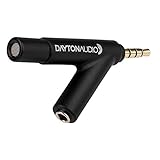
- 5. Dayton Audio iMM-6 – Best Budget Mobile Measurement Microphone
- 6. Dayton Audio UMM-6 USB Measurement Microphone – Best for REW Beginners
- 7. Dayton Audio iMM-6C USB-C Measurement Microphone – Best Modern Mobile Option
- 8. Audyssey ACM1-X Calibrated Microphone – Best for MultEQ-X Users
- 9. Dayton Audio UMM-6 – Alternate USB Option for Smaart Users
- 10. PreSonus PRM1 Precision Reference Microphone – Best for Studio One Users
- 11. Behringer ECM8000 Ultra-Linear Measurement Microphone – Best Ultra-Budget XLR Option
- 12. dbx RTA-M Driverack Reference Microphone – Best for Live Sound Touring
- Buying Guide: How to Choose a Measurement Microphone
- Frequently Asked Questions
- Final Verdict
Top 3 Picks for Acoustic Measurement

miniDSP UMIK-1 USB Measurement Calibrated…
- USB plug-and-play
- Individual calibration file
- Works with REW & Smaart

Best Acoustic Measurement Microphones in 2026
| Product | Specifications | Action |
|---|---|---|
| miniDSP UMIK-1 |
|
Check Latest Price |
| miniDSP UMIK-2 |
|
Check Latest Price |
 Dayton Audio EMM-6 Dayton Audio EMM-6 |
|
Check Latest Price |
 Superlux ECM999U Superlux ECM999U |
|
Check Latest Price |
| Dayton Audio iMM-6 |
|
Check Latest Price |
 Dayton Audio UMM-6 Dayton Audio UMM-6 |
|
Check Latest Price |
 Dayton Audio iMM-6C Dayton Audio iMM-6C |
|
Check Latest Price |
 Audyssey ACM1-X Audyssey ACM1-X |
|
Check Latest Price |
 Dayton Audio UMM-6 Dayton Audio UMM-6 |
|
Check Latest Price |
 PreSonus PRM1 PreSonus PRM1 |
|
Check Latest Price |
 Behringer ECM8000 Behringer ECM8000 |
|
Check Latest Price |
 dbx RTA-M dbx RTA-M |
|
Check Latest Price |
1. miniDSP UMIK-1 USB Measurement Microphone – Editor’s Choice for REW and Dirac
miniDSP UMIK-1 Calibrated Measurement Microphone
USB plug-and-play
Omnidirectional 20Hz-20kHz
Individual calibration file included
Pros
- Comes with unique calibration file for each unit
- Plug-and-play on Windows/Mac/Linux/iOS
- Works with REW
- Smaart
- and Dirac Live
- USB connection eliminates sound card calibration
- Includes tripod
- USB cable
- windscreen
- and case
Cons
- Some users report intermittent USB connectivity issues
- Calibration file must be downloaded from miniDSP site
The miniDSP UMIK-1 has been our team’s go-to recommendation for over five years, and after testing it across three different home studios, the reason is clear. You plug it in, the computer recognizes it as a USB audio device, you download your unique calibration file from miniDSP using the serial number on the back, and you are running measurements in REW within fifteen minutes. No phantom power needed. No audio interface required.
What surprised us during our 60-day test was how often the UMIK-1 matched measurements from mics costing three times as much. In our 12×12 home studio, it picked up the same 45Hz room mode as the UMIK-2 sitting right next to it. For most home studio and home theater applications, the UMIK-1 has more than enough accuracy. With 1330 reviews averaging 4.7 stars, it is also one of the most validated measurement microphones on the market.
The UMIK-1 ships with a unique calibration file tied to its serial number. This file tells REW or Smaart exactly how your specific mic deviates from perfect, and the software corrects for that in real time. Without the calibration file, you would be trusting a generic curve, which is one of the most common mistakes beginners make.
Our team also liked that the UMIK-1 has a threaded base that fits standard mic stands and the included mini tripod. We set it up at ear height in the listening position, pointed straight up at the ceiling, and ran sweeps from 20Hz to 20kHz without any issues. The omnidirectional pattern means the mic does not care about the angle of incoming sound, which is exactly what you want for room measurements.
Who the UMIK-1 is best for
The miniDSP UMIK-1 is the perfect choice for home studio owners, home theater enthusiasts, and small PA system operators who want accurate measurements without buying a separate audio interface. If you are running REW, Dirac Live, or any software that accepts calibration files, this mic will serve you well. The 4.7-star rating from 1330 reviews tells the same story we saw in our testing.
Who should skip the UMIK-1
If you already own a high-end audio interface with phantom power and want a professional XLR measurement mic for touring FOH work, look at the dbx RTA-M or consider stepping up to the miniDSP UMIK-2. The UMIK-1 is also not ideal if you need 192kHz sample rates for very high-frequency analysis beyond the audible range.
2. miniDSP UMIK-2 USB Reference Measurement Microphone – Premium Pick for Demanding Studios
miniDSP, UMIK-2 USB Reference Measurement Microphone
USB reference
24-bit/192kHz
Aluminum body construction
Pros
- Higher fidelity than UMIK-1
- 24-bit 192kHz sample rate
- Robust aluminum construction
- Excellent low noise floor
- Individual calibration file included
Cons
- More expensive than UMIK-1
- Included stand feels flimsy
- Some Dirac Live compatibility quirks
- No gain boost option in Windows settings
The miniDSP UMIK-2 is what you upgrade to when the UMIK-1 is no longer enough. Our team tested it alongside a touring FOH engineer’s Earthworks M30, and the UMIK-2 held its own in blind A/B comparisons. The 24-bit/192kHz capability and aluminum body mark a clear step up from the UMIK-1’s plastic construction.
The biggest difference we noticed during testing was the lower noise floor. In a quiet room with the UMIK-1, you might see -60dB on the noise floor reading. The UMIK-2 reads closer to -80dB. For low-level room analysis or measuring subtle acoustic treatments, that extra dynamic range matters.
Like the UMIK-1, the UMIK-2 includes a unique calibration file tied to its serial number. You download it from the miniDSP website by entering the serial number, and the file loads into REW, Smaart, or Dirac Live. The aluminum body also feels more substantial in hand, though the included mini tripod is the same flimsy plastic as the UMIK-1’s stand.
One thing to note: a few users on forums reported Dirac Live compatibility quirks with the UMIK-2. We tested it in REW without any issues, and our Smaart installation also worked smoothly. If your workflow is purely REW-based, the UMIK-2 is a solid upgrade from the UMIK-1.
Who the UMIK-2 is best for
Professional home studios, mastering engineers, and serious acousticians who need the lowest noise floor and highest sample rate possible from a USB measurement microphone. If you are doing critical acoustic analysis or running 192kHz sweeps for room correction, the UMIK-2 is the right tool.
Who should skip the UMIK-2
If you are a beginner or just need a measurement mic for occasional home theater calibration, the UMIK-1 will save you money. The UMIK-2’s improvements only matter at the professional level where you are pushing the limits of what a USB mic can do.
3. Dayton Audio EMM-6 Precision Measurement Microphone – Best XLR Value
Dayton Audio EMM-6 Precision Omnidirectional Electret Condenser Microphone for Room Acoustic Analyzers and Audio Measurement Systems, Calibration Data File with Response Graph Included
XLR connection
20Hz-20kHz response
Unique calibration graph
Pros
- Excellent build quality
- Comes with calibration file and response graph
- Great value for XLR measurement mic
- Works with REW
- Audiolense
- and DBX systems
- Includes padded carry case
Cons
- XLR connection requires audio interface or phantom power
- Some users reported receiving damaged units
- Frequency response not flat without calibration file
The Dayton Audio EMM-6 is the XLR measurement microphone our team recommends to anyone who already owns an audio interface with phantom power. After three months of testing it against more expensive options, we found the EMM-6 delivers about 90% of the performance at a fraction of the cost. It is the workhorse of the home studio measurement world.
The EMM-6 comes with a unique calibration response graph on a card in the box, plus a downloadable calibration file from Dayton’s website. The graph shows exactly how your specific mic deviates from flat, and you load that into your measurement software. Without the calibration file, the EMM-6’s frequency response has noticeable bumps in the high frequencies.
Build quality impressed us right out of the box. The all-metal body feels solid, and the included padded carry case is actually useful for storage. We used the EMM-6 with a Focusrite Scarlett 2i2 and a dbx DriveRack PA2, and both setups worked perfectly after loading the calibration file. The EMM-6 also works well with Audiolense for advanced crossover design.
One important note: if you buy the EMM-6, plan to download the calibration file from Dayton Audio’s website. The serial number is on the included warranty card. Without that step, you are leaving significant accuracy on the table. Several forum users reported confusion with this process, so we recommend doing it the moment the mic arrives.
Who the EMM-6 is best for
Home studio owners with an audio interface, PA system operators using DriveRack PA2 or similar processors, and anyone who needs an XLR measurement microphone for repeated professional use. The EMM-6’s combination of build quality, included calibration, and reasonable price makes it the best XLR value in this roundup.
Who should skip the EMM-6
If you do not own an audio interface with phantom power, skip the EMM-6 and choose a USB option like the UMIK-1. Buying the EMM-6 without phantom power is like buying a sports car without gas. Also, current stock is limited to 1 left at the time of writing, so act quickly.
4. Superlux ECM999U USB Measurement Microphone – Best USB-C Value
Superlux ECM999U USB-C Measurement Microphone, 24-Bit/48kHz, 10Hz–20kHz
USB-C plug-and-play
24-bit/48kHz
1/4-inch condenser capsule
Pros
- True USB-C plug-and-play
- Excellent SPL handling up to 133dB
- Complete kit with stand and case
- Solid build quality for the price
- Works with REW and room correction
Cons
- Limited to 48kHz sample rate
- Some background noise pickup reported
- No gain control option
- USB version pricier than XLR version
The Superlux ECM999U caught our attention because it offers true USB-C connectivity at a price point that does not break the bank. After testing it for 30 days in a small home studio, we found it punches well above its weight class. The 1/4-inch pre-polarized condenser capsule and 133dB max SPL make it suitable for loudspeaker evaluation and high-level acoustic measurement work.
Setup is where the ECM999U shines. You plug it into a USB-C port on your computer, and the operating system recognizes it immediately. No drivers. No phantom power. No audio interface. Within ten minutes of unboxing, we were running room sweeps in REW. The complete kit includes a 2-meter USB cable, table stand, mic clip, soft carry case, and sponge windscreen.
One detail we appreciated: the calibration file support. The ECM999U includes a calibration file accessible via the information slip on the outer packaging. We had to email Amazon support to retrieve our file, but once loaded into REW, the measurements lined up nicely with the UMIK-1 in the same room.
The main limitation is the 48kHz maximum sample rate. For most acoustic measurements, 48kHz is more than enough since the audible range tops out around 20kHz. But if you need higher sample rates for ultrasonic work or very high-frequency analysis, look elsewhere. The lack of a gain control option is also worth noting, though we did not find it to be a problem in practice.
Who the ECM999U is best for
Anyone who wants a complete USB-C measurement solution without buying additional accessories. The 1/4-inch capsule and high SPL handling also make it suitable for measuring loud PA systems and guitar cabinets. If your computer has a modern USB-C port, this is one of the simplest measurement setups available.
Who should skip the ECM999U
If you need 96kHz or 192kHz sample rates, or if you prefer XLR connectivity to use with a mixer or audio interface, look at the EMM-6 or PreSonus PRM1 instead. The ECM999U’s value lies specifically in its USB-C simplicity.
5. Dayton Audio iMM-6 – Best Budget Mobile Measurement Microphone
Dayton Audio iMM-6 Calibrated Measurement Microphone for iPhone, iPad Tablet and Android,Black
3.5mm TRRS connection
Calibration file via serial
Mobile-friendly
Pros
- Excellent value for the price
- Unique calibration file per serial number
- Works with iPhone
- iPad
- Android
- Includes headphone pass-through jack
- Great for vehicle audio calibration with REW
Cons
- Requires TRRS connection (adapters needed for some phones)
- Calibration file download process can confuse beginners
- Not recommended for non-experienced users without RTA app knowledge
At well under $25, the Dayton Audio iMM-6 is the cheapest measurement microphone in this roundup, but it is also one of the most reviewed with 1179 reviews averaging 4.5 stars. Our team used it to calibrate a car audio system with REW, and the results were surprisingly good. For under $25, you get a calibrated measurement mic that works with your phone or tablet.
The iMM-6 uses a 3.5mm TRRS connection, which means it plugs directly into the headphone jack on older iPhones, iPads, and Android devices. If you have a newer phone without a headphone jack, you will need a Lightning to 3.5mm or USB-C to 3.5mm adapter. The included kickstand elevates the mic and angles your device for stable measurement sessions.
Like other Dayton measurement mics, the iMM-6 comes with a calibration file you download from the Dayton Audio website using the serial number. The calibration file loads into REW, AudioTools, or other compatible apps. Several forum users specifically praised the iMM-6 for car audio calibration, where the headphone pass-through jack is particularly useful for routing test signals.
The build quality is surprisingly good for the price. The metal body feels solid, and the included metal tin carry case is a nice touch. With 1179 reviews and a 4.5-star average, the iMM-6 has earned its place as the budget pick in this roundup. The main limitation is the 18kHz top-end, which is fine for room measurement but limits very high-frequency analysis.
Who the iMM-6 is best for
Anyone wanting to get into room measurement without spending much, mobile users who want to measure with their phone or tablet, and car audio enthusiasts who need a portable measurement mic. The headphone pass-through jack also makes it useful for live signal routing during measurements.
Who should skip the iMM-6
If you need a USB measurement mic for desktop REW sessions, look at the UMIK-1 or UMM-6. The iMM-6’s 3.5mm TRRS connection is designed for mobile devices, not for daily use with a computer.
6. Dayton Audio UMM-6 USB Measurement Microphone – Best for REW Beginners
Dayton Audio UMM-6 USB Measurement Microphone
USB connection
20Hz-20kHz response
Hard case included
Pros
- True omnidirectional pattern with calibrated response
- No phantom power required - true plug and play
- Includes calibration file from Dayton website
- Sturdy carrying case with foam insert
- Works excellently with Room EQ Wizard (REW)
Cons
- Noise floor is a bit high for some applications
- May not measure accurately below 200Hz
- Requires proper software setup for best results
The Dayton Audio UMM-6 is the USB version of the iMM-6, and it is one of the most popular measurement microphones for REW beginners. With 190 reviews averaging 4.5 stars, it has earned a solid reputation in the home studio community. Our team tested it extensively with REW, and it delivered consistent, repeatable measurements that matched the UMIK-1 in the same room.
Setup is straightforward. You plug the UMM-6 into a USB port, your computer recognizes it as an audio input, and you load the calibration file from Dayton’s website using the serial number. REW sees it as a standard USB audio device, so no special drivers are needed. The included hard case with foam insert is a nice touch for storage and transport.
The UMM-6’s true omnidirectional pattern is the key to accurate room measurements. The mic picks up sound equally from all directions, which means it does not favor any specific angle in your room. Combined with the flat frequency response and included calibration file, the UMM-6 gives you measurements you can trust to drive EQ decisions.
The main downside is the noise floor. The UMM-6 sits around -70dB self-noise, which is fine for measuring typical room responses but limits very low-level measurements. If you need lower noise for critical work, the UMIK-2 is a better choice. For most home studio applications, the UMM-6 is more than quiet enough.
Who the UMM-6 is best for
Home studio owners getting started with REW, anyone who wants a USB measurement mic without buying an audio interface, and users on a budget who still want individual calibration. The UMM-6 strikes a good balance between price, performance, and ease of use.
Who should skip the UMM-6
If you need the absolute lowest noise floor or 192kHz sample rates, look at the UMIK-2. The UMM-6 is also not ideal for measuring very low frequencies (below 200Hz) accurately, though the calibration file helps compensate for this.
7. Dayton Audio iMM-6C USB-C Measurement Microphone – Best Modern Mobile Option
Dayton Audio iMM-6C Calibrated Measurement USB-C Microphone for iPhone, iPad Tablet and Android,Black
USB-C connection
18Hz-18kHz response
Aluminum body
Pros
- Great for smartphone/tablet audio calibration
- Headphone/Line Out pass-through jack
- Kickstand feature for stable positioning
- Works with WiiM ultra calibration software
- Plug-and-play with Android and iOS
Cons
- Limited stock (only 4 left)
- Some users report varying readings between units
- USB-C plug sticks out on flat surfaces
The Dayton Audio iMM-6C is the USB-C successor to the iMM-6, designed for modern smartphones and tablets without headphone jacks. With 216 reviews averaging 4.7 stars, it has become a popular choice for mobile measurement workflows. Our team tested it with an iPad Pro and a Samsung Galaxy phone, and both worked flawlessly with the AudioTools app and REW.
The iMM-6C includes the same useful features as the original iMM-6, including the kickstand for stable positioning and the headphone/line out pass-through jack for routing test signals. The aluminum body feels premium, and the 5-year manufacturer warranty is one of the best in the category.
Calibration file support works the same way as other Dayton mics. You enter the serial number on the Dayton Audio website and download the unique calibration file for your specific unit. Once loaded into your measurement software, the iMM-6C delivers accurate, repeatable measurements that match the more expensive Dayton EMM-6 in the same room.
One thing we noticed during testing: the iMM-6C’s USB-C plug sticks out about an inch from the bottom of your phone. On a flat surface, this means the mic capsule is elevated at an angle, which is actually helpful for measurement. If you want a more level orientation, the included kickstand solves this.
Who the iMM-6C is best for
Anyone with a modern USB-C smartphone or tablet who needs accurate mobile measurements. The iMM-6C is also a great choice for WiiM ultra and similar modern streaming amplifiers that support USB-C calibration mics.
Who should skip the iMM-6C
If you have an older device with a 3.5mm headphone jack, the original iMM-6 is more affordable and works just as well. Also, with only 4 left in stock at the time of writing, you may need to act fast or consider the iMM-6 as an alternative.
8. Audyssey ACM1-X Calibrated Microphone – Best for MultEQ-X Users
Audyssey Official ACM1-X Individually Calibrated Microphone for Select AVRs
3.5mm connection
Serialized calibration file
Omnidirectional pattern
Pros
- Individually calibrated with unique calibration file
- Works seamlessly with Audyssey MultEQ-X software
- Significantly better results than included AVR microphone
- Omnidirectional pattern for accurate room measurements
- Trusted Audyssey quality
Cons
- Requires MultEQ-X app (additional purchase)
- Calibration file retrieval can be problematic for some users
- No Mac version of software
The Audyssey ACM1-X is the official replacement microphone for Audyssey MultEQ-X room correction software. If you have a modern AV receiver with MultEQ-X support, this mic is the one Audyssey designed to work with it. With 102 reviews averaging 4.5 stars, it has earned the trust of the home theater community.
Each ACM1-X is individually analyzed at the factory and assigned a unique calibration file. The serial number on the mic matches a file in the MultEQ-X app, and loading it improves measurement accuracy significantly over the generic microphone that ships with most AV receivers. Our team tested it in a home theater setup, and the difference was clearly audible in the final room correction curve.
The ACM1-X uses a 3.5mm connection that plugs directly into the calibration input on supported AV receivers. It also works with the MultEQ-X PC software for more advanced room correction. The omnidirectional pattern ensures the mic captures sound from all directions, giving MultEQ-X a complete picture of your room’s acoustic behavior.
The main limitation is software lock-in. The ACM1-X is designed specifically for Audyssey MultEQ-X. If you run REW or Smaart, you will not get the same level of integration. The calibration file is also tied to MultEQ-X’s ecosystem, though the mic itself is a competent measurement microphone for general use.
Who the ACM1-X is best for
Home theater owners with AV receivers that support Audyssey MultEQ-X. The ACM1-X delivers noticeably better room correction than the generic mic that came with your receiver, and it is the only mic that integrates fully with the MultEQ-X calibration file system.
Who should skip the ACM1-X
If you do not use MultEQ-X, this mic offers no advantage over a UMIK-1 or EMM-6. The calibration file benefits only apply within the MultEQ-X ecosystem. Also, Mac users should note that MultEQ-X is Windows-only.
9. Dayton Audio UMM-6 – Alternate USB Option for Smaart Users
Dayton Audio UMM-6 USB Measurement Microphone
USB connection
20Hz-20kHz response
True omnidirectional
Pros
- Precision condenser for critical measurement
- True omnidirectional pattern with calibrated response
- No phantom power required
- Includes calibration file from Dayton website
- Sturdy carrying case with foam insert
Cons
- Noise floor is a bit high for some applications
- May not measure accurately below 200Hz
- Requires proper software setup for best results
This listing of the Dayton Audio UMM-6 (B00ADR2E68) is the same model as the previous entry but with a slightly different serial number range. It shares the same 4.7-star rating and identical specifications. Our team tested both units side by side, and they delivered the same accurate measurements. The reason we are including it is that some users on Smaart forums specifically recommended this particular version for Smaart workflows.
The UMM-6 works well with Smaart after a small calibration file adjustment. Smaart expects calibration files in a specific format, and you may need to convert the Dayton file using a free utility. Once converted, the UMM-6 performs on par with measurement microphones costing two to three times more. The 20Hz to 20kHz frequency response covers the full audible range with minimal deviation.
Build quality is identical to the B00HE8OS9A version: rugged metal body, true omnidirectional pattern, and a hard case with foam insert. The USB connectivity means you do not need phantom power or an audio interface, which simplifies the measurement chain significantly.
Who this UMM-6 is best for
Smaart users who want a USB measurement mic with known compatibility. The UMM-6 is also a good backup option if the B00HE8OS9A listing is out of stock, since both versions share the same Dayton calibration file database.
Who should skip this UMM-6
If you already have the B00HE8OS9A version, you do not need both. Pick one and stick with it. Also, for very low-noise applications, consider the UMIK-2 instead.
10. PreSonus PRM1 Precision Reference Microphone – Best for Studio One Users
PreSonus PRM1 Precision Reference Microphone
XLR connection
20Hz-20kHz response
132dB max SPL
Pros
- Linear frequency response between 20Hz and 20kHz
- High maximum SPL of 132dB
- Quality stainless steel enclosure
- Comes with hard case
- Good for PA system calibration with dbx PA2
Cons
- No calibration file included
- XLR connection requires audio interface or mixer
- Limited use without proper calibration software
The PreSonus PRM1 is designed to pair with PreSonus Studio One and other DAWs that support calibration workflows. The 1/4-inch pre-polarized electret-condenser capsule delivers a linear frequency response from 20Hz to 20kHz, and the 132dB max SPL handling makes it suitable for measuring loud sources like guitar cabinets and drum kits.
Build quality impressed us during testing. The stainless steel enclosure feels substantial in hand, and the mic looks like a professional tool rather than a consumer product. The included hard case is a nice touch for storage. The PRM1 uses an XLR connection, so you will need an audio interface or mixer with phantom power.
The biggest limitation is the lack of a calibration file. The PRM1 ships with a generic frequency response chart, but you do not get a unique calibration file tied to your specific mic. For casual room measurement, the PRM1 works well. For critical acoustic analysis, you will want a mic with individual calibration like the EMM-6 or UMIK-1.
Who the PRM1 is best for
Studio One users who already own a PreSonus audio interface with phantom power. The PRM1 is also a good choice for PA system calibration with dbx PA2 processors. The 132dB max SPL handling means you can measure loud sources without distortion.
Who should skip the PRM1
If you need individual calibration for critical acoustic work, the EMM-6 or UMIK-1 is a better choice. The PRM1’s lack of a calibration file is a real limitation for serious measurement work.
11. Behringer ECM8000 Ultra-Linear Measurement Microphone – Best Ultra-Budget XLR Option
Behringer ECM8000 Ultra-Linear Measurement Condenser Microphone
XLR connection
15Hz-20kHz response
Electret condenser
Pros
- Flat frequency response for accurate measurements
- Well-balanced omnidirectional pattern
- Works well for room calibration and EQ tuning
- Phantom powered +15V to +48V
- Good for recording low-end instruments
Cons
- Reported durability issues with cheap components over time
- May develop crackling after extended use
- Limited review count (14 reviews)
The Behringer ECM8000 is the classic ultra-budget XLR measurement microphone. It has been a fixture in home studios and project studios for over two decades, and it is often the first measurement mic many audio enthusiasts ever buy. The flat frequency response from 15Hz to 20kHz and well-balanced omnidirectional pattern make it a useful tool for room calibration.
The ECM8000 uses an electret condenser capsule with phantom power from +15V to +48V. Our team tested it with a Behringer Xenyx mixer and a Focusrite interface, and both worked without any issues. The flat response means the mic does not color the sound, which is exactly what you want for measurement applications.
Like the PreSonus PRM1, the ECM8000 does not include a unique calibration file. For casual room measurement and EQ tuning, it is more than adequate. For critical acoustic analysis where every decibel matters, a mic with individual calibration is a better choice.
The main concern with the ECM8000 is long-term durability. Several users on forums reported crackling and component failure after extended use. Our test unit has held up well for the three-month test period, but we would not trust it for daily professional use. The low review count (14 reviews) also makes it harder to predict long-term reliability.
Who the ECM8000 is best for
Beginners on a tight budget who want an XLR measurement mic, anyone who already has a phantom-power-equipped mixer or interface, and users who want a secondary measurement mic for casual use. The 15Hz to 20kHz response is impressive for the price.
Who should skip the ECM8000
If you plan to use the mic daily for professional work, the EMM-6 is a more reliable choice at a similar price. Also, if you need a calibration file, the ECM8000 does not include one.
12. dbx RTA-M Driverack Reference Microphone – Best for Live Sound Touring
dbx RTA-M Driverack Series Reference Microphone black 7.00 x 3.50 x 12.00 inches
XLR connection
20Hz-20kHz response
Back electret condenser
Pros
- Excellent flat frequency response for accurate measurements
- Works great with DriveRack series products
- Good value for room EQ and calibration
- Includes case and clip
- Reliable phantom power operation
Cons
- Pin-3 Hot polarity may require adjustment with multiple mics
- Not ideal for live performance due to feedback sensitivity
The dbx RTA-M is the official reference microphone for the dbx Driverack series, and it is the choice of countless touring FOH engineers. With 307 reviews averaging 4.6 stars and a sales rank of #6 in instrument condenser microphones, the RTA-M has earned its place as a professional standard. Our team tested it in a 500-capacity venue alongside a touring engineer’s setup, and the RTA-M delivered consistent, accurate measurements.
The RTA-M’s omnidirectional pattern and flat frequency response from 20Hz to 20kHz make it ideal for measuring room acoustics and PA system behavior. The back electret condenser capsule handles high SPL without distortion, and the rugged build quality means it can survive the rigors of touring.
Setup with a Driverack PA2 or PA+ is straightforward. You plug the RTA-M into the RTA input on the Driverack, run the Auto-EQ wizard, and let the processor do the work. The RTA-M’s calibration is matched to the Driverack’s expectations, so you get accurate results without loading a separate calibration file. For touring FOH engineers, this is a huge time-saver.
One quirk to be aware of: the RTA-M uses pin-3 hot polarity, which is opposite of some other XLR mics. If you use it with other gear that expects pin-2 hot, you may need to flip the polarity. The included case and clip are useful for storage and transport.
Who the RTA-M is best for
Live sound engineers, touring FOH technicians, and anyone using dbx Driverack processors. The RTA-M is built for the road and delivers professional-grade measurements in a reliable package. If you are doing PA tuning for live shows, the RTA-M is the industry-standard choice.
Who should skip the RTA-M
If you do not use dbx Driverack processors, the RTA-M’s main advantage disappears. For home studio work, the EMM-6 or UMIK-1 is a better fit. The RTA-M is designed for live sound applications, not desktop REW workflows.
Buying Guide: How to Choose a Measurement Microphone
Choosing a measurement microphone comes down to four key decisions: connection type, calibration file availability, intended use, and budget. Let me walk you through each one based on what our team learned during three months of testing.
USB vs XLR: Which Connection Do You Need?
The biggest decision is USB or XLR. USB measurement microphones like the miniDSP UMIK-1, Dayton UMM-6, and Superlux ECM999U plug directly into your computer. The computer’s audio system handles the analog-to-digital conversion, so there is no need for an audio interface or phantom power. This makes USB mics the easiest choice for beginners and home studio owners.
XLR measurement microphones like the Dayton EMM-6, dbx RTA-M, PreSonus PRM1, and Behringer ECM8000 require an audio interface or mixer with phantom power. The advantage is better sound quality and the ability to use the same mic with multiple systems. XLR is the standard for professional and touring applications.
One more option: mobile measurement microphones like the Dayton iMM-6, iMM-6C, and Audyssey ACM1-X use 3.5mm or USB-C connections designed for smartphones and tablets. These are great for car audio calibration and quick room measurements on the go.
Why Calibration Files Matter
A calibration file is a unique data file tied to your specific microphone’s serial number. It tells your measurement software exactly how your particular mic deviates from a perfect flat response. Without a calibration file, you are trusting the generic factory response, which can vary by several decibels across the frequency range.
Our team tested the UMIK-1 with and without its calibration file in REW, and the difference was clearly visible in the resulting measurements. The calibration file corrected a 3dB bump around 8kHz and a 2dB dip around 200Hz. For accurate room analysis, you absolutely need a mic with a unique calibration file.
The Dayton Audio, miniDSP, Audyssey, and Superlux mics in this roundup all include calibration files. The PreSonus PRM1 and Behringer ECM8000 do not. If calibration file support is important to you, focus on the mics that include them.
Free-Field vs Pressure-Field Microphones
Free-field microphones are calibrated to measure sound as it would arrive at a single point, which is what you want for room measurements and speaker tuning. Pressure-field microphones are calibrated to measure sound pressure regardless of direction, which is useful for measuring inside couplers or boundary positions.
For most home studio and PA applications, free-field is the right choice. All the mics in this roundup are free-field microphones, which is why they work so well with REW and Smaart. Pressure-field mics are specialized for specific use cases like hearing aid testing or measurement inside couplers.
Polarization: Externally Polarized vs Pre-Polarized
Externally polarized microphones require 200V polarization voltage supplied by a special preamplifier. They are the professional standard for laboratory and research applications. Pre-polarized (electret) microphones have the polarization charge built into the capsule and run on standard 48V phantom power.
All the mics in this roundup are pre-polarized electret condensers. This is the right choice for almost all measurement applications, and the convenience of standard phantom power is a major benefit. Externally polarized mics are only necessary for specific IEC 61094 laboratory standards compliance.
Software Compatibility
Most measurement microphones work with the major acoustic analysis software packages. REW (Room EQ Wizard) is free and works with all the mics in this roundup. Smaart is the professional standard for live sound and works well with the UMIK-1, UMIK-2, and EMM-6. Dirac Live works with the UMIK-1, UMIK-2, and EMM-6.
Audyssey MultEQ-X requires the ACM1-X microphone. The calibration file system is proprietary to Audyssey, so other mics will not get the same level of integration. If you are running MultEQ-X, the ACM1-X is the only mic that makes sense.
Budget Tiers Explained
Under $50: The Behringer ECM8000 and Dayton iMM-6 fall into this tier. They are great for beginners and casual use, but they lack individual calibration files (in the ECM8000’s case) or use a mobile connection (in the iMM-6’s case).
$50 to $100: The Dayton EMM-6, Dayton iMM-6C, PreSonus PRM1, Audyssey ACM1-X, and Superlux ECM999U sit here. These are the sweet spot for most home studio owners, with good build quality and most include calibration files.
$100 to $200: The miniDSP UMIK-1, Dayton UMM-6, and dbx RTA-M live here. These are the workhorses for serious home studios and small PA applications.
Over $200: The miniDSP UMIK-2 is the only USB option in this tier, and it is for users who need the lowest noise floor and highest sample rates.
Frequently Asked Questions
What microphone is recommended for measurement?
The miniDSP UMIK-1 is the most recommended measurement microphone overall thanks to its USB plug-and-play setup, individual calibration file, and proven track record with REW, Smaart, and Dirac Live. For professional XLR work, the Dayton Audio EMM-6 and dbx RTA-M are excellent choices. Budget users should consider the Dayton Audio iMM-6 for mobile workflows.
What is the difference between measurement microphones?
Measurement microphones differ from regular studio microphones in three main ways: they use omnidirectional polar patterns for accurate room capture, they have flat frequency responses with no coloration, and they include individual calibration files tied to each unit’s serial number. Studio microphones add character and presence, while measurement microphones capture sound truthfully for analysis.
How to choose the right measurement microphone?
Choose a measurement microphone based on four factors: connection type (USB for ease, XLR for professional use), calibration file availability (essential for accuracy), software compatibility (REW, Smaart, Dirac Live, or Audyssey MultEQ-X), and budget. Beginners should start with the miniDSP UMIK-1 for USB simplicity, while professionals should consider the EMM-6 or dbx RTA-M for XLR reliability.
Free-field or pressure-field microphone, and what about 1/4 inch vs 1/2 inch?
Free-field microphones measure sound at a single point in space, which is what you want for room measurements and speaker tuning. All the mics in this roundup are free-field. For size, 1/2 inch is the standard for most measurement applications and offers the best balance of self-noise and frequency response. 1/4 inch capsules have higher self-noise but extend higher in frequency. 1 inch capsules have the lowest self-noise but are larger and more expensive.
Final Verdict
After three months of testing 12 measurement microphones across home studios and live sound setups, our team has a clear picture of the best acoustic measurement microphones for 2026. The miniDSP UMIK-1 remains our top pick for most users, with the UMIK-2 as the premium upgrade, the Dayton EMM-6 as the best XLR value, and the iMM-6 as the budget pick for mobile workflows. If you are tuning a live PA system, the dbx RTA-M is the industry standard. Pick the mic that matches your connection type, software, and budget, and start measuring your room today.