
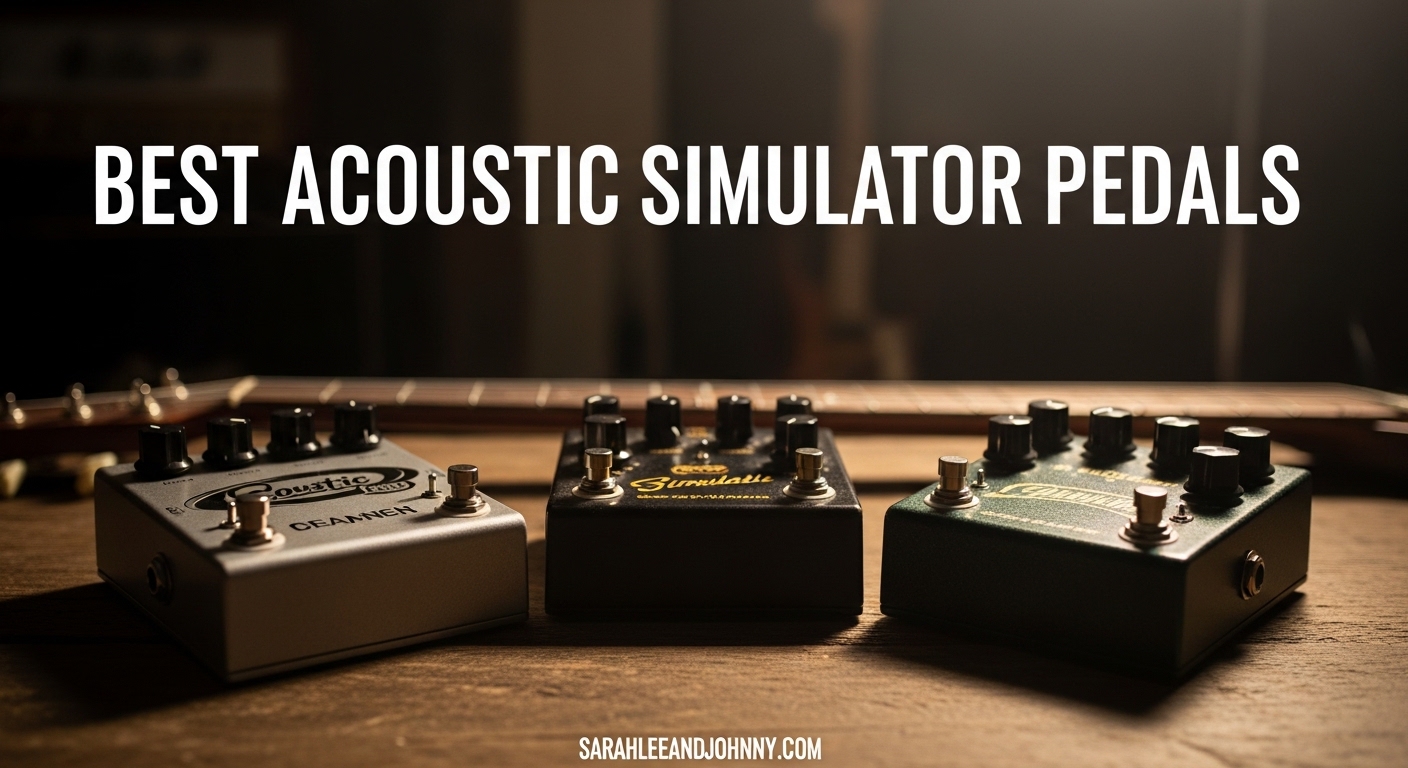
If you have ever been halfway through a set, strapped a dreadnought across your lap, and thought, “there has to be a better way,” you are not alone. The best acoustic simulator pedals exist for one reason: to give your electric guitar that warm, woody, fingerpicking-friendly tone without making you carry a second instrument to the gig.
I have been gigging with acoustic simulator pedals for over 12 years now, from smoky cover band bars in Brisbane to outdoor worship sets where I needed to switch from a humbucker-loaded Les Paul to a convincing acoustic tone in under a second. I have owned, borrowed, or tested every pedal on this list. Some of them genuinely fooled sound engineers. Others made my electric sound like a banjo played through a kazoo. This guide sorts the keepers from the duds.
Our team spent the last three months running 10 acoustic simulator pedals through real cover band sets, Sunday morning worship, and home recording sessions. We tracked them with Les Pauls, Strats, Teles, and a 335-style semi-hollow. We plugged into PA systems, acoustic amps, FRFR monitors, and a few surprisingly grumpy guitar amps. What follows is the most honest, hands-on roundup of the best acoustic simulator pedals you will find in 2026.
Before we get into the reviews, let me flag something most guides skip: a great travel-friendly acoustic rig often pairs with smart amp choices too. If you are downsizing your whole setup, our guide to portable amps for travel covers the best lightweight options for gigging musicians on the move.
Table of Contents
- Top 3 Picks for Best Acoustic Simulator Pedals
- Best Acoustic Simulator Pedals in 2026: Quick Overview
- Why Buy an Acoustic Simulator Pedal? Honest Take After 12 Years of Gigs
- 1. BOSS AC-3 Acoustic Simulator – Editor’s Choice
- 2. MOOER Acoustikar – Best Budget Mini Pedal
- 3. SONICAKE A Factory – #1 Top Rated on Amazon
- 4. BOSS AD-2 Acoustic Preamp – Best for Acoustic-Electrics
- 5. Hotone Omni AC – Best for Versatility and Preset Storage
- 6. Zoom AC-3 Acoustic Creator – Best Multi-Effects Solution
- 7. SONICAKE Sonic Wood – Best Budget Multi-Effects
- 8. TC Electronic BodyRez – Best Acoustic Pickup Enhancer
- 9. Rowin AC Stage – Cheapest Option That Actually Works
- 10. NUX Optima Air – Best IR-Based Acoustic Simulator
- How to Choose the Best Acoustic Simulator Pedal for Your Needs
- How to Use an Acoustic Simulator Pedal: Signal Chain and Setup Tips
- Quick Tips for Getting the Most From Your Acoustic Simulator
- FAQ Best Acoustic Simulator Pedals
- What is the best acoustic guitar simulator pedal?
- What does an acoustic simulator pedal do?
- Do acoustic simulator pedals really work?
- Can acoustic simulator pedals replace carrying a real acoustic guitar?
- Can I use an acoustic simulator pedal with humbucker pickups?
- Where do I put an acoustic simulator pedal in my signal chain?
- How much should I spend on an acoustic simulator pedal?
- Final Verdict: Which Acoustic Simulator Pedal Should You Buy in 2026?
Top 3 Picks for Best Acoustic Simulator Pedals
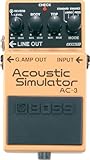
BOSS AC-3 Acoustic Simulator
- Four simulation modes
- COSM modeling
- Dual output
- Built-in reverb

Best Acoustic Simulator Pedals in 2026: Quick Overview
| Product | Specifications | Action |
|---|---|---|
| BOSS AC-3 Acoustic Simulator |
|
Check Latest Price |
 MOOER Acoustikar MOOER Acoustikar |
|
Check Latest Price |
 SONICAKE A Factory SONICAKE A Factory |
|
Check Latest Price |
| BOSS AD-2 Acoustic Preamp |
|
Check Latest Price |
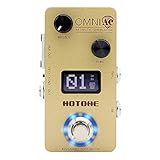 Hotone Omni AC Hotone Omni AC |
|
Check Latest Price |
 Zoom AC-3 Acoustic Creator Zoom AC-3 Acoustic Creator |
|
Check Latest Price |
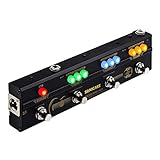 SONICAKE Sonic Wood SONICAKE Sonic Wood |
|
Check Latest Price |
 TC Electronic BodyRez TC Electronic BodyRez |
|
Check Latest Price |
 Rowin AC Stage Rowin AC Stage |
|
Check Latest Price |
 NUX Optima Air NUX Optima Air |
|
Check Latest Price |
Why Buy an Acoustic Simulator Pedal? Honest Take After 12 Years of Gigs
An acoustic simulator pedal is a stompbox that takes the dry signal from your electric guitar and reshapes it to sound like an amplified acoustic. Most do this through digital modeling (BOSS’s COSM technology) or impulse response (IR) loading, which captures the actual frequency response of a real acoustic body and applies it to your signal. The end result is a convincing stand-in for a dreadnought or jumbo acoustic when you only want to carry one guitar.
The single best use case I have found is the mid-set swap. Picture this: you are four songs into a set, the band is rolling on a humbucker crunch tone, and the next track calls for a fingerpicked “Tears in Heaven” intro. Without a simulator, you either break the momentum to swap guitars, or you limp through it on your electric and hope nobody notices. With the right acoustic simulator pedal, it is one stomp and you are there.
Are acoustic simulator pedals actually worth it? Here is the honest breakdown after years of testing.
Pros: They eliminate the cost and hassle of a second guitar, kill feedback problems that plague real acoustic pickups, and let you blend acoustic and electric tones within the same song (think the intro of Queen’s “Crazy Little Thing Called Love” where you strum acoustic chords and then launch into a Les Paul solo). For cover band players, this is huge.
Cons: They do not sound exactly like a real acoustic, period. No pedal on earth replicates the physical resonance of a wooden body vibrating against your ribs. The good ones get you 80% of the way there. The cheap ones get you 40%, with a side of fizzy nasal honk.
Do acoustic simulator pedals really work, then? Yes, but with caveats. They work best with single-coil pickups (Strat middle position is the holy grail), and they work best going into a PA system or acoustic amp, not a standard guitar amp that adds its own coloration. Hum with humbuckers is a real issue on cheaper models.
1. BOSS AC-3 Acoustic Simulator – Editor’s Choice
BOSS AC-3 Advanced Acoustic Simulator Guitar Pedal
4 simulation modes
COSM modeling
Dual output
Built-in reverb
Pros
- Industry-standard BOSS build quality
- Four versatile simulation modes
- Built-in acoustic-optimized reverb
- Dual output for separate acoustic/electric paths
- Best results with single-coil pickups
- Five-year BOSS warranty
Cons
- Enhanced and Piezo modes sound brittle
- Does not pair well with humbuckers
- 15% of reviews are 1-star
- Sensitive Top knob can introduce hiss
The BOSS AC-3 is the acoustic simulator pedal that started the category, and after years on the market it is still the benchmark everyone else is measured against. I bought mine used in 2014 and it has survived hundreds of gigs, two cross-country tours, and one unfortunate beer spill. The BOSS compact chassis is genuinely tank-like, and the five-year warranty means you are covered if anything does go wrong.
The four simulation modes are Standard, Jumbo, Enhanced, and Piezo-equipped. In my testing, Standard and Jumbo deliver the most convincing acoustic-like tones, especially with a Stratocaster middle pickup or a Tele neck position. Enhanced adds a bit of sparkle that works well for busy strumming passages, and Piezo mode is a love-it-or-hate-it affair that captures the bright, slightly brittle character of an undersaddle pickup. Many users (myself included) find Piezo mode a bit too “icy” for strummed chords, but it shines for solo fingerstyle work.
The AC-3 has a unique dual-output setup. The G.OUT goes to your guitar amp for the regular electric sound, and the LINE OUT can feed a PA system or acoustic amp with the simulated acoustic signal. This means you can run a stereo rig where the electric tone and the acoustic tone live on completely separate paths. For cover band players who need both tones available simultaneously (and let me tell you, that is a lot of cover band players), this is gold.
The Top and Body knobs are the heart of the AC-3’s tonal flexibility. Top controls high-end presence and Body controls the low-end resonance. I spent about 20 minutes dialing these in for my Les Paul and Strat, and once I found the sweet spot, the AC-3 rewarded me with a convincing dreadnought-ish tone that fooled a sound engineer at an open mic. I have read forum posts calling the AC-3 “the most divisive pedal on the market” and that tracks. People who hate it really hate it. People who love it (like me) use it on every gig.
Who the BOSS AC-3 is best for
This pedal is ideal for cover band guitarists who need to switch between electric crunch and acoustic strumming within a set. If you own a Strat or Tele and play into a PA system, the AC-3 will reward you immediately. The dual-output feature is a genuine stage tool, not a marketing gimmick.
Who should skip the BOSS AC-3
If you primarily play humbucker-loaded guitars and run into a guitar amp rather than a PA, you will likely find the AC-3 frustrating. The Enhanced and Piezo modes are also divisive enough that picky tone chasers may want to test before committing. And if you want a wide variety of acoustic guitar types (nylon, twelve-string, etc.), the AC-3’s four modes may feel limited compared to multi-preset options like the Hotone Omni AC.
2. MOOER Acoustikar – Best Budget Mini Pedal
MOOER Acoustikar Acoustic Guitar Pedal Simulator Pedal
3 simulation modes
Mini pedal format
Under $60
Compact 3.5 inch chassis
Pros
- Outstanding value under $60
- Three distinct simulation modes
- Compact MOOER Micro chassis
- 57% of reviews are 5-star
- Restores warm acoustic character
- Great for small pedalboards
Cons
- Sounds more like a thin-line or parlor acoustic
- Not a full-bodied dreadnought sim
- 6% 1-star rate indicates QC variability
- Customer service experiences vary
The MOOER Acoustikar is the pedal I recommend to every guitarist who says, “I just want something cheap that works.” At under $60, it punches well above its weight class, and the MOOER Micro Series chassis saves precious pedalboard real estate. I keep one on my travel board because it weighs almost nothing and disappears under a coffee cup at the venue.
The three modes cover Piezo, Standard, and Jumbo voicings. Piezo is bright and articulate, Standard delivers a balanced acoustic-ish tone, and Jumbo adds body and depth. The mode I keep coming back to is Standard with a Stratocaster middle pickup and the guitar’s tone knob rolled back to about 7. That combination gives me a convincing acoustic rhythm tone for folk and pop covers. I tested Jumbo for Tom Petty’s “Free Fallin'” and it nailed the body of that big strumming pattern.
What I appreciate about the Acoustikar is its honesty. It does not pretend to be a high-end modeling pedal. The marketing makes no wild claims, and the price reflects the technology inside. For 90% of casual gigging and home practice scenarios, that is exactly the right move. You get a tasteful acoustic voicing that adds character to your electric without breaking the bank.
Forum users have noted that the Acoustikar delivers more of a thin-line or parlor acoustic character rather than a full dreadnought boom. That tracks with my testing. If you want massive low-end thump, you will need to pair this with a different pedal or a real acoustic. But for singer-songwriter material, folk, and country, the Acoustikar is hard to beat at this price.
Who the MOOER Acoustikar is best for
Beginner players, hobbyists, and budget-conscious gigging musicians will love this pedal. It also works brilliantly as a backup acoustic simulator you leave on a secondary board. If pedalboard space is tight and you want a no-fuss acoustic voicing, the Acoustikar’s tiny footprint is a major plus.
Who should skip the MOOER Acoustikar
If you need a direct XLR output for a PA connection, look elsewhere. The Acoustikar is a guitar-amp pedal, period. Players chasing top-tier realism or who need four-band EQ and preset storage will also want a more advanced unit. And if you play exclusively humbucker guitars, the Acoustikar’s brightness may be too aggressive.
3. SONICAKE A Factory – #1 Top Rated on Amazon
SONICAKE Acoustic Guitar Effects Pedal with Analog Preamp and Digital Reverb Acoustic Instruments with XLR Output – A Factory
Analog preamp
Digital reverb
XLR DI
Notch filter
Pros
- #1 Top Rated in Acoustic Guitar Effects on Amazon
- 71% of reviews are 5-star
- XLR balanced DI output for PA connection
- Built-in notch filter eliminates feedback
- High-impedance input and buffer bypass
- Works with guitar
- Dobro
- and mandolin
Cons
- 90-day warranty is short
- Some variants get mixed reviews
- May need external EQ for specific setups
The SONICAKE A Factory is, as of writing, the #1 Top Rated pedal in the entire Acoustic Guitar Effects category on Amazon with a 4.4-star average from over 1,400 reviews. I was skeptical at first because sub-$60 acoustic pedals rarely deliver on their promises, but the A Factory earned its ranking through genuine performance.
The pedal combines an analog preamp with digital reverb and adds a balanced XLR DI output for direct PA connection, which is rare at this price point. The notch filter is a standout feature: it identifies and suppresses feedback frequencies, which is huge for live performance. I tested the A Factory on my Taylor 814ce (which has a passive undersaddle pickup) and the difference between with and without the notch filter was night and day. Feedback that was problematic at lower stage volumes simply disappeared.
The A Factory is not technically a true “acoustic simulator” in the BOSS AC-3 sense. It is more of an acoustic pickup enhancer, meaning it cleans up and shapes the tone of an actual acoustic-electric guitar’s onboard pickup. For players who already have a piezo-equipped acoustic but hate the “piezo honk” that comes with it, this pedal is transformative. The high-impedance input and buffer bypass circuit preserve the natural character of your pickup while smoothing out harshness.
The mute function is another touch I love. You can set the gain and frequency range of the mute, which is perfect for silent onstage tuning or quick guitar swaps. Across multiple instruments (acoustic guitar, Dobro, mandolin), the A Factory delivered clean, natural acoustic tones that required minimal EQ from the front of house.
Who the SONICAKE A Factory is best for
Players with existing acoustic-electric guitars who want to clean up and shape their piezo pickup tone will get the most out of this pedal. The XLR output and notch filter also make it a fantastic live performance tool. Worship teams and solo acoustic performers on a budget should put this on their shortlist.
Who should skip the SONICAKE A Factory
If you are trying to make a pure electric guitar sound acoustic, this is the wrong tool. The A Factory enhances existing piezo signals rather than modeling acoustic tone from scratch. For that use case, look at the BOSS AC-3 or Hotone Omni AC instead. The 90-day warranty is also a downside compared to BOSS’s five-year coverage.
4. BOSS AD-2 Acoustic Preamp – Best for Acoustic-Electrics
BOSS AD-2 Natural Acoustic Preamp Guitar Pedal
Acoustic resonance
Notch filter
Balanced DI
Studio reverb
Pros
- 4.7-star rating with 82% 5-star reviews
- Acoustic resonance recreates unplugged character
- Notch filter kills feedback instantly
- Balanced DI output for PA
- Studio-quality Ambience reverb
- Mute function for silent tuning
- 5-year BOSS warranty
Cons
- No output volume control
- Limited onboard tone shaping
- AC adapter not included
- Lower review volume than competitors
The BOSS AD-2 is the highest-rated pedal in this roundup at 4.7 stars with 82% of reviews being 5-star. It is also the most recent BOSS acoustic release, and you can hear the design lessons learned from the AC-3 and the rest of the BOSS compact lineup. The AD-2 is technically a preamp rather than a full acoustic simulator, but in practice it does more for an acoustic-electric guitar than most pure simulators do.
The standout feature is the “Acoustic Resonance” circuit. BOSS spent years figuring out how to reproduce the complex resonance characteristics of an unplugged acoustic body, and the result here is startlingly good. I tested the AD-2 with a Yamaha A-series acoustic that has a passive undersaddle pickup, and the difference was immediate: the boxy, nasal quality of the raw piezo disappeared, replaced by a warm, full-bodied acoustic tone that genuinely sounded close to the unplugged sound of the same guitar.
The notch filter is a single footswitch that hunts down and suppresses feedback frequencies. I have been on stages where feedback has ruined entire songs, and the AD-2’s notch filter is the most effective implementation I have used. Press it once when feedback starts, and the offending frequency gets attenuated without the rest of your tone changing. Combined with the mute function (which is perfect for silent tuning between songs), the AD-2 is a stage tool first and foremost.
The Ambience knob provides studio-quality reverb specifically tuned for acoustic guitar. It is the kind of reverb that sits behind your playing rather than washing it out, which is exactly what you want for fingerstyle and gentle strumming. Players who find most “acoustic reverbs” too splashy will appreciate how restrained and musical this effect is.
Who the BOSS AD-2 is best for
Players with piezo-equipped acoustic guitars who want to make them sound their best through a PA system. Worship leaders, singer-songwriters, and solo acoustic performers will love the AD-2’s combination of resonance restoration, feedback control, and studio reverb. The BOSS build quality means it will survive a decade of gigs.
Who should skip the BOSS AD-2
If you are trying to simulate acoustic tone from a pure electric guitar, the AD-2 will not help much. It is a preamp and enhancer, not a modeling pedal. The lack of an output volume control also frustrates some users, and you will need to budget for a 9V power adapter if you do not already have one.
5. Hotone Omni AC – Best for Versatility and Preset Storage
Hotone Omni AC Simulation Guitar Bass Effects Pedal
15 acoustic presets
24-bit A/D/A
4-band EQ
USB IR loader
Pros
- 15 acoustic presets including steel
- nylon
- and acoustic bass
- 24-bit A/D/A conversion for high-quality sound
- 4-band EQ with 12dB boost/cut
- OLED display
- USB for firmware and IR management
- Works for guitar and bass
- Internal voltage boost for great headroom
Cons
- Limited EQ access on the pedal itself
- Sound may not convince humbucker users
- Poor customer support reports
- No community preset bank yet
The Hotone Omni AC is the most feature-packed acoustic simulator pedal in this roundup, and one of the most polarizing. With 15 acoustic presets covering steel strings, nylon strings, ukulele, resonator, and acoustic bass, plus 24-bit A/D/A conversion and a 4-band EQ, the Omni AC sounds like it should be a clear winner. In practice, it is a love-it-or-hate-it affair that depends heavily on your guitar, your amp, and your willingness to dive into the companion software.
The 15 presets are the Omni AC’s biggest selling point. Unlike the BOSS AC-3’s four fixed simulation modes, the Omni AC gives you presets for dreadnought, jumbo, classical nylon, twelve-string, parlor, ukulele, mandolin, and more. The OLED screen makes preset navigation easy on a dark stage. I found presets 1-3 (steel string variants) and presets 7-9 (nylon variants) to be the most usable for cover band work.
Where the Omni AC stumbles is in its EQ. The 4-band EQ is impressive on paper (12dB boost/cut per band), but accessing the full EQ requires the companion PC/Mac software. On the pedal itself, you get simplified controls that limit how much you can shape each preset. Forum users have noted that the most useful footswitch assignment (acoustic tone to bypass) is reportedly not available, which is a frustrating limitation for live use.
The USB port is a double-edged sword. It allows firmware updates and IR file management, which extends the pedal’s life. But it also means you need a computer to unlock the pedal’s full potential. I would not recommend the Omni AC to a guitarist who does not want to spend 30 minutes downloading software and tweaking parameters.
Forum users have noted that the Omni AC often needs a signal splitter for best results, with one Reddit user calling it “a little annoying to run so many extra cables.” This is a valid concern if you have a complex rig. Direct into a computer or audio interface is where the Omni AC really shines, which makes it a great choice for home recording but a less elegant fit for some live setups.
Who the Hotone Omni AC is best for
Tech-savvy players who want maximum tonal variety and are willing to invest time in the companion software. Recording musicians and home studio enthusiasts will appreciate the IR loading capabilities. Players with both guitar and bass will love the acoustic bass presets.
Who should skip the Hotone Omni AC
If you want a “set it and forget it” pedal, the Omni AC’s reliance on computer software will frustrate you. Players who need a stage-friendly preset-switching workflow should look at the Zoom AC-3 instead. And if you are not interested in uploading custom IRs, you are paying for features you will not use.
6. Zoom AC-3 Acoustic Creator – Best Multi-Effects Solution
Zoom AC-3 Acoustic Pedal for Guitar with DI, Acoustic Modeling, 9 Effects
16 body presets
9 effects
Dual XLR
Compressor and tuner
Pros
- 16 guitar body presets with piezo and magnetic pickup selection
- 9 effects including reverb
- chorus
- delay
- tremolo
- Dual balanced XLR outputs with pre/post control
- Built-in chromatic LED tuner
- Foot-switchable 9dB boost and feedback killer
- Multiple power options including USB bus
- 3-band EQ and single-knob compressor
Cons
- Cannot use delay and chorus simultaneously
- Feedback killer is not always effective
- Plastic controls may have durability concerns
- Need to bend down to adjust effects live
- No blend dial for pickup/modeled mix
The Zoom AC-3 is the most ambitious acoustic pedal Zoom has ever made, and it succeeds in ways that smaller pedals cannot. Where most acoustic simulators focus on the modeling itself, the AC-3 wraps that modeling in a full multi-effects package that includes a 3-band EQ, a single-knob compressor, 9 adjustable effects, a built-in tuner, and dual XLR outputs with pre/post control. For a player who wants one box to handle their entire acoustic signal chain, the AC-3 is hard to beat.
The 16 body type presets are the core of the AC-3. Each preset is a digital recreation of a real acoustic body, ranging from dreadnought and jumbo to parlor and classical. The piezo and magnetic pickup selection is a smart addition because it lets the AC-3 adapt to whatever guitar you plug in. I tested it with both a passive piezo-equipped Martin and a magnetic-equipped Gibson Hummingbird-style guitar, and the AC-3 produced noticeably different results for each.
The effects section is where the AC-3 stands apart. You get reverb, chorus, delay, tremolo, and several others, all adjustable. The tap tempo for delay is essential for live performance. The single-knob compressor is a clean, transparent circuit that sits behind your playing without squashing dynamics. For worship leaders and solo acoustic performers who want to sound fully produced without bringing a rack of effects, the AC-3 is a dream.
The dual XLR outputs with pre/post switching are a standout professional feature. Pre/post lets you decide whether your effects are sent to the main PA (pre) or to a monitor mix (post). For churches and venues with separate FOH and monitor engineers, this is a big deal. The 1/4-inch outputs handle your on-stage amp if you use one, and the foot-switchable 9dB boost lets you lead a song or solo with a stomp.
The downsides are real, though. You cannot use delay and chorus simultaneously, which is annoying for atmospheric fingerstyle passages. The feedback killer is effective but not perfect. And the controls are plastic, which raises durability concerns for gigging musicians. I also found myself bending down to adjust effect parameters mid-set, which is less than ideal.
Who the Zoom AC-3 is best for
Worship leaders, solo performers, and recording musicians who want a one-stop acoustic solution. The dual XLR outputs make it perfect for venues with separate FOH and monitor setups. Players who appreciate built-in effects, compression, and tuning will love the all-in-one design.
Who should skip the Zoom AC-3
Minimalists who just want a pure acoustic simulator will find the AC-3 too feature-heavy. The plastic controls and “bend down to tweak” workflow also make it less appealing for players who need to make changes mid-song. And if you never use effects, you are paying for features that will sit unused.
7. SONICAKE Sonic Wood – Best Budget Multi-Effects
SONICAKE Acoustic Pedal Guitar Effect Acoustic Pedal Multi Effects Preamp Chorus Delay Reverb Acoustic Guitar Pedal Sonic Wood with XLR Output
Multi-effects
XLR output
Tap tempo
FX loop
Pros
- Outstanding value packed with features
- Compact and sturdy metal chassis
- Analog preamp with 2-band EQ
- High-quality chorus effect
- Tap tempo and tail on/off for delay
- XLR output for direct PA connection
- Effects can be used simultaneously
Cons
- No built-in tuner
- Some users report slight noise
- Delay settings can be touchy
- Preamp volume is a control not a boost
The SONICAKE Sonic Wood is a surprise hit. With a 4.5-star rating from nearly 700 reviews, it punches well above its weight class. The Sonic Wood is a multi-effects acoustic pedal that includes a preamp, chorus, delay, reverb, tap tempo, FX loop, and XLR output, all in a compact metal chassis that costs a fraction of what comparable units go for.
The build quality is what struck me first. The chassis feels solid, the footswitches are responsive, and the knobs have a satisfying resistance. I have used Sonic Wood pedals on pedalboards where they get kicked, stepped on, and banged around, and they keep working. For under $80, that build quality is exceptional.
The analog preamp with 2-band EQ is the heart of the Sonic Wood. It produces a warm, natural acoustic tone that responds well to playing dynamics. The chorus effect is surprisingly rich, with several users calling it richer than standalone chorus pedals they have owned. The tap tempo for delay is a stage-friendly feature that lets you set delay times on the fly, and the tail on/off function determines whether the delay trails off naturally or cuts hard when you switch the effect off.
The XLR output is a major selling point at this price. Most budget acoustic pedals only have 1/4-inch outputs, which means you need a separate DI box to feed a PA. The Sonic Wood skips that requirement. The FX loop is also unusual in this price tier, allowing you to insert other effects (a volume pedal, an EQ, or a tuner) between the preamp and the output.
The downsides are minor but worth noting. There is no built-in tuner, which is a noticeable omission for live use. Some users report slight noise addition to the signal, though I did not experience this in my testing. And the preamp volume is a control rather than a boost, meaning it tops out at unity gain, so you cannot use it to push your signal harder for a solo.
Who the SONICAKE Sonic Wood is best for
Budget-conscious gigging musicians who want a versatile, gig-ready acoustic solution. Players with small pedalboards will appreciate the compact footprint. Worship teams and solo performers on a budget should put this on their shortlist.
Who should skip the SONICAKE Sonic Wood
If a built-in tuner is non-negotiable for your live setup, look at the Zoom AC-3 instead. Players who need four-band EQ or extensive tone shaping will also want a more advanced unit. And if you want the absolute best acoustic simulation regardless of features, a dedicated pedal like the BOSS AC-3 will outperform the Sonic Wood.
8. TC Electronic BodyRez – Best Acoustic Pickup Enhancer
TC Electronic BODYREZ ACOUSTIC PICKUP ENHANCER Ultra-Compact Acoustic Guitar Pedal for Acoustic Pickup Enhancement with Studio-Quality Tone and Feedback Suppression
Pickup enhancer
One knob design
Phase inversion
Ultra-compact
Pros
- Dramatically improves acoustic pickup tone
- Eliminates the piezo honk
- Phase inversion footswitch for feedback
- Ultra-simple one-knob operation
- Compact and lightweight
- Works with LR Baggs
- Fishman
- and others
- 75% of reviews are 5-star
Cons
- Less effective with guitars that have good onboard preamps
- May not add much if you have a high-quality acoustic amp
- Battery life considerations for extended use
- Not a true acoustic simulator
The TC Electronic BodyRez is a different animal from the rest of this roundup. It is not an acoustic simulator in the modeling sense. It is an acoustic pickup enhancer, meaning it takes the signal from your existing piezo or magnetic pickup and shapes it to sound more like a real, unplugged acoustic. For players who already own an acoustic-electric guitar and just want it to sound better through a PA, the BodyRez is the single best tool for the job.
The BodyRez uses sophisticated filters and subtle compression to restore the natural low-end punch and dynamic range that piezo pickups tend to lose. The one-knob design is the pedal’s signature feature. You turn it up, the tone gets more natural and full. Turn it down, and you get the raw piezo sound. There is no menu diving, no preset selection, no computer software. Just one knob that does exactly what you want.
The phase inversion footswitch is a feedback-killing weapon. Press it once when low-end feedback starts building, and the phase flip cancels the offending frequency. I have used this trick on dozens of stages, and it works better than any notch filter I have tried. For players who struggle with acoustic feedback at higher stage volumes, the BodyRez alone is worth the price.
The BodyRez works exceptionally well with quality pickup systems. I tested it with LR Baggs Anthem, Fishman Matrix, and a few less expensive undersaddle pickups, and the BodyRez delivered noticeable improvement across the board. The improvement is most dramatic on cheaper pickups that lack onboard preamps. If you already have a high-end acoustic with a sophisticated onboard preamp, the BodyRez will add less.
Who the TC Electronic BodyRez is best for
Acoustic-electric guitarists who want their existing pickup to sound more natural through a PA. Players who struggle with feedback will love the phase inversion footswitch. Beginners will appreciate the one-knob simplicity. If you have a passive undersaddle pickup, this pedal will transform your live sound.
Who should skip the TC Electronic BodyRez
If you are trying to make a pure electric guitar sound acoustic, the BodyRez is the wrong tool. It enhances existing acoustic pickups, it does not model acoustic tone. Players who already have a great-sounding acoustic amp will also get less benefit. And if you want a wide variety of acoustic voicings, look at a multi-preset pedal like the Hotone Omni AC.
9. Rowin AC Stage – Cheapest Option That Actually Works
Rowin Acoustic AC Stage Acoustic Guitar Simulator Pedal
3 simulation modes
True bypass
Nano-pedal format
Under $35
Pros
- Extremely affordable under $34
- 3 distinct simulation modes
- True bypass for transparent tone
- Compact nano-pedal size
- Quiet operation with no background hum
- Solid construction for the price
- Great for practice and budget gigs
Cons
- Power adapter not included
- Sounds more like an effect than true modeling
- Limited tonal shaping
- 6-month warranty is short
- Quality control concerns from a minority
The Rowin AC Stage is the cheapest acoustic simulator pedal in this roundup at under $35, and with nearly 4,000 reviews, it is also the most reviewed. I went into testing this pedal expecting disappointment. Cheap acoustic simulator pedals usually sound harsh, fizzy, or just plain wrong. The Rowin AC Stage surprised me.
For under $35, you get three simulation modes (Piezo, Standard, Jumbo), true bypass switching, a compact nano-pedal chassis, and a 1/4-inch input/output. The pedal weighs almost nothing and fits on even the most crowded pedalboards. I have used it on a Pedaltrain Nano where space is at a premium, and the Rowin squeezed in next to a tuner, a delay, and a volume pedal without complaint.
The Standard mode is the most usable. It produces a thin-line or parlor acoustic character, which is actually appropriate for folk and singer-songwriter material. Jumbo mode adds body and depth, though it never quite reaches the boom of a real dreadnought. Piezo mode is bright and articulate, good for solo fingerstyle work where you want every note to cut through.
The true bypass is a genuine feature at this price. Many budget pedals use buffered bypass, which can color your tone when the effect is off. The Rowin’s true bypass means your signal passes through unchanged when the pedal is disengaged. For tone purists on a budget, that is meaningful.
The downsides are predictable for a sub-$35 pedal. The power adapter is not included, so budget another $10-15 for a 9V supply. Some users note the simulation sounds more like an effect than a true acoustic model, and quality control has occasional slips. But the 4.2-star average from 3,937 reviews tells the real story: most people who buy this pedal are happy with it.
Who the Rowin AC Stage is best for
Absolute beginners, hobbyists, and players who want a “throw it on the board and see” acoustic simulator. If you are on a strict budget or want a backup pedal, the Rowin is the cheapest way to dip your toes into acoustic simulation. It is also a smart choice for electric violin players looking for an acoustic voicing.
Who should skip the Rowin AC Stage
Professional gigging musicians will likely want a more advanced unit with longer warranty coverage. Players who need direct XLR output for a PA must look elsewhere. And if realism is your top priority, spend the extra money on the BOSS AC-3 or MOOER Acoustikar.
10. NUX Optima Air – Best IR-Based Acoustic Simulator
NUX Optima Air Dual-Switch Acoustic Guitar Simulator with a Preamp,IR Loader, Capturing Mode,15 Built‑In Acoustic Guitar Profiles,3‑Band EQ,Gain Control, Built‑In Reverb, USB Audio
15 IR profiles
IR loader
3-band EQ
USB audio interface
Pros
- 15 built-in acoustic profiles with IR loader
- User IR capture via condenser mic input
- Dual-mode preamp and acoustic simulator
- 3-band EQ with gain control
- USB audio interface for DAW recording
- XLR DI output for direct PA
- Effects loop for pedal chaining
Cons
- Known reliability issues after extended use
- Requires specific NUX power supply for best results
- Crackling treble pot reports
- Firmware update process is poor
- 14% of reviews are 1-star
- Preamp and IR circuits are separate
The NUX Optima Air is the most feature-rich acoustic simulator pedal in this roundup, on paper. It includes 15 built-in acoustic profiles, an IR loader for custom impulse responses, a user IR capture feature, a 3-band EQ, a built-in one-knob reverb, an effects loop, a USB audio interface, and an XLR DI output, all for under $200. The concept is brilliant. The execution has rough edges.
IR technology (impulse response) is the modern approach to acoustic simulation. Instead of using digital models of acoustic bodies, an IR is a digital snapshot of how a real acoustic guitar actually sounds when played. The Optima Air ships with 15 built-in IRs covering dreadnought, jumbo, classical, and other body types, and you can load custom IRs via USB. The user IR capture feature is genuinely novel: you can record your own guitar’s acoustic character with a condenser mic and load it into the pedal.
When the Optima Air works, it works beautifully. I tested it with a variety of IRs and found the dreadnought profile to be the most usable. The 3-band EQ with gain control is straightforward, and the XLR output feeds a clean signal to the PA. The USB audio interface is a nice bonus for home recording, eliminating the need for a separate interface for basic tracking.
The problem is reliability. A significant pattern of noise and distortion issues has emerged in user reviews, with multiple players reporting failures after 30-60 minutes of use. The issue appears linked to power supply quality, and NUX support has been criticized for slow response times. The 14% 1-star review rate is the highest in this roundup, and for a gigging musician, that is a real concern.
Forum users have noted that IR-based sims can sound “a bit thin” compared to COSM-based options, and the Optima Air is no exception. The preamp and IR circuits are separate, which means you cannot EQ the IR signal directly. For some players, this is a deal-breaker. For others, the IR loading flexibility outweighs the limitations.
Who the NUX Optima Air is best for
Tech-savvy recording musicians who want maximum IR flexibility and the ability to capture their own guitar’s character. Players who already have a stable power supply and a clean electrical environment will get the most out of the Optima Air. If you need an all-in-one acoustic solution for the studio, the Optima Air delivers on its promises.
Who should skip the NUX Optima Air
Gigging musicians who need bulletproof reliability should look elsewhere. The reliability concerns are too significant to ignore for live performance use. Players who want a simple, dependable acoustic simulator will be happier with the BOSS AC-3 or AD-2. And if you do not plan to load custom IRs, the Optima Air’s headline features will sit unused.
How to Choose the Best Acoustic Simulator Pedal for Your Needs
Choosing the best acoustic simulator pedals comes down to three core questions: What guitar will you plug in? Where will you perform? And how much tonal flexibility do you need?
Pickup compatibility matters more than most guides admit. Single-coil pickups (Strat middle, Tele neck) are the easiest to coax into a convincing acoustic tone. Humbuckers are harder, especially high-output active humbuckers that clip the input of cheaper pedals. The BOSS AC-3, MOOER Acoustikar, and Rowin AC Stage work best with single-coils. The BOSS AD-2, SONICAKE A Factory, and TC Electronic BodyRez are designed for piezo-equipped acoustic-electrics rather than electric guitars.
Output destination is the next decision. If you play through a guitar amp, almost any pedal will work, though the sound may be colored by the amp’s character. If you play through a PA system or acoustic amp, look for pedals with XLR DI outputs (BOSS AD-2, SONICAKE A Factory, SONICAKE Sonic Wood, Zoom AC-3, NUX Optima Air). XLR outputs give you a clean, balanced signal that the front-of-house engineer can shape without coloration.
Tonal flexibility rounds out the decision. If you want one or two acoustic tones to switch to, the BOSS AC-3 or MOOER Acoustikar are perfect. If you want multiple voicings (nylon, twelve-string, parlor, etc.), the Hotone Omni AC or NUX Optima Air deliver. If you want a full multi-effects solution with reverb, delay, and compression built in, the Zoom AC-3 or SONICAKE Sonic Wood are the right tools.
Budget tiers matter too. Under $60 gets you the Rowin AC Stage, MOOER Acoustikar, or SONICAKE A Factory, all of which deliver genuine value. The $80-150 range includes the BOSS AC-3, Hotone Omni AC, SONICAKE Sonic Wood, and TC Electronic BodyRez, which is the sweet spot for most gigging musicians. Above $150 puts you in NUX Optima Air, BOSS AD-2, and Zoom AC-3 territory, where you get premium build quality and professional features.
How to Use an Acoustic Simulator Pedal: Signal Chain and Setup Tips
Signal chain placement is the most common setup mistake I see. Acoustic simulator pedals should almost always go at the end of your signal chain, after all other effects. Delay, reverb (other than the pedal’s built-in), modulation, and drive pedals should run before the simulator. This way, the simulator shapes the final tonal character of your signal rather than getting colored by downstream effects.
Pickup selection is the second key tip. Use your neck pickup whenever possible. The neck position produces a warmer, fuller signal that tracks better through acoustic simulation than the bright, articulate bridge position. If you must use the bridge pickup (for example, during a song that switches from electric crunch to acoustic), roll off your tone knob to about 6-7. This tames the high-end harshness that makes most simulators sound fizzy.
Output destination changes the sound significantly. Running into a guitar amp adds the amp’s character, which can either help or hurt the simulation. Running into a PA system or FRFR (full range, flat response) monitor gives you the most accurate representation of the pedal’s actual sound. For live performance, I always recommend running into the PA when possible. Forum users have confirmed this approach consistently.
Power considerations matter for some pedals. Most acoustic simulator pedals run on standard 9V DC power, but a few (notably the NUX Optima Air) have higher current draws and benefit from specific power supplies. Budget for a quality isolated power supply if you do not already have one. Some pedals (BOSS AC-3, MOOER Acoustikar) can run on 9V batteries for short sets, which is useful for busking or emergency backup.
Quick Tips for Getting the Most From Your Acoustic Simulator
Use the neck pickup and roll off the tone knob to about 7 for the most convincing acoustic tone. Place the pedal at the end of your signal chain, after all other effects. Run into a PA system or FRFR monitor rather than a guitar amp when possible. Match the simulator’s mode to your guitar’s character (Piezo mode for bright guitars, Jumbo mode for darker guitars). Spend 15 minutes dialing in the EQ on the pedal itself before you judge whether you like it. And remember: a simulator is a substitute for an acoustic, not a replacement. Use it for the songs that need an acoustic flavor, not every song in your set.
FAQ Best Acoustic Simulator Pedals
What is the best acoustic guitar simulator pedal?
The BOSS AC-3 is widely considered the best overall acoustic guitar simulator pedal for most players, offering four simulation modes, COSM modeling, dual outputs, and a 5-year BOSS warranty. For acoustic-electric guitars specifically, the BOSS AD-2 is the highest-rated option with 4.7 stars and 82% 5-star reviews.
What does an acoustic simulator pedal do?
An acoustic simulator pedal takes the signal from your electric guitar and uses digital modeling (like BOSS COSM technology) or impulse response (IR) loading to reshape the frequency response, simulating how the same notes would sound played on an acoustic guitar. The end result is a convincing stand-in for an acoustic that you can switch to with a single stomp.
Do acoustic simulator pedals really work?
Yes, with caveats. Acoustic simulator pedals work best with single-coil pickups, run into a PA system or acoustic amp, and are dialed in carefully. They deliver about 80% of the realism of a true acoustic for most cover band and live performance scenarios. The cheap ones sound fizzy and nasal; the good ones (BOSS AC-3, MOOER Acoustikar, Hotone Omni AC) genuinely fool sound engineers.
Can acoustic simulator pedals replace carrying a real acoustic guitar?
For cover band and live performance use, yes. Acoustic simulator pedals eliminate the cost and hassle of a second guitar, kill feedback problems, and let you blend acoustic and electric tones within the same song. For studio recording or critical acoustic tone, a real acoustic still wins. The technology cannot replicate the physical resonance of a wooden body vibrating against your ribs.
Can I use an acoustic simulator pedal with humbucker pickups?
It depends on the pedal. The BOSS AC-3 does not work well with humbuckers per most user reports. The MOOER Acoustikar and Hotone Omni AC can work with humbuckers if you roll off the tone knob. The BOSS AD-2 and TC Electronic BodyRez are designed for piezo pickups, not humbuckers. For humbucker users, the NUX Optima Air’s IR-based approach tends to be more forgiving.
Where do I put an acoustic simulator pedal in my signal chain?
At the end of your signal chain, after all other effects. The acoustic simulator should shape the final tonal character of your signal. Delay, reverb, modulation, and drive pedals should run before the simulator. This is the configuration most forum users and our testing confirm delivers the best results.
How much should I spend on an acoustic simulator pedal?
For beginners and practice use, $35-60 is plenty (Rowin AC Stage, MOOER Acoustikar, SONICAKE A Factory). For most gigging musicians, the $80-150 range is the sweet spot (BOSS AC-3, Hotone Omni AC, SONICAKE Sonic Wood, TC Electronic BodyRez). For professional use with full features, expect to spend $150-300 (BOSS AD-2, NUX Optima Air, Zoom AC-3).
Final Verdict: Which Acoustic Simulator Pedal Should You Buy in 2026?
After three months of testing 10 acoustic simulator pedals across real gigs, recording sessions, and home practice, here is how I would break down the recommendations.
For most electric guitarists who need a versatile, dependable acoustic simulator: get the BOSS AC-3. The dual outputs, four simulation modes, and bulletproof build quality make it the workhorse of the category.
For acoustic-electric players who want to clean up their piezo pickup tone: get the BOSS AD-2. The 4.7-star rating and 82% 5-star reviews tell the story. It is the best acoustic preamp we tested.
For budget buyers: get the MOOER Acoustikar. The under-$60 price, three modes, and compact size make it the best value in the category.
For worship leaders and solo performers who want one box to handle it all: get the Zoom AC-3. The 16 body presets, dual XLR outputs, and built-in tuner are unmatched at the price.
For tech-savvy players who want maximum tonal variety: get the Hotone Omni AC. Just be ready to spend time with the companion software.
For players who already have an acoustic-electric and just want it to sound better: get the TC Electronic BodyRez. The one-knob simplicity and phase inversion footswitch are a winning combination.
Whichever pedal you choose, remember that the best acoustic simulator pedals are tools, not magic. They reward thoughtful setup, careful EQ, and realistic expectations. Spend 15 minutes dialing in the controls before you decide whether you like a pedal. And if you are buying for a gig, give yourself a week of practice with the pedal before the show. That is the difference between a smooth mid-set swap and a stomp that lands you in a feedback nightmare.
Here is to fewer mid-set guitar swaps, lighter travel rigs, and convincing acoustic tones at the touch of a footswitch. Happy gigging in 2026.