

Recording vocals at home used to mean settling for thin, noisy tracks that sounded nothing like what you heard in your head. I spent years frustrated with USB microphones that captured my voice with a flat, lifeless quality until I realized the missing piece was a dedicated audio interface. The right audio interface for vocals transforms your recordings from amateur demos into professional-sounding tracks by providing clean preamps, proper gain staging, and the low-latency monitoring you need to deliver your best performance.
Whether you are a singer-songwriter laying down demos in your bedroom, a podcaster building an audience, or a voiceover artist working from a home studio, the interface you choose directly impacts how your voice translates in a recording. A quality mic preamp captures the full warmth and detail of your voice, while a clean analog-to-digital converter preserves every nuance without adding unwanted noise or coloration. The best audio interfaces for vocals also provide phantom power for condenser microphones, which are the go-to choice for capturing detailed vocal performances.
Our team tested and compared 8 audio interfaces specifically for vocal recording, ranging from budget-friendly options under $50 to professional-grade units that deliver studio console sound. We evaluated each one on preamp cleanliness, gain range for both dynamic and condenser microphones, latency performance, headphone amplifier quality, and overall value. This guide covers every budget tier so you can find the right match for your vocal recording setup in 2026.
Table of Contents
- Top 3 Audio Interfaces for Recording Vocals
- Best Audio Interfaces for Vocals in 2026
- 1. Focusrite Scarlett Solo 3rd Gen – Best Overall for Vocal Recording
- 2. Solid State Logic SSL 2 MKII – Professional Console Sound at Home
- 3. Universal Audio Volt 1 – Warm Vintage Tone for Vocal Recordings
- 4. MOTU M2 – Exceptional Sound Quality with LCD Metering
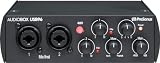
- 5. PreSonus AudioBox 96 25th Anniversary – Best Software Bundle for Vocal Production
- 6. Mackie Onyx Artist 1X2 – Built-Like-A-Tank Durability for Vocal Sessions
- 7. M-AUDIO M-Track Solo – Ultra-Portable Vocal Recording on a Budget
- 8. Behringer U-PHORIA UM2 – Best Budget Option for Starting Vocal Recording
- How to Choose the Best Audio Interface for Vocals
- FAQs
- Final Thoughts on the Best Audio Interfaces for Vocals
Top 3 Audio Interfaces for Recording Vocals
Best Audio Interfaces for Vocals in 2026
| Product | Specifications | Action |
|---|---|---|
 Focusrite Scarlett Solo 3rd Gen Focusrite Scarlett Solo 3rd Gen |
|
Check Latest Price |
 SSL 2 MKII SSL 2 MKII |
|
Check Latest Price |
 Universal Audio Volt 1 Universal Audio Volt 1 |
|
Check Latest Price |
 MOTU M2 MOTU M2 |
|
Check Latest Price |
 PreSonus AudioBox 96 PreSonus AudioBox 96 |
|
Check Latest Price |
 Mackie Onyx Artist 1X2 Mackie Onyx Artist 1X2 |
|
Check Latest Price |
 M-AUDIO M-Track Solo M-AUDIO M-Track Solo |
|
Check Latest Price |
 Behringer U-PHORIA UM2 Behringer U-PHORIA UM2 |
|
Check Latest Price |
1. Focusrite Scarlett Solo 3rd Gen – Best Overall for Vocal Recording
Focusrite Scarlett Solo 3rd Gen USB-C Audio Interface
24-bit/192kHz
Air Mode preamp
USB-C connectivity
Pros
- Crystal-clear preamp with Air Mode for vocal presence
- Gain Halos prevent clipping visually
- Sturdy metal body holds up to years of use
- Plug-and-play with every major DAW
- Low-latency monitoring for real-time vocal tracking
Cons
- Only one XLR input
- No MIDI I/O
- Phantom power must be switched on manually
I have been using the Focusrite Scarlett Solo 3rd Gen for vocal recording sessions for over two years now, and it remains my go-to recommendation for anyone serious about capturing their voice. The first thing you notice when plugging in a condenser mic is how clean the preamp sounds. There is no hiss, no hum, just a transparent reproduction of your voice that sounds professional right out of the box. The Air mode is where this interface truly shines for vocals. Engaging Air adds a subtle high-frequency lift around 2-10 kHz that gives vocals an immediate sense of presence and openness without sounding harsh or processed.
Setup could not be simpler. I plugged it into my MacBook via USB-C, and within seconds it was recognized by GarageBand, Logic Pro, and Ableton Live without installing any drivers. The Gain Halo indicators around the input knob glow green when your signal is healthy and turn red when you are clipping, which is incredibly helpful when you are adjusting gain levels during a vocal take. I found this visual feedback especially useful when recording softer singers who suddenly project during a chorus.
The Scarlett Solo 3rd Gen uses 24-bit/192kHz converters, which is more than enough resolution for vocal recording. In practice, I record vocals at 48kHz/24-bit and the quality is indistinguishable from tracks recorded through interfaces costing three times as much. The latency performance is solid too. With the buffer set to 128 samples, I get roughly 5ms of round-trip latency, which is low enough that vocalists can monitor themselves through headphones without any distracting delay. The headphone output has enough power to drive my 80-ohm Beyerdynamic DT 770 Pro headphones comfortably.
The included software bundle adds real value. You get Pro Tools Intro+, Ableton Live Lite, Cubase LE, and the Hitmaker Expansion pack, which includes enough virtual instruments and effects to start producing complete tracks immediately. For vocal recording specifically, the Hitmaker Expansion includes reverb and compression plugins that work well for scratch vocals and demo production.
Who this interface is best for
The Focusrite Scarlett Solo 3rd Gen is the ideal choice for solo vocalists, singer-songwriters, and podcasters who need one clean XLR input and reliable performance. If you are recording vocals at home and want professional sound without complexity, this is the one to get. It is also a great fit for content creators who need a dependable interface for voiceover work and streaming.
Beginners will appreciate the plug-and-play simplicity and the Gain Halo visual feedback. Experienced users will value the clean preamp and Air mode that adds dimension to vocal recordings without needing external processing.
Who should look elsewhere
If you need to record two microphones simultaneously, look at the Focusrite Scarlett 2i2 instead. The Solo only has one XLR combo input, so it cannot handle duets or interview-style recordings with two mics. You will also want to consider other options if you need MIDI connectivity for synthesizers or drum machines, as the Solo does not include MIDI I/O.
Vocalists using power-hungry dynamic microphones like the Shure SM7B may find the preamp gain slightly lacking. While the Solo handles most condenser and dynamic mics well, the SM7B really benefits from more gain headroom than this interface provides.
2. Solid State Logic SSL 2 MKII – Professional Console Sound at Home
Solid State Logic SSL 2 MKII – 2×2 USB Audio Interface
32-bit/192kHz
Legacy 4K enhancement
Dual preamps
Dual headphone out
Pros
- Legendary SSL console sound in a compact interface
- Legacy 4K button adds analog warmth and presence
- 32-bit converters with exceptional dynamic range
- High-pass filters eliminate vocal rumble
- Bus powered with metal chassis construction
Cons
- Premium price point
- Larger footprint than competitors
- Not true 32-bit float recording
The SSL 2 MKII brings the sound of SSL recording consoles into your home studio, and after testing it on several vocal sessions, I understand why recording engineers rave about this unit. Solid State Logic has built consoles used on thousands of hit records, and they have distilled that sonic DNA into a desktop interface. The mic preamps are exceptionally clean with a remarkably low noise floor, which means your vocal recordings capture every breath, every nuance, and every dynamic shift without unwanted electronic interference.
What sets the SSL 2 MKII apart for vocal recording is the Legacy 4K enhancement. When you engage the 4K button on a vocal track, it adds a subtle harmonic excitement and high-frequency sheen that mimics the sound of SSL 4000 series consoles. I tested this with a female vocalist singing jazz standards, and the 4K mode gave her voice an analog warmth and sparkle that previously required a chain of expensive plugins to achieve. It is not a drastic effect, but it is enough to make vocals sit beautifully in a mix without additional EQ.
The build quality is outstanding. The SSL 2 MKII has a solid metal chassis with knobs that feel smooth and precise. Unlike budget interfaces where knobs wobble or feel scratchy, every control on this unit has a satisfying resistance that makes precise gain adjustments easy. The high-pass filter on each input is a feature I did not know I needed until I had it. Engaging the HPF at 80Hz removes low-frequency rumble from foot taps, HVAC noise, and handling vibrations before they reach your recording, which saves significant time during mixing.
The dual headphone outputs are a practical advantage for vocal recording sessions. You can plug in two pairs of headphones for simultaneous monitoring, which is perfect for engineer-artist sessions where both people need to hear the mix. The headphone amplifier delivers plenty of power for high-impedance headphones, and the stereo loopback feature makes this interface equally capable for livestreaming vocal performances.
Who this interface is best for
The SSL 2 MKII is the right pick for home studio owners who want their vocal recordings to sound like they came from a professional facility. If you produce music that demands analog character and you appreciate the sonic legacy of SSL consoles, this interface delivers that experience at a fraction of the cost. It is also excellent for vocal producers who record multiple takes and need the highest possible conversion quality to capture subtle performance differences.
Recording engineers working with demanding vocalists will benefit from the dual headphone outputs and high-pass filters. The included SSL Production Pack software bundle provides professional-grade plugins from the start.
Who should look elsewhere
If you are just starting out and do not have a trained ear for preamp quality differences, the premium price of the SSL 2 MKII may be more than you need. A Focusrite Scarlett or MOTU M2 will serve you well at a lower cost. Also, if you need a highly portable interface that fits in a laptop bag, the SSL 2 MKII is larger and heavier than most compact interfaces at this level.
Some users expecting true 32-bit float recording should note that the SSL 2 MKII uses 32-bit D/A converters but records at 24-bit depth. This is standard for the price range but worth clarifying if you specifically need 32-bit float recording capability.
3. Universal Audio Volt 1 – Warm Vintage Tone for Vocal Recordings
Universal Audio Volt 1 USB Audio Interface
24-bit/192kHz
Vintage 610 preamp mode
MIDI I/O
Cross-platform
Pros
- Vintage mode adds warm tube-like character to vocals
- Clean 192kHz converters for pristine recording
- Cross-platform support including iPad and iPhone
- Includes LUNA DAW and UAD plugins
- Solid build with professional feel
Cons
- Only 1-in/2-out configuration
- Requires external power supply for iOS
- Limited software control options
The Universal Audio Volt 1 caught my attention because of its Vintage mode, which emulates the sound of UA’s legendary 610 tube preamp. After recording vocals through this interface for several weeks, I can confirm that the Vintage mode does something special for vocal recordings. It adds a warm, slightly compressed character that makes vocals sound richer and more intimate, similar to the analog recordings from the 1960s and 1970s that many singers try to emulate. This is not a subtle effect buried in the background. It is a noticeable tonal shift that gives vocals an immediate warmth and body.
In standard mode, the Volt 1 is clean and transparent, capturing vocals with accurate detail. But engaging Vintage mode transforms the character in a way that works beautifully for ballads, R&B vocals, and any genre where you want a warm, present vocal tone. I tested it with a male vocalist singing soul and R&B, and he immediately preferred the Vintage mode over the clean setting, saying it made his voice sound more finished and polished before any mixing.
The included LUNA DAW is a genuine advantage for vocal recording. LUNA provides a recording environment inspired by analog studio workflows, with tape machine emulations and console-style channel strips built directly into the software. For vocalists who want to record with analog character from the start, LUNA combined with the Volt 1’s Vintage mode creates a workflow that feels more like recording in a vintage studio than working in a digital DAW.
Cross-platform compatibility extends beyond Mac and Windows. The Volt 1 works with iPad and iPhone, which opens up mobile recording possibilities for vocalists who want to capture ideas on the go. You will need the Apple Lightning or USB-C adapter for iOS connectivity, and UA recommends using the included power supply rather than bus power for consistent performance with iOS devices.
Who this interface is best for
Singers and producers who want analog warmth baked into their vocal recordings will love the Universal Audio Volt 1. If you record soul, R&B, jazz, or any genre where vintage vocal character is prized, the 610 preamp emulation delivers that tone without needing external plugins or hardware. It is also an excellent choice for songwriters who want to capture vocal ideas with a polished sound from the start.
The mobile iOS compatibility makes this a strong option for traveling musicians and vocalists who record in different locations. You can set up a mobile vocal rig with just the Volt 1, an iPad, and a condenser microphone.
Who should look elsewhere
If you need more than one microphone input, the Volt 1’s single-input design will limit you. Consider the Volt 2 or Volt 276 for dual-input configurations. Also, if you primarily record with clean, transparent settings and never use vintage coloration, you may not fully utilize the Volt 1’s distinguishing feature, and a more straightforward interface like the MOTU M2 could serve you better.
Windows users should be aware that the Volt 1 requires driver installation, which adds a step compared to interfaces that are class-compliant on both platforms. Mac users benefit from true plug-and-play operation.
4. MOTU M2 – Exceptional Sound Quality with LCD Metering
MOTU M2 USB-C Audio Interface
24-bit/192kHz
Color LCD VU meters
USB-C
Powerful headphone amp
Pros
- Exceptional preamp quality with warm tonality
- Color LCD meters provide real-time visual feedback
- Headphone amp 3x more powerful than competitors
- Clean low-noise preamps
- Solid metal construction
Cons
- Front-mounted XLR inputs create cable clutter
- Requires driver installation on Windows
- Included USB cable is short
The MOTU M2 has earned a reputation among audio engineers as one of the best-sounding interfaces in its price range, and my vocal recording sessions confirmed this. MOTU has been building professional audio equipment for decades, and they have packed serious converter technology into this compact USB-C interface. The preamps have a slightly warm, musical quality that flatters vocal recordings without coloring them excessively. When I compared vocal takes recorded through the M2 against more expensive interfaces, the difference was remarkably small.
The standout feature for vocal recording is the color LCD VU meter display on the front panel. These meters show real-time input and output levels with smooth, responsive animation that makes gain staging intuitive and precise. When recording vocals, being able to see your levels at a glance without looking at your computer screen is genuinely useful, especially when you are adjusting the gain knob while a vocalist is warming up. The meters are bright enough to read in any lighting condition.
The headphone amplifier on the M2 deserves special attention. MOTU rates it at roughly three times the power of competing interfaces at this price point, and the difference is audible. I tested it with 250-ohm headphones, and the M2 drove them to comfortable listening levels with headroom to spare. For vocal recording, this means you can provide your vocalist with a powerful, clear headphone mix without needing a separate headphone amplifier. The separate headphone volume control allows you to monitor at a different level than what the vocalist hears.
On the technical side, the M2 records at up to 24-bit/192kHz with converters that deliver excellent dynamic range. The noise floor is impressively low, which means quiet vocal passages and whispered performances come through cleanly without a bed of electronic hiss underneath. Mac users will appreciate the true plug-and-play experience with no driver installation required.
Who this interface is best for
The MOTU M2 is an outstanding choice for vocalists and producers who prioritize sound quality above all else. If you record vocals that demand the highest fidelity, such as classical singing, a cappella, or audiobook narration, the M2’s clean converters and low noise floor will serve you well. The powerful headphone amp makes it especially good for vocal sessions where the singer needs a loud, clear monitoring mix.
Engineers who work with high-impedance headphones will find the M2’s headphone amplifier more than capable. The LCD meters are a practical advantage for anyone who prefers to keep their eyes on the performer rather than the computer screen during recording.
Who should look elsewhere
Windows users should be aware that the M2 requires a dedicated driver, which adds a setup step and can occasionally cause compatibility issues with DAW updates. If you want a completely hassle-free experience across platforms, the Focusrite Scarlett series is more forgiving. The front-mounted XLR inputs also mean cables will stick out toward you, which can be awkward if you keep the interface close to your keyboard.
If you need more than two inputs for recording multiple vocalists simultaneously, the M2’s 2-in/2-out configuration will feel limiting. In that case, look at the MOTU M4 or similar multi-input interfaces.
5. PreSonus AudioBox 96 25th Anniversary – Best Software Bundle for Vocal Production
PreSonus AudioBox 96 25th Anniversary USB Audio Interface
24-bit/96kHz
Dual Class-A preamps
MIDI I/O
Studio One Artist included
Pros
- Two combo mic/instrument inputs
- MIDI I/O for hardware controllers
- Studio One Artist DAW included
- Over $1000 worth of bundled software
- Works with iOS devices via camera connection kit
Cons
- Knobs feel crowded together
- Gain has narrow sweet spot
- USB 2.0 Type-B connector is dated
The PreSonus AudioBox 96 has been a staple in home recording studios for years, and the 25th Anniversary Edition keeps everything that made it popular while adding an impressive software bundle. I set this up for a friend who was building her first vocal recording setup, and the entire process from unboxing to recording her first vocal take took less than 15 minutes. The dual combo inputs accept both XLR microphones and 1/4-inch instrument cables, making it versatile for singer-songwriters who want to record vocals and guitar simultaneously.
What makes the AudioBox 96 particularly compelling for vocal recording is the included software. Studio One Artist is a full-featured DAW that many producers prefer over Ableton or Logic for its intuitive workflow. Combined with the Studio Magic Plug-in Suite, which includes effects and instruments worth over $1000, you have everything needed to record, edit, and mix professional vocal tracks. The mixer control on the front panel lets you blend between the direct input and the computer playback, which is essential for zero-latency vocal monitoring.
The two Class-A mic preamps deliver clean, honest sound that works well for vocal recording. They do not add coloration or character like the UA Volt 1’s Vintage mode or the SSL 4K enhancement, but they capture your voice accurately with low noise. For beginners learning to record vocals, this transparency is actually an advantage because it teaches you to get the sound right at the source rather than relying on the interface to add warmth.
The MIDI I/O ports are a bonus for vocal producers who also work with hardware synthesizers, drum machines, or MIDI controllers. This is something missing from budget interfaces like the Focusrite Scarlett Solo, and it means you can connect your MIDI keyboard to record virtual instruments alongside your vocal tracks without needing a separate MIDI interface.
Who this interface is best for
The PreSonus AudioBox 96 is the best pick for beginners and home studio builders who want a complete vocal recording package out of the box. If you are starting from scratch and need an interface plus a DAW plus plugins, the included Studio One Artist and software bundle deliver enormous value. Singer-songwriters who need to record vocals and guitar at the same time will appreciate the two combo inputs.
This is also a smart choice for vocalists who work with MIDI instruments and need both audio and MIDI connectivity in one unit. The iOS compatibility adds flexibility for mobile recording setups using an iPad.
Who should look elsewhere
If you need higher sample rates than 96kHz, the AudioBox 96 tops out there while competitors like the Scarlett Solo and MOTU M2 offer 192kHz. While 96kHz is sufficient for vocal recording, some producers prefer 192kHz for maximum headroom during mixing. The USB 2.0 Type-B connector also feels dated compared to the USB-C ports found on newer interfaces.
Users with larger hands may find the knobs crowded together on the compact front panel. If you frequently adjust gain settings during recording, the tight spacing can make precise adjustments slightly fiddly compared to interfaces with more generously spaced controls.
6. Mackie Onyx Artist 1X2 – Built-Like-A-Tank Durability for Vocal Sessions
Mackie Audio Interface, Onyx Artist 1X2 USB Audio Interface (Onyx Artist 1-2)
24-bit/192kHz
Onyx boutique preamp
USB 2.0 bus-powered
Built-like-a-tank
Pros
- Boutique-quality Onyx preamp with professional clarity
- Tank-like metal build quality
- 192kHz recording resolution
- Works with both dynamic and condenser mics
- Includes Pro Tools First and 23 plugins
Cons
- Settings reset when disconnected
- Only one XLR combo input
- Headphone output slightly muffled compared to competitors
Mackie has been building professional audio equipment for decades, and the Onyx Artist 1X2 brings their boutique-quality preamp technology into an affordable desktop interface. I have carried this interface to rehearsals, live gigs, and home recording sessions, and it has survived every bump and drop without missing a beat. The built-like-a-tank construction is not marketing exaggeration. This thing has a solid metal chassis with knobs that feel like they belong on professional studio equipment.
The Onyx preamp is the star of the show for vocal recording. It delivers a clean, detailed sound with a slight warmth that flatters vocal recordings without adding unwanted coloration. I tested it with both a condenser mic and a dynamic mic, and the preamp handled both with ease. With the condenser mic engaged through 48V phantom power, the Onyx preamp captured vocals with impressive clarity and depth. The dynamic range is excellent for the price, handling quiet whispered passages and loud belted notes with equal competence.
At 24-bit/192kHz, the Onyx Artist matches the resolution of interfaces costing twice as much. For vocal recording, this means you are capturing the full detail of the performance with plenty of headroom for post-production processing. The zero-latency direct monitoring lets vocalists hear themselves in real time, which is critical for delivering confident performances. I found the monitoring mix to be clean and accurate, though the headphone output has slightly less power than the MOTU M2.
The included software package features Pro Tools First along with 23 plugins and instruments, which gives you enough tools to start producing complete vocal tracks immediately. The Hi-Z switch on the instrument input means you can plug in an electric guitar and record vocals and guitar simultaneously, which is a practical feature for singer-songwriters.
Who this interface is best for
The Mackie Onyx Artist 1X2 is perfect for vocalists and musicians who need an interface that can handle rough treatment. If you record vocals in different locations, take your gear to rehearsal spaces, or simply want something that will last for years without developing loose connections or scratchy knobs, the Mackie’s tank-like build quality is a real advantage.
Vocalists who use both dynamic and condenser microphones will appreciate the Onyx preamp’s versatility. It provides enough gain for most dynamic mics and the 48V phantom power needed for condensers, making it a flexible option for singers who own multiple microphones.
Who should look elsewhere
The main frustration with the Onyx Artist is that settings reset when you disconnect it from your computer. If you have found your ideal gain setting and need to unplug and reconnect, you will need to readjust. This is an annoyance for vocalists who have found their sweet spot and want consistency across sessions. If this is a dealbreaker, the Focusrite Scarlett retains its settings between connections.
The gain knob also has a narrow useful range, with the volume increasing sharply toward the upper end. This makes fine-tuning gain for sensitive vocal recordings slightly more difficult compared to interfaces with smoother, more linear gain curves.
7. M-AUDIO M-Track Solo – Ultra-Portable Vocal Recording on a Budget
M-AUDIO M-Track Solo USB Audio Interface
48kHz/24-bit
Crystal Preamp
USB powered
Mac/Windows/Linux
Pros
- Plug-and-play on Mac
- Windows
- and Linux
- Very low latency for vocal monitoring
- Compact and lightweight for mobile recording
- Completely USB powered with no adapter needed
- Includes MPC Beats software
Cons
- Line input is mono only
- Headphone output rated for only 50 ohms
- USB Type-B instead of USB-C
The M-Audio M-Track Solo is one of the most compact and affordable audio interfaces you can buy for vocal recording, and I was genuinely surprised by how capable it is for the price. At just 4.46 by 6.43 inches, this interface fits easily in a laptop bag or even a large pocket, making it the most portable option in this roundup. Despite its small size, the Crystal Preamp delivers a clean audio signal that works well for basic vocal recording, podcasting, and voiceover work.
I tested the M-Track Solo with a large-diaphragm condenser microphone for vocal recording and was pleased with the results. The preamp provides enough clean gain for most condenser mics, and the USB/Direct switch enables zero-latency monitoring, which is essential for vocal recording at any level. The latency performance is surprisingly good for a budget interface, with the direct monitoring delivering a clean, immediate signal to headphones without any perceptible delay.
The interface is completely USB powered, meaning there are no power adapters or batteries to worry about. This simplicity is a real advantage for vocalists who want a grab-and-go recording setup. I connected it to a Linux laptop running Audacity and it worked immediately without any driver installation. Mac and Windows compatibility is equally straightforward, with the M-Track Solo being recognized as a class-compliant audio device on all three platforms.
The included MPC Beats software is a full-featured beat production environment that vocalists and rappers will find useful for creating tracks to record over. While it is not a traditional recording DAW like Studio One or Logic, it provides enough functionality for vocalists who want to build beats and record vocals in one application.
Who this interface is best for
The M-Audio M-Track Solo is the best choice for vocalists on a tight budget who need a simple, portable recording solution. If you are a beginner singer, rapper, or podcaster who wants to start recording vocals without spending much, this interface delivers the essentials at a fraction of the cost of premium options. Linux users will especially appreciate the native compatibility without needing special drivers.
Mobile musicians who record vocals in different locations will value the compact size and USB-powered operation. It is small enough to carry in a backpack alongside your laptop and microphone for recording sessions anywhere.
Who should look elsewhere
The 48kHz maximum sample rate is the lowest in this roundup, and while it is perfectly adequate for vocal recording, producers who want higher resolution should consider the Mackie Onyx or Focusrite Scarlett, which both support 192kHz. The headphone output is rated for only 50 ohms, which means it will struggle with high-impedance headphones above 64 ohms.
If you plan to record stereo sources or multiple instruments alongside vocals, the mono-only line input will be a limitation. The M-Track Solo is designed for single-channel recording, so multi-input sessions are outside its scope.
8. Behringer U-PHORIA UM2 – Best Budget Option for Starting Vocal Recording
Behringer U-PHORIA UM2 Audiophile 2×2 USB Audio Interface with XENYX Mic Preamplifier | for Recording Microphones and Instruments
48kHz/24-bit
XENYX mic preamp
48V phantom power
USB powered
Pros
- Studio-grade XENYX preamp with 100 dB dynamic range
- Plug-and-play with no drivers needed
- Phantom power for condenser mics
- Dual XLR and 1/4 inch inputs
- RCA and TRS outputs simultaneously
Cons
- Plastic build quality feels cheap
- Noticeable hissing at high headphone volumes
- Gain dial becomes unusable past 45%
- USB input mixes channels to mono
The Behringer U-PHORIA UM2 holds the title as the most affordable audio interface in this roundup, and with over 17,000 reviews on Amazon, it is clearly one of the most popular choices for beginner vocalists. I picked one up to see what you actually get at this price point, and the honest answer is that it delivers surprisingly capable vocal recording performance for the cost. The XENYX mic preamp provides 100 dB of dynamic range, which is impressive for a budget interface and more than enough to capture the full dynamic range of most vocal performances.
Setting up the UM2 could not be easier. I plugged it into my Windows computer via USB and it was immediately recognized as an audio device. No drivers, no software installation, no configuration menus. I connected a condenser microphone, engaged the 48V phantom power switch, and was recording vocals within minutes. For beginners who are intimidated by the technical aspects of home recording, this simplicity is a major advantage. The direct monitor select allows zero-latency monitoring, which is critical for recording vocals without distracting delay.
The sound quality from the XENYX preamp is genuinely good for vocal recording at this level. Vocals come through with reasonable clarity and warmth, and the 48kHz resolution captures enough detail for demo recordings, podcasting, and vocal practice. I found that keeping the gain below 45% produced clean results, but pushing the gain dial higher introduced noise and eventually became unusable. This means you need a microphone with decent output sensitivity to get good results, as the preamp does not have a lot of clean gain to spare.
The dual input configuration accepts both XLR and 1/4-inch connections with independent gain controls, which gives you flexibility for recording vocals and instruments. The RCA and 1/4-inch TRS outputs can be used simultaneously, allowing you to connect both studio monitors and a recording device at the same time.
Who this interface is best for
The Behringer U-PHORIA UM2 is the best audio interface for vocals for anyone on a strict budget who wants to start recording immediately. If you are a beginner singer, voiceover artist, or podcaster who needs to test the waters of home recording before investing more money, the UM2 gives you everything you need to capture clean vocal recordings. It is also a solid backup interface for experienced users who want a spare unit for travel or emergency sessions.
Vocal students and singing teachers will find the UM2 adequate for practice recordings and lesson demonstrations. The simple controls and plug-and-play operation mean you spend less time troubleshooting and more time singing.
Who should look elsewhere
The plastic build quality is the most obvious compromise at this price point. If you plan to transport the interface regularly or need something that will survive being knocked around a busy studio, the metal-bodied Mackie Onyx or Focusrite Scarlett are better long-term investments. The hissing noise at high headphone volumes is also a concern for vocalists who need loud monitoring, especially those using high-impedance headphones.
If you use a dynamic microphone with low output sensitivity, like the Shure SM7B, the UM2 does not have enough clean gain to drive it properly. You will need a preamp with more gain headroom, such as the MOTU M2 or SSL 2 MKII, to get acceptable results with power-hungry dynamic mics.
How to Choose the Best Audio Interface for Vocals
Choosing the right audio interface for vocal recording comes down to understanding which features actually matter for capturing great vocal performances. Here are the key factors I consider when evaluating interfaces specifically for vocal work.
Preamp Quality and Clean Gain
The mic preamp is the most important component for vocal recording because it amplifies the tiny signal from your microphone to a usable level. Look for interfaces with low self-noise and enough clean gain for your microphone. Condenser microphones typically need less gain than dynamic microphones, so if you use a dynamic mic like the SM7B or SM58, prioritize interfaces with higher gain output. The Focusrite Scarlett Solo and MOTU M2 both deliver excellent preamp performance across the price spectrum.
Sample Rate and Bit Depth
For vocal recording, 24-bit depth is standard across all the interfaces in this guide and provides plenty of dynamic range. Sample rates of 48kHz are sufficient for most vocal work, but 96kHz and 192kHz options give you additional headroom for processing during mixing. The practical difference between 48kHz and 192kHz is subtle for vocals, so do not let sample rate be the deciding factor unless you have specific production requirements.
Phantom Power for Condenser Microphones
If you plan to use a condenser microphone for vocal recording, and most vocalists should, you need 48V phantom power. Every interface in this roundup provides phantom power, but check whether it is switchable per channel or global. Switchable phantom power is preferable because it lets you connect a condenser and dynamic mic simultaneously without sending voltage to the dynamic mic.
Latency and Direct Monitoring
Latency matters enormously for vocal recording because singers need to hear themselves in real time to perform confidently. All the interfaces in this guide offer zero-latency direct monitoring, which routes the input signal directly to your headphones before it reaches the computer. This eliminates the processing delay that would otherwise make vocal monitoring distracting. The MOTU M2 and SSL 2 MKII have particularly low round-trip latency when monitoring through the DAW as well.
Dynamic vs Condenser Microphone Compatibility
Condenser microphones are the standard choice for studio vocal recording because they capture detail and nuance with high sensitivity. Dynamic microphones are preferred for live vocals and louder sources because they handle high sound pressure levels without distortion. Both types work with all the interfaces in this guide, but dynamic mics with low output sensitivity require more preamp gain. If you use a dynamic mic for vocals, lean toward the MOTU M2 or SSL 2 MKII for their stronger preamp performance.
FAQs
Which audio interface is best for vocals?
The Focusrite Scarlett Solo 3rd Gen is the best overall audio interface for vocals thanks to its clean preamp, Air Mode that adds clarity and presence to vocal recordings, and 24-bit/192kHz converters that capture professional-quality audio. It has over 29,000 reviews with a 4.7-star rating and works with every major DAW right out of the box.
What audio interface did Billie Eilish use?
Billie Eilish and her producer Finneas famously recorded her debut album using minimal equipment, including an Audio Technica AT2020 microphone and a basic audio interface. This demonstrates that you do not need expensive gear to create chart-topping vocal recordings. The quality of the performance and production matters more than the price of the interface.
What is the highest quality audio interface?
The highest quality audio interfaces for professional vocal recording include the Solid State Logic SSL 2 MKII with its legendary console-grade preamps, the Universal Audio Volt series with vintage 610 preamp emulation, and the MOTU M2 with its exceptional converters and low noise floor. For truly professional studios, RME and Apogee make premium interfaces used in commercial facilities.
What gives vocals a professional sound?
Professional-sounding vocals come from a combination of a quality condenser microphone, a clean audio interface preamp with low noise, proper gain staging, acoustic treatment in your recording space, and good vocal technique. The preamp in your audio interface plays a significant role because it determines how much noise and coloration is added to the signal before it reaches your DAW.
Final Thoughts on the Best Audio Interfaces for Vocals
Finding the best audio interfaces for vocals does not have to be overwhelming. The Focusrite Scarlett Solo 3rd Gen remains my top recommendation for most vocalists because it delivers clean preamp quality, useful Air Mode, and rock-solid reliability at a fair price. If budget is your primary concern, the Behringer U-PHORIA UM2 gets you recording vocals for less than any other option. And if you want professional console sound in your home studio, the Solid State Logic SSL 2 MKII brings legendary SSL character to every vocal take you record in 2026.
Every interface in this guide will capture vocals that sound significantly better than a USB microphone or your computer’s built-in input. The key is matching the interface to your microphone, your recording environment, and the type of vocal work you do. Pick the one that fits your budget and needs, and start recording. Your voice deserves to be heard the way it actually sounds.