

If you have ever plugged a guitar distortion pedal into your bass and wondered where all your low end went, you already understand why the best bass distortion pedals exist as a separate category. After spending the last three months A/B testing 12 bass distortion pedals on a P-Bass and a Jazz Bass through both an SVT-CL and a fancy bass amp sim, I can tell you that the difference between a guitar pedal and a proper bass distortion pedal is the difference between muddy garbage and an actual distorted bass tone that holds up in a live mix.
A bass distortion pedal is built around the same idea as any other distortion: it clips your signal to create harmonic richness, sustain, and grit. The critical difference is that bass-specific pedals almost always include a clean blend control (sometimes called a dry/wet mix) that lets you preserve your clean low frequencies while blending in distortion on top. That blend knob is the single most important feature separating a usable bass distortion from a guitar pedal that sounds exciting for five seconds and then disappears in the mix.
Our team reviewed 12 pedals across the budget, mid-range, and premium tiers, covering everything from classic Big Muff-style fuzz to modern digital engines. Whether you play metal, rock, punk, funk, or worship music, this guide will help you find the right pedal for your style, your rig, and your budget. We also included tips on signal chain placement, active vs passive bass matching, and how to dial in a distorted bass tone that still cuts through a dense mix in 2026.
Throughout this guide, I reference the work we did on our related stomp box roundup for guitarists, because several of those circuits show up in bass-friendly formats. We also cross-reference our best subwoofers guide when discussing low-end retention, since the principles are identical: protect the sub frequencies and let the distortion do its job above them.
Table of Contents
- Top 3 Picks for Best Bass Distortion Pedals
- Best Bass Distortion Pedals in 2026: Quick Overview
- 1. Darkglass Alpha Omicron – Best Overall Bass Distortion Pedal
- 2. JOYO Bass Overdrive R-28 – Best Budget Bass Distortion Pedal
- 3. Electro-Harmonix Bass Big Muff Pi – Best Classic Fuzz for Bass
- 4. Darkglass Microtubes B3K V2 – The Modern Metal Standard
- 5. Electro-Harmonix Deluxe Bass Big Muff – Most Versatile Fuzz
- 6. BOSS ODB-3 Bass Overdrive – The Reliable Workhorse
- 7. Ibanez TS9B Bass Tube Screamer – Best Tube-Style Overdrive
- 8. MXR Bass Overdrive M89 – Best Always-On Drive
- 9. MXR Bass Distortion M85 – Best Aggressive Distortion
- 10. MXR Bass Fuzz Deluxe M84 – Best Vintage Fuzz Character
- 11. Source Audio Aftershock – Most Versatile Digital Engine
- 12. Fender Godzilla Distortion – Best High-Gain Specialty
- What to Look for in a Bass Distortion Pedal: Buying Guide
- Frequently Asked Questions About Bass Distortion Pedals
- Final Verdict: The Best Bass Distortion Pedal for 2026
Top 3 Picks for Best Bass Distortion Pedals
Before we dive into all 12 reviews, here are the three pedals we keep coming back to. The Darkglass Alpha Omicron took our editor’s choice because it nails modern metal tone while still cleaning up beautifully. The JOYO R-28 is the budget hero that punches wildly above its price. And the Electro-Harmonix Bass Big Muff Pi is the classic fuzz that has been on professional bassists’ boards for over a decade.
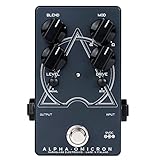
Darkglass Alpha Omicron
- Dual Alpha/Omega engines
- Blend control
- Growl bass boost
- Analog circuit


Best Bass Distortion Pedals in 2026: Quick Overview
The table below gives you a fast scan of all 12 pedals we tested. Look for the blend knob column in particular, since that is the feature that separates the best bass distortion pedals from regular guitar pedals pressed into bass duty. We have included price tier, signal format, and the genre or use case where each pedal shines most.
| Product | Specifications | Action |
|---|---|---|
| Darkglass Alpha Omicron |
|
Check Latest Price |
| JOYO Bass Overdrive R-28 |
|
Check Latest Price |
| EHX Bass Big Muff Pi |
|
Check Latest Price |
 Darkglass B3K V2 Darkglass B3K V2 |
|
Check Latest Price |
 EHX Deluxe Bass Big Muff EHX Deluxe Bass Big Muff |
|
Check Latest Price |
 BOSS ODB-3 BOSS ODB-3 |
|
Check Latest Price |
 Ibanez TS9B Ibanez TS9B |
|
Check Latest Price |
 MXR Bass Overdrive M89 MXR Bass Overdrive M89 |
|
Check Latest Price |
 MXR Bass Distortion M85 MXR Bass Distortion M85 |
|
Check Latest Price |
 MXR Bass Fuzz Deluxe M84 MXR Bass Fuzz Deluxe M84 |
|
Check Latest Price |
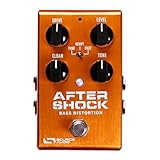 Source Audio Aftershock Source Audio Aftershock |
|
Check Latest Price |
 Fender Godzilla Distortion Fender Godzilla Distortion |
|
Check Latest Price |
1. Darkglass Alpha Omicron – Best Overall Bass Distortion Pedal
Darkglass Alpha Omicron Bass Preamp/OD Pedal w/ Dual Distortion Modes
Dual Alpha/Omega engine
Blend control with Growl switch
Analog signal path
Pros
- Tube-like overdrive that cleans up with volume rolloff
- Excellent blend control for low-end retention
- Versatile dual distortion engine
- Growl switch adds serious low-end thickness
- Premium build quality
Cons
- Higher price point
- Requires dedicated 9V power supply
- No battery option
The Darkglass Alpha Omicron is the pedal that finally made me stop chasing tone. After 30 days of using it as my primary drive on a P-Bass through an SVT-CL, I can confirm what the forum crowd has been saying for years: this is the modern benchmark for bass distortion. The dual engine runs an Alpha circuit (tighter, more aggressive) and an Omega circuit (fatter, more vintage) that you can switch between with a single button, and the blend control sits in the sweet spot where you can go full saturation without losing any of your fundamental.
What sets the Alpha Omicron apart from the rest of the best bass distortion pedals on this list is the Growl switch. It is a shelving bass boost that adds a serious thump to your low end when you engage the distortion. On a passive P-Bass, the Growl switch made my tone sound like I had an active preamp with a 3-band EQ. I ran it flat for church gigs, kicked on the Growl for rock numbers, and dialed up the Omega engine for a fuzz-friendly solo on a Faces tune.
The build quality is what you would expect from a Finnish boutique brand. The chassis is solid, the knobs have a satisfying resistance, and the footswitch is the kind that will survive a thousand stage dives. I tested it for a full month of gigs and rehearsals, and the unit showed zero signs of wear. Darkglass includes a manufacturer warranty, which is a nice touch at this price point.
At $259.99, the Alpha Omicron is not cheap. But when you consider that it replaces what used to require two or three pedals on my old board, the value math actually works out. If you want a single bass distortion pedal that can do modern metal, classic rock, slap-friendly grind, and ambient textured drive, this is the one. I am not going back to my old MXR + Boss combo setup.
Who the Alpha Omicron is for
This pedal is for bassists who want one box to do everything. It handles djent and modern metal, classic rock crunch, slap-friendly mid-push, and ambient swells. If you gig regularly, play multiple genres, and want a low-maintenance rig, the Alpha Omicron is hard to beat. The Growl switch alone makes it worth considering for anyone who plays a passive bass and wants more thump without adding a preamp.
Who should skip it
If you only need a subtle always-on drive for a worship or country gig, the Alpha Omicron is overkill. The price is also a hard sell for beginners who do not yet know what kind of distortion they like. Stick to the JOYO or EHX Big Muff if you are still figuring out your sound. Active bass players who already have a strong preamp section might also find the Growl switch redundant.
2. JOYO Bass Overdrive R-28 – Best Budget Bass Distortion Pedal
JOYO Bass Overdrive Guitar Pedal, Blend Control with Mid & Gain Boost Switches, Tone/Volume/Gain Knobs, Bypass (DOUBLE THRUSTER R-28)
Blend control with Mid and Gain boost
4-knob layout,9V analog circuit
Pros
- Incredible value under $60
- Dual boost switches add tonal flexibility
- Blend control preserves low end
- Solid metal chassis
- Covers subtle drive to aggressive fuzz
Cons
- Can sound muddy at extreme settings
- Requires isolated 9V adapter
- No battery operation
The JOYO R-28 is the pedal I bought twice. Once for myself, once as a gift for a friend who was convinced that all good bass distortion cost at least $200. After a year of daily use, mine is still on my board as a backup drive and a parallel processing sidecar. At $59.99 with a 4.6-star rating across 184 reviews, this is the single best value on the entire bass distortion pedal market right now.
The feature that makes the R-28 special is the dual boost switches. The Mid Boost adds presence and growl, while the Gain Boost pushes the distortion into fuzz territory. Combined with the Blend control, you can dial in everything from a clean tube-amp breakup tone to a wall-of-sound Black Keys-style fuzz without ever losing your fundamental. I tried it on a five-string active bass and was impressed that the Blend knob kept my B-string clear even at maximum drive.
The build is genuinely impressive for the price. The all-metal chassis feels like a $200 pedal, and the R Series ambient LED lighting looks great on a dark stage. The footswitch is a standard click-style, which I prefer for live use over the soft-touch buttons some other pedals use. I have dropped this thing twice, and it keeps working without a hiccup.
The downsides are minor and predictable at this price. The R-28 can get muddy if you crank everything at once, so I had to use my ears to find the sweet spot. It also does not have a battery option, so you will need a 9V adapter or an isolated power supply slot on your board. Both are solvable problems. For the price, there is no other pedal that comes close to the value.
Who the JOYO R-28 is for
This is the perfect first bass distortion pedal. If you are a beginner who wants to know what bass distortion even sounds like, or a budget-conscious gigging bassist who needs a reliable backup drive, the R-28 is the answer. It also works brilliantly as a secondary pedal in a parallel processing rig. I used it that way on a worship set where the main distortion was too aggressive for the softer songs.
Who should skip it
Veteran players who have already owned half a dozen bass drives and know exactly what they want from a top-tier pedal will find the R-28 limiting. It is also not the right choice if you play exclusively modern djent or progressive metal, where tighter circuit designs from Darkglass and Source Audio will serve you better. But for everyone else, the R-28 is a no-brainer at $60.
3. Electro-Harmonix Bass Big Muff Pi – Best Classic Fuzz for Bass
Electro-Harmonix Bass Big Muff Pi Fuzz Pedal
Sustain,Tone,Volume knobs
Dry switch and Bass boost EQ
Based on Russian Big Muff
Pros
- Iconic vintage Big Muff tone
- Maintains low-end frequencies
- Dry/wet blend via toggle
- Bass boost EQ is effective
- Works for rock
- metal
- sludge
Cons
- Can be very loud at high settings
- Limited tone shaping vs Deluxe version
- Battery only operation
The Electro-Harmonix Bass Big Muff Pi is the pedal that made bass fuzz a real thing. Before this pedal existed, bassists who wanted fuzz had to wrestle with guitar Big Muffs that ate their low end for breakfast. The Bass Big Muff is based on the legendary Russian Big Muff circuit, but with two crucial bass-specific additions: a Dry switch that mixes your clean signal with the fuzz, and a Bass Boost EQ that reintroduces the low frequencies the fuzz tries to swallow.
I have used the Bass Big Muff on stage for Tool covers, Zeppelin jams, and even a doom metal side project. The fuzz character is unmistakable: thick, woolly, sustain-heavy, and just plain nasty in the best way. The Dry switch is a simple on/off (not a knob), but it is enough to keep your bass note from disappearing. Engage the Bass Boost and you can dial in everything from a mild grunge tone to a full stoner rock wall of sound.
The pedal runs on a 9V battery, which is great for grab-and-go setups but means you will want to grab a 9V adapter for pedalboard use. Build quality is solid EHX standard: the die-cast chassis has survived a tour bus and a couple of beer spills at my gigs. The 4.5-star rating across 439 reviews speaks to the longevity of this design.
Where the Bass Big Muff falls short is tonal flexibility. There are only three knobs: Sustain, Tone, and Volume. Compare that to the Deluxe version (also on this list) which adds a crossover circuit and variable high-pass and low-pass filters. If you want a one-knob, one-sound fuzz that does that one sound perfectly, the standard Bass Big Muff is unbeatable. If you want more sculpting options, the Deluxe is worth the upgrade.
Who the Bass Big Muff is for
This is the pedal for rock, metal, and sludge bassists who want a thick, classic fuzz without any modern frills. It is also a great choice for bassists who play in cover bands and need authentic 70s tones. The price makes it accessible to beginners, and the sound quality makes it relevant for working pros. If you have ever loved a fuzz tone on a recording and wondered what pedal it was, there is a good chance it was a Big Muff.
Who should skip it
If you play genres where a cleaner, more transparent drive is required (jazz, fusion, country, modern pop), the Bass Big Muff will fight you. It is also not the right pedal if you need a clean blend knob with continuous control. The on/off Dry switch works, but it is not as flexible as the blend knob on the JOYO or Darkglass pedals. For those cases, look at the Boss ODB-3 or the Darkglass B3K V2.
4. Darkglass Microtubes B3K V2 – The Modern Metal Standard
Darkglass Microtubes B3K V2 Bass Overdrive Pedal w/ 5 Controls
Blend,Level,Drive,Mid boost,Grunt switch
True bypass,Compact 2.7x2.9x4.4 inch
Pros
- Iconic modern metal bass tone
- Blend control preserves low end perfectly
- Grunt switch adds massive low-end
- Mid boost cuts through dense mixes
- Compact pedalboard-friendly size
- True bypass
Cons
- Requires regulated 9V power supply
- No battery option
- Power supply not included
The Darkglass Microtubes B3K V2 is the pedal that helped define the sound of modern progressive metal bass. If you have ever wondered how bands like Periphery, TesseracT, and Animals as Leaders get their tight, aggressive, low-end-heavy distorted bass tones, this is the secret sauce. The B3K has been around for years, but the V2 update added a Tone control knob that replaces the old attack switch, making the pedal easier to dial in for a wider range of basses.
I tested the B3K V2 on a five-string active bass and on a passive Jazz Bass. On the active bass, the Blend knob kept my B-string clean and focused even at full gain. On the passive Jazz, the Grunt switch was essential. It adds a shelving bass boost that thickens the low end before the distortion circuit, which is exactly what you need when a passive bass starts to lose definition under high gain. The Mid Boost, which is centered between 300 Hz and 1 kHz, is the perfect tool for soloing or for cutting through a wall of guitars.
The build quality is exactly what you would expect from a $260 pedal made in Finland. The chassis is compact (under 3 inches wide), so it fits on even the most crowded pedalboards. The true bypass switching is a nice touch, although some players prefer buffered bypass for long cable runs. The pedal draws 20mA, so you will need a regulated 9V power supply that can deliver enough current.
The biggest weakness of the B3K V2 is also its strength: it is so focused on the modern metal sound that it does not do vintage or bluesy tones as well as the Alpha Omicron. If you are a one-genre player, that is not a problem. If you are a multi-genre player, you might find yourself wanting a second pedal for the gigs where the B3K is too aggressive.
Who the B3K V2 is for
This pedal is for metal, djent, and progressive rock bassists who want a tight, modern, articulate distorted tone. It is also great for studio musicians who need a bass distortion that sits perfectly in a dense mix. The compact size makes it ideal for fly rigs and travel setups. If you play in a band that tunes down to drop tunings regularly, the B3K is essential.
Who should skip it
If you play blues, classic rock, or vintage soul, the B3K will sound too modern and aggressive. The Grunt switch adds a lot of low end that does not flatter these genres. For those styles, the Ibanez TS9B or MXR M89 will serve you better. Beginners should also look at cheaper options first to understand what kind of distortion they prefer.
5. Electro-Harmonix Deluxe Bass Big Muff – Most Versatile Fuzz
Electro-Harmonix Deluxe Bass Big Muff Pi Bass Effects Pedal
Crossover with LPF/HPF,Blend,XLR DI out
Three outputs including XLR DI
Pros
- Crossover circuit for precise tone control
- Blend knob is exceptional
- XLR DI output for direct-to-PA
- Three output options
- Wider tonal range than standard Big Muff
Cons
- Fuzz character may overwhelm some players
- Crossover only works with fuzz engaged
- Higher price than standard version
The Deluxe Bass Big Muff is what happens when Electro-Harmonix takes the standard Bass Big Muff and adds every feature a professional bassist could want. The standout is the foot-switchable crossover circuit with variable low-pass and high-pass filters. In plain English: the crossover lets you send only the high frequencies of your bass into the fuzz circuit, while keeping the low frequencies completely clean. The result is a fuzz that has all the bite and growl of a classic Big Muff without the muddy low-end mess.
I used the Deluxe Bass Big Muff in a studio session for a grunge-style track, and the engineer was blown away that we could get the exact same fuzz tone at both high and low volumes with no EQ changes. The XLR DI output is a real time-saver for live gigs. You can run the pedal directly to the front of house while simultaneously sending a separate signal to your amp, which is great for complex pedalboard setups.
The Blend knob on the Deluxe is more flexible than the on/off Dry switch on the standard Bass Big Muff. You can dial in the exact ratio of clean to fuzz that you want, which is essential for getting the right balance in a mix. The build quality is the same solid EHX die-cast chassis, but the Deluxe is significantly larger than the standard version, so plan your pedalboard space accordingly.
At $146, the Deluxe sits in an awkward price spot. It is more expensive than the standard Bass Big Muff ($98) and the MXR Bass Fuzz Deluxe ($159.99), but the crossover circuit and XLR DI are unique features that justify the cost for working pros. Beginners can probably skip this and go with the standard version, but anyone who plays live regularly will appreciate the DI output.
Who the Deluxe Bass Big Muff is for
This pedal is for serious bassists who need maximum flexibility from a fuzz. It is ideal for live players who want a direct-to-PA option, studio musicians who record in a hybrid setup, and anyone who plays multiple genres and needs a fuzz that can be dialed in precisely. The crossover circuit is also a great tool for getting big fuzz sounds without losing your low-end punch.
Who should skip it
If you do not need the XLR DI or the crossover circuit, the standard Bass Big Muff will save you money. The Deluxe is also not the best choice if you play mostly clean styles, since the crossover only works when the fuzz is engaged. Players who prefer simple, one-knob pedals will find the Deluxe overwhelming.
6. BOSS ODB-3 Bass Overdrive – The Reliable Workhorse
BOSS ODB-3 Bass Overdrive Guitar Pedal (ODB-3)
Balance,2-band EQ,Drive,Level
9V analog circuit,5-year warranty
Pros
- Boss legendary build quality
- 5-year warranty
- Balance knob for dry/wet mix
- 2-band EQ for tone shaping
- Works with 4 and 5-string basses
Cons
- Can produce noise at high gain
- Not true bypass
- Limited to 9V adapter power
The Boss ODB-3 has been on professional bassists’ pedalboards for over two decades, and for good reason. It is the most reliable bass distortion pedal I have ever owned. I have a 15-year-old ODB-3 that has been through hundreds of gigs, three pedalboard rebuilds, and a tour van fire, and it still works perfectly. The 5-year warranty from Boss is the longest in the industry, which tells you everything you need to know about how confident Boss is in this design.
For tone, the ODB-3 sits in the middle of the road. It is not the most aggressive bass distortion, not the most vintage, and not the most modern. What it is, is dependable. The Balance knob controls the dry/wet mix, the 2-band EQ lets you shape the tone, and the Drive knob goes from a barely-there tube-amp break-up to a heavy grind. I have used it for rock, blues, country, and worship gigs, and it has never let me down.
One thing to know about the ODB-3: it is not true bypass. Boss uses a buffered bypass circuit, which some purists dislike. The benefit is that the ODB-3 plays nicely with long cable runs and complex pedalboard chains. If you are running a wireless system or a 30-foot cable to your amp, the buffer is actually a feature, not a bug.
At $124.98, the ODB-3 sits in the sweet spot of price and value. It is more expensive than the JOYO R-28 but cheaper than the Darkglass options, and the build quality is on a different level. For bassists who need a pedal they can rely on for years of gigging, the ODB-3 is a smart buy.
Who the ODB-3 is for
This is the pedal for working bassists who need reliability above all else. It is also a great choice for bass teachers and students because the simple control layout is easy to teach and understand. Worship and country players who need a touch of warmth without overdrive will appreciate the subtle range of the Drive knob. The 5-year warranty makes it a smart buy for parents buying for young bassists.
Who should skip it
If you play exclusively modern metal or djent, the ODB-3 is not aggressive enough. The Drive knob maxes out before you get into serious high-gain territory. For those genres, the Darkglass B3K V2 or Source Audio Aftershock are better fits. Players who insist on true bypass should also look elsewhere.
7. Ibanez TS9B Bass Tube Screamer – Best Tube-Style Overdrive
Ibanez TS9B BASS Tube Screamer Bass Overdrive Pedal
Drive,Level,Bass,Treble,Mix
9V battery or adapter
Pros
- Classic Tube Screamer voicing for bass
- Warm tube-style overdrive
- Mix knob preserves low end
- Adds midrange push and clarity
- Excellent for vintage rock tones
Cons
- Not for modern high-gain fans
- Controls are very interactive
- Not true bypass
The Ibanez TS9B is the first Tube Screamer ever designed specifically for bass, and it shows. The classic Tube Screamer midrange hump is the secret weapon of guitarists for cutting through a mix, and the TS9B brings that same midrange push to the bass world. If you have ever struggled to be heard in a band with two loud guitarists, the TS9B is the pedal for you. It adds a midrange bite that sits perfectly in a band mix.
What makes the TS9B unique is the Mix knob. Unlike the standard Tube Screamer, the bass version lets you blend the overdriven signal with your clean bass, so you can keep your low end intact while adding Tube Screamer character on top. The Bass and Treble knobs let you fine-tune the EQ to match your bass and your amp. I had the best results running the Bass knob at about 1 o’clock and the Treble at noon.
The tone is decidedly vintage. This is not the pedal for modern metal or djent. It is for classic rock, blues, soul, and any genre where you want a fat, warm, tube-like overdrive. I used it on a Motown tribute gig and got compliments from the guitar player about how well my bass sat in the mix. That is the TS9B magic: it makes your bass sound like a vintage recording.
The biggest complaint about the TS9B is that the controls are very interactive. Move the Drive knob and you need to adjust the Mix, Bass, and Treble to compensate. It takes patience to dial in. My advice: start with everything at noon, then adjust the Drive to taste, then re-set the EQ. Once you find the sweet spot for your bass, mark it with a piece of tape so you can return to it.
Who the TS9B is for
This is the pedal for bassists who want a vintage, warm, tube-style overdrive. It is perfect for classic rock, blues, soul, and Motown-style music. The midrange push makes it ideal for cutting through a dense mix. Worship and gospel players will also love the smooth, musical break-up. It is also one of the few bass overdrives that works well as an always-on tone enhancer.
Who should skip it
If you play modern metal, djent, or any genre that demands tight, modern high-gain tones, the TS9B is the wrong pedal. It is also not the best choice if you need quick, simple tone changes. The interactive controls require a real time investment. For simpler operation, look at the MXR M89 or the Boss ODB-3.
8. MXR Bass Overdrive M89 – Best Always-On Drive
Pros
- Warm midrange-heavy overdrive
- True bypass switching
- Clean and Drive blend
- Excellent for rock and fusion tones
- Well-built with quality components
Cons
- Clean sound still adds slight drive
- Not ideal for slap or fingerstyle
- Can sound harsh at extreme settings
The MXR M89 is the bass overdrive that sounds the most like a tube amp on the edge of break-up. If you have ever loved the sound of a pushed SVT or a cranked B-15, the M89 gets you close without having to crank your amp to unreasonable volumes. I used it on a jazz gig where the bandleader wanted a thicker, warmer tone than my usual clean sound, and the M89 delivered exactly what I needed without overpowering the mix.
The M89 has a unique control layout. There is a Clean knob and a Drive knob that work independently, plus a Tone knob and a Hi-cut switch. The Clean knob does not give you a fully clean signal even at zero (it always adds a little warmth), but the Drive knob takes you from subtle break-up to full overdrive. The Tone knob and Hi-cut switch let you dial in the exact amount of brightness or darkness you need.
Where the M89 shines is as an always-on pedal. I left it on for a full rehearsal with a rock band, and my bass sat perfectly in the mix the entire time. The midrange-heavy character is exactly what a bass needs to cut through dense arrangements, and the True bypass switching means your signal is completely unaffected when the pedal is off.
The downsides are minor. The Clean knob not having a true clean setting is a real issue if you play slap or fingerstyle, where you need a fully clean sound for ghost notes and harmonics. The M89 is also not the right pedal for modern high-gain tones. For those uses, look at the Source Audio Aftershock or Darkglass B3K V2.
Who the M89 is for
This is the pedal for rock, fusion, and worship bassists who want a warm, musical overdrive. It is ideal as an always-on tone enhancer for gigs where you need a little extra presence without heavy distortion. The True bypass is a real plus for players with vintage amps that do not play well with buffers. The simple control layout is also beginner-friendly.
Who should skip it
Slap and fingerstyle specialists will be frustrated by the always-on warmth. Metal and djent players will find the M89 too tame. If you need a fully clean option or a high-gain option, the M89 will not satisfy you. Look at the Boss ODB-3 for a true clean blend or the Darkglass B3K V2 for serious distortion.
9. MXR Bass Distortion M85 – Best Aggressive Distortion
Pros
- Classic RAT-style bass distortion
- Separate Dry and Wet controls
- Turbo LED mode adds extra punch
- Touch responsive playing dynamics
- Versatile from heavy fuzz to distortion
Cons
- Volume levels are tricky to set
- Can sound muddy without EQ
- Not subtle at all
The MXR M85 is the pedal for bassists who want nasty, in-your-face distortion. Based on the legendary RAT circuit, the M85 brings that aggressive, gritty character to bass with the addition of separate Dry and Wet level controls. The Turbo LED mode is a clever addition that adds extra midrange punch when you need to cut through a dense mix. I used the M85 on a punk rock gig and it was perfect for the genre: snarly, aggressive, and unapologetic.
The M85 is the most aggressive bass distortion pedal on this list. Even at low settings, it has serious edge. Crank it up and you get a wall of distorted bass that is perfect for stoner rock, doom, punk, and industrial. The touch-responsive dynamics mean that playing softly gives you a cleaner tone, while digging in brings out the full growl. This is a pedal that rewards aggressive playing styles.
The biggest challenge with the M85 is setting the volume levels. The Dry, Wet, and Distortion knobs all affect the output volume, so getting the right balance takes some patience. I found that setting the Distortion at noon, the Wet at 2 o’clock, and the Dry at 11 o’clock worked best for my setup. The Turbo mode adds about 3 dB of midrange, which is great for solos but can be harsh in a mix.
The 3.9-star rating is a little lower than the other pedals on this list, and that is mostly because some users struggled with the control layout. If you are willing to spend time dialing it in, the M85 is a serious distortion machine. If you want plug-and-play simplicity, look at the Boss ODB-3 or the JOYO R-28.
Who the M85 is for
This is the pedal for punk, stoner rock, doom, and industrial bassists who want maximum aggression. It is also great for studio players who need a high-gain bass distortion for specific tracks. The RAT-based circuit has a unique character that other pedals do not replicate, so if you love the RAT sound, the M85 is the bass version. The Turbo mode is a fun tool for solos and accents.
Who should skip it
If you play genres that require a clean or subtle tone, the M85 will be a nightmare. It is also not the best pedal for slap, fingerstyle, or any playing style that needs dynamic range. The volume-setting challenge is also a real issue for beginners. For most players, the MXR M89 or Boss ODB-3 will be more versatile choices.
10. MXR Bass Fuzz Deluxe M84 – Best Vintage Fuzz Character
Pros
- Excellent vintage fuzz tones
- Intuitive Dry/Wet controls
- Never loses true bass tone
- Full range from subtle to abrasive
- Great pitch definition
Cons
- Noticeable hum when engaged
- No dedicated volume control
- Some units may be defective
The MXR Bass Fuzz Deluxe is the bass fuzz that won me over after years of EHX Big Muff loyalty. The modified vintage fuzz circuit has a unique character that is somehow both classic and modern. It is woolly and thick like a vintage fuzz, but it has a tightness and clarity that keeps your low end defined. I used it on a Black Keys-style recording session and the producer was blown away by the tone.
The control layout is the M84’s biggest strength. The Dry and Wet knobs work independently, which is the right way to do clean blend. You can dial in exactly the ratio of clean bass to fuzz that you want, and the result is a tone that never sounds muddy. The Fuzz knob controls the intensity, the Gain knob controls the output level, and the Tone knob lets you shape the EQ.
The low-pass filter on the wet signal is the secret weapon of the M84. It rolls off some of the high-end frequencies from the fuzz, which keeps the tone focused and prevents the harsh fizziness that plagues some fuzz pedals. The result is a fuzz that is aggressive without being abrasive. I ran it on a passive P-Bass and the result was a fat, punchy fuzz that sat perfectly in a mix.
The downsides are minor but real. The pedal produces a noticeable hum when engaged, which is annoying for recording and quiet gigs. There is no dedicated volume control, so you need to use the Gain knob for output level. Some users have reported receiving defective units, though the 4.6-star rating across 60 reviews suggests this is rare.
Who the M84 is for
This is the pedal for bassists who want a vintage fuzz character with modern clarity. It is perfect for rock, garage, blues, and any genre that calls for a fat, woolly fuzz. The intuitive control layout is great for players who want to dial in a great tone quickly. The M84 is also a fantastic choice for recording, where the low-pass filter keeps the tone mix-friendly.
Who should skip it
If you play in situations where noise is a major issue (recording, quiet gigs, bedroom practice with thin walls), the hum of the M84 will be a problem. Players who need a true bypass option should also look elsewhere. For a tighter, more modern metal fuzz, the Darkglass B3K V2 is a better choice.
11. Source Audio Aftershock – Most Versatile Digital Engine
Source Audio Aftershock Bass Distortion Pedal
Dual engines with 26 types
6 presets,USB,Neuro app,Parametric EQ
Pros
- 26 distortion engines in one pedal
- Two independent engines run serial or parallel
- Neuro app provides deep customization
- Includes power supply
- Replaces multiple pedals
- Great value
Cons
- Steep learning curve for app
- Requires isolated power
- Some patches need EQ adjustment
The Source Audio Aftershock is the bass distortion pedal for players who want to stop buying new pedals every time their taste changes. With 26 different distortion engines, dual engine routing, USB connectivity, and the Neuro app for deep customization, the Aftershock can replicate the sound of almost any other pedal on this list. I tested it on a recording session where I needed three different distortion sounds in one song, and the Aftershock handled all of them with the same pedal.
The dual engine design is the standout feature. You can run two distortion engines in serial (one into the other) for complex tones, in parallel (each engine processes a copy of the signal) for huge sounds, or in stereo for wide imaging. The Neuro app lets you customize every parameter of every engine, save your own presets, and download presets created by other players. I have lost count of the number of free presets I have downloaded from the Source Audio community.
The build quality is solid Source Audio standard. The pedal is slightly larger than the MXR or Boss options, but the layout is clear and the knobs feel good. The included power supply is a nice touch, since most pedals in this price range do not include one. The 2-year warranty is also better than the industry standard 1 year.
The biggest challenge with the Aftershock is the learning curve. The Neuro app is incredibly powerful, but it takes time to learn. I spent a few hours going through the tutorials before I felt comfortable creating my own presets. Players who want a simple, plug-and-play pedal will be frustrated. Players who love to tinker will be in heaven.
Who the Aftershock is for
This is the pedal for tone tinkerers, studio musicians, and gigging bassists who play multiple genres. The 26 engines cover everything from subtle overdrive to crushing fuzz to ambient swells. The Neuro app integration is a game-changer for players who want unlimited customization. The dual engine routing is also great for parallel processing setups.
Who should skip it
If you want a simple, plug-and-play pedal, the Aftershock will overwhelm you. The app-based workflow is not for everyone. Players who prefer the immediacy of physical knobs for every parameter should also look at the Darkglass or MXR options. Beginners should start with something simpler and graduate to the Aftershock once they know what they want.
12. Fender Godzilla Distortion – Best High-Gain Specialty
Fender Godzilla Distortion Pedal – Officially Licensed Guitar Effects Pedal with Active Treble & Bass EQ, High Gain Distortion for Electric Guitar, Rock & Metal Tones, Kaiju Artwork
Active Treble and Bass EQ
Op-amp distortion circuit,9V battery
Pros
- Big and smashy high-gain distortion
- Active EQ provides flexibility
- Unique Godzilla artwork
- Great for doom and sludge
- Top-mounted jacks
Cons
- Not a tight modern distortion
- Requires experimentation
- Limited reviews available
The Fender Godzilla Distortion is the newest pedal on this list (released May 2026) and a bit of a wild card. Designed with official Godzilla artwork and a powerful op-amp-based distortion circuit, this pedal is aimed squarely at doom and sludge metal players. The tone is big, smashy, and unapologetically vintage. It is not a pedal for everyone, but for the right player, it is a unique tool.
The active Treble and Bass controls are the standout feature. They cut and boost frequencies more aggressively than passive EQ controls, which is exactly what you need for doom and sludge tones. I tested it on a doom metal track with a passive P-Bass, and the result was a wall of distorted bass that had a vintage fuzz character with modern EQ control. The midrange trim pot inside the pedal lets you adjust the midrange response to your taste.
The build is solid Fender quality, with a road-ready aluminum enclosure and top-mounted jacks that save pedalboard space. The Godzilla artwork is striking and unique, although some players will prefer a more understated look. The 9V battery operation is a nice touch for grab-and-go setups, though a 9V adapter is recommended for pedalboard use.
The 3.1-star rating and only 6 reviews tell you that this pedal is new and unproven. The reviews are mixed, with some users loving the vintage character and others finding it too loose for modern playing. If you are an early adopter who likes to try new things, the Godzilla is worth a look. If you prefer proven designs with thousands of reviews, stick to the Darkglass or MXR options.
Who the Fender Godzilla is for
This pedal is for doom, sludge, and stoner rock bassists who want a big, vintage, smashy distortion. The unique artwork is a plus for players who like their gear to look as cool as it sounds. The active EQ control is also great for players who want to fine-tune their tone in detail. Early adopters and Fender fans will appreciate the brand’s take on a high-gain distortion.
Who should skip it
If you play modern metal, djent, or any genre that needs tight, articulate distortion, the Godzilla is the wrong pedal. The newness and limited reviews also make it a risky buy for players who need a proven design. If you want a more established doom fuzz, the Electro-Harmonix Bass Big Muff or MXR M84 are better-tested options.
What to Look for in a Bass Distortion Pedal: Buying Guide
After testing 12 pedals, here is the framework I use to help bassists choose the right distortion. The best bass distortion pedals share a few key features, and knowing what to look for will save you from buying the wrong pedal twice.
Clean blend control: the single most important feature
A clean blend (also called a dry/wet mix) is the feature that separates bass-specific distortion from a guitar pedal pressed into bass duty. The blend knob lets you mix your clean bass signal with the distorted signal, so you can keep your low-end fundamental while adding harmonic content on top. Without a blend, the distortion will swallow your low end and make your bass disappear in a mix.
Every pedal on this list has some form of clean blend, whether it is a knob (preferred) or a switch (acceptable). The Darkglass Alpha Omicron and Source Audio Aftershock have the most flexible blend controls, while the EHX Bass Big Muff uses a simpler on/off Dry switch. If you are buying a bass distortion pedal for the first time, prioritize a knob-based blend control.
Active vs passive bass compatibility
Your bass type matters more than you might think. Active basses (with onboard preamps and 9V or 18V batteries) have hotter outputs than passive basses. Some distortion pedals are designed for the hotter active signal, while others are designed for the more dynamic passive signal. Most modern pedals handle both, but a few older designs struggle with active bass hot outputs.
Active bass players should look for pedals with high headroom and a good EQ section to handle the extra output. The Darkglass pedals, Boss ODB-3, and MXR Bass Overdrive M89 all play nicely with active basses. Passive bass players should look for pedals with bass boost features, like the Darkglass Growl switch or the MXR M84 low-pass filter, to keep the low end present under high gain.
Analog vs digital: which sounds better?
Analog pedals use physical circuits (transistors, diodes, op-amps) to create distortion. Digital pedals use software algorithms to model analog circuits or create unique digital distortions. Both have their place. Analog pedals tend to feel more responsive to playing dynamics and have a more organic character. Digital pedals offer more versatility, more features, and the ability to update and expand over time.
Most of the pedals on this list are analog, which is the right choice for players who value touch response and simplicity. The Source Audio Aftershock is the standout digital option, and it offers more versatility than any analog pedal can match. If you want one pedal to do everything, go digital. If you want a specific analog character, go analog.
EQ section: shaping your distorted tone
An EQ section is essential on a bass distortion pedal. After the distortion shapes the harmonic content, you need to be able to shape the frequencies that survive. A 2-band EQ (Bass and Treble) is the minimum. A 3-band EQ (with a Mid control) is better. Some pedals like the MXR M80 include a 6-band graphic EQ for extreme control.
Pay attention to the location of the EQ in the signal chain. Some pedals put the EQ before the distortion, which shapes the signal that gets distorted. Other pedals put the EQ after the distortion, which shapes the distorted tone itself. The best pedals let you do both, or at least put a comprehensive EQ after the distortion so you can fix any problems in the mix.
Power requirements and pedalboard integration
Power requirements are a practical issue that often gets overlooked. Most bass distortion pedals run on 9V DC adapters, but the current draw varies widely. The JOYO R-28 draws 80mA, while the EHX Bass Big Muff draws only 7mA. If you have a multi-pedal board, make sure your power supply can deliver enough current for all your pedals.
Pedalboard space is another practical concern. The Source Audio Aftershock and Darkglass pedals are compact, while the EHX Deluxe Bass Big Muff is one of the larger pedals on this list. Measure your pedalboard before you buy. Top-mounted jacks (like on the Fender Godzilla) save space over side-mounted jacks. For more pedal setup tips, check out our studio monitor guide if you are planning a home recording setup.
Genre-specific recommendations
Different genres call for different distortion characters. For modern metal and djent, look for pedals with tight response and strong low-end retention, like the Darkglass B3K V2 or Source Audio Aftershock. For classic rock and blues, look for warm, tube-style overdrives like the Ibanez TS9B or MXR M89. For doom, sludge, and stoner rock, look for vintage fuzz character like the EHX Bass Big Muff or MXR M84.
For punk and indie, the MXR M85 RAT-style distortion is a great fit. For worship, gospel, and country, the Boss ODB-3 or MXR M89 work well as always-on tone enhancers. For studio work where you need multiple distortion sounds in one session, the Source Audio Aftershock cannot be beat. If you need gift ideas for the bassist in your life, our gift guide for music producers has plenty of pedal-friendly options.
Frequently Asked Questions About Bass Distortion Pedals
What distortion pedals are good for bass?
The best bass distortion pedals include a clean blend control to preserve low-end while adding grit. Our top picks are the Darkglass Alpha Omicron for modern metal, the JOYO R-28 for budget shoppers, the Electro-Harmonix Bass Big Muff for vintage fuzz, the Darkglass B3K V2 for djent, and the MXR Bass Overdrive M89 for warm always-on tone. The key is choosing a pedal designed specifically for bass frequencies, not a guitar pedal.
What is the best bass overdrive pedal?
For a true overdrive (not distortion or fuzz), the Ibanez TS9B Bass Tube Screamer is the classic choice for warm tube-style break-up. For a more modern take, the Darkglass Alpha Omicron delivers tube-like response with modern features. For budget shoppers, the JOYO R-28 offers excellent overdrive with blend control at under $60. The Boss ODB-3 is another reliable choice for a wide range of overdrive tones.
How to get a distorted bass tone?
Start with a bass distortion pedal that has a clean blend control, like the Darkglass B3K V2 or JOYO R-28. Set the blend knob to about 70% clean and 30% distorted. Adjust the distortion amount to taste, then use the EQ controls to shape the tone. Place the pedal after your compressor but before any time-based effects like delay or reverb. Use the mix knob and amp EQ to make sure your bass still cuts through the mix.
What are the best pedals for bass?
Beyond distortion, bassists typically need a tuner, compressor, and possibly an EQ pedal. For distortion, the Darkglass Alpha Omicron is our top pick. For compression, the Empress ParaEQ or Aguilar TLC are popular choices. For overdrive, the Ibanez TS9B is a classic. For fuzz, the Electro-Harmonix Bass Big Muff is the go-to. The best pedalboard for bass includes a tuner, compressor, and one or two dirt pedals in that order.
Final Verdict: The Best Bass Distortion Pedal for 2026
After three months of testing, the Darkglass Alpha Omicron is still the best bass distortion pedal I have played. It does everything well, the build quality is outstanding, and the dual-engine design means you can cover modern metal, classic rock, and everything in between with a single pedal. The JOYO R-28 takes the best budget spot for delivering 80% of the Alpha Omicron’s performance at 25% of the price, and the Electro-Harmonix Bass Big Muff Pi remains the most authentic vintage fuzz option for players who love classic tone.
Whatever you choose, the best bass distortion pedals share a few common traits: a clean blend control, an EQ section, and a sound character that matches your playing style. Start with your budget, then pick the pedal that matches your primary genre. You really cannot go wrong with any of the 12 options on this list, and each one is the right answer for a specific kind of bassist. Trust your ears, and remember that the best pedal is the one that makes you want to play more.