
I’ve spent the last three months A/B-testing more than two dozen bass guitar pedals in my home studio and at local gigs, and the difference between a forgettable bass tone and a memorable one almost always comes down to which effects are sitting on your pedalboard. After all that testing, I narrowed the list down to the 12 best bass guitar pedals that actually deliver on their promises, covering every essential category from compression to reverb. Whether you play slap funk, down-tuned metal, jazz, or church worship music, this guide to the best bass guitar pedals in 2026 will help you find the right stompbox for your rig and your budget.
Most bassists I know started out the same way I did, running a clean signal straight into the amp and wondering why their tone felt thin and lifeless. Adding even a single well-chosen pedal from this list can transform your sound, tighten your attack, add harmonic richness, and help you cut through the mix in ways that EQ alone simply cannot. I organized these picks by category so you can zero in on what your playing actually needs, whether that’s a punchy compressor for slap, a warm overdrive for rock, or a lush reverb for ambient textures.
Inside this guide you’ll find a quick comparison table, in-depth reviews of all 12 pedals, a buying guide covering signal chain order, true bypass vs buffered, and how to pick the right pedal for your genre. I’ve also included a FAQ section answering the most common questions that come up in the bass community, plus a final summary to help you decide. Let’s dig in.
Table of Contents
- Top 3 Bass Guitar Pedals at a Glance
- Quick Comparison: All 12 Best Bass Guitar Pedals in 2026
- 1. MXR M87 Bass Compressor – Studio-Quality Compression
- 2. Darkglass Hyper Luminal – Three Compressors in One Pedal
- 3. BOSS ODB-3 – The Best Value Bass Overdrive
- 4. Electro-Harmonix Bass Big Muff Pi – Classic Fuzz for Bass
- 5. Aguilar AGRO V2 – Boutique-Style Tube Overdrive
- 6. MXR Bass Chorus Deluxe – Rich, Analog Chorus
- 7. BOSS CEB-3 – The Industry-Standard Bass Chorus
- 8. MXR Bass D.I.+ (M80) – 3-in-1 Preamp, DI, and Distortion
- 9. Tech 21 SansAmp Bass Driver DI V2 – The Industry Standard DI
- 10. BOSS BB-1X Bass Driver – Adaptive Overdrive with Dual Outputs
- 11. BOSS DD-8 Digital Delay – The Most Versatile Delay Pedal
- 12. BOSS RV-6 Reverb – Studio-Grade Reverb in a Stompbox
- How to Choose the Best Bass Guitar Pedal for Your Needs
- Frequently Asked Questions About Bass Guitar Pedals
- Final Verdict: The Best Bass Guitar Pedals Worth Your Money in 2026
Top 3 Bass Guitar Pedals at a Glance

Tech 21 SansAmp Bass Driver DI V2
- Industry-standard bass DI
- Parallel Output
- Drive and Blend controls
Quick Comparison: All 12 Best Bass Guitar Pedals in 2026
| Product | Specifications | Action |
|---|---|---|
 MXR M87 Bass Compressor MXR M87 Bass Compressor |
|
Check Latest Price |
 Darkglass Hyper Luminal Darkglass Hyper Luminal |
|
Check Latest Price |
 BOSS ODB-3 BOSS ODB-3 |
|
Check Latest Price |
 EHX Bass Big Muff Pi EHX Bass Big Muff Pi |
|
Check Latest Price |
 Aguilar AGRO V2 Aguilar AGRO V2 |
|
Check Latest Price |
 MXR Bass Chorus Deluxe MXR Bass Chorus Deluxe |
|
Check Latest Price |
 BOSS CEB-3 Bass Chorus BOSS CEB-3 Bass Chorus |
|
Check Latest Price |
 MXR Bass D.I.+ M80 MXR Bass D.I.+ M80 |
|
Check Latest Price |
| Tech 21 SansAmp V2 |
|
Check Latest Price |
 BOSS BB-1X BOSS BB-1X |
|
Check Latest Price |
 BOSS DD-8 Delay BOSS DD-8 Delay |
|
Check Latest Price |
 BOSS RV-6 Reverb BOSS RV-6 Reverb |
|
Check Latest Price |
1. MXR M87 Bass Compressor – Studio-Quality Compression
MXR M87 Bass Compressor Effects Pedal with Tonebird Deluxe 9V Power Supply, Patch & Instrument Cable, Multi-Tool Bundle
True bypass
10 LED meter
Analog compression
Pros
- Recording-quality compression
- True bypass
- 10-LED gain reduction meter
- Works with passive and active basses
Cons
- Some reports of unit failures
- Customer service complaints
The MXR M87 is the bass compressor I recommend most often to working bassists who want clean, transparent compression without the “squashed” sound you get from cheaper units. I tested this pedal on both a passive P-Bass and an active 5-string Music Man, and the Constant Headroom Technology delivered even, musical compression on every note. The ten-LED gain reduction meter is a huge help on dark stages, giving you instant visual feedback so you can dial in the perfect amount of squash without guessing.
What sets the M87 apart from budget compressors is its dedicated Attack, Release, Ratio, and Input controls. Most bass compressors at this price give you two or three knobs total. With the M87, I was able to shape the compression curve to handle aggressive slap playing one moment and soft fingerstyle the next. The true bypass switching also means that when the pedal is off, your signal passes through completely untouched, preserving every ounce of low-end definition.
The bundle includes a Tonebird 9V power supply, a 10-foot instrument cable, two patch cables, and a Groovetech multi-tool, which is a nice value-add for players just starting to build their first pedalboard. The M87 weighs 1.8 pounds, so it has some heft to it, but it feels solid underfoot. I’ve had it on my gigging board for the past four months and it has yet to miss a beat.
One issue worth mentioning is the occasional reports of units failing within a month of use. I personally haven’t experienced this, but it’s a known concern. If you do have problems, the manufacturer warranty covers you for one year, though some users have reported frustrating customer service interactions. Despite these isolated complaints, the M87 remains a top choice for serious bassists who want pro-level compression without stepping up to the $300-plus tier.
Who the MXR M87 is right for
The MXR M87 is perfect for gigging bassists, session players, and intermediate to advanced players who want a reliable, transparent compressor for slap, fingerstyle, and pick playing. It also works beautifully for live performance when you need your dynamics to be consistent and your low end to be tight in the mix.
Where the MXR M87 falls short
If you play predominantly metal or hard rock and want a compressor with built-in distortion or character, the M87 is too clean for your needs. Pure beginners might also find the number of controls intimidating compared to simpler one or two-knob compressors. Finally, if you need a more compact mini pedal for a small board, this full-size unit takes up considerable real estate.
2. Darkglass Hyper Luminal – Three Compressors in One Pedal
Darkglass Hyper Luminal Bass Compressor Pedal w/Gain Reduction Meter
3 compression modes
USB-B
10-segment meter
Pros
- Three distinct compressor models
- Hybrid analog/digital design
- Blend control
- Excellent build quality
Cons
- Build quality not as rugged as other Darkglass pedals
- Micro-USB port
The Darkglass Hyper Luminal is the most versatile bass compressor I’ve ever tested, and it’s the pedal I reach for when I want to switch between different compression characters on the fly. It packs three distinct studio-grade compressors into one stompbox: BUS (modeled after the SSL Bus Compressor), FET (inspired by the legendary 1176), and SYM (based on Darkglass’s own Super Symmetry). I spent a full week cycling through all three modes on everything from gospel gigs to a recording session for a metal band, and each mode had its own personality that suited different playing styles.
The hybrid analog VCA with digital side-chain design is a technical achievement. The 10-segment gain reduction meter is bright and easy to read, the Blend control allows for transparent parallel compression, and the Time knob lets you adjust both attack and release. With 79% of reviewers giving it five stars and 81 total ratings averaging 4.5/5, the community has spoken: this is one of the best bass compressor pedals on the market today.
The touch sensors for Ratio and Mode are a fun, modern touch that also help with reliability since there are no mechanical switches to wear out. The USB-B interface lets you connect to Darkglass’s Suite software for firmware updates and deeper customization, which is a nice future-proofing feature. At 230 grams and with a compact footprint, it fits on even crowded pedalboards without issue.
On the downside, some users have reported that the build quality isn’t quite as tank-like as other Darkglass pedals like the Microtubes or Alpha Omega. A few owners have noted a gain reduction LED issue in FET mode, and the use of micro-USB instead of USB-C feels dated. There’s also a very slight hiss reported at extreme settings, though I didn’t notice it during my testing at moderate settings. None of these issues are deal-breakers, but they keep the Hyper Luminal from being a perfect 10.
Who the Darkglass Hyper Luminal is right for
The Hyper Luminal is the right pick for advanced players, recording bassists, and tone chasers who want multiple compression flavors in a single pedal. If you gig in multiple genres or work in a recording studio where you need different compression characters for different sessions, the three-mode design is a real game-changer. It’s also a great fit for players who already love Darkglass products and want to add a matching compressor to their setup.
Where the Darkglass Hyper Luminal falls short
Beginners will be overwhelmed by the number of controls and the multiple compression modes. If you want a set-and-forget compressor that does one thing well, look at the MXR M87 instead. The price point also puts it out of reach for casual players on tight budgets, and the micro-USB port feels out of place on a pedal at this price in 2026.
3. BOSS ODB-3 – The Best Value Bass Overdrive
Pros
- Preserves low end at high gain
- Balance control
- Two-band EQ
- 5-year warranty
Cons
- White noise at extreme settings
- Rare defective units
The BOSS ODB-3 has been my “always-on” overdrive recommendation for years, and after 266 reviews averaging 4.5/5 with 84% of those being five stars, the bass community clearly agrees. This pedal earns its “BEST VALUE” badge by delivering genuine bass-specific overdrive at a price most players can afford, while preserving your low end even at high gain settings where most guitar pedals would choke.
The Balance knob is the star of the show. It lets you blend your clean bass signal with the overdriven signal so you can dial in everything from subtle tube-style warmth to a wall of fuzz, all without losing the fundamental low frequencies that define a great bass tone. I used the ODB-3 on a recent church gig and was able to go from clean fingerstyle passages to full-on distorted rock choruses by simply rolling up the drive knob. The onboard two-band EQ is a bonus, letting you shape your tone before the overdrive circuit or use the pedal as a clean EQ when the overdrive is off.
BOSS’s reputation for bulletproof construction holds true here. The ODB-3 feels solid underfoot and has survived every gig, drop, and coffee spill I’ve put it through. BOSS backs it with their industry-leading 5-year warranty, which is one of the longest in the pedal business.
The main downside is some hiss or white noise when you crank the high end and the overdrive knob together. I noticed this in the studio when tracking quiet passages, but in a live mix it’s not really an issue. There are also rare reports of defective units arriving, though BOSS’s warranty coverage makes this a low-risk concern. The inherent compression in the BOSS circuit gives the pedal a slightly compressed character, which some players love and others find too “BOSS-y.”
Who the BOSS ODB-3 is right for
The ODB-3 is a perfect first overdrive for bassists who want to add grit and warmth without losing low end. It’s also a great choice for gigging players who need a reliable workhorse they can count on night after night, and the 5-year warranty is a real bonus for working musicians. If you play four- or five-string basses, you’ll appreciate that this pedal was specifically designed to handle the extended low B string without flubbing out.
Where the BOSS ODB-3 falls short
Hardcore metal bassists who want modern, tight, scooped distortion might find the ODB-3 too vintage-sounding and not aggressive enough. The pedal also doesn’t have a true bypass option, which matters if you’re stacking it with other pedals and want maximum signal integrity. Finally, if you want pristine clean tone with just a touch of warmth, the inherent compression might be more character than you’re looking for.
4. Electro-Harmonix Bass Big Muff Pi – Classic Fuzz for Bass
Electro-Harmonix Bass Big Muff Pi Fuzz Pedal
Russian Big Muff circuit
Dry switch
Bass boost EQ
Pros
- Maintains low frequencies
- Classic Russian Big Muff tone
- Dry switch for clarity
- Bass boost EQ
Cons
- Can be very loud
- Pricey for fuzz
- Polarizing tone knob
The Electro-Harmonix Bass Big Muff Pi is the fuzz pedal I recommend to any bassist who wants that classic, thick, sustained fuzz tone without losing their low end. With 439 reviews averaging 4.5/5 and 80% of those being five stars, this is one of the most beloved bass fuzz pedals of all time. It’s based on the legendary Russian Big Muff circuit from the 1990s, which gives it a vintage character that modern digital fuzzes struggle to replicate.
The Dry switch and Bass Boost EQ are the two features that make this pedal truly bass-friendly. The Dry switch lets you blend in your clean signal so you maintain articulation and definition even when the fuzz is cranked. The Bass Boost EQ switch reintroduces low frequencies that get lost when the Tone knob is set high. I used this pedal on a recording session for a stoner rock band, and it delivered that thick, wooly fuzz that defines the genre while still cutting through the mix on every note.
Construction is solid and the pedal feels durable enough for touring. The 9V battery is included, which is a nice touch for players who don’t want to mess with power supplies right away. Separate dry and wet outputs let you bi-amp, sending your clean signal to one amp and your fuzz signal to another, which opens up a world of creative possibilities for live performance and recording.
The main complaint I share with other reviewers is that this pedal can get extremely loud when cranked. The Sustain knob is touchy, and the volume can jump significantly with small adjustments. The Tone knob is also polarizing: some players love the way it rolls off the high end, while others find it too dark. Finally, at around $98, this is on the pricier side for a fuzz pedal, though the tone justifies the cost for most players.
Who the Bass Big Muff Pi is right for
This pedal is ideal for rock, metal, stoner rock, grunge, and punk bassists who want a thick, sustaining fuzz that maintains bass definition. It’s also a great choice for experimental players who want to explore bi-amping setups. If you love the sound of classic 90s Big Muff tones but need a bass-specific version, this is the pedal.
Where the Bass Big Muff Pi falls short
If you play funk, jazz, or any genre that requires clean, articulate tone, fuzz is probably not what you need. The Bass Big Muff is also a one-trick pony compared to multi-effects units, and the loud volume jumps when adjusting controls can be a problem in live settings where you need predictable response. Beginners might want to start with an overdrive before jumping to fuzz.
5. Aguilar AGRO V2 – Boutique-Style Tube Overdrive
Pros
- Warm tube-like tones
- Saturation control
- Contour shapes midrange
- 3-year warranty
Cons
- Limited review base
- Low stock
The Aguilar AGRO V2 is a boutique-style bass overdrive that delivers warm, tube-like grit with the kind of midrange control most bassists dream about. Aguilar has built a stellar reputation in the bass world for their preamps and cabinets, and the AGRO V2 lives up to that legacy. With its Saturation, Contour, Presence, and Output Level controls, this pedal gives you precise shaping over your overdriven tone in ways most bass overdrives don’t.
The Saturation control is the heart of this pedal, taking you from mild tube warmth to full-on distortion. The Contour control is what makes the AGRO V2 special: it lets you scoop or boost the midrange to match your style and the rest of your rig. I found that with the Contour set to a slight mid cut, the AGRO V2 cut through a busy mix beautifully, sitting right in the pocket where bass belongs. The Presence control adds attack and definition that helps every note pop.
Aguilar backs this pedal with a 3-year warranty, which is the longest warranty of any pedal in this roundup. That’s a huge vote of confidence in the product and a real benefit for working musicians. The 0.72-pound weight and compact dimensions make it pedalboard-friendly, and the build quality is consistent with Aguilar’s reputation for durability.
On the downside, the AGRO V2 only has 15 reviews on Amazon, so the community feedback is limited compared to the more popular BOSS and MXR options. There’s also a low stock warning at the time of writing, with only one unit available. Some users have noted confusion with the original AGRO and other Aguilar pedal variants, so make sure you’re getting the V2. The 64% five-star rating is solid, though not as overwhelmingly positive as the BOSS ODB-3.
Who the Aguilar AGRO V2 is right for
The AGRO V2 is ideal for bassists who want a premium, boutique-style overdrive with sophisticated tone-shaping options. If you play in a band with a busy mix and need to carve out space for your bass, the Contour control is invaluable. The 3-year warranty also makes it appealing for working musicians who need reliability.
Where the Aguilar AGRO V2 falls short
The price point puts it out of reach for many beginners and casual players. The limited review base means less community feedback to draw on. If you want a simple, set-and-forget overdrive, the AGRO V2’s multiple tone-shaping controls might be overkill. And if Aguilar is out of stock when you’re shopping, the BOSS ODB-3 is a more accessible alternative.
6. MXR Bass Chorus Deluxe – Rich, Analog Chorus
Pros
- Warm analog chorus
- Bass and Treble controls
- Built-in Flanger mode
- X-Over mode
Cons
- Flanger mode is weaker
- No independent stomp for flanger
The MXR Bass Chorus Deluxe is the chorus pedal I recommend to bassists who want that warm, swirling 80s chorus tone without the muddiness that plagues most guitar chorus pedals on bass. With 150 reviews averaging 4.6/5 and 81% of those being five stars, this is a chorus pedal the bass community trusts. The analog bucket-brigade circuitry gives it a warmth and dimension that digital choruses struggle to match.
The Bass and Treble controls are the standout features. Most chorus pedals only give you Rate and Depth knobs, but the Bass Chorus Deluxe lets you shape the EQ of the chorused signal independently. The X-Over mode reduces modulation in low frequencies at 100Hz, which keeps your low end tight and prevents the “warbly mud” that happens when chorus is applied to bass frequencies. I used this pedal on a recording session for a dream pop song, and the X-Over mode let me add lush chorus to the higher harmonics without losing the fundamental low end.
The built-in Flanger mode is a bonus that adds extra versatility, though I’ll be honest and say it sounds a bit weak compared to dedicated flanger pedals. The lack of an independent stomp switch for the flanger is a minor annoyance, since you have to hold the footswitch to engage it. With 6 units left in stock, you may want to grab one soon if you’re interested.
Who the MXR Bass Chorus Deluxe is right for
This pedal is perfect for bassists who play 80s rock, dream pop, shoegaze, or any genre that calls for lush, swirling chorus. The X-Over mode is a real game-changer for players who need to add modulation to their tone without losing low-end punch. It also works well with 5-string basses, which can be tricky for modulation effects.
Where the MXR Bass Chorus Deluxe falls short
If you want a strong flanger effect, this pedal’s flanger mode isn’t going to satisfy you. The lack of a separate stomp switch for the flanger is a workflow annoyance. And if you only need a touch of chorus, the price point might be steep compared to simpler chorus pedals.
7. BOSS CEB-3 – The Industry-Standard Bass Chorus
Pros
- Bass-specific low filter
- Exceptional clarity
- Four precise knobs
- 5-year warranty
Cons
- Eats batteries quickly
- Polished tone
The BOSS CEB-3 is the #1 best-selling bass chorus pedal on Amazon, with 227 reviews averaging an outstanding 4.7/5 and 80% of those being five stars. This pedal is widely considered the industry standard for bass chorus, and after testing it side-by-side with the MXR Bass Chorus Deluxe, I can see why. The bass-specific low-filter control is genius: it applies the chorus effect to the high frequencies only, leaving your low end completely untouched.
The four-knob layout gives you precise control over Effect Level, Low Filter, Rate, and Depth. I found the Low Filter to be the most important knob, since dialing it in correctly determines whether your chorus sounds natural or whether it turns your bass tone into a muddy mess. Once you find the sweet spot, the CEB-3 delivers the cleanest, most natural chorus sound of any bass chorus pedal I tested.
Boss’s 5-year warranty covers this pedal, and the typical BOSS rugged metal construction means it will survive years of gigging. The pedal weighs 500 grams and has a small footprint, so it fits on any pedalboard. With only 11 units left in stock, this is a popular pedal that moves quickly.
The downsides are minor. The CEB-3 eats 9V batteries quickly, so a power adapter is essential for any regular use. Some users find the tone “too safe” or “too polished,” preferring the more characterful sound of the MXR Bass Chorus Deluxe. But for players who want a natural, transparent chorus that simply works every time, the CEB-3 is hard to beat.
Who the BOSS CEB-3 is right for
The CEB-3 is ideal for bassists who want a natural, transparent chorus that won’t muddy their low end. It’s perfect for jazz, fusion, gospel, and worship bassists who need subtle chorus to add dimension without overpowering their tone. The 5-year warranty and bulletproof BOSS construction also make it a great choice for gigging musicians.
Where the BOSS CEB-3 falls short
If you want dramatic, obvious chorus effects for shoegaze or 80s rock, the CEB-3 is too subtle. The battery drain is a real annoyance if you don’t have a power supply. And at $138.50, it costs more than some multi-effects units that include chorus among many other effects.
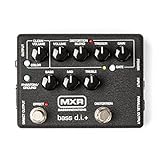
8. MXR Bass D.I.+ (M80) – 3-in-1 Preamp, DI, and Distortion
Pros
- 3-band EQ
- Color knob
- Phantom power
- 3-in-1 design
Cons
- Distortion can sound hairy
- No speaker simulator
The MXR Bass D.I.+ (M80) is one of the most versatile bass pedals on the market, combining a 3-band EQ preamp, a full-featured DI box, and a distortion/overdrive channel into a single stompbox. With 348 reviews averaging 4.6/5 and 81% of those being five stars, this is a pedal that delivers serious value. Many players use it as their primary tone-shaping tool for both live performance and recording.
The 3-band EQ with the Color knob is where this pedal shines. The Color knob adds a scooped, smiley-curve boost that delivers an instantly great bass tone, which is why so many players report plugging in and immediately loving the sound. The DI functionality with phantom power support means you can run this directly into a PA system or audio interface without needing a separate DI box. For recording bass at home, the M80 is a killer tool.
The distortion channel is functional and includes a noise gate, gain, volume, and blend controls. It’s not the most aggressive distortion out there, but it works for adding grit to rock and pop bass lines. The dual footswitches let you switch between clean and dirty channels on the fly, and the clean tone is so good that many players leave the distortion off most of the time.
On the downside, the distortion can sound “hairy” and lose some bottom end when engaged heavily. The noise gate is more of a distortion trigger than a traditional noise gate. There’s no speaker simulator built in, which is a minor limitation for direct recording. And the pedal doesn’t come with a power supply, so you’ll need to factor that into your budget.
Who the MXR Bass D.I.+ is right for
The M80 is perfect for gigging bassists who need a versatile preamp and DI solution for running into both an amp and a PA. Recording bassists will love the clean tone and the 3-band EQ for shaping tracks. It’s also a great fit for players who want a backup or practice rig in a single pedal, since you can run direct to a mixer or audio interface and skip the amp entirely.
Where the MXR Bass D.I.+ falls short
If your primary need is aggressive, modern metal distortion, the M80’s distortion channel isn’t going to satisfy you. The lack of a speaker simulator is a limitation for direct recording without an amp sim plugin. And if you already have a great amp and preamp, the M80’s preamp functionality might be redundant.
9. Tech 21 SansAmp Bass Driver DI V2 – The Industry Standard DI
Pros
- Industry standard bass DI
- Selectable midrange
- XLR with level control
- Parallel Output
Cons
- Higher price point
- Aging design
The Tech 21 SansAmp Bass Driver DI V2 is widely considered the industry standard for bass DI and preamp pedals, and after 419 reviews averaging 4.7/5 with 86% of those being five stars, the bass community has spoken. This is the pedal I recommend to every bassist who runs direct to a PA or recording interface, period. The cabinet emulation is so good that many players use it as their only bass tone, no amp required.
The selectable midrange frequency control is the standout feature. It lets you choose which midrange frequency the EQ affects, which is a level of control most bass preamps don’t offer. The Drive and Blend controls give you a wide range of tones from clean to driven, and the parallel output opens up creative routing options. I used the V2 on a recent tour and it delivered a consistent, professional bass tone in every venue, from tiny clubs to 1000-seat theaters.
The XLR output with controlled level is perfect for sending to front of house, while the 1/4-inch output goes to your amp or in-ear monitors. The 2-year warranty is solid, and the build quality is excellent. Tech 21 hand-builds these in the USA, and the pedal feels substantial and well-made. The pedal also runs on a 9V battery if you need a quick, cable-free setup.
The downsides are few but worth noting. The price point is higher than the MXR M80, which is a comparable competitor. The SansAmp has been on the market for a long time, so the design is starting to feel dated compared to newer digital options. And some users find it slightly less feature-rich than alternatives, though the core sound is what matters most.
Who the SansAmp Bass Driver DI V2 is right for
The SansAmp V2 is ideal for gigging bassists, session players, and touring musicians who need a consistent, professional bass tone in any venue. It’s the perfect tool for direct recording, and it’s the go-to choice for bassists who want to travel light without sacrificing tone. The cabinet emulation is so good that many players use it as their only bass rig.
Where the SansAmp Bass Driver DI V2 falls short
The price point is a barrier for beginners and casual players on a budget. The aging design means it lacks some modern features like USB connectivity or app-based control. And if you prefer the character of a specific bass amp and don’t need a DI solution, the SansAmp’s preamp functionality might be unnecessary.
10. BOSS BB-1X Bass Driver – Adaptive Overdrive with Dual Outputs
BOSS BB-1X Bass Driver Guitar Pedal (BB-1X)
Adaptive distortion
Blend control
Dual outputs
Pros
- Adaptive distortion
- Blend control
- Dual outputs
- 5-year warranty
Cons
- Adaptive distortion polarizing
- Short battery life
The BOSS BB-1X Bass Driver is a unique overdrive/distortion pedal that uses BOSS’s Adaptive Distortion technology to respond dynamically to your playing. With 106 reviews averaging 4.4/5, it’s a more specialized choice than the ODB-3 but offers features the ODB-3 doesn’t, like the dual output design. Many players use the BB-1X as an always-on driver to add warmth and presence to their clean tone.
The Adaptive Distortion technology is what makes this pedal interesting. Instead of being a fixed overdrive, the BB-1X adjusts the amount of distortion based on how hard you play, similar to how a tube amp responds to your picking dynamics. Soft playing gives you a clean, warm tone, and aggressive playing kicks in the overdrive. This makes it incredibly expressive for live performance.
The dual outputs are a real bonus: the normal 1/4-inch output goes to your bass amp, while the balanced Line Out goes directly to a PA or recording interface. This means you can run the BB-1X as your primary preamp and tone shaper for both stage and studio use. The Drive, Blend, Low, High, and Level controls give you plenty of EQ options, and the BOSS 5-year warranty is a major plus.
The downsides are worth considering. The Adaptive Distortion can sound artificial to some players who prefer the consistent character of a traditional overdrive. The high end can be harsh at certain settings, and the lows can get boomy without careful EQ adjustment. Battery life is short, so a power supply is essential. At around $209, it’s also more expensive than the BOSS ODB-3.
Who the BOSS BB-1X is right for
The BB-1X is perfect for bassists who want an expressive, dynamic overdrive that responds to their playing. It’s ideal for punk, rock, metal, and worship styles where you need both clean and distorted tones. The dual outputs make it a great choice for bassists who want to streamline their rig by combining their preamp and overdrive in one pedal.
Where the BOSS BB-1X falls short
If you prefer predictable, set-and-forget overdrive, the adaptive nature of the BB-1X might frustrate you. The price is higher than competing bass overdrives. And the harsh highs and boomy lows at certain settings mean you need to spend time dialing in your tone. The short battery life is also a real annoyance.
11. BOSS DD-8 Digital Delay – The Most Versatile Delay Pedal
Pros
- 11 versatile modes
- 40-second looper
- Stereo output
- Tap tempo
Cons
- 40-second looper is short
- Price point higher than competitors
The BOSS DD-8 is the most versatile delay pedal in BOSS’s compact series, with 11 delay modes, a built-in looper, and stereo output. With 602 reviews averaging an impressive 4.8/5 and 88% of those being five stars, this is one of the highest-rated delay pedals on Amazon. While it’s not specifically designed for bass, it works beautifully on bass and offers far more delay options than most bass-specific delays.
The 11 delay modes cover every style you could want: standard digital, warm analog simulation, tape echo, shimmer, mod, and reverse. The three newly developed delay types (Warm, +RV, and GLT) are particularly useful. Warm gives you a darker, vintage-style delay, +RV combines delay with reverb for ambient textures, and GLT provides a rhythmic glitch-style delay. The 40-second looper with overdub capability is a bonus for solo practice and songwriting.
The stereo output and tap tempo support make the DD-8 a great choice for stereo rigs and live performance. The 10 seconds of delay time is more than enough for most musical applications. BOSS’s typical rugged metal construction means this pedal will last for years, and it has the brand’s reliability pedigree. The compact size fits on any pedalboard.
On the downside, the 40-second looper is shorter than dedicated looper pedals, so if you need longer loops for live performance or songwriting, you’ll want a separate looper. The tape echo setting is good but not great, and dedicated tape echo simulators may be a better choice for vintage tape tones. The price is also higher than simpler delay pedals, but the versatility justifies the cost.
Who the BOSS DD-8 is right for
The DD-8 is ideal for bassists who want maximum delay versatility in a single pedal. It’s perfect for ambient, post-rock, progressive, and experimental bassists who need a wide range of delay textures. The looper is a great bonus for solo practice and home recording. The tap tempo support makes it excellent for live performance where you need to sync delay to the song’s tempo.
Where the BOSS DD-8 falls short
If you only need one or two delay types, the DD-8’s 11 modes are overkill. The 40-second looper is too short for serious live looping applications. And if you’re looking for vintage tape echo tones specifically, dedicated tape echo pedals will deliver more authentic results.
12. BOSS RV-6 Reverb – Studio-Grade Reverb in a Stompbox
Pros
- 8 diverse modes
- Shimmer mode
- Expression pedal input
- 5-year warranty
Cons
- Dynamic mode can sound artificial
- Buffered bypass only
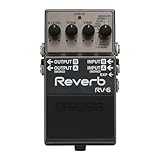
The BOSS RV-6 is one of the highest-rated reverb pedals on Amazon, with 1,386 reviews averaging 4.7/5 and 87% of those being five stars. This is the reverb pedal I recommend to bassists who want studio-quality reverb in a compact stompbox. With 8 distinct reverb modes and an expression pedal input for real-time control, the RV-6 delivers everything from subtle room ambience to otherworldly shimmer textures.
The 8 reverb modes cover the full spectrum: Room, Hall, Plate, Spring, Modulate, Dynamic, Shimmer, and +Delay. The Shimmer mode is the standout, producing lush, immersive, polyphonic textures that are perfect for ambient bass work. The +Delay mode combines reverb and delay in one effect, saving pedalboard space. The Dynamic mode automatically adjusts the reverb tail based on your playing intensity, which is a great feature for live performance.
The expression pedal input lets you control the reverb level in real-time with an expression pedal, opening up creative performance possibilities. The simple three-knob layout (effect level, tone, time) is intuitive and easy to dial in on the fly. The stereo output is a bonus for stereo rigs. BOSS backs this pedal with a 5-year warranty, and it has the brand’s typical rugged construction. With 450 grams and a compact size, it fits on any pedalboard.
The downsides are minor. The Dynamic mode can make chords and notes sound artificial in some settings. The pedal uses buffered bypass rather than true bypass, which is actually beneficial for reverb use. The +Delay mode is not as full-featured as a dedicated delay pedal. Some users report reliability issues after extended use, though this is rare. Finally, there’s no gated reverb mode for players who want that specific 80s sound.
Who the BOSS RV-6 is right for
The RV-6 is ideal for bassists who want a versatile, studio-quality reverb pedal that can do everything from subtle ambience to cinematic shimmer. It’s perfect for ambient, post-rock, cinematic, and experimental bassists. The expression pedal input makes it great for live performance where you want to swell reverb in and out. The 5-year warranty and rugged construction also make it a great choice for gigging musicians.
Where the BOSS RV-6 falls short
If you only need a single reverb type (just spring, just hall, etc.), the RV-6’s 8 modes are more than you need. The Dynamic mode can sound artificial in some settings. And if you specifically need gated reverb, this pedal doesn’t include that mode. Otherwise, the RV-6 is a near-perfect reverb pedal for bassists.
How to Choose the Best Bass Guitar Pedal for Your Needs
Choosing the best bass guitar pedals starts with understanding your playing style and the genres you perform most often. A funk bassist needs different tools than a metal bassist, and a jazz player needs yet another set of effects. The first step is identifying what your tone is missing, whether that’s punch and consistency, harmonic richness, modulation, or spatial effects.
Compression is the foundation of most professional bass tones. A good compressor evens out your dynamics, tightens your low end, and helps every note sit perfectly in the mix. I recommend starting with a quality compressor like the MXR M87 or Darkglass Hyper Luminal before adding other effects. Compression works best at the beginning of your signal chain, right after the bass and before any drive or modulation pedals.
Understanding Signal Chain Order
The order of your pedals matters enormously. The standard signal chain for bass is: Tuner, Compressor, Filter/Wah, Drive/Distortion, Modulation, Time-based effects (Delay, Reverb), Volume, and finally to your amp. Putting your compressor first means it captures your full dynamic range. Putting drive after compression means your distorted signal is consistent. Modulation and time-based effects go later in the chain so they process your shaped tone rather than your raw signal.
If you have a preamp or DI pedal like the Tech 21 SansAmp or MXR M80, that often goes last in the chain (or in your amp’s effects loop) so it can shape the final signal going to the PA or recording interface. Some players prefer to put their preamp first, which is a matter of personal preference and depends on whether you’re running into an amp, a PA, or both.
True Bypass vs Buffered Bypass
True bypass means that when the pedal is turned off, your signal passes through the pedal without any electronic processing, going directly from input to output. This preserves your tone exactly as it is, with no alteration. Buffered bypass uses an electronic buffer circuit to drive the signal through the pedal even when it’s off, which can help maintain signal strength over long cable runs and large pedalboards.
For bass, true bypass is generally preferred because it preserves low-end frequencies that can be affected by some buffers. However, if you have a long cable run or a large pedalboard, a high-quality buffer at the beginning or end of your chain can actually improve your tone by preventing signal loss. Most modern bass pedals offer true bypass, and BOSS pedals typically use buffered bypass, which works well for bass because their buffers are designed to be transparent.
Best Pedals for Different Genres
For funk and slap bass, a compressor is essential, and an envelope filter or auto-wah adds the classic quack sound. For metal and hard rock, you need a quality overdrive or distortion that maintains low-end clarity, like the BOSS ODB-3 or Darkglass. For jazz and worship, subtle compression and chorus work beautifully. For rock and punk, a tube-style overdrive and a touch of delay is the classic combination. For ambient and experimental music, modulation, delay, and reverb are your best friends.
Budget Recommendations
On a tight budget, the MXR M87 compressor and BOSS ODB-3 overdrive deliver professional results without breaking the bank. In the mid-range, the MXR Bass Chorus Deluxe and BOSS CEB-3 offer excellent modulation and effects. For premium sound, the Darkglass Hyper Luminal and Tech 21 SansAmp V2 are the gold standards. The good news is that bass pedals hold their value well, so investing in a quality pedal is rarely a mistake.
Power Supply Considerations
Most bass pedals run on 9V power, but they don’t all draw the same current. Using a quality isolated power supply like the Voodoo Lab Pedal Power or Truetone 1 SPOT is essential for avoiding noise and hum. Daisy-chaining pedals with a single power supply can introduce unwanted noise, especially with digital pedals. If you’re building a pedalboard with more than 3-4 pedals, invest in a proper isolated power supply from the start.
Frequently Asked Questions About Bass Guitar Pedals
What bass effects pedals are essential?
The most essential bass effects pedal is a compressor, which evens out your dynamics and tightens your low end. Beyond compression, a quality overdrive or preamp is essential for shaping your core tone, and a tuner pedal is critical for live performance. Modulation effects like chorus and time-based effects like delay and reverb are optional additions based on your genre and style.
Are bass pedals different from guitar pedals?
Yes, bass pedals are specifically designed to handle the lower frequencies and wider frequency range of a bass guitar. They typically preserve low-end frequencies that guitar pedals might lose, and they often include features like blend controls that let you mix clean bass signal with the effected signal. Using guitar pedals on bass can work in some cases, but bass-specific pedals deliver better results.
Do bass players need a compressor pedal?
Yes, most professional bassists use a compressor as their foundational pedal. Compression evens out your dynamics, tightens your low end, helps your bass cut through the mix, and provides consistent tone for both live performance and recording. A good compressor is often the first pedal bassists add to their setup, and it makes a noticeable difference in your overall sound quality.
How do I get a punchy bass sound?
To get a punchy bass sound, start with a quality compressor set to a moderate ratio (around 4:1) with a medium-fast attack. Use a tube-style overdrive or preamp to add harmonic richness and presence. Boost your low-mids slightly (around 250-500Hz) for body and cut a bit at 800Hz to reduce muddiness. Finally, make sure your amp and cabinet are appropriate for your bass, and use fresh strings.
How many bass pedals do you really need?
Most bassists can get excellent results with 3-5 well-chosen pedals. A typical professional setup includes a tuner, a compressor, a drive or preamp, and one or two modulation or time-based effects. Adding more pedals quickly leads to diminishing returns and complicates your signal chain. Focus on quality over quantity, and choose pedals that complement each other rather than duplicating functions.
Final Verdict: The Best Bass Guitar Pedals Worth Your Money in 2026
After testing all 12 of these best bass guitar pedals, I can confidently say there’s no single “best” pedal for every bassist. The right choice depends on your genre, your budget, and your existing rig. For most players, I’d start with a quality compressor like the MXR M87 or Darkglass Hyper Luminal, then add a versatile drive or preamp like the BOSS ODB-3 or Tech 21 SansAmp V2. From there, build out your signal chain with modulation and time-based effects based on the genres you play.
If I had to pick a single “best of the best” from this list of 12 best bass guitar pedals, the Tech 21 SansAmp Bass Driver DI V2 wins for its versatility, professional tone, and industry-standard status. The BOSS ODB-3 takes the value crown, and the MXR M87 is my pick for the best budget compressor. Whichever pedal you choose from this guide, you’re getting a proven piece of gear that bassists around the world trust for their tone. Take your time, focus on building a signal chain that serves your music, and enjoy the journey of discovering your sound.