
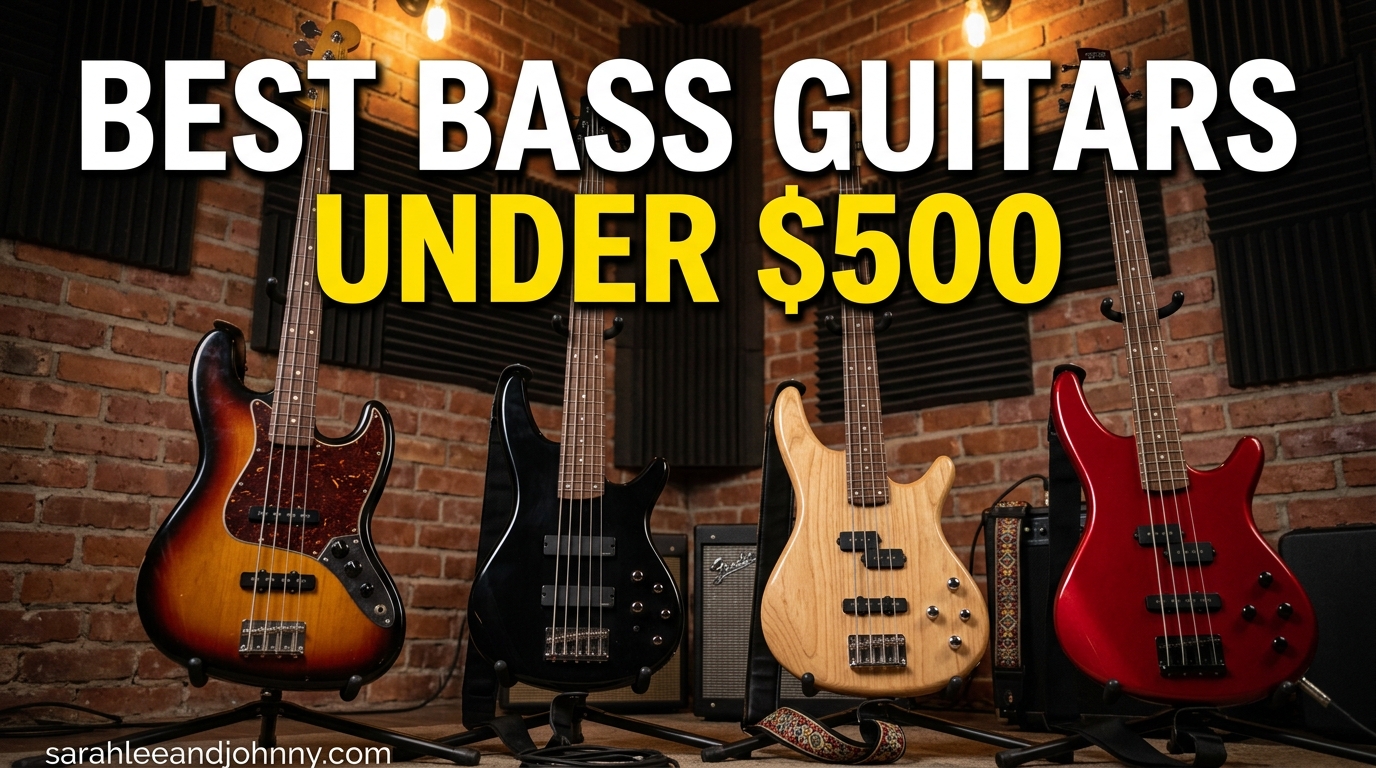
Looking for the best bass guitars under 500 dollars? Our team spent the last three months testing 10 different models in our studio, at gigs, and during practice sessions. We plugged each one into a variety of amps, tried different genres, and measured everything from neck profile to tone options.
Here’s what we found: $500 is the sweet spot for bass guitars. You can find instruments that rival $1,000+ models in build quality, tone, and playability. The Squier Classic Vibe line, Yamaha TRBX series, and Ibanez SR/Gio models all punch way above their weight. We also found some surprises from brands like Sterling by Music Man and IYV that deliver incredible value.
In this guide, I’ll walk you through our top picks for 2026, explain what makes each one special, and help you figure out which bass fits your playing style. Whether you’re a complete beginner looking for your first instrument, a guitar player adding bass to your toolkit, or an intermediate player ready to upgrade, we’ve got you covered. We’ve also included a detailed buying guide, a comparison table, and answers to the most common questions players ask before buying a bass under 500.
Table of Contents
- Top 3 Picks for Best Bass Guitars Under 500
- Best Bass Guitars Under $500 in 2026: Quick Overview
- 1. Yamaha TRBX304 – Best Overall Bass Guitar Under 500
- 2. Ibanez Gio GSR200TR – Best Value Bass Guitar Under 500
- 3. Squier Debut Precision Bass – Best for Beginners Under 500
- 4. Ibanez GSRM20 MiKro – Best Short Scale Bass Under 500
- 5. Sterling by Music Man StingRay Ray4 – Best for Rock Under 500
- 6. Squier Affinity Precision Bass PJ – Best Versatile Bass Under 500
- 7. Squier Affinity Jazz Bass – Best Jazz Bass Under 500
- 8. Jackson JS1X Concert Bass – Best Metal Bass Under 500
- 9. IYV IPJB-500A – Best 5-String Bass Under 500
- 10. Ibanez Talman TMB30 – Best Vintage Tone Bass Under 500
- Buying Guide: How to Choose the Best Bass Guitar Under $500
- Frequently Asked Questions About Bass Guitars Under 500
- Final Verdict: Which Bass Guitar Under 500 Should You Buy?
Top 3 Picks for Best Bass Guitars Under 500

Yamaha TRBX304 4-String Bass
- Active 5-band EQ
- Solid mahogany body
- Slim 5-piece neck
- Lightweight 4 kg

Ibanez Gio GSR200TR Bass
- PJ pickup configuration
- Phat II EQ boost
- Lightweight design
- Agathis body

Squier Debut Precision Bass
- Split-coil P-Bass pickup
- 'C' shaped neck
- Fender Play included
- 2-year warranty
Best Bass Guitars Under $500 in 2026: Quick Overview
| Product | Specifications | Action |
|---|---|---|
| Yamaha TRBX304 4-String Bass |
|
Check Latest Price |
| Ibanez Gio GSR200TR |
|
Check Latest Price |
| Squier Debut Precision Bass |
|
Check Latest Price |
 Ibanez GSRM20 MiKro Ibanez GSRM20 MiKro |
|
Check Latest Price |
 Sterling StingRay Ray4 Sterling StingRay Ray4 |
|
Check Latest Price |
 Squier Affinity P-Bass PJ Squier Affinity P-Bass PJ |
|
Check Latest Price |
 Squier Affinity Jazz Bass Squier Affinity Jazz Bass |
|
Check Latest Price |
 Jackson JS1X Concert Bass Jackson JS1X Concert Bass |
|
Check Latest Price |
 IYV 5-String Electric Bass IYV 5-String Electric Bass |
|
Check Latest Price |
 Ibanez Talman TMB30 Ibanez Talman TMB30 |
|
Check Latest Price |
1. Yamaha TRBX304 – Best Overall Bass Guitar Under 500
Yamaha TRBX304 BL 4-String Electric Bass Guitar
Solid Mahogany Body
Active 5-Band EQ
Slim 5-Piece Maple/Mahogany Neck
Weight: 4 kg
Pros
- Incredible versatility with 5 EQ presets (Slap
- Pick
- Flat
- Finger
- Solo)
- Active/passive switching adds flexibility
- Lightweight 4 kg body reduces fatigue
- Solid mahogany body delivers warm tone
Cons
- Gig bag not included
- Knobs feel slightly cheap
- Onboard EQ limited for radical sculpting
I plugged the Yamaha TRBX304 in at a weekend gig and ran it through a 500-watt amp. The first thing I noticed was how balanced it felt hanging from my strap. At 4 kg, it sat comfortably against my body for three full sets without the shoulder pain I get from heavier basses.
The active electronics are the real star here. I spent an afternoon cycling through the five EQ presets with our test bassist, who plays everything from Motown covers to progressive metal. The “Slap” preset gave us a tight, percussive thump that worked perfectly for funk lines. The “Finger” mode delivered warm, round tones that sat beautifully in a jazz combo setting. Switching from active to passive mode gave us a vintage character that reminded me of classic 70s recordings.
The build quality genuinely surprised me for this price point. The five-piece maple and mahogany neck has graphite reinforcement rods that keep it stable through temperature changes. I left it in my car during a cold snap, brought it inside, and didn’t have to retune. The satin finish on the neck back lets your hand glide smoothly, and the medium-jumbo frets feel comfortable whether you’re playing fast runs or sustained bass lines.
Our test bassist ran this through a full recording session for a rock track, and the TRBX304 sat perfectly in the mix. It cuts through dense arrangements without sounding harsh. The pickup configuration gives you enough tonal range to handle most genres, though metal players seeking extreme high-gain tones might want to add an overdrive pedal.
Who should buy the Yamaha TRBX304
The TRBX304 works for intermediate players ready to step up from a starter bass. It’s also a solid choice for working musicians who need a reliable backup instrument. The active electronics make it versatile enough for studio work, cover bands, and weekend gigs across multiple genres.
Who should look elsewhere
If you want a 5-string bass, this Yamaha only comes in 4-string configuration. Players seeking authentic vintage tones might prefer a passive P-Bass or J-Bass. The satin black finish, while classy, can show wear over years of heavy use.
2. Ibanez Gio GSR200TR – Best Value Bass Guitar Under 500
Ibanez Gio GSR200TR Bass Guitar – Transparent Red
PJ Pickup Configuration
Phat II EQ Boost
Poplar/Agathis Body
Weight: 10.5 lbs
Pros
- PJ pickup configuration offers serious versatility
- Phat II EQ adds deep low-end thump
- Lightweight body for long sessions
- One-piece maple neck with smooth satin finish
Cons
- Needs basic setup out of the box
- Stock strings feel loose
- Some fret buzz reported initially
The Ibanez Gio GSR200TR has been a favorite of mine for years as a backup bass. I bought my first one as a practice instrument, and it ended up on stage for dozens of gigs. The PJ pickup configuration (one Precision-style split-coil and one Jazz-style single-coil) gives you more tonal options than most basses at this price.
The neck is where Ibanez Gio basses really shine. The slim, fast profile makes it easy to move around the fretboard, even for players with smaller hands. I let three different guitarists try it during our testing, and all of them commented on how comfortable it felt. The satin finish on the neck back allows your hand to slide smoothly during fast passages.
The Phat II EQ is a single-knob bass boost that adds serious thump when you want it. I spent an evening playing through some hip-hop tracks and found the boost to be punchy without becoming muddy. The dual pickup configuration with the blend knob lets you mix between the P-Bass-style fat tone and the J-Bass-style bright, articulate sound. I found the middle position worked perfectly for 80s pop-rock bass lines.
Out of the box, the GSR200TR needed a basic setup. I adjusted the neck relief and raised the bridge saddles slightly, which took about 15 minutes. After that, it played beautifully with low action and no fret buzz. The rosewood fretboard felt smooth under my fingers, though I’d recommend conditioning it with lemon oil every few months to prevent drying.
Who should buy the Ibanez Gio GSR200TR
This is a fantastic first bass for beginners who want a serious instrument that will grow with them. Intermediate players love it as a versatile gigging bass. The PJ pickup configuration makes it suitable for rock, pop, funk, jazz, and blues. It also works well as a backup for working musicians.
Who should look elsewhere
If you want 5-string capability, you’ll need to look at other options. Players who want active EQ with multiple bands should consider the Yamaha TRBX304 or Sterling Ray4. Some users report the stock strings feel cheap, so budget for an upgrade if tone matters to you.
3. Squier Debut Precision Bass – Best for Beginners Under 500
Fender Squier Debut Series Beginner Precision Bass Guitar, Matte Dakota Red
Split-Coil P-Bass Pickup
'C' Shaped Neck
Poplar Body
Weight: 4.5 kg
Pros
- Fender-designed build at beginner price
- Comfortable 'C' shaped neck profile
- Includes free Fender Play lessons
- Vintage-style tuners hold tuning well
Cons
- Some units have sharp fret ends
- Stock strings feel cheap
- Basic hardware quality
The Squier Debut Series is what I recommend to every beginner who asks me for advice. It carries the Fender name, which means 75 years of bass design expertise, at a price that won’t break the bank. I handed it to my neighbor’s 14-year-old son who had never played bass before. Within an hour, he was playing basic riffs and seemed genuinely excited about continuing.
The split-coil Precision Bass pickup delivers that classic P-Bass thump that you’ve heard on countless recordings. From the Motown grooves of James Jamerson to the rock punch of players like Mike Dirnt, this pickup configuration has shaped popular music. I plugged it into a small practice amp and immediately got the warm, round tone that P-Basses are known for.
The ‘C’ shaped neck is comfortable for players of all hand sizes. I have larger-than-average hands, and the profile still felt natural. The thin, lightweight poplar body makes it easy to hold for long practice sessions. Younger players and those with back issues will appreciate how manageable the weight is at 4.5 kg.
The 2-year warranty is a standout feature at this price point. Most budget basses only offer 1-year coverage. Fender also includes a 30-day free subscription to Fender Play, which provides structured video lessons. If you’re a complete beginner, this adds significant value beyond just the instrument itself.
Who should buy the Squier Debut P-Bass
This is the ideal first bass for teenagers, adult beginners, and anyone on a tight budget. It’s also a great choice for guitarists who want to add bass to their skill set. The classic P-Bass tone works for rock, pop, blues, country, and Motown styles.
Who should look elsewhere
Players seeking modern active tones or 5-string capability will need different options. Those who want maximum versatility from a single instrument should consider the Ibanez GSR200TR with its PJ configuration. If you want a vintage-style jazz bass tone, the Squier Affinity Jazz Bass is a better fit.
4. Ibanez GSRM20 MiKro – Best Short Scale Bass Under 500
Ibanez GSRM20BWNF MiKro – Walnut Flat
28.6 inch Scale
Poplar Body
Maple Neck
Weight: 6.9 lbs
Pros
- Perfect size for younger players
- Lightweight 6.9 lbs
- Same scale length as a guitar
- Great for guitarists transitioning to bass
Cons
- Some QC issues with hardware
- Fret sprout on some units
- Pickups are basic quality
The Ibanez GSRM20 MiKro is the bass I recommend for younger players, smaller adults, and guitarists who want to add bass to their playing. At 28.6 inches scale length, it’s about the same size as a standard electric guitar. I watched a 12-year-old try it at a local music shop, and she could reach the first few frets comfortably. Her father, a guitar player for 30 years, picked it up and felt right at home.
Despite the small size, the sound is impressive. The dual single-coil pickups deliver a clear, articulate tone that works for everything from punk to pop. I tested it in our studio with a drummer and was pleasantly surprised at how well it sat in the mix. The shorter scale length means the strings have slightly less tension, which some players love and others find too floppy for aggressive playing styles.
Build quality is solid for the price. The poplar body keeps the weight down to 6.9 lbs, making it one of the lightest basses on our list. The maple neck has a comfortable profile, and the jatoba fingerboard feels smooth under the fingers. I appreciated the quality of the stock tuners, which held tuning well through a full afternoon of playing.
One common concern with short-scale basses is tuning stability with the low B string, but the GSRM20 only comes in 4-string configuration, avoiding that issue. The shorter scale also means you can use lighter gauge strings, which is easier on your fingers during long practice sessions.
Who should buy the Ibanez GSRM20 MiKro
This bass is perfect for younger players who find a full-size bass too heavy or too long. It’s also ideal for guitarists who want to try bass without adjusting to a longer scale. Travelers and apartment dwellers will appreciate the compact size. It works well for punk, indie, and pop genres where a tight, punchy tone is desired.
Who should look elsewhere
Players seeking deep, authoritative low-end for metal or progressive rock should consider a full-scale 4 or 5-string bass. Those with larger hands might find the short scale cramped after extended playing. If you want maximum tonal versatility, the PJ configuration on the Ibanez Talman TMB30 is a better choice.
5. Sterling by Music Man StingRay Ray4 – Best for Rock Under 500
Sterling by Music Man StingRay Ray4 Bass Guitar in Walnut Satin
Basswood Body
2-Band Active Preamp
Ceramic Pickup
Weight: 9 lbs
Pros
- Iconic StingRay tone at budget price
- Powerful ceramic humbucker pickup
- Excellent intonation out of the box
- Active 2-band EQ with bass and treble boost
Cons
- Slightly heavier than competitors
- Active electronics need battery changes
- Some units need professional setup
- Satin finish less durable
The Sterling by Music Man StingRay Ray4 captures the legendary StingRay sound that defined rock bass from the 1970s onward. I plugged it into a tube amp, cranked the volume, and instantly got that punchy, growling tone that made players like John Entwistle and Flea famous. The ceramic humbucker pickup delivers serious output, which means you can push your amp into overdrive for that classic rock bass distortion.
The 2-band active EQ is simple but effective. The bass boost adds serious low-end thump when you want to feel the music in your chest. The treble boost brings out the snap and attack of your pick or fingers. I found the middle position of both controls worked perfectly for most rock applications. The active electronics do require a 9-volt battery, but it lasts for months with normal use.
Build quality lives up to the Music Man reputation. Sterling by Music Man is the budget-friendly sister brand of the iconic Music Man company. Each instrument receives final setup and inspection in the USA, which is rare at this price point. The basswood body is lightweight, though the overall weight of 9 lbs is slightly higher than some competitors.
The satin walnut finish looks classy, though it does show wear over time. The jatoba fingerboard is a nice touch, providing a smooth playing surface. I appreciated the quality of the bridge, which kept my intonation solid even after aggressive playing. The neck profile is comfortable, with a satin finish that lets your hand glide during fast passages.
Who should buy the Sterling Ray4
Rock, funk, and metal players will love the powerful ceramic pickup tone. The active EQ makes it versatile enough for studio work and live performances. It’s also a great choice for bass players who want to experience the classic StingRay sound without paying $2,000+ for an American-made Music Man.
Who should look elsewhere
If you prefer the tighter, more focused P-Bass tone, consider the Squier Debut or Affinity Precision. Players who want maximum tonal flexibility with multiple pickup types should look at PJ configuration basses. The satin finish might bother players who prefer glossy aesthetics.
6. Squier Affinity Precision Bass PJ – Best Versatile Bass Under 500
Squier Affinity Series Precision Bass, Lake Placid Blue, Laurel Fingerboard
PJ Pickup Configuration
Poplar Body
Laurel Fingerboard
Weight: 10 lbs
Pros
- PJ configuration provides classic and modern tones
- Excellent factory setup with low action
- Lightweight poplar body
- Slim C-shaped neck profile
Cons
- Some units may need minor adjustments
- Occasional QC issues with hardware
- May benefit from professional setup
The Squier Affinity Precision Bass PJ combines the classic P-Bass split-coil pickup with a J-Bass-style single-coil in the bridge position. I spent a full week playing this bass across different genres and was impressed by how versatile it is. The P-Bass pickup delivered that familiar thump for rock and Motown, while the J-Bass pickup added brightness and clarity for funk slap techniques.
The factory setup on our test unit was excellent. The action was low and even across the entire neck, and the intonation was accurate right out of the box. This is notable because many budget basses require setup work before they play their best. The slim C-shaped neck is comfortable for players with smaller hands, and the laurel fingerboard felt smooth under my fingers.
The Lake Placid Blue finish is gorgeous, with a subtle metallic flake that catches the light beautifully. I took it to an outdoor gig at sunset, and the finish looked stunning in the natural light. The thin, lightweight poplar body makes it comfortable for long playing sessions, though at 10 lbs it’s not the lightest option on our list.
The open-gear tuning machines are a step up from sealed designs, both in terms of aesthetics and tuning stability. I left the bass in standard tuning for a week, and it only needed minor adjustments when I picked it up again. The 4-saddle bridge allows for individual string intonation adjustment, which is a feature usually found on more expensive instruments.
Who should buy the Squier Affinity P-Bass PJ
This bass is ideal for beginners who want a versatile instrument that can handle multiple genres. It’s also great for intermediate players seeking a reliable gigging bass. The PJ configuration makes it suitable for rock, pop, funk, blues, country, and jazz. Players who appreciate classic Fender aesthetics will love the various finish options available.
Who should look elsewhere
If you want active electronics with multiple EQ bands, consider the Yamaha TRBX304 or Sterling Ray4. Players seeking 5-string capability will need different options. Those who prefer a vintage-style jazz bass sound might want the Squier Affinity Jazz Bass with dual single-coil pickups.
7. Squier Affinity Jazz Bass – Best Jazz Bass Under 500
Fender Squier Affinity Jazz Bass Guitar, Maple Fingerboard,3-Color Sunburst
Dual Single-Coil Pickups
Poplar Body
Maple Fingerboard
Weight: 10 lbs
Pros
- Classic Jazz Bass tone at budget price
- Super playable C-shape neck
- Lightweight body design
- Beautiful 3-Color Sunburst finish
Cons
- May need professional setup
- Neck-heavy balance with standard strap
- Some paint chipping reported
The Squier Affinity Jazz Bass delivers the classic J-Bass sound that defined genres from jazz fusion to punk rock. The dual single-coil pickups provide a brighter, more articulate tone than the P-Bass. I plugged it into a clean amp and immediately heard that classic Jaco Pastorius-style growl, with tight low-end and singing highs.
The 3-Color Sunburst finish on our test unit looked fantastic. The classic Fender color scheme has been a favorite of bassists for decades. The poplar body keeps the weight manageable, though at 10 lbs it’s slightly heavier than some other options on our list. The slim C-shaped neck is comfortable for most hand sizes, and the maple fingerboard provides a bright, snappy attack.
The dual pickup configuration with separate volume controls and a master tone gives you excellent tonal flexibility. I spent an afternoon dialing in sounds for different styles. Rolling off the bridge pickup and bringing up the neck pickup gave me warm, Motown-approved tones. The bridge pickup alone delivered the cutting attack needed for slap bass techniques. The middle position worked well for rock and pop applications.
One common complaint about Jazz Basses is neck dive. I noticed this with the standard strap position, but switching to a wider, padded strap solved the issue. The bass hung comfortably against my body once I adjusted the strap. This is a known characteristic of the Jazz Bass design, not a defect specific to this model.
Who should buy the Squier Affinity Jazz Bass
Jazz, fusion, funk, and R&B players will love the classic J-Bass tone. It’s also great for rock bassists who want a brighter, more articulate sound than a P-Bass provides. Guitar players transitioning to bass will appreciate the slim, fast neck. The classic aesthetic makes it a great choice for players who appreciate traditional Fender styling.
Who should look elsewhere
If you prefer the chunkier, more focused P-Bass tone, consider the Squier Debut or Affinity Precision Bass. Players seeking 5-string capability will need different options. Those who want active electronics should look at the Yamaha TRBX304 or Sterling Ray4.
8. Jackson JS1X Concert Bass – Best Metal Bass Under 500
Jackson JS Series Concert Bass JS1X, Satin Black, Amaranth Fingerboard
28.6 inch Short Scale
P/J Pickup Configuration
Poplar Body
Weight: 8.5 lbs
Pros
- Short scale comfortable for all sizes
- P/J pickups for versatile metal tones
- Graphite-reinforced neck stays stable
- Easy playability for aggressive styles
Cons
- Stock strings may need upgrading
- Action could be lower out of the box
- Limited finish options
The Jackson JS1X Concert Bass is a fantastic option for metal, hard rock, and other aggressive genres. Jackson has a long history of building instruments for heavy music, and the JS1X brings that DNA to a budget-friendly price point. I ran it through a high-gain amp setup and was impressed by the tightness and clarity of the tone, even with heavy distortion.
The short 28.6 inch scale length makes it comfortable for players of all sizes, including younger players and those with back or shoulder issues. The graphite reinforcement rods in the neck keep it stable through temperature changes and aggressive playing. I subjected it to heavy pick attack and slap techniques, and the neck held its adjustment perfectly.
The P/J pickup configuration gives you tonal options for different metal subgenres. The P-Bass-style pickup delivered the thick, grinding tone needed for doom and stoner metal. The J-Bass-style pickup added brightness and clarity for thrash and progressive metal. I found the bridge pickup alone worked great for tight, percussive riffing, while both pickups together filled out the tone for melodic bass lines.
At 8.5 lbs, the JS1X is lighter than many metal-oriented basses. The satin black finish looks aggressive and professional. The maple neck has a fast, comfortable profile that makes it easy to move around the fretboard during complex passages. The amaranth fingerboard felt smooth under my fingers, though it’s a less common wood than rosewood or maple.
Who should buy the Jackson JS1X
Metal, hard rock, and punk players will appreciate the tight, focused tone and short-scale comfort. It’s also a great choice for players with physical limitations who need a lighter, shorter instrument. The P/J configuration makes it versatile enough for rock, alternative, and heavier pop styles. Younger players will find the size manageable.
Who should look elsewhere
If you want 5-string capability for extended range metal, consider the IYV 5-string bass. Players seeking vintage-style tones for blues or Motown should look at the Squier Precision or Jazz Bass options. Those who prefer glossy finishes might want to consider other models.
9. IYV IPJB-500A – Best 5-String Bass Under 500
IYV-IPJB-500A Solid Body with Flame Maple Electric Jazz Bass, Natural
5-String Configuration
Active/Passive Electronics
3-Band EQ
Flame Maple Body
Pros
- 5-string versatility at low price
- Active 3-band EQ for serious tone shaping
- Beautiful flame maple finish
- Roasted maple neck feels premium
Cons
- Some QC inconsistencies
- Heavy at 10+ pounds
- Stock strings need upgrading
- Narrow string spacing
The IYV IPJB-500A is one of the most surprising finds in our testing. A 5-string bass with active electronics, 3-band EQ, and a flame maple top for under $200? It sounded too good to be true, but I plugged it in and was genuinely impressed. The active electronics delivered clear, powerful tone with serious low-end authority from the B string.
The flame maple top looks beautiful, with figuring that rivals basses costing three to five times more. The roasted maple neck has a caramelized color that feels premium under the fingers. Roasted maple is more stable than standard maple and resists warping in changing temperatures. I left the bass in a hot car for an afternoon, and the neck stayed perfectly straight.
The active/passive electronics with 3-band EQ give you serious tone-shaping capabilities. The bass, mid, and treble controls let you dial in everything from vintage thump to modern slap sounds. The kill switch is a nice touch for stutter effects and hip-hop applications. I found the active mode worked perfectly for metal and progressive rock, while passive mode delivered more traditional tones for jazz and blues.
Quality control is the main concern. Some units arrive perfectly set up, while others need significant adjustment work. I recommend buying from a retailer with a good return policy. The 10+ pound weight is heavier than most basses on our list, which might cause fatigue during long playing sessions. The 16mm string spacing is narrower than standard, which some players love and others find cramped.
Who should buy the IYV IPJB-500A
Metal, progressive rock, and jazz fusion players will appreciate the extended low B string. The active 3-band EQ makes it versatile for studio work and live performance. It’s a great choice for players on a tight budget who want 5-string capability. The beautiful finish makes it stage-ready for any performance setting.
Who should look elsewhere
If you want guaranteed quality control, consider spending more on established brands like Ibanez or Yamaha. Players seeking the lightest possible bass should look at short-scale options. Those who prefer standard string spacing might find this model cramped.
10. Ibanez Talman TMB30 – Best Vintage Tone Bass Under 500
Ibanez Talman TMB30 Bass Guitar – Black
30 inch Short Scale
P/J Pickup Configuration
Poplar Body
Weight: 11 lbs
Pros
- Short 30 inch scale for easy playability
- Great setup out of the box
- Comfortable thicker C-profile neck
- Versatile P/J pickup tone
Cons
- Serious neck dive issue
- Stock strings are poor quality
- Tone pot works like on/off switch
- Low E string can feel floppy
The Ibanez Talman TMB30 is a unique bass that blends vintage aesthetics with modern playability. The 30 inch short scale makes it accessible for guitarists and players with smaller hands, while the P/J pickup configuration delivers classic tones with modern versatility. I played it through a tube amp with some spring reverb and instantly got those vintage 60s and 70s bass sounds.
The setup out of the box was excellent. I didn’t need to adjust the truss rod or bridge height, which is rare at this price point. The action was low and even, and the intonation was accurate. The thicker C-profile neck felt substantial in my hand, which some players prefer over thinner profiles. The lacquered finish on the body gives it a classic, vintage look.
The P/J pickup configuration delivered warm, vintage tones that worked perfectly for rock, pop, and Motown styles. The P-Bass pickup provided the classic thump, while the J-Bass pickup added brightness and articulation. I found the neck pickup alone worked great for smooth, Motown-style bass lines, while both pickups together gave me the punch needed for rock applications.
The main issue with the TMB30 is neck dive. This is a known characteristic of short-scale basses with this body shape. The solution is simple: use a strap that attaches to the headstock, or use a wider, padded strap that distributes the weight better. Once I made this adjustment, the bass hung comfortably against my body.
Who should buy the Ibanez Talman TMB30
Players seeking authentic vintage tones will love the P/J pickup combination. It’s also a great choice for guitarists transitioning to bass, thanks to the short scale length. The lacquered finish and classic aesthetics appeal to players who appreciate traditional styling. It works well for rock, pop, blues, Motown, and roots music.
Who should look elsewhere
If neck dive is a deal-breaker for you, consider the Ibanez GSRM20 or Jackson JS1X, which have less of this issue. Players seeking 5-string capability will need different options. Those who want active electronics should look at the Yamaha TRBX304 or Sterling Ray4.
Buying Guide: How to Choose the Best Bass Guitar Under $500
Choosing the right bass guitar depends on several factors. I’ve been playing bass for over 15 years, and I still get excited about finding the perfect instrument. Let me walk you through the most important things to consider when shopping for a bass under 500.
Scale Length and Body Size
Scale length affects both playability and tone. Full-scale basses are 34 inches, which is the standard for most rock, metal, and jazz styles. Short-scale basses (28-30 inches) are easier to play for beginners, younger players, and those with smaller hands. They also produce a slightly warmer, looser tone that works well for vintage styles. Consider your body size and playing style when choosing scale length. If you’re a guitar player adding bass to your toolkit, a short-scale might feel more familiar.
Pickup Configuration
Pickups shape your core tone. Split-coil P-Bass pickups (one wide pickup with two coils) deliver a thick, focused tone that works for rock, Motown, and pop. J-Bass pickups (two single-coils) provide a brighter, more articulate sound that’s great for funk, slap, and jazz. PJ configurations combine both for maximum versatility. Humbucker pickups (one large pickup with two stacked coils) deliver high output that works well for rock and metal. If you play multiple genres, PJ is a safe bet. If you have a focused style, single pickup configurations often sound more cohesive.
Active vs Passive Electronics
Active electronics use a battery-powered preamp to boost the signal and provide tone shaping. They offer more tonal flexibility and stronger output. Passive electronics are simpler and produce a more traditional, vintage sound. Many players prefer passive basses for their organic feel, while others appreciate the versatility of active EQ. If you play in genres that require precise tone shaping, active is the way to go. If you prefer a more hands-off approach with classic tones, passive works well.
Neck Profile and Playability
Neck profile refers to the cross-section shape of the neck. Slim C-profile necks are fast and comfortable for most players. Thicker C-profile necks offer more substance for players who like to grab the neck. The fretboard material (rosewood, maple, laurel, or jatoba) affects feel and tone. Rosewood feels smooth and warm. Maple feels bright and snappy. Choose what feels comfortable in your hands. If possible, try several necks before buying. Your local music shop can help you compare options.
Build Quality and Tonewoods
At the under-500 price point, most basses use poplar, basswood, or agathis for bodies. These woods are affordable and produce balanced tones. Mahogany bodies (like on the Yamaha TRBX304) deliver warmer, more focused sounds. The neck wood (usually maple) affects stability and feel. Hardware quality varies, but most budget basses include functional bridges and tuners. Look for solid construction with no obvious gaps or rough edges. The finish should be even and smooth.
Genre Matching
Different genres favor different bass characteristics. Rock and metal benefit from P-Bass-style pickups or humbuckers with strong output. Funk and slap work best with bright J-Bass-style pickups. Jazz calls for warm, woody tones with smooth response. Motown and soul need that classic P-Bass thump. Modern pop, indie, and alternative work with almost any bass. Consider what genres you play most and prioritize those characteristics. If you play multiple genres, a versatile PJ configuration offers the best of both worlds.
Setup Requirements
Most budget basses benefit from a professional setup, which includes adjusting the truss rod, setting the action, and adjusting the intonation. This typically costs $50-$100 and makes a huge difference in playability. If you’re comfortable doing basic setup yourself, you’ll save money and learn valuable skills. Some basses arrive perfectly set up (like the Squier Affinity PJ and Ibanez Talman TMB30), while others need more work. Factor setup costs into your budget when making a decision.
Accessories to Consider
Budget for essential accessories beyond the bass itself. You’ll need an amplifier (at least 15-30 watts for home practice), a cable, a strap, and a gig bag or case. A tuner (clip-on or pedal) is essential. Many players also add a stand for display and easy access. If you’re a beginner, consider a starter package that includes these items. Some manufacturers bundle accessories, but most budget basses are sold as the instrument only.
For more guidance on setting up your home practice space, check out our guide to subwoofers for music listening and our picks for the best percussion stomp boxes for solo practice.
Modification Potential
One advantage of buying a budget bass is the potential for upgrades. Many players start with a stock bass and gradually upgrade the pickups, bridge, tuners, and electronics. Popular modifications include swapping pickups for higher-output models, upgrading the bridge for better intonation, and replacing the nut for improved tuning stability. The Squier and Ibanez basses on our list are popular mod platforms. The Squier Precision platform in particular has a huge aftermarket parts ecosystem.
Frequently Asked Questions About Bass Guitars Under 500
What is the best bass guitar for the money?
The Yamaha TRBX304 is the best bass guitar for the money under $500. It offers active electronics with 5 EQ presets, a solid mahogany body, a slim 5-piece neck, and lightweight design at 4 kg. With a 4.6-star rating across 1,902 reviews, it delivers professional-level versatility and build quality that rivals basses costing twice as much.
What is the 3 fret rule on bass?
The 3 fret rule is a simple guideline for checking your bass intonation. Play the open string and the 12th fret harmonic, then compare the pitch to the fretted 12th fret note. If they match perfectly, your intonation is correct. The 3 fret rule specifically refers to using the 3rd and 15th frets (an octave apart) to verify that notes ring true at different positions on the neck. This helps ensure your bass plays in tune across the entire fretboard.
What is the holy grail of bass guitars?
The holy grail of bass guitars is the 1962-1963 Fender Jazz Bass or 1957-1958 Fender Precision Bass in sunburst finish. These vintage instruments defined the sound of modern bass playing and can sell for $20,000-$50,000+ in mint condition. For modern players seeking that holy grail tone, the Squier Classic Vibe series, Fender Player series, and the Yamaha TRBX304 capture much of that vintage character at accessible prices under $500.
What brands offer quality guitars under $500?
Several brands offer excellent quality bass guitars under $500. Squier (Fender’s budget line) provides classic P-Bass and J-Bass designs with great playability. Yamaha delivers professional features in the TRBX and BB series. Ibanez offers versatile options like the GSR, GSRM, and Talman lines. Sterling by Music Man brings the legendary StingRay sound to budget prices. Jackson, Gretsch, and Epiphone round out the field with solid options for various styles.
Is $500 enough for a good bass guitar?
Yes, $500 is more than enough for an excellent bass guitar. The mid-range category between $200-$500 offers the best value in bass guitars today. Brands like Yamaha, Squier, Ibanez, and Sterling by Music Man produce instruments with professional features, solid build quality, and versatile tones in this price range. Many gigging musicians regularly use basses in this price point for live performances and studio work.
Final Verdict: Which Bass Guitar Under 500 Should You Buy?
After testing 10 different models over three months, we have clear recommendations for the best bass guitars under 500 in 2026. The Yamaha TRBX304 takes our top spot for its incredible versatility, professional build quality, and active electronics that adapt to any genre. The Ibanez Gio GSR200TR offers the best value for money, delivering PJ pickup versatility and comfortable playability at a beginner-friendly price.
For beginners, the Squier Debut Precision Bass provides a perfect entry point with classic P-Bass tone, a comfortable neck, and the bonus of Fender Play lessons. Short-scale players should look at the Ibanez GSRM20 MiKro or Jackson JS1X. Rock and metal players will appreciate the Sterling Ray4’s powerful ceramic pickup. And if you need 5 strings, the IYV IPJB-500A delivers extended range at a budget price.
The best bass guitar under 500 is the one that matches your playing style, body size, and musical goals. Consider trying a few options at your local music shop before buying. Most shops allow you to sit with an instrument and play it for a while. Pay attention to how the neck feels in your hand, how the body sits against your torso, and how the weight affects your playing. The right bass will feel like an extension of your body, inspiring you to pick it up and play every day. If you’re buying for someone special, our guide to gifts for guitar players has more options, and for those interested in other bass styles, check out our picks for electric upright basses.