

The best battery monitors for RV house batteries are shunt-based gauges that count every amp moving in and out of your bank, then turn that into an honest state-of-charge percentage. Most RVs ship with a cheap LED voltmeter panel that guesses from voltage alone, and that guess falls apart the moment a microwave fires or you switch to lithium.
I have spent enough time crawling through battery bays and running long boondocking stretches to know that a voltmeter panel is the single most misleading gauge in an RV. It flags low when the coffee maker kicks on, reads full the second the load stops, and on a LiFePO4 bank it will happily report a healthy charge at 20% capacity. RV owners describe the same frustration in almost identical words, and the fix is always the same: install a real shunt monitor.
What follows is a roundup of the 10 best battery monitors for RV house batteries we could stand behind, from a panel-mounted Victron with a programmable relay to a rugged IP68 unit that can live in a wet battery box. Every pick here is a genuine monitoring device, and I have called out the difference between those and the cheap Bluetooth voltage taps that flood the shopping results and are the most common mis-purchase in this category.
Updated for 2026, and organized the way RVers actually shop: by the kind of rig you drive and how much power you pull, not by brand.
Table of Contents
- What Is an RV Battery Monitor?
- Top 3 Picks for Best Battery Monitors for RV House Batteries (October 2026)
- All 10 Monitors Side by Side in 2026
- 1. Renogy 500A Battery Monitor: Our Top Pick for an RV House Bank
- 2. Victron BMV-700: The Gauge You Mount Once and Forget
- 3. AILI TR16 Shunt Monitor: Strong Accuracy at the Budget End
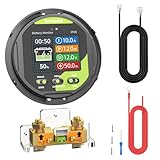
- 4. SENTORISE 500A IP68 Monitor: Built for a Wet Battery Box
- 5. QWORK WD3062: The Long-Cable Workhorse for Big Banks
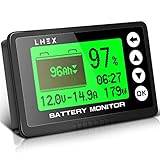
- 6. LNEX 500A with 26ft Cable: Extra Routing Freedom for Battery Box Installs
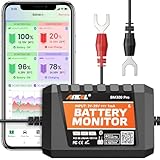
- 7. ANCEL BM300 Pro: App-Based Alerts and Trend History
- 8. LNEX 500A Color Screen: A Single-Screen Readout of Every Parameter
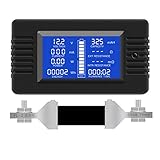
- 9. MORNING GROUP 300A 9-in-1 Meter: Nine Parameters on One Screen
- 10. BINTA TR16H: A Compact Gauge That Still Counts Amps
- Shunt Monitors Vs Cheap Bluetooth Battery Taps
- How to Choose a Battery Monitor for Your RV
- Frequently Asked Questions
- Which Monitor Should You Buy?
What Is an RV Battery Monitor?
An RV battery monitor is a calibrated shunt installed in the negative cable of your house battery bank that measures every amp flowing in and out, then uses that measurement to calculate exact state of charge, remaining amp-hours and time left. Voltage alone cannot tell you this, because voltage is a function of load and chemistry rather than of remaining energy.
The shunt is a precisely sized block of resistance that every amp in the system must pass through. The monitor reads the tiny voltage drop across that resistance, converts it to amperage, and integrates that number over time to track amp-hours in and out. That process is called Coulomb counting, and the percentage you see is calculated from your bank capacity, chemistry, temperature and age rather than measured directly.
That distinction explains the two failure modes RVers hit most. A monitor that loses sync reports 100% on an empty battery. A voltmeter panel reports 90% on a dying one. Neither is lying, they are just answering a different question.
Top 3 Picks for Best Battery Monitors for RV House Batteries (October 2026)
Our short list for most RVers is the Renogy 500A for its combination of accuracy and a physical display, the Victron BMV-700 for long-term ownership, and the AILI TR16 as the cheapest route to a genuine shunt reading. Here is how the three compare at a glance.

Renogy 500A Battery Monitor
- 1% shunt accuracy
- 20ft shielded cable
- 12V to 48V
- capacity alarm

All 10 Monitors Side by Side in 2026
Every monitor below is a shunt or multi-function DC meter that reports real current. We have sorted them roughly by how they fit an RV, and the table gives you the short version of the trade-offs before the full write-ups.
| Product | Specifications | Action |
|---|---|---|
| Renogy 500A Battery Monitor |
|
Check Latest Price |
| Victron BMV-700 |
|
Check Latest Price |
 AILI TR16 Shunt Monitor AILI TR16 Shunt Monitor |
|
Check Latest Price |
 SENTORISE 500A IP68 Monitor SENTORISE 500A IP68 Monitor |
|
Check Latest Price |
 QWORK WD3062 QWORK WD3062 |
|
Check Latest Price |
 LNEX 500A with 26ft Cable LNEX 500A with 26ft Cable |
|
Check Latest Price |
 ANCEL BM300 Pro ANCEL BM300 Pro |
|
Check Latest Price |
 LNEX 500A Color Screen LNEX 500A Color Screen |
|
Check Latest Price |
 MORNING GROUP 300A 9-in-1 MORNING GROUP 300A 9-in-1 |
|
Check Latest Price |
 BINTA TR16H BINTA TR16H |
|
Check Latest Price |
1. Renogy 500A Battery Monitor: Our Top Pick for an RV House Bank
Renogy 500A Battery Monitor, Tester with Shunt, Battery Meter Power System
1% shunt accuracy
12V to 48V
500A max
20ft shielded cable
Pros
- Shunt-based amperage with roughly 1% accuracy
- Works with lead acid and LiFePO4 across 12V
- 24V and 48V
- High and low capacity alarm with flashing backlight
- 20ft shielded cable lets the display sit inside the cabin
- Shows voltage
- current
- power
- capacity and degradation
Cons
- Setup needs correct amp-hour and cutoff voltage configuration
- Display requires an accurately sized panel cutout
- Backlight reported as very bright in a dark cabin
The Renogy RBM500 is the monitor I recommend to almost everyone who asks me. It is not the fanciest device on this list and it does not need to be. It scores 4.4 stars from more than 2600 reviews, which is the widest owner-tested sample of any monitor in this roundup.
I like it because it answers the question an RV owner actually asks, which is how much charge is left right now, without making you open an app. The display shows voltage, current, consumed power, remaining capacity and a degradation rate in one row, and the high and low capacity alarm flashes the backlight when you approach your limit. For boondocking that alarm is worth more than any historical graph.
The chemistry flexibility is a real advantage. The same unit works with lead acid, LiFePO4, lithium-ion and NiMH across 12V, 24V and 48V banks, so if you convert from flooded to lithium later you are not shopping for a new gauge. It also runs from 10V to 120V and includes a transparent shunt holder, which makes the whole assembly easier to inspect in a cramped battery compartment.
The one thing that catches people out is configuration. The capacity reading only becomes trustworthy once the bank capacity and cutoff voltage are entered correctly, and a wrong number there will quietly make the percentage wrong for months. Budget twenty minutes for setup and read the manual rather than guessing at each menu.
What the Renogy does better than the cheap taps
This is a real shunt, so it counts current rather than inferring it. When you run a 3kW inverter off a 12V bank, the panel reads roughly 250 amps flowing out in real time, and the remaining capacity number falls at the same rate. A voltage-only sensor sees almost nothing change and keeps telling you everything is fine.
The alarm is the sleeper feature. Most RVers do not notice a slow drain over a week of storage until the battery is already too low to recover well. Programmable high and low capacity thresholds with a flashing backlight give you a warning you can see from across the cabin at night.
Where it falls short
The display is designed for a panel cutout and the hole has to be measured accurately first, which is the most common install complaint. There is no Bluetooth in the box, so history logging and remote viewing need a separate accessory. The backlight is bright, and on a dark night you may want to dim it rather than leave it at full.
2. Victron BMV-700: The Gauge You Mount Once and Forget
Victron Energy BMV-700 Battery Monitor with Shunt & Display – 6.5-95 VDC
6.5 to 95 VDC
Programmable relay
500A 50mV shunt included
VE.Direct port
Pros
- State-of-charge bar graph and time-remaining estimate
- Accurate on both discharge and charge
- Clear written setup instructions
- Programmable relay can drive a protect or generator
- VE.Direct port opens the door to GX and VRM remote monitoring
Cons
- Bluetooth is not built in and needs a separate dongle
- Installation can require heavy wiring and a drilled cable route
- Costs considerably more than generic shunt monitors
The BMV-700 is the reference gauge in this category, and the reason is not the brand name. It tracks a wide set of parameters across a 6.5 to 95 VDC range, it ships with a 500A 50mV shunt in a proper safety enclosure, and it carries a 4.5 star average from 288 reviews, which is the strongest rating in this group even from the smallest review pool.
For an RV the display is the argument. A bar graph of state of charge plus a time-remaining estimate reads instantly, and on a lithium bank those two numbers are dramatically more meaningful than volts. Several owners describe it as standard equipment that should have come from the factory, and one motorhome owner paired a Victron monitor with a digital multi control panel and called the result precise battery monitoring at a glance from inside the rig.
Two features set it apart from everything else here. The programmable relay can switch a battery protect or start a generator, which turns the monitor into an actual control device rather than a readout, and full-timers use that for auto generator start. The VE.Direct port also means the same hardware can feed a GX device or the VRM portal later if you build out a larger system, so you are not locked into a dead end.
Setup is where it clearly separates itself. The programming is straightforward, the instructions are well written, and the unit does not fight you during setup the way several cheaper monitors do.
Why the relay matters more than most buyers expect
A relay lets you set a state-of-charge threshold and have something happen automatically. Below 30%, the generator starts, or a battery protect cuts the inverter. Once you leave a monitor unattended for a week of storage, that single feature becomes worth more than any display refinement, and it is the reason this model shows up so often on full-time rigs.
Where it falls short
Bluetooth is not built in. The VE.Direct Bluetooth Smart dongle is a separate purchase, and the listing description here implies otherwise, which is a recurring source of buyer frustration. Installation is heavier than the generic monitors because of the enclosed shunt and the cable run, and the unit costs considerably more than its budget rivals.
3. AILI TR16 Shunt Monitor: Strong Accuracy at the Budget End
AILI TR16 Shunt Battery Monitor, 8-120V up to 500A Voltage Current Meter, State of Charge Display up to 999AH, Compatible with LiFePO4 Lithium AGM Gel – for RV Camper Caravan Boat Solar Off-Grid
8V to 120V range
0.1 to 999Ah capacity
350A/500A shunt
50 to 60 microamp standby
Pros
- Reads state of charge
- voltage
- current and remaining capacity like a fuel gauge
- 350A and 500A shunt options for accurate counting
- Handles LiFePO4
- lithium-ion
- AGM
- gel and lead acid
- Backlit LCD readable in low light
Cons
- The included 6ft wire is short for exterior battery boxes
- Mounting flange is very small and needs an exact hole saw
- Some monitors lose the state-of-charge reading after a year or more
The AILI TR16 is the answer when someone asks how close a budget monitor gets to a premium one. It carries 4.4 stars across more than 1450 reviews, and reviewers repeatedly describe its readings as comparable to monitors costing several times more. It is also self-powered from 8V to 120V, so it does not need an isolated supply tapped into your system.
The display behaves like a fuel gauge, showing state of charge percentage, voltage, charge or discharge current and remaining capacity. Capacity is programmable from 0.1 to 999Ah, which covers everything from a single 100Ah house battery to a large parallel bank, and the 8V to 120V range covers 12V, 24V, 36V and 48V systems in one device.
Standby draw sits between 50 and 60 microamps, and memory retains your settings after power is cut. For a rig that sits in storage for weeks, a monitor that silently drains the bank or forgets its configuration over winter is a real problem, and this one avoids both.
It is a complete kit too. The box holds the display meter, a 2m extension cable, the shunt, a bracket and a manual, so you are not hunting for parts after the box opens.
Where this one beats pricier monitors
Accuracy at the low end of the price range is the headline. Owners running large house banks report readings that line up with far costlier branded hardware, and the shunt options let you match the current rating to your inverter instead of accepting whatever came in the box. The chemistry list is broad enough that a lithium conversion does not mean a new monitor.
The low standby draw also makes it a good storage companion. A monitor that pulls meaningful current when the rig is parked for a month can flatten a bank over a long layup, and this one draws a small fraction of what an LCD backlight would over a long layup.
Where it falls short
The included 6ft wire is the biggest practical problem. If your batteries sit in an exterior compartment and the display mounts inside, you will be adding an extension, and a bad extension is a common source of reading dropouts. The mounting flange is very small, so the cutout has to be exactly right. A small number of monitors also lose their state-of-charge reading after a year of service.
4. SENTORISE 500A IP68 Monitor: Built for a Wet Battery Box
SENTORISE 0-500A Battery Monitor with Shunt, 8-120V IP68 Waterproof LCD Screen with Buzzer Alarm for RV Solar Marine Off-Grid System, Capacity Percentage Time Power Voltmeter Display
IP68 sealed housing
8V to 120V 0 to 500A
Buzzer alarm every 10 seconds
Long shielded cable
Pros
- Highest average rating in this group at 4.6 stars
- IP68 sealed housing suits a wet bilge or outside box
- Readings verified against reference instruments stayed within a few millivolts
- Shows voltage
- current
- power
- Ah
- percentage and time remaining
Cons
- The printed manual uses a font far too small to read
- No Bluetooth or app connectivity for phone alerts
- The buzzer is only audible nearby
Most of the others in this roundup assume the display ends up somewhere dry inside the rig. This one does not, and that is the whole idea. The IP68 sealed high-temperature PC housing means the display can sit in a wet bilge, an exterior battery box or anywhere spray reaches, which opens up install locations the other units rule out.
It also holds the highest average rating we found, 4.6 stars, with the bulk of its ratings sitting at four and five stars and no one- or two-star reviews at all. Reviewers report measurements checked against a Fluke meter and an oscilloscope staying within a few millivolts.
The screen shows voltage, current, power, amp-hours, state-of-charge percentage and time remaining, refreshed about three times per second. A built-in buzzer repeats every ten seconds when the battery is low, and you can set sleep and wake current thresholds plus a low-voltage sleep cutoff, so the monitor protects both the battery and itself.
The kit is complete: monitor, 500A shunt, power cord, screws, bracket, screwdriver and manual, with a very long shielded signal cable on a standard 5-pin JST connector. That cable length is what makes an interior display practical even with the unit mounted outside.
When IP68 actually earns its place
If your battery bank lives outside the living space, under a chassis, or in a compartment that gets wet on a river crossing, a non-sealed display is a liability you will eventually regret. This is the pick for that layout, and for boondockers who park in the open all week and want a local readout at the bank rather than a phone.
The configurable sleep threshold is quietly important too. Setting a wake current means the display wakes when real load appears and sleeps when the rig is quiet, which cuts parasitic drain during storage without losing the reading when you walk up to check.
Where it falls short
There is no Bluetooth or Wi-Fi, so no phone notifications and no history logging. The buzzer is only useful at close range, which limits it in a large motorhome. The manual is printed in a font too small to read comfortably, and reconfiguring the menu means long button presses, which gets old quickly. The polarized screen is also hard to see through polarized sunglasses, a real annoyance outdoors.
5. QWORK WD3062: The Long-Cable Workhorse for Big Banks
QWORK Battery Monitor Voltmeter Ammeter, Voltage Range 8V-80V and up to 500A, Voltage Current Meter with 13 ft Custom Cable
8V to 80V
350A reinforced shunt
999Ah capacity tracking
13ft custom cable
Pros
- Reports total amps in and out of the bank
- 13ft cable reaches an interior display from an exterior box
- Automatic memory keeps settings through power disconnects
- Clear backlit LCD in a compact panel-mount design
Cons
- Setup instructions are difficult to parse
- Accuracy depends entirely on correct capacity and zero point configuration
- Some monitors develop wrong voltage and stuck readings within about six months
The QWORK WD3062 solves a specific RV problem well: getting a real reading from a battery box that is a long way from where the display belongs. It ships with a 13ft custom cable, which covers most trailer and motorhome layouts without an extension, and it holds 4.4 stars across 632 reviews.
The reporting is what you want from a shunt monitor. Real-time voltage, charge and discharge current and state of charge, driven by a reinforced heavy-duty 350A external shunt, with capacity tracking up to 999Ah. That capacity ceiling covers the big parallel banks that full-timers run when they want to run a residential refrigerator and an inverter off-grid for a week.
Two details stand out in daily use. A built-in memory chip retains your last test parameters after a power disconnect, so a dead house battery does not mean reconfiguring the monitor from scratch, and the compact panel-mount footprint with a backlit LCD fits neatly into a control center rather than dominating the dash.
It is also NIST traceable and CE marked, which matters more than it sounds if you are the type who likes to sanity-check a reading against a known good meter.
How to configure it so the numbers hold up
The percentage and amp-hour readings are entirely a function of how you set the bank capacity and the zero point, and that is the single most common complaint about this class of monitor. Enter the true usable capacity of your bank, set the cutoff voltage to match your chemistry, and confirm the reading against a full charge before you trust it on a trip.
One wiring note worth flagging: if your solar charging current reaches the battery outside the path the shunt sees, the monitor will not register it as charging. Route the negative properly through the shunt, or your numbers will be permanently low on a sunny day.
Where it falls short
The setup instructions are difficult to parse and may take several passes. The small gauge wire is awkward to fit into the power clamp terminals, and a small number of monitors develop incorrect voltage and stuck-at-full readings within roughly six months. Treat the 999Ah ceiling as a maximum setting rather than an assumption about your bank.
6. LNEX 500A with 26ft Cable: Extra Routing Freedom for Battery Box Installs
LNEX Portable Battery Monitor with Shunt, 500A Automotive Car Battery Monitor for RV 10V-120V, with High and Low Voltage Programmable Alarm and 26ft Shielded Wire
10V to 120V up to 500A
26ft shielded cable
Color screen
Settable low-Ah alarm
Pros
- Readings verified against lab-grade power supplies within 1% tolerance
- 26ft shielded cable gives real routing freedom
- Color screen shows charge
- discharge
- amps
- wattage and time remaining at once
- Dimmable backlight can be turned off at night
Cons
- Initial configuration is confusing until settings are worked out
- One monitor lost its capacity reading and showed blocky LCD segments after about two years
- Needs a large rectangular cutout rather than a surface mount
Cable length is the unglamorous spec that decides whether an install is a pleasant afternoon or a frustrating one, and this LNEX comes with 26ft of shielded cable. That is a longer run than any other cable length specified by the monitors in this roundup, and it covers the trip from an exterior battery box to a dash-mounted display in almost any layout without an extension.
It holds 4.4 stars across 220 reviews, and one reviewer who works as an electrical engineer verified the readings against lab-grade power supplies and found they met the 1% tolerance spec.
The display is a large color screen showing state of charge, amp-hours, time remaining, watts and volts in one graphic with no scrolling. Pure brass heavy-duty connectors, nuts and bolts are used on the terminals, which is the right call for a device that lives next to a vibrating, occasionally damp battery.
The settable beep alarm at a chosen minimum amp-hour level is the feature I would build a boondocking routine around. Set it for the level that leaves you enough charge to run the furnace overnight, and you get an audible warning before you cook dinner rather than after.
Why the dimmable screen matters in a camper
The backlight can be turned down or off entirely at night, which sounds minor until you have tried to sleep next to a glowing panel. A built-in light also switches off automatically when there is no load, so a monitor left on overnight while the rig is parked does not become a parasitic draw you discover in the morning.
For full-timers, the combination of 26ft of cable, a settable alarm and automatic data retention means the display can live at the head of the bed rather than the battery bay, which is where you will actually look at it.
Where it falls short
Initial configuration is confusing until you work out the settings, and the cutout required is a large rectangle rather than a standard round hole, so plan the panel work before you start. A small number of owners report state of charge not staying accurate over time, and one monitor lost its capacity reading and developed blocky LCD segments after roughly two years of service.
7. ANCEL BM300 Pro: App-Based Alerts and Trend History
ANCEL BM300 Pro Bluetooth Battery Monitor for 6V, 12V and 24V Systems
6V, 12V and 24V auto-detect
Bluetooth 5.3
Monitors four batteries
IP67 housing
Pros
- Auto-detects 6V
- 12V and 24V so one device covers RVs
- boats and trucks
- Monitors up to four batteries with phone alerts for voltage drops
- Bluetooth 5.3 gives a stable link inside the vehicle
- Reinforced composite shell with IP67 sealing
Cons
- It is a terminal-style voltage and state-of-charge monitor
- not a true high-current shunt monitor
- 6V mode supports voltage and state of charge only
- Alerts only reach a paired phone since there is no onboard display
The ANCEL BM300 Pro is the most interesting pick here for an owner who wants alerts and history rather than a panel readout. It auto-detects 6V, 12V and 24V systems, runs Bluetooth 5.3, and monitors up to four batteries at once while pushing phone notifications for voltage drops or charging failures. It scores 4.2 stars across 1293 reviews.
The 72-day trend analytics are the real differentiator. When a bank is going flat or a solar charge controller stops doing its job, a week of voltage data shows it long before a single reading would. The reinforced composite shell carries IP67 sealing, and reverse polarity and short-circuit protection make a first install forgiving.
It draws about 1mA and carries a claimed accuracy above 99.6% on its voltage readings. It is also genuinely cross-platform, which means the same device works in a car, a boat or a coachbuilt conversion instead of being a one-rig purchase.
I want to be direct about the limitation rather than bury it. This is a terminal-style voltage and state-of-charge monitor, not a shunt. It will tell you a battery is at 40% and it will alert you when voltage drops, but it does not count amps, so it cannot show inverter draw, runtime remaining or a fuel-gauge style trend while a large load is running.
Where the app approach beats a panel
Alerts are the reason to choose this. A voltage drop at a disconnected bank while you are two states away is exactly the failure a shunt monitor would never catch, and this one calls your phone. For a motorhome with both house and starter batteries, or a rig with a secondary battery in the engine bay, watching four batteries from one app is a real convenience.
It also solves the paired-battery problem from the other direction. A lithium battery with a built-in Bluetooth app reports on itself, but it cannot total a parallel bank, so this still tells you something the per-battery apps cannot.
Where it falls short
No current measurement means no runtime estimate, which is the number most boondockers actually plan around. Bluetooth degrades near thick metal obstructions, so an engine bay install may need the display within clear line of sight. In 6V mode it reports voltage and state of charge only. And because there is no onboard display, every reading requires a paired phone in your hand.
8. LNEX 500A Color Screen: A Single-Screen Readout of Every Parameter
LNEX 500A Shunt Battery Monitor, 2.4″ Color Screen RV Monitor with 16ft Shielded Wire, Support High Low Voltage Programmable Alarm for 8-100V Lifepo4, Lithium Sealed, Gel, Flooded Battery
2.4 inch color LCD
16ft shielded wire
8V to 100V range
Programmable alarms
Pros
- 2.4 inch color screen shows voltage
- current
- Ah
- watts
- state of charge and time remaining at once
- Manual calibration to your own capacity improves the reading
- 16ft shielded cable and transparent shunt holder make RV mounting practical
- Adjustable brightness with automatic dimming when there is no draw
Cons
- The percentage often only tracks discharge and will not rise while charging without a manual reset
- Setup is not automatic and capacity must be entered first
- Instructions do not clearly explain the amp-hour and voltage settings
While most panel monitors list several separate values, this one puts a 2.4 inch color LCD in the same role. It shows voltage, current, amp-hours, watts, state of charge and time remaining simultaneously rather than paging through them, which makes it the easiest of the wired options to read at a glance from the driver’s seat.
It holds 4.2 stars from 239 reviews, and the things buyers like most are exactly the things you would hope for. The 16ft shielded cable is long enough to reach an interior display from most battery compartments, and the transparent shunt holder with marked polarity makes a cramped install far less stressful.
Adjustable brightness is nice, but the automatic dimming when there is no load is better. The monitor dims itself when the system goes quiet, so it stops being a light source in a dark cabin without you touching anything.
The 8V to 100V range covers lead acid, LiFePO4, lithium-ion and NiMH, which is what makes it a fit for both 12V rigs and 48V banks. Owners running boondocking lithium conversions rate it well for that reason.
The one behavior you must understand before buying
This is the most important caveat in the roundup. The percentage reading frequently only tracks discharge and does not climb during charging unless you reset it manually. That is not a dealbreaker if you know it, but it will look like a fault on your first solar day, and it is the most common reason owners return this class of monitor.
The workaround is straightforward. Calibrate the capacity to your own bank so the discharge side is accurate, then treat the percentage as a fuel gauge on the way down and reset it after a full charge rather than trusting it to climb in real time.
Where it falls short
Setup is not automatic, bank capacity has to be entered before the readings mean anything, and the instructions do not clearly explain the amp-hour and voltage parameters, so plan on watching a walkthrough. A small number of displays have failed within a year, and if you need more than 16ft of cable there is no longer extension offered as a separate purchase.
9. MORNING GROUP 300A 9-in-1 Meter: Nine Parameters on One Screen
DC 0-200V 300A Battery Monitor with Shunt, 9-in-1 Digital LCD Multimeter
0 to 200V and 300A
9 parameters on one screen
Up to 60kW systems
Indoor use only
Pros
- Nine parameters at once including accumulated kWh and a 10-segment state-of-charge bar
- Voltage and current accuracy within about 1% of lab instruments in side-by-side tests
- Backlit wide-angle LCD with manual blue backlight
Cons
- Push-lock spring wire connectors are unreliable and often replaced with screw terminals
- The shunt is low-side only and the wiring diagram must be followed carefully
- Not waterproof and needs a dry enclosure
Almost all of them list a handful of values. This one lists nine: voltage, current, power, impedance, internal resistance, capacity, kilowatt-hours, runtime and a ten-segment state-of-charge bar. If you like seeing everything at once, nothing else in this roundup gives you that much on a single screen.
It holds a 4.1 average across 885 reviews, and the rating spread is wide, with the bulk of the feedback at three stars and above. That distribution tells you it performs well for people who expect a simple readout and disappoints people who want a precise fuel gauge. The 0 to 200V range and 300A rating handle systems up to 60kW, which is more headroom than most RVs need.
Accuracy is a genuine strength. Reviewers report voltage and current readings within about 1% of lab instruments in side-by-side testing, and the backlit wide-angle LCD is easy on the eyes with a manual blue backlight for night viewing. It is also UL 61010-1 and IEC 61010-1 compliant, which is a certification you will not find on most panel monitors.
It is explicitly a dry-use indoor product, which fits a dash-mounted display perfectly and rules it out for a wet battery box.
Where a nine-parameter readout earns its place
Accumulated kilowatt-hours and runtime are the two numbers you cannot get from a basic voltmeter, and they are what you need when you are testing a solar system rather than just watching a battery. The ten-segment state-of-charge bar is coarse, but it gives you an at-a-glance warning that you are heading into a night with too little left.
Impedance and internal resistance readings are useful diagnostic extras too. Tracking them over a season can tell you something about battery condition that voltage alone never will.
Where it falls short
The push-lock spring wire connectors are unreliable and many owners replace them with screw terminals immediately. The shunt is low-side only, so you have to follow the wiring diagram carefully or the numbers will be wrong. Amp-hour readings accumulate charging and discharging current together, which means they need frequent resetting to mean anything, and very small draws fall below the detection threshold, so a trickle solar charge can be invisible. The manual is terse, and the unit is not waterproof.
10. BINTA TR16H: A Compact Gauge That Still Counts Amps
BINTA Battery Monitor with Shunt 8-120V 0-500A Voltmeter Ammeter Backlight
8V to 120V
500A peak 350A continuous
Capacity to 999Ah
Auto-sleep below 50mA
Pros
- Compact circular display with touch buttons and a backlight readable in darkness and direct sun
- Two-way current detection with state of charge and remaining amp-hours
- Responsive warranty service replaced both a faulty shunt and a backlight
- 10ft shielded cable is adequate for most RV and trailer installs
Cons
- Instructions are thin so setup guidance comes from elsewhere
- No mounting bracket is included
- only a protruding bolt
- Needs a 54mm hole cutter which is slightly larger than the common 52mm size
The BINTA TR16H has a compact footprint, and that is its purpose. A circular unit with touch buttons and a 2.31 by 2.31 inch body fits a control panel or a switch plate where the rectangular panel-mount monitors will not, and it still reports real state of charge, remaining capacity up to 999Ah, voltage and current with two-way current detection.
It carries 4.4 stars from 146 reviews, and three quarters of those are five-star, the highest five-star share of any shunt monitor in the group. Reviewers specifically mention responsive warranty service, including replacements of both a faulty shunt and a backlight unit, which is worth knowing when the review pool is small.
Two practical details make it easier to live with. The backlight is readable both in darkness and in direct sun, which matters for a rig that lives outside. The display auto-sleeps below 50mA and wakes on a button tap, so it is not quietly pulling from the bank while you are away.
Continuous rating is 350A with peaks to 500A, and the 8V to 120V range covers lead acid, LiFePO4 and lithium-ion. A 10ft shielded cable plus a 3.3ft positive wire are included, and settings and last recorded data survive shutdowns.
Why compact matters in a small rig
On a Class B or a van conversion, panel real estate is genuinely scarce. A round gauge that fits a standard switch-plate position changes what is possible with the layout, and a device that sleeps below 50mA will not quietly become the thing draining your bank over a month in storage. The high five-star share also suggests fewer people regret the purchase than the small review count would imply.
Where it falls short
There is no mounting bracket in the box, only a bolt protruding from the back, so you will need to source hardware. The hole size required is 54mm, slightly larger than the more common 52mm, which catches people out. The instructions are thin, and the touch keypad does not always register presses promptly.
Shunt Monitors Vs Cheap Bluetooth Battery Taps
The single most common mis-purchase in this category is a Bluetooth voltage tap, and the shopping results for RV battery monitors are full of them. A tap clips onto a terminal, reports voltage, and estimates a state-of-charge percentage from that voltage through a phone app. A shunt monitor sits in the negative cable, measures current, and counts amp-hours.
Those are different products answering different questions. A tap can tell you roughly how much charge is in a battery sitting still. It cannot tell you how much the inverter is pulling, how many hours you have left, or what your real overnight draw looks like. Owners reviewing cheap Bluetooth battery taps report devices that are slow to pair, drop the connection, and end up sitting next to a proper shunt anyway once real loads appear.
The exception is a genuinely small user. If your bank is one 100Ah battery, you use 50 to 100 amp-hours a day, and you park at a site every night, a tap is a reasonable sanity check and a proper shunt is optional. The moment you boondock for multiple nights, run a residential fridge, run an inverter or convert to lithium, a shunt stops being an upgrade and becomes the only way to plan.
There is a related question here, because many lithium banks ship with a Bluetooth app of their own. Those apps report accurately on a single battery, but they cannot total a parallel bank, so a 400Ah house bank made of four 100Ah batteries still needs an external shunt. That question comes up constantly among lithium owners, and the answer has not changed.
How to Choose a Battery Monitor for Your RV
How many amps should your shunt be?
Divide your inverter’s continuous wattage by your system voltage and that is your peak current, then choose a shunt rated above it. A 1000W inverter on a 12V system pulls about 83 amps, a 2000W unit pulls about 167 amps, and a 3000W unit pulls about 250 amps. Add roughly a quarter for startup surge and continuous charging load, which is why 500A is the standard rating for most 12V RV builds and 1000A is the right call for a 3000W inverter running alongside a DC-DC charger.
Going larger than you need costs you accuracy at low current because a higher-rated shunt has lower resolution, so do not size for a future inverter you do not own.
Match the monitor to your battery chemistry
Select the correct chemistry in the setup menu, because a monitor configured for flooded lead-acid will systematically misread a lithium bank. Lead acid is typically used to around 50% depth of discharge with a tail current set around 2% of capacity, while lithium is usually taken to 80 to 90% with a tail current closer to 1%. For LiFePO4, set the battery type to lithium, set a tail current around 1% of capacity, set a fully charged voltage of 13.2V, and leave auto-sync enabled.
One owner running a shunt alongside 100Ah lithium batteries found the readings only became accurate once the chemistry was switched to lithium, and that is the configuration mistake we hear about most. If you are still choosing your bank, our guide to the best RV lithium batteries covers the chemistry decisions that interact with this setting.
Physical display or app only?
Choose a physical display if you do not want to walk to the battery bay with a phone, if you travel without reliable data service, or if your rig is older and you have no interest in a dashboard. Choose Bluetooth if you want alerts, history graphs and remote checks, and accept that you are dependent on pairing and app quality.
Bluetooth range is short, roughly 30 feet, which is the most common complaint about app-only setups. The straightforward fix is a wall-mounted display higher up in the rig, which is another argument for a panel gauge. If you want both, the panel units with a Bluetooth or VE.Direct path are the compromise, though the dongle for the Victron is a separate purchase.
Do you need starter battery monitoring?
Motorhomes with a separate starter battery should look for a secondary or auxiliary voltage input so one device covers both banks. On a trailer or fifth wheel with a single battery bank, this matters far less, and a monitor without that input loses nothing for your setup.
What installation actually involves
The golden rule is that the shunt must be the only negative connection. Every load, the solar charge controller and the inverter all need their negative side routed through the shunt, or the monitor cannot see that current and the percentage stays permanently wrong. This is the number one cause of a monitor that reads badly no matter how it is configured.
Plan the cable route before you cut anything. A 13ft or 26ft shielded cable covers most runs, but battery boxes are often under a bed or behind a wheel well, and drilling that route is the difference between a weekend project and a month of delay. Also think about panel space, the exact cutout diameter, and whether the display location is dry if the model is not sealed. For off-grid solar installs, our lithium solar battery guide covers the charging side that your monitor will be reading.
What a good monitor lets you predict
Once your monitor is accurate, you can do arithmetic that was impossible before. A 200Ah usable bank running a 12V refrigerator that draws roughly 50 amps gives you about four hours per full charge, so two of those batteries give you a night. That is the kind of planning a voltmeter simply cannot support, and it is the real return on spending an afternoon on the install.
It also lets you validate your battery bank. If the monitor shows a healthy percentage but you know your measured daily amp-hour consumption is far higher than expected, the bank is smaller than you think or the charge sources are not doing their job. For a rough reference list of expected daily loads, we have covered common house loads in our battery capacity guide.
Frequently Asked Questions
What is the best RV battery monitor?
The best RV battery monitor is a shunt-based gauge with a physical display and a 500A rating, because it counts real current and works with lead acid or LiFePO4 banks. Among the options we reviewed, the Renogy 500A is the most proven all-round pick, with the most owner feedback of any monitor in the group. If you want a programmable relay and long-term brand support, a Victron BMV-700 is the alternative.
How many amps should my shunt be?
Divide your inverter’s continuous wattage by your system voltage, then add about 25% for startup surge. That makes 1000W equal to about 83 amps, 2000W about 167 amps, and 3000W about 250 amps on a 12V system. Most 12V RV builds land on a 500A shunt, and a 3000W inverter running alongside a DC-DC charger calls for 1000A.
Does a battery monitor need a shunt?
A real monitor does. A shunt is a calibrated resistor in the negative cable that all current must pass through, and the small voltage drop across it is what lets the device count amp-hours. Bluetooth voltage taps read voltage only, so they can estimate a state of charge on a battery sitting still but cannot show inverter draw or hours remaining.
How accurate are 12V battery monitors?
A properly configured shunt monitor is generally accurate to about 1% on current readings, and that is the spec the leading models in this roundup are built to. Accuracy collapses when the bank capacity is entered incorrectly or when a load is wired around the shunt, so configuration matters more than brand. Verify your reading against a full charge before trusting it on a trip.
What is the best battery monitor for LiFePO4 batteries?
Any of the shunt monitors in this roundup handles LiFePO4, provided you set the battery chemistry to lithium in the setup menu. For lithium, set a tail current around 1% of capacity, a fully charged voltage near 13.2V, and leave auto-sync enabled. The key point is that a lithium bank needs an external shunt, because the per-battery Bluetooth apps cannot total a parallel bank.
Which Monitor Should You Buy?
Start with the Renogy 500A if you want one monitor that covers most RVs, because it combines real shunt accuracy, a physical display and the deepest pool of owner feedback in this roundup. Add the Victron BMV-700 to your short list if you need a programmable relay for auto generator start, or if you intend to grow into a larger Victron system. Look at the AILI TR16 if cost per accurate reading matters more to you than the longest cable in the box.
Match the rest to your rig rather than the price. A wet or exterior battery compartment points to the sealed IP68 monitor. A battery box far from the dash points to the long-cable LNEX. A tight panel on a small Class B points to the compact BINTA. And if you genuinely only use 50 to 100 amp-hours a day and never leave a site, a Bluetooth tap is defensible, otherwise one of the shunt monitors above will change how you plan every trip.
Whatever you choose, the install is where the accuracy comes from. Route every negative through the shunt, enter your real bank capacity, and confirm the reading against a full charge before you head out. That is the whole difference between a number you trust and one you argue with. Our picks for 2026 cover the full range from budget panels to sealed rugged units, so the only hard part is choosing one and setting it up properly.