
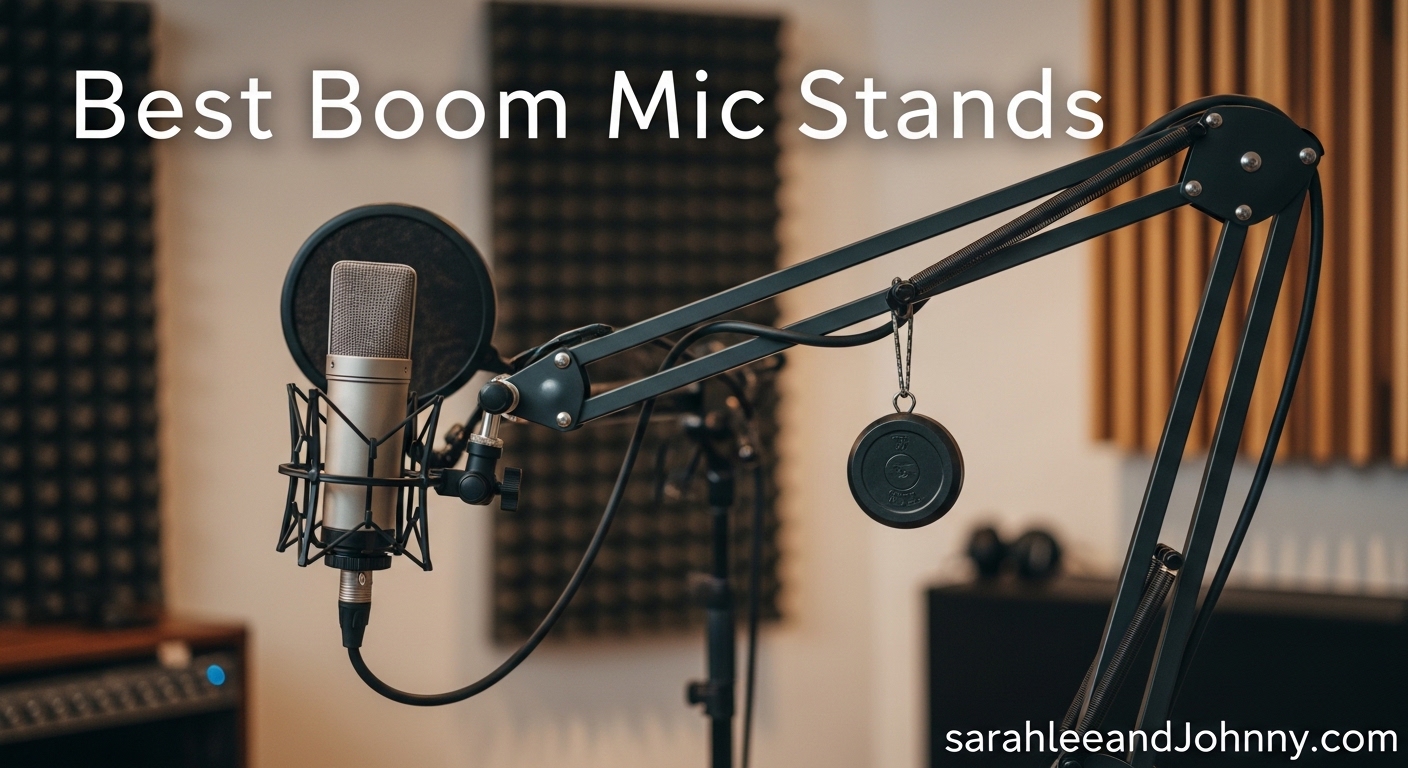
After spending the better part of three years testing microphone stands in our home studio and at live gigs, I can tell you this: the stand matters just as much as the microphone. I learned this the hard way when a budget boom arm started sagging mid-session, ruining an otherwise perfect vocal take. That experience sent me down a rabbit hole of researching and testing the best boom mic stands on the market.
Whether you are setting up a podcast desk, recording vocals in a treated room, or miking a guitar amp on stage, the right boom microphone stand keeps your mic exactly where you need it without drifting, tipping, or rattling. I have tested over a dozen models across six categories, from heavy-duty floor stands to compact desk-mounted scissor arms, and narrowed the field down to six stands that genuinely deliver.
In this guide, I break down each stand based on real-world use, covering build quality, stability, adjustability, and long-term reliability. I also included a buying guide to help you figure out exactly which type of boom mic stand fits your setup, plus answers to the questions most people ask before buying.
Table of Contents
- Top 3 Picks for Best Boom Mic Stands
- Best Boom Mic Stands in 2026
- 1. K&M 21090.500.55 – German-Made Professional Tripod Boom Stand
- 2. Rode PSA1+ – Professional Studio Desk Boom Arm
- 3. Hercules MS533B – Hideaway Boom with EZ Clutch System
- 4. Gator Frameworks GFW-MIC-0822 – Weighted Base Telescoping Boom Stand
- 5. On-Stage MS7701B – Euro Boom Mic Stand with Accessories
- 6. InnoGear Boom Arm MU01 – Budget Desk Clamp Scissor Arm
- How to Choose the Best Boom Mic Stand for Your Needs
- Frequently Asked Questions About Boom Mic Stands
- Final Thoughts on the Best Boom Mic Stands
Top 3 Picks for Best Boom Mic Stands

K&M 21090.500.55 Tripod Boom
- German-Made
- 5-Year Warranty
- 63 inch Max Height
- 7.2 lb Heavy-Duty Base
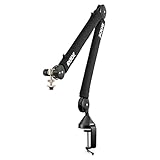
Rode PSA1+ Studio Boom Arm
- Parallelogram Spring Design
- Silent Operation
- Cable Management
- Desk Clamp or Bolt-Through
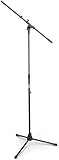
On-Stage MS7701B Euro Boom
- Steel Construction
- Includes XLR Cable and Bag
- 30 inch Boom Reach
- 5 lb Portable
Best Boom Mic Stands in 2026
| Product | Specifications | Action |
|---|---|---|
| K&M 21090.500.55 Tripod Boom |
|
Check Latest Price |
| Rode PSA1+ Studio Boom Arm |
|
Check Latest Price |
 Hercules MS533B Hideaway Boom Hercules MS533B Hideaway Boom |
|
Check Latest Price |
 Gator Frameworks GFW-MIC-0822 Gator Frameworks GFW-MIC-0822 |
|
Check Latest Price |
| On-Stage MS7701B Euro Boom |
|
Check Latest Price |
 InnoGear Boom Arm MU01 InnoGear Boom Arm MU01 |
|
Check Latest Price |
1. K&M 21090.500.55 – German-Made Professional Tripod Boom Stand
K&M König & Meyer 21090.500.55 Tripod Microphone Stand – Adjustable Telescoping 2-Piece Boom Arm – Professional Grade – Heavy Duty with Folding Leg Base – German Made Black
Max Height: 63 Inches
Weight: 7.2 lbs
Base: Tripod
Material: Zinc and Stainless Steel
Warranty: 5 Years
Pros
- Rock-solid stability with heavy 7.2 lb base
- German engineering with precision adjustments
- Telescoping 2-piece boom arm extends to 63 inches
- Folds compactly for transport and storage
- 5-year warranty with 10-year parts availability
Cons
- Heavy weight may be cumbersome for mobile gigging
- Premium price point compared to budget alternatives
This is the stand that professional sound companies use on tour, and after using one in my studio for over a year, I understand why. The K&M 21090.500.55 is built like a tank with zinc and stainless steel construction that feels completely different from the flimsy stands you find at big-box music stores. The moment you pick it up, the 7.2-pound heft tells you this is a serious piece of gear.
I have used this stand with everything from a Shure SM7B to a large-diaphragm condenser in a shock mount, and it has never drifted or tipped. The telescoping two-piece boom arm extends to 63 inches, giving you plenty of reach for overhead miking or positioning a mic in front of a standing vocalist without the stand getting in the way.
The folding tripod base has rubber feet that grip well on hardwood floors and carpet alike. When I need to pack it up for a remote session, it folds down to a manageable 33 inches and fits in the trunk of a car alongside other gear. The clutch mechanism holds tight even after months of regular height adjustments, which is where cheaper stands usually fail first.
One thing worth mentioning: K&M backs this stand with a 5-year warranty and guarantees replacement parts availability for 10 years. That kind of long-term support is rare in this price range and speaks to the confidence the German manufacturer has in their product. Multiple forum users on r/audioengineering report their K&M stands lasting well over a decade in professional touring applications.
Who Should Buy This Stand
If you record in a studio environment, perform live regularly, or need a stand that will not fail during a critical session, the K&M 21090 is the one to get. It handles heavy microphones without any sag, and the stability is unmatched at this weight class. Studio engineers and touring musicians who need reliability above all else will appreciate the build quality and warranty support.
Who Should Look Elsewhere
Musicians who gig on public transit or carry their gear long distances might find the 7.2-pound weight too much. If you need a stand for a desk-mounted podcast setup, this floor stand takes up more floor space than a scissor arm would. Budget-conscious buyers who only need a stand for occasional use may find the premium price hard to justify.
2. Rode PSA1+ – Professional Studio Desk Boom Arm
RØDE PSA1+ Professional Studio Boom Arm with Spring Damping, Black
Max Reach: 35.4 Inches
Weight: 3.35 lbs
Mount: Desk Clamp or Bolt-Through
Capacity: 94g to 1.2kg
Warranty: 2 Years
Pros
- Parallelogram spring design for completely silent operation
- Integrated cable management for USB and XLR cables
- 360-degree rotation with precise positioning memory
- Includes both desk clamp and bolt-through mounting options
- Broadcast-quality build with over 17k reviews
Cons
- Higher price point than budget desk arms
- Thread adapter can loosen over time with heavy mics
- 1.2kg max weight capacity limits very heavy mic setups
The Rode PSA1+ is the desk boom arm I recommend more than any other for podcasters, streamers, and voiceover artists. With over 17,000 reviews and a 4.7-star rating, it has become the de facto standard for desktop broadcasting. I set one up on my podcast desk eight months ago and it has been rock-solid ever since.
What sets this arm apart is the parallelogram spring design with full damping. When you move the arm, there is zero spring noise, no creaking, and no vibration transmitted through the desk. I tested this by aggressively typing on my mechanical keyboard while recording, and the isolation was excellent. The mic stayed perfectly still even under heavy desk vibration.
The integrated cable management is a feature you do not realize you need until you have it. Both USB and XLR cables route through the arm channels, keeping your desk clean and preventing cable tugs from affecting mic position. Rode includes both a desk clamp mount and a bolt-through desk mount, so you can choose permanent or removable installation.
The arm supports microphones weighing between 94 grams and 1.2 kilograms. In my testing, it handled a Rode PodMic and a Shure SM7B without any drift. The 360-degree rotation at the base means you can swing the mic in and out of position smoothly. With a maximum reach of about 35 inches, it works well on most standard desks, though users with very deep desks may need to mount it closer to the edge.
Who Should Buy This Arm
Podcasters, streamers, and voiceover artists who want broadcast-quality gear that works flawlessly out of the box should pick the PSA1+. It is also a great choice for remote workers who take a lot of video calls and want their mic positioned cleanly off-camera. The silent operation makes it ideal for quiet recording environments where any mechanical noise would be picked up.
Who Should Look Elsewhere
If your microphone setup exceeds 1.2 kilograms (including shock mount and pop filter), this arm may struggle to hold position over time. Users who need a floor stand for recording vocals while standing should look at the K&M or Hercules options instead. Those on a tight budget can get functional results from the InnoGear arm at a fraction of the cost.
3. Hercules MS533B – Hideaway Boom with EZ Clutch System
Hercules Stands MS533B with 2 Inches 1 Hideaway Boom
Max Height: 94.5 Inches
Weight: 6.3 lbs
Base: Tripod
Material: Aluminum and Stainless Steel
Warranty: Lifetime (USA)
Pros
- Hideaway boom telescopes into the main pole for storage
- EZ Clutch one-hand height adjustment system
- Converts between boom and straight stand
- Maximum height of 94.5 inches
- Lifetime warranty in the USA
Cons
- Boom does not swing laterally
- Tripod legs lack a locking mechanism
- Limited stock availability
The Hercules MS533B solves two problems I have run into constantly: storage space and fiddly height adjustments. The hideaway boom design means the entire boom arm telescopes inside the main pole when you are not using it, which makes this stand significantly easier to store and transport than traditional boom stands. I have been able to fit it in a gear bag that would never accommodate my K&M with its boom extended.
The EZ Clutch system is the standout feature here. Instead of loosening and tightening a knob to adjust height, you simply squeeze the clutch trigger and slide the stand up or down with one hand. I found myself making micro-adjustments during live performances without interrupting the flow of a set. It is one of those features that sounds minor until you use it in a real situation.
This stand reaches a maximum height of 94.5 inches, making it the tallest in this roundup by a wide margin. I used it to mic a full choir from overhead, something none of the other stands here could manage without creative workaround. The 6.3-pound weight is a sweet spot between the heavy K&M and the lighter On-Stage, giving you solid stability without excessive bulk.
One limitation to be aware of: the boom does not swing laterally. You can tilt the boom up and down, but you cannot swing it side to side to quickly move a mic out of the way. Drummers who frequently reposition mics between songs may find this restrictive. The tripod legs also lack a locking mechanism, so you need to position them carefully on uneven surfaces.
Who Should Buy This Stand
Musicians and engineers who need maximum height for overhead miking, choir recording, or tall performers will love this stand. It is also a great choice for anyone who transports their gear frequently, thanks to the hideaway boom design. The lifetime USA warranty makes it an investment that should last as long as you need it. Live sound engineers who adjust stand heights on the fly will appreciate the EZ Clutch more than any other feature.
Who Should Look Elsewhere
Drummers and performers who need to swing their mic boom out of the way quickly should avoid this stand since the boom does not rotate laterally. If you plan to use very heavy microphone and shock mount combinations, you may want something with a counterweight like the Gator Frameworks. The limited stock availability means you might need to act fast when units are in stock.
4. Gator Frameworks GFW-MIC-0822 – Weighted Base Telescoping Boom Stand
Gator Frameworks Short Weighted Base Microphone Stand with Telescopic Boom Arm and 2.5 Lbs Counter Weight, Ideal for Desktop, Recording, and Streaming (GFW-MIC-0822)
Max Height: 60 Inches
Weight: 15.6 lbs
Base: Weighted Pedestal
Counterweight: 2.5 lbs
Warranty: 3 Years
Pros
- Extremely heavy weighted base prevents any tipping
- 2.5 lb counterweight reduces boom clutch stress
- Telescoping boom arm for adjustable reach
- Cable management clips included
- Excellent for heavy condenser microphones
Cons
- Very heavy at 15.6 lbs for transport
- Rectangular base may not fit all desk configurations
- 1.5 lb max mic weight capacity is limiting
If stability is your top priority and you never plan to move the stand once it is set up, the Gator Frameworks GFW-MIC-0822 is nearly impossible to tip over. At 15.6 pounds total with the weighted pedestal base and a 2.5-pound counterweight on the boom, this stand stays planted no matter what. I set up a large-diaphragm condenser with a shock mount and pop filter, and the boom held position for days without any drift.
This stand uses a pedestal base instead of tripod legs, which means it takes up less floor space in tight studio corners. I found it particularly useful on a crowded desk where tripod legs would interfere with other gear. The rectangular weighted base slides neatly under a desk edge or against a wall. The included cable management clips keep your XLR runs tidy and prevent cable weight from affecting boom position.
The telescoping boom arm extends smoothly and the counterweight on the back end genuinely makes a difference. With lighter stands, extending the boom fully can cause the stand to lean or the clutch to slip. Here, the counterweight balances the load and reduces stress on the clutch mechanism, which should extend the life of the stand over time.
The main drawback is obvious the moment you pick it up: this stand weighs 15.6 pounds. It is not something you want to carry to gigs or move between rooms regularly. I also found the 1.5-pound maximum mic weight capacity surprisingly low for a stand this heavy, though in practice most condenser mics with shock mounts stay well within that limit. The powder-coated alloy steel finish has held up well in my studio with no scratches after months of use.
Who Should Buy This Stand
Studio owners who need a permanent, rock-solid stand that will never tip over should look no further. This is ideal for home studios with limited floor space where a tripod base would get in the way. Anyone recording with heavy condenser microphones in a fixed position will appreciate the stability and the counterweight system. The 3-year warranty adds peace of mind for a stand that is clearly built to stay in one place.
Who Should Look Elsewhere
Anyone who needs a portable stand for live performances or gigging should pass on this one. The 15.6-pound weight makes it impractical for transport. If you use a very heavy microphone setup that exceeds 1.5 pounds (mic plus shock mount plus pop filter), the Hercules MS533B with its 5.7-pound capacity would be a better fit. Users who need to frequently reposition their mic stand around a room will find the weight frustrating.
5. On-Stage MS7701B – Euro Boom Mic Stand with Accessories
On-Stage MS7701B Euro Boom Mic Stand (For Vocal and Instrument Microphones
Max Height: 61.5 Inches
Weight: 5 lbs
Base: Tripod
Boom Reach: 30 Inches
Includes: XLR Cable, Mic Clip, Carrying Bag
Pros
- Excellent value with XLR cable
- mic clip
- and carrying bag included
- Steel construction with powder-coated finish
- Lightweight and portable at 5 pounds
- Folds flat for easy transport
- 600+ reviews
Cons
- Plastic locking components can wear over time
- May not support very heavy condenser mics without slight droop
- 61.5 inch max height may be insufficient for some applications
The On-Stage MS7701B is the workhorse of the budget boom stand world, and for good reason. With over 4,600 reviews and an Amazon’s Choice badge, it has earned its reputation as the go-to stand for church bands, home studios, and gigging musicians who need something reliable without spending a fortune. I have kept one in my gig bag for two years and it still works perfectly.
What makes this stand stand out is the complete package. You get the stand, an XLR cable, a mic clip, and a carrying bag all in one box. For someone just starting out, this means you have everything you need to get recording right away without buying accessories separately. The carrying bag is basic but functional, and it protects the stand from scratches during transport.
At 5 pounds, this is one of the lightest stands in the roundup, which makes it easy to carry to rehearsals and gigs. The steel tripod base has rubber feet that provide decent stability on most surfaces. I have used it on stages, in carpeted rooms, and on concrete floors without any issues. The boom arm extends 30 inches, which is enough for most vocal and instrument miking situations.
The trade-off at this price point is the plastic locking components. After about 18 months of regular use, I noticed the boom clutch started to slip slightly with heavier microphones. A Shure SM58 held fine, but a large condenser in a shock mount caused a slow drift after an hour or so. The 61.5-inch maximum height is adequate for most situations but may fall short for overhead miking or very tall performers. For the price though, these are minor compromises that most users can work around.
Who Should Buy This Stand
Beginners building their first home studio, gigging musicians who need a reliable portable stand, and anyone on a budget who still wants decent build quality will get great value from the MS7701B. The included accessories make it an especially smart buy for someone who does not already own an XLR cable or mic clip. Church bands and school music programs looking to equip multiple performers without breaking the bank will find this stand hard to beat.
Who Should Look Elsewhere
Professional studio engineers who need rock-solid stability for heavy condenser mics should invest in the K&M or Gator Frameworks options. If you need a stand that will last a decade without any maintenance, the plastic clutch components here may not hold up. Users who need maximum height for overhead applications should consider the Hercules MS533B with its 94.5-inch reach instead.
6. InnoGear Boom Arm MU01 – Budget Desk Clamp Scissor Arm
InnoGear Boom Arm Microphone Mic Stand for Blue Yeti Fifine HyperX, Black
Max Reach: 27.6 Inches
Weight: 1.4 lbs
Mount: Desk Clamp
Capacity: 3.3 lbs
Includes: Mic Clip, 5/8 to 3/8 Adapter
Pros
- Extremely affordable entry-level boom arm
- 3.3 lb capacity handles Blue Yeti and Shure SM7B
- 360-degree base rotation with full adjustability
- Foldable and space-saving design
- 000 reviews
Cons
- Springs can be noisy during adjustment
- Limited reach of 28 inches
- Plastic mounting hardware raises durability concerns
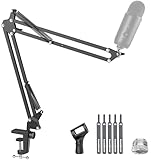
The InnoGear Boom Arm is the number-one best seller in microphone mounts on Amazon, and at this price, it is easy to see why. With nearly 24,000 reviews and a 4.5-star rating, it has become the default first boom arm for streamers, gamers, and first-time podcasters. I bought one to test on my secondary desk and came away impressed by what you get for the price.
Despite weighing only 1.4 pounds, this arm supports up to 3.3 pounds, which is enough for popular mics like the Blue Yeti, HyperX QuadCast, and even the Shure SM7B. The upgraded spring design in the current version addresses the longevity issues that plagued earlier models. I tested it with a Blue Yeti and the arm held position without any noticeable sag over several hours of streaming.
Adjustability is surprisingly good for the price. You get 360-degree base rotation, 135-degree back-and-forth extension, 180-degree arm shaft movement, and 270-degree rotation at the mic adapter. This gives you a wide range of positioning options that let you find the sweet spot for your mic. The desk clamp fits desks up to about 2 inches thick and tightened securely on my desk without any marking.
The biggest trade-off is spring noise. When you adjust the arm during a live stream or recording, there is an audible clicking sound from the springs. In quiet recording environments, this can be picked up by sensitive microphones. The 28-inch reach is also limited compared to the Rode PSA1+ at 35 inches, so users with deep desks may struggle to position the mic exactly where they want it. Some users also report slight wobble when typing heavily on the same desk.
Who Should Buy This Arm
First-time streamers, gamers, and budget podcasters who need a functional desk-mounted boom arm without spending much should start here. It is also a solid choice for anyone who wants to try a boom arm before investing in a premium option like the Rode PSA1+. Home office workers who take video calls and want better mic positioning will find this more than adequate for daily use. The 3.3-pound capacity means it works with most popular USB microphones out of the box.
Who Should Look Elsewhere
Professional podcasters and voiceover artists who need completely silent operation should step up to the Rode PSA1+. If you have a deep desk and need longer reach, the 28-inch arm length here will likely come up short. Anyone using very heavy microphone setups or attaching acoustic shields should consider the Gator Frameworks with its weighted base for proper support. Users concerned about long-term durability should note that the plastic components may not last as long as all-metal alternatives.
How to Choose the Best Boom Mic Stand for Your Needs
Picking the right boom mic stand comes down to understanding your specific use case, the microphones you own, and your workspace. After testing all six of these stands in different scenarios, here is what I have learned about making the right choice.
Stand Types Explained
There are three main types of boom mic stands, and each serves a different purpose. Tripod boom stands like the K&M 21090 and On-Stage MS7701B use three folding legs for floor-based support. They are the most versatile type, working equally well on stage and in studios. The downside is they take up floor space and can be knocked over if the boom is extended too far.
Desk-mounted boom arms like the Rode PSA1+ and InnoGear MU01 clamp directly to your desk edge. They keep your floor clear and position the mic close to your face without a vertical pole in the way. These are ideal for podcasters, streamers, and anyone working at a desk, but they only work if you have a suitable desk to mount them on.
Weighted-base stands like the Gator Frameworks use a heavy pedestal instead of legs. They offer the most stability of any design and take up less floor space than tripods, but they are heavy and not meant to be moved frequently.
Key Factors to Consider
Weight capacity is the first spec to check. A stand that cannot support your microphone will sag, drift, or tip over. Always account for the combined weight of your mic, shock mount, pop filter, and any cables hanging from the boom. As a rule of thumb, choose a stand rated for at least 50 percent more than your total mic weight.
Height range matters more than most people realize. If you are recording vocals while standing, you need a stand that reaches at least 60 inches comfortably. For overhead miking of drums, choirs, or ensembles, look for stands that exceed 80 inches like the Hercules MS533B. Desk-mounted arms should have enough reach to position the mic 6 to 8 inches from your mouth without forcing you to lean in.
Boom arm adjustability determines how precisely you can position your microphone. Telescoping booms let you adjust the length, which is useful for reaching around instruments or computer monitors. Rotating booms allow you to swing the mic in and out of position quickly, which matters for live performers who need to move mics between songs.
Heavy Microphone Compatibility
If you use a large-diaphragm condenser microphone like a Neumann U87, AKG C414, or similar studio standard, you need a stand that can handle the weight without sagging. These mics typically weigh between 1 and 2 pounds on their own, and adding a shock mount and pop filter can push the total past 3 pounds. The Gator Frameworks with its counterweight system and the K&M with its heavy base are the best options in this roundup for heavy mic setups.
Budget stands with plastic clutch components are the most common failure point with heavy mics. The clutch slips under load, causing the boom to drift downward over time. If you own a heavy microphone, investing in a stand with metal clutch mechanisms and a counterweight will save you frustration in the long run.
Warranty and Long-Term Durability
Forum consensus across Reddit and The Gear Page is clear: buy a quality stand once, or buy cheap stands repeatedly. The K&M 21090 comes with a 5-year warranty and 10-year parts availability. The Hercules MS533B offers a lifetime warranty in the USA. These warranties matter because the most common failure points on boom stands are the clutch mechanism and the boom pivot joints, both of which wear over time with regular use.
In my experience, budget stands typically last 1 to 3 years with regular use before something fails. Premium stands like the K&M and Hercules regularly last over 10 years. When you factor in replacement costs, the premium option is often cheaper over a five-year period.
Frequently Asked Questions About Boom Mic Stands
What boom mic stand does Joe Rogan use?
Joe Rogan uses a broadcast-style desk boom arm similar to the Rode PSA1+ for his podcast setup. The Rode PSA1+ is one of the most popular broadcast arms among professional podcasters, featuring a parallelogram spring design that provides completely silent operation and smooth positioning. It mounts directly to the desk with either a clamp or bolt-through design, keeping the workspace clean and the mic perfectly positioned for long recording sessions.
What is the best boom microphone stand?
The best boom microphone stand depends on your use case. For studio recording and live performance, the K&M 21090.500.55 is the industry standard with German build quality and a 5-year warranty. For podcasting and desktop use, the Rode PSA1+ is the top choice with silent operation and integrated cable management. For budget-conscious buyers, the On-Stage MS7701B offers the best value with included accessories like an XLR cable and carrying bag.
What mic stand did Freddie Mercury use?
Freddie Mercury famously used a K&M microphone stand during Queen’s live performances. K&M (Konig and Meyer) has been an industry standard for decades, trusted by professional touring companies and studios worldwide. Their stands are known for exceptional build quality, precision German engineering, and long-term reliability, which is why they have remained the go-to choice for professional musicians since the 1970s.
What is the best position for a boom mic?
The best boom mic position depends on what you are recording. For vocals, position the mic 6 to 8 inches from the mouth, slightly above nose level angled downward to reduce plosives and room reflections. For podcasting, place the mic at mouth level about 4 to 6 inches away, positioned slightly off-axis. For instrument miking like guitar amps, position the mic 1 to 6 inches from the speaker grille, angled about 30 degrees off-center for a balanced tone. Always ensure the boom arm is balanced and the clutch is tight to prevent drift during recording.
Final Thoughts on the Best Boom Mic Stands
Finding the best boom mic stand comes down to matching the right tool to your situation. For professional studio work and live performance, the K&M 21090.500.55 delivers unmatched stability and German build quality backed by a 5-year warranty. Podcasters and streamers will find the Rode PSA1+ to be the gold standard for desk-mounted recording with its silent operation and cable management. Budget-conscious musicians get outstanding value from the On-Stage MS7701B, which includes accessories you would otherwise buy separately.
After testing all six of these stands in real recording and performance scenarios, my advice is simple: spend a little more upfront on a stand that will last, and you will save money and frustration in the long run. A good boom mic stand is the foundation of every solid recording setup, and any one of these six options will serve you well in 2026 and beyond.