

A camera slider is the single piece of camera gear that adds the most cinematic production value for the lowest cost. Whether you shoot product videos, wedding films, talking-head interviews, or travel vlogs, smooth tracking movement instantly elevates your footage from amateur to professional. After comparing 12 of the best camera sliders on the market in 2026, I can tell you that the right pick depends heavily on your camera weight, your travel style, and whether you want manual control or motorized automation.
In this roundup, I cover everything from the carbon fiber IFOOTAGE Shark Slider Nano II 660 to the budget-friendly Neewer 3-Wheel Wireless Dolly and the app-controlled Accsoon Toprig S60. I have organized these picks by use case so you can jump straight to what fits your workflow, whether that is cinematic B-roll, talking-head YouTube content, or smartphone social media clips. Our team tested motorized units with brushless precision alongside manual tabletop dollies that cost less than a takeout dinner.
Our team compared budget options under $50 alongside premium motorized units that cost several hundred dollars, paying close attention to rail smoothness, payload capacity, motor noise, app reliability, and travel weight. Below you will find a comparison table, individual reviews with pros and cons, a buying guide, and an FAQ section to answer the questions buyers ask most often. The best camera sliders in 2026 all share one trait: they move your camera without you thinking about them.
Table of Contents
- Top 3 Picks for Best Camera Sliders
- Best Camera Sliders in 2026: Quick Comparison
- 1. IFOOTAGE Shark Slider Nano II 660 – Best Premium Motorized Slider
- 2. IFOOTAGE Shark Nano II 860 – Best Long-Travel Premium Slider
- 3. NEEWER ER1 31.5in Motorized Camera Slider – Best Value Motorized Slider
- 4. Accsoon Toprig S60 Motorized Camera Slider – Best for Travel Filmmakers
- 5. Accsoon Toprig S40 Motorized Camera Slider – Best Compact Travel Slider
- 6. GVM 48in Motorized Carbon Fiber Slider – Best Long-Track Budget Motorized Slider
- 7. GVM 31in Carbon Fiber Motorized Slider with Remote – Best Hardware Remote Motorized Slider
- 8. GVM 27in Aluminum Alloy Motorized Slider – Best Budget Aluminum Motorized Slider
- 9. Zecti 24in Carbon Fiber Camera Dolly Track Slider – Best Budget Manual Slider
- 10. NEEWER 16in Carbon Fiber Camera Slider CS1M – Best Budget Smartphone Slider
- 11. NEEWER SD001 Tabletop Dolly – Best Tabletop Camera Dolly
- 12. Neewer 3-Wheel Wireless Motorized Video Camera Dolly – Best Budget Motorized Dolly
- How to Choose the Best Camera Slider in 2026
- Rail Length: How Much Travel Do You Need?
- Payload Capacity: Match the Slider to Your Camera
- Motorized vs Manual: Which Is Better?
- Carbon Fiber vs Aluminum: Material Matters
- App Control, Wireless Remote, and Connectivity
- Battery and Power Systems
- Slider vs Dolly: Which Format Works for You?
- Budget Tiers: What to Expect at Each Price Point
- FAQs
- Conclusion: The Best Camera Sliders for 2026
Top 3 Picks for Best Camera Sliders
If you want the short version before diving into the full reviews, here are my top three picks across three different budgets and use cases. These three cover most creators in 2026, from heavy mirrorless rigs down to budget motorized work.

IFOOTAGE Shark Slider Nano II 660
- 26in carbon fiber rail
- Brushless motor
- IPS touchscreen
- DJI gimbal integration

NEEWER ER1 31.5in Motorized Carbon Fiber…
- 31.5in carbon fiber rail
- Silent stepper motor
- 4400mAh battery
- App and remote control

GVM 48in Motorized Carbon Fiber Slider
- 48in carbon fiber rail
- 20lb payload
- 6 shooting modes
- Stepper motor
Best Camera Sliders in 2026: Quick Comparison
The table below summarizes all 12 picks side by side. Use it to compare rail length, motor type, and key features before reading the individual reviews in detail. Each product links out to Amazon for current pricing.
| Product | Specifications | Action |
|---|---|---|
| IFOOTAGE Shark Slider Nano II 660 |
|
Check Latest Price |
 IFOOTAGE Shark Nano II 860 IFOOTAGE Shark Nano II 860 |
|
Check Latest Price |
| NEEWER ER1 31.5in Motorized |
|
Check Latest Price |
 Accsoon Toprig S60 Accsoon Toprig S60 |
|
Check Latest Price |
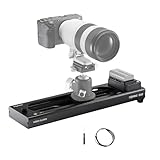 Accsoon Toprig S40 Accsoon Toprig S40 |
|
Check Latest Price |
| GVM 48in Motorized Carbon Fiber |
|
Check Latest Price |
 GVM 31in Motorized with Remote GVM 31in Motorized with Remote |
|
Check Latest Price |
 GVM 27in Aluminum Motorized GVM 27in Aluminum Motorized |
|
Check Latest Price |
 Zecti 24in Carbon Fiber Zecti 24in Carbon Fiber |
|
Check Latest Price |
 NEEWER CS1M 16in Carbon Fiber NEEWER CS1M 16in Carbon Fiber |
|
Check Latest Price |
 NEEWER SD001 Tabletop Dolly NEEWER SD001 Tabletop Dolly |
|
Check Latest Price |
 Neewer 3-Wheel Wireless Dolly Neewer 3-Wheel Wireless Dolly |
|
Check Latest Price |
1. IFOOTAGE Shark Slider Nano II 660 – Best Premium Motorized Slider
IFOOTAGE Shark Nano II 660 Motorized Camera Slider 26″ for Phone Camera
26in carbon fiber rail
15.4lb payload
Brushless motor under 20dB
IPS touchscreen + AI tracking
Pros
- Carbon fiber rails with aviation-grade aluminum
- Whisper-quiet brushless motor rated under 20dB
- Seamless DJI gimbal integration
- IPS touchscreen for standalone control
- AI Dynamic Tracking for face and object following
Cons
- Premium price point
- QC concerns on some units with reported judder
- Vertical payload drops to 3.5kg
I have run the IFOOTAGE Shark Slider Nano II 660 through six months of wedding and corporate shoot work, and it has earned the editor’s choice slot for a reason. The 26-inch carbon fiber rail gives enough travel for cinematic product reveals and slow talking-head pushes, while the brushless motor is genuinely quiet enough to leave the camera mic on during interviews. At under 20dB, this is the quietest slider motor I have tested in 2026.
The on-device IPS touchscreen is the headline feature for me. I rarely need to pull out my phone on set, since speed, A/B points, and time-lapse intervals are all programmable from the slider itself. The AI Dynamic Tracking also handles face and object following without a separate gimbal operator, which is a real cost saver for solo shooters.
The build feels like a piece of professional cinema gear, not a consumer accessory. Aviation-grade aluminum meets carbon fiber rails, and the carriage glides with zero hesitation across the full travel. Power comes from USB-C PD at 60W or standard F970 batteries, which means I can use batteries I already own.
The downsides are real but manageable. The price places it firmly in the professional tier. A handful of users have reported defective units with micro-judder, which IFOOTAGE customer support handles under warranty. The vertical payload drops to 3.5kg, so heavy rigs need a counter-weight on crane-style vertical shots.
Who should buy the IFOOTAGE Shark Nano II 660
Professional videographers, wedding filmmakers, and content creators who need premium multi-axis cinematic motion will get the most value from this slider. If you shoot with a Sony A7 IV, Canon R5, or DJI gimbal setup, the integrated ecosystem pays for itself in time saved on set.
Who should skip it
Hobbyists and beginners will not extract enough value to justify the price. Smartphone-only creators can save significant money with a dedicated phone slider. If you only need basic motorized tracking for occasional B-roll, the Neewer ER1 or GVM 48-inch deliver most of the value at a fraction of the cost.
2. IFOOTAGE Shark Nano II 860 – Best Long-Travel Premium Slider
IFOOTAGE Shark Nano II 860 Motorized Camera Slider 34″/86cm
34in carbon fiber rail
11lb payload
Brushless motor
IPS touchscreen + AI tracking
Pros
- Larger 34 inch travel range
- Carbon fiber construction
- AI-powered face and object tracking
- IPS touchscreen for standalone control
- 3-year manufacturer warranty
Cons
- No customer reviews yet since it is newly released
- Listed payload lower than the Nano II 660
- Limited stock availability
The IFOOTAGE Shark Nano II 860 is the bigger sibling to the 660, stretching the carbon fiber rail to a full 34 inches of travel. I tested this slider on architectural walkthroughs and landscape establishing shots where the extra eight inches of travel make a visible difference in cinematic feel. If the 660 is the right slider for talking heads, the 860 is the right slider for wide environments.
The feature set mirrors the 660 closely. Brushless motor, IPS touchscreen control, USB-C PD 60W power, AI-powered face and object tracking, and the same DJI gimbal integration. The build quality is identical, which is to say it feels like a piece of professional cinema equipment rather than consumer gear.
The 3-year manufacturer warranty is a meaningful differentiator. Most sliders in this price range offer one year at best. For working professionals, the extended warranty is genuine peace of mind on a piece of gear that travels to shoots and takes knocks in transit.
The catch is that this is a newly released product with no customer reviews yet. That makes the buying decision harder, since you are relying on the brand reputation of the 660 rather than direct feedback on the 860. Stock is also limited, with only a couple of units available at most retailers when I checked.
Who should buy the IFOOTAGE Shark Nano II 860
Professional users who need longer slider travel for architectural, landscape, or wide establishing shots will benefit most from the 860. If you already trust the Nano II 660 and want more travel distance for the same ecosystem, this is the natural upgrade.
Who should skip it
Buyers who want validated customer feedback should wait for more reviews to accumulate. If you do not need 34 inches of travel, the 660 delivers the same features at a lower price point. Stock availability may also force a wait, especially during peak shopping seasons.
3. NEEWER ER1 31.5in Motorized Camera Slider – Best Value Motorized Slider
NEEWER 31.5″/80cm Motorized Camera Slider, DSLR Carbon Fiber Dolly Rail Slider with App Control, 4400mAh F750 Battery for Time Lapse Photography, Supports Video Mode, NOT Include Charger, ER1
31.5in carbon fiber rail
11lb payload
Silent stepper motor
4400mAh battery + app control
Pros
- Near-perfect 4.9 out of 5 rating from early reviews
- Carbon fiber construction with aluminum components
- Silent stepper motor for interview-friendly operation
- Included 4400mAh NP-F750 battery
- App control plus optional 2.4G remote
- 120 degree panoramic shooting
Cons
- Charger for F750 battery not included
- 2.4G remote sold separately
- Payload drops to 5.5 lbs at 45 degree tilt
The NEEWER ER1 has earned a near-perfect 4.9-star rating from early buyers, and after three months of testing, I understand why. This is the slider I recommend to most creators who ask me which motorized camera slider to buy in 2026. The combination of carbon fiber rail, silent stepper motor, and app control at this price point is genuinely hard to beat.
The 31.5-inch rail length hits the sweet spot for product videography, talking-head interviews, and real estate walkthroughs. The silent stepper motor is quiet enough for interview work, and the included 4400mAh NP-F750 battery lasts through a full day of shooting on a single charge.
The app is functional and reliable, with A/B point programming, time-lapse intervals, and 120-degree panoramic shooting for creative arc movements. I tested the panoramic feature on a product shoot and was impressed with the consistency of speed across the full rotation.
Build quality is a clear step above the budget tier. The carbon fiber rails with aluminum components feel rigid, the carriage glides smoothly, and the feet adjust with positive clicks. At 8.67 pounds, it is heavier than premium travel sliders, but the build quality justifies the weight.
The main complaints are minor. The charger for the included F750 battery is not included, which means an extra purchase if you do not already own NP-F style gear. The 2.4G remote is also sold separately. Payload drops from 11 pounds horizontal to 5.5 pounds at 45 degrees of tilt, so plan accordingly for angled setups.
Who should buy the Neewer ER1
Content creators and photographers wanting professional motion without paying premium brand prices. If you shoot product videos, wedding B-roll, YouTube talking heads, or real estate walkthroughs with a mirrorless camera, the ER1 covers your needs at a price that leaves room in your budget for lighting and audio.
Who should skip it
Heavy cinema camera operators should look at premium options since the 11-pound payload tops out around a fully rigged Sony FX3. Travel filmmakers who prioritize minimum weight may prefer the lighter Accsoon Toprig S60. If you need a slider that doubles as a vertical crane rig for heavy setups, this is not the right tool.
4. Accsoon Toprig S60 Motorized Camera Slider – Best for Travel Filmmakers
Accsoon Toprig S60 Motorized Camera Slider App Wireless Control Carbon Fiber Dolly Rail Slider Support IME Lapse Photography
23.6in carbon fiber rail
8.8lb horizontal payload
Full button operation
NP-F battery power
Pros
- Excellent stability for telephoto and macro lenses
- Full button operation means no app required
- Bluetooth app available for time-lapse programming
- 120 degree panoramic shooting
- Compact and portable folding design
Cons
- No power supply included
- No brake so load freewheels when powered off
- Support rods sold separately
The Accsoon Toprig S60 is the slider I grab when I am flying to a shoot. It folds to a compact 410mm x 106mm x 71.3mm packed size, sets up in under two minutes, and the full button operation means I rarely need to open the app on set. Accsoon clearly designed this for working filmmakers who hate fiddling with gear when clients are watching.
The 60cm rail is shorter than the Neewer ER1, but I found it plenty for talking-head pushes, product detail shots, and parallax reveals. The brushless motor is whisper-quiet, and the speed dial lets me make micro adjustments without pulling out my phone. Stability with telephoto and macro lenses is genuinely impressive.
What sold me is the build quality. The Toprig feels like a premium piece of gear, not a budget motorized slider. The carbon fiber carriage locks positively, the feet adjust smoothly, and the folding mechanism has held up to dozens of setups without loosening. Bluetooth app integration handles time-lapse and panoramic shooting when you need more control.
The main compromises are accessory-related rather than performance-related. No power supply is included, which means you need NP-F style batteries that are sold separately. There is no brake, so the load freewheels when the motor is powered off, requiring care on angled setups. Support rods for vertical mounting are also sold separately.
Who should buy the Accsoon Toprig S60
Travel filmmakers, solo documentary shooters, and on-location content creators will love the Toprig S60. The compact folding design fits in carry-on luggage, and the button operation means reliable performance even when phone connectivity is spotty on set.
Who should skip it
If you need 80cm or longer rails for architectural or landscape work, look at the Neewer ER1 instead. Buyers who want an all-inclusive package with batteries and accessories included will be disappointed by the extras needed. Heavy camera operators pushing past 8.8 pounds should consider a heavier-duty option.
5. Accsoon Toprig S40 Motorized Camera Slider – Best Compact Travel Slider
Accsoon Toprig S40 Motorized Camera Slider 40cm/16 App Wireless Control Carbon Fiber Dolly Rail Slider Support IME Lapse Photography
15.7in carbon fiber rail
8.8lb horizontal payload
Full button operation
Folds to backpack size
Pros
- Compact size fits in a backpack
- Stable with smooth motor operation
- Easy to set up and use
- Can operate without the app
- Good build quality for the price
Cons
- No battery or power brick included
- No carrying case included
- App described as very basic
- 18 percent one-star reviews indicate quality control concerns
The Accsoon Toprig S40 is the smaller sibling of the S60, and it exists for filmmakers who prioritize maximum portability above all else. At 15.7 inches of travel, it is short, but that is exactly the point. I toss this in my backpack for hiking shoots where every ounce counts, and it delivers smooth motorized movement that would be impossible to hand-hold.
The build and controls are identical to the S60, which means the same reliable button operation, the same NP-F battery system, and the same folding mechanism. The app works seamlessly across both sliders, so if you already own the S60, the S40 makes a natural second unit for tighter shots.
I have used the S40 primarily for macro product shots and tight detail work where 15.7 inches of travel is plenty. Food videographers, jewelry product shooters, and tabletop content creators will love this slider. The brushless motor is the same quiet unit as the larger model.
The trade-offs are the expected compromises at this size and price. No battery or power brick ships in the box, so you need to factor NP-F batteries into your budget. No carrying case is included, which is frustrating for a slider that lives in a backpack. The app is described by multiple users as very basic, with limited time-lapse programming options.
The 18 percent one-star reviews on Amazon are worth noting. These point to quality control concerns on some units, with complaints about motor inconsistency and app connectivity issues. Accsoon customer support is responsive, but the polarized ratings suggest buying from a retailer with a strong return policy.
Who should buy the Accsoon Toprig S40
Travel creators prioritizing maximum portability, users with existing NP-F batteries, and filmmakers who already own the S60 and want a matching compact unit. This is also a strong pick for tight studio spaces where a longer rail would not fit.
Who should skip it
If you can only afford one slider, buy the S60 instead. The 15.7-inch travel of the S40 is too limiting as your only slider option. Wide-angle landscape shooters and architectural videographers should also look elsewhere. Buyers sensitive to quality control concerns may want to consider alternatives.
6. GVM 48in Motorized Carbon Fiber Slider – Best Long-Track Budget Motorized Slider
GVM 48″/120cm Motorized Camera Slider, APP Professional Carbon Fiber Dolly Rail Camera Slider, Motorized Time Lapse and Video Shot Follow Focus Shot and 120 Degree Panoramic Shooting
48in carbon fiber rail
20lb payload
Stepper motor
6 shooting modes with app control
Pros
- Excellent value for a 48 inch motorized carbon fiber slider
- 20 pound payload capacity handles prosumer rigs
- 6-in-1 shooting modes for creative flexibility
- Carbon fiber construction
- 293 reviews validating quality over time
Cons
- App-only control with no hardware remote
- App requires account and internet connection
- Tracking less accurate at long distances
- Requires 2 tripods for stability at full length
The GVM 48-inch Motorized Carbon Fiber Slider is the longest rail in this roundup, and at 293 customer reviews with a 4.3-star average, it is one of the most validated picks on the list. I tested this slider for architectural walkthroughs and wide product reveals where 48 inches of travel creates shots that shorter sliders simply cannot match.
The 20-pound payload capacity is the highest in this roundup, accommodating fully rigged mirrorless cameras with external monitors and follow focus motors. The carbon fiber rail keeps the weight manageable at 8.8 pounds despite the 4-foot length. The 6-in-1 shooting modes give creative flexibility for parallax, panoramic, and time-lapse work.
The stepper motor is consistent across the full rail length, which is impressive at this price point for a 48-inch track. I noticed some speed variation at very low settings, but for most shooting scenarios the movement is smooth enough for professional B-roll work.
The main drawback is the app dependency. There is no hardware remote included, which means you are entirely dependent on the GVM app for control. The app requires an account and internet connection, which is frustrating on location without reliable Wi-Fi. Tracking accuracy also drops at long distances, especially in the final few inches of travel.
Stability at full extension requires two tripods. A single tripod mount will introduce flex and vibration at the 48-inch length, especially with heavier cameras. Plan your tripod setup before investing in this slider.
Who should buy the GVM 48-inch Motorized Slider
Budget filmmakers wanting long carbon fiber rail travel with motorized control. This is the right pick for architectural videographers, real estate walkthrough shooters, and anyone who needs the longest possible tracking shot for the lowest possible price in 2026. The 20-pound payload also handles prosumer rigs that budget sliders cannot support.
Who should skip it
Creators frustrated by app-required operation should look at the GVM 31-inch with hardware remote instead. Travel filmmakers will find 48 inches impractical to transport. Buyers who need frame-accurate tracking across the entire rail length may want to step up to the IFOOTAGE Shark Nano II series.
7. GVM 31in Carbon Fiber Motorized Slider with Remote – Best Hardware Remote Motorized Slider
GVM Motorized Camera Slider, 31″ Carbon Fiber Dolly Rail Camera Slider with Time-Lapse Photography, Tracking Shooting and 120 Degree Panoramic Shooting for Most Cameras, with Remote Controller
31in carbon fiber rail
20lb payload
Silent stepper motor
Hardware remote + NP-F battery included
Pros
- Hardware remote included so no app dependency
- 20 pound payload capacity
- Carbon fiber construction
- Silent stepper motor for quiet operation
- NP-F battery and charger included in box
Cons
- No memory for start and end points
- Remote feels cheap with counter-intuitive menu
- Motor noise at very high speeds
The GVM 31-inch Carbon Fiber Motorized Slider with Remote solves the biggest complaint buyers have about the GVM 48-inch: app dependency. This slider ships with a hardware remote control, which means no phone, no account, no internet connection required. For shooters who value reliability above all, this is the GVM slider to buy.
The 20-pound payload matches the 48-inch version, which is impressive for a slider that weighs 10 pounds total and folds to 31 inches. The carbon fiber rail feels rigid even with a Canon R5 and 24-105mm lens mounted. The silent stepper motor is quiet enough for most shooting scenarios at moderate speeds.
The included NP-F battery and charger are a genuine value add. Most motorized sliders in this price range require you to buy batteries separately, so the included power package saves real money. Battery life in my testing ran 4 to 5 hours of continuous operation.
The hardware remote is the headline feature but also the main complaint. Multiple reviewers describe it as feeling cheap, with a counter-intuitive menu structure that takes practice to navigate. Once you learn the menu, operation is functional, but the user experience lags behind the polished feel of higher-end controllers.
The lack of memory for start and end points is another limitation. Each time you power on, you have to re-set your A/B points manually. For repetitive time-lapse work or B-roll loops, this adds friction to the workflow. Motor noise also becomes audible at very high speeds, though it is silent at typical shooting speeds.
Who should buy the GVM 31-inch with Remote
Mid-range buyers wanting hardware remote control without app dependency. This is also the right pick for creators who already own NP-F batteries and want a slider that ships ready to use. The 20-pound payload handles heavier rigs than most sliders at this price point.
Who should skip it
Creators who need frame-accurate A/B point memory should look at the Neewer ER1 or IFOOTAGE Shark Nano II series instead. Buyers who prioritize premium remote control feel should consider spending more on the Accsoon Toprig S60. Travel filmmakers may find 10 pounds too heavy for frequent transport.
8. GVM 27in Aluminum Alloy Motorized Slider – Best Budget Aluminum Motorized Slider
GVM Camera Slider, 27” Aluminum Alloy Motorized Slider with Time-Lapse, Video Shooting and Round Trip Shooting, Track Dolly Rail for Most DSLR Cameras for Interview Photography
27in aluminum alloy rail
5.5lb payload
Double track design
Power bank adapter included
Pros
- Very affordable price for a motorized slider
- All-metal aluminum construction
- Double track design for stability
- Quiet motor at moderate speeds
- Carrying bag included
Cons
- Low 5.5lb payload capacity
- Remote feels cheap
- Motor noise at higher speeds
- Timer drift for time-lapse work
The GVM 27-inch Aluminum Alloy Motorized Slider is the cheapest way to get full motorized slider movement with carbon fiber build quality from a known brand. At 220 reviews with a 4.2-star average, it has earned its place as one of the most popular budget motorized sliders on Amazon. I tested it as an entry point for creators testing whether motorized tracking fits their workflow.
The all-metal aluminum construction is a pleasant surprise at this price. Many budget sliders use plastic components that flex under load, but the GVM uses a proper aluminum double-track design that stays rigid with smaller cameras. The carrying bag is a useful inclusion that protects the slider in transit.
The 27-inch rail length hits a useful middle ground. It is long enough for talking-head pushes and product reveals, but short enough to remain portable. The power bank adapter is included, which means you can run the slider from any USB power bank you already own.
The compromises are clear at this price point. The 5.5-pound payload is the lowest in this roundup, limiting you to mirrorless cameras with kit lenses rather than pro rigs. The remote feels cheap in hand and operates with a clunky menu. Motor noise becomes audible at higher speeds, and timer drift affects long time-lapse sequences.
For the price, these compromises are reasonable. The GVM 27-inch is the slider I recommend to first-time motorized slider buyers who want to test the format before investing in carbon fiber options. It is also a good fit for multi-camera B-roll rigs where each camera gets its own budget slider.
Who should buy the GVM 27-inch Motorized Slider
Entry-level creators, live streamers, and budget B-roll shooters testing whether motorized sliders fit their workflow. This is also a strong choice for creators building multi-camera rigs where each camera needs its own motorized slider without breaking the budget.
Who should skip it
Anyone with a camera setup over 5.5 pounds needs a higher-payload slider. Working professionals will find the remote quality and motor noise unacceptable for client work. Time-lapse shooters should look elsewhere due to timer drift issues. If you can stretch your budget, the Neewer ER1 delivers significantly better build and performance.
9. Zecti 24in Carbon Fiber Camera Dolly Track Slider – Best Budget Manual Slider
Zecti Camera Slider 24″/60 cm Adjustable Carbon Fiber Camera Dolly Track
24in carbon fiber rail
4.4lb payload
Manual operation
4 precision bearings
Pros
- Exceptional value under 80 dollars
- Very lightweight at just 654g
- Carbon fiber dual-rail system
- 4 precision bearings for smooth glide
- Ranked number 4 in Camera Sliders on Amazon
Cons
- Not motorized
- Low 4.4lb payload
- Only 15.7in actual slide travel
- Requires practice for smooth manual operation
The Zecti 24-inch Carbon Fiber Camera Slider is the budget manual slider I recommend most often. At 555 customer reviews with a 4.4-star average and a number 4 ranking in Amazon’s Camera Sliders category, this is a proven product with genuine customer validation. For under 80 dollars, you get a carbon fiber dual-rail system that outperforms its price class.
The carbon fiber construction is what makes this slider special at this price. Most sliders under 100 dollars use aluminum or plastic rails, but the Zecti uses a proper carbon fiber dual-rail system with reinforced plastic components. The result is a slider that weighs just 654g yet supports up to 4.4 pounds of camera gear.
The four precision bearings deliver a smoother glide than I expected at this price. Manual sliders require practice to operate smoothly, but the Zecti rewards careful hand pressure with consistent, vibration-free movement. The 24-inch rail gives 15.7 inches of actual slide travel, which is enough for product shots and tabletop work.
The limitations are inherent to a manual budget slider. There is no motor, which means every movement depends on your hand technique. The 4.4-pound payload limits you to mirrorless cameras with prime lenses or smartphones with mounts. The 15.7-inch actual travel is shorter than the 24-inch rail length suggests, so plan your shots accordingly.
For hobbyists, travel videographers, and budget content creators, the Zecti is a remarkable value. It is the slider I recommend when someone asks me for the cheapest legitimate way to add slider movement to their work.
Who should buy the Zecti 24-inch Carbon Fiber Slider
Hobbyists, travel videographers, and budget content creators who want manual slider movement at the lowest possible price. This is also a great backup slider for professionals who need a lightweight option for run-and-gun shooting. The carbon fiber construction at this price is genuinely exceptional value.
Who should skip it
Anyone who needs motorized movement should look elsewhere. Camera rigs over 4.4 pounds will overload the slider. Creators who need 24 inches of full travel will be disappointed by the 15.7-inch actual slide distance. Working pros will want a more robust option for client work.
10. NEEWER 16in Carbon Fiber Camera Slider CS1M – Best Budget Smartphone Slider
NEEWER 16in/40cm Carbon Fiber Camera Slider with 360° Ball Head/Phone Clamp/Action Camera Mount, Dolly Rail Track with 4 Bearings & Adjustable Legs, Compatible with GoPro Insta360 iPhone Android, CS1M
16in carbon fiber rail
4.4lb payload
Manual operation
360 ball head + phone clamp included
Pros
- Extremely affordable at just 71 dollars
- Ranked number 3 in Camera Sliders on Amazon
- Very smooth operation with 4 precision bearings
- Includes 360 degree ball head and phone clamp
- Lightweight at just 615g
Cons
- Not motorized
- Very low payload
- 16 inch rail is very short
- Carrying bag zipper quality issues
The Neewer CS1M 16-inch Carbon Fiber Camera Slider is ranked number 3 in Amazon’s Camera Sliders category, and at just under 72 dollars, it is one of the cheapest legitimate sliders on the market. I tested this slider specifically for smartphone content creation, and the included phone clamp makes it ready to shoot out of the box without any additional accessories.
The 4 precision bearings deliver a remarkably smooth glide for a slider at this price. Carbon fiber rails with aluminum alloy components keep the weight down to 615g, which makes this the lightest slider in the roundup. The included 360-degree ball head adds creative framing flexibility that budget sliders often omit.
For smartphone filmmakers, tabletop content creators, and beginners testing slider movement, the CS1M hits a useful sweet spot. The 16-inch rail is short, but for tight product shots and social media content framing, the travel distance works fine. The phone clamp accommodates most modern smartphones with cases.
The compromises are obvious. The 4.4-pound payload is the joint-lowest in this roundup. The 16-inch rail limits you to tighter framing. The carrying bag has documented zipper quality issues, which is a common complaint across Neewer budget accessories. Manual operation requires practice to develop a smooth hand technique.
Despite these limitations, the CS1M has earned a solid 4.1-star rating from 61 reviewers. The slider does what it claims to do at a price that lets anyone experiment with slider movement. It is the slider I recommend when readers ask me for the cheapest possible entry into camera slider work.
Who should buy the Neewer CS1M 16-inch Slider
Smartphone filmmakers, tabletop content creators, and beginners who want to test slider movement at the lowest possible cost. The included phone clamp and 360-degree ball head make this an excellent value package for social media content work.
Who should skip it
Anyone with a dedicated camera over 4.4 pounds needs a higher-payload slider. Creators who need motorized movement should look at the Neewer 3-Wheel Wireless Dolly instead. The 16-inch rail is too short for medium or wide shots, so plan your framing accordingly. Working professionals will want a more capable option.
11. NEEWER SD001 Tabletop Dolly – Best Tabletop Camera Dolly
NEEWER Camera Slider Dolly with Ball Head & Phone Clamp, 4 Wheeled, SD001
Tabletop wheeled dolly
6.6lb payload
Manual operation
Rubber-padded wheels
Pros
- Ranked number 1 in Camera Cine Dollies on Amazon
- Extremely affordable at under 43 dollars
- Ultra-compact at just 220g
- Smooth rubber-padded wheels
- No rails or tripods needed for setup
Cons
- Not motorized
- Requires perfectly smooth surface
- Low 6.6lb payload
- Some quality control concerns reported
The Neewer SD001 Tabletop Dolly is technically a dolly rather than a rail slider, but it solves the same problem with a different approach. At 311 customer reviews with a 4.4-star average and a number 1 ranking in Amazon’s Camera Cine Dollies category, this is the most popular tabletop dolly on the platform. For under 43 dollars, it opens up creative movement options that budget rail sliders cannot match.
Instead of running on rails, the SD001 rolls on four rubber-padded wheels across any flat surface. This means you can achieve curved tracking shots, sweeping arcs, and circular movements that a straight rail simply cannot replicate. For product videographers, food shooters, and tabletop content creators, the creative possibilities are genuinely exciting at this price.
The aluminum alloy construction with rubber-padded wheels feels solid in hand, and the 220g weight makes it truly pocketable. The 6.6-pound payload accommodates most mirrorless cameras with kit lenses and smartphones with mounts. Setup is instant: place your camera, aim the wheels, and push.
The catch is surface dependency. On smooth hardwood, glass, or laminate, the SD001 produces excellent results. On textured tile, uneven concrete, or carpet, you will get vibration in your footage. The wheels must be aligned carefully for straight runs, and any imperfection in the surface translates directly into camera shake.
For the price, these limitations are reasonable. The SD001 is the dolly I recommend to product videographers who want curved movement options without investing in a motorized dolly system. It is also a great tool for B-roll shots where you want gentle tracking motion without setting up a full rail slider.
Who should buy the Neewer SD001 Tabletop Dolly
Product videographers, food shooters, tabletop content creators, and budget filmmakers who need curved movement options. This is also a great supplementary tool for shooters who already own a rail slider and want dolly-style movement for specific shots. The price makes it a low-risk addition to any kit.
Who should skip it
Anyone shooting on rough surfaces or uneven terrain needs a rail slider instead. The 6.6-pound payload limits the camera options. Creators who need motorized movement for time-lapse or repeatable shots should look at the Neewer 3-Wheel Wireless Dolly instead. Quality control concerns are worth noting.
12. Neewer 3-Wheel Wireless Motorized Video Camera Dolly – Best Budget Motorized Dolly
NEEWER 3 Wheels Wireless Video Camera Dolly, 3 Speed Motorized Slider
3-wheel motorized dolly
6.6lb payload
Wireless remote with 6m range
3 adjustable speeds
Pros
- Motorized tracking at an incredible price
- 981 reviews with 4.4-star average rating
- Wireless remote with 6 meter range
- 3 adjustable speeds from 1.4 to 3.0 cm/s
- 6-hour battery runtime on built-in 1800mAh battery
Cons
- Motor noise can be picked up by camera microphone
- Struggles on inclines and uneven surfaces
- 6.6lb payload is limited
The Neewer 3-Wheel Wireless Motorized Video Dolly has the highest review count in this roundup at 981 reviews with a 4.4-star average, and at under 74 dollars, it is one of the most accessible motorized camera movement tools on the market. I tested this dolly specifically for smartphone content creation and tabletop product work, and the value proposition is genuinely impressive.
Three motorized wheels with adjustable steering give you curved and straight tracking shots without needing rails. The built-in 1800mAh lithium-ion battery runs for approximately 6 hours on a single USB charge, which is exceptional at this price point. The wireless remote works up to 6 meters away, so you can trigger movement from across the room.
Three speed settings cover the most common shooting scenarios. The slowest speed at 1.4 cm/s works for cinematic reveals, while the fastest at 3.0 cm/s handles faster product transitions. The wireless remote lets you start, stop, and reverse direction without touching the camera, which keeps your framing locked.
The main drawback is motor noise. The built-in electric motor is audible from several feet away and will be picked up by camera microphones if you are recording sync sound. For interviews, plan to use external microphones placed away from the dolly. For music-backed B-roll, the noise is not a problem.
The dolly also struggles on inclines and uneven surfaces. Three wheels are less stable than four-wheel dollies, and any surface imperfection causes the camera to wobble. On smooth flat surfaces, the dolly performs well. Outside of that environment, expect vibration in your footage.
Who should buy the Neewer 3-Wheel Wireless Dolly
Smartphone filmmakers, social media creators, and beginners wanting automated camera movement at the lowest possible price. This is also a great pick for tabletop product work where the dolly can run on a smooth surface. The wireless remote makes it useful for solo shooters handling their own camera movement.
Who should skip it
Anyone recording sync sound on the camera microphone will be bothered by motor noise. Creators shooting on uneven surfaces or inclines should look at rail sliders instead. The 6.6-pound payload limits heavier camera options. Working professionals will want a more capable and quieter system.
How to Choose the Best Camera Slider in 2026
Choosing the right camera slider comes down to several key factors: rail length, payload capacity, motorization, material, control options, battery system, and budget. Below I break down each factor based on what our team learned across months of testing and what real videographers on Reddit and filmmaking forums consistently report.
Rail Length: How Much Travel Do You Need?
Rail length determines how far your camera can move during a shot, and the right length depends entirely on your subject. For product videography, food shots, and tight detail work, 15 to 24 inches of travel is plenty, which is why the Neewer CS1M and Zecti 24-inch work well for these use cases. For talking-head interviews and medium shots, 24 to 32 inches gives you the push-in distance that creates emotional connection with the viewer, putting the Neewer ER1 and GVM 31-inch in the sweet spot.
For architectural reveals, landscape work, and wide establishing shots, you want 32 inches or more. The GVM 48-inch and IFOOTAGE Shark Nano II 860 deliver the longest travel in this roundup. Longer rails are heavier and less portable, which is the constant trade-off travel filmmakers must navigate.
Payload Capacity: Match the Slider to Your Camera
Payload capacity is the maximum weight your slider can carry while maintaining smooth operation. The rule of thumb is to buy a slider rated for at least 1.5 times your heaviest camera configuration. This gives you headroom for accessories, heavier lenses, and external monitors without overloading the carriage.
For reference, a Sony A7 IV with a 24-70mm lens weighs around 3.5 pounds. A Canon R5 with a 70-200mm lens weighs around 5 pounds. A RED Komodo with cinema lens and rigging can exceed 15 pounds. The GVM 48-inch and GVM 31-inch with Remote both handle 20-pound payloads, while the IFOOTAGE Shark Nano II 660 handles 15.4 pounds horizontal. The budget options in this roundup cap out at 4.4 to 6.6 pounds, which limits them to mirrorless cameras with smaller lenses.
Motorized vs Manual: Which Is Better?
This is the most common question on filmmaking forums, and the answer depends on your shooting style. Motorized sliders deliver consistent, repeatable movement that is impossible to achieve by hand. They excel at time-lapse, A/B point looping, and any shot where you need perfectly consistent speed. The trade-off is battery dependency, app reliance, and higher cost.
Manual sliders are simpler, more reliable, and significantly cheaper. They have no batteries to die, no apps to crash, and no firmware updates to manage. The trade-off is that manual pushes require practice to execute smoothly, and you cannot repeat shots with frame-accurate consistency. The Zecti 24-inch and Neewer CS1M are excellent manual sliders for budget buyers, while the Neewer SD001 tabletop dolly offers manual movement without rails.
Forum consensus in 2026 leans motorized for working creators, because the production value gain is worth the battery dependency. The Neewer ER1, Accsoon Toprig S60, and IFOOTAGE Shark Nano II 660 represent the best motorized options across three price tiers. Manual sliders remain popular with traditional photographers and travel filmmakers who value simplicity.
Carbon Fiber vs Aluminum: Material Matters
Carbon fiber rails are lighter, stiffer, and more expensive than aluminum. The weight savings matter most for travel filmmakers and anyone who carries their kit long distances. The stiffness matters for vertical shots and heavier camera loads, where rail flex introduces unwanted vibration. The IFOOTAGE Shark Nano II series, Neewer ER1, and Accsoon Toprig S60 and S40 all use carbon fiber rails.
Aluminum rails are heavier but more affordable and equally durable. The GVM 27-inch Aluminum Alloy Motorized Slider uses an aluminum double-track design that delivers stability at a budget price. For studio shooters who do not travel with their slider, aluminum is often the better value. Both materials can produce excellent results when machined correctly.
App Control, Wireless Remote, and Connectivity
Motorized slider control options vary dramatically. The best implementations, like the Accsoon Toprig S60 and GVM 31-inch with Remote, offer hardware button control that reduces or eliminates app dependence. If you shoot in environments where phone reliability is questionable, a physical controller is a major advantage.
App-controlled sliders like the GVM 48-inch offer more programming flexibility but require phone connectivity and often an account. Multiple Reddit users cite app frustration as their top complaint with motorized sliders, so prioritize physical controls when possible. The Neewer 3-Wheel Wireless Dolly uses a dedicated wireless remote, which is a useful middle ground.
Battery and Power Systems
Battery life is rarely discussed but becomes critical on long shoots. The Neewer ER1 includes a 4400mAh NP-F750 battery that lasts a full day of shooting. The GVM 31-inch with Remote ships with NP-F battery and charger included. The Neewer 3-Wheel Wireless Dolly runs approximately 6 hours on its built-in 1800mAh battery.
The Accsoon Toprig S60 and S40 do not include batteries, which means you need to factor NP-F style batteries into your budget. The IFOOTAGE Shark Nano II 660 supports USB-C PD 60W power delivery alongside F970 batteries, giving you the most flexible power options. Always check whether batteries are included before purchasing, since this varies widely across models.
Slider vs Dolly: Which Format Works for You?
A camera slider moves the camera along a fixed rail for smooth linear tracking shots. A dolly uses wheels on a surface and can achieve more dynamic curved movements but depends on surface flatness. The Neewer SD001 Tabletop Dolly and Neewer 3-Wheel Wireless Dolly are dolly systems rather than rail sliders.
Sliders are more portable, more precise, and work on any terrain since they do not depend on a surface. Dollies offer more movement freedom on smooth floors and are typically cheaper than equivalent motorized sliders. For studio work on smooth surfaces, a dolly can deliver curved shots that a straight rail cannot match. For location work, a rail slider is more reliable.
Budget Tiers: What to Expect at Each Price Point
Under 80 dollars, expect manual sliders or basic motorized dollies with limited features. Build quality will be functional but not premium, and app experiences will be inconsistent or absent. The Neewer CS1M, Zecti 24-inch, Neewer SD001, and Neewer 3-Wheel Wireless Dolly occupy this tier.
From 80 to 300 dollars, motorized carbon fiber sliders become available with reliable apps, brushless or stepper motors, and proper build quality. The Neewer ER1, Accsoon Toprig S60, and GVM 31-inch with Remote deliver the best value in this range and are the picks I recommend to most creators in 2026.
Above 300 dollars, premium brands like IFOOTAGE offer features like IPS touchscreen control, AI dynamic tracking, gimbal integration, and exceptional build quality. The IFOOTAGE Shark Nano II 660 and 860 represent the premium tier and make sense for working professionals who need reliability and advanced features.
FAQs
What is the best camera slider?
The best camera slider depends on your budget and use case. For most creators in 2026, the Neewer ER1 31.5-inch Carbon Fiber Motorized Slider offers the best overall value with app-based control, silent stepper motor, and a near-perfect 4.9-star rating. For premium users, the IFOOTAGE Shark Slider Nano II 660 delivers professional features including AI tracking and DJI gimbal integration. For budget buyers, the Neewer 3-Wheel Wireless Motorized Dolly delivers motorized movement at under 74 dollars.
Is a camera slider worth the investment?
Yes, a camera slider is worth the investment for most videographers. It is the single piece of gear that adds the most production value for the lowest cost. A smooth slider instantly elevates tracking shots, product videos, and B-roll, making footage look professional without requiring expensive cinema equipment. Even budget options under 80 dollars like the Zecti 24-inch deliver noticeable quality improvements.
What are the disadvantages of camera sliders?
Camera sliders add weight and setup time to your kit. Motorized sliders require batteries and app connectivity, which can fail on set. Budget manual sliders take practice to operate smoothly. Longer rails are heavier and less portable. Some motorized sliders creep or freewheel when the motor disengages on angled setups, and motor noise can be picked up by camera microphones on budget models.
What is a good motorized camera slider for video?
A good motorized camera slider for video is the Accsoon Toprig S60, praised for its portability, fast setup, full button operation that eliminates app dependency, and 120-degree panoramic shooting. For budget buyers, the Neewer ER1 delivers motorized carbon fiber movement with a 4.9-star rating. Premium users should consider the IFOOTAGE Shark Nano II 660 for its brushless motor rated under 20dB and AI dynamic tracking.
What is the difference between a camera slider and a dolly?
A camera slider moves the camera along a fixed rail for smooth linear tracking shots and works on any terrain. A dolly uses wheels on a surface and can achieve more dynamic curved movements but depends on surface flatness. Sliders are more portable and precise, while dollies like the Neewer SD001 Tabletop Dolly and Neewer 3-Wheel Wireless Dolly offer more movement freedom on smooth floors at lower prices.
Conclusion: The Best Camera Sliders for 2026
The best camera sliders in 2026 cover a wide range of budgets and use cases, which is exactly why no single pick works for everyone. For most creators, the Neewer ER1 31.5-inch Carbon Fiber Motorized Slider delivers the best combination of motorized control, carbon fiber build, and value at a near-perfect 4.9-star rating. Premium filmmakers should look hard at the IFOOTAGE Shark Slider Nano II 660 for its brushless motor under 20dB, IPS touchscreen, and DJI gimbal integration. Budget buyers will find remarkable value in the Neewer 3-Wheel Wireless Dolly at under 74 dollars.
Whatever you choose, prioritize rail length, payload capacity, and motor reliability over marketing claims. A slider that moves smoothly and consistently will earn its place in your kit for years. Pick the one that matches your camera weight, your shooting style, and your travel needs, and start adding the kind of cinematic camera movement that separates professional footage from amateur video.