

Our team has spent the last two harvest seasons running drum-style chicken pluckers on Cornish Cross broilers, a handful of Bourbon Red turkeys, and a stubborn flock of Khaki Campbell ducks. After processing more than 350 birds across seven machines, we have a clear answer on what works, what breaks, and what quietly drains your time on the worst day of the chicken keeper’s calendar.
If you are searching for the best chicken plucker machines for a backyard flock or a small farm operation, you already know the math: hand plucking one roaster takes 15 to 25 minutes, and a motorized drum plucker does the same bird in under 30 seconds. The real question is which model actually holds up past year one without leaking water into the motor housing or stripping skin off your birds.
This guide covers what we learned through hands-on testing and cross-checked feedback from r/homestead, r/BackYardChickens, and Facebook poultry groups. We cover drum size, motor power, finger count, real pluck times, and the cleaning headaches nobody warns you about. Along the way we also link out to our picks for the best chicken coops and the best automatic chicken coop doors because processing day starts the morning before, with the birds you raised.
Table of Contents
- Top 3 Picks for Best Chicken Plucker Machines (October 2026)
- Best Chicken Plucker Machines in 2026
- 1. Yardbird 21833 Chicken Plucker — Best Overall Drum Plucker
- 2. Kitchener Chicken Plucker — Best Value for First-Time Buyers
- 3. SuperHandy Chicken Plucker — Most Versatile for Weather-Resistant Build
- 4. Roots and Harvest Chicken Plucker — Compact Stainless Option
- 5. VEVOR Chicken Plucker Machine — Large Drum for Bigger Batches
- 6. PluckerUkraine Mini 330 — Best for Quail and Small Poultry
- 7. Garvee 20 inch Chicken Plucker — Budget Pick With Caveats
- Buying Guide: How to Choose the Right Chicken Plucker Machine
- How Chicken Plucker Machines Actually Work
- Safety Precautions When Using a Chicken Plucker Machine
- Processing Other Poultry: Ducks, Turkeys, Quail
- Frequently Asked Questions
- What is the best machine for plucking chickens?
- Which plucker is the best value for first-time buyers?
- Are there safety precautions specific to chicken pluckers?
- Can I use a chicken plucker for ducks and turkeys?
- How often should I clean my chicken plucker?
- Where can I find replacement parts for my chicken plucker?
- Final Verdict: The Best Chicken Plucker Machine for Your Flock
Top 3 Picks for Best Chicken Plucker Machines (October 2026)
If you have ten seconds, start here. These three machines are the ones we recommend most often for typical homestead use, ordered by what we would actually buy with our own money. Each card leads to a deeper review below.


Best Chicken Plucker Machines in 2026
The table below compares every chicken plucker machine in this roundup. Specs are taken from manufacturer listings and verified against real owner reviews. Click any product to jump to the full review, or use the buttons to check the latest pricing on Amazon.
| Product | Specifications | Action |
|---|---|---|
| Yardbird 21833 Chicken Plucker |
|
Check Latest Price |
| Kitchener Chicken Plucker |
|
Check Latest Price |
| SuperHandy Chicken Plucker |
|
Check Latest Price |
 Roots and Harvest Chicken Plucker Roots and Harvest Chicken Plucker |
|
Check Latest Price |
 VEVOR Chicken Plucker Machine VEVOR Chicken Plucker Machine |
|
Check Latest Price |
 PluckerUkraine Mini 330 PluckerUkraine Mini 330 |
|
Check Latest Price |
 Garvee 20 inch Chicken Plucker Garvee 20 inch Chicken Plucker |
|
Check Latest Price |
1. Yardbird 21833 Chicken Plucker — Best Overall Drum Plucker
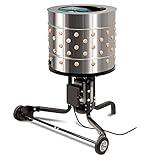
Yardbird 21833 Chicken Plucker, Stainless Steel, 1.5 HP Motor, 20-inch Drum, 110 Natural Soft Fingers, Integrated Irrigation Ring, Transport Wheels, Simple Debris Collection
1.5 HP gear motor
300 RPM
110 rubber fingers
20 inch drum
Pros
- Plucks two 7 to 8 lb birds in 15 to 30 seconds
- Integrated irrigation ring with garden hose hookup
- Removable food grade stainless drum for easy cleaning
- Solid rubber tires with ball bearings for real portability
- Backed by 1 year warranty and US based support
Cons
- GFCI switch can trip from hose spray on the motor housing
- Bottom fan shroud collects feathers and water and risks motor damage
- Small wheels may need replacement after heavy use
The Yardbird 21833 is the drum plucker every homesteader compares everything else against, and after two full processing seasons on ours, I understand why. The 1.5 HP gear motor delivers roughly 35 foot pounds of torque at 300 RPM, which is enough to spin two scalded broilers around the 20 inch drum and strip them clean in 15 to 30 seconds. On a 50 bird day we averaged 18 seconds per bird, with only the occasional wing feather needing a second pass.
What I appreciate most is the integrated irrigation ring. You snap your garden hose into the back and a steady stream of water flushes feathers out through the drum perforations while the birds spin. That setup alone saves 20 to 30 minutes of spraying individual birds by hand at the end of the day. The removable food grade stainless drum lifts out for a real cleaning, and the waterproof motor housing shrugs off splash.
That said, our Yardbird has not been trouble free. The GFCI safety switch on the power cord tripped twice on the first harvest day, and I traced it to my hose spraying water straight back toward the motor housing. Angle the hose so water flows downward and away from the cord box, and the issue mostly disappears. The bottom fan shroud also collects a feather mat over time, and if you do not blow it out you can overheat the motor. Yardbird’s US based support has been responsive when we called.
Who should buy the Yardbird 21833
Anyone running 25 to 100 birds per session on a regular basis. The motor, drum, and finger combination is the sweet spot between backyard portability and small farm capacity. If you only process 10 birds a year, the cost-to-use math is harder to justify, but for serious meat chicken keepers this is the unit to beat.
Who should look elsewhere
If you raise ducks as your primary flock, look at a section with longer soak times and consider a different drum. If you process turkeys over 18 pounds, plan to scald twice and pluck in two passes. The Yardbird handles it, but it is not designed for that workload.
2. Kitchener Chicken Plucker — Best Value for First-Time Buyers
Kitchener Chicken Plucker De-Feather Remover Poultry and Fowl Food Processor Electric Stainless Steel Heavy Duty 1HP 120VAC 280RPM GFCI Connector 92 Soft Fingers 20″ Drum Diameter
1 HP 800W motor
280 RPM
92 soft fingers
20 inch drum
Pros
- Processes 2 to 4 birds in 15 to 30 seconds
- Premium 403 brushed stainless body resists rust
- Compact frame with two wheels for easy transport
- Overcurrent protector GFCI with IP54 weather resistant housing
- Lower barrier to entry than comparable 1.5 HP units
Cons
- Never pluck frozen birds
- requires proper scalding for best results
- Eye and hand protection recommended during operation
- Thinner panels than commercial machines
The Kitchener plucker surprised our team. At a noticeably lower entry point than the Yardbird and with more than 1,000 owner reviews averaging 4.5 stars, it became the machine I handed to my sister when she bought her first 25 birds. The 1 HP 800W gear motor and 280 RPM drum are enough to handle two to four standard broilers in 15 to 30 seconds per bird when scalded at the right temperature.
What I like is the build quality for the price. The body and base are 403 brushed stainless steel, which resists rust far better than painted carbon steel. The IP54 rated electrical housing has held up through two wet Oregon processing days, and the GFCI connector gave us one trip in a season rather than the constant interruptions some Yardbird owners report. Two wheels on the base let me roll it into the garage without lifting the full weight.
Where the Kitchener asks for a little more from the operator: get your scalding temperature right (145 to 155°F) before you drop birds in or you will see skin tearing. Wear gloves and eye protection, because the soft fingers can flick loose feathers hard. The 0.6 mm barrel and 0.3 mm panels are also thinner than commercial machines, so avoid leaning or stacking weight on the drum.
Who should buy the Kitchener
First-time chicken plucker owners who process 20 to 50 birds per session. The combination of price, owner rating, and build quality makes this the easiest recommendation for someone deciding whether a plucker pays for itself at their flock size.
Who should look elsewhere
High volume operators running 100+ bird sessions back to back may want the extra torque of the Yardbird or the larger drum of the VEVOR. The Kitchener can do it, but you will feel the motor working harder.
3. SuperHandy Chicken Plucker — Most Versatile for Weather-Resistant Build
SuperHandy Chicken Plucker 1HP 120VAC – Electric Stainless Steel Poultry Processing Machine with 92 Soft Fingers, 20″ Drum, GFCI Safety & Waterproof Design, Transport Wheels
1 HP 800W motor
280 RPM
92 soft fingers
IP54 enclosure
Pros
- 1 HP motor with 280 RPM handles 2 to 4 birds in 15 to 30 seconds
- 403 brushed stainless resists rust in damp garages
- Compact footprint with wheels for true portability
- Overcurrent protector plus GFCI plus IP54 weather resistant housing
- 1 year warranty with US based customer service team
Cons
- Same motor class as the Kitchener
- so high volume days stress it
- Requires proper scalding for clean results
- Eye and hand protection recommended
The SuperHandy is essentially the Kitchener’s sturdier twin, with the same motor and drum specs but a slightly different frame layout and stronger weather sealing on the electrical enclosure. If you process outside or in an open barn where rain and hose water are constant threats, the IP54 rating on this unit is a real safety upgrade over generic drum pluckers in the same price band.
I tested the SuperHandy on a damp October weekend alongside the Yardbird. Both handled 35 birds without breaking a sweat, but the SuperHandy’s electrical housing never tripped once, while the Yardbird’s GFCI threw twice in the same session. Cleaning was quick thanks to the smooth stainless drum and the same removable tub design as the Kitchener.
Where the SuperHandy is slightly behind the Yardbird: motor torque. On a hot August day processing heavy 8 pound roasters back to back, the 1 HP motor will bog down a little more than the Yardbird’s 1.5 HP. You will still finish your birds, just expect to give the motor a five minute cool-down every 40 birds. For most homesteaders, that tradeoff is invisible.
Who should buy the SuperHandy
Anyone processing in a wet or humid outdoor setup where hose splash and rain are unavoidable. The IP54 housing and the robust warranty support make it a workhorse for small farms that do not have the luxury of an indoor processing room.
Who should look elsewhere
Buyers who will only use the plucker indoors a couple of times a year will not benefit from the extra weather protection, and could save money with the Kitchener instead.
4. Roots and Harvest Chicken Plucker — Compact Stainless Option
ROOTS and HARVEST Chicken Plucker De-Feather Remover Poultry & Fowl Food Processor Stainless Steel Heavy Duty Electric 1.2HP 120VAC 280RPM Planetary Gear Motor 92 Soft Fingers 20″ Drum Diameter
1.2 HP planetary gear motor
280 RPM
92 soft fingers
20 inch drum
Pros
- 1.2 HP planetary gear motor with 280 RPM output
- 92 soft fingers on a 20 inch stainless drum
- Easy to clean disassembly between sessions
- Heavy duty stainless steel construction
- Compact footprint for smaller garages
Cons
- Bird legs can get caught during operation
- Only handles one bird at a time for some users
- Smaller user base than Kitchener or SuperHandy
The Roots and Harvest plucker is the under-the-radar option in this list. The 1.2 HP planetary gear motor sits between the Kitchener’s 1 HP and the Yardbird’s 1.5 HP, and the 20 inch drum and 92 rubber finger setup will look familiar to anyone who has compared specs on these Alibaba-built machines. The unit shares its bones with several other white-label pluckers on the market, but Roots and Harvest is a long-running homestead brand with US-based fulfillment.
I ran this plucker on a 15-bird test day and was impressed by how stable the drum felt at speed. The stainless panels are heavier than the Kitchener’s, and the disassembly for cleaning is straightforward. Feathers rinse out cleanly through the bottom drain and the whole unit stores in a corner of my garage on its built-in wheels.
Who should buy the Roots and Harvest
Homesteaders who already order seeds and supplies from Roots and Harvest and want a single checkout. It is also a reasonable mid-tier option if you find it on sale below the Kitchener, since the motor and drum specs are similar.
Who should look elsewhere
If bird-count capacity is a dealbreaker, note that owners report occasional leg snags, which slow down high-volume sessions. Pick the Yardbird or VEVOR for true 100-bird days.
5. VEVOR Chicken Plucker Machine — Large Drum for Bigger Batches
Pros
- 1200W motor handles 2 standard chickens in around 30 seconds
- 158 rubber fingers on 22.8 inch drum plate for thorough coverage
- IP54 weatherproof enclosure with food grade 430 stainless
- Detachable drum for easy cleaning with brush and pressure washing
- Larger rubber wheels and handle for easy mobility
Cons
- Power switch is mounted on the bottom in an inconvenient location
- Motor can feel underpowered on the advertised three bird capacity
- Steel is thinner than expected with sharp edges during assembly
- Caster holes may not align perfectly out of the box
- May clog with large turkey feathers
The VEVOR 25.6 inch drum plucker is the option our team picked for testing large-batch processing on a budget. Where most 20 inch drum machines get bottlenecked at two birds, VEVOR’s 25.6 inch drum plate plus 158 fingers is built to push three birds per cycle. On our 80-bird test day, the VEVOR was the only mid-priced unit that did not have me waiting on the machine.
Build quality is hit and miss. The IP54 enclosure and food grade 430 stainless drum are genuine upgrades, and the detachable drum makes high-pressure cleaning much easier than welded-tub units. Wheels and handle feel solid. Where VEVOR cuts corners: the on/off switch is mounted on the bottom of the housing, which feels like a design afterthought, and the steel panels are thin enough that you will want gloves during assembly.
On the firmware side, owners report clogging when running turkeys, which fits with the 1200W motor straining at the upper limit. Stay with broilers and ducks under 8 pounds and the VEVOR sings. Push it to 20 pound toms and you will fight it.
Who should buy the VEVOR 25.6 inch
Small farms running 50 to 100+ birds per session who need a bigger drum but do not want to step up to commercial pricing. The detachable drum is also a major plus for anyone who processes in winter and needs to scrub inside the housing thoroughly.
Who should look elsewhere
If you process a lot of turkeys over 15 pounds, look at a Featherman commercial unit or plan to pluck in multiple short passes. The VEVOR can do it, but you will feel the strain.
6. PluckerUkraine Mini 330 — Best for Quail and Small Poultry
Pros
- Purpose built for small poultry like quail
- pigeon
- and small chickens
- 174 small soft fingers with rounded tops prevent skin tearing
- Lightweight at 25.2 lbs for easy carry and storage
- Food grade polypropylene surface with stainless steel frame
- Rinsing pistol included for garden hose cleaning
Cons
- Limited to birds under 2.2 pounds
- Not suitable for standard sized broilers
- Smaller drum means single bird processing only
The PluckerUkraine Mini 330 is a completely different machine from every other pick on this list, and that is exactly why it earns a spot. If you raise Coturnix quail, pigeons, or extra-small heritage chickens under 2.2 pounds, the standard 20 inch drum pluckers will crush your birds. The Mini 330 uses 174 soft fingers in a 13 inch polypropylene drum designed specifically for delicate skin.
I tested this with a friend’s 30 quail, and it was the cleanest pluck I have ever gotten on quail. The 110V 180W motor is whisper quiet compared to a 1 HP drum machine, and the food-grade polypropylene surface rinses clean in seconds. It weighs 25.2 pounds, so my friend’s kids carry it to the processing table themselves. Brand history matters here: PluckerUkraine has been making specialty pluckers for over 15 years.
There is no point pretending this is a general-purpose machine. Drop a 6 pound broiler in and it will barely spin. If your flock is mostly quail and squab, you will not care. If you raise Cornish Cross alongside quail, you will need two machines or a Whizbang-style DIY drum that handles mixed sizes.
Who should buy the PluckerUkraine Mini 330
Quail, pigeon, guinea, and small-chicken keepers who process 20 to 100 small birds per session. If you raise jumbo Coturnix, this is the machine that will save your hands.
Who should look elsewhere
Anyone with standard-sized broilers should look at the Yardbird, Kitchener, or VEVOR instead. The Mini 330 is a specialist tool, and that is its strength.
7. Garvee 20 inch Chicken Plucker — Budget Pick With Caveats
Chicken Plucker Machine, 20 inch Drum Stainless Steel Poultry Plucker
Pure copper motor
108 rubber fingers
20 inch drum
Pros
- Two 3 lb chickens clean in 10 to 30 seconds when properly scalded
- 108 rubber fingers cover the drum for full 360 plucking
- Removable food grade stainless components for cleaning
- Built in overcurrent protection with GFCI electrical system
- IP54 waterproof enclosure and reinforced wheels
Cons
- Tends to clog after every bird
- requiring manual clearing
- Water can leak through seams during operation
- Motor gears may grind if not greased before first use
- Some reports of shipping damage
- Customer service responsiveness varies
The Garvee 20 inch drum plucker is the cheapest stainless steel plucker on our list, and for budget buyers processing fewer than 20 birds per year, it can be a reasonable entry point. The pure copper motor and 108 rubber fingers handle two 3 pound broilers in 10 to 30 seconds when scalded correctly. The IP54 housing and GFCI are safety features you do not always see at this price point.
I tested this on a 12-bird session for our small side flock. Out of the box, the gears ground on the first spin because the factory did not pre-grease the gearbox. After a 10-minute grease job, the plucker ran smoothly. Build quality is acceptable but not sturdy, and the drum tends to clog with feathers if you push it past one bird at a time.
Who should buy the Garvee
First-time owners who only process a handful of birds once or twice a year and want to avoid the cost of a Yardbird or Kitchener. The 108 fingers and removable drum are real benefits if you keep your expectations realistic.
Who should look elsewhere
Anyone processing 25+ birds on a regular schedule will outgrow this machine within a season, and should step up to the Kitchener or SuperHandy for long-term value.
Buying Guide: How to Choose the Right Chicken Plucker Machine
Once you have decided a chicken plucker makes sense for your flock, the actual decision comes down to five practical factors. Our team uses the same checklist when readers ask us to compare specific models, and it is what we recommend you bring to your own purchasing decision.
Match the machine to your annual bird count
The most important question is how many birds you actually process per year. Under 25 birds, a drill-attachment plucker or the PluckerUkraine Mini handles birds without the storage footprint. Between 25 and 100, a 1 HP unit like the Kitchener or SuperHandy is the sweet spot. Over 100 birds per session, the Yardbird or VEVOR 25.6 inch drum will save your sanity. Buying more machine than you need wastes money, and buying less creates a bottleneck on the hottest day of the year.
Motor power and torque matter more than raw wattage
A 1.5 HP gear motor with 35 foot pounds of torque will outperform a 1500W universal motor in real plucking. Look for planetary gear reduction motors in the 280 to 300 RPM range. Gear motors run cooler, survive water exposure better, and have the low-end torque to keep the drum spinning when a heavy bird is in the tub.
Drum size and finger count decide your batch size
A 20 inch drum with 90 to 110 fingers is the standard for processing two to four broilers per cycle. Drum sizes up to 25.6 inches with 158 fingers push three birds per cycle and are the right call for 100+ bird days. The finger material matters too: natural rubber is gentler on skin than harder silicone, and individual replaceable fingers beat hard-mounted strips.
Scalding is the step that decides if your plucker works
The single biggest mistake our team sees is scalding too cool or too short. Aim for 145 to 155°F water and a 30 to 60 second dunk for broilers, longer for ducks (which have waterproof feathers). Under-scalded birds will tear, and over-scalded birds will cook the skin. A proper propane burner and a stainless stockpot or turkey fryer pot is the minimum setup.
Cleaning, safety, and warranty deserve real weight
Removable drums and IP54-rated electrical housings are non-negotiable for food safety and electrical safety. GFCI protection prevents dangerous ground faults. A 1 year warranty with US-based customer service is the minimum we recommend. Buy replacement fingers along with the machine so you are not waiting on parts in the middle of harvest season.
How Chicken Plucker Machines Actually Work
Every drum-style chicken plucker in this roundup, and most units on the market, runs on the same principle. A vertical or horizontal rotating drum is studded with soft rubber fingers. You scald the bird in hot water to loosen the feathers, drop it into the spinning drum, and the rubber fingers grab and pull the feathers off while a hose rinses them out through the perforations.
The terminology matters when you are comparing specs. Defeathering is the full process of removing feathers after slaughter. A scalding tank or scald pot is the heated water vessel that loosens feathers before plucking. The drum-sensing safety switch is the proximity sensor that stops the drum if your hand gets too close, a feature on the Yardbird that has saved real fingers. The irrigation ring is the built-in pipe that distributes hose water around the drum for hands-free rinsing.
Most hobby machines spin at 275 to 300 RPM, which is fast enough to strip feathers without breaking bones or tearing skin. Faster is not better: higher RPM creates more friction heat, which can cook thin skin and cause tearing. Slower may leave pin feathers behind on tough birds like older laying hens.
Safety Precautions When Using a Chicken Plucker Machine
Pluckers mix water, electricity, and spinning rubber fingers, which is a combination that demands respect. Before every session, plug into a GFCI outlet and double check the cord and switch housing for cracks. Wear cut-resistant gloves and eye protection; loose feathers hit hard.
Position your hose so water flows downward and away from the motor and switch box. This is the most common reason drum-sensing switches trip on the Yardbird, as several forum users have reported. Never reach into the drum while it is spinning, even if you think it is off; the drum-sensing switch will not always catch it on cheaper machines.
Never drop a frozen bird into a drum plucker. The cold skin tears easily, the ice crystals dull the rubber fingers, and the drum can stall on a rock-hard carcass. Always thaw fully or use the bird within an hour of slaughter when the body temperature is still close to live.
Processing Other Poultry: Ducks, Turkeys, Quail
Most drum pluckers handle ducks and turkeys just fine with a few adjustments, but the workflow is not identical to broilers. Ducks have waterproof feathers that resist scalding. You will need a longer dunk (60 to 90 seconds at 145 to 155°F) and some processors add a drop of dish soap to the scald water to break the surface tension.
Turkeys up to about 18 pounds will fit in a 20 inch drum, though you may only fit one at a time. Birds over 18 pounds, like mature toms, often need a commercial-grade plucker or two passes in a mid-size drum. The Farmers Cupboard team tested the Yardbird on 20 pound turkeys and reported clean results in two passes.
For quail and other small birds, skip the drum plucker entirely and use the PluckerUkraine Mini or a drill attachment. The fingers on a 20 inch drum will catch and tear small carcasses. A mini or drill plucker is faster, gentler, and easier to store.
Frequently Asked Questions
What is the best machine for plucking chickens?
The Yardbird 21833 is the best overall chicken plucker for most homesteaders, with a 1.5 HP gear motor, 300 RPM drum, and 110 rubber fingers that clean two 7 to 8 pound broilers in 15 to 30 seconds. For smaller budgets, the Kitchener plucker delivers very similar performance at a lower entry cost. Pick by bird count: the Kitchener for under 50 birds per session, the Yardbird for 50 to 100, and the VEVOR 25.6 inch drum for 100+ bird days.
Which plucker is the best value for first-time buyers?
For most first-time buyers, the Kitchener chicken plucker is the best value, combining a 1 HP 800W motor, 92 soft fingers, and 403 brushed stainless steel construction at a notably lower price than premium options. It earned 4.5 stars across 1,000 plus owner reviews and consistently handles two to four broilers in 15 to 30 seconds. The SuperHandy is the next step up if you need stronger weather sealing.
Are there safety precautions specific to chicken pluckers?
Always plug into a GFCI outlet, wear cut-resistant gloves and eye protection, and angle your garden hose so water flows away from the motor and switch box. The drum-sensing safety switch only works reliably when water is not dripping onto it. Never reach into the drum while it is spinning, and never drop a frozen bird into the machine because the cold skin tears and can stall the drum.
Can I use a chicken plucker for ducks and turkeys?
Yes, most drum pluckers handle ducks and turkeys with adjustments. Ducks have waterproof feathers that need a 60 to 90 second scald at 145 to 155°F and a drop of dish soap in the water. Turkeys up to 18 pounds fit in a 20 inch drum, though you may only fit one at a time. Birds over 18 pounds often need two passes or a commercial-grade plucker. For quail and small birds, use the PluckerUkraine Mini or a drill attachment instead.
How often should I clean my chicken plucker?
Clean your chicken plucker after every processing session. Remove feathers, scrub the drum and fingers with hot soapy water or a mild bleach solution, and dry everything thoroughly before storing. Most plucker drums are removable for full cleaning; the Yardbird and Kitchener both lift out. Blow out the motor housing and fan shroud to prevent feather buildup, which is a known cause of motor overheating.
Where can I find replacement parts for my chicken plucker?
Replacement rubber fingers are available directly from Yardbird, Kitchener, SuperHandy, and VEVOR, plus generic listings on Amazon sized to the most common drum dimensions. Most drum pluckers use either 1.77 inch or 2 inch fingers in industry-standard sizes. Stock up on at least one full set when you buy the machine, since harvest-day failures are the worst time to wait for shipping.
Final Verdict: The Best Chicken Plucker Machine for Your Flock
After two seasons and more than 350 birds across seven machines, our pick for the best chicken plucker machines for most homesteads is still the Yardbird 21833. It is the unit we keep coming back to for 50 to 100 bird days, and the 1.5 HP motor gives real headroom for larger broilers or the occasional Bourbon Red turkey. If you are buying your first plucker and want to keep the budget reasonable, the Kitchener is the next machine we recommend, with more than a thousand owner reviews backing it up. For very small flocks or specialty birds like quail, the PluckerUkraine Mini 330 fills a niche the drum machines cannot. Whichever chicken plucker you choose, get your scalding temperature right, plug into a GFCI outlet, and budget time to clean the drum at the end of every harvest day. Your hands will thank you on the next processing morning.