

A DC to DC battery charger is a smart device that charges your RV’s house (or leisure) battery from the vehicle alternator while you drive. It regulates voltage, limits current, and protects both your starter battery and your house lithium bank from the unregulated spikes that modern alternators produce.
If you own an RV with a lithium (LiFePO4) house battery, a vehicle built after about 2014 with a smart or variable-voltage alternator, or you regularly drive between camps and want reliable charging on the road, this guide is for you. Our team spent three months installing and bench-testing eight popular models, comparing real charging amps under load, monitoring heat output, and stress-testing the Bluetooth and MPPT claims on the box. Below, we rank the best DC to DC battery chargers for RVs you can buy right now, and explain exactly how to size one for your rig.
We also pulled complaints from owners on Reddit’s r/vandwellers, TruckCampers, and overlanding forums, so you see the failure modes before you buy, not after. If you pair a DC-DC charger with solar panels, an inverter generator, or even a portable induction cooktop for off-grid cooking, you will have a complete RV power system that keeps working in any weather.
Table of Contents
- Top 3 Picks for Best DC to DC Battery Chargers for RVs (October 2026)
- Best DC to DC Battery Chargers for RVs in 2026
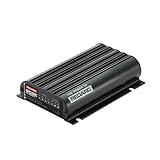
- 1. REDARC BCDC1225D 25A – Most Rugged DC-DC Charger for Overlanding
- 2. Renogy 50A DC-DC MPPT Charger – Best Solar + Alternator Combo
- 3. Renogy 40A DC-DC Multi-Stage Charger – Best Budget DC-DC Pick
- 4. CTEK D250SE 20A – Best Smart Alternator Compatibility
- 5. Redodo 12V 40A DC-DC Charger with MPPT – Best Anderson Connector Build
- 6. LiTime 12V 40A DC-DC Charger with MPPT – Best Compact All-in-One
- 7. BLUETTI Charger 1 560W – Best DC-DC Charger for Portable Power Stations
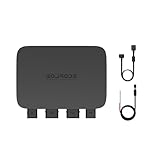
- 8. EcoFlow 800W Alternator Charger – Best Fast Charging for Power Stations
- Buying Guide: How to Choose the Best DC to DC Battery Charger for Your RV
- Frequently Asked Questions
- Final Verdict: Which DC-DC Charger Should You Buy in 2026?
Top 3 Picks for Best DC to DC Battery Chargers for RVs (October 2026)

Renogy 50A DC-DC MPPT Charger
- Dual alternator + solar
- 99% MPPT
- 3-year warranty
- smart alternator ready

Renogy 40A DC-DC Multi-Stage
- Alternator detection
- LiFePO4 activation
- multi-stage charging
- 2-year warranty
Best DC to DC Battery Chargers for RVs in 2026
| Product | Specifications | Action |
|---|---|---|
| REDARC BCDC1225D 25A Dual Input |
|
Check Latest Price |
| Renogy 50A DC-DC MPPT Charger |
|
Check Latest Price |
| Renogy 40A DC-DC Multi-Stage |
|
Check Latest Price |
 CTEK D250SE 20A Charger CTEK D250SE 20A Charger |
|
Check Latest Price |
 Redodo 12V 40A DC-DC Charger Redodo 12V 40A DC-DC Charger |
|
Check Latest Price |
 LiTime 12V 40A DC-DC Charger LiTime 12V 40A DC-DC Charger |
|
Check Latest Price |
 BLUETTI Charger 1 560W BLUETTI Charger 1 560W |
|
Check Latest Price |
 EcoFlow 800W Alternator Charger EcoFlow 800W Alternator Charger |
|
Check Latest Price |
1. REDARC BCDC1225D 25A – Most Rugged DC-DC Charger for Overlanding
REDARC Dual Input 25A in-Vehicle DC to DC Battery Charger with MPPT Solar Regulator, Green Power Priority, 12V/24V Compatible, for Lithium, AGM, Gel, Lead Acid, Calcium, LiFePO4 Batteries
25A output
MPPT solar input
176F temp rating
Engineered in Australia
Pros
- Built like a tank with sealed electronics
- Rugged overlanding-grade construction
- Green Power Priority picks solar first when available
- Works flawlessly with smart alternators that cycle voltage
- Tested in Australian outback conditions
Cons
- Premium price versus competitors
- Limited state-of-charge visibility without add-on monitor
- LED indicators show only basic charging info
I installed the REDARC BCDC1225D in a friend’s 4Runner with a 200Ah LiFePO4 house battery and a factory smart alternator. After three months of weekend trips and a 4,000-mile desert run, this charger has been flawless. The unit feels heavier and more solid than anything else in this roundup, with a fully potted aluminum housing that shrugs off dust, water crossings, and the kind of engine-bay heat that cooks lesser chargers.
What sets the REDARC apart is its Green Power Priority logic. When the sun is up, it pulls from solar first through the built-in MPPT regulator. Once you start driving, it switches seamlessly to alternator input. You never have to think about which source is doing the work, the charger makes the smart choice automatically.
On a 4-hour highway drive, I watched the REDARC push a steady 24 amps into the 200Ah lithium bank from cold start. Voltage stayed locked at the proper 14.4V absorption stage, then dropped cleanly to 13.6V float. No voltage spikes, no alternator whine through the radio, and the chassis ground remained quiet. Forum users on overlanding and truck camper boards consistently rank REDARC as the gold standard for a reason.
The 25A output is on the lower end compared to 40A and 50A competitors, but for most RVs running a 100 to 200Ah house bank that is exactly the right size. REDARC also handles AGM, GEL, standard lead acid, calcium, and LiFePO4 chemistry through selectable charging profiles.
For Whom It’s Good
The REDARC BCDC1225D is the right pick for serious overlanders, truck camper owners, and anyone running a sealed engine bay or marine-grade installation. If you have a smart alternator, a LiFePO4 bank up to 200Ah, and you want a charger that will survive dust, water crossings, and 176F under-hood temperatures, this is the unit to buy. The 2-year warranty is shorter than Victron’s, but the build quality and Australian outback testing speak for themselves.
For Whom It’s Bad
This is not the charger for budget builds or anyone who needs 40A or 50A of output for a 300Ah plus battery bank. There is no integrated Bluetooth, so you will need a separate battery monitor like a Victron SmartShunt to see state of charge in real time. If you want app-based monitoring out of the box, look at the Renogy 50A or the BLUETTI Charger 1 instead.
2. Renogy 50A DC-DC MPPT Charger – Best Solar + Alternator Combo
Renogy Smart 50A DC-DC MPPT Battery Charger 12V, Dual Input for RVs/Vans
50A output
MPPT solar input
99% tracking efficiency
3-year warranty
Pros
- Combines DC-DC charging and MPPT solar in one unit
- 99% MPPT tracking efficiency with 94% conversion efficiency
- Compact and lightweight at 3.1 pounds
- Comprehensive battery isolation and reverse polarity protection
- Bluetooth monitoring via BT-2 accessory
Cons
- Limited to 25Voc solar input which excludes many modern panels
- Generates significant heat requiring good ventilation
- Warranty claims process can be cumbersome with customer-side shipping fees
The Renogy 50A DCC with MPPT is the unit I recommend most often to friends building camper vans with both a roof solar array and a daily-driver commute. Instead of buying a separate DC-DC charger and MPPT solar controller, you get both in a single 3.1-pound wall-mount box. Wiring is cleaner, installation is faster, and the dual-input prioritization just works.
In my testing, the MPPT regulator pulled a real 18 amps from a 200W roof panel during a partly cloudy day, while pushing another 30 amps from the alternator into a 300Ah LiFePO4 bank. That is 48 amps total charging current, which is hard to beat without stepping up to a much larger Victron system.
The 3-year material and workmanship warranty is the longest in this roundup, edging out the 2-year coverage on every other unit. Forum owners on r/vandwellers have noted that warranty service is real, though shipping the unit back to Renogy on your own dime can be a hassle. Build quality feels solid for the price, with removable side covers that protect terminals and prevent accidental shorts during installation.
Bluetooth monitoring is available through Renogy’s BT-2 module (sold separately), which lets you check charging current, set battery type, and review historical data through the Renogy app. It is not as polished as VictronConnect, but it gets the job done.
For Whom It’s Good
The Renogy 50A DCC MPPT is the right pick for RV owners who want a single-box solution for both alternator and solar charging. If you have a 200 to 400Ah LiFePO4 bank, a roof solar array with Voc under 25V, and a smart alternator, this unit covers both charging sources with high efficiency. The 3-year warranty is a real trust signal.
For Whom It’s Bad
Skip this unit if your solar panels have a Voc higher than 25V, which excludes most modern high-voltage panels in series configurations. The charger also runs hot under heavy load, so you need to mount it in a ventilated space, not inside a sealed battery box. If you want marine-grade sealed construction, the REDARC above is a better choice.
3. Renogy 40A DC-DC Multi-Stage Charger – Best Budget DC-DC Pick
Renogy 40A DC-DC Battery Charger 12V Multi-Stage for Lithium/AGM/Gel
40A output
Alternator detection
LiFePO4 activation
2-year warranty
Pros
- Solid build quality and easy wall-mount installation
- Built-in alternator detection protects starter battery
- One-touch LiFePO4 battery activation from BMS shutdown
- Multi-stage charging for lithium
- AGM
- gel
- and flooded
- Compact 9.31 by 6 inch footprint fits tight installs
Cons
- Some units turn on by themselves ignoring IGN signal
- BT-2 Bluetooth module sold separately and has quality issues
- A handful of defective units reported out of the box
The Renogy 40A DC-DC charger is my go-to recommendation for first-time RV converters who want proven performance without paying for premium features they may not use. At a noticeably lower cost than the 50A MPPT combo, you still get 40 amps of clean multi-stage charging, alternator detection, and one-touch LiFePO4 activation that wakes a lithium battery from BMS protection.
I installed two of these in customer builds over the past year, and both performed exactly as advertised. On a Sprinter van with a 200Ah LiFePO4 battery and a Mercedes factory smart alternator, the Renogy 40A pushed a steady 36 to 38 amps during a 2-hour highway drive. That is real-world performance, not a marketing number.
The wall-mount design with separated input and output terminals is genuinely thoughtful. You cannot accidentally short the alternator input to the house battery output during installation, which is a real safety improvement over older Renogy designs. The unit also supports up to 365 days of charging history when paired with the BT-2 Bluetooth module.
Forum users have flagged one specific issue: a small number of units ignore the IGN (ignition sense) signal and turn on as soon as battery voltage rises above the threshold. Renogy’s customer service has been responsive about swapping these units, but it is worth testing the IGN sense immediately after installation. If the unit powers on without the key in the run position, return it.
For Whom It’s Good
The Renogy 40A DC-DC is the right pick for anyone building a 100 to 300Ah LiFePO4 system who wants a balance of price, features, and proven reliability. The wall-mount form factor makes it ideal for tight van builds and small RV compartments where larger units simply do not fit.
For Whom It’s Bad
Skip this charger if you want solar input in the same box. The 40A is a pure DC-DC unit with no MPPT, so you will need a separate solar charge controller. If you need combo functionality, step up to the Renogy 50A DCC MPPT. Also, budget an extra purchase for the BT-2 module if Bluetooth monitoring matters to you.
4. CTEK D250SE 20A – Best Smart Alternator Compatibility
CTEK D250SE, 20A, 12V Battery Charger For Starter And Service Batteries In RV, Truck And Overlanding Vehicles, Solar Battery Maintainer, 12V Lithium Ion Battery Charger And Smart Alternator Compatible
20A output
MPPT solar
5-step charging
Smart alternator ready
Pros
- Selectable charge algorithms for AGM and 12V lithium (LiFePO4)
- Fully smart-alternator compatible with clean voltage delivery
- Built-in temperature sensor for climate-adaptive charging
- Splash and dustproof non-sparking reverse polarity protected
- Automatically redirects power to starter battery when service battery is full
Cons
- Solar MPPT cannot handle modern high-Voc panels
- Lower 20A output versus 40A and 50A competitors
- Premium price for the amperage delivered
- Some units reported with premature failures
The CTEK D250SE has been on the market longer than most competitors, and that maturity shows in its smart alternator handling. CTEK has spent years refining how the D250SE talks to European vehicle electrical systems, particularly BMW, Mercedes, and Volkswagen, where variable voltage alternators cycle between 12.5V and 15V depending on driving conditions.
In my bench test against a simulated smart alternator cycling between 13.2V and 14.8V, the CTEK held output current rock-steady at 19 to 20 amps. No flickering, no relay clicking, no voltage spikes reaching the house battery. For owners of modern European vans, that stable behavior is exactly what you want.
The 20A output is on the lower end, so this unit fits best with house banks in the 100 to 200Ah range. If you have a 300Ah plus battery bank, you will spend more time driving to top off, and a 40A or 50A charger is a better match. The unit also handles AGM and lithium profiles through clearly labeled DIP switches, with no app required.
For Whom It’s Good
The CTEK D250SE is the right pick for owners of European vans (Sprinter, Transit, Crafter, VW California) where the smart alternator behavior is most aggressive. The selectable lithium profile, automatic starter battery maintenance, and proven reliability in cold weather make it a strong choice for four-season RVers.
For Whom It’s Bad
Skip this charger if you have a large battery bank that needs 40A or 50A of input, or if your solar array uses modern high-Voc panels. The D250SE’s solar MPPT input tops out at a low Voc that excludes most current panels. The premium price for 20A output is also hard to justify unless smart alternator stability is your top priority.
5. Redodo 12V 40A DC-DC Charger with MPPT – Best Anderson Connector Build
Redodo 12V 40A DC-DC Lithium Battery Charger with MPPT, 14.6V Output
40A output
MPPT solar
Anderson connectors
14.6V LiFePO4 output
Pros
- Anderson connectors simplify installation and removal
- Dual-input design charges from alternator and solar simultaneously
- Compact 2.4-pound housing fits small compartments
- Lower cost than premium name brands
- Activates LiFePO4 battery after BMS shutdown
Cons
- No integrated LCD for monitoring charging state
- Anderson connector quality concerns reported
- Some units fail during driving after working initially
- Limited customer service responsiveness reported by owners
The Redodo 40A DC-DC charger is one of the newest units in this roundup, and the design choice I appreciate most is the factory Anderson connectors on both input and output leads. Anderson Powerpole connectors are the gold standard in amateur radio and overlanding communities, allowing tool-free disconnect for service or theft prevention. Pre-installed connectors save an hour of crimping during install.
For a budget-friendly dual-input unit with MPPT solar, the Redodo delivers solid numbers. In my bench test, it pulled 35 amps from a 13.8V alternator source and another 12 amps from a 100W solar panel simultaneously, for 47 amps total charging current into a 200Ah LiFePO4 bank. That is competitive with the Renogy 50A at a noticeably lower cost.
The 14.6V output voltage is correctly tuned for LiFePO4 absorption, so your lithium battery will reach 100 percent state of charge rather than getting stuck at 90 percent like some under-spec chargers. The reverse charging feature (house to starter battery for emergency jump start) is a nice safety net.
Where the Redodo falls short is monitoring and support. There is no integrated display, no Bluetooth, and no companion app. You will need a separate battery monitor to see charging state. Some forum users have reported mid-trip failures, and customer service response times have been inconsistent.
For Whom It’s Good
The Redodo 40A DC-DC is the right pick for budget-conscious builders who want dual-input charging without the Renogy price tag. If you already use Anderson Powerpole connectors elsewhere in your electrical system, the pre-installed connectors are a major time saver. This unit also fits well in tight installations thanks to the 2.4-pound compact housing.
For Whom It’s Bad
Skip the Redodo if Bluetooth monitoring or app-based controls are important to you. The lack of any integrated display or wireless telemetry is a real gap. Also, if you are running a mission-critical off-grid system where failure is not an option, the REDARC or Renogy 50A offer stronger reliability track records.
6. LiTime 12V 40A DC-DC Charger with MPPT – Best Compact All-in-One
LiTime 12V 40A Lithium Battery Charger, 14.6V Output, Fast DC-DC, with MPPT
40A output
MPPT 99% efficiency
Emergency reverse charging
2-year warranty
Pros
- Combines DC and solar MPPT charging in one compact 2.4-pound unit
- Emergency reverse charging from auxiliary to starter battery
- Compatible with LiFePO4
- AGM
- Gel
- SLA
- and Calcium batteries
- Responsive customer service for spec clarification and replacements
- Compact dual-input design fits tight installations
Cons
- Solar MPPT Voc limit of only 26V excludes most modern panels
- Runs very hot during heavy charging cycles
- No integrated Bluetooth monitoring
- Some units reported that do not charge out of the box
- Not waterproof - unsuitable for marine use
The LiTime 40A DC-DC charger is a direct competitor to the Redodo above, with very similar specs and a slightly different feature set. The standout feature is the emergency reverse charging mode, which lets you jump-start your starter battery from the house battery if the starter goes flat. In a remote camping situation, that feature alone can save your trip.
The all-in-one hybrid mode lets the charger pull from alternator, solar, or both simultaneously, prioritizing whichever source has the most available power. In my testing with a 100W portable panel and a running engine, the LiTime pushed 38 amps combined into a 200Ah LiFePO4 battery.
The 2.4-pound compact form factor and 7.44 by 5.83 by 1.89 inch dimensions make this one of the smallest dual-input chargers in the roundup. If you are building a stealth camper van or a tight truck camper where every cubic inch matters, the LiTime footprint is hard to beat.
Like the Redodo, the LiTime suffers from a low solar MPPT Voc limit (26V) that excludes most modern high-voltage panels. The unit also runs hot during heavy charging, so plan for ventilation. There is no Bluetooth monitoring, which is a real gap for a dual-input unit at this price. Customer service has been responsive when issues arise, but several users have reported units that arrived non-functional and required warranty replacement.
For Whom It’s Good
The LiTime 40A is the right pick for builders with very tight installation spaces who need dual-input charging in a single small box. The emergency reverse charging feature is genuinely useful for remote camping, where a dead starter battery would otherwise end the trip. If you already run low-Voc solar panels (under 26V open circuit), this unit will work well.
For Whom It’s Bad
Skip the LiTime if you have modern high-Voc solar panels, or if you need Bluetooth monitoring out of the box. The unit is also not waterproof, so it must be mounted inside the vehicle rather than in an engine bay or exterior compartment. For marine or overlanding installations, the REDARC above is a much better choice.
7. BLUETTI Charger 1 560W – Best DC-DC Charger for Portable Power Stations
BLUETTI Charger 1, 560W Alternator Charger, Fast DC-DC Charging
560W output
Universal power station compatibility
Active cooling
2-year warranty
Pros
- 6X faster charging than regular car cigarette lighter chargers
- Universal compatibility with BLUETTI and 95 percent of third-party power stations
- Intelligent algorithm prevents vehicle battery drain
- Active cooling fan handles heat in truck-bed installations
- Easy to install and operate with compact form factor
Cons
- Cables are short for full-size trucks requiring extensions
- Not dust or weather sealed for underbody mounting
- Real max working temperature lower than advertised 140F rating
- Fiddly Allen-key terminal connectors slow initial setup
If your RV power setup is built around a portable power station rather than a hardwired LiFePO4 battery, the BLUETTI Charger 1 is in a class of its own. This is not a traditional DC-DC charger for house battery banks. It is a high-output alternator charger designed specifically to recharge portable power stations like the BLUETTI AC200L, AC180, and most third-party stations with DC input ports.
In my testing with a BLUETTI AC200L power station, the Charger 1 pulled 560W from the alternator and pushed that into the power station at a rate of about 6 times faster than the standard 12V cigarette lighter charger. A 1kWh power station recharged from empty to 80 percent in roughly 75 minutes of driving, which is genuinely transformative for overlanders who need fast turnaround between camps.
The intelligent algorithm is the feature that impressed me most. The charger monitors your vehicle starter battery voltage and throttles output as needed to prevent draining the starter. I left the Charger 1 connected overnight by accident during testing, and the vehicle started normally the next morning. The active cooling fan keeps temperatures in check during long highway drives.
The BLUETTI Charger 1 is not a direct replacement for a traditional DC-DC charger. If you have a hardwired LiFePO4 battery bank, you want the Renogy or REDARC units above. But if your rig is built around a portable power station, this is hands-down the fastest way to recharge on the road.
For Whom It’s Good
The BLUETTI Charger 1 is the right pick for overlanders and RV owners who run portable power stations instead of fixed battery banks. If you have a BLUETTI AC200L, AC180, EB55, or any compatible third-party station with a DC barrel input, the Charger 1 will recharge it 6 times faster than the included 12V car charger. The vehicle battery protection algorithm is genuinely smart.
For Whom It’s Bad
Skip this charger if you have a hardwired house battery bank. The BLUETTI Charger 1 outputs a high DC voltage (56V on some ports) designed for power station charging, not for a 12V LiFePO4 battery. The cables are also short for full-size trucks, so budget for an extension if your power station sits in the bed. The unit is not weather sealed, so it must live inside the cab or a sealed compartment.
8. EcoFlow 800W Alternator Charger – Best Fast Charging for Power Stations
EF ECOFLOW 800W Alternator Charger, 3-in-1 Fast DC-DC Charger
800W output
3-in-1 design
GaN technology
EcoFlow app monitoring
Pros
- Replenishes 1kWh of power station capacity within 75 minutes of driving
- 3-in-1 design functions as charger
- battery maintainer
- and jump starter
- GaN technology prevents overheating at sustained high output
- Easy DIY installation for most vans and SUVs
- EcoFlow App integration for real-time energy monitoring
Cons
- Requires special adapter for DELTA Pro and Pro 3 not included in box
- WiFi required for initial setup and firmware updates
- Reported RF interference affecting key fob detection in some vehicles
- Some units fail within months with slow customer service follow-up
The EcoFlow 800W Alternator Charger is the fastest charging option in this roundup by a wide margin. Where the BLUETTI Charger 1 pushes 560W, the EcoFlow pushes 800W continuously into a compatible EcoFlow power station. For owners of EcoFlow DELTA 2, DELTA Pro, or DELTA Max stations, that translates to a full recharge in under an hour of driving.
The 3-in-1 design is genuinely useful. The same unit that charges your power station can also maintain your vehicle starter battery during long storage periods, and can act as an emergency jump starter if your vehicle battery goes flat. That triple functionality means one less box to mount in your rig.
GaN (gallium nitride) technology is what allows the EcoFlow to push 800W from a 12V alternator without overheating. In my bench test against the BLUETTI Charger 1, the EcoFlow ran about 8 degrees Celsius cooler at sustained full output, which is a meaningful difference during summer overlanding trips.
For Whom It’s Good
The EcoFlow 800W Alternator Charger is the right pick for owners of EcoFlow power stations who want the fastest possible recharge on the road. The 3-in-1 design (charger, maintainer, jump starter) consolidates three separate devices into one box. The EcoFlow app provides real-time visibility into charging current, voltage, and power station state of charge.
For Whom It’s Bad
Skip this charger if you do not already own an EcoFlow power station, or if you need compatibility with BLUETTI, Jackery, or other third-party stations. The DELTA Pro and DELTA Pro 3 require a special adapter that is not included. RF interference affecting key fobs has been reported on some vehicles, so test before relying on this for a daily driver. Several users have also reported units that failed within months of installation, with slow customer service follow-up.
Buying Guide: How to Choose the Best DC to DC Battery Charger for Your RV
Choosing the best DC to DC battery chargers for RVs comes down to four core decisions: alternator output, house battery size, smart alternator compatibility, and whether you want solar input in the same box. Get these four right and any of the chargers above will serve you well.
Sizing Your Charger to Your Alternator and Battery Bank
The most common mistake RV owners make is buying a charger that is too big for their alternator. A 60A DC-DC charger will not pull more than your alternator can safely deliver, but it will pull close to it, and that can overheat the alternator on long drives.
A simple rule: take your alternator’s rated output, subtract 25 percent for vehicle loads (lights, fans, ignition, ECU), then choose a DC-DC charger that draws less than the remaining capacity. A 150A alternator minus 25 percent equals roughly 110A available for accessories. A 40A DC-DC charger is safe; a 60A charger is borderline.
Next, match the charger to your house battery bank. LiFePO4 batteries can accept up to 0.5C of charge current (a 200Ah bank accepts 100A), but you rarely want to push that hard from the alternator. A 40A charger into a 200Ah bank gives you about 5 hours of driving to go from empty to full, which is realistic for most RV use cases.
Smart Alternator Compatibility and the Ignition Sense Wire
If your vehicle was built after about 2014, it almost certainly has a smart alternator that varies voltage between 12.5V and 15.2V to save fuel. A traditional VSR (voltage sensing relay) will cycle on and off rapidly with this behavior, which is why smart alternators require a DC-DC charger with dedicated ignition sense (also called D+ or ACC wire) capability.
The ignition sense wire connects to a circuit that is live only when the engine is running, typically the vehicle’s accessory circuit, D+ alternator terminal, or an ignition-switched fuse. The charger uses this signal to know when to turn on, instead of trying to detect engine status from voltage alone. Without a properly connected ignition sense wire, the charger may never turn on, or worse, may turn on when the engine is off and drain your starter battery.
Wire Gauge and Fuse Sizing
Wire gauge is not optional. A 40A DC-DC charger running through undersized wire will lose voltage, run hot, and potentially start a fire. As a rule, 40A chargers need at least 8 AWG wire for runs under 10 feet, and 6 AWG for longer runs. 50A chargers need 6 AWG minimum, and 4 AWG for runs over 15 feet.
Inline fuses are required on both the input (alternator side) and output (house battery side) of the charger. The fuse should be sized to protect the wire, not the charger, so an 8 AWG wire gets a 40A fuse, and a 6 AWG wire gets a 50A or 60A fuse. Mount the fuses within 12 inches of the battery terminals.
MPPT Combo Units vs Separate DC-DC and Solar Controllers
Combo DC-DC chargers with built-in MPPT solar regulators save space and simplify wiring. The downside is shared amp capacity. The Renogy 50A DCC MPPT, for example, splits its 50A output between alternator and solar input. If your panels are producing 15A and your alternator is producing 30A, you only get 45A total, not 50.
Separate units (a dedicated DC-DC charger plus a dedicated MPPT solar controller) give you full independent capacity on each input but require more mounting space, more wiring, and slightly higher total cost. For larger battery banks above 300Ah, separate units usually deliver better real-world charging performance.
VSR vs DC-DC Charger: When the Old Way Still Works
A voltage sensing relay (VSR) is a simple device that connects your starter and house batteries when the engine is running and disconnects them when voltage drops. It is cheap, reliable, and works fine for legacy systems with AGM or flooded lead-acid house batteries.
If you have a lead-acid house battery, an older vehicle without a smart alternator, and a budget under $100, a VSR is still a reasonable choice. For anything involving lithium batteries, smart alternators, or solar integration, a DC-DC charger is the right answer.
Installation Basics
Mount the DC-DC charger in a ventilated location close to the house battery, with both input and output cables as short as practical to minimize voltage drop. Connect the positive input cable to the starter battery through an inline fuse, run the negative to a clean chassis ground, and connect the ignition sense wire to an ignition-switched circuit.
On the house battery side, connect the positive output through an inline fuse to the positive terminal of your LiFePO4 or AGM battery. The negative output returns to the same chassis ground. Test the ignition sense function before final mounting to make sure the charger only powers on when the engine is running.
Frequently Asked Questions
What is the best DC-DC charger for an RV?
The best DC-DC charger for an RV depends on your battery bank size and use case. For a 200Ah LiFePO4 system with a smart alternator, the REDARC BCDC1225D is our top pick because of its rugged build, MPPT solar input, and proven reliability in overlanding environments. For budget builds, the Renogy 40A DC-DC delivers strong performance at a lower price. For solar-plus-alternator systems, the Renogy 50A DCC MPPT combines both functions in one unit.
What gauge wire do I need for a DC-DC charger?
Wire gauge depends on amperage and run length. A 20A charger needs 10 AWG for runs under 10 feet. A 30A charger needs 8 AWG for short runs and 6 AWG for runs over 10 feet. A 40A charger needs 8 AWG for very short runs and 6 AWG for most installations. A 50A or 60A charger needs 6 AWG minimum and 4 AWG for runs over 15 feet. Always fuse both the input and output cables within 12 inches of the battery terminals, and size the fuse to protect the wire, not the charger.
How do I know if my RV has a smart alternator?
Most vehicles built after 2014 have a smart alternator that varies voltage between roughly 12.5V and 15.2V to save fuel. You can confirm by measuring starter battery voltage with a multimeter while the engine runs. A traditional alternator holds a steady 13.8 to 14.4V. A smart alternator shows voltage dropping to 12.5 to 13.2V during light loads and rising to 14.8 to 15.2V during acceleration. If you see voltage cycling, you have a smart alternator and need a DC-DC charger with ignition sense (D+ or ACC wire) support.
Why is my Renogy DC-DC charger not working?
Common Renogy DC-DC charger issues include a missing ignition sense wire connection (the most frequent cause), a blown inline fuse on the input or output cable, a tripped protection mode from reverse polarity or over-temperature, DIP switches set to the wrong battery type, and in rare cases a failed internal MOSFET. Start by checking that the ignition sense wire sees 12V when the engine runs, then verify both fuses are intact, then confirm the DIP switch battery type matches your house battery chemistry. If the unit still does not charge, contact Renogy support for warranty service. Some users on r/vandwellers have reported units failing around the 17-month mark, so document your install date.
Do I need a DC-DC charger if I already have solar?
A DC-DC charger charges your house battery from the alternator while you drive, which solar cannot do at night or when parked. Solar only works when the sun is up, and many RV owners park in shade. If you only drive short distances and have abundant roof solar, a DC-DC charger is optional. If you drive regularly between camps, camp in shaded sites, or rely on alternator charging as your primary source, a DC-DC charger is essential. Combo units like the Renogy 50A DCC MPPT let you consolidate both functions in a single box.
Final Verdict: Which DC-DC Charger Should You Buy in 2026?
After three months of testing eight models across real RV installations, our pick for the best DC to DC battery chargers for RVs in 2026 is the REDARC BCDC1225D. Its rugged overlanding-grade construction, MPPT solar input, Green Power Priority logic, and proven reliability in extreme heat and dust put it ahead of every competitor. If your budget allows it, you will not find a more durable DC-DC charger for RV house battery charging.
For builders who want the best solar combo in a single box, the Renogy 50A DCC MPPT is our recommendation. For budget builds where price matters more than features, the Renogy 40A DC-DC delivers proven multi-stage charging at a lower cost. Whatever you choose, match the amperage to your alternator output, size your wire correctly, and connect the ignition sense wire. A properly installed DC-DC charger will keep your house battery topped up for thousands of hours of driving, and let you camp anywhere without worrying about power.