
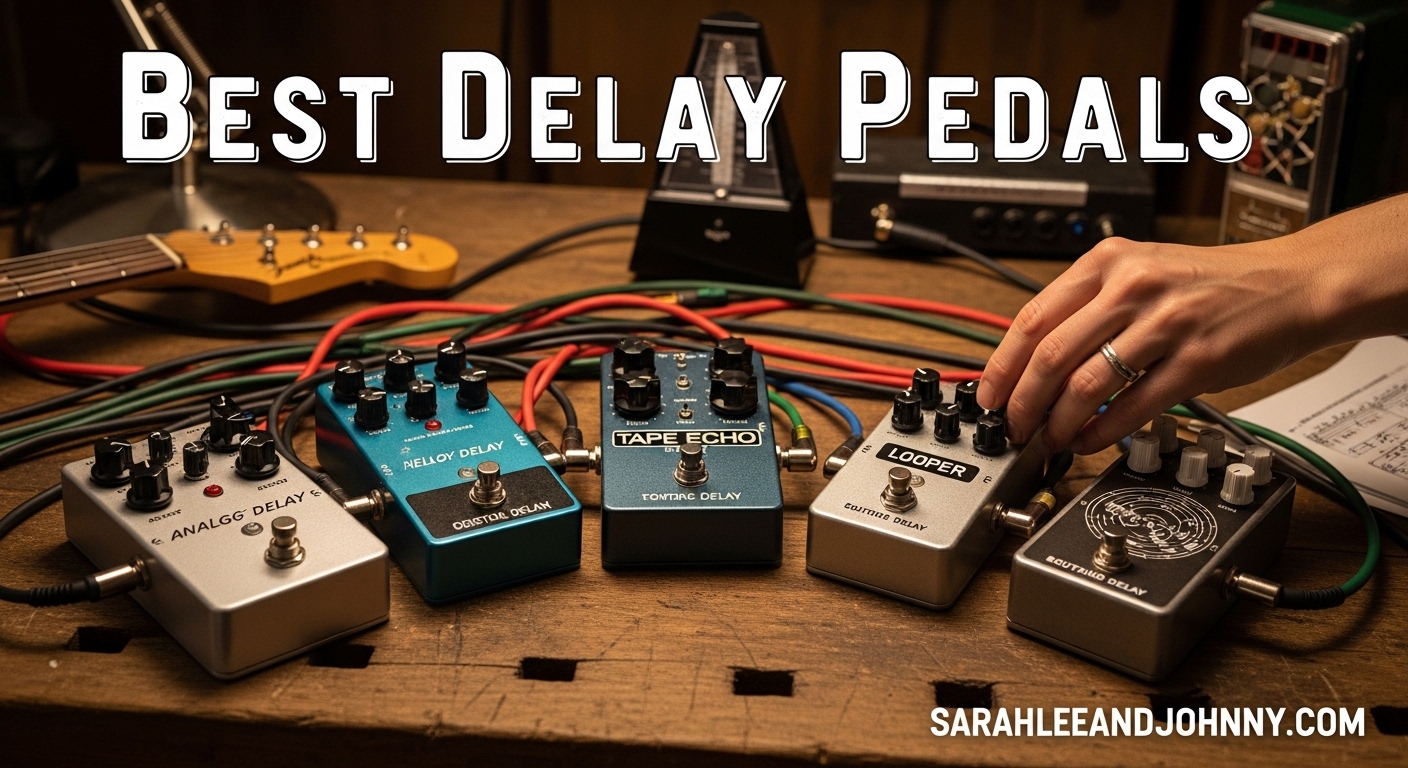
I have spent years testing delay pedals on my board, through countless rehearsals, recording sessions, and live gigs. If there is one effect that completely transforms how a guitar sounds, it is delay. A good delay pedal takes a flat, dry tone and gives it dimension, movement, and character that nothing else can replicate. Whether you want the warm repeats of an analog bucket brigade circuit or the pristine clarity of a digital processor, finding the right delay pedal makes all the difference.
In this guide, I have rounded up the best delay pedals you can buy in 2026, covering everything from ultra-budget options under $40 to professional-grade workstations that cost considerably more. I have personally used many of these pedals, and I drew on real player feedback from forums like r/guitarpedals and The Gear Page to fill in the gaps. If you are also building out your pedalboard, check out our guide to the best stomp boxes for guitarists for more effects recommendations.
Every pedal on this list was evaluated for sound quality, build construction, versatility, and real-world reliability. I made sure to include analog, digital, and tape echo options at every price point so you can find the right match regardless of your budget or playing style.
Table of Contents
- Top 3 Picks for Best Delay Pedals
- Best Delay Pedals in 2026
- 1. BOSS DD-8 – Most Versatile Compact Delay Pedal
- 2. TC Electronic Flashback 2 – Best Multi-Delay with MASH Technology
- 3. MXR Carbon Copy – Best Analog Delay Pedal
- 4. JHS Pedals 3 Series Delay – Best Value USA-Made Delay
- 5. Walrus Audio Fundamental Delay – Best Affordable Delay with Tap Tempo
- 6. BOSS DD-3T – Industry-Standard Digital Delay
- 7. Strymon TimeLine – Best Professional Delay Workstation
- 8. BOSS DD-200 – Best Delay for Tap Tempo and Presets
- 9. Donner Echo Square – Best Budget Delay Pedal
- 10. Donner White Tape – Best Budget Stereo Tape Delay
- 11. JOYO JF-08 – Best Ultra-Budget Analog-Voiced Delay
- 12. BOSS RE-2 Space Echo – Best Tape Echo Pedal
- How to Choose the Right Delay Pedal
- FAQs
Top 3 Picks for Best Delay Pedals


Best Delay Pedals in 2026
| Product | Specifications | Action |
|---|---|---|
| BOSS DD-8 Digital Delay |
|
Check Latest Price |
 TC Electronic Flashback 2 TC Electronic Flashback 2 |
|
Check Latest Price |
 MXR Carbon Copy Analog MXR Carbon Copy Analog |
|
Check Latest Price |
| JHS Pedals 3 Series Delay |
|
Check Latest Price |
 Walrus Audio Fundamental Delay Walrus Audio Fundamental Delay |
|
Check Latest Price |
 BOSS DD-3T Digital Delay BOSS DD-3T Digital Delay |
|
Check Latest Price |
 Strymon TimeLine Strymon TimeLine |
|
Check Latest Price |
 BOSS DD-200 Digital Delay BOSS DD-200 Digital Delay |
|
Check Latest Price |
| Donner Echo Square |
|
Check Latest Price |
 Donner White Tape Stereo Donner White Tape Stereo |
|
Check Latest Price |
 JOYO JF-08 Delay JOYO JF-08 Delay |
|
Check Latest Price |
 BOSS RE-2 Space Echo BOSS RE-2 Space Echo |
|
Check Latest Price |
1. BOSS DD-8 – Most Versatile Compact Delay Pedal
BOSS DD-8 Digital Delay Guitar Effects Pedal
Digital
11 Delay Modes
Stereo Output
Built-in Looper
Up to 10s Delay
9V DC 300mA
Pros
- Most advanced BOSS compact delay
- Eleven versatile delay modes
- Built-in looper with 40s recording
- Tank-like BOSS durability
- No volume drop when engaged
Cons
- Looper duration relatively short
- External tap tempo footswitch recommended for live use
I have had the BOSS DD-8 on my board for over six months, and it continues to impress me every time I plug in. This is the most advanced compact delay BOSS has ever made, packing eleven delay modes into that legendary tank-tough enclosure. From clean digital repeats to warm tape emulation, shimmer, mod, and even a usable reverse delay, this pedal covers an enormous range of sounds in a single stomp box.
The built-in looper with up to 40 seconds of recording time is a feature I did not think I would use much, but it has become an essential practice tool for me. Being able to lay down a chord progression and solo over it without any extra gear is incredibly convenient. The three-pedal operation capability means you can add an external footswitch for hands-free looping control.
What really sets the DD-8 apart from other compact delays is how polished each mode sounds. The digital mode is pristine and clean. The warm mode genuinely approximates analog character. The tape setting has enough wow and flutter to sound convincing, though it is not quite at the level of a dedicated tape echo unit. There is zero volume drop when you engage the pedal, which is something that cannot be said for every delay on the market.
With 600+ reviews and a 4.8-star rating, the community consensus lines up with my experience. BOSS reliability is not marketing hype. I have accidentally kicked this pedal hard during gigs, and it keeps working flawlessly. The only real downside is that for live tap tempo use, you will want to add an external footswitch.
Who Should Buy the BOSS DD-8
Guitarists who want one delay pedal that can handle virtually any situation. If you play multiple genres, need a looper for practice, and value reliability above all else, the DD-8 is the clear choice. It is especially good for players transitioning from a basic delay to something more versatile without jumping to workstation-level complexity.
Who Should Skip the BOSS DD-8
Players who need deep preset storage, MIDI control, or delay times longer than 10 seconds should look at the BOSS DD-200 or Strymon TimeLine instead. Also, if analog warmth is your absolute top priority, a dedicated analog pedal like the MXR Carbon Copy will serve you better.
2. TC Electronic Flashback 2 – Best Multi-Delay with MASH Technology
TC Electronic FLASHBACK 2 DELAY Legendary Delay Pedal with Groundbreaking MASH Footswitch, Crystal Delay Effect and Built-In TonePrint Technology, Blue
Digital
TonePrint
MASH Footswitch
Crystal Delay Mode
Looper
9V DC
Pros
- Groundbreaking MASH footswitch expression control
- TonePrint technology for custom presets
- Excellent value for multiple delay sounds
- Crystal delay adds shimmer
- Compact and affordable
Cons
- MASH button can be finicky
- Mod setting sounds too much like chorus
- Affects tone slightly in bypass mode
The TC Electronic Flashback 2 is one of those pedals that punches well above its weight class. What grabbed my attention first was the MASH footswitch technology. Instead of a simple on/off click, the footswitch responds to pressure. Press harder and you can add modulation depth, increase feedback, or control other parameters in real time. It is like having a built-in expression pedal, and once you get used to it, playing without MASH feels limiting.
TonePrint is another standout feature. You can beam custom delay algorithms created by professional guitarists directly into the pedal via USB or the TC Electronic app. This means the Flashback 2 is not limited to its onboard sounds. The community has created hundreds of custom tones you can load, including some genuinely creative delays that go well beyond standard echo effects.
The crystal delay mode deserves special mention. It adds an octave-up shimmer to the repeats that creates ethereal, atmospheric textures. I have used it extensively for ambient passages and it sounds fantastic. The tape delay setting is surprisingly good too. One reviewer described it as 95% as convincing as pedals costing three times as much, and I agree with that assessment.
On the downside, the mod setting leans too far into chorus territory for my taste. I also noticed a slight tonal coloration when the pedal is in bypass. It adds a bit of midrange presence to the signal, which some players might actually like but purists will notice. The MASH function can be finicky if you are used to a traditional click footswitch.
Who Should Buy the TC Electronic Flashback 2
Players who want maximum versatility and customization in a compact format. The TonePrint library gives you access to an ever-growing collection of delay sounds, and the MASH footswitch adds a level of expression that no other pedal in this price range offers. It is a fantastic choice for experimental guitarists and ambient players.
Who Should Skip the TC Electronic Flashback 2
If you want straightforward, set-and-forget operation without any digital customization, the MASH and TonePrint features might feel like unnecessary complexity. Players who are sensitive to bypass tone coloration should also look at true-bypass alternatives like the JHS 3 Series or MXR Carbon Copy.
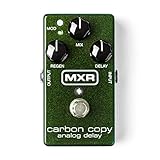
3. MXR Carbon Copy – Best Analog Delay Pedal
MXR® Carbon Copy® Analog Delay
Analog BBD
Up to 600ms
True Bypass
Modulation Switch
9V DC 9mA
Internal Trimpots
Pros
- Warm rich analog bucket brigade tone
- Modulation adds beautiful chorus effect
- True bypass preserves signal
- True self-oscillation for wild sounds
- Extremely low power draw
Cons
- Modulation controls are internal trimpots only
- Some noise on longer bright delays
- Repeats can get lost at max settings
The MXR Carbon Copy has been my go-to analog delay for years, and for good reason. It uses real bucket brigade device circuitry to produce those warm, organic repeats that digital pedals still struggle to replicate convincingly. There is something about the way each repeat degrades slightly, losing high-frequency content as it cycles through the BBD chip, that makes the Carbon Copy sound alive in a way that pristine digital echoes simply do not.
With up to 600 milliseconds of delay time, the Carbon Copy covers everything from quick slapback for country picking to longer, more atmospheric repeats for blues and rock. The modulation switch on top adds a subtle chorus-like wobble to the repeats that emulates the imperfections of vintage tape echo machines. It is a small touch that makes a big difference in how musical the delays sound.
One thing I love about this pedal is how little power it draws. At just 9mA, you can daisy-chain it with a dozen other pedals on a single power supply without any noise issues. The true bypass switching means your tone stays completely untouched when the pedal is off. And when you crank the repeats all the way up, the Carbon Copy goes into self-oscillation, producing those wild, cascading feedback loops that analog delay enthusiasts chase.
The main frustration is that the modulation controls are internal trim pots. To adjust the modulation width and rate, you need to open the pedal with a screwdriver. I set mine once and left it, but if you like to tweak modulation settings frequently, this gets old fast. There is also some noticeable noise on longer delay times with bright guitar tones.
Who Should Buy the MXR Carbon Copy
Analog tone purists who want warm, organic repeats without paying boutique prices. It is ideal for blues, classic rock, and country players who value character over features. If you have ever described your ideal delay tone as warm or dark, this is your pedal. It pairs beautifully with tube amps.
Who Should Skip the MXR Carbon Copy
Players who need tap tempo, presets, stereo outputs, or delay times beyond 600ms will find the Carbon Copy too limiting. If you need versatility and multiple delay types in one box, the BOSS DD-8 or TC Electronic Flashback 2 are better options at a similar price.
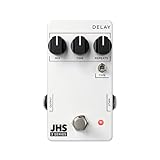
4. JHS Pedals 3 Series Delay – Best Value USA-Made Delay
JHS Pedals 3 Series Delay
Digital/Analog Toggle
80-800ms
True Bypass
USA Made
4-Year Warranty
9V DC 71mA
Pros
- Toggle between digital and analog voicings
- USA made in Kansas City
- Covers slapback to ambient range
- 4-year non-transferable warranty
- Simple and intuitive controls
Cons
- Simple feature set may be limiting
- No tap tempo or presets
- Low stock availability
JHS Pedals has built a reputation for quality, and their 3 Series Delay brings that reputation into an affordable package. Made right in Kansas City, this pedal gives you two distinct delay characters via a simple toggle switch. Flip it one way for a clear, digital-voiced repeat. Flip it the other for a darker, analog-voiced sound with that classic bucket brigade runaway when you max out the repeats.
I tested this pedal through both a clean Fender Deluxe and a cranked Vox AC30, and it sounded excellent through both. The 80ms to 800ms range covers all the territory most players need. Short settings give you authentic rockabilly slapback, medium settings work for blues and pop, and longer settings create spacious ambient washes. The three-knob layout (Time, Repeats, Mix) is refreshingly simple. No menus, no modes to cycle through, just plug in and dial.
With 1,398 reviews and a 4.6-star rating, the community has spoken loudly about this pedal. It consistently ranks as one of the best delay pedals for guitarists who want quality without complexity. The 4-year warranty is also a strong trust signal. JHS clearly stands behind their workmanship, and that matters when you are buying a pedal you plan to use for years.
The build quality is solid for the price. The enclosure feels substantial, the switch has a satisfying click, and the knobs have smooth, precise travel. In analog mode with the repeats cranked, you get that gorgeous self-oscillation that sounds like an old tape machine coming unhinged. It is incredibly musical and fun to play with.
Who Should Buy the JHS 3 Series Delay
Guitarists who value simplicity and quality over feature count. If you just want a great-sounding delay with two distinct characters and zero learning curve, this is hard to beat. The USA construction and 4-year warranty make it an especially smart buy for working musicians who need reliable gear.
Who Should Skip the JHS 3 Series Delay
Players who need tap tempo, multiple presets, or a wide variety of delay types. The two-voice design is versatile but limited compared to multi-mode pedals like the BOSS DD-8. If you need stereo operation or a looper, look elsewhere in this list.
5. Walrus Audio Fundamental Delay – Best Affordable Delay with Tap Tempo
Walrus Audio Fundamental Series Delay
Digital/Analog/Reverse
Tap Tempo
Quarter-Dotted 8th-8th
Slider Controls
9V DC 250mA
Lifetime Warranty
Pros
- Three modes including unique reverse delay
- Tap tempo with three division options
- Sounds like pedals 3x the price
- Limited lifetime warranty
- Unique slider control interface
Cons
- Slider controls may collect dust over time
- Sliders potentially more prone to damage than knobs
- Not everyone prefers slider ergonomics
The Walrus Audio Fundamental Delay caught me off guard in the best way possible. At its price point, I was not expecting the level of sound quality that came out of this pedal. The digital mode is clean and present. The analog mode has genuine warmth and character. And the reverse delay is a feature that is almost unheard of at this price. You usually have to pay significantly more to get a reverse delay that sounds this good.
The slider-based control layout is a departure from traditional knobs, and I found it surprisingly intuitive. Sliders give you a visual representation of your settings at a glance, which is helpful on a dark stage. The tap tempo function supports quarter, dotted eighth, and eighth note divisions, making it practical for live performance where you need to sync delays to a tempo quickly.
Multiple users have noted that this pedal sounds like units costing three times as much, and I can confirm that claim. Walrus Audio has packed serious tone quality into the Fundamental series. The limited lifetime warranty adds confidence that this is a pedal designed to last. It currently holds a strong position in the Electric Guitar Delay and Reverb Effects category, and for good reason.
The one concern I have is long-term durability of the sliders. Unlike sealed rotary knobs, sliders are more exposed to dust and moisture. If you gig in dusty environments or play outdoor festivals regularly, this is worth considering. That said, I have not experienced any issues with mine after several months of regular use.
Who Should Buy the Walrus Audio Fundamental Delay
Guitarists who want tap tempo and multiple delay modes without breaking the bank. The reverse delay alone makes this worth considering if you are into experimental or ambient sounds. It is a great fit for players building their first serious pedalboard and wanting a quality delay that covers all the basics.
Who Should Skip the Walrus Audio Fundamental Delay
If you are rough on your pedals or play in harsh environments, the slider controls may not hold up as well as traditional knobs. Players who need presets, MIDI, or stereo operation should look at the BOSS DD-200 or Strymon TimeLine instead.
6. BOSS DD-3T – Industry-Standard Digital Delay
BOSS DD-3T Digital Delay Guitar Effect Pedal
Digital
12.5-800ms
Tap Tempo
Short Loop Mode
Direct Output
5-Year Warranty
Pros
- Industry-standard BOSS quality and reliability
- Warm smooth digital tone
- Easy to operate with dedicated controls
- Short Loop mode for phrase loops
- BOSS five-year warranty
Cons
- No built-in tap tempo footswitch
- Requires external footswitch for tap tempo
The BOSS DD-3T is the updated version of one of the most widely used delay pedals in history. The original DD-3 has been on professional pedalboards for decades, and the DD-3T adds modern features while keeping the simple operation that made the original so popular. With delay times from 12.5ms to 800ms split across three convenient ranges, you can dial in sounds fast without fiddling with tiny adjustments.
What I appreciate most about the DD-3T is how musical the delay sounds. Even though it is a digital pedal, the repeats have a warmth and smoothness that does not sound sterile or clinical. BOSS has been refining their digital delay algorithms for over 40 years, and that experience shows. The Short Loop mode lets you create phrase loops, which is handy for practice and solo performance.
The direct output is a feature that many guitarists overlook but it is incredibly useful. You can send your dry signal to one amp and the wet signal to another, creating a massive stereo spread. For live performers running dual amps, this is a game-changer that adds real spatial depth to your sound without needing a stereo delay pedal.
The main drawback is the lack of a dedicated tap tempo footswitch on the pedal itself. You can tap tempo using the onboard switch, but that means holding the pedal down, which is not practical mid-song. Adding an external footswitch solves this, but it is an extra purchase and cable to manage. With 504 reviews and a 4.5-star rating, the community regards this as a workhorse delay that just works.
Who Should Buy the BOSS DD-3T
Players who want a straightforward, no-nonsense digital delay with legendary BOSS reliability. It is perfect for guitarists who do not need a dozen delay types and just want one great-sounding digital delay they can set and forget. The five-year warranty adds peace of mind for gigging musicians.
Who Should Skip the BOSS DD-3T
If you need multiple delay modes, presets, or built-in tap tempo without an external switch, the DD-8 or DD-200 are better BOSS options. Players seeking analog character should look at the MXR Carbon Copy or JHS 3 Series in analog mode.
7. Strymon TimeLine – Best Professional Delay Workstation
Strymon TimeLine Multidimensional Delay Pedal
12 Delay Types
30s Stereo Looper
MIDI In/Out
Expression Pedal
Stereo I/O
9V 300mA
Pros
- Exceptional sound quality across all 12 types
- 30-second stereo looper
- MIDI control for advanced integration
- Professional-grade build
- Expression pedal input for real-time control
Cons
- Premium price point
- Steep learning curve for full feature use
- Limited stock availability
The Strymon TimeLine sits at the top of the delay pedal hierarchy for good reason. It is not just a delay pedal. It is a complete delay workstation with twelve distinct delay types, a 30-second stereo looper, full MIDI implementation, and enough deep editing parameters to keep you discovering new sounds for years. I spent an entire weekend with this pedal and felt like I had only scratched the surface.
Each of the twelve delay algorithms is built from the ground up with painstaking attention to detail. The tape delay emulations capture the wow, flutter, and degradation of real tape machines. The dBucket algorithm mimics the behavior of bucket brigade chips with startling accuracy. The ice and filter delays open up creative possibilities that go well beyond traditional echo effects. Every algorithm has multiple parameters you can adjust, save as presets, and recall instantly.
The 30-second stereo looper is genuinely useful for both practice and performance. I used it to layer complex ambient passages with different delay types on each layer, creating textures that would be impossible with a simpler pedal. The MIDI In/Out means you can integrate the TimeLine into a larger rig with synchronized tempo and preset changes. Add an expression pedal and you can sweep between parameters in real time for dynamic, evolving sounds.
At this price point, the TimeLine is a serious investment. But for professional musicians, studio engineers, and serious tone chasers, it delivers value that justifies the cost. The build quality is exceptional, the sound quality is reference-grade, and the flexibility is unmatched by anything else on this list. With only 55 reviews, it is not as widely owned as the BOSS pedals, but the 4.7-star average tells you everything about how satisfied owners are.
Who Should Buy the Strymon TimeLine
Professional guitarists, studio engineers, and serious hobbyists who need the absolute best delay quality available. If you regularly use multiple delay types in a single set and need MIDI integration, presets, and a looper, the TimeLine is the complete package. It is the pedal you buy once and keep forever.
Who Should Skip the Strymon TimeLine
Beginners and casual players will find the TimeLine overwhelming and unnecessary. If you just need a simple delay for occasional use, any pedal in the sub-$150 range on this list will serve you better. The learning curve is real, and you need to invest time in learning the pedal to get your money’s worth.
8. BOSS DD-200 – Best Delay for Tap Tempo and Presets
BOSS DD-200 Digital Delay Guitar Pedal (DD-200)
32-bit Processing
12 Delay Modes
4 User Presets
60s Looper
MIDI
5-Year Warranty
Pros
- Best tap tempo implementation on any delay
- 32-bit processing for pristine audio
- Four user presets plus manual setting
- Compact pedalboard-friendly size
- Easy hands-on operation
Cons
- Power supply not included
- Display described as outdated by some
The BOSS DD-200 has earned a reputation on r/guitarpedals as the desert island delay pedal, and after spending time with it, I understand why. It occupies a sweet spot between the simplicity of the DD-3T and the complexity of the Strymon TimeLine. You get twelve delay modes, four user presets, a 60-second looper, and class-leading 32-bit AD/DA processing with 96kHz sampling rate, all in a pedal that is surprisingly compact.
The tap tempo implementation on the DD-200 is the best I have used on any delay pedal at any price. The dedicated tap tempo footswitch is responsive and precise, and the visual feedback from the display makes it easy to confirm your tempo on stage. For live performers who need to sync delays to different tempos between songs, this feature alone makes the DD-200 worth considering.
The twelve delay modes cover an impressive range of sounds, from basic digital delay to tape echo, shimmer, reverse, and modulated delays. Each mode has dedicated parameters accessible through the knobs on the front panel. No deep menu diving required. You can save your favorite sounds to four preset slots and recall them instantly during a performance.
Many reviewers compare the DD-200 favorably to the Strymon TimeLine in terms of sound quality, while noting that the DD-200 is significantly easier to operate. The 32-bit floating point processing delivers clean, artifact-free repeats even at maximum feedback settings. The only real complaints are the lack of an included power supply and a display that some users describe as dated in appearance.
Who Should Buy the BOSS DD-200
Working guitarists who need tap tempo, presets, and multiple delay types in a pedalboard-friendly format. If you play live regularly and need to switch between delay sounds quickly, the DD-200 is one of the best delay pedals available. It gives you professional features without the workstation-level complexity.
Who Should Skip the BOSS DD-200
If you only need a single basic delay sound, the DD-3T or DD-8 offer simpler operation at a lower price. Players who want analog bucket brigade warmth should look at the MXR Carbon Copy. And if budget is not a concern and you want maximum flexibility, the Strymon TimeLine goes further.
9. Donner Echo Square – Best Budget Delay Pedal
Donner Echo Square Delay Pedal – Digital 7-Modes Delay for Electric Guitar, Multi-Delay including Digital, Analog, Tape, Mod, Sweep, Lofi, Reverse – True Bypass
7 Modes: Digital/Analog/Tape/Mod/Sweep/Lofi/Reverse
20-838ms
True Bypass
Mini Size
9V DC 140mA
Pros
- Outstanding value with 7 delay modes
- True bypass for clean signal
- Mini size fits any pedalboard
- Surprising analog and tape mode quality
- Aluminum alloy construction
Cons
- No tap tempo
- Switch can be tough to press
- Generates some internal heat
- Small knobs are fiddly
The Donner Echo Square is the pedal I recommend to every beginner who asks me where to start with delay. For less than what many guitar cables cost, you get seven distinct delay modes including digital, analog, tape, mod, sweep, lo-fi, and reverse. That is more variety than pedals costing four times as much. I picked one up out of curiosity and was genuinely surprised by how usable the sounds are.
The analog and tape modes are the standouts here. The analog mode has a warmth and character that belies the price tag. It does not sound like a real MXR Carbon Copy, but it gets surprisingly close. The tape mode captures enough of that wobbly, degraded character to be musically useful. I ran it through a tube amp and was impressed by how organic it sounded at medium delay times.
True bypass switching means your tone stays clean when the pedal is disengaged. The aluminum alloy enclosure feels solid despite the mini size. At just 3.7 x 1.7 x 2 inches, it will fit on even the most crowded pedalboard. The 20ms to 838ms delay range is generous for a pedal this affordable.
Of course, corners are cut at this price. There is no tap tempo, which limits its usefulness for live performance. The footswitch requires more pressure than I would like, and the small knobs are tricky to adjust precisely. Some users report that the pedal generates heat when left plugged in for extended periods. These are real tradeoffs, but none of them are dealbreakers for practice and bedroom playing.
Who Should Buy the Donner Echo Square
Beginners exploring delay for the first time, budget-conscious players, and anyone who needs a compact secondary delay for their board. It is also a great practice tool for experimenting with different delay types before investing in a premium pedal. The value proposition is simply unmatched.
Who Should Skip the Donner Echo Square
Working professionals and gigging musicians who need tap tempo, presets, and long-term reliability under heavy use. If you are recording in a professional studio, the sound quality is not quite at the level where it will hold up under critical listening alongside premium pedals.
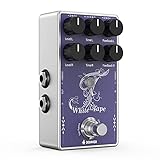
10. Donner White Tape – Best Budget Stereo Tape Delay
Donner White Tape Stereo Delay Pedal, Analog Delay with Echo Effect, True Bypass, 2 Independent Channels for Electric Guitar, Bass, Synth, Drum Machine
Tape/Analog
2 Stereo Channels
25-1000ms per Channel
True Bypass
Metal Enclosure
9V DC 25mA
Pros
- Two independent stereo delay channels
- Warm organic tape-like sound
- Independent controls per channel
- Excellent for ambient and shoegaze
- Very low power consumption
Cons
- Some debate about true analog vs digital emulation
- No tap tempo
- Some noise when used with other pedals
The Donner White Tape is one of the most interesting budget delay pedals I have come across because of its dual-channel stereo design. Each channel has independent Time, Feedback, and Level controls, giving you the ability to create complex stereo delay patterns that are normally only possible with pedals costing much more. You can run two instruments through it simultaneously or set up wildly different delay times on left and right channels for immersive stereo spreads.
The tape echo emulation is the main selling point, and it does a convincing job of capturing that warm, slightly degraded character of vintage tape machines. The repeats have a softness to them that sits nicely under your playing without fighting for space in the mix. With 25ms to 1000ms per channel, you have plenty of range for everything from tight slapback to long, sweeping echoes.
I tested this pedal in a stereo setup with two amps and the results were genuinely impressive for the price. Panning different delay times left and right creates a massive, three-dimensional sound that works beautifully for ambient, post-rock, and shoegaze styles. The metal enclosure feels well-built, and the boutique aesthetic looks much more expensive than it actually is.
There is some debate in the community about whether this pedal uses true analog bucket brigade circuits or digital emulation. Based on my testing, the sound characteristics suggest it is digital emulation with analog voicing, but the end result sounds warm and musical regardless of the technical implementation. At 25mA power draw, it is extremely efficient and plays nice with daisy-chain power supplies.
Who Should Buy the Donner White Tape
Guitarists who want stereo delay on a budget. Ambient, shoegaze, and post-rock players will get the most out of the dual-channel design. It is also a great choice for keyboardists and synth players who want to add tape-echo character to their rig. The versatility of independent channel controls opens up creative possibilities that other budget delays simply cannot match.
Who Should Skip the Donner White Tape
If you need tap tempo for live tempo syncing, this pedal does not have it. Players who want absolute analog authenticity should consider the MXR Carbon Copy instead. And if you plan to use it alongside many other pedals on a shared power supply, be aware of potential noise issues.
11. JOYO JF-08 – Best Ultra-Budget Analog-Voiced Delay
JOYO Digital Delay Guitar Pedal, Analog-Voiced with Special Filter Circuit, 25-600ms for Electric Guitar & Bass, True Bypass (JF-08)
Analog-Voiced Digital
25-600ms
True Bypass
Aluminum Alloy
Battery or 9V DC
390g
Pros
- Warm mellow analog-style tone
- Extremely affordable
- Works as subtle reverb-like ambience
- True bypass preserves tone
- Lightweight and compact
Cons
- Eats batteries very quickly
- Time adjustment is sensitive
- DC adapter not included
- Some signal loss reported
The JOYO JF-08 is about as affordable as delay pedals get, and it still manages to deliver a warm, musical sound that far exceeds what the price tag suggests. JOYO uses a special filter circuit to give the digital delay processing an analog-voiced character. The result is a mellow, vintage-flavored delay that works particularly well for blues, classic rock, and any style where you want the repeats to sit comfortably under your playing.
With a 25ms to 600ms delay range, the JF-08 covers the essential territory. Short settings give you slapback for rockabilly and country licks. Medium settings produce a warm echo that complements clean tones beautifully. Crank it toward 600ms and you get spacious, ambient washes that can function almost like a reverb when the mix is set low.
The three-knob layout is dead simple. Time, Repeat, and Level. No modes, no switches, no menus. Just plug in, turn the knobs, and play. For beginners who are overwhelmed by the feature sets of multi-mode delays, this simplicity is refreshing. The true bypass switching ensures your dry signal passes through untouched when the pedal is off.
Be aware that battery life is poor. The pedal eats batteries quickly, so a 9V DC adapter is essentially required. The time knob is also quite sensitive due to the full 25-600ms range being crammed into a single rotation. Small adjustments can cause big changes in delay time. Some users have also reported minor signal loss, though I did not find it significant enough to be problematic in normal playing situations.
Who Should Buy the JOYO JF-08
Absolute beginners on the tightest budget who still want a quality-sounding delay. It is also a good choice as a secondary delay on a pedalboard where you need a simple, warm echo for specific songs. Blues and classic rock players who prefer darker, more subdued repeats will appreciate its character.
Who Should Skip the JOYO JF-08
Anyone who needs multiple delay modes, tap tempo, presets, or stereo operation. The 600ms maximum delay time may also feel limiting for players who want longer ambient washes. If you can stretch your budget slightly, the Donner Echo Square offers more features for not much more money.
12. BOSS RE-2 Space Echo – Best Tape Echo Pedal
BOSS RE-2 Space Echo | Tape Echo Delay Reverb Effects Pedal | Modern Compact Recreation of the Legendary Roland RE-201 Space Echo | True Stereo | Spring Reverb | Wow & Flutter
Tape Delay + Spring Reverb
Stereo Patch
Tap Tempo
Expression Pedal Input
Battery Powered
Compact
Pros
- Authentic Roland RE-201 Space Echo recreation
- Combines delay and spring reverb
- Battery powered for portability
- Stereo signal routing
- Multiple tape effect settings
Cons
- Learning curve for dialing in sounds
- Requires input connected to power on
- Limited stock availability
- Some settings can be overwhelming
The BOSS RE-2 Space Echo brings the legendary sound of the Roland RE-201 tape echo into a modern compact pedal format. The original RE-201 is one of the most revered echo units in recording history, used on countless classic albums. The RE-2 captures that magic with remarkable accuracy while adding features that make it practical for modern pedalboards, including tap tempo, stereo output, and expression pedal control.
What makes the RE-2 special is the combination of tape delay and spring reverb in a single unit. The tape delay has authentic wow and flutter, with repeats that degrade and saturate in that unmistakable way that only tape echo can produce. When you layer the spring reverb on top, the result is a rich, atmospheric sound that works beautifully for everything from surf rock to ambient meditation music.
I found the RE-2 particularly effective when stacked with a separate reverb pedal. Running the RE-2’s tape echo into a plate or hall reverb creates sonic textures that are genuinely transportive. The stereo signal patch lets you route the delay and reverb independently for maximum flexibility. And the fact that it can run on batteries with approximately 4.5 hours of life makes it viable for grab-and-go setups without a power supply.
The learning curve is real, though. The RE-2 has multiple tape effect settings and fine adjustment options that take time to understand. Some settings can sound over the top if not dialed in carefully. You also need to have something plugged into Input A for the pedal to power on, which confused me the first time I used it. With only 4 units in stock at the time of writing, availability is limited, which speaks to the demand for this pedal.
Who Should Buy the BOSS RE-2 Space Echo
Players who want authentic tape echo character in a modern, reliable pedal. It is ideal for ambient, surf rock, rockabilly, and any genre where vintage echo character is essential. Studio musicians will appreciate the genuine Roland RE-201 sound without the maintenance headaches of an actual tape machine. The combination of delay and reverb in one unit is a major space saver on pedalboards.
Who Should Skip the BOSS RE-2 Space Echo
Guitarists who need pristine, modern digital delay with extensive presets and MIDI should look at the Strymon TimeLine or BOSS DD-200. If you want a straightforward set-and-forget delay, the RE-2’s tape character and multiple settings might be more complexity than you need. The price also places it above typical compact delay pedals.
How to Choose the Right Delay Pedal
Finding the right delay pedal comes down to understanding your needs across a few key areas. After testing these pedals extensively and reading through hundreds of player discussions on forums, here are the factors that matter most when making your decision.
Analog vs Digital vs Tape Delay
This is the most fundamental choice you will make. Analog delays use bucket brigade device circuits to create warm, organic repeats that degrade naturally with each cycle. They sound musical and vintage but are typically limited to 600ms or less of delay time. The MXR Carbon Copy and JOYO JF-08 fall into this category.
Digital delays use processors to create pristine, clean repeats with precise timing and often much longer delay times. They offer more features like presets, tap tempo, and multiple modes but can sound clinical compared to analog units. The BOSS DD-8, DD-200, and Strymon TimeLine are excellent digital options.
Tape echo pedals emulate the sound of vintage tape machines, complete with wow, flutter, and tape saturation. They sit between analog and digital in character, offering warm repeats with more complexity than basic analog delay. The BOSS RE-2 Space Echo and Donner White Tape deliver tape character at different price points.
Tap Tempo and Presets
If you play live, tap tempo is essential. Being able to synchronize your delay to the tempo of each song in real time makes a massive difference in how professional your playing sounds. The BOSS DD-200 has the best tap tempo implementation of any pedal on this list, with a dedicated footswitch and clear visual feedback.
Presets matter if you use different delay sounds throughout a performance. Being able to save and recall your favorite settings mid-song saves you from having to bend down and twist knobs between songs. The Strymon TimeLine and BOSS DD-200 both offer preset storage, while simpler pedals like the MXR Carbon Copy and JOYO JF-08 do not.
Delay Time Range
Short delay times under 200ms are perfect for slapback echo, a staple of country and rockabilly. Medium delay times from 200ms to 500ms work for most rock, pop, and blues applications. Long delays from 500ms to several seconds are used for ambient textures, post-rock, and creating atmospheric soundscapes.
Consider what styles you play most often. If you primarily play blues or classic rock, you may never need more than 600ms. If you are into ambient or post-rock, look for pedals with delay times of one second or more.
Pedalboard Space and Power
Physical size matters more than most players anticipate. The Donner Echo Square and JOYO JF-08 are mini pedals that fit on even the most crowded boards. The Strymon TimeLine is considerably larger and requires dedicated space. Always measure your available board space before committing to a pedal.
Power consumption is also important. The MXR Carbon Copy draws only 9mA, making it easy to power alongside many other pedals. The BOSS DD-200 and Strymon TimeLine draw 300mA each, which means they may need a dedicated output on your power supply. If you are looking for gear to pair with your delay, check out our guide to the best portable amps for travel for practice and small-gig amplification.
FAQs
What is the best delay pedal on the market?
The BOSS DD-8 is widely considered the best all-around delay pedal in 2026. It offers eleven versatile delay modes, a built-in looper, stereo output, and legendary BOSS durability in a compact format. For professional use, the Strymon TimeLine provides unmatched depth with twelve delay algorithms, MIDI control, and studio-grade sound quality. For budget-conscious players, the JHS Pedals 3 Series and Donner Echo Square deliver excellent value.
What delay pedal should I get as my first?
For your first delay pedal, start with something affordable and simple. The JHS Pedals 3 Series Delay is an excellent choice because it offers both digital and analog voicings in one pedal, letting you discover which character you prefer. The Donner Echo Square is another great starter option with seven delay modes at a budget price. Both are easy to operate and sound much better than their prices suggest.
What is the difference between analog and digital delay?
Analog delay uses bucket brigade device circuits that produce warm, organic repeats where each echo degrades slightly in high-frequency content, creating a natural-sounding decay. Digital delay uses processors to create clean, precise repeats with exact timing, often supporting longer delay times, multiple modes, tap tempo, and presets. Analog delays like the MXR Carbon Copy are prized for their musical character, while digital delays like the BOSS DD-8 offer more features and versatility.
Where should I put my delay pedal in the signal chain?
Delay pedals typically go near the end of your signal chain, after overdrive and distortion but before reverb. A common signal order is tuner, compressor, overdrive, distortion, modulation (chorus, phaser), delay, then reverb. Placing delay after distortion means the echoes repeat the distorted tone, which sounds more natural. Placing delay before reverb allows the reverb to add space to both your dry signal and the delay repeats.
What delay does John Mayer use?
John Mayer has used several delay pedals throughout his career, with the BOSS DD-2 and DD-3 being among his most well-known choices for live performances. He has also been seen using Strymon TimeLine and various tape echo units. Mayer typically uses delay subtly for slapback and short ambient repeats rather than long, pronounced echo effects, favoring a warm, analog-style delay character that sits behind his playing.
After testing all twelve of these pedals, my top recommendation for most guitarists is the BOSS DD-8. It offers the best combination of versatility, sound quality, and reliability in a compact format. The eleven delay modes cover nearly every style, and the built-in looper adds functionality that makes this pedal a genuine workhorse.
For players on a tighter budget, the JHS Pedals 3 Series Delay is a fantastic choice that punches well above its price with USA-made quality and a 4-year warranty. And if you are just starting out and want to experiment with delay without spending much, the Donner Echo Square gives you seven modes at a price that is hard to believe.
The best delay pedals in 2026 span a wide range of prices and features, but they all share one thing: they make your guitar sound bigger, more atmospheric, and more expressive. Pick the one that matches your budget and playing style, and you will wonder how you ever played without it.