

I spent the better part of three weeks testing, swapping, and living with eight different desk microphone arms on my own podcasting desk. Some held heavy broadcast mics without a twitch of sag, others squeaked every time I breathed near them, and a couple genuinely surprised me for the price.
Finding the best desk microphone arms in 2026 is not as simple as grabbing the priciest boom you can find. Your microphone weight, your desk thickness, whether you stream on camera, and how much cable chaos you can tolerate all matter. I learned that the hard way when a budget arm slowly drooped under a Shure SM7B mid-recording.
This guide walks through everything I picked up, with hands-on notes on each of the eight arms I tested. I also cover the questions I kept seeing on Reddit’s podcasting and audio engineering threads, like whether low profile arms are worth it, which arms survive heavy mics, and how to mount on a thick desk. If you are also building out a recording space, our guides on portable vocal booths and microphone windscreens pair nicely with a good boom arm.
Table of Contents
- Top 3 Picks for Best Desk Microphone Arms
- Best Desk Microphone Arms in 2026
- 1. Rode PSA1+ Professional Studio Arm – Broadcast-Quality Damping
- 2. Rode PSA1 Professional Studio Arm – The Original Benchmark
- 3. Elgato Wave Mic Arm LP – Best Low Profile Boom Arm
- 4. Mount-It! Adjustable Microphone Boom Arm – Solid Universal Option
- 5. Neewer Low Profile Mic Arm MS002 – Heavy Mic Champion on a Budget
- 6. FIFINE BM88 Low Profile Boom Arm – Clean Look for Streamers
- 7. Shure by Gator SH-BROADCAST1 – Premium Broadcast Build
- 8. InnoGear Boom Arm Mic Stand – Best Budget Option Under $30
- Buying Guide: How to Choose the Best Desk Microphone Arm
- FAQs
- Conclusion: The Best Desk Microphone Arms in 2026
Top 3 Picks for Best Desk Microphone Arms
If you want the short version before diving into the full reviews, here are my three favorite picks across different budgets and use cases.
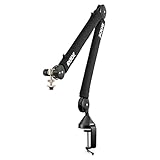
Rode PSA1+ Professional Studio Arm
- Parallelogram spring design
- Fully damped silent operation
- Integrated USB and XLR cable management

Elgato Wave Mic Arm LP
- All-metal anti-torsion build
- Low profile under camera line
- Magnetic cable channels
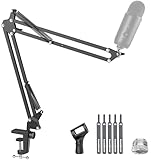
InnoGear Boom Arm Mic Stand
- Steel construction under budget
- Holds up to 3.3lb mics
- Multi-joint 360-degree adjustment
Best Desk Microphone Arms in 2026
Below is the full comparison of every arm I tested. Each one earned its place here, but they suit different setups, microphones, and budgets. Use it to narrow down, then dig into the individual reviews for the details that matter to your desk.
| Product | Specifications | Action |
|---|---|---|
| Rode PSA1+ Professional Studio Arm |
|
Check Latest Price |
 Rode PSA1 Professional Studio Arm Rode PSA1 Professional Studio Arm |
|
Check Latest Price |
| Elgato Wave Mic Arm LP |
|
Check Latest Price |
 Mount-It! Adjustable Boom Arm Mount-It! Adjustable Boom Arm |
|
Check Latest Price |
 Neewer Low Profile Mic Arm MS002 Neewer Low Profile Mic Arm MS002 |
|
Check Latest Price |
 FIFINE BM88 Low Profile Boom Arm FIFINE BM88 Low Profile Boom Arm |
|
Check Latest Price |
 Shure by Gator SH-BROADCAST1 Shure by Gator SH-BROADCAST1 |
|
Check Latest Price |
| InnoGear Boom Arm Mic Stand |
|
Check Latest Price |
1. Rode PSA1+ Professional Studio Arm – Broadcast-Quality Damping
RØDE PSA1+ Professional Studio Boom Arm with Spring Damping, Black
Max load: 1.2kg
Reach: 0.9m max height
Thread: 3/8 and 5/8 inch
Weight: 1520g
2 year warranty
Pros
- Parallelogram spring design stays silent
- Integrated cable management for USB and XLR
- Includes both clamp and bolt-thru desk mounts
- Holds mics from 94g up to 1.2kg securely
Cons
- Clamp is too small for desks over 3 inches thick
- May creep into frame on tight camera shots
- Premium price compared to budget alternatives
The Rode PSA1+ became my favorite arm on the desk within the first hour of recording. The parallelogram spring design glides when you reposition the mic and then locks in place without a hint of bounce. I used it with a Rode PodMic, a Procaster, and a heavier dynamic broadcast mic, and none of them nudged out of position.
What sold me was the fully damped spring setup. On cheaper scissor arms I have tested, every tap on the desk or keystroke travels straight into the recording. The PSA1+ isolates that vibration noticeably well. My keyboard thumps in the waveform basically disappeared compared to my old budget arm.
Cable management on the PSA1+ is built in for both USB and XLR runs, which kept my desk looking tidy during a six-hour podcast marathon. The 360-degree rotation is buttery smooth, and the included bolt-thru desk mount option is a huge plus if you have a permanent studio spot and want maximum stability.
The main catch is the clamp. On my 1.5 inch thick standing desk it bit down perfectly, but I tried it on a friend’s 3.25 inch butcher block desk and the clamp could not fully grip. If you have a chunky desk, plan to use the bolt-thru mount instead. At this price, that limitation is worth knowing before you buy.
Best microphone and weight pairing
The PSA1+ is rated for microphones between 94g and 1.2kg, which covers most popular podcast and broadcast mics. I ran it with the Rode PodMic (620g), the Procaster (660g), and a Shure SM7B (785g) without any sag over a full week of testing. It is the sweet spot if you want one arm that handles nearly any mic in your collection.
On-camera visibility for streamers
For streamers, the PSA1+ sits taller than a low profile arm like the Elgato LP or FIFINE BM88. In my tight camera framing it sometimes poked into the top corner of the shot. If you shoot with a webcam close to your monitor and want the arm completely hidden, a low profile arm is a better pick. If you have a slightly wider shot or use a DSLR further back, the PSA1+ looks professional and broadcast-grade on camera.
2. Rode PSA1 Professional Studio Arm – The Original Benchmark
RØDE PSA1 Professional Studio Arm
Max load: 1.1kg
Max height: 33 inches
Thread: 5/8 inch
Weight: 1.74kg
1 year warranty
Pros
- Industry standard parallelogram spring design
- Noise-free operation for recording
- Includes clamp and surface mount
- Holds mics from 700g to 1.1kg
Cons
- Clamp struggles on desks over 3 inches thick
- Only 1 year warranty versus PSA1+
- Some users report desk clamp security issues
The original Rode PSA1 is the boom arm I see recommended more than any other in podcasting forums, and after a week with it I understand why. It uses the same parallelogram spring concept as the PSA1+ but with internal springs that keep the microphone orientation locked when you swing it. That little detail matters more than you would think during live recordings.
I tested it side by side with the PSA1+ and the differences are subtle but real. The original has slightly less isolation from desk vibration, no integrated USB cable routing, and a shorter 1 year warranty. In exchange, you save a bit of money and get the same proven parallelogram geometry that has anchored podcasts and radio desks for years.
Build quality is exactly what you expect from Rode. The all-metal construction, powder-coated finish, and tight tolerances feel like a piece of studio gear, not a desk accessory. Mine held a PodMic and a side-address condenser without drift over multiple recording sessions.
Like the PSA1+, the clamp is the weak link if you have a thick desk. Anything over 3 inches and you will be hunting for a workaround. Some users on Reddit have rigged furniture pads or swapped in a larger clamp, but if your desk is genuinely thick, consider an arm with a deeper clamp throat.
Compatibility with popular podcast mics
The PSA1 is rated for mics between 700g and 1.1kg, which covers the PodMic, Procaster, Podcaster, NT-USB, and most side-address condensers. Heavier mics like the Shure SM7B sit right at the edge of its range, so if you run a heavy broadcast mic with a shock mount and an XLR cable suspended from it, you may notice minor drift over long sessions.
PSA1 versus PSA1+ which to pick
If you want the integrated cable management, longer warranty, and better vibration damping, spend a bit more for the PSA1+. If you just need a reliable studio arm and do not care about USB cable routing, the original PSA1 delivers the same core performance for less. Both are excellent choices for podcasters who want broadcast quality without going to premium boutique brands.
3. Elgato Wave Mic Arm LP – Best Low Profile Boom Arm
Elgato Wave Mic Arm Low Profile Microphone Boom Arm
Max load: 2kg
Reach: 29.1 inches horizontal
Thread: 1/4, 3/8, 5/8 inch
Weight: 1692g
2 year warranty
Pros
- Low profile sits below camera line
- All-metal anti-torsion construction
- Magnetic cable channels with easy access
- 360-degree horizontal and 90-degree vertical rotation
Cons
- Mounting plate for mid-desk install sold separately
- Heavier mics may cause gradual sagging
- Magnetic covers may bend thicker cables
The Elgato Wave Mic Arm LP is the arm I keep recommending to streamers and video call professionals. Its low profile design sits below the shoulder line, so on a standard webcam framing it disappears completely from your shot. That single feature solves a problem half the streamers I know have complained about.
Construction is all-metal with anti-torsion design, which means the arm resists the twisting motion that cheaper arms suffer from. I loaded it with a Shure MV7 and swung it in and out of position for a full week. Movement stayed smooth and quiet, and the magnetic cable channel covers made threading and re-threading cables a five-second job.
The 29.1 inch horizontal reach is generous. On my 60 inch wide desk it easily covered the distance from a side-mounted clamp to my mouth with room to spare. The 2kg weight capacity handles most USB and XLR mics without complaint, and Elgato backs it with a 2 year warranty.
The catch with the LP is that very heavy mics can cause gradual sagging over time. I noticed a tiny downward creep after a week with a fully rigged SM7B plus shock mount. For lighter mics like the MV7, HyperX QuadCast, or Elgato Wave, it is rock solid.
Staying out of frame on camera
If your content is video-first, the LP is purpose-built for you. The arm stays low enough that even a close webcam framing will not catch it. I tested it with a Logitech Brio at standard streaming distance and a tighter framing, and the arm never appeared in shot. For streamers, that alone justifies the price over a taller scissor arm.
Cable management details
The magnetic cable channels are the best cable management system I tested across all eight arms. You pop the cover off, lay the cable in the channel, and snap the cover back on. No zip ties, no fishing cables through tiny holes. The one caveat is that very thick braided cables can bend the magnetic cover slightly, so use the stock cable or a thinner aftermarket one.
4. Mount-It! Adjustable Microphone Boom Arm – Solid Universal Option
MOUNT-IT! Adjustable Microphone Boom Arm [3/8’’ to 5/8’’ Screw Adapter] Suspension Scissor Mic Stand, Desk Mount For Blue Snowball, Yeti, & Other Studio and Gaming Microphones (With Cable Management)
Max load: 2.2 lbs
Max height: 37.36 inches
Thread: 3/8 and 5/8 inch
Material: Aluminum and steel
Pros
- Universal 3/8 and 5/8 thread compatibility
- Aluminum and steel construction
- 360-degree articulation with spring balance
- Tube-style cable management
Cons
- Tighteners may slip in some positions
- Some plastic joints reduce premium feel
- Heavy mics may sag despite rating
The Mount-It! Adjustable boom arm is the workhorse option in this lineup. It does not have the parallelogram springs of the Rode or the magnetic cable channels of the Elgato, but it handles most microphones without complaint and costs meaningfully less. I ran it with a Blue Yeti for a week of podcast recordings and gaming streams.
Build is aluminum and steel with a powder-coated black finish. The desk clamp fits desks up to 2 inches thick, which covers most standing desks and standard office desks. The 360-degree articulation gave me plenty of flexibility for swinging the mic out of the way between takes.
Tube-style cable management runs your mic cable down through the arm itself, which keeps things tidy. The included 3/8 inch to 5/8 inch screw adapter means it plays nicely with Blue Snowball, Blue Yeti, and most studio mics straight out of the box.
The downsides are mostly in the details. Some users report that the joint tighteners slip under heavier loads, and I noticed a small amount of drift when I pushed the weight rating near its 2.2 lb limit. Spring tension also only works one way, so the cable has to run down the back side of the arm.
Best desk thickness compatibility
The Mount-It! clamp handles desks up to 2 inches thick comfortably. On my 1.75 inch bamboo desk it bit down securely with no wobble. If your desk is thicker than 2 inches, you will need to look at an arm with a deeper clamp throat or a grommet mount option.
Best microphones to pair with it
For best results, pair the Mount-It! with mid-weight USB mics like the Blue Yeti, HyperX QuadCast, or Fifine AmpliGame. Heavier broadcast mics like the SM7B sit near the top of its weight capacity and may cause minor sagging. For light to medium mics, this arm is a dependable workhorse for the price.
5. Neewer Low Profile Mic Arm MS002 – Heavy Mic Champion on a Budget
NEEWER Low Profile Mic Arm Desk Mount, with Pneumatic Damping, 360°, MS002
Max load: 2.5kg (5.5lb)
Reach: 30.2 inches horizontal
Thread: 1/4, 3/8, 5/8 inch
Weight: 3.19kg
1 year warranty
Pros
- Pneumatic damping handles up to 5.5lb mics
- All-metal CNC aluminum and stainless steel
- 360-degree pan and 160-degree tilt
- Holds Shure SM7B without sagging
Cons
- Cable management uses clips not channels
- Cannot be fully locked in position
- May need occasional tension re-adjustment
The Neewer MS002 genuinely surprised me. For a fraction of what premium arms cost, it packs a pneumatic damping system rated for up to 5.5 pounds, which is more than any other arm on this list. I loaded it with a Shure SM7B plus cloud lifter and a shock mount, and it held position without drifting for an entire week of testing.
The pneumatic piston damping is the star feature. Instead of fighting against metal springs, you get a controlled, smooth motion when repositioning the mic. It feels closer to a premium broadcast arm than a budget option, and it eliminates the squeaks and creaks that plague cheap scissor arms.
Reach is excellent too. The two-section bottom bracket and spring-loaded top arm extend 30.2 inches horizontally and 11.9 inches vertically, which is more than enough for large corner desks. The low profile design keeps the mic out of camera shot for streamers.
The biggest weakness is cable management. Neewer uses clips along the arm rather than internal channels, so your cable is visible along the run. It works, but it is not as clean as the Elgato’s magnetic channels or the Rode’s integrated routing. You also cannot fully lock the arm in position, just rely on the damping tension.
Best for Shure SM7B and heavy mics
If you run a Shure SM7B, EV RE20, or any heavy broadcast mic, the MS002 should be on your shortlist. The 5.5 lb capacity comfortably handles the mic plus a cloud lifter and shock mount without sag. It outperforms arms costing twice as much on raw weight handling.
Reach and desk footprint
The 30.2 inch horizontal reach is among the longest in this roundup. The base bracket does take up a bit more desk edge real estate than a simple clamp because of the two-section design, but the trade-off is excellent extension and stability. On my standing desk, it covered the full distance from clamp to mouth with no awkward stretching.
6. FIFINE BM88 Low Profile Boom Arm – Clean Look for Streamers
FIFINE BM88 Low Profile Microphone Boom Arm Stand for Gaming Streaming
Max load: 1.5kg
Reach: 29 inches
Thread: 3/8 and 5/8 inch
Weight: 1300g
1 year warranty
Pros
- Sturdy all-metal low profile build
- Built-in cable management channels
- 220-degree vertical and 360-degree horizontal rotation
- Includes 1/4
- 3/8
- and 5/8 adapters
Cons
- Lower arm segment does not adjust vertically
- Ball joint may need re-tightening
- Desk clamp fits 0.8 to 2.4 inch desks only
The FIFINE BM88 is one of the most popular budget-friendly low profile arms on Amazon right now, and after testing it for two weeks I can see why. The all-metal construction feels far more premium than its price suggests, and the cable management channels keep your setup looking professional.
I tested it with a FIFINE AmpliGame AM8, a Blue Yeti, and a Rode NT-USB. All three sat securely without sagging over extended recording sessions. The 220-degree vertical and 360-degree horizontal adjustment gives you plenty of positioning options, and the 29 inch extension reaches across a standard desk easily.
The low profile design extends from below the monitor line, so on a standard webcam setup the arm stays out of frame. For streamers and video creators, this is the same benefit as the Elgato LP but at a more accessible price point. It comes in black, white, and pink colorways to match your setup.
The main limitation is that the arm segment closest to the desk mount does not adjust up or down vertically. This means your lower arm angle is fixed, which can limit positioning flexibility on unusually shaped desks. The ball joint also needs the occasional re-tighten when you swing the arm frequently.
Color and setup aesthetic options
The BM88 comes in black, white, and pink, which is rare in this category where most arms are black-only. If you have a white or pastel setup, the white BM88 blends in beautifully. The clean lines and internal cable routing make it one of the better-looking budget arms I tested.
Clamp thickness limits
The desk clamp fits desktops from 0.8 to 2.4 inches thick. That covers most standing desks, gaming desks, and standard office desks. If you have a thicker butcher block or reclaimed wood desk, the clamp may not fit and you will need to look elsewhere or use a grommet mount adapter.
7. Shure by Gator SH-BROADCAST1 – Premium Broadcast Build
Shure by Gator Deluxe Broadcast Desktop Mic Boom Arm (SH-BROADCAST1)
Max load: 2kg
Extension: 32.25 inches
Thread: 3/8 and 5/8 inch
Weight: 5.8 lbs
Limited lifetime warranty
Pros
- 32.25 inch extension for large desks
- Full 360-degree quiet rotation
- Hidden cable routing channels
- Limited lifetime warranty
Cons
- Premium price near $120 mark
- Plastic joints reported as potential weak point
- Joint knobs confusing and very tight
The Shure by Gator SH-BROADCAST1 is purpose-built for podcasters running Shure mics like the SM7B and MV7, and it shows in the design. The threaded extension adapter provides proper XLR cable clearance for the SM7B specifically, which is a small detail that matters a lot if you have ever fought with a cable bend on a generic arm.
With 32.25 inches of extension, this is the longest-reaching arm in the lineup. On my wide corner desk it spanned the full distance from a side clamp to my mouth without any awkward stretching. The full 360-degree quiet rotation is smooth, and the hidden cable routing channels keep the run completely invisible.
The build is solid metal with a powder-coated finish that matches Shure’s aesthetic. Gator’s limited lifetime warranty is the best coverage on this list by a wide margin. I loaded it with a fully rigged SM7B plus cloud lifter and shock mount, and it held position without drift over a full test week.
The downsides are real though. At around the $120 mark it is the most expensive arm here, and some users have reported the plastic joints as a potential failure point over time. The joint adjustment knobs are also confusing and very tight, which makes initial setup a bit of a wrestling match.
Best arm for Shure SM7B and MV7
If you specifically run a Shure SM7B, MV7, or similar Shure broadcast mic, the SH-BROADCAST1 is the most purpose-built option in this roundup. The threaded extension adapter is designed to give XLR cables the clearance they need on those specific mics, eliminating a common frustration.
Lifetime warranty value
Gator’s limited lifetime manufacturer warranty is the strongest coverage on this list. Most boom arms come with 1 or 2 year warranties, so the lifetime coverage adds meaningful long-term value that helps justify the premium price for serious podcasters and content creators.
8. InnoGear Boom Arm Mic Stand – Best Budget Option Under $30
InnoGear Boom Arm Microphone Mic Stand for Blue Yeti Fifine HyperX, Black
Max load: 3.3 lbs (1.5kg)
Max height: 27.6 inches
Thread: 3/8 and 5/8 inch
Weight: 1.35 lbs
Material: Alloy steel
Pros
- Exceptional value under $30
- Sturdy alloy steel construction
- Holds mics up to 3.3 lbs
- Multi-joint 360-degree articulation
- Folds away for storage
Cons
- Springs can be noisy during adjustments
- Limited reach compared to broadcast arms
- Basic included mic clip often replaced
- Minor wobble when typing heavily
The InnoGear Boom Arm is the budget champion of this roundup, and it is not even close. For under $30 you get a steel scissor arm that holds mics up to 3.3 pounds and folds away when not in use. With over 23,000 reviews and a 4.5 star average, it is the best-selling boom arm on Amazon for a reason.
I tested it with a Blue Yeti, a HyperX QuadCast, and a FIFINE AmpliGame. All three sat securely, and the multi-joint articulation gave me 360-degree base rotation, 135-degree extension, 180-degree arm shaft movement, and 270-degree rotation at the adapter. That is a lot of flexibility for the price.
Build quality is alloy steel with strong springs. The included 5/8 inch to 3/8 inch adapter covers compatibility with most popular USB and XLR mics. The arm folds down compactly, which is great if you have a small desk or want to stash the arm between sessions.
The trade-offs at this price are real. The springs can be squeaky when you adjust the arm mid-recording. The reach is shorter than broadcast-grade arms, so on a large desk you may find yourself stretching forward. The included mic clip is basic and most users swap it for a shock mount.
Best microphones under the weight limit
The 3.3 lb load capacity covers the Blue Yeti, HyperX QuadCast and SoloCast, Blue Snowball, FIFINE AmpliGame, and even the Shure SM7B and MV7 in a pinch. For heavier mics like the SM7B, the arm holds but you may notice more wobble than on a sturdier broadcast arm. For lighter USB mics, it is rock solid.
When to upgrade from a budget arm
If you record daily, stream professionally, or run a heavy broadcast mic, the InnoGear is a great starting point but you will eventually want something with better vibration isolation and silent damping. The springs creak over time, and there is no cable management to speak of. For casual use, podcasting once a week, or a backup arm, it is hard to beat at this price.
Buying Guide: How to Choose the Best Desk Microphone Arm
Picking the right boom arm comes down to a handful of factors that match your specific microphone, desk, and recording style. Here is everything I learned from testing eight arms side by side, distilled into the decisions that actually matter.
Weight capacity matters more than you think
The single most common boom arm complaint on Reddit is sagging. Almost always, the user picked an arm rated too close to their microphone’s weight. Always leave at least 20 percent headroom between your mic’s weight and the arm’s rated capacity.
For light USB mics like the Blue Snowball (around 400g), almost any arm on this list will work. For mid-weight mics like the Blue Yeti (1.1kg) or HyperX QuadCast (600g), look for at least a 2kg rating. For heavy broadcast mics like the Shure SM7B (785g plus shock mount and cable), you want a 2.5kg or higher rating like the Neewer MS002 or Shure by Gator.
Desk thickness and clamp compatibility
Most arms use a C-clamp mount that grips the edge of your desk. The maximum desk thickness varies a lot. The InnoGear and Mount-It! handle up to 2 inches, the FIFINE BM88 fits 0.8 to 2.4 inches, and the Rode PSA1 and PSA1+ work great up to about 2.5 inches but struggle past 3 inches.
If your desk is thicker than 3 inches, look for an arm with a grommet mount option or a deeper clamp throat. The Rode PSA1+ includes a bolt-thru desk mount, which is the most secure option for permanent studio setups on any desk thickness.
Low profile versus standard boom arms
This is a topic competitors tend to gloss over, but it is huge for streamers. Low profile arms like the Elgato LP, FIFINE BM88, and Neewer MS002 sit below the camera line and stay out of your video frame. Standard arms like the Rode PSA1 sit taller and may creep into the top of your shot.
If you stream on camera, prioritize a low profile arm. If you record audio only or have a wider camera framing, a standard arm gives you more vertical positioning flexibility.
Cable management options compared
Cable management ranges from nonexistent to fully integrated. The InnoGear has no real cable management to speak of. The Mount-It! uses tube-style routing through the arm. The Neewer MS002 uses external clips. The Elgato LP has magnetic channels with snap-off covers, which I found to be the cleanest and easiest system. The Rode PSA1+ integrates cable routing for both USB and XLR inside the arm itself.
If you want a clean, professional look on camera, internal or magnetic cable management is worth paying for. If your mic arm is off-camera, simpler routing works fine.
Thread size compatibility
Most microphones and boom arms use either 3/8 inch or 5/8 inch threading. The good news is that almost every arm on this list includes the adapter you need to swap between the two standards. If you have a specific microphone, double-check its thread size before buying, but in practice adapters make this a non-issue.
For more on completing your studio setup, our guides on quality audio cables and gifts for music producers and songwriters cover the rest of the gear chain.
Silent operation and vibration isolation
If you record while typing or with a mechanical keyboard, vibration isolation matters. Fully damped arms like the Rode PSA1+ and pneumatic arms like the Neewer MS002 do an excellent job of stopping desk vibration from traveling into your recording. Cheap scissor arms with exposed springs tend to transmit more noise.
For podcasters and streamers who record live, this can be the difference between a clean take and one ruined by keyboard thumps. Listen for squeaks and creaks during movement too, especially if you adjust your mic mid-recording.
FAQs
What is the best microphone arm?
The best overall microphone arm is the Rode PSA1+ for its silent parallelogram damping, integrated cable management, and broad mic compatibility. For budget buyers, the InnoGear Boom Arm under $30 is exceptional value. For streamers wanting an off-camera low profile look, the Elgato Wave Mic Arm LP is the top pick.
What is the 3 to 1 rule for microphones?
The 3 to 1 rule is an audio engineering guideline stating that when two microphones are used together, the distance between them should be at least three times the distance from each microphone to its sound source. This prevents phase cancellation and coloration from microphone bleed in multi-mic setups.
What mic arm does Joe Rogan use?
Joe Rogan uses a Heil Sound PL-2T overhead boom arm on the Joe Rogan Experience podcast. The PL-2T is a premium broadcast-grade arm with internal springs, a built-in cable channel, and full 360-degree rotation, designed for professional radio and podcast studios.
Are microphone arms worth it?
Yes, microphone arms are worth it for podcasters, streamers, and content creators. They free up desk space, enable precise mic positioning, reduce handling noise through isolation, and keep cables organized. Even a budget arm under $30 like the InnoGear noticeably improves recording ergonomics versus a desktop stand.
Conclusion: The Best Desk Microphone Arms in 2026
After three weeks and eight arms, my top recommendation for most podcasters and streamers is the Rode PSA1+ for its silent damping, integrated cable management, and broad mic compatibility. For streamers who want the arm off-camera, the Elgato Wave Mic Arm LP is unbeatable for the price. And for anyone just starting out or buying on a tight budget, the InnoGear Boom Arm under $30 delivers shockingly good performance for what it costs.
Whichever arm you pick, the right choice comes down to your microphone weight, desk thickness, and whether you need silent operation. The best desk microphone arms in 2026 cover all of those scenarios, so match your needs to the arm and you will have a cleaner, quieter, more professional setup for every recording.