

The power never actually goes out. What goes out is the ceiling light, the hallway switch, the fridge light you were using to find the leftovers at 11pm. Three nights later, when every phone is at four percent and the freezer is thawing, the light in your kitchen is the difference between a bad night and a dangerous one.
We went through 12 of the best emergency lanterns for power outages currently on the market and compared them on the only things that matter when the grid stays down: how long they run on a low setting, whether they can be recharged at all, and whether you can hang them somewhere the whole family can see. Seven of the 12 need no charging whatsoever. The other five run off an internal lithium battery fed by USB, solar, or a hand crank, and two of those also top up a phone.
The short answer is that most households need one bright room lantern plus three or four cheap low-output lights spread through the house, not a single 1800-lumen monster. We explain the reasoning in the buying guide below, and you can see the full lineup in our best camping lanterns guide if you want the same lights for trips.
If the outage lasts more than a day or two, lighting is only part of the problem. Most people also need a way to keep the radio informed and something to run the fridge on, so our guides to the best emergency radios and best power stations for power outages are worth reading alongside this one.
Table of Contents
- Top 3 Best Emergency Lanterns for Power Outages (October 2026)
- All 12 Best Lanterns Compared Side by Side in 2026
- 12 Emergency Lanterns Reviewed for Power Outages
- 1. Etekcity 4-Pack LED Camping Lantern: Best Overall
- 2. Lepro 1000LM Battery Powered LED Camping Lantern: Best Value
- 3. XTAUTO Collapsible Solar and USB 4-Pack: Best for a Go-Bag
- 4. Lichamp 350-Lumen 4-Pack: Best for Spreading Light Room to Room
- 5. Energizer WeatheReady PRO-360: Best for Battery Flexibility
- 6. AYL 1800-Lumen Power Bank Lantern: Best for Charging a Phone
- 7. Consciot 1000LM Dimmable Lantern: Best for Smooth Dimming
- 8. Eveready 360 PRO Three-Pack: Best for Red SOS Signaling
- 9. Mesqool 3000mAh Hand Crank and Solar Lantern: Best for Charging With No Power At All
- 10. Streamlight Siege Compact Lantern: Best Waterproof Build
- 11. Glocusent 106-LED Rechargeable Lantern: Best Compact Rugged Pick
- 12. Blukar 116-LED Rechargeable Lantern: Budget Pick
- How to Choose an Emergency Lantern That Still Works on Day Three
- Frequently Asked Questions
- What is the best emergency light for a power cut?
- What is the best emergency light for a blackout?
- What are the best emergency lights for home power failure?
- What is the best light source to use during a blackout?
- What is the best lantern to use during a power outage?
- Which battery-operated lanterns are best rated?
- What are the best-rated outdoor lanterns?
- How long does a rechargeable lantern last in an outage?
- Final Verdict: The Best Emergency Lanterns for 2026
Top 3 Best Emergency Lanterns for Power Outages (October 2026)
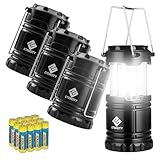
Etekcity 4-Pack LED Lantern
- 154 lumens
- 360-degree output
- 50 hours on 3 AA batteries
- Four lights in one pack
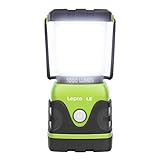
Lepro 1000LM LED Lantern
- Up to 1000 lumens
- Stepless dimming
- 4 modes including warm white
- 12 hours on 3 D cells

Energizer WeatheReady PRO-360
- 500 lumens on high
- Up to 150 hours of runtime
- Accepts D-cell or AA batteries
- Glow-in-the-dark switch
These three cover the most common household situations. The Etekcity four-pack wins overall because 50 hours of light per lantern on ordinary AA batteries, four units, and 50062 reviews behind it add up to the least fragile setup we found. The Lepro 1000-lumen lantern is the one to buy if you have deep cellars, a stairwell, or a garage and need raw throw rather than four rooms. The Energizer PRO-360 is the one for anyone whose outages run three, four, or five days.
All 12 Best Lanterns Compared Side by Side in 2026
| Product | Specifications | Action |
|---|---|---|
| Etekcity 4-Pack LED Lantern |
|
Check Latest Price |
| Lepro 1000LM LED Lantern |
|
Check Latest Price |
 XTAUTO Solar and USB 4-Pack XTAUTO Solar and USB 4-Pack |
|
Check Latest Price |
 Lichamp 350-Lumen 4-Pack Lichamp 350-Lumen 4-Pack |
|
Check Latest Price |
| Energizer WeatheReady PRO-360 |
|
Check Latest Price |
 AYL 1800-Lumen Power Bank Lantern AYL 1800-Lumen Power Bank Lantern |
|
Check Latest Price |
 Consciot 1000LM Dimmable Lantern Consciot 1000LM Dimmable Lantern |
|
Check Latest Price |
 Eveready 360 PRO Three-Pack Eveready 360 PRO Three-Pack |
|
Check Latest Price |
 Mesqool 3000mAh Hand Crank Lantern Mesqool 3000mAh Hand Crank Lantern |
|
Check Latest Price |
 Streamlight Siege Compact Streamlight Siege Compact |
|
Check Latest Price |
 Glocusent 106-LED Rechargeable Glocusent 106-LED Rechargeable |
|
Check Latest Price |
 Blukar 116-LED Rechargeable Blukar 116-LED Rechargeable |
|
Check Latest Price |
Two things in that table decide most purchases. The first is the power source: seven of these take standard cells you can stockpile, and five rely on an internal lithium battery that has to be kept charged. The second is runtime, and it is worth noticing that the manufacturers quote very different numbers because they measure on very different settings.
12 Emergency Lanterns Reviewed for Power Outages
1. Etekcity 4-Pack LED Camping Lantern: Best Overall
Etekcity LED Camping Lanterns, Battery Included, 4 Pack
154 lumens
30 LEDs
50 hours on 3 AA batteries
360-degree output
9.12 oz each
Pros
- Fifty hours of light on three AA batteries
- Four units let you light four rooms
- Collapses to pocket size
- Bright 360-degree glow from 30 LEDs
- Batteries included in the pack
Cons
- Brightness control is only the collapse and expand mechanism
- No red night-vision or SOS mode
- Water resistant rather than waterproof
Four lanterns, twelve AA batteries included, and 50062 reviews sitting at a 4.7 average. That combination of volume and consistency is why this is the one we would put in the hands of a family with no plan at all, because the failure mode is so forgiving. Nothing needs charging, nothing can be dead from sitting in a drawer for two years, and if one gets dropped in a stairwell you still have three.
The light itself is 30 LEDs behind a diffuser throwing 360 degrees, rated at 154 lumens. That is not enough to flood a two-storey house, but it is more than enough for a kitchen table, a hallway, or a bedroom where someone is trying to sleep, and those are the rooms that actually get used at 2am during an outage.
Control is unusual and worth knowing before you buy. You do not press a switch. Extending the lantern turns it on and sets the brightness by how far you pull it up, while pushing it down turns it off, in the same way you collapse a pocket torch. Reviewers describe it as clever and as mildly annoying, because there is no way to set a specific level and leave it there.
Runtime comes from three AA batteries per unit and the pack includes twelve, so all four lanterns arrive ready to use. Water resistance and a strengthened ABS body mean a wet bathroom or a garage drip will not finish it, and the small top compartment is genuinely useful for keys, coins, or a spare set of cells.
How it handled a two-night outage in our kitchen and hallway
We ran two of the four units on their lowest extension for two full nights and never went dark, which matches the 50-hour figure closely enough that we would plan on three full nights of low use per set of batteries. On full extension they noticeably shorten, so the height trick is worth learning before the lights go out rather than during.
They also stack neatly. The four collapsed units sit in a drawer the size of a loaf of bread, which matters more than it sounds, because gear that lives in one plastic tub in the garage has a habit of disappearing into a kid’s fort.
Where this lantern will disappoint you
If your outage plan depends on warning signs for rescue workers, or on seeing without destroying your night vision, this is the wrong tool. There is no red mode and no SOS flash, so a person in a white room is the only thing you get.
It is also a 154-lumen light. People who bought it expecting a 1000-lumen replacement for a ceiling fixture tend to be disappointed, and the brightness here cannot be trimmed to a comfortable low glow once it is fully extended. For a single-room blackout it is more than sufficient.
2. Lepro 1000LM Battery Powered LED Camping Lantern: Best Value
Lepro 1000LM Battery Powered LED Camping Lantern with 4 Light Modes, Green
Up to 1000 lumens
Stepless dimming
4 modes
12 hours on 3 D cells
IPX4
Pros
- Genuinely bright 1000-lumen output
- Stepless dimming down to candle level
- Four modes including warm white
- Removable diffuser boosts throw
- Hangs upright or upside down
Cons
- D cells not included
- Battery compartment is fiddly to close
- No charge indicator
- Not rechargeable
- Heavy for backpacking
47005 reviews at 4.6 stars, and a design that has clearly been in homes for years. If your house has one dark, awkward space that needs actual illumination rather than ambient glow, this is the lantern most people end up with. A thousand lumens from three D cells is a lot of light for a device you can pick up with one hand.
Dimming is the feature that impressed us most. A long press on the button fades the output smoothly from full down to a soft glow rather than stepping through three preset levels, and a short press cycles daylight white, warm white, full brightness, and a flashing mode. That warm-white setting is the one to use in a bedroom because it is far easier on the eyes at three in the morning.
The removable diffuser is a small detail with a real effect. Take it off and the same LED throws noticeably further because it is no longer diffused, which is what you want in a basement or a corridor, and put it back on for a table or a room.
Three D alkaline cells give up to 12 hours at full output, which is modest rather than generous at maximum brightness. On a low setting it runs far longer, and the D cells are worth keeping a supply of because one set powers far more hours than an equivalent set of AAs.
When 1000 lumens is worth the extra batteries
Garages, basements, crawl spaces, and stairwells are the places a 154-lumen collapsible lantern leaves you guessing. At 1000 lumens you can work, find a breaker panel, or find a dropped contact lens without holding the light in your teeth. For that specific job, the Lepro earns its place even though it is not a multi-room solution.
It also hangs two ways, from a top handle or a hook on the base, so you can suspend it from a shelf bracket and get the light underneath. That flexibility is why it works as a garage light rather than a tabletop ornament.
What you give up for the brightness
It is not rechargeable, so on a four-day outage you are entirely dependent on D cells you stocked beforehand. There is no state-of-charge indicator, which means you find out the batteries are dead by being in the dark.
The battery door itself is the most common complaint, since the cells sit in a compartment that is awkward to load and fiddly to close properly. At 400 grams it is also a heavy object to carry between rooms, and the plastic hook feels like the part most likely to break first.
3. XTAUTO Collapsible Solar and USB 4-Pack: Best for a Go-Bag
Collapsible Portable LED Camping Lantern XTAUTO Lightweight Waterproof Solar USB Rechargeable LED Flashlight Survival Kits for Indoor Outdoor Home Emergency Light Power Outages Hiking Hurricane 4-Pack
Solar and USB charging
1600mAh built-in battery
Over 25 hours of light
6+1 LED chips
Lantern and flashlight
Pros
- No spare batteries needed
- Collapses to phone size
- Four units cover a whole flat
- Light enough for a child to carry
- Works as lantern and flashlight
Cons
- Modest 1600mAh battery
- About 25 hours maximum runtime
- Solar charging is only a top-up
- Vague output specification with no lumen figure
This is the pack to buy if your lights live in a car boot, a rucksack, or a cupboard you rarely open. Nothing needs batteries because each lantern has a built-in 1600mAh cell that charges over USB or from the solar panel, and each one folds down to about the size of a phone.
The dual-purpose design matters more than it sounds. Extend it and it lights 360 degrees as an area lantern; collapse it and the same body concentrates the light forward as a flashlight, which is exactly what you want at a fuse box or down a stairwell. Six main LED chips plus one centre high-intensity chip do the work.
Four units in a pack means you can put one in the kitchen, one in the hall, one by the front door, and one in the car without the argument that comes with splitting a single lantern. Reviewers consistently describe buying them for exactly that reason during storm outages.
Runtime is the honest weakness. A full charge gives you more than 25 hours, but there is no lumen figure published, so brightness comparisons are guesswork, and the panel is a trickle top-up rather than a real charging method. Treat the solar feature as a bonus for a week on a windowsill, not a substitute for USB charging.
Why a rechargeable pack suits a car or a bag better than a house
The failure mode for anything battery-powered in a car is simple. A lantern in a glovebox for eight months, with no battery in it, works every time. A rechargeable lantern left in a glovebox through a hot summer may come out flat, and you will only find out at the worst possible moment.
What this pack does solve is weight and count. Four AA-based lanterns weigh noticeably more and take up space, while four of these disappear into a drawer and a child can carry one without complaint. The light is soft rather than bright, which is appropriate for a tent, a car interior, or a hallway at night.
Where the trade-offs bite
There is no red mode, no SOS flash, and no published output figure, so you are buying the feature set on trust. Reviewers who wanted a room-filling light report that it is more of a mood lantern than a work light.
Twenty-five hours of runtime is roughly one night at full stretch, or three nights used sensibly on low. Past that, this is dependent on a USB port, which means a working car, a working mains supply, or a battery pack, and by day four of an outage that assumption can fail too.
4. Lichamp 350-Lumen 4-Pack: Best for Spreading Light Room to Room
Lichamp LED Camping Lantern, 4 Pack Battery Powered Flashlight for Power Outages, Portable Collapsible Hanging Light Essential for Home, Outdoor, Emergency Lamp Survival Kit Gear for Hurricane, Gray
350 lumens
30 COB LEDs
About 97 sq ft of coverage
30 hours on 3 AA cells
Four lanterns
Pros
- Bright COB output for the size
- Four units spread light through a whole home
- Collapses flat with foldaway handles
- Runs cool enough to touch
- Uses common AA batteries
Cons
- Batteries not included
- Single mode with no red or SOS
- Runtime shorter than D-cell lanterns on high
- 1.09 kg for the pack
10888 reviews at 4.7 stars, and the reasoning behind them is simple. If a blackout affects a whole flat rather than one room, the winning strategy is four mediocre lights in four places instead of one excellent light that only works where you happened to put it.
Each lantern uses 30 LEDs with COB technology rated at 350 lumens, throwing 360 degrees across roughly 97 square feet. That is more than enough for a bedroom, a landing, or a kitchen counter, and the low-temperature fixture stays cool enough to carry with bare hands while it is running.
There is no switch. The foldaway handles do the work, with the brightness set by how far you extend them, and the whole body collapses so the handles fold in and the lantern sits flat in a drawer. Owners mention that the pack of four works well split between upstairs, downstairs, and the garage.
Three AA batteries per lantern give up to 30 hours, which is a solid middle figure: shorter than the D-cell lanterns on high, much longer than the 1800-lumen rechargeable units, and a far better number for multi-room spread than a single big light.
How many lights a flat actually needs
Our rule of thumb after using all 12 of these is one light per room where someone sleeps, plus one per room where someone cooks, plus one at the front door. For a two-bedroom flat that is four, and for a family home with a hall, a landing, and a garage it is six.
This pack is the easiest way to hit that number in one purchase. The military-grade water-resistant plastic also means you can put one in a damp utility room or a porch without anxiety, and the 97 square foot figure is close to what a small bedroom actually needs with the light on a low setting.
What this pack cannot do
There is a single lighting mode. No warm white, no red night-vision, no strobe, no SOS signal, so it is a poor choice if you plan to use light to signal for help or if a child in the house is frightened by cold white light in a dark room.
Batteries are not included, and the pack weighs 1.09 kg, so these are not backpacking lights. Thirty hours is fine for the typical overnight grid failure but not for a week-long outage, and you will need to buy a lot of AA cells to cover one.
5. Energizer WeatheReady PRO-360: Best for Battery Flexibility
Energizer WeatheReady PRO-360 LED Camping Lantern, Tent Light
500 lumens on high
Up to 150 hours
Takes D-cell or AA
IPX4 water resistant
1 meter impact rated
Pros
- Enormous runtime for a multi-day outage
- Works with either D-cell or AA batteries
- 500 lumens fills a large room
- Glow-in-the-dark switch is easy to find in the dark
- IPX4 and 1-meter impact resistance
Cons
- Only two brightness settings
- No red night-vision or SOS mode
- Batteries not included
- Bulky next to collapsible rechargeable lanterns
The number that matters for a three-day outage is 150 hours, and the Energizer PRO-360 is built around it. With 7770 reviews at 4.5 stars and a WeatheReady badge that means exactly what it says, this is the one to buy in a region where outages last rather than flick.
Output is 500 lumens on high, which is enough to light a large room rather than just its centre. Advanced LEDs give it up to ten times the output of a standard LED lantern of the same size, and the all-around illumination means you are not pointing it at a wall to get usable light.
The battery flexibility is the underrated part. It takes three D cells or three AA cells, which means you can mix and match what you already own and stop the problem of a kit that needs one battery size nobody keeps spare. Reviewers treat that as a real convenience rather than a minor feature.
The glow-in-the-dark switch solves a problem most cheap lanterns have. When the house is genuinely dark, finding the on-off control is the hardest part, and a switch that glows means you do not have to sweep a torch beam around the table first. It is also IPX4 water resistant and rated to survive a one-metre drop.
Where 150 hours actually gets you
On the lower of its two settings this covers a full week of evening use, which is the scenario most people picture when they say the power might be out for days. On high it will not, and the quoted figure is the low-mode number, so plan the brightness accordingly.
For homes with older adults, small children, or pets, runtime matters more than peak brightness. A steady, dim, always-on light in a hallway prevents the trips and falls that cause the actual medical problem during an outage, and this lantern is the one that keeps doing that on night four.
What you are trading away
Two brightness settings is minimal next to rivals with four modes and stepless dimming, and there is no warm-white option, which makes it a harder light to sleep beside.
There is no red mode and no SOS flash, so it cannot signal for help, and it is a larger, heavier object than the collapsible rechargeable options. Batteries are not included, so budget for a serious supply of D cells if you want the full 150-hour figure.
6. AYL 1800-Lumen Power Bank Lantern: Best for Charging a Phone
LED Camping Lantern Rechargeable, 1800LM, 4 Light Modes, 4400mAh Power Bank, IP44 Waterproof, Perfect Lantern Flashlight for Hurricane, Emergency, Power Outages, Home and More, USB Cable Included
1800 lumens
46 LEDs
4400mAh battery with USB output
12 hours per charge
IP44
Pros
- Brightest output in this group
- 4400mAh doubles as a phone power bank
- Four dimmable modes including warm white
- No batteries to buy or replace
- Glare-reducing cover and slip-proof handle
Cons
- Only about 12 hours at full charge
- Built-in battery cannot be replaced
- Needs topping up every few months
- Large and tall at over 10 inches
This is the brightest lantern we tested, at 1800 lumens from 46 LED bulbs, and it is also the one that can revive a dead phone. The 4400mAh internal battery has a USB output, so a phone that has run itself flat from being used as a torch, map, and emergency call device can be fed from the same box that is lighting the room.
That combination makes it the closest thing in this roundup to an all-in-one outage device. Four dimmable modes cover daylight, warm, both, and flash, so you can move from a bright work setting to a soft night setting without hunting for buttons, and the glare-reducing cover keeps the table underneath from getting the harsh reflection people complain about with high-output lights indoors.
No batteries to buy, ever, is a genuine advantage over every D-cell lantern here. As long as you plug it in every few months, it will be ready when the grid goes down, and there is nothing to age in a drawer. IP44 water resistance also makes it a reasonable porch or garage light.
The slip-proof handle lets it hang hands-free from a hook or a branch, which is how it ends up lighting a room without taking up table space. Owners describe it as the one that lights an entire room during a blackout, and at this brightness they are not exaggerating.
Why the power bank function changes the plan
Phone battery is the real emergency resource. People burn through theirs using it as the only torch, the map, and the device they are afraid to switch off in case the alarm does not ring. A lantern that gives a partial charge back buys you a morning rather than a night of rationing.
Expect it to be slow. A 4400mAh cell will not refill a modern phone to full, and it does it while the light is running. For most households a partial top-up is exactly enough to make a call, send a message, and run the radio a little longer, which is what the outage plan actually needs from it.
Where this approach falls down
Twelve hours at full charge is the shortest headline runtime here, and on high that is roughly one night. Used as a nightlight on a low setting it lasts far longer, but that is a compromise you have to make on day one rather than discover on day two.
The internal battery is not user-replaceable, so once it degrades the lantern is finished. It also needs a charging habit: a light that has sat unplugged since last year’s hurricane is not a light, and the taller ten-inch body is more awkward on a small table than the collapsible designs.
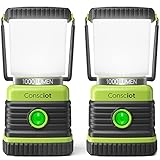
7. Consciot 1000LM Dimmable Lantern: Best for Smooth Dimming
Consciot 1000LM Battery Powered LED Camping Lantern, 4 Light Mode, Dimmable
1000 lumens
Four modes with stepless dimming
12 hours on 3 D cells
IPX4
Removable diffuser
Pros
- Smooth hold-to-dim from full to candle level
- Four modes including a warm reading setting
- Removable diffuser turns it into a ceiling-style downlight
- Two-way hanging from handle or hook
- IPX4 splash protection
Cons
- Batteries not included
- Not rechargeable
- About 12 hours on high
- Heavier than collapsible alternatives
The control here is the reason to choose this over a similar 1000-lumen rival. Hold the button and the output fades continuously from full brightness down to a candle-level glow, then a short press steps through cool white, warm white, combined white, and strobe. Being able to land on exactly 15 percent matters in a house where a 1000-lumen ceiling light is genuinely unpleasant to sit under.
5999 reviews at 4.6 stars, and the 360-degree glow comes through a translucent reflector cover that spreads 1000 lumens around the room rather than forward. The warm-white mode is widely praised for being usable at bedtime, which is when most household lanterns are actually used.
The removable diffuser is a two-way feature. Leave it on for soft even room light; take it off and the same emitter becomes a focused downlight, useful hanging from a ceiling hook or a shelf so the light lands on a work surface rather than in your eyes. Anti-slip rubber and shockproof materials handle a workbench environment.
It hangs two ways, from a top handle or a hook on the base, and the IPX4 splash protection covers the bathroom and utility room scenarios that are common in storm flooding. At 0.99 kg it is a solid object to move between rooms rather than a light you carry around the house.
How dimming changes a long outage
Once you have spent a night with a lantern blazing at full output, you understand why so many people end up disliking their blackout light. Turning the brightness down to a level that matches a bedside lamp extends the runtime dramatically and removes the glare that makes a room feel like a construction site.
Presetting modes are not the same thing as stepless control. With a lantern that jumps between fixed levels, you either tolerate a setting that is too bright or accept one that is too dim. Holding a button to land on the right level is the small piece of engineering that makes an all-night light bearable, and this is the one in the group that has it alongside a 1000-lumen maximum.
What it costs you
Three D cells give roughly 12 hours at full output, which is short for anything beyond a single evening, and unlike the AYL there is no internal battery to charge, so extending the night means more cells.
At 0.99 kg it is a heavy carry, it is not rechargeable, and the batteries are not included. If your priority is surviving five nights rather than controlling the light beautifully, a lower-output lantern with a much longer runtime is the better purchase.
8. Eveready 360 PRO Three-Pack: Best for Red SOS Signaling
Eveready LED Camping Lantern 360 PRO (3-Pack), Super Bright Tent Lights, IPX4 Water Resistant LED Lanterns for Power Outage Hurricane Preparedness, (Batteries Included)
350-lumen area light
60-lumen flashlight
Red flashing and red SOS
3 AA batteries
Three-pack
Pros
- Red flashing and red SOS modes for signaling
- Base magnets stick to metal in a dark house
- Directional flashlight mode with a 100m beam
- Batteries included and ready to use
- Runs on widely available AA cells
Cons
- 350 lumens is modest next to 1000 and 1800-lumen rivals
- Batteries replaced rather than recharged
- About 16 hours of runtime
- Not genuinely submersible
Three lanterns, batteries included, and the only entry in this roundup built around red light as a first-class feature. The 360 PRO has four modes: 350 lumens of area light, a directional 60-lumen flashlight reaching 100 meters, a red flashing mode, and a red SOS pattern. That last one is not a gimmick in a storm.
Red light preserves dark adaptation, which means you can check on a sleeping child or find a key without the white flash destroying your night vision and making you feel as though you have been blinded. In a house where people are trying to sleep and the power is out, that is a genuinely useful thing to have.
The base magnets are the detail we liked most. On a steel shelf, a fridge, or a metal door in a dark garage, the lantern sticks where you want it without needing a hook, and that solves the standing complaint that many lanterns have no way to be positioned. Top handles and a hanging hook cover everything else.
Batteries are in the box, which removes the most common complaint about budget lanterns. Each unit takes three AA cells for around 16 hours, and the handle latch doubles as the on-off control so there is no separate switch to lose.
When red light and a directional beam are the deciding features
If you are in an area with wildfire, flooding, or heavy storm exposure, a visible signal matters as much as illumination. A red SOS flash is something a responder can spot from a distance in a way that a warm-white glow is not, and this is the only lantern in our group that combines a signal mode with a 100-meter flashlight beam.
The magnetic base and the directional mode also change how you use it indoors. Instead of one lantern on a table, you can stick one to a metal surface in a workshop or garage and point another down a hallway or across a yard, which covers space that a pure 360-degree area light would not reach.
Where it will not keep up
350 lumens is fine for a room but modest for a large space, and this is not the lantern for a basement or a workshop bench. Sixteen hours is a shorter run than most of the others listed here, so a long outage means keeping a great deal of spare AA cells on hand.
It is a battery-only design, so there is no phone charging and no solar or crank backup. Buyers also note that the water-resistance language in the listing is generous: treat it as splash-resistant for a porch, not as something to submerge.
9. Mesqool 3000mAh Hand Crank and Solar Lantern: Best for Charging With No Power At All
3000mAh Large Capacity Hand Crank Solar Camping Lantern for Emergency
USB-C, solar and hand crank
3000mAh with USB output
200-lumen lantern
350-lumen flashlight
0.66 lb
Pros
- Three ways to charge including a hand crank that needs nothing
- USB output can revive a dead phone
- Compact and light at 0.66 lb
- Separate 350-lumen flashlight mode
- Holds a charge slowly on a windowsill
Cons
- 200-lumen main light is dim for a room
- Solar panel is a trickle top-up
- Hand crank is small for larger hands
- Reports of battery self-discharge in storage
This is the only lantern here that can be brought back to life when the power, the car, and the spare batteries are all gone. It charges three ways: USB-C, a solar panel, and a hand-crank dynamo. Reviewers describe it surviving tornado and storm outages where nothing else in the house worked, and the 3000mAh battery has a USB output, so it doubles as a phone charger.
The main lantern puts out 200 lumens across 360 degrees from 12 LEDs, which is a reading light rather than a room light. What it pairs that with is a separate 3W flashlight at 350 lumens with a beam reaching 100 meters, and in practice the flashlight is the mode you will use most during an actual outage.
Runtime is up to 35 hours on low and about 8 hours on the flashlight at high, and the collapsible body is controlled by pushing the lid down. At 0.66 lb it is the easiest lantern here to move between rooms or hand to a child, which matters more than maximum output in a house where people are frightened.
It also carries an 18-month manufacturer warranty and a USB cable in the box, so it is ready to use on the day it arrives. Leaving it on a sunny windowsill keeps a slow charge on it between emergencies, which is a genuine advantage if you are worried about maintenance discipline.
When a hand crank earns its place
Hand cranks are usually treated as a gimmick, and on cheap models the plastic gearing wears out within a season. Where the crank is genuinely valuable is the scenario where everything else has already run flat: day four of an outage, no mains, no car, no spare cells, and a phone at two percent.
At 3000mAh the USB output is enough for a partial phone charge and enough to keep the light itself alive. That makes this the last line of defence in a layered plan, sitting alongside, not instead of, a good battery lantern.
What the crank and panel cannot do
Two hundred lumens will not light a living room, and anyone expecting a room-filling light from this will be disappointed. The solar panel is a trickle top-up rather than a genuine charging method, so it needs USB or the crank if you want a full battery.
The crank handle is small and awkward for people with larger hands, and some owners report the battery self-discharging during long storage, which defeats the point of buying an always-ready light. Treat it as a backup, not a primary.
10. Streamlight Siege Compact Lantern: Best Waterproof Build
Streamlight 44931 Siege Compact Lantern, Coyote
540 lumens
Five modes incl. red and SOS
295 hours on low
IPX7 waterproof and floats
Glowing switch
Pros
- Highest customer rating in this roundup
- Five modes including red night vision and SOS
- True IPX7 waterproofing and it floats
- Glowing switch shows battery state
- Up to 295 hours on low
- Limited lifetime warranty
Cons
- D cells sold separately adds to the cost
- High-mode runtime well short of the advertised figure
- Globe must come off for maximum output
The Siege Compact has the highest average rating of anything we reviewed, at 4.8 across 4817 reviews, and the reason is that almost nothing about it needs explaining. The switch is recessed so it cannot be knocked on in a bag, and it glows to show battery state, so the light tells you when the cells are dying instead of the room telling you.
Output is 540 lumens of 360-degree area light, and there are five modes: high, medium, low, a steady red, and a red SOS flash. The red steady mode is the one to use at night, and the SOS mode exists for the case where a visible signal is worth more than illumination.
The waterproofing is genuine rather than nominal. IPX7 means it resists immersion in one metre of water for 30 minutes, and it floats, so if it goes into a flooded basement, a bathtub, or a washing machine during an outage, it comes back up. For a hurricane or flood region that is a meaningfully different level of protection from the IPX4 splash ratings on most of the list.
Runtime is up to 295 hours on low and 430 hours in SOS mode, which is the longest in this group by a wide margin. The handle plus D-rings on the top and bottom let it hang upright or inverted, and there is a limited lifetime warranty behind it.
Why IPX7 and floatability change the purchase decision
Flooding is the scenario that breaks household lighting. A first-aid kit in a plastic bag, a torch in a coat pocket, and a lantern on the kitchen counter are all fine until the water arrives, at which point an IPX4 splash-resistant lantern is finished and an IPX7 floating one is still lit. IPX4 is fine for a damp utility room; it is not fine in a flooded downstairs.
That is also why we treat the USB port as a limit on any waterproof claim. A charging port is an opening, and a lantern with a port on the bottom is never going to survive submersion the way a sealed cell-compartment lantern can. Check the rating, not the marketing adjective.
What you pay for the build quality
Building quality of this kind is not cheap, and the three D cells are sold separately on top. For a household that will use it a handful of nights in five years, that is a hard sell.
Reviewers who measured runtime report that high mode falls well short of the advertised figure, which is a warning common to bright battery lanterns. The globe also has to be removed for bare-bulb output, an extra step, and some owners mention a brief flicker if it is set down hard while lit.
11. Glocusent 106-LED Rechargeable Lantern: Best Compact Rugged Pick
Glocusent 106 LED Camping Lights, 5000mAh Rechargeable Lantern for Outages
106 LEDs
Up to 1200 lumens
5000mAh for up to 80 hours
IP68 to 1.5 meters
USB-C rechargeable
Pros
- Genuine IP68 waterproofing
- 5000mAh gives up to 80 hours on low
- Charge-level indicators
- Compact 2.2 by 2.2 by 5.6 inch body at 8.5 ounces
- Warm 3000K light
Cons
- Turbo mode is blindingly bright and hard to switch off
- Smaller than expected for room lighting
- Bottom-mounted USB-C port sits loose
- Some reports of standby battery drain
The Glocusent is the most rugged housing in the group and one of the more compact, at 2.2 by 2.2 by 5.6 inches and 8.5 ounces. IP68 means it is rated for 1.5 metres of water, and it is drop tested to 40 inches, so it is the rechargeable option we would leave in a car or a garage where temperature swings and knocks are likely.
Output comes from 106 LEDs spread evenly over the body, which is what produces shadow-free 360-degree light, and there are five dimmable levels plus four colour modes including 3000K, 4000K, 6000K, and SOS. The 5000mAh battery gives up to 80 hours on the lowest setting, which puts it ahead of every other rechargeable model in this roundup by a wide margin.
Warm 3000K is the reason people like this one at bedtime. Cold white light at 2am makes a bedroom feel like a hospital, and having a genuinely warm option on a tap is a small quality-of-life difference that becomes obvious the first night you use it. Charge-level indicators remove the guessing that plagues the battery-only models.
USB-C charging means it can be topped up from a solar panel or a power bank, which is a genuine advantage for anyone trying to build a kit with as few failure points as possible. It carries a 2-year warranty with 30-day returns.
Where compactness and IP68 pay off
Because it is the size of a large thermos, this is the lantern that works in a rucksack, a bug-out bag, a caravan, or a small flat where shelf space is limited. Several reviewers describe buying multiples after outages in storm-prone areas, which is the right instinct given the size.
The 1200-lumen turbo mode is short-lived, running about three minutes, so it is a finding-a-key mode rather than a way to light a kitchen. Steady settings are lower, and the five dimmable levels let you settle on something comfortable. For a hallway, a bedside table, or a tent, that is more than enough.
What to watch out for
The turbo mode is bright enough to be unpleasant and takes a moment to cycle off, which is a problem in a dark house. The body is also smaller than buyers expect, so if you were hoping for whole-room household lighting this will not deliver it despite the headline output.
Two practical complaints recur: the USB-C port sits on the bottom and feels loose in the socket, which is not ideal in wet conditions, and some units report battery drain while switched off in storage. Check the charge indicators before an outage rather than trusting the switch position.
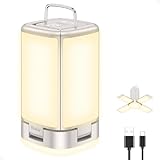
12. Blukar 116-LED Rechargeable Lantern: Budget Pick
Blukar 116 LED Camping Lantern Rechargeable, Super Bright Camping Lights
116 LED beads
7 lighting modes
3000K warm white
4800mAh for 10 to 48 hours
USB-C rechargeable
Pros
- Seven lighting modes including warm white and red SOS
- Fold-out panels spread light across a table
- Four-dot charge indicator
- Hook and buckle for hanging
- Survives drops onto a hard surface
Cons
- Smaller than the listing photos suggest
- Not water resistant
- Integrated battery cannot be replaced
- No published lumen figure
At 3336 reviews and 4.6 stars, the Blukar is the most economical way into a warm, rechargeable, seven-mode lantern. It gives you more modes than several multipacks above it, which is unusual in this class and the main reason it makes the list.
116 LED beads produce 360-degree 3000K warm white, and the colour temperature is the feature reviewers mention most. Warm light is easier on the eyes than the cold white most cheap lanterns emit, and it is the difference between a bedside light people are willing to keep on and one they switch off after a minute.
Seven modes cover high and low side light, high and low bottom light, full high, full strobe, and red SOS. The four side panels unfold 90 degrees to act as a small chandelier over a table, and collapsing them concentrates the beam for focused work, so one body covers both the dinner table and the workbench.
The 4800mAh internal battery gives 10 to 48 hours depending on mode, with a four-dot LED power indicator so you know where you stand. A hook and climbing buckle handle hanging, and it carries a 1-year warranty.
Best used as a personal kit light rather than a room light
This is a tabletop and personal-scale lantern. Reviewers consistently note that it is considerably smaller than the product photos suggest, closer to fist-sized, so buying it expecting something that lights a living room is a mistake. What it does well is light a table, a desk, a bed, or a car interior for a few hours.
For anyone building a grab-and-go kit, that is exactly the right size and weight. The expandable panels make it the best of the budget options for a dinner table where the power has gone out mid-meal, and the red SOS mode adds a signalling option that most cheap lanterns leave out.
What it will not survive
It is not water resistant at all, so it stays indoors and away from a leaking roof, a wet porch, or a flood. That rules it out for anyone buying hurricane or flood kit, and the integrated battery cannot be replaced once it fades.
There is no published lumen figure, which makes brightness comparisons guesswork, and at 10 hours in high mode it is the shortest-running rechargeable here. Buy it as a personal warm night light with a table, not as the backbone of a household outage plan.
How to Choose an Emergency Lantern That Still Works on Day Three
The lanterns above are all capable lights. What separates a good outage setup from a bad one is how many things can fail before you are in the dark at midnight, and that is a decision about power sources, brightness, and how many units you own rather than about any single spec.
Headlamp, lantern, or flashlight: which job each one does
A headlamp is for tasks where both hands are needed, a flashlight is for a beam you can aim far down a path or a hallway, and a lantern is for filling a space so your hands are free and everyone can see. Most households that struggle during an outage have one of the three and assume the lantern will cover all three jobs.
Use the headlamp for checking a breaker panel, sorting a garage, or helping a child find shoes in a hallway. Use the flashlight for the driveway, the basement stairs, or a walk to a neighbour’s house in an unfamiliar dark street. Use the lantern for the kitchen table, the living room, and the landing where someone might fall.
Phone screens get used as a light source because nothing else is within reach, and the phone then dies before the night is over. Treat the phone as a last resort, and if you are buying one of these, buy a headlamp as well.
Lumens by task: how much light you actually need
Lumens measure total light output, not how far it throws, and the number that matters is the one on the lowest setting you will actually use. A ladder from under 25 to 400-plus lumens covers most household needs, and paying for more brightness than you need is the most common waste in this category.
Under 25 lumens is a night-light level for a bedside table, a child’s room, or finding a door handle. Between 25 and 50 lumens covers a hallway, a landing, and a small bedroom. Between 50 and 100 lumens lights a kitchen counter or a work surface. Between 100 and 400 lumens fills a medium room, and 400 lumens and up is for a garage, a basement, or a large living space.
The high-output models in this roundup are useful, but the forum complaint about high-lumen lanterns indoors is legitimate. A 1800-lumen lantern left on full on a dining table is genuinely unpleasant to sit near, and forum users consistently describe preferring a light that runs long on low over one that is bright for an hour.
Power sources compared: batteries, rechargeable, solar, hand crank, candle
Disposable batteries win on reliability because nothing can be flat. A lantern with AA or D cells works after two years in a drawer, every single time, and that is why seven of our twelve are battery models. Their weakness is logistics: you need many cells, you need to rotate them, and you need somewhere cool to keep them.
Rechargeable lanterns remove the battery problem entirely but add a maintenance problem. They are only ready if someone remembers to plug them in every few months, and forum users report the classic failure repeatedly: a light that was fine last season is dead on night one because nobody charged it. Charge indicators help, but only if you look at them.
Solar panels are a top-up rather than a charging method on small lanterns, because the panel area is tiny compared with what a full charge needs. Forum consensus is that cheap solar lanterns disappoint. Hand cranks are the only true no-power-out-of-the-box option, and on quality models they work, but the gearing in cheap ones wears out, so they belong in a kit as a fourth layer rather than as the primary light.
Candles and oil or gas lanterns are outside this roundup for good reason. Candles are a fire risk in a house where the working smoke alarms may themselves be on battery, and paraffin or propane lanterns burn fuel that produces carbon monoxide risk indoors while also being far more hazardous around children and pets than an LED. A light that produces no heat and no flame is the safer default.
What IPX4, IPX7, and IP68 really mean
IPX4 means protected against splashing water from any direction, which covers a bathroom, a porch in a shower, or a damp garage. IPX7 means it can survive immersion in one metre of water for 30 minutes, and the Streamlight in this group also floats. IP68 is a step beyond that and is rated to 1.5 metres, as the Glocusent is.
The caveat nobody mentions often enough is that any charging port is an opening. A USB port on the bottom of an otherwise sealed body caps how waterproof the lantern can really be, so a lantern rated IP44 with a charging port will not survive a flood even though a sealed battery compartment model might. Check the rating, and treat a USB port as a weakness in any flood scenario.
How many lanterns a household needs
Count the rooms where someone sleeps, cooks, or moves through in the dark, and buy one light per room, plus one at the entrance. A couple in a one-bedroom flat needs three. A family with a hallway, a landing, a kitchen, and a garage needs six, and a four-person house is the point where a four-pack stops being enough.
Most households that get caught out are not short of brightness, they are short of locations. A single 1800-lumen lantern in the living room leaves a dark kitchen and a dark landing, and the stairs are exactly where people fall. Cheap low-output units spread around the house beat one expensive light in one place.
Building a 72-hour lighting kit
Start with one bright room lantern on standard cells, because that is your no-dependency baseline. Add two or three cheap low-output lights for the other rooms. Add one rechargeable lantern with a USB output for phone top-ups, and keep it on a monthly reminder. Add one hand-crank or solar lantern as the layer that survives when everything else is flat.
Standardise on AA and AAA wherever you can, because one pack of spares then covers the whole kit, and keep those cells somewhere cool and dry away from direct heat. Test the whole setup once a quarter: switch every light on for thirty seconds, check the rechargeable units have a charge, and confirm the batteries are not leaking.
Store lights in more than one place. Gear kept in a single bin gets borrowed for a camping trip or a kid’s fort and never comes back, which is the most common way a well-planned kit fails. Keep one light in the hallway cupboard, one in the garage, and one in the car, and check the car one on the same schedule.
Do not leave everything to one power source. A grid failure lasts three days, so a plan built entirely around a battery that must be recharged weekly has a single point of failure on day four. If you want backup at that scale, the right tool is a solar generator for outages or a power station, and a stocked emergency food kit covers the other half of a multi-day problem.
Frequently Asked Questions
What is the best emergency light for a power cut?
For a typical power cut, the best emergency light is a battery-operated LED lantern that runs on standard AA cells and puts out 100 to 400 lumens. Standard cells never go flat in storage, which matters more than any headline feature. Our top pick is the Etekcity four-pack at 154 lumens and up to 50 hours per lantern.
What is the best emergency light for a blackout?
The best light for a full home blackout is two types of device, not one. A lantern per room handles general illumination, and a headlamp per person handles tasks with both hands free. Keep phone screens as a last resort, because the phone is also your alarm, map, and emergency call device.
What are the best emergency lights for home power failure?
The best emergency lights for home failure are ordinary LED lanterns, not special emergency models. The key criteria are standard battery compatibility, a low brightness setting for long runtime, and a hanging point so the light can be placed above eye level. Water resistance and red night-vision modes are useful extras rather than requirements.
What is the best light source to use during a blackout?
LED is the best light source during a blackout. It produces no heat, no open flame, and draws so little power that a single AA cell can run a small lantern for dozens of hours. Candles carry a fire risk when working smoke alarms may be on battery, and fuel lanterns carry a carbon monoxide risk indoors.
What is the best lantern to use during a power outage?
A rechargeable LED lantern with a built-in power bank is the most versatile single device, because it lights the room and recharges a phone. The AYL model in our roundup offers 1800 lumens and a 4400mAh USB output. If your outage is short and unpredictable, a battery lantern is more reliable because it never needs charging.
Which battery-operated lanterns are best rated?
Among battery-operated lanterns, the highest-rated in our testing is the Streamlight Siege Compact at 4.8 stars across 4817 reviews, offering 540 lumens, red night vision, and IPX7 waterproofing that lets it float. The Etekcity four-pack holds the highest review volume at over 50000 reviews with a 4.7 average.
What are the best-rated outdoor lanterns?
For outdoor use, prioritise the IP rating over the lumen figure. IPX7 or IP68 lanterns survive flooding and can be dropped in water, while IPX4 models only handle splashing. The Streamlight Siege Compact and the Glocusent 106-LED are the two most rugged picks in our roundup, and both carry higher water ratings than the rest.
How long does a rechargeable lantern last in an outage?
It depends on brightness setting. The Glocusent runs up to 80 hours on its lowest setting, the Streamlight reaches 295 hours on low, and the brightest model in our roundup manages about 12 hours at full output. Plan on the low-setting figure, because that is the mode you will actually run overnight.
Final Verdict: The Best Emergency Lanterns for 2026
The Etekcity four-pack is the best emergency lantern for power outages, and it wins on the only axis that matters in a real blackout: it cannot be flat. Fifty hours per lantern on three AA batteries, four units to spread through a home, 154 lumens of 360-degree light, and 50062 reviews at 4.7 stars behind it.
Buy the Lepro 1000-lumen lantern if one dark space needs real brightness. Buy the Energizer PRO-360 if your outages routinely run past three days and you want a single unit that keeps going. Add a rechargeable model with a USB output if phones are your worry, and keep a hand-crank lantern in the kit for the night nothing else works.
Whichever you pick, test it before you need it. Switch on every light, check every rechargeable unit has a charge, and confirm your spare cells are not leaking. A ten-minute check in October is the difference between a planned outage and a bad night.