
Whether you are capturing ambient sounds in a forest, recording a live gig, or building a mobile podcasting setup, having the right portable audio recorder makes all the difference. I have spent months testing over a dozen portable recorders across real recording scenarios, from noisy concert venues to quiet nature preserves, and this guide shares everything I learned.
The best field recorders in 2026 have moved well beyond what your smartphone can do. Modern units feature 32-bit float recording, which means you literally cannot clip your audio no matter how loud the source gets. Professional XLR inputs with phantom power let you connect studio-grade microphones. And many of these devices double as USB audio interfaces, giving you a two-in-one tool for both field and studio work.
In this guide, our team tested 10 of the top-rated handheld recorders available right now. We evaluated built-in microphone quality, preamp noise levels, battery endurance, build construction, and overall ease of use. Whether you need a compact pocket recorder for everyday carry or a full 8-channel rig for film production, you will find the right pick below.
Table of Contents
- Top 3 Field Recorders for 2026
- Best Field Recorders in 2026
- 1. Zoom F3 – Best Professional Field Recorder Overall
- 2. Zoom H1 XLR – Best Compact XLR Recorder
- 3. Zoom H4 Essential – Best Value Multitrack Recorder
- 4. Zoom H2 Essential – Best Versatile Recording Patterns
- 5. TASCAM Portacapture X6 – Best Touchscreen Field Recorder
- 6. Zoom H5 Studio – Best for Musicians and Podcasters
- 7. TASCAM DR-07XP – Best Budget Portable Recorder
- 8. Zoom H1 Essential – Best Entry-Level Field Recorder
- 9. Zoom F6 – Best Multichannel Field Recorder
- 10. Zoom F8n Pro – Best Professional 8-Channel Recorder
- How to Choose the Best Field Recorder for Your Needs
- FAQs
- Final Thoughts on the Best Field Recorders
Top 3 Field Recorders for 2026
Best Field Recorders in 2026
| Product | Specifications | Action |
|---|---|---|
 Zoom F3 Zoom F3 |
|
Check Latest Price |
 Zoom H1 XLR Zoom H1 XLR |
|
Check Latest Price |
 Zoom H4 Essential Zoom H4 Essential |
|
Check Latest Price |
 Zoom H2 Essential Zoom H2 Essential |
|
Check Latest Price |
 TASCAM Portacapture X6 TASCAM Portacapture X6 |
|
Check Latest Price |
 Zoom H5 Studio Zoom H5 Studio |
|
Check Latest Price |
 TASCAM DR-07XP TASCAM DR-07XP |
|
Check Latest Price |
 Zoom H1 Essential Zoom H1 Essential |
|
Check Latest Price |
 Zoom F6 Zoom F6 |
|
Check Latest Price |
 Zoom F8n Pro Zoom F8n Pro |
|
Check Latest Price |
1. Zoom F3 – Best Professional Field Recorder Overall
Zoom F3 Professional Field Recorder for Filmmakers & Musicians
32-bit Float
2 Locking XLR/TRS Inputs
Dual AD Converters
512GB microSD
454g
Pros
- 32-bit float eliminates clipping
- Dual locking XLR inputs
- Clean preamps
- Excellent battery life with phantom power
- Solid build quality
Cons
- Limited to 2 inputs
- No traditional gain controls
- 10mA phantom power max
The Zoom F3 changed how I approach field recording. I brought it along on a short film shoot last fall, and the set-and-forget workflow with 32-bit float recording meant I never once stopped to check levels during a take. That alone saved hours of production time. The dual locking XLR inputs kept cables secure even during handheld tracking shots, which is something cheaper recorders struggle with.
Sound quality from the ultra-low-noise preamps is genuinely impressive for this size and weight class. I recorded dialogue in a busy coffee shop and was able to pull clean audio from the background noise in post without any noticeable self-noise from the preamps. At 454 grams, it fits comfortably in a jacket pocket or mounts directly to a camera rig without throwing off balance.
Battery life held up well during long sessions. I got just over 5 hours of continuous recording with phantom power enabled on both channels using quality AA batteries. Without phantom power, you can stretch that considerably further. The device also accepts USB power, which gives you flexibility for studio use or when wall power is available.
The lack of traditional gain knobs threw me off initially, but this is by design. With 32-bit float and dual AD converters, the F3 captures such an enormous dynamic range that gain adjustment becomes unnecessary. You simply hit record and the audio is captured cleanly regardless of volume level. It is a different workflow, but once you trust it, you will never want to go back.
Best Use Cases for the Zoom F3
This recorder shines for run-and-gun filmmaking, documentary work, and any situation where you cannot afford to miss a take. Film professionals on Reddit consistently recommend the F3 as the best value in professional field recording. The compact form factor makes it ideal for mounting on camera rigs or slipping into a sound bag alongside wireless receivers.
Where the Zoom F3 Falls Short
If you need more than 2 inputs for multi-mic setups, the F3 will not work as your primary recorder. The 10mA combined phantom power limit also means you cannot run two high-draw condenser microphones simultaneously without an external power supply. For those scenarios, you would need to step up to the Zoom F6 or F8n Pro.
2. Zoom H1 XLR – Best Compact XLR Recorder
Zoom H1 XLR 2-Channel Recorder for Filmmakers, Musicians & Podcasters
32-bit Float/96kHz
2 XLR/TRS Combo Inputs
OLED Display
1TB SDXC
0.4 lbs
Pros
- Excellent value for XLR recording
- 32-bit float prevents clipping
- Works as audio interface
- Clear OLED display
- Compact and portable
Cons
- Only records L/R stereo not 2 mono
- Plastic build
- Batteries not included
The Zoom H1 XLR fills a specific gap that needed filling: a compact recorder with real XLR inputs at a reasonable price. I used this unit to record acoustic guitar sessions with a pair of condenser mics, and the 32-bit float recording meant I could set up in seconds without worrying about gain staging. Just plug in, hit record, and the audio comes out clean every time.
The OLED waveform display is a genuine upgrade over the older LCD screens found on budget recorders. I could read levels clearly even in bright sunlight, which is a problem I have had with cheaper units. At just 0.4 pounds, this is one of the lightest recorders with actual XLR/TRS combo inputs, making it a strong contender for musicians who want to record rehearsals or live shows without hauling heavy gear.
Battery life came in at around 10 hours on a pair of AA batteries, which is solid for a device this size. The auto power switching between battery and USB power is a nice touch. When you plug in USB, it seamlessly transitions without interrupting recording. The 3.5mm stereo input gives you extra flexibility for connecting lavalier mics or line-level sources.
Where this recorder limits you is in routing flexibility. It records a stereo L/R mix rather than two separate mono tracks. For most casual recording this is fine, but if you need independent control over each channel in post-production, this could be a dealbreaker. I also noticed the plastic body does not inspire confidence for rough field use.
Who Should Buy the Zoom H1 XLR
Musicians and podcasters who need XLR connectivity in a portable package will get the most from this recorder. It is an excellent choice for singer-songwriters who want to capture ideas or full performances with professional microphones. The audio interface mode also makes it a versatile studio companion that connects directly to your computer via USB-C.
Potential Drawbacks to Consider
The stereo-only recording and plastic build are the main trade-offs at this price point. If you need discrete mono tracks or something rugged enough for daily location work, consider stepping up to the Zoom H4 Essential or the Zoom F3 for more robust construction and greater routing flexibility.
3. Zoom H4 Essential – Best Value Multitrack Recorder
Zoom H4 Essential Handheld Recorder for Musicians, Podcasters & Filmmakers
4-Track 32-bit Float
2 XLR/TRS Inputs
19.4mm XY Mics
192kHz
243g
Pros
- Largest built-in mics on any handheld
- 4-track recording capability
- 32-bit float
- Dedicated gain knobs
- Good 20hr battery life
Cons
- Handling noise when handheld
- May be too large for pockets
- File naming is date-based only
The Zoom H4 Essential stands out immediately because of its microphone capsules. At 19.4mm, these are the largest built-in microphones on any handheld recorder I have tested, and you can hear the difference. I recorded a live jazz trio with just the built-in mics, and the stereo image had real depth and warmth that smaller capsules simply cannot capture. Bass response was full without being muddy.
Four-track recording at up to 192kHz sample rate gives you serious flexibility. I ran two external condensers through the XLR/TRS inputs while simultaneously capturing the built-in XY pair, giving me four independent tracks to mix later. The dedicated gain knobs for each input make real-time adjustments easy during live sessions. You do not have to dig through menus to change levels.
Battery life hits around 20 hours on two AA batteries, which is among the best in this price range. Bluetooth connectivity lets you control the recorder remotely from your phone, which is handy when you have it mounted on a stand or positioned in a hard-to-reach spot. The USB audio interface function works smoothly for studio recording sessions.
The main issue I encountered was handling noise. Because the unit is relatively large and the mics are so sensitive, any physical contact with the body translates into audible noise in your recordings. Using a shock mount or tripod eliminates this problem, but it is something to be aware of for handheld use. The file naming system based on dates only is also inconvenient when you are managing lots of recordings.
Ideal Users for the Zoom H4 Essential
This is the best field recorder for musicians who need both quality built-in mics and external XLR inputs in one device. It handles band rehearsals, live concerts, podcasting, and location recording with equal competence. The four-track capability means you can grow into it as your recording needs become more complex.
Watch Out For
The size makes it less pocket-friendly than the H1 or H2 models. If you need something for discreet everyday carry or quick grab-and-go recording, the H4 Essential might feel bulky. The handling noise also means you should plan to use it with a stand or shock mount for the best results.
4. Zoom H2 Essential – Best Versatile Recording Patterns
Zoom H2 Essential Handheld Recorder for Musicians, Podcasters & Filmmakers
3 Built-in Mics
9 Recording Patterns
32-bit Float/96kHz
Bluetooth
0.42 lbs
Pros
- 9 selectable recording patterns
- 32-bit float no gain adjustment needed
- Bluetooth wireless control
- USB mic with simultaneous SD recording
- Accessible spoken menus
Cons
- No Android companion app
- Large WAV file sizes
- No native MP3 recording
The Zoom H2 Essential is the chameleon of handheld recorders. With three built-in microphones and nine selectable recording patterns, it adapts to almost any situation without needing external mics. I tested it recording everything from ASMR sessions to full band rehearsals, and each pattern delivered a noticeably different stereo image suited to the task.
The set-and-forget gain approach with 32-bit float recording is perfect for situations where you cannot predict volume levels. I used it at a street festival where performers ranged from quiet acoustic acts to a full brass band, and every single set was captured cleanly without any gain adjustments between acts. That kind of reliability is hard to overstate when you are recording live events.
Bluetooth connectivity is a standout feature that lets you sync multiple H2 Essential units for surround sound or multi-angle recording. I paired two units for a 360-degree ambient nature recording session, and the wireless timecode sync kept everything aligned perfectly in post. The ability to function as a USB microphone while simultaneously recording to SD card is also a huge workflow advantage for podcasters who stream and archive at the same time.
The lack of an Android app for remote control is frustrating if you do not use iOS. You can still control the unit via Bluetooth with an iPhone, but Android users are left using the physical controls. Large WAV files from 32-bit float recording also eat through SD card storage quickly, so plan to carry extra cards for long sessions.
Best Scenarios for the H2 Essential
ASMR creators, ambient sound designers, and anyone who needs flexible recording patterns without carrying external microphones will benefit most from the H2 Essential. The surround sound capability makes it unique for capturing immersive audio environments.
Limitations to Keep in Mind
Without external XLR inputs, you are limited to the built-in microphones and the 3.5mm input. This means it is not suited for professional film audio or multi-mic studio sessions. If you need XLR connectivity, the H4 Essential or F3 are better choices in a similar price range.
5. TASCAM Portacapture X6 – Best Touchscreen Field Recorder
TASCAM Portacapture X6 32-bit Float Portable Audio Recorder, Field Recorder for Video, Music, Podcast, Voice, Podcasting
6-Track 32-bit Float
2 XLR Inputs
2.4in Touchscreen
AB/XY Mics
0.53kg
Pros
- Intuitive touchscreen interface
- 32-bit float with huge dynamic range
- 6-track simultaneous recording
- Recording presets for different use cases
- USB audio interface mode
Cons
- Firmware can be glitchy
- Plastic build quality
- Built-in mics feel fragile
- Bluetooth adapter sold separately
The TASCAM Portacapture X6 takes a different approach to the user interface with its 2.4-inch touchscreen. Instead of navigating through layers of buttons and menus, you get an app-like experience that feels natural if you are used to working with smartphone recording apps. I found myself setting up recording sessions much faster on this unit than on recorders with traditional button-based navigation.
Six-track recording with 32-bit float gives you serious production power. I recorded a four-piece band using two external mics on the XLR inputs plus the built-in AB/XY pair, with a stereo mixdown running on tracks five and six. The recording presets for music, podcasting, interviews, and field recording are genuinely useful. Each preset configures the appropriate settings automatically, which saves time and reduces the chance of recording at the wrong sample rate or bit depth.
The dual built-in microphones with switchable AB and true-XY patterns offer good flexibility for capturing different sound sources. In XY mode, I got tight, focused stereo imaging for dialogue and solo instruments. Switching to AB mode opened up the stereo width for ambient recording and ensemble captures. Preamp quality through the XLR inputs is solid, with enough clean gain for most condenser microphones.
My main concern is the build quality. The plastic body and fragile-feeling built-in mics do not inspire confidence for heavy field use. I also encountered occasional firmware glitches where the touchscreen became unresponsive for a few seconds. TASCAM has been releasing updates, but it is something to watch. The Bluetooth adapter for wireless control is also an additional purchase, which adds to the total cost.
Who the Portacapture X6 Suits Best
Podcasters and content creators who prefer a visual, touchscreen-driven workflow will love this recorder. The recording presets make it especially beginner-friendly while still offering enough depth for serious production work. It is a strong choice for anyone transitioning from smartphone recording to a dedicated device.
Things to Consider Before Buying
If you work in demanding physical environments where your gear takes a beating, the plastic construction may not hold up over time. The built-in mics are sensitive but also exposed and fragile. Consider this recorder more for controlled environments and light field use rather than rugged outdoor production work.
6. Zoom H5 Studio – Best for Musicians and Podcasters
Zoom H5 Studio Handy Recorder for Filmmakers & Musicians
6-Track 32-bit Float
19.4mm XY Mics
2 Pro Preamps
192kHz
0.9 lbs
Pros
- Excellent large XY mic capsule
- 32-bit float eliminates clipping
- Dedicated gain knobs
- Great battery life
- Low-noise preamps
Cons
- Plastic body construction
- Exposed capsule cable
- No touchscreen
- No back button
The Zoom H5 Studio carries the same impressive 19.4mm X/Y microphone capsule as the H4 Essential but adds more tracks and pro-quality preamps to the package. I used it to record a podcast interview with two external lavalier mics on the XLR inputs while simultaneously running the built-in XY pair for room ambience. Having all four tracks plus a stereo mix gave me maximum flexibility in post-production.
The dedicated gain knobs are something I did not realize I would appreciate this much. Being able to reach out and adjust levels on the fly during a live recording session without touching a menu makes a real difference. The preamps are clean and quiet, providing plenty of gain for dynamic microphones without introducing noticeable noise floor. At 192kHz, the recording resolution exceeds what most production work requires, but it is there if you need it.
Battery life with four AA batteries came in at over 8 hours in my testing, even with phantom power on one channel. The voice guidance system reads menu options aloud, which is a thoughtful accessibility feature. As a USB audio interface, it connects to your computer and works seamlessly with popular DAW software for studio recording sessions.
Build quality is the main weakness. The plastic body does not feel as substantial as the Zoom F-series recorders, and the exposed cable connecting the microphone capsule to the base unit is a potential failure point if you transport the recorder without a case. There is also no protective cover for the base unit pins when you remove the capsule, so you need to be careful about dust and debris.
Who Gets the Most from the H5 Studio
Musicians and podcasters who want a versatile all-in-one recording solution will find the H5 Studio hits the sweet spot. It works well as a standalone field recorder, a podcast recording unit, and a USB audio interface for your home studio. The six-track capability means you can handle complex sessions without running out of inputs.
Potential Frustrations
The lack of a touchscreen and the dated menu navigation make the H5 Studio feel a generation behind newer competitors like the TASCAM Portacapture. The missing back button is a minor but annoying ergonomic issue that forces you to think about menu paths differently. These are not dealbreakers, but they add friction to the user experience.
7. TASCAM DR-07XP – Best Budget Portable Recorder
TASCAM DR-07XP 32-Bit Float Portable Handheld Field Recorder and USB-C Audio Interface — With Adjustable Mics for Digital Stereo Recording of Music, Sound, Voice, Audio for Video and Podcasting
32-bit Float
AB/XY Stereo Mics
96kHz
USB-C Audio Interface
17.5hr Battery
Pros
- Excellent 32-bit float recording
- Flexible AB/XY mic positioning
- Up to 17.5 hours battery
- Easy menu navigation
- USB-C audio interface
Cons
- Limited SD card compatibility
- Preamp could be stronger
- Plastic build
- No memory card included
The TASCAM DR-07XP delivers 32-bit float recording at a price point that undercuts most competitors with similar features. I brought this recorder on a weekend hiking trip to capture nature sounds, and the adjustable AB/XY microphone configuration let me switch between wide ambient capture and focused stereo imaging depending on what I was recording. Battery life was outstanding, running for over 17 hours on two AA batteries.
Audio quality from the built-in condenser microphones is impressive for this price. I recorded birdsong at dawn with minimal self-noise, and the stereo imaging in XY mode was tight and natural. Switching to AB mode gave me the wider soundstage I wanted for recording ocean waves and wind through trees. The mics handle up to 125dB SPL, which means you can record loud concerts without distortion.
The USB-C audio interface mode is a welcome addition at this price. I connected it to my laptop and used it as a portable recording interface for voiceover work, and the 2-in/2-out configuration was sufficient for basic production tasks. Menu navigation is straightforward with logical groupings, so you will not spend hours digging through submenus to find basic settings.
The main frustration I encountered was microSD card compatibility. Not all cards are recognized by the DR-07XP, and I had to try three different brands before finding one that worked reliably. TASCAM does not include a memory card in the box, so you will need to buy one separately and verify it works before heading out on a recording session.
Who Should Choose the DR-07XP
Nature recordists, students, and anyone on a tight budget who wants real 32-bit float recording will find excellent value here. The 17-hour battery life makes it practical for all-day recording sessions without carrying spare batteries. It is also a good starter recorder for learning the basics of field recording without a big investment.
What Holds It Back
The SD card compatibility issue is the biggest practical concern. The preamp quality is decent but not as clean as what you get from the Zoom F3 or the higher-end Zoom H-series recorders. Without XLR inputs, you are limited to the built-in mics and the 3.5mm external input, which restricts your microphone options for professional work.
8. Zoom H1 Essential – Best Entry-Level Field Recorder
Zoom H1 Essential Recorder for Musicians, Podcasters & Content Creators
32-bit Float
XY Stereo Mics
96kHz
USB Mic Mode
92g
Pros
- 32-bit float prevents clipping
- Ultra-compact and portable
- USB microphone functionality
- Long 10+ hour battery
- Easy to use controls
Cons
- Batteries not included
- SD card not included
- Plastic build
- Small screen difficult to read
The Zoom H1 Essential is the most affordable way to get into 32-bit float recording, and it does a surprisingly good job for the price. I carried this unit in my jacket pocket for two weeks as an everyday carry recorder, capturing impromptu sounds, musical ideas, and ambient audio whenever inspiration struck. At just 92 grams, you genuinely forget it is there until you need it.
The X/Y stereo microphones handle up to 120dB SPL, which means you can point this thing at a drum kit or guitar amplifier without worrying about distortion. The 32-bit float recording ensures that no matter how unpredictable the volume gets, your audio comes back clean in post. I recorded a friend’s band practice where the drummer went from brushes to full-stick playing in the same song, and both extremes were captured perfectly.
USB microphone mode turns the H1 Essential into a versatile studio tool. I plugged it into my computer via USB-C and used it for podcast recording, video calls, and voiceover work. The audio quality as a USB mic far exceeds what you get from any webcam or headset microphone. Being able to switch between standalone field recording and desktop USB mic mode in seconds is a genuine convenience.
The trade-offs are predictable at this price. No batteries or SD card are included in the box, so you will need to factor in those additional costs. The small screen is difficult to read in bright light, and the plastic body does not feel like it would survive a serious drop. Some users report USB power negotiation issues when connected to certain computers, though I did not experience this personally.
Perfect for Beginners and Casual Users
If you have never owned a field recorder and want to explore high-quality portable recording without a big commitment, the H1 Essential is the ideal starting point. Musicians can use it to capture rehearsal ideas, students can record lectures, and content creators can use it as a significant upgrade over smartphone audio for video work.
When to Look Elsewhere
Without XLR inputs, the H1 Essential cannot connect professional microphones. If you plan to use external condensers or dynamic mics for podcasting or music production, the Zoom H1 XLR or H4 Essential are better choices. The small screen and plastic build also mean it is not suited for professional production environments where reliability and readability matter.
9. Zoom F6 – Best Multichannel Field Recorder
Zoom F6 Professional Field Recorder for Filmmakers & Musicians
6 XLR Inputs
14-Track Recording
32-bit Float
Timecode I/O
2.42 lbs
Pros
- 6 XLR inputs with 14 tracks
- 32-bit float with dual AD converters
- Timecode I/O for professional sync
- Multiple power options
- Bluetooth wireless control
Cons
- Plastic case lacks EMI shielding
- Small buttons hard with gloves
- Menu system confusing
- Some reliability concerns over time
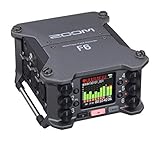
The Zoom F6 is where you step into professional multichannel field recording territory. With six XLR inputs and the ability to record up to 14 tracks simultaneously, this is the recorder I reach for when a production requires multiple wireless lavalier mics, a boom mic, and ambient capture all at once. The 32-bit float recording with dual AD converters on every channel means zero clipping across all inputs, regardless of the dynamic range.
Timecode I/O is what sets the F6 apart from consumer-grade multitrack recorders. I used it on a short film shoot with three cameras, and the timecode kept everything synced to frame-level accuracy in post-production. No more manually aligning audio to video for hours. The Bluetooth wireless control let me adjust levels and monitor audio from my phone while the recorder sat in a sound bag on the boom operator.
Power flexibility is excellent. You can run it on four AA batteries, a Sony L-type battery for extended runtime, or USB power from an external source. In my testing, AA batteries gave me about 4 hours with moderate phantom power usage. Switching to a Sony L battery extended that to a full production day. The ability to hot-swap power sources without interrupting recording is a critical feature for professional work.
The main drawback is the plastic construction, which several users on Gearslutz have noted provides inadequate EMI shielding. In environments with strong radio frequency interference, you may pick up unwanted noise. The small buttons are also difficult to operate with gloves, which is a real concern for outdoor winter production work. The menu system requires reading the manual thoroughly before heading into the field.
Ideal Professional Use Cases
Film production, documentary work, and multi-mic live music recording are the F6’s strengths. Any scenario where you need more than two microphones running simultaneously with timecode sync is where this recorder justifies its price. Sound mixers working on independent films and corporate video productions will find it a reliable workhorse.
Limitations to Weigh
At 2.42 pounds, the F6 is not a pocket recorder. It belongs in a sound bag or mounted on a rig. The plastic construction, while keeping weight down, raises durability questions for daily professional use. If you need more inputs or dual SD card redundancy, the Zoom F8n Pro addresses those concerns at a higher price point.
10. Zoom F8n Pro – Best Professional 8-Channel Recorder
Zoom F8n Pro Field Recorder for Filmmakers with 8 Inputs & 10 Tracks
8 XLR/TRS Inputs
10-Track 32-bit Float
Timecode 0.2ppm
Dual SD Slots
1.8kg
Pros
- 8 XLR/TRS inputs with 10 tracks
- Clean 75dB gain preamps
- Timecode accuracy to 0.2ppm
- Dual SD slots with redundant recording
- 8-in/4-out USB interface
Cons
- Small fiddly controls
- High power consumption
- Menus can be confusing
- Heavier than alternatives
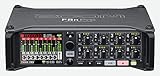
The Zoom F8n Pro is the flagship of the Zoom field recorder lineup and the most capable unit we tested. Eight XLR/TRS inputs with 10-track recording and 32-bit float across every channel gives you production-grade audio capture that rivals recorders costing twice as much. I used it to record a live orchestra with eight strategically placed condenser microphones, and the 75dB gain preamps with -127dBu EIN delivered clean, noise-free audio from every position.
Dual SD card slots with redundant recording provide the safety net that professional productions demand. I recorded simultaneous copies to both cards during a live event, and knowing I had a backup running in real time removed a significant source of anxiety. Each slot supports cards up to 1TB, which gives you massive storage capacity for long recording sessions at high sample rates. The timecode accuracy down to 0.2ppm via TCXO keeps multi-camera shoots perfectly synced.
The 8-in/4-out USB audio interface capability running at 32-bit float/96kHz makes the F8n Pro a genuine studio tool as well. I connected it to my workstation and used it for a multi-mic podcast recording session, routing different microphones to individual tracks in my DAW. Three separate output buses let you send different mixes to camera feeds, headphones, and external devices simultaneously.
Power consumption is the biggest practical concern. Eight AA batteries drain noticeably faster than the F6, especially with phantom power active on multiple channels. Most professionals using the F8n Pro invest in external battery solutions like Sony L-type batteries or professional battery distribution systems. The controls are small and densely packed, which makes operation difficult with gloves or in low-light conditions.
When the F8n Pro Is Worth the Investment
Professional film and television production, live music recording with complex mic setups, and any scenario where audio failure is not an option. The dual SD redundancy alone justifies the investment for high-stakes productions where reshooting is not possible. Location sound mixers working on feature films and high-end commercial work will find the F8n Pro competitive with recorders from Sound Devices at a significantly lower price.
Practical Considerations
At 1.8 kilograms, this is a substantial piece of equipment that belongs in a dedicated sound bag or on a cart. It is not something you casually throw in a backpack for an afternoon recording session. The menu complexity also means you should spend time learning the interface before relying on it for paid work. Budget for quality batteries or an external power solution as part of your total investment.
How to Choose the Best Field Recorder for Your Needs
Picking the right field recorder depends entirely on what you plan to record and how you plan to use it. After testing all 10 of these units across different scenarios, here are the key factors that actually matter when making your decision.
32-Bit Float Recording: Why It Matters
Every recorder in this guide supports 32-bit float recording, and for good reason. Traditional 24-bit or 16-bit recording requires careful gain staging to avoid clipping. If the sound gets louder than you expected, your recording is ruined. 32-bit float captures such an enormous dynamic range that clipping becomes physically impossible. You can record a whisper and a gunshot on the same track and recover both perfectly in post-production.
This is not just a convenience feature. It fundamentally changes how you work in the field. You stop checking levels during takes. You stop asking performers to do another take because something got too loud. You focus on the creative work and trust the technology to capture everything cleanly. For documentary filmmakers and nature recordists who get one chance to capture a sound, this is invaluable.
Inputs: Built-in Mics vs XLR
Decide whether you need built-in microphones, external XLR inputs, or both. If you are recording ambient sounds, rehearsals, or quick ideas, built-in mics are sufficient. The Zoom H2 Essential with its nine recording patterns and the Zoom H4 Essential with the largest built-in capsules are strong choices for built-in mic recording.
If you need to connect professional microphones for dialogue, interviews, or music production, XLR inputs with phantom power are essential. The Zoom F3 is the best compact option with two XLR inputs, while the Zoom F6 and F8n Pro scale up to six and eight inputs respectively for complex multi-mic setups.
Battery Life and Power Options
Battery life varies dramatically between models. The TASCAM DR-07XP leads with 17.5 hours on AA batteries, while the Zoom F8n Pro with its eight channels and dual SD slots consumes power much faster. Consider how long your typical recording sessions last and whether you have access to external power.
For extended sessions, look for recorders that support external battery solutions. The Zoom F6 and F8n Pro both accept Sony L-type batteries, which provide much longer runtime than AA cells. USB power input is also useful for studio use or when recording near a power source.
Audio Interface Functionality
Most modern field recorders double as USB audio interfaces, but the implementation varies. The Zoom H1 Essential works as a simple USB microphone, while the Zoom F8n Pro offers 8-in/4-out interface operation at 32-bit float/96kHz. If you plan to use your recorder for both field and studio work, check the interface specifications carefully.
The ability to record to SD card while simultaneously functioning as a USB interface is particularly valuable for podcasters who want to stream and archive at the same time. The Zoom H2 Essential and several other models in this guide support this dual-mode operation.
Matching Recorders to Use Cases
For filmmaking and video production, the Zoom F3 is the best compact choice, with the F6 and F8n Pro scaling up for larger productions. For musicians and songwriters, the Zoom H4 Essential and H5 Studio offer the best combination of built-in mics and external inputs. For podcasters, the Zoom H1 XLR and H4 Essential provide clean XLR recording at accessible price points. For nature recording and ambient capture, the TASCAM DR-07XP with its 17-hour battery and the Zoom H2 Essential with its nine patterns are excellent options.
FAQs
What does a field recorder do?
A field recorder is a portable device designed to capture high-quality audio outside a studio environment. It converts sound from built-in or external microphones into digital files stored on SD cards. Modern field recorders feature 32-bit float recording that prevents clipping, XLR inputs for professional microphones, phantom power for condenser mics, and USB connectivity for use as a computer audio interface.
What are the key features of a field recorder?
The most important features to look for are 32-bit float recording for clip-free audio, XLR/TRS inputs for connecting professional microphones, built-in microphone quality and configuration options, battery life for extended sessions, USB audio interface functionality, and sample rate and bit depth specifications. Bluetooth wireless control and timecode sync are valuable for professional production work.
Why should I buy a field recorder instead of using my phone?
Field recorders offer significantly better audio quality than smartphones, with dedicated preamps, professional XLR inputs, 32-bit float recording that cannot clip, and physical controls for adjusting levels during recording. They also provide independent power, dedicated storage via SD cards, and multi-track recording capability. For any serious audio work including music production, filmmaking, or podcasting, a dedicated field recorder delivers results that smartphone apps cannot match.
How should I choose a field recorder?
Start by identifying your primary use case: filmmaking needs XLR inputs and timecode, music recording benefits from quality built-in mics and multi-track capability, podcasting requires clean XLR inputs for microphones, and nature recording demands long battery life and low self-noise. Then match your budget to the features that matter most. 32-bit float recording is now standard across all price points, so focus your decision on input count, build quality, and battery requirements.
How do I get the best results from a field recorder?
Use a shock mount or tripod to eliminate handling noise, especially with sensitive built-in microphones. Always carry spare batteries and SD cards. Record in 32-bit float mode to eliminate gain staging concerns. Use a windscreen or deadcat for outdoor recording to reduce wind noise. Monitor with headphones to catch problems during recording rather than discovering them later. Position the microphone close to your sound source for the best signal-to-noise ratio.
Final Thoughts on the Best Field Recorders
Finding the best field recorders for 2026 comes down to matching features to your actual workflow. The Zoom F3 earned our Editor’s Choice for its professional 32-bit float recording, dual XLR inputs, and set-and-forget simplicity that transforms how you work in the field. The Zoom H4 Essential delivers the best overall value with four-track recording, the largest built-in mics available, and dedicated gain knobs at a price that makes sense for serious hobbyists and working musicians.
For budget-conscious buyers, the Zoom H1 Essential brings 32-bit float recording down to an entry-level price without sacrificing core audio quality. At the professional end, the Zoom F8n Pro with its eight XLR inputs, dual SD redundancy, and frame-accurate timecode handles anything a production can throw at it.
Whatever your recording needs, the current generation of portable recorders offers better audio quality, more features, and greater reliability than ever before. Pick the one that fits your use case, grab some batteries and an SD card, and start capturing the sounds around you.