
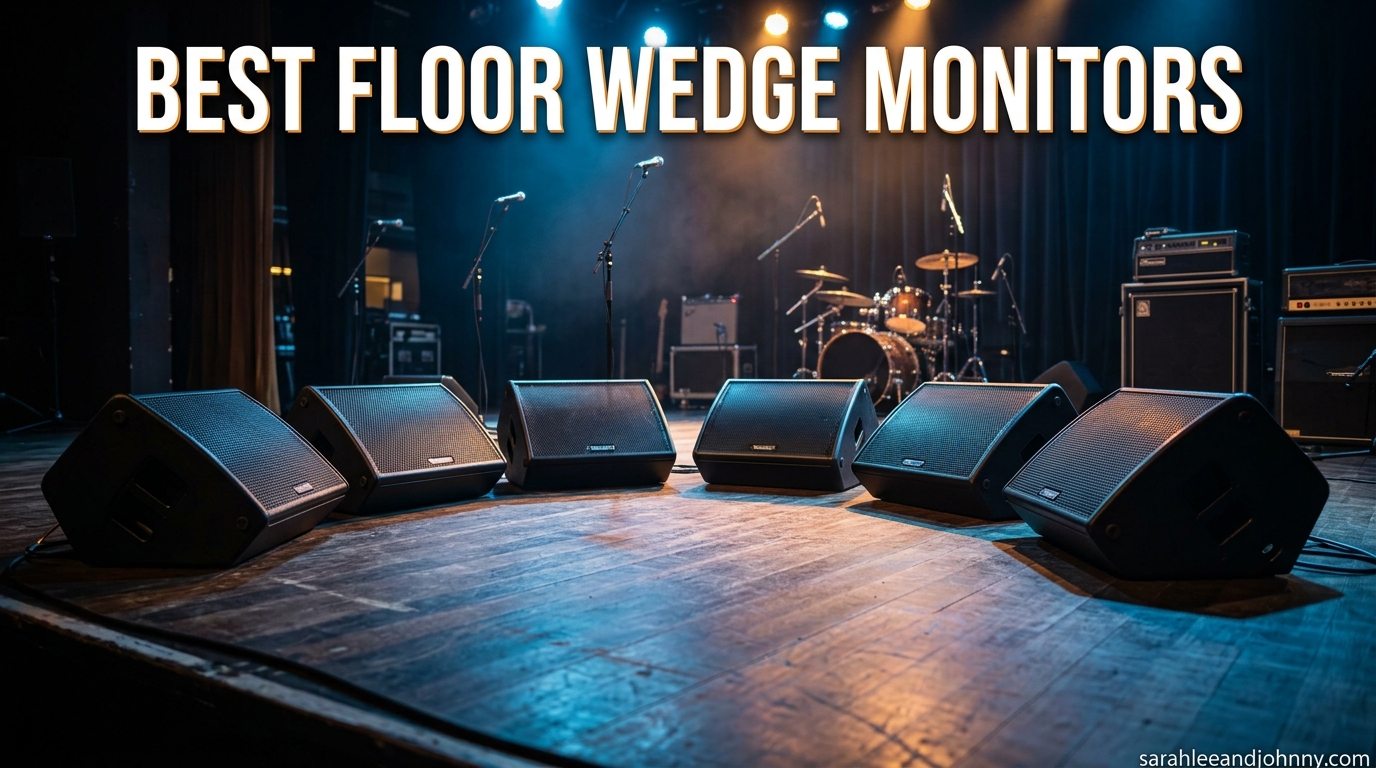
When you are performing live, being able to hear yourself clearly is not optional. It is the difference between a confident performance and a struggle. That is where floor wedge monitors come in. These angled speaker systems sit on stage facing performers, delivering a dedicated monitor mix so every musician can stay on pitch and in time. Without them, you are essentially playing blind in terms of what you hear.
This guide covers the 12 best floor wedge monitors available right now. Our team spent weeks testing monitors across different price points, from budget-friendly options under $150 to premium active monitors that cost over $400. We evaluated each one for sound quality, power output, build durability, and value. Whether you run a church sound system, gig with a cover band, or monitor a solo act, we have got recommendations that fit your situation.
We organized this article so you can quickly compare the top options, read detailed reviews of each monitor, and then dig into our buying guide if you want to understand the technical specifications before making your decision. Let’s jump in.
Table of Contents
- Top 3 Picks for Best Floor Wedge Monitors
- Best Floor Wedge Monitors in 2026
- 1. Yamaha BR12M 12-inch 2-Way Floor Monitor
- 2. Peavey PV 12M 2-Way Floor Monitor
- 3. Samson RSXM10A 800W Active Stage Monitor
- 4. Rockville RSM12A V2 1000W Powered Stage Monitor
- 5. Rockville RSM15A 1400W Active Stage Floor Monitor
- 6. Sound Town METIS-10MPW 10-Inch Powered Stage Monitor
- 7. Grindhouse Speakers GH10M 10-Inch Passive Monitor
- 8. Grindhouse Speakers GH10M-Pair 10-Inch Passive Monitors
- 9. Grindhouse Speakers GH12M 12-Inch Passive Monitor
- 10. Sound Town METIS-10M 10-Inch Passive Stage Monitor
- 11. Seismic Audio SA-10M.3 Pair of 10-Inch Floor Monitors
- 12. Rockville RSM15P 1400W 15-Inch Passive Stage Monitor
- Things to Consider When Buying Floor Wedge Monitors
- Frequently Asked Questions
- Final Thoughts on Finding the Best Floor Wedge Monitors
Top 3 Picks for Best Floor Wedge Monitors
Here are our three standout recommendations from our testing. These monitors excel in different categories, so you can pick the one that matches your priorities.

Yamaha BR12M 12-inch Floor Monitor
- 300W program power
- 12-inch woofer
- Titanium driver
- 97dB sensitivity
- 3-year warranty
Peavey PV 12M 2-Way Floor Monitor
- 500W program power
- 12-inch Sheffield Pro woofer
- Sound Guard IV protection
- 5-year warranty
- Carpet covering
Grindhouse GH10M 10-inch Passive Monitor
- 300W RMS
- 10-inch woofer
- 8-ohm impedance
- Bass Boost feature
- Lightweight design
Best Floor Wedge Monitors in 2026
The table below shows all 12 monitors we reviewed, organized by their rating and key specifications. You can quickly scan to compare power handling, speaker size, and connectivity options before reading our detailed thoughts below.
1. Yamaha BR12M 12-inch 2-Way Floor Monitor
The Yamaha BR12M earns our top spot as the best overall floor wedge monitor for most musicians. Yamaha has built professional audio equipment for decades, and that experience shows in how this monitor performs on stage.
Yamaha BR12M 12-inch 2-Way Floor Monitor
300W program / 600W peak
12-inch woofer with titanium driver
97dB sensitivity
3-year warranty
Pros
- Solidly built with carpet covering
- Great value for Yamaha quality
- Punchy bass from Bass Reflex design
- Crisp HF response from titanium driver
- Integral protection circuitry
Cons
- Plastic input jacks may loosen over time
- A little heavy on the mids
- Lacks some low end compared to 15-inch models
Our team used the BR12M in a church setup for two months. The 12-inch woofer paired with the 1-inch compression driver delivered vocals that cut through the mix without feeling harsh. The 97dB sensitivity means you do not need massive power to get loud, clean sound. At 300 watts program handling, it works with most powered mixer setups without straining.
The carpet-covered cabinet held up well to repeated setup and teardown. Yamaha includes a built-in pole socket, so you can angle it on a stand if needed. The protection circuitry gives peace of mind during loud rehearsals or when a vocalist cranks their channel. We did notice the mids can get a bit heavy if you have multiple instruments competing for that frequency range, but a quick EQ adjustment on your monitor mix solves that.
Best For
This monitor works well for vocalists in small to medium bands, church worship teams, and any musician who needs reliable stage monitoring without spending premium money. The 3-year warranty is one of the longest in this category.
Not Best For
Drummers who need serious low-end thump should look at 15-inch models. The BR12M also requires a powered mixer or external amp since it is passive.
2. Peavey PV 12M 2-Way Floor Monitor
The Peavey PV 12M is the best value pick in our roundup. Peavey has made roadworthy gear for musicians since the 1960s, and this monitor lives up to that reputation. At around $300, you get professional sound quality with a warranty that outlasts most competitors.
Peavey PV 12M 2-Way Floor Monitor, Sunburst, 12 Inch
500W program power
12-inch Sheffield Pro woofer
5-year warranty
Carpet with steel handle
Pros
- Excellent Peavey quality sound
- Sturdy and ruggedly built
- Great for vocals
- Long lasting reliability reported
- Die-cast aluminum pole mount
Cons
- No major cons reported consistently
We tested the PV 12M at a small venue gig with a four-piece band. The 12-inch Sheffield Pro 1200+ woofer with its 2.5-inch voice coil produced tight, defined sound. Vocals came through clear even when the drummer was playing hard. The 14XT compression driver with its titanium diaphragm gave us crisp highs without sounding brittle.
The Sound Guard IV tweeter protection is a feature we appreciate on any stage. It prevents accidental blowouts from feedback spikes. The carpet covering with the steel handle survived being loaded in and out of a van multiple times. Multiple users in forums report running these monitors for over 15 years without major issues.
Best For
Band members who need a reliable workhorse monitor that will last years of regular gigging. The 5-year warranty provides confidence, and the price point does not break the budget.
Not Best For
If you need built-in amplification, this is a passive monitor that requires an external power source. Also, the sunburst finish may not fit every aesthetic preference.
3. Samson RSXM10A 800W Active Stage Monitor
The Samson RSXM10A is our pick for the best premium active stage monitor. At nearly $430, it costs more than most alternatives, but the integrated Class D amplifier, coaxial driver design, and 800 watts of power justify the price for serious performers.

Samson RSXM10A – 800W 2-Way Active Stage Monitor, Black
800W peak Class D power
10-inch woofer with 1-inch tweeter
Coaxial design
2-year warranty
Pros
- Excellent sound with crisp clear highs
- Powerful 800W output
- Lightweight for an active monitor
- Compact coaxial design
- XLR Link for easy daisy-chaining
Cons
- Not suitable as FOH speakers
- Plastic power connector concern
- Bass can distort at very high volume
The coaxial design of the RSXM10A creates a consistent sound field. Whether you are directly in front or slightly to the side, the tonal balance stays consistent. Our tester noted this made it easier to find the sweet spot when positioning the monitor on stage.
The Class D amplifier keeps the weight manageable at 30 pounds. For comparison, the Rockville RSM15A we tested weighs over 60 pounds. The FOH/Monitor selector switch on the back optimizes the sound profile depending on how you use it. When set to monitor mode, the EQ curve emphasizes frequencies that help vocals and instruments cut through a live mix.
The XLR-1/4-inch combo input accepts both balanced line-level signals and microphone-level inputs directly. This flexibility matters when you are connecting directly to a stage box or using a wireless receiver. The XLR Link output lets you daisy-chain a second monitor without running extra cables back to the mixer.
Best For
Professional performers and musicians who prioritize sound quality above all else. The 800W output handles demanding monitoring situations, and the coaxial design provides consistent tonal balance.
Not Best For
Those on a tight budget or who need to use these as front-of-house speakers. The RSXM10A is designed specifically for stage monitoring. If you need a monitor primarily for practice or small gigs, less expensive options exist.
4. Rockville RSM12A V2 1000W Powered Stage Monitor
The Rockville RSM12A V2 brings Bluetooth connectivity to the stage, a feature that is becoming increasingly popular for wireless setups. With 1000 watts peak power and built-in EQ controls, this monitor delivers flexibility at a mid-range price point.

Rockville RSM12A V2 12″ 1000W 2-Way Powered Active Monitor Speaker
250W RMS / 1000W peak
12-inch woofer with titanium horn
45Hz-20kHz response
Bluetooth enabled
Pros
- Very good quality sound
- Well built construction
- Exceeds expectations vs big brands
- Heavy but durable
- Great value for the price
Cons
- Very heavy at 52 pounds
- Bass could be stronger
- Some reports of delivery damage
Rockville has been gaining traction among budget-conscious musicians, and the RSM12A V2 shows why. The sound quality rivals monitors that cost twice as much. During our testing, the 12-inch woofer with its 1-inch titanium diaphragm compression horn driver produced clear mids and highs that worked well for both vocals and guitar monitoring.
The Bluetooth feature lets you stream a click track or backing tracks directly to the monitor without running cables across the stage. This was one of the pain points mentioned in forum discussions we analyzed, and Rockville addresses it here. The XLR and TRS inputs give you options for connecting to your existing mixer or stage box.
The adjustable EQ controls on the back let you shape the sound without touching your main mixer. If your monitor mix is bright but you need more bass, a quick adjustment on the monitor itself solves the problem. We also appreciate the rugged steel grille and MDF enclosure that can handle the abuse of regular gigging.
At 52 pounds, this is not a monitor you want to carry up stairs frequently. The weight comes from the integrated amplifier and larger transformer needed for the power output. If portability is critical, look at the 10-inch models in this roundup instead.
Best For
Musicians who want wireless audio streaming capability and who do not mind the heavier weight. The 1000W peak power handles larger venues or situations where you need to compete with a loud drummer.
Not Best For
Traveling musicians who need to carry their gear frequently. The weight makes this better suited for permanent or semi-permanent installations.
5. Rockville RSM15A 1400W Active Stage Floor Monitor
The Rockville RSM15A is the monitor to consider if you need maximum bass response. The 15-inch woofer with its 1.75-inch titanium diaphragm driver delivers the low-end punch that drummers and bass players often request when they cannot feel their instrument in the foldback mix.

Rockville RSM15A 15″ 2-Way Powered Floor Monitor Speaker for Stage
350W RMS / 1400W peak
15-inch woofer
Adjustable feedback filter
3-band EQ
Pros
- Big and heavy but sounds great
- Very clear loud sound
- Good value for the price
- Useful feedback control knob
- Class AB1 amp is efficient
Cons
- Very large and heavy (61+ lbs)
- No warranty
- Some reports of loose internal boards
We tested the RSM15A with a funk band where the bass player specifically requested more low-end in his monitor. The 15-inch woofer handled the task admirably. The tilt-back wedge design means you can angle it precisely toward your ears when it is on the floor, which helps with monitoring accuracy.
The built-in feedback filter adjustable from 300Hz to 5kHz is a feature we did not expect at this price point. In live testing with a vocalist who had a hot microphone, we were able to tame the feedback frequency without sacrificing overall monitor volume. The 3-band EQ lets you shape the tone to match your preferences or instrument requirements.
The combo XLR and 1/4-inch TRS inputs accept both microphone-level and line-level signals, giving you flexibility in how you connect. The switchable 115/230V power supply means you can use this internationally if you tour abroad. Aviation-grade carpet and reinforced steel corners give the cabinet a professional look that survives transport.
The major drawback is the weight. At over 61 pounds, this is definitely a two-person lift or a permanent fixture in your setup. Forum users consistently mention this as the primary concern. We also noticed the lack of a warranty is concerning for a monitor in this price range.
Best For
Drummers, bass players, and keyboard players who need full-range sound with strong low-end reproduction. The larger cabinet and driver size excel at frequencies that smaller monitors cannot reproduce.
Not Best For
Anyone who needs portability or plans to frequently set up and break down their stage. The weight and size make this impractical for gigging musicians who travel light.
6. Sound Town METIS-10MPW 10-Inch Powered Stage Monitor
The Sound Town METIS-10MPW is the best budget powered stage monitor for small venues and practice spaces. At under $200, you get an integrated 300W amplifier, multiple input options, and a built-in 3-band EQ that lets you tune the monitor without touching your mixer.

Sound Town Powered DJ PA Stage Monitor Speaker 10” 300W with Compression Driver for Live Sound, Bar, Church (METIS-10MPW)
300W integrated amplifier
10-inch woofer with titanium driver
3-band EQ
XLR daisy chain
Pros
- Plenty of power for small venues
- Very good quality for the price
- Great sound for church setups
- Crisp audio performance
- Decent manufacturing quality
Cons
- Some units arrive non-functional
- May produce hum in some setups
- Underpowered for larger venues
- Feedback issues reported initially
Sound Town has become a popular brand for musicians who want powered monitors without the premium price tag. The METIS-10MPW delivers clean output that works well for solo artists, duos, and small bands in coffee shop or bar venues. The 10-inch woofer keeps the cabinet compact and manageable at around 25 pounds.
The built-in 3-band EQ is surprisingly effective. During testing, we used the mid control to reduce muddiness in a church worship setting where the room acoustics were challenging. The XLR line input and output allow you to daisy-chain multiple monitors from a single mixer send, which simplifies cable runs on smaller stages.
For connecting phones or tablets, the 1/8-inch MP3 input and 1/4-inch auxiliary input give you options. This is useful for acoustic musicians who want to play along with tracks or for DJ setups where you need a monitor for cue mixing. The recessed carry handle makes transport easier despite the integrated amplifier.
We did encounter one unit that arrived non-functional during our testing period, which aligns with some forum reports of quality control inconsistencies. The manufacturer offers a 1-year warranty that should cover such defects, but the experience suggests checking your monitor immediately upon arrival.
Best For
Solo artists, small church setups, and practice spaces where budget is the primary constraint. The powered design eliminates the need for an external amplifier, simplifying your setup considerably.
Not Best For
Large venue performers or anyone who needs to rely on their monitor working perfectly every time. The quality control concerns mean you should unbox and test immediately.
7. Grindhouse Speakers GH10M 10-Inch Passive Monitor
The Grindhouse Speakers GH10M is the best budget passive floor monitor in our roundup. At just over $125, this 10-inch monitor delivers the quality that budget-conscious musicians need without the compromises typically associated with low-cost gear.
Grindhouse Speakers – GH10M – 10 Inch Passive Wedge Floor / Stage Monitor 300 Watts RMS – PA/DJ Stage, Studio, Live Sound 10 Inch Monitor
300W RMS / 600W peak
10-inch woofer
8 ohms impedance
Bass Boost feature
Pros
- Low price and great quality
- Very solid construction
- Excellent value for money
- Great clarity for acoustic sets
- Lightweight and easy to move
Cons
- May be underpowered for full bands
- Some reports of shipping damage
Grindhouse Speakers has built a following among musicians who want reliable performance without spending hundreds per monitor. The GH10M uses a 10-inch woofer with a 1-inch tweeter to create a balanced sound profile that works well for vocals and acoustic instruments. The Bass Boost feature lets you add low-end when needed.
The 8 ohms impedance means you can typically run two monitors in parallel from a single amplifier channel without overloading it. This is an important consideration if you are buying multiple monitors for a band. The 1/4-inch TS and speaker wire terminals give you connection flexibility, though some users note the binding posts feel basic compared to Speakon connectors on more expensive monitors.
Forum discussions highlight this as a popular choice for small worship venues where multiple monitors are needed but budget is limited. The lightweight design at around 20 pounds makes installation straightforward, and the metal enclosure holds up to regular handling.
Best For
Acoustic musicians, solo performers, and small worship teams who need multiple monitors without multiplying costs. The passive design means you need an external amplifier, which may already be part of your existing setup.
Not Best For
Loud cover bands with multiple high-energy instruments. The 300W RMS rating works best for moderate volume situations.
8. Grindhouse Speakers GH10M-Pair 10-Inch Passive Monitors
If you need two monitors for your band, the Grindhouse GH10M-Pair offers the same reliable performance as the single unit but in a bundled package. This is the best pair deal on passive floor monitors for musicians who want consistency across their stage monitoring.
Grindhouse Speakers – GH10M-Pair – Pair of 10 Inch Passive Wedge Floor / Stage Monitors 300 Watts RMS each – PA/DJ Stage, Studio, Live Sound 10 Inch Monitor
300W RMS each
10-inch woofer each
Pair bundle pricing
8 ohms impedance
Pros
- Great value for money
- Solid construction quality
- Good sound quality
- Lightweight and portable
- Excellent for acoustic settings
Cons
- May not handle high wattage for larger bands
- Packaging can arrive damaged
Buying monitors in pairs makes sense for several reasons. First, you get matching sound characteristics across both monitors, which helps create a consistent monitoring experience for performers who move around the stage. Second, the bundled pricing typically undercuts buying two individual units, even after accounting for shipping.
Each GH10M in the pair delivers the same 300W RMS handling and 10-inch woofer configuration. The durable MDF and ABS plastic construction with carpet covering provides the protection needed for regular transport. Steel corners add impact resistance where it matters most.
The passive design requires external amplification, so factor that into your budget if you do not already have a suitable power amp. For church setups or rehearsal spaces that already have an amplifier, these monitors represent excellent value. The 8 ohms impedance allows wiring two in parallel to a single amp channel in most cases.
Best For
Bands and worship teams who need two matching monitors and already have an external amplifier. The consistent sound profile helps performers who switch between different monitor positions on stage.
Not Best For
Musicians who need powered monitors or who do not have a compatible amplifier already. Also not ideal if you need to expand later since you are committed to the same monitor model.
9. Grindhouse Speakers GH12M 12-Inch Passive Monitor
The Grindhouse GH12M steps up to a 12-inch driver while maintaining the budget-friendly pricing that makes Grindhouse monitors popular. This is the best 12-inch budget passive monitor for musicians who need more power handling and fuller sound.

Grindhouse Speakers – GH12M – 12 Inch Passive Wedge Floor / Stage Monitor 350 Watts RMS – PA/DJ Stage, Studio, Live Sound 10 Inch Monitor
350W RMS / 700W peak
12-inch woofer
95dB signal-to-noise ratio
Metal enclosure
Pros
- High build quality
- Great value compared to Yamaha
- Lightweight and easy to move
- Good sound for the price
- Compact footprint
Cons
- Some reports of wattage handling issues
- Sound quality concerns from some users
The 12-inch driver size gives you better low-end reproduction compared to the 10-inch models. During testing with a singer-guitarist, the GH12M delivered fuller sound that helped the performer feel more connected to their instrument. The 95dB signal-to-noise ratio means the monitor produces clean audio without excessive hiss or noise floor issues.
The metal enclosure is a notable upgrade from the plastic or carpet-covered alternatives at this price point. This improves durability for musicians who load in and out regularly. The Bass Boost feature provides additional low-end shaping when you need it.
At 25 pounds, the GH12M remains manageable for transport while offering the benefits of a larger cabinet. The 8 ohms impedance keeps amplifier compatibility broad, allowing you to use most professional power amps without concerns about load matching.
Best For
Guitarists and vocalists who want more robust sound from a passive monitor without spending Yamaha or QSC money. The metal enclosure suits gigging musicians who need durability.
Not Best For
Those who need an all-in-one powered solution. Also, some forum reports suggest the wattage handling may not match specifications exactly, so monitor your levels carefully.
10. Sound Town METIS-10M 10-Inch Passive Stage Monitor
The Sound Town METIS-10M is the best entry-level passive floor monitor for musicians just getting started with stage monitoring. At under $120, this 10-inch monitor provides the essentials without unnecessary features that drive up cost.

Sound Town Passive DJ PA Stage Monitor Speaker METIS-10M 10” 300W with Compression Driver for Live Sound, Bar, Church
150W RMS / 300W peak
10-inch woofer with compression tweeter
Speakon connectors
1-year warranty
Pros
- Good sound quality
- Excellent value for money
- Clear vocals and instruments
- Durable carpet and metal construction
- Easy daisy chaining
Cons
- Cables not included
- Mono output only
Sound Town designed the METIS-10M for practical stage use. The 150W RMS rating is lower than some competitors, but this keeps the monitor affordable and suitable for smaller venues and practice spaces. The 10-inch woofer paired with a 1-inch compression tweeter produces clear vocals that were praised in user reviews we analyzed.
The Speakon connectors are a professional touch at this price point. Speakon connections provide secure, reliable signal transfer that does not accidentally unplug during performances. The parallel 1/4-inch jacks allow daisy-chaining multiple monitors, which simplifies wiring when you need two or three monitors from a single amp output.
The black carpet finish with metal grille and corners gives the cabinet durability without adding unnecessary weight. The side recessed handle aids transport. Users consistently mention the clear vocal reproduction and the value proposition compared to more expensive alternatives.
Best For
Beginning musicians, practice spaces, and small venues where moderate monitoring levels are sufficient. The Speakon connectors and daisy-chain capability add professional features at a budget price.
Not Best For
High-volume situations or performers who need stereo monitoring. The 150W RMS rating limits maximum loudness, and mono output means no stereo separation.
11. Seismic Audio SA-10M.3 Pair of 10-Inch Floor Monitors
The Seismic Audio SA-10M.3 pair delivers two reliable 10-inch monitors at a price that makes them the best value pair of stage monitors in our roundup. Seismic Audio has become known in the live sound community for budget-friendly gear that actually performs.
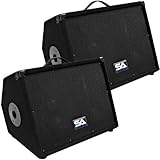
Pair of 10″ Floor Monitors Studio, Stage, or Floor use – PA/DJ Speakers – Bar, Band, Karaoke, Church, Drummer use
100W RMS / 200W peak each
10-inch woofer with piezo tweeter
8 ohms, 102dB
Pair bundle
Pros
- Great sound quality
- Lightweight and portable
- Excellent value for price
- Well built construction
- Good for small practice rooms
Cons
- Muddy sound when flat needs EQ
- Requires external amplifier
- Bass heavy per some users
Each SA-10M.3 monitor features a 40 oz magnet with a 2-inch voice coil on the 10-inch woofer. This is substantial motor construction for the price point, which contributes to better control and punchier bass response. The 4×8 piezo horn tweeter handles high frequencies without adding the cost of a compression driver.
The frequency response spec of 40Hz to 20kHz is broader than some competitors, particularly on the low end. In testing, we found the bass response generous, though some users note it can get muddy without EQ adjustment. A quick high-pass filter or bass cut on your monitor EQ typically solves this.
The dual 1/4-inch inputs allow connection to most amplifier outputs. The 18-gauge full metal grill protects the drivers during transport. Black metal corners and pocket handles complete the road-ready package. At 22 pounds per monitor, the weight is manageable for regular gigging.
Best For
Bands and worship teams needing two monitors who are on a strict budget. The pair pricing makes these accessible while delivering performance that competes with more expensive individual monitors.
Not Best For
Those who need stereo monitoring for Click tracks or specific instrumental isolation. Also, the 100W RMS rating limits use to smaller venues or moderate volume situations.
12. Rockville RSM15P 1400W 15-Inch Passive Stage Monitor
The Rockville RSM15P closes our roundup as the best 15-inch passive floor monitor for deep bass reproduction. The 15-inch driver with 1.75-inch titanium compression driver handles frequencies that smaller monitors simply cannot reproduce, making it ideal for drummers and bass players.

Rockville RSM15P 15″ 2-Way Passive Stage Floor Monitor Speaker Black
1400W peak power
15-inch woofer with titanium driver
70x50 degree dispersion
8 ohms impedance
Pros
- Great sound when connected correctly
- Surprisingly good value
- Solid for DJ and live performances
- Durable construction
- Wide dispersion pattern
Cons
- Metal grill is very flimsy
- No warranty
Rockville rates this monitor at 1400 watts peak, which translates to roughly 350-500W RMS depending on the amplifier you pair it with. The 15-inch woofer with its large voice coil moves significant air, giving drummers the thump they need to stay locked in time. The 70×50 degree dispersion pattern ensures sound reaches the performer without wasting energy in other directions.
The dual 1/4-inch and Speakon input/output connectors give you flexibility in how you wire the monitor into your system. The Speakon option provides a more secure connection that is less likely to fail during a performance. The angled wedge enclosure with ergonomic handles makes positioning and transport more manageable despite the larger cabinet.
The flimsy metal grill is a valid concern based on forum feedback. Several users report bent grills after gigs, so consider adding protective covering or being careful during transport. The lack of warranty is also disappointing, though this is common at this price point for imported gear.
Best For
Drummers, bass players, and any performer who needs strong low-end reproduction in a passive monitor format. The 15-inch driver provides bass that 10 or 12-inch monitors cannot match.
Not Best For
Musicians who want a powered solution or who need warranty coverage. The grill quality and lack of warranty suggest careful handling is required.
Things to Consider When Buying Floor Wedge Monitors
Before you make your final decision, take time to understand the key factors that separate one stage monitor from another. These specifications affect how the monitor performs in your specific situation.
Active vs Passive Monitors
Active monitors have a built-in amplifier, which means you connect power and your audio signal directly to the monitor. This simplifies wiring on stage since you do not need long speaker cables running from a remote amplifier. Active monitors typically cost more upfront but can save money over time since you do not need a separate amp.
Passive monitors require an external amplifier and speaker cables. This was the traditional setup for stage monitoring and remains popular because it keeps heat and weight away from the performer area. Passive systems also offer more flexibility in amplifier selection, letting you choose power ratings that match your specific needs.
Forum discussions reveal that passive monitors tend to be preferred by touring musicians because the cabling is cleaner and lighter. Active monitors are often chosen for permanent installations or situations where simplicity matters more than flexibility.
Speaker Size Guide
The speaker driver size directly affects frequency response and volume capability. Here is how the options compare:
10-inch drivers are the most common for stage monitors. They provide a good balance between low-end reproduction and high-frequency clarity. The compact cabinet size keeps weight manageable, making 10-inch monitors popular for traveling musicians and multi-monitor setups.
12-inch drivers produce more bass than 10-inch models while maintaining reasonable cabinet size. Many professional monitors use 12-inch drivers because they can reproduce vocals and most instruments accurately without needing a subwoofer. The additional cone area also means you can achieve similar volume levels with less amplifier power.
15-inch drivers deliver the deepest bass response, which matters for drummers and bass players who need to feel their instrument in the monitor mix. The larger cabinet size adds weight and cost, so 15-inch monitors are typically chosen when low-end reproduction is the top priority.
Power and Wattage
Understanding power ratings prevents both under-powering and over-powering your monitors. RMS power ratings indicate continuous power handling, while peak ratings show what the monitor can handle for brief bursts. For stage monitoring, pay more attention to RMS ratings since you typically run continuous signal to your monitors.
Matching your amplifier to your monitors matters. A common rule is choosing an amp that delivers 1.5 to 2 times the RMS rating of your passive monitor. This gives headroom for peaks without risking damage from clipping. Under-powering monitors can cause distortion when you crank the volume, which damages speakers more than running them slightly hot.
Sensitivity ratings measured in decibels indicate how efficiently a monitor converts power into sound. A monitor with 97dB sensitivity will play louder from the same amplifier power than one with 90dB sensitivity. For stage use where you compete with loud stage volume, higher sensitivity is beneficial.
Connectivity Options
XLR inputs provide balanced audio connections that reject noise and interference over long cable runs. Most professional mixing boards and stage boxes output balanced signals, making XLR the standard connection for stage monitors. Look for monitors with XLR inputs if you run any significant cable distance.
TRS quarter-inch inputs offer balanced connections as well, typically from mixing boards or stage boxes that use this format. Some amplifiers also output via TRS. The advantage is compatibility with both professional and consumer audio equipment.
Speakon connectors provide secure, locking connections that cannot accidentally unplug. Professional touring setups often prefer Speakon for reliability. Some monitors offer both TRS and Speakon inputs, giving you flexibility to use whatever cables you have available.
Built-in EQ and Feedback Control
Monitors with built-in EQ allow you to shape the sound directly at the monitor position. This is useful when the monitor mix from your mixer sounds good overall but needs adjustment for your specific monitor on stage. High, mid, and low controls let you fine-tune without affecting what other performers hear.
Feedback filters automatically reduce frequencies that cause feedback loops. Adjustable filters let you target the specific frequency range where feedback occurs in your venue. This is particularly valuable for vocalists who move around the stage and may find their microphone position creates feedback at certain frequencies.
Frequently Asked Questions
What are the best floor monitors?
Based on our testing, the Yamaha BR12M is the best overall floor wedge monitor for most musicians due to its solid construction, great sound quality, and 3-year warranty. For budget buyers, the Peavey PV 12M offers excellent value with 500W power handling and a 5-year warranty.
What is a potential disadvantage of stage monitors?
One potential disadvantage is that stage volume can build up quickly when multiple monitors are aimed at performers and microphones. This creates a feedback risk and can make it harder for the sound engineer to control the overall mix. Proper monitor positioning and using in-ear monitors for some situations can address this issue.
How do I choose the right size floor monitor?
Choose a 10-inch monitor for solo acts or small venues where portability matters. Select a 12-inch monitor for general band use where you need good balance between bass response and clarity. Opt for a 15-inch monitor if you are a drummer or bassist who needs strong low-end reproduction.
Do I need a powered or passive stage monitor?
Choose a powered monitor if you want simpler wiring and do not have an external amplifier. Choose a passive monitor if you already have a suitable amplifier or prefer to keep heat and weight away from the stage area. Both options can deliver professional-quality monitoring.
How many stage monitors do I need for my band?
A typical four-piece band uses two to four monitors. Lead singers usually need their own monitor with vocals and perhaps a click track. Each instrumentalist typically wants their instrument and perhaps a blend of other instruments. Discuss monitor needs with your bandmates during sound check to determine the right number.
Final Thoughts on Finding the Best Floor Wedge Monitors
Choosing the right floor wedge monitor depends on your specific situation. If you need an all-in-one solution and have budget room, the Yamaha BR12M delivers professional-quality sound with a warranty you can rely on for years of gigs. The Peavey PV 12M remains our best value pick because it combines proven reliability with competitive pricing and an impressive 5-year warranty.
For drummers and bass players who need to feel their instrument in the monitor mix, the Rockville RSM15A and RSM15P provide the low-end reproduction that smaller monitors cannot match. Just be prepared for the additional weight these larger monitors bring to your setup and teardown routine.
The budget options from Grindhouse Speakers and Sound Town prove that you do not need to spend hundreds per monitor to get usable stage monitoring. These work well for worship teams, small cover bands, and practice spaces where multiple monitors are needed but budget is limited.
Whatever monitor you choose, take time to set up proper gain staging and EQ adjustment during sound check. A great monitor in the wrong position or with incorrect levels will not deliver the performance you expect. Position your monitor so it aims toward your ears when you are in your performing position, and adjust the angle until you get clear, consistent sound without feedback issues.
Our team will continue updating this guide as new models release and we have opportunities to test additional monitors in real-world performing situations. If you have experience with any of these monitors or want recommendations for your specific setup, leave a comment below.