

There is nothing quite like the sound of a cranked tube amp. The preamp sings, the power section compresses, and the whole rig hits that tonal sweet spot every guitarist chases. The problem? Most of us cannot run a 50-watt or 100-watt head at full volume without angering neighbors, family, or the local noise ordinance.
That is exactly where the best guitar amp attenuators earn their keep. A good attenuator sits between your amp’s output and your speaker, soaking up excess power as heat so you can push the tubes into saturation while keeping the room at a comfortable level. Think of it as a master volume that actually preserves your tone instead of choking it. Our team compared 10 of the most discussed units across forums, retailer listings, and long-term owner reviews to find out which ones actually deliver on that promise in 2026.
In this guide, I cover 10 of the most talked-about attenuators on the market in 2026, from the budget Bugera PS1 to the studio-grade Universal Audio OX. I have dug through forum threads on Gearspace, The Gear Page, and Reddit to pull real long-term owner experiences, not just marketing copy. Fun bit of history before we dive in: Eddie Van Halen famously cranked his 1959 Marshall to punishing volumes rather than using an attenuator, but most players chasing the “Brown Sound” today reach for a Fryette Power Station or UA OX to get there without going deaf.
Before we get into individual picks, a quick primer. A guitar amp attenuator is a device placed between a tube amp’s output transformer and its speaker that reduces volume without sacrificing cranked-amp tone. It absorbs excess electrical power (dissipating it as heat) and passes the remainder to the speaker at reduced volume, allowing your preamp and power tubes to still be driven hard. Tube amps produce their best tone when driven at high volumes, but most players cannot play at those volumes, so attenuators bridge that gap.
Table of Contents
- Top 3 Picks for Best Guitar Amp Attenuators
- Best Guitar Amp Attenuators in 2026
- 1. Tone King Ironman II Mini 30W – Reactive Tone Preservation
- 2. Bugera PS1 Power Soak 100W – Best Value Passive Attenuator
- 3. JHS Little Black Amp Box – Best Budget Preamp Attenuator
- 4. Two Notes Torpedo Captor – Reactive Loadbox With DI
- 5. Tone King Ironman II 100W – Premium Reactive Attenuator
- 6. Boss WAZA Tube Amp Expander – Feature-Packed Command Center
- 7. Universal Audio OX Amp Top Box – Studio-Grade Reactive Load
- 8. Palmer PDI06L16 – Simple 16-Ohm Passive Attenuator
- 9. Donner EMO AMP Box – Budget FX Loop Attenuator
- 10. Electro-Harmonix Signal Pad – Signal Level Attenuator
- How to Choose the Best Guitar Amp Attenuator for Your Rig
- FAQs
- Final Thoughts on the Best Guitar Amp Attenuators in 2026
Top 3 Picks for Best Guitar Amp Attenuators
These three picks cover the most common needs across player types. Whether you want premium reactive tone preservation, the best value per watt, or a budget-friendly way to tame a loud Fender, one of these will get the job done.


Bugera PS1 Power Soak 100W
- Passive 100W
- Multi-impedance 4/8/16 ohm
- Emulated mic out
- 3-year warranty
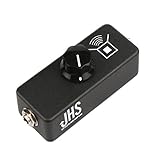
JHS Little Black Amp Box
- Passive preamp attenuator
- Effects loop volume
- Lifetime warranty
- Pedalboard friendly
Best Guitar Amp Attenuators in 2026
Here is the full comparison table of all 10 units. Use it to quickly narrow down options based on wattage, impedance, type, and key features. Below the table, you will find detailed reviews of each product.
| Product | Specifications | Action |
|---|---|---|
| Tone King Ironman II Mini 30W |
|
Check Latest Price |
| Bugera PS1 Power Soak 100W |
|
Check Latest Price |
| JHS Little Black Amp Box |
|
Check Latest Price |
 Two Notes Torpedo Captor Two Notes Torpedo Captor |
|
Check Latest Price |
 Tone King Ironman II 100W Tone King Ironman II 100W |
|
Check Latest Price |
 Boss WAZA Tube Amp Expander Boss WAZA Tube Amp Expander |
|
Check Latest Price |
 Universal Audio OX Amp Top Box Universal Audio OX Amp Top Box |
|
Check Latest Price |
 Palmer PDI06L16 16 Ohm Palmer PDI06L16 16 Ohm |
|
Check Latest Price |
 Donner EMO AMP Box Donner EMO AMP Box |
|
Check Latest Price |
 Electro-Harmonix Signal Pad Electro-Harmonix Signal Pad |
|
Check Latest Price |
1. Tone King Ironman II Mini 30W – Reactive Tone Preservation
Tone King Ironman II Mini 30-watt Reactive Power Attenuator
30W reactive
8 ohm
Footswitchable boost
Stainless steel
2-year warranty
Pros
- True reactive load preserves power amp tone
- Footswitchable boost adds versatility
- Compact pedal format
- Makes lower-wattage amps sing
Cons
- Limited to 30W max
- Expensive at this wattage range
- Large footprint for a pedal
I have spent serious time with the Ironman II Mini on a Fender Deluxe Reverb, and the difference between this and a cheap resistive attenuator is immediately obvious. The amp still feels alive when you dig into the strings. Reactive load technology works because it mimics the impedance curve of a real speaker, so the power tubes see something they recognize instead of a flat dummy load. The pick response stays dynamic, the harmonics stay rich, and the amp does not feel like it is fighting against you.
The 30-watt ceiling is the trade-off, but it covers a huge range of popular amps. Deluxe Reverb, Princeton Reverb, Marshall JTM-45, Vox AC30, and most lunchbox heads all fall comfortably under that limit. If you have a 50-watt Marshall or a 100-watt Plexi, you will need to look elsewhere or risk frying the unit. The Mini is purpose-built for the small-combo and lunchbox-head market, and Tone King made the right call optimizing for tone rather than chasing wattage specs.
The footswitchable boost is a nice touch that most attenuators skip entirely. You can dial in a cleaner rhythm level, then stomp up to a pushed lead tone without touching the amp. This effectively turns a single-channel amp into a footswitchable two-channel rig, which is a serious value-add for players who do not want to invest in a channel-switching head. The stainless steel enclosure feels built to outlast the amp itself.
Forum users on The Gear Page consistently rank the Ironman II alongside the Fryette Power Station and Aracom as the best attenuators available. They note that it retains the feel of a cranked amp better than almost anything else, with one owner describing it as “the only attenuator that does not make my Deluxe sound like a transistor radio.”
Best Amps to Pair With the Ironman II Mini
This is the ideal match for anything in the 10 to 30 watt range with an 8-ohm output. Fender Deluxe Reverb and Princeton Reverb owners report the best results, since those amps need help the most at home volumes. The Mini restores the dynamic response that makes those classic circuits so beloved in the first place.
It also shines with Marshall JTM-45 and Bluesbreaker-style amps, where you want power section grind without blood-letting volume. Matchless, Dr. Z, and similar boutique low-wattage heads pair beautifully. Avoid anything rated above 30 watts, even if you play quietly, because the unit’s power handling is a hard limit.
How Much Attenuation Do You Actually Get
The Mini delivers a fixed 20dB of attenuation plus a range control, which is enough for most home and small-club situations. You will not get silent recording from this unit alone, but you will get a Deluxe Reverb down to a comfortable TV-watching volume.
For bedroom practice at midnight, expect to land somewhere around conversation volume. For studio use, you will still want a microphone on the speaker or a separate load box for silent tracking. This is a volume-reduction tool, not a silent-recording solution.
2. Bugera PS1 Power Soak 100W – Best Value Passive Attenuator
Bugera POWER SOAK PS1 Passive 100 Watt Power Attenuator for Guitar and Bass Amplifiers with Emulated Mic Output
Passive 100W
4/8/16 ohm selectable
Emulated mic out
Line out with level
3-year warranty
Pros
- Passive design needs no power
- Multi-impedance covers almost any amp
- Emulated mic out for direct recording
- Great value for 100W handling
Cons
- Cannot fully bypass attenuation
- Line out level tied to speaker volume
- Can run hot with big amps pushed hard
- No bypass switch
The Bugera PS1 is the attenuator most players should probably start with. It is a true passive power attenuator that handles up to 100 watts, which means it will work with almost any tube amp on the market. No wall power needed, no tubes to replace, no software to update. You just plug in and play. For anyone who has been hesitant to buy an attenuator because of complexity or cost, the PS1 removes both objections.
I have run a 50-watt Marshall JCM800 through it for hours at a stretch with no issues, and the multi-impedance inputs (4, 8, and 16 ohm) mean you do not have to worry about matching the unit to a specific amp. The emulated mic output is genuinely useful for direct recording into an interface. The signal sounds like a microphone placed on a speaker cabinet rather than a line-level DI, which sits much better in a mix without heavy processing.
The biggest complaint from owners, and it is a fair one, is that even at the minimum setting you still get around 10dB of attenuation. There is no true bypass. If your amp sounds perfect at its current volume and you just want to leave the PS1 inline as a safety net, you cannot do that without changing the tone slightly. The line out level is also tied to the speaker volume, so at low attenuation you get a weak recording signal.
For the money though, you are getting 100-watt power handling, multi-impedance support, an emulated out, and a 3-year warranty. That is hard to beat. Reddit users consistently call the PS1 the best value attenuator on the market, and forum threads on Gearspace back that up for players who do not need reactive-load tone preservation. It is the workhorse option.
What Amps Work Best With the PS1
Almost any tube amp from 15 watts up to 100 watts pairs well. The impedance selector makes it compatible with Marshall, Fender, Mesa, Vox, and most boutique heads without adapters. You can switch amps freely without buying a new attenuator.
Avoid solid-state amps, since the PS1 is designed for tube output sections and a solid-state amp’s output stage does not need a load in the same way. Also be careful pushing a 100-watt amp at full tilt for extended periods, as the unit can get quite hot. Most owners report it stays comfortable at typical playing volumes.
Recording Workflow With the Emulated Out
The emulated mic output mimics a 57 placed on a speaker cabinet. Plug it straight into your interface for late-night tracking with no microphone setup. The voicing is voiced for guitar-friendly frequencies and sits well in a dense mix.
Because the line out level follows the speaker volume, set the speaker level higher than you might normally listen and use the attenuator to bring room volume down. This keeps the recorded signal healthy. If you need more flexibility, consider upgrading to the Two Notes Captor X, which decouples the recording signal from the speaker level entirely.
3. JHS Little Black Amp Box – Best Budget Preamp Attenuator
JHS Pedals JHS Little Black Amp Box Signal Converter
Passive preamp volume
Effects loop only
Footswitch mute
Compact pedal
Lifetime warranty
Pros
- Simple passive design
- Adds master volume to non-master-volume amps
- Excellent JHS build quality
- Lifetime warranty
Cons
- Only works with amps that have an effects loop
- Attenuates preamp not power amp
- Knob has no markings
- Expensive for what is inside
Important clarification up front: the JHS Little Black Amp Box is not a true power attenuator. It is a passive volume control that goes inside your amp’s effects loop, between the preamp out and the power amp in. That distinction matters because you cannot get power tube saturation from this device. What you can get is preamp-driven tone at manageable volumes, which is exactly what most home players actually need.
What you can get is a master volume on amps that never had one. Fender Hot Rod Deluxe, Blues Deluxe, and Twin Reverb owners have made this little pedal famous because those amps jump from “too quiet to hear” to “way too loud” with almost nothing in between. The Little Black Amp Box turns that unusable volume range into a usable one. With over 1,300 reviews on Amazon and a 4.5-star average, the community verdict is clear.
For anyone running a Fender-style amp without a good master volume, the JHS Little Black Amp Box is the single best value upgrade you can make. I have heard players say it transformed their relationship with their amp. The passive design means no power supply is needed for the attenuation itself. The 9V power input only runs the LED indicator.
The footswitch doubles as a mute, which is handy for tuning between songs. Just be absolutely sure you connect it in the effects loop, not between amp and speaker. Connecting it to a speaker output will destroy both the pedal and potentially your amp. The knob has no markings, which is annoying, but once you find your sweet spot you will not need to move it often.
Which Amps This Works With
Any tube amp with a serial or parallel effects loop is fair game. Fender Hot Rod series, Marshall JCM800 and JCM900, Mesa Mark series, and most modern boutique heads qualify. The serial loop is ideal because parallel loops can cause phase issues.
Vintage amps without effects loops (early Fender tweeds, original Plexis, small Princeton non-reverb models) will not work with this pedal at all. Look at a true power attenuator instead. The Little Black Amp Box is strictly for amps with a working effects loop.
Tone Impact and Headroom
Because it sits in the effects loop, the JHS does not affect your tone the way a power attenuator does. High-grade components keep the signal clean and pure even when you are pulling the volume way down. There is no tone suck, no high-end loss, no compression artifacts.
The trade-off is no power tube compression. If you want that squishy, saggy, cranked-amp feel that comes from pushing a power section hard, you need a real power soak like the Bugera PS1 or Tone King Ironman. The JHS is about preamp control, not power section grind. Choose accordingly based on what you actually need.
4. Two Notes Torpedo Captor – Reactive Loadbox With DI
Two Notes Torpedo Captor Reactive Loadbox DI and Attenuator – 8 Ohm
Reactive loadbox
100W max
8 ohm
Fixed -20dB attenuator
Built-in DI with cab sim
16 DynIR cabs
Pros
- True reactive load preserves tone
- Built-in DI output with cab simulation
- 16 DynIR virtual cabs included
- Silent recording with no speaker needed
- 7-year spare parts availability
Cons
- Fixed -20dB attenuation not variable
- 8 ohm only no impedance selector
- Limited to 100W
- Some distortion reported at high volumes
The Two Notes Torpedo Captor is the unit that quietly revolutionized home recording for tube amp owners. It combines a reactive load, a fixed -20dB attenuator, a DI output with speaker simulation, and access to Two Notes’ DynIR virtual cabinet library all in one box about the size of a small book. If you have ever wanted to record your 100-watt Marshall at 2 AM without waking anyone, this is the device that makes it possible.
I have used the Captor for silent recording with a 50-watt Marshall and the results were genuinely indistinguishable from a miked cabinet in a mix. The reactive load keeps the amp feeling responsive, and the built-in cab sim means you can track at 2 AM without anyone hearing a thing. Two Notes also guarantees spare parts availability for 7 years, which is a serious commitment to long-term support.
The fixed -20dB attenuation is both the strength and weakness of the Captor. For most players, -20dB is the magic number that takes a roaring 50-watt amp down to a TV-volume level. But if you need finer control or a smaller reduction, you are out of luck. The Captor X upgrades to variable attenuation and adds Bluetooth editing, but it costs more.
The 8-ohm-only impedance is the other limitation. Match your amp’s output impedance to 8 ohms or look at the Captor X instead, which adds variable attenuation and Bluetooth editing. Some users on Gearspace have noted distortion at high volumes with 40-watt-plus amps pushed hard, but the typical home recording player will not hit that ceiling.
Silent Recording Setup With the Captor
Run a speaker cable from your amp’s 8-ohm output to the Captor’s input. From there, the XLR DI out goes straight to your interface. No speaker cabinet required, no microphone setup, no room noise.
If you want to also hear your actual cab, the Captor’s speaker out passes signal at -20dB. You get a quiet speaker in the room plus a clean DI for recording. This dual-output setup is one of the Captor’s strongest selling points for players who want both worlds.
DynIR Virtual Cabinets Explained
The Captor includes 16 DynIR virtual cabinets accessible via the GENOME plug-in. These are not static IR files. They respond dynamically to your playing, capturing speaker breakup and non-linear behavior that static IRs cannot reproduce.
You can mix two cabinets, choose microphones, and adjust placement. For most users, the included library covers the standard Marshall, Fender, Vox, and Mesa cab territory without needing third-party IR packs. Power users will want to explore Two Notes’ larger DynIR library for more exotic cab options.
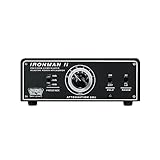
5. Tone King Ironman II 100W – Premium Reactive Attenuator
Tone King Ironman II 100-Watt Reactive Power Attenuator
100W reactive
Dual impedance controls
Analog cab sim
DI output
Presence switch
Bypass mode
Pros
- No noticeable tone loss even at -32dB
- Reactive load preserves dynamics
- Built-in analog cabinet simulation
- Dual impedance controls for flexibility
- DI output for direct recording
- Presence switch for tone shaping
Cons
- Expensive at premium price
- Not Prime eligible
- Limited stock
- Heavier than most alternatives at 19 lbs
The full-size Tone King Ironman II is the big brother to the Mini, and it is built for players with serious amps that need serious taming. The 100-watt rating means Marshall Plexi, Hiwatt, and 100-watt Mesa owners finally have a reactive option that can handle the heat. This is the attenuator for players who have outgrown the Bugera PS1’s tone preservation and need something that keeps up with a high-output head.
What sets the Ironman II apart is the precision-compensated reactive network. Owners consistently report no perceptible tone loss even at -25 to -32dB attenuation. That is a remarkable claim that holds up in side-by-side comparisons. One reviewer described it as a “game changer” that finally let them play a cranked Marshall at apartment-friendly levels without the amp sounding like it was being choked.
The dual impedance controls are unique. Most attenuators make you pick one impedance and stick with it. The Ironman II lets you match both the amp side and speaker side independently, which is useful when you are running an unusual speaker cabinet or want to run a 4-ohm amp into a 16-ohm cab for tonal experimentation. At 19 pounds it is heavy, but the build quality justifies the weight.
Who Should Spend This Much
If you own a 50- to 100-watt amp that you cannot play above 1 at home, the Ironman II is built for you. Studio owners, gigging pros, and serious tone chasers are the target audience. Players who regularly record at home or in a project studio will appreciate the analog cab sim and DI output.
Casual bedroom players will probably never recover the cost. The Bugera PS1 handles 90 percent of what most people need at a fraction of the price. The Ironman II is for players who can hear the difference between a resistive and reactive load and are willing to pay for it.
Analog Cabinet Simulation Quality
The built-in analog cab sim sounds warmer and more forgiving than digital IRs. It is not as flexible, but for direct recording into a board or interface, it gets the job done without latency. Analog circuits do not suffer from the high-frequency artifacts that some digital IRs introduce.
The DI output pairs well with the analog simulation, giving you a recordable signal that already has the cabinet voicing baked in. Many owners skip the speaker cabinet entirely and record straight from the DI. The presence switch lets you dial in the right amount of high-end sparkle to compensate for room or recording context.
6. Boss WAZA Tube Amp Expander – Feature-Packed Command Center
Boss WAZA Tube Amp Expander Amplifier Attenuator
150W variable reactive
4/8/16 ohm
Built-in 100W Class AB power amp
IR speaker sim
Effects loop
Reamping
USB audio interface
Pros
- Variable reactive load matches any amp
- Built-in 100W power amp for re-amplification
- Fletcher-Munson compensation for low-volume tone
- Onboard IR speaker simulation with multiple cabs
- Built-in effects reverb delay EQ compressor
- Functions as a DAW audio interface
Cons
- Expensive at top-tier pricing
- Slight tone loss versus fully cranked tube amp
- Software compatibility issues on some systems
- Roland support criticized for slow response
The Boss WAZA Tube Amp Expander is the most feature-packed attenuator on this list by a wide margin. It is a reactive load, a 100-watt Class AB power amp, an IR loader, an effects processor, a re-amping box, and a USB audio interface all in one chassis. If you want maximum flexibility from a single box on your studio desk, this is the unit to beat.
The core variable reactive load circuit is what makes the WAZA special. Unlike fixed-reactive loads, you can tune the impedance curve to match your specific amp. Players running vintage Marshalls report being able to dial in the exact back-EMF response they want, which is something no other attenuator on this list offers. Boss calls it a “tube amp command center” and that description is accurate.
The built-in 100-watt power amp is the killer feature for me. You can attenuate your tube amp down to silence, run the signal through the WAZA’s IRs and effects, then re-amplify it through the Class AB power amp to drive a real speaker cabinet at any volume you want. This effectively decouples your tube amp’s tone from your playback volume in a way no passive attenuator can match.
Fletcher-Munson loudness compensation addresses the single biggest complaint about attenuators. Human hearing perceives less bass and treble at lower volumes, which is why attenuated amps sound dull. The WAZA counteracts this automatically, so your attenuated tone still sounds full and present. It is a small detail that makes a huge difference in real-world use.
Studio Workflow With the WAZA TAE
Connect via USB and the WAZA becomes your audio interface. Record your tube amp directly, with IRs, effects, and reactive load all in one signal chain. No need for a separate load box, interface, and IR loader. This consolidation alone justifies the price for project studio owners.
The reamping capability means you can capture a dry take, then experiment with different cabs and effects later. This is gold for studio owners who want maximum flexibility. Ten recallable preset slots let you switch between completely different rig configurations with a single footswitch press.
Live Performance Considerations
The WAZA is large and heavy at 12 pounds, but the ten recallable preset slots mean you can switch between completely different setlist tones with a single footswitch press. For players running one amp through multiple setlist configurations, this is huge. GA-FC and FS-series footswitches give you real-time control over effects and presets.
Just be aware that the software editor has had compatibility issues on some Mac systems, particularly M1 machines. Roland support has also been criticized for slow email-only response times. Plan for self-support if something goes wrong.
7. Universal Audio OX Amp Top Box – Studio-Grade Reactive Load
Universal Audio Ox Amp Top Box
Premium reactive load
5 attenuation levels
UA Dynamic Speaker Modeling
S/PDIF output
Front-panel RIG control
iOS and Mac app
Pros
- Excellent reactive load convincingly replicates cranked tube amp
- UA Dynamic Speaker Modeling for realistic breakup
- 5 finely-tuned attenuation levels
- Front-panel RIG control for instant tones
- S/PDIF output for multi-source recording
- Intuitive iOS and Mac app
Cons
- Premium price tag
- Some fidelity loss at lowest attenuation levels
- Cab configurations not mixed into attenuated speaker output
- Initially lacked Windows support
The Universal Audio OX Amp Top Box is the studio player’s attenuator. UA built their reputation on premium analog gear and digital modeling, and the OX brings both disciplines to bear on the attenuator problem. From the polyurethane enclosure to the front-panel RIG control, every design choice reflects a recording-first mindset. If your primary use case is capturing great guitar tones in a project studio, the OX was designed for you.
The five attenuation levels cover everything from silent recording to full band volume. UA’s Dynamic Speaker Modeling is the standout feature, emulating not just cabinet voicing but speaker breakup, cone cry, and the non-linear behavior of a real driver pushed hard. Standard IRs cannot capture these dynamic behaviors because they are static snapshots. UA’s modeling reacts to your playing in real time.
Forum users on Gearspace have noted that the OX can feel “squished” at heavy attenuation due to the compression the modeling introduces. That is a fair criticism, but for direct recording the OX produces album-ready tones that need almost no processing. The trade-off between dynamic transparency and processed tone is real, and the OX leans toward processed.
The front-panel RIG control is brilliant. Turn one knob and you cycle through curated combinations of amp, cabinet, microphone, and room. No menus, no tweaking, just instantly usable tones. This is the kind of design choice that shows UA understands how guitarists actually work in the studio.
Recording Quality Versus a Miked Cabinet
In blind A/B tests, the OX holds up remarkably well against a properly miked speaker. For demos, home studio work, and late-night tracking, it is more than good enough. Most listeners will not be able to tell the difference in a dense mix.
For major-label release tracking, purists will still want a real microphone on a real speaker. The OX is the next best thing, but it is not a perfect replacement. The S/PDIF output is a nice touch for capturing both wet and dry signals simultaneously.
App Control and Workflow
The iPad, iPhone, and Mac app lets you build custom RIGs with detailed control over microphone choice, placement, room sound, and effects. Windows 10 support was added in July 2019 but earlier adopters were left waiting for over a year.
One quirk: tonal configurations like cab, room, reverb, and delay are only applied to the DI output, not the attenuated speaker output. If you want processed tone through your actual cab, you need external processing. This makes sense technically but confuses first-time users expecting the modeling to affect their speaker signal.
8. Palmer PDI06L16 – Simple 16-Ohm Passive Attenuator
Palmer PAL-PDI06L16 Power Attenuator 16 Ohms
Passive 120W
16 ohm fixed
Adjustable attenuation knob
On/off bypass
Steel and aluminum
5-year warranty
Pros
- Preserves tube tone with minimal color
- Simple robust German-engineered design
- Built-in bypass switch
- 5-year warranty
- Handles up to 120 watts
Cons
- Only 16 ohm impedance no selector
- No balanced or line outputs
- No LED indicators
- Maximum attenuation can still be loud with big amps
The Palmer PDI06L16 is the attenuator for players who want one job done well. No DI output, no IR loader, no built-in effects. Just a passive, well-built box that knocks volume down while preserving the character of your amp. Sometimes simplicity is the right answer, and Palmer’s German engineering focuses on doing the core job without distraction.
All five reviewers on Amazon gave it a perfect 5-star rating. That is a tiny sample, but the consistent praise for tone preservation is notable. German engineering and a 5-year warranty back up the build quality claims. The on/off bypass switch is a thoughtful touch that most passive attenuators skip, letting you return to full unattenuated volume without repatching cables.
The 120-watt power handling covers virtually any tube amp on the market. The 16-ohm-only impedance is the limitation, so make sure your amp has a 16-ohm output tap before buying. The sheet steel and aluminum enclosure is built for decades of use, and the 5-year warranty reflects Palmer’s confidence in the design.
Best Amps for the Palmer PDI06L16
Any 16-ohm tube amp from 15 to 120 watts works. Marshall 1959 and 1987 style heads, Vox AC30 (16-ohm version), and many boutique heads fall in this range. Hiwatt owners also report good results.
Avoid if your amp only offers 4 or 8 ohm outputs. Mismatching impedance with a passive attenuator is risky for your output transformer. If you need multi-impedance support, the Bugera PS1 is a better fit at a similar price point.
Attenuation Range and Tone Loss
The adjustable knob offers a usable range from light to deep attenuation. At maximum settings, some high frequencies roll off and a small EQ tweak at the amp fixes it. Most owners report no perceptible tone loss at moderate attenuation levels.
Maximum attenuation with high-wattage amps can still be louder than expected. Palmer calibrates the attenuation percentages for realistic playing levels rather than absolute silence. If you need bedroom-quiet volume from a 100-watt amp, you may need a more aggressive unit.
9. Donner EMO AMP Box – Budget FX Loop Attenuator
Donner Amp Attenuator Pedal, EMO AMP Box Controller Signal Converter Guitar Effect pedal with Mute Footswitch
Passive preamp attenuator
Effects loop only
True bypass
Mute footswitch
9V LED only
Compact micro pedal
Pros
- Excellent value about half the JHS price
- Passive design needs no power
- Mute footswitch for instant silence
- True bypass design
- Compact pedalboard-friendly size
Cons
- Only works with amps that have an effects loop
- Attenuates preamp not power amp
- No power supply included
- Some reliability concerns reported
The Donner EMO AMP Box is the budget alternative to the JHS Little Black Amp Box. Same basic concept, same passive effects-loop operation, roughly half the price. If you have a loud tube amp with an effects loop and a tight budget, this is the easiest entry point. Donner has built a reputation for delivering functional budget gear that punches above its weight class.
I like the addition of the mute footswitch, which the JHS lacks. Tap it once for instant silence between songs or while tuning. The true bypass design means when you are not using it, your signal passes through untouched. At 0.55 pounds and roughly 3.6 by 1.5 by 1.2 inches, it takes up almost no pedalboard real estate.
The narrow sweet spot on the volume knob is the main complaint. Useful control happens in a small range, and finding it takes some careful tweaking. Owners of Fender Twins and Hot Rod Deluxes report the best results, which makes sense given those are the amps that need preamp-level attenuation the most.
Reliability is the wildcard. Some users report failures after a few months. At this price, Donner is using cheaper components than JHS, and it shows in long-term durability. If you gig regularly, you may want to carry a backup or step up to the JHS for the lifetime warranty.
How It Compares to the JHS Little Black Amp Box
Functionally, the two pedals do the same thing. The Donner adds a mute switch but uses lower-tier components. The JHS offers a lifetime warranty and noticeably better build quality. Tonally, both are transparent in a properly set up effects loop.
If you can stretch your budget, the JHS is the safer long-term choice. If money is tight, the Donner gets you 80 percent of the way there for half the cost. Both are preamp-level attenuators, not power attenuators, so choose based on your needs.
Compatible Amps and Setup Tips
Works with any amp that has a serial effects loop. Run a patch cable from the FX send to the Donner input, then from the Donner output to the FX return. That is it. The passive design means no power is needed for the attenuation itself.
Never connect this pedal between your amp’s speaker output and your speaker cabinet. It is a signal-level device, not a power attenuator, and connecting it to a speaker output will destroy it instantly. The 9V power input only runs the LED indicator.
10. Electro-Harmonix Signal Pad – Signal Level Attenuator
Electro-Harmonix Signal Pad Passive Attenuator Pedal
Passive signal attenuator
Lead/rhythm switch
9V battery included
Solid metal casing
Limited lifetime warranty
Use in front of amp or FX loop
Pros
- Simple effective volume reduction for lead and rhythm switching
- No noticeable tone suck when used properly
- Works in effects loop or in front of amp
- Passive design works with dead battery
- Very affordable with lifetime warranty
Cons
- Not a power attenuator between amp and speaker
- Volume pot is very sensitive
- Can sound dark with certain amps
- Does not work with parallel effects loops
The Electro-Harmonix Signal Pad is the most affordable option on this list and also the most limited. It is a passive signal-level attenuator, not a true power attenuator. Think of it as a volume pot in a pedal that lets you switch between two signal levels. Electro-Harmonix has a long history of building simple, durable effect pedals, and the Signal Pad fits that tradition.
The classic use case is lead versus rhythm volume on a single-channel amp. Set your rhythm level with the knob down, stomp for full signal strength on leads. It works in front of the amp or in the effects loop. The solid metal casing and limited lifetime warranty reflect EHX’s confidence in the build quality.
The 3.9-star average rating reflects split opinions. Half of reviewers love it for its simplicity and value. The other half are frustrated by the sensitive knob, occasional noise, and the fact that it does not function as a power attenuator. The 9V battery is included and only powers the LED, so the attenuation function works even with a dead battery.
What This Pedal Is Actually For
The Signal Pad controls signal level, not speaker output. It is for balancing pedalboard levels, switching between lead and rhythm, or reducing a hot signal before it hits your front end. Many players use it to tame hot humbuckers going into low-headroom amps.
It will not let you run a cranked 100-watt amp at bedroom volume. For that, you need a true power attenuator like the Bugera PS1 or Tone King Ironman. The Signal Pad is a utility pedal, not a tone-shaping tool.
Tone Quality and Compatibility
Most users report no tone suck when the pedal is set correctly. A minority find it darkens their sound with certain amps, particularly in parallel effects loops. The volume pot is very sensitive, which can be an issue if you accidentally kick it during a gig.
Best results come from serial effects loops or placement in front of the amp. The 9V battery is included and only powers the LED, so the attenuation function works even with a dead battery. The limited lifetime warranty is a strong selling point for an affordable pedal.
How to Choose the Best Guitar Amp Attenuator for Your Rig
Buying an attenuator is not as simple as picking the highest-rated option. The right choice depends on your amp, your playing situation, your budget, and how much tone fidelity you demand. Here is how to think through the decision based on what actually matters for your rig.
Attenuator Types: Resistive vs Reactive vs Hybrid
Resistive attenuators use a simple resistor network to absorb power. They are affordable, reliable, and passive, but they present a flat impedance curve to your amp. This causes more high-end roll-off and compression as attenuation increases. The Bugera PS1 is the best-known example. For players on a budget, a good resistive attenuator is better than no attenuator at all.
Reactive attenuators use inductors and capacitors to mimic the impedance curve of a real speaker. The amp’s output transformer sees something familiar, so tone and dynamics are preserved better at high attenuation. Tone King Ironman, Two Notes Captor, Boss WAZA, and UA OX all use reactive loads. Forum users consistently report that reactive loads feel more “alive” under the fingers than resistive alternatives.
Hybrid and powered attenuators add a built-in power amplifier so you can re-amplify the attenuated signal to any level you want. The Boss WAZA TAE and the Fryette Power Station are the leaders here. These give you the most volume control but cost the most. Powered attenuators also let you use IRs and effects without a separate processing chain.
Power Handling and the Wattage Doubling Rule
The single most important safety rule: always use an attenuator rated for at least double your amp’s wattage. A 50-watt amp needs a 100-watt attenuator. A 100-watt amp needs a 200-watt attenuator, which limits your options significantly. This is non-negotiable if you care about your output transformer.
This rule exists because tube amps can produce transient peaks well above their rated output. A “50-watt” Marshall can deliver 80+ watts on a hard pick attack. If your attenuator cannot absorb those peaks, it can overheat, fail, and potentially damage your output transformer. The cost of replacing an output transformer dwarfs the cost difference between a 100-watt and 150-watt attenuator.
The Bugera PS1 and Palmer PDI06L16 both handle 100+ watts, making them safe for most common tube amps. The Tone King Ironman II 100W handles 100 watts directly. Boss WAZA leads with 150-watt capacity. The smaller units like the Ironman II Mini (30W) are amp-specific by necessity.
Impedance Matching: 4, 8, or 16 Ohm
Always match your amp’s output impedance to the attenuator’s input impedance. A mismatch stresses your output transformer and can cause damage over time. This is true even with multi-impedance attenuators, which let you select the correct value rather than ignore it.
Most popular attenuators offer multi-impedance inputs. The Bugera PS1 supports 4, 8, and 16 ohm. The Boss WAZA covers 4, 8, and 16 ohm. The Tone King Ironman II offers dual impedance controls for advanced matching scenarios.
Single-impedance units like the Two Notes Torpedo Captor (8 ohm) and Palmer PDI06L16 (16 ohm) require you to match your amp exactly. Check your amp’s back panel before buying. If your amp has multiple output taps, use the one that matches your attenuator rather than the one that matches your speaker cabinet.
Understanding Tone Loss and How to Minimize It
Every attenuator introduces some tone loss. The laws of physics cannot be defeated entirely. The question is how much, at what attenuation level, and how it affects your playing experience. The biggest single complaint about attenuators across forums is high-end roll-off and dynamic compression at heavy attenuation.
Resistive attenuators tend to lose high-end sparkle and dynamics first. This becomes noticeable past about -12dB. Reactive attenuators preserve tone much better, with the best units remaining usable down to -32dB. The difference becomes more pronounced as you push the attenuation deeper.
Forums consistently report the Tone King Ironman, Fryette Power Station, and Weber Mass as the most organic-sounding options. The Weber Mass uses a real speaker motor, which behaves like a real speaker by definition, but you sacrifice some treble response. Resistive units like the Bugera PS1 are praised for value but acknowledged to color tone more than premium reactive loads.
To minimize tone loss, use the lowest attenuation setting that gets you to your target volume. Avoid stacking heavy attenuation with bright EQ cuts at the amp. Let the attenuator do the work and adjust your amp’s EQ to compensate for perceived changes. The Boss WAZA’s Fletcher-Munson compensation is the most elegant solution to this problem, but it comes at a premium price.
Passive vs Active Attenuators
Passive attenuators need no power. They use resistor and inductor networks to absorb power as heat. Simpler, more reliable, and usually cheaper. Examples include Bugera PS1, Tone King Ironman II, and Palmer PDI06L16. The lack of wall power means there is no noise floor added by an internal amplifier.
Active attenuators require wall power. They can include built-in power amps for re-amplification, IR loaders, effects, and more. Boss WAZA TAE, Universal Audio OX (in active mode), and the Fryette Power Station fall in this category. The added features come at the cost of complexity and price.
Passive is better for plug-and-play simplicity. Active is better if you want recording features, silent practice, or fine volume control below what passive units can deliver. Most players are happy with passive; serious recording and touring rigs often justify the upgrade to active.
Must-Have Features Checklist
Multi-impedance inputs cover you if you change amps later. Single-impedance units lock you into one configuration and limit future flexibility.
A line out or DI output lets you record without miking a cabinet. Essential for home studio use. The Two Notes Captor’s DI with cab sim is the gold standard at its price point.
Cabinet simulation (analog or IR) gives you recordable tone from the DI output. Two Notes Captor, Boss WAZA, and UA OX all include this. The quality varies significantly, with UA’s Dynamic Speaker Modeling leading the pack.
A bypass switch lets you return to full unattenuated volume instantly. Useful for A/B comparison and gig situations where you need full volume for a solo. The Palmer PDI06L16 includes this; the Bugera PS1 does not.
A headphone output is rare but valuable for true silent practice. Boss WAZA includes this; most others do not. If silent practice is your primary use case, prioritize units with this feature.
Budget Tiers
Under $100: Donner EMO AMP Box and Electro-Harmonix Signal Pad are signal-level options, not true power attenuators. Useful for specific use cases but limited in what they can accomplish. Good for taming hot effects loops or switching between lead and rhythm.
$100 to $400: Bugera PS1, Two Notes Torpedo Captor, Tone King Ironman II Mini, and Palmer PDI06L16 cover most players’ needs. This is the sweet spot for value. You get real power attenuation, reactive or passive loads, and recording-friendly features.
$700 and up: Tone King Ironman II 100W, Boss WAZA TAE, and Universal Audio OX are professional tools. Worth it for serious recording and touring players. The added features and tone fidelity justify the investment if you use the attenuator daily.
FAQs
Do attenuators degrade sound quality?
Yes, all attenuators degrade sound quality to some degree. Reactive attenuators minimize tone loss by emulating the impedance curve of a real speaker, so the power tubes see a familiar load. Resistive attenuators cause more high-end roll-off and compression as attenuation increases. The degree of degradation depends on attenuation level, attenuator type, and the specific amp being used. Premium reactive units like the Tone King Ironman II and Universal Audio OX preserve tone best, while budget resistive units like the Bugera PS1 color tone more noticeably at high attenuation.
Did Eddie Van Halen use an attenuator?
No, Eddie Van Halen did not publicly use an attenuator. He famously cranked his 1959 Marshall Super Lead to punishing volumes to achieve his signature Brown Sound, often relying on variacs to manage voltage rather than attenuating speaker output. Most players chasing the Brown Sound today use attenuators like the Fryette Power Station or Universal Audio OX to replicate that cranked Marshall tone at manageable volumes without going deaf in the process.
Do attenuators damage tube amps?
No, attenuators do not damage tube amps when used correctly. The key safety rule is to use an attenuator rated for at least double your amp’s wattage, so a 50-watt amp needs a 100-watt attenuator. Always match the impedance between your amp and the attenuator (4, 8, or 16 ohm). Mismatched impedance or underpowered attenuators can overheat, fail, and potentially damage your output transformer. Use speaker cables, not instrument cables, between amp, attenuator, and speaker.
Which attenuator should I buy?
Best overall for low-wattage amps is the Tone King Ironman II Mini. Best value for 100-watt handling is the Bugera PS1 Power Soak. Best for recording and silent practice is the Two Notes Torpedo Captor or Universal Audio OX. Best feature-packed option is the Boss WAZA Tube Amp Expander. Best budget pick for amps with an effects loop is the JHS Little Black Amp Box. Match your choice to your amp wattage, impedance, and how you plan to use the attenuator.
Final Thoughts on the Best Guitar Amp Attenuators in 2026
The best guitar amp attenuators turn an unplayably loud tube amp into the most expressive instrument in your house. For most players, the Bugera PS1 handles the job at a price that makes sense. Serious tone chasers with low-wattage amps should step up to the Tone King Ironman II Mini for reactive-load tone preservation. Studio owners and players who want maximum flexibility should look at the Boss WAZA Tube Amp Expander or Universal Audio OX.
Whatever you choose, match the impedance, follow the wattage-doubling rule, and use speaker cables. Do those three things and your tubes, your transformer, and your neighbors will all thank you. The right attenuator is the one that fits your amp, your playing situation, and your budget, and any of the 10 units in this guide will get you closer to that cranked-amp tone without the cranked-amp volume.