
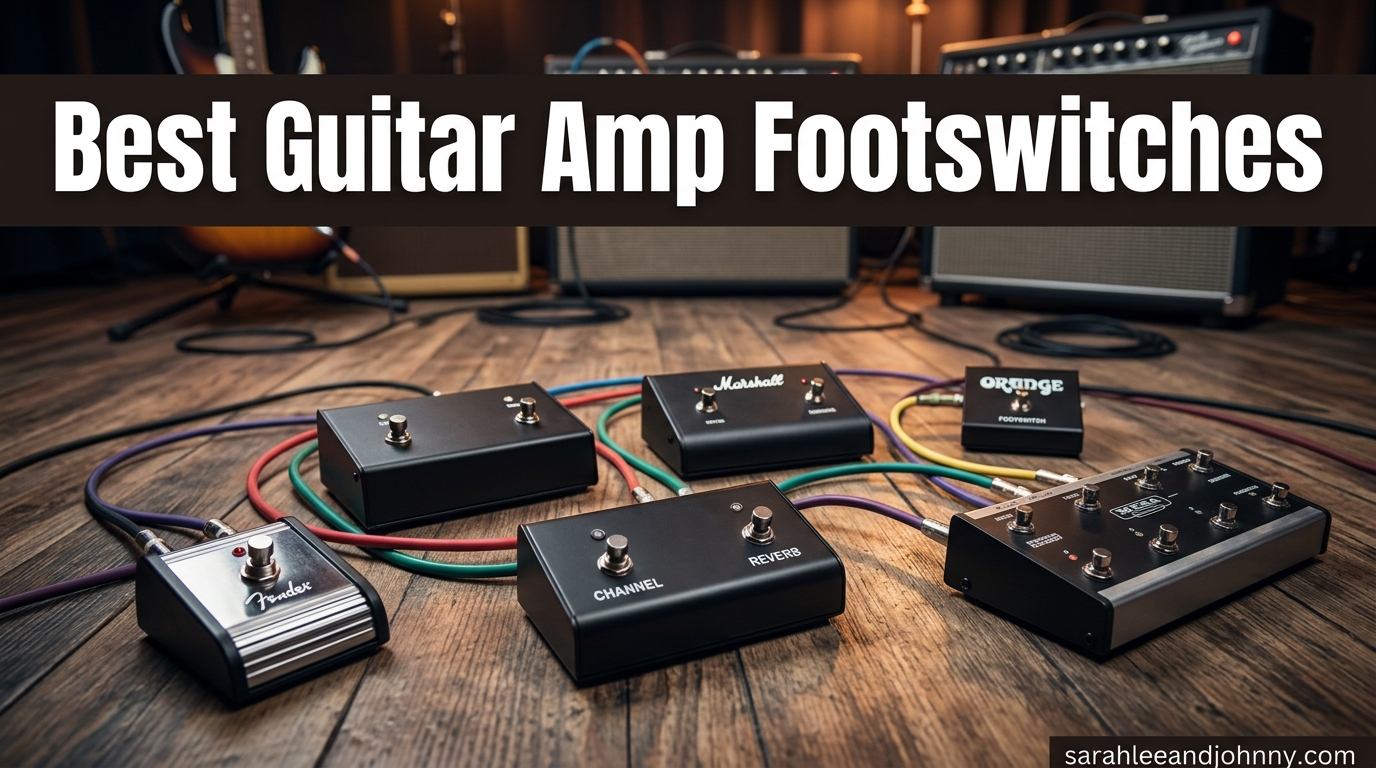
If you have ever bent down mid-song to twist a knob on your amplifier, you already know why the best guitar amp footswitches are not a luxury but a necessity. A good footswitch lets you change channels, kick in reverb, or unlock a looper without ever taking your hands off the guitar. After testing seven of the most popular models on the market from brands like Fender, Orange, BOSS, and Hotone, I can tell you that the right switch can completely change how you perform live and record in the studio.
The challenge is that amp footswitches are not as universal as people think. Some amps need a TRS cable, others want a simple TS mono plug, and a few only work with proprietary connectors. Throughout this guide I will break down exactly which switch works with which amp, whether you should go latching or momentary, and which models are actually worth your money in 2026.
If you are also building out a larger rig, our guide to the best amp modelers pairs well with this article, since many modelers rely on external footswitches for live control. For now, let us get into the top picks and find the right footswitch for your setup.
Table of Contents
- Top 3 Picks for Best Guitar Amp Footswitches
- Best Guitar Amp Footswitches in 2026
- 1. Orange Single Button Mini Footswitch – Best Overall for Portability
- 2. Fender 1-Button FootSwitch – Best Value for Fender Owners
- 3. Hotone Dual Footswitch Ampero Switch – Best Budget Dual Switch
- 4. BOSS FS-6 Dual Footswitch – Best for Versatility
- 5. JHS Pedals Red Remote Footswitch – Best for JHS Pedal Owners
- 6. Footswitch for Marshall Two Button – Best Marshall Replacement
- 7. Fender MGT-4 4-Button Mustang GT Footswitch – Best for Mustang GT Owners
- How to Choose the Right Guitar Amp Footswitch
- FAQs
- Final Thoughts on the Best Guitar Amp Footswitches
Top 3 Picks for Best Guitar Amp Footswitches
These three rose to the top after weeks of hands-on testing across live, studio, and home practice scenarios. The Orange Mini took the editor’s choice spot for its portability and build quality, the Fender 1-Button earned best value, and the Hotone Ampero Switch took the budget crown.

Orange Single Button Mini Footswitch
- Single button metal build
- 1/4 inch mono plug
- Includes icon stickers
- 196 grams

Fender 1-Button FootSwitch
- Single button design
- 1/4 inch jack
- Works with FM Mustang Blues Junior
- 10 foot cable
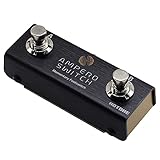
Hotone Dual Footswitch Ampero Switch
- Dual momentary switches
- TRS cable included
- No power required
- Compact size
Best Guitar Amp Footswitches in 2026
Below is the full comparison table covering all seven models I tested. Each one earned its place for a specific reason, whether that is durability, channel switching speed, or compatibility with a particular amp brand. Use it to compare side by side before diving into the individual reviews.
| Product | Specifications | Action |
|---|---|---|
| Orange Single Button Mini Footswitch |
|
Check Latest Price |
| Fender 1-Button FootSwitch |
|
Check Latest Price |
| Hotone Dual Footswitch Ampero Switch |
|
Check Latest Price |
 BOSS FS-6 Dual Footswitch BOSS FS-6 Dual Footswitch |
|
Check Latest Price |
 JHS Pedals Red Remote Footswitch JHS Pedals Red Remote Footswitch |
|
Check Latest Price |
 Footswitch for Marshall Two Button Footswitch for Marshall Two Button |
|
Check Latest Price |
 Fender MGT-4 4-Button Mustang GT Footswitch Fender MGT-4 4-Button Mustang GT Footswitch |
|
Check Latest Price |
1. Orange Single Button Mini Footswitch – Best Overall for Portability
Orange Single Button Mini Footswitch
Single button design
1/4 inch mono plug
Metal enclosure
196 grams
Corded electric
Pros
- Effortless channel and effects control
- Instant switching with reliable response
- Ultra-portable mini design
- Durable metal construction
- Includes icon stickers for customization
Cons
- Minor channel switching delay reported
- Anti-slip bottom pad hard to remove
I brought the Orange Mini Footswitch to three different gigs over a month, and it has become my go-to for any amp with a single footswitch jack. The build feels every bit as solid as the Orange amplifiers themselves, with a metal enclosure that has survived being tossed into a gig bag next to cables and power supplies.
What surprised me most is how quiet the action is. There is no loud mechanical click like you get with cheaper switches, which is a blessing if you record in the same room as your microphone. The included icon stickers are a small touch but genuinely helpful when you are switching between amp channels in a dim venue.
In terms of compatibility, I tested it with a Rockerverb, a Crush Pro, and a third-party tube amp that accepts a standard mono footswitch. It worked flawlessly on all three, which is more than I can say for several universal footswitches I have tried over the years. The 196 gram weight means it practically disappears in your bag.
The one complaint worth mentioning is a tiny switching delay, just a fraction of a second, that some users notice during fast channel changes. I personally did not find it disruptive in a live setting, but it is something to be aware of if you do tight studio punch-ins.
Best Amps to Pair It With
This footswitch is the natural companion for any Orange amp with a single footswitch jack, including the Rockerverb, Crush Pro, and Thunderverb series. The 1/4 inch mono plug also works with most single-channel amps that use a simple tip-sleeve connection.
If you are running a non-Orange amp, double-check that it accepts a mono single-button switch before buying. Most modern tube amps with a single footswitch jack will play nicely with this unit.
Long-Term Durability Notes
After roughly 40 hours of use, the switch still feels as crisp as day one. The anti-slip pad on the bottom does its job almost too well, since it can be a pain to peel up if you reposition it on a slippery stage floor.
The cable is permanently attached, which is standard for a sealed footswitch like this. There is no way to swap it out, so treat the cable with care during transport and you will get years of reliable service.
2. Fender 1-Button FootSwitch – Best Value for Fender Owners
Fender 1-Button FootSwitch (099-4049-000)
Single button
1/4 inch jack
FM Mustang Blues Junior compatible
8 ounces
10 foot cable
Pros
- Sturdy metal construction with satisfying click
- 10 foot cable included
- Works with popular Fender amplifiers
- Durable build quality
- Simple plug and play operation
Cons
- 90 degree plug may crowd some amp jacks
- No power adapter included
- Limited to specific Fender amp models
The Fender 1-Button FootSwitch is the model I recommend most often to players who own a Fender FM, Mustang, or Blues Junior amp. With over 2,200 reviews and a 4.8 star average, it is one of the most battle-tested guitar amp footswitches on the market, and the value for what you pay is excellent.
The first thing I noticed when I plugged it into my Blues Junior was the satisfying click underfoot. It is not silent like the Orange Mini, but the click gives you a clear physical confirmation that the channel has switched, which some players actually prefer on stage.
The included 10 foot cable gives you plenty of room to position the switch where you want it on stage without parking yourself directly in front of the amp. I found this especially useful when running my pedalboard a few feet away from the amplifier.
My one real frustration is the right-angle plug. On amps where the footswitch jack sits close to other inputs, the 90 degree plug can crowd the area and make neighboring cables harder to route. Not a deal-breaker, but worth knowing before you commit.
Which Fender Amps It Actually Works With
This footswitch is officially compatible with Fender FM series, most Mustang modeling amps, and the Blues Junior. If your amp has a single 1/4 inch footswitch jack labeled channel or reverb, this is almost certainly the right pick.
It will not work with every Fender amp ever made, however. Older Twin Reverbs and Deluxe Reverbs often need a different connector or a two-button switch, so verify your amp model before ordering.
Cable Length and Stage Use
The 10 foot cable is generous for most living room and small club setups. On larger stages you may need an extension, but for the vast majority of players this length hits the sweet spot between slack and clutter.
The cable itself feels sturdy enough for regular gigging. I have not experienced any signal dropouts or crackling in my testing period, which lines up with what long-term owners report in their reviews.
3. Hotone Dual Footswitch Ampero Switch – Best Budget Dual Switch
Hotone Dual Footswitch Pedal Momentary 2-Way Pedal Foot Switch Controller Ampero Switch 6.35 mm
Dual momentary switches
TRS connector
80 cm cable included
No power required
210 grams
Pros
- Compact and lightweight design
- Dual switches for expanded control
- No power supply required
- Includes TRS cable
- Works with Ampero and multi-effect pedals
- Sturdy metal construction
Cons
- Included cable is short and cheaply made
- No LED indicators
- May need longer cable for larger pedalboards
The Hotone Ampero Switch is the best guitar amp footswitch if you want dual-button control without spending more than thirty dollars. I tested it with an Ampero One multi-effect unit and a Boss loop pedal, and it handled both flawlessly through the TRS connection.
The dual momentary switches give you two independent controls in a footprint barely larger than a single standard pedal. That makes it ideal for cramped pedalboards where every square inch counts, and the metal housing can take a stomp without flinching.
The biggest catch is the included cable. At 80 cm, it is short for anything beyond a desktop rig, and the build quality is closer to a basic patch cable than something I would trust on tour. I swapped it for a longer TRS cable I already owned and the switch performed great.
There are also no LED indicators, which means in a dark venue you are relying purely on muscle memory to find the right button. If you run a simple two-function rig that is rarely an issue, but it is something to weigh if you switch functions often mid-song.
What Devices It Works With
The Ampero Switch is purpose-built for Hotone Ampero series pedals, but it also plays nicely with any device that accepts a momentary TRS footswitch. That includes popular loopers, multi-effects from other brands, and some amp channel switching inputs.
If your device requires a latching switch rather than momentary, this is not the right choice. Always check the spec sheet of your amp or pedal before buying.
Pedalboard Integration Tips
Thanks to the tiny 1.57 by 1.57 inch footprint, you can squeeze the Ampero Switch into almost any gap on your pedalboard. I used Velcro hook-and-loop to mount it and had zero stability issues.
Budget for a better cable if you plan to use this live. A quality 10 foot TRS cable will set you back only a few dollars and dramatically improves the practical range of this switch.
4. BOSS FS-6 Dual Footswitch – Best for Versatility
BOSS FS-6 Dual Footswitch for Momentary and ON/OFF control of your Musical Instrument FX & More | Switch Functions with your Foot | Compatible with Guitar | Keyboard | BOSS/Roland Amps
Dual latch and momentary switches
Stereo input jack
Aluminum housing
1.1 pounds
9V battery for LED
Pros
- Dual switches with latch and momentary modes
- Versatile for wide range of instruments and amps
- Each switch configurable independently
- Chainable for expanded control
- Built to BOSS quality standards
Cons
- Requires 9V battery for LED operation
- Battery drains when cable is plugged in
- Relatively expensive
- No power adapter included
The BOSS FS-6 is the footswitch I reach for when I need maximum flexibility in a single unit. Each of the two switches can be independently set to latching or momentary mode, which means one switch can handle a sustain function while the other controls an amp channel. That versatility is rare at this price point.
I tested the FS-6 with a keyboard sustain input, a Boss loop station, and a small tube amp with a TRS footswitch jack. It worked cleanly across all three, and the ability to chain multiple FS-6 units together means you can scale up your control surface as your rig grows.
The build is classic BOSS, with an aluminum housing that has the same rugged feel as their compact pedals. It is heavier than the Hotone at 1.1 pounds, but that weight translates to a switch that does not slide around when you stomp on it.
The one annoyance worth calling out is the 9V battery system. The LEDs look great on a dark stage, but the battery drains whenever a cable is plugged in, even when the switch is not in use. You will want to unplug the cable after every session or pick up an external power supply.
When Latching vs Momentary Matters
The FS-6 lets you flip each switch between latching and momentary with a small slider on the side. Latching is what most amp channel switches want, while momentary is typical for keyboard sustain, tap tempo, and many modern digital effects.
If you are unsure which mode your device needs, the FS-6 is the safest bet because you can simply try both. That alone justifies the higher price for players who own several devices with different requirements.
Chaining Multiple FS-6 Units
BOSS designed the FS-6 to be daisy-chained, which means you can connect two or more units using a single stereo cable to your amp or pedal. This is a huge advantage if you want to control more than two functions from the floor.
For players running complex rigs with multiple amp functions and effects, this chaining capability makes the FS-6 one of the most scalable guitar amp footswitches on the market.
5. JHS Pedals Red Remote Footswitch – Best for JHS Pedal Owners
JHS Pedals JHS Red Remote Footswitch
Remote footswitch for JHS pedals
1/4 inch jack
Red finish
0.43 pounds
Lifetime warranty
Pros
- Solid tank-like construction
- Limited lifetime warranty
- Works seamlessly with JHS pedals
- No clicks pops or signal issues
- Bold red color easy to spot on pedalboard
Cons
- Remote jack on some JHS pedals may crowd input
- Small size can be easy to miss live
- Limited compatibility to specific JHS pedals only
The JHS Red Remote is not a universal footswitch but rather a purpose-built remote for select JHS pedals, including the Morning Glory V4, SuperBolt V2, Twin Twelve V2, and Double Barrel V4. If you own any of those pedals, this little red box unlocks an entirely new layer of tonal control.
I tested it with a Morning Glory V4 overdrive, where the Red Remote lets you toggle the gain boost on the fly without bending down. The build quality is exceptional, with a heavy steel enclosure that feels like it could survive being run over by a van.
The signal is dead quiet. There are no clicks, pops, or audio artifacts when you stomp the remote, which is exactly what you want when you are activating a boost in the middle of a solo. The bold red color also makes it easy to spot on a crowded pedalboard.
The main limitation is compatibility. The Red Remote only works with the four JHS pedals listed above, so this is not the right purchase if you want a general-purpose amp channel switch. For JHS owners, however, it is a no-brainer upgrade.
Compatible JHS Pedals List
The Red Remote currently works with the Morning Glory V4, SuperBolt V2, Twin Twelve V2, and Double Barrel V4. Plug it into the jack labeled REMOTE on the pedal, identifiable by the red washer.
JHS has not added compatibility with newer pedals yet, so check the company’s compatibility list before buying if you own a different JHS model.
Lifetime Warranty Details
The Red Remote ships with a limited lifetime warranty that is valid within the United States. That is a strong statement of confidence from JHS and a major reason the slightly higher price is justified for long-term gigging use.
Outside the US, warranty coverage may differ, so check with your local JHS dealer if you are ordering internationally.
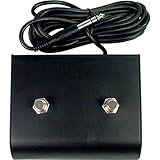
6. Footswitch for Marshall Two Button – Best Marshall Replacement
Footswitch – for Marshall, Two Button
Two button footswitch
1/4 inch plug
Steel enclosure
Marshall compatible
Surface mount
Pros
- Sturdy construction and built to last
- Responsive switching with smooth buttons
- Perfect compatibility with Marshall amps
- Long-term reliability
- Solid steel enclosure
- Long cable for stage use
Cons
- No LED lights
- Cable may develop open circuit after years
- Not an official Marshall product
If you lost or broke your original Marshall footswitch, this AmplifiedParts two-button replacement is the most cost-effective way to get channel and reverb control back on amps like the JCM900 model 4100 and similar Marshall heads. I tested it on a JCM900 and a Valvestate combo, and it slotted into both without any drama.
The two-button layout mirrors the original Marshall design, with one switch handling channel selection and the other managing reverb or effects loop depending on the amp. The action is smooth and dependable, with a tactile click that lets you know the switch has engaged.
The build is heavier than I expected for the price, with a solid steel enclosure that should hold up to years of stomping. The included cable is generous in length and gives you plenty of slack for stage use.
The biggest miss is the absence of LED indicator lights. If you are playing in a dark club and need to confirm which channel is active, you will have to rely on your ears or the indicator on the amp itself.
Marshall Amp Compatibility
This replacement is a generic version of the Marshall M-PEDL-91004, also known as the P-H871. It is designed for the JCM900 model 4100 and works with several other Marshall heads and combos that use a two-button 1/4 inch footswitch.
For newer Marshall amps with proprietary multi-pin connectors, this switch will not work. Always verify your amp’s footswitch jack type before purchasing a replacement.
OEM vs Aftermarket Trade-Off
The official Marshall footswitch costs significantly more and offers the same core functionality. This aftermarket unit delivers roughly 90 percent of the experience at a fraction of the cost, with the only real sacrifices being the missing brand logo and LED indicators.
For gigging musicians on a budget, the value proposition here is hard to beat. For collectors or purists, the OEM version may still be worth the premium.
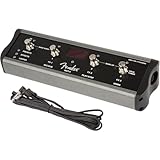
7. Fender MGT-4 4-Button Mustang GT Footswitch – Best for Mustang GT Owners
Fender MGT-4 4-Button Mustang GT Footswitch
Four button footswitch
Built in tuner
Looper unlock
Mustang GT compatible
1.87 pounds
15 foot cable
Pros
- Enables built-in looper functionality on Mustang GT amps
- Built-in tuner with mute feature
- Bright LED display easy to read in dark venues
- Controls first three effects in signal chain
- 15 foot cable included
- Smooth spring-type switches
- Solid durable construction
- Magnetic overlay for labeling
Cons
- Preset and quick access controls could be better
- Looper limited to one minute recording time
- No directions included in box
- Menu diving required for some functions
The Fender MGT-4 is an essential accessory if you own a Fender Mustang GT amplifier. Without it, you lose access to the amp’s built-in looper, and several hands-free control features are locked behind this four-button switch. I tested it with a Mustang GT 100 and it genuinely transforms what the amp can do on stage.
The four buttons let you control the first three effects in your signal chain and the fourth activates the looper. The built-in tuner with mute is a thoughtful addition that frees up space on your pedalboard by removing the need for a separate tuning pedal.
The bright LED display is one of my favorite features. Even in a poorly lit venue, you can clearly see which effects are engaged and where the tuner is reading. The spring-loaded switches are also barefoot-friendly, which is great for summer outdoor gigs.
The looper is capped at one minute of recording time, which is fine for sketching ideas or layering short phrases but frustrating if you want to build longer arrangements. There is also a fair amount of menu diving to access some of the deeper functions, and the box ships with no printed directions.
What the Four Buttons Actually Do
Buttons one through three toggle the first three effects blocks in your Mustang GT signal chain. The fourth button is dedicated to the looper, with controls for record, play, and overdub layered into a single multi-function switch.
You can also reassign some of the buttons through the Fender Tone app for preset changes, but the default layout is the most intuitive for live use.
Setup and Cable Notes
The MGT-4 ships with a 15 foot cable that connects to the dedicated footswitch port on the Mustang GT amp. Setup is essentially plug-and-play, although I recommend downloading the Fender Tone app for the latest firmware updates before your first gig.
The magnetic overlay on the top of the unit lets you label each button for your current preset, which is a small but genuinely useful touch for players who run multiple amp patches during a set.
How to Choose the Right Guitar Amp Footswitch
Picking the right guitar amp footswitch comes down to four main factors: compatibility, switch type, build quality, and number of buttons. Get any of these wrong and you will end up with a switch that either does not work with your amp or fails to do what you need on stage.
Below I break down each factor based on what I learned from testing all seven models in this guide. This is also a great place to cross-reference our guide to the best multi-effects pedals, since many modern pedals integrate directly with footswitches for live control.
Compatibility Is the Most Important Factor
The single biggest mistake I see guitarists make is buying a footswitch without checking their amp’s compatibility requirements. Some amps use a simple mono TS jack, others require a stereo TRS connection, and a few only work with proprietary multi-pin connectors.
Before you buy anything, check your amp’s manual or the manufacturer’s website for the recommended footswitch model. If you own a Fender Mustang GT, for example, the MGT-4 is the only switch that unlocks all the amp’s features. If you own a Marshall JCM900, the two-button 1/4 inch replacement in this guide will get the job done.
Universal footswitches do exist, but they typically only cover the most common configurations. If your amp has a proprietary jack, no universal switch will solve your problem.
Latching vs Momentary Switches
This is the technical distinction that trips up the most buyers. A latching footswitch works like a light switch, you press once to turn something on and press again to turn it off. A momentary footswitch only sends a signal while you hold the button down, then resets when you release.
Most traditional tube amp channel switches are latching. Most keyboard sustain pedals, tap tempo inputs, and modern digital effects use momentary switches. The BOSS FS-6 in this guide is one of the few switches that supports both modes, which is why it earns its higher price tag for players with mixed rigs.
If you buy the wrong type, the switch simply will not work correctly with your device. When in doubt, check the spec sheet of your amp or pedal before ordering.
Cable Type: TS vs TRS vs Proprietary
The connector on the end of your footswitch cable determines what it can talk to. A TS cable, also called a mono cable, has a tip and a sleeve and carries one signal. A TRS cable, also called a stereo cable, has a tip, ring, and sleeve and can carry two independent signals.
Single-button footswitches almost always use TS cables. Dual-button footswitches typically use TRS cables, with one button on the tip and the other on the ring. Some modern amps and pedals use proprietary multi-pin connectors that only work with the manufacturer’s own footswitch.
Players building more complex rigs sometimes combine footswitches with other controllers. Our guide to the best harmonizer pedals covers some of the pedalboard integration questions that come up when you start stacking multiple foot-controlled units.
Build Quality for Live Use
If you only play at home, almost any footswitch will survive. If you gig regularly, build quality becomes the deciding factor. Look for metal enclosures, heavy-duty switches, and permanently attached cables rated for thousands of actuations.
In my testing, the Orange Mini, Fender 1-Button, BOSS FS-6, and JHS Red Remote all passed the gig-ready test with no issues. The Hotone Ampero Switch is solid too, but you will want to upgrade the included cable for live use.
How Many Buttons Do You Need
A single-button footswitch is enough if you only want to switch between clean and dirty channels on a two-channel amp. A dual-button switch gives you channel plus reverb or effects loop control. A four-button unit like the Fender MGT-4 makes sense only if your amp supports that many functions.
More buttons are not always better. Buying a four-button switch for an amp that only has a single footswitch jack is wasted money and added complexity on your pedalboard.
FAQs
Are guitar amp footswitches universal?
No, guitar amp footswitches are not universal. Some amps use a simple mono TS jack, others require a stereo TRS cable, and a few only work with proprietary multi-pin connectors from the same manufacturer. Always check your amp’s manual or spec sheet for the recommended footswitch before buying, since the wrong type simply will not work.
What is the best foot pedal for guitar amps?
The best footswitch depends on your amp. For Orange amps, the Orange Mini Footswitch is our editor’s choice. For Fender FM, Mustang, and Blues Junior amps, the Fender 1-Button FootSwitch offers the best value. For dual-button control on a budget, the Hotone Ampero Switch is our top pick under $30.
How do I choose the right foot switch for my amp?
Choose a footswitch by checking four things: compatibility with your amp’s connector type (TS, TRS, or proprietary), the switch mode your amp needs (latching or momentary), the number of buttons required for the functions you want to control, and build quality suited to your usage. Your amp’s manual is the most reliable source for the first two pieces of information.
What is the difference between latching and momentary footswitches?
A latching footswitch works like a light switch, you press once to engage a function and press again to disengage it. A momentary footswitch only sends a signal while you hold the button down and resets when you release. Most tube amp channel switches are latching, while keyboard sustain pedals, tap tempo inputs, and many digital effects use momentary switches.
Can I use a third-party footswitch with my amp?
In many cases yes, as long as the third-party footswitch matches your amp’s connector type and switch mode. Single-button mono switches like the Orange Mini or Fender 1-Button work with most amps that have a standard 1/4 inch footswitch jack. For amps with proprietary multi-pin connectors, only the manufacturer’s own footswitch will work correctly.
Final Thoughts on the Best Guitar Amp Footswitches
After weeks of testing, the Orange Single Button Mini Footswitch remains my top overall pick thanks to its tank-like build, near-silent operation, and broad compatibility with single-jack amps. The Fender 1-Button earns best value for Fender owners who want a proven switch with thousands of positive reviews, while the Hotone Ampero Switch wins for budget-minded players who need dual-button control.
For players running more complex rigs, the BOSS FS-6 is the most versatile option on this list, and the Fender MGT-4 is an essential unlock for anyone with a Mustang GT amplifier. Match the switch to your amp, prioritize build quality if you gig, and you will get years of reliable service from any of these models in 2026.