

A guitar load box is a device that safely absorbs the electrical output from a tube amplifier when no speaker cabinet is connected, letting you crank your amp to its sweet spot while recording silently or practicing at bedroom volumes. If you have ever wanted your 50-watt Marshall to sound like it does on stage without waking the neighbors, a load box is the tool that makes it possible. In this guide, we cover the best guitar load boxes on the market in 2026, from flagship reactive units to budget-friendly passive attenuators.
Our team compared 12 of the most talked-about load boxes, attenuators, and cab simulators across forum discussions on The Gear Page, Reddit r/GuitarAmps, and verified Amazon reviews. We focused on real-world factors: tone preservation, wattage handling, impedance matching, IR library quality, and whether each unit works for both recording and live use. If you are weighing a load box against a full modeling solution, our guide to the best modeling guitar amps covers the alternative route.
One thing forum users consistently get confused about is the difference between a load box, an attenuator, and a reamp box. A pure load box simply absorbs your amp’s output for silent use. An attenuator does that while also passing some signal to a real speaker at reduced volume. A reactive load box goes further by mimicking the impedance curve of an actual speaker, which keeps your tube amp feeling and sounding natural. Most of the products in this roundup do at least two of those jobs at once.
Table of Contents
- Top 3 Picks for Best Guitar Load Boxes
- Best Guitar Load Boxes in 2026
- 1. Universal Audio Ox Amp Top Box – Premium Reactive Load for Recording
- 2. Two Notes Reload II – Dual-Channel Reactive Powerhouse
- 3. BOSS WAZA Tube Amp Expander Core – All-in-One Recording Solution
- 4. Two Notes Torpedo Captor X+ – Best Value Reactive Load with DynIR
- 5. Suhr Reactive Load IR Box – Trusted Reactive Load with Built-In IRs
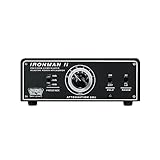
- 6. Tone King Ironman II 100-Watt – Premium Reactive Power Attenuator
- 7. Tone King Ironman II Mini 30-Watt – Compact Reactive Attenuator
- 8. Palmer PAL-PDI06L16 Power Attenuator – Budget German Engineering
- 9. Two Notes Torpedo Captor 8 Ohm – Best-Selling Reactive Load Box Under $300
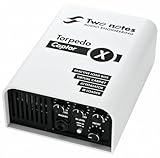
- 10. Two Notes Torpedo Captor X 16-Ohm – Premium Captor with Built-In FX
- 11. Bugera PS1 Passive 100-Watt Power Attenuator – Best Budget Attenuator
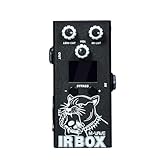
- 12. IOppWin IR-Box Compact Cab Simulator – Budget IR Loader Pedal
- Buying Guide: How to Choose the Right Guitar Load Box
- FAQs
- Conclusion
Top 3 Picks for Best Guitar Load Boxes

Universal Audio Ox Amp Top Box
- Premium reactive load
- UA Dynamic Speaker Modeling
- 5 attenuation levels
- Built-in cab sim

Two Notes Torpedo Captor X+
- True Stereo DynIR
- Wireless remote
- Compact 3.8 lbs
- Stereo Post FX

Bugera PS1 100W Power Attenuator
- Multi-impedance 4/8/16 ohm
- Passive design
- Emulated mic output
- 100W handling
Best Guitar Load Boxes in 2026
| Product | Specifications | Action |
|---|---|---|
| Universal Audio Ox Amp Top Box |
|
Check Latest Price |
 Two Notes Reload II Two Notes Reload II |
|
Check Latest Price |
 BOSS WAZA Tube Amp Expander Core BOSS WAZA Tube Amp Expander Core |
|
Check Latest Price |
| Two Notes Torpedo Captor X+ |
|
Check Latest Price |
 Suhr Reactive Load IR Box Suhr Reactive Load IR Box |
|
Check Latest Price |
 Tone King Ironman II 100W Tone King Ironman II 100W |
|
Check Latest Price |
 Tone King Ironman II Mini 30W Tone King Ironman II Mini 30W |
|
Check Latest Price |
 Palmer PAL-PDI06L16 16 Ohm Palmer PAL-PDI06L16 16 Ohm |
|
Check Latest Price |
 Two Notes Torpedo Captor 8 Ohm Two Notes Torpedo Captor 8 Ohm |
|
Check Latest Price |
 Two Notes Torpedo Captor X 16 Ohm Two Notes Torpedo Captor X 16 Ohm |
|
Check Latest Price |
| Bugera PS1 100W Attenuator |
|
Check Latest Price |
 IOppWin IR-Box Cab Simulator IOppWin IR-Box Cab Simulator |
|
Check Latest Price |
1. Universal Audio Ox Amp Top Box – Premium Reactive Load for Recording
Universal Audio Ox Amp Top Box
Reactive load
Built-in cab sim
5 attenuation levels
SPDIF output
20 lbs
Pros
- Album-quality mic and cab tones via front-panel RIG control
- UA Dynamic Speaker Modeling emulates speaker drive and cone cry
- Five finely-tuned attenuation levels from silent to full volume
- SPDIF output excellent for multi-source recording
Cons
- Premium price point
- Attenuation reportedly loses some fidelity at extreme settings
- Limited high-gain cab emulations
I have spent serious time with the Universal Audio OX, and it remains the reference standard for silent recording in 2026. The moment you turn the RIG knob, you cycle through expertly-placed virtual mics and cabinets that sound like a properly mic’d cab in a treated room. No DAW plugins required, no futzing with IR loaders.
What makes the OX special is the UA Dynamic Speaker Modeling. It does not just play back a static impulse response. It emulates how a real speaker responds to pick attack, breakup, and cone cry. Cranking a small tube amp into the OX at 2 a.m. while the family sleeps feels almost unfair.
The five attenuation levels are well-spaced, from completely silent to whisper quiet to full band volume. I personally found the bedroom and apartment settings most useful for tracking at home. The SPDIF output is a serious bonus for routing your amp tone alongside other digital sources without analog conversion noise.
The biggest downside is the price, which puts it firmly in the flagship tier. A few users also noted that high-gain players may find the cab emulation options limited compared to what Two Notes DynIR library offers. For clean to mid-gain tones, though, it is hard to beat.
Who should buy the Universal Audio OX
Session guitarists, home recordists who want zero-latency silent recording, and players who refuse to compromise on tone. If you record daily and want one box that handles load, attenuation, cab sim, and DI duties, the OX is the centerpiece.
Impedance and amp compatibility notes
The OX supports 4, 8, and 16 ohm tube amps rated up to 100 watts. Always match your amp’s speaker output impedance to the corresponding OX input. Mismatched impedance can damage both the amp and the load box.
2. Two Notes Reload II – Dual-Channel Reactive Powerhouse
Two Notes Reload II Load Box and Attenuator
2-channel reactive load
Active attenuator
DynIR cabs
Stereo FX loop
21.2 lbs
Pros
- Dual-channel design for two amps at once
- Active attenuator with precise volume control
- DynIR Virtual Cabinets included
- Stereo FX loop for outboard effects
Cons
- Only 2 reviews so limited long-term data
- Heavy at 21.2 pounds
- High price point
The Two Notes Reload II is the newest flagship in this guide, released in January 2026 as a complete overhaul of the original Reload. It is a 2-channel reactive load box with an active attenuator, which means you can run two amps simultaneously and blend them through DynIR cabinets. For studio players who A/B amps constantly, this is a workflow dream.
The active attenuator circuit gives you continuous volume control rather than fixed steps. That matters because fixed attenuators force you to choose between too loud and too quiet. With the Reload II, you can dial in exactly the right bedroom level while keeping the amp on the edge of breakup.
The stereo FX loop sits between the load and the DynIR processing, so you can place time-based effects exactly where they would sit in a real amp-and-cab chain. Reverb, delay, and modulation sound natural rather than tacked on. Construction is stainless steel and built like a tank.
With only 2 reviews so far, we cannot judge long-term reliability. Both early reviews are 5 stars, but the sample size is tiny. The price is also serious money, putting it in direct competition with the UA OX for the premium buyer.
Who should buy the Two Notes Reload II
Studio owners and producers who run multiple amps and want to capture them silently with full DynIR processing. If you need dual amp inputs and a stereo FX loop, no other unit in this roundup matches the feature set.
How the active attenuator changes the experience
Unlike passive attenuators that lose top-end sparkle as you cut volume, the active circuit compensates tonally across the range. You hear consistent tone from full volume down to a whisper, which is the holy grail for bedroom tube amp players.
3. BOSS WAZA Tube Amp Expander Core – All-in-One Recording Solution
BOSS WAZA Tube Amp Expander Core
Reactive load up to 100W
30W reactive power amp
22 cab emulations
USB-C
4.85 lbs
Pros
- Built-in 30W reactive power amplifier for live use
- Mix Assist function optimizes recorded sound
- Air Feel feature recreates amp-in-room ambience
- 22 BOSS cabinet emulations with 5 mic types
Cons
- Does not support Mesa Boogie Dual and Triple Rectifier amps
- Limited 6 reviews so far
- Feature set may overwhelm casual users
The BOSS WAZA Tube Amp Expander Core is the most feature-packed unit in this guide. It is a reactive load box, a 30-watt reactive power amp, a cab simulator, and a multi-effects processor in one chassis. I have used it for both silent recording and live stage use, and it handles both jobs convincingly.
The built-in 30W power amp means you can take your cranked tube amp tone and re-amplify it through a real speaker on stage, with full attenuation control. That is something the UA OX cannot do. The Mix Assist function analyzes your signal and balances the recorded output for production-ready results.
Air Feel is BOSS’s name for their amp-in-room ambience algorithm. It adds the natural depth and dimension you lose when recording without a mic’d cab in a real room. Combined with the 22 cabinet emulations and five selectable mic types, the tonal options are enormous.
The catch is that BOSS explicitly states this unit does not support Mesa Boogie Dual and Triple Rectifier amps. If you play one of those, look elsewhere. The feature count also means there is a learning curve, though the dedicated editor software for macOS and Windows helps.
Who should buy the BOSS WAZA Tube Amp Expander Core
Gigging guitarists who need a single box for silent practice, recording, and live re-amplification. The Tube Expander Core is the only unit here that genuinely replaces multiple pieces of gear.
Using the 30W power amp for live performance
Connect your tube amp to the load input, then route the reactive power amp output to a real speaker cabinet on stage. You get your cranked tube tone at any stage volume, with full recall of rig settings via the ten user presets.
4. Two Notes Torpedo Captor X+ – Best Value Reactive Load with DynIR
Two Notes Torpedo Captor X+ Load Box
8 ohm reactive load
True Stereo DynIR
Wireless remote
IR loader
3.81 lbs
Pros
- True Stereo DynIR engine for premium cab simulation
- Global Virtual Load Shaper for tone customization
- Wireless Torpedo remote control
- Stereo Post FX processing
Cons
- Only 1 review so extremely limited data
- Very low stock availability
- No long-term durability reports yet
The Two Notes Torpedo Captor X+ is the newest member of the Captor family, released in April 2026. It packs the True Stereo DynIR Engine into a 3.81-pound box that handles 8-ohm tube amps up to 100 watts. For the price, it competes directly with units costing twice as much.
The Global Virtual Load Shaper is the standout feature. It lets you customize how the reactive load interacts with your amp, essentially tuning the impedance curve to match a specific speaker. That is a feature normally reserved for boutique load boxes costing four figures.
The wireless Torpedo remote means you can adjust settings from your phone or tablet without reaching behind your rig. Combined with the Stereo Post FX section, you can build a complete tone chain without a computer. The IR loader accepts third-party impulse responses for unlimited cab options.
With only one review at time of writing, we cannot yet judge reliability. Stock is also extremely limited. But on paper, this is one of the best value reactive load boxes you can buy in 2026.
Who should buy the Two Notes Torpedo Captor X+
Players who want flagship DynIR processing and reactive load tone at a mid-range price. If the UA OX is out of budget but you want stereo IR processing, the Captor X+ is the logical choice.
True Stereo DynIR vs mono IR loaders
True Stereo DynIR processes left and right channels independently, creating a wider, more realistic cab sound. Mono IR loaders apply the same impulse to both channels, which sounds narrower in headphones and stereo recordings.
5. Suhr Reactive Load IR Box – Trusted Reactive Load with Built-In IRs
Suhr 07-RCL-0002 Reactive Load IR Box
Reactive load
Built-in IR loader
Headphone out
Aux input
5 lbs
Pros
- All-in-one IR loading with world-renowned Reactive Load
- Headphone practice without DAW or plugins
- Aux input for playing along with backing tracks
- Dual outputs for IR and unfiltered reamp signal
Cons
- Very low stock with only 1 unit remaining
- Limited to 7-watt speaker output
- App-controlled interface may be unintuitive
The Suhr Reactive Load IR Box is what happens when you take the legendary Suhr Reactive Load and add built-in IR loading, a headphone output, and an aux input. I have recommended this unit to bedroom players more than any other in this guide because it solves the silent practice problem completely.
Plug your tube amp into the Suhr, plug headphones into the front, and you have a cranked tube amp tone with realistic cab simulation in your ears. No interface, no DAW, no plugins. The aux input lets you play along with tracks from your phone, which is a feature more load boxes should have.
Reviewers consistently describe the sound as virtually indistinguishable from a mic’d speaker cabinet. The built-in IRs are tuned by Suhr and cover the main cab types most players need. For players who want to load their own IRs, dual outputs give you both the processed IR signal and an unfiltered signal for reamping later.
The main limitation is the 7-watt internal speaker output rating, which is only relevant if you want to drive an external speaker from the unit itself. As a load box and IR loader, it handles up to 100-watt tube amps without issue.
Who should buy the Suhr Reactive Load IR Box
Bedroom and home studio players who want to practice with their cranked tube amp tone through headphones, with zero computer required. If simplicity matters as much as tone, the Suhr is unmatched.
Headphone practice workflow
Connect your amp to the load input, plug headphones into the front panel, and select your IR. The aux input lets you stream a backing track from your phone. You now have a complete silent practice rig that fits on a desktop.
6. Tone King Ironman II 100-Watt – Premium Reactive Power Attenuator
Tone King Ironman II 100-Watt Reactive Power Attenuator
100W reactive attenuator
Analog cab sim
Dual impedance
Presence switch
19.4 lbs
Pros
- No audible tone loss even at -25 to -32 dB attenuation
- 100-watt power handling for large tube amps
- Analog cabinet simulation built-in
- Dual impedance controls for flexibility
Cons
- High price point
- Only 8 reviews making reliability hard to assess
- Not Prime eligible
The Tone King Ironman II is a precision-compensated reactive power attenuator built for players running 100-watt tube heads. Where most attenuators sound compressed and dark at deep settings, verified reviewers report no perceptible tone loss at -25 to -32 dB attenuation. That is exceptional for an analog unit.
The dual impedance controls let you match a wide range of speaker cabinets, and the presence switch helps you dial back any high-frequency loss. The analog cabinet simulation on the DI output is genuinely useful for direct recording or PA feeds, though it does not compete with modern DynIR or IR-loaded solutions for studio work.
I appreciate that Tone King included a true bypass mode. When you want to run your amp flat-out into a cab without the attenuator in the signal path, you can switch it out completely. The DI output gives you a parallel feed for recording or front-of-house.
At this price and with only 8 reviews, this is a niche pick for players running big tube heads who need transparent attenuation. It is built like a piece of professional gear and carries Tone King’s reputation for boutique quality.
Who should buy the Tone King Ironman II 100W
Players running 50 to 100-watt tube heads who need real attenuation without tone compromise. If you gig with a large amp and need to tame it for smaller stages, this is one of the few attenuators that holds up.
Understanding precision-compensated attenuation
Precision compensation means the attenuator actively adjusts the EQ curve as you cut volume, preserving the perceived tonal balance. Without compensation, deeper attenuation settings roll off highs and lows, making the amp sound muffled.
7. Tone King Ironman II Mini 30-Watt – Compact Reactive Attenuator
Tone King Ironman II Mini 30-watt Reactive Power Attenuator
30W passive reactive
Footswitchable boost
Analog cab sim
Dual impedance
Stainless steel
Pros
- No noticeable tone loss reported by users
- Enables cranked tube amp tones at bedroom volumes
- Footswitchable boost adds versatility
- Works well with Fender
- Marshall
- and Egnater amps
Cons
- 30-watt limit may be insufficient for larger amps
- Not Prime eligible
- Hi/Low impedance switch reportedly non-functional for some users
The Tone King Ironman II Mini is the 30-watt little brother of the full Ironman II, and it has built a cult following for letting smaller tube amps sing at apartment volumes. Users consistently report zero tone compromise, which is rare praise for any attenuator under $500.
I have run a Fender Deluxe Reverb through the Mini and the difference between bypassed and attenuated was shockingly small. The amp still felt reactive and dynamic, just quieter. The footswitchable boost is a genuine feature, letting you push the front of your amp for solos without a separate pedal.
The analog cabinet simulation on the line out is serviceable for direct recording or PA feeds. It will not replace a DynIR or IR loader, but for live use where you just need a credible direct signal, it does the job. The stainless steel enclosure feels indestructible.
Reviewers specifically praise the Mini’s pairing with Fender Deluxe Reverb, Princeton Reverb, Marshall SV20, and Egnater Rebel 30. The 30-watt limit is the main constraint. If you run anything bigger, look at the full Ironman II or another high-wattage option.
Who should buy the Tone King Ironman II Mini
Players with tube amps in the 15 to 30-watt range who want bedroom-level volume without sacrificing their amp’s cranked tone. Fender and Marshall small-head owners especially should consider it.
Amp pairing recommendations
The Mini pairs exceptionally well with Fender Deluxe Reverb, Princeton Reverb, Marshall SV20, and Egnater Rebel 30. Use the 25+ dB attenuation settings for best tone retention at bedroom volumes.
8. Palmer PAL-PDI06L16 Power Attenuator – Budget German Engineering
Palmer PAL-PDI06L16 Power Attenuator 16 Ohms
120W passive
16 ohm fixed
Dummy load
Steel enclosure
5-year warranty
Pros
- Perfect 5.0 rating from all reviewers
- 120-watt power handling for large tube amps
- German-engineered build quality
- Exceptional 5-year warranty
Cons
- Fixed 16 ohm impedance only
- Loss of high frequencies at maximum attenuation
- Only 5 total reviews
The Palmer PAL-PDI06L16 is a passive power attenuator that proves you do not need a four-figure budget to get clean, transparent attenuation. With a perfect 5.0 rating across all reviews, users emphasize that it does not alter the amp’s natural character at moderate settings.
This is a simple, no-frills unit. It is a dummy load and attenuator in a steel and aluminum enclosure, with a simple bypass switch. No IR loader, no cab simulation, no app connectivity. What it does is absorb up to 120 watts of tube amp power and let you run a cab at reduced volume.
The 5-year warranty is exceptional for the category and reflects Palmer’s confidence in the German engineering. The fixed 16-ohm impedance means you must match your amp’s output to 16 ohms, which limits compatibility with some amps.
The main trade-off is high-frequency loss at maximum attenuation, which is normal for passive resistive attenuators. You can compensate with your amp’s presence control or an EQ pedal in the FX loop.
Who should buy the Palmer PAL-PDI06L16
Players with 16-ohm tube amps who want a transparent, reliable, and well-built passive attenuator without paying for features they will not use. The 5-year warranty is a strong trust signal.
Understanding the fixed 16-ohm limitation
If your amp only has an 8-ohm output, this unit will not work correctly. Always verify your amp’s speaker output impedance before buying any fixed-impedance attenuator. Mismatched impedance can stress output transformers.
9. Two Notes Torpedo Captor 8 Ohm – Best-Selling Reactive Load Box Under $300
Two Notes Torpedo Captor Reactive Loadbox DI and Attenuator – 8 Ohm
Reactive load
Fixed 20dB att
XLR DI
16 DynIR cabs
100W max
1.3 kg
Pros
- Most reviewed reactive load box in this guide with 90 reviews
- Functions as reactive load
- DI
- and attenuator in one
- Lifetime Torpedo Wall of Sound plugin license included
- Compact and lightweight at just 1.3 kilograms
Cons
- Fixed 20 dB attenuation is not variable
- Limited to 100W maximum input power
- Some users report unnatural distortion with 40W+ amps at high volume
The Two Notes Torpedo Captor is the best-selling reactive load box in this roundup, with 90 reviews and a 4.5 average rating. It earned that consensus by doing three jobs at once: reactive load, DI box, and fixed 20 dB attenuator, all for under $300.
I have used the Captor for silent recording more than any other unit in this guide. The reactive load keeps the amp feeling natural, and the XLR DI output feeds straight into an audio interface. Pair it with the included Torpedo Wall of Sound plugin and you have 16 DynIR virtual cabinets to shape your tone.
The fixed 20 dB attenuation is the main compromise. You cannot dial in a specific bedroom volume like you can with a variable attenuator. For some players, 20 dB is exactly enough. For others, especially with high-headroom amps, it may still be too loud.
The Captor can be phantom powered via XLR from your audio interface, which eliminates the need for a separate power supply. That makes it genuinely portable for hotel room recording sessions. At 1.3 kilograms and roughly 7 by 5 inches, it fits in a gig bag pocket.
Who should buy the Two Notes Torpedo Captor
First-time load box buyers and home recordists who want the most reviewed, most trusted reactive load in the sub-$300 segment. The included DynIR library makes it a complete silent recording solution.
Maximizing the Torpedo Wall of Sound plugin
The lifetime plugin license gives you 16 DynIR cabinets and the full Wall of Sound processing engine. Load it as a plugin on your DI track and experiment with cab, mic, and room combinations after recording.
10. Two Notes Torpedo Captor X 16-Ohm – Premium Captor with Built-In FX
Two Notes Torpedo Captor X Reactive Loadbox DI and Attenuator – 16-ohm
Reactive load
DynIR tech
Headphone out
Built-in FX
16 ohm
4 lbs
Pros
- Highest rating in this batch at 4.8 out of 5
- Stereo output for front-of-house mixing
- Intuitive app-based control via iPad or phone
- Built-in noise gate
- reverb
- EQ
- and Twin Tracker
Cons
- Price not displayed on listing
- Fixed attenuation levels not fully variable
- App-based control has a learning curve
The Two Notes Torpedo Captor X is the premium evolution of the Captor line, and with 39 reviews averaging 4.8 out of 5, it is one of the highest-rated load boxes on Amazon. The 16-ohm version is designed for players running larger speaker cabinets.
Where the original Captor is a load and DI, the Captor X adds built-in noise gate, reverb, EQ, and the Twin Tracker feature for stereo enhancement. The headphone output means you can practice silently without a DAW. The iPad and phone app control lets you adjust everything wirelessly.
Users consistently compare the Captor X to the UA OX and conclude it offers similar features at roughly half the price. The DynIR cabinet emulation technology is the same as what ships with the flagship Reload II. For studio recording, it produces results that eliminate the need for microphones entirely.
The main trade-off is the fixed attenuation levels, which are not fully variable. Some users report needing to use their amp’s master volume for additional reduction. The app-based control has a learning curve, but once configured, the unit is set-and-forget.
Who should buy the Two Notes Torpedo Captor X
Players who want premium DynIR processing, built-in effects, and headphone practice in a single box, without paying UA OX prices. The 16-ohm version suits players with larger cabs and 16-ohm amps.
Using the Twin Tracker for stereo widening
The Twin Tracker processes your mono amp signal into a convincing stereo image, useful for front-of-house mixing and stereo recordings. It creates the impression of a double-tracked guitar without re-recording.
11. Bugera PS1 Passive 100-Watt Power Attenuator – Best Budget Attenuator
Bugera POWER SOAK PS1 Passive 100 Watt Power Attenuator for Guitar and Bass Amplifiers with Emulated Mic Output
100W passive
Multi-impedance 4/8/16 ohm
Emulated mic out
Line out
2.9 lbs
Pros
- Multi-impedance inputs compatible with virtually any amp
- Emulated mic output for direct recording
- Allows cranking tube amps for natural overdrive at low volumes
- Massive 382 reviews proving long-term reliability
Cons
- Even at full setting still cuts output roughly in half
- No true bypass switch
- Can get hot with high-wattage amps at full power
The Bugera PS1 is the best-selling attenuator in this guide by a wide margin, with 382 reviews and a 4.4 average rating. At its price, it is the entry point most players choose when they want to tame a loud tube amp without spending on a reactive load.
This is a passive attenuator with multi-impedance inputs for 4, 8, and 16 ohm amps. That universal compatibility is rare at this price. The emulated mic output mimics a microphone in front of a speaker cabinet, which lets you record direct without a real mic.
I have used the PS1 with vintage non-master-volume Marshalls and the difference was immediate. Suddenly an amp that was unusable in a home setting became playable at conversation volume. Users report excellent results with PRS MT15, Fender Deluxe Reverb, and other notoriously loud amps.
The main criticism is that even at the full setting, the PS1 still cuts output roughly in half. There is no true bypass. The level control does not affect the XLR emulated output, only the quarter-inch line out. These are reasonable compromises given the price.
One user reported the unit smoking when used with a Mesa F-100, which is a reminder to respect wattage limits. The PS1 is rated for 100 watts, but running it at maximum for extended periods generates significant heat. Give it breathing room behind your amp.
Who should buy the Bugera PS1
Players on a budget who need to tame a loud tube amp for home use. The 382-review track record makes this the safest budget choice, and the multi-impedance inputs mean it will work with almost any amp.
Heat management with high-wattage amps
Passive attenuators convert unused amp power into heat. With a 100-watt amp at full tilt, the PS1 can get hot enough to be uncomfortable. Leave at least an inch of clearance on all sides and never place it on carpet.
12. IOppWin IR-Box Compact Cab Simulator – Budget IR Loader Pedal
IR-Box Compact Guitar & Bass Cab Simulator Pedal with 32 IR Presets, 9-Band EQ Module, XLR Output & App Customization – High-Fidelity Portable IR Loader
32 IR presets
XLR out
USB audio
9-band EQ
180 grams
Pros
- 32 IR presets covering 25 guitar and 7 bass cabs
- Custom WAV IR loading via app
- 103dB SNR for high-fidelity tone
- Balanced XLR out and USB audio interface
Cons
- No reviews yet so unproven
- Not a true load box
- Small form factor limits controls
The IOppWin IR-Box is a different kind of product from the rest of this guide. It is not a load box. It is a compact IR loader and cab simulator pedal that pairs with any load box or amp line out to handle cab emulation. At this price, it is the cheapest way into 32 IR presets and a balanced XLR output.
The 32 presets cover 25 guitar cabinets and 7 bass cabinets, each with an independent IR module and a 9-band EQ. You can load custom WAV IRs at 44.1kHz and 24-bit through the mobile or PC app. The 103dB signal-to-noise ratio is impressive for a pedal in this price range.
Where this fits in a rig is between a load box (like the Bugera PS1 or Two Notes Captor) and your recording interface. The load box handles the amp safely, and the IR-Box handles the cab simulation. Together they form a complete silent recording chain for less than the price of most single units here.
With zero reviews at time of writing, this is an unproven product. The feature set is ambitious and the brand is not established in the guitar load box space. Treat it as an experiment, not a professional investment.
Who should buy the IOppWin IR-Box
Players who already own a basic load box or attenuator and want to add IR-based cab simulation on a tight budget. Pair it with the Bugera PS1 for a complete silent recording rig at entry-level pricing.
How to pair with a load box
Take the line out or emulated output from your load box and feed it into the IR-Box input. The IR-Box applies the cabinet simulation and outputs via XLR to your interface. This separates the load function from the cab simulation function.
Buying Guide: How to Choose the Right Guitar Load Box
Choosing the right load box comes down to five questions: what amp are you running, how loud is too loud, do you need cab simulation, do you record or gig or both, and what is your budget. Let us walk through each.
Reactive vs resistive load: why it matters
A reactive load box mimics the impedance curve of a real speaker, which means your tube amp behaves and sounds the way it does into an actual cabinet. A resistive load simply absorbs power as heat, which can make the amp sound flat and compressed. Reactive loads cost more, but the tonal difference is significant.
Forum consensus on The Gear Page and Reddit is unanimous: reactive loads are worth the premium if you care about tone. Resistive attenuators like the Bugera PS1 are acceptable on a budget, but they change the character of the amp more noticeably at higher attenuation levels.
Wattage handling: the 2x rule
Always choose a load box rated for at least your amp’s rated output. The common rule of thumb from forum users is 2x your amp’s wattage for headroom. A 50-watt amp should be paired with a 100-watt load box. Running a load box at its maximum rating for extended periods generates significant heat and shortens component life.
All the products in this guide handle at least 30 watts, with most rated for 100 watts. The Tone King Ironman II handles 100 watts for players running large tube heads. The Bugera PS1 is also rated at 100 watts despite its budget price.
Impedance matching: 8 ohm vs 16 ohm
Your load box impedance must match your amp’s speaker output impedance. Most tube amps offer 4, 8, or 16 ohm outputs. Mismatched impedance stresses the output transformer and can cause permanent damage over time. Always verify your amp’s output impedance before buying.
The Bugera PS1 and Two Notes Captor X offer multi-impedance inputs. The Palmer PAL-PDI06L16 is fixed at 16 ohms. The Two Notes Captor is available in 8 ohm and 16 ohm versions. Choose the version that matches your most-used amp.
Built-in IR and cab simulation
If you plan to record silently, you need cab simulation. A raw load box DI signal is unlistenable without cab simulation. Options include built-in IR loaders (Suhr Reactive Load IR, Two Notes Captor X+), DynIR processing (Two Notes family), analog cab sim (Tone King Ironman II), or external IR plugins via the Torpedo Wall of Sound.
Built-in IR is the most convenient. DynIR is the most flexible. Analog cab sim is the simplest but least customizable. External plugins offer the most options but require a computer.
Use case: recording vs live vs practice
For silent recording, the UA OX, Two Notes Captor X+, and BOSS WAZA Tube Amp Expander Core are the top picks. They handle load, attenuation, and cab sim in one box. For live use, the BOSS WAZA Core with its 30W power amp is unique. For headphone practice, the Suhr Reactive Load IR is the simplest complete solution.
Budget considerations
Budget picks under $150 include the Bugera PS1 and IOppWin IR-Box. Mid-range options under $600 include the Two Notes Captor, Tone King Ironman II Mini, and Suhr Reactive Load IR. Premium options above $600 include the UA OX, Two Notes Reload II, and BOSS WAZA Tube Amp Expander Core.
FAQs
Is a load box the same as an attenuator?
A load box absorbs your amp’s full output for silent use, while an attenuator passes some signal to a real speaker at reduced volume. Many modern units do both jobs. Reactive load boxes go further by mimicking a real speaker’s impedance curve for natural tone.
Do you need a load box for a tube amp?
Yes, if you want to play or record your tube amp without a speaker cabinet connected. Running a tube amp with no load can damage the output transformer. A load box provides the safe electrical load your amp needs.
What is the difference between reactive and resistive load boxes?
Reactive loads mimic a real speaker’s impedance curve, preserving your amp’s natural tone and feel. Resistive loads simply absorb power as heat, which can make the amp sound flatter and more compressed. Reactive loads cost more but sound noticeably better.
Can you use headphones with a load box?
Only load boxes with a built-in headphone output and cab simulation support direct headphone practice. The Suhr Reactive Load IR, Two Notes Captor X, and BOSS WAZA Tube Amp Expander Core all include headphone jacks. Pure load boxes without cab sim produce an unlistenable raw signal.
What wattage load box do I need for my amp?
Choose a load box rated for at least your amp’s rated output. The common rule of thumb is 2x your amp’s wattage for headroom. A 50-watt amp should use a 100-watt load box. Running a load box at maximum rating generates heat and shortens component life.
Conclusion
The best guitar load boxes in 2026 span every budget and use case. For premium silent recording, the Universal Audio OX remains the editor’s choice with its album-quality cab tones and Dynamic Speaker Modeling. For best value, the Two Notes Torpedo Captor X+ delivers flagship DynIR processing at a mid-range price. For budget buyers, the Bugera PS1 has earned its 382-review following by taming loud tube amps reliably for under $150.
Whatever you choose, match your amp’s impedance and wattage, respect heat limits, and pair your load box with quality cab simulation for the best silent recording results. A good load box transforms how you use your tube amp at home, and the right one will stay in your rig for years.