

I have been writing songs on guitar for over a decade, and I know firsthand how frustrating it can feel when you have a melody in your head but cannot translate it to the fretboard. When I first started, I spent years fumbling through chord progressions without any real direction. That changed once I discovered the right resources. Finding the best guitar songwriting books can fast-track your progress from writing rough ideas to crafting complete, polished songs.
This guide covers eight books and tools I have personally researched and compared for 2026. Whether you are a complete beginner who has never written a song or an intermediate guitarist looking to break through a creative wall, there is something here for you. I focused specifically on resources that help with guitar-based songwriting, since most general songwriting books ignore the instrument entirely.
My team and I evaluated each book on its practical exercises, clarity of instruction, guitar-specific content, and how well it covers the three pillars of songwriting: chord progressions, melody, and lyrics. We pulled insights from forums like r/Songwriting and r/AcousticGuitar to see what real guitarists recommend. Here are our top picks for 2026.
Table of Contents
- Top 3 Picks for Best Guitar Songwriting Books
- Best Guitar Songwriting Books in 2026
- 1. How to Write One Song by Jeff Tweedy – Best for Beginners
- 2. How to Write Songs on Guitar by Rikky Rooksby – Best Guitar-Specific Guide
- 3. The Chord Wheel by Jim Fleser – Best Visual Theory Tool
- 4. Writing Better Lyrics by Pat Pattison – Best for Lyric Craft
- 5. Guitar Circle of Fifths Wheel by Noisy Clan – Best Physical Tool
- 6. Songwriting: Essential Guide to Lyric Form and Structure by Pat Pattison
- 7. Fretboard and Songwriting Theory for Metal Heads by Richard Shaw
- 8. Guitar Songwriting by Guitar Head
- How to Choose the Right Guitar Songwriting Book
- Frequently Asked Questions About Guitar Songwriting Books
- Final Thoughts on the Best Guitar Songwriting Books
Top 3 Picks for Best Guitar Songwriting Books

How to Write One Song by Jeff Tweedy
- Beginner-friendly
- Overcomes writer's block
- Practical exercises
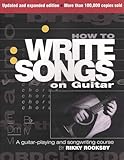
How to Write Songs on Guitar by Rikky Rooksby
- Guitar-specific course
- Chord progressions
- 240 pages of content
Best Guitar Songwriting Books in 2026
| Product | Specifications | Action |
|---|---|---|
| How to Write One Song |
|
Check Latest Price |
| How to Write Songs on Guitar |
|
Check Latest Price |
 The Chord Wheel The Chord Wheel |
|
Check Latest Price |
 Writing Better Lyrics Writing Better Lyrics |
|
Check Latest Price |
 Guitar Circle of Fifths Wheel Guitar Circle of Fifths Wheel |
|
Check Latest Price |
 Essential Guide to Lyric Form Essential Guide to Lyric Form |
|
Check Latest Price |
 Fretboard Theory for Metal Heads Fretboard Theory for Metal Heads |
|
Check Latest Price |
 Guitar Songwriting by Guitar Head Guitar Songwriting by Guitar Head |
|
Check Latest Price |
1. How to Write One Song by Jeff Tweedy – Best for Beginners
How to Write One Song: Loving the Things We Create and How They Love Us Back
176 pages
Publisher: Dutton
First Edition
Pub: October 2020
Pros
- Encouraging tone for complete beginners
- Practical exercises for breaking writer's block
- Humorous conversational writing style
- Helps overcome fear and ego in creativity
Cons
- Some felt first 70 pages were padding
- Limited coverage of song structure
- Short at 176 pages
I picked up this book during a brutal three-month stretch where I could not finish a single song. Jeff Tweedy, the frontman of Wilco, writes like he is sitting across from you at a coffee shop, gently pushing you to stop overthinking and just write. His approach is not about theory or technique. It is about permission. He argues that the biggest barrier to writing songs is not a lack of skill but a fear of making something bad.
What worked for me was the chapter on letting go of perfectionism. Tweedy shares stories from his own career where songs came from embarrassing or mundane places. That honesty made me feel okay about writing something rough and fixing it later. The book includes practical exercises for generating lyrics and melodies, but it never feels like homework. It reads more like a conversation with a mentor who has been where you are.
That said, this is not a technical manual. If you are looking for chord progression theory or detailed song structure breakdowns, you will not find them here. Tweedy focuses on the mental and emotional side of songwriting. The book is only 176 pages, and some readers felt the first section was more memoir than instruction. I agree that the first few chapters are lighter on actionable content, but the second half delivers real value.
With a 4.7 rating from over 2,300 reviews, this book clearly resonates with a wide audience. It is one of the few songwriting books that genuinely made me excited to sit down and write.
Who should read this book
This book is perfect for complete beginners who are terrified of writing their first song. If you have been playing guitar for a while but have never written an original piece, Tweedy gives you the emotional toolkit to start. It is also excellent for experienced songwriters stuck in a creative rut who need a mental reset rather than more theory.
Who might want something different
If you already write songs regularly and want to study advanced chord progressions, song structure theory, or fretboard-based composition techniques, this book will feel too basic. Intermediate and advanced guitarists looking for technical depth should consider Rikky Rooksby’s book instead. Those wanting a structured workbook format with exercises to grade yourself on should look at Pat Pattison’s guides.
2. How to Write Songs on Guitar by Rikky Rooksby – Best Guitar-Specific Guide
How to Write Songs on Guitar: A Guitar-Playing and Songwriting Course
240 pages
Publisher: Backbeat
2nd Edition
Pub: May 2009
Pros
- Systematic approach to chord progressions
- Excellent chord structure guidance
- Valuable chord chart on page 42
- Covers melody rhythm and lyrics
- Guitar-specific instruction
Cons
- Requires basic music theory knowledge
- Dense reference material
- Can feel overwhelming initially
This is the book I wish I had found when I first started writing songs. Rikky Rooksby created what is essentially a full songwriting course built specifically for guitar players. Unlike general songwriting books that treat the instrument as an afterthought, every single chapter in this book connects back to the fretboard. Forum users on r/Songwriting and r/AcousticGuitar recommend this book more than any other when someone asks about guitar-specific songwriting resources.
The strength of this book is its systematic approach. Rooksby organizes chord options by key and then shows you exactly how different progressions create different moods. The chord chart on page 42 alone is worth the price. I keep a photocopy of it taped to my wall. He uses real song examples to demonstrate each concept, so you can hear how a progression sounds in context by playing along with familiar tracks.
The book covers chord harmony, song structure development, key changing techniques, rhythm, melody, and even lyric writing. At 240 pages, it is dense. This is not a weekend read. It is a reference you will come back to over months and years. Some readers felt overwhelmed at first because there is so much information packed into each chapter. I recommend taking it one section at a time and practicing each concept on your guitar before moving forward.
With a 4.6 rating from 164 reviews, it has a smaller review pool than some competitors, but the consistent praise tells the real story. Guitarists who find this book tend to hold onto it as a permanent reference.
Who should read this book
Intermediate guitarists who know basic chords and want to write original songs will get the most from this book. If you can strum open chords and some barre chords but feel stuck playing other people’s songs, Rooksby gives you a clear path to creating your own music. It is also valuable for experienced players who want a deeper understanding of why certain chord combinations work.
Who might want something different
Complete beginners with zero music theory background might find the early chapters tough. If you do not know what a key or a scale is, you will need to do some supplemental learning first. Absolute beginners should start with Jeff Tweedy’s book for motivation, then move to this one when they are ready for technical depth. Songwriters focused primarily on lyrics rather than chords should consider Pat Pattison’s books instead.
3. The Chord Wheel by Jim Fleser – Best Visual Theory Tool
The Chord Wheel Music Theory Guide | Visual Tool for Guitar Piano and All Instruments | Learn Chords Key Changes and Harmony | Essential Songwriting Resource for Musicians Teachers
12 pages
Publisher: Hal Leonard
Pub: December 2000
Circle of Fifths Wheel
Pros
- Excellent visual circle of fifths
- Great transposing tool for all instruments
- Concise music theory explanations
- Helps understand key changes and progressions
- 4500+ positive reviews
Cons
- Some reported missing wheel component
- Small number had quality issues
- Only 12 pages of written content
The Chord Wheel is one of those tools that seems almost too simple until you actually use it. Jim Fleser took the circle of fifths, one of the most powerful concepts in music theory, and turned it into a rotating visual wheel that you can hold in your hands. With over 4,500 reviews and a 4.6 rating, this is one of the most popular music theory tools ever made, and for good reason.
I use my Chord Wheel every time I write a new song. When I want to find chords that work together in a particular key, I just dial the wheel to that key and instantly see every compatible chord. When I want to transpose a song to a different key to fit my vocal range, the wheel does the math for me. It removes the mental friction that often stops me from experimenting with unfamiliar keys.
The 12-page booklet that comes with the wheel covers chord families, progressions, and transposition in a compact format. It is not a comprehensive songwriting course, but it gives you the essential theory you need to start making informed choices about chord progressions. The wheel itself works for any instrument, which makes it useful if you also play piano or write with other musicians.
Some users have reported receiving copies with a missing wheel component, so check your package when it arrives. The physical quality is generally good for the price, though it is a paper product and will show wear over time. I keep mine in a plastic sleeve to protect it.
Who should use this tool
Guitarists who struggle with music theory will benefit most from the Chord Wheel. If you have tried to learn the circle of fifths from a textbook and failed, this visual tool makes it click. It is also great for songwriters who frequently transpose songs or want to experiment with keys they do not normally play in. Beginners and experienced musicians alike find value here.
Who might want something different
If you already have the circle of fifths memorized and can transpose in your head, the Chord Wheel might feel redundant. Those looking for a full songwriting curriculum should pair this with Rooksby’s book rather than relying on it alone. Songwriters who need lyric-focused guidance will not find it in this tool. If you prefer a more durable, modern physical wheel, consider the Noisy Clan Circle of Fifths instead.
4. Writing Better Lyrics by Pat Pattison – Best for Lyric Craft
Pros
- 50 practical exercises including Object Writing
- Teaches 5 rhyme types
- Analytical approach to lyric writing
- Improves emotional impact and imagery
- Great for all skill levels
Cons
- Exercises are time-consuming
- Requires dedicated concentration
- Not a quick read
Pat Pattison teaches songwriting at Berklee College of Music, and this book is essentially his curriculum distilled into 304 pages. I have worked through it twice now, and each time I come away writing noticeably better lyrics. The book is frequently mentioned on songwriting forums as the standard reference for lyric writing, even though it is not guitar-specific.
The standout technique is Object Writing, a daily 10-minute exercise where you describe an object using all five senses. I was skeptical at first, but after two weeks of doing it every morning, my lyrics became more vivid and specific. Pattison also teaches five types of rhyme: perfect, family, additive, subtractive, assonance, and consonance. Understanding these types gave me options I never knew existed. Instead of forcing end rhymes, I now choose rhyme types that support the emotion of each line.
The book is structured as a progressive course. You start with basic concepts like using sense-bound language and build toward advanced techniques like stacking emotional obstacles in a verse. Each chapter includes exercises, and you really need to do them to get the full benefit. Readers who skip the exercises and just read through will miss the point entirely. This is a workbook, not a passive read.
With a 4.6 rating from over 2,200 reviews, the consensus is clear. This book works if you put in the effort. It is not a quick fix. Plan to spend several weeks working through it at a steady pace.
Who should read this book
Any guitarist who writes or wants to write lyrics should own this book. It does not matter if you are a beginner or have been writing for years. Pattison’s framework will sharpen whatever you already do. If your songs have great chord progressions but weak lyrics, this is the missing piece. It is also valuable for acoustic guitar singer-songwriters who want their words to carry as much weight as their playing.
Who might want something different
If you are exclusively focused on instrumental music and have no interest in writing lyrics, this book is not for you. Guitarists who want chord progression and harmony guidance should look at Rooksby or the Chord Wheel instead. Those seeking a quick motivational read like Tweedy’s book may find Pattison’s academic approach too structured. The time commitment for exercises is significant, so it is not ideal for someone wanting fast results.
5. Guitar Circle of Fifths Wheel by Noisy Clan – Best Physical Tool
Guitar Circle of Fifths Wheel + Guitar Theory Book: Chord & Key Decoder
78-page theory guide
Durable plastic wheel
6x6 inches
Built-in origami stand
Pros
- Durable splash-proof plastic construction
- 78-page comprehensive theory guide
- Color-coded chord identification
- Built-in stand for hands-free use
- Fits in most gig bags
Cons
- Some expected smaller pocket size
- May be too basic for advanced musicians
The Noisy Clan Circle of Fifths Wheel is what happens when someone takes the concept behind Jim Fleser’s Chord Wheel and builds a premium, durable version for modern guitarists. I bought this after wearing out two paper Chord Wheels, and the quality difference is immediately obvious. The wheel is made from thick, splash-proof plastic that bends but does not break. It has survived being tossed in my gig bag for months without any damage.
What sets this apart is the included 78-page theory book. While the Chord Wheel comes with a thin 12-page pamphlet, Noisy Clan provides a real instructional guide that covers chords, keys, progressions, modulation, and transposition with a songwriting focus. The color-coded layout makes it easy to identify chord families at a glance. There is also a clever built-in origami-style stand so you can prop it up on your desk or music stand while you play.
At 6 by 6 inches, it is compact enough to fit in most gig bags but large enough to read clearly. Some users expected a pocket-sized decoder, so be aware of the dimensions before ordering. The wheel works for all 6-string guitars including electric, acoustic, and classical. With a 4.7 rating from 341 reviews and 88 percent of those being 5-star, the user satisfaction speaks for itself.
This is the tool I now reach for first when songwriting. The combination of the physical wheel and the detailed guide means you get both the quick reference and the deeper learning in one package.
Who should use this tool
Guitarists who want a durable, practical theory tool for daily songwriting sessions will love this. It is especially good for beginners and intermediate players who are learning chord theory for the first time because the color-coded design makes relationships between chords immediately visible. If you play live or travel with your guitar, the rugged construction makes it a better choice than paper alternatives.
Who might want something different
Advanced musicians who have internalized music theory may find this tool too basic. If you already know all your chord families and can transpose on the fly, you are paying for convenience you do not need. Songwriters who want comprehensive lyric writing instruction should look at Pattison’s books. Those on a tight budget can get similar theory help from the less expensive Chord Wheel, though without the durability and full guide.
6. Songwriting: Essential Guide to Lyric Form and Structure by Pat Pattison
Songwriting: Essential Guide to Lyric Form and Structure | Lyric Writing Techniques for Music Creators | Songwriting Exercises and Tools for All … Books for Musicians (Songwriting Guides)
112 pages
Publisher: Berklee Press
Pub: December 1991
Workbook format
Pros
- Practical workbook with exercises
- Clear explanations for all levels
- Teaches lyric structure and stress matching
- Manageable section sizes
- Relevant for lyrics and poetry
Cons
- No answer key for exercises
- Requires internet for some sections
- Some examples may feel dated
While Writing Better Lyrics is Pattison’s flagship book, this shorter 112-page workbook from Berklee Press focuses specifically on form and structure. Where the other book teaches you what to say, this one teaches you how to organize it. I worked through this after finishing Writing Better Lyrics, and it filled in gaps I did not know existed in my understanding of song form.
The workbook format is the real strength here. Each section is short and focused, breaking down complex ideas about prosody, phrasing, and rhythmic stress into manageable chunks. You learn how to match lyrical stress to musical stress, how to choose the right song form for your idea, and how to create forward momentum in your verses. The exercises force you to apply each concept immediately, which is how I learn best.
The main downside is the lack of an answer key. You cannot easily check if your exercise responses are correct, which can be frustrating for self-taught guitarists working through the book alone. Some sections reference online resources that may or may not still be available, given the book was first published in 1991. Despite its age, the principles of lyric form have not changed, and the content remains relevant.
With a 4.6 rating from 485 reviews, this book maintains a strong reputation among serious songwriters. It is published by Berklee Press, which means it carries the weight of one of the most respected music education institutions in the world.
Who should read this book
Songwriters who have a handle on writing individual lines but struggle to organize them into complete songs will benefit most from this workbook. If your verses all sound the same or your choruses do not stand out, Pattison’s structure guidance will help. It pairs well with Writing Better Lyrics as a two-book curriculum for lyric mastery. Guitar teachers looking for structured lesson material will also find it useful.
Who might want something different
If you have not read Writing Better Lyrics yet, start there first. This workbook assumes you already understand basic lyric concepts. Beginners who need motivation to start writing should begin with Tweedy’s book. Guitarists wanting chord and harmony instruction rather than lyric craft should choose Rooksby’s guide. Those bothered by the lack of an answer key may prefer a different workbook format with self-assessment tools.
7. Fretboard and Songwriting Theory for Metal Heads by Richard Shaw
Fretboard and Songwriting Theory for Metal Heads (and other genres too): Using ‘the secret’ to unlock the fretboard and your songwriting potential
57 pages
Independently published
Pub: November 2021
By Richard Shaw
Pros
- Simple explanations of scales and modes
- Covers exotic scales
- Written by experienced guitarist Richard Shaw
- Short focused sections of 2-4 pages each
Cons
- Limited actual songwriting content
- Only 49 pages of actual content
- No audio examples included
- Title can be misleading
Richard Shaw is a guitarist who played with Cradle of Filth, and he brings that real-world playing experience to this short theory guide. The book is marketed as fretboard and songwriting theory, but I want to be upfront: it is much more fretboard theory than songwriting theory. If you are a metal guitarist or play heavy music and want to understand modes, exotic scales, and how to map the fretboard, this delivers. If you want help with song structure and lyrics, look elsewhere.
What the book does well is break down complex theory into bite-sized sections of 2 to 4 pages each. Shaw covers scales, modes, exotic scales, and modal interchange with straightforward language. There is no pretentious academic tone here. He writes like a guitar player explaining something to another guitar player. I found his explanation of modes clearer than most YouTube tutorials I have watched.
The main frustration is the length. At only 49 pages of actual content, the book feels more like an extended pamphlet. Some readers have noted that despite having “songwriting” in the title, very little of the content addresses how to write songs. It is really a fretboard theory primer. The absence of audio examples also makes it harder to hear how the concepts sound in practice.
Still, with a 4.6 rating from 70 reviews, guitarists who know what they are getting seem happy with the purchase. It serves well as a quick reference for theory concepts you may have forgotten or never fully understood.
Who should read this book
Metal and rock guitarists who want to understand scales, modes, and fretboard mapping will get the most value here. If you play heavy music and want to incorporate more exotic sounds into your songwriting, Shaw gives you the theoretical foundation. Intermediate players who need a concise theory refresher will also find it useful as a quick reference guide.
Who might want something different
Anyone expecting comprehensive songwriting instruction will be disappointed. The book does not cover song structure, lyric writing, or the creative process of putting a song together. Beginners should start with a more complete resource like Rooksby’s book. If you want a full-length theory course, look elsewhere because 49 pages can only scratch the surface. Songwriters in genres outside of metal and rock may find the examples and approach less relevant to their style.
8. Guitar Songwriting by Guitar Head
Guitar Songwriting: How to Write Your First Song Even If You Don’t Know Where and How to Start: Composition, Lyric Writing & New Ideas
144 pages
Independently published
Pub: July 2024
By Guitar Head
Pros
- Beginner-focused introduction
- Covers composition basics
- Includes lyric writing basics
- Recently published with modern approach
Cons
- Reviewed as too basic by experienced players
- Reported poor binding quality
- Limited depth on any single topic
- Better alternatives available at similar price
I want to be honest about this one. Guitar Songwriting by Guitar Head is the weakest entry in this list, but I am including it because some absolute beginners specifically ask for the most accessible entry point available. The book covers composition basics, lyric writing, and generating new ideas in a straightforward way. It was published in July 2024, so it has a modern feel compared to some of the older titles on this list.
The 144-page format promises a lot, but the actual depth is thin. Multiple reviewers have noted that the content barely scratches the surface of songwriting. One common complaint is poor binding quality, with pages falling out after light use. The author is listed only as “Guitar Head” with no identifiable credentials, which makes it hard to evaluate the authority behind the advice.
I would only recommend this book if you have zero songwriting experience and want the most basic possible introduction. Even then, Jeff Tweedy’s How to Write One Song covers the beginner-friendly ground much more effectively with better writing, deeper insight, and stronger reviews. The 4.2 rating here is notably lower than every other book on this list, and the review pool of only 34 ratings suggests it has not yet found a strong audience.
If you are considering this book, I would suggest comparing it against Rooksby or Tweedy first. Those options provide significantly more value and have stood the test of time with hundreds or thousands of positive reviews.
Who might still consider this book
Absolute beginners who want the most simplified introduction possible and are intimidated by longer, denser books might still find value here. If the idea of reading 240 pages feels overwhelming and you just want a quick overview of songwriting concepts, this could serve as a starting point before moving to more comprehensive resources.
Who should skip this book
Essentially everyone else. Intermediate guitarists, anyone with prior songwriting experience, and readers who value depth over brevity should choose any other book on this list. The poor binding reports are also concerning for a book you might want to reference repeatedly. At a similar price point, Rooksby’s How to Write Songs on Guitar offers dramatically more content and guitar-specific instruction with proven quality.
How to Choose the Right Guitar Songwriting Book
Picking the right guitar songwriting book depends on where you are in your playing journey and what specific skills you want to develop. I have bought books that sat on my shelf because they were not the right fit for my level. Here is how to avoid that mistake.
Consider your skill level
Complete beginners who have never written a song should start with Jeff Tweedy’s How to Write One Song. It focuses on getting you past the fear of starting rather than overwhelming you with theory. Once you have written a few songs and want to improve, move to Rooksby’s How to Write Songs on Guitar for technical depth. Advanced players looking to deepen their theory knowledge should consider the Chord Wheel or Noisy Clan’s Circle of Fifths.
Guitar-specific vs general songwriting
Most songwriting books are written for any musician and barely mention the guitar. If you want instruction that connects directly to your instrument, Rooksby’s book is the clear winner. The Chord Wheel and Noisy Clan tool are instrument-agnostic but highly practical for guitarists. Pat Pattison’s books are general songwriting resources, but the quality of the lyric instruction makes them worth owning regardless.
Exercise-based vs theory-heavy
Forum users consistently say they prefer books with practical exercises over pure theory. Pattison’s Writing Better Lyrics includes 50 exercises and is designed as an active workbook. Rooksby’s book blends theory with playable examples you can try immediately on your guitar. If you learn by doing, prioritize these. If you prefer absorbing concepts first and applying them later, Shaw’s theory guide or the Chord Wheel booklet work well.
What to focus on: chords, lyrics, or both
Most guitarists come to songwriting wanting better chord progressions. If that is you, prioritize Rooksby and the Chord Wheel or Noisy Clan tool. If your chords are solid but your lyrics need work, go with Pat Pattison’s two books as a paired set. If you need help just getting started at all, Tweedy’s book is the gentlest entry point. Think about which part of your songwriting feels weakest and target that area first.
Build a songwriting library over time
No single book covers everything. I built my library over several years, starting with Tweedy for motivation, adding Rooksby for guitar-specific instruction, and then Pattison for lyrics. The Chord Wheel or Noisy Clan tool rounds out the collection with a quick reference for theory. Start with one book, work through it, and then add the next one that addresses your remaining weaknesses.
Frequently Asked Questions About Guitar Songwriting Books
What is the best book on songwriting?
The best songwriting book depends on your needs. For guitar players specifically, Rikky Rooksby’s How to Write Songs on Guitar is the most comprehensive guitar-focused resource. For lyric writing, Pat Pattison’s Writing Better Lyrics is considered the industry standard. For beginners needing motivation, Jeff Tweedy’s How to Write One Song is the most approachable starting point.
Do I need to know music theory before using a songwriting book?
Not always. Jeff Tweedy’s How to Write One Song requires zero theory knowledge and focuses on the creative mindset. However, books like Rooksby’s How to Write Songs on Guitar do assume basic familiarity with chords and keys. If you can play open chords and simple barre chords, you have enough theory to start most guitar songwriting books. Tools like the Chord Wheel or Noisy Clan decoder can help fill in theory gaps as you go.
What is the 80/20 rule for songwriting?
The 80/20 rule in songwriting suggests that 80 percent of a song’s impact comes from 20 percent of its elements. This usually means the chorus melody, the hook, and the primary chord progression do the heavy lifting. When writing songs on guitar, focus your energy on getting those core elements right before spending time on bridge sections, intros, or production details.
What is the rule of 3 in songwriting?
The rule of 3 in songwriting states that an idea becomes memorable after being heard three times. This is why most hit songs repeat their chorus at least three times. In guitar songwriting, you can apply this by repeating a riff, chord progression, or melodic phrase three times to cement it in the listener’s ear. Many books, including Pattison’s, discuss repetition and variation as core songwriting techniques.
Final Thoughts on the Best Guitar Songwriting Books
Finding the right songwriting book can shave years off your learning curve. After evaluating these eight options for 2026, three clear winners emerged. Jeff Tweedy’s How to Write One Song is the best starting point for anyone who has never written a song and needs permission to begin. Rikky Rooksby’s How to Write Songs on Guitar is the definitive guitar-specific resource that should be on every guitarist’s shelf. And the Chord Wheel or Noisy Clan Circle of Fifths provides the quick theory reference that makes daily songwriting sessions more productive.
The best guitar songwriting books do not just teach you techniques. They change how you think about your instrument and your creative process. Start with one book that matches your current level, work through it, and then build from there. Your songs are waiting to be written.