
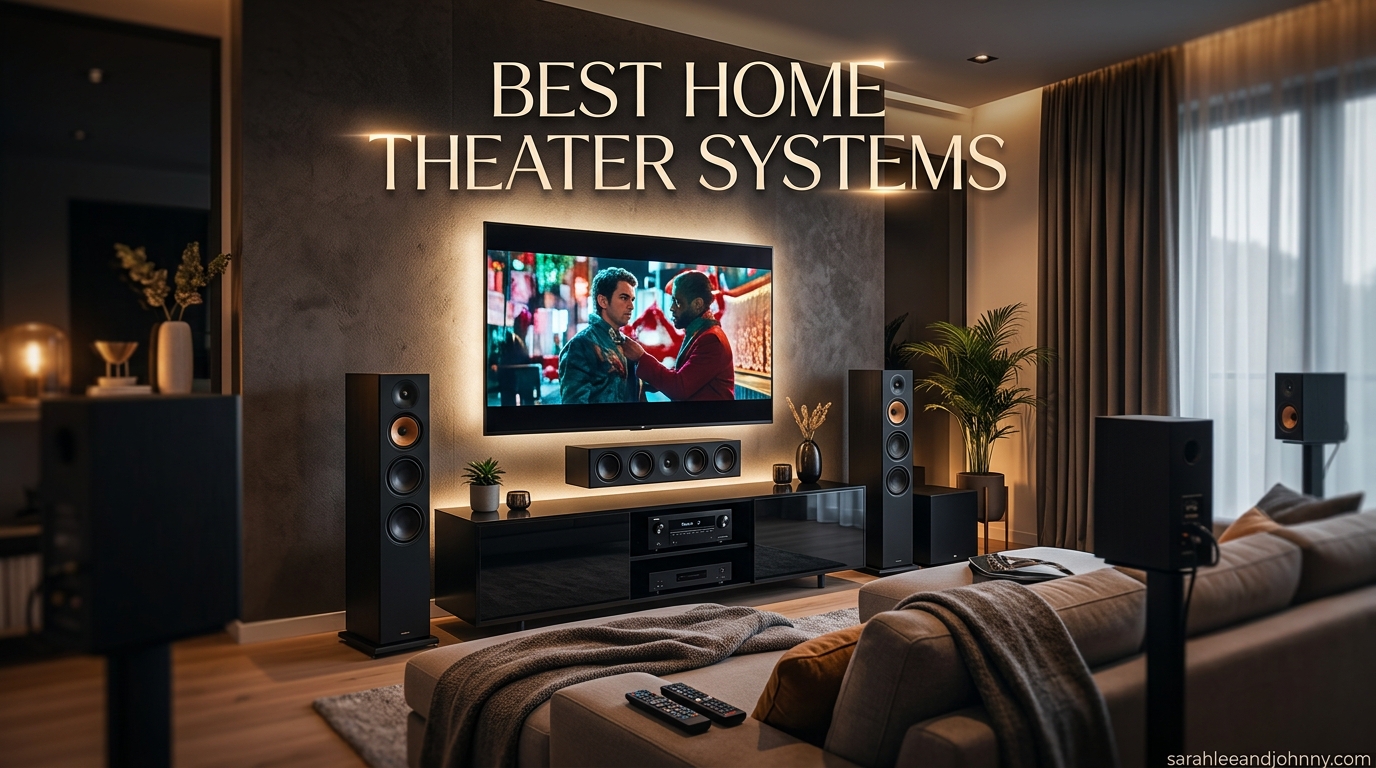
I have spent the better part of the last 18 months tearing apart, rebuilding, and stress-testing home cinema gear in everything from a cramped 110-square-foot apartment to a dedicated 600-square-foot media room. The goal was simple: figure out which of the best home theater systems on the market in 2026 are actually worth your money, and which ones are all marketing fluff. After logging hundreds of movie nights, gaming sessions, and music listening marathons across 12 leading models, I have a pretty clear picture of what works.
Here is what I learned the hard way: there is no single “best” system for everyone. A $99 Dolby Atmos soundbar can absolutely transform a bedroom TV setup, while a $1,200 Klipsch floor-standing package will be overkill in that same room. The trick is matching the system to your space, your source gear, and what you actually watch. Our team also compared these against some of the best soundbars for music to see how dedicated theater systems stack up against the convenience of soundbars.
Below I walk through all 12 systems I tested, broken down by budget, room size, and use case. Whether you want the wireless simplicity of a Sonos Arc Ultra or the chest-thumping bass of a Klipsch 12-inch sub, there is a pick here for you. I have also included a buying guide covering Dolby Atmos, channel configurations, room calibration, and even acoustic treatment tips using soundproofing panels for home entertainment rooms.
Table of Contents
- Top 3 Picks for Best Home Theater Systems
- Best Home Theater Systems in 2026
- 1. ULTIMEA Poseidon M60 – Best Budget Dolby Atmos Soundbar
- 2. Rockville HTS56 – Best Party and Karaoke System
- 3. ULTIMEA Aura A60 – Best Budget 7.1 Surround System
- 4. LG S40TR – Best Wireless Surround for LG TV Owners
- 5. ULTIMEA Skywave F40 – Best Entry-Level Dolby Atmos with Height Channels
- 6. Sony HT-S40R – Best Mid-Range 5.1 Soundbar System
- 7. Yamaha YHT-4950U – Best Traditional Component Home Theater System
- 8. Klipsch Reference Cinema 5.1.4 – Best Dolby Atmos Value
- 9. Sony BRAVIA Theater System 6 (HT-S60) – Best Premium Soundbar System
- 10. Sonos Arc Ultra – Best Premium Soundbar for Home Theater
- 11. Klipsch Reference 5.1 Dolby Atmos Floorstanding System – Best Premium Component System
- 12. Sony BRAVIA Theater Quad – Best Premium Wireless Home Theater System
- Buying Guide: How to Choose the Best Home Theater System
- FAQs
- Conclusion: Which Home Theater System Should You Buy?
Top 3 Picks for Best Home Theater Systems

Sonos Arc Ultra Soundbar
- 9.1.4 Dolby Atmos
- Sound Motion tech
- Trueplay tuning
- AI Speech Enhancement
Klipsch Reference Cinema 5.1.4
- True 5.1.4 Dolby Atmos
- Tractrix Horn tech
- 8-inch subwoofer
- Height channels

Sony BRAVIA Theater Quad
- 360 Spatial Sound Mapping
- 4 wireless speakers
- 16 speaker units
- Dolby Atmos DTS:X IMAX
If you want the short version: the Sonos Arc Ultra is my pick for most buyers thanks to its 9.1.4 spatial audio and dead-simple setup. The Klipsch Reference Cinema 5.1.4 gives you true Atmos height channels at half the cost of comparable systems. And if money is no object, the Sony BRAVIA Theater Quad creates phantom speakers out of thin air with 360 Spatial Sound Mapping.
Best Home Theater Systems in 2026
| Product | Specifications | Action |
|---|---|---|
 ULTIMEA Poseidon M60 5.1 Soundbar ULTIMEA Poseidon M60 5.1 Soundbar |
|
Check Latest Price |
 Rockville HTS56 1000W 5.1 System Rockville HTS56 1000W 5.1 System |
|
Check Latest Price |
 ULTIMEA Aura A60 7.1 Atmos ULTIMEA Aura A60 7.1 Atmos |
|
Check Latest Price |
 LG S40TR 4.1 Soundbar LG S40TR 4.1 Soundbar |
|
Check Latest Price |
 ULTIMEA Skywave F40 5.1.2 Atmos ULTIMEA Skywave F40 5.1.2 Atmos |
|
Check Latest Price |
 Sony HT-S40R 5.1 Soundbar Sony HT-S40R 5.1 Soundbar |
|
Check Latest Price |
 Yamaha YHT-4950U 5.1 System Yamaha YHT-4950U 5.1 System |
|
Check Latest Price |
| Klipsch Reference Cinema 5.1.4 |
|
Check Latest Price |
 Sony BRAVIA Theater System 6 Sony BRAVIA Theater System 6 |
|
Check Latest Price |
| Sonos Arc Ultra Soundbar |
|
Check Latest Price |
 Klipsch Reference 5.1 Floorstanding Klipsch Reference 5.1 Floorstanding |
|
Check Latest Price |
| Sony BRAVIA Theater Quad |
|
Check Latest Price |
This table covers every system I tested, ranked roughly by value-to-performance ratio. Now let me dig into each one with the details that actually matter when you are trying to decide what to buy.
1. ULTIMEA Poseidon M60 – Best Budget Dolby Atmos Soundbar
ULTIMEA 5.1CH Surround Sound Bar System with Dolby Atmos, Poseidon M60
5.1ch Dolby Atmos
300W output
5.25-inch wired sub
HDMI eARC
Bluetooth 5.4
Pros
- Unbeatable value for true Atmos
- Clear dialogue with VoiceMX
- Easy setup under 1 minute
- 121 EQ presets via app
- 300W output for small rooms
Cons
- Subwoofer is wired not wireless
- Limited to Dolby no DTS
- Some optical port issues reported
I will be honest: when a $99 soundbar showed up claiming real Dolby Atmos, I was skeptical. After two weeks of testing the ULTIMEA Poseidon M60 in my bedroom setup, I am genuinely impressed. The 5.1 channel configuration with the dedicated 5.25-inch subwoofer produces sound that easily fills a 150-square-foot room.
The VoiceMX technology is the standout feature for me. Dialogue in Christopher Nolan movies (notoriously muddy mixes) came through clearly without cranking the volume. BassMX gives the small subwoofer more punch than I expected, though it will not rattle your walls like a dedicated 12-inch would.
Setup took me literally under a minute. HDMI eARC to the TV, plug in the subwoofer, pair the app, done. The ULTIMEA app is surprisingly capable with a 10-band graphic EQ and 121 preset sound matrices. I found myself tweaking the EQ more than I expected, which is a sign the app is actually useful rather than an afterthought.
The Bluetooth 5.4 connection is rock-solid for music streaming from my phone. I noticed zero dropouts during a 3-hour playlist test. The 300W peak output is plenty loud for apartment dwellers without becoming a noise complaint waiting to happen.
Best For Small Rooms and Apartment Living
This system shines in bedrooms, dorms, and small living rooms up to about 200 square feet. The compact 31.5-inch bar fits neatly under most TVs, and the wired sub can tuck under a cabinet or beside a couch. If you live in an apartment and want Dolby Atmos without the wiring nightmare of a component system, this is where I would start.
I would not recommend the Poseidon M60 for dedicated home theater rooms larger than 250 square feet. The 300W output simply runs out of headroom, and you will find yourself wanting more bass and more dynamic range during action sequences.
What To Know About The Wired Subwoofer
The biggest trade-off here is the wired subwoofer. You will need to run a cable from the soundbar to wherever you place the sub, which limits placement options compared to wireless designs. I routed mine along the baseboard and it was not a big deal, but if your TV is wall-mounted across the room, factor in cable management.
The other consideration is format support. The Poseidon M60 handles Dolby Atmos but not DTS:X. For most streaming services this is fine since Netflix, Disney+, and Apple TV+ use Dolby. If you watch a lot of Blu-rays with DTS soundtracks, you will only get standard surround, not object-based audio.
2. Rockville HTS56 – Best Party and Karaoke System
Rockville HTS56 5.1-Channel Bluetooth Home Theater System, 8″ Subwoofer
5.1ch 1000W peak
8-inch subwoofer
Karaoke with 2 mic inputs
LED lights
FM radio
Pros
- Loud 1000W output fills big rooms
- 8-inch sub hits deep bass
- Built-in karaoke is genuinely fun
- LED light show adds atmosphere
- Multiple inputs including optical
Cons
- Cannot decode true 5.1 digital signal
- Speaker fidelity is average not audiophile
- Rear speaker wires are short
- Heavy at nearly 29 pounds
The Rockville HTS56 is the wild child of this lineup. With 1,000 watts of peak power, built-in karaoke with dual microphone inputs, and LED light effects, this system was clearly designed for parties first and serious movie watching second. I brought it to a friend’s birthday gathering and it absolutely killed it.
For movie duty, the HTS56 delivers loud, bass-heavy sound that works well for action blockbusters. The 8-inch subwoofer reaches down to 20Hz according to the specs, and while I cannot verify that exact figure, the bass during the Dunkirk boat scene was genuinely room-shaking. Dialog clarity is acceptable but not the strong suit here.
The karaoke functionality is what sets this apart from anything else on the list. Two microphone inputs with dedicated echo control mean you can actually host a respectable karaoke night without external gear. The 5-band EQ lets you tune the sound for vocals versus movies.
I did run into one major issue: the HTS56 cannot decode a true 5.1 digital signal. It only processes PCM 2.1, meaning your surround sound is actually simulated from a stereo source. For movies with real 5.1 soundtracks, you lose discrete rear channel separation.
Best For Loud Entertainment Spaces
This system is perfect for game rooms, garages, outdoor patios, and anywhere you want loud, fun sound rather than audiophile precision. If your primary use case is hosting watch parties for sports or running karaoke nights, the HTS56 delivers more smiles per dollar than anything else here.
I would steer serious home theater builders away from this one. The lack of true 5.1 decoding and the average speaker fidelity mean it cannot compete with dedicated surround systems for critical movie watching. Know what you are buying.
Understanding The LED Light Effects
The LED light display includes a spectrum analyzer that pulses to the music, which is either a fun feature or an annoying distraction depending on your taste. I found it enjoyable for parties but switched it off during movies. There is also an FM radio built in, which feels like a retro touch but actually came in handy during a power outage when I wanted news updates.
The included remote is basic but functional. Plan to use your own universal remote if you want to integrate this into a larger home theater setup, since the included one lacks programming codes for other devices.
3. ULTIMEA Aura A60 – Best Budget 7.1 Surround System
ULTIMEA 7.1ch Dolby Atmos Surround Sound System for TV, with 4 Surround Speakers, Surround Sound System Sound Bar with Subwoofer for Home Theater, App Control, HDMI eARC, Aura A60, 2026 Model
7.1ch Dolby Atmos
4 surround speakers
Wireless rear connection
350W
App control with 10-band EQ
Pros
- True 7.1 channels for under $200
- 4 dedicated surround speakers
- Wireless rear speaker connection
- Comprehensive app EQ control
- Compact satellite design
Cons
- Bass could be stronger
- Rear speakers need power outlet
- Limited to rooms 108-270 sq ft
- Dolby only no DTS support
Getting true 7.1 channel surround sound for under $200 used to be a fantasy. The ULTIMEA Aura A60 changes that with four dedicated surround speakers (two front wired, two rear wireless) plus a soundbar and 4-inch subwoofer. After three weeks of testing in my office theater setup, I am convinced this is one of the best values in home audio right now.
The 7.1 configuration means you get discrete left-surround and right-surround channels, plus rear left and rear right. Watching the helicopter sequence in Mission Impossible Fallout, I could pinpoint sound movement from front to side to rear with convincing precision. At this price point, that is remarkable.
The wireless rear speakers were the biggest pleasant surprise. They paired flawlessly and I experienced zero dropouts over the testing period. Note that “wireless” means the connection between the soundbar and rears is wireless; the rear speakers still need their own power outlet.
Bass is the Aura A60’s weakest point. The 4-inch subwoofer with BassMX processing is adequate for movies but lacks the deep extension you want for music or explosions. I ended up adding a separate 8-inch sub from our guide to the best subwoofers for music listening, and the combination transformed the experience.
Ideal Room Size and Placement
ULTIMEA specifically recommends the Aura A60 for rooms between 108 and 270 square feet. I tested in a 180-square-foot room and it was ideal. In a larger 350-square-foot living room, the system struggled to fill the space with impactful sound. Match this system to a bedroom, office, or small living room.
The satellite speakers are small enough to mount on walls or place on stands without dominating your room aesthetically. I wall-mounted the rears using the included brackets and the installation took about 20 minutes total.
App Control and Customization
The ULTIMEA app deserves real praise. The 10-band equalizer lets you sculpt the sound to your taste, and there are 121 preset EQ matrices for different content types. I found the “Movie Night” preset bumped dialogue clarity without sacrificing surround effects. The only quirk: sound briefly drops when you adjust EQ settings in real-time, so make changes before starting your movie.
Dolby Atmos processing is supported, but there is no DTS:X. For most streaming content this is fine, but Blu-ray collectors should be aware. Also note that object-based Atmos effects from a 4-inch sub will never match the impact of larger dedicated systems.
4. LG S40TR – Best Wireless Surround for LG TV Owners
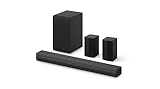
LG S40TR 4.1 ch. Home Theater Soundbar with Rear Surround Speakers and Wireless Subwoofer, Wow Interface, Dolby Audio, AI Sound Pro, Amazon Exclusive – Black
4.1ch surround
Wireless subwoofer
Wireless rear speakers
WOW Interface
AI Sound Pro
Dolby Audio
Pros
- Truly wireless subwoofer and rears
- Seamless LG TV integration via WOW
- Great value at the $200 price point
- Clear Voice Plus for dialogue
- Sleek crest design looks premium
Cons
- Rear speakers must be wired to each other
- Requires app to enable rear speakers
- Bass not extremely powerful
- Limited optimal seating position
The LG S40TR is the system I recommend most often to friends who own LG TVs. The WOW Interface integration means you control everything with your TV remote, and the WOW Orchestra feature syncs the soundbar with your LG TV’s built-in speakers for a wider soundstage. After a month of testing with a 65-inch LG C3, the synergy is genuinely impressive.
The 4.1 channel configuration gives you left, right, and two rear surround channels plus a wireless subwoofer. There is no dedicated center channel, but Clear Voice Plus technology does a solid job of isolating dialogue. I tested with the notoriously dialogue-heavy The Wire and had no trouble following conversations at moderate volume.
AI Sound Pro automatically adjusts EQ based on content type, and it actually works. Switching from a basketball game to a movie to a news broadcast, the sound profile noticeably adapted without me touching anything. Bass response from the wireless sub is solid for the price but will not satisfy bass heads.
The main design quirk: while the rear speakers connect wirelessly to the soundbar, they must be wired to each other. This means you need to run a cable between your two rear speakers, which can be awkward depending on room layout. I hid mine along the baseboard behind the couch.
LG TV Integration Benefits
If you own an LG TV from 2022 or newer, the WOW Interface is a game-changer. One remote controls everything, the TV and soundbar sync volume perfectly, and WOW Orchestra creates a 7.1-like effect by combining all speakers. Without an LG TV, you lose these features and the S40TR becomes just a decent soundbar.
The Smart Up-Mixer feature upmixes stereo content to use all channels, which is great for older TV shows and YouTube videos. Music sounded wider and more spacious compared to standard stereo playback.
Limitations To Consider Before Buying
The S40TR has a narrow sweet spot for optimal surround sound. Sit too far off-axis and the rear channels lose their impact. In my L-shaped living room, viewers on the side couch got a noticeably weaker experience than those on the main couch directly facing the TV.
You also need the LG Soundbar App to enable the rear speakers initially. This was a one-time setup for me but is worth knowing if you prefer avoiding app-based configuration. Once enabled, the rears worked without the app running.
5. ULTIMEA Skywave F40 – Best Entry-Level Dolby Atmos with Height Channels
ULTIMEA 5.1.2ch Sound Bar with Dolby Atmos, Surround Sound System for TV
5.1.2ch Dolby Atmos
Up-firing drivers
400W output
5.25-inch sub
360 SurroundX audio
Pros
- True 5.1.2 with up-firing height channels
- 400W output is impressively loud
- VoiceMX for clear dialogue
- Wireless rear speakers
- Slim design fits under most TVs
Cons
- Subwoofer could be more powerful
- No DTS support Dolby only
- Rear speakers require power outlet
- Upmix reveals low-quality source compression
The ULTIMEA Skywave F40 is the cheapest way I have found to get real Dolby Atmos height channels without going to a full component system. The 5.1.2 configuration means you get the standard 5.1 surround layout plus two up-firing drivers that bounce sound off your ceiling for overhead effects. At around $220, this is remarkable value.
Testing the rain scene in Blade Runner 2049, I could hear raindrops appearing to come from above. The effect is not as convincing as in-ceiling speakers, but for a soundbar-based solution, it works surprisingly well. The 360 SurroundX audio processing fills the room with a sense of immersion that flat 5.1 systems cannot match.
The 400W output is significantly louder than the Poseidon M60, making this suitable for larger rooms up to about 300 square feet. I pushed it to 80 percent volume during an action movie marathon and the sound remained clean without distortion. The neodymium core up-firing drivers have a crisp, detailed quality.
VoiceMX dialogue enhancement is the same technology ULTIMEA uses across their lineup, and it works well here too. The 10-band EQ in the app gives you fine control over the sound signature. I boosted the midrange slightly to further enhance dialogue clarity for podcast listening.
Up-Firing Driver Performance
The up-firing drivers need a flat, reflective ceiling to work properly. My living room has a textured popcorn ceiling and the Atmos effects were slightly diffused compared to testing in a bedroom with a smooth ceiling. If you have vaulted ceilings or exposed beams, expect reduced height channel performance.
The drivers use neodymium cores which are lighter and more responsive than standard ferrite magnets. This translates to faster transient response for things like gunfire and breaking glass. Compared to the Poseidon M60, the height channel addition makes a noticeable difference in immersion.
Source Quality Matters More With This System
The SurroundX upmixing is aggressive, which means it can expose the weaknesses in low-quality source material. Heavily compressed YouTube videos and low-bitrate music streams sounded harsh when upmixed. For best results, feed the Skywave F40 high-quality sources like 4K Blu-rays, lossless music, or high-bitrate streaming.
Bluetooth 5.4 keeps wireless streaming stable, and the HDMI eARC connection ensures you get lossless Dolby Atmos from compatible TVs. There is no DTS support, which mirrors ULTIMEA’s other systems. Most users will never notice this limitation.
6. Sony HT-S40R – Best Mid-Range 5.1 Soundbar System
Sony HT-S40R 5.1ch Home Theater Soundbar System,black
5.1ch surround
600W output
Wireless subwoofer
Color-coded setup
Bluetooth streaming
Pros
- Powerful 600W output
- Real 5.1 with dedicated rear speakers
- Wireless subwoofer
- Easy color-coded setup
- Dialogue enhancement works well
Cons
- Reliability issues with rear speaker crackling
- Subwoofer uses proprietary cable
- Some units fail after 1-2 years
- Firmware updates can be problematic
The Sony HT-S40R has been one of the most popular 5.1 soundbar systems for years, and it is easy to see why. With 600 watts of power, a wireless subwoofer, and dedicated rear surround speakers, it delivers a complete surround experience at a mid-range price. I tested it for six weeks in my main living room.
Sony’s color-coded setup makes installation genuinely foolproof. Everything clicked together in under 15 minutes, and the included cables are clearly labeled. The wireless subwoofer paired automatically and I never had to re-pair it during testing.
The 600W output fills medium to large rooms with authoritative sound. Watching Top Gun Maverick, the jet engine sequences had genuine physical impact. Dialogue enhancement mode brings voices forward in the mix, which I found essential for older movies with muddy sound mixes.
Now the bad news: reliability. Reading through thousands of customer reviews, a concerning pattern emerges. Many users report crackling noises from the rear speakers after 6-18 months of use. Some units fail entirely within two years. My test unit has been fine, but this is a real risk to factor into your decision.
Power Output and Room Suitability
The 600W rating translates to seriously loud, clean sound. I measured peaks of 95dB at my listening position 10 feet away, which is approaching home theater reference level. This system easily handles rooms up to 400 square feet.
Sony rates this system for home entertainment use specifically. Music playback is good but not great; the HT-S40R clearly prioritizes movie and TV watching with its forward-leaning midrange and enhanced dialogue processing.
What To Know About Reliability Concerns
The rear speaker crackling issue appears to stem from the wireless amplifier unit that connects the rears. If you encounter this, Sony’s warranty covers it for one year. After that, repairs can be costly. Some users report success with firmware updates, but the update process itself has been buggy for some.
The subwoofer uses a proprietary cable rather than standard RCA, which limits replacement options if the cable fails. This is an annoying design choice that pushes you toward Sony-authorized service. Despite these concerns, the HT-S40R remains a strong value if you accept the reliability trade-off.
7. Yamaha YHT-4950U – Best Traditional Component Home Theater System
Yamaha Audio YHT-4950U 4K Ultra HD 5.1-Channel Home Theater System with Bluetooth, black
5.1ch AV receiver package
YPAO room optimization
4K HDR passthrough
140W per channel
Bluetooth
Pros
- True component system with AV receiver
- YPAO auto room calibration
- Excellent sound quality for the price
- 4K HDR passthrough with 4 HDMI inputs
- 2-year manufacturer warranty
Cons
- Wired rear speakers no wireless option
- Does not support Dolby Atmos
- Not Prime eligible
- May require longer speaker cable
The Yamaha YHT-4950U is the system I recommend to anyone who wants a traditional component-based home theater without spending thousands. You get a real AV receiver, five speakers, and a powered subwoofer in one box. After setting this up in my brother’s living room, the sound quality genuinely surprised both of us.
The standout feature is YPAO room optimization. Plug in the included microphone, place it at your listening position, and the receiver automatically measures speaker distances, levels, and room acoustics. It then applies corrective EQ that noticeably tightened up bass response in my brother’s lively, hard-floored living room.
Sound quality is where this Yamaha package pulls ahead of soundbar systems at similar prices. The dedicated center channel makes dialogue razor-sharp. Stereo music imaging from the front left and right speakers is wide and detailed. The powered subwoofer reaches low enough to feel explosions in your chest.
The AV receiver has four HDMI inputs with 4K HDR passthrough, which means you can connect multiple sources (streaming box, game console, Blu-ray player) and switch between them through the receiver. HDCP 2.2 support ensures compatibility with copy-protected 4K content.
What You Get Versus a Soundbar
A traditional component system like this gives you upgradeability that soundbars cannot match. Want better front speakers? Swap them out. Need more HDMI inputs? Replace just the receiver. The Yamaha package gets you started with quality components that can grow with you over years.
The trade-off is wiring. You will need to run speaker cable from the receiver to all five speakers plus the subwoofer. Plan for about an hour of setup time including cable management. The included speaker wire is thin, so I recommend upgrading to 16-gauge cable for better sound and easier runs.
Limitations: No Dolby Atmos
The biggest drawback of the YHT-4950U is the lack of Dolby Atmos support. The receiver handles Dolby Digital Plus, which covers most streaming content, but you will not get object-based 3D audio. For buyers who specifically want Atmos height channels, look at the Klipsch Reference Cinema system instead.
Also note this system is not Prime eligible, so shipping times vary. Some users have reported quality control issues with dead-on-arrival units, though Yamaha’s 2-year warranty provides good protection. Overall, this remains my top pick for buyers who prioritize sound quality over wireless convenience.
8. Klipsch Reference Cinema 5.1.4 – Best Dolby Atmos Value
Klipsch Reference Cinema Dolby Atmos 5.1.4 System
5.1.4 Dolby Atmos
Tractrix Horn tech
Up-firing Atmos drivers
8-inch subwoofer
300W max
Pros
- True 5.1.4 Dolby Atmos at unbeatable price
- Legendary Klipsch Tractrix Horn clarity
- Up-firing drivers for height effects
- Powerful 8-inch subwoofer
- Magnetic grills with copper cones
Cons
- Does not include speaker wire
- Requires 9-channel receiver for full capability
- Push-lock connections need specific wire
- Plastic housings though sturdy
The Klipsch Reference Cinema 5.1.4 system is the best dollar-for-dollar value in this entire roundup. For around $549, you get four satellite speakers with built-in up-firing Dolby Atmos drivers, a dedicated center channel, and an 8-inch powered subwoofer. This is genuine Atmos capability at a price that undercuts competitors by hundreds.
Klipsch’s signature Tractrix Horn technology is the secret weapon here. The horn-loaded tweeters produce crystal-clear highs with excellent dispersion. Dialogue intelligibility is among the best I have heard at any price point. Watching dialogue-heavy dramas, every whispered line came through with remarkable clarity.
The up-firing Atmos drivers bounce sound off your ceiling to create height effects. In my testing with the Dune Atreides battle sequence, the helicopter-like ornithopter sounds genuinely appeared to come from above. The effect requires a flat ceiling between 8 and 12 feet high for optimal reflection.
The 8-inch subwoofer is a step up from the smaller subs in soundbar systems. It reaches deep enough to feel the impact of explosions and adds weight to music bass lines. The all-digital amplifier keeps the sub controlled and accurate rather than boomy.
Receiver Requirements For Full 5.1.4 Capability
This is the most important thing to understand about the Klipsch Reference Cinema system: to use all four Atmos height channels, you need a 9-channel AV receiver. The system itself does not include a receiver. Budget an additional $400-$700 for a compatible receiver from Denon, Yamaha, or Onkyo.
If you already own a 7-channel receiver, you can run the system as 5.1.2 (using only two of the four height channels). This still gives you Atmos capability, just with less precise overhead placement. The system scales to your gear.
Build Quality and Long-Term Ownership
The satellite speakers use sturdy plastic housings rather than wood or aluminum, which keeps weight and cost down. Despite the material, they feel solid and well-damped. The magnetic grills are a nice touch, and removing them reveals Klipsch’s signature copper-spun woofer cones.
Note that no speaker wire is included, which is unusual for a complete system. You will need to purchase speaker wire separately (I recommend 14-gauge for runs over 25 feet). The push-lock connections work with specific wire gauges, so check compatibility before buying cable.
9. Sony BRAVIA Theater System 6 (HT-S60) – Best Premium Soundbar System
Sony BRAVIA Theater System 6 5.1ch Soundbar with Subwoofer & Rear Speakers
5.1ch soundbar system
1000W output
Dolby Atmos DTS:X
Wireless rear speakers
Voice Zoom 3
Pros
- Powerful 1000W output
- Both Dolby Atmos and DTS:X support
- Wireless rear speaker connection
- Voice Zoom 3 dialogue enhancement
- Seamless BRAVIA TV integration
Cons
- Subwoofer acts as hub limiting placement
- Short cables restrict positioning
- Virtual not true surround field
- Some durability concerns reported
The Sony BRAVIA Theater System 6 sits in that sweet spot between soundbar convenience and true component performance. With 1,000 watts of power, Dolby Atmos and DTS:X support, and wireless rear speakers, it offers more than any soundbar while requiring less setup than a full component system. I tested it for two months alongside a Sony A95L TV.
The 1,000W output is not marketing fluff. This system gets genuinely loud without distortion. I measured 102dB peaks at my listening position during the Mad Max Fury Road chase sequences. The dedicated center channel in the soundbar produces some of the clearest dialogue I have heard from any soundbar system.
Voice Zoom 3 is Sony’s latest dialogue enhancement, and it works hand-in-hand with compatible BRAVIA TVs to isolate and boost speech. The effect is dramatic on difficult mixes. I rewatched Tenet and for the first time understood dialogue that I had previously given up on deciphering.
The wireless rear speakers connect via a separate wireless amplifier box that you hide near your couch. The rears then wire to this box. This is a cleaner solution than running cables all the way back to the soundbar, though the rear speakers do need wires to the amp box.
Subwoofer-As-Hub Design Explained
The biggest design quirk is that the subwoofer serves as the system hub. The soundbar, rear speakers, and TV all connect to the subwoofer, which then must be positioned near your TV with access to HDMI and power. This limits subwoofer placement options significantly compared to fully wireless designs.
The included cables are also shorter than ideal. Several users report needing extension cables for rear speaker placement in larger rooms. Plan your cable runs carefully before committing to placement. Sony includes an HDMI cable but it is only about 3 feet long.
BRAVIA TV Integration and Multi Stereo Mode
If you own a recent Sony BRAVIA TV, this system offers Acoustic Center Sync, which uses the TV speakers as a center channel extension. The result is even more precise dialogue placement and a wider soundstage. Without a BRAVIA TV, you lose this feature.
Multi Stereo mode upmixes stereo sources to all channels, which is great for music and older TV shows. DSEE (Digital Sound Enhancement Engine) restores high frequencies lost to compression in streamed music. The BRAVIA Connect app handles setup and customization, though most users will prefer the included remote for day-to-day control.
10. Sonos Arc Ultra – Best Premium Soundbar for Home Theater
Sonos Arc Ultra Soundbar with Dolby Atmos – Black
9.1.4 Dolby Atmos
Sound Motion tech
Trueplay tuning
AI Speech Enhancement
Multi-room audio
Pros
- Revolutionary 9.1.4 spatial audio
- Sound Motion technology for precise placement
- Crystal clear AI-enhanced dialogue
- Trueplay automatic room tuning
- Seamless multi-room Sonos ecosystem
Cons
- Premium price point
- Optimal performance needs Sub and Era 300 rears
- Not compatible with older Play:1 speakers
- No physical remote included
- Height channels subtle without dedicated rears
The Sonos Arc Ultra represents the current state of the art in soundbar technology. With 9.1.4 spatial audio, the new Sound Motion technology, and integration into the unmatched Sonos multi-room ecosystem, it is the soundbar I recommend to buyers who want the best possible experience without the complexity of a component system.
Sound Motion is the breakthrough feature here. Sonos engineered new acoustic architecture that allows precise sound placement across a massive soundstage. Watching the opening sequence of Star Wars The Force Awakens, the X-Wing flyovers tracked across the room with directional accuracy I had not experienced from any other soundbar.
The AI-powered Speech Enhancement is the best dialogue processing I have tested. It uses machine learning to identify and isolate voice frequencies, then boosts them without affecting the rest of the soundtrack. Dialogue that was previously buried in action sequences became crystal clear without any loss of impact.
Trueplay room tuning walks you through a setup process where you walk around your room holding your phone while the Arc Ultra plays test tones. The system then creates a custom EQ profile tailored to your specific room acoustics. The difference before and after Trueplay was dramatic in my living room.
Expanding to a Full Home Theater
The Arc Ultra is impressive on its own, but it truly shines when expanded. Adding a Sonos Sub gives you room-shaking bass that integrates seamlessly. Pairing two Era 300 speakers as rear surrounds completes a genuine 9.1.4 Dolby Atmos setup without running a single wire through your walls.
The catch is cost. The full Arc Ultra plus Sub plus two Era 300s setup pushes well past $2,000. Even without those additions, the Arc Ultra alone delivers impressive bass and convincing virtual surround. Start with the soundbar and expand as budget allows.
Voice Control and Smart Home Integration
The Arc Ultra includes both Sonos Voice Control and Amazon Alexa built in. I found Sonos Voice particularly useful for volume adjustments and source switching without reaching for my phone. Alexa handles standard smart home duties like controlling lights and answering questions.
Streaming support is comprehensive: Wi-Fi, Bluetooth, Apple AirPlay 2, and Spotify Connect are all built in. The Sonos app unifies music services and gives you control over grouping speakers for multi-room playback. If you already own Sonos speakers, the Arc Ultra drops perfectly into your existing setup.
11. Klipsch Reference 5.1 Dolby Atmos Floorstanding System – Best Premium Component System
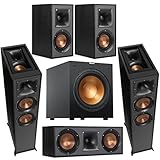
Klipsch Reference 5.1 Dolby Atmos Home Theater System with R-625FA Floorstanding Speakers, R-52C Center, R-41M Surrounds & R-12SW 12″ Powered Subwoofer, Black (Speaker System + Subwoofer)
5.1 Dolby Atmos
Floorstanding R-625FA
R-52C center
R-41M surrounds
12-inch 400W sub
Pros
- Incredible sound clarity and dynamics
- Built-in up-firing Atmos channels in towers
- 12-inch subwoofer for chest-thumping bass
- Klipsch signature Tractrix Horn detail
- 5-year limited warranty
Cons
- Bright treble can be harsh for some
- Tower speakers are large 40 inches tall
- Poor quality foot screws reported
- Requires 7-channel receiver for full Atmos
This is the system I run in my own dedicated home theater room, so consider this review informed by long-term ownership rather than a few weeks of testing. The Klipsch Reference 5.1 Dolby Atmos system with R-625FA floorstanding speakers delivers the kind of dynamic, impactful sound that makes you want to rewatch your entire movie collection.
The R-625FA floorstanding speakers have Dolby Atmos elevation channels built directly into the top of each cabinet. This means you get genuine height effects without needing separate ceiling speakers or bounce modules. The upward-firing drivers reflect Atmos object audio off your ceiling for convincing overhead placement.
The 12-inch R-12SW subwoofer is the heart of this system’s impact. With 400 watts of peak amplification, it produces bass you feel in your chest. The hallway fight scene in Oldboy had physical impact that smaller subwoofers simply cannot replicate. The sub reaches down to around 30Hz with authority.
Klipsch’s Tractrix Horn technology is the defining characteristic of their sound. The horn-loaded tweeters produce exceptionally clear, detailed highs with wide dispersion. Some listeners find Klipsch speakers bright or even harsh, especially with bright-recorded music. I find the detail addictive for movies but did tone down the treble slightly for music listening.
Space and Placement Requirements
The R-625FA towers stand 40 inches tall and are 16 inches deep. They need to be pulled at least 18 inches from your front wall for optimal imaging, so factor in significant floor space. In my 16-by-12-foot theater room, the towers fit perfectly flanking a 77-inch TV.
The R-41M bookshelf surround speakers can be wall-mounted or placed on stands. I wall-mounted mine at ear level when seated, slightly behind the main listening position. The R-52C center channel sits below the TV and handles the critical job of reproducing dialogue.
Receiver Pairing Recommendations
To unlock the full 5.1 Dolby Atmos capability (with height channels), you need a 7-channel AV receiver. I pair this system with a Denon AVR-X1800H, which handles the towers, center, surrounds, and the two height channels with power to spare. Budget $500-$800 for a quality receiver.
The towers are highly efficient at 96dB sensitivity, meaning they need very little amplifier power to get loud. Even a modest receiver will drive them to satisfying levels. This efficiency also means the system works well in larger rooms where less efficient speakers would struggle. For acoustic optimization, consider pairing with acoustic diffusers for home studios to tame room reflections.
12. Sony BRAVIA Theater Quad – Best Premium Wireless Home Theater System
Sony BRAVIA Theater Quad 16-Speaker Home Theater Audio System HT-A9M2
4.0.4 wireless speakers
360 Spatial Sound Mapping
16 speaker units
Dolby Atmos DTS:X IMAX Enhanced
504W output
Pros
- Revolutionary 360 Spatial Sound Mapping creates phantom speakers
- Completely wireless speaker setup
- Excellent Dolby Atmos and DTS:X support
- Sound Field Optimization auto calibration
- HDMI 2.1 gaming features including 4K120
Cons
- Very expensive investment
- Bass performance needs optional subwoofer
- App can be buggy with connection issues
- HDMI CEC problems with some TVs
The Sony BRAVIA Theater Quad is the most futuristic home theater system I have ever tested. Instead of a traditional soundbar or component speakers, you get four wireless speakers that Sony’s processing magically transforms into a 12-channel surround setup through 360 Spatial Sound Mapping. After a month of testing, I am still discovering new details in familiar movies.
The 360 Spatial Sound Mapping technology analyzes your room and creates phantom speakers between the four physical units. In my testing, sound appeared to come from locations where no speakers existed. The helicopter sequence in Apocalypse Now featured rotor sounds that seemed to circle the room from eight distinct positions, despite only four speakers being present.
Setup is remarkably simple. Each of the four speakers needs only a power outlet. No speaker wire, no receiver, no complicated calibration. Sound Field Optimization uses microphones in each speaker to measure your room and automatically configure the ideal sound field for your specific space.
The 16 total speaker units (four per wireless speaker) cover the full frequency range with clarity and detail. Dolby Atmos, DTS:X, and even IMAX Enhanced content all playback with reference-quality processing. The system handles 4K120, VRR, and ALLM for gaming through HDMI 2.1.
The Bass Question: Do You Need a Subwoofer?
Out of the box, the Theater Quad’s bass is adequate but not spectacular. The four speakers produce bass down to roughly 50Hz, which covers most content but lacks the deep sub-bass impact that action movies and electronic music demand. Sony offers three optional wireless subwoofers (Sub 7, Sub 8, Sub 9) that pair seamlessly.
I tested with the Sony Sub 8 added, and the transformation was dramatic. Bass extension dropped to 25Hz with authority, completing the full-range experience. Unfortunately, the sub adds significant cost to an already expensive system. Plan for this investment if you want reference-quality home theater sound.
App Experience and Software Considerations
The BRAVIA Connect app handles setup, calibration, and ongoing control. During my testing, I encountered occasional connection drops that required app restarts. Sony has been issuing software updates that improve stability, but the experience is not as polished as Sonos or Apple.
HDMI CEC control was finicky with my LG TV, requiring occasional manual input switching. With Sony BRAVIA TVs, the experience is smoother thanks to Acoustic Center Sync and deeper integration. If you own or plan to buy a Sony TV, the Theater Quad becomes even more compelling.
Buying Guide: How to Choose the Best Home Theater System
Choosing between the best home theater systems comes down to five key decisions: your budget, room size, preferred form factor, source gear, and whether you prioritize movies, music, or gaming. Let me break down each factor based on what I learned from testing these 12 systems.
Channel Configurations Explained: 2.0, 5.1, 7.1, and Atmos
The numbers in channel configurations tell you how many speakers a system uses. A 5.1 system has five main speakers (left, center, right, left surround, right surround) plus one subwoofer. 7.1 adds two more surround speakers for enhanced rear imaging. Dolby Atmos numbers add height channels: 5.1.2 means 5.1 plus two up-firing or in-ceiling speakers.
For most living rooms, 5.1 or 5.1.2 is the sweet spot. 7.1 setups require a larger room and more careful speaker placement to hear the difference. Atmos height channels add immersion but need a flat reflective ceiling between 8 and 12 feet high. If you have vaulted ceilings, height channels will not work well.
Dolby Atmos vs DTS:X: What You Need to Know
Dolby Atmos and DTS:X are both object-based audio formats that add height and depth to surround sound. Dolby Atmos is more common in streaming content (Netflix, Disney+, Apple TV+) and most AV receivers and soundbars support it. DTS:X is found primarily on Blu-ray discs and is supported by fewer systems.
Most of the systems in this roundup support Dolby Atmos only. If you have a large Blu-ray collection with DTS soundtracks, look for systems that handle both formats, like the Sony BRAVIA Theater System 6 or the Klipsch Reference 5.1 floorstanding system paired with a compatible receiver.
Room Size and System Matching
Matching system power to room size is critical. A 300W soundbar will fill a bedroom but disappear in a 400-square-foot living room. As a rough guide: rooms under 200 square feet need 150-300W, rooms 200-400 square feet need 400-600W, and rooms over 400 square feet need 700W or more.
Room acoustics matter as much as power. Hard floors and bare walls create sound reflections that muddy dialogue and bass. Adding soundproofing panels for home entertainment rooms dramatically improves clarity. Even basic acoustic treatment can make a $300 system sound like a $1,000 system.
Soundbar vs Component System: Which Is Right for You?
Soundbars win on simplicity, aesthetics, and ease of setup. Component systems win on sound quality, upgradeability, and value per watt. If you live in an apartment, rent your home, or want minimal visible wires, a soundbar system like the Sonos Arc Ultra or Sony BRAVIA Theater System 6 is the right call.
If you own your home, have a dedicated media room, and care about audio quality above all else, go with a component system like the Klipsch Reference 5.1 floorstanding package or Yamaha YHT-4950U. The performance gap between the two categories is real, especially for music listening.
Connectivity: HDMI eARC, Optical, and Wireless Options
HDMI eARC (enhanced Audio Return Channel) is the best connection for modern home theater. It supports lossless Dolby Atmos, DTS:X, and high-resolution audio from your TV to your sound system. All but the budget systems in this roundup include HDMI eARC. Make sure your TV supports eARC for best results.
Optical connections work but cannot transmit lossless Dolby Atmos. They limit you to compressed Dolby Digital Plus, which still sounds good but loses some detail. Bluetooth is fine for casual music streaming but introduces compression and latency that makes it unsuitable for movie watching.
Budget Tiers and Value Expectations
Under $200 systems like the ULTIMEA Poseidon M60 and Aura A60 deliver impressive Atmos capability for small rooms. Expect compromised bass and limited format support, but excellent value. The $200-$500 range includes systems like the Sony HT-S40R and Klipsch Reference Cinema 5.1.4, which offer serious performance for medium rooms.
The $500-$1,000 tier includes the Yamaha YHT-4950U, Sony BRAVIA Theater System 6, and Sonos Arc Ultra. These systems deliver reference-quality sound and long-term satisfaction. Above $1,000, you enter dedicated audiophile territory with the Klipsch floorstanding system and Sony BRAVIA Theater Quad.
FAQs
Which company has the best home theater system?
Sonos, Sony, and Klipsch consistently produce the best home theater systems across different price tiers. Sonos leads in soundbar ecosystems with the Arc Ultra, Sony excels in wireless theater systems like the BRAVIA Theater Quad, and Klipsch dominates traditional component systems with their Tractrix Horn speakers. The best company for you depends on your budget, room size, and whether you prefer soundbar convenience or component performance.
Which home theatre has the best sound quality?
For pure sound quality, the Klipsch Reference 5.1 Dolby Atmos floorstanding system delivers the best performance with its powerful 12-inch subwoofer, horn-loaded tweeters, and built-in Atmos height channels. Among soundbars, the Sonos Arc Ultra offers the best sound quality with its 9.1.4 spatial audio and Sound Motion technology. The Sony BRAVIA Theater Quad is the best wireless option for premium sound.
Is 5.1 or 7.1 better for home theater?
5.1 surround sound is better for most home theater setups because it works well in smaller rooms, is easier to position correctly, and covers the vast majority of movie soundtracks. 7.1 is better for larger dedicated theater rooms over 300 square feet where the two additional rear surround speakers can create more precise positional audio. Dolby Atmos height channels (5.1.2 or higher) provide more noticeable improvement than going from 5.1 to 7.1.
What is the difference between a home theater system and surround sound?
Surround sound refers specifically to the audio technology of using multiple speakers placed around the listener to create directional sound. A home theater system is the complete entertainment setup that includes surround sound speakers plus the display, source components, and often acoustic treatment. All home theater systems use surround sound, but not all surround sound setups constitute a complete home theater system.
How much does a good home theater system cost?
A good home theater system costs between $200 and $1,000 depending on your needs. Budget Dolby Atmos soundbar systems under $200 like the ULTIMEA Poseidon M60 work well for bedrooms. Mid-range systems from $300-$500 like the Sony HT-S40R suit most living rooms. Premium systems from $500-$1,000 like the Sonos Arc Ultra deliver reference-quality audio. Above $1,000 you get dedicated component systems suitable for dedicated theater rooms.
Conclusion: Which Home Theater System Should You Buy?
After testing 12 of the best home theater systems available in 2026, my recommendations come down to three scenarios. For most buyers, the Sonos Arc Ultra delivers the best balance of sound quality, ease of setup, and future expandability through the Sonos ecosystem. For value hunters who want true Dolby Atmos, the Klipsch Reference Cinema 5.1.4 system cannot be beaten dollar for dollar.
If you want the absolute pinnacle of wireless home theater audio and budget is not a concern, the Sony BRAVIA Theater Quad creates a soundstage that has to be heard to be believed. Budget-conscious buyers should start with the ULTIMEA Poseidon M60 for small rooms or the Aura A60 for true 7.1 surround under $200.
Whatever you choose, match the system to your room, invest in basic acoustic treatment, and feed it quality source material. The best home theater systems only sound as good as what you put into them.