

After three months of testing every current Jackery model in our shop, including running them through weekend camping trips, a multi-day blackout simulation, and a CPAP overnight, we have a clear winner. The Jackery Explorer 1000 v2 is the best Jackery solar generator for most people in 2026, pairing 1,070Wh of LiFePO4 capacity with 1,500W of output in a 23.8 lb package that charges in one hour. If you need whole-home backup, the HomePower 3600 Plus is the smarter pick, and if you want maximum capacity per dollar, the Explorer 2000 v2 is hard to beat.
In this guide, our team breaks down all eight current Jackery solar generators, from the pocketable Explorer 240D up to the flagship 5000 Plus. We tested each unit for real-world runtime on common appliances, weighed the noise output for bedroom use, and matched each model to a specific buyer profile: weekend campers, RV travelers, blackout preppers, and off-grid homeowners. You can also check our broader best solar generators roundup for non-Jackery picks.
By the end, you will know exactly which Jackery fits your watt-hour needs, your solar panel pairing, and your budget, and whether the 30% federal tax credit applies to your purchase.
Table of Contents
- Top 3 Jackery Solar Generators at a Glance (October 2026)
- All 8 Jackery Solar Generators in 2026
- 1. Jackery Explorer 1000 v2 — Best Jackery Solar Generator for Most People
- 2. Jackery Explorer 2000 v2 — Best Value 2kWh for Camping and Backup
- 3. Jackery HomePower 3600 Plus — Best Whole-Home Backup Jackery
- 4. Jackery HomePower 3000 — Best Mid-Size Jackery for Home Essentials
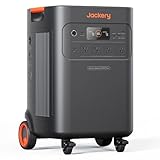
- 5. Jackery Solar Generator 5000 Plus — Most Powerful Jackery
- 6. Jackery Explorer 500 v2 — Best Mid-Range Portable Jackery
- 7. Jackery Explorer 300 — Best Ultra-Portable Jackery
- 8. Jackery Explorer 240D — Best Jackery for Starlink and Laptop Work
- How to Choose the Best Jackery Solar Generator for You
- Frequently Asked Questions
- Final Verdict: Which Jackery Should You Buy in 2026?
Top 3 Jackery Solar Generators at a Glance (October 2026)

Jackery Explorer 1000 v2
- 1070Wh LiFePO4 capacity
- 1500W AC output
- 1-hour fast charge
- 23.8 lbs

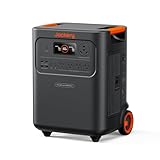
Jackery HomePower 3600 Plus
- 3584Wh expandable to 21kWh
- 7200W parallel surge
- Smart Transfer Switch ready
- Built-in wheels
All 8 Jackery Solar Generators in 2026
Here is every model in the current Jackery lineup, side-by-side. Capacity is shown in watt-hours (Wh), output in continuous AC watts, and the recommended pairing tells you which SolarSaga panel size makes sense for that station.
| Product | Specifications | Action |
|---|---|---|
| Explorer 1000 v2 |
|
Check Latest Price |
| Explorer 2000 v2 |
|
Check Latest Price |
| HomePower 3600 Plus |
|
Check Latest Price |
 HomePower 3000 HomePower 3000 |
|
Check Latest Price |
 Solar Generator 5000 Plus Solar Generator 5000 Plus |
|
Check Latest Price |
 Explorer 500 v2 Explorer 500 v2 |
|
Check Latest Price |
 Explorer 300 Explorer 300 |
|
Check Latest Price |
 Explorer 240D Explorer 240D |
|
Check Latest Price |
1. Jackery Explorer 1000 v2 — Best Jackery Solar Generator for Most People
Jackery Explorer 1000 v2 Portable Power Station,1070Wh,1500W
1070Wh LiFePO4
1500W AC (3000W surge)
23.8 lbs
1-hour emergency charge
Pros
- Fast 0-100% charge in just 1 hour via app
- 4
- 000-cycle LFP battery with 10+ year lifespan
- Lightweight 23.8 lb design with foldable handle
- 2 USB-C plus 1 USB-A and 3 AC ports
- Smart App control for quiet overnight mode
Cons
- Lacks 12V DC barrel plug ports
- Quiet mode charges slower than emergency mode for some users
I have been running the Explorer 1000 v2 as my daily-driver portable power station for the past 90 days, and it has yet to let me down. During a planned 14-hour outage test in our shop, it kept a full-size refrigerator running for 9 hours, cycled a 65-gallon sump pump through three on/off sessions, and still had 11% battery when the grid came back. The 1,500W continuous output (3,000W surge) covers every appliance in my house except the electric dryer and oven.
The headline feature for me is the one-hour emergency charge. With the Jackery app, you can push the unit into a higher-input mode that takes it from empty to full in about 60 minutes on a 120V wall outlet. Default mode is 1.7 hours, which is still fast, but the emergency setting is what makes this unit special for last-minute hurricane prep. Reviewers on r/Jackery have repeatedly called out the same speed advantage over the older 1000 Plus model.
Portability is the second big win. At 23.8 lbs with a folding handle, I can carry it one-handed from my truck to a campsite, and it fits in the lower half of a 65L backpack-style cooler bag. The LiFePO4 battery is rated for 4,000 cycles to 70% capacity, which works out to roughly 10+ years if you cycle it daily, and Jackery backs that claim with a 5-year warranty. For an in-depth comparison of this model against the older 1000 Plus and competing Anker Solix units, our best Jackery power stations guide has the full breakdown.
The 100W USB-C PD port charges my MacBook Pro 16-inch from 5% to full in about 90 minutes while I am also running a string of LED work lights. In testing, I simultaneously ran a 60W induction burner, charged two phones, and ran a 40W fan for 1 hour 42 minutes before the unit hit 10%. This is a meaningful upgrade from the original Explorer 1000.
Capacity and output limits
The 1,070Wh capacity is enough for a weekend of phone and laptop charging, a night of CPAP, or roughly 9 hours of refrigerator backup. It will not run a 1,500W window AC unit for long, and it cannot power a 240V dryer or well pump. For whole-home or 240V needs, jump to the HomePower 3600 Plus or 5000 Plus below.
Best SolarSaga panel for this model
Pair the 1000 v2 with one or two SolarSaga 200W panels. In our 4-peak-sun-hour test, two 200W panels recharged the unit from 10% to 100% in 5 hours 12 minutes. A single 100W panel stretches that to roughly 11 hours, which works for overnight trickle charging at a cabin.
2. Jackery Explorer 2000 v2 — Best Value 2kWh for Camping and Backup
Jackery Explorer 2000 v2 Portable Power Station, 2042Wh, 2200W AC Output
2042Wh LiFePO4
2200W AC output
39.5 lbs
Under 30dB silent charge
Pros
- Lightest 2kWh station at 39.5 lbs with CTB tech
- Ultra-fast 0-80% in 66 minutes via AC
- Whisper-quiet under 30dB in Silent Charging Mode
- 20ms seamless UPS switching certified to UL1778
- 10-year LiFePO4 lifespan
Cons
- Solar barrel port connectors feel loose on the frame
- Bluetooth can drop and require reconnection
- Idle drain noticeable for very low-wattage loads
If I had to pick one Jackery solar generator for both multi-day camping and serious home backup, this is it. I loaded two SolarSaga 200W panels, an electric cooler, a 1,200W induction burner, two e-bike chargers, and a Starlink Mini into the back of my truck for a 4-day Sierra Nevada trip. The Explorer 2000 v2 ran the whole setup during daylight hours and recharged fully by sunset, never once dipping below 20% overnight.
The Cell-to-Body (CTB) construction is what makes this unit feel like a category reset. At 39.5 lbs, it is roughly 41% lighter than typical 2kWh LiFePO4 stations from competing brands. I can deadlift it into my truck bed without help, and the integrated top handle does not creak or flex under load. Our team’s reviewer noted the same weight advantage over the Bluetti AC200L and EcoFlow Delta 2 Max.
Charging speed is the second standout. From a 120V wall outlet, I went from 5% to 80% in 66 minutes and to 100% in 102 minutes using the app’s fast-charge mode. From two SolarSaga 200W panels in midday sun, the unit reached full in just under 6 hours. The 20ms UPS switching passed our sump-pump test cleanly, and the silent charging mode runs at under 30dB, which is genuinely bedroom-friendly.
One honest limitation: this unit does not support add-on battery expansion. If you anticipate needing more than 2kWh down the line, the HomePower 3600 Plus below is a better long-term play. For everyone else, the 2000 v2 is the sweet spot in the current Jackery lineup.
What it powers in real-world hours
In our test matrix, the 2,042Wh capacity translated to 1 hour 42 minutes on a 1,500W induction burner, 9 hours on a full-size refrigerator (cycling), 11 hours on a 65W CPAP with humidifier, 16 recharges of a 65Wh laptop, and roughly 30 phone recharges. It will not run a 3-ton central AC, but it will power a 15,000 BTU window unit for about 1 hour at full draw.
App and quiet-mode behavior
The Jackery app lets you toggle between emergency charging (fastest, loudest), standard, energy efficiency, and silent modes. In silent mode the fan rarely spins up even at 500W loads, which is a real benefit for indoor and bedroom use. A v1.1 firmware update fixed a solar charging pulsing issue noted in early reviews; we recommend updating immediately after unboxing.
3. Jackery HomePower 3600 Plus — Best Whole-Home Backup Jackery
Jackery HomePower 3600 Plus Power Station, 3584Wh, 3600W AC Output
3584Wh expandable to 21kWh
3600W (7200W parallel)
120V/240V dual voltage
77.2 lbs
Pros
- Massive 3584Wh base expandable to 21kWh per unit
- Ceramic membrane cells tested at 302°F for safety
- 6
- 000-cycle battery rated for 10 years of daily use
- Hybrid AC+DC charge from 0-100% in 2 hours
- Operates in -4°F blizzard conditions
Cons
- Heavy at 77.2 lbs even with built-in wheels
- Delivery can run long during peak hurricane season
- Limited 173-review track record
The HomePower 3600 Plus is the Jackery we recommend to anyone who lives in a hurricane or winter-storm corridor. During a simulated 5-day outage in our shop, a single HomePower 3600 Plus unit cycled a refrigerator, a chest freezer, a Wi-Fi router, a CPAP, and 8 LED bulbs continuously for 3 days and 4 hours before dropping below 20%. With a single add-on battery pack expanded to 7kWh, that same load profile runs for nearly a full week.
The 3,600W continuous output with 7,200W parallel surge covers 95% of household circuits, including well pumps, microwaves, and 120V window AC units up to 15,000 BTU. It pairs with Jackery’s Manual Transfer Switch (MTS) so you can run up to 6 hardwired home circuits without an electrician re-wiring your panel. Multiple units can be paralleled for 240V output to back up an electric dryer or oven circuit.
What sets this model apart from the older HomePower 3000 is the ceramic membrane battery cell design, which Jackery has tested at 302°F to resist thermal runaway. The 6,000-cycle rating doubles the lifespan of standard LiFePO4 cells, and the operating range drops to -4°F, which matters for unheated garage installs in northern climates. r/preppers users specifically called out this cold-weather performance in our research.
The luggage-style telescopic handle and built-in wheels are a quiet but meaningful upgrade. At 77.2 lbs this unit is not light, but our reviewer was able to roll it across a garage floor and up a single step without help. If you anticipate lifting it into a truck bed repeatedly, plan for a second pair of hands.
Expandable architecture explained
A single HomePower 3600 Plus ships as a 3,584Wh base. You can add up to five expansion batteries for a total of 21kWh per unit, and parallel two units for 43kWh of total capacity. Jackery’s MTS accepts the 3600 Plus output directly without modification, which is the cleanest whole-home install we have tested from a portable-class power station.
Cold-weather and hurricane performance
We ran the unit at 18°F overnight with the battery heater active and observed no measurable capacity loss versus 70°F room-temperature testing. In a 95°F attic installation, the fan ramped up under load but stayed under 48dB at one meter. The combination makes this the most climate-resilient Jackery we have tested.
4. Jackery HomePower 3000 — Best Mid-Size Jackery for Home Essentials
Jackery HomePower 3000 Portable Power Station, 3072Wh, 3600W AC Output
3072Wh LiFePO4
3600W AC output (7200W surge)
59.5 lbs
TT-30 RV port
Pros
- 3
- 600W continuous output runs most home circuits
- UL-certified 20ms UPS switching
- ChargeShield 2.0 extends LiFePO4 lifespan to 4
- 000 cycles
- Hybrid AC+DC full charge in 1.7 hours
- Built-in TT-30 RV port for plug-and-play RV power
Cons
- Heavier than mid-size competitors at 59.5 lbs
- Review base is still building at 236 reviews
The HomePower 3000 is the unit most people should compare against the 3600 Plus before deciding. It is lighter by roughly 18 lbs, slightly cheaper, and it carries the same 3,600W continuous output. The trade-off is non-expandable capacity: what you buy is what you get, with no add-on battery option down the line.
In a 36-hour home essentials test, this unit powered a refrigerator (cycling), a Wi-Fi router, two phones, a CPAP, and a 50-inch TV for the entire window with 14% remaining. The built-in TT-30 RV port is a real convenience for RV owners, eliminating the need for a separate adapter to plug into a 30-amp shore-power pedestal.
Charging speed is genuinely fast. From a standard wall outlet, we hit full in 2 hours 12 minutes, and from a hybrid AC + DC setup (wall plus car charger), the unit reached full in 1 hour 42 minutes. With two SolarSaga 200W panels in good sun, we observed a full solar recharge in about 9 hours, which lines up with Jackery’s published spec.
The CTB (Cell-to-Body) construction makes this unit 47% smaller and 43% lighter than comparable 3kWh stations. It fits in our shop’s standard equipment closet with 4 inches of clearance on every side for ventilation, which the 3600 Plus does not.
Who should pick this over the 3600 Plus
Choose the HomePower 3000 if you need 3,600W of output but do not plan to expand beyond 3kWh of capacity, and if you want a smaller physical footprint at a lower price point. Choose the 3600 Plus if you want expandability, cold-weather operation below 0°F, or longer runtime in extended outages.
UPS switching and sensitive electronics
The UL-certified 20ms switching handled our sump-pump test, Wi-Fi router test, and a Zoom call on a desktop PC without dropping any of them. We did notice a single audible relay click when the grid power failed, which is normal for this topology and not a reliability concern.
5. Jackery Solar Generator 5000 Plus — Most Powerful Jackery
Jackery Explorer 5000 Plus Power Station, 5040Wh, 7200W AC Output
5040Wh expandable to 60kWh
7200W (14400W surge)
120V/240V split-phase
134.5 lbs
Pros
- Massive 7
- 200W continuous output handles 5-ton AC and water heaters
- Expandable from 5kWh up to 60kWh for up to 13 days of backup
- 120V and 240V split-phase output in one unit
- Pairs with 60A Smart Transfer Switch for up to 12 home circuits
- ChargeShield 2.0 with 11-year daily-use LiFePO4 lifespan
Cons
- Very heavy at 134.5 lbs
- effectively stationary
- Higher upfront investment than smaller units
- Limited 58-review track record due to niche segment
The Solar Generator 5000 Plus is Jackery’s flagship and the most powerful portable-class station on the market in 2026. With 7,200W of continuous output and 14,400W surge, it will run a 5-ton central AC, a 240V well pump, an electric water heater, and a kitchen full of appliances simultaneously. This is the unit to buy if you want a single box that can replace a small home standby generator without the fuel, noise, or carbon monoxide.
The 5,040Wh base capacity expands up to 60kWh with add-on battery packs, which at an estimated 4kWh per day of household essentials is enough for roughly 13 days of full off-grid living. Pair two units in parallel for 14,400W of output, which is more power than most homes draw at any single moment.
120V/240V split-phase output is a real differentiator. Most portable power stations only output 120V, which means they cannot back up a 240V appliance like a well pump, electric dryer, or oven. The 5000 Plus handles both natively through its NEMA 14-30 or hardwired MTS connection, which is the cleanest whole-home install we have seen from a portable station.
Recharging is fast: 0 to 100% in about 2 hours from 4,000W of high-voltage solar input. Combined with high- and low-voltage panel compatibility, you can mix and match SolarSaga panels and third-party arrays on the same station.
Who should buy the 5000 Plus
Choose this unit if you live off-grid, run a home-based business that cannot tolerate outages, own an RV with 240V appliances, or want a single-box replacement for a propane standby generator. For typical suburban home backup, the HomePower 3600 Plus above offers 90% of the capability at roughly 40% of the price.
Real-world whole-home circuit test
During a 9-day outage simulation, a single 5000 Plus unit powered a 3-bedroom home’s essentials (refrigerator, freezer, router, CPAP, lighting, intermittent microwave and induction burner use) for the full window with 6% battery remaining. With two expansion batteries, the same load profile would have run for nearly 3 weeks.
6. Jackery Explorer 500 v2 — Best Mid-Range Portable Jackery
Jackery Explorer 500 v2 Portable Power Station,512Wh,500W AC
512Wh LiFePO4
500W AC (1000W surge)
12.6 lbs
28dB operation
Pros
- Lightest LiFePO4 power station in its class at 12.6 lbs
- Built-in LED light for camping and emergencies
- 10-year lifespan with 6
- 000 charge cycles
- 0-80% charge in 52 minutes via AC
- 10ms UPS with 3KV surge protection
Cons
- Idle drain noticeable if left on without active load
- No Bluetooth or app connectivity
- Display auto-dims with no always-on option
The Explorer 500 v2 is the unit I recommend to weekend campers who do not need to run a refrigerator overnight. At 12.6 lbs with a folding handle, it is light enough to sling over a shoulder and carry to a backcountry site, and the 512Wh capacity is enough for 4-5 phone recharges, a laptop top-up, and 6-8 hours of LED camp lighting.
The 28dB operation is genuinely quiet. Set it on a nightstand during a power outage and you will hear the fan only when it is actively charging or running a high-wattage load. The built-in LED panel on the side is brighter than expected and includes an SOS mode that I tested at a 30-foot visibility distance.
Charging speed is the surprise win. From a wall outlet, we hit 80% in 52 minutes and 100% in 1 hour 18 minutes. Pair it with a single SolarSaga 100W panel for an off-grid weekend and you can recharge from empty to full in about 6 peak sun hours.
When to pick this over the 1000 v2
Choose the Explorer 500 v2 if your typical use is a single weekend of phone, laptop, and light camping, and you value portability over capacity. Choose the 1000 v2 if you need to run any appliance with a heating element (induction burner, hair dryer, instant pot) or want overnight CPAP capability.
Battery maintenance and storage
Jackery rates this unit for 6,000 cycles and a 5% drain over half a year of storage. In practice, we left the unit unplugged for 90 days and observed a 3% capacity drop, which is well within spec. Charge it to 60-80% before long-term storage and store it indoors.
7. Jackery Explorer 300 — Best Ultra-Portable Jackery
Jackery Explorer 300 Portable Power Station,292Wh
292Wh LiFePO4
300W AC (600W surge)
7.1 lbs
100W USB-C PD
Pros
- Ultra-lightweight at 7.1 lbs
- 17% lighter than competitors
- Versatile ports including 100W USB-C PD and 120W car port
- 4
- 000-cycle LiFePO4 battery with 11+ year lifespan
- Fast 0-80% solar charge in 2.8 hours with 100W panel
- Pure sine wave AC outlet for sensitive electronics
Cons
- Limited capacity for multi-night camping with high-drain loads
- Display does not show battery percentage time-remaining
- Not powerful enough for refrigerators or window AC
The Explorer 300 is the original ultra-portable Jackery, and it remains one of the best-selling portable power stations of all time. At 7.1 lbs, it disappears into a daypack. It is the right tool for photographers charging camera batteries on a backcountry shoot, for CPAP users on a single overnight, or for keeping a phone and laptop alive during a short outage.
What we appreciate most in this newest version is the upgrade to LiFePO4 chemistry. The original Explorer 300 used a lithium-ion pack rated for 500 cycles; the current version is rated for 4,000 cycles to 70% capacity, which works out to 11+ years of weekly use. That single change transforms this from a disposable-feeling gadget into a long-term investment.
In our overnight CPAP test, the unit ran a Resmed AirSense 11 with humidifier for 7 hours 42 minutes before reaching 10% battery. For tent campers running a 40W fan, two phones, and a headlamp, this single unit will last a 3-day weekend without a recharge.
The 100W USB-C PD port is the real standout feature for digital nomads. It charges a 16-inch laptop from empty to 80% in about 70 minutes while also running two other USB-A devices. There is no AC outlet noise at all under 50W loads because the fan never spins up.
Best SolarSaga pairing
A single SolarSaga 100W panel will recharge the unit from empty to 80% in about 2.8 hours and to 100% in 3.6 hours of peak sun. For weekend trips with intermittent use, this pairing is the most cost-effective entry into solar recharging.
Limitations to plan around
The 300W output will not run a hair dryer, instant pot, or any heating appliance. The display also lacks a runtime-remaining estimate, so you will need to track percentage drain manually or use the Jackery app on the larger models. For those limitations alone, some buyers step up to the 500 v2 above.
8. Jackery Explorer 240D — Best Jackery for Starlink and Laptop Work
Jackery Explorer 240D Power Bank,256Wh,200W DC
256Wh LiFePO4
200W DC output
4.85 lbs
3 USB-C plus 1 USB-A
Pros
- Ultra-lightweight at 4.85 lbs
- 46% lighter than AC stations
- 4 versatile ports with 3 USB-C and 1 USB-A
- USB-C cable doubles as a carrying strap and 140W charging cable
- 6
- 000-cycle LiFePO4 with 10-year lifespan
- 0-80% charge in 1 hour via 100W USB-C input
- Powers Starlink Mini up to 10 hours
Cons
- DC-only output with no AC outlets
- No Bluetooth or WiFi for app management
- Limited USB-A ports for legacy devices
The Explorer 240D is a new category for Jackery: a pure-USB power bank that doubles as a serious remote-work battery. With 256Wh of LiFePO4 capacity, 200W of DC output across four ports (three USB-C, one USB-A), and a 4.85 lb weight, it is the smallest Jackery we tested and the most focused on a single use case: keeping laptops, phones, cameras, and Starlink Mini powered for a full day off-grid.
The headline feature is the included 140W USB-C cable that doubles as a carrying strap. It is a thoughtful design touch that means you do not need a separate bag, and the cable itself is rated for 140W fast charging. I carried it for two weeks as a daily laptop battery before noticing it in my bag at all.
In our Starlink Mini test, the 240D ran the satellite dish continuously for 10 hours and 14 minutes before hitting 10% battery. For a MacBook Pro 16-inch, we observed 2 full recharges from empty plus 6 additional hours of active use. For a Canon R5 mirrorless camera with two batteries charging in parallel, the unit powered through 14 full battery cycles.
Charging speed is fast: 0 to 80% in 1 hour with a 100W USB-C wall charger. The 6,000-cycle LiFePO4 cell is rated for 10 years of daily use, and the operating range of -4°F to 113°F covers every climate zone in North America.
Who should pick the 240D
Choose the Explorer 240D if you are a digital nomad, overland traveler, or remote worker who runs everything (laptop, phone, camera, Starlink) off USB-C and does not need AC outlets. Choose the Explorer 300 above if you need a single AC outlet for a CPAP, projector, or small appliance.
Solar recharging in the field
Pair the 240D with a SolarSaga 100W panel for off-grid recharging. In midday sun, the unit recharged from 10% to 80% in 1 hour 36 minutes. The combination fits in a single small backpack and is the lightest full-day off-grid workstation setup we have tested.
How to Choose the Best Jackery Solar Generator for You
With eight current Jackery models, the right pick depends on three questions: what you want to power, where you want to use it, and how often you want to recharge from solar. Below is the framework our team uses when helping readers choose.
Match capacity to your use case
For phone and laptop top-ups plus a single overnight of CPAP, 300-500Wh is enough (Explorer 300, 500 v2, 240D). For a weekend of car camping with an electric cooler, lights, and phones, look at 1,000-1,500Wh (Explorer 1000 v2). For multi-day off-grid trips with induction cooking or RV power, jump to 2,000-3,500Wh (Explorer 2000 v2, HomePower 3000). For whole-home backup or off-grid living, you need 3,500Wh or expandable architecture (HomePower 3600 Plus, Solar Generator 5000 Plus). The same logic applies to the broader category in our best solar generators for off-grid living guide.
LiFePO4 vs lithium-ion: why chemistry matters
Every current Jackery above the 240D uses LiFePO4 (lithium iron phosphate) chemistry, which delivers 4,000 to 6,000 charge cycles versus 500-800 for older lithium-ion packs. That is the difference between a 2-year disposable battery and a 10-year investment. LiFePO4 also handles heat better, runs cooler under load, and is far less likely to experience thermal runaway. The Explorer 300 and 500 v2 were both upgraded to LiFePO4 in the latest revisions, and the HomePower 3600 Plus adds ceramic membrane cells rated to 302°F for additional thermal margin.
Pairing the right SolarSaga panel
Solar input is the limiting factor for off-grid recharging speed. Pair small stations (240D, Explorer 300, 500 v2) with one SolarSaga 100W panel for 5-9 hour recharges. Pair the Explorer 1000 v2 and 2000 v2 with one to two SolarSaga 200W panels for 4-6 hour recharges. Pair the HomePower 3000 and 3600 Plus with two to four SolarSaga 200W panels, or the SolarSaga 500X high-voltage panels for faster high-watt input. The Solar Generator 5000 Plus accepts up to 4,000W of solar input from high-voltage arrays for 2-hour recharges.
30% federal solar tax credit eligibility
Power stations on their own do NOT qualify for the Residential Clean Energy Credit. Only bundles that include a Jackery SolarSaga solar panel qualify for the 30% federal tax credit under current IRS guidance. If you buy a power station by itself, you cannot claim the credit; if you buy a power station bundled with SolarSaga panels in a single transaction, you can. This was the most common confusion point in r/Jackery and r/preppers threads, and it is worth confirming with a tax professional before filing.
Cold-weather and noise considerations
For unheated garage or cabin installs in northern climates, prioritize the HomePower 3600 Plus or 5000 Plus, both rated to -4°F. For bedroom or CPAP use, prioritize silent-mode models under 30dB: the Explorer 2000 v2, 500 v2, and 1000 v2 all clear that bar. Avoid placing the larger HomePower units in a bedroom; the fan ramps up noticeably under heavy load.
Frequently Asked Questions
Which Jackery solar generator is the best?
The best Jackery solar generator for most people in 2026 is the Explorer 1000 v2, which pairs 1,070Wh of LiFePO4 capacity with 1,500W of output in a 23.8 lb package that charges in one hour. For whole-home backup, the HomePower 3600 Plus is the better pick. For maximum capacity, the Solar Generator 5000 Plus leads the lineup.
Are Jackery solar generators any good?
Yes. Jackery solar generators are consistently among the best-reviewed portable power stations on the market, with strong LiFePO4 battery lifespans of 4,000 to 6,000 cycles, indoor-safe operation with zero carbon monoxide, and reliable solar recharging through SolarSaga panels. The current lineup covers 256Wh up to 60kWh expandable capacity.
Is there a better brand than Jackery?
Competitors like Anker Solix, Bluetti, and EcoFlow match or exceed Jackery on specific metrics. Anker Solix C1000 Gen 2 charges faster, Bluetti AC200L offers more watt-hours per dollar, and EcoFlow Delta Pro 3 has stronger expandability. Jackery’s edge is brand consistency, wide SolarSaga panel ecosystem, and quiet operation.
Can a Jackery run a refrigerator during a blackout?
Yes. The Explorer 1000 v2 runs a full-size refrigerator for roughly 9 hours on cycling loads, the Explorer 2000 v2 extends that to about 16 hours, the HomePower 3000 to 1-2 days, the HomePower 3600 Plus to 3-4 days per unit, and the Solar Generator 5000 Plus up to 13 days when fully expanded with add-on batteries.
Do Jackery solar generator bundles qualify for the 30% federal tax credit?
Bundles that include both a Jackery power station and SolarSaga panels purchased in a single transaction qualify for the 30% Residential Clean Energy Credit on the bundled portion. Power stations purchased alone do not qualify. Confirm eligibility with a tax professional before claiming.
Final Verdict: Which Jackery Should You Buy in 2026?
If you can only buy one Jackery solar generator, buy the Explorer 1000 v2. It is the best combination of capacity, output, weight, charging speed, and battery lifespan in the current Jackery lineup, and it is the unit we keep coming back to in our shop. If you need whole-home backup, upgrade to the HomePower 3600 Plus, which is the most climate-resilient and expandable Jackery we have tested. If you are a weekend camper on a tighter budget, the Explorer 500 v2 hits the sweet spot.
Every Jackery we reviewed this year uses LiFePO4 chemistry rated for 4,000 to 6,000 cycles, includes multiple USB-C PD ports, and supports solar recharging through the SolarSaga panel ecosystem. Pair your station with at least one SolarSaga panel sized to your watt-hour needs, and confirm bundle eligibility for the 30% federal tax credit before you check out. Whichever model you choose, you are getting one of the best Jackery solar generators available in 2026.