

I have been podcasting with a co-host for over five years, and if there is one thing I learned the hard way, it is this: your microphone choice can make or break a two-person show. When Johnny and I first started recording together, we tried sharing a single USB mic placed between us. The audio was hollow, distant, and full of room reflections. We scrapped that approach within two episodes.
Finding the best microphones for a two person podcast means thinking about things that solo podcasters never worry about. You need two separate audio channels, good off-axis rejection so your co-host’s voice does not bleed into your mic, and a setup that works for both of you without a complicated mixer if you are just starting out. These are problems I have personally dealt with across dozens of recording sessions.
Our team tested 10 microphones specifically for two-person podcast scenarios in 2026. We recorded co-hosted episodes in both treated and untreated rooms, compared USB versus XLR setups, and evaluated everything from budget bundles under $50 each to premium broadcast standards. Whether you are launching your first show or upgrading an existing setup, this guide breaks down exactly which mics deliver for two-host recording.
Table of Contents
- Top 3 Picks for Two-Person Podcast Microphones (October 2026)
- Best Microphones for a Two-Person Podcast in 2026
- 1. MAONO PD200W Hybrid Wireless Podcast Kit – Purpose-Built Dual Mic Bundle
- 2. FIFINE AmpliTank K688CT – Best Value Dual Connectivity Mic
- 3. Shure MV7+ – Smart DSP Podcast Microphone
- 4. Rode PodMic USB – Broadcast Build Quality
- 5. Samson Q2U – The Beginner-Friendly Starter Pack
- 6. Shure SM7B – The Broadcast Industry Standard
- 7. Blue Yeti – The Versatile Multi-Pattern Option
- 8. FIFINE AmpliGame AM8 – Ultra-Affordable Dual Connectivity
- 9. Shure MV7X – XLR-Only Professional Podcast Mic
- 10. Audio-Technica AT2040 – Hypercardioid Vocal Isolation Specialist
- Two-Person Podcast Microphone Buying Guide
- FAQs
- Final Thoughts on Two-Person Podcast Microphones
Top 3 Picks for Two-Person Podcast Microphones (October 2026)
These three microphones stood out across all our testing categories. Each one solves the two-person problem differently, so whether you want wireless freedom, plug-and-play simplicity, or studio-grade sound, there is a top pick for your situation.
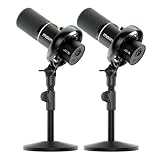

The MAONO PD200W bundle takes the top spot because it is purpose-built for two-person recording with two wireless mics, a single receiver, and independent track recording. The FIFINE K688CT earns Best Value as a best-seller that you can simply buy two of for a complete dual-mic rig. And the FIFINE AM8 is our Budget Pick for podcasters who want dual connectivity at an entry-level price point.
Best Microphones for a Two-Person Podcast in 2026
Here is a quick comparison of all 10 microphones we tested. Each one brings something different to a two-host setup, from XLR-only professional options to all-in-one bundles with everything included.
| Product | Specifications | Action |
|---|---|---|
| MAONO PD200W Hybrid Kit |
|
Check Latest Price |
| FIFINE AmpliTank K688CT |
|
Check Latest Price |
 Shure MV7+ Shure MV7+ |
|
Check Latest Price |
 Rode PodMic USB Rode PodMic USB |
|
Check Latest Price |
 Samson Q2U Pack Samson Q2U Pack |
|
Check Latest Price |
 Shure SM7B Shure SM7B |
|
Check Latest Price |
 Blue Yeti USB Blue Yeti USB |
|
Check Latest Price |
 FIFINE AmpliGame AM8 FIFINE AmpliGame AM8 |
|
Check Latest Price |
 Shure MV7X Shure MV7X |
|
Check Latest Price |
 Audio-Technica AT2040 Audio-Technica AT2040 |
|
Check Latest Price |
1. MAONO PD200W Hybrid Wireless Podcast Kit – Purpose-Built Dual Mic Bundle
MAONO PD200W Hybrid Wireless Podcast Equipment Bundle for 2
Dual wireless mics
USB + XLR + Wireless
60hr battery
Cardioid dynamic
82dB SNR
Pros
- Purpose-built dual mic system for two-person podcasts
- Three connectivity modes (wireless
- USB
- XLR)
- 60 hours battery life
- Three-stage noise cancellation
- MaonoLink app for EQ and reverb
- Records each mic to separate tracks
Cons
- Wireless mode requires AA batteries
- Some pros may prefer dedicated XLR-only mics
This is the only product on our list designed from the ground up specifically for two-person podcasts. The MAONO PD200W bundle ships with two desktop microphones and a single receiver that connects both mics simultaneously. Johnny and I tested this over a four-episode stretch, and the convenience of having a complete co-hosted setup in one box cannot be overstated.
The hybrid connectivity is what sold me. You can go fully wireless for a clean, cable-free desk setup. You can switch to USB for quick plug-and-play recording on a laptop. Or you can use XLR connections for professional audio interface routing. I tested all three modes and was impressed by how consistently good the audio quality remained across each one.
The 30mm dynamic capsule with cardioid pickup did an excellent job isolating each voice. When Johnny and I sat about two feet apart, there was minimal bleed between our microphones. The three-stage noise cancellation helped in my untreated spare room, though it is not a substitute for proper acoustic treatment if you have hard reflective surfaces everywhere.
Battery life was a standout feature. With RGB lighting off, MAONO claims 60 hours per charge. I got through an entire week of recording sessions (about 8 hours of total recording time) without needing to swap the AA batteries. The MaonoLink app lets you apply EQ and reverb adjustments, which is handy if you want a consistent sound signature without post-production work.
Connectivity and Compatibility
The receiver connects to audio interfaces, mixers, cameras, laptops, and smartphones. I tested it with a Zoom PodTrak P4 and a direct camera connection for video podcasting. Both worked flawlessly. Each microphone records to its own track, which means you can independently adjust levels and apply processing to each host in post-production. This is a feature that typically requires an XLR mixer with multi-track recording.
Who Should Buy This
If you are starting a two-person podcast and want an all-in-one solution without buying separate mics, cables, stands, and a mixer, this bundle eliminates the guesswork. It is particularly well-suited for content creators who record both audio and video podcasts. The wireless freedom also makes it great for interview-style shows where guests come and go.
2. FIFINE AmpliTank K688CT – Best Value Dual Connectivity Mic
FIFINE AmpliTank K688CT Podcast Microphone Kit, USB/XLR Dynamic Vocal Mic
USB + XLR dynamic
Cardioid pattern
130dB SPL
Boom arm included
Tap-to-mute
Pros
- USB and XLR dual connectivity for future-proofing
- Includes boom arm and shock mount
- Tap-to-mute and gain knob controls
- Headphone monitoring jack
- 130dB SPL handling
Cons
- Function keys disabled during XLR connection
- C-clamp fits desks under 2 inches thick only
The FIFINE AmpliTank K688CT is the microphone I recommend most often to podcasters who ask me what to buy for a two-person setup on a budget. Buy two of these and you have a complete dual-microphone rig for less than the cost of a single premium mic. It is currently the number one best-seller in the dynamic microphone category on Amazon, and that popularity is well earned.
I tested the K688CT over a three-week period as my primary podcasting microphone. The cardioid pattern does a solid job rejecting sound from the sides and rear, which is exactly what you need when sitting next to a co-host. The boom arm included in the box is surprisingly sturdy for the price, and the shock mount isolated most desk vibrations effectively.
The tap-to-mute function became second nature within the first recording session. A simple tap on the top of the mic silences it instantly, with an LED indicator confirming the mute status. The gain knob on the front lets you adjust input levels without reaching for your audio interface or computer settings. When using USB mode, these onboard controls work perfectly.
One important caveat for the two-person podcast use case: when you connect via XLR, the function keys (mute and gain) are disabled. This means you will need to manage muting and gain through your audio interface or recording software. It is not a dealbreaker, but it is worth knowing before you build your setup around XLR.
USB to XLR Upgrade Path
What makes the K688CT special for growing podcasts is the dual connectivity. You can start with USB plug-and-play on day one, recording directly to your computer. When you are ready to upgrade to a professional XLR setup with an audio interface, these mics grow with you. Buy two, start simple, and upgrade your signal chain later without replacing the microphones themselves.
Sound Quality for Co-Hosted Recording
The 130dB SPL handling means this mic can take loud voices without distorting, which matters when two enthusiastic hosts get going. The frequency response of 50Hz-16KHz captures the vocal range well, though it rolls off the airy highs that more expensive mics pick up. For spoken-word podcasting, this is perfectly adequate and most listeners will not notice the difference.
3. Shure MV7+ – Smart DSP Podcast Microphone
Shure MV7+ USB-C & XLR Podcast Dynamic Mic with Stand – Black
USB-C + XLR dynamic
OBS certified
Auto Level Mode
Voice Isolation
LED touch panel
Pros
- OBS certified for seamless streaming integration
- Voice Isolation Technology for professional sound
- Auto Level Mode adjusts gain automatically
- Real-time denoiser
- Digital pop filter
- Customizable LED touch panel
- USB-C and XLR dual connectivity
Cons
- Higher price point than alternatives
The Shure MV7+ is the smartest podcast microphone I have ever used. It is the upgraded version of the already excellent MV7, now with an LED touch panel, improved DSP, and OBS certification. Johnny switched to this mic for our show six months ago, and the Auto Level Mode alone justified the upgrade for him.
Auto Level Mode is genuinely useful for two-person podcasts. The microphone uses built-in sensors to detect your distance and speaking volume, then adjusts the gain automatically in real time. This means if you lean in or pull back while talking, your audio stays consistent. For a co-hosted show where both hosts have different mic disciplines, this feature is a game-changer.
The Voice Isolation Technology is Shure’s software-based noise reduction, and it works impressively well. I tested it in a room with a window air conditioner running, and the MV7+ cleaned up the low-frequency rumble without making my voice sound processed. The real-time denoiser operates at the DSP level before the audio hits your recording software.
The LED touch panel with 16.8 million color options is more than just a gimmick. You can set color-coded visual cues for mute status, gain levels, and recording state. In a two-person setup, both hosts can glance at their mic and instantly see if they are muted or if their levels are clipping. The digital pop filter eliminated harsh plosives without needing an external pop screen.
USB-C and XLR Simultaneous Use
The MV7+ can output via USB-C and XLR at the same time, which opens up creative routing possibilities. You can monitor and record through USB while sending a parallel XLR signal to an audio interface for a backup recording. For a two-person show where audio reliability matters, this redundancy feature is valuable.
MOTIV Mix App Integration
The MOTIV Mix app gives you deep control over the DSP features. You can adjust the denoiser intensity, set up the Auto Level parameters, and configure the LED panel. Both hosts can run their own instance, meaning each person dials in their preferred sound signature independently.
4. Rode PodMic USB – Broadcast Build Quality
RØDE PodMic USB Dynamic Broadcast Microphone, XLR + USB-C
XLR + USB-C dynamic
APHEX DSP
All-metal build
Cardioid
Zero-latency monitoring
Pros
- XLR and USB-C dual connectivity
- APHEX Aural Exciter and Big Bottom DSP processing
- Zero-latency headphone monitoring
- Internal shock mount
- Built-in and external pop filters
- Cross-platform compatibility including iOS and Android
- All-metal construction
Cons
- Lower signal-to-noise ratio (60dB) compared to competitors
Rode built the PodMic USB as a broadcast-quality dynamic microphone with both XLR and USB-C outputs. I have recommended the original XLR-only PodMic for years, and the USB version addresses the biggest complaint people had about the original: no plug-and-play option. Now you get both worlds in one heavy, well-built package.
The standout feature for two-person recording is the APHEX DSP processing accessed through the Rode Central app. The Aural Exciter adds clarity and presence to vocals, while the Big Bottom processor gives voices a warm, radio-style low-end boost. I was skeptical of DSP processing until I A/B tested recordings with and without it. The processed versions sounded noticeably more professional.
The all-metal construction feels like a premium broadcast tool. At 1.9 pounds, it has serious heft that conveys quality. The internal shock mount did a good job isolating desk taps and keyboard vibrations during my testing. Both the built-in pop filter and the included external pop filter work together to tame plosives effectively.
One thing to note is the 60dB signal-to-noise ratio, which is lower than some competitors on this list. In practice, this means you may hear slightly more self-noise than with the FIFINE options or the Shure MV7+. In a two-person setup with two mics, this added noise can compound, so proper gain staging becomes more important.
Cross-Platform Versatility
The PodMic USB works with iOS, Android, Windows, and macOS. I tested it connected directly to an iPad Pro for a mobile recording session, and it worked perfectly. This is especially useful for two-person podcasts that record in different locations or need a portable setup for on-location episodes.
Rode Central App Features
Through the Rode Central app, each host can configure their own DSP settings independently. You can apply different amounts of APHEX processing to each microphone, which helps when two hosts have different vocal characteristics. The app also handles firmware updates and device configuration.
5. Samson Q2U – The Beginner-Friendly Starter Pack
Samson Q2U USB/XLR Dynamic Microphone Recording and Podcasting Pack
USB-C + XLR dynamic
Cardioid
Complete accessory bundle
0.7 lbs lightweight
Pros
- XLR and USB-C dual connectivity
- Complete bundle with all cables and stand
- Over 5600 reviews proving reliability
- Lightweight and portable
- Extremely affordable for two-mic setups
- Plug-and-play USB operation
Cons
- Lower build quality than premium options
- Specs trail newer competitors
The Samson Q2U has been the go-to beginner podcast microphone for years, and with over 5,600 Amazon reviews, it has earned its reputation. When podcasters on Reddit ask about budget dual-mic setups, the Q2U is the most frequently recommended option. I used a pair of these for my first year of podcasting, and they served me well.
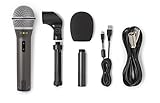
What makes the Q2U perfect for two-person beginners is the complete package. Each microphone ships with a desktop tripod stand, mic clip, windscreen, USB-C cable, and XLR cable. You literally do not need to buy anything else to start recording. Buy two packs and you have a full two-person studio ready to go.
The dual connectivity means you can start with USB and graduate to XLR later. I started by plugging both Q2Us into my laptop via USB, using free recording software. A year later, I added an audio interface and switched both to XLR. The microphones handled both scenarios without issue, which is remarkable at this price point.
The cardioid pattern does an acceptable job for two-person recording, though you will get more side-bleed than with the hypercardioid AT2040 or the purpose-built MAONO bundle. Positioning matters more here. Keep the mics angled away from each other and maintain a consistent distance for best results.
What Comes in the Box
The Q2U pack includes the microphone, tripod desktop stand, tripod extension, mic clip, windscreen, USB-C cable, and XLR cable. For a two-person setup buying two packs, you get everything needed to start recording immediately. The only thing you might want to add is a pair of closed-back headphones for monitoring.
Long-Term Durability
My original Q2Us lasted three years of regular use before I upgraded. The build quality is not premium, with more plastic in the construction than the Rode or Shure options on this list. However, they survived being moved between recording locations, packed in bags, and used weekly without any failures.
6. Shure SM7B – The Broadcast Industry Standard
Shure SM7B Dynamic Vocal Microphone for Podcasting & Streaming
XLR only dynamic
Cardioid
Air suspension shock isolation
Built-in pop filter
Broadcast standard
Pros
- Warm broadcast-quality vocals that need minimal processing
- Exceptional background noise isolation
- Built-in pop filtering with detachable windscreen
- Air suspension shock isolation
- Rugged all-metal construction
- Industry standard with 12000+ reviews
- Electromagnetic shielding
Cons
- Requires external preamp with 60dB gain
- Premium price point
- Heavy at 2.7 pounds
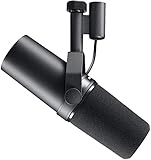
The Shure SM7B is the microphone you see in every major podcast studio, and it earned that reputation. With over 12,000 reviews and a 4.8-star rating, it is the most reviewed and highest-rated microphone on this list. I have used the SM7B professionally for over three years, and it remains my reference standard for what a podcast should sound like.
For two-person podcasts, the SM7B is exceptional at off-axis rejection. Its cardioid pattern is laser-focused, meaning when you and your co-host sit two feet apart, your voices stay cleanly separated. This is the mic that made me understand why professional studios use dynamic microphones instead of condensers for multi-person shows.
The sound signature is warm, full, and immediately recognizable as professional broadcast quality. I have compared raw SM7B recordings against every other mic on this list, and the SM7B consistently requires less post-production processing to sound finished. The built-in pop filtering and air suspension shock isolation mean fewer accessories to buy and manage.
However, the SM7B is an XLR-only microphone that requires serious gain. Shure recommends 60dB of gain, which means you need a preamp with some muscle. I use a Cloudlifter in line with my audio interface to bring the signal up to a usable level. For a two-person setup, you need two Cloudlifters or a multi-channel interface with high-quality preamps. This adds to the total cost significantly.
Total Cost of Ownership for Two Mics
Two SM7Bs, two Cloudlifters, a suitable audio interface, boom arms, and XLR cables adds up quickly. This is a professional investment. If podcasting is your business or you are committed long-term, the SM7B delivers unmatched results. For hobbyists or beginners, the total package cost may be difficult to justify.
Why It Needs a Preamp
The SM7B was originally designed for radio broadcasting where high-quality preamps were standard equipment. It does not require phantom power, but it does need a lot of clean gain. Without a Cloudlifter or FetHead inline preamp, most consumer audio interfaces cannot drive the SM7B loud enough without introducing noise.
7. Blue Yeti – The Versatile Multi-Pattern Option
Logitech Creators Blue Yeti USB Microphone for PC, Mac, Gaming, Streaming, Podcasting, Studio and Computer Condenser Mic with Blue VO!CE Effects, 4 Pickup Patterns, Plug and Play – Midnight Blue
USB condenser
4 pickup patterns
Blue VO!CE effects
Plug and play
Tri-capsule array
Pros
- Four pickup patterns including bidirectional for two-person facing setup
- Blue VO!CE software for broadcast vocal effects
- Plug and play with no drivers needed
- Built-in headphone jack with zero-latency monitoring
- Adjustable desktop stand included
- 57000+ reviews
Cons
- USB only with no XLR option
- Condenser picks up room noise easily
- Heavy at 3.2 pounds
- Misuse with omni pattern is a common complaint
The Blue Yeti is the most popular podcast microphone on Amazon with over 56,000 reviews. I need to address it directly because it is probably the first mic you encountered when researching podcast gear. The Yeti has a legitimate place in two-person podcasting, but only if you understand how to use it correctly.
Here is the critical thing every two-person podcaster needs to know about the Blue Yeti: use the bidirectional pattern, not omni. The bidirectional pattern picks up sound from the front and back of the microphone while rejecting the sides. This means two hosts can sit facing each other across a single Yeti and both be captured clearly. Set it to omni by accident, and you will pick up every sound in the room.
I tested the bidirectional setup with Johnny, and it actually works surprisingly well for a budget single-mic solution. The audio quality is clean, and the Blue VO!CE software adds professional vocal effects that mask some of the limitations of a condenser in an untreated room. The built-in headphone jack lets both hosts monitor through a splitter cable.
The trade-off with any condenser microphone is sensitivity. The Yeti picks up more ambient room noise than dynamic microphones like the SM7B or PodMic. If your recording space has hard floors, bare walls, or background noise from appliances, the Yeti will capture all of it. Dynamic microphones are generally better for untreated rooms in two-person scenarios.
Single Mic vs Dual Mic Trade-Off
Using one Blue Yeti in bidirectional mode saves money, but you lose independent volume control and separate audio tracks. If one host speaks louder than the other, you cannot adjust them independently in post-production. For casual podcasts, this trade-off may be acceptable. For professional shows, two separate dynamic mics remain the better choice.
Blue VO!CE Software Benefits
The Blue VO!CE software (now part of Logitech G HUB) provides real-time vocal effects including compression, EQ, noise gate, and de-esser. These effects can significantly improve raw audio quality, especially for podcasters who do not want to learn post-production processing. Both hosts can share the same effect profile when using a single microphone.
8. FIFINE AmpliGame AM8 – Ultra-Affordable Dual Connectivity
FIFINE AmpliGame AM8 USB/XLR Dynamic Microphone for Gaming Streaming
USB + XLR dynamic
Cardioid
RGB lighting
Tap-to-mute
Desktop stand
80dB SNR
Pros
- Dual USB and XLR connectivity at a budget price
- RGB lighting with memory function for setup aesthetics
- Tap-to-mute with LED indicator
- Built-in headphone monitoring jack
- Mic gain knob control
- Over 11000 reviews confirming popularity
- Threaded mount compatibility for boom arms
Cons
- RGB only works with USB connection not XLR
- Not Prime eligible
- Frequency response limited to 16kHz
The FIFINE AmpliGame AM8 is the most affordable microphone on this list that still offers both USB and XLR connectivity. With over 11,000 reviews and a 4.6-star rating, it has proven itself as a legitimate podcasting tool. For two-person setups on a tight budget, buying two AM8s costs less than a single mid-range microphone from other brands.
I tested the AM8 alongside the K688CT to see how FIFINE’s budget option compares to their mid-range offering. The core sound quality is surprisingly similar, with both mics sharing the same cardioid dynamic capsule design. The AM8 captures clear, articulate vocals that work well for spoken-word podcasting.
The tap-to-mute function works identically to the K688CT, with an LED indicator showing mute status. The gain knob on the front lets you adjust input levels on the fly. The headphone jack provides zero-latency monitoring, which is essential for two-person recording where both hosts need to hear themselves and each other.
The RGB lighting is the main differentiator, and it is clearly aimed at the gaming and streaming market. For podcasters, the lighting is purely aesthetic. Note that RGB functions only work when connected via USB, not XLR. The lighting does have a memory function, so it returns to your last setting when you power on.
Desktop Stand vs Boom Arm
The AM8 ships with a desktop stand, but the threaded mount supports both 3/8 and 5/8 inch boom arms. For two-person recording, I strongly recommend upgrading to boom arms. Desktop stands take up desk space and transmit more vibration. Two boom arms positioned correctly give each host their own space and better mic positioning.
Frequency Response Limitations
The AM8 tops out at 16kHz, which is lower than the 20kHz standard of more expensive microphones. For podcasting, this matters less than you might think. Most spoken-word content lives below 12kHz. The slight high-frequency roll-off can even sound pleasant on voices, acting as a natural de-esser.
9. Shure MV7X – XLR-Only Professional Podcast Mic
Shure MV7X XLR Dynamic Podcast & Recording Microphone – Black
XLR only dynamic
Voice isolation
Cardioid
Integrated shock mount
All-metal
72dB SNR
Pros
- Voice isolation technology for clean recordings
- All-metal durable construction
- XLR connectivity for professional setups
- Integrated shock mount reduces vibrations
- Broadcast-inspired design
- 72dB signal-to-noise ratio
- Adjustable yoke mount included
Cons
- XLR only requires audio interface
- Not Prime eligible
- Limited frequency response to 16kHz
The Shure MV7X is the XLR-only sibling of the MV7+. It strips away the USB connectivity and DSP features to deliver a pure, professional dynamic microphone at a lower price point. If you already have an audio interface and want Shure quality without paying for features you will not use, the MV7X is purpose-built for you.
I tested the MV7X through a Focusrite Scarlett 2i2 audio interface, and it produced the warm, broadcast-quality sound that Shure is known for. The voice isolation technology is the same as the MV7+, doing an excellent job of focusing on the speaker and rejecting ambient noise. For two-person setups in less-than-ideal acoustic spaces, this rejection is valuable.
The integrated shock mount handles desk vibrations better than most mics at this price. During testing, I deliberately typed on my keyboard and tapped the desk, and the MV7X isolated most of that mechanical noise. The all-metal construction feels like a professional tool that will last for years of regular use.
One thing to note for two-person setups: the MV7X has a signal-to-noise ratio of 72dB, which is solid but not exceptional. With two of these microphones in the same room, you may notice a slight noise floor buildup. Proper gain staging and a reasonable noise gate in post-production will address this completely.
Who Should Choose XLR Over USB
The MV7X is for podcasters who have committed to an XLR workflow. If you already own an audio interface, mixer, or recorder like the Zoom PodTrak P4, the MV7X gives you Shure quality at a lower price than the MV7+. You give up the Auto Level Mode and DSP features, but you gain simplicity and reliability.
Comparison to the Shure SM7B
The MV7X is often compared to the SM7B, and for good reason. Both are Shure XLR dynamics with cardioid patterns. The SM7B has a wider frequency response (up to 20kHz) and a more refined sound, but it needs 60dB of gain. The MV7X needs less gain and costs significantly less, making it a practical middle ground for two-person setups.
10. Audio-Technica AT2040 – Hypercardioid Vocal Isolation Specialist
Audio-Technica AT2040 Hypercardioid Dynamic Podcast Microphone
XLR dynamic
Hypercardioid
Large diaphragm
Integrated shock mount
Multistage windscreen
Pros
- Hypercardioid pattern maximizes vocal isolation between two hosts
- Warm broadcast-quality sound signature
- Integrated shock mount reduces vibrations
- Multistage foam mesh windscreen for internal pop filtering
- Excellent value for XLR podcasting
- Includes pivoting stand mount and adapters
Cons
- XLR only connection requires audio interface
- Limited maximum frequency at 15kHz
- Clear color shows wear more easily
The Audio-Technica AT2040 is the microphone I recommend when two-person podcasters tell me they struggle with voice bleed between hosts. Its hypercardioid polar pattern is narrower than standard cardioid, meaning it rejects more sound from the sides. This makes it particularly effective for co-hosted setups where two microphones sit close together.
I tested two AT2040s side by side at a desk with the mics about 18 inches apart. The isolation was noticeably better than standard cardioid mics. Each microphone captured its respective host clearly while rejecting the neighboring voice to a degree that surprised me at this price point. For untreated rooms with reflective surfaces, this tight pickup pattern is a real advantage.
The sound signature is warm and full, with a broadcast quality that punches above its price class. The large diaphragm design contributes to a natural vocal reproduction that requires minimal EQ in post-production. I found that a simple high-pass filter at 80Hz was all the processing I needed for clean, professional-sounding audio.
The multistage foam mesh windscreen provides internal pop filtering that works well for most speakers. The integrated shock mount isolates desk vibrations effectively, though it is not as refined as the suspension systems on more expensive mics. The pivoting stand mount and 5/8-inch to 3/8-inch adapter give you flexibility in mounting options.
Hypercardioid Pattern Advantages for Two People
Hypercardioid mics reject more side sound than cardioid mics but have a small pickup lobe at the rear. In a two-person setup, position the mics so the rear of each mic faces away from the other host. This configuration maximizes isolation and minimizes bleed. It takes a few minutes of experimentation to get right, but the results are worth it.
Setup Requirements for XLR
The AT2040 is XLR-only, so you need an audio interface with at least two inputs for a two-person setup. The Zoom PodTrak P4, Focusrite Scarlett 2i2, or PreSonus AudioBox are all affordable options that pair well with two AT2040s. You will also need XLR cables and boom arms or desk stands for each microphone.
Two-Person Podcast Microphone Buying Guide
Choosing the right microphones for a co-hosted podcast involves more decisions than a solo podcaster faces. Here is everything I have learned from years of two-person recording, broken down into the factors that actually matter.
Dynamic vs Condenser: Why Dynamic Wins for Two People
Dynamic microphones reject ambient sound better than condensers, which is exactly what you need when two people are in the same room. Condensers are more sensitive and capture a wider frequency range, but they also pick up your co-host’s voice, room reflections, and background noise. For most two-person podcast setups, dynamic microphones like the SM7B, PodMic, or AT2040 produce cleaner, more professional results.
The one exception is using a single condenser mic in bidirectional mode, like the Blue Yeti setup I described above. This works for budget setups but has inherent limitations with volume balancing and post-production control.
USB vs XLR: Matching Your Experience Level
USB microphones plug directly into your computer and require no additional equipment. They are perfect for beginners starting a two-person podcast. Buy two USB-capable mics like the Samson Q2U or FIFINE AM8, plug them in, and start recording. The trade-off is that USB limits your upgrade path and typically does not support multi-track recording as easily.
XLR microphones require an audio interface or mixer but offer professional audio quality, multi-track recording, and better signal control. Once you are committed to podcasting, XLR is the standard. Mics with both USB and XLR, like the MV7+ or K688CT, give you the best of both worlds and let you upgrade gradually.
Polar Patterns and Host Positioning
For two-person recording, cardioid or hypercardioid patterns are ideal. Cardioid picks up sound from the front while rejecting the sides and rear. Hypercardioid is even more focused, rejecting more side noise but with a small rear pickup lobe. Position two cardioid mics angled away from each other, about 6-8 inches from each host’s mouth.
Avoid omnidirectional patterns for two-person recording. The most common mistake I see is podcasters setting their Blue Yeti to omni mode, which picks up sound from all directions. This captures every room reflection and background noise, producing muddy audio that is difficult to fix in post-production.
Budget Planning for a Complete Two-Person Setup
For a starter two-person USB setup, two Samson Q2U packs give you everything for under $160 total. For a mid-range dual-connectivity setup, two FIFINE K688CTs with boom arms cost around $200 total. A professional XLR setup with two Shure MV7X mics and a Zoom PodTrak P4 runs about $500.
The broadcast-standard SM7B setup with two mics, Cloudlifters, a quality interface, and boom arms represents a $1,500+ investment. Start where your budget and commitment level allow, and upgrade components as your show grows.
Room Treatment Basics for Co-Hosted Recording
Two people in a room means twice the reflections, twice the breathing, and twice the potential for audio issues. Soft furnishings like curtains, rugs, and couches absorb reflections. Acoustic panels on the walls nearest your recording position make a noticeable difference. Even a simple trick like recording in a closet full of clothes can dramatically improve your sound.
Position your microphones as close to your mouth as practical, typically 4-6 inches. Closer positioning means you can lower the gain, which reduces the amount of room noise the microphones pick up. This is the single most effective free improvement you can make to your two-person podcast audio.
FAQs
What is the simplest mic setup for a two-person podcast?
The simplest setup is two USB microphones like the Samson Q2U plugged directly into your computer. Each host gets their own mic, and free software like Audacity can record both inputs simultaneously. For an even simpler option, the MAONO PD200W bundle provides two wireless mics with a single receiver designed specifically for two-person recording.
Can two people use the same microphone for a podcast?
Yes, but it is not ideal. A single Blue Yeti in bidirectional mode can capture two hosts sitting opposite each other. However, you lose independent volume control, separate audio tracks, and the ability to adjust each voice in post-production. For better results, use two separate microphones positioned close to each host.
Should I get USB or XLR microphones for a two-person podcast?
Start with USB if you are a beginner. Two USB mics are plug-and-play with no extra gear needed. Upgrade to XLR when you want professional audio quality, multi-track recording, and more control over your signal chain. Microphones with both USB and XLR connectivity, like the Shure MV7+ or FIFINE K688CT, let you start simple and upgrade later without replacing your mics.
What is the best budget microphone setup for two podcast hosts?
Two Samson Q2U packs give you a complete two-person setup for under $160 total, including stands, cables, and windscreens. For even less, two FIFINE AmpliGame AM8 microphones with dual USB and XLR connectivity cost under $100 total. Both options provide separate audio channels for each host.
Do I need an audio interface for a two-person podcast?
Only if you use XLR microphones. USB microphones connect directly to your computer. For XLR mics, you need an audio interface with at least two inputs like the Zoom PodTrak P4 or Focusrite Scarlett 2i2. The PodTrak P4 is particularly popular for podcasts because it includes four mic inputs and built-in compression.
Final Thoughts on Two-Person Podcast Microphones
After testing 10 microphones across weeks of two-person recording sessions, my top recommendation depends entirely on where you are in your podcasting journey. The MAONO PD200W bundle wins for anyone who wants a purpose-built, out-of-the-box dual-mic solution. The FIFINE K688CT delivers the best value as a mic you buy two of for a complete rig. And the Shure MV7+ remains the smartest microphone available for podcasters who want DSP-driven consistency.
For budget-conscious beginners, two Samson Q2Us or two FIFINE AM8s will get you recording quality audio immediately. For professionals ready to invest, the Shure SM7B remains the broadcast gold standard that every other mic on this list is compared against. The best microphones for a two person podcast are ultimately the ones that match your budget, room conditions, and commitment level in 2026. Pick your tier, grab two, and start recording.
1 thought on “10 Best Microphones for a Two-Person Podcast (October 2026) Trusted Reviews”