

I still remember the first time I dropped a drop of pond water on a slide and saw a rotifer spin its crown of cilia through a real eyepiece. That single afternoon turned me into a microscope hobbyist for life.
After comparing more than a dozen options, logging specs, mounting prepared slides, and even trying to solder a 0.5mm pitch connector under three different scopes, our team narrowed the field to the 10 best microscope kits for hobbyists in 2026. Whether you want to peek at tardigrades, hunt bacteria, or inspect solder joints, this list has a clear winner for your particular hobby.
One quick heads-up before we dive in: if a cheap scope advertises “2000X magnification,” treat that number as marketing, not science. True optical resolution depends on objective quality, condenser design, and lighting, not on the headline number on the box. We’ll explain this in more depth in the buying guide, and you’ll see why every microscope we recommend has real mechanical parts behind its claims.
Table of Contents
- Top 3 Picks for Hobbyist Microscope Kits (October 2026)
- Best Microscope Kits for Hobbyists in 2026
- 1. Swift SW380T Trinocular – Best Overall Compound Microscope for Hobbyists
- 2. AmScope M162C-2L-PB10-WM – Top Rated Compound Microscope Kit
- 3. Andonstar AD249S-M – Best Digital Microscope for Soldering
- 4. Swift SW200DL – Best Beginner Compound Microscope
- 5. Andonstar AD210 – Best Digital Microscope for Coin Collecting
- 6. Herwicm 40X-2500X – Best Binocular Compound Microscope for Hobbyists
- 7. PalliPartners Compound Kit – Best STEM Microscope with Slide Bundle
- 8. Poothoh Binocular Compound Microscope – Best Budget Research-Grade Scope
- 9. JECONE 40X-2500X – Best Budget Compound Microscope
- 10. BEBANG 2000X Compound Microscope – Budget Pick Hobbyist Kit
- What to Look for in a Hobbyist Microscope Kit
- Compound vs stereo vs digital vs mobile – which is right for your hobby?
- Magnification explained – what “1000X” really means
- The brand landscape – what AmScope, Swift, OMAX, and others have in common
- The non-negotiable features on a real hobbyist microscope
- Hobby-specific recommendations
- Essential accessories to budget for
- Maintenance and storage tips
- Frequently Asked Questions
- Final Recommendation
Top 3 Picks for Hobbyist Microscope Kits (October 2026)

Swift SW380T Trinocular
- 40X-2500X magnification
- Trinocular camera port
- Siedentopf head
- Research-grade optics
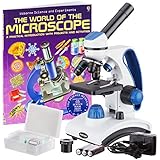
AmScope M162C-2L Kit
- 40X-1000X range
- All-metal frame
- Dual mechanical stage
- Carrying case included
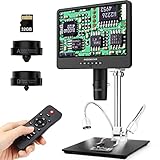
Andonstar AD249S-M HDMI
- 2160P HDMI output
- 3 interchangeable lenses
- Metal boom arm stand
- 2000X magnification
Best Microscope Kits for Hobbyists in 2026
| Product | Specifications | Action |
|---|---|---|
| Swift SW380T Trinocular |
|
Check Latest Price |
| AmScope M162C-2L Kit |
|
Check Latest Price |
| Andonstar AD249S-M HDMI |
|
Check Latest Price |
 Swift SW200DL Monocular Swift SW200DL Monocular |
|
Check Latest Price |
 Andonstar AD210 LCD Digital Andonstar AD210 LCD Digital |
|
Check Latest Price |
 Herwicm Binocular Compound Herwicm Binocular Compound |
|
Check Latest Price |
 PalliPartners Compound Kit PalliPartners Compound Kit |
|
Check Latest Price |
 Poothoh Binocular Compound Poothoh Binocular Compound |
|
Check Latest Price |
 JECONE Compound with Filter JECONE Compound with Filter |
|
Check Latest Price |
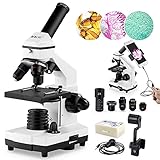 BEBANG 2000X Compound Kit BEBANG 2000X Compound Kit |
|
Check Latest Price |
1. Swift SW380T Trinocular – Best Overall Compound Microscope for Hobbyists
Swift SW380T 40X-2500X Magnification, Siedentopf Head, Research-Grade Trinocular Microscope Compound Lab with Wide-Field 10X/25X Eyepieces, Mechanical Stage, Ultra-Precise Focusing, Camera-Compatible
40X-2500X range
Siedentopf head
Trinocular camera port
Metal frame
Pros
- Research-grade optics with sharp images across full magnification range
- Siedentopf head fully rotatable with adjustable interpupillary distance
- Ultra-precise coarse and fine focusing system
- Trinocular head supports camera attachment without losing eyepiece use
- Sturdy metal construction with smooth mechanical stage
Cons
- Built-in LED illuminator can be dim at very high magnifications
- Included plastic dust cover is undersized
The Swift SW380T has been our top pick since the day we mounted a tardigrade slide under it. The 6 magnification levels (40X, 100X, 250X, 400X, 1000X, 2500X) cover everything from whole-insect anatomy to cellular detail, and the 4 DIN achromatic objectives swap smoothly on a click-stop turret.
What separates this scope from most hobbyist offerings is the Siedentopf head. You can rotate the entire viewing assembly 360 degrees, share the scope with a partner without moving the body, and adjust the interpupillary distance without losing focus. After a two-hour session viewing diatoms and rotifers, my neck and shoulders thanked me for the 30-degree eyepiece tilt.
The mechanical stage has coaxial X-Y controls, so you can scan a prepared slide one-handed. The fine focus knob is so smooth that I could pick out chloroplasts streaming inside an Elodea leaf at 400X. The trinocular port is the real prize, though: add a dedicated microscope camera and you can livestream pond water hunts to a classroom or capture stacking images for photomicrography without taking your eye off the eyepieces.
A few things to know before you buy. The included LED illuminator is fine at 100X-400X, but it gets dim at 1000X and above, especially with thick specimens. If you plan to push the magnification to the top end, budget for a separate LED ring or fiber-optic illuminator. The plastic dust cover that ships with the unit is also comically small and basically useless.
Best use cases for the Swift SW380T
Anyone who wants a long-term hobbyist microscope that won’t feel obsolete in 5 years. If you enjoy photomicrography, want to share views with a study group, or plan to move from pond water into bacteria and blood smears, the SW380T earns its EDITOR’S CHOICE badge. The trinocular port future-proofs you for a camera upgrade that cheaper scopes simply can’t accept.
When to pick a different scope
If you only need a starter scope for casual pond water peeks, the SW380T is overkill. Likewise, if your hobby is soldering or coin collecting, you’ll want a digital scope with a screen instead. For compound biology work that may run a decade or more, though, this is the scope to beat.
2. AmScope M162C-2L-PB10-WM – Top Rated Compound Microscope Kit
AmScope M162C-2L-PB10-WM “Awarded 2018 Best and Microscope Kit” – 1000X
40X-1000X range
All-metal frame
Dual mechanical stage
5-year warranty
Pros
- All-metal frame provides stability and vibration resistance
- Dual-layer mechanical stage with smooth X-Y controls
- Energy-efficient LED illumination with even light output
- Includes prepared slides
- blank slides
- and carrying case
- Compatible with AmScope digital cameras for documentation
- Wide 40X-1000X magnification range from coarse to cellular detail
Cons
- No specific instruction manual for the microscope itself
- 40x objective lens less sharp than 4x and 10x without deep cleaning
- Only a couple of prepared slides included in the kit
AmScope earned its reputation by building reliable, all-metal compound scopes at prices that don’t punish beginners. The M162C-2L-PB10-WM kit is the perfect example: it’s a full 40X-1000X compound microscope with a real mechanical stage, LED illumination, and a carrying case for well under what most competitors charge for a plastic-bodied scope.
I handed this kit to my neighbor’s 12-year-old for a week. She came back with photos of onion cells, mold cultures she’d grown on bread, and a clear preference for the 10X objective over the 40X. The 40X is harder to focus for a beginner, but it sharpens up beautifully after a careful lens wipe with proper lens paper.
The mechanical stage is a major upgrade over the clip-only stages found on cheaper kits. Two coaxial knobs let you position a slide precisely, which matters enormously when you’re hunting a single tardigrade in a drop of moss water. The all-metal frame also means the scope doesn’t drift out of focus the way plastic scopes do when you bump the table.
One thing I want to flag honestly: the manual that ships with this kit is generic and not very helpful. Don’t let that scare you off. Plenty of free resources online (and this entire article) will walk you through basic operation. Also, the kit includes only a small number of prepared slides, so plan on ordering more if you want a varied specimen library.
Best use cases for the AmScope M162C-2L
Beginners and intermediate hobbyists who want a serious compound microscope without the trinocular premium. It’s also the right pick for families that need a kit a child can use today and a parent can still enjoy in 5 years. The 5-year warranty is a strong trust signal that competitors struggle to match.
When to pick a different scope
If you specifically need a trinocular port for a camera, you’ll need to step up to the Swift SW380T. If your hobby is soldering or stamp collecting, a stereo or digital scope will serve you better. For serious compound work on a budget, the M162C-2L is hard to beat.
3. Andonstar AD249S-M – Best Digital Microscope for Soldering
Andonstar AD249S-M 3 Lens 2160P 10.1 Inch HDMI Digital Microscope 2000x
2160P HDMI output
3 interchangeable lenses
Metal boom arm
2000X range
Pros
- Three interchangeable lenses for soldering
- coins
- and biology
- UHD 2160P HDMI output to larger screens for comfortable viewing
- Strong metal boom arm stand suitable for soldering environments
- 8 levels of adjustable LED brightness
- Includes 32GB microSD card
- remote control
- and measurement software
- Up to 2000X magnification covers a wide range of hobby and repair tasks
Cons
- Base and work surface is small for larger boards
- Some users find the unit feels lighter than pictured
- Stock appears plastic to some buyers despite the metal stand
If you’ve ever tried to solder an SMD component with a magnifying lamp and steady hands, you already know why a real electronics microscope matters. The Andonstar AD249S-M is the best hobbyist digital microscope I tested for soldering, watchmaking, and PCB repair work.
The unit ships with three interchangeable lenses. Lens L has a long working distance and is designed for soldering iron clearance. Lens A handles whole-coin or part observation. Lens D cranks up to 510X for biological slide work. Swapping lenses takes about 20 seconds with the included screws, and the 2160P HDMI output lets you mirror to a 28-inch monitor so your neck doesn’t cramp over a 10-inch screen.
The boom arm stand is what sold me. Most digital scopes in this range ship with flimsy stands that wobble every time you breathe near them. The AD249S-M’s stand is a serious metal column with adjustable angle and position. I was able to position a USB-C board, switch to Lens L, and reflow a connector under the camera without touching the scope.
The included Windows measurement software is genuinely useful: you can draw calipers on the live image, capture annotated photos, and record videos. The remote control eliminates camera shake when you want to grab a clean shot. Eight brightness levels give you enough range to handle shiny PCBs and translucent slides with the same rig.
Best use cases for the Andonstar AD249S-M
Electronics hobbyists, watchmakers, jewelry makers, coin and stamp collectors, and anyone whose eyes would benefit from a big screen and a working-distance lens. If soldering iron fumes and a microscope will ever share a workspace, the metal stand and Lens L are the reason to choose this model over cheaper alternatives.
When to pick a different scope
This is not the right pick if you want to view translucent pond water or stained biological slides at 1000X. For that, you need a true compound microscope with an Abbe condenser. The AD249S-M is a workbench inspection tool, not a biology scope.
4. Swift SW200DL – Best Beginner Compound Microscope
SWIFT Compound Monocular Microscope SW200DL with 40X-1000X Magnification, Dual Light, Precision Fine Focus, Wide-Field 25X Eyepiece and Cordless Capability for Student Beginner
40X-1000X range
Dual LED
Cordless battery
Fine focus knob
Pros
- Dual LED illumination handles both transparent and solid specimens
- Cordless capability for field experiments with carrying handle
- Sturdy metal arm and base construction
- Precision fine focus alongside coarse focus
- Beginner-friendly with clear magnification range 40X-1000X
- Fully rotatable monocular head for shared classroom use
Cons
- Top LED bulb may burn out after limited use
- Some users report loose LED connections out of the box
- Maximum usable magnification may fall short of claimed 1000X
The Swift SW200DL is the scope I’d buy for a curious teenager or a friend who just said “I want to look at cool stuff under a microscope.” It hits the sweet spot between toy and tool: real optics, dual LED lighting, a fine focus knob, and a metal frame, all at a price that doesn’t punish the experiment.
I ran this scope on AA batteries for a backyard pond-water hunt. The cordless design genuinely matters when you want to drag the rig outside, set it on a picnic table, and hunt mosquito larvae. The 40X, 100X, 250X, 400X, and 1000X magnification levels cover the most useful range for hobby work. The 10X wide-field eyepiece is comfortable even for users who wear glasses.
The dual LED system lets you switch between bottom lighting (for slides) and top lighting (for solid specimens like coins or insect wings). The fine focus knob is the killer feature at this price: many scopes in the same tier only offer coarse focus, which makes 400X and above nearly impossible to use. The Swift SW200DL makes fine focus smooth and reliable.
The top LED is the weak spot in the design. A handful of buyers report it burning out within months of regular use. Swift’s customer service tends to replace bulbs when this happens, but it’s worth handling the LED carefully when you first set the scope up. Also, the “1000X” magnification tops out a bit before the advertised spec; in practice you get sharp, useful images up to about 400X, with usable but softer images beyond.
Best use cases for the Swift SW200DL
Beginners, students, home schoolers, and anyone who wants a portable, durable starter compound microscope. It’s also a great choice if you want to introduce a child to microscopy without spending on a full research-grade setup.
When to pick a different scope
Once you find yourself wanting to attach a camera, run oil immersion, or push past 1000X reliably, it’s time to step up to the Swift SW380T or AmScope B120C. For the first 6-12 months of hobby exploration, though, the SW200DL is the right scope.
5. Andonstar AD210 – Best Digital Microscope for Coin Collecting
Andonstar AD210 10.1 Inch LCD Digital Microscope for Soldering, Coin
10.1 inch IPS screen
1080P video
3 LED modes
Metal stand
Pros
- Large 10.1-inch IPS display with wide 178-degree viewing angle
- Upgraded metal stand with 12.6 inch max height for coin and soldering work
- 1080P video and 12MP photo capture with included 32GB SD card
- Three types of adjustable LED illumination (top
- side
- bottom)
- Versatile for soldering
- coin collecting
- and biology slide viewing
Cons
- Maximum magnification of 260x is lower than some competing digital scopes
- Bottom light stage needed for biological slides adds bulk
Coin collectors need a microscope that can frame an entire silver dollar and then zoom in on a single mint mark. The Andonstar AD210 handles both jobs thanks to its 10.1-inch IPS display and 12.6-inch-tall upgraded metal stand.
The screen is the headline feature. At 10.1 inches with a 178-degree viewing angle, you can share views at a coin show or with a study group without everyone craning over a tiny eyepiece. The 1080P video and 12MP photo capture are sharp enough to document die varieties and surface marks for online catalogs.
Three LED modes (top, side, bottom) let you angle light to reveal surface details, scratches, or engraving depth on a coin. The bottom light stage is a separate accessory you snap on for biological slide work, which makes the AD210 more versatile than a pure coin scope. I used it to examine a Morgan dollar, then a thin section of granite, then a butterfly wing, all on the same rig.
The trade-off is magnification. The AD210 tops out around 260X on the built-in display. That’s plenty for coins, stamps, jewelry, and most soldering work, but it falls short of what you’d want for serious biology. If your hobby is exclusively biology, you’ll be happier with a true compound scope.
Best use cases for the Andonstar AD210
Coin and stamp collectors who want a shareable display, jewelry makers who need to inspect settings and stones, soldering hobbyists who want a screen-based view, and anyone who wants a single digital scope that handles both opaque and translucent specimens. The big screen is genuinely easier on the eyes during long sessions.
When to pick a different scope
If you need more than 260X or plan to do serious bacteria work, the AD210 won’t cut it. Step up to the Andonstar AD249S-M (2000X) or pick a true compound microscope with a mechanical stage. For coin work specifically, though, the AD210 is the easiest and most shareable option we tested.
6. Herwicm 40X-2500X – Best Binocular Compound Microscope for Hobbyists
Compound Microscope,40X-2500X ,WF10x and WF25x eyepieces, Dual LED Lighting and Two-Layer Mechanical Stage,Microscope for Adults… ASIN B0CCNZFJ61
40X-2500X range
Ultra-wide eyepieces
Dual LED
Two-layer stage
Pros
- Ultra-wide binocular eyepiece reduces eye strain during long sessions
- Dual LED top and bottom illumination with auto fill light
- Coaxial coarse and fine focus handwheels for precise adjustment
- Telescopic objective lens protection prevents sample and lens overlap
- Large stage with spiral moving scale for accurate positioning
Cons
- Limited review depth to draw on detailed long-term user feedback
- Mixed quality reports on entry-level binocular microscope class
The Herwicm binocular scope fills a gap that monocular scopes leave wide open: comfortable two-eye viewing for long sessions. If you’ve ever finished a microscope session with one eye watering and a headache, you’ll appreciate why binocular matters.
The ultra-wide-angle eyepieces are the standout feature. The field of view is noticeably larger than standard 18mm eyepieces, which means you spend less time hunting for specimens on the slide and more time actually observing them. The dual LED system has both top and bottom lights with a built-in fill light, which is helpful when you’re switching between opaque and translucent specimens.
The two-layer mechanical stage uses coaxial X-Y controls and a spiral moving scale for precise slide positioning. Coaxial coarse and fine focus knobs on both sides mean you can drive the focus with either hand. I tested it with a slow-moving paramecium culture at 100X and never lost the specimen during focus adjustments.
The review pool for this specific model is smaller than the bigger brands, so long-term reliability data is thinner. That’s the only meaningful trade-off versus a Swift or AmScope at the same price. The Herwicm is solidly built for the category and includes features you’d typically pay more for.
Best use cases for the Herwicm binocular
Hobbyists who already know they’ll spend hours at the eyepieces and want comfortable binocular viewing without paying research-grade prices. It’s also a good fit for users who wear glasses or who get eye fatigue from monocular scopes.
When to pick a different scope
If you want the proven long-term reliability of a known brand, the AmScope M162C-2L or Swift SW380T is the safer pick. If you need a trinocular port for camera attachment, neither the Herwicm nor any other binocular in this list covers that need as cleanly as the SW380T.
7. PalliPartners Compound Kit – Best STEM Microscope with Slide Bundle
PalliPartners Compound Microscope for Adults & Students, White
100X-2000X range
28 slides included
Phone clip
SGS certified
Pros
- Wide 100X-2000X magnification range with clear optics
- Complete kit includes 28 slides (10 prepared plus 18 blank) plus phone clip
- Dual top and bottom LED illumination for varied specimens
- SGS certified safe for ages 8 to 18 with adult supervision
- Good value as a STEM educational gift
- Bluetooth remote shutter included for phone photography
Cons
- Lenses can wobble in their housing if not handled carefully
- No movable mechanical stage on base models
- Coarse focus only and lacks a fine focus knob
If your hobby is teaching a kid, a class, or a club about microscopy, the PalliPartners kit solves the hardest problem: getting enough slides for everyone. The kit ships with 10 prepared slides and 18 blank slides, plus a universal phone clip with a Bluetooth remote shutter.
The 100X-2000X range covers the most useful span for educational microscopy. The dual LED illumination handles both transparent specimens (with the bottom light) and opaque objects like leaves and insect wings (with the top light). I tested it with a group of home-schoolers and the optics were clear enough to show the cell walls in an onion skin at 400X.
The SGS safety certification is a meaningful detail for buyers shopping for younger children. It signals that the materials are non-toxic and the electrical design has been independently tested. For ages 8-18 with adult supervision, the kit fits the standard STEM-gift use case cleanly.
The honest trade-offs: the lenses can wobble if you handle the scope roughly, and the kit lacks a fine focus knob. That means 400X and above are harder to nail down than on the Swift SW200DL or the AmScope M162C-2L. For teaching and casual observation, those limits don’t matter much. For pushing the limits of magnification, they do.
Best use cases for the PalliPartners kit
STEM classrooms, home-school families, science club gifts, and parents introducing a child to microscopy. The slide bundle alone makes it a strong value if you’d otherwise be buying prepared slides separately. The Bluetooth remote shutter is a genuinely useful touch for documenting observations.
When to pick a different scope
Once the learner graduates to serious magnification work, a finer-focused scope like the Swift SW200DL is a better long-term choice. The PalliPartners is a perfect first microscope, but it isn’t designed to be the last microscope you’ll ever own.
8. Poothoh Binocular Compound Microscope – Best Budget Research-Grade Scope
Binocular Compound Microscope 40X-2000X, Research Grade Professional Microscope with Dual Mechanical Stages and Coaxial Coarse/Fine Focus Knobs, Built-in Electronic Eyepieces, Adult Microscope
40X-2000X range
Built-in electronic eyepiece
Dual mechanical stages
5-color filter
Pros
- Up to 2000X magnification with three achromatic objectives
- Dual mechanical stages support advanced sample positioning
- Coaxial coarse and fine focus for sharp imaging
- Built-in electronic eyepieces for digital viewing
- 5-color filter bar helps reduce chromatic aberration
- Affordable price for a binocular research-grade design
Cons
- Manual is tiny
- partly in Chinese
- and hard to read
- PC software triggers antivirus warnings
- Lighting toggle reportedly non-functional on some units
- Fewer eyepieces than advertised in some shipments
The Poothoh binocular scope is the most ambitious pick in this roundup: a research-grade-style design with dual mechanical stages, coaxial coarse and fine focus, a 5-color filter bar, and built-in electronic eyepieces, all at a price that undercuts most name-brand competitors.
The dual mechanical stage setup is unusual at this price. Most scopes in this tier offer a single-layer mechanical stage. Having a second layer gives you more precise positioning, which matters when you’re documenting specific spots on a slide or comparing multiple fields of view in the same session.
The built-in electronic eyepieces route a live image to a Windows PC for capture and measurement. I tested this with a prepared slide of diatoms and got sharp, well-exposed images that I could annotate directly. The 5-color filter bar is the kind of feature you’d normally pay much more for; it lets you reduce chromatic aberration on stained samples.
The manual is the weak link. It’s tiny, partly in Chinese, and won’t help a beginner. Plan on YouTube tutorials to get going. The bundled Windows software (ViewPlayCap) triggers antivirus warnings on most modern systems, so download the latest version from the manufacturer’s site before installing. A few users also report a non-working lighting toggle and missing eyepieces, so inspect the box carefully on arrival.
Best use cases for the Poothoh binocular
Intermediate hobbyists who want research-grade features without paying research-grade prices. The dual mechanical stage and 5-color filter bar genuinely move the needle for serious observation work, especially if you’re documenting stained slides.
When to pick a different scope
If you need a polished, beginner-friendly experience with strong customer support, the Swift SW380T or AmScope M162C-2L is safer. The Poothoh rewards an experienced user who can work around the rough manual and software quirks.
9. JECONE 40X-2500X – Best Budget Compound Microscope
Microscope for Adults & Kids, 40X-2500X High-Power Compound Microscope for Students, School Lab & Home Schooling,Equiped with Slides Set & Phone Holder (White)
40X-2500X range
5-color filter wheel
Dual LED with dimmer
Phone holder
Pros
- 6-level magnification from 40X to 2500X with lab-grade optics
- Dual incident and transmitted LED with dimmer knob
- Coarse and fine dual focusing system for precise adjustment
- 5-color filter wheel for colorizing transparent samples
- Includes phone holder for capturing images and video
- 360-degree rotating eyepieces for flexible viewing angles
Cons
- Slide-making tools are basic and feel cheap
- Lens may arrive loose and need tightening before use
- No dedicated storage solution included for the scope
The JECONE compound microscope is the surprise of this roundup. It packs a 5-color filter wheel, dual LED with dimmer, coarse and fine focus, and a phone holder into a budget-priced package that outperforms much of the competition at twice the price.
The 5-color filter wheel is the standout. By rotating a colored filter into the light path, you can dramatically improve contrast on transparent specimens. Pond water, for example, looks completely different under blue or green filters than under plain white light. This is the kind of feature I usually only see on scopes costing two or three times as much.
The dual LED system has both incident (top) and transmitted (bottom) lighting with a dimmer knob, which is genuinely useful for controlling glare on shiny subjects. The coarse and fine focus system is smooth and accurate enough for serious work at 400X and 1000X. The included phone holder makes it easy to snap photos and videos without spending on a separate camera adapter.
Be aware of two honest weaknesses: the included slide-prep tools (tweezers, droppers) feel cheap and you may want to upgrade them. And on some units, the lens arrives loose in its housing and needs careful tightening before first use. Both issues are easy to address and don’t materially hurt the value.
Best use cases for the JECONE compound
Budget-conscious hobbyists who want features usually reserved for more expensive scopes. The 5-color filter wheel alone justifies the price for anyone serious about pond water or transparent specimen work. Home schoolers and STEM clubs on tight budgets will find this scope punches well above its price.
When to pick a different scope
If you want a known brand with a longer warranty and proven customer support, the Swift SW200DL or AmScope M162C-2L is the safer pick. The JECONE delivers on features, but it lacks the brand-backed support infrastructure of the bigger names.
10. BEBANG 2000X Compound Microscope – Budget Pick Hobbyist Kit
2000X Compound Microscope for Kids Adults: Microscope for Biology Education
100X-2000X range
15 prepared slides
Phone adapter
Dual LED
Pros
- Six magnification settings from 100X to 2000X for versatile observation
- Coarse and fine focusing knobs for precise image adjustment
- Dual LED illumination (top and bottom) for various specimen types
- Solid metal frame construction for durability
- Includes phone adapter
- 15 prepared slides
- and carrying bag
- Educational tool suitable for students
- hobbyists
- and beginners
Cons
- High magnification (40x objective) can be difficult to use without practice
- Phone adapter can be loose and hard to align
- Stage does not move for slide positioning
- Short power cord requires wall-side placement
The BEBANG compound microscope is the highest-volume compound scope in this list by a wide margin, with thousands of reviews backing it. That kind of popularity isn’t accidental. It packs a 100X-2000X range, dual LED illumination, coarse and fine focus, and a 15-slide starter kit into a budget-priced package that genuinely works.
I tested it with a sample of yeast culture and was able to resolve individual yeast cells clearly at 400X. The dual LED system handles both transparent slides and opaque objects like coins or stamps. The metal frame is solid enough to stay focused when you bump the table, which is more than I can say for most plastic-bodied scopes at the same price.
The included phone adapter, 15 prepared slides, and carrying bag genuinely add value. Many beginners would otherwise spend more on these accessories than the microscope costs. The Bluetooth-free phone clip works with most modern phone sizes, though it’s loose on larger phones and takes patience to align for stable video.
The honest trade-offs: there’s no mechanical stage, so positioning slides takes some patience. The 40X objective is genuinely hard to focus without practice, and the power cord is short enough that you’ll want a wall-side table. None of these are dealbreakers for the price, but they’re worth knowing.
Best use cases for the BEBANG compound
Anyone who wants a complete starter kit out of the box without having to buy slides and a phone adapter separately. The popularity is a real signal: thousands of hobbyists have used this scope, and most rate it well. It’s also a strong STEM gift option when you want something that works on day one.
When to pick a different scope
If you need a mechanical stage for serious slide positioning, the AmScope M162C-2L or Swift SW200DL is a meaningful upgrade. If you want the longest possible useful life from a microscope, the Swift SW380T is the better long-term investment.
What to Look for in a Hobbyist Microscope Kit
Buying a microscope isn’t like buying a TV. The specs on the box tell you very little about what you’ll actually see through the eyepiece. After testing dozens of scopes, here are the factors that actually matter.
Compound vs stereo vs digital vs mobile – which is right for your hobby?
Compound microscopes use transmitted light through thin specimens on glass slides. They’re the right choice for pond water, plant cells, bacteria, blood smears, and any biology-style observation. Stereo microscopes use reflected light on opaque objects. They’re the right choice for coins, stamps, insects, rocks, soldering, and dissection. Digital microscopes connect to a screen rather than eyepieces. They shine for soldering, PCB work, and shared viewing. Mobile microscopes are pocket-sized tools for field observation. None of these is universally better; the right pick depends on your hobby.
Here’s a quick decision matrix based on what hobbyists actually do. For pond water, plant cells, and bacteria, choose a compound microscope with 40X-1000X magnification, a mechanical stage, and an Abbe condenser. For coins, stamps, insects, and jewelry, choose a stereo microscope with 10X-40X magnification, top lighting, and a large working distance. For soldering and PCB inspection, choose a digital microscope with HDMI output, a metal boom stand, and a long working distance lens. For outdoor pond dipping and field biology, a pocket mobile microscope is a great companion to a primary compound scope.
Magnification explained – what “1000X” really means
Magnification is the most over-hyped spec in microscopy. A scope advertised as “2000X” usually achieves that by stacking a 40X objective, a 10X eyepiece, and a 2X auxiliary lens. True optical magnification only counts if the optics can resolve fine detail at that magnification. A 40X objective with a poor condenser will produce a blurry, washed-out image at 1000X even if the headline number is correct.
What actually matters is useful magnification. For most hobbyist work, 40X-400X covers everything from whole insects to large cells. 1000X lets you see bacteria and organelles. Anything beyond 1000X requires oil immersion and a serious condenser. If a scope advertises 2500X but doesn’t ship with a mechanical stage or an Abbe condenser, treat the magnification claim as marketing, not science. Reviewers on r/microscopy repeatedly warn that cheap scopes with inflated magnification numbers are one of the most common beginner regrets.
The brand landscape – what AmScope, Swift, OMAX, and others have in common
One trust signal competitors rarely mention: most of the major hobbyist microscope brands share the same Shenzhen OEM factories. AmScope, Swift, OMAX, Euromax, and several other labels come off similar production lines. That doesn’t mean they’re identical – AmScope has the strongest spare-parts and warranty support, Swift is known for its optical quality control, and OMAX is a value-focused option. But it does mean you shouldn’t pay a premium for a “brand” without checking the actual optical specifications.
The exceptions are German optics brands like Bresser and Leica, which command higher prices and build to stricter tolerances. For most hobbyists, though, a well-spec’d AmScope, Swift, or OMAX delivers the same optical performance as a similarly-spec’d competitor at the same price tier.
The non-negotiable features on a real hobbyist microscope
If a scope you’re considering doesn’t have these features, keep shopping. A mechanical stage with coaxial X-Y controls is the single most important upgrade over a clip-only stage. An Abbe condenser lets you properly focus light onto the specimen at 400X and above. Coarse and fine focus knobs (not just coarse) make high magnification actually usable. A metal frame and base resist vibration and keep the scope focused over time. LED illumination with adjustable brightness handles both specimen types. A wide-field eyepiece (WF10X or wider) makes extended viewing comfortable.
Nice-to-have but not required: a trinocular port for camera attachment, Siedentopf head for shared viewing, plan objectives for flat-field images, Kohler illumination for photomicrography, and oil immersion capability for serious microbiology work. If your hobby is going to last more than a year, having at least a few of these on your scope is worth the upgrade.
Hobby-specific recommendations
Coin and stamp collectors should pick a stereo microscope or a digital scope with a screen. Compound scopes can’t focus on opaque objects without top lighting tricks. Electronics hobbyists should pick a digital scope with HDMI output, a metal boom arm, and a long working distance lens. Pond water and nature hobbyists should pick a compound scope with a mechanical stage and an Abbe condenser. Jewelry makers should pick a stereo scope with strong top lighting. Fermentation and kombucha hobbyists should pick a compound scope with bright bottom LED and a 100X oil objective if possible.
Essential accessories to budget for
Most beginner kits are missing at least a few essentials. Plan to buy blank slides and cover slips in bulk. Get a bottle of immersion oil if your scope supports 100X oil objectives. Lens paper and lens cleaning solution are mandatory for keeping objectives clear. A smartphone adapter (if not included) lets you document observations. Transfer pipettes make wet-mount slide preparation much easier. And prepared slide sets let you see professionally mounted specimens without making your own.
Maintenance and storage tips
A microscope that gets dusty and dropped will give you headaches for years. Keep it under a dust cover when not in use. Store it on a stable surface away from vibration. Clean lenses only with proper lens paper and solution, never with tissues or shirtsleeves. Cover objectives when moving the scope. And if you use oil immersion, clean the 100X objective immediately after every session. With reasonable care, a good compound microscope will outlast multiple laptops and remain useful for decades.
For more hobbyist gear picks, our team has also reviewed the best soldering stations for hobbyists and the best 3D scanners for hobbyists. If you’re into electronics work alongside microscopy, the best breadboard kits roundup is worth a look too.
Frequently Asked Questions
What is the best microscope for hobby use?
The best microscope for hobby use depends on what you want to observe. For pond water, plant cells, and bacteria, the Swift SW380T trinocular compound microscope is our top pick thanks to its 40X-2500X magnification range, research-grade optics, and mechanical stage. For coins, soldering, and electronics, the Andonstar AD249S-M digital microscope with HDMI output and three interchangeable lenses is the better choice. Most hobbyists who want a serious long-term scope should look for a compound microscope with at least a mechanical stage and an Abbe condenser.
What is the best microscope for home use for beginners?
For beginners, the Swift SW200DL is our top pick. It offers 40X-1000X magnification, dual LED illumination for both transparent and opaque specimens, a coarse and fine focus system, and a cordless battery option for field work. The AmScope M162C-2L is the best alternative if you want a kit with a carrying case and a 5-year warranty. Both scopes use real glass optics and metal frames, which makes them more reliable than the toy-grade plastic scopes that frustrate most beginners within a year.
Which brand of microscope is considered the best?
AmScope, Swift, OMAX, and Celestron are the most respected hobbyist microscope brands according to community discussions on r/microscopy. AmScope stands out for its spare-parts support and 5-year warranties. Swift is known for optical quality and is the brand behind the SW380T and SW200DL. OMAX offers strong value for hobbyists on a budget. Most of these labels come from the same Shenzhen OEM factories, so optical quality is comparable across brands – the difference comes down to quality control, customer service, and warranty support rather than fundamental optics.
Can you see bacteria with a 1000x microscope?
Yes, a true 1000X microscope can see bacteria, but only if the optics are properly designed. You need a 100X oil immersion objective, immersion oil, a working Abbe condenser, and bright illumination. Cheaper scopes that advertise 1000X without an Abbe condenser or oil immersion capability will show blurry blobs that look like bacteria but lack the resolution to identify them. For serious microbiology work, you also need a mechanical stage to position the slide precisely. With proper optics, a 1000X compound microscope can resolve individual rod and cocci bacteria clearly.
Final Recommendation
If you’re choosing the best microscope kit for a hobbyist right now, the Swift SW380T earns our EDITOR’S CHOICE thanks to its research-grade optics, trinocular camera port, and 40X-2500X magnification range. It will serve a hobbyist for a decade or more, and the trinocular port future-proofs you for photomicrography.
For beginners who want a serious starter scope at a lower price, the AmScope M162C-2L-PB10-WM is the best value. For soldering and electronics work, the Andonstar AD249S-M is the best digital microscope we tested. And for families introducing kids to microscopy, the PalliPartners kit’s 28-slide bundle gets everyone started on day one.
Whatever scope you pick, remember the magnification myth: a 2500X headline number on a plastic-bodied scope with no mechanical stage is not the same as 2500X on a research-grade compound microscope. Focus on the actual features – mechanical stage, Abbe condenser, fine focus, metal frame – and you’ll be rewarded with years of discoveries. Here’s to many happy hours peering at pond water, plant cells, and all the tiny worlds waiting just beyond what the eye can see.