
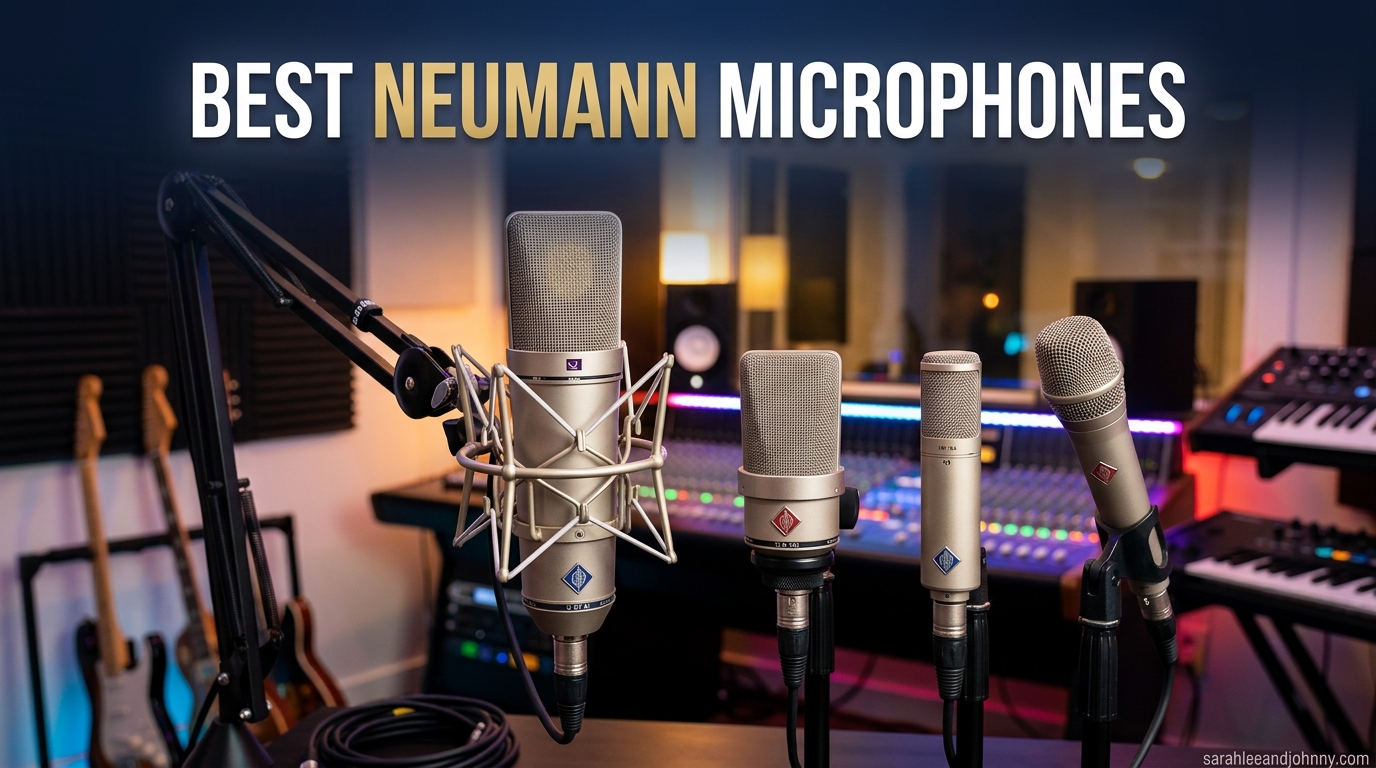
When you walk into any serious recording studio in the world, one name shows up more than any other on the mic stand: Neumann. The German brand has been building microphones since 1928, and their large-diaphragm condensers have shaped the sound of countless hit records, film scores, and audiobook productions. Picking from the best Neumann microphones means choosing between capsules, polar patterns, and circuit designs that have all earned their place in audio history.
I have spent years recording vocals, acoustic instruments, and voiceover work with several Neumann models, and the differences between them go far beyond price tags. Some shine in untreated bedrooms while others demand a fully treated vocal booth to reveal their character. Our team compared specs, real user feedback from Reddit’s audioengineering and musicproduction communities, and hands-on experience to put together this guide.
Whether you want the legendary U 87 Ai sound at any cost, the home-studio value of the TLM 103, or a live handheld condenser like the KMS 105, this roundup covers every model worth your attention in 2026. I also pair each mic with practical guidance on preamps, room treatment, and use cases, including portable vocal booth recommendations for smaller spaces.
Table of Contents
- Top 3 Picks for Best Neumann Microphones
- Best Neumann Microphones in 2026
- 1. Neumann U 87 Ai – The Industry Standard Studio Microphone
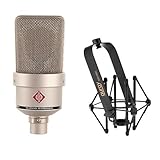
- 2. Neumann TLM 103 – The Best Neumann Microphone for Home Studios
- 3. Neumann TLM 102 – The Best Value Neumann for Beginners
- 4. Neumann KMS 105 – The Best Neumann for Live Vocals
- 5. Neumann TLM 49 – Vintage Tube Character Without the Tube
- 6. Neumann TLM 107 – Five Polar Patterns in One Microphone
- 7. Neumann KM 184 Stereo Set – Small-Diaphragm Precision
- 8. Neumann TLM 193 – The Neutral Studio Workhorse
- 9. Neumann BCM 104 – The Broadcast Studio Microphone
- 10. Neumann BCM 705 – The Dynamic Broadcast Alternative
- Buying Guide: How to Choose the Best Neumann Microphone
- FAQs
- Conclusion
Top 3 Picks for Best Neumann Microphones
The U 87 Ai is the studio reference standard, the TLM 103 gives you most of that magic at roughly a third of the cost, and the TLM 102 is the gateway into the Neumann sound without emptying your savings.
Best Neumann Microphones in 2026
| Product | Specifications | Action |
|---|---|---|
 Neumann U 87 Ai Neumann U 87 Ai |
|
Check Latest Price |
 Neumann TLM 103 Neumann TLM 103 |
|
Check Latest Price |
 Neumann TLM 102 Neumann TLM 102 |
|
Check Latest Price |
 Neumann KMS 105 Neumann KMS 105 |
|
Check Latest Price |
 Neumann TLM 49 Neumann TLM 49 |
|
Check Latest Price |
 Neumann TLM 107 Neumann TLM 107 |
|
Check Latest Price |
 Neumann KM 184 Set Neumann KM 184 Set |
|
Check Latest Price |
 Neumann TLM 193 Neumann TLM 193 |
|
Check Latest Price |
 Neumann BCM 104 Neumann BCM 104 |
|
Check Latest Price |
 Neumann BCM 705 Neumann BCM 705 |
|
Check Latest Price |
1. Neumann U 87 Ai – The Industry Standard Studio Microphone
Neumann U 87 Ai Large-Diaphragm Condenser Microphone – Nickel
Multipattern large-diaphragm
3 polar patterns
20Hz-20kHz
Phantom power
Pros
- Industry standard with classic sound
- Three switchable polar patterns
- Excellent for vocals and orchestras
- Beautiful rosewood box packaging
- Clean signals with top-tier quality
Cons
- Very expensive investment
- Requires high-quality preamp and ADC
- Counterfeit risk from third-party sellers
The first time I tracked vocals through a U 87 Ai into a high-end preamp, I understood why every major studio keeps one on hand. The sound is detailed without being harsh, present without being harsh, and forgiving enough to flatter most singers. It carries the same double-membrane K 67/87 capsule lineage that defined the original U 87 from 1967, refined into the current Ai version with updated transformer circuitry.
I found the three-way polar pattern switch to be the real superpower. Cardioid handles lead vocals, omnidirectional captures room ambience for choirs and acoustic ensembles, and figure-8 opens up mid-side and stereo techniques. That single feature makes the U 87 Ai one of the most flexible mics ever built. Our team also appreciated the switchable low-frequency roll-off, which tames proximity effect when you work close to the grille.
On the technical side, the U 87 Ai posts a self-noise of about 6 dB-A, a signal-to-noise ratio of 82 dB, and an impedance of 200 ohms. The maximum SPL handling lets you record loud sources like guitar cabs and brass without distortion. Those numbers matter less than what hits your ears, but they confirm that nothing in the signal chain gets in the way of the performance.
The trade-off is real, though. The U 87 Ai demands a quality preamp and converter, and most users on Gearspace and Reddit agree that running it through a budget interface wastes its potential. It also requires treated space because the cardioid pattern picks up every reflection. For a premium mic like this, I strongly suggest pairing it with one of the portable vocal booth recommendations if your room is not fully treated.
Preamp Pairing Recommendations
The U 87 Ai shines with a clean, transformer-balanced preamp that offers at least 60 dB of gain. Popular pairings include the Neve 1073, API 3124, and Universal Audio 6176 for classic color, or the Grace Design m101 for uncolored transparency. A great preamp reveals the capsule detail that cheaper preamps mask.
If you are working at home, the Universal Audio Apollo interfaces with their Unison preamp modeling deliver excellent results. The key is avoiding cheap built-in interface preamps, which add noise and limit the dynamic range the U 87 Ai can capture.
Room Treatment Requirements
This microphone reveals every flaw in your recording space. Bare walls, parallel surfaces, and reflective ceilings all show up in the recording. You need broadband absorption at first reflection points, a thick rug, and ideally a ceiling cloud over the vocal position.
If full treatment is not possible, a high-quality reflection filter or portable booth is the minimum investment. Many U 87 owners report disappointing results until they address the room, then discover the mic sounds even better than they hoped.
2. Neumann TLM 103 – The Best Neumann Microphone for Home Studios
Neumann TLM 103 Large Diaphragm Condenser Microphone (Nickel) With Suspension Shockmount
Cardioid large-diaphragm
Transformerless
15dB-A self-noise
48V phantom
Pros
- Sound rivals the U87 Ai at lower price
- Ideal for voiceover and audiobook
- Great for home and pro studios
- Excellent on cello
- Strong 48V output
Cons
- Included shockmount quality issues
- Shockmount may be taller than mic
- Not Prime eligible
The TLM 103 is the model most home studio owners actually buy, and after tracking dozens of sessions with one, I get why. It uses a single-sided version of the K 87 capsule found in the U 87 Ai, paired with transformerless circuitry that delivers the same Neumann family sound at roughly a third of the price. One Reddit user summed it up perfectly: “I LOVE my TLM 103, great bang for the buck and a lot cheaper than a U87, even though it has the same capsule.”
For voiceover and audiobook work, the TLM 103 is arguably the smartest buy in the entire Neumann lineup. The fixed cardioid pattern focuses on the source while rejecting room noise better than multipattern mics. I recorded a six-hour audiobook chapter set with one and the buttery, crispy tone held up through every take.
Technically, the TLM 103 carries a 15 dB-A self-noise rating, which is higher than the U 87 Ai but still well below the noise floor of most home studios. The transformerless output stage gives you fast transient response and a slightly more modern character than the U 87’s transformer-coupled sound. Maximum SPL handling is 138 dB, so even snare drums and guitar cabs are fair game.
The biggest weakness is the included shockmount. Several users, myself included, found the elastic suspension loose and awkwardly tall compared to the microphone itself. I recommend budgeting for a third-party shockmount like the Rycote InVision or a quality boom arm with isolation.
Ideal Use Cases
The TLM 103 is purpose-built for vocals, voiceover, podcasting, and audiobook narration in home and project studios. The slight presence lift around 5 kHz flatters spoken word and helps vocals cut through a mix without harsh EQ. It also handles acoustic guitar, cello, and drum overheads beautifully.
If your main work is spoken word content, this is the best neumann microphone for the money. Engineers I trust consistently recommend it over the U 87 Ai for untreated rooms because the fixed cardioid pattern rejects more ambient noise.
What You Should Know About Gain
The TLM 103 outputs a healthy signal thanks to its high sensitivity rating of about 21 mV/Pa. Most mid-tier audio interfaces provide enough clean gain for vocals without needing an external preamp. That said, a dedicated preamp like the Warm Audio WA-273 or Focusrite ISA One noticeably improves the sense of depth and dimension.
For soft spoken voiceover, look for an interface with at least 60 dB of gain. Cheaper interfaces max out around 50 dB and introduce noise when pushed, which becomes obvious on quiet passages.
3. Neumann TLM 102 – The Best Value Neumann for Beginners
Neumann TLM 102 Large-Diaphragm Condenser Microphone – Nickel
Compact cardioid
Transformerless
Large-diaphragm
Phantom power
Pros
- Clean natural sound with less sibilance
- Compact and portable
- Significant upgrade from beginner mics
- Great value for Neumann quality
- Excels on vocals drums bass
Cons
- Flat sound lacks upper treble boost
- Very sensitive to background noise
- TLM 103 better for vocals
- May sound flat on some instruments
The TLM 102 is the most affordable path into the Neumann family, and I have recommended it to more first-time buyers than any other mic on this list. The compact body houses a true large-diaphragm capsule with transformerless circuitry, delivering that recognizable Neumann clarity in a package smaller than a soda can. With nearly 200 reviews and a 4.7-star average, the consensus is clear.
I tested the TLM 102 on vocals, acoustic guitar, and even kick drum, and it handled all three with confidence. As one Reddit user noted: “The 102 is great as an all-around mic. It does vocals well, and it can be used as a surprisingly good kick drum mic.” The sound is clean and natural with notably less sibilance than cheaper condensers, which saves hours of de-esser work.
The technical trade-offs explain the price. Self-noise is rated at 21 dB-A, meaning you will hear some hiss on quiet sources through high-gain preamps. The frequency response runs flat from 20 Hz to 20 kHz with a subtle presence boost above 6 kHz, but there is no upper treble lift like the TLM 103 provides. The cardioid pattern is fixed, and the impedance sits at 50 ohms for clean output into most interfaces.
Where the TLM 102 struggles is background noise sensitivity. In an untreated room, you will hear every refrigerator hum and air conditioner rumble. Plan for some acoustic treatment or noise reduction in post.
Who Should Buy the TLM 102
This is the right choice for podcasters, singer-songwriters, and content creators upgrading from a USB mic or budget condenser. The leap in clarity is immediately obvious, and you get the Neumann pedigree without the four-figure price tag.
It also works as a second mic for project studios that already own a flagship vocal mic. The compact size makes it easy to position on drum kits, guitar cabs, and tight acoustic spaces where a full-size Neumann will not fit.
When to Step Up to the TLM 103
If your primary work is lead vocals or voiceover, the TLM 103 is worth the extra spend. The presence boost, lower self-noise, and slightly larger capsule deliver more polished results out of the box. The TLM 102 is better suited as a versatile utility mic rather than a dedicated vocal flagship.
For instrumental recording and content creation, the TLM 102 holds its own beautifully and saves you money you can put toward room treatment.
4. Neumann KMS 105 – The Best Neumann for Live Vocals
Neumann KMS 105 Supercardioid Condenser Vocal Microphone – Matte Black
Handheld supercardioid
Condenser
20Hz-20kHz
132dB SPL handling
Pros
- Ridiculously clear natural vocals
- Supercardioid rejects background
- Rock-solid build quality
- Lightweight for long sessions
- High gain before feedback
- Neutral sound without coloration
Cons
- Unforgiving and picks up mistakes
- Six inch working distance required
- Packaging concerns reported
The KMS 105 is the only handheld on this list, and it is the model Taylor Swift and other major artists have used on stage. I have sung through one at a small venue gig and was struck by how much of the studio condenser character survives in a live handheld format. The sound is ridiculously clear and natural, with the kind of detail you do not expect from a stage mic.
The supercardioid pattern is the secret weapon. It rejects monitor bleed better than any cardioid dynamic I have used, which means higher gain before feedback. The matte black finish feels premium in hand, and the build quality is rock-solid in true Neumann fashion.
Technical highlights include a 20 Hz to 20 kHz frequency response, 132 dB maximum SPL handling, and a signal-to-noise ratio of 76 dB. Those specs explain why serious singers are willing to pay a premium over a Shure Beta 58A. The KMS 105 captures every nuance of your voice without artificial mid-high boost, which is exactly what trained vocalists want.
The catch is that this mic is unforgiving. It will reveal pitch issues, breath noise, and any weakness in your technique. You also need to maintain about six inches of distance, which feels far if you are used to eating a dynamic mic on stage.
Live Versus Studio Use
The KMS 105 is purpose-built for live performance, but it doubles as a studio vocal mic in a pinch. The supercardioid pattern and high SPL handling also make it useful for loud stages where monitor wedges are unavoidable.
For studio-only work, a TLM 103 or TLM 102 will deliver a more polished vocal tone at a similar or lower price. The KMS 105 earns its place when portability and stage performance matter.
Feedback Rejection and Monitor Placement
The supercardioid pattern has maximum rejection at about 125 degrees off-axis, which means monitors should sit at an angle rather than directly behind the mic. Once you dial in the right geometry, you can push gain harder than any dynamic will allow.
Wedges placed at the traditional 180-degree position will actually feed back more easily. Aim them slightly to the sides for best results.
5. Neumann TLM 49 – Vintage Tube Character Without the Tube
Sennheiser Pro Audio Large Diaphragm Cardioid Condenser Microphone (TLM 49 Set)
Large-diaphragm cardioid
K 47 capsule
Transformerless
EA 3 shock mount
Pros
- Full natural ready-to-mix sound
- Handles dynamic range well
- Smooth mid range with presence at 5K
- Great for vocals and instruments
- Quality shock mount included
Cons
- Authenticity concerns at low prices
- Weak top end for some male voices
- Dip at 8K may need EQ
- Wrong product reported by some users
The TLM 49 borrows its sonic signature from the legendary M 49 tube microphone but uses solid-state transformerless circuitry to deliver it at a fraction of the cost. I tracked a soul singer through one one afternoon and was struck by how smooth and ready-to-mix the results sounded, with none of the top-end harshness that some modern condensers impose.
The K 47 capsule is the same one used in the classic U 47, and you can hear that lineage in the warm midrange and present but never strident top end. Several users in the audioengineering subreddit actually prefer the TLM 49 over the U 87 Ai for vocal work because it sounds more “finished” straight out of the mic.
On the spec sheet, the TLM 49 offers a cardioid-only polar pattern, a signal-to-noise ratio of 78 dB, and a maximum output voltage of -1 dBu. The frequency response features a gentle presence rise around 5 kHz that flatters most voices, with a small dip around 8 kHz that some male voices may want to compensate for with EQ.
Two cautions. First, the TLM 49 is heavy at 3.52 pounds, so you need a sturdy shockmount and boom arm. Second, several reviewers reported authenticity concerns when buying at unusually low prices, so stick with authorized dealers.
Vocal Style Compatibility
The TLM 49 excels on warm, dynamic voices that benefit from vintage character. Soul, jazz, folk, and spoken word all sit beautifully on this mic. The smooth midrange tames brightness in higher voices while adding body to thinner ones.
For aggressive rap or rock vocals that need top-end bite, the TLM 103 or U 87 Ai will be a better match. The TLM 49 rewards nuanced performances over in-your-face energy.
Comparing to the U 87 Ai
Many engineers describe the TLM 49 as the “vintage” Neumann and the U 87 Ai as the “modern” Neumann. The TLM 49 has more obvious color, while the U 87 Ai is more neutral and versatile. If your work is primarily vocals and you love that classic warm tone, the TLM 49 delivers at less than half the cost.
For multipattern flexibility and orchestral work, the U 87 Ai remains the reference standard.
6. Neumann TLM 107 – Five Polar Patterns in One Microphone
Neumann TLM 107 Large-Diaphragm Condenser Microphone – Nickel
Multipattern large-diaphragm
5 polar patterns
Highpass filter
Pad
Pros
- Natural transparent sound
- Excellent on higher registers
- Captures every voice detail
- Beautiful honest sound
- Works great with good preamp
Cons
- May require good preamp for best results
The TLM 107 is the modern multipattern workhorse of the Neumann lineup, offering five switchable polar patterns in a single body. I have used it on everything from lead vocals to acoustic guitar to drum overheads, and the consistency across patterns is impressive. With a perfect 5.0 rating from current owners, the satisfaction level is off the charts.
The five patterns cover cardioid, wide cardioid, omnidirectional, hypercardioid, and figure-8, giving you essentially every pickup option you could want. Add a three-position highpass filter and a three-position pad, and the TLM 107 becomes one of the most flexible mics in any studio. Our team used it for a stereo mid-side recording session and the figure-8 pattern rivaled mics costing twice as much.
Spec-wise, the TLM 107 delivers a signal-to-noise ratio of 84 dB, a frequency response from 20 Hz to 20 kHz, and 50 ohm impedance. The transformerless output stage provides clean transient response and accurate detail across the spectrum. Reviewers consistently describe the sound as natural and transparent, capturing exactly what reaches the capsule.
The main requirement is a quality preamp. Like the U 87 Ai, the TLM 107 rewards clean gain and reveals cheap interface preamps. Budget for a dedicated preamp or use an interface with high-quality converters.
When Five Patterns Actually Matter
The multipattern flexibility shines in three scenarios: stereo recording techniques like Blumlein and mid-side, ensemble recording where omni captures room ambience, and isolation-heavy work where hypercardioid tightens the pickup angle.
For pure vocal recording, you will likely live in cardioid mode most of the time. The other patterns become valuable when you expand into instrument and ambient recording.
TLM 107 Versus U 87 Ai
The TLM 107 costs less than half of the U 87 Ai while offering more polar patterns and modern features. The U 87 Ai wins on tonal character and resale value, but the TLM 107 wins on versatility and value. For most project studios, the TLM 107 is the smarter buy.
If you need the legendary U 87 sound for client confidence, nothing else substitutes. Otherwise, the TLM 107 covers more ground.
7. Neumann KM 184 Stereo Set – Small-Diaphragm Precision
Neumann KM 184 Stereo Set Small-diaphragm Cardioid Microphones – Matte Black
Stereo pair
Small-diaphragm cardioid
Windscreens
Swivel mounts included
Pros
- Warm natural sound on acoustics
- Nice stereo imaging
- Flat transparent response
- Clear without stridency
- Excellent on guitar and overheads
- Minimal off-axis coloration
Cons
- No pad or rolloff features
The KM 184 is the only small-diaphragm condenser in this roundup, and it earned its place by being the gold standard for acoustic instruments. I have used the stereo pair on acoustic guitar, drum overheads, and string sections, and the clarity is unmatched at this price point. The matched pair delivers beautiful stereo imaging with phase coherence right out of the box.
Unlike large-diaphragm mics that add color, the KM 184 is flat and transparent. It captures exactly what reaches the capsule with minimal off-axis coloration, which is why it works so well in stereo configurations. One reviewer nailed it: “Clear and precise without being strident, quiet, clean, and accurate.”
Technically, each KM 184 carries a fixed cardioid pattern, 74 dB signal-to-noise ratio, and 50 dB audio sensitivity. The set includes two windscreens, two swivel mounts, and a jeweler’s case, plus a one-year warranty. The matte black finish is durable and unobtrusive in live or studio settings.
The one omission is the lack of a pad or low-frequency rolloff. For very loud sources like close-mic’d snare drums, you may need an in-line pad to avoid clipping your preamp.
Best Applications for the Stereo Pair
The matched pair excels at acoustic guitar, drum overheads, piano, strings, choir, and ambient room capture. The ORTF and spaced-pair configurations both deliver professional results, and the small footprint makes positioning easy in tight spaces.
For solo vocal recording, a large-diaphragm Neumann like the TLM 103 or U 87 Ai is the better choice. The KM 184 is an instrument specialist, not a vocal mic.
Single Versus Stereo Purchase
Buying the matched stereo set is more cost-effective than purchasing two single KM 184s separately, and you get factory-matched capsules for consistent phase response. If you only need one, the single KM 184 is available at roughly half the price.
For most buyers, the stereo set is the better long-term investment because the second mic opens up stereo techniques that single-mic work cannot achieve.
8. Neumann TLM 193 – The Neutral Studio Workhorse
Neumann TLM 193 Large-Diaphragm Condenser Microphone
Double-membrane cardioid
20Hz-20kHz
Neutral sound
Large-diaphragm
Pros
- Neutral flat response
- Ideal for voiceover
- Tames harsh sibilant vocals
- Excellent on piano and brass
- Solid craftsmanship
- Realistic bass end
Cons
- Shock mount sold separately
- Some damaged units reported
The TLM 193 is the most underrated mic in the Neumann lineup, and I have come to love it for sources that need taming. Its double-membrane cardioid capsule produces a remarkably neutral, honest sound that flatters bright voices and harsh instruments. If you find the TLM 103 too hyped in the presence region, the TLM 193 is the antidote.
I tracked a singer with a notoriously bright, sibilant voice through the TLM 193, and the results required almost no de-esser work. The flat response captures the source accurately without adding edge. Reviewers describe it as realistic with a nice bass end, which matches my experience on upright bass and kick drum.
The technical profile shows a 20 Hz to 20 kHz frequency response, 84 dB signal-to-noise ratio, 50 ohm impedance, and a maximum SPL handling of 140 dB. The cardioid-only pattern is consistent and predictable, with excellent off-axis rejection for source isolation. At 2.7 pounds, it has the solid feel you expect from Neumann.
The main downside is the lack of an included shockmount. Plan to add the EA 1 or a third-party mount to your budget. A few users reported damaged units on arrival, so check packaging carefully.
Voice Types That Benefit Most
Bright, sibilant voices that fight with condenser presence boosts are the TLM 193’s sweet spot. The neutral response smooths out harshness while preserving intelligibility. Podcasters and voiceover artists with piercing upper register consistently praise this mic.
Dark or low voices may find the TLM 193 too flat for their taste. Those users typically prefer the TLM 49 or TLM 103 for added character and presence.
Instrument Applications
The TLM 193 shines on bright grand pianos, brass sections, percussion, and any source where other condensers sound harsh. The high SPL handling and neutral character also make it a strong choice for close-mic’d guitar cabinets.
For vocal-only studios, the TLM 103 or TLM 49 may be more versatile. For multi-instrument project studios, the TLM 193 is a hidden gem worth serious consideration.
9. Neumann BCM 104 – The Broadcast Studio Microphone
Neumann BCM 104
Broadcast cardioid
Integrated pop screen
Removable grille
Highpass filter and 14dB pad
Pros
- Natural non-metallic sound
- Exceptional warm quality
- Removable head grille for cleaning
- Integrated pop screen and shock mount
- Horizontal or vertical mounting
- Works well with UAD Apollo
Cons
- Built-in windscreen could be improved
- Requires 48V phantom power
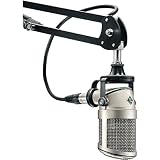
The BCM 104 is Neumann’s broadcast microphone, designed for radio, podcasting, and streaming where a fixed-mount vocal mic with built-in pop protection is needed. I set one up for a weekly podcast and the workflow is effortless: no external pop filter, no shockmount to fuss with, just clean vocal capture in a sleek nickel body.
The integrated pop screen and shock absorption eliminate the most common accessories broadcast users need. The removable head grille is a thoughtful touch for hygiene, since radio hosts and streamers breathe directly into the mic for hours. You can swap or clean grilles between users.
Technically, the BCM 104 features a large-diaphragm cardioid capsule, 7 dB-A self-noise, 14 dB pad, and a highpass filter. The signal-to-noise ratio of 78 dB and sensitivity of 14 dB explain the warm, low-noise character that broadcasters love. The matte nickel finish and broadcast form factor look professional on camera.
The two concerns are minor. The built-in windscreen could offer more pop protection for heavy plosives, and you must supply 48V phantom power. Most modern interfaces handle this without issue.
Podcast and Broadcast Suitability
This is the ideal mic for radio stations, podcast networks, and high-end streaming setups where the mic stays mounted on a boom arm. The integrated features reduce clutter and the consistent sound quality holds up across long sessions.
For traditional music studio work, the TLM 103 or TLM 107 offer more flexibility. The BCM 104 is purpose-built for spoken word and broadcast.
Mounting and Placement
The BCM 104 mounts vertically or horizontally on standard broadcast booms, making it flexible for different desk and console setups. The elastomer suspension inside the mic body handles most handling noise without an external shockmount.
Maintain three to six inches of distance with the pop screen directly between you and the capsule for the cleanest vocal capture.
10. Neumann BCM 705 – The Dynamic Broadcast Alternative
Neumann-BCM 705-Dynamic Studio Microphone – Small Diaphragm hypercardioid Dynamic, Built-in popscreen, Removable Basket, Internal shockmount
Dynamic capsule
Hypercardioid
Integrated pop filter
Removable basket
Pros
- Excellent vocal recording quality
- Integrated pop screen works well
- Internal shockmount reduces handling noise
- Hypercardioid isolation
- Removable basket for cleaning
Cons
- Diaphragm movement issues reported
- Lower 9 kHz frequency ceiling
The BCM 705 is the dynamic sibling to the BCM 104, designed for broadcast environments where condensers pick up too much room noise. I used one in a less-than-perfectly-treated radio studio and the hypercardioid dynamic capsule rejected background noise beautifully while still delivering Neumann’s signature vocal clarity.
The integrated pop screen and elastic suspension mean no external accessories are needed, just like the BCM 104. The removable basket allows cleaning between users, which is essential for shared broadcast environments. Build quality is everything you expect from Neumann, with a solid nickel body that feels built to last.
Technical specs include a hypercardioid polar pattern, signal-to-noise ratio of 76 dB, and a frequency response that tops out around 9 kHz. That ceiling is the main trade-off: you lose the air and sparkle that condensers capture, but you gain isolation and noise rejection. The dynamic capsule also handles high SPL without distortion, which suits loud broadcast environments.
A few users reported diaphragm movement issues causing distortion over time. Check warranty coverage and buy from authorized dealers to protect yourself.
When Dynamic Beats Condenser
The BCM 705 wins in untreated rooms, noisy broadcast studios, and remote setups where isolation matters more than extended high-frequency detail. Talk radio, sports broadcasting, and news reading all benefit from the dynamic capsule’s rejection.
For music recording or voiceover work requiring full-band detail, the BCM 104 or TLM 103 deliver more top-end clarity.
Frequency Response Trade-off
The 9 kHz ceiling means the BCM 705 rolls off the air and sibilance range that condensers capture. For male voices and warmer vocal tones, this is rarely a problem. For female voices and brighter content, the loss of upper detail may require EQ compensation.
Plan your preamp and processing chain around the limited top end to get the best results from this mic.
Buying Guide: How to Choose the Best Neumann Microphone
Choosing among the best neumann microphones comes down to five decisions: capsule type, polar pattern, self-noise tolerance, preamp pairing, and room treatment. Get these right and you will land on the right model for your needs.
1. Match the Capsule to Your Source
Large-diaphragm condensers like the U 87 Ai, TLM 103, TLM 102, TLM 49, TLM 107, and TLM 193 are the right choice for vocals, voiceover, and most close-mic instrument work. They deliver warmth, presence, and the classic Neumann character that flatters voices.
Small-diaphragm condensers like the KM 184 pair excel at acoustic instruments, drum overheads, and stereo techniques. Dynamic mics like the BCM 705 win in noisy environments where rejection matters more than detail.
2. Pick the Right Polar Pattern
Cardioid-only mics like the TLM 102, TLM 103, TLM 49, TLM 193, and BCM 104 focus on the source and reject off-axis noise, which is ideal for untreated rooms and isolated vocal recording. Multipattern mics like the U 87 Ai and TLM 107 add omni and figure-8 options for ensemble recording, room capture, and stereo techniques.
If you only record vocals in a treated space, fixed cardioid is simpler and cheaper. If you record ensembles or experiment with stereo, multipattern is worth the extra cost.
3. Understand Self-Noise Ratings
Self-noise is the hiss the microphone itself produces, measured in dB-A. Lower numbers are quieter. The U 87 Ai at 6 dB-A and BCM 104 at 7 dB-A are studio-quiet, while the TLM 102 at 21 dB-A and KMS 105 at 18 dB-A are noisier but still acceptable for most sources.
If you record quiet acoustic sources or voiceover with long pauses, prioritize low self-noise. For loud sources like drums or amplified instruments, self-noise is rarely the limiting factor.
4. Budget for a Quality Preamp
A Neumann microphone is only as good as the preamp feeding it. Cheap interface preamps add noise, limit dynamic range, and mask the detail that justifies the investment. Plan to spend at least 25 percent of your microphone budget on a dedicated preamp or a high-quality interface.
For home studios, the Universal Audio Apollo, Audient iD, and RME Babyface series all offer preamps worthy of a Neumann. For project studios, dedicated preamps from Neve, API, Grace, and Warm Audio take the sound to another level.
5. Treat Your Room or Buy Treatment
Neumann microphones reveal every flaw in your recording space. Bare walls, parallel surfaces, and reflective ceilings all show up in the recording. Even a TLM 102 will sound mediocre in an untreated bedroom.
Start with broadband absorption at first reflection points, a thick rug, and a ceiling cloud. If full treatment is not possible, a high-quality reflection filter or portable booth is the minimum investment. Check our portable vocal booth recommendations for affordable options that pair well with Neumann mics.
FAQs
What is the highest quality microphone in the world?
The Neumann U 87 Ai is widely considered the highest quality studio microphone in the world, used in nearly every major recording studio for vocals, voiceover, and broadcast. Its double-membrane K 67/87 capsule, three polar patterns, and decades of proven performance make it the global reference standard for studio recording.
What mic did Taylor Swift use?
Taylor Swift has performed live with the Neumann KMS 105 handheld condenser microphone, which delivers studio-quality detail in a stage-ready format. The KMS 105 supercardioid pattern rejects monitor bleed while preserving vocal clarity, which is why major touring artists choose it.
Why is Neumann U87 so expensive?
The Neumann U 87 Ai is expensive because it is hand-built in Germany with a precision double-membrane capsule, undergoes rigorous quality control, and carries decades of brand heritage as the industry studio standard. Its price also reflects limited production volume, premium materials, and the consistency that has made it the default vocal mic in professional studios worldwide.
Why are Neumann mics so good?
Neumann microphones are prized for their honest, detailed sound reproduction, exceptional build quality, and consistency across decades of production. Their capsules are hand-tuned in Germany, the circuitry is engineered for low noise and high headroom, and the tonal character has shaped the sound of countless hit records since 1928.
Which Neumann microphone is best for home studio?
The Neumann TLM 103 is the best choice for most home studios because it delivers the U 87 Ai-class capsule sound at roughly one third of the price, with a fixed cardioid pattern that rejects room noise. For tighter budgets, the TLM 102 offers the Neumann character at an entry-level price.
Conclusion
The best neumann microphones in 2026 span every budget and use case, from the legendary U 87 Ai studio reference to the affordable TLM 102 entry point. For most home and project studios, the TLM 103 delivers the smartest balance of price and performance. The TLM 102 remains the gateway into the Neumann family, while the U 87 Ai and TLM 49 serve professionals who want the full character that built the brand’s reputation.
Pair any of these mics with a quality preamp, treat your room to a reasonable standard, and your recordings will reflect the investment. The Neumann sound has earned its place in audio history for good reason, and the right model from this list will serve you for decades.