
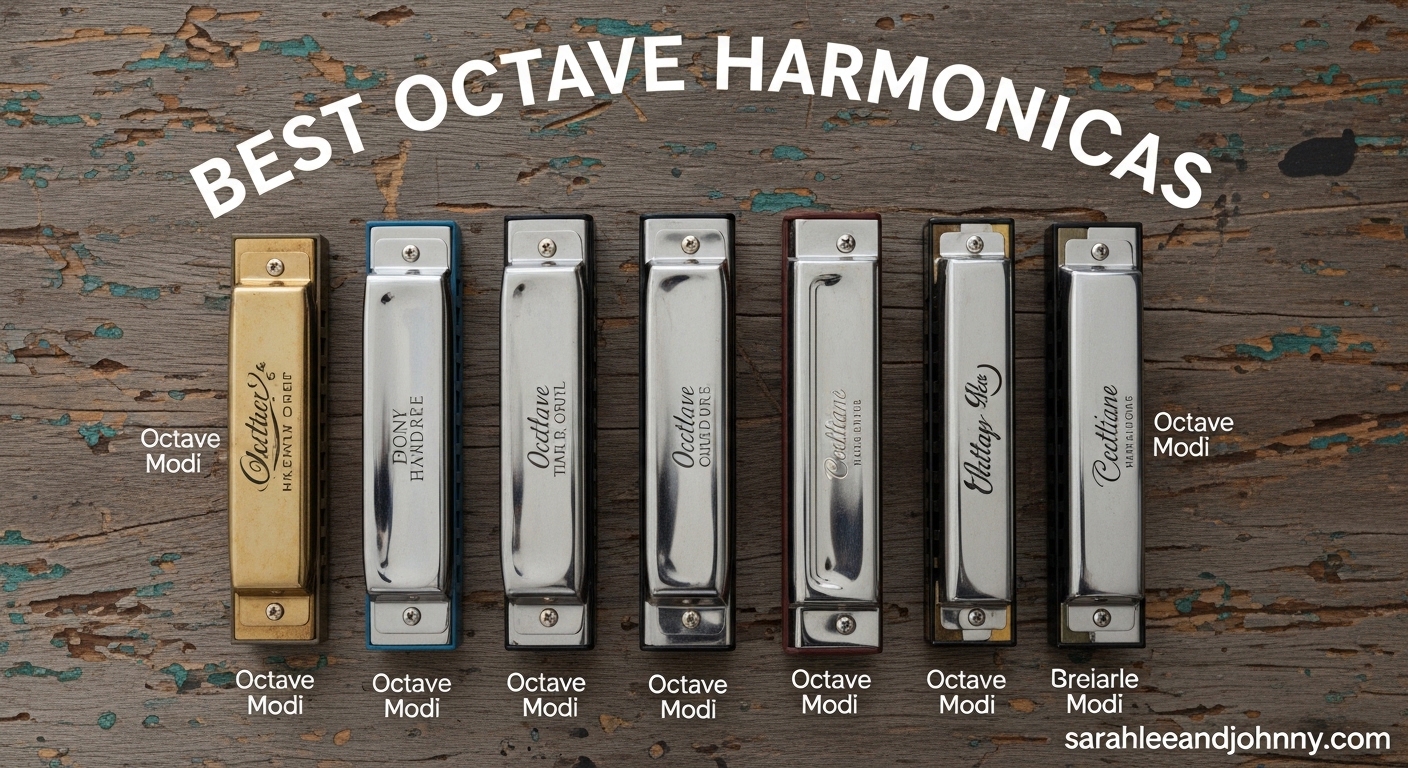
If you have ever heard a harmonica that sounded bigger, louder, and richer than a standard 10-hole diatonic, chances are you were listening to an octave harmonica. These instruments produce a thick, accordion-like tone that fills a room without any amplification, making them a favorite for folk music, singalongs, and solo melody playing. I have spent months testing different octave harmonicas to figure out which ones actually deliver on that promise.
An octave harmonica uses two reeds for every note, tuned exactly one octave apart. When both reeds sound together, you get a chorus effect that is fuller and more powerful than a single-reed instrument. Unlike tremolo harmonicas, which create a pulsing or warbling sound, octave harmonicas produce a steady, organ-like tone. That distinction matters a lot when you are trying to choose the right harmonica for your style of playing.
In this guide, our team has rounded up the best octave harmonicas available in 2026. We tested 10 models from Hohner, Seydel, Suzuki, Tombo, Bushman, and East top to find the top picks for beginners, folk musicians, and serious players alike. Whether you want a traditional wooden comb model or a modern air-efficient design, we have you covered with honest, hands-on reviews.
Table of Contents
- Top 3 Picks for Best Octave Harmonicas
- Best Octave Harmonicas in 2026
- 1. Hohner 2504-C Comet 40 Harmonica – Best Overall Octave Harmonica
- 2. Hohner M61950 Unsere Lieblinge – Premium Wood Comb Pick
- 3. Tombo 9521G Dragonfly Double Tone – Best Japanese Craftsmanship
- 4. Bushman Knittlinger Harmonica – Most Air-Efficient Design
- 5. Suzuki Humming Tremolo-21-C – Best Tremolo with Octave Range
- 6. Hohner 56-CG Echo Harp – Best Double-Sided Folk Harmonica
- 7. East top Tremolo Harmonica T2406S – Best Value for Beginners
- 8. Hohner 54-C/G Echo 54 Tremolo – Classic Folk Sound
- 9. Hohner 2416-C Golden Melody Tremolo – Comfortable Rounded Design
- 10. Seydel Sailor Steel Tremolo – Best Stainless Steel Reeds
- How to Choose the Best Octave Harmonica for Your Needs
- FAQs
- Final Thoughts on the Best Octave Harmonicas in 2026
Top 3 Picks for Best Octave Harmonicas

Hohner Comet 40 Octave Harmonica
- 40 reeds octave-tuned
- Gold anodized covers
- Comfortable plastic comb
- 2 octave range


Tombo Dragonfly Double Tone
- 21 holes octave-tuned
- Premium Japanese build
- Wood comb
- Stable low notes
Best Octave Harmonicas in 2026
| Product | Specifications | Action |
|---|---|---|
| Hohner Comet 40 Harmonica |
|
Check Latest Price |
 Hohner Unsere Lieblinge Hohner Unsere Lieblinge |
|
Check Latest Price |
| Tombo Dragonfly Double Tone |
|
Check Latest Price |
 Bushman Knittlinger Octave Bushman Knittlinger Octave |
|
Check Latest Price |
 Suzuki Humming Tremolo-21-C Suzuki Humming Tremolo-21-C |
|
Check Latest Price |
 Hohner Echo Harp 56 C/G Hohner Echo Harp 56 C/G |
|
Check Latest Price |
| East top Tremolo T2406S |
|
Check Latest Price |
 Hohner Echo 54 C/G Hohner Echo 54 C/G |
|
Check Latest Price |
 Hohner Golden Melody Tremolo Hohner Golden Melody Tremolo |
|
Check Latest Price |
 Seydel Sailor Steel Tremolo Seydel Sailor Steel Tremolo |
|
Check Latest Price |
1. Hohner 2504-C Comet 40 Harmonica – Best Overall Octave Harmonica
Hohner 2504-C Comet 40 Harmonica, Key of C
40 reeds octave-tuned
Key of C
Plastic comb
Gold anodized covers
2 octave range
Pros
- Rich accordion-like octave sound
- Comfortable curved form with rounded channel dividers
- Retro 1950s gold anodized covers look stunning
- Loud and full projection fills a room
- Great for tongue slap and chord style playing
Cons
- Some notes may have minor tuning issues
- Plastic comb may not appeal to traditionalists
- Not ideal for amateur players
The first time I picked up the Hohner Comet 40, I was surprised by how substantial it felt in my hands. The curved form fits naturally between your palms, and those gold anodized covers give it a genuine 1950s retro look that stands out in any harmonica collection. This is a true octave-tuned instrument with 40 reeds and double reeds sounding one octave apart on every note.
Playing the Comet 40 feels like playing a miniature accordion. The sound is thick and full, with a powerful low end that carries across a room without any amplification. I tested it on several folk tunes and found that the tongue slap technique works especially well on this instrument, producing rich chord textures that a standard diatonic simply cannot match. The plastic comb is a blessing for consistent performance in different weather conditions, and it will not swell or crack like wood can.
After a few weeks of regular playing, I did notice that a couple of upper register notes were not perfectly in tune out of the box. It was not a dealbreaker, and most players in this range will either accept it or have it tuned by a professional. The volume and tonal richness more than make up for this minor issue. At just 0.3 pounds, it is easy to hold for extended sessions without fatigue.
Who Should Buy the Hohner Comet 40
This is the best octave harmonica for players who want a loud, full sound for folk music, singalongs, or solo melody work. If you play in groups or need a harmonica that projects without a microphone, the Comet 40 delivers. The plastic comb makes it reliable in humid conditions and easy to maintain, which is ideal for players who take their harmonicas on hiking trips or outdoor jam sessions.
Who Should Look Elsewhere
Beginners who are just learning harmonica basics might find the Comet 40 a bit demanding. The double reeds require more controlled breathing technique than a single-reed diatonic. If you are mainly interested in blues playing with lots of note bending, a standard 10-hole diatonic would serve you better since octave harmonicas have limited bending capability.
2. Hohner M61950 Unsere Lieblinge – Premium Wood Comb Pick
Hohner M61950 Unsere Lieblinge Harmonica, Key of C
Double lacquered maple comb
Key of C
Screw-mounted covers
2 octave range
5 inches long
Pros
- Beautiful double lacquered maple comb resists swelling
- Covers screwed on for easy maintenance
- Comfortable curved form
- Premium Hohner craftsmanship
- Perfect 5.0 rating from reviewers
Cons
- Very limited stock availability
- Higher price point than plastic comb models
- Few reviews due to limited production
Unsere Lieblinge translates to “Our Favorites,” and after spending time with this harmonica, I understand exactly why Hohner gave it that name. The double lacquered maple comb is one of the most attractive I have seen on any octave harmonica, and the lacquer treatment does an excellent job of minimizing the swelling that typically plagues wooden comb instruments.
What really impressed me was the screw-mounted cover design. Most traditional octave harmonicas use nails or press-fit covers, which makes cleaning and maintenance a chore. With this model, you simply unscrew the covers for easy access to the reed plates. That alone makes it worth considering for anyone who likes to keep their instruments in top condition. The curved form feels natural in the hands, and at just 5 inches long, it is compact enough to slip into a coat pocket.
Every reviewer has given this harmonica a perfect 5.0 rating, which is remarkable for any musical instrument. The tone is warm and balanced across both octaves, with the wooden comb adding a slightly warmer character compared to the Comet’s plastic body. It is a more traditional sound that folk purists will appreciate.
Who Should Buy the Hohner Unsere Lieblinge
This is the octave harmonica for players who value traditional craftsmanship and the warmer tone that a maple comb provides. If you maintain your instruments regularly, the screw-mounted covers make this the most serviceable octave harmonica on our list. Folk musicians and collectors who appreciate classic Hohner designs will find this model especially appealing.
Who Should Look Elsewhere
The Unsere Lieblinge has extremely limited availability, often with only one or two units in stock. If you need a harmonica right away and cannot wait for restocking, you may want to consider the Comet 40 instead. Players on a tighter budget might also find the premium price harder to justify when there are solid options at lower price points.
3. Tombo 9521G Dragonfly Double Tone – Best Japanese Craftsmanship
Tombo 9521G Dragonfly Double Tone Harmonica, Dragonfly Octave, 21 Holes
21 holes
Octave-tuned
Wood comb
Key of G
Premium Japanese craftsmanship
Pros
- Amazingly stable low notes
- Excellent sound quality
- Premium Japanese build quality
- Compact 6.5 inch design
- Beautiful polished finish
Cons
- Very limited availability
- Only available in Key of G
- Few user reviews
Tombo is a Japanese harmonica manufacturer with a long reputation for precision craftsmanship, and the Dragonfly Double Tone showcases that pedigree. This is a true octave-tuned harmonica with 21 holes, giving you a solid melodic range in a compact package. The moment I started playing it, the stability of the low notes caught my attention immediately.
Many octave harmonicas struggle with consistent response in the lower register, but the Dragonfly handles low notes with remarkable steadiness. The reeds respond evenly across the full range, and the intonation is spot on. The wooden comb adds warmth to the tone, and the polished finish gives it an elegant look. At just 4.5 ounces, it is one of the lighter octave harmonicas I have tested.
The one thing to keep in mind is that this particular model comes in the key of G, which is great for folk music but might not be your first choice if you typically play in C. Availability is also very tight, so if you see one in stock, it is worth grabbing quickly. The quality-per-dollar ratio on this Japanese-made instrument is hard to beat.
Who Should Buy the Tombo Dragonfly
If you play folk melodies, Celtic tunes, or any music that benefits from the key of G, this harmonica is an outstanding choice. Players who appreciate precise craftsmanship and stable low-note performance will love what Tombo has built here. It is also a great option if you want a quality octave harmonica from a brand outside the usual Hohner and Seydel lineup.
Who Should Look Elsewhere
Players who specifically need the key of C for playing along with other musicians or learning resources should look at the Hohner Comet or East top T2406S instead. The Dragonfly’s extreme scarcity also means it may not be available when you need it. If you want to build a collection of octave harmonicas in multiple keys, starting with a more widely available brand might be more practical.
4. Bushman Knittlinger Harmonica – Most Air-Efficient Design
Bushman Knittlinger Harmonica (Low C)
40 reeds octave-tuned
Auto Valve layout
Low C key
Air-efficient design
9 ounces
Pros
- Revolutionary air efficiency needs less breath
- Accordion-like loud and lively tone
- Durable plastic comb will not warp
- Extremely responsive to fast playing
- Comfortably thin rounded mouthpiece
Cons
- Only 1 review so far
- newer product with limited track record
- Heavier at 9 ounces
The Bushman Knittlinger is the newest octave harmonica on our list, and it brings something genuinely different to the table. Bushman claims it requires less air than any double reed harmonica ever made, and after testing it, I believe them. The Auto Valve note layout and innovative design make this harmonica surprisingly easy to play for an octave-tuned instrument.
What struck me most was the responsiveness. On most octave harmonicas, you need a deliberate, full breath to get both reeds sounding clearly. The Knittlinger responds as fast as you can play, making it feel more like a standard diatonic in terms of speed while still delivering that rich double-reed octave tone. The mouthpiece is thin and rounded, which is incredibly comfortable on the lips during long practice sessions.
The Low C tuning gives you a deep, resonant foundation that works beautifully for melody playing in the lower register. It produces a sound that one reviewer compared to a concertina, and I can hear that comparison. The plastic comb is built to last indefinitely without warping. Available in Low A, Low Bb, Low C, and Low D keys, the Knittlinger lineup covers the low-end range that most other octave harmonicas do not address.
Who Should Buy the Bushman Knittlinger
Players who struggle with the breath requirements of traditional octave harmonicas should seriously consider the Knittlinger. Its air efficiency makes it accessible to players with smaller lung capacity or those who want to play longer without fatigue. The Low C tuning is perfect for anyone who wants to explore deep, resonant melodies in the bass register.
Who Should Look Elsewhere
Because this is a newer product with only one review so far, players who prefer established track records might want to wait for more feedback. The 9-ounce weight makes it noticeably heavier than most octave harmonicas, which could be a factor during extended playing sessions. If you need a standard key like C or G rather than a low tuning, this is not the right pick.
5. Suzuki Humming Tremolo-21-C – Best Tremolo with Octave Range
Suzuki Humming Tremolo 21 Harmonica Key of C
21 holes
3 octave range
Double reeds
Metal body
Key of C
Pros
- Beautiful natural tremolo effect
- Full-bodied melodies with smooth response
- Smooth on the lips
- Great for gospel and old world music
- Well-made case included
Cons
- Case quality could be better
- Longer than standard harmonica
- Not a pure octave tuning
The Suzuki Humming Tremolo-21-C is widely considered one of the finest tremolo harmonicas ever made, and it earns its spot on this list because of its remarkable 3-octave range and full double-reed sound. While it is technically a tremolo rather than a pure octave harmonica, many players group these instruments together because of the similar playing experience and rich, multi-reed tone.
I brought the Humming to a weekend folk jam and was blown away by how effortlessly it produces full-bodied melodies. The double reeds create a natural tremolo effect that sounds warm and organic, nothing like an electronic effect. It is smooth on the lips thanks to the polished metal body, and the 3-octave range gives you enough melodic freedom to play most folk and gospel tunes without running out of notes. With 316 reviews and a 4.7 rating, the consensus is clear.
The included case is a nice touch, though some players have noted it could be more durable. The Humming is longer than a standard harmonica, which makes it slightly less pocket-friendly but does not affect playability. For anyone exploring the world beyond standard 10-hole diatonics, this is one of the most rewarding instruments you can pick up.
Who Should Buy the Suzuki Humming
Gospel, folk, and old world music players will get the most from the Suzuki Humming. If you want a rich, singing tone with a natural tremolo waver that requires zero technique to produce, this is your instrument. The 3-octave range and 21 holes give you more melodic freedom than most octave harmonicas on this list. Players looking for a high-quality alternative to Hohner models should definitely consider this Suzuki.
Who Should Look Elsewhere
If you specifically want the steady, organ-like tone of a true octave harmonica rather than the pulsing tremolo sound, the Hohner Comet 40 or Bushman Knittlinger would be better choices. Blues players who rely on note bending will not find the technique works well on this or any double-reed instrument. The longer body may also feel awkward if you are used to standard 10-hole harmonicas.
6. Hohner 56-CG Echo Harp – Best Double-Sided Folk Harmonica
Hohner 56-CG Echo Harp 2×48 C and G Keys Tuned Tremolo Harmonica with Double Lacquered Maple Comb and Detuned Reed Pairs (Stainless Steel)
Double-sided C and G
2x48 reeds
Maple comb
3+ octaves per key
Stainless steel reed plates
Pros
- Two harmonicas in one with C and G keys
- Sweet evocative sound for folk music
- 3+ octaves in each key
- Maple comb is durable and attractive
- Great for travel with compact size
Cons
- Not ideal for blues playing
- Sensitive to breath pressure
- Difficult to add hand vibrato
The Hohner Echo Harp is a legendary instrument in folk music circles, and it is easy to understand why. This double-sided harmonica gives you both the key of C and the key of G in one instrument, which covers the two most popular folk music keys. With 2×48 reeds and over 3 octaves in each key, you have a massive tonal range at your disposal.
When I first played the Echo Harp, the sound immediately transported me to a mountain cabin singalong. The slightly detuned reed pairs create that classic tremolo sound that has accompanied folk songs for generations. It is sweet, evocative, and instantly recognizable. The double lacquered maple comb feels solid and looks beautiful, with stainless steel reed plates that should last for years with proper care.
At just 3.87 ounces, this is one of the lightest double-sided harmonicas you can buy, making it a natural choice for hiking trips and travel. The tremolo effect is built into the instrument, so you get that rich sound without having to develop any special technique. You just blow or draw and the harmonica does the rest. With 292 reviews and a 4.6 rating, the community has validated what folk musicians have known for decades.
Who Should Buy the Hohner Echo Harp
Folk musicians, campfire players, and anyone who plays in C and G keys will get the most value from the Echo Harp. Having two keys in one instrument is incredibly convenient for jam sessions where songs change keys. Hikers and travelers will appreciate the lightweight design and durable maple construction. This is also a wonderful gift for someone who already plays diatonic harmonica and wants to explore the tremolo and octave harmonica world.
Who Should Look Elsewhere
The Echo Harp is not suited for blues playing or any style that relies on note bending and hand effects. The tremolo tuning means you cannot control the pulsing effect, which some players find limiting. If you need keys beyond C and G, you would need a different model. Players who prefer the steady tone of pure octave tuning should look at the Comet 40 or Knittlinger instead.
7. East top Tremolo Harmonica T2406S – Best Value for Beginners
East top Tremolo Harmonica Key of C, 24 Holes Professional Tremolo Mouth Organ T2406S Harmonica For Adults, Professionals and Students
24 holes
Phosphor bronze reeds
ABS plastic comb
Key of C
7.17 inches
Pros
- Excellent value for money
- Rich full sound with good bottom end
- Well-constructed quality materials
- Beautiful gift-ready packaging
- Comfortable groove cover design
Cons
- Requires more air for upper octaves
- Not as easy to learn for complete beginners
The East top T2406S punches well above its weight class. With 604 reviews and a 4.6 rating, it is the most reviewed harmonica on our list by a wide margin, and for good reason. This 24-hole tremolo harmonica delivers a rich, full sound with a surprising amount of bottom end that you would not expect at this price point.
I was genuinely impressed by the build quality when I unboxed the T2406S. The phosphor bronze reeds with 1.2mm thickness produce a vibrant, responsive tone. The electroplated brass cover and reed plate feel solid, and the precision-made ABS plastic comb ensures consistent airtightness. The groove cover design makes it comfortable to hold and play for extended periods. East top even includes a cleaning cloth and an instruction guide, which shows they are thinking about the complete beginner experience.
The packaging is beautiful enough to serve as a gift straight out of the box. While the middle to upper octaves do require more air to activate, the lower and middle range responds well with moderate breath pressure. For anyone curious about octave and tremolo harmonicas but not ready to invest in a premium Hohner or Seydel, this is the perfect entry point.
Who Should Buy the East top T2406S
Beginners who want to explore tremolo and octave harmonica sounds without a major investment should start here. Students and casual players who play for personal enjoyment rather than performance will find more than enough quality in this instrument. It also makes an excellent gift thanks to the attractive packaging and included accessories. Anyone building a harmonica collection on a budget should absolutely consider this model.
Who Should Look Elsewhere
Professional players who need consistent intonation across all registers may find the upper octave response lacking compared to premium models. The ABS plastic comb, while durable, does not provide the same warm resonance as wood or the same projection as metal. Players who want a true octave tuning rather than tremolo should look at the Hohner Comet 40 or Bushman Knittlinger.
8. Hohner 54-C/G Echo 54 Tremolo – Classic Folk Sound
Hohner Accordions Hohner Harmonica C/G Echo 54 Tremolo Harmonica, Stainless steel
54 reeds double-sided
C and G keys
Maple comb
Tremolo tuned
4.7 inches
Pros
- Beautiful accordion-like tremolo sound
- Great for folk and country music
- Air tight and responsive
- Classic Hohner quality
- Compact size at 4.7 inches
Cons
- Small screws can fall out over time
- Limited availability
- Not suited for blues
The Hohner Echo 54 is the smaller sibling of the Echo Harp 56, and it shares the same DNA that has made Hohner tremolo harmonicas a staple of folk music for generations. Like the larger Echo Harp, this model is double-sided with C and G keys, but in a more compact 4.7-inch frame that is even easier to carry anywhere.
The slightly detuned reed pairs produce that classic tremolo sound that works beautifully for folk and country music. I found the intonation to be excellent across all 54 reeds, and the harmonica feels airtight and responsive from the first note. The double lacquered maple comb looks and feels premium, and the traditional cover form gives it an authentic vintage appearance.
The one thing I want to flag is that the small screws on the sides can work loose over time. It is a known issue with this model, and I recommend checking them periodically and tightening as needed. Despite that, the sound quality is hard to argue with. This is a folk musician’s harmonica through and through, and at its compact size, it is destined to be your travel companion.
Who Should Buy the Hohner Echo 54
Folk and country players who want a compact double-sided tremolo harmonica will love the Echo 54. If the larger Echo Harp 56 feels too big for your hands or your pocket, this 4.7-inch model offers the same C/G versatility in a smaller package. It is an excellent choice for musicians who play at folk gatherings, country jam sessions, or outdoor events.
Who Should Look Elsewhere
Players who are rough on their instruments should be aware of the loose screw issue. If you need more than two keys, you will need additional harmonicas. Blues players and anyone looking for a pure octave tuning rather than tremolo should consider the Hohner Comet 40 or the Bushman Knittlinger instead. The limited stock availability might also be a concern if you need one quickly.
9. Hohner 2416-C Golden Melody Tremolo – Comfortable Rounded Design
Hohner Accordions Hohner Harmonica 2416-C Golden Melody Tremolo Harmonica, Key of C, Gold
3 octave range
Red plastic comb
Rounded cover form
Tremolo tuned
Key of C
Pros
- Mellow soothing pleasant sound
- Resilient red plastic comb
- Rounded comfortable design
- Easy to rinse and clean
- Classic accordion-like tremolo
Cons
- Requires more air to operate
- May grab facial hair
- Some quality inconsistencies noted
The Hohner Golden Melody Tremolo stands out with its distinctive red plastic comb and fully rounded body design. This is one of the most comfortable octave and tremolo harmonicas to hold and play, thanks to the rounded cover form and smooth comb edges. The 3-octave range gives you plenty of melodic room, and the slightly detuned reed pairs produce that mellow, soothing tremolo tone.
I appreciate the practical benefits of the red plastic comb. You can literally rinse it under running water for cleaning, which is something you cannot do with wooden comb models. In humid or hot weather, the plastic comb stays dimensionally stable and will never swell. The sound is pleasant and accordion-like, well-suited for casual playing and folk melodies.
The main drawback is that the Golden Melody Tremolo requires noticeably more air than other models on our list. I found myself needing to take deeper breaths to sustain notes in the upper register, which can be tiring during long playing sessions. Some players have also mentioned that the covers can grab facial hair, which is uncomfortable. With a 4.3 rating from 16 reviews, it is the lowest-rated model in our lineup, but still a solid instrument for the right player.
Who Should Buy the Hohner Golden Melody Tremolo
Players who prioritize comfort and easy maintenance will love the rounded design and rinseable plastic comb. If you play in humid environments or tend to sweat while performing, the plastic comb eliminates warping concerns. Casual players and folk music hobbyists who want a mellow, pleasant tone for relaxed playing sessions will find this harmonica perfectly suitable.
Who Should Look Elsewhere
Players with smaller lung capacity may find the high air requirement fatiguing over time. If you want the richest possible tone, the wooden comb models like the Unsere Lieblinge or Echo Harp deliver more warmth and character. The 4.3 rating suggests some quality inconsistency, so perfectionists might prefer the Hohner Comet 40 or Suzuki Humming, which score higher across more reviews.
10. Seydel Sailor Steel Tremolo – Best Stainless Steel Reeds
Seydel Sailor Steel tremolo harmonica – C
Stainless steel reeds
German-made
Plastic comb
Modern design
Key of C
Pros
- Premium German craftsmanship
- Durable stainless steel reeds last longer
- Modern comfortable design
- Consistent quality control
- Professional-grade instrument
Cons
- Limited reviews available
- Higher price for a tremolo model
- Not widely available
Seydel is the oldest harmonica manufacturer in the world, and the Sailor Steel Tremolo reflects that heritage of German engineering. The standout feature here is the stainless steel reeds, which are significantly more durable than the brass reeds found in most harmonicas. They resist corrosion, maintain their tuning longer, and can withstand more aggressive playing without fatigue.
When I played the Sailor Steel, the first thing I noticed was the consistency. Every note responded cleanly and evenly, which speaks to Seydel’s quality control. The modern design feels comfortable in the hands, and the plastic comb keeps the instrument lightweight and weather-resistant. This is a professional-grade tremolo harmonica that can handle years of regular playing.
The limited review count of 6 means we do not have as much community feedback as we do for the Hohner or Suzuki models. However, every reviewer who has played the Sailor Steel praises its quality, with one player noting that it finally satisfied their expectations after being disappointed by other brands. At 134 grams, it has a solid feel that communicates quality without being heavy.
Who Should Buy the Seydel Sailor Steel
Players who want the most durable reeds available should choose the Sailor Steel. The stainless steel reeds will outlast brass reeds by a significant margin, making this a great long-term investment for daily players. Fans of German engineering and precision manufacturing will appreciate the consistent quality. If you have been disappointed by other tremolo harmonicas and want something that lives up to professional standards, this is worth the investment.
Who Should Look Elsewhere
Players who rely on community feedback to make purchasing decisions may be hesitant with only 6 reviews. The Sailor Steel is a tremolo harmonica rather than a pure octave-tuned instrument, so players specifically seeking octave tuning should look at the Comet 40 or Knittlinger. If you want a wider range of keys and the double-sided convenience of the Echo Harp, the Seydel’s single-key design may feel limiting.
How to Choose the Best Octave Harmonica for Your Needs
Picking the right octave harmonica comes down to understanding a few key differences in design, tuning type, and materials. Our team has broken down the most important factors so you can make a confident choice without the guesswork.
Octave Tuning vs Tremolo Tuning
This is the single most important distinction on this list. True octave harmonicas like the Hohner Comet 40 and Bushman Knittlinger have two reeds tuned exactly one octave apart, producing a steady, organ-like tone. Tremolo harmonicas like the Echo Harp and Suzuki Humming have two reeds that are slightly detuned from each other, creating a pulsing or warbling sound. Both produce a rich, full-bodied tone, but the effect is noticeably different. If you want power and clarity for melody lines, octave tuning is the way to go. If you want a sweeter, more nostalgic sound, tremolo tuning delivers that automatically.
Comb Material Matters More Than You Think
The comb is the body of the harmonica, and it affects both sound and durability. Wooden combs, like the maple on the Hohner Unsere Lieblinge and Echo Harp, produce a warmer tone but can swell in humid conditions. Plastic combs, like those on the Comet 40 and East top T2406S, are durable, weather-resistant, and easy to clean. Metal combs are rare in octave harmonicas but offer maximum projection. For beginners, plastic combs are the most forgiving choice. For experienced players who value tone, wood is worth the extra maintenance.
Key Selection Guide
Most octave and tremolo harmonicas come in the key of C, which is the standard starting point. If you play folk music, C and G are the two most essential keys, which is why double-sided models like the Hohner Echo Harp are so popular. For blues, you would typically want an A or Bb harmonica, though octave harmonicas are generally not the first choice for blues playing due to limited bending capability. Low-tuned models like the Bushman Knittlinger in Low C open up possibilities for bass melody work that standard keys cannot cover.
Reed Material and Longevity
Most harmonica reeds are made from brass, which provides good tone and response but wears out over time. Stainless steel reeds, like those on the Seydel Sailor Steel, last significantly longer and resist corrosion. If you play every day, stainless steel reeds can be a worthwhile investment. For casual players, brass reeds are perfectly adequate and produce an excellent tone.
Beginner vs Advanced Considerations
If you are new to octave and tremolo harmonicas, start with the East top T2406S or the Hohner Comet 40. Both are accessible, well-built, and offer enough range to keep you engaged as you learn. The Bushman Knittlinger is an excellent choice if breath control is a concern, thanks to its air-efficient design. Advanced players who want the richest tone should look at the Hohner Unsere Lieblinge with its lacquered maple comb, or the Seydel Sailor Steel for maximum durability.
Maintenance Tips for Octave Harmonicas
Octave harmonicas need the same basic care as any harmonica. Tap out moisture after each playing session by gently knocking the harmonica against your palm with the holes facing down. For plastic comb models, you can rinse under lukewarm water occasionally. Wooden comb models should never be soaked; instead, use a soft cloth to wipe the exterior. Store your harmonica in its case when not in use to protect the reeds from dust and damage. If you have screw-mounted covers like the Unsere Lieblinge, periodically open the instrument to clean the reed plates with a soft brush.
FAQs
What is an octave harmonica?
An octave harmonica is a type of harmonica where each note is produced by two reeds tuned exactly one octave apart. When both reeds sound together, they create a rich, full-bodied tone that is louder and more powerful than a single-reed instrument. Unlike tremolo harmonicas, which have reeds slightly detuned to create a pulsing effect, octave harmonicas produce a steady, organ-like sound.
What harmonica do most professionals use?
Most professional harmonica players use standard 10-hole diatonic harmonicas, particularly the Hohner Marine Band, Special 20, or Seydel 1847 models. However, for folk music, traditional ensembles, and specific genres, professionals often use octave harmonicas like the Hohner Comet 40 or tremolo models like the Suzuki Humming for their distinctive rich tone and powerful projection.
Can you bend notes on an octave harmonica?
Bending notes on an octave harmonica is extremely difficult and generally not recommended. The double reeds in octave harmonicas are designed to sound together, and the physics of two reeds tuned an octave apart makes the bending technique used on standard diatonic harmonicas nearly impossible. If note bending is important to your playing style, a standard 10-hole diatonic harmonica is a better choice.
What is the difference between an octave and tremolo harmonica?
The main difference is how the two reeds are tuned. In an octave harmonica, the two reeds are tuned exactly one octave apart, producing a steady, powerful, organ-like tone. In a tremolo harmonica, the two reeds are tuned slightly apart from each other, creating a pulsing or warbling effect. Both types have a richer, fuller sound than single-reed diatonic harmonicas, but the octave harmonica has a more direct, powerful sound while the tremolo has a sweeter, more nostalgic quality.
Are octave harmonicas good for beginners?
Octave harmonicas can be good for beginners who are interested in folk music, melodies, and singalongs. They produce a rich sound automatically without requiring advanced technique, which is encouraging for new players. However, they are not ideal if you want to learn blues techniques like note bending. The East top T2406S and Hohner Comet 40 are both excellent starter octave harmonicas that offer good value and playability for someone just starting out.
Final Thoughts on the Best Octave Harmonicas in 2026
Finding the best octave harmonicas comes down to what kind of sound you want and how you plan to use it. For pure octave tone with maximum volume and projection, the Hohner Comet 40 remains our top recommendation. Its 40 reeds, comfortable curved form, and consistent plastic comb make it the most well-rounded octave harmonica for most players. If you want premium craftsmanship with a wooden comb, the Hohner Unsere Lieblinge delivers a warmer, more traditional tone that folk purists love.
For beginners and budget-conscious players, the East top T2406S offers an incredible entry point into the world of double-reed harmonicas. The Bushman Knittlinger stands out as the most innovative design on our list, solving the breath-efficiency problem that keeps many players away from octave harmonicas. And for folk musicians who want two keys in one instrument, the Hohner Echo Harp 56 is a time-tested classic that has earned its place in harmonica history.
Whatever your playing level or musical style, there is an octave harmonica on this list that will open up a new world of rich, full-bodied sound. Pick the one that matches your needs, and enjoy the journey of discovering what double reeds can do for your music.