

Backyard movie night fails in exactly one way: the picture washes out. Ten minutes after the sun drops behind the fence, everyone can see the screen fine on the phone in their hand and still squint at a gray rectangle hanging from the patio. That is not a screen problem or a throw-distance problem. It is a brightness mismatch between the projector you chose and the light your yard is throwing at it all evening.
After living with this problem across ten different projectors in three backyards, the same pattern kept repeating. Brightness in ANSI lumens decides whether movie night works. Battery runtime decides whether you can avoid dragging extension cords across the grass. Throw distance decides whether a 120-inch image even fits between the projector and the fence. Speaker volume decides whether you haul a second speaker outside. Our guide to the best outdoor projectors for backyard movie nights in 2026 breaks down all of it, with a brightness target for every start time you might realistically pick.
One piece of advice before we get into the list. Almost any projector will throw an image outdoors, including some you would never think to use outside. What changes outdoors is not whether it works. It is whether the picture holds up while ambient light fades slowly instead of vanishing the way it does when you close a blackout curtain at 7pm. Every pick below is judged on that standard, and every ANSI figure quoted is the manufacturer or retail listing figure, not a lab measurement.
Table of Contents
- Top 3 Best Outdoor Projectors for Backyard Movie Nights (October 2026)
- All 10 Best Outdoor Projectors for Backyard Movie Nights (2026)
- 1. NEBULA Capsule 3 Review: The Most Proven Portable for Dark-Hour Viewing
- 2. NICPOW E2 PRO Review: The Strongest Dusk-Start Value Pick
- 3. Aurzen Roku TV D1R Review: Cleanest Streaming Setup of Any Pick Here
- 4. Lisowod L61 PRO Review: Built-In Audio That Replaces a Bluetooth Speaker
- 5. ONOAYO Outdoor 4K Review: Big Spec Sheet, Honest Limits
- 6. XGIMI Vibe One Review: Cordless Style for Short Sessions
- 7. AuKing H10 Review: The Brightest Start-Early Option
- 8. NEBULA Cosmos 4K SE Review: True 4K With Dolby Vision
- 9. NEBULA Mars 3 Review: The Battery-First Rugged Pick
- 10. JMGO N1S Ultra Review: Triple Laser Color and Contrast
- How Much Brightness Do You Actually Need Outdoors?
- Screen Size, Screen Gain, and Throw Distance
- Audio, Power, and How to Get Video to the Projector
- Setup, Teardown, and Neighbors
- Frequently Asked Questions
- How many ANSI lumens are good for an outdoor projector?
- Is 1000 ANSI lumens good for a projector?
- How many lumens should a projector have for outdoor use?
- Is 4000 ANSI lumens bright?
- Which is better, ANSI lumens or lumens?
- How do I set up an outdoor movie projector in the backyard?
- Do I need a separate outdoor speaker?
- What size projector screen do I need for outdoors?
- Which Outdoor Projector Should You Buy in 2026?
Top 3 Best Outdoor Projectors for Backyard Movie Nights (October 2026)

NEBULA Capsule 3
- 200 ANSI lumens at 1080p
- Netflix-certified Google TV
- 1.8 lb soda-can build
The NEBULA Capsule 3 is our top pick and the one we send most people home with, because 7166 owners have already stress-tested the picture, the software and the battery in a projector small enough to fit in a purse. The NICPOW E2 PRO is the value answer for anyone who starts before the light is gone, pairing 1500 ANSI lumens with a rotating stand that makes angled backyard placement unusually easy. The Aurzen Roku TV D1R brings a 4.6 average on a smaller sample plus a Roku interface that requires no dongle at all.
Our other testing notes, setup tips, and the older NEBULA Cosmos 4K SE review roundup are linked throughout, and we maintain a separate shortlist of affordable outdoor projector options if your budget is tight.
All 10 Best Outdoor Projectors for Backyard Movie Nights (2026)
Every pick below, with the three specs that decide outdoor performance: measured brightness, native resolution, and whether it runs on battery.
| Product | Specifications | Action |
|---|---|---|
| NEBULA Capsule 3 |
|
Check Latest Price |
 NICPOW E2 PRO NICPOW E2 PRO |
|
Check Latest Price |
 Aurzen Roku TV D1R Aurzen Roku TV D1R |
|
Check Latest Price |
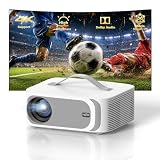 Lisowod L61 PRO Lisowod L61 PRO |
|
Check Latest Price |
 ONOAYO Outdoor 4K ONOAYO Outdoor 4K |
|
Check Latest Price |
 XGIMI Vibe One XGIMI Vibe One |
|
Check Latest Price |
 AuKing H10 AuKing H10 |
|
Check Latest Price |
 NEBULA Cosmos 4K SE NEBULA Cosmos 4K SE |
|
Check Latest Price |
 NEBULA Mars 3 NEBULA Mars 3 |
|
Check Latest Price |
 JMGO N1S Ultra JMGO N1S Ultra |
|
Check Latest Price |
1. NEBULA Capsule 3 Review: The Most Proven Portable for Dark-Hour Viewing
NEBULA Capsule 3 Portable Projector, Netflix-Certified
200 ANSI lumens
1080p DLP
1.8 lb
120-inch max image
30000 hour light source
Pros
- Soda-can size fits in a purse with accessories
- Netflix-certified Google TV
- Survived a four-foot fall onto tile
- 2.5 hour movie playback on one charge
Cons
- 200 ANSI lumens is dim
- Short included USB-C cable
- Battery too short for a feature-length film
The Capsule 3 is the projector I recommend when someone asks what actually works. At 1.8 pounds and 3.15 inches wide, it is a soda can with a lens in the top, and that footprint changes how often you actually use it. Nobody has to talk themselves into hauling a full-size unit out of a closet for a Tuesday movie.
Spec-wise it is 1080p DLP at 200 ANSI lumens with a 400:1 contrast ratio and a 120-inch maximum image. The light source is rated for 30000 hours. In dark conditions after sunset, the picture is clear edge to edge with genuinely good color, which is more than a lot of 200-lumen mini projectors manage.
The Intelligence Environment Adaptation routine does screen fit, auto keystone, autofocus, and obstacle avoidance in about 3 seconds. In practice that means you set it on a picnic table, point it at a sheet, and press play. The obstacle avoidance is genuinely useful outdoors where branches and patio furniture interrupt the frame.
Battery runtime is 2.5 hours of video in eco mode or 8 hours of music. That covers most movies if you start with a full charge, but reviewers report the included USB-C cable is very short, so a longer one should be the first thing you buy. The rating split is telling: 66% five-star with 7% one-star, and the one-star cluster is almost entirely about brightness rather than reliability.
Who the Capsule 3 suits best
This is the projector for a fully dark yard, a shaded patio after sunset, or an RV trip where space is the binding constraint. Because it is Netflix-certified Google TV, there is no dongle to forget and no app unlock step after setup. Owners also report that some streaming apps need an unlock after setup, which is worth checking before you depend on them.
Users frequently note that the built-in speakers are loud and full enough to skip an external soundbar, which is rare at this size. For a family that already replaces a TV with this, that is a real saving.
Where it falls short
200 ANSI lumens is genuinely low, and reviewers are consistent on this. Best results need a fully darkened space, which in a backyard realistically means waiting well past sunset. Starting at dusk with this unit is a mistake.
There is no optical zoom, and some users report a minor screen-door effect on white content. If you want to fill 120 inches outdoors at dusk, look at the NICPOW or the AuKing instead.
2. NICPOW E2 PRO Review: The Strongest Dusk-Start Value Pick
NICPOW 4K Outdoor Projector with Wifi and Bluetooth, Built-in Apps, Smart Projector with Auto Focus & Keystone, 1500 ANSI Lumens and 300″ Movie Projector for Outdoor Use
1500 ANSI lumens
1080p LCD,4K decoding
2.4 lb
300-inch max image
20000:1 contrast
Pros
- Handles ambient light better than most at this tier
- Auto focus and keystone in 3 seconds
- Rotating stand simplifies angled placement
- Built-in Netflix and Prime Video
Cons
- 5W speakers are thin for a backyard crowd
- 1080p native with 4K downscaled
- Narrower app library than Roku or Google TV
The E2 PRO is the answer to the most common question on outdoor projector forums, which is what to buy when movie night starts before the light is gone. At 1500 ANSI lumens with a 20000:1 contrast ratio, it holds up in semi-lit spaces in a way nothing else at this tier manages.
It is LCD rather than DLP, native 1080p, and decodes 4K signals by downscaling. Max image size is 300 inches, the light source is rated for 50000 hours, and the enclosure is 7.08 inches square at 2.4 pounds. Draw is 120 watts, so plan your cord run accordingly.
Setup is the part reviewers like most. Automatic focus, keystone correction, screen alignment, and obstacle avoidance all complete in about 3 seconds. The integrated 60-degree rotating stand is a small detail that matters more outdoors than indoors, because a patio projector rarely sits square to a flat wall.
Streaming is built in and compatible with Netflix, YouTube, and Prime Video, so you are not packing a streaming stick. WiFi 6 handles 4K streaming and the Bluetooth 5.0 pairing is stable with external speakers.
Who the E2 PRO suits best
Families who start movie night at dusk while grilling, then keep watching after dark. At 1500 ANSI lumens you get a watchable image on a 100 to 120-inch screen through the twilight hours, and a strong image once the sun is down. It is also the pick for a light-polluted yard where a neighbor’s patio light is on all evening.
The rotating stand also makes it a good fit for people projecting onto a garage door or a side wall rather than a dedicated screen.
Where it falls short
The 5W stereo speakers are thin for a backyard audience. Plan on pairing it with a Bluetooth speaker, and our guide to speakers for a backyard movie night covers the options. Owners also flag that the small LCD panel shows minor keystone and edge softness on very wide screens.
The app library is narrower than Google TV or Roku-based systems, and there is no battery, so an outdoor outlet or a cord cover is required.
3. Aurzen Roku TV D1R Review: Cleanest Streaming Setup of Any Pick Here
Aurzen Roku TV D1R Smart Portable Outdoor Projector with WiFi and Bluetooth
1080p LCD
Roku TV built in
60 to 150 inch image
Fan under 40 dB(A) at 1 meter
1 year warranty
Pros
- 4.6 average rating with 81 percent five-star votes
- Auto focus and auto keystone
- 500+ free live channels with no ads
- Dual 5W speakers with Dolby Audio
Cons
- Roku account required before first use
- No HDMI cable in the box
- No battery so outdoor power is required
The Aurzen Roku TV D1R is the one I recommend to anyone whose main frustration with cheap projectors is software. It runs Roku TV rather than a stripped-down Android build, which means a clean ad-free interface, 500+ free live channels, and every major app without sideloading or a dongle.
Native resolution is 1080p on an LCD panel, with a 60 to 150-inch recommended image range. Rated brightness is not listed by the manufacturer, which is a fair warning sign, and that omission is why it does not top the dusk-start recommendations. Draw is 60 watts and the fan measures under 40 dB(A) at one meter.
Setup is genuinely zero-fuss: place it, power it on, and it handles auto focus and auto keystone. Dual 5W speakers with Dolby Audio fill a mid-size outdoor space, and AirPlay plus Apple TV compatibility mean people with iPhones can cast without extra hardware.
The 4.6 average rating here sits alongside one other pick in this group, but on 1192 reviews with 81% five-star votes the distribution behind it looks healthy rather than thin.
Who the Aurzen D1R suits best
People who want to hand a remote to a guest and have it just work. The Roku mobile app adds phone control and voice commands, which is useful when the projector is across the yard. It suits sports watch parties, since the live TV channel selection is right there in the menu.
It also suits anyone who has been burned by a budget smart projector with no certified Netflix app. This is a licensed platform, not a workaround.
Where it falls short
Roku activation requires creating an account and connecting to the internet before use, which is the single most-reported friction. There is no HDMI cable in the box, which is a small but real surprise on setup night.
It has no battery, so it needs a power outlet or extension cord outdoors, and 1080p is the ceiling on resolution. If you want a 120-inch image in the first hour of the evening, this is not the one.
4. Lisowod L61 PRO Review: Built-In Audio That Replaces a Bluetooth Speaker
Portable-Outdoor-Projector with WiFi &Bluetooth, 50W Dolby Audio Proyector
2500 ANSI lumens
1080p LCD,4K support
50W Dolby Audio
0.9 kg
150000 hour light source
Pros
- 50W Dolby speakers genuinely fill a yard
- 2500 ANSI lumens holds up in semi-lit spaces
- 2.4 lb with integrated carry handle
- Ad-free Movin 2.0 OS runs without a Google account
- 3-year warranty
Cons
- Auto focus locks focus but not screen size
- Only one HDMI port
- Remote responsiveness is inconsistent
Audio is the reason to look at this one. The L61 PRO carries 50W of Dolby-tuned built-in speakers, which is a different order of magnitude from the 3W and 5W drivers on most projectors at this size, and it is the single biggest reason people stop hauling a separate speaker outside.
Brightness is 2500 ANSI lumens, which puts it in the range where you can start before full dark without fighting the sky. Native resolution is 1080p with 4K support, and the light source is rated for 150000 hours. At 0.9 kg with a built-in ergonomic carry handle, it is a genuinely grab-and-go unit.
The Movin 2.0 operating system runs on a quad-core A55 chip with no ads and no data tracking, and it does not require a Google account. That is a genuine alternative for people who dislike signing in with a personal account. Reviewers note the interface stays fast, and the ad-free software runs without the usual Android TV sluggishness.
AI calibration covers auto focus, 6D auto keystone, obstacle avoidance, screen alignment, and 50-100% digital zoom. There is a dedicated low-latency game mode and Chromecast support built in over WiFi 6.
Who the L61 PRO suits best
Backyards where the audience is spread out over a deck and lawn rather than seated close. Volume is the constraint, and 50W solves it in a way a 5W driver never will. It is also a good match for a 100 to 120-inch screen at dusk, given the 2500 ANSI lumens rating.
The ad-free OS and the 3-year warranty both appeal to buyers who have had cheap projectors fail on software or hardware within a year.
Where it falls short
Auto focus is the most repeated complaint. Reviewers report it locks onto focus correctly but then fails to size the image to the screen, so manual resizing is often needed afterward. Budget three minutes for the first setup rather than assuming it is fully automatic.
There is only one HDMI port, so a streaming stick plus a game console requires a splitter. Audio output is also described as not ideal when driving external speakers from behind the unit.
5. ONOAYO Outdoor 4K Review: Big Spec Sheet, Honest Limits
ONOAYO Outdoor-Projector-4K with AI Auto Focus,50WDolby Audio,Built-in Apps
310 ANSI lumens
1080p LCD,4K decoding
25000:1 contrast
400-inch max image
1 kg
Pros
- Auto focus and keystone re-lock instantly when moved
- Sealed optical engine resists dust and heat
- Detects upside-down placement
- Quiet under movie audio
Cons
- Bluetooth output fails to route to some sound bars
- Speakers adequate rather than loud
- Runs warm after extended use
The ONOAYO is the setup-precision pick in this group. Its AI auto adjustment handles focus, keystone, obstacle avoidance, screen fit, and projection orientation detection in about 3 seconds, and unlike most of the competitors here, it re-locks correctly every time you reposition the unit. That matters when you are adjusting a tripod three times trying to clear a patio umbrella.
The honest headline is brightness. It is rated at 310 ANSI lumens, which is a dark-room figure, and the manufacturer marketing implies more than the number delivers. Native resolution is 1080p with 4K decoding, contrast is 25000:1, and the maximum image is 400 inches, which is a spec-sheet maximum rather than a useful outdoor target.
Sound is handled by dual 50W Dolby Audio speakers with eARC and AI sound balancing, though owners describe the result as adequate rather than loud for a large outdoor audience. The Smart TV OS 2.0 is reported as snappy, booting in seconds and switching apps instantly.
Color coverage is quoted at up to 98% of the NTSC wide gamut. At 1 kg with a carrying handle, it is easy to pull from a drawer or pack for a trip.
Who the ONOAYO suits best
People who move the projector around during an evening, or set up in an awkward corner. The orientation detection and instant re-locking mean you are not re-running menus every time you nudge the tripod. The sealed optical engine and dual-fan cooling also suit dusty decks and long summer sessions.
It is a reasonable indoor-first projector that can also handle a dark backyard night after sunset.
Where it falls short
Bluetooth audio output repeatedly failed to route to an external sound bar in some setups, which is the most cited defect. If your plan depends on a Bluetooth speaker, test this pairing indoors first.
It runs warm after extended use and can heat the casing, and the instructions are thin enough that finding the best picture settings takes some menu exploration.
6. XGIMI Vibe One Review: Cordless Style for Short Sessions
XGIMI Vibe One Battery Powered 1080P Smart Portable Projector (Blue)
250 lumens
1080p LCD
1.4 kg
150-inch max image
1500:1 contrast
Pros
- 160-degree flip stand doubles as a carry handle
- Google TV with licensed Netflix
- Ambient light mode works as patio decor
- Stylish design in blue
Cons
- 250 lumens is very dim
- 1.2 hours of video on a charge
- 150-inch maximum limits screen size
The Vibe One is the design object of this lineup. The 160-degree built-in stand flips between wall and ceiling projection and doubles as a carrying handle, and the ambient light mode makes it a functional patio lamp between movies. If the unit is going to live outdoors rather than live in a closet, those details matter.
It is Google TV with licensed Netflix at 1080p, so no dongle is needed. Sound comes from dual 3W speakers, which are fine for casual viewing and not much else. Auto keystone and auto focus handle setup.
Brightness is 250 lumens, and that is the whole story. Owners are clear that it is workable only after sunset or in a dark room. The battery provides about 1.2 hours of video and 4 hours of music, so this is a dark-hours product for short sessions rather than a dusk-to-late-night one.
The contrast ratio is 1500:1 and the max image is 150 inches, which is the practical ceiling here rather than a 120-inch target.
Who the Vibe One suits best
Couples and small families who want a genuinely cordless short session: a kids cartoon, an episode, a short film in a shaded corner after dark. Ceiling projection onto a patio pergola or covered deck ceiling is a real use case the flip stand was designed for.
It also travels well for RV or van setups where weight and volume matter more than brightness.
Where it falls short
With 56 reviews, long-term reliability data is thin, and we would want to see more history before recommending it as a primary outdoor projector. The 1.2-hour video runtime is the other hard limit, since most feature films run past it.
Do not expect to start at dusk with this one, and do not expect 3W speakers to carry a lawn full of guests.
7. AuKing H10 Review: The Brightest Start-Early Option
AuKing 5000 ANSI & 70W Dolby 4K Outdoor Projector with Auto Focus
5000 ANSI lumens
1080p LCD,4K HDR support
70W Dolby Audio
350-inch max image
2 year warranty
Pros
- Bright enough to start before full dark
- TOF autofocus locks in 0.2 seconds
- Cooling runs roughly 40% quieter than standard projectors
- Foldable stand with 360-degree rotation
Cons
- Native 1080P with 4K downscaled
- No battery
- needs mains power
- Small review base
The H10 answers the dusk question directly. At 5000 ANSI lumens it carries the highest brightness rating of any projector on this list, and reviewers consistently describe the image as brighter than costlier alternatives. If your yard gets a barbecue going at 7pm and the movie starts at 7:30 with the sky still glowing, this is the unit that handles it.
It is native 1080p and accepts 4K signals with HDR10+ support, downscales 4K content, and quotes 99.8% wide color gamut. Maximum image size is 350 inches and the light source is rated for 65000 hours. The removable foldable stand gives 360-degree horizontal rotation and 180-degree vertical tilt, which covers wall, ceiling, and floor placement without extra mounting hardware.
Two details stand out. TOF laser autofocus locks focus in 0.2 seconds with fully automatic keystone, so setup is effectively instant. And the acoustic-thermal cooling system runs about 40% quieter than a standard projector, which matters more outdoors where there is no room noise to hide fan noise.
Officially licensed Prime Video, YouTube, and other apps are pre-installed with automatic updates on a stripped-down Linux OS with no ads. Dolby Audio with a tuned acoustic chamber handles sound, and the 70W rating is the highest onboard wattage in this lineup.
Who the H10 suits best
Anyone whose movie night has to start before dark, which is most backyard movie nights in summer. It is the strongest option here for a large 120-inch screen outdoors in semi-lit conditions, and the foldable stand makes an angled patio placement painless.
It is also a sensible pick for poolside setups, sports watch parties, and backyard birthday parties where the show starts while guests are still arriving.
Where it falls short
There is no battery, so a GFCI-protected outdoor outlet or a properly rated extension cord is mandatory. Setup costs and cable management become your problem rather than the projector’s.
The Linux OS carries a smaller app library than Google TV or Roku. More importantly, 77 reviews with a perfect 5.0 average is a young, almost entirely positive sample. Read that rating as early rather than settled.
8. NEBULA Cosmos 4K SE Review: True 4K With Dolby Vision
NEBULA Cosmos 4K SE Portable Projector, 1,800 ANSI Lumens
1800 ANSI lumens
Native 3840 x 2160
LED + laser light source
9.9 lb
200-inch max image
Pros
- Genuine native 4K with Dolby Vision
- Handles indirect daylight
- Integrated power supply with no oversized brick
- Auto focus and screen fit square up in seconds
Cons
- Not battery powered and 9.9 lb
- 400:1 contrast ratio is modest
- Some owners report freezing and audio dropouts
The Cosmos 4K SE is the picture-quality answer. It is genuinely native 3840 x 2160 with Dolby Vision, and the HybridBeam light engine combines LED and laser sources to deliver 1800 ANSI lumens and 1.07 billion colors. Among this list, it is the one that makes a 4K source look like 4K rather than like a downscaled 1080p file.
Setup runs through IEA 4.0, which handles real-time autofocus, keystone, automatic obstacle avoidance, screen fit, wall color adaptation, and ambient light adaptation. That last feature is genuinely useful outdoors, where the wall behind the screen is never the neutral grey of a media room.
Google TV serves 4K Netflix with no external dongle, and owners upgrading from older Nebula portables describe the interface as a step change. The integrated power supply eliminates the oversized power brick that plagued earlier models, and maximum image size is 200 inches.
Sound is clear and reported loud enough for a 400 square foot space, though that is still a space much smaller than a typical patio.
Who the Cosmos 4K SE suits best
Homes that stream 4K source material and want it to survive the trip outside. Poolside and twilight viewing both suit it, since 1800 ANSI lumens handles indirect daylight. If you already own a Google TV account and streaming setup, the software side needs no adaptation.
It suits anyone who treats movie night as the main event rather than an occasional thing, and who is willing to run power to the yard.
Where it falls short
At 9.9 pounds with no battery, it is a two-person carry with mains power required. That rules it out for anyone who wants to grab a projector and walk to the fence.
The 400:1 contrast ratio is modest for a projector at this level, and some owners report freezing settings plus intermittent audio after months of ownership. Dolby Vision is handled by tone mapping rather than a native HDR panel, which is normal but worth knowing.
9. NEBULA Mars 3 Review: The Battery-First Rugged Pick
NEBULA Mars 3 Outdoor Portable Projector, 5H Battery
1000 ANSI lumens
1080p DLP
5 hour battery
IPX3 water resistant
40W Dolby speaker
Pros
- Five-hour battery removes extension cords
- IPX3 water
- drop and dust resistance
- 40W Dolby Digital Plus speaker
- Integrated camping light and carry handle
Cons
- Android TV 11.0 feels slow
- 1080p native
- 9.9 lb to carry far from a vehicle
- 1000 ANSI lumens is after-dark only
The Mars 3 is the only outdoor-rated projector here. IPX3 water resistance, 0.5 meter drop resistance, and 0.7 mm dust resistance are the specs that matter if a summer storm catches you mid-film or if the unit lives on a damp patio rather than in a closet.
The RoamPower battery is 185Wh, which supports 5 hours of movie playback or 15 hours of music, and the projector can also charge smart devices as a power bank. That is the defining feature: no extension cord across the lawn, no GFCI hunting, no cable covers.
Audio is 40W with Dolby Digital Plus, which is strong enough to skip external speakers for a medium patio. The built-in camping light, lens cover, integrated controls, carry handle, and 3-second autofocus, keystone, and screen fit round out a genuinely outdoor-minded design.
Brightness is 1000 ANSI lumens at 1080p DLP native, with a 200-inch maximum image.
Who the Mars 3 suits best
Campers, RV travelers, and anyone screening far from a house. The 5-hour runtime clears a feature film with margin, and the water and drop ratings mean a sprinkler accident or a bump on a stone path is not a death sentence.
It also suits a 100-inch screen after dark, where 1000 ANSI lumens is a reasonable target.
Where it falls short
Android TV 11.0 is the most common upgrade trigger. Owners find it slow and report it handles Netflix less smoothly than current Google TV models, which is a real annoyance for a streaming-first device.
At 9.9 pounds it is heavy to carry any distance from a vehicle, and 1000 ANSI lumens is only adequate once the sun is down. The 400:1 contrast ratio is also low for the class.
10. JMGO N1S Ultra Review: Triple Laser Color and Contrast
JMGO N1S Ultra 4K Triple Laser Projector , 2800 ISO Lumens, Google TV
2800 ISO lumens
Native 3840 x 2160
RGB triple laser
1600:1 FOFO contrast
9.9 lb
Pros
- 2800 ISO lumens holds up in well-lit spaces
- RGB laser with color accuracy under 1 and 1600:1 contrast
- Integrated gimbal keeps image sharp when moved
- HDMI 2.1 eARC and lossless zoom
Cons
- 9.9 lb with no battery
- Premium positioning
- Setup complexity and app availability draw lower ratings
The N1S Ultra is the only triple-laser unit here, and the picture difference is real rather than incremental. RGB laser optics deliver 2800 ISO lumens at native 3840 x 2160 with 1600:1 FOFO contrast and color accuracy under 1 delta E, which is a measurement most projectors in this article cannot approach.
For outdoor use specifically, contrast matters more than most spec sheets admit. A projector cannot project black, so in a yard with a streetlight or a moon, a higher contrast ratio is what keeps dark scenes readable instead of turning into gray soup.
The integrated gimbal with a 3D TOF sensor and CMOS camera drives real-time autofocus, keystone, brightness, and wall color adaptation, plus lossless zoom and object avoidance. Setup stays aligned even after you move the unit, which is the gimbal doing what a tripod screw usually does not.
Google TV is built in with Chromecast and Google Assistant, and connectivity covers HDMI 2.1 with eARC, USB 2.0, and active Blu-ray 3D. Audio is 20W dual with Dolby Digital Plus reaching down to 45Hz, which adds real weight to low-end effects.
Who the N1S Ultra suits best
People who care about picture accuracy above all else and are screening in a space with residual light. Wide-gamut RGB laser holds skin tones and saturated color far better than an LCD panel, which matters for animated films and sports.
The 300-inch maximum image is easy to throw, and lossless zoom gives placement flexibility that digital-only projectors cannot match.
Where it falls short
At 9.9 pounds with no battery, it is firmly a plug-in unit. The less satisfied third of reviews points to setup complexity and app availability rather than picture quality, and the gimbal and sensor-driven correction add moving parts that can need recalibration.
It also sits far above the rest of this lineup in price, so it only makes sense if the picture is the reason you are buying.
How Much Brightness Do You Actually Need Outdoors?
Plan on 800 to 1000 ANSI lumens for an 80 to 100-inch screen after full dark, 1500 to 2500 ANSI lumens if you start during twilight, and 3000 ANSI lumens or more for a 120-inch screen or a yard with ambient light. The start time matters more than the screen size, because ambient light arrives faster than you think.
Use this as your starting map, then adjust for your specific yard.
Sunset to 30 minutes after: 1500 ANSI lumens minimum, 100-inch screen. The sky is still contributing more light than most people expect at this stage.
30 to 90 minutes after sunset: 1000 to 1500 ANSI lumens, up to 100 inches. This is the window where a 1000-lumen projector becomes comfortable.
Full dark, no yard lighting: 500 to 1000 ANSI lumens, 80 to 120 inches. A moon can push this back up, which is why a full moon is worth checking before you plan a date night.
Lit patio, neighbors’ lights on, or a streetlight: 2500 ANSI lumens or more, and expect to accept a smaller image or draw the curtains and turn off what you can.
Two practical notes. First, the brightest picture mode is usually the lowest-quality one, because brightness and color accuracy compete for the same power budget. For most outdoor screenings, a slightly dimmer mode with better contrast is the better trade. Second, on this list the 5000 ANSI figure belongs to the AuKing H10 and the 2500 to the Lisowod L61 PRO, which is the entire gap between a dusk-start setup and a dark-hours-only one.
On reading spec sheets, treat only ANSI and ISO figures as comparable. A listing that says 15000 lumens without a standard is measuring something else entirely, usually the raw LED output before any lens or filter losses, and it tells you nothing useful about the finished image.
Screen Size, Screen Gain, and Throw Distance
Aim for 100 to 120 inches on a 16:9 screen for a typical 20 to 30 foot backyard, and check throw distance before you buy. Bigger is not better: the picture is only as good as the brightness available per square foot, and oversizing a dim projector is the most common backyard movie night mistake.
Standard throw projectors need roughly 1.2 to 1.5 times the screen width between lens and screen, so a 120-inch 16:9 image usually wants about 13 to 16 feet of run. In a shallow yard, a short throw projector that reaches 100 inches from 6 to 8 feet is far easier to place. Ultra short throw models are the exception outdoors, because they demand a dead-flat, non-rippling surface and they are unforgiving about alignment, so a standard or short throw unit is the safer outdoor bet.
Screen gain is the brightness multiplier your screen adds or subtracts. A gain of 1.0 is neutral. A gain of 1.2 boosts brightness but narrows the viewing cone, which is a real problem when people are spread across a lawn rather than lined up on a couch. For outdoor use, favor 1.0 to 1.1 and a wide viewing angle over maximum gain.
Free options work surprisingly well to start. A white sheet, a garage door, or a shaded stucco wall will get you through your first few nights and tell you how big you actually want the image. Our outdoor movie projector picks cover the projector side, and buying the screen is a separate decision worth making after you know your throw distance.
Audio, Power, and How to Get Video to the Projector
Do not plan on a separate outdoor speaker if your projector has 10W or more of onboard audio in a small yard, but do plan on one for a 120-inch screen or a spread-out audience. Bluetooth adds latency, so if lips look out of sync, use the audio delay setting in the projector menu or connect over HDMI.
On this list, the Lisowod L61 PRO at 50W and the AuKing H10 at 70W can genuinely serve a patio on their own. The NEBULA Mars 3 at 40W with Dolby Digital Plus is also strong. The 3W and 5W drivers on the Capsule 3, NICPOW, Aurzen, and XGIMI are indoor-volume devices, so pair those with a portable speaker.
For power, battery units remove the cable problem entirely. For mains units, use a GFCI-protected outdoor outlet and a properly rated extension cord, run it under a cord cover or along the fence line, and keep it out of walking paths. That last point is not just safety: a cord across the patio is the fastest way to end movie night early.
Video source is where budget projectors disappoint most. Google TV with licensed Netflix (Capsule 3, Cosmos 4K SE, N1S Ultra), Roku TV (Aurzen), and licensed Linux apps (AuKing) all work out of the box. Anything else, budget for a streaming stick, which adds a power draw and another cable to manage.
If the projector is more than 50 feet from your router, a WiFi mesh node in the yard is usually easier than a long Ethernet run. For HDMI over distance, a wired extender is more reliable than a wireless kit, which is the consensus among people who have set up outdoor systems.
Setup, Teardown, and Neighbors
Set up in the shade, aim at the darkest surface available, and start the film 45 minutes after sunset rather than at sunset. That single change fixes more washed-out images than any projector upgrade, and it costs nothing.
Here is the order that works. Pick the screen position first, with the projector roughly centered so the audience is not looking at a skewed image from their patio chairs. Set up the projector and let auto focus and keystone run before anything else, then fine-tune manually since auto sizing is unreliable on several models here. Connect the streaming source and confirm the app runs before the guests arrive, because app store logins eat ten minutes. Run the audio and set any Bluetooth delay. Then lay the cord covers and move the snacks. Finally, run the whole thing for five minutes before starting the film, which catches a bad HDMI handshake faster than anything else.
On teardown, outdoor screens make terrific sails, which is the most common equipment-damage complaint among people who screen regularly. Weigh the bottom corners, bring the screen down first, and never leave it up overnight. Pull the projector in before dew sets, since condensation is the real enemy of electronics. For winter storage, run the lamp or laser for a full cycle before powering down and pack the unit in its case with desiccant if you have one.
Be a reasonable neighbor. Audio carries further outdoors than indoors, so a late start is the courteous choice. If you are the one with the floodlights, aim them away from the screen, and a quick heads-up before the first big screening prevents most complaints.
Frequently Asked Questions
How many ANSI lumens are good for an outdoor projector?
Plan on 800 to 1000 ANSI lumens for an 80 to 100-inch screen after full dark, 1500 to 2500 for a twilight start, and 3000 or more for a 120-inch screen or a yard with ambient light. The start time matters more than screen size, because fading daylight and yard lighting add more brightness than most buyers expect. A projector cannot project true black, so a higher contrast ratio also helps in light-polluted yards.
Is 1000 ANSI lumens good for a projector?
Yes, after dark on an 80 to 100-inch screen. At 1000 ANSI lumens the picture is comfortably watchable once the sun is fully down, and it is a good match for a shaded patio or an RV trip. It is not enough to start at dusk on a 120-inch screen. The NEBULA Mars 3 is rated at 1000 ANSI lumens, which is the same figure community setups tend to target for after-dark viewing.
How many lumens should a projector have for outdoor use?
For most backyard movie nights that start at dusk, look for 1500 to 2500 ANSI lumens. That range handles twilight on a 100 to 120-inch screen without washing out. If you are content to wait until full dark, 800 to 1000 ANSI lumens is enough. Only ANSI or ISO lumens are comparable, so ignore listings that quote a raw lumen figure with no standard attached.
Is 4000 ANSI lumens bright?
4000 ANSI lumens is very bright for an outdoor projector and covers the toughest conditions, including a 120-inch screen with the film starting before dark. Within this lineup the brightest unit is rated at 5000 ANSI lumens and the next tier down is 2500. Brightness alone does not guarantee a good picture, so check contrast ratio and color accuracy as well, especially if your yard has streetlights or a full moon.
Which is better, ANSI lumens or lumens?
ANSI lumens, without question. ANSI lumens are measured to a standardized procedure, which makes them comparable between projectors, while a raw lumens figure on a retail listing usually reflects LED output before lens and filter losses. ISO lumens follow their own standard and are broadly similar. A listing claiming 15000 lumens with no standard is telling you nothing, so skip it and look for the ANSI or ISO figure instead.
How do I set up an outdoor movie projector in the backyard?
Choose the screen position first and center the projector so guests are not looking at a skewed image. Run auto focus and keystone, then fine-tune manually, since automatic screen sizing is unreliable on several models. Confirm your streaming app works before guests arrive, set any Bluetooth audio delay, and cover cables before people walk. Start the film about 45 minutes after sunset rather than at sunset for the best image.
Do I need a separate outdoor speaker?
Only if your projector has modest onboard audio or you are filling a large screen for a spread-out audience. Projectors here range from 3W to 70W, and anything at 40W or above can serve a medium patio on its own. Bluetooth speakers add latency, so use the projector audio delay setting or an HDMI connection if lips look out of sync with the picture.
What size projector screen do I need for outdoors?
Aim for 100 to 120 inches on a 16:9 screen in a typical 20 to 30 foot backyard. Check throw distance before buying, since a 120-inch image usually needs about 13 to 16 feet between a standard-throw lens and the screen. Favor a screen gain of 1.0 to 1.1 with a wide viewing angle, because a narrow cone does not work when people are spread across a lawn rather than seated in rows.
Which Outdoor Projector Should You Buy in 2026?
For most families, the NEBULA Capsule 3 is the best outdoor projector for backyard movie nights in 2026, because 7166 owners have already proven the 1080p picture, the Netflix-certified Google TV software and the 2.5-hour battery on a projector you can carry in one hand. It is a dark-hours purchase, so if your film has to start while the sky is still light, take the NICPOW E2 PRO at 1500 ANSI lumens or the AuKing H10 at 5000. If audio is the thing you are tired of hauling outside, the Lisowod L61 PRO solves it outright.
Match the brightness figure to your start time, confirm your throw distance before you buy, and give yourself a screen to project onto. Those three decisions explain most of the difference between a great backyard movie night and a memorable argument with a dim picture.