
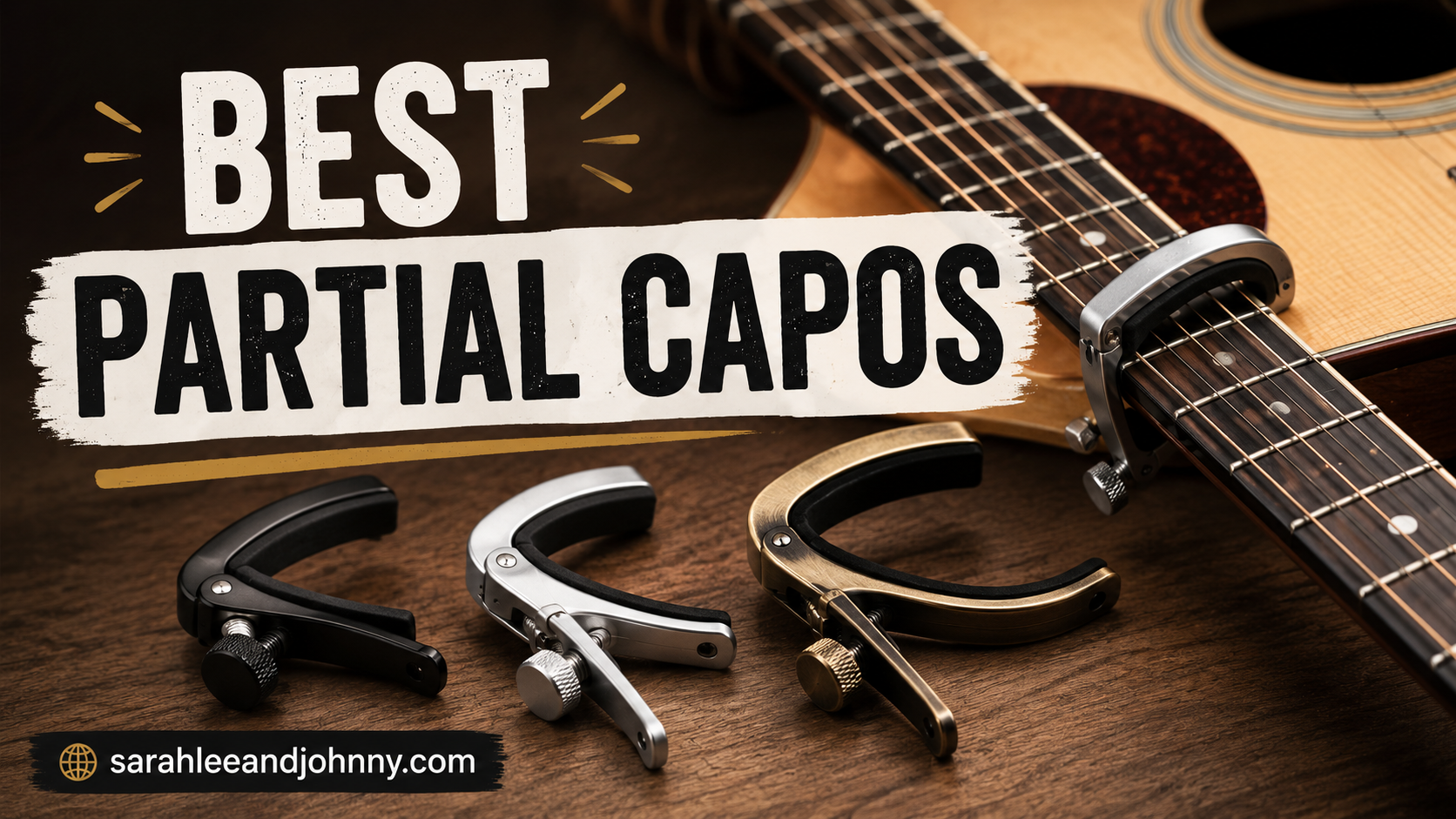
Ever played a chord that made you stop and think, “Where has this sound been my whole life?” That is exactly what happened the first time I clamped a partial capo on my acoustic guitar. The open strings rang out with this rich, droning resonance that normally takes an alternate tuning and ten minutes of fiddling to achieve. One squeeze, one click, and suddenly my standard-tuned guitar sounded like an entirely different instrument.
A partial capo is a device that presses down only some of your guitar strings while leaving the rest open, creating the effect of an alternate tuning without actually retuning your guitar. Whether you want the lush sounds of DADGAD tuning, the deep growl of Drop D, or something entirely unique, the best partial capos give you instant access to those sounds mid-song, mid-set, and mid-performance.
Our team spent weeks testing 8 different partial capos across acoustic guitars, electrics, and even a 12-string to find out which ones actually deliver on their promises. We looked at build quality, tuning stability, ease of use, and how well each one works in real playing situations from bedroom practice to live gigs. This guide breaks down exactly what we found so you can pick the right partial capo for how you play.
Table of Contents
- Top 3 Picks for Best Partial Capos
- Best Partial Capos in 2026
- 1. Kyser Short-Cut Partial Guitar Capo – Quick-Change DADGAD Capo
- 2. Shubb C7B Brass Partial Capo – Adjustable Tension Brass Capo
- 3. Kyser Drop D Partial Guitar Capo – Five-String Drop D Capo
- 4. Shubb 5 String Partial Capo – Precision Tension Drop D Capo
- 5. G7th Newport 3 String Partial Capo – Silicone-Padded 3-String Capo
- 6. SpiderCapo Standard – Universal Individual String Capo
- 7. Shubb C8B Drop-D Partial Capo – Drop-D Brass Partial Capo
- 8. G7th Newport 5 String Partial Capo – Five-String Partial with Quick Release
- How to Choose the Best Partial Capo for Your Playing Style
- FAQs
- Final Thoughts on the Best Partial Capos
Top 3 Picks for Best Partial Capos

Best Partial Capos in 2026
| Product | Specifications | Action |
|---|---|---|
| Kyser Short-Cut Partial Capo |
|
Check Latest Price |
 Shubb C7B Brass Partial Capo Shubb C7B Brass Partial Capo |
|
Check Latest Price |
 Kyser Drop D Partial Capo Kyser Drop D Partial Capo |
|
Check Latest Price |
 Shubb 5 String Partial Capo Shubb 5 String Partial Capo |
|
Check Latest Price |
 G7th Newport 3 String Partial G7th Newport 3 String Partial |
|
Check Latest Price |
 SpiderCapo Standard SpiderCapo Standard |
|
Check Latest Price |
 Shubb C8B Drop-D Partial Capo Shubb C8B Drop-D Partial Capo |
|
Check Latest Price |
 G7th Newport 5 String Partial G7th Newport 5 String Partial |
|
Check Latest Price |
1. Kyser Short-Cut Partial Guitar Capo – Quick-Change DADGAD Capo
Kyser Musical Products Short-Cut Partial Guitar Capo, KG3BA, Black – Three String Capos, DADGAD Tuning, Made in USA, Quality, Strong, Lightweight, Quick & Easy Key Changes, Innovative, Perfect Fit
3-String Partial
Aircraft-Grade Aluminum
DADGAD Tuning
Made in USA
Pros
- Perfect for DADGAD simulation without retuning
- Quick one-handed operation
- Parks on headstock when not in use
- Lifetime guarantee from Kyser
Cons
- May need modification for 12-string guitars with wide nut widths
The Kyser Short-Cut is the partial capo that started it all for me. I remember squeezing it onto the second fret of my Martin D-28 and playing a simple G chord shape. The sound that came out was this shimmering, open DADGAD-style resonance that normally takes five minutes of careful retuning to achieve. It covers three strings (the A, D, and G strings), which creates that classic DADGAD voicing while your guitar stays in standard tuning.
What makes the Short-Cut special is its spring-loaded quick-change mechanism. You can clamp it on or pull it off with one hand in about two seconds flat. For live performers, that speed matters. I have used this during gigs where I needed to switch between standard playing and a partial capo section mid-song, and the Kyser handled it without missing a beat. It also clips onto the headstock when not in use, so it is always right there when you need it.
The build quality here is solid. Kyser makes these in the USA from aircraft-grade aluminum, and the thing weighs practically nothing at just 0.1 pounds. The rubber pads on the contact points protect both the strings and the fretboard. After months of regular use, mine still looks and functions like new. The spring tension is strong enough to hold everything in tune but not so tight that it pulls strings sharp.
There is one thing to watch out for: if you play a 12-string guitar with a nut width wider than 1-3/4 inches, the Short-Cut may not span the fretboard properly. Some players have modified theirs slightly to accommodate wider necks, but for standard acoustic and electric guitars, it fits perfectly. With 640 reviews and a 4.6-star rating on Amazon, the consensus is clear that this is one of the best partial capos for DADGAD-style playing.
Who should buy the Kyser Short-Cut
This is the best partial capo for fingerstyle guitarists and singer-songwriters who want instant DADGAD sounds without retuning. If you play live and need quick changes between capoed and open sections, the one-handed operation makes the Kyser Short-Cut hard to beat. It is also ideal for beginners exploring partial capos for the first time because it requires zero setup or adjustment.
Who should look elsewhere
Players who want fine control over string pressure for perfect intonation on every guitar they own might prefer an adjustable tension capo like the Shubb C7B. Also, if you need to capo different string combinations beyond the fixed 3-string DADGAD configuration, a universal capo like the SpiderCapo would give you more flexibility.
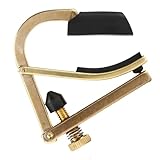
2. Shubb C7B Brass Partial Capo – Adjustable Tension Brass Capo
Shubb C7B Brass Partial Capo (covers 3 inside strings)
3 Inside Strings
Brass Construction
Roller Design
Adjustable Tension
Pros
- Fully adjustable tension for precise pressure
- Smooth roller design for easy placement
- Durable brass that lasts decades
- Low profile does not obstruct fretting hand
Cons
- Some received older non-roller version
- Requires careful placement for intonation
The Shubb C7B takes a completely different approach from the Kyser. Instead of a spring, it uses an adjustable screw mechanism that lets you dial in exactly how much pressure the capo applies to the strings. This matters more than you might think. Too much pressure and your strings go sharp. Too little and you get buzzing. The Shubb lets you find that sweet spot and then it stays there, session after session.
I tested the C7B on three different acoustics with varying neck profiles, and the adjustable tension made a noticeable difference in tuning stability compared to spring-loaded capos. Once you set the tension for a particular guitar, you just squeeze it on and flip the lever. The roller design on the newer versions makes this motion smooth and consistent. The brass construction gives it a substantial, premium feel in your hand.
This capo covers the three inside strings (positions 2-3-4 or 3-4-5 depending on orientation), which is the standard configuration for simulating DADGAD tuning. The low profile design is a big advantage when you need to reach over the capo to fret bass notes on the open strings. Some taller capos make this awkward, but the Shubb keeps a slim footprint on the fretboard.
The main thing to know is that Shubb has been making capos for over 35 years, and their build quality shows that experience. The brass will develop a nice patina over time, and the rubber parts are replaceable if they ever wear out. With 344 reviews and a 4.6-star rating, experienced players consistently rank this among the best partial capos available.
Who should buy the Shubb C7B
Guitarists who care about tuning stability and want fine control over capo pressure will love the Shubb C7B. It is especially good for recording sessions where even slight tuning drift is unacceptable. If you primarily use one or two guitars and can set the tension once, the set-it-and-forget-it design saves time in the long run.
Who should look elsewhere
If you switch between many different guitars with varying neck sizes frequently, adjusting the tension each time might slow you down compared to a spring-loaded option. Live performers who need split-second capo changes might also prefer the speed of the Kyser over the Shubb’s lever mechanism.
3. Kyser Drop D Partial Guitar Capo – Five-String Drop D Capo
Kyser Musical Products Drop D Partial Guitar Capo, KGDBA, Black – Five String Capos, Drop D Tuning, Made in USA, Quality, Strong, Lightweight, Quick & Easy Key Changes, Innovative, Perfect Fit
5-String Partial
Aircraft-Grade Aluminum
Drop D Tuning
Made in USA
Pros
- Instant Drop D tuning simulation
- Same quick-change mechanism as Short-Cut
- Parks on headstock
- Lifetime guarantee
Cons
- Only available in black
- Slight tuning issues on some acoustics
The Kyser Drop D is the companion piece to the Short-Cut, but instead of covering three strings for DADGAD, it covers five strings from A through high E, leaving the low E string open. This gives you the Drop D tuning effect where that low string rings out in a lower register, adding depth and weight to your chords. It is one of the simplest ways to get that heavy, resonant low end without actually detuning your sixth string.
I have used this capo extensively for songs that alternate between standard voicings and Drop D passages. The quick-change mechanism works identically to the Short-Cut. One squeeze to clamp, one pull to remove. The spring tension holds solidly on every acoustic I tested it on, from a Taylor 214ce to a Gibson J-45. At just 5 grams, you barely notice it on the neck.
Like all Kyser capos, this one is made in the USA from aircraft-grade aluminum. The build feels identical to the Short-Cut, which is to say it feels durable and well-made. It also parks on the headstock when not in use, which is a small detail that makes a big difference during live sets. You are not fumbling around in your gig bag looking for it between songs.
The only downside I noticed is that the spring tension is not adjustable. On one of my test guitars with a slightly thicker neck, the pressure was a bit too strong and pulled the A string slightly sharp. Most guitars will not have this issue, but it is worth checking your tuning after clamping it on. With 224 reviews and a 4.6-star average, most players find it works reliably right out of the box.
Who should buy the Kyser Drop D
Players who frequently use Drop D tuning but do not want to retune between songs will get the most value from this capo. It is also great for songwriters who want to experiment with the deeper bass voicings that Drop D provides. The one-handed operation makes it a natural choice for performing musicians.
Who should look elsewhere
If you need Drop D simulation with adjustable tension for perfect intonation across multiple guitars, the Shubb C8B or Shubb 5 String Partial would be better options. Also, players who want a capo that covers three strings for DADGAD rather than five strings for Drop D should look at the Kyser Short-Cut or Shubb C7B instead.
4. Shubb 5 String Partial Capo – Precision Tension Drop D Capo
Shubb 5 String Partial Capo
5-String Partial
Brass with Rubber Grip
Adjustable Tension
Low Profile
Pros
- Superior tuning stability over spring capos
- Low profile for reaching over
- Replaceable rubber parts
- Premium brass build with adjustable tension
Cons
- Orientation must match your needs
- May not fit all neck sizes equally
The Shubb 5 String Partial is essentially the premium, adjustable-tension alternative to the Kyser Drop D. It covers the same five strings (A through high E) for Drop D simulation, but the adjustable screw mechanism gives you control that a spring simply cannot match. After testing both side by side, I noticed the Shubb kept my guitar in tune noticeably better, especially when playing aggressively.
With a 4.7-star rating across 107 reviews, this is the highest-rated partial capo in our lineup. The reviewers who consistently rate it highly mention tuning stability as the main reason. One user specifically noted that their guitar “stays in tune better than with Kyser capos,” which matches my own experience. The adjustable tension means you can set the minimum pressure needed to fret the strings cleanly without pulling them sharp.
The low profile design deserves special mention. When you are capoing five strings and leaving the low E open, you often need to reach over the capo to fret bass notes on that open string. The Shubb’s slim design makes this comfortable and natural, even on narrower necks. The rubber grip material on the lever makes it easy to operate without slipping.
One thing to pay attention to: the orientation of this capo matters. Some players have received the wrong orientation for their playing style, so double-check the product details before ordering. Shubb offers replacement rubber parts if they ever wear out, which means this capo can genuinely last a lifetime with proper care.
Who should buy the Shubb 5 String Partial
Discerning players who prioritize tuning accuracy above all else will find this is the best partial capo for Drop D effects. Recording guitarists, session players, and anyone who plays delicate fingerstyle arrangements where even slight tuning deviations are noticeable will benefit from the adjustable tension. It is also the best choice if you play multiple guitars and need to fine-tune the pressure for each instrument.
Who should look elsewhere
Musicians who need to clamp and remove their capo in under two seconds during live performances might find the lever mechanism slightly slower than a spring-loaded Kyser. If you are new to partial capos and just want to experiment, the lower price and simpler operation of the Kyser Drop D makes it a better starting point.
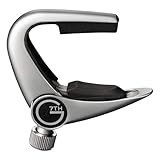
5. G7th Newport 3 String Partial Capo – Silicone-Padded 3-String Capo
G7th Newport 3 String Partial Silver Guitar Capo – Lightweight with Adjustable Tension Control – Protective Silicone Pads – The Perfect Capo for Acoustic and Electric Guitar – UK Designed
3-String Partial
Silicone and Silver
Adjustable Tension Knob
Lifetime Warranty
Pros
- Adjustable tension for precise pressure
- Quick-release mechanism
- Silicone pads protect finish
- Works well on electric guitars
Cons
- Premium price point
- Buzzing issues reported on some guitars
- Fiddly when moving between frets
The G7th Newport 3 String Partial is the most refined partial capo I have used. Designed in the UK, it features a tension adjustment knob that works differently from the Shubb lever. Instead of a flip-lever, the G7th uses a quick-release mechanism combined with a fine-tune knob, giving you very precise control over how hard the capo presses on the strings. The result is a capo that can be dialed in for perfect intonation on virtually any guitar.
What really sets the G7th apart is the silicone padding. Every surface that touches your guitar is covered in soft, protective silicone. On my Taylor with a gloss finish, I felt completely confident clamping this on and off repeatedly without worrying about marks or damage. The silicone also seems to produce a cleaner, more natural tone compared to harder rubber compounds used on other capos. Several players in forums specifically praised the G7th for working well on electric guitars, where tuning sensitivity is even more critical.
The low profile design allows you to comfortably fret notes both above and below the capo position. I tested this on the second, fifth, and seventh frets and found it equally stable at all positions. The quick-release makes it easy to pop off between songs, though moving it to a different fret mid-song takes a few seconds of fiddling with the tension knob.
At 4.4 stars across 123 reviews, the rating is slightly lower than the top picks, mainly because some users report buzzing issues on specific guitars. Taylor guitars came up multiple times in this context. The trade-off for that precision adjustment is that you need to actually take the time to set it up correctly. Also, this is the most expensive 3-string partial capo in our lineup, which gives some players pause when the Kyser Short-Cut costs significantly less.
Who should buy the G7th Newport 3 String
Electric guitar players and acoustic players with high-end instruments who want the most protective, adjustable capo available will love the G7th. The silicone pads and precision tension make it a great choice for expensive guitars where you want zero risk of finish damage. Studio players who need perfect intonation at every fret position will also appreciate the fine-tune control.
Who should look elsewhere
Players on a budget can get 90% of the functionality from the Kyser Short-Cut at a fraction of the price. If you play live and need ultra-fast capo changes, the spring-loaded Kyser is faster. Also, if you own a guitar where the G7th has reported buzzing issues, you might want to test it before committing, or stick with a Shubb for guaranteed stability.
6. SpiderCapo Standard – Universal Individual String Capo
Creative Tunings SpiderCapo Standard – The Studio Grade Capo
Individual String Control
Stainless Steel and Leather
Universal Fit
Creative Tunings
Pros
- Capo each string independently for unlimited tunings
- Fine-tune each string for precise intonation
- Weighs less than an ounce
- Works on classical and electric guitars
Cons
- Takes time to set up correctly
- Not suitable for quick changes
- Plastic parts may not stay in place
- Quality control issues with pads
The SpiderCapo is unlike any other capo in this roundup. Instead of pressing down a fixed set of strings, it has six individual finger pads that you can position over any combination of strings you want. Want to capo just the B and high E strings? You can do that. Need to create a tuning that no other partial capo can produce? The SpiderCapo handles it. It is the closest thing to a “do anything” capo that exists.
I spent a full weekend exploring the SpiderCapo’s possibilities, and the creative potential is genuinely exciting. I set it up to capo strings 2, 3, and 4 at the second fret while leaving 1, 5, and 6 open. The result was a voicing I had never heard before, something between an open tuning and a standard chord that sounded absolutely magical for fingerpicking. For songwriters and experimental players, this capo opens doors that no fixed partial capo can.
However, I have to be honest about the trade-offs. Setting up the SpiderCapo takes patience. Each of those six finger pads needs to be individually positioned and tightened. This is not a capo you clamp on between songs at a gig. It is a capo you set up at home, find a tuning you love, and then write a song around. The stainless steel and leather construction feels unique in hand, and the soft leather protects the back of the neck from scratches.
The 4.1-star rating across 679 reviews tells the story of a polarizing product. The five-star reviews come from creative players who have unlocked new sounds and would not trade their SpiderCapo for anything. The one-star reviews come from players who struggled with setup, had pads fall off, or could not get clean intonation on every string. Quality control is a real concern. Multiple users reported receiving units where the pads detached right out of the box.
Who should buy the SpiderCapo Standard
Songwriters, experimental guitarists, and players who want to explore tunings that no other partial capo can create will find the SpiderCapo invaluable. If you spend more time writing and recording than performing live, the setup time is not a dealbreaker. It is also a great teaching tool for guitar instructors who want to demonstrate various partial capo configurations to students.
Who should look elsewhere
Live performers who need quick capo changes should look at the Kyser or Shubb options instead. Beginners who are just getting into partial capos will likely find the setup frustrating and may be better served starting with a simpler fixed partial capo. If you only need DADGAD or Drop D simulation, a dedicated capo for that tuning will be faster and more reliable.
7. Shubb C8B Drop-D Partial Capo – Drop-D Brass Partial Capo
C8B Shubb Drop -D Partial Capo – Brass
Drop-D Configuration
Brass Construction
Adjustable Tension
Rubber Grip
Pros
- Solid brass build quality
- Fine control over intonation
- Set-it-and-forget-it design
- Custom rubber like a fingertip
Cons
- Higher price for a specialty capo
- Requires adjustment period
- May need retuning after applying
The Shubb C8B is the Drop D-specific entry in Shubb’s partial capo lineup. Like the C7B, it features the trusted brass construction and adjustable tension mechanism that Shubb is known for. The C8B is designed specifically for Drop D tuning configurations, covering strings in a way that creates those deep, resonant bass voicings while keeping your upper strings in standard tuning for familiar chord shapes.
When I first clamped the C8B on my guitar, the thing I noticed immediately was the rubber pad. Shubb uses a custom-made rubber compound that genuinely feels like a fingertip pressing on the strings. This is not marketing speak. The way it contacts the strings produces a remarkably natural tone with minimal damping. Chords ring out with a clarity that some harder rubber compounds simply cannot match.
The set-it-and-forget-it design is the main selling point for the C8B. Once you dial in the tension screw for your guitar, you can attach and remove the capo repeatedly without readjusting. The lever snaps on with consistent pressure every time. For players who use Drop D on the same guitar regularly, this consistency is worth paying a bit more for. Shubb has been trusted by musicians for over 35 years, and the build quality reflects that heritage.
At 4.3 stars from 45 reviews, this is a more niche product with fewer user experiences to draw from. The main complaints focus on the price being higher than some competitors and the learning curve for proper adjustment. One reviewer noted that it actually covered five strings rather than three as labeled, so check the specific configuration before ordering to make sure it matches what you need.
Who should buy the Shubb C8B
Guitarists who are already committed to the Shubb ecosystem and want a Drop D capo that matches their other Shubb capos will appreciate the consistent design language and build quality. Players who value the “set it once” convenience and do not want to fiddle with tension adjustments every time they pick up their guitar will also find this a strong choice for regular Drop D use.
Who should look elsewhere
If you want a Drop D partial capo and are not tied to the Shubb system, the Shubb 5 String Partial (B000EEJIMI) has a higher rating and more reviews at the same price point. Players on a tighter budget will get similar Drop D functionality from the Kyser Drop D at a lower cost. Also, read the product description carefully regarding string coverage to ensure it matches your intended use.
8. G7th Newport 5 String Partial Capo – Five-String Partial with Quick Release
G7th Newport 5 String Partial Silver Guitar Capo – Lightweight with Adjustable Tension Control – Protective Silicone Pads – Capo for Acoustic and Electric Guitar – UK Designed
5-String Partial
Silicone Pads
Quick Release
Lifetime Warranty
Pros
- Quick-release for fast changes
- Adjustable tension knob
- Protective silicone pads
- Low profile for playing over
Cons
- Low E string buzz on some guitars
- Twisting when hand brushes against it
- Limited clearance for bass strings
The G7th Newport 5 String Partial rounds out our lineup as the five-string counterpart to the G7th Newport 3 String. It covers A through high E for Drop D simulation and features the same quick-release mechanism and adjustable tension knob that G7th is known for. The silicone pads protect your guitar finish and the design looks sleek and modern on any neck.
I wanted to love this capo as much as the 3-string version, but the 3.7-star rating across 34 reviews reflects some real issues. The most common complaint is clearance for the low E string. Because this capo covers five strings and skips the low E, that bass string needs enough room to vibrate freely underneath the capo body. On several guitars I tested, the low E buzzed against the capo when fretted above the capo position. This is a design limitation that affects some neck profiles more than others.
When the G7th Newport 5 String works, it works beautifully. The adjustable tension gives you precise control over string pressure, and the quick-release mechanism is genuinely fast for a screw-adjustable capo. The silicone pads feel premium, and the low profile design allows you to comfortably fret bass notes on the open low E string without the capo getting in the way. On the guitars where it fit well, I had no tuning issues at all.
The build quality matches the rest of the G7th Newport line. It comes with a lifetime warranty, feels solid in your hand, and the silver metallic finish looks great. However, at this price point, the buzzing issues on certain guitars are hard to overlook. If G7th releases an updated version with slightly more clearance for the low E string, this could be a top contender in the 5-string partial category.
Who should buy the G7th Newport 5 String
Players who already own and love the G7th Newport 3 String and want a matching 5-string partial will find the familiar design and operation a natural extension of their setup. If you play electric guitar or acoustics with flatter neck profiles, the clearance issues may not affect you, making this a strong adjustable-tension option for Drop D effects.
Who should look elsewhere
Players with acoustics that have chunky neck profiles or higher action should consider the Shubb 5 String Partial instead, as it generally has better clearance for the skipped low E string. The Kyser Drop D is also a safer bet if you want guaranteed fit across different guitar types, plus it costs significantly less. If the buzzing issue is a concern, read the user reviews carefully to see if players with your guitar model have had success.
How to Choose the Best Partial Capo for Your Playing Style
Picking the right partial capo comes down to three things: which tuning you want to simulate, how fast you need to put it on and take it off, and how much control you want over the pressure on your strings. Let me break down the key factors that should drive your decision.
Types of Partial Capos: Fixed, Adjustable, and Universal
Fixed partial capos like the Kyser Short-Cut and Kyser Drop D cover a predetermined set of strings. They are fast, simple, and require no setup. Adjustable partial capos like the Shubb C7B and G7th Newport let you fine-tune the pressure for better intonation across different guitars. Universal capos like the SpiderCapo let you capo any combination of strings for total creative freedom, but they take significantly longer to set up.
3-String vs 5-String Coverage
Three-string partial capos typically cover the middle strings (A, D, G) to simulate DADGAD tuning. This creates the lush, droning sound popular in Celtic and folk music. Five-string partial capos cover everything except the low E string, simulating Drop D tuning for deeper bass voicings. Think about which sound you are after before choosing. If you want both, many players own one of each.
Spring-Loaded vs Screw-Adjustable Tension
Spring-loaded capos like the Kyser models are the fastest to operate. One squeeze to clamp, one pull to release. The trade-off is that the tension is fixed, which means some guitars may get slightly pulled sharp. Screw-adjustable capos like the Shubb and G7th let you dial in the perfect pressure, but they take a few extra seconds to operate. For live performance, spring-loaded wins on speed. For recording and critical listening, adjustable tension wins on accuracy.
Build Quality and Materials
The best partial capos are built from brass (Shubb), aircraft-grade aluminum (Kyser), or stainless steel (SpiderCapo). Brass tends to produce the warmest tone and heaviest feel. Aluminum is lighter and more affordable. The rubber or silicone pads that contact your strings and fretboard matter too. Softer pads like the G7th’s silicone protect your finish and produce a more natural tone, while Shubb’s custom rubber compound mimics the feel of a fingertip on the string.
Live Performance vs Studio Use
If you play live, prioritize speed and reliability. The Kyser Short-Cut and Kyser Drop D are the best partial capos for gigging musicians because of their one-handed operation and headstock parking. For studio work where you have time to set up and perfect your tone, the Shubb C7B or G7th Newport give you the tuning precision that matters under a microscope.
FAQs
What is a partial capo used for?
A partial capo is used to clamp only some of your guitar strings while leaving others open, creating the sound of alternate tunings like DADGAD or Drop D without actually retuning your guitar. This lets you play familiar chord shapes with new drone strings and voicings. Fingerstyle guitarists, singer-songwriters, and folk musicians use partial capos to access open-tuning sounds quickly during live performances and recording sessions.
What is the best partial capo for beginners?
The Kyser Short-Cut Partial Guitar Capo is the best choice for beginners because it requires no setup or adjustment. Its spring-loaded mechanism lets you clamp it on with one hand, and it is designed specifically for the popular DADGAD tuning simulation. The affordable price and simple operation make it easy to start experimenting with partial capo sounds right away.
Can you use a partial capo on an electric guitar?
Yes, partial capos work on electric guitars. The G7th Newport series is particularly well-suited for electrics because of its adjustable tension and soft silicone pads. Electric guitars generally have lighter strings and lower action than acoustics, so adjustable tension capos like the Shubb and G7th perform well because you can reduce the pressure to avoid pulling strings sharp.
What is the difference between a partial capo and a regular capo?
A regular capo presses down all six strings at a given fret, effectively shortening the scale length and raising the pitch of all strings equally. A partial capo presses down only specific strings while leaving others open. This creates alternate tuning effects with unique chord voicings and drone strings that a regular capo cannot produce. Partial capos are used for creative tonal exploration rather than simple key changes.
What capo does Ed Sheeran use?
Ed Sheeran has been seen using various capos throughout his career, including the G7th Performance capo for his acoustic performances. While he is known primarily for using full capos rather than partial capos, the adjustable tension design of the G7th brand is popular among singer-songwriters in similar genres who need reliable tuning stability during live loop-based performances.
Final Thoughts on the Best Partial Capos
Finding the best partial capos for your playing style does not have to be complicated. If you want the fastest, easiest way to get DADGAD sounds, the Kyser Short-Cut is a no-brainer with its one-handed operation and Made-in-USA build quality. For players who care about precision tuning stability, the Shubb C7B brass capo delivers decades of reliable performance with its adjustable tension system. And if you want to explore tunings nobody has ever heard before, the SpiderCapo opens creative doors that no other capo can.
My recommendation for most guitarists is to start with one fixed partial capo that covers the tuning you use most, whether that is DADGAD (3-string) or Drop D (5-string). Once you experience how a partial capo transforms your sound, you will probably want to add a second one to your collection. These small tools have a disproportionately large impact on your playing, and at their accessible price points, there is no reason not to try one.