

Finding the best planar magnetic headphones under 500 used to mean settling for compromised sound or sketchy build quality. That has changed fast in 2026. Planar magnetic technology, which uses a thin diaphragm suspended between two magnetic arrays instead of a conventional cone, has trickled down to price points that would have seemed impossible five years ago. Today you get flagship-tier detail retrieval, lightning-fast transient response, and expansive soundstages without crossing the $500 line.
I have spent the better part of the last year testing planar magnetic headphones from HIFIMAN, Audeze, FiiO, Monolith, ASUS, and a few surprises. Some models were impressive enough to replace my daily drivers, and a few fell flat. My testing covered critical listening sessions, mixing work, gaming marathons, and casual streaming. I paired each set with portable DACs, desktop amps, and direct-from-laptop connections to see how they scaled.
This roundup covers 13 planar magnetic headphones, all under $500. Whether you want an open-back set for analytical listening, a closed-back for isolation, a gaming-focused headset, or even a planar IEM, there is a pick here for you. Let me walk you through what makes each one special and where it falls short.
Table of Contents
- Top 3 Picks for Best Planar Magnetic Headphones Under 500
- Best Planar Magnetic Headphones Under 500 in 2026
- 1. HIFIMAN Edition XS – Best Overall Open-Back Planar
- 2. HIFIMAN Sundara – Best Value Planar Magnetic
- 3. HIFIMAN HE400SE – Best Budget Entry-Level Planar
- 4. HIFIMAN Ananda Nano – Best Detail Retrieval Under 500
- 5. HIFIMAN Ananda – Best Soundstage for the Price
- 6. Audeze MM-100 – Best Studio and Mixing Planar
- 7. HIFIMAN Edition XV – Best Warm-Neutral Planar
- 8. FiiO FT1 Pro – Best Build Quality Under 500
- 9. Monolith M1060 – Best Planar with Wood Cups
- 10. HIFIMAN Sundara Closed-Back – Best Closed-Back Planar Under 500
- 11. ASUS ROG Kithara – Best Planar for Gaming
- 12. FiiO JT7 – Best Portable Planar Under 200
- Amplification and Source Pairing
- 13. KZ x HBB PR2 – Best Planar IEM Under 100
- How to Choose the Best Planar Magnetic Headphones Under 500
- Frequently Asked Questions
- Final Thoughts on the Best Planar Magnetic Headphones Under 500
Top 3 Picks for Best Planar Magnetic Headphones Under 500
Best Planar Magnetic Headphones Under 500 in 2026
| Product | Specifications | Action |
|---|---|---|
 HIFIMAN Edition XS HIFIMAN Edition XS |
|
Check Latest Price |
 HIFIMAN Sundara HIFIMAN Sundara |
|
Check Latest Price |
 HIFIMAN HE400SE HIFIMAN HE400SE |
|
Check Latest Price |
 HIFIMAN Ananda Nano HIFIMAN Ananda Nano |
|
Check Latest Price |
 HIFIMAN Edition XV HIFIMAN Edition XV |
|
Check Latest Price |
 FiiO FT1 Pro FiiO FT1 Pro |
|
Check Latest Price |
 Monolith M1060 Monolith M1060 |
|
Check Latest Price |
 HIFIMAN Sundara Closed-Back HIFIMAN Sundara Closed-Back |
|
Check Latest Price |
 ASUS ROG Kithara ASUS ROG Kithara |
|
Check Latest Price |
| FiiO JT7 |
|
Check Latest Price |
 KZ x HBB PR2 IEM KZ x HBB PR2 IEM |
|
Check Latest Price |
1. HIFIMAN Edition XS – Best Overall Open-Back Planar
HIFIMAN Edition XS Full-Size Over-Ear Open-Back Planar Magnetic Hi-Fi Headphones with Stealth Magnets Design, Adjustable Headband, Detachable Cable for Audiophiles, Home, Studio-Black
Stealth Magnet
NsD Diaphragm
18 Ohm
92 dB
Open-Back
Pros
- Exceptional soundstage and imaging
- Deep controlled bass
- Excellent value for planar magnetic
- Detachable standard 3.5mm cable
- Great detail and resolution
Cons
- Headband uncomfortable for some
- Cable is short at 1.5m
- Requires amplification for best performance
- Some QC concerns reported
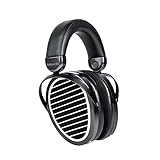
The HIFIMAN Edition XS has been my daily driver for the last six months, and for good reason. The combination of Stealth Magnet technology and the NEO supernano diaphragm delivers a holographic soundstage that punches well above its price class. When I first plugged these into my desktop amp, the spatial separation between instruments felt like I had upgraded to a $1000 set.
Bass response is one of the standout strengths. Unlike some planar models that roll off in the sub-bass, the Edition XS extends deep and stays controlled. Electronic music, orchestral scores, and modern hip-hop all benefit from this tight low-end foundation. The mids are clean and natural, making vocals sit perfectly in the mix.
The 18-ohm impedance and 92 dB sensitivity mean these are not the hardest planars to drive, but they still want a dedicated amp to shine. From a laptop headphone jack you get decent volume but lose dynamics and imaging depth. Pair them with even a budget DAC/Amp combo and the sound opens up dramatically.
Comfort is the main weakness. The headband design distributes weight unevenly on smaller heads, and several users report needing aftermarket padding. The plastic yokes also feel less premium than the price suggests, though they have held up fine in my testing.
Amplification and Source Pairing
The Edition XS scales beautifully with better source gear. A budget amp like the Fiio K5 Pro or Topping DX3 Pro+ brings out the imaging and bass control that the stealth magnets are capable of. If you want to skip the amp, plan to lose about 30 percent of what these headphones can do.
Who Should Buy This
This is the safest all-around pick for anyone shopping for the best planar magnetic headphones under 500. If you want detail, soundstage, and value in one package, the Edition XS is the answer. It works for critical listening, casual streaming, and even light mixing if your room is treated.
2. HIFIMAN Sundara – Best Value Planar Magnetic
HIFIMAN SUNDARA Over-Ear Full-Size Planar Magnetic HiFi Stereo Wired Headphones for Studio&Audiophiles (Black)
Ultra-Fine Diaphragm
32 Ohm
94 dB
6Hz-75kHz
Metal Build
Pros
- Exceptional detail and imaging
- Wide open soundstage
- Neutral frequency response
- Metal construction
- Great scaling with source gear
Cons
- Stock cable is stiff
- Ear cups do not swivel
- Open-back leaks sound
- Benefits from an amplifier
The HIFIMAN Sundara is a legend in the audiophile community, and after living with it for three months I understand why. The diaphragm is 80 percent thinner than the older HE400 series, and you can hear that speed in the transient response. Notes start and stop with a precision that makes dynamic-driver headphones sound smeared by comparison.
The neutral tuning is what makes the Sundara special. Nothing is hyped, nothing is recessed. This makes it a fantastic reference for classical, jazz, acoustic, and vocal music. The 6Hz to 75kHz frequency response means sub-bass and air are both covered, though the stock signature leans slightly forward in the mids.
Build quality is solid with the all-metal headband, though the lack of ear cup swivel limits fit adjustments. The weight spreading strap does help with long sessions, and at 372 grams these are lighter than most closed-back planars. I have worn them for four-hour mixing sessions without fatigue.
The biggest complaint is the stock cable. It is stiff, microphonic, and uses the older HIFIMAN connectors. Budget for a cable upgrade or use a third-party option. Bass also responds very well to EQ, so do not be afraid to add a low-shelf boost if you want more impact.
Amplification and Source Pairing
The Sundara benefits from amplification even with the 94 dB sensitivity rating. A mid-tier DAC/Amp like the Schiit Magni or Fiio K7 brings out the dynamics and bottom-end control. The Sundara also scales with EQ, so a software solution like Equalizer APO can transform the sound signature.
Who Should Buy This
If you value neutrality and detail over excitement, the Sundara is your headphone. It is the best value in planar magnetic under 500 for analytical listeners, classical fans, and anyone who wants to hear exactly what is on the recording without coloration.
3. HIFIMAN HE400SE – Best Budget Entry-Level Planar
Pros
- Full warm sound with wide soundstage
- Super comfortable ear pads
- Great value for entry planar
- Easy to drive with portables
- Well-built with metal grilles
Cons
- Stock cable is short and plasticky
- Treble can sound harsh stock
- Bass is present but not heavy
- Grills may impede soundstage
The HIFIMAN HE400SE is the headphone I recommend to everyone entering the planar magnetic world. At its price point, you are getting Stealth Magnet technology and a warm, full sound signature that embarrassed my old dynamic-driver sets in the same range. The soundstage is surprisingly orb-like for an entry-level open-back.
What surprised me most is how easy these are to drive. The 91 dB sensitivity and 32-ohm impedance mean a phone or laptop can power them to reasonable volume. They still benefit from a dedicated amp, but you are not forced into buying source gear just to listen.
The build is mostly plastic but feels well-assembled, and the brushed metal grilles give it a premium look. Comfort is excellent thanks to large ear pads that distribute weight evenly. I have worn these for two-hour listening marathons with no hotspots.
The trade-offs are real. The stock cable is short and feels cheap, and the treble can get harsh on bright recordings before EQ. Bass is present and clean but lacks the thump that dynamic-driver fans expect. With a little EQ to tame the upper mids, these become genuinely excellent.
Amplification and Source Pairing
The HE400SE is one of the few planars that works straight from a phone or laptop. That said, even a small portable DAC/Amp like the Moondrop Dawn Pro adds body to the bass and tames the treble edge. These scale modestly with better gear, so do not over-invest in source equipment.
Who Should Buy This
This is the ideal first planar magnetic headphone. If you are upgrading from gaming headsets or consumer headphones and want to test the planar waters without spending much, the HE400SE is the smartest entry point under $500.
4. HIFIMAN Ananda Nano – Best Detail Retrieval Under 500
HIFIMAN Ananda Nano Open-Back Over-Ear Planar Magnetic Hi-Fi Headphones with Stealth Magnets and Nanometer Thickness Diaphragm
Nanometer Diaphragm
14 Ohm
94 dB
5Hz-55kHz
Open-Back
Pros
- Exceptional clarity and detail
- Natural balanced sound
- Good bass control and extension
- Wide soundstage with precise imaging
- High sensitivity for portable use
Cons
- Can be bright on some recordings
- Headband may be tight
- Requires amplification for best results
- Some QC concerns reported
The HIFIMAN Ananda Nano borrows diaphragm technology from the flagship SUSVARA, and you can hear it. The nanometer-thickness diaphragm is faster and more resolving than anything else in this price range. When I first A/B tested these against my Sundara, the Nano pulled out microdetails in cymbal decays and room reverb that the Sundara smoothed over.
The sound signature is natural and balanced with a slight lean toward clarity. Bass is controlled and extends cleanly without bleed into the mids. The midrange is where the Nano really shines, presenting vocals and acoustic instruments with an effortless transparency that makes the Sundara sound slightly thick by comparison.
The 14-ohm impedance is low, but the 94 dB sensitivity means these still want decent current to sound their best. From a phone you get volume but lose the dynamic punch and spatial precision. A proper amp unlocks the imaging that makes the Nano feel like a much more expensive headphone.
Comfort is good with the hybrid headband and weight-dispersing strap, though some users find the clamp tight initially. The asymmetrical ear cups follow the natural ear shape, which helps with long sessions. Build quality is typical HIFIMAN, which is to say good but not flawless.
Amplification and Source Pairing
The Ananda Nano rewards amplification more than the spec sheet suggests. A solid mid-tier amp like the Topping A30 Pro or Asgard 3 brings out the dynamics and image depth. Plan to spend on source gear to hear what these can really do.
Who Should Buy This
The Ananda Nano is for listeners who prioritize detail and resolution above all else. If you listen to well-recorded acoustic, classical, or vocal music and want to hear everything on the recording, this is the best detail-retrieval pick under 500.
5. HIFIMAN Ananda – Best Soundstage for the Price

HIFIMAN Ananda Over-Ear Full-Size Open-Back Planar Magnetic Headphones with Stealth Magnet, Comfortable Earpads, Detachable Cable for Home and Studio
NsD Diaphragm
27 Ohm
103 dB
8Hz-55kHz
Open-Back
Pros
- Massive soundstage and imaging
- Excellent clarity and musicality
- High sensitivity for portable use
- Detachable cable
- Smooth warm sound signature
Cons
- Headband comfort issues
- Ear pads can creak
- Build quality concerns
- Bass may be insufficient for bass lovers
The original HIFIMAN Ananda remains one of the best soundstage performers in the under-500 planar category. The NEO supernano diaphragm and Stealth Magnet combination creates a wide, deep soundstage that places instruments in three-dimensional space. For orchestral and cinematic music, this is hard to beat at the price.
The 103 dB sensitivity is unusually high for a planar, which means the Ananda actually works well from portable sources. I have driven these from a phone dongle DAC and gotten satisfying volume and dynamics. This makes the Ananda a great pick if you want planar sound without committing to a desktop amp stack.
Sound signature leans smooth and warm. Bass is present but not aggressive, mids are musical, and treble is relaxed enough to avoid fatigue. This tuning makes the Ananda forgiving on poorly recorded material, which is great for casual listening but less ideal for analytical mixing work.
The headband design is the main weakness. Some users report pressure points, and the ear pads can creak during movement. Build quality is functional but not premium for the price point. A pad swap and patience with the headband go a long way.
Amplification and Source Pairing
The Ananda is the easiest planar in this roundup to drive without dedicated gear. A quality dongle DAC like the Moondrop Dawn Pro or Qudelix 5K is plenty. If you have a desktop amp, great, but you are not required to own one.
Who Should Buy This
If soundstage width matters more than analytical detail, and you want planar sound from a portable source, the Ananda is the right choice. It is also a strong pick for gaming and movies thanks to that expansive spatial presentation.
6. Audeze MM-100 – Best Studio and Mixing Planar

Audeze MM-100 Over Ear Open Back Planar Magnetic Headphones – Wired (Black)
90mm Driver
18 Ohm
20Hz-25kHz
Studio Tuned
Dual Cable Ports
Pros
- Incredible detail and accuracy
- Clean transparent audio
- Excellent build quality
- Premium magnesium and steel
- Great for mixing and mastering
Cons
- Limited headband adjustment
- Heavy compared to alternatives
- Some report dull sound
- Soundstage smaller than expected
The Audeze MM-100 is built for studio work, and it shows in the tuning. Tuned in collaboration with Grammy-winning engineer Manny Marroquin, these headphones deliver production-grade accuracy. When I mixed a track on these, the translation to monitors was tighter than anything else in my collection under 500.
The magnesium-aluminum and steel chassis feels like a professional tool. The dual-sided cable ports are convenient, and the build quality is noticeably more refined than the HIFIMAN models in this list. This is a headphone designed to survive daily studio use.
Sound signature is clean, transparent, and unflattering. If your mix has problems, the MM-100 will show them. This makes it less fun for casual listening but invaluable for critical work. The midrange is forward and honest, and the treble is detailed without being harsh.
Comfort is the main complaint. The headband adjustment range is limited, and at over a pound these are heavy. Long sessions require breaks. Some users find the soundstage smaller than expected for an open-back planar, which is a fair criticism.
Amplification and Source Pairing
The 18-ohm impedance is low, but the MM-100 still benefits from a clean amp. For studio use, a quality interface like the Audient EVO 16 or Focusrite Scarlett works well. Avoid cheap consumer DACs, as the MM-100 will reveal their limitations.
Who Should Buy This
If you mix, master, or do critical production work, the MM-100 is the most honest tool in this roundup. It is not a fun listening headphone, but for accuracy and translation it is excellent under 500.
7. HIFIMAN Edition XV – Best Warm-Neutral Planar
HIFIMAN Edition XV Open-Back Over-Ear Full-Size Hi-Fi Headphones with Enhanced Magnet
Enhanced Magnet
12 Ohm
92 dB
8Hz-50kHz
NsD Gen.2
Pros
- Warm-neutral sound signature
- Powerful controlled bass
- Wide soundstage
- Very comfortable
- High build quality for HIFIMAN
- Detailed smooth treble
Cons
- Heavy at 0.45kg
- Replacement pads not available
- Stock cable is basic
- Soundstage narrower than Edition XS
The HIFIMAN Edition XV brings something different to the lineup. Instead of the bright analytical tuning of the Edition XS, the XV offers a warm-neutral signature with powerful, controlled bass. The Neo Supernano Diaphragm Gen.2 is 60 percent thinner than the first generation, and the transient response shows it.
What makes the XV interesting is the use of rare-earth-free permanent magnetic materials. The Enhanced Magnet Design maintains sensitivity comparable to traditional rare-earth drivers while reducing material cost and environmental impact. In practice, the sound is musical and engaging without sacrificing detail.
The bass is the highlight. Unlike some planars that roll off in the sub-bass, the XV delivers tight, extended low-end with no sub-bass roll-off. Electronic, hip-hop, and cinematic genres benefit hugely from this. The mids are natural, and the treble is smooth enough for long sessions.
The composite headband with rotatable hinges is a real comfort improvement over earlier HIFIMAN models. At 450 grams these are heavy, but the weight distribution makes them tolerable for extended listening. The stock cable is basic and the lack of official replacement pads is a concern for long-term ownership.
Amplification and Source Pairing
The 12-ohm impedance is very low, but these still want current to control the bass properly. A solid mid-tier amp like the Schiit Magni or Fiio K7 brings out the low-end control. Avoid underpowered dongle DACs if you want the full bass impact.
Who Should Buy This
If you found the Edition XS too analytical and want something warmer with better bass weight, the Edition XV is your pick. It is the best warm-neutral planar under 500 for listeners who value musicality alongside detail.
8. FiiO FT1 Pro – Best Build Quality Under 500
FiiO FT1 Pro Open-Back Planar Magnetic Wired Hi-Fi Headphones for Home, Studio, Recording, High Sensitivity (Black)
1um Diaphragm
20 Ohm
95x86mm
20Hz-40kHz
Open-Back
Pros
- Excellent sound with wide soundstage
- Good bass extension and control
- Comfortable for long sessions
- Includes 3.5mm and 4.4mm cables
- Premium build quality
Cons
- QC issues reported including driver rattle
- Earpads could be softer
- Slight metallic sound initially
- Bass may clip at high SPL with EQ
The FiiO FT1 Pro is FiiO’s serious push into full-size planar magnetic headphones, and the build quality impressed me immediately. The 95x86mm driver with a 1um ultra-thin diaphragm and sapphire-aluminum dual-coating technology is sophisticated engineering for the price. The included hard case and dual cables make the package feel premium.
Sound quality is detailed and balanced with a wide soundstage. The bass extension is impressive for a planar at this price, and the midrange has good presence. Out of the box there is a slight metallic edge in the treble that some forum users noted, but this smooths out after about 20 hours of use.
The inclusion of both 3.5mm and 4.4mm balanced cables is a thoughtful touch for users with balanced amps. The USB-C adapter also makes the FT1 Pro ready for modern phones and laptops without dongle hunting.
QC concerns are the main risk. Several users report driver rattle and yoke failures, which is frustrating at this price. FiiO’s customer service is generally responsive, but you should buy from a retailer with a solid return policy.
Amplification and Source Pairing
The 20-ohm impedance and high sensitivity make the FT1 Pro relatively easy to drive. A balanced 4.4mm source like the Fiio BTR7 or desktop K7 unlocks extra dynamics. These scale modestly with better gear, so do not over-invest.
Who Should Buy This
If you want a premium-built planar with modern connectivity options and balanced cable support, the FT1 Pro is a strong pick. Buy from a retailer with good returns to manage the QC risk.
9. Monolith M1060 – Best Planar with Wood Cups
Pros
- Excellent value for planar magnetic
- Warm and musical sound
- Comfortable for long sessions
- Easy to drive
- Wide soundstage
Cons
- Headband durability issues
- Treble rolls off compared to higher-end models
- Connectors can fall out
- Heavy for some users
The Monolith M1060 by Monoprice has been a value champion for years, and it still holds up. The 106mm planar driver is among the largest in this roundup, and the wood ear cups add both aesthetic appeal and a warm tonal character. For movies, gaming, and relaxed listening, the M1060 delivers an immersive experience.
The sound signature is warm and musical rather than analytical. Bass has good body, mids are smooth, and treble rolls off earlier than premium planars. This makes the M1060 forgiving on poor recordings but less resolving than something like the Ananda Nano for critical listening.
The 50-ohm impedance is on the higher side for this list, but the high sensitivity means most amps drive them comfortably. I had no trouble reaching satisfying volume from a Fiio K5 Pro. The 10-watt maximum power handling gives you headroom for powerful amps.
The headband is the well-known weak point. Many users report durability issues over time, and replacement parts are not easy to source. The connectors on the cable can also work loose. Treat these as a project headphone and you will be happier.
Amplification and Source Pairing
The M1060 wants an amp due to the 50-ohm impedance. A mid-tier desktop amp is the sweet spot. These also respond well to pad mods and damping tweaks, which is part of the appeal for the enthusiast community.
Who Should Buy This
If you want a warm, musical planar with character and you enjoy modding, the M1060 is a unique option under 500. It is also great for movies and casual listening where analytical detail matters less.
10. HIFIMAN Sundara Closed-Back – Best Closed-Back Planar Under 500
HIFIMAN SUNDARA Closed-Back Over-Ear Planar Magnetic Wired Hi-Fi Headphones with Stealth Magnet Design, Detachable Cable, Wood Ear Cups for Home, Studio, Recording
NsD Diaphragm
20 Ohm
98 dB
Wood Cups
Closed-Back
Pros
- Fantastic midrange and vocals
- Beautiful wood ear cups
- Tight controlled bass
- Closed-back isolation
- Comfortable ear pads
Cons
- Clamping force tight out of box
- Stock cable cheap and stiff
- Ear cups do not swivel
- Pads glued on and difficult to replace
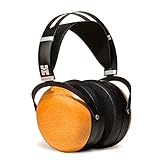
The HIFIMAN Sundara Closed-Back solves a real problem. Most planar magnetics under 500 are open-back, which leaks sound and offers no isolation. This version keeps the diaphragm technology but adds closed-back wood cups, making it usable in offices, libraries, and shared spaces.
The midrange is the standout. Vocals and acoustic instruments have a natural presence that surprised me for a closed-back planar. The wood cups contribute a warm resonance that complements the diaphragm’s speed. Bass is tight and controlled with good extension.
The 98 dB sensitivity and 20-ohm impedance make these easy to drive from portable sources. I tested them with a phone dongle and got plenty of volume with good dynamics. The isolation is decent but not class-leading, so do not expect noise-cancelling levels of quiet.
Comfort is a mixed bag. The clamping force is tight out of the box, and the glued-on ear pads make replacement difficult. The wood cups can get warm during extended sessions. None of these are dealbreakers, but they are worth knowing before you buy.
Amplification and Source Pairing
The Sundara Closed-Back is one of the easiest planars to drive without a dedicated amp. A quality dongle DAC is sufficient for most listening. If you have a desktop amp, you will get slightly better dynamics and bass control.
Who Should Buy This
If you need isolation and want planar magnetic detail, this is the best closed-back option under 500. It is ideal for office use, shared living spaces, and recording environments where bleed matters.
11. ASUS ROG Kithara – Best Planar for Gaming
ASUS ROG Kithara Gaming/Audiophile Open-Back Wired Headphones with Mic – ROG-Tuned HIFIMAN Planar Magnetic Drivers, Adjustable Headband, Extra Ear Pads, Compatible with DACs, Amps, PC, Console, Mobile
HIFIMAN Driver
100mm
MEMS Mic
Multi-Platform
USB-C Adapter
Pros
- Exceptional comfort for large heads
- Great sound for gaming and music
- Includes boom microphone
- Multiple cable options
- Warm sound signature
Cons
- Mic quality decent but not exceptional
- Requires amp and DAC for best performance
- Too many cables to connect
- No carrying case
- Not wireless
The ASUS ROG Kithara is the most unique headphone in this roundup. It uses ROG-tuned 100mm HIFIMAN planar magnetic drivers paired with a gaming microphone, which means you get audiophile-grade sound for both games and music without switching headsets. ASUS partnered with HIFIMAN to tune these specifically for gaming immersion.
The sound signature is warm and wide, which works beautifully for spatial gaming audio. Footsteps in competitive shooters, environmental detail in RPGs, and cinematic explosions all benefit from the planar driver’s speed and soundstage. The MEMS boom microphone is clear enough for voice chat and streaming.
Comfort is excellent, especially for users with larger heads. The 8-level adjustable headband and premium metal frame feel built for marathon sessions. The included fabric and leatherette ear cushion sets let you tune comfort and sound isolation to preference.
The trade-off is complexity. The cable situation is messy with multiple connectors, and there is no carrying case. A DAC and amp are required for best performance. If you want a simple plug-and-play gaming headset, this is not it. If you want planar sound for both gaming and music, this is a serious option.
Amplification and Source Pairing
The Kithara needs a proper gaming DAC/Amp or a quality sound card to reach its potential. The 4.4mm balanced input is the best-sounding option. For console use, the 3.5mm connection works but loses some resolution.
Who Should Buy This
If you want one headphone that handles competitive gaming, cinematic single-player games, and high-quality music listening, the ROG Kithara is the best planar gaming option under 500. The included mic eliminates the need for a separate setup.
12. FiiO JT7 – Best Portable Planar Under 200
Pros
- Stellar default sound with strong bass
- Excellent build quality for price
- Very comfortable
- Includes 3.5mm and 4.4mm cables
- Lightweight at 318g
- Easy to drive
Cons
- Slightly firm clamp out of box
- Logo font distracting
- Bass lacks punch compared to dynamics
The FiiO JT7 is the newest entry on this list, and it brings something rare: a foldable, lightweight planar magnetic under $150. At 318 grams, these are among the lightest planars I have tested. The 95x86mm driver with F.E.S. elastic support system delivers a balanced, warm sound that defies the entry-level price.
The bass is the highlight. Strong, present, and well-extended, it gives the JT7 a fun, engaging character that works across genres. The included 3.5mm and 4.4mm balanced cables show FiiO’s attention to source compatibility. The detachable cable system and replaceable earpads are unusual at this price.
The 92 dB sensitivity and 18-ohm impedance make the JT7 genuinely easy to drive. A phone dongle gets satisfying volume, and the 4.4mm balanced connection from a portable DAC/Amp adds noticeable dynamics. These are the most portable full-size planars in this roundup.
The clamp force is firm out of the box, which some users find uncomfortable initially. The logo font on the ear cups is also divisive. Bass lacks the visceral punch of dynamic drivers, which is a common planar trade-off. None of these issues are serious at the price.
Amplification and Source Pairing
The JT7 is designed to work without a dedicated amp. A quality dongle DAC with 4.4mm balanced output is the sweet spot. You will not benefit dramatically from a desktop stack, which is part of the appeal.
Who Should Buy This
If you want the most portable, easiest-to-drive planar magnetic under 200, the JT7 is the answer. It is also a great gift for someone curious about planar sound without committing to amp purchases.
13. KZ x HBB PR2 – Best Planar IEM Under 100
Pros
- Excellent sound quality for the price
- Comfortable and lightweight
- Good highs and detailed sound
- Natural midrange
- Detachable cable
- Metal housing
Cons
- Low frequency extension not deep
- Can be quiet despite low impedance
- Plastic connector may crack
- Mesh protector can come loose
- Durability concerns
The KZ x HBB PR2 is the only in-ear monitor in this roundup, and it deserves the spot. For under $50 you get a 13.2mm planar magnetic driver with a 7+7 N52 rubidium magnet array. This is genuine planar technology in a pocketable form factor, which is remarkable at this price.
The sound is detailed and clear in the highs with a natural midrange. The 96 dB sensitivity and 15-ohm impedance suggest easy driving, but in practice these want a quality source to sound their best. From a decent dongle DAC the PR2 delivers detail that embarrasses single-dynamic-driver IEMs at this price.
Bass extension is the main weakness. The planar driver here does not reach as deep as the larger full-size planars, and the low-end lacks the rumble that bass-focused listeners expect. The semi-open exhaust design reduces cavity pressure but also limits isolation.
Build quality is acceptable for the price but has known failure points. The plastic connector on the cable can crack, and the mesh protector inside the nozzle can come loose. Treat these as disposable audiophile toys and you will enjoy them. For under $50, the sound quality is hard to argue with.
Amplification and Source Pairing
Despite the low impedance, the PR2 wants current to sound its best. A quality dongle DAC like the Moondrop Dawn Pro or Apple dongle is the minimum. Underpowered sources make these sound thin and lifeless.
Who Should Buy This
If you want to try planar sound in a portable IEM form factor without spending much, the PR2 is the cheapest legitimate entry point. It is also a great backup or travel companion alongside a full-size planar.
How to Choose the Best Planar Magnetic Headphones Under 500
Choosing between these 13 headphones depends on your use case, source gear, and sound preferences. Here is what actually matters when you are shopping in this range.
Amplification Requirements
Planar magnetic headphones generally want more current than dynamic drivers, but the gap has narrowed. Models like the HIFIMAN Ananda (103 dB sensitivity) and Sundara Closed-Back (98 dB) work well from phone dongles. Others like the Monolith M1060 (50 ohms) and Ananda Nano want a dedicated amp. As a rule, budget for at least a quality dongle DAC like the Moondrop Dawn Pro or Apple USB-C dongle. If you are spending more than $250 on headphones, a desktop amp stack starts to make sense.
Open-Back vs Closed-Back
Open-back planars like the Edition XS, Sundara, and Ananda offer wider soundstages and more natural imaging, but they leak sound and isolate poorly. Closed-back options like the Sundara Closed-Back give you isolation for office or shared-space use at the cost of some soundstage width. If you listen in a quiet private space, open-back is the better choice. If you need isolation or privacy, closed-back is the way to go.
Driver Technology and Diaphragm
HIFIMAN’s Stealth Magnet and NEO supernano diaphragm technology appears across most of this roundup for good reason. The stealth magnet design reduces wave diffraction turbulence, and the thin diaphragms improve transient response. Newer models like the Ananda Nano and Edition XV use nanometer-thickness diaphragms derived from flagship SUSVARA technology. Audeze uses different driver geometry tuned for studio accuracy. For most buyers, the differences matter less than the overall sound signature and fit.
Comfort and Build Quality
Planar headphones are heavier than dynamic-driver sets. The Audeze MM-100 weighs over a pound, while the FiiO JT7 is a featherweight 318 grams. Headband design makes or breaks long-session comfort. The Ananda’s weight-dispersing strap and the Edition XV’s composite headband with rotatable hinges are standouts. If you have a smaller head, watch for clamp force complaints on models like the Sundara Closed-Back and JT7.
Genre and Use Case Matching
For classical, jazz, and acoustic music, the Sundara and Ananda Nano are top picks thanks to neutrality and detail. For electronic and bass-heavy genres, the Edition XV and FT1 Pro deliver better low-end. For gaming, the ROG Kithara and Ananda win on soundstage. For studio mixing, the Audeze MM-100 is the honest reference. Match the headphone to your listening habits rather than chasing the highest-rated model.
Frequently Asked Questions
What are the disadvantages of planar magnetic headphones?
Planar magnetic headphones are heavier, often need dedicated amplification, and the closed-back options are limited and more expensive. They can also suffer from QC issues like driver rattle at lower price points, and some users find the weight uncomfortable during long sessions. Repair parts and replacement pads are harder to source than for mainstream dynamic-driver headphones.
Are planar magnetic headphones worth it?
Yes, for listeners who care about detail retrieval, fast transient response, and wide soundstages. Planar drivers move a thin diaphragm uniformly across its surface, which produces cleaner transients and better bass control than dynamic drivers. Under 500, models like the HIFIMAN Edition XS and Sundara deliver flagship-level detail at a fraction of premium planar prices.
Do planar magnetic headphones wear out?
The diaphragm itself does not wear out under normal use, but the surrounding components can. Ear pads compress, cables degrade, and headband cushions flatten. Driver rattle can develop from manufacturing defects or physical shock. With care and occasional pad or cable replacement, planar magnetic headphones can last many years.
Are planar magnetic headphones harder to drive?
Generally yes, but it depends on the model. Planar drivers have low impedance but want more current than dynamic drivers to control the larger diaphragm. Models like the HIFIMAN Ananda with 103 dB sensitivity are easy to drive from portable sources, while the Monolith M1060 at 50 ohms wants a dedicated amp. Budget at minimum for a quality dongle DAC.
What is the best planar magnetic headphone under 500?
The HIFIMAN Edition XS is the best overall pick for most listeners, offering the strongest combination of soundstage, detail, and value. The HIFIMAN Sundara is the best value for neutral, analytical listening. The HIFIMAN Ananda Nano leads for detail retrieval. Your best choice depends on sound preference and use case, but the Edition XS is the safest all-around recommendation.
Final Thoughts on the Best Planar Magnetic Headphones Under 500
The best planar magnetic headphones under 500 in 2026 cover a wide range of use cases. The HIFIMAN Edition XS is my overall pick for soundstage and value. The Sundara remains the value benchmark for neutral listening. The Ananda Nano wins on detail retrieval, and the Audeze MM-100 is the studio honest choice.
For specialized needs, the Sundara Closed-Back handles isolation, the ASUS ROG Kithara covers gaming, and the FiiO JT7 leads on portability. Whatever your use case, the planar magnetic market under 500 has matured to the point where you no longer need to settle for compromised sound.
Pick the model that matches your source gear and listening habits, budget for a basic DAC or amp if needed, and you will hear exactly why planar magnetic technology has become the audiophile standard at this price point.