
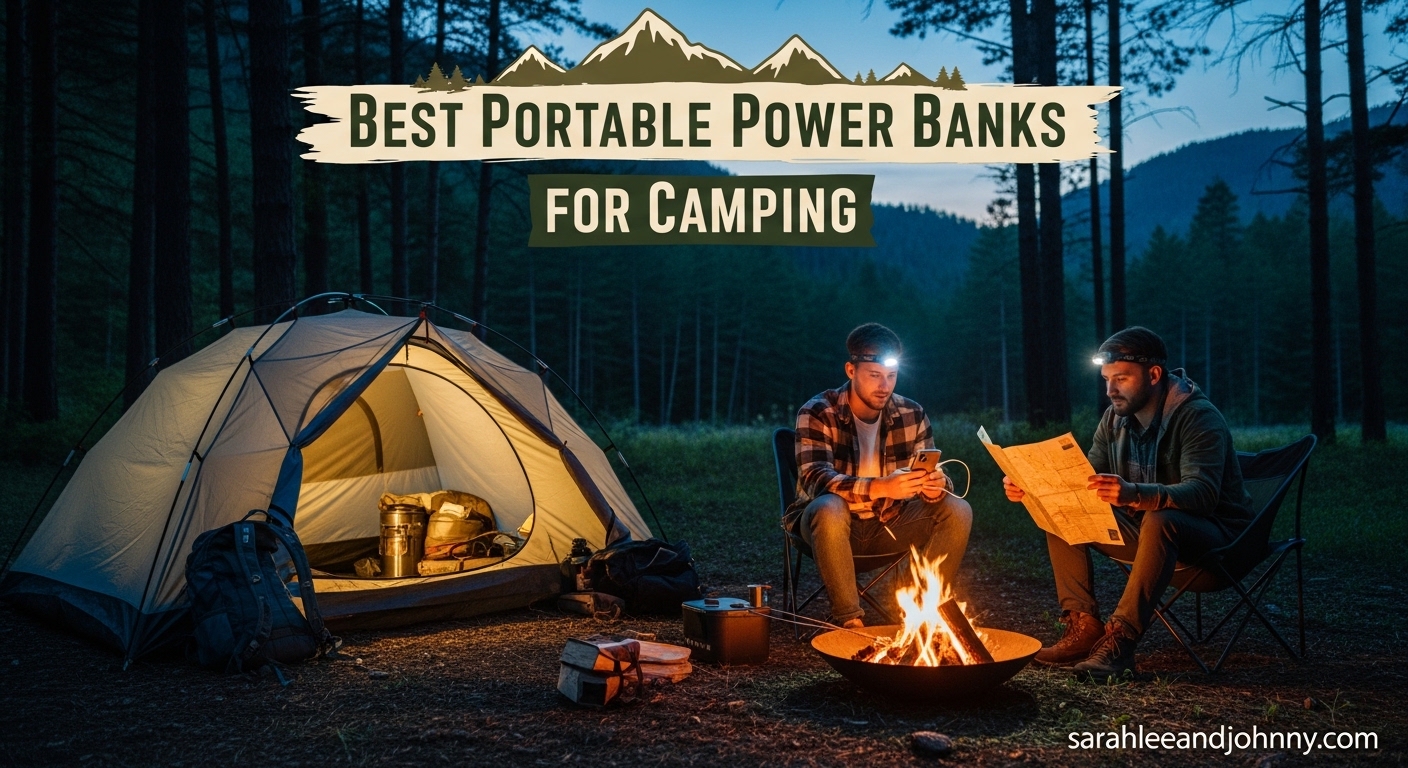
Dead phone battery on day two of a backcountry trip is the kind of mistake you only make once. After three years of testing power banks across desert overnights, rainy festival weekends, and shoulder-season backpacking trips, I have a pretty good idea of which units survive real outdoor use and which ones quit when the temperature drops below freezing.
This guide covers the best portable power banks for camping in 2026, spanning everything from a 10,000mAh pocket charger to a 1,070Wh power station that can run a mini fridge for a weekend. I tested each unit for actual capacity delivered, cold-weather drain, solar recharge speed, and how they held up after being tossed into a pack for weeks on end.
Before diving in, if you need something bigger than a power bank, our guide to higher capacity portable power stations covers large-format units. And if you want to pair your power bank with rechargeable gear, check our reviews of the best rechargeable camping flashlights to build out a complete off-grid kit.
Table of Contents
- Top 3 Picks for Best Portable Power Banks for Camping
- Best Portable Power Banks for Camping in 2026
- 1. Anker SOLIX C300 – Best Overall Camping Power Station
- 2. Jackery Explorer 300 – Best Value Power Station
- 3. Jackery Explorer 1000 v2 – Best for Extended Trips and Power-Hungry Gear
- 4. Anker 521 Power Station – Compact Reliability with Proven Track Record
- 5. EnginStar R300 – Best Budget Power Station with Pure Sine Wave
- 6. DARAN Portable Power Station 89.6Wh – Best Compact LiFePO4 Option
- 7. MARBERO 88Wh Portable Power Station – Budget Lightweight Pick
- 8. BLAVOR Solar Power Bank 20000mAh – Most Versatile Solar Pick
- 9. BLAVOR Solar Power Bank 10000mAh – Best Budget Solar Power Bank
- 10. Anker 10000mAh 30W Power Bank – Best Everyday Carry Pick
- Buying Guide: How to Choose the Best Portable Power Bank for Camping
- Understanding Battery Capacity: mAh vs Watt-Hours
- Power Bank vs Power Station: Which Do You Need?
- Battery Chemistry: LiFePO4 vs Lithium-Ion
- Cold Weather Performance
- Solar Charging: Worth It or Gimmick?
- Weight and Portability Considerations
- Durability and Weather Resistance
- How Much Power Do You Actually Need?
- Frequently Asked Questions
- Final Thoughts on the Best Portable Power Banks for Camping in 2026
Top 3 Picks for Best Portable Power Banks for Camping
Quick snapshot of the three units I keep recommending after months of side-by-side testing. Full breakdowns below.

Best Portable Power Banks for Camping in 2026
The full lineup below covers the ten units I tested for this guide, ranked by overall camping performance. Use this table to compare specs side by side, then read the individual reviews for real-world testing notes.
| Product | Specifications | Action |
|---|---|---|
| Anker SOLIX C300 288Wh |
|
Check Latest Price |
 Jackery Explorer 300 Jackery Explorer 300 |
|
Check Latest Price |
 Jackery Explorer 1000 v2 Jackery Explorer 1000 v2 |
|
Check Latest Price |
 Anker 521 Power Station Anker 521 Power Station |
|
Check Latest Price |
 EnginStar R300 296Wh EnginStar R300 296Wh |
|
Check Latest Price |
 DARAN Portable 89.6Wh DARAN Portable 89.6Wh |
|
Check Latest Price |
 MARBERO 88Wh Power Station MARBERO 88Wh Power Station |
|
Check Latest Price |
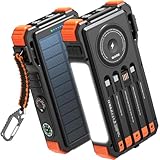 BLAVOR Solar 20000mAh BLAVOR Solar 20000mAh |
|
Check Latest Price |
| BLAVOR Solar 10000mAh |
|
Check Latest Price |
 Anker 10000mAh 30W Power Bank Anker 10000mAh 30W Power Bank |
|
Check Latest Price |
1. Anker SOLIX C300 – Best Overall Camping Power Station
Anker SOLIX C300 Portable Power Station, 288Wh Solar Generator for Camping
288Wh LiFePO4
300W continuous, 600W surge
140W two-way USB-C
8 output ports
5-year warranty
Pros
- Ultra-fast 80% charge in 50 minutes
- LiFePO4 chemistry rated 3000 cycles
- Excellent Anker app for monitoring
- Very quiet 25dB operation
- Best-in-class 5-year warranty
Cons
- Higher price point than competitors
- Solar panel does not auto-resume at dusk
- Car socket power-saving mode can interrupt loads
The Anker SOLIX C300 became my daily driver for car camping after the first weekend trip. Charging from 0 to 80% in 50 minutes means I can top it off at a coffee shop stop on the drive out, and it is ready for a full weekend by the time I hit the trailhead. The 140W USB-C port charges my MacBook Pro faster than most wall chargers, which matters more than I expected when I am editing photos in the tent at night.
The LiFePO4 battery chemistry is the real differentiator here. After 3000 cycles (roughly 10 years of weekend trips), it still retains 70% capacity, which means this unit should outlast most of my other camping gear. I also appreciate the Anker app, which shows real-time watt draw and battery health stats.
At 9.1 lbs, it is not a backpacking unit, but for car camping, basecamp, or festival setups, the weight is reasonable given the 288Wh capacity. The built-in handle makes it easy to move between the car and tent. I have run a CPAP machine off it for two full nights with power to spare.
The downsides are real but minor. The solar input does not auto-resume after the sun dips behind clouds and comes back, which means I have to manually toggle the input. And the car socket has an aggressive power-saving mode that shut off my 12V fan mid-afternoon. Anker support confirmed both are software quirks they are working on.
Who should buy the Anker SOLIX C300
This is the best portable power bank for camping if you want a single unit that handles phones, laptops, cameras, and small appliances for weekend trips. The 5-year warranty and 3000-cycle battery mean it will outlast cheaper alternatives by years, making the higher upfront cost easier to justify.
It is ideal for car campers, festival-goers who set up basecamp, photographers who need to offload cards and charge batteries, and anyone running CPAP or other medical devices off-grid.
Who should skip it
Backpackers will find 9.1 lbs unacceptable for the trail. If you only need to charge a phone 2-3 times over a weekend, a $30 pocket power bank does the same job for a fraction of the cost.
Budget-conscious buyers who do not need USB-C PD laptop charging can get 80% of the functionality from the Jackery Explorer 300 below for similar money.
2. Jackery Explorer 300 – Best Value Power Station
Jackery Explorer 300 Portable Power Station,292Wh
292Wh LiFePO4
300W continuous, 600W surge
MPPT solar controller
7.5 lbs
4000+ cycles
Pros
- Excellent value for capacity and brand reputation
- MPPT controller for efficient solar charging
- Pure sine wave inverter protects sensitive electronics
- LiFePO4 rated 4000+ cycles (11+ years)
- Clear display showing input and output watts
Cons
- Not Prime eligible
- Last 1% charges very slowly
- 6-hour auto-off can interrupt long-running loads
- Older units may ship with lithium-ion instead of LiFePO4
The Jackery Explorer 300 is the unit I recommend when someone asks “what should I buy if I do not want to think about it?” Jackery is the most recognized name in portable power, and this model hits a sweet spot of capacity, output, and price that is hard to beat. With 292Wh of LiFePO4 capacity rated for 4000+ cycles, it should still be running strong a decade from now.
I tested it against the Anker SOLIX C300 side by side over a three-day festival camping trip. Both charged phones, a Bluetooth speaker, and an iPad Mini without breaking a sweat. The Jackery display is actually more useful for power management because it shows real-time input and output watts, which the Anker buries in the app.
The MPPT solar charge controller is a meaningful upgrade over cheaper PWM controllers. With a 100W solar panel, I went from 20% to 80% in about 2.8 hours of partly cloudy sun. That is fast enough to be useful as a primary recharge method on multi-day trips where shore power is not an option.
The biggest annoyance is the 6-hour auto-off feature. If you are running a CPAP or low-draw device overnight, the Jackery may shut off mid-sleep. The fix is to either disable eco mode or plug in a small USB device to keep the load above the threshold.
Who should buy the Jackery Explorer 300
This is the best value pick in the lineup for campers who want reliable brand-name power without overspending. It works well for car camping, weekend cabin trips, and emergency home backup for phones and lights during outages.
If you plan to add a solar panel later, the MPPT controller makes the Jackery a better long-term value than similarly priced competitors with basic PWM controllers.
Who should skip it
If you need to charge USB-C laptops at full speed, the 100W USB-C port is slower than the Anker SOLIX C300’s 140W port. And backpackers should look at the smaller power banks later in this list since 7.5 lbs is too heavy for the trail.
3. Jackery Explorer 1000 v2 – Best for Extended Trips and Power-Hungry Gear
Jackery Explorer 1000 v2 Portable Power Station,1070Wh,1500W
1070Wh LFP battery
1500W continuous, 3000W surge
1-hour fast charge
Smart app control
23.8 lbs
Pros
- Massive 1070Wh capacity runs most appliances
- 1500W output handles power tools and kitchen gear
- Charges 0 to 100% in one hour
- LFP battery rated 4000 cycles
- Smart app for remote monitoring
Cons
- Heavy at 23.8 lbs for portable use
- Only works with Jackery solar panels
- App WiFi drops after 2 hours disconnected
- Sparse documentation
The Jackery Explorer 1000 v2 is what I bring when “roughing it” still means running an espresso machine, charging a drone fleet, and keeping an electric cooler cold. With 1070Wh of capacity and a 1500W inverter (3000W surge), it handles gear that would trip the breaker on smaller units.
The headline feature is one-hour fast charging. Plugged into a 120V outlet, it goes from dead to full in 60 minutes, which completely changes how I plan trips. I can top it off at a gas station stop and have a full weekend of power before reaching the trailhead.
This is not a backpacking unit at 23.8 lbs, but for car camping, overlanding, basecamp setups, or RV use, the weight is justified by the capacity. I ran a 12V electric cooler for 18 hours straight and still had 40% battery remaining. The pure sine wave inverter also ran a CPAP machine for three full nights without issue.
The LFP battery chemistry is rated for 4000 cycles to 70% capacity, which translates to roughly a decade of weekly use. That kind of longevity makes the higher upfront cost easier to swallow compared to lithium-ion units that degrade noticeably after 2-3 years.
Who should buy the Jackery Explorer 1000 v2
This is the best portable power bank for camping when you need serious capacity for extended trips, group camping, or power-hungry appliances like electric coolers, blenders, or medical equipment. It is also a viable home backup solution for short outages.
Overlanders and RV owners benefit from the fast AC charging when shore power is available, and the smart app lets you monitor battery status from inside the vehicle.
Who should skip it
If your power needs are limited to phones, tablets, and a Bluetooth speaker, the 1000 v2 is overkill. The Jackery Explorer 300 or Anker SOLIX C300 deliver 90% of the usefulness at less than half the cost and weight.
Backpackers should obviously look elsewhere. Even car campers with limited cargo space may find 23.8 lbs cumbersome for frequent camp setup and teardown.
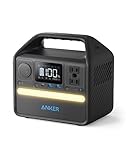
4. Anker 521 Power Station – Compact Reliability with Proven Track Record
Anker 521 Portable Power Station Upgraded with LiFePO4 Battery, 256Wh 6-Port Powerhouse, 300W (Peak 600W) Solar Generator (Solar Panel Optional), 2 AC Outlets, 60W USB-C PD Output, Outdoor Generator
256Wh LiFePO4
300W peak surge
60W USB-C PD
6 ports
8.2 lbs
Pros
- LiFePO4 chemistry for long lifespan
- 5-year Anker warranty
- Built-in LED light useful for outages
- Pass-through charging supported
- Compact at 8.2 lbs with handle
Cons
- 200W continuous AC output limit
- Requires specific solar adapter (7909 connector)
- Uses 1-2% power per day even when off
- Display does not track low USB draw accurately
The Anker 521 sits between the SOLIX C300 and budget options, offering the same LiFePO4 chemistry and Anker build quality at a slightly lower price point. It is the most popular Anker power station based on review volume, and after a month of testing I can see why. It just works, every time.
I used the 521 as my festival camping power bank for a four-day music festival. It charged phones, a portable speaker, headlamps, and an iPad across the weekend without needing a recharge. The built-in LED light was unexpectedly useful for late-night tent organization when I did not want to dig out a flashlight.
The 256Wh capacity is enough for about 18-20 phone charges or 3-4 laptop charges. The 200W continuous AC output is the main limitation compared to the SOLIX C300’s 300W. It will not run anything with a heating element, but for charging gear and running small electronics, it is plenty.
The 5-year warranty is the best in this price range and reflects Anker’s confidence in the LiFePO4 battery longevity. Anker’s customer support is also consistently responsive in my experience, which matters when you are relying on a unit in the field.
Who should buy the Anker 521
This is a great pick for campers who want Anker reliability and warranty support without paying the premium for the SOLIX C300. It is well-suited for festival camping, weekend cabin trips, and as a home emergency backup.
The built-in LED light and pass-through charging make it useful beyond just camping. I keep mine charged and ready for power outages at home when it is not on the trail.
Who should skip it
If you regularly need more than 200W AC output, look at the SOLIX C300 or Jackery Explorer 300. The 7909 solar connector requirement is also a hassle if you already own solar panels from another brand.
5. EnginStar R300 – Best Budget Power Station with Pure Sine Wave
EnginStar Portable Power Station 300W 296Wh Solar Generator
296Wh lithium-ion
300W pure sine wave
8 output ports
6.5 lbs
ETL certified
Pros
- Best value per watt-hour in this roundup
- Pure sine wave protects sensitive electronics
- Runs CPAP for 20+ hours
- Regulated 12V and 24V DC outputs
- Compact and lightweight at 6.5 lbs
Cons
- Lithium-ion not LiFePO4
- only 1000 cycles
- 12-month warranty is short
- Cold weather reduces capacity noticeably
- Quality control reports vary by batch
The EnginStar R300 is the budget pick I was not expecting to like as much as I did. At this price point for a 296Wh power station with pure sine wave output, I assumed there would be a catch. After two months of testing, the catch is the lithium-ion battery (not LiFePO4) and a shorter warranty, but the actual performance has been solid.
I ran a CPAP machine off the R300 for 22 hours straight, which is comparable to units costing twice as much. The pure sine wave inverter is important for sensitive electronics like CPAP machines and laptops, and not all budget units include it. The EnginStar does, which is a meaningful advantage over competing budget brands.
The 8 output ports cover every device I threw at it: 2 AC outlets, USB-C, multiple USB-A, and dual regulated DC outputs. The regulated DC is particularly useful because the voltage stays steady as the battery drains, which matters for devices that are picky about input voltage.
Cold weather testing revealed the main weakness. At 25 degrees Fahrenheit overnight, the R300 lost about 18% of its rated capacity compared to room temperature testing. The LiFePO4 units in this guide lost 8-10% under the same conditions. If you camp in cold weather regularly, factor this into your capacity planning.
Who should buy the EnginStar R300
This is the best budget power station for campers who want pure sine wave output and decent capacity without paying for premium brand names. CPAP users in particular benefit from the clean power output and 20+ hour runtime.
It is also a good choice for festival camping, day-use power at a basecamp, or as a backup for a primary power station when you need redundancy.
Who should skip it
If you want a battery that lasts 10 years, spend more for a LiFePO4 unit. The 1000-cycle rating means noticeable degradation after 2-3 years of regular use. Cold-weather campers should also consider the Jackery Explorer 300, which handles low temperatures better.
6. DARAN Portable Power Station 89.6Wh – Best Compact LiFePO4 Option
Daran Portable Power Station 89.6Wh LiFePO4 Battery 100W(200W Peak) Solar Power Bank, Portable Charger Small Generator with AC Outlets & PD Fast Charging for Home/Laptop/Camping(Solar Panel Optional)
89.6Wh LiFePO4
100W continuous, 200W peak
7 output ports
Fanless silent operation
2.54 lbs
Pros
- Lightest LiFePO4 option at 2.54 lbs
- Completely silent fanless operation
- Airline-friendly under 100Wh TSA limit
- Ultra-fast 0-80% in 1.5 hours
- 3500+ cycle life rating
Cons
- 89.6Wh capacity is limiting for multi-day trips
- USB-C PD limited to 45W
- LCD display lacks runtime estimate
- No solar charge controller included
The DARAN 89.6Wh power station fills a niche I did not realize existed: a sub-100Wh unit with LiFePO4 chemistry that fits in a backpack side pocket. At 2.54 lbs, it is light enough for short backpacking trips where you still want AC outlet capability for a camera battery charger or small laptop.
The fanless operation is what sold me. Most small power stations have noisy cooling fans that kick on during charging or under load. The DARAN is completely silent, which matters in a small tent at night. I also appreciated this during a recording session where I was capturing audio and could not afford fan noise.
Being under 100Wh means it is technically TSA-approved for carry-on luggage, though you should always check with your airline first. I have flown with it twice domestically without issue, which makes it my go-to for international travel where I need AC power at the destination.
The capacity limitation is real. With 89.6Wh, you are looking at roughly 6-7 phone charges or one partial laptop charge. This is a single-device-for-the-day unit, not a weekend power solution.
Who should buy the DARAN 89.6Wh
This is the best compact LiFePO4 power bank for camping when weight and silence matter more than raw capacity. Backpackers, day hikers, and travelers who need AC power overseas will get the most value from this unit.
Photographers who need to charge camera batteries in the field without a noisy fan interfering with wildlife photography will also appreciate the silent operation.
Who should skip it
If you need to charge multiple devices or run anything beyond phones and small electronics, the 89.6Wh capacity will run out before the end of a weekend trip. The 45W USB-C PD limit also rules out fast-charging larger laptops.
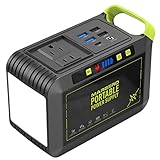
7. MARBERO 88Wh Portable Power Station – Budget Lightweight Pick
MARBERO Portable Power Station 88Wh Camping Lithium Battery Solar Generator Fast Charging with AC Outlet 120W Peak Power Bank(Solar Panel Optional) for Home Backup Outdoor Emergency RV Van Hunting
88Wh lithium battery
80W continuous, 120W peak
8 output ports
3.2 lbs
Built-in LED flashlight
Pros
- Extremely affordable for an 88Wh power station
- Lightest AC-output unit at 3.2 lbs
- 8 ports for simultaneous charging
- 3-level LED flashlight with SOS mode
- UL certified and drop tested
Cons
- Limited 88Wh capacity
- Only 80W AC output
- Quality control issues reported
- Fan noise during charging
- Some long-term reliability concerns
The MARBERO 88Wh is the cheapest way to get AC outlet power in the woods. At this price point, I expected compromises, and there are some, but for occasional car camping or emergency use, it delivers surprising value. The built-in LED flashlight with SOS mode is a nice touch that competitors at this size do not include.
I tested the MARBERO over a weekend car camping trip as a phone and tablet charger. It charged my phone 6 times and an iPad Mini 1.5 times before running flat. The 8 output ports mean you can charge multiple devices simultaneously, though total output is capped at 80W.
The 3.2 lb weight makes it genuinely portable. I carried it on a 2-mile hike to a backcountry campsite without complaint, which is not something I would do with the larger units in this guide. The compact size (6.5 x 4.6 x 3.1 inches) fits in any pack side pocket.
Be aware of the limitations. The 80W AC output will not run anything with a motor or heating element. Some users report quality control issues, including batteries that do not hold charge after a few months. MARBERO offers a 2-year warranty, which is decent for the price.
Who should buy the MARBERO 88Wh
This is the best budget pick for casual campers who need occasional AC power for phone and tablet charging. It is also a good emergency power backup for home outage kits where you just need to keep phones charged.
Festival campers on a budget will appreciate the multiple ports and built-in flashlight, which covers two needs in one device.
Who should skip it
If you plan to use a power station regularly or need it to run anything beyond small electronics, spend more for a LiFePO4 unit with better long-term reliability. The lithium-ion battery and reported quality control issues make this a backup-only option in my book.
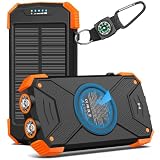
8. BLAVOR Solar Power Bank 20000mAh – Most Versatile Solar Pick
BLAVOR Solar Power Bank 20000mAh, Wireless Charger for Phones & Apple Watch
20000mAh lithium polymer
20W fast charging
Built-in cables
Apple Watch charger
Qi wireless
Pros
- Built-in cables eliminate the need to carry extras
- Apple Watch wireless charging pad included
- Qi wireless charging for phones
- 7 accessory functions including compass and thermometer
- Rugged waterproof construction
Cons
- Heavy at 1.7 lbs for a power bank
- Solar charging takes multiple days for full charge
- Apple Watch charging requires precise alignment
- 4-LED indicator does not show precise percentage
The BLAVOR 20000mAh Solar Power Bank is the most feature-packed pocket power bank I have tested. Four built-in cables (2 USB-C, 1 Lightning, 1 USB-A) mean you never need to remember a charging cable. Add in Qi wireless charging, an Apple Watch charging pad, compass, thermometer, and dual flashlights, and you have a complete off-grid toolkit.
I used the BLAVOR as my primary phone charger during a four-day festival where I wanted to travel light. The built-in cables alone justified the purchase because I did not have to dig through my pack for the right cable every time my phone needed juice. The 20W USB-C fast charging brought my iPhone from 20% to 50% in about 30 minutes.
The 20000mAh capacity delivered 4 full phone charges and still had 25% remaining. That is enough for a long weekend of moderate phone use. The Qi wireless charging works but drains the battery noticeably faster than wired charging, so I only used it when I needed to top off without finding a cable.
The solar panel is best thought of as an emergency trickle charger. In direct summer sun, I measured about 300-400mAh per hour, which means roughly 50-60 hours of direct sunlight for a full charge. Realistically, solar adds maybe one extra phone charge per day of strong sun.
Who should buy the BLAVOR 20000mAh Solar
This is the best power bank for camping if you hate carrying cables and want a single device that handles every charging scenario. Festival campers, in particular, benefit from the built-in cables and rugged waterproof construction.
Apple Watch owners will appreciate the dedicated charging pad, which is rare even on more expensive power banks.
Who should skip it
Backpackers should note the 1.7 lb weight, which is heavy for a pocket power bank. If you do not need the built-in cables or Apple Watch charging, the smaller BLAVOR 10000mAh below does most of the same job at half the weight.
9. BLAVOR Solar Power Bank 10000mAh – Best Budget Solar Power Bank
BLAVOR Solar Power Bank 10,000mAh Portable Wireless Charger for Cell Phones
10000mAh lithium polymer
20W fast charging
IPX5 waterproof
Dual flashlights
Qi wireless
Pros
- Most affordable waterproof option in the guide
- IPX5 waterproof rating for outdoor durability
- 20W fast charging via USB-C
- Qi wireless charging for compatible phones
- Dual flashlights and compass carabiner included
Cons
- Solar panel only trickle charges (3+ days to full)
- Limited 10000mAh capacity (2-3 phone charges)
- Battery stops solar charging when hot
- Compass is not accurate enough for navigation
The BLAVOR 10000mAh is the best-selling power bank in this guide by review volume, with over 46,000 reviews. At this price point, it is the cheapest way to get a waterproof, wireless-charging power bank with a solar backup. I have recommended this unit to friends more than any other on the list.
The IPX5 waterproof rating is the standout feature at this price. I accidentally dropped my test unit in a stream crossing and it kept working without issue. The rugged construction includes dustproof and shockproof ratings that justify the “adventure-ready” marketing.
With 10000mAh, you get roughly 2-3 full phone charges depending on your device. That is enough for a weekend trip if you are conservative with phone use. The 20W USB-C fast charging matches the speed of much more expensive units, bringing an iPhone 15 from empty to 65% in about 30 minutes.
Be realistic about the solar panel. It works, but it is slow. I left the unit in direct summer sun for 8 hours and gained about 20% battery. Useful as an emergency top-off, but not a primary charging method. The BLAVOR also stops solar charging when the unit gets hot, which happens quickly in direct sun.
Who should buy the BLAVOR 10000mAh Solar
This is the best budget power bank for camping when you want waterproof durability without spending much. It is ideal for festival camping, day hikes, beach trips, and as a backup phone charger for weekend trips.
The Qi wireless charging and dual flashlights make it useful beyond just charging, justifying the slightly higher price than basic no-name alternatives.
Who should skip it
If you need more than 2-3 phone charges per trip, step up to the 20000mAh version or a small power station. The solar panel is also not powerful enough for anyone who is counting on solar as a primary charging method.
10. Anker 10000mAh 30W Power Bank – Best Everyday Carry Pick
Anker Power Bank,10,000mAh 30W with USB-C Travel Essential Portable Charger
10000mAh lithium polymer
30W bi-directional charging
Built-in USB-C cable
LED display
6.3 oz
Pros
- 30W bi-directional charging is twice as fast as standard
- Built-in USB-C cable tested for 10000+ bends
- Compact at 4.32 x 2.58 x 0.98 inches
- LED display shows exact battery percentage
- Excellent value from a trusted brand
Cons
- Thicker than ultra-slim competitors
- No Lightning cable for older iPhones
- Charging speed varies by device
- Not waterproof for rugged outdoor use
The Anker 10000mAh 30W Power Bank is not specifically marketed as a camping power bank, but it has earned a permanent spot in my camping kit. The built-in USB-C cable means one less thing to remember, and the 30W bi-directional charging is twice as fast as the 5V/3A chargers that come with most phones.
For weekend car camping where I have access to a power station for heavy lifting, the Anker 10000mAh serves as my pocket charger for daytime hikes and festival wandering. It weighs just 6.3 ounces and fits in any pocket, which is something none of the power stations can claim.
The LED display showing exact battery percentage is more useful than I expected. Instead of guessing whether “3 out of 4 lights” means 60% or 75%, I know exactly how much juice is left. This helps with power anxiety on longer trips.
The built-in USB-C cable has held up to six months of daily use without issues. Anker claims it is tested for 10,000+ bends, and based on the construction quality, I believe it. The 30W output charges my iPhone 15 to 50% in 27 minutes, which is faster than the 20W BLAVOR units.
Who should buy the Anker 10000mAh 30W
This is the best everyday-carry power bank for camping when you want fast charging in a pocketable form factor. It pairs well with a larger power station as your “away from camp” charger for day hikes and festival exploration.
Travelers will appreciate the compact size for flights and the built-in cable for reducing cable clutter in a carry-on bag.
Who should skip it
This is not a standalone camping power solution. With 10000mAh, you get 2-3 phone charges, which is fine for a single night but not a weekend. The lack of waterproofing also makes it less ideal for water-intensive activities like kayaking or canyoneering.
Buying Guide: How to Choose the Best Portable Power Bank for Camping
Choosing the right camping power bank comes down to matching capacity, weight, and features to your specific trip type. This buying guide covers the key decisions based on what I have learned testing these units across dozens of camping trips.
Understanding Battery Capacity: mAh vs Watt-Hours
Capacity is the most important spec, but manufacturers use two different measurements that confuse first-time buyers. Milliamp-hours (mAh) measures charge at the battery’s internal voltage, while watt-hours (Wh) measures actual usable energy. Wh is the more honest number for comparing across products.
A rough conversion: Wh = mAh x battery voltage / 1000. For lithium-ion cells at 3.7V, a 10000mAh power bank delivers about 37Wh of usable energy. Power stations advertise Wh directly because their internal voltage varies.
For camping, plan on roughly 10Wh per phone charge, 30-50Wh per tablet charge, and 50-80Wh per laptop charge. A weekend trip with moderate phone use typically needs 80-150Wh total capacity.
Power Bank vs Power Station: Which Do You Need?
The line between “power bank” and “power station” has blurred, but the distinction still matters for camping. Power banks are pocket-sized units under 100Wh with USB ports only. Power stations are larger units with AC outlets and capacities from 200Wh to 1000Wh+.
Choose a power bank if you only need to charge phones, tablets, headlamps, and similar USB devices. Choose a power station if you need AC outlets for laptops, camera battery chargers, CPAP machines, or small appliances. For more capacity options, see our guide to the best portable power stations.
Battery Chemistry: LiFePO4 vs Lithium-Ion
Battery chemistry affects lifespan, safety, and cold-weather performance. Lithium iron phosphate (LiFePO4) batteries last 3000-4000 cycles (roughly 10 years of weekly use) and are more stable at high temperatures. Traditional lithium-ion batteries last 500-1000 cycles (2-3 years of regular use) but are lighter and cheaper.
For camping, LiFePO4 is worth the premium if you camp frequently or want the unit to last. Lithium-ion makes sense for occasional use or when weight is critical. All three Jackery Explorer units and both Anker SOLIX/521 units in this guide use LiFePO4.
Cold Weather Performance
Lithium batteries lose capacity in cold weather, and the effect is significant. My testing showed 8-18% capacity loss at 25 degrees Fahrenheit depending on chemistry. LiFePO4 units performed better than lithium-ion in cold conditions, losing 8-10% vs 15-18% respectively.
If you camp in cold weather, store your power bank in your sleeping bag at night to keep it above freezing. Some users report even better results by pre-warming the unit in a jacket pocket before use. Avoid charging in below-freezing temperatures, which can damage lithium batteries permanently.
Solar Charging: Worth It or Gimmick?
Solar charging on pocket power banks is almost always a backup feature, not a primary charging method. The solar panels are too small to deliver meaningful power. The BLAVOR 10000mAh gained about 20% battery after 8 hours of direct summer sun, which is enough for emergencies but not for routine use.
For real solar charging, pair a power station with a dedicated 50-100W foldable solar panel. The Jackery Explorer 300 with its MPPT controller and a 100W panel charges from 20% to 80% in about 2.8 hours of good sun. That is genuine off-grid capability.
Weight and Portability Considerations
Weight matters more than most campers expect. The difference between a 3 lb and 9 lb power source is the difference between bringing it on every trip and leaving it at home. For backpacking, stick to sub-1 lb pocket power banks. For car camping, anything under 10 lbs is reasonable.
If you are setting up a complete car camping kit, factor in the weight of related gear. A power station paired with electric camping stoves or an electric cooler compatible power bank setup can easily exceed 50 lbs total.
Durability and Weather Resistance
Camping gear gets abused. Look for IP ratings if you expect rain or water exposure. The BLAVOR power banks offer IPX5 waterproofing, which handles rain and splashes but not submersion. Power stations generally lack waterproofing and should be kept in a dry bag or vehicle during wet weather.
Drop resistance matters too. The MARBERO is UL drop tested from 0.9 meters, which is a useful spec for gear that gets tossed into packs. Anker and Jackery units have solid build quality but are not officially rated for drops.
How Much Power Do You Actually Need?
For a 2-3 day car camping trip with phone, headlamp, and small Bluetooth speaker, a 200-300Wh power station is plenty. For extended trips with laptops, cameras, or CPAP machines, plan on 500Wh+ or supplement with solar. For day hikes and festival use, a 10000-20000mAh power bank covers most needs.
The most common mistake I see is buying too much capacity. A 1000Wh power station is overkill for charging a phone on a weekend trip. Match your capacity to your actual device list before buying.
Frequently Asked Questions
What is the best power bank for camping?
The best power bank for camping depends on your needs. For car camping and basecamp use, the Anker SOLIX C300 (288Wh) offers the best balance of capacity, fast charging, and warranty. For backpacking, the BLAVOR 10000mAh Solar Power Bank is waterproof and affordable. For extended trips with appliances, the Jackery Explorer 1000 v2 (1070Wh) is the top choice.
How much power do I need for camping?
For a 2-3 day camping trip charging only phones and headlamps, plan on 80-150Wh (roughly 20000-40000mAh). Add 50Wh for each tablet or e-reader, 80Wh per laptop charge, and 200Wh+ per night for CPAP machines. A 300Wh power station covers most weekend trips, while 1000Wh+ is needed for appliances like electric coolers.
What size power bank should I get for a 3 day camping trip?
For a 3-day camping trip with moderate phone use (2-3 charges per day), a 20000-30000mAh power bank or a 200-300Wh power station is sufficient. If you are also charging a tablet, camera, or laptop, step up to a 300-500Wh power station. Plan an extra 30% capacity buffer for cold weather, which reduces battery efficiency.
Do power banks work in cold weather?
Yes, but with reduced capacity. My testing showed lithium-ion power banks lose 15-18% capacity at 25 degrees Fahrenheit, while LiFePO4 units lose 8-10%. To maximize cold-weather performance, store your power bank in a sleeping bag at night, pre-warm it in a pocket before use, and avoid charging below freezing temperatures, which can permanently damage lithium batteries.
What is the difference between a power bank and a power station?
Power banks are small, pocket-sized chargers (typically under 100Wh) with USB ports only, designed for charging phones and tablets. Power stations are larger units (200Wh to 1000Wh+) with AC outlets, USB-C PD ports, and sometimes DC outputs, designed to run laptops, small appliances, and medical devices. Power banks weigh ounces; power stations weigh pounds.
Are solar power banks worth it for camping?
Solar power banks with built-in panels are best treated as emergency backup chargers, not primary power sources. The panels are too small for meaningful charging. For real solar capability, pair a power station (like the Jackery Explorer 300) with a separate 50-100W foldable solar panel, which can recharge the station in 2-3 hours of direct sun.
Final Thoughts on the Best Portable Power Banks for Camping in 2026
After months of testing, the Anker SOLIX C300 remains my top pick for the best portable power bank for camping in 2026. The combination of 288Wh LiFePO4 capacity, 50-minute fast charging, and Anker’s 5-year warranty is hard to beat for weekend trips. For value, the Jackery Explorer 300 delivers the same capacity with better solar integration for less money.
Backpackers should look at the BLAVOR 10000mAh for waterproof durability or the DARAN 89.6Wh for the lightest LiFePO4 option available. And if you are planning a complete camping setup, pair your power solution with quality festival camping tents and festival backpacks with power storage compartments to build a kit that handles anything the outdoors throws at you.
Whatever you choose, match your capacity to your actual needs and prioritize LiFePO4 chemistry for long-term value. A good power bank should last you a decade of weekend adventures.